




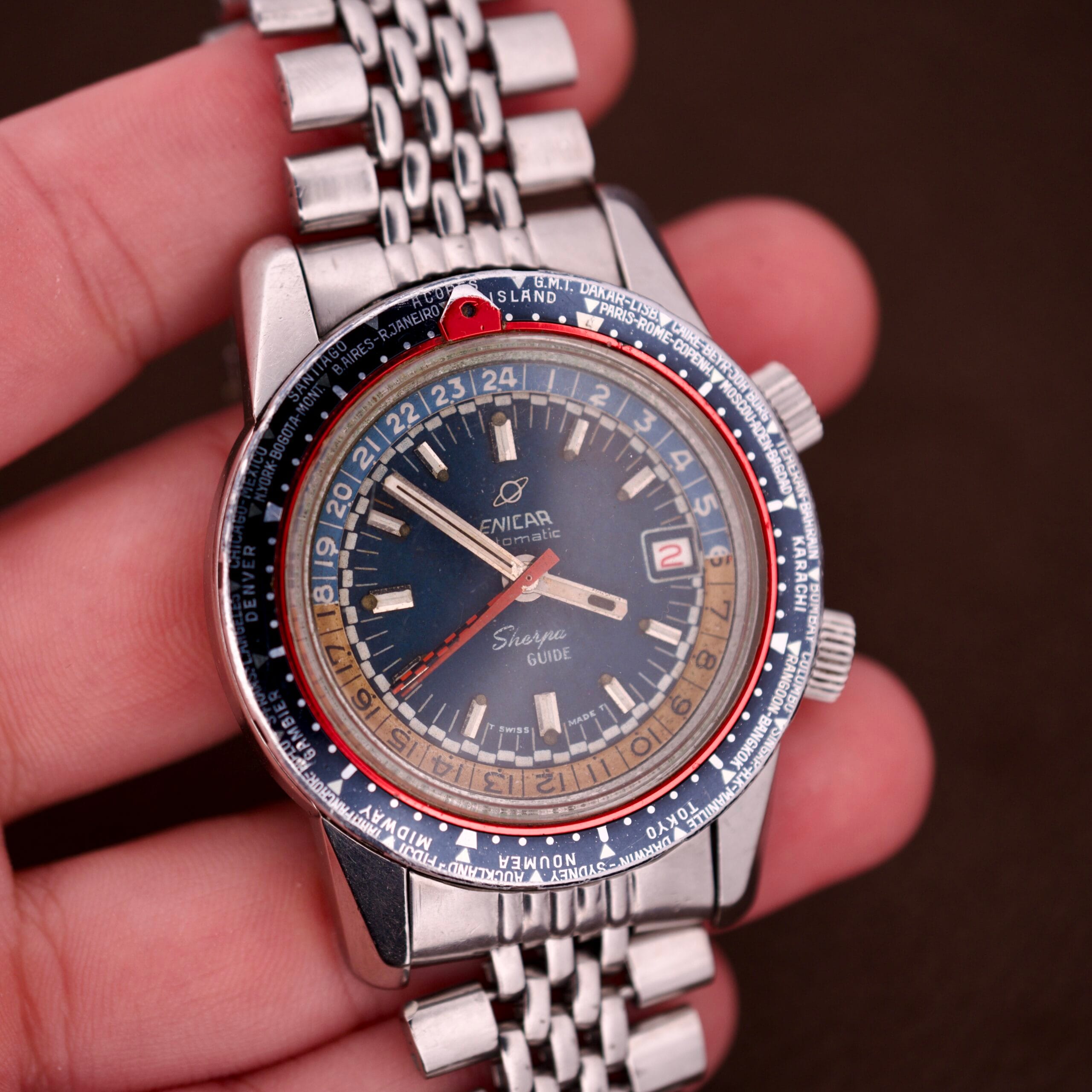


In the realm of vintage tool watches, Enicar occupies a cult status that rivals the biggest names in the industry. While others were making simple divers or chronographs, Enicar was pushing the boundaries of complexity and case design with the Sherpa series. The Sherpa Guide 600 is, without question, the ultimate expression of the “Jet Age” pilot’s watch. It is a maximalist masterpiece, a GMT, a World Timer, and a diver all rolled into one substantial package. It represents a time when mechanical watches were the primary instrument for global travel, offering a dizzying array of information on the wrist for the intercontinental adventurer.
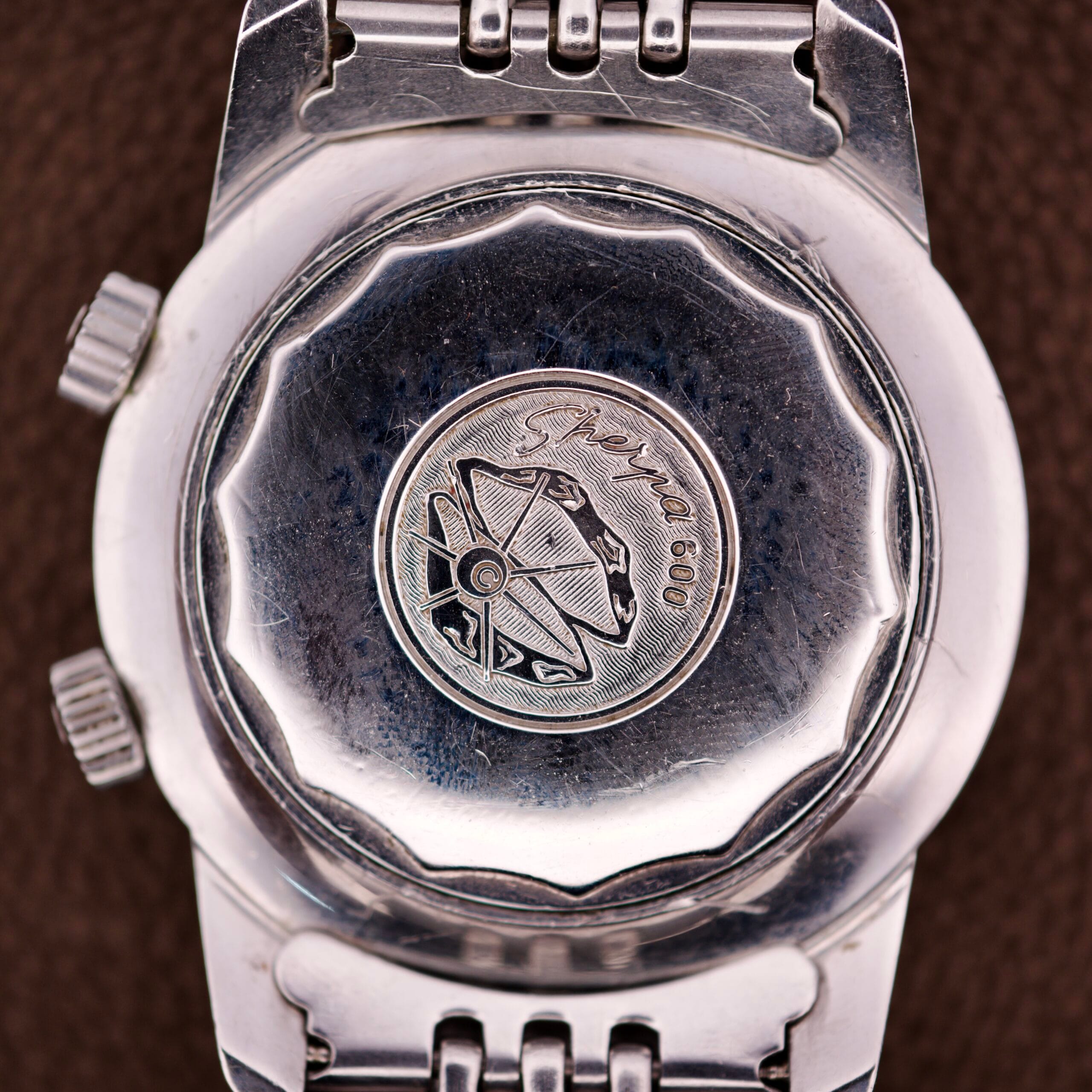
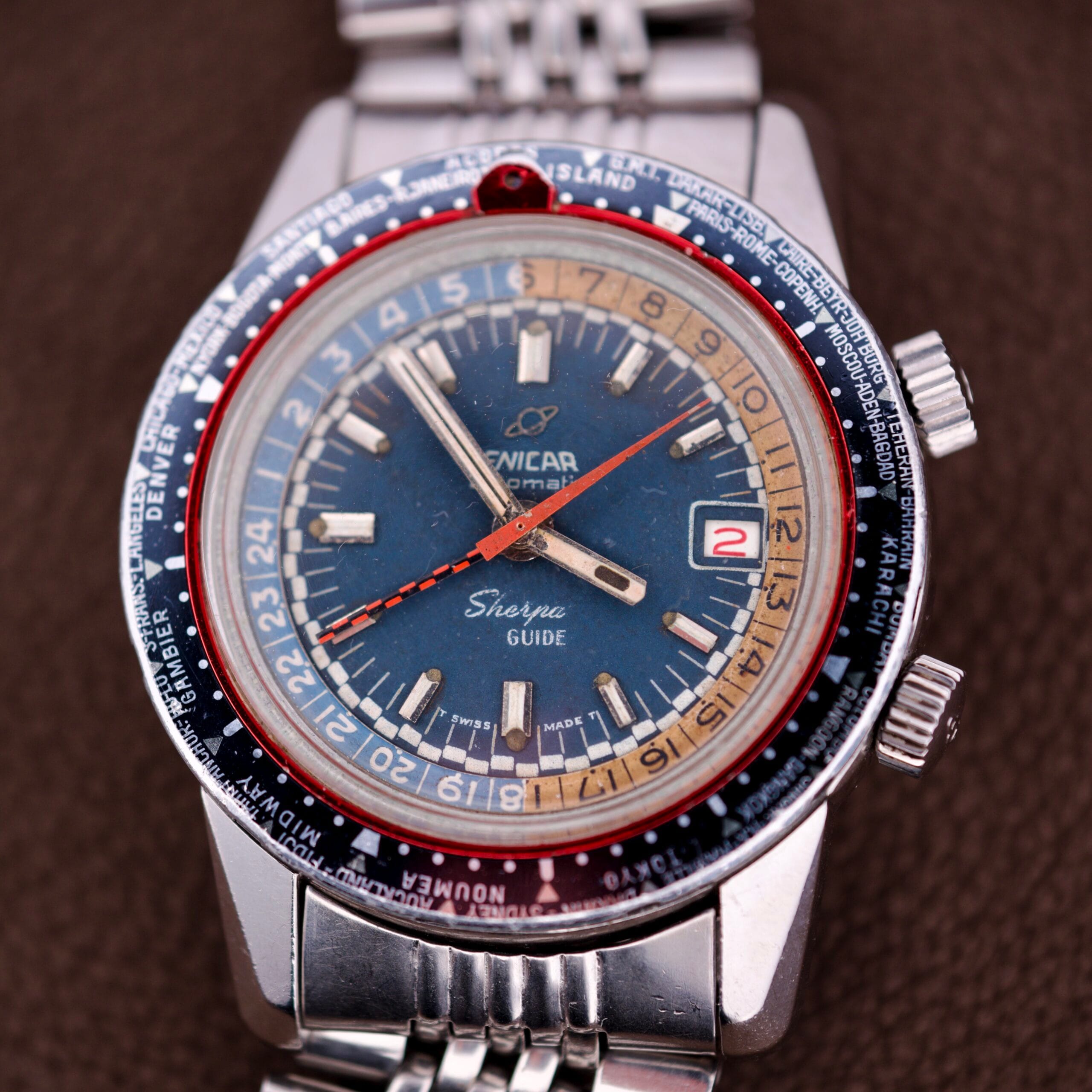
The “Sherpa” name was adopted by Enicar after their watches were used during a Swiss expedition to the Himalayas in 1956, cementing the brand’s reputation for durability. By the late 1960s, commercial aviation was booming, and the Sherpa Guide was Enicar’s answer to the needs of the global traveler. What makes this watch technically fascinating is its use of the Super-Compressor case, manufactured by the legendary Ervin Piquerez S.A. (EPSA). Unlike standard cases, the Super-Compressor utilized a spring-loaded caseback that tightened as water pressure increased. The Guide 600 took this rugged waterproofing technology and applied it to a pilot’s complication, featuring an internal rotating 24-hour bezel controlled by the upper crown and an external bezel for tracking world cities. It is a wildly over-engineered solution that collectors absolutely adore today.
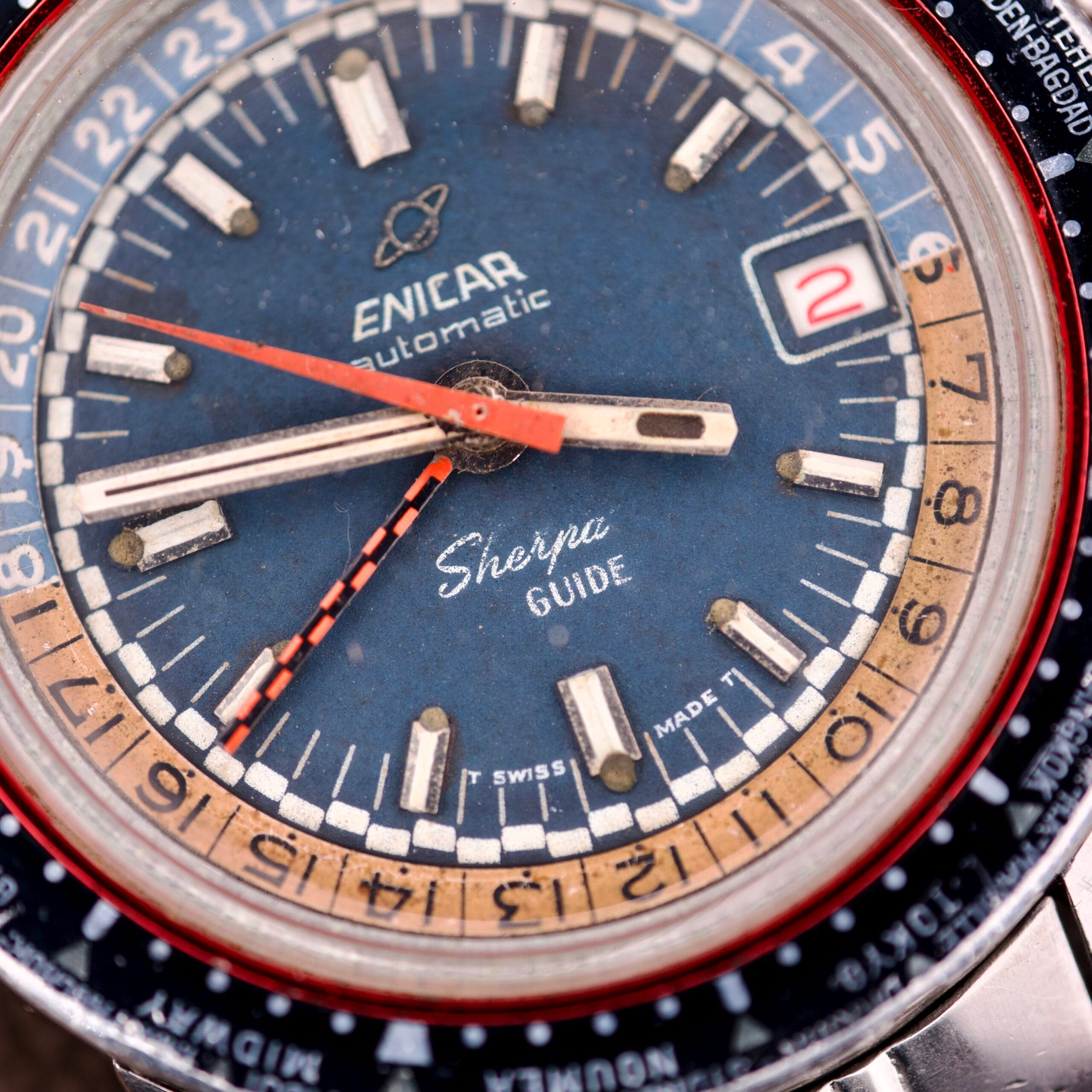
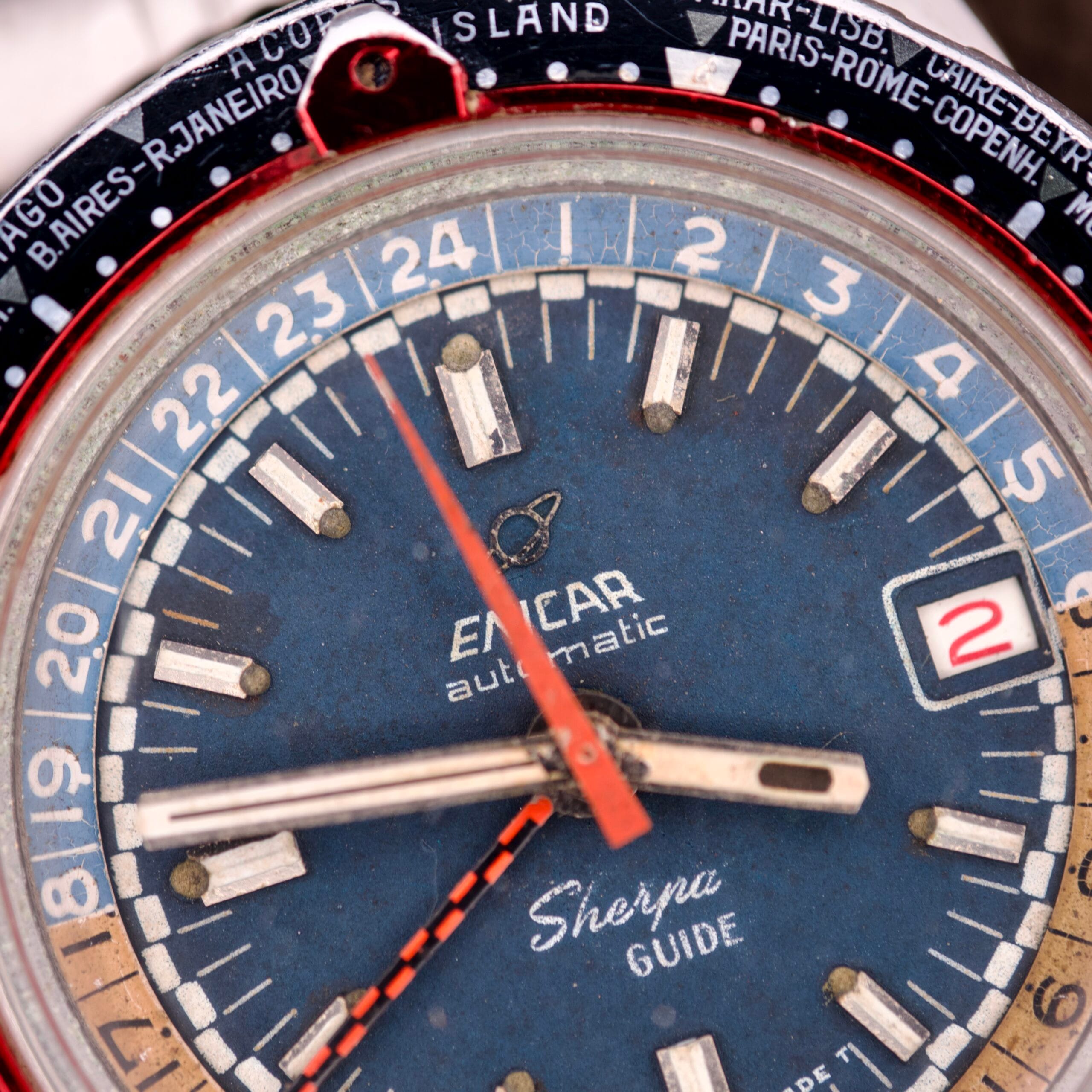
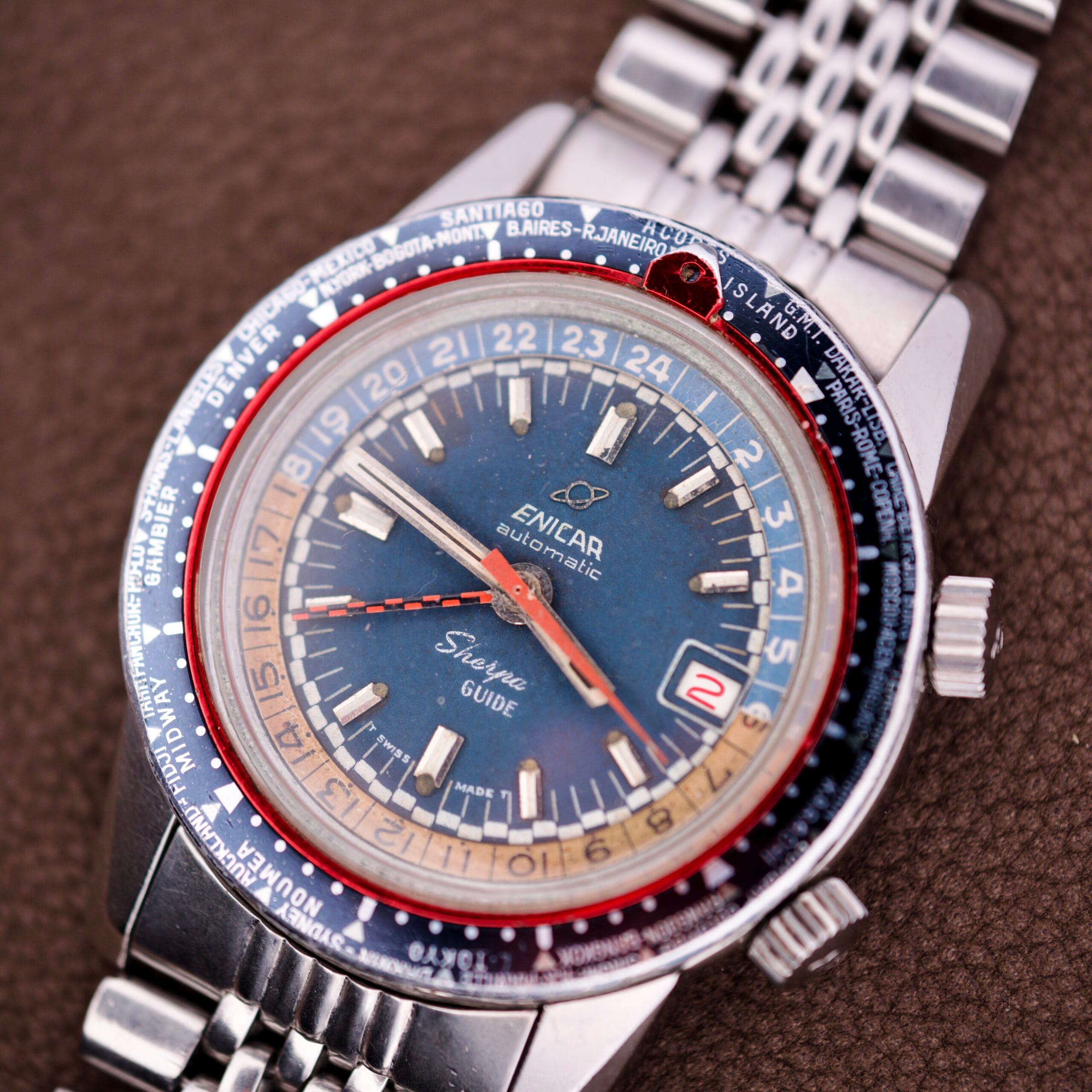
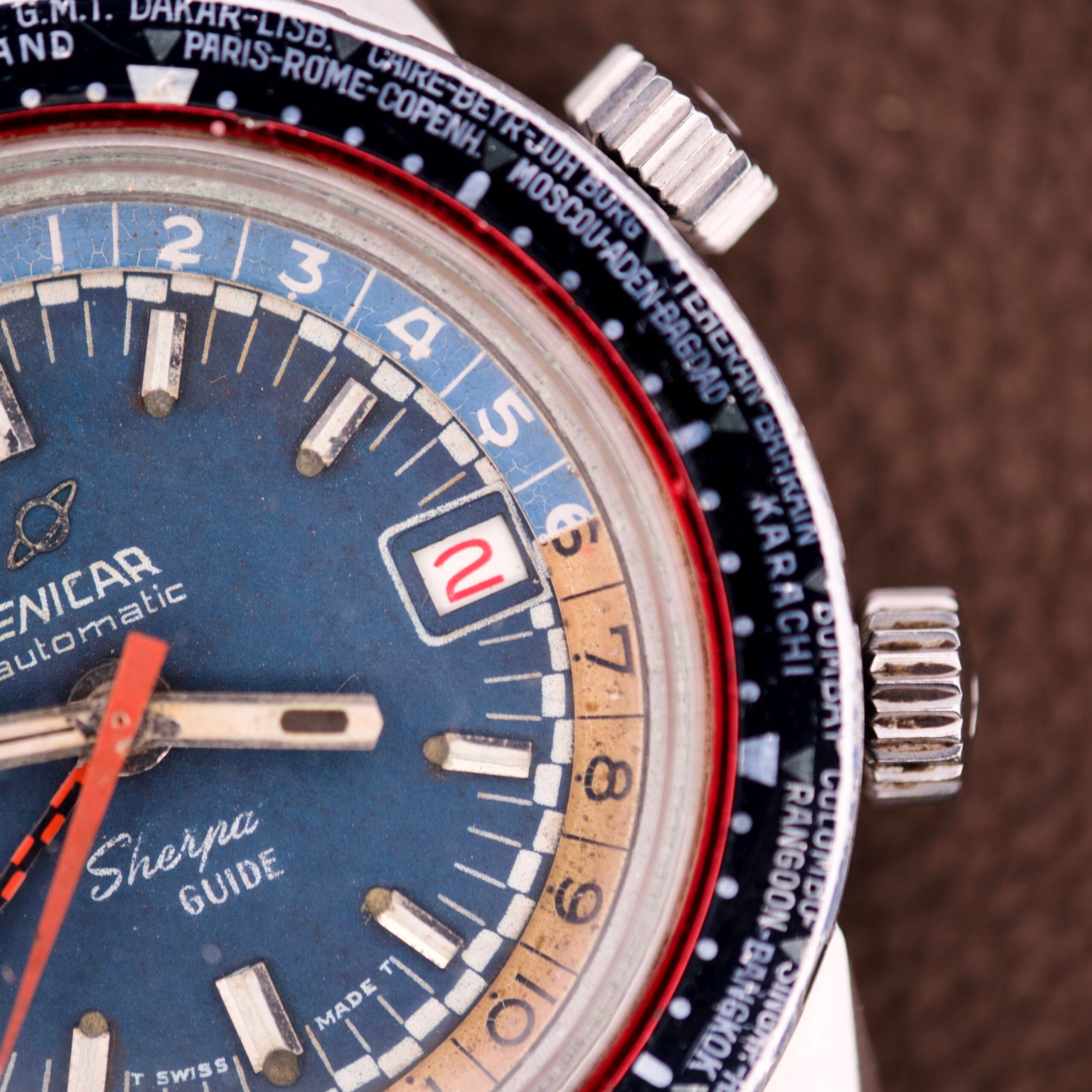
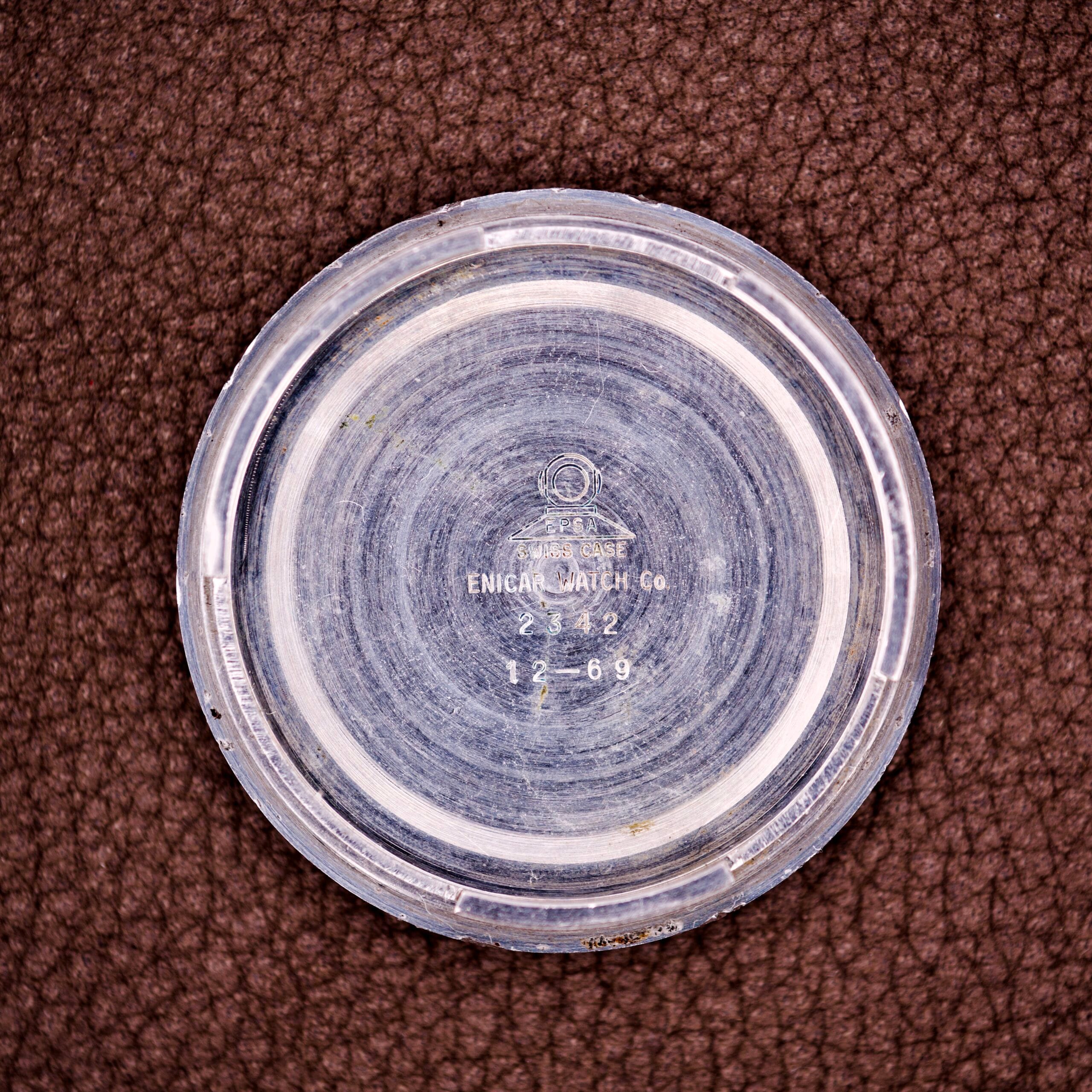
This particular example, dating to December 1969 (stamped 12-69 inside the caseback), is the coveted “long lug” version of the Reference 2342. It features the stunning matte blue dial, which provides a handsome contrast to the complex bezel assembly. The standout feature here is undoubtedly the GMT hand, a distinctive red-and-black checkered pointer that has become an icon of Enicar design. It allows for the tracking of a second time zone against the inner rotating ring, while the outer bezel allows for calculation of time across the globe.
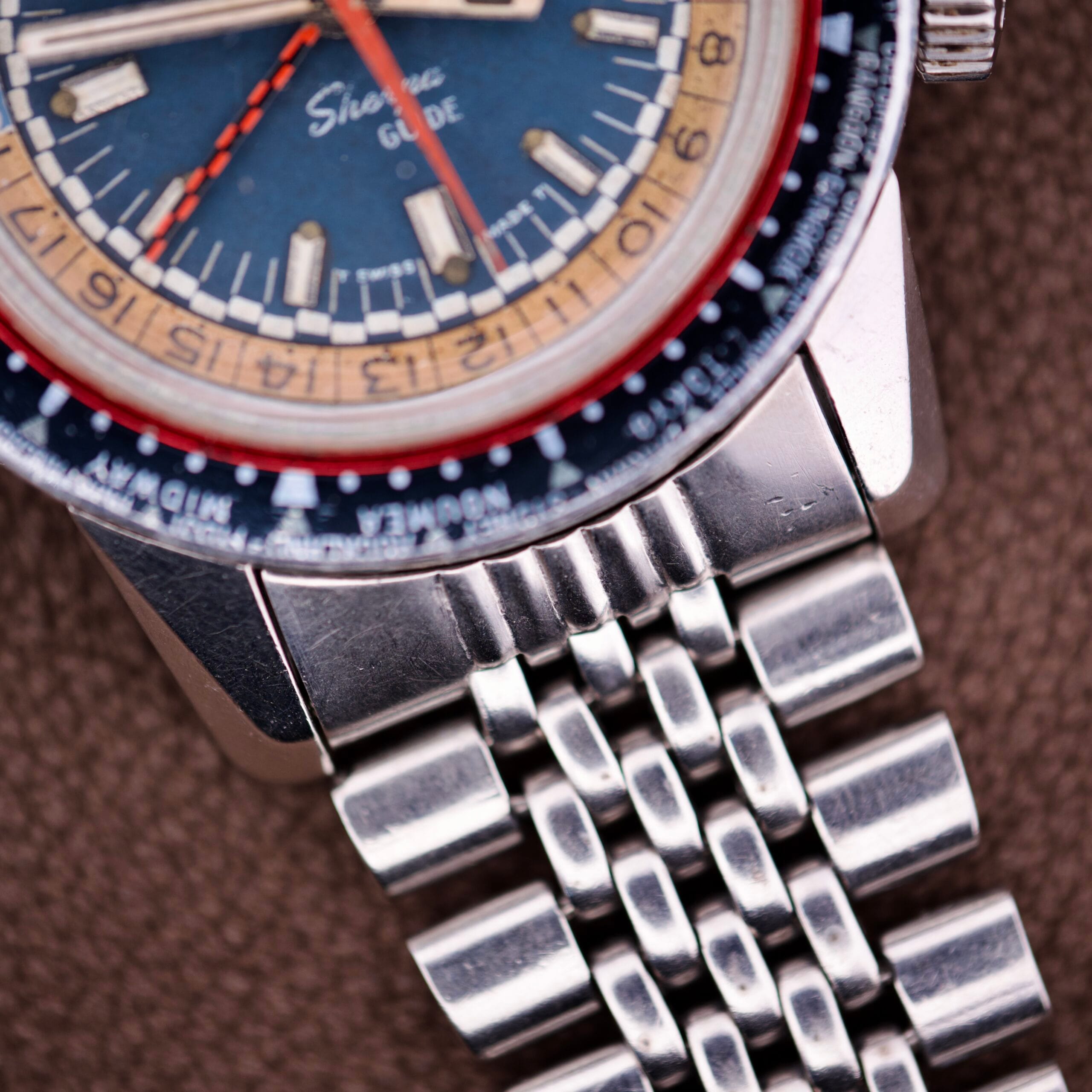
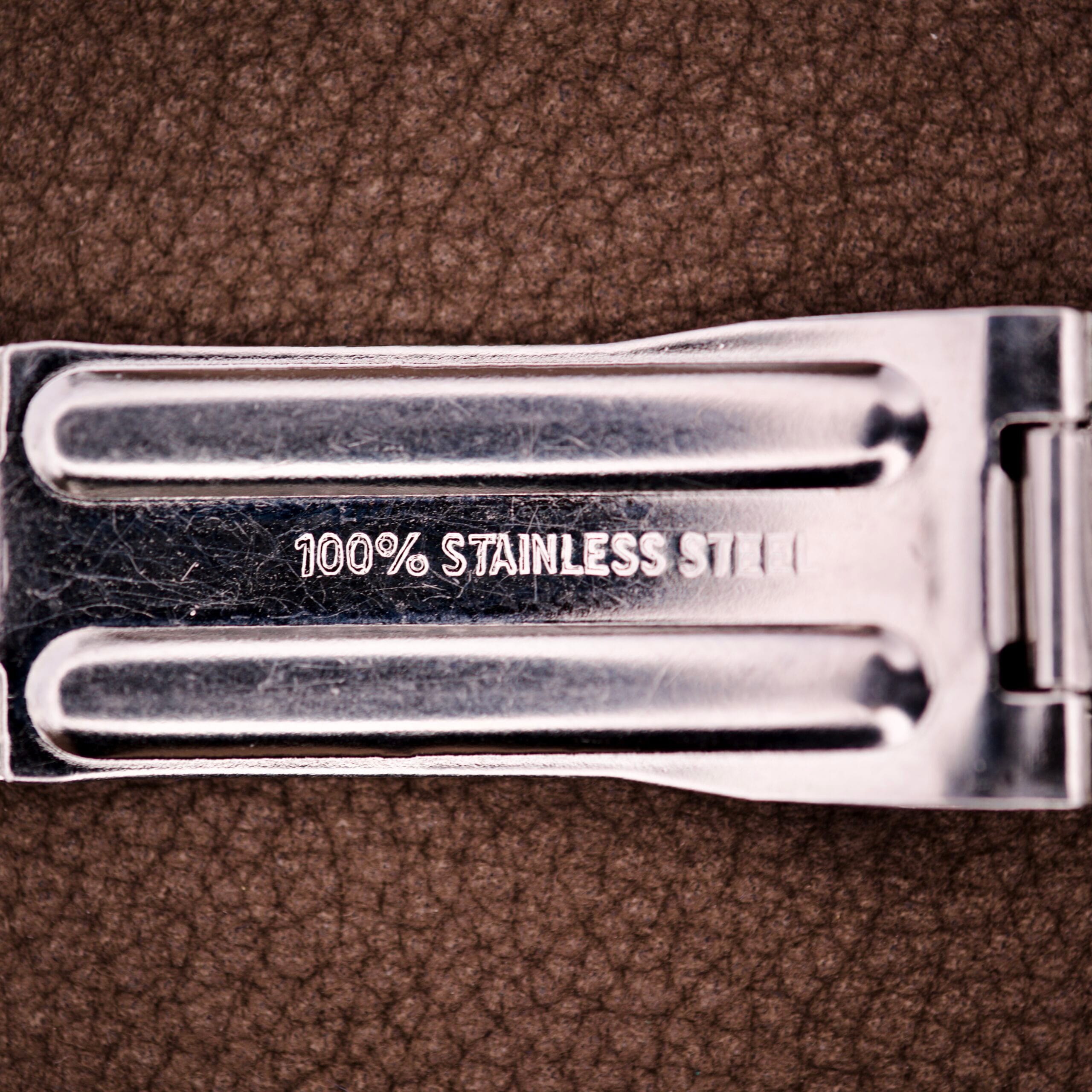
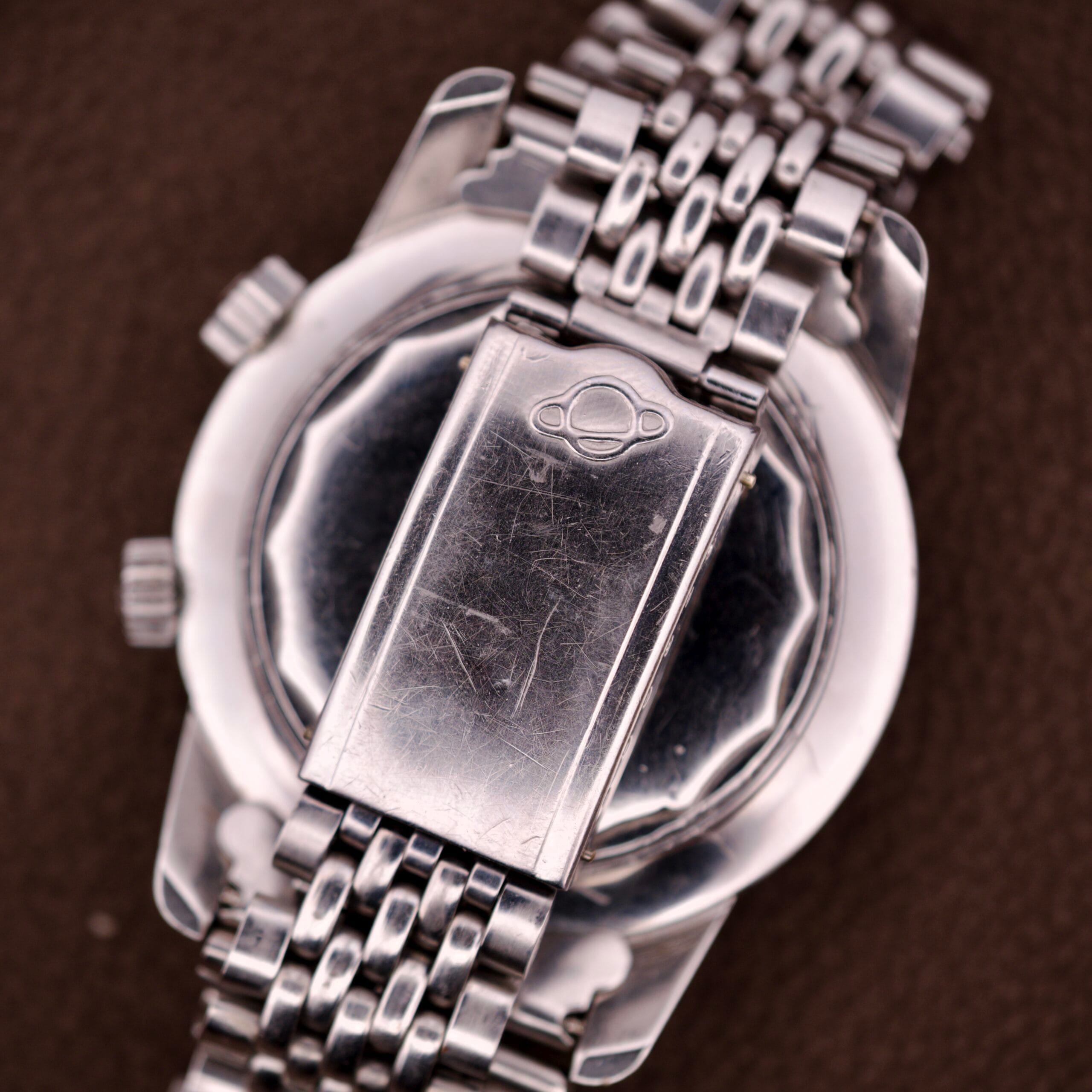
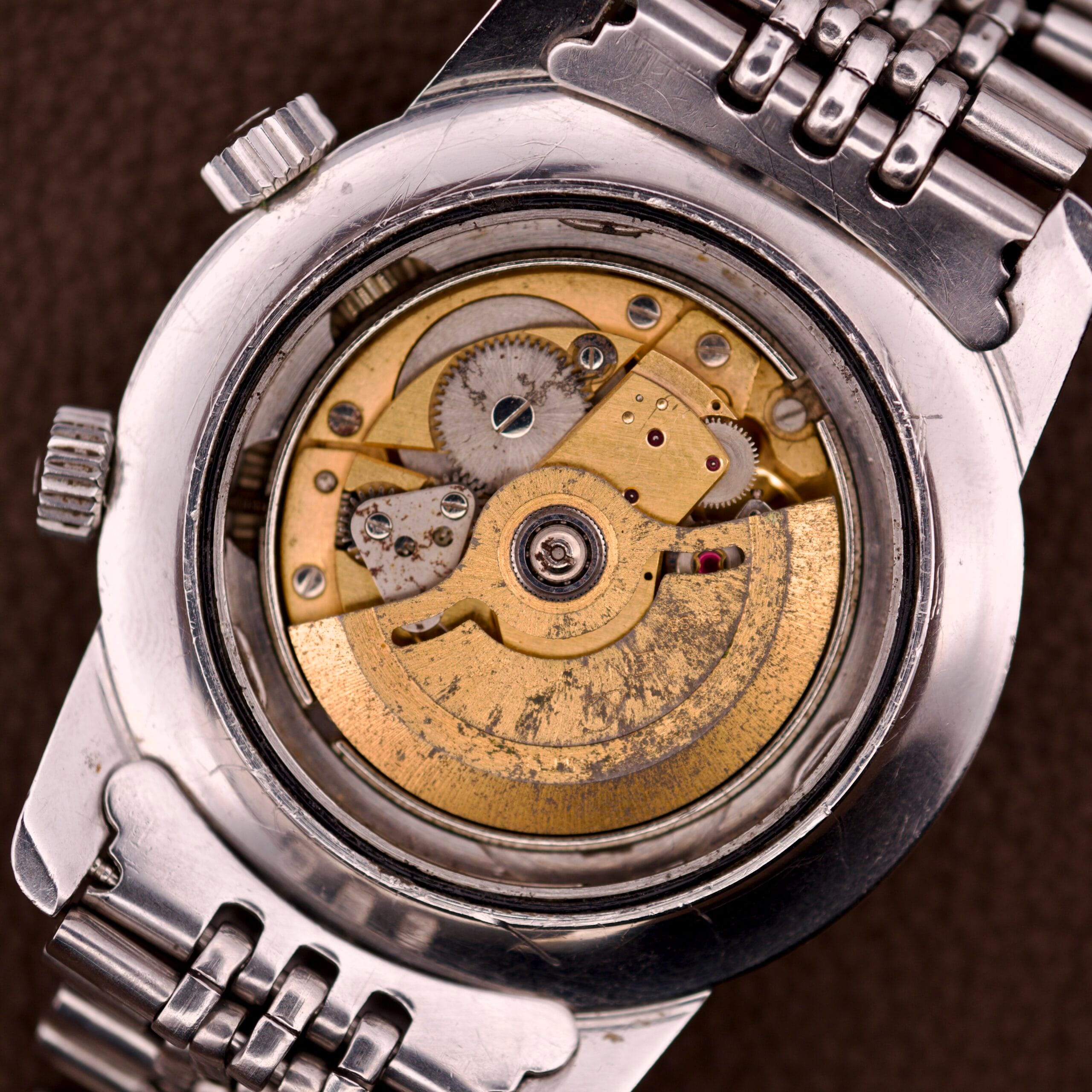
This Sherpa Guide wears its history honestly. The dial is in fantastic condition, retaining a deep blue hue with applied markers that catch the light beautifully. The tritium lume on the dial and hands has aged to a warm, creamy tone, consistent with its vintage. The external bezel, a component notorious for being lost or destroyed on these models, is present and shows the kind of “ghosting” and wear that we love to see. The red anodized pointer ring and the cities insert show scratches and fading that tell the story of a life well-spent, rather than a life in a safe. Importantly, it is paired with its original Enicar Beads of Rice bracelet, a rare find that makes the wearing experience incredibly comfortable and period-correct. The in-house automatic caliber is clean, and the case retains the sharp, faceted definition of the EPSA design.
The Enicar Sherpa Guide 600 is not a subtle watch, and that is exactly why we love it. At a time when many vintage watches can feel small on a modern wrist, the Sherpa Guide’s generous case proportions (roughly 43mm) give it a contemporary presence with undeniable vintage charm. It is a watch for the collector who appreciates engineering ambition and distinct design language. To us, this is one of the most compelling value propositions in the vintage market, a true world-timer with legitimate history, a famous case maker, and a design that looks like nothing else on the planet.