
In the late 1960s and early 1970s, the Swiss watch industry was engaged in a ferocious “arms race” for speed. Before quartz technology rendered the argument moot, the holy grail of mechanical accuracy was the “high-beat” movement. While standard watches ticked at 18,000 or 21,600 vibrations per hour, a select few manufacturers pushed the limits of physics to achieve 36,000 vph (5Hz). The Hamilton HF-36 is a proud soldier of this era, a timepiece that represents the absolute peak of mechanical engineering just before the digital revolution changed everything. It stands as a testament to a time when brands believed that making a balance wheel spin faster was the ultimate key to timekeeping perfection.
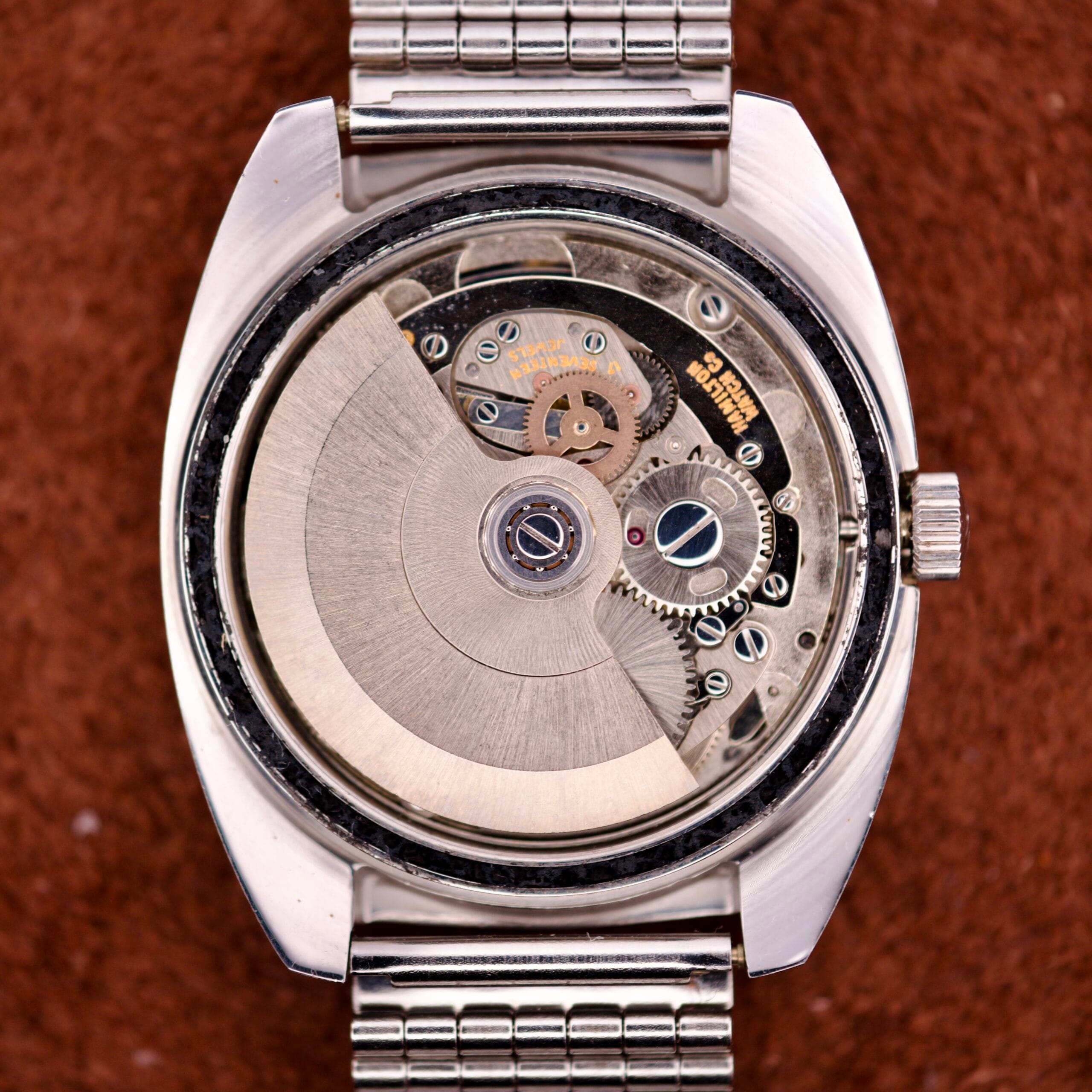
This era marked a fascinating transition for Hamilton, blending its American heritage with Swiss manufacturing prowess. The HF-36 (High Frequency 36,000) was their answer to the Grand Seiko Hi-Beats and the Zenith El Primeros. The Caliber 631 inside this watch is a marvel of industrial design. By oscillating at 10 beats per second, the movement achieves a stability and recovery rate that lower-frequency watches simply cannot match. Visually, this translates to one of the most mesmerizing sights in horology: a seconds hand that doesn’t just tick, but glides around the dial with a “butter-smooth” motion that is virtually seamless to the naked eye.
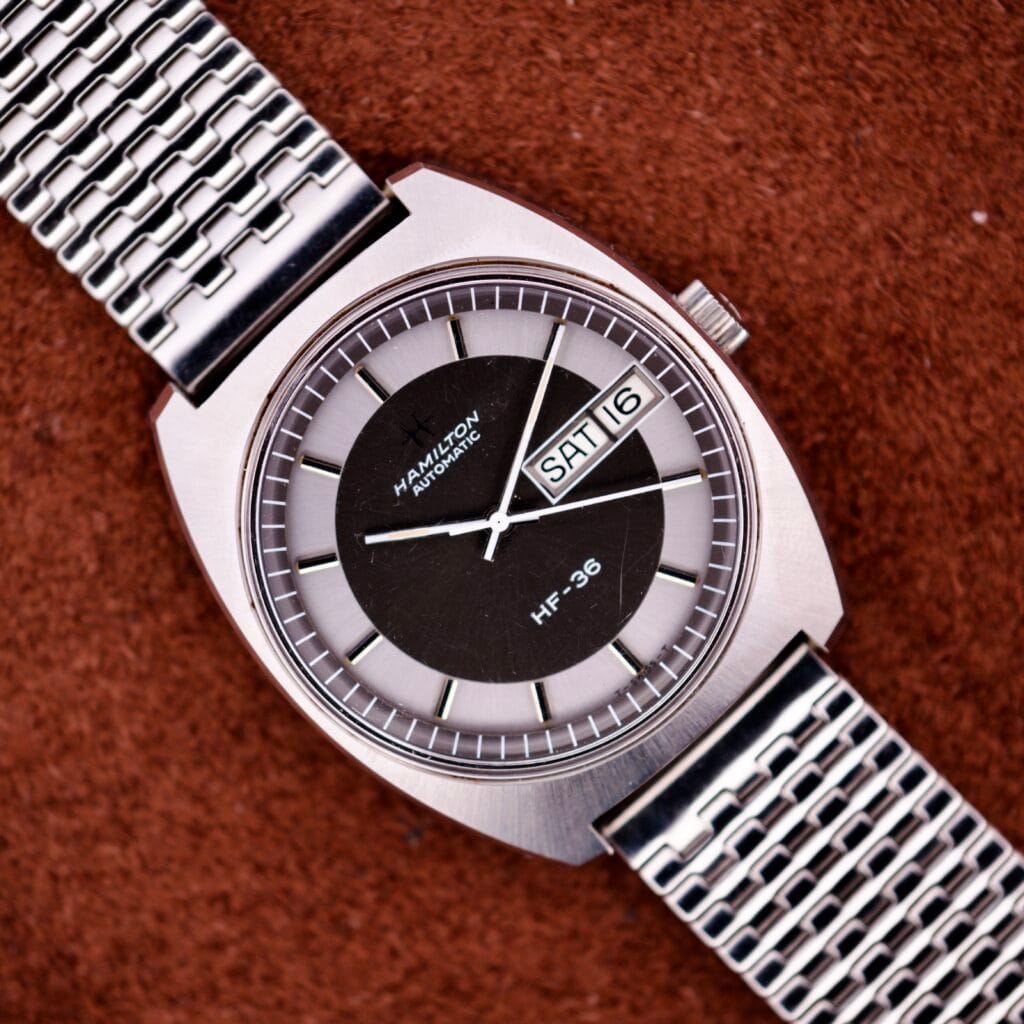
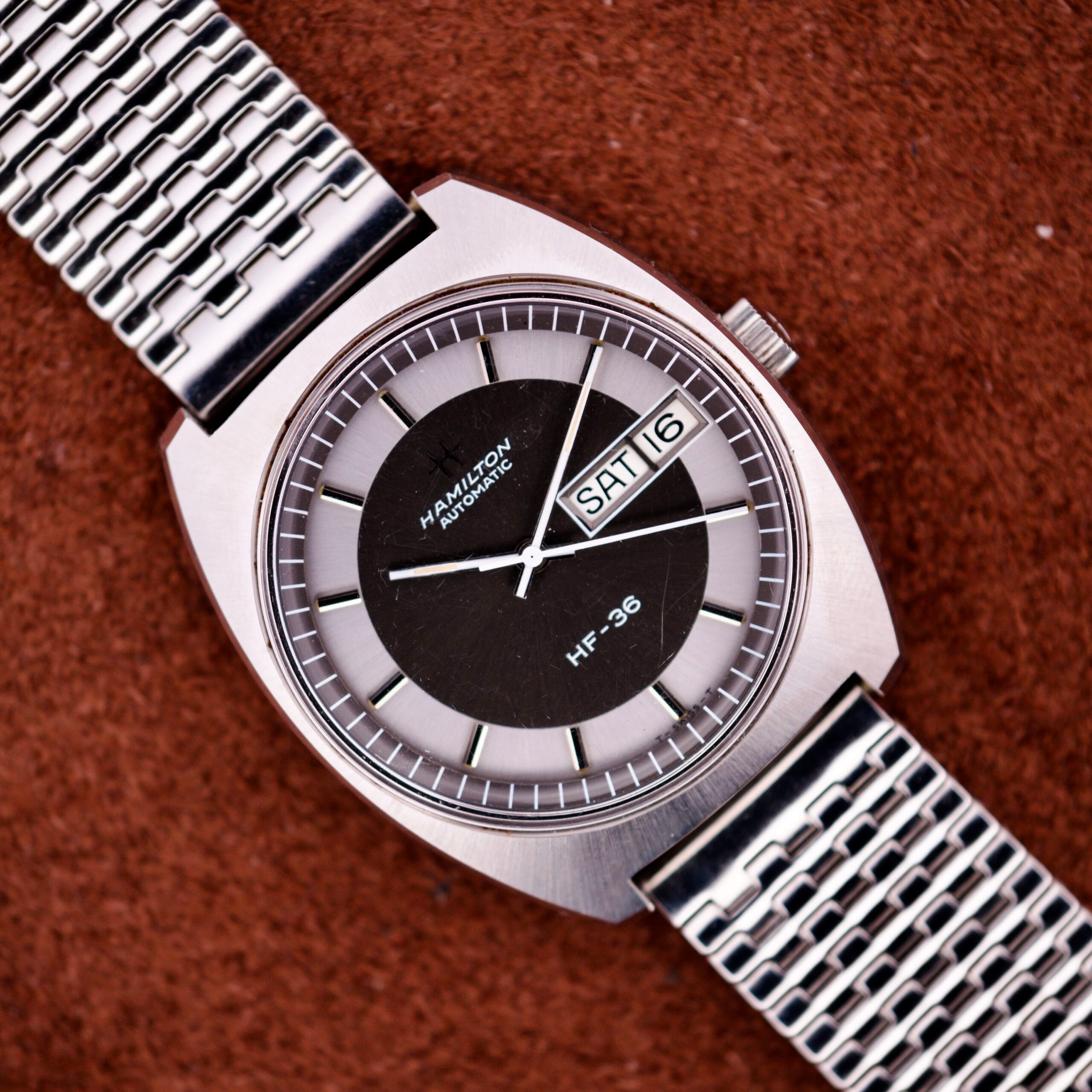
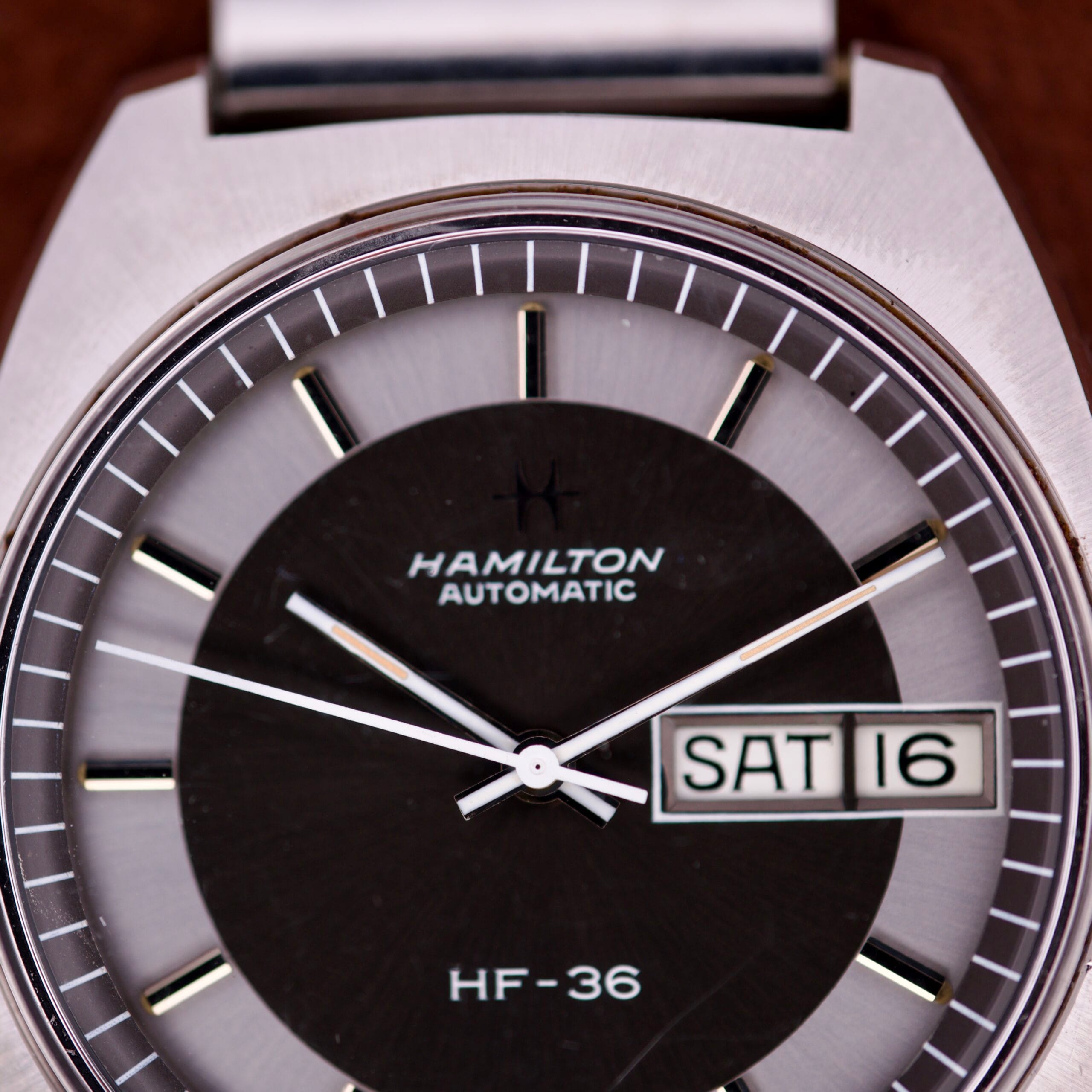
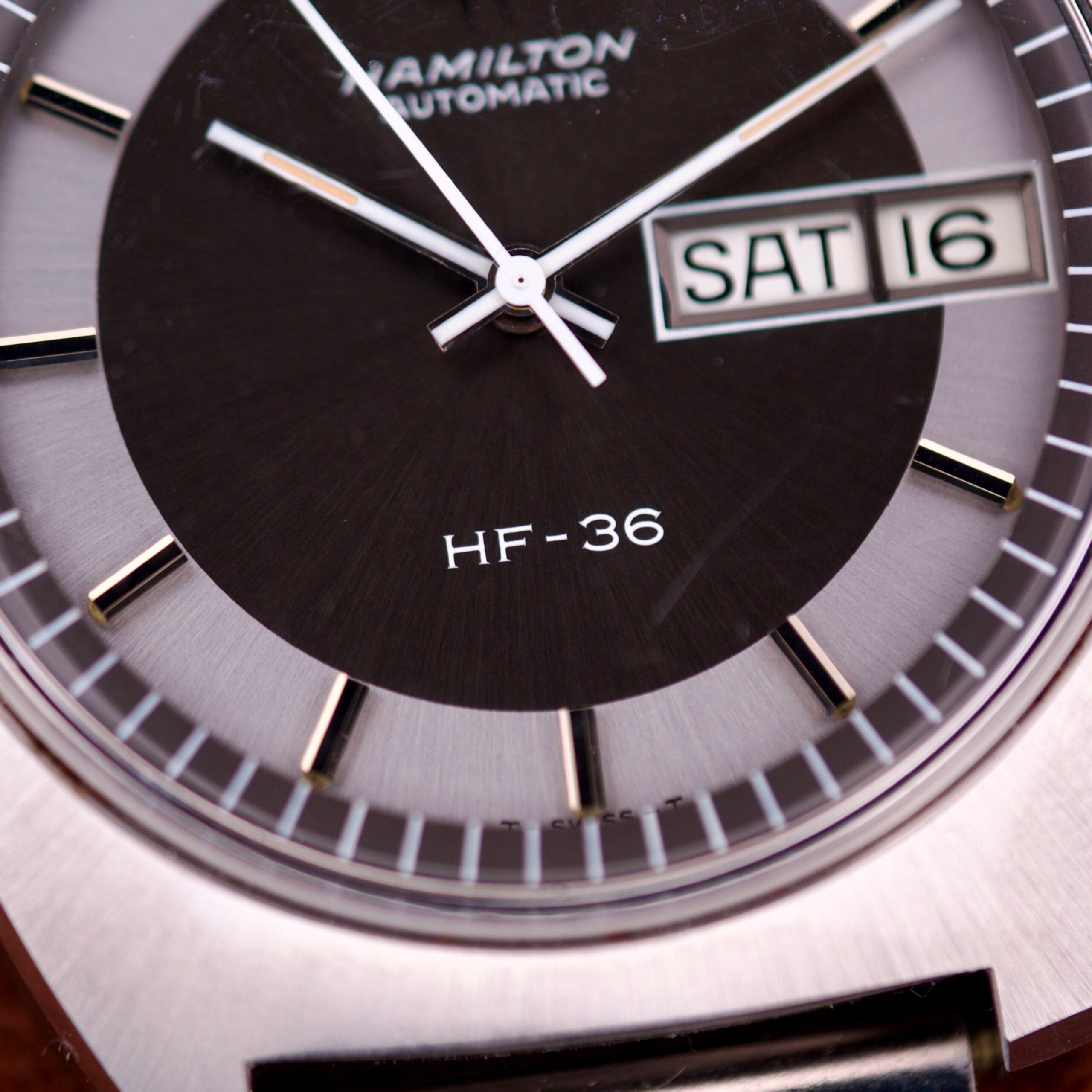
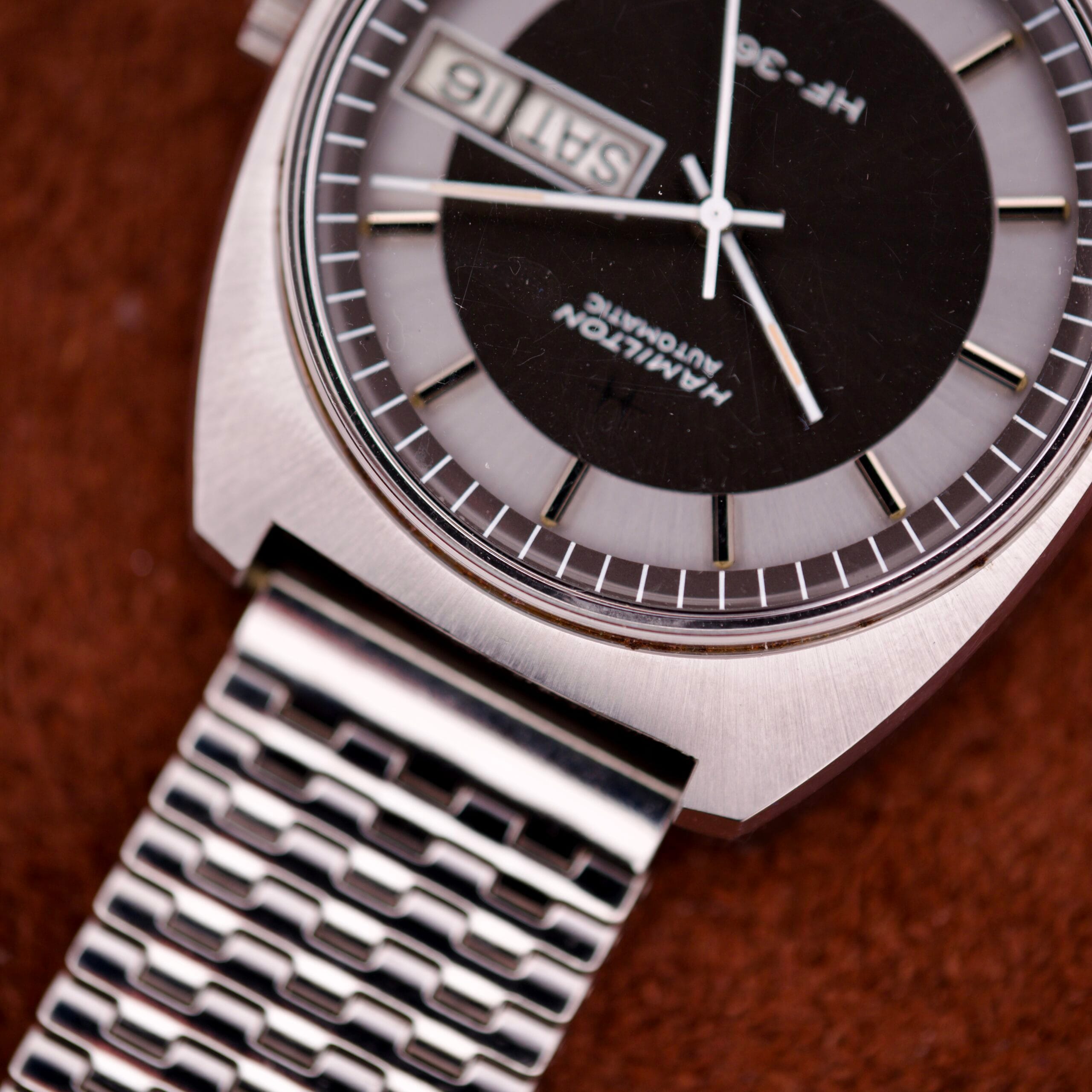
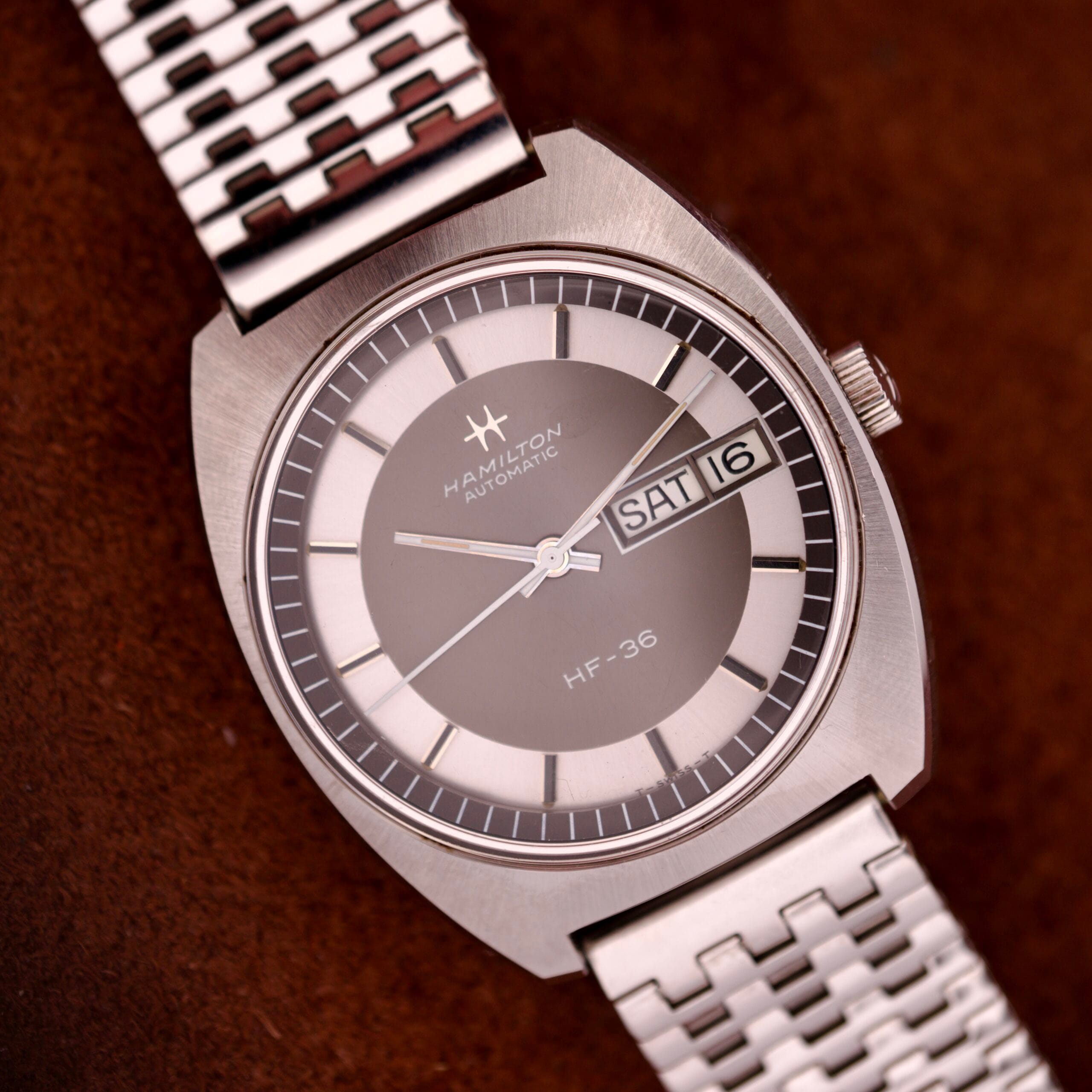
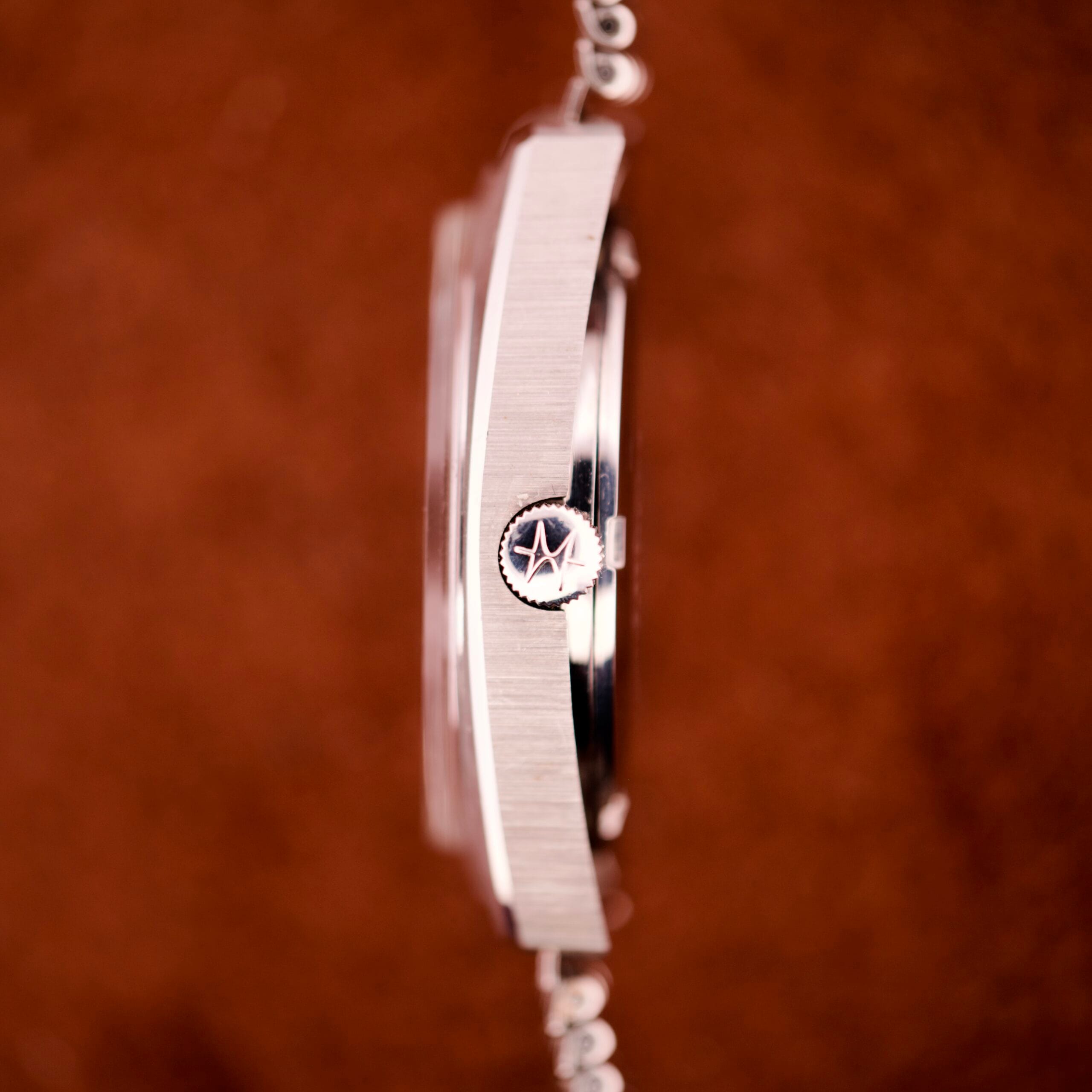
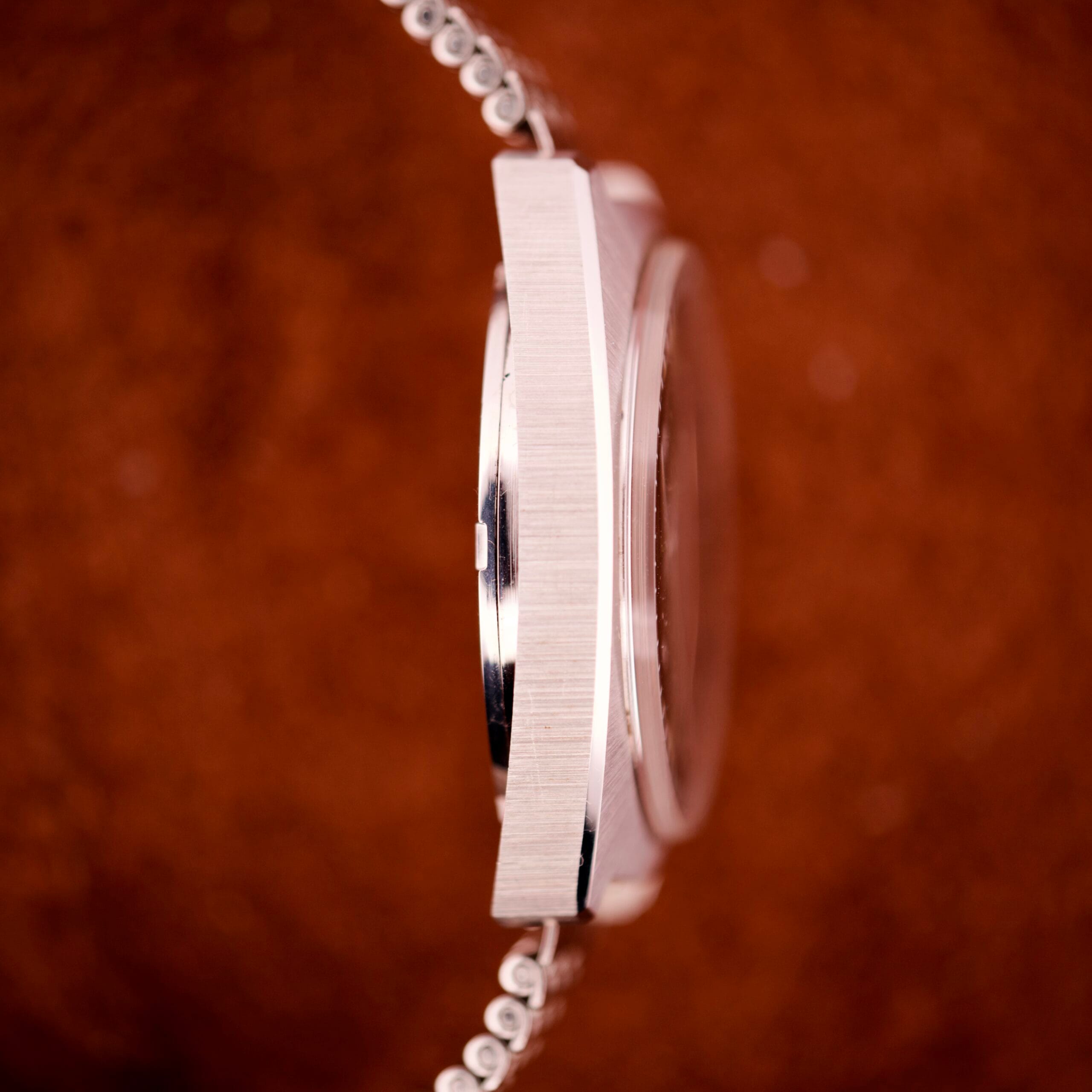
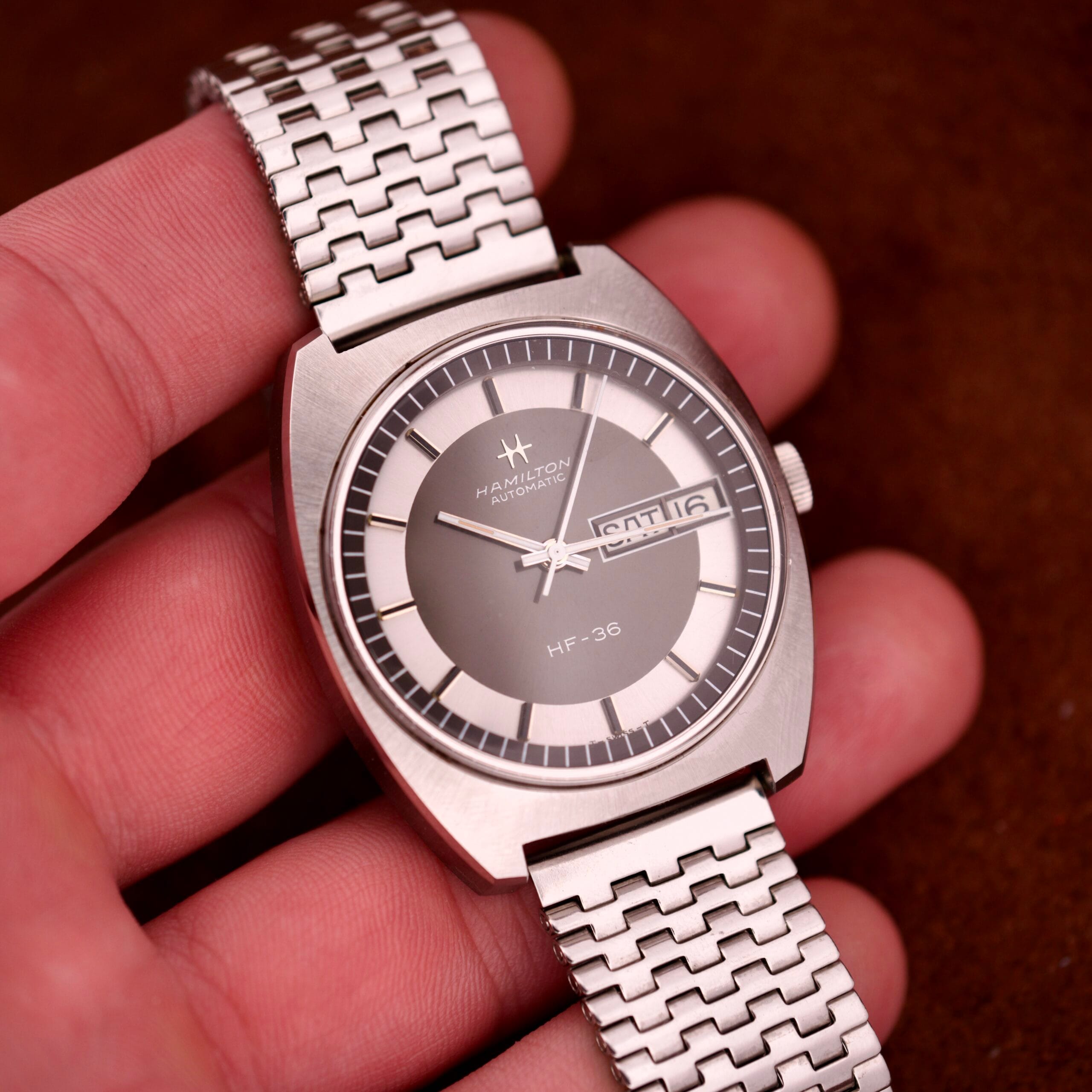
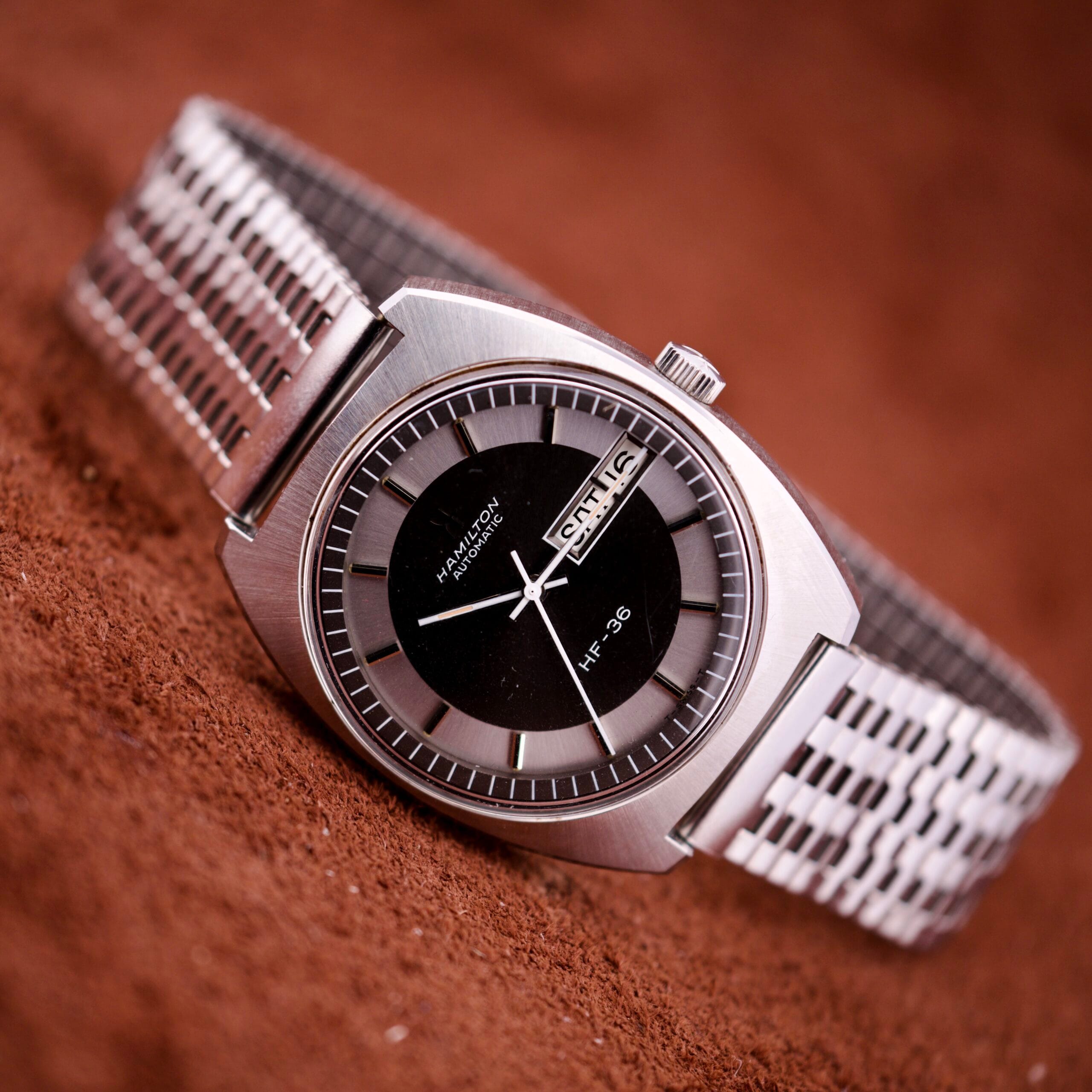
This particular example captures the quintessential 1970s aesthetic without veering into the absurd. The case design is a subtle cushion shape, offering a substantial presence on the wrist that feels architectural and deliberate. The dial is marked with the proud “HF-36” logo, a badge of honor that tells the initiated exactly what kind of engine is under the hood. The inclusion of a day-date complication makes this an immensely practical daily wearer, but it is the applied markers and the sharp, stick hands that give it a timeless, sporty elegance.
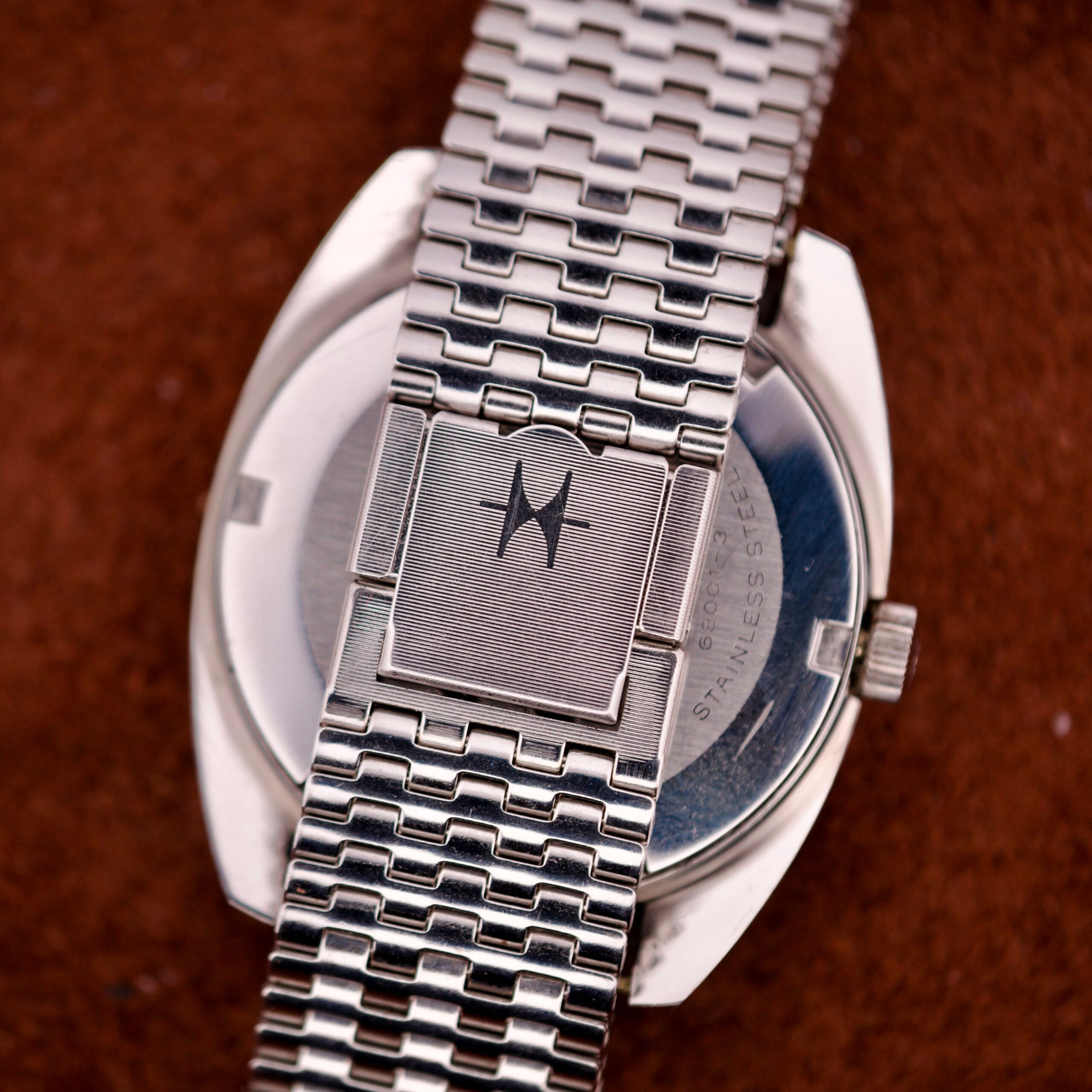
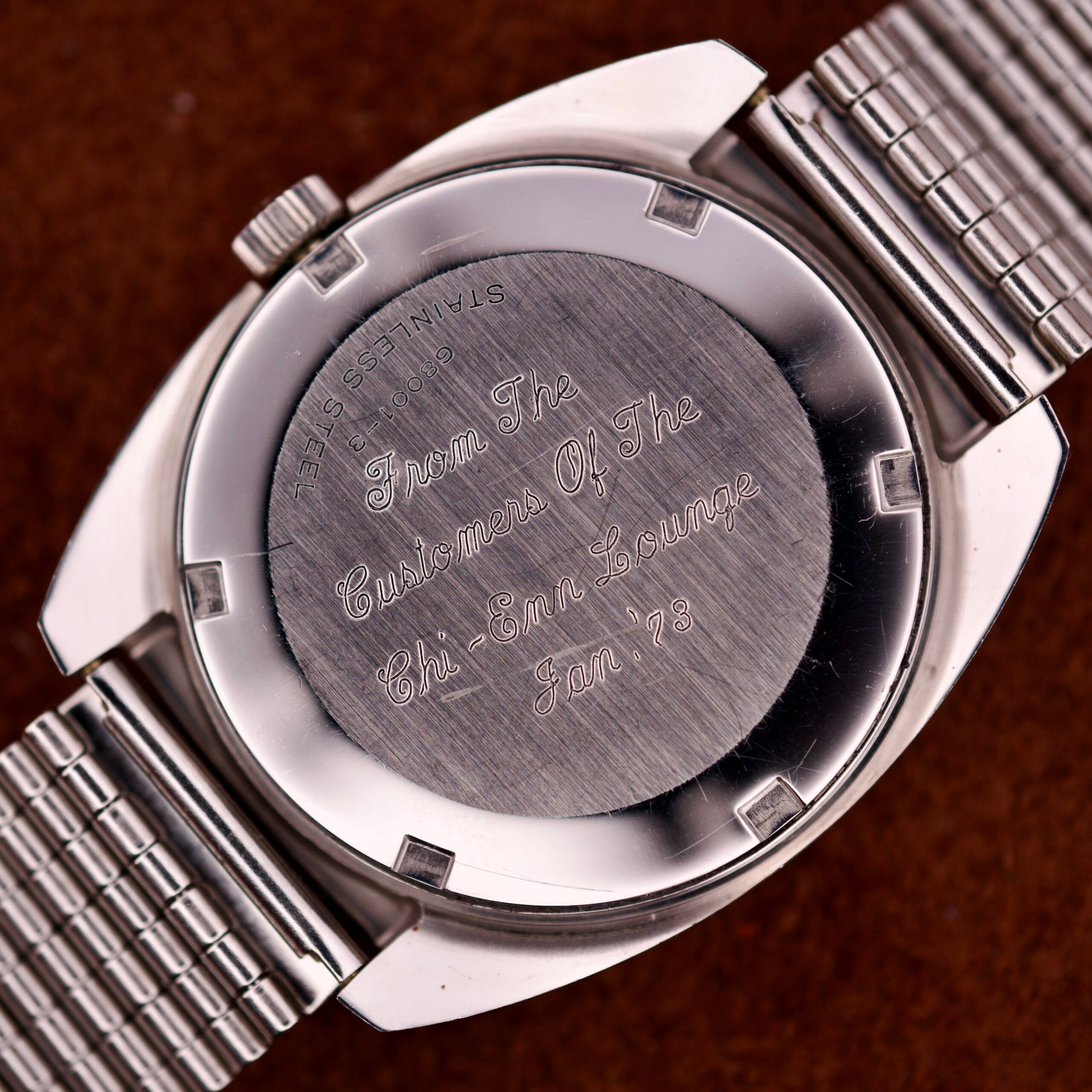
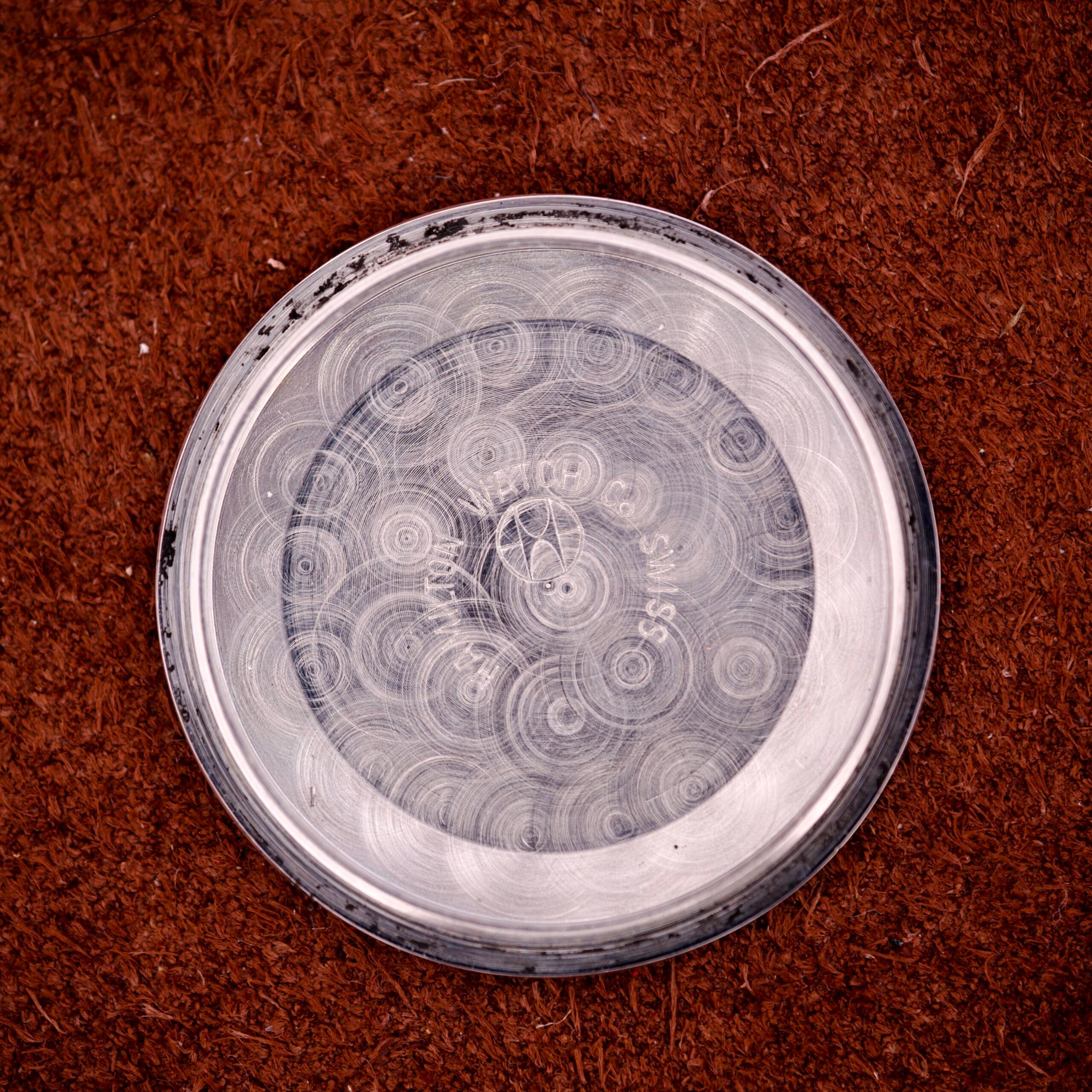
Condition is key with these high-speed machines, and this example presents as a wonderful survivor. The stainless steel case retains its original lines and finishing, showing the honest wear of a watch that was used as intended, a precision instrument for the everyday man. The dial is clean and vibrant, free from the heavy degradation that often plagues watches of this period. The movement, the true star of the show, continues to hum at its frenetic pace, a mechanical heartbeat that sounds distinctly different, more of a rapid-fire buzz than a slow tick, when held to the ear.