

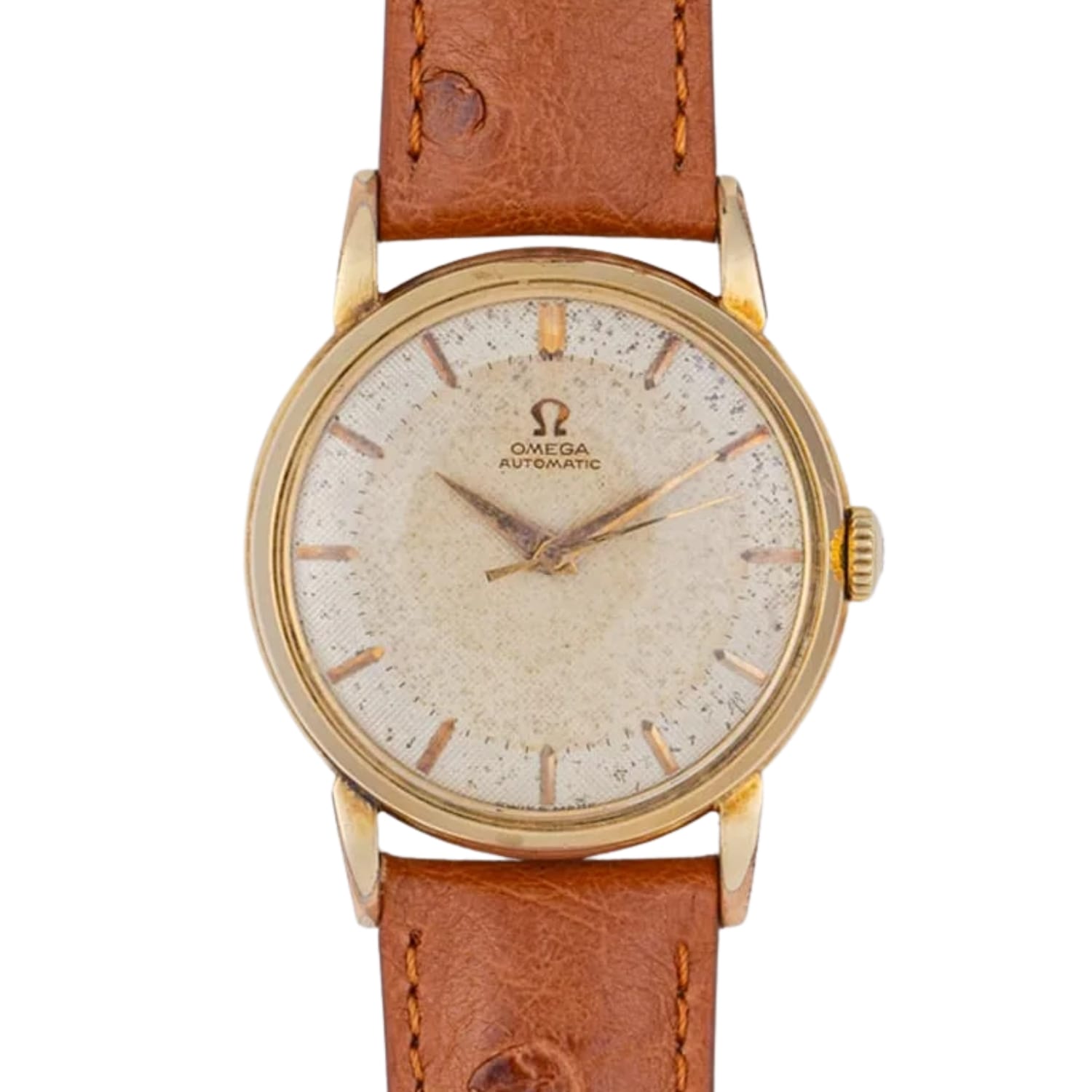
The Omega 2865 represents a fascinating chapter in mid-century Swiss watchmaking, embodying the elegant simplicity and technical innovation that defined Omega’s 1950s output. Introduced in 1955, this reference served as the center seconds companion to the small seconds reference 2862, both sharing identical cases marked with dual reference numbers. While overshadowed today by its more celebrated siblings like the Seamaster 300 and Speedmaster, the 2865 offers collectors an accessible entry point into vintage Omega ownership with genuine horological substance.
What makes the 2865 particularly noteworthy is its timing: produced during Omega’s transition from “bumper” automatic movements to modern full-rotor winding systems, this reference houses the Caliber 501, Omega’s first generation automatic movement featuring a 360-degree rotor. This places the 2865 at a pivotal moment in watchmaking history, when mechanical innovation was reaching maturity just before the quartz revolution would upend the industry. For collectors seeking an authentic 1950s dress watch with a storied movement at an attainable price point, the 2865 remains an excellent choice.
History & Production Period
The Omega 2865 was introduced in 1955 as part of Omega’s broader expansion of automatic watch offerings. This period marked a significant technical achievement for the brand: the transition from the earlier caliber 300-series “bumper” automatics (which used a limited-rotation winding weight) to the revolutionary 500-series movements featuring a full 360-degree rotor. The Caliber 501, which powered the 2865, represented the first successful implementation of this modern automatic winding system in Omega’s lineup.
The reference designation system is particularly interesting: Omega produced these watches in cases marked with dual references, “2862 2865,” followed by case variant suffixes like “-2 SC,” “-3 SC,” “-4 SC,” “-6 SC,” or “-7 SC”. The “SC” designation stands for “Seconde Centrale” (center seconds in French). The 2862 housed small seconds movements from the caliber 260-series, while the 2865 contained center seconds movements, primarily the Caliber 501. This dual-marking system was practical for case manufacturers, allowing them to produce a single case design that could accommodate either movement configuration.
Production ran from approximately 1955 through 1960, with the movement transitioning from 19 jewels (1955-1956) to 20 jewels (1957 onwards). Serial numbers for these watches typically fall in the 14 million to 17 million range, corresponding to the mid-to-late 1950s production window. By 1960, Omega had begun phasing out the 500-series movements in favor of more refined calibers, effectively ending the 2865’s production run.
The 2865 was positioned as a gentleman’s dress watch, smaller and more refined than the sportier Seamaster models of the era. While Seamaster-branded watches emphasized water resistance and durability, the 2865 focused on elegance and everyday wearability. This distinction reflected the growing market segmentation in 1950s watchmaking, as brands began developing distinct sport and dress watch lines.
Omega 2865-3 SC Stainless steel Silver 1958 | watches | Lot
Technical Specifications
The Omega 2865 presents modest dimensions by modern standards but wears comfortably on a range of wrist sizes:
Case Diameter: 31-34mm (excluding crown, depending on specific case variant)
Case Thickness: Approximately 11-12mm including domed crystal
Lug-to-Lug: 40-42mm
Lug Width: 17-18mm (most commonly 18mm)
Water Resistance: Not specified; basic splash resistance only. These were dress watches without significant water resistance ratings. The snap-on case backs provided minimal sealing compared to screw-down designs.
Crystal Type: Domed acrylic (plexiglass), period-correct crystals feature a pronounced dome that extends above the bezel. Original Omega crystals from this era may have a small Omega logo engraved in the center of the underside, though this is extremely faint and difficult to see.
Case Materials: Stainless steel (“Acier Staybrite”), 80-micron gold plating over brass/base metal (often marked “750” plus “80M” to indicate plating thickness), 14kt solid gold, or 18kt solid gold. Solid gold cases bear hallmarks like “585” (14kt) or “750” (18kt).
The watches typically featured simple, clean case designs with smooth, polished bezels and gently curved lugs. Cases were manufactured by various Swiss case makers contracted by Omega, with maker’s marks often found inside the caseback alongside the reference numbers.
Omega 2865-3 SC Stainless steel Silver 1958 | watches | Lot
Movements/Calibers
Caliber 501 (1955-1960)
The Caliber 501 is the defining movement of the 2865 and represents a watershed moment in Omega’s technical development.
Key Specifications:
- Jewels: 19 jewels (early production, 1955-1956) or 20 jewels (later production, 1957-1960). The additional jewel in the 20-jewel version was added to the automatic winding mechanism for improved efficiency.
- Frequency: 19,800 vibrations per hour (2.75 Hz), considered standard for the era.
- Power Reserve: 46 hours when fully wound.
- Diameter: 28.0mm (approximately 12.5 lignes).
- Features: Sweep center seconds, automatic winding with full 360-degree rotor, hand-winding capability via crown, non-hacking (seconds hand continues to run when crown is pulled).
The Caliber 501 was introduced in 1955 in Omega Constellation references before trickling down to more accessible models like the 2865. It featured a monometallic balance with a self-compensating flat balance spring and Omega’s elegant swan-neck micrometer regulator for precise adjustment. The movement plates often display beautiful copper or gilded finishes with Geneva striping (Côtes de Genève) decoration, perlage on bridges, and signed rotors bearing the Omega symbol.
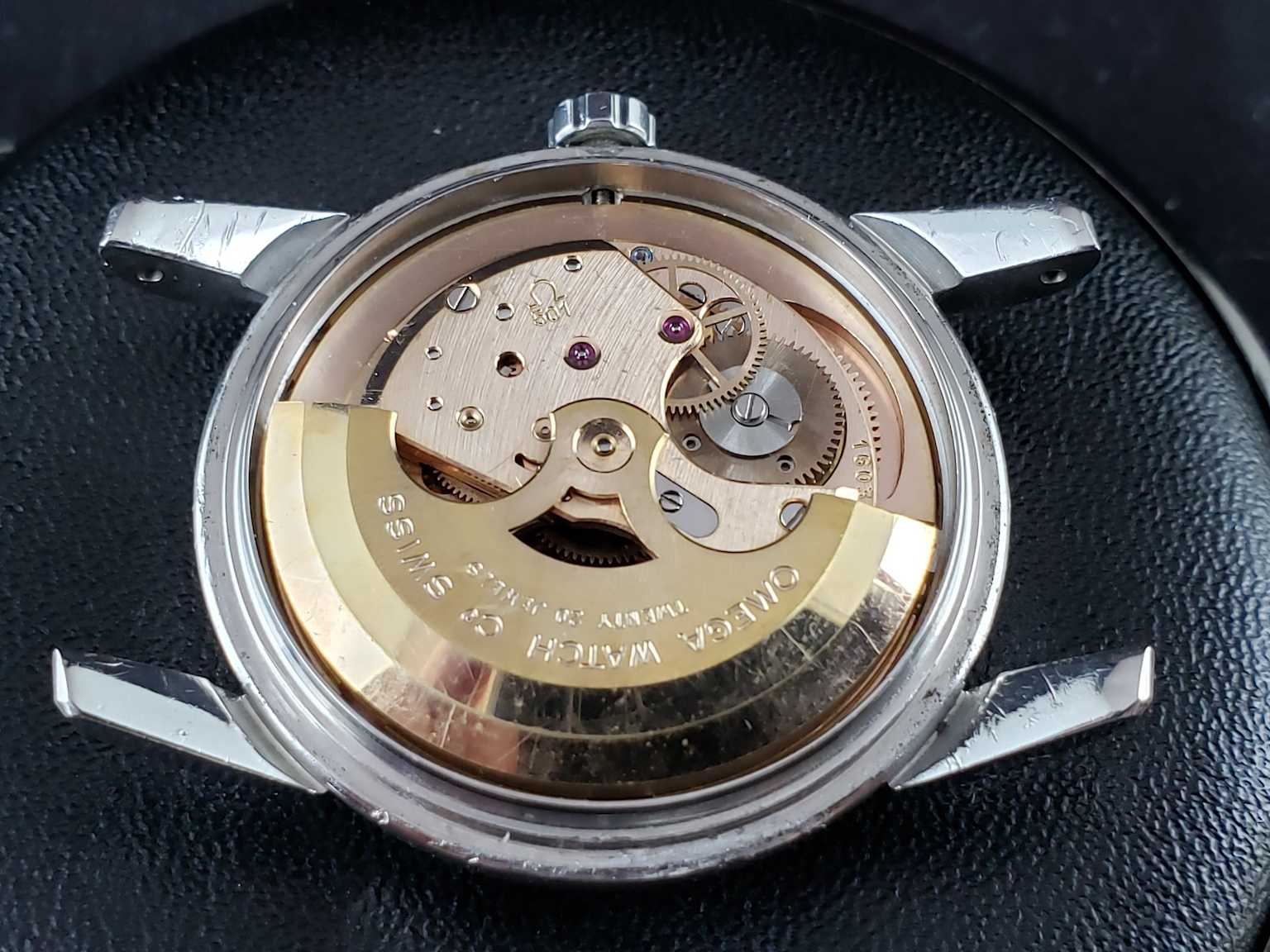
1958 Omega Seamaster Cal 501 Ref. 2846 8 SC – Wolfe Vintage
Movement Markings:
On the bridge: “Omega Watch Co Swiss,” jewel count (“Nineteen Jewels” or “Twenty Jewels”), caliber designation “501,” and the movement serial number (eight digits). The serial number dates the movement and, by extension, the watch itself.
Notable Characteristics:
The Caliber 501 is highly regarded among collectors for its reliability, serviceability, and historical significance. However, parts availability has become challenging, particularly for the rotor assembly and automatic winding components. Some watchmakers report that Omega exhausted supplies of certain 501 components and now substitutes parts from other calibers during official service. This makes finding an unmolested, well-maintained example all the more important.
Common Service Issues:
Amplitude can suffer if the movement hasn’t been serviced in decades. Target amplitude after service should be in the 240-280 degree range with a lift angle of 49 degrees. Low amplitude (below 200 degrees) indicates the need for cleaning, fresh lubrication, and possibly a new mainspring. The automatic winding system, while robust, can develop issues if neglected, leading to insufficient winding or complete failure of the automatic function.
Dial Variations
The Omega 2865 appeared with several dial configurations, though the range was more limited than some other Omega references from the period. Collectors should familiarize themselves with period-correct dial designs to avoid refinished or incorrect examples.
Standard Dial Colors:
- Silver/White: The most common dial color, ranging from bright silver to warm cream tones. Often features applied baton or mixed baton/Arabic numeral hour markers.
Omega 2865-3 SC Stainless steel Silver 1958 | watches | Lot
- Black: Less common but authentic, black dials provide a sportier aesthetic. Often paired with gold-toned applied markers for contrast.
Dial Textures:
One of the most desirable features of 1950s Omega watches is textured dial surfaces, and the 2865 occasionally appears with these:
- Honeycomb/Waffle Dials: A textured pattern resembling honeycomb or waffle grids, created through stamping or embossing. These dials are highly prized by collectors for their visual depth and period-correct charm. The texture catches light beautifully, creating subtle plays of shadow and dimension. Honeycomb dials aged well on preserved examples, developing warm patina while retaining the crisp texture.
- Smooth/Plain Dials: The majority of 2865 examples feature flat, smooth dial surfaces with printed minute tracks and applied markers.
Hour Markers and Hands:
- Applied Markers: Most common are applied gold-toned baton markers at all hours, sometimes with Arabic numerals at 12, 3, 6, and 9 o’clock. Mixed marker configurations (batons plus numerals at quarters) were popular in this era.
- Hand Styles: Period-correct hands are dauphine-style (tapered, faceted hands with a pointed tip) in gold or rhodium finish to match the dial markers. Some variants feature simple stick or pencil hands. All original hands should show even aging and lume consistency with the dial markers.
Luminous Material:
Original 2865 watches from the 1950s used radium-based luminous paint on the hands and hour markers. By the late 1950s, Omega had transitioned to tritium, marked by “T Swiss T” or “Swiss T<25” text at 6 o’clock on the dial (though this marking is more common on later references). The lume will have aged to a warm cream, yellow, or light brown color depending on exposure and storage conditions. Bright white or green lume indicates replacement or re-luming.
Dial Text and Logo:
Typical dial printing includes:
- Omega logo at 12 o’clock
- Sometimes “Swiss” or “Swiss Made” below 6 o’clock
- No model name (no “Seamaster” or “Constellation” designation, as the 2865 was a more basic dress watch)
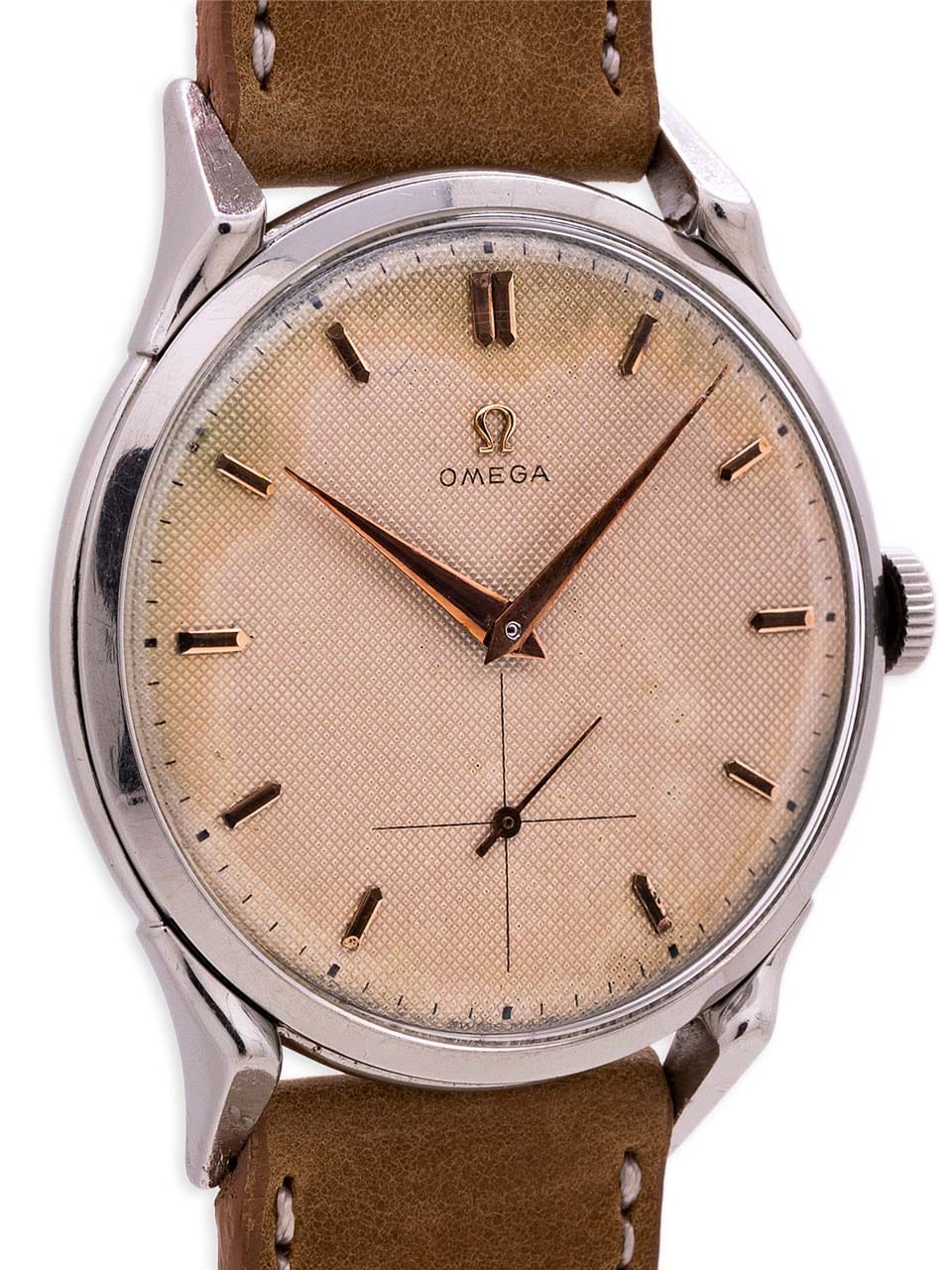
Omega Stainless Oversize ref 2603-2 Waffle Dial circa 1954
Case & Bezel Variations
The dual-reference system means 2865 cases are marked “2862 2865” with various suffix codes that denote slight case variations:
Case Reference Suffixes:
Omega 2865-3 SC Stainless steel Silver 1958 | watches | Lot
- 2865-6 SC: Another case variant, likely different case supplier
- 2865-7 SC: Later production variant
The “SC” suffix consistently indicates “Seconde Centrale” across all variants.
Case Materials:
- Stainless Steel (“Acier Staybrite”): Brushed or polished finish, highly durable. Steel cases often show honest wear on lugs and bezels from decades of use.
Omega 2865-3 SC Stainless steel Silver 1958 | watches | Lot
- Gold-Plated (80 Micron): These cases feature 80 microns (0.08mm) of gold plating over a brass or base metal core. This is genuine factory plating, far more substantial than the 10-20 micron plating common on later watches. Cases are often marked “750” (indicating 18kt gold purity) alongside “80M” or similar notation for the plating thickness. Despite the thick plating, wear-through can occur on high-contact areas like lug tips, case edges, and the bezel after 60-70 years. The underlying brass may show as a different color where plating has worn through.
- Solid Gold (14kt or 18kt): Less common and significantly more valuable. Solid gold cases bear hallmarks: “585” for 14kt or “750” for 18kt gold. Some examples are in rose gold, though these are exceptionally rare.
Case Backs:
All 2865 variants use snap-on case backs with minimal water resistance. The exterior of the caseback is typically smooth and unadorned, while the interior bears:
- Reference numbers (e.g., “2862 2865-4 SC”)
- Case maker’s mark
- Metal purity hallmarks if gold
- Sometimes a hippocampus (seahorse) symbol or key symbol
- Serial numbers (case serial, distinct from movement serial)
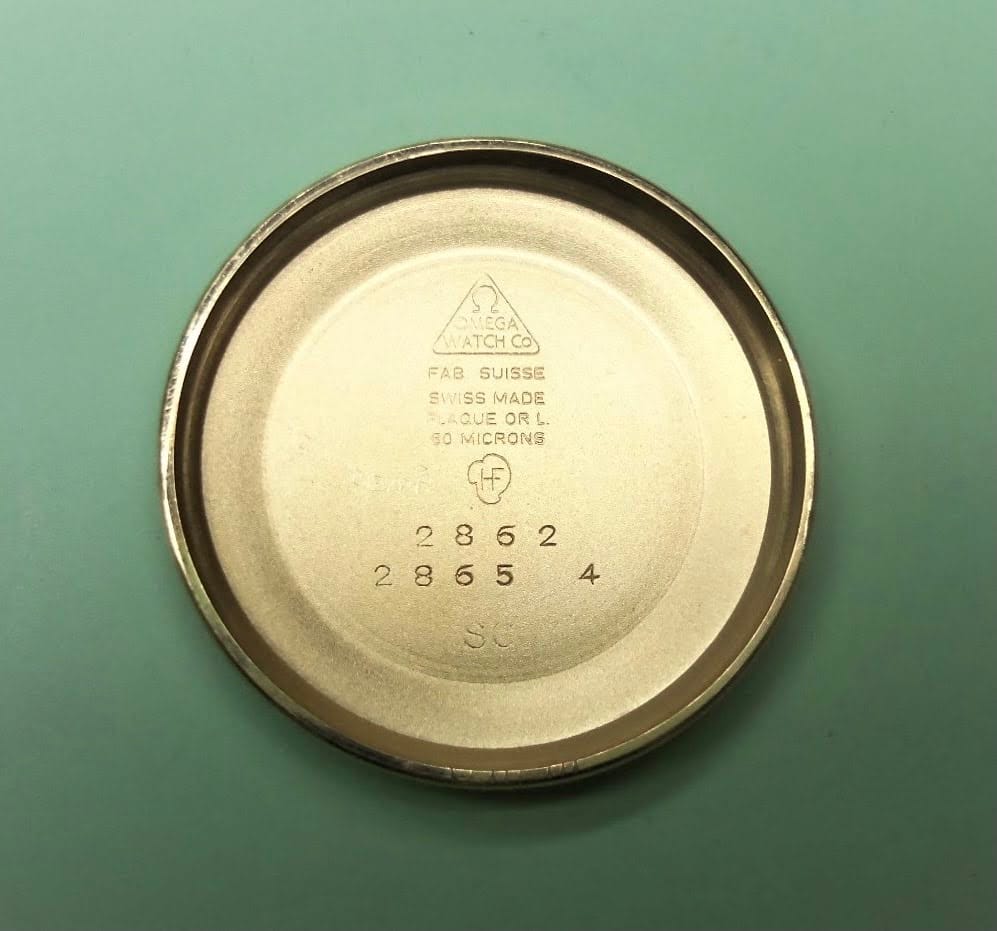
Help Identifying Omega Automatic | Omega Watch Forums
Bracelet & Strap Options
The Omega 2865 was not originally sold with metal bracelets. Period-correct options include:
Original Straps:
- Leather Straps: Brown or black leather straps in various textures (smooth calfskin, crocodile, alligator) with 17-18mm lug width. Original 1950s Omega straps are rarely found in wearable condition today due to age and brittleness. Even unused “new old stock” straps may have deteriorated or emit musty odors after decades of storage.
- Buckles: Period-correct buckles are gold-plated or solid gold with the Omega logo. Finding original buckles is valuable even if the strap has deteriorated, as they can be transferred to modern replacement straps.
Modern Replacement Options:
Most collectors fit modern leather straps to these watches. Quality aftermarket straps in brown, black, or tan leather with 18mm lug width are readily available. For gold-plated or solid gold cases, matching the buckle finish (gold-plated or solid gold) to the case maintains visual coherence.
Vintage-style straps with a slight taper (18mm at lugs, 16mm at buckle) are period-appropriate and comfortable for smaller vintage cases.
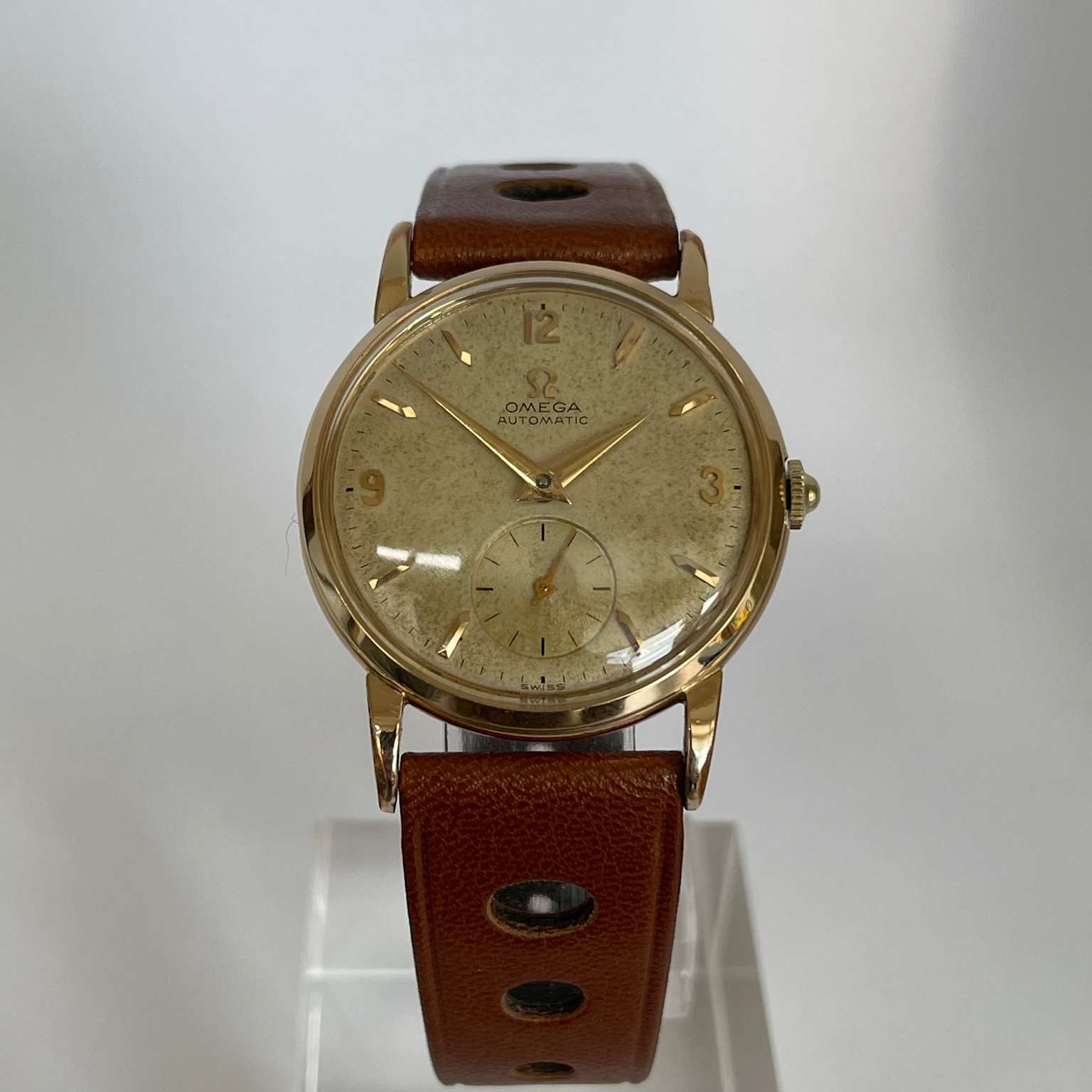
Omega Automatic 2865-2862-7-SC – RMVintageWatches
Identifying Original vs. Replaced Parts
Authenticating a vintage 2865 requires careful examination of multiple components. Here’s what to look for:
Dial Authenticity:
- Printing Quality: Original dial printing is crisp, even, and properly aligned. Look for consistent font styles, accurate spacing, and correct Omega logo proportions. Refinished dials often show thicker, uneven printing or incorrect fonts.
- Lume Condition and Consistency: Original radium or tritium lume ages uniformly across the dial and hands, developing a warm cream, yellow, or light brown patina. If the dial markers show aged lume but the hands appear bright white or mismatched in color, the hands have been replaced or re-lumed. Under UV light, original radium lume glows faintly and slowly fades, while modern luminous material (Super-LumiNova) flashes brightly and disappears quickly.
- Surface Texture: For honeycomb or waffle dials, examine the texture closely under magnification. Genuine textured dials have uniform, well-defined patterns. Camera reflections on glossy dials can sometimes mimic water damage, so request photos from multiple angles under natural light.
- Dial Color and Patina: Original dials develop subtle, even patina or may retain pristine condition if well-preserved. Tropical browning (discoloration to brown tones) is possible but should appear organic, not splotchy. Be wary of dials that look suspiciously perfect, overly shiny, or display high-gloss finishes, as these may have been refinished.
- Dial Text: Vintage Omega dials from the 1950s typically do not say “Swiss Made” at 6 o’clock unless marked for tritium (“T Swiss T”). Many refinishers omit or incorrectly add text.
Hands:
Period-correct hands should match the dial’s style and era. Dauphine hands were standard for the 2865. Hands should show the same lume aging as the dial. Replaced hands often exhibit different lume color, incorrect proportions, or modern luminous paint.
Movement:
Verify the caliber number, jewel count, and serial number match the case. The movement serial should correspond to the production year (14 million range for 1955-1956, 15-16 million for 1957-1959). Look for signs of service and replacement parts. Non-original or non-adjusted rotor inscriptions may indicate movement servicing by Omega using later parts.
Case and Crystal:
Cases should retain crisp, defined edges and lugs. Over-polishing rounds off sharp lines, thins lugs, and removes definition, particularly on bezels. Compare your example to unpolished references to assess polishing history.
Acrylic crystals should have a pronounced dome. Original Omega crystals may have a tiny Omega logo engraved in the center of the underside, visible under magnification. However, most crystals have been replaced over the decades, which is acceptable as long as a period-correct domed acrylic is used.
Crown:
Original crowns for 1950s Omega watches feature the Omega logo and should match the case material (steel crown for steel case, gold-plated or solid gold for gold cases). Replacement crowns are relatively easy to source but should be period-appropriate.
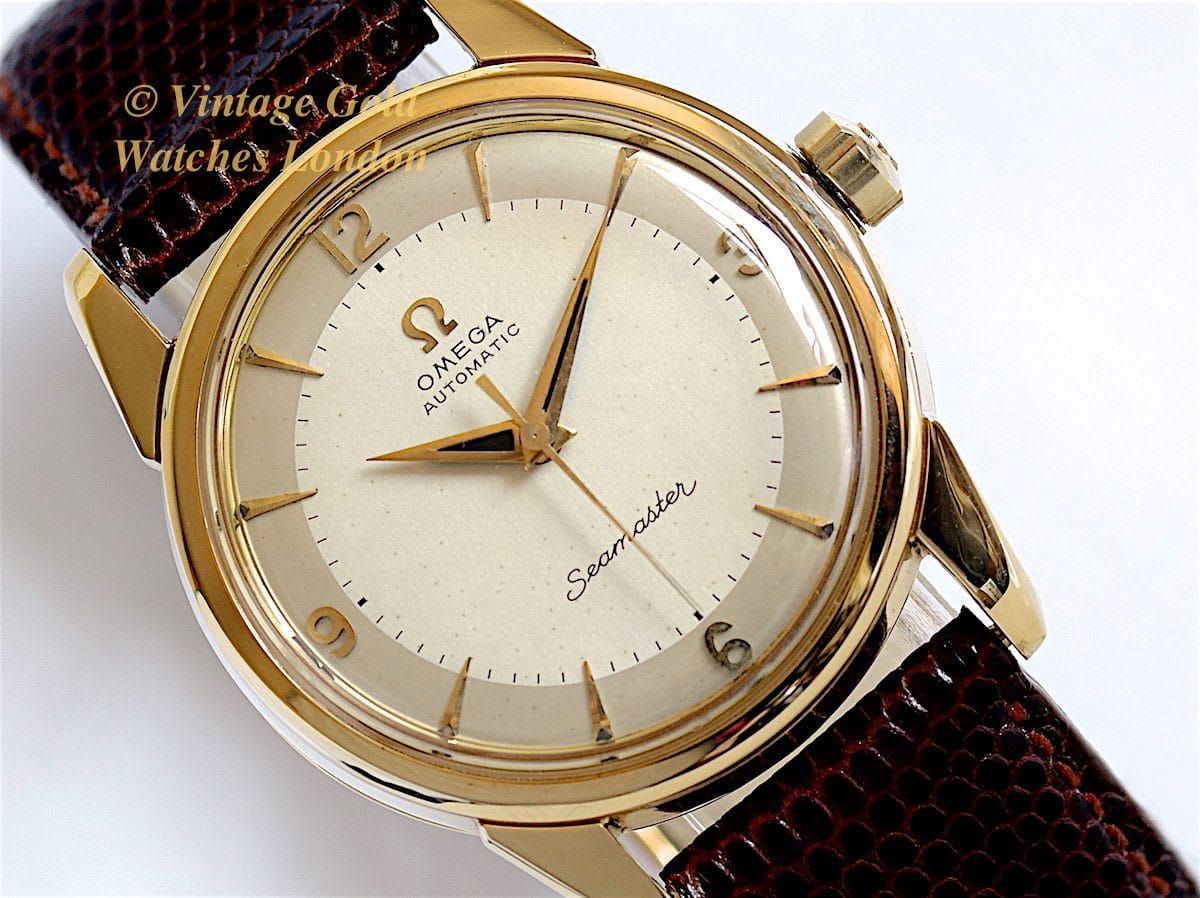
Omega Seamaster Cal.501 14ct 1958 Original Unrestored Two
Collector Notes & Market Context
Current Market Positioning:
The Omega 2865 occupies a sweet spot in the vintage market: accessible pricing with genuine horological interest. Expect to pay:
- Stainless Steel, Good Condition: $400-$800 USD
- Gold-Plated (80 Micron), Good Condition: $500-$1,000 USD
- Solid Gold (14kt-18kt), Good Condition: $1,200-$2,500+ USD
Prices vary significantly based on dial condition, originality, case material, presence of rare dial variants (honeycomb), and overall preservation. Examples with original boxes, papers, and documentation command premiums, though complete sets are exceedingly rare for watches from this era.
What Collectors Seek:
- Unpolished Cases: Watches retaining sharp, crisp case lines with minimal polishing history are highly prized. Original case edges, defined bevels, and unthinned lugs indicate preservation.
- Original Dials: Untouched, unrestored dials are essential. Collectors will accept honest aging, patina, and minor imperfections over refinished dials.
- Rare Dial Variants: Honeycomb or waffle-textured dials elevate value and desirability significantly.
- Complete Originality: Watches with all original components, including correct hands, crown, and crystal (or period-correct replacements), are most desirable.
- Service History: Recently serviced movements with strong amplitude and timekeeping are practical advantages.
Common Pitfalls:
- Refinished Dials: The most common issue. Refinished dials dramatically reduce value and appeal, even if skillfully done.
- Over-Polished Cases: Heavy polishing destroys the watch’s original character and reduces collector value.
- Incorrect Parts: Replaced hands that don’t match the era, incorrect crowns, or wrong movements degrade authenticity.
- Gold-Plated Wear: On 80-micron gold-plated examples, assess wear-through carefully. Minor edge wear is acceptable, but extensive brass showing through significantly impacts aesthetics and value.
Investment Perspective:
While the 2865 is unlikely to appreciate dramatically, well-preserved examples with desirable dials hold steady or appreciate modestly. The key is buying correctly: prioritize originality and condition over superficial appearance. A watch with honest wear and an untouched dial will always outperform a refinished, over-polished example in the collector market.

Omega Seamaster Automatic Cal.501 1958 | Vintage Watch Centre
Authentication Guidance
Step-by-Step Authentication Process:
- Open the Case: Have a qualified watchmaker open the case back to reveal the movement and inside case markings. This is the single most important step.
- Verify Movement: Confirm the presence of Caliber 501 with correct markings: “Omega Watch Co Swiss,” jewel count, caliber number, and serial number. Cross-reference the movement serial number with Omega’s production timeline (14-17 million range for 1955-1960).
- Check Case Markings: Inside the case back, verify reference numbers (“2862 2865” with suffix), case maker’s marks, and metal hallmarks if gold.
- Examine the Dial: Use magnification (10x loupe minimum) to assess printing quality, lume condition, and texture. Look for refinishing indicators: uneven printing, incorrect fonts, excessive glossiness, or color mismatches.
- Test with UV Light: If accessible, use UV light to check lume consistency between dial and hands. Original radium glows faintly and lingers; modern lume flashes bright and fades instantly.
- Assess Polishing: Examine case edges, lug tips, and bezel for over-polishing. Compare to images of unpolished examples.
- Verify Serial Consistency: The movement serial (on the movement) and case serial (inside case back) will differ, as they were produced separately. However, both should align with the watch’s claimed production year.
Red Flags:
- Dial looks too perfect or has modern glossy finish
- Lume on hands and dial doesn’t match in color
- Movement serial number doesn’t correspond to 1955-1960 production
- Case markings are absent, incorrect, or poorly stamped
- Case has been heavily polished with rounded edges and thin lugs
- Crown lacks Omega logo or is obviously modern
- Crystal is flat (not domed) or is sapphire instead of acrylic
When in Doubt:
Consult with experienced vintage Omega collectors on forums like Omega Forums (omegaforums.net) or seek authentication services from Omega directly. Omega’s Heritage Department can issue Certificates of Authenticity for vintage watches with all original parts, though this service is expensive and requires the watch to pass rigorous inspection. Independent watchmakers specializing in vintage Omega can also provide valuable authentication insights.
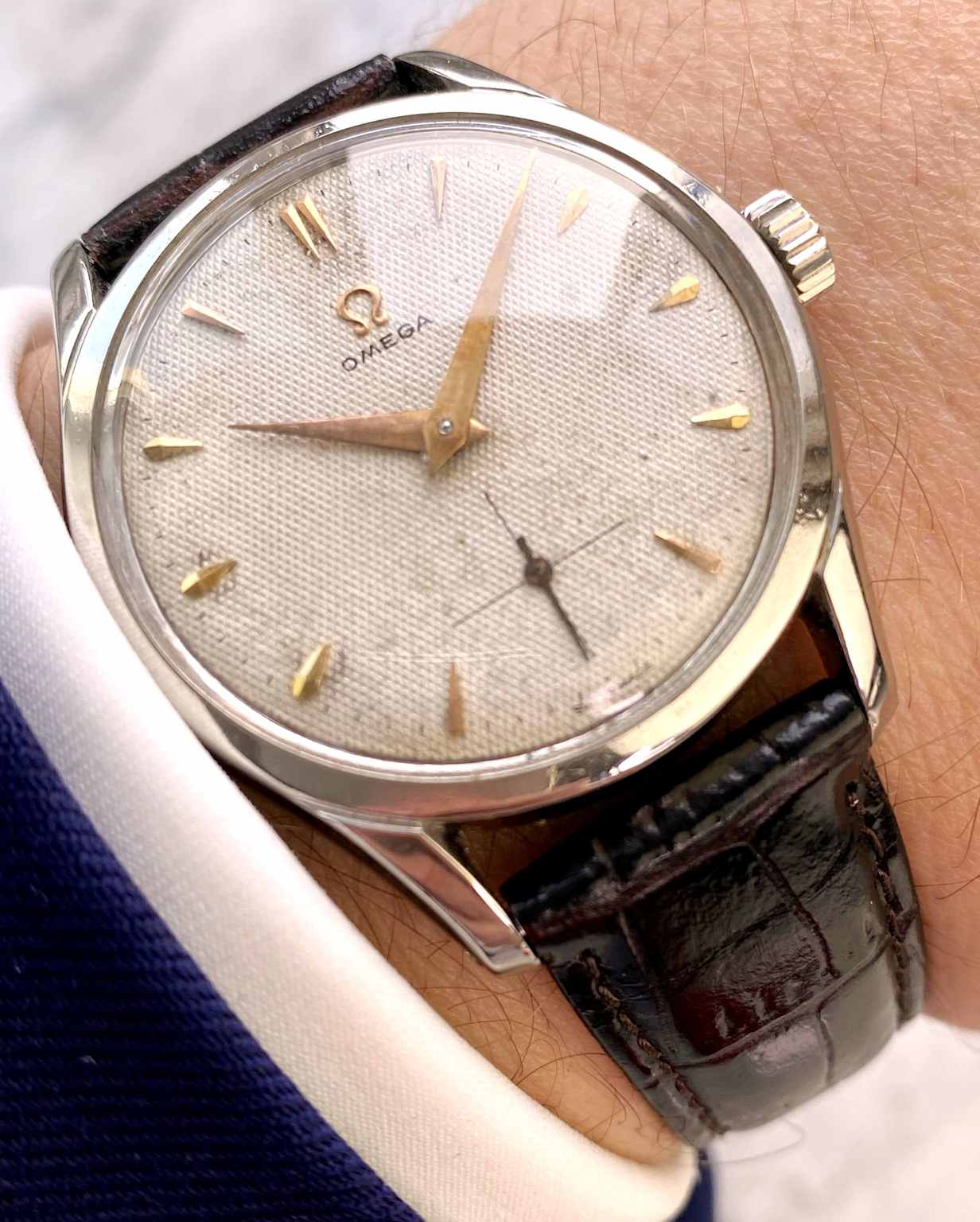
Serviced Omega Waffle Textured Dial Vintage Honeycomb 2639
Conclusion
The Omega 2865 is an understated yet historically significant timepiece that embodies the quiet sophistication of 1950s watchmaking. Powered by Omega’s groundbreaking Caliber 501, the first modern full-rotor automatic movement from the brand, the 2865 represents an important evolutionary step in mechanical horology. Its compact dimensions, elegant dial designs, and genuine Swiss craftsmanship make it an ideal vintage dress watch for collectors seeking authentic mid-century character without the premium prices commanded by more famous references.
For buyers, the 2865 offers an accessible introduction to vintage Omega collecting, provided one prioritizes originality and condition. The watch’s relatively simple construction and widespread production mean examples are still available, though finding well-preserved pieces with untouched dials and unpolished cases requires patience. Collectors drawn to textured honeycomb or waffle dials will find the 2865 particularly rewarding, as these rare dial variants deliver exceptional visual appeal.
Ultimately, the 2865’s value lies not in its rarity or investment potential, but in its honest representation of an era when watches were tools, companions, and expressions of personal style. Whether in stainless steel or gold, with a silvered dial or a honeycomb texture, the 2865 remains a testament to Omega’s mid-century mastery and a wearable piece of horological history.