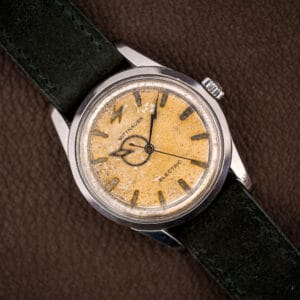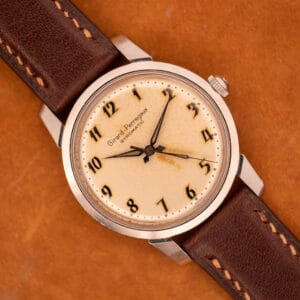
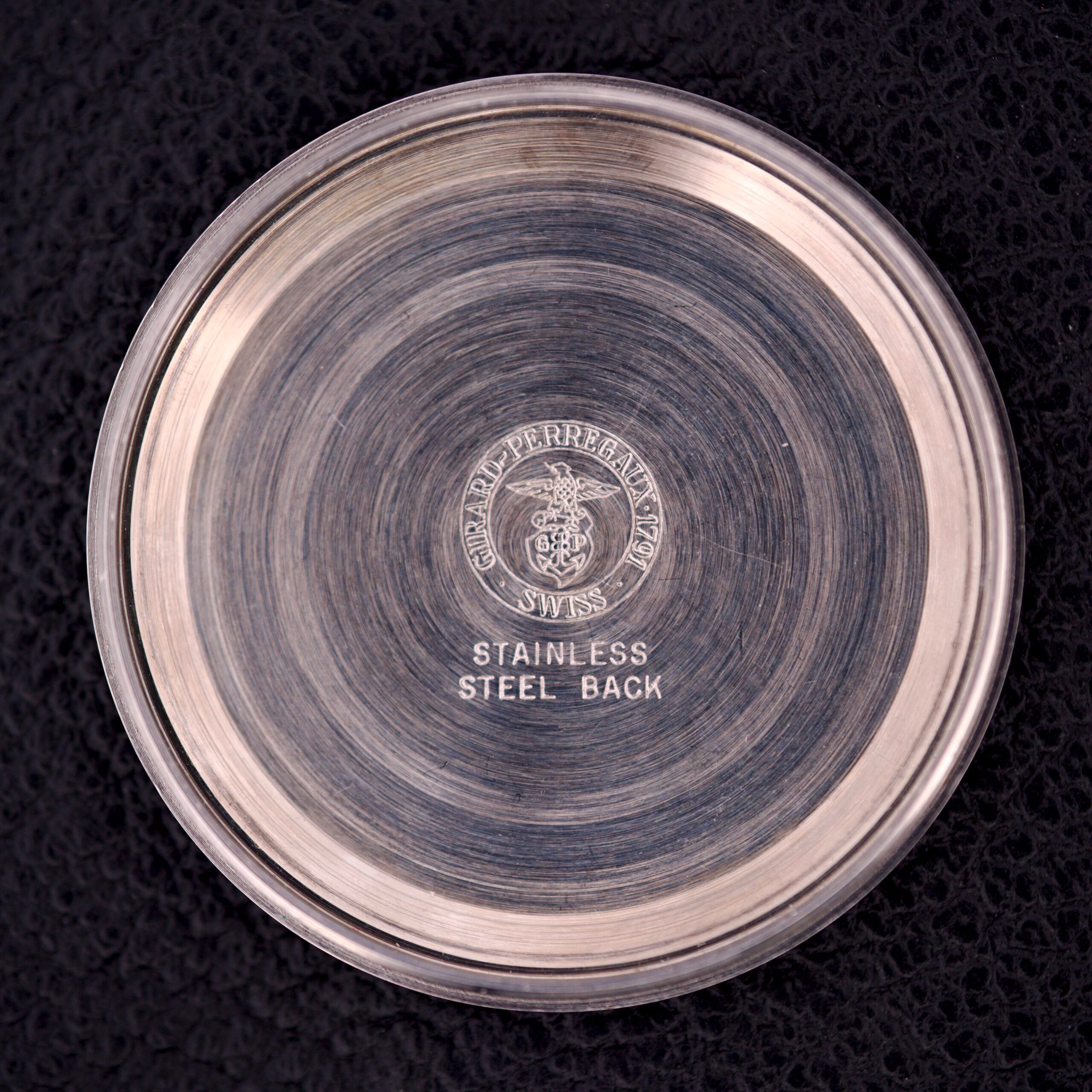
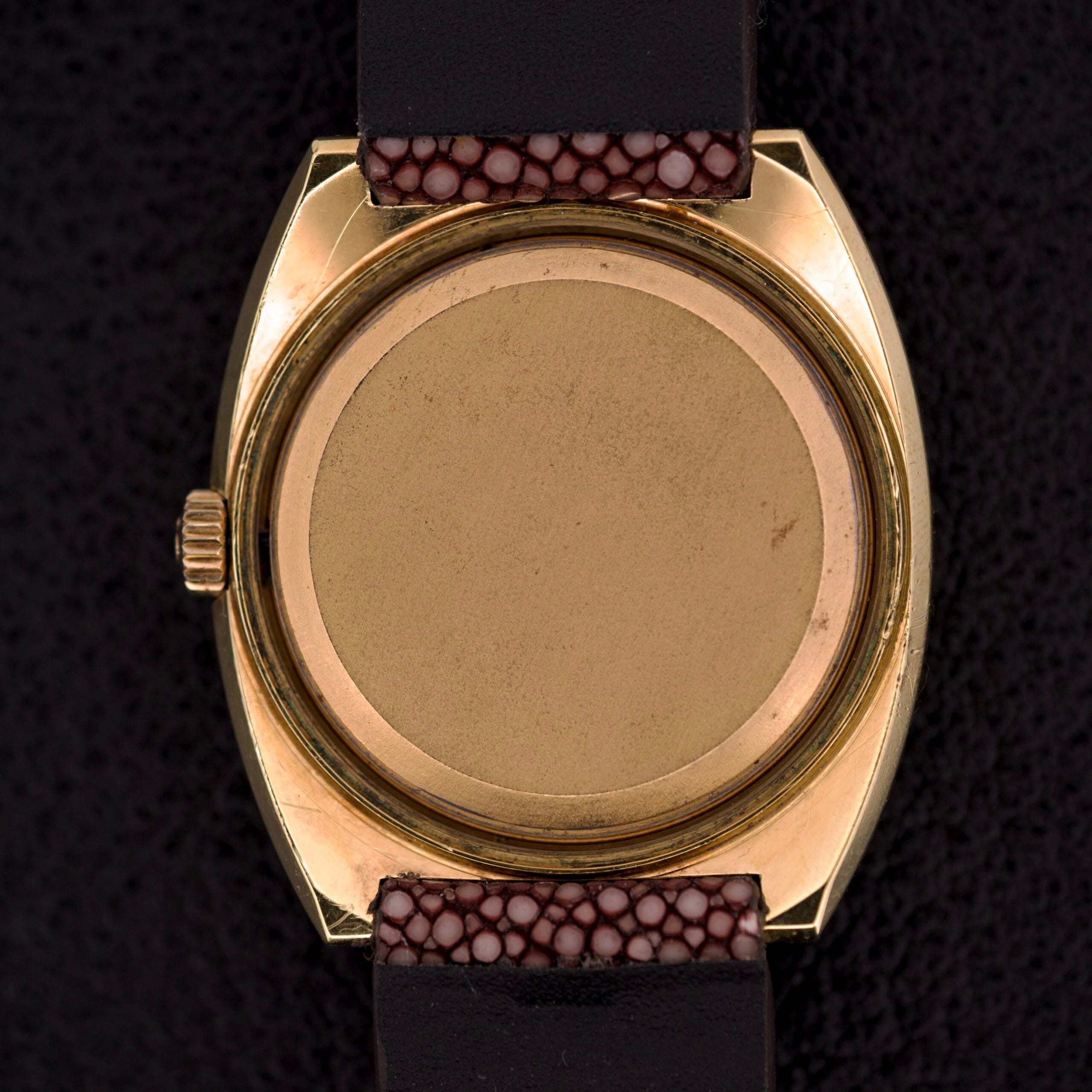
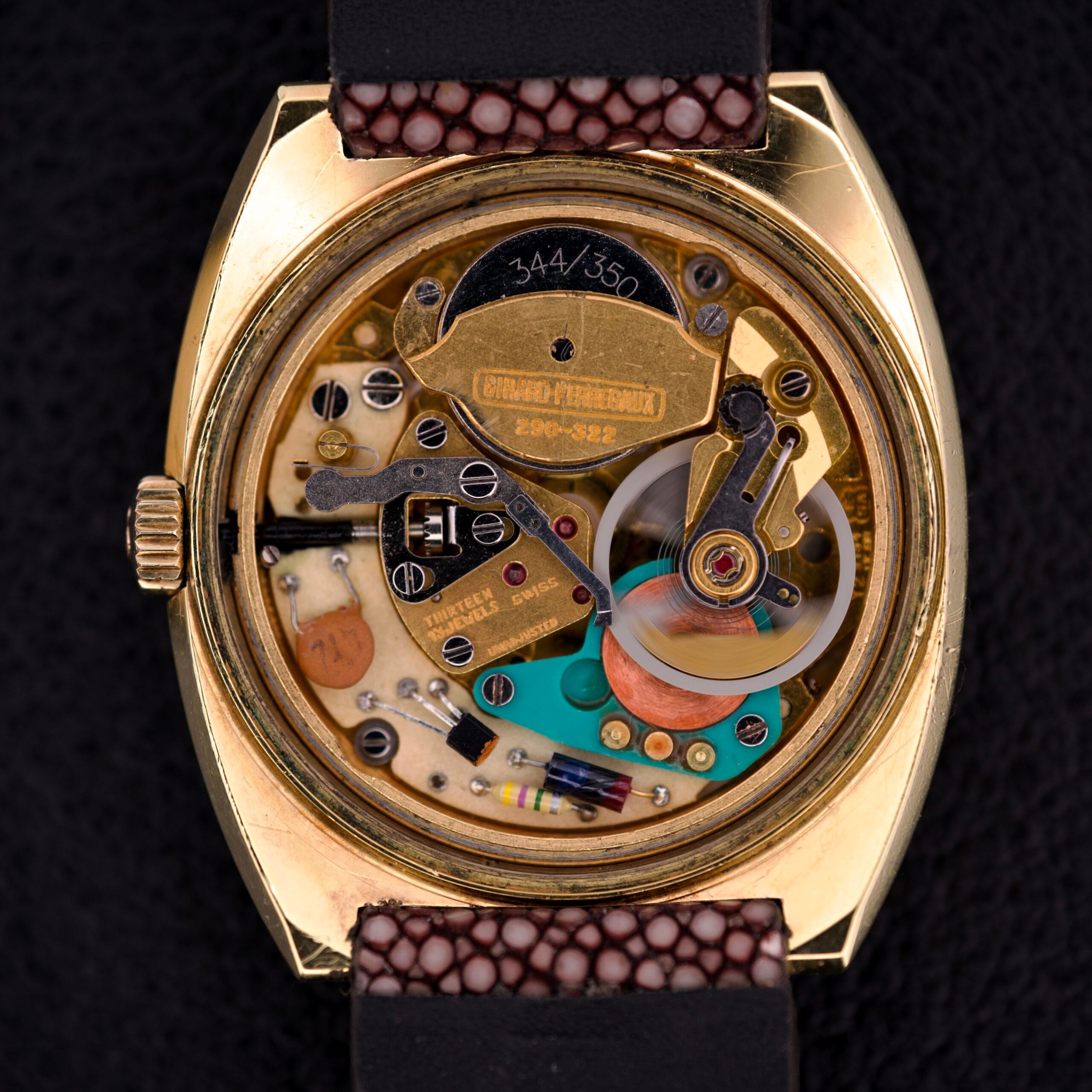
To the uninitiated, the word “Quartz” on a vintage dial might signal a cheap battery watch. To the seasoned collector, however, a Girard-Perregaux with this designation is a holy grail of engineering. While a consortium of Swiss brands (including Rolex, Patek, and Omega) spent millions developing the Beta 21 movement to fight the Japanese, Girard-Perregaux quietly went rogue. They developed their own proprietary movement in-house, the Caliber 350 series. The result was a technical knockout: GP set the crystal oscillation frequency at 32,768 Hz. If that number sounds familiar, it’s because it became the global standard for every quartz watch produced since. This isn’t just a watch; it is the blueprint for the entire modern battery-powered industry.
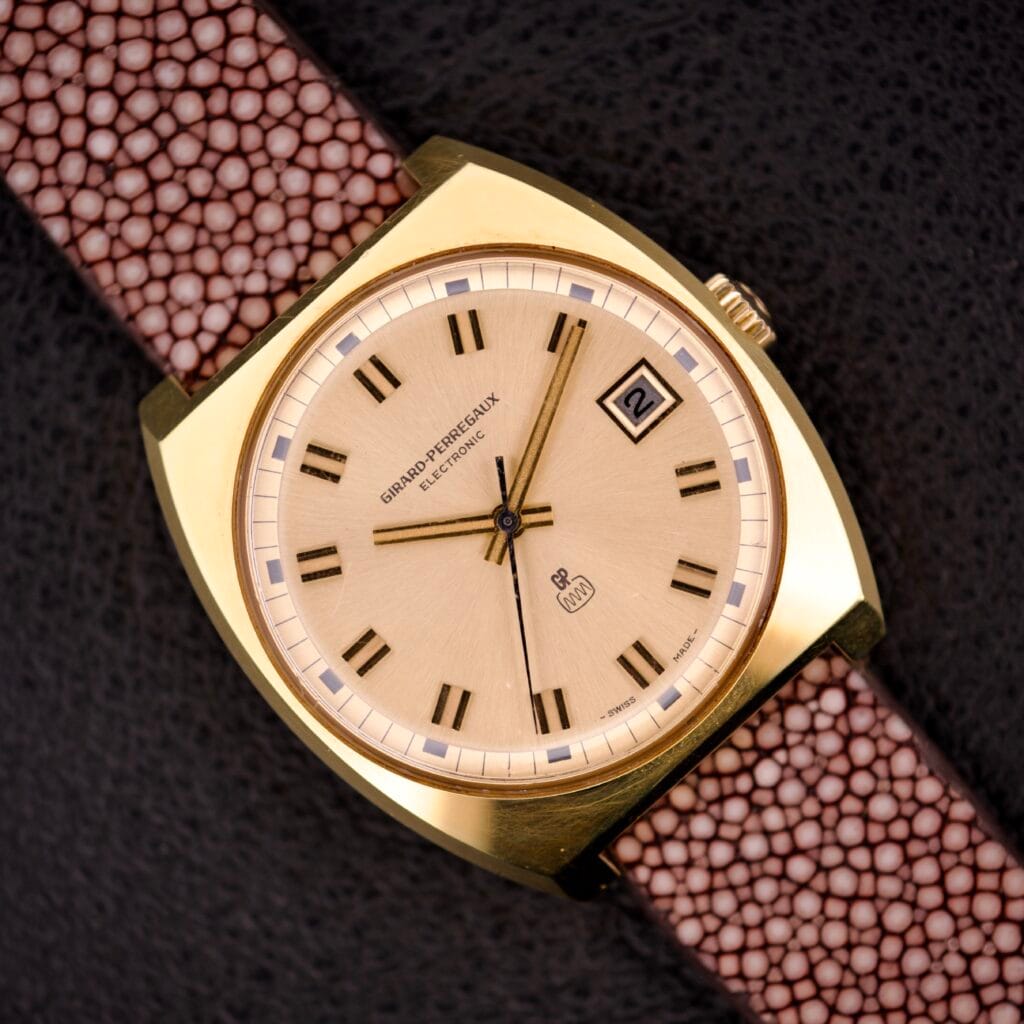
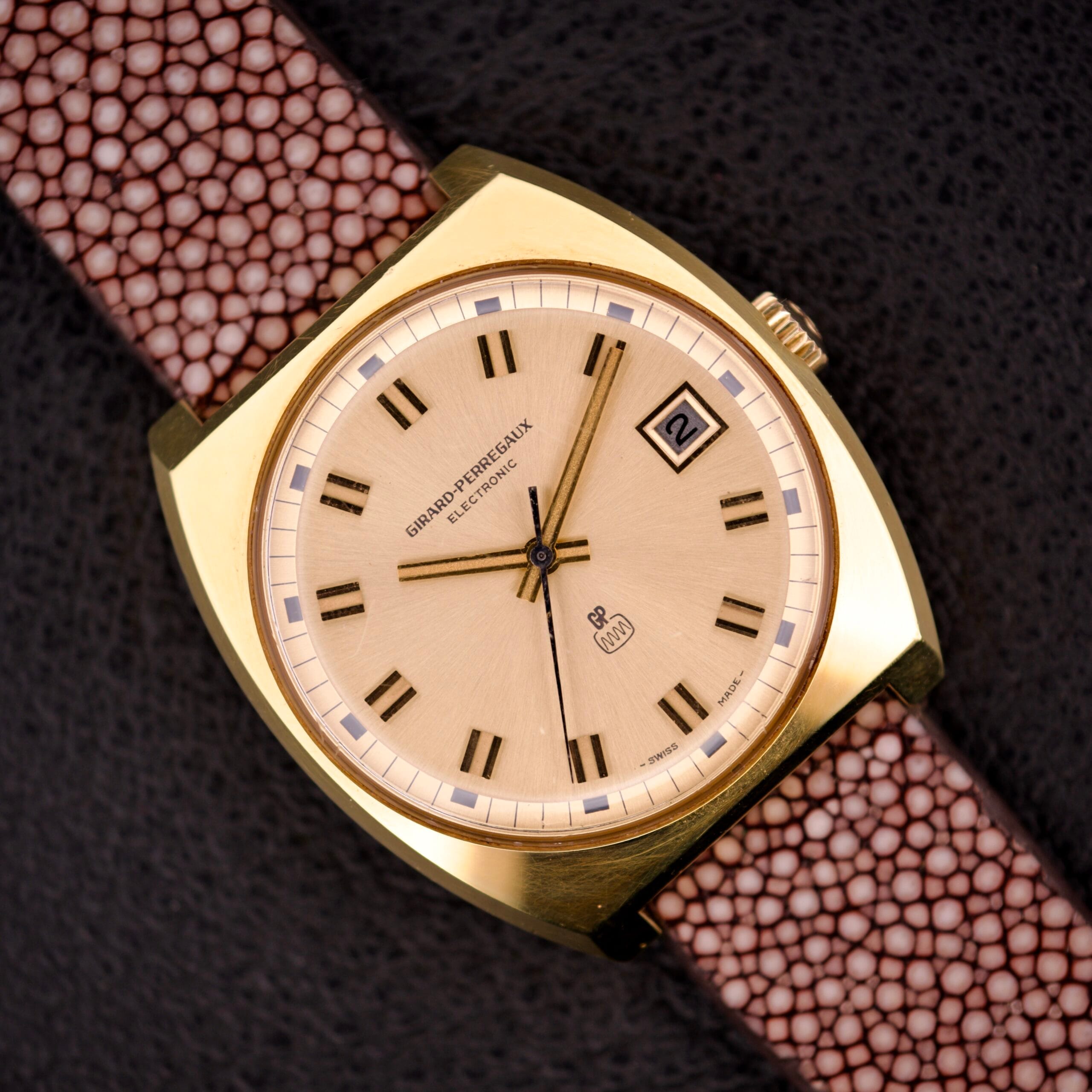
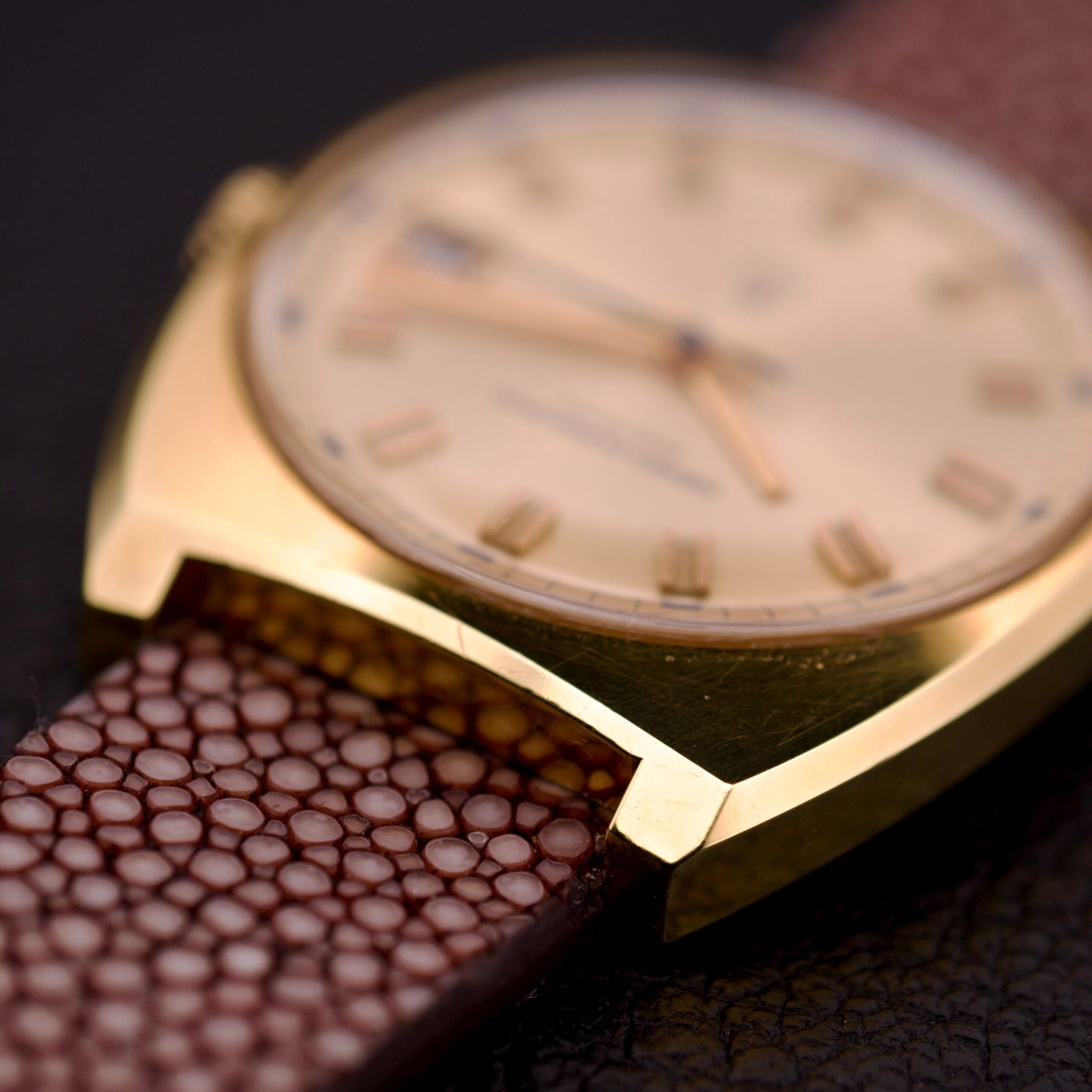
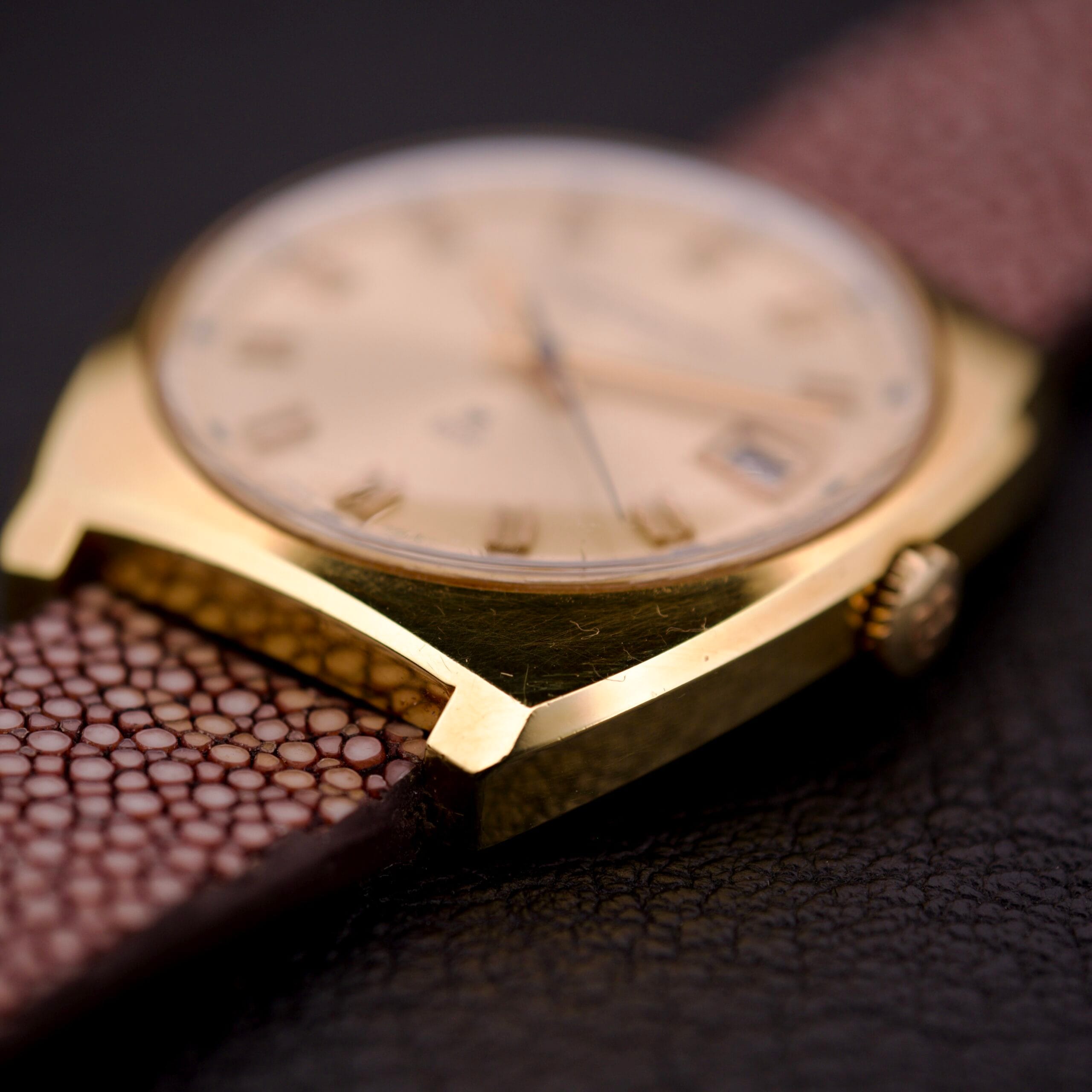
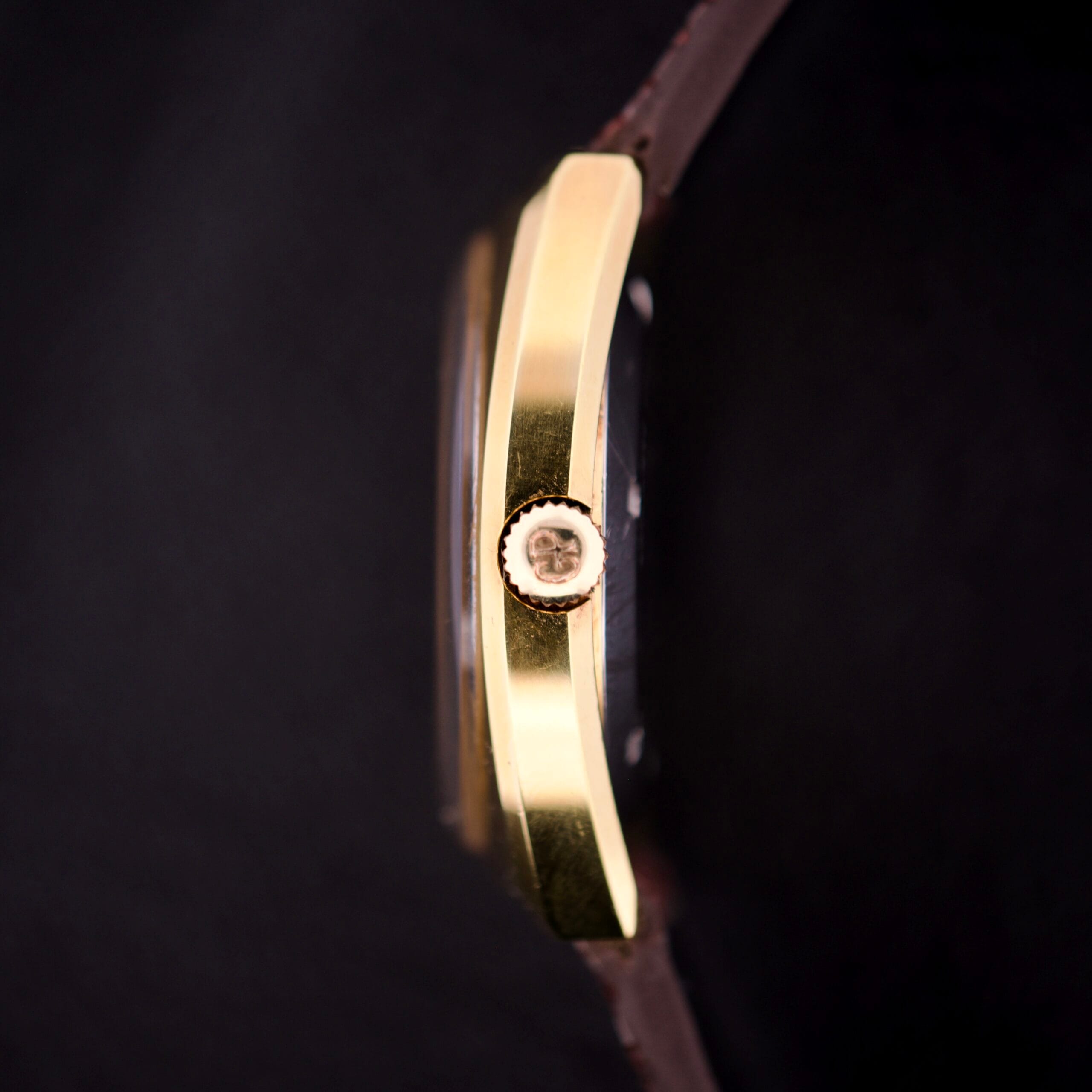
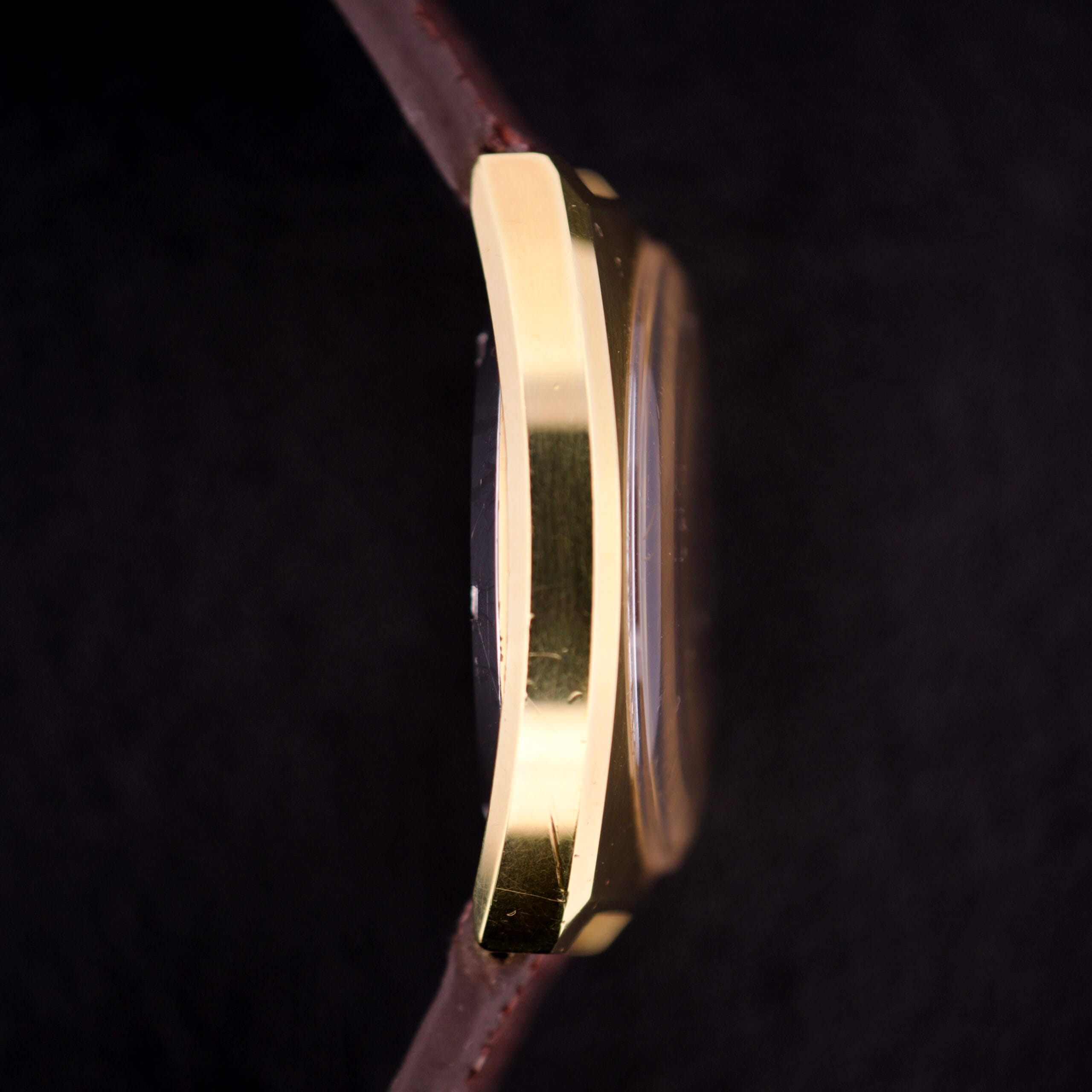
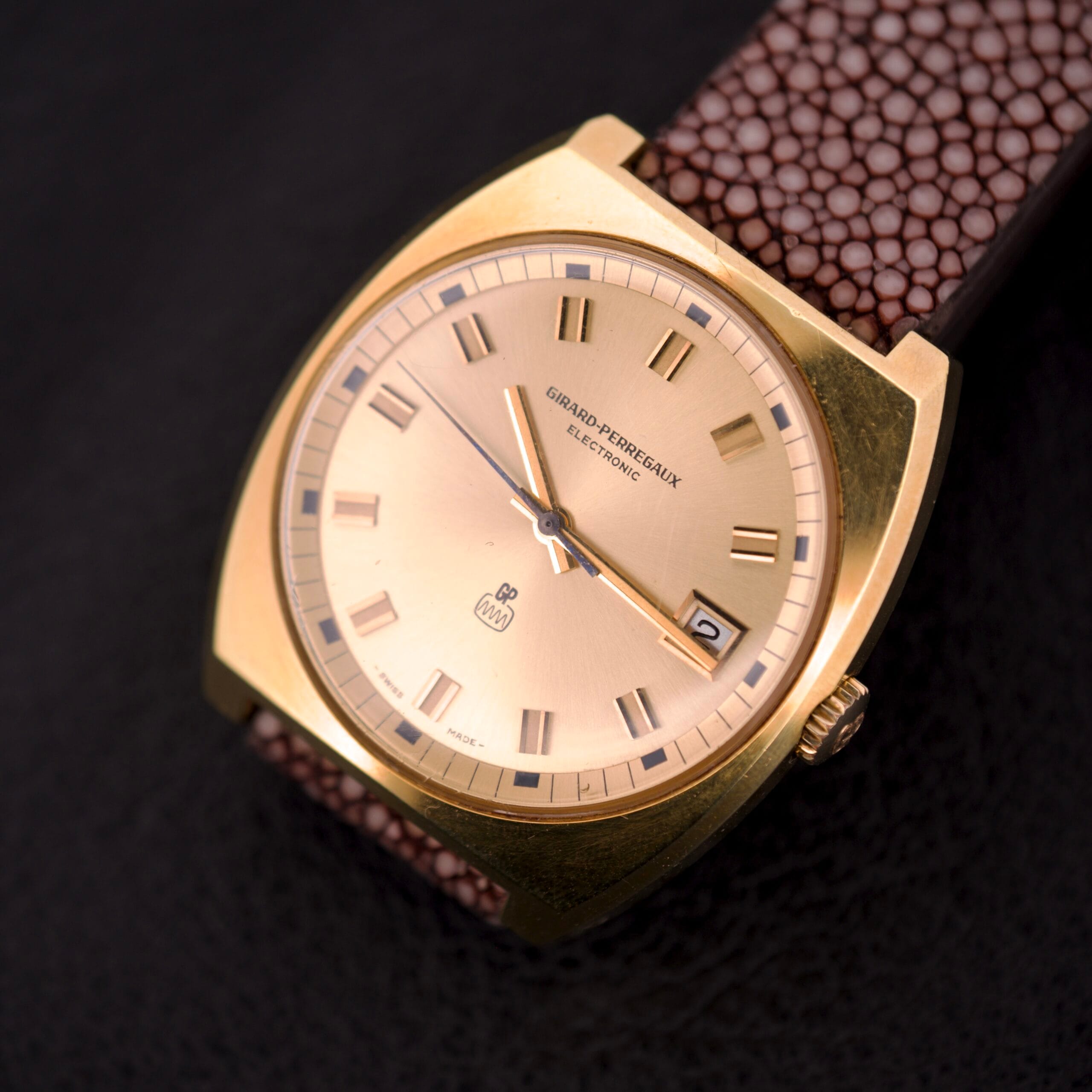
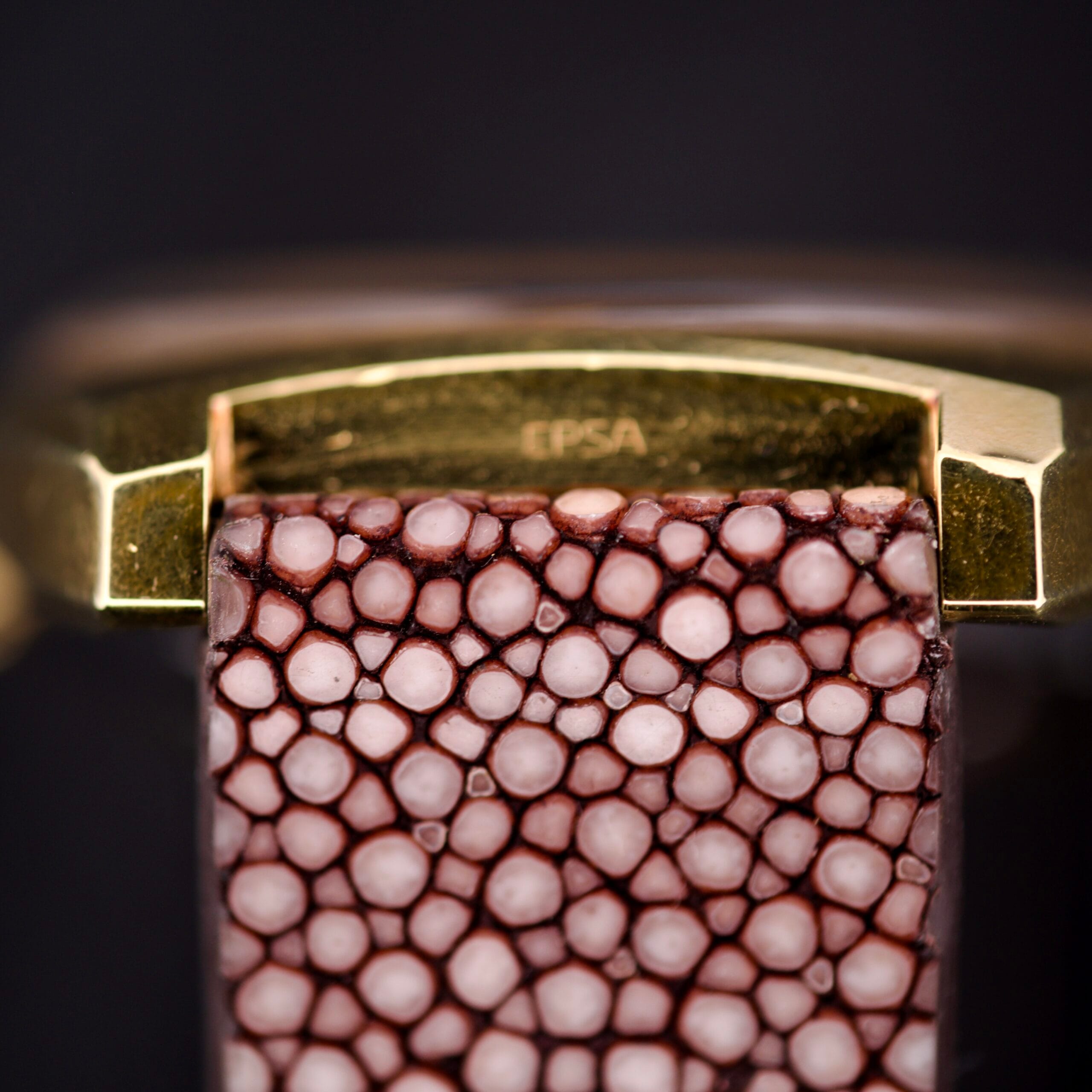
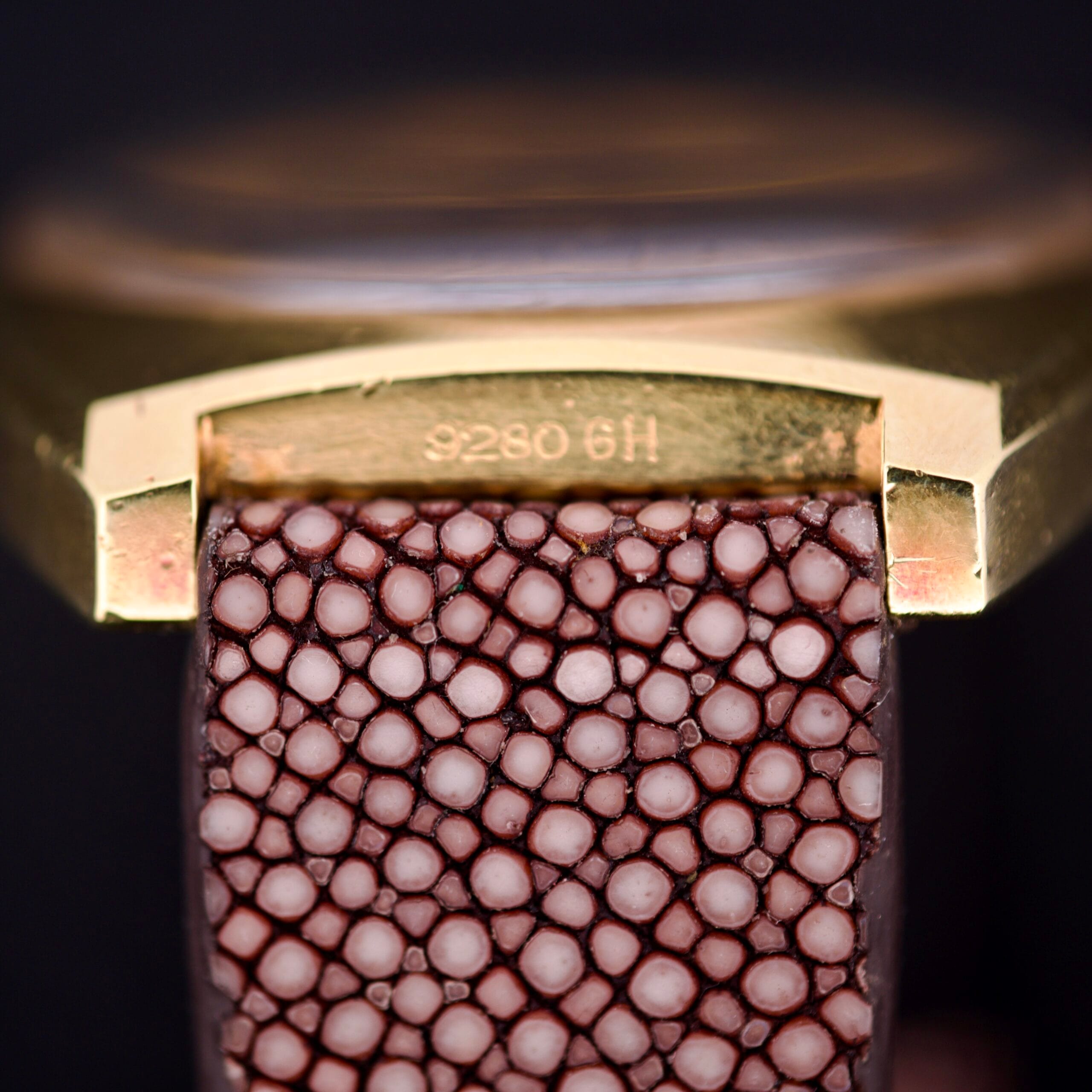
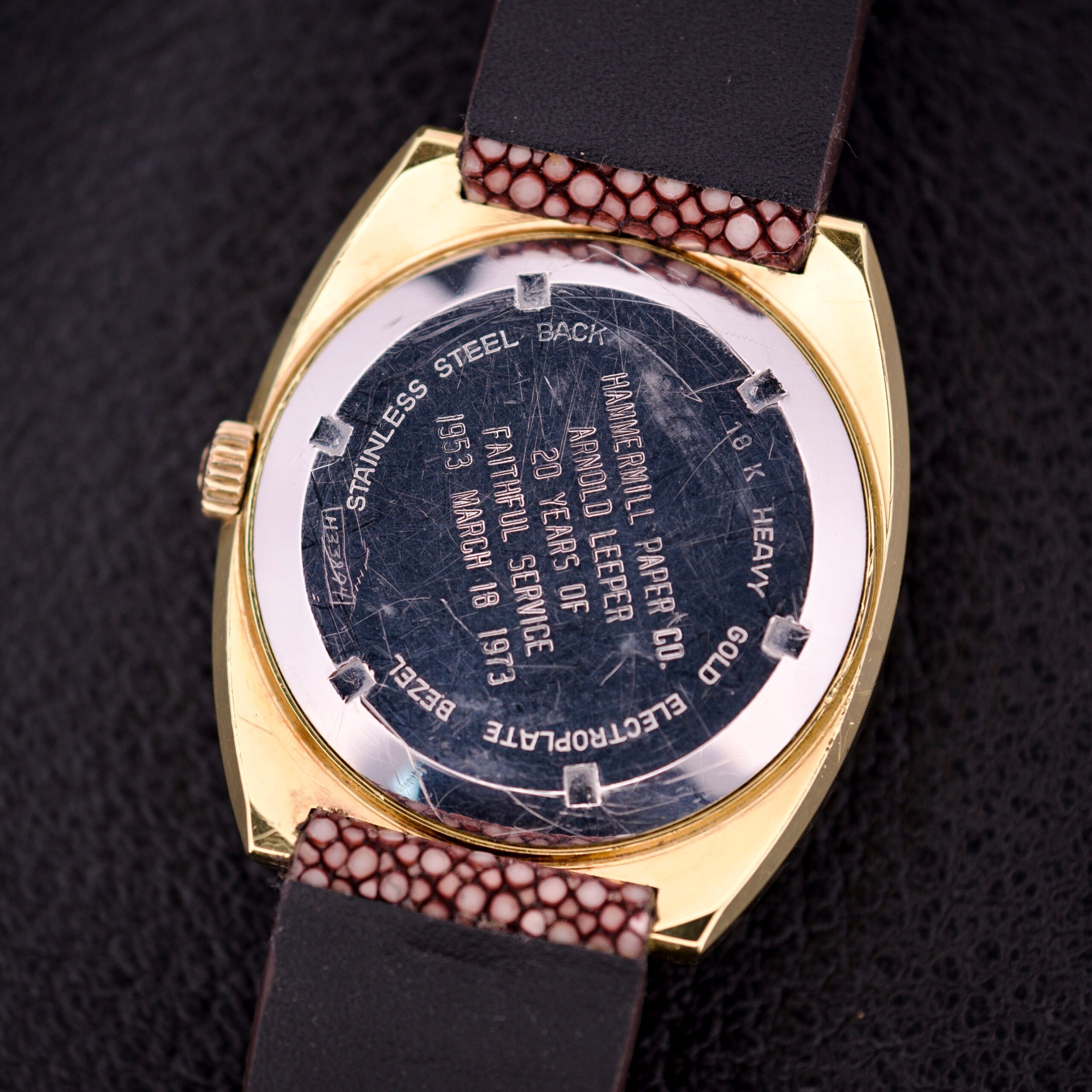
The Reference 9280 captures the absolute peak of 1970s case design. It is a “monolith” in the best possible sense, a thick, substantial cushion of steel that feels like it was carved rather than stamped. The design prioritizes geometry and presence, featuring a flat top surface with vertical brushing that transitions sharply into polished, beveled sides. It is an unapologetically masculine design that reflects the era’s obsession with “the future,” looking more like a piece of instrumentation from a spacecraft than a piece of jewelry.
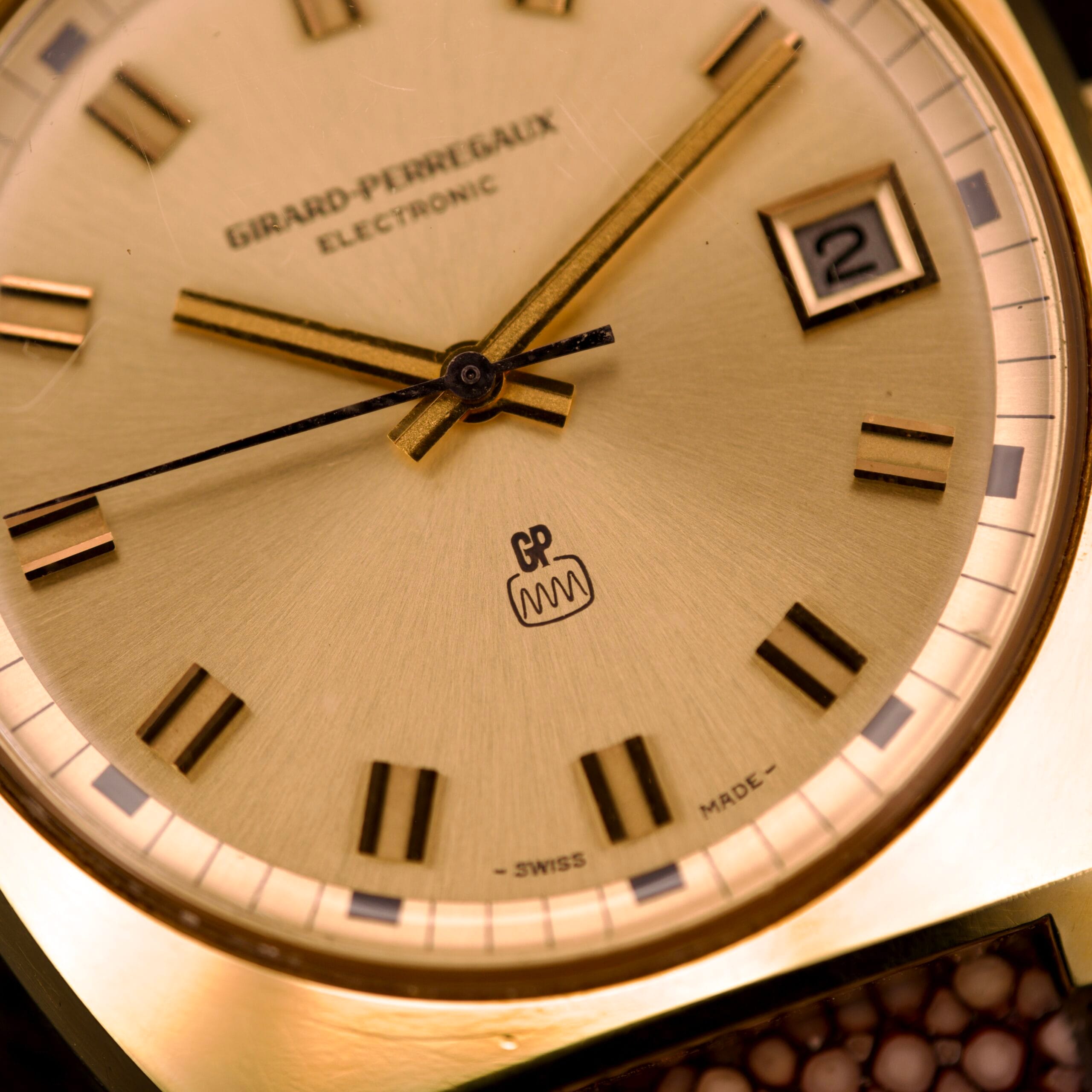
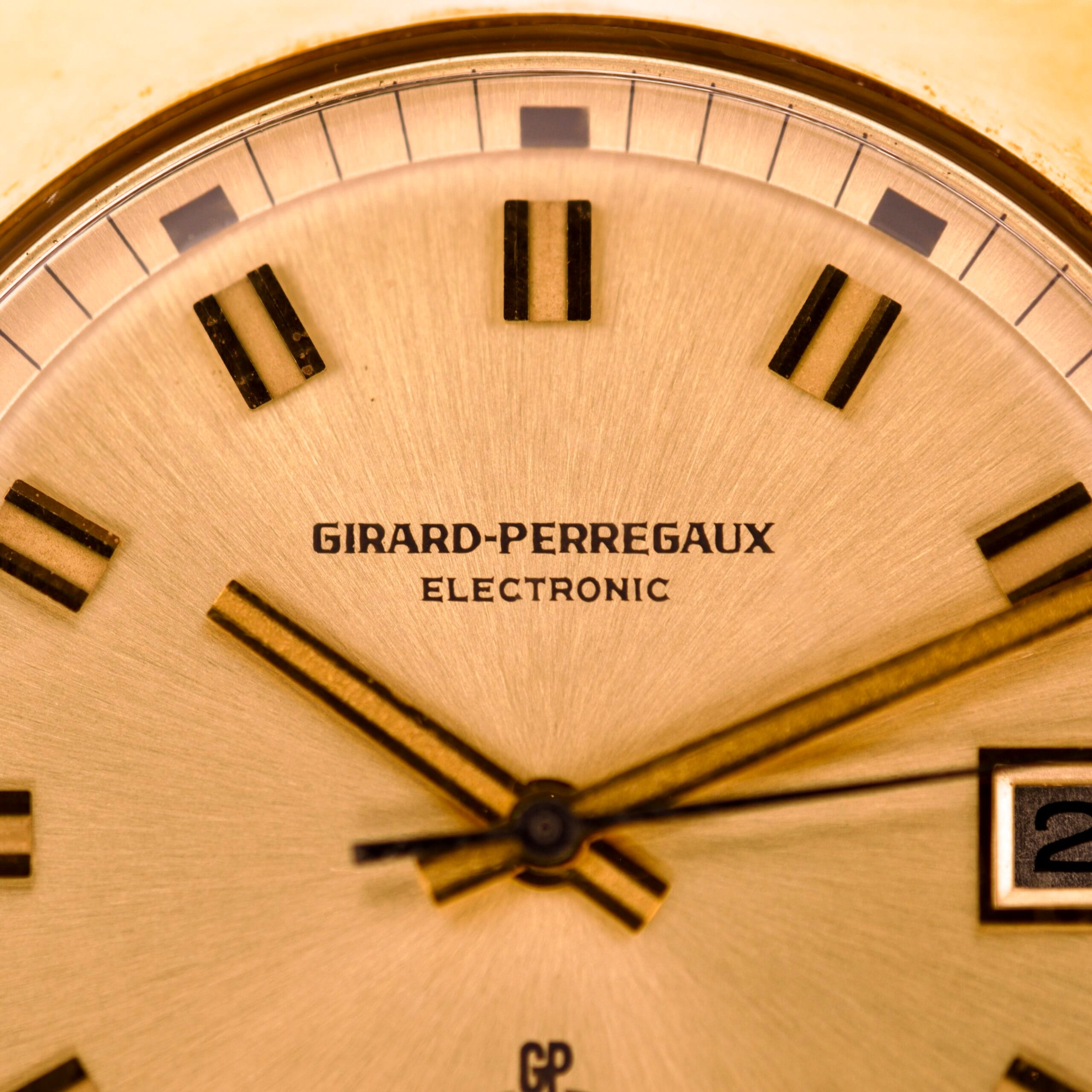
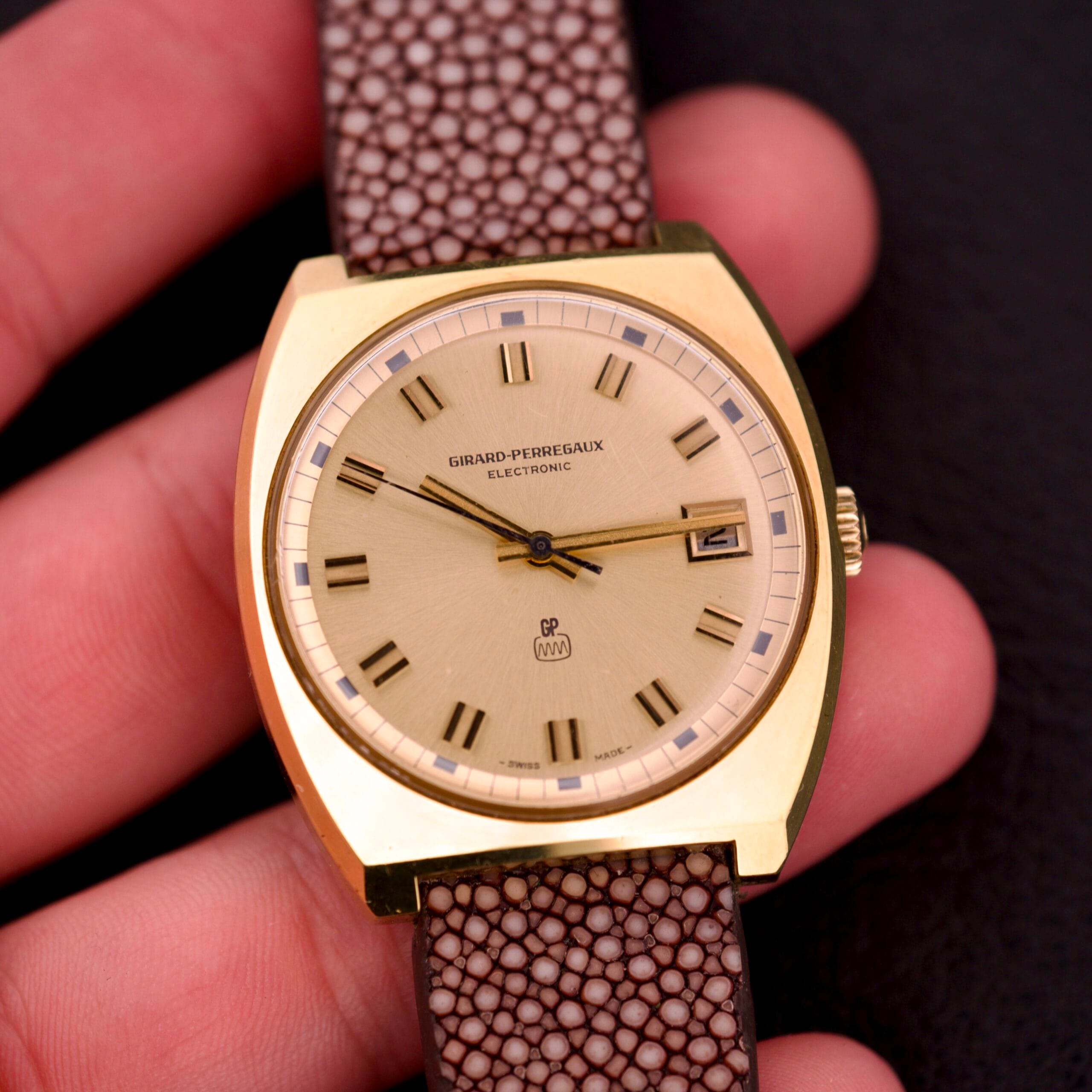
This particular example is a testament to the build quality of 1970s Girard-Perregaux. The dial layout is a lesson in functional minimalism, using tall, applied indices that add significant depth to the face. The “Electronic” and “Quartz” text is printed proudly, a badge of honor during a time when this technology was far more expensive and exclusive than a mechanical automatic. The hands are thick and purposeful, designed to be moved by the high-torque stepping motor of the pioneering movement inside.
Condition is everything with these large, flat-surfaced cases. This example retains the integrity of its sharp edges and the distinct separation between the brushed and polished surfaces, avoiding the “melted” look that comes from over-polishing. The dial is preserved beautifully, maintaining the stark contrast that makes these early electronic watches so striking. The movement, a piece of horological history, is clean and continues to hum with the precision that made GP famous.