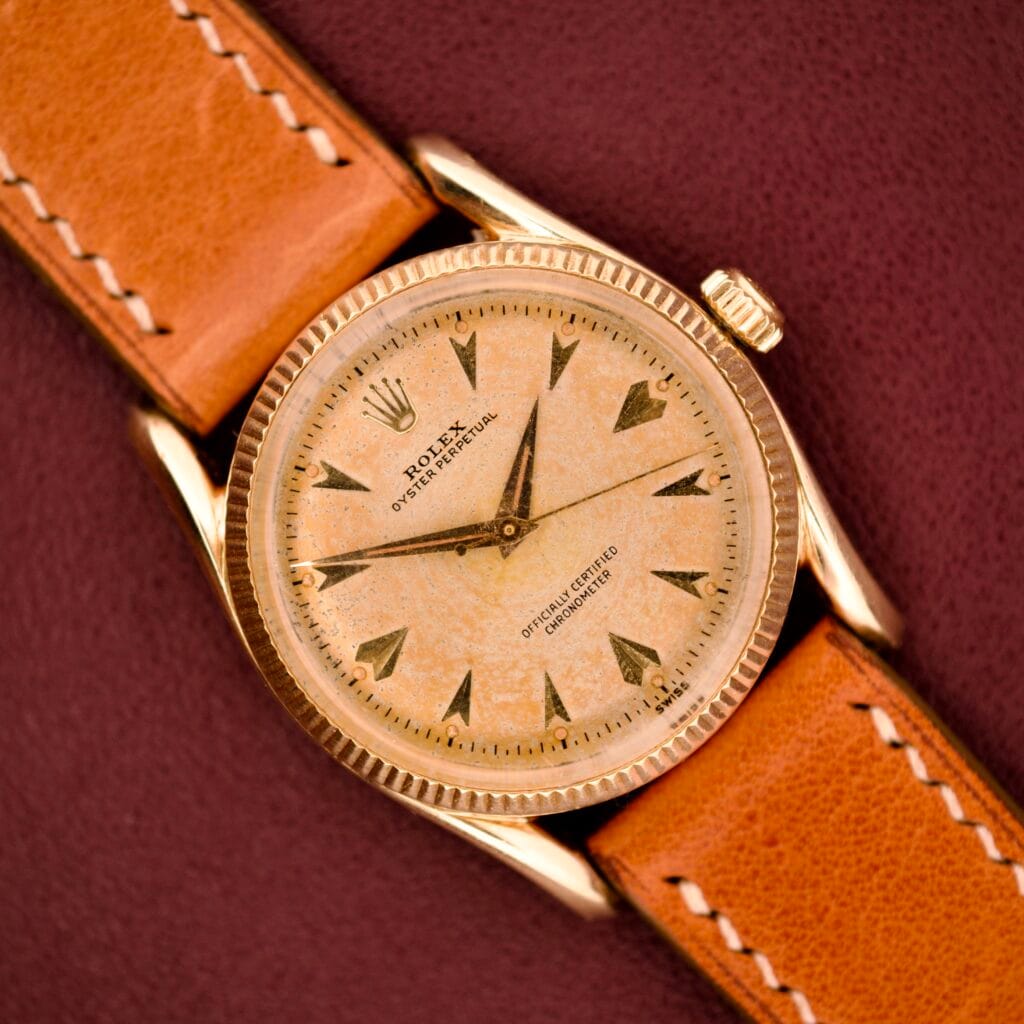
Most people think of Rolex as the king of slab-sided tool watches, defined by sharp edges and utilitarian purpose. But there was a time in the 1950s when the Crown decided to let its hair down and get sculptural. The result was the “Bombay,” a nickname derived from the French term bombé, meaning rounded or convex. It represents a specific, beautiful detour in Rolex design language where the case wasn’t just a waterproof container for the movement, but a piece of flowing architecture. To us, the Bombay is the definitive “gentleman’s Oyster,” bridging the gap between the bubblebacks of the 40s and the modern Datejusts that would follow.
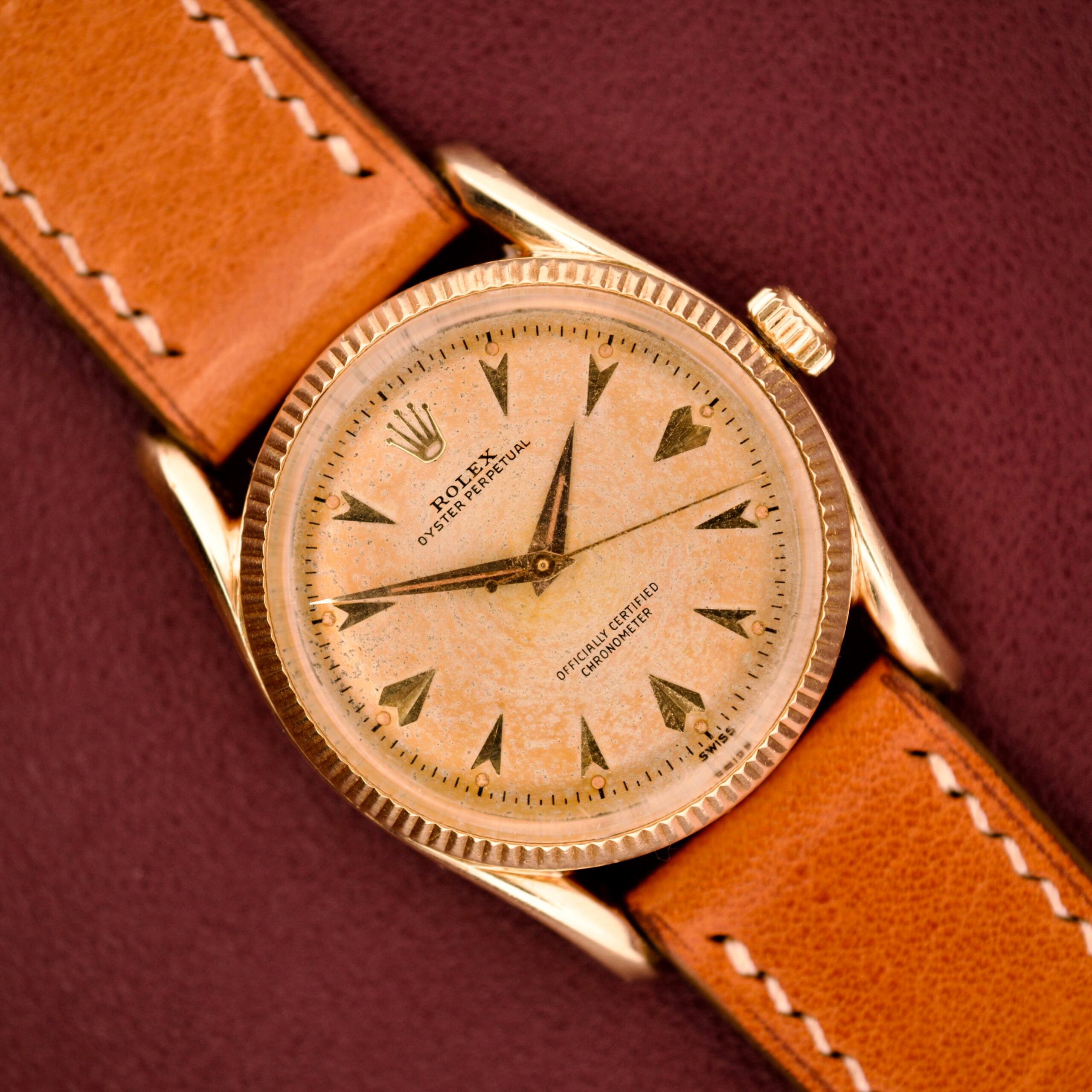
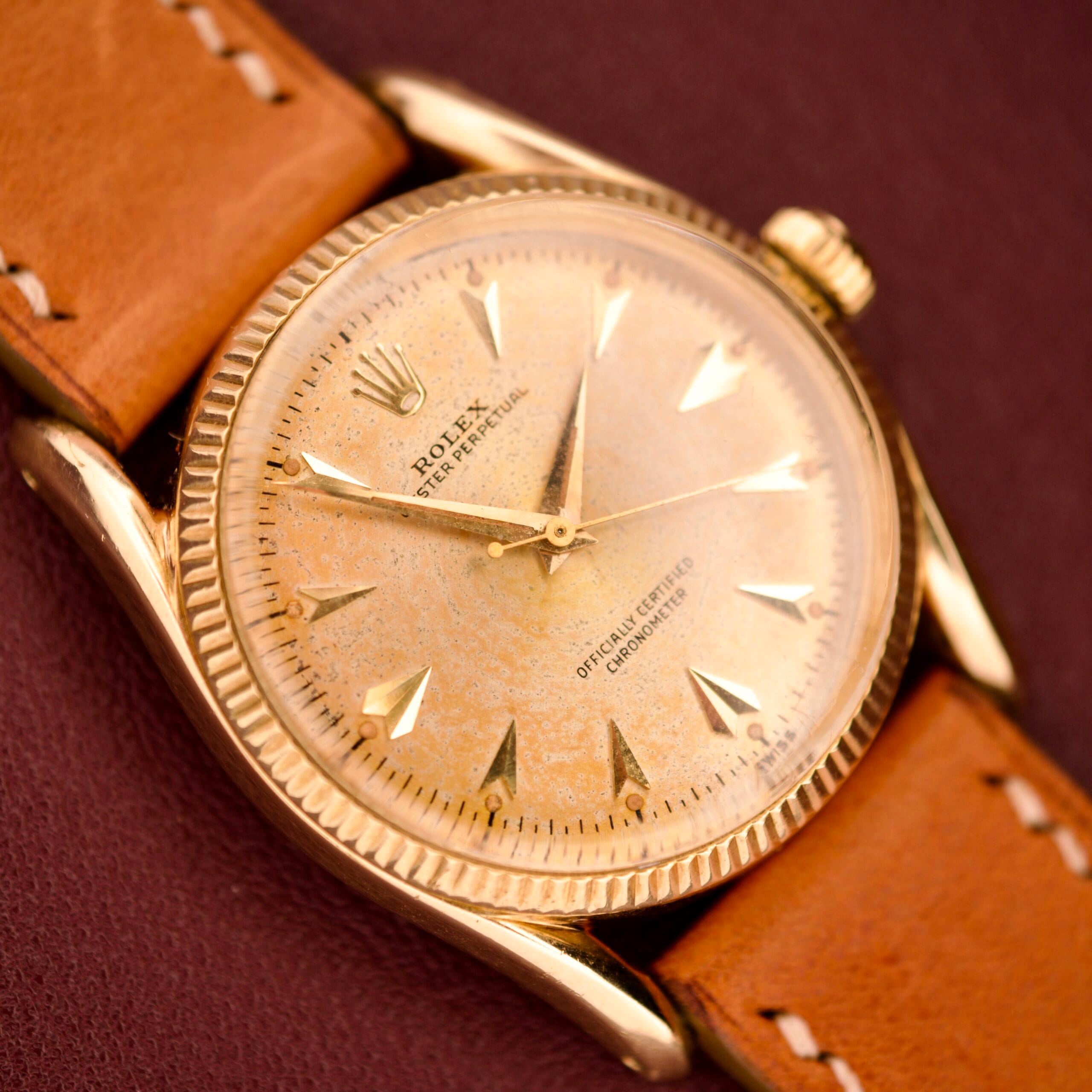
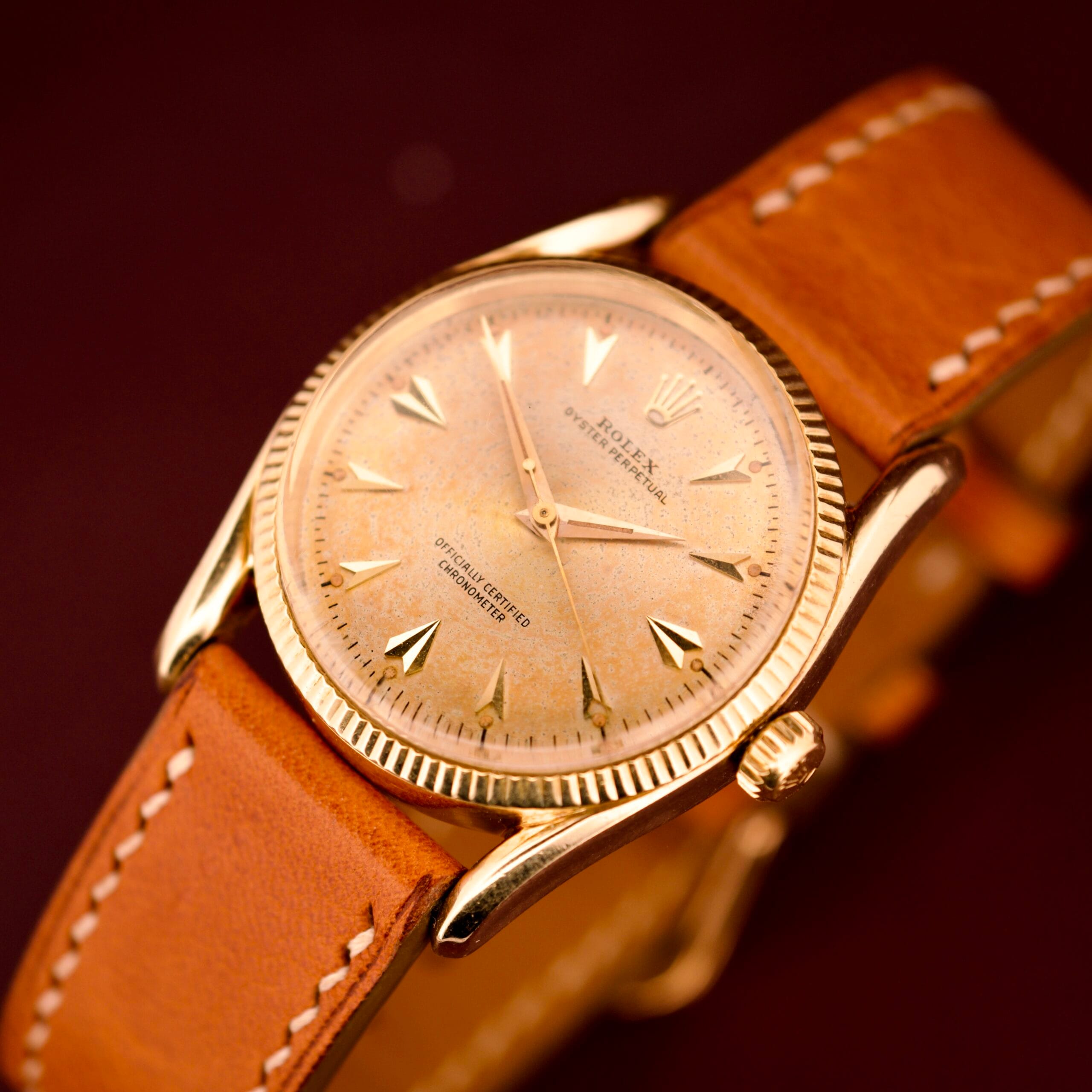
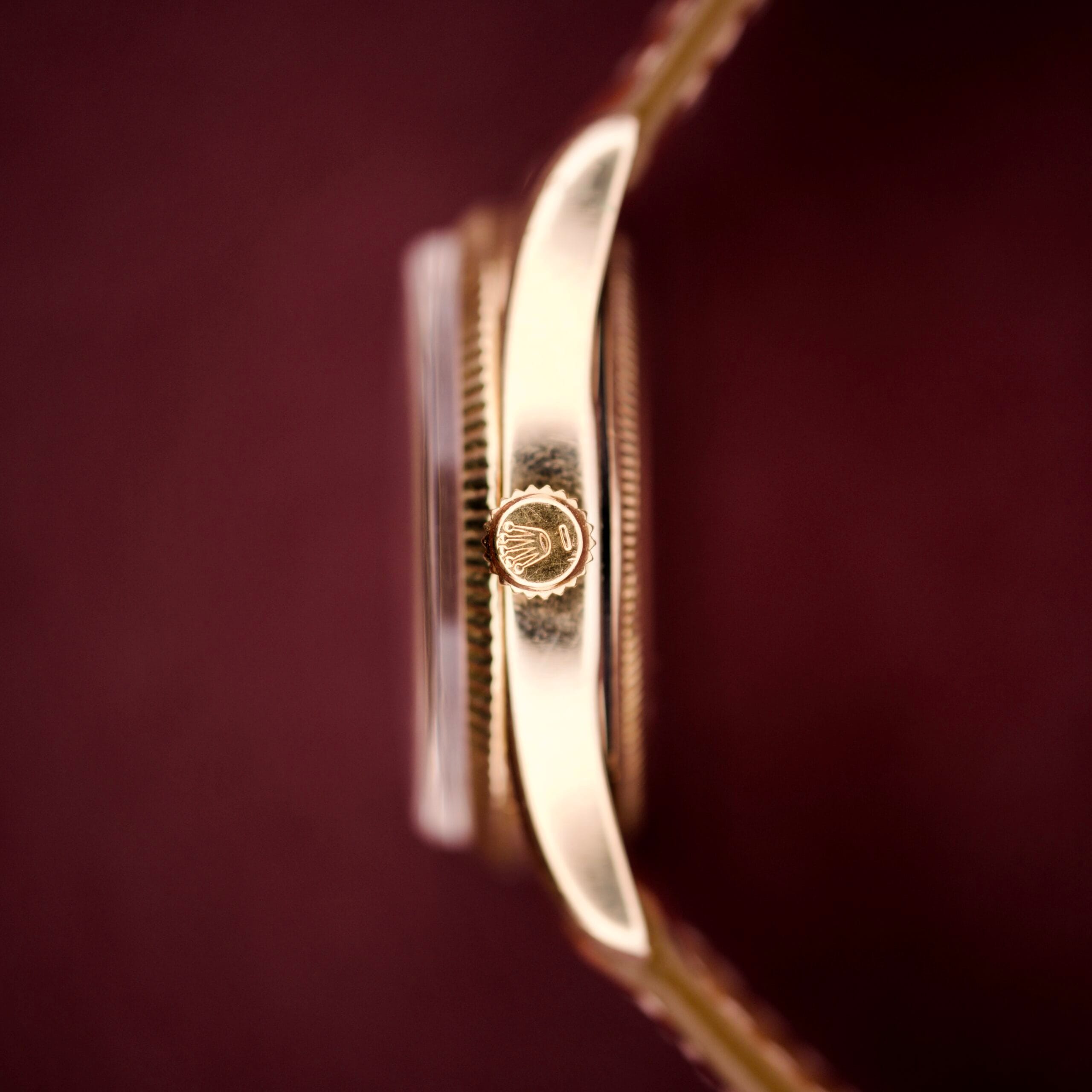
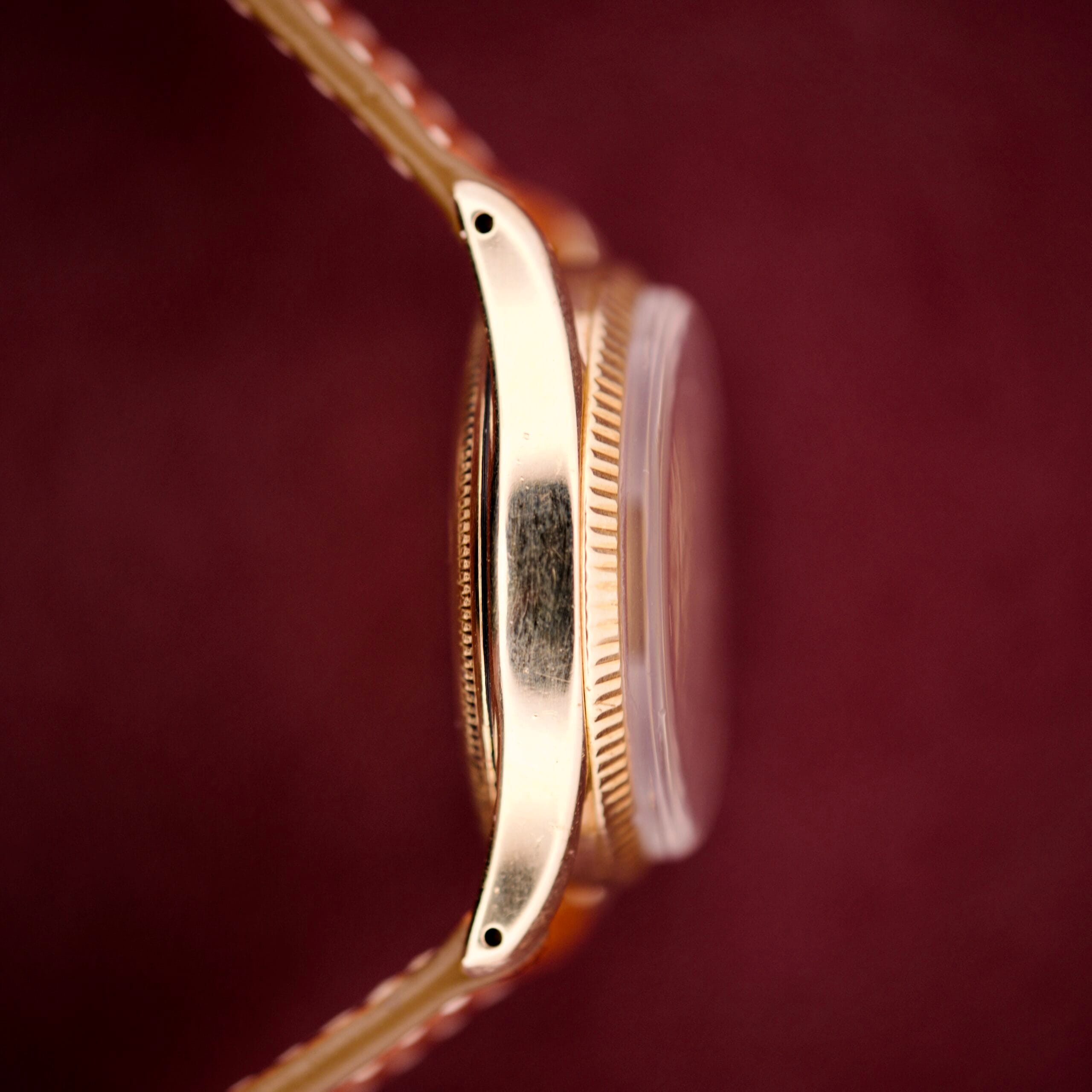
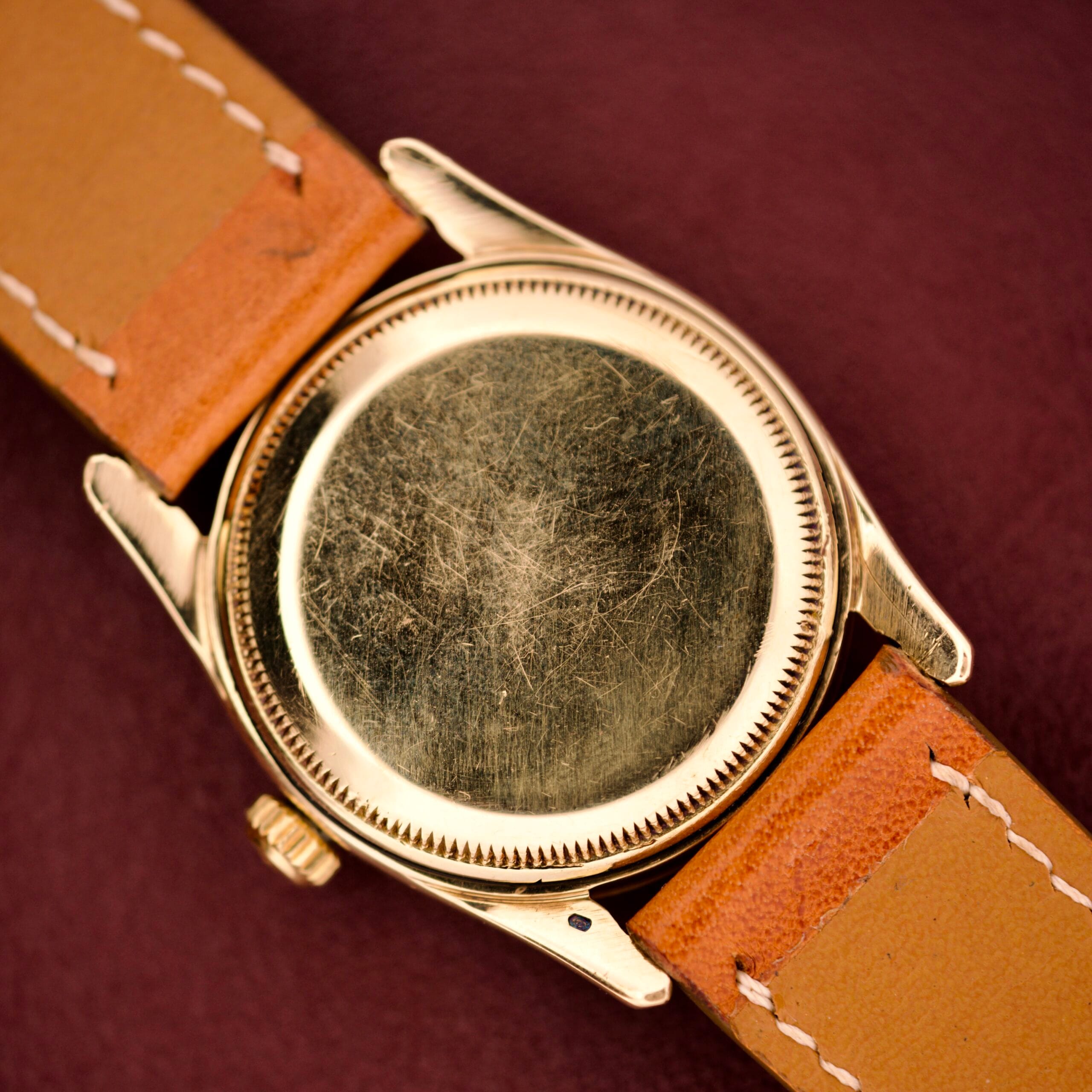
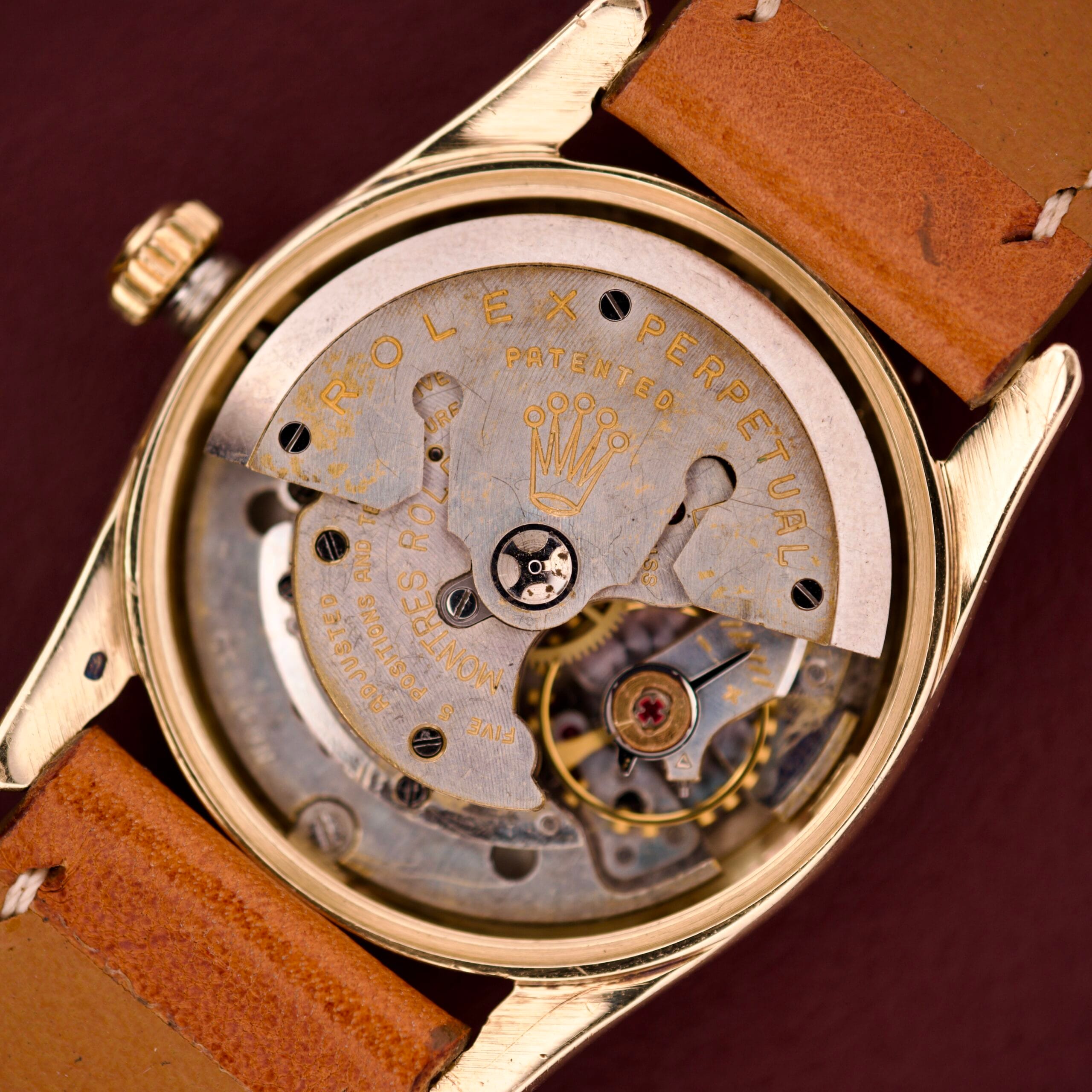
The Reference 6593 sits at a technological and aesthetic sweet spot in Rolex history. Internally, it boasts the Caliber 1030, Rolex’s first complete in-house designed and manufactured automatic movement, famous for its “butterfly” rotor shape. This was the engine that paved the way for the brand’s dominance in reliability. Externally, however, it’s all about those lugs. Unlike the straight, drilled lugs of a Submariner or Explorer, the Bombay features helical, twisted lugs that curve inwards, creating a seamless and sensuous line from the case flank to the strap. It is mid-century modernism applied to horology, offering a visual fluidity that Rolex rarely attempted again.
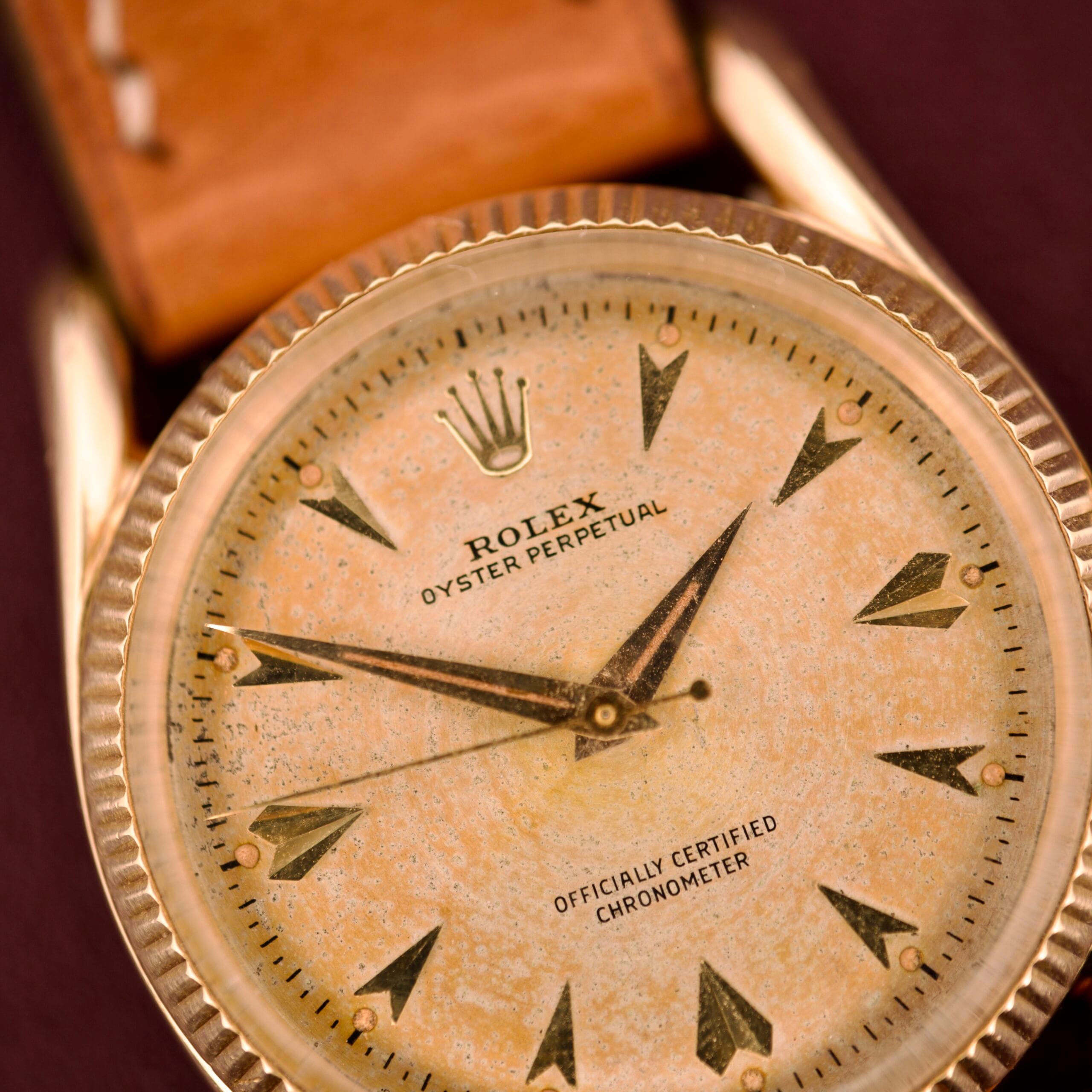
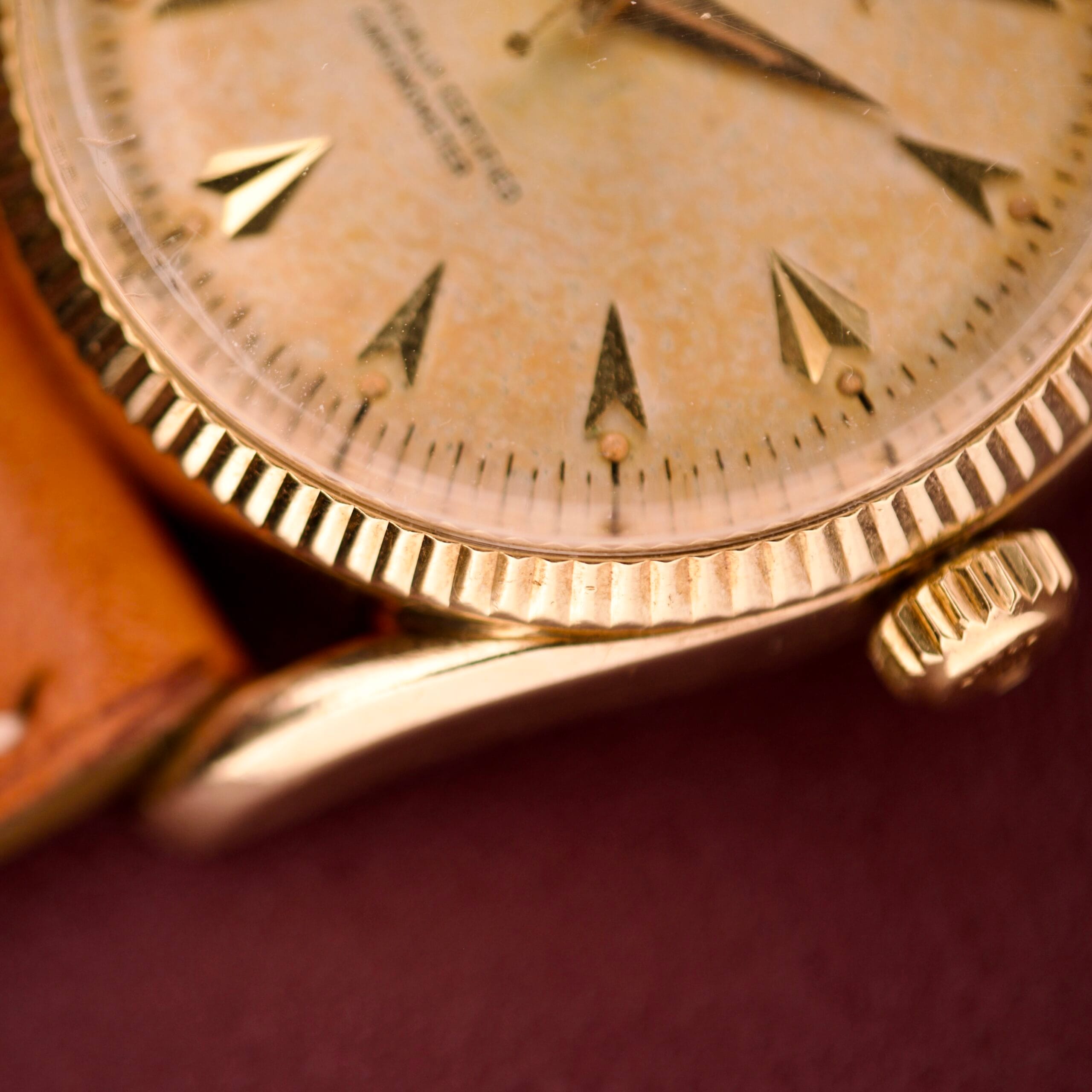
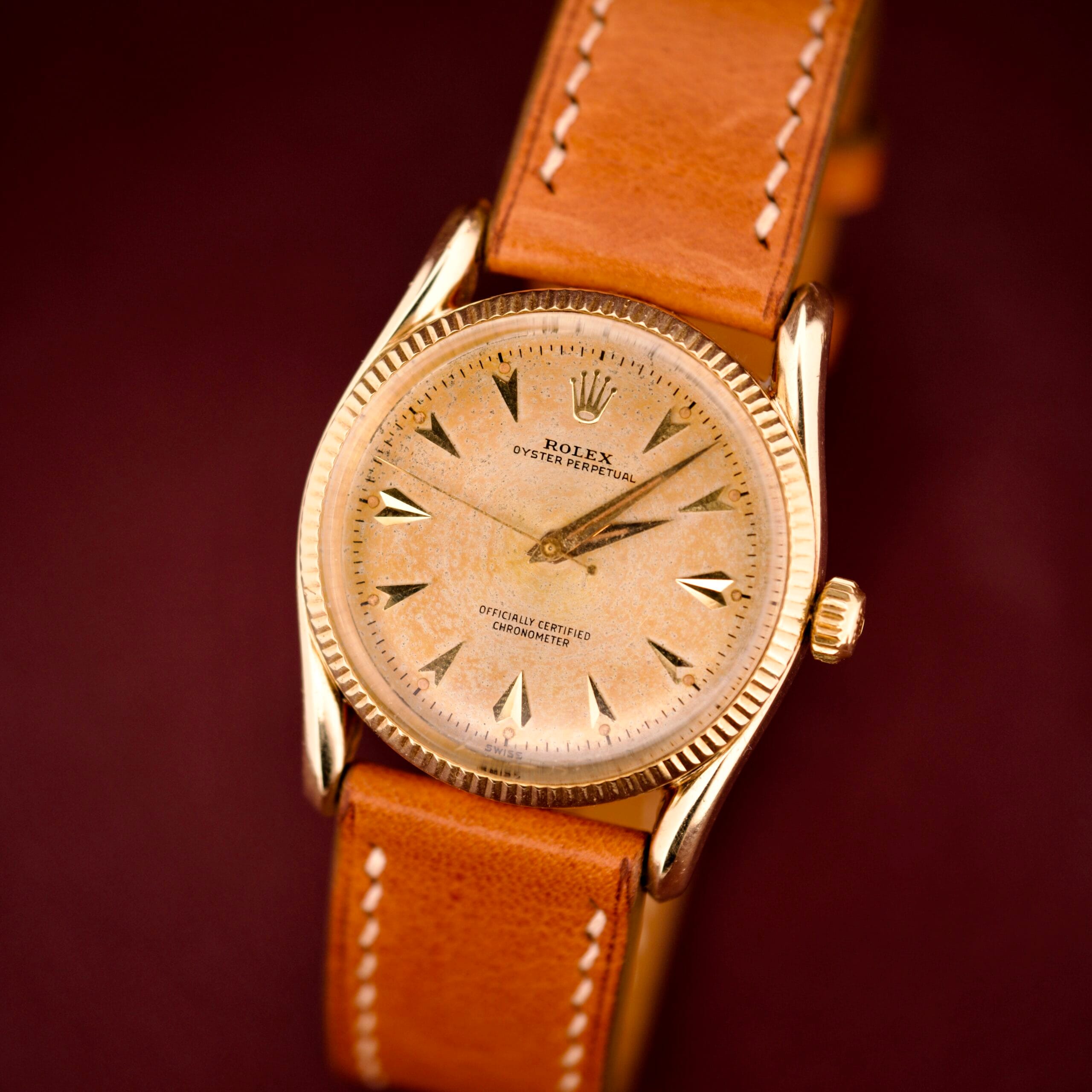
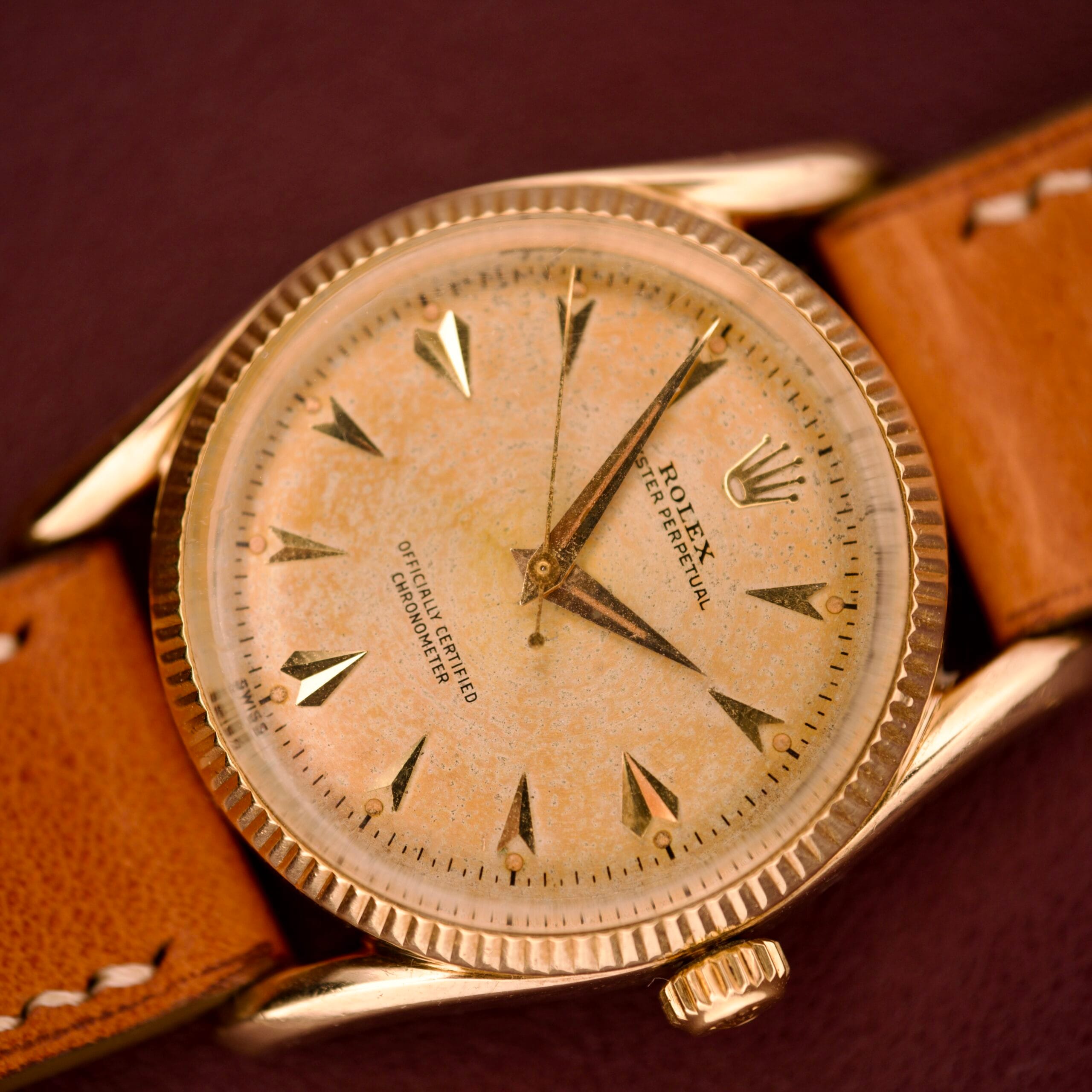
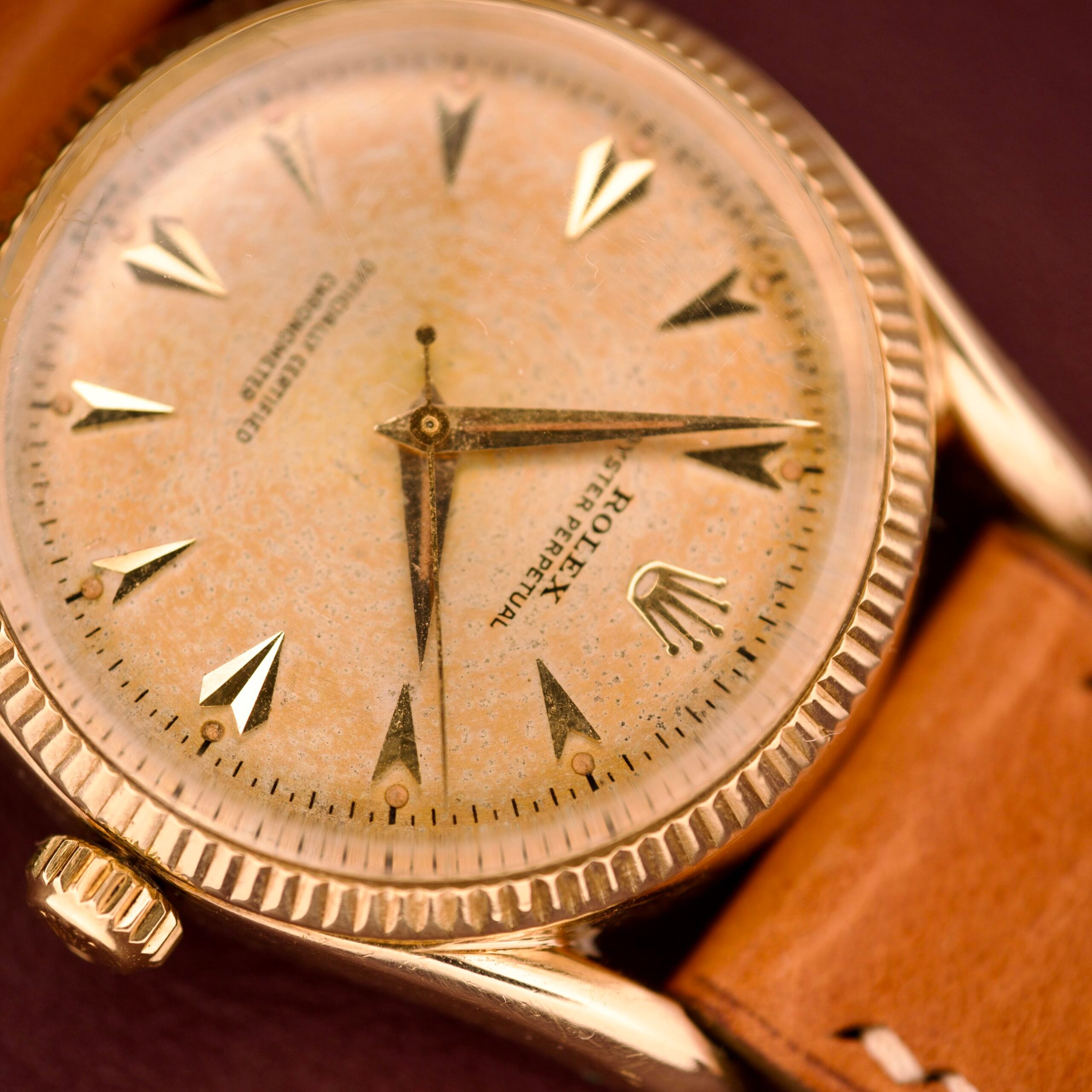
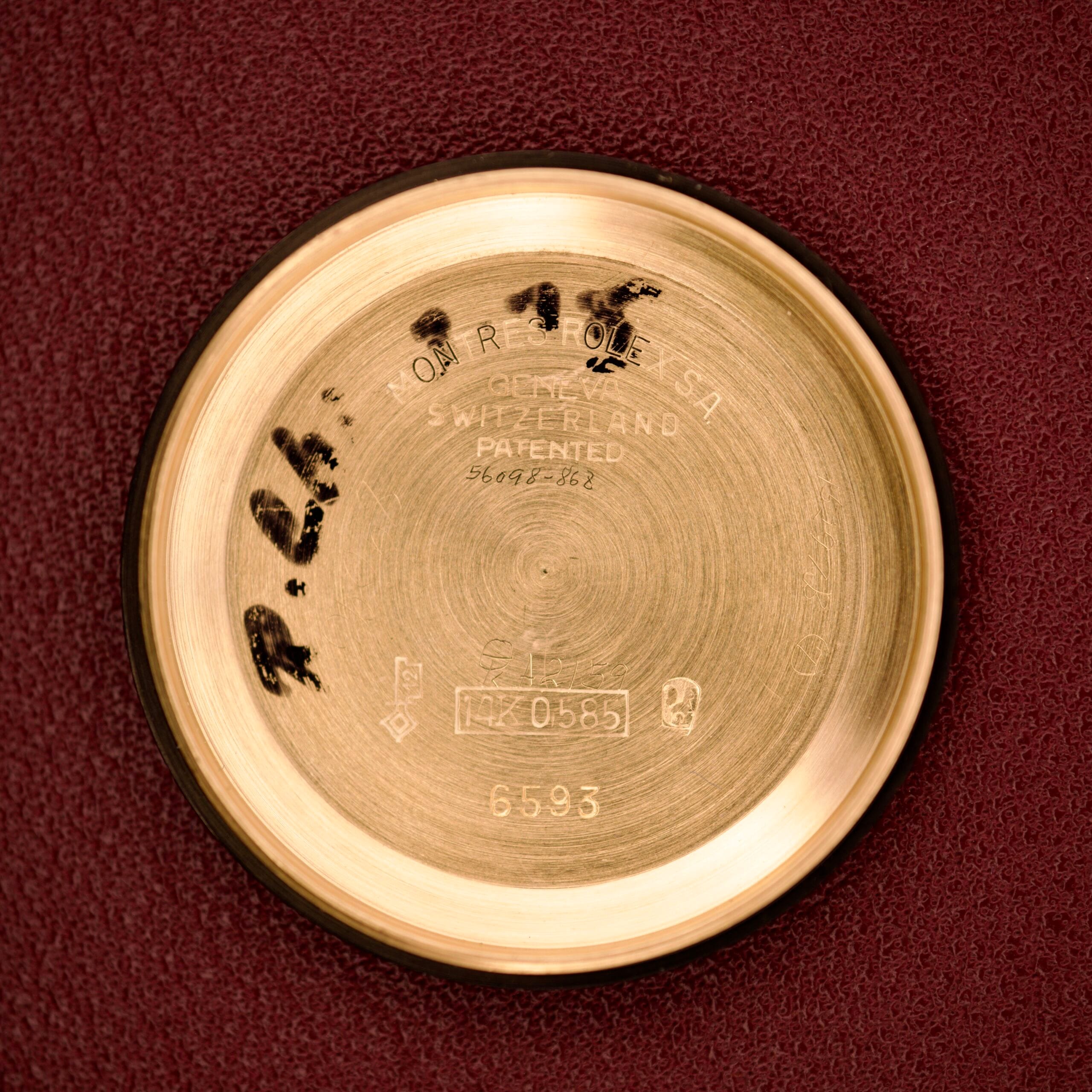
This specific execution in 14K yellow gold adds a layer of warmth and specific market history. 14K gold was often reserved for the North American market during this era and possesses a slightly lighter, straw-colored hue compared to the deep bronze of 18K, which many collectors actually prefer for its subtlety. The interaction between the twisted lugs and the light is mesmerizing; they don’t just reflect light, they manipulate it, making the watch wear with more presence than its 34mm diameter would suggest. The dial layout is classic 1950s, utilizing sharp Dauphine hands and applied faceted markers that echo the angularity of the movement within.
Finding a Bombay with its case geometry intact is the ultimate challenge in collecting this reference. Because the lugs are so complex and curvy, heavy-handed polishing can easily destroy their definition, turning them into undefined blobs. This example retains the distinct ridges and curvature that make the reference special, showing the honest, warm patina of a gold watch that has been enjoyed but respected. The hallmarks are present, and the gold has that distinct, soft glow that a modern alloy simply cannot replicate.