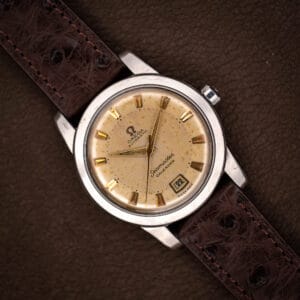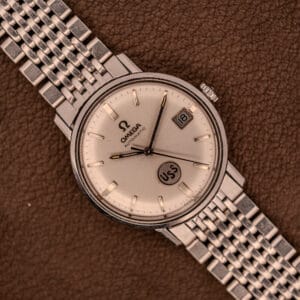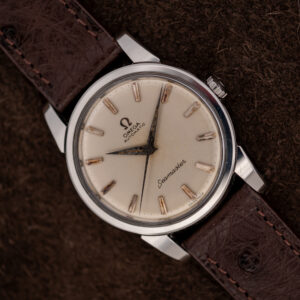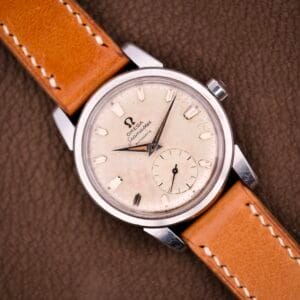
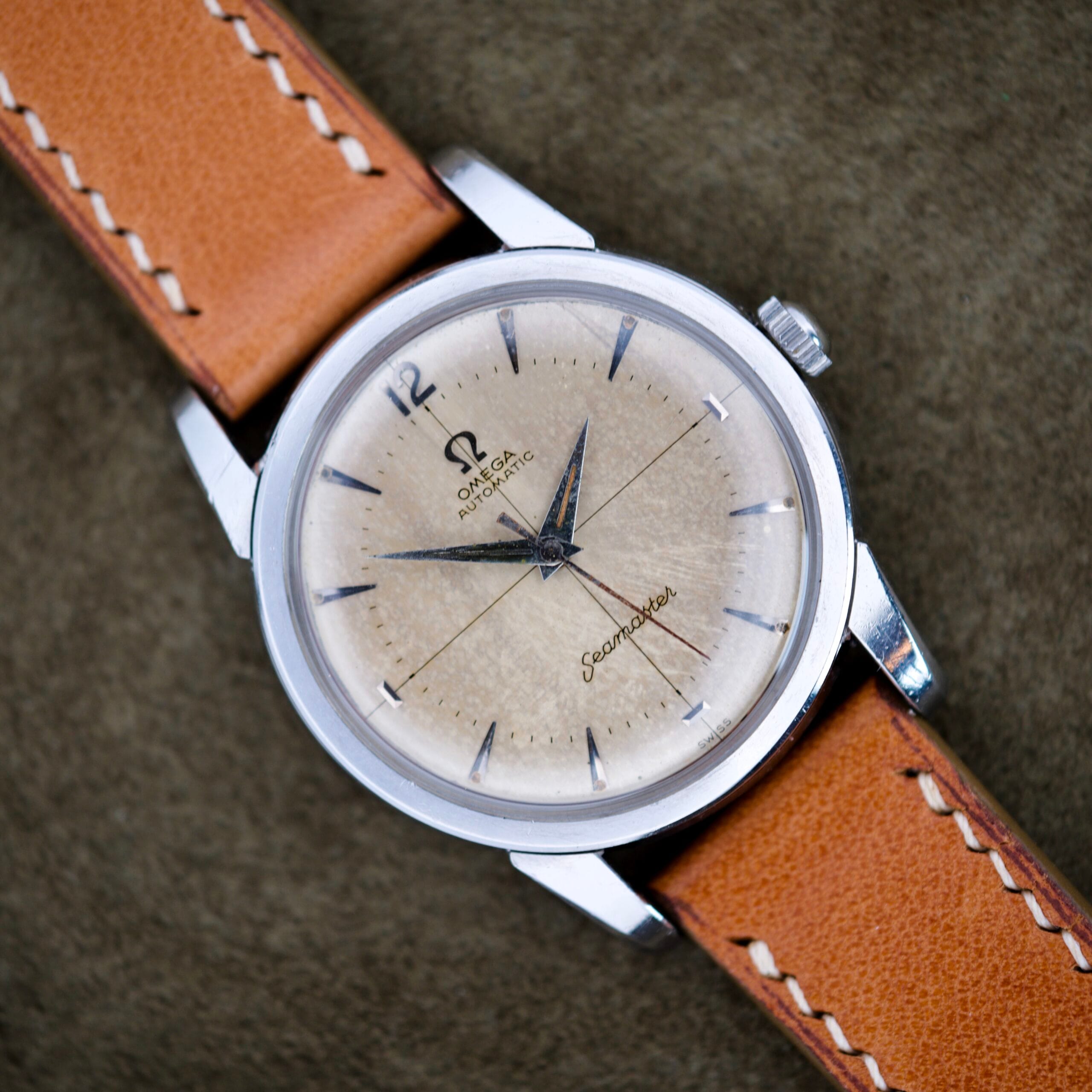
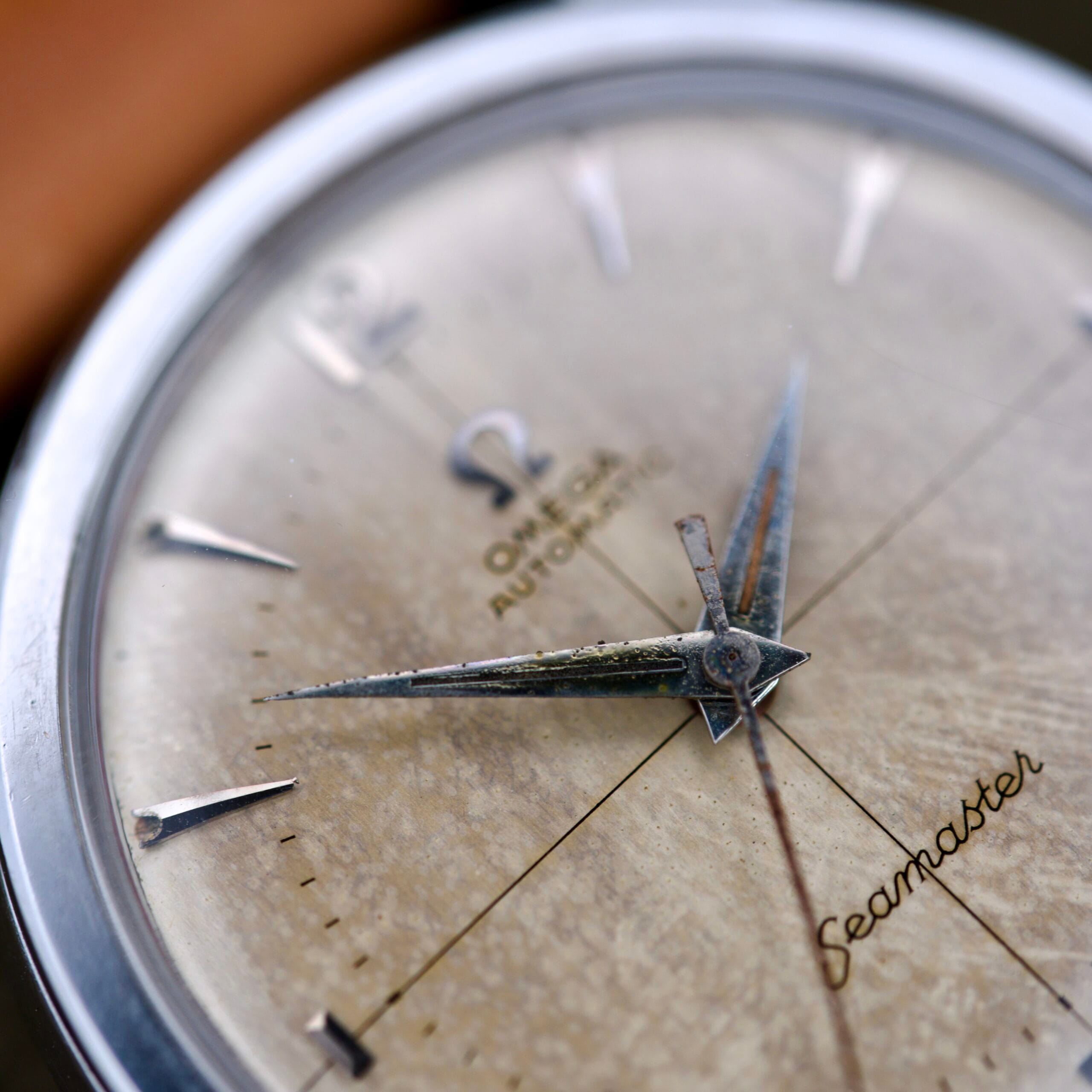
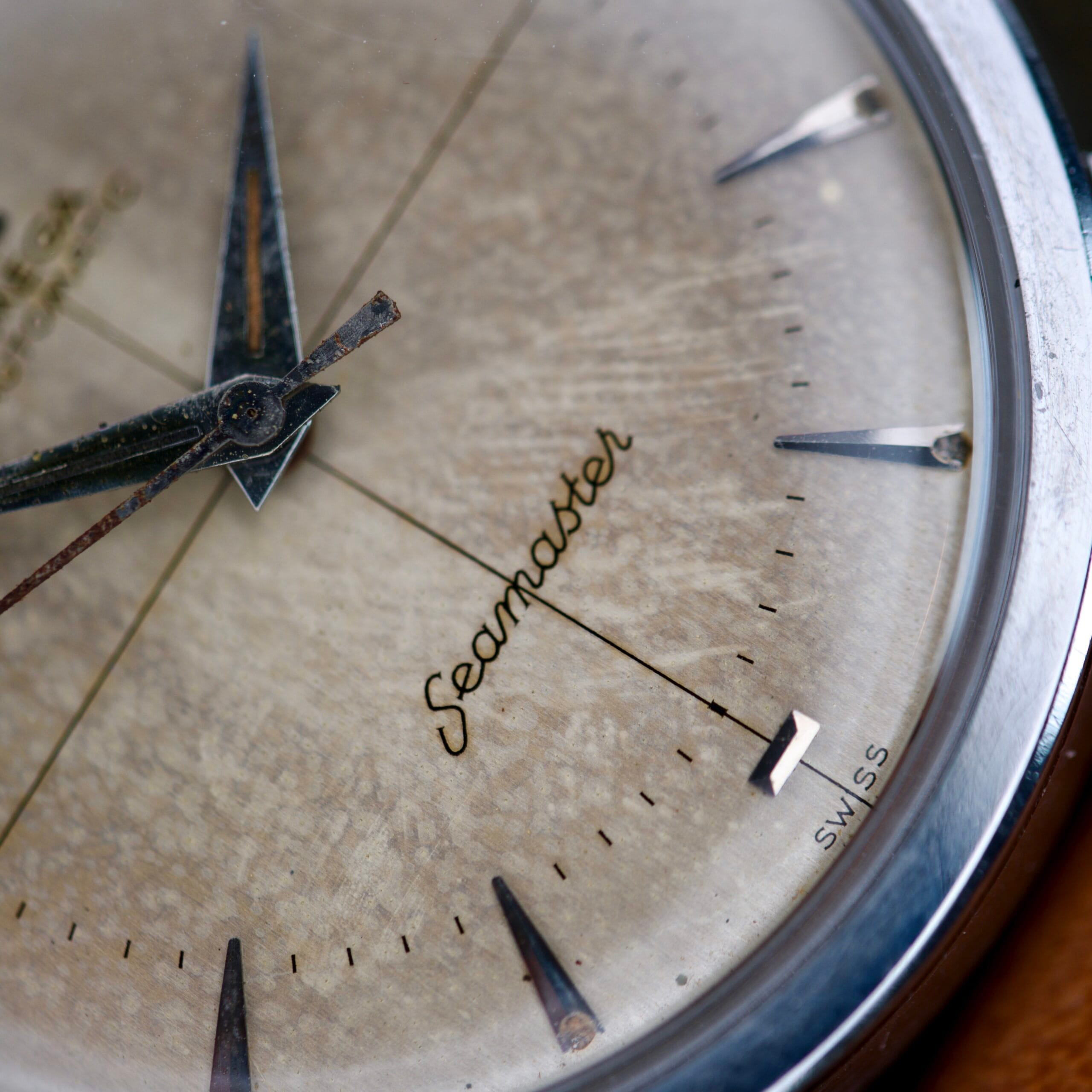
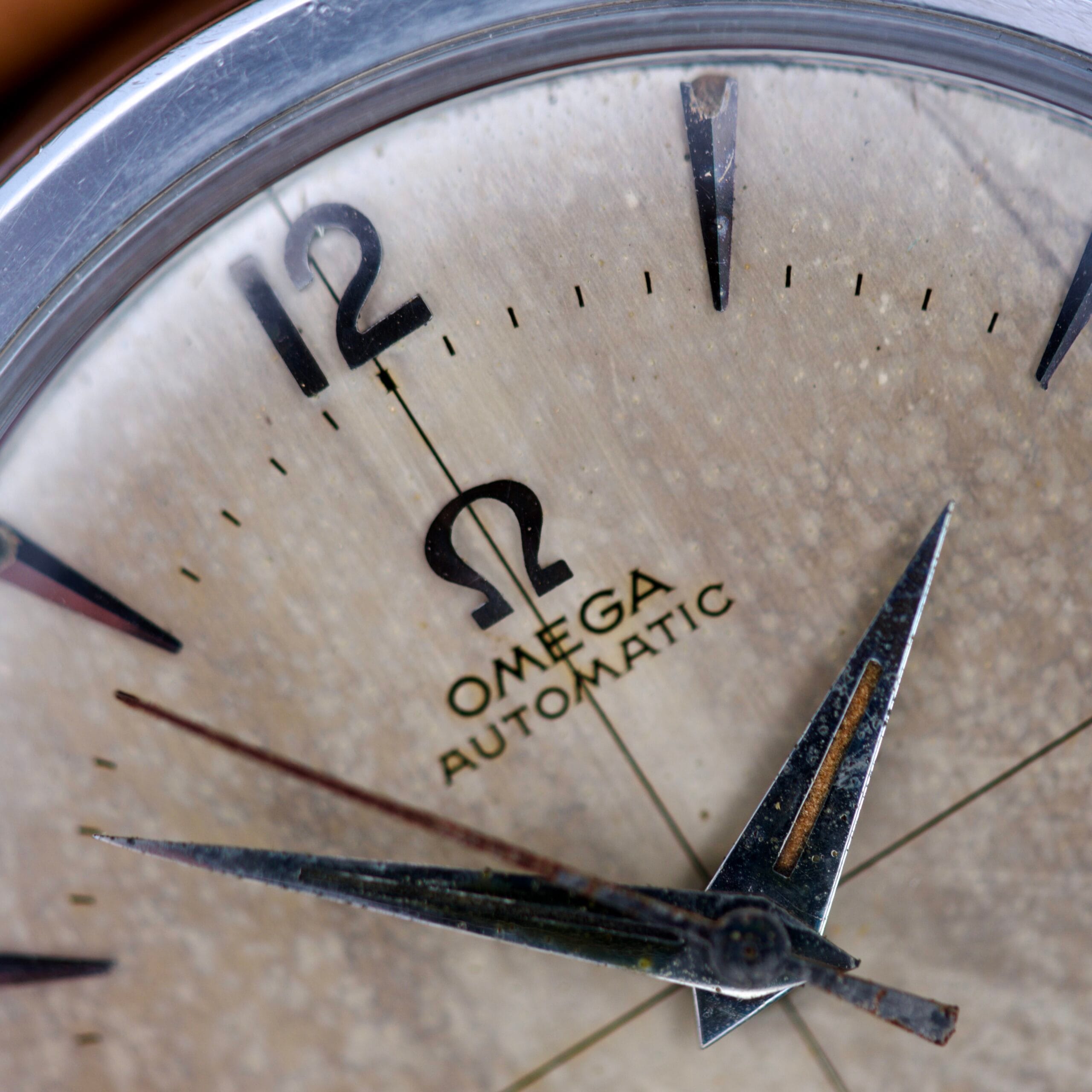
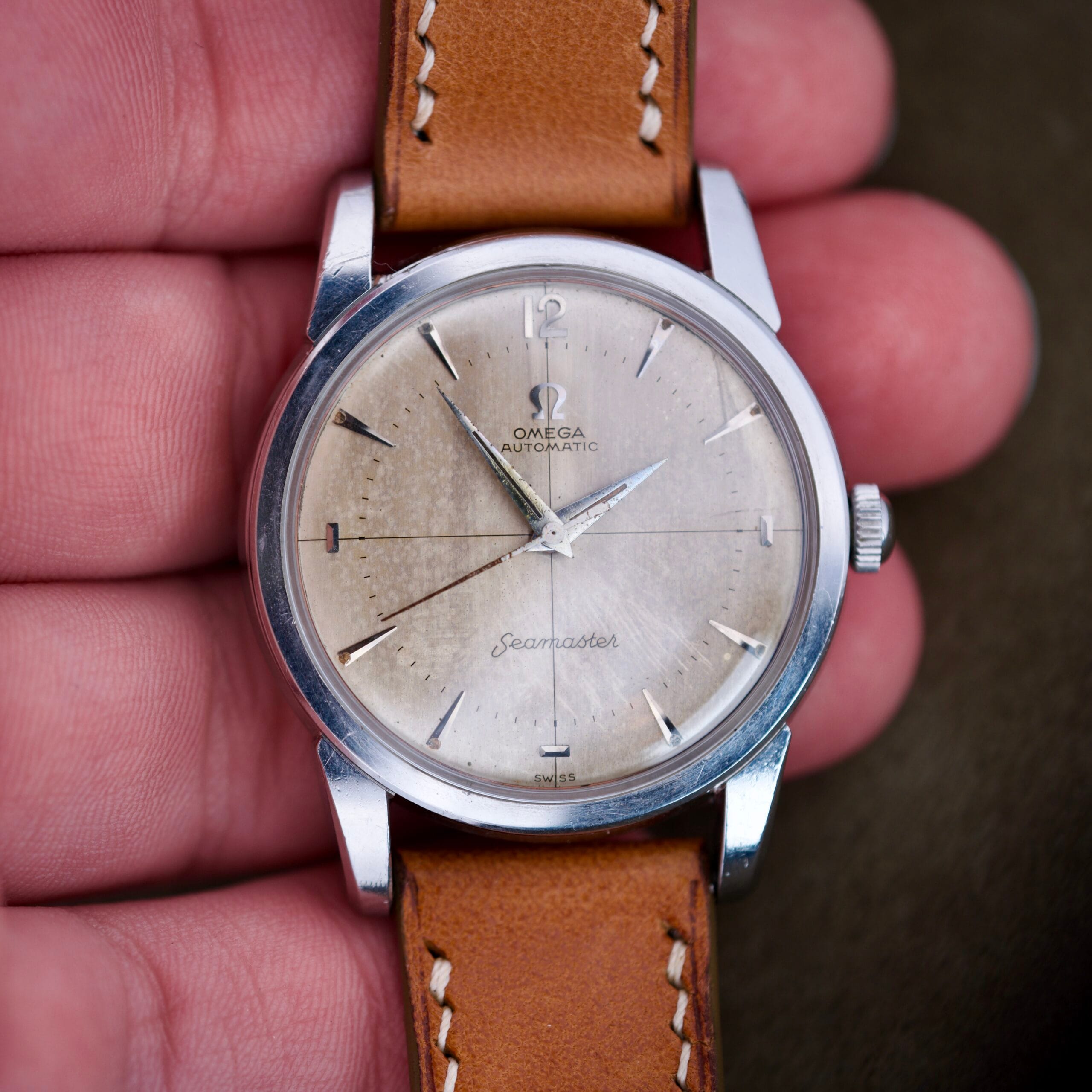
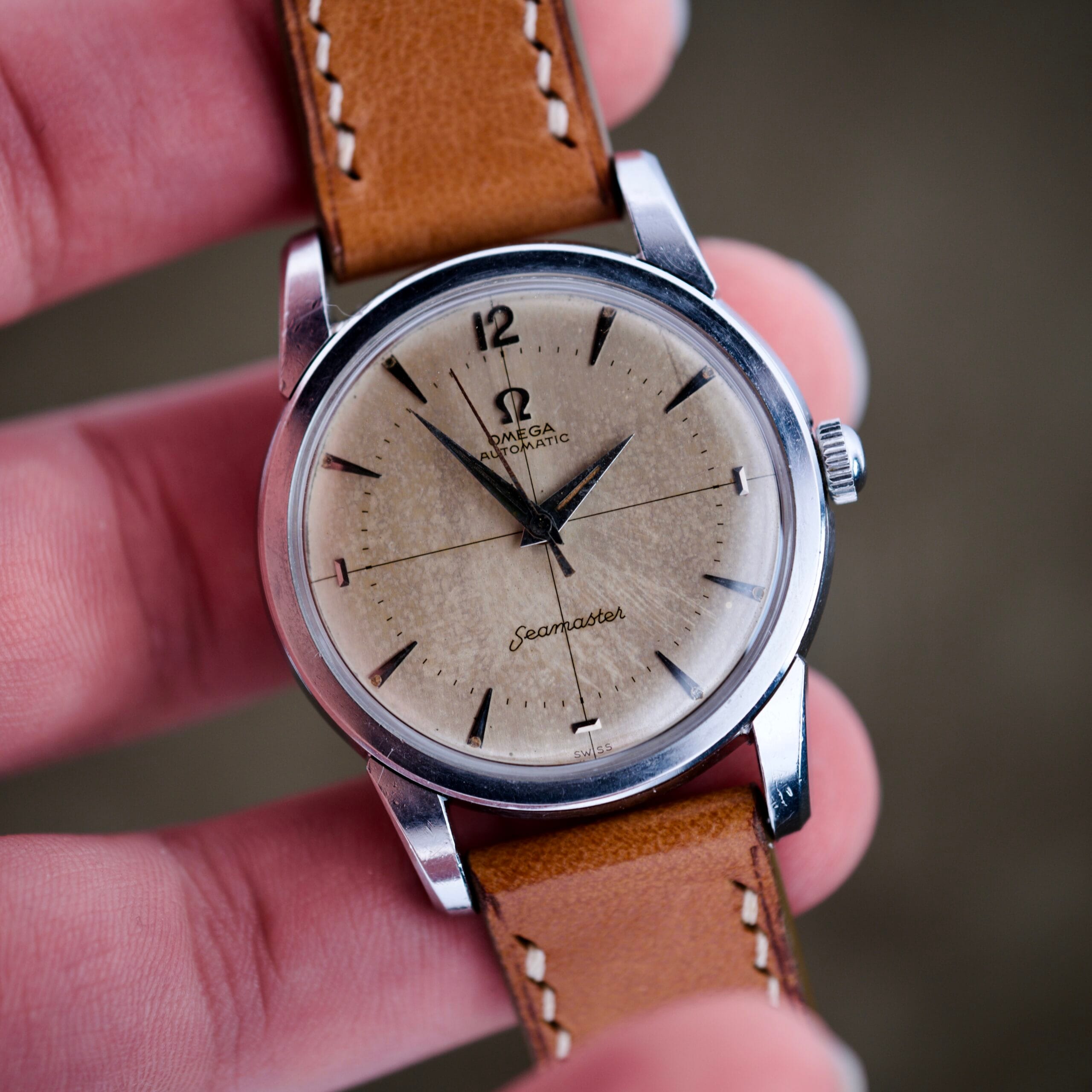

The dial does the talking on this watch. Silvered when it left the factory in the mid-1950s and now aged into a soft, painterly cream, this Omega Seamaster Automatic carries the kind of original surface that collectors learn to read like a fingerprint. To us, the way the tropical aging has settled across the dial, warmer in some zones, cooler in others, with the faint cross-hair lines still tracing the sector layout underneath, is the entire reason a watch like this exists in our case.
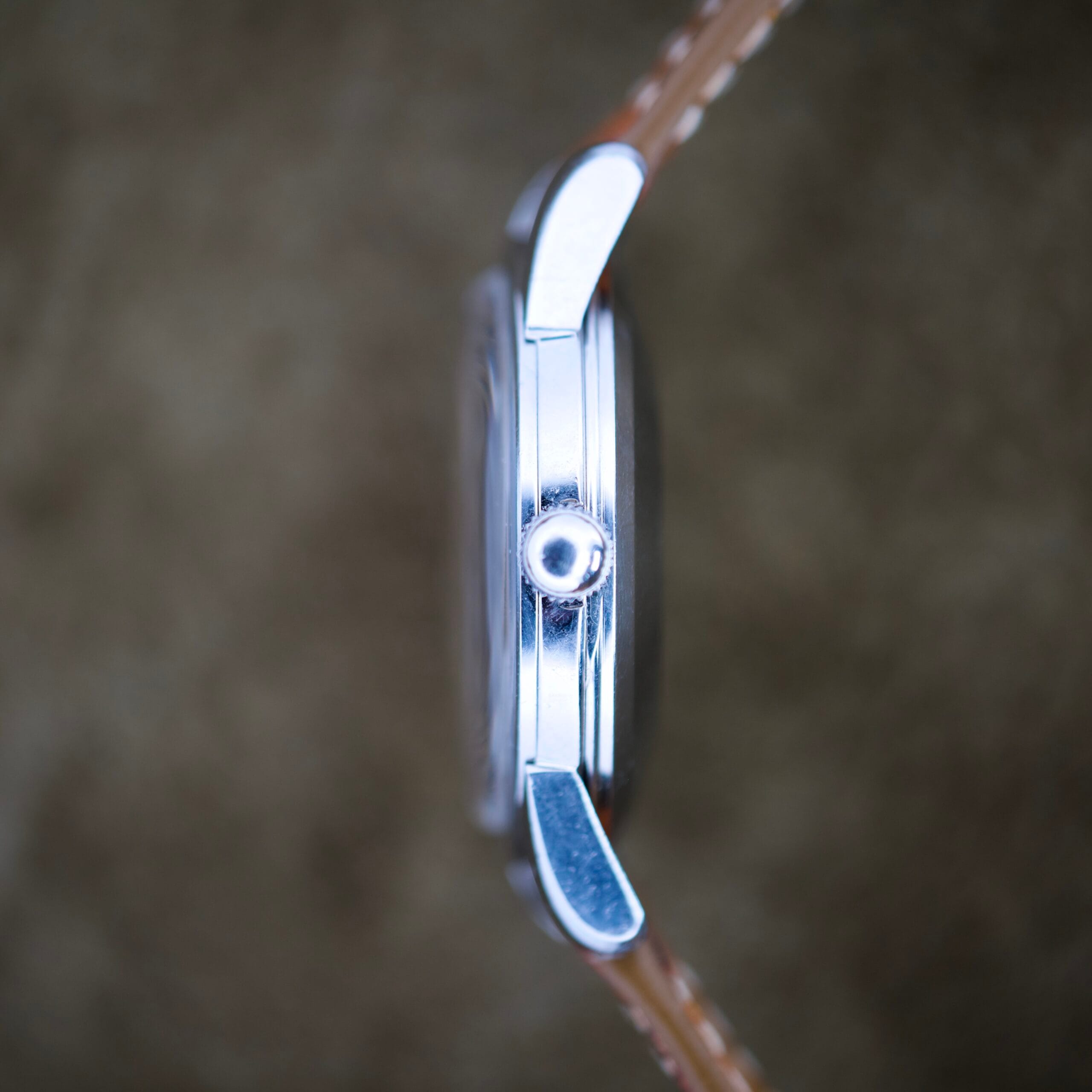
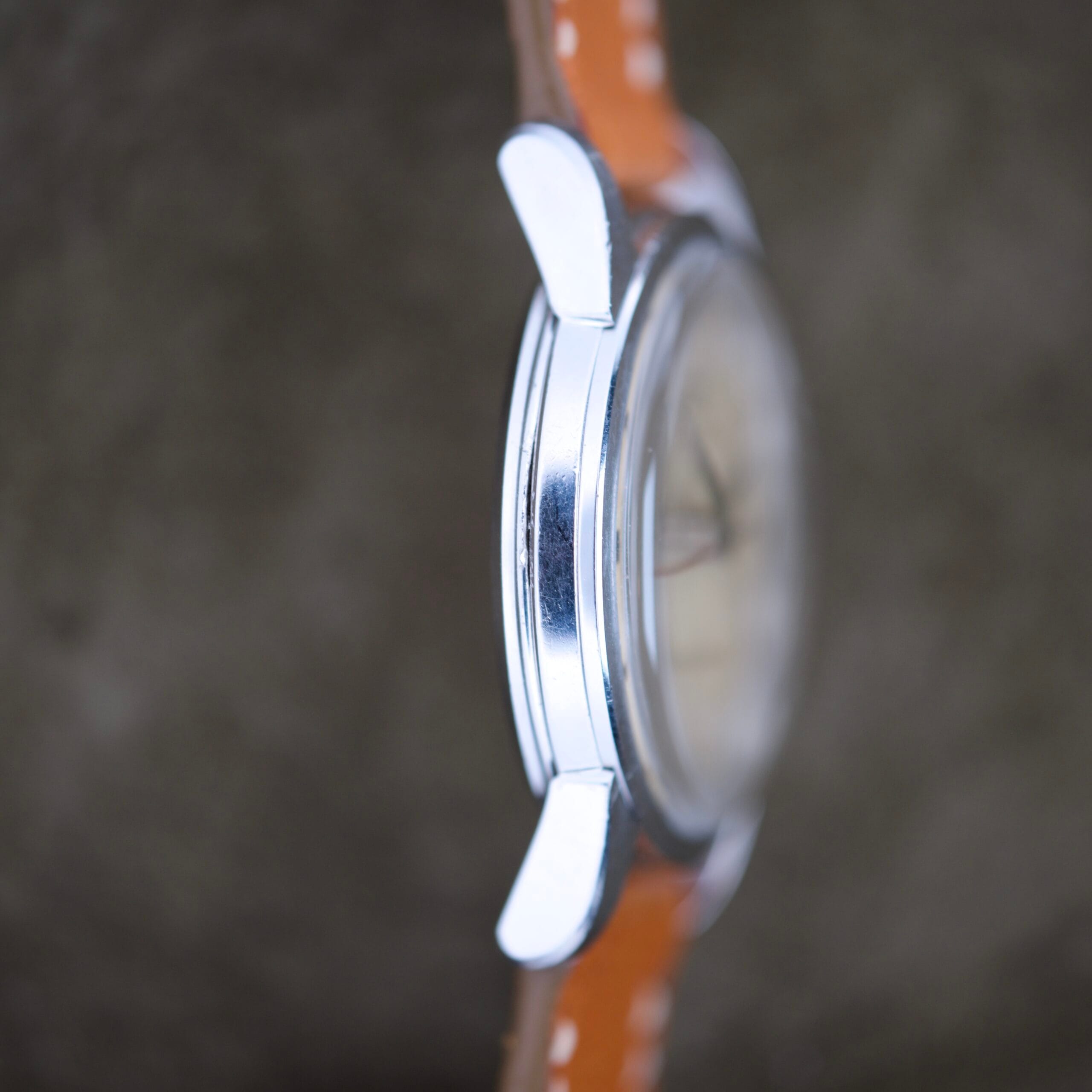
The Seamaster line dates to 1948, launched for Omega’s hundredth anniversary as a refined civilian counterpart to the rugged military pieces Omega had supplied during the war years. The reference 2846 sits squarely in the early chapter of that story. Produced roughly between 1954 and 1962, it gave the line its mid-century shape: a 34mm round stainless case, thick chamfered lugs, a snap-on back, and movements drawn from Omega’s first family of full-rotor automatic calibers. This particular example, ref. 2846-1 SC, runs on the caliber 500.
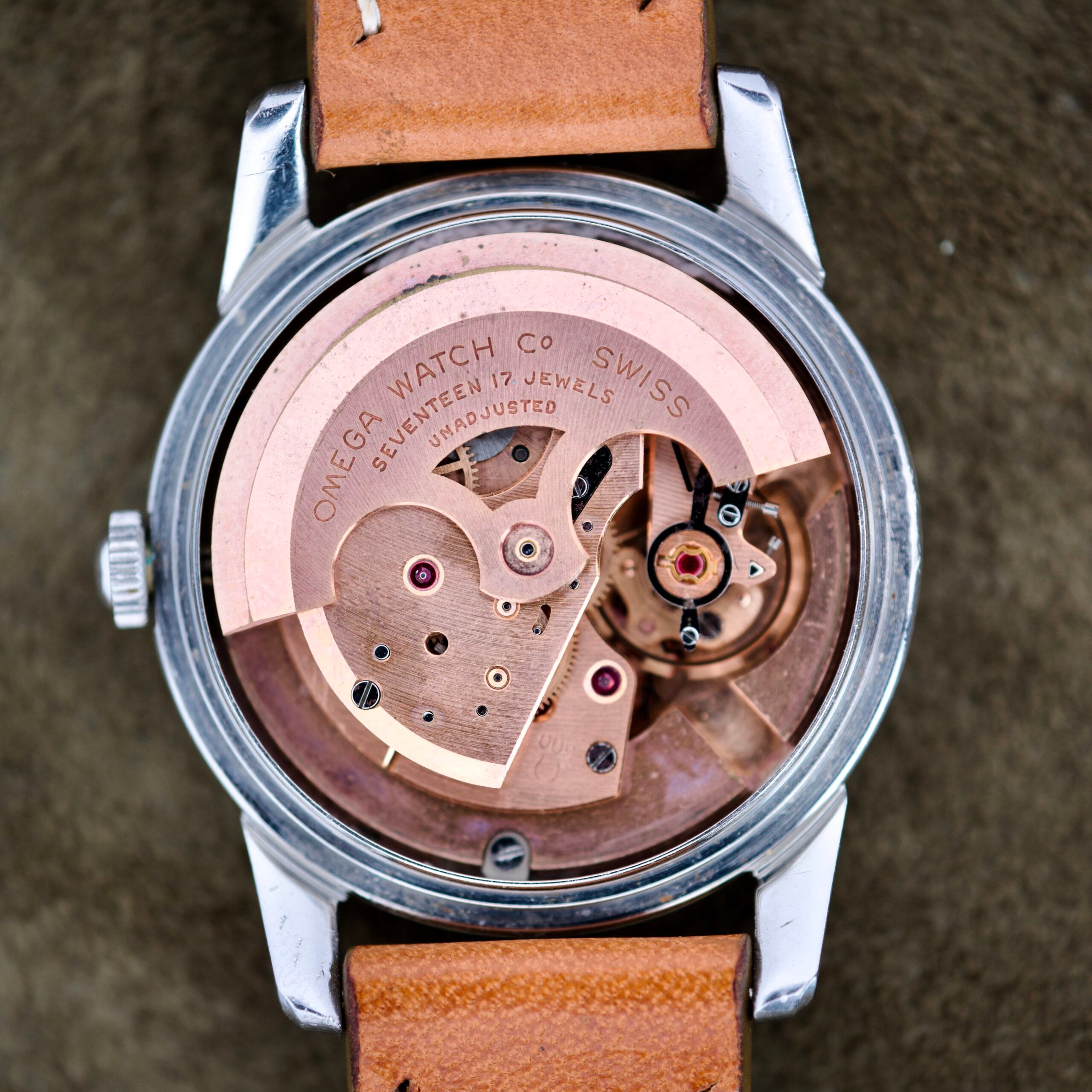
The 500 is one of those movements that quietly rewards anyone who actually opens a Seamaster from this era. Introduced mid-decade as part of Omega’s first generation of full-rotor automatics, it replaced the older bumper architecture with a true rotating winder. Seventeen jewels. Unadjusted in this configuration, as the engraving plainly states. Center seconds, signaled by the “SC” suffix at the end of the reference, and finished in the warm copper plating that the 500 family is genuinely known for. In our opinion, copper-finished Omega calibers from this window are one of the most quietly photogenic movement aesthetics of the decade, and the rotor here is signed in a clean serif: OMEGA WATCH Co SWISS, SEVENTEEN 17 JEWELS, UNADJUSTED.
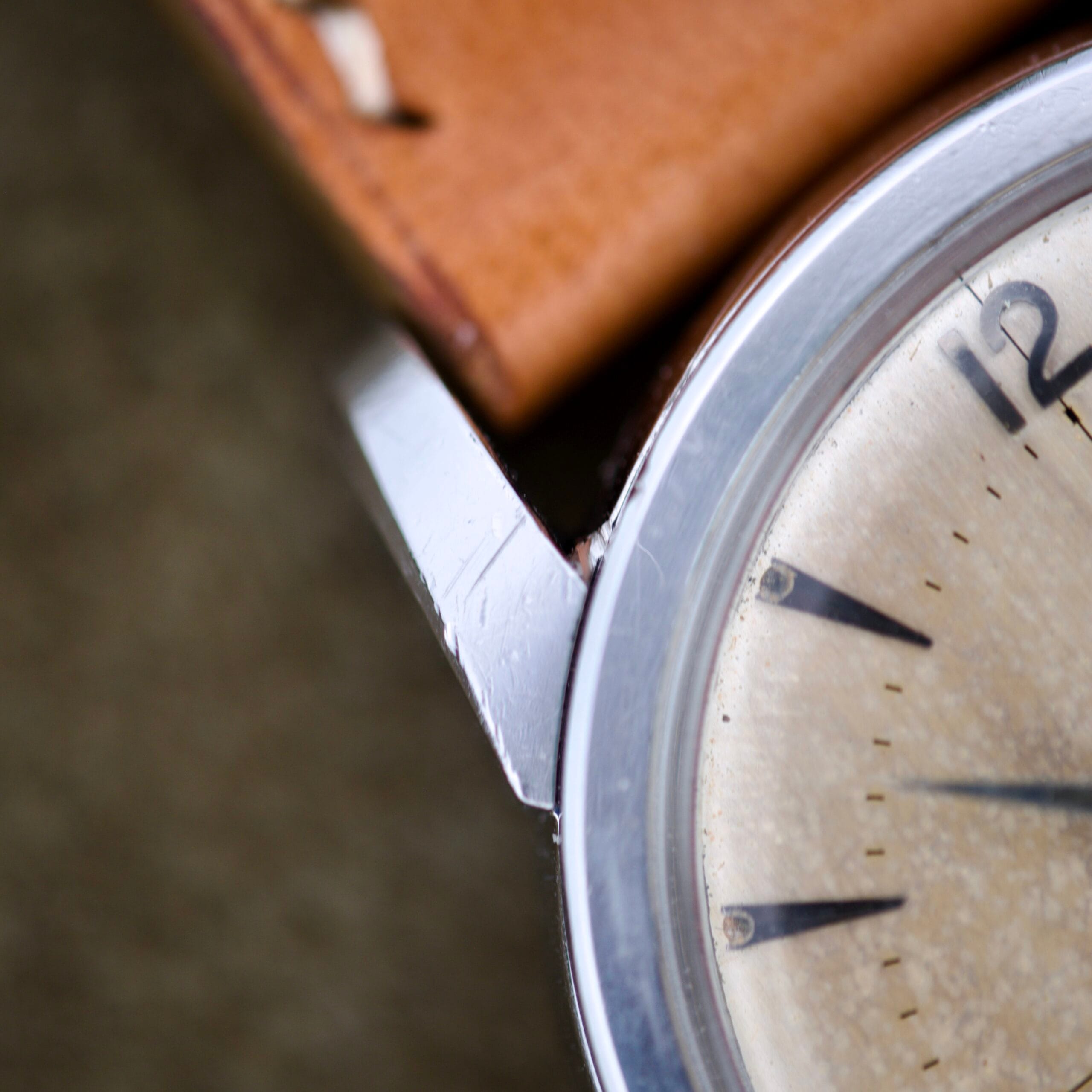
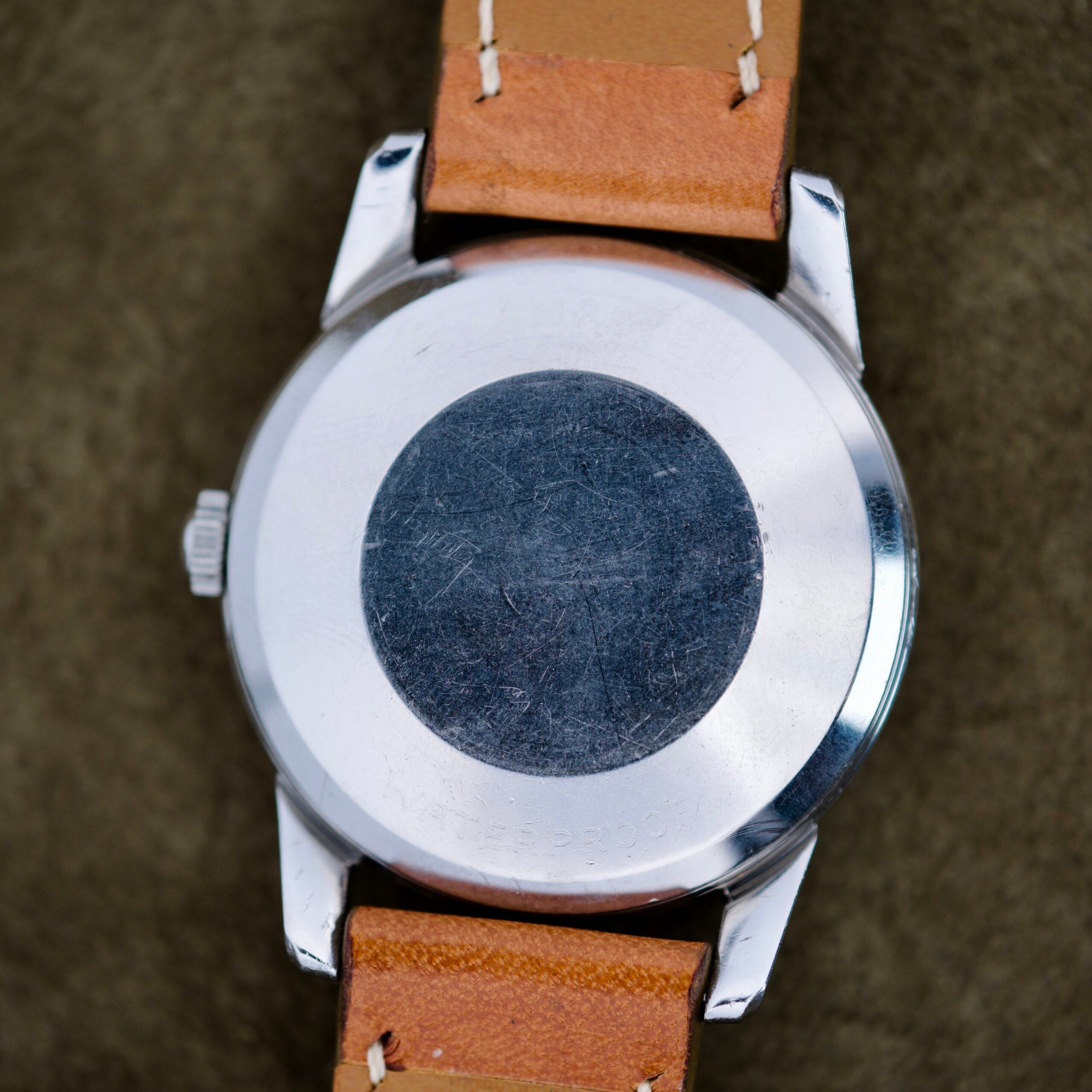
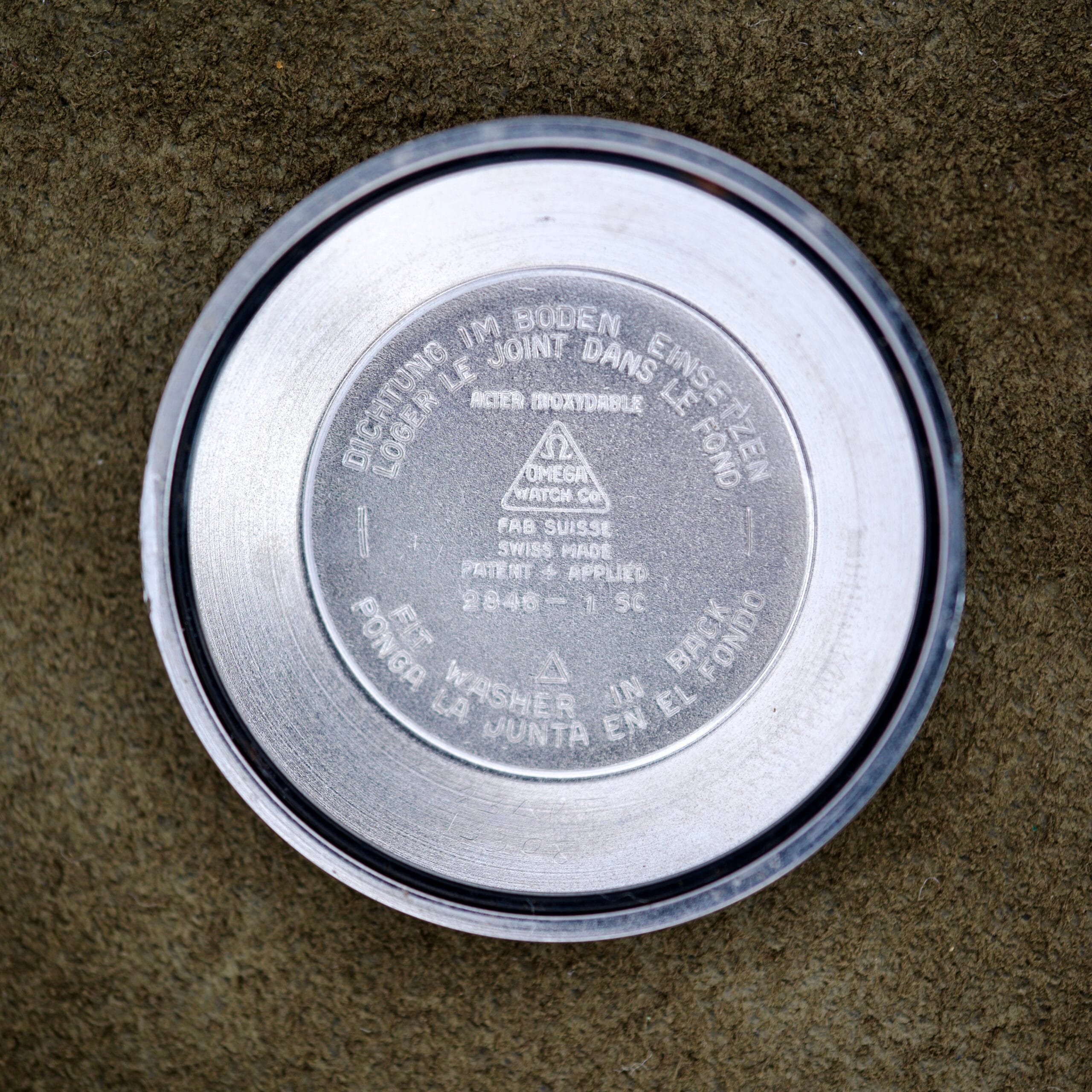
Flip the watch and the inner caseback rewards the inspection. The stampings are dense and trilingual, in the way only mid-century Swiss casebacks really were: DICHTUNG IM BODEN EINSETZEN at the top in German, LOGER LE JOINT DANS LE FOND in French right below, with ACIER INOXYDABLE arching above the Omega triangle. Below the triangle: FAB. SUISSE, SWISS MADE, PATENT(S) APPLIED, the reference 2846-1 SC, WASHER IN BACK, and PONGA LA JUNTA EN EL FONDO finishing things off in Spanish. The case itself shows the wear you would expect from seven decades of life, scuffs on the top of the lugs, light marks across the polished surfaces, but the lug chamfers are still readable and the overall geometry is honest.
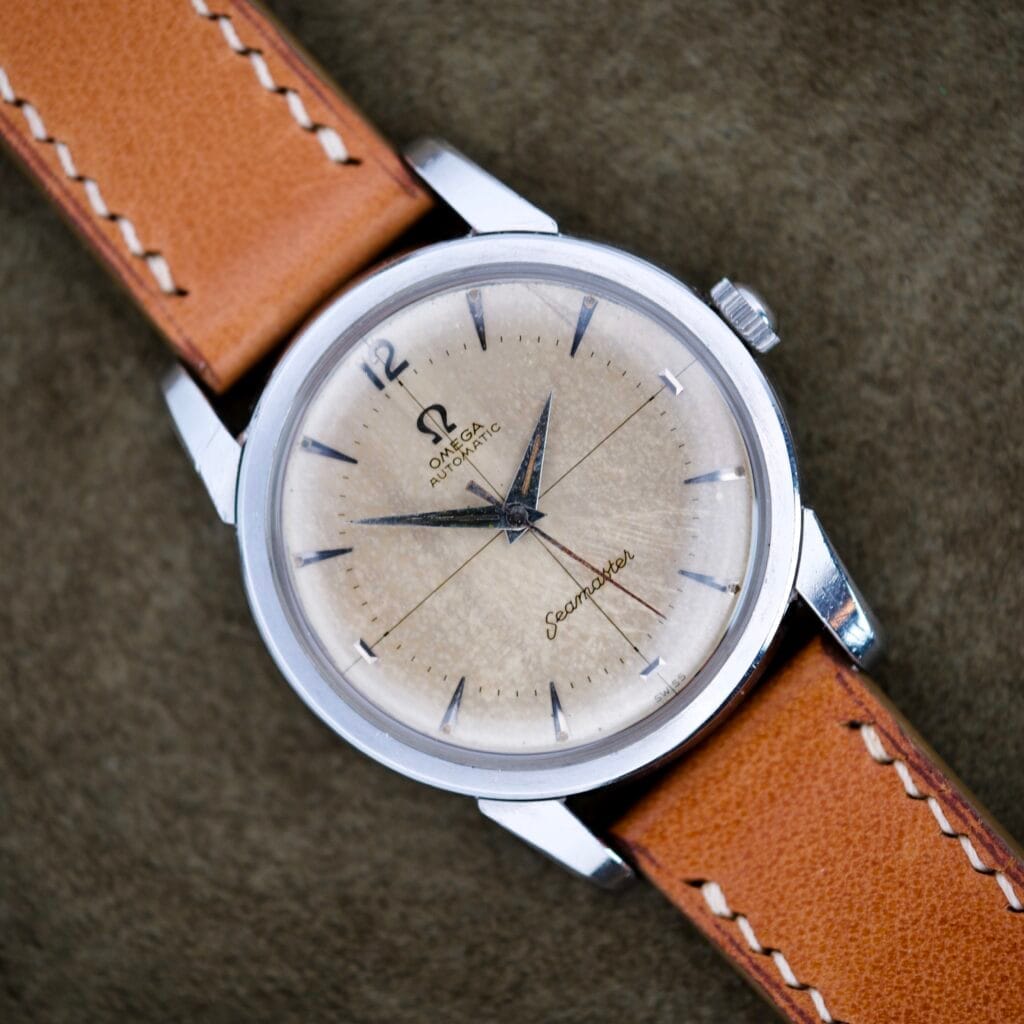
Up top, the dial is where this Seamaster lives. The cross-hair sector layout sends a horizontal and a vertical line through the center, intersecting under the hands. Hour positions are marked by applied, polished steel dart indices, faceted so they catch light from any angle, with the twelve standing apart as an applied, open-cutout Arabic numeral that lets the cream surface show through the hollow form. The printed signature block at 12 reads OMEGA AUTOMATIC under the applied Ω, and the cursive Seamaster sits at 6 above a plain SWISS print at the bottom edge. The faceted dauphine hour and minute hands have patinated to a dark steel that reads almost charcoal against the cream, with traces of degraded lume still resting in the central channels. There is no date, no sub-dial, no extra complication. Just the trio of hands sweeping across an aged surface, exactly the way a 1950s dress-sport watch was meant to be.
We have mounted it on a tan Buttero leather strap with white contrast stitching and a buckle, a pairing that picks up the warmer tones in the dial without competing with them.
This Seamaster has been serviced in-house at OTTUHR and is backed by our 2-year mechanical warranty. For the collector who values an unmolested early Omega Seamaster Automatic, a copper-finished caliber 500, and the kind of dial aging that cannot be faked or hurried, this is, to us, one of the more honest examples of the reference we have had through the workshop.