Don't miss the next drop


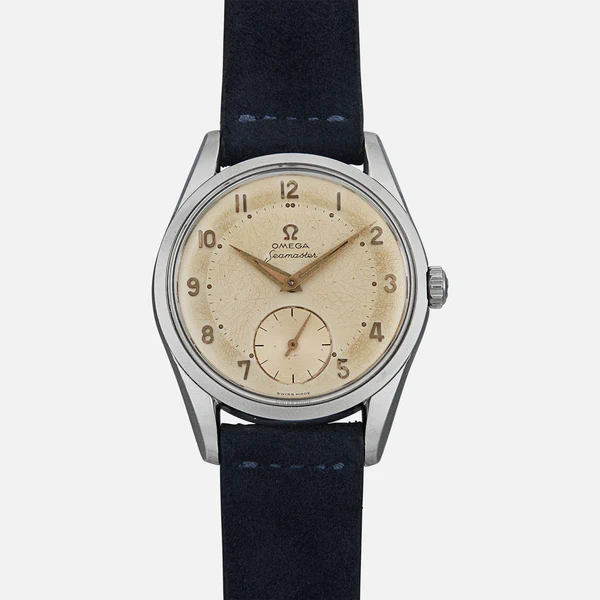
Omega Seamaster 2937
- Launch Year: 1956
As an eBay Partner, we may be compensated if you make a purchase.
Omega Seamaster 2937 Reference Report
The Omega Seamaster 2937 represents a pivotal moment in mid-century watchmaking, bridging the elegant dressy Seamasters of the late 1940s with the professional tool watches that would emerge in 1957. Produced primarily between 1956 and 1958, this reference occupies a fascinating position in Omega’s timeline: it arrived just before the legendary 1957 trilogy (Speedmaster 2915, Seamaster 300 2913, and Railmaster 2914) and shares aesthetic DNA with the 1958 Ranchero 2990.
What makes the 2937 particularly compelling to collectors is its “oversized” 36mm case, substantial for its era when 34mm was the norm for dress watches. The reference gained cult status among enthusiasts, particularly variants fitted with broad arrow hands and matte black dials, earning the affectionate nickname “Seachero,” a portmanteau acknowledging its visual kinship with both Seamaster and Ranchero lineages.
History & Production Period
The Seamaster 2937 emerged during a transformative period for Omega. Following the original Seamaster’s introduction in 1948, which commemorated the brand’s centenary with a waterproof design inspired by military watches from World War II, Omega spent the 1950s refining the collection across multiple case references and dial configurations.
The 2937 was produced primarily from 1956 through 1958, though some sources document examples extending into 1961. This reference succeeded earlier Seamaster models like the CK 2639, CK 2791, and CK 2891, each representing incremental evolution in case design and proportions. The 2937 distinguished itself with a more substantial case profile and swept lugs that gave the watch presence on the wrist while maintaining the refined aesthetic expected of 1950s dress sports watches.
The timing of the 2937’s production is significant. It appeared during Omega’s development phase for what would become the professional trilogy of 1957. The same design language, case proportions, and movement architecture were being refined across multiple references. When Omega introduced the Seamaster 300, Speedmaster, and Railmaster in 1957, followed by the Ranchero in 1958, the 2937 provided a more affordable, slightly dressier alternative sharing the era’s robust construction and reliability.
Production numbers for the 2937 remain undocumented in accessible archives. However, the reference appears less frequently in the vintage market compared to contemporaneous Omega models, suggesting modest production volumes. The relative scarcity, particularly of specific dial variants like the honeycomb pattern and black “Seachero” configurations, contributes to the reference’s collector appeal today.
Omega Seamaster Vintage 36mm Handwinding 2937 Honeycomb
Technical Specifications
The Omega Seamaster 2937 employs a three-piece case construction consisting of a removable button bezel, main case body, and snap-on caseback. This architecture, typical of mid-century Omega sports watches, provided adequate water resistance for daily wear while facilitating service access.
Case Dimensions:
- Diameter: 35.5-36mm (excluding crown)
- Lug-to-lug height: 43-44mm
- Thickness: Approximately 6.6mm case body, 9-9.8mm with crystal
- Lug width: 18mm
Case Materials:
The 2937 was offered in three primary configurations:
Wat20009 Omega Seamaster 2937-2 Gold on Steel from 1959 with Box
Crystal:
The watch employs an acrylic dome crystal with a metal tension ring. The crystal diameter accommodates the sub-seconds dial layout without requiring a low-dome profile, as the subsidiary seconds register allows clearance. Period-correct replacements use Omega part number 063PX series crystals with appropriate tension rings.
Crown:
Original examples feature signed Omega crowns with the brand’s logo. The crown measures approximately 5.5mm in diameter by 2.5mm thick. Service replacements often lack branding, which can help identify watches that have undergone professional servicing.
Water Resistance:
The 2937 carries “waterproof” etching on many casebacks, indicating splash resistance suitable for handwashing but not submersion. This level of protection was standard for dress sports watches of the era before the introduction of screw-down crowns and enhanced gasket systems.
Vintage Omega 2937 Seamaster, 1960 | Marcels Watch
Movements/Calibers
Omega Caliber 267
The Seamaster 2937 is powered exclusively by the Omega caliber 267, a robust manual-winding movement that formed part of Omega’s legendary 30mm movement family. This caliber represents the antimagnetic iteration of Omega’s foundational 30T2 architecture, which was continually developed over 25 years and became a cornerstone of the brand’s mid-century production.
Technical Specifications:
- Jewel count: 17 rubies
- Diameter: 30.00mm
- Height: 4.00mm
- Frequency: 18,000 A/h (2.5 Hz)
- Power reserve: 45 hours when fully wound
- Antimagnetic protection: Yes
Movement Architecture:
The caliber 267 features a sub-seconds configuration with the small seconds register positioned at 6 o’clock. The movement employs a lever escapement with a compensation balance and Breguet hairspring. Shock protection is provided by Incabloc jewel settings, protecting the delicate pivots from impact damage.
The movement includes Swan neck regulator adjustment for precision timing, a hallmark of quality Swiss watchmaking of this era. The bridges are finished with perlage (circular graining) and Côtes de Genève striping, visible through the movement when the caseback is removed. The copper-plated beryllium bronze construction provides durability and antimagnetic properties.
Movement Family Context:
The caliber 267 evolved from Omega’s 30T2 base caliber, which dated to the late 1930s. Related movements in this family include:
- Cal. 260/265: 15-jewel versions
- Cal. 261/262: Earlier 17-jewel iterations without enhanced antimagnetic properties
- Cal. 266: Similar specification but with different regulator design
- Cal. 268/269: Variants with different balance wheel or hairspring configurations
This movement architecture proved so successful that Omega employed it across dozens of references throughout the 1950s and into the early 1960s. The center-seconds variants of this family (280 series) powered contemporaneous Seamaster models, while the 267’s sub-seconds configuration was reserved for dressier applications like the 2937.
Performance:
When properly serviced, the caliber 267 delivers excellent timekeeping performance. Vintage examples restored by competent watchmakers routinely achieve accuracy within COSC chronometer standards (typically +3 to +9 seconds per day in optimal positions). The 45-hour power reserve provides approximately two days of running time, adequate for regular wear patterns.
Dial Variations
The Omega Seamaster 2937 appeared with a remarkable array of dial configurations, reflecting Omega’s philosophy of offering aesthetic diversity within a single case reference. These variations significantly impact collector desirability and market value.
Standard Production Dials
Silvered/Champagne Dials:
The most commonly encountered configuration features silvered or champagne-toned dials with applied gilt hour markers. These dials employ a combination of baton indices at even hours with Arabic numerals at 12, 2, 4, 8, and 10 o’clock in some variants, or consistent baton markers throughout in others. The printing is uniformly sharp, with “Omega” signed at 12 o’clock, “Seamaster” prominently displayed below, and “Swiss Made” at the base of the sub-seconds register.
Cream/Ivory Dials:
Original cream or ivory dials represent a warmer aesthetic choice. These dials develop characteristic patina over decades, often acquiring a subtle honey or café-au-lait tone that collectors prize for its originality and even aging. The luminous material in the applied markers and hands contributes to this patination process.
Special Textured Dials
Honeycomb/Waffle Pattern:
Among the most desirable variants, honeycomb dials feature an intricate textured pattern across the dial surface resembling a waffle or pyramid structure. This labor-intensive dial finishing technique creates depth and visual interest, catching light differently depending on viewing angle. Authentic honeycomb patterns exhibit consistent depth and crisp definition between individual cells. Poorly executed refinished dials often show flatter, less defined honeycomb structures that lack the three-dimensional quality of factory originals.
Omega Seamaster Vintage 36mm Handwinding 2937 Honeycomb
Engine-Turned Variations:
Some examples feature engine-turned or guilloché-style decoration, typically circular or radial patterns emanating from the center. These decorative dials command premiums when original, as the intricate machining represents significant manufacturing expense.
“Seachero” Dial Configuration
The most collectible 2937 variants feature matte black dials with luminous Arabic numerals and broad arrow hands, closely mimicking the aesthetic of the 1958 Ranchero reference 2990. These watches, affectionately termed “Seachero” by collectors, represent the convergence of Seamaster case architecture with Ranchero dial design.
WTS] 1957 Omega Seamaster “Seachero” 2937-2 – original dial
Seachero Characteristics:
WTS] 1957 Omega Seamaster “Seachero” ref. 2937-2 : r
- Applied luminous hour markers (typically developing orange patina)
- Broad arrow hour and minute hands
- Sub-seconds register with printed minute track
- “Seamaster” designation (distinguishing from true Ranchero)
The aging characteristics of Seachero dials warrant particular attention. The matte black surface often develops a dusty grey-brown coloration due to decades of radium radiation exposure. The luminous material in both markers and hands develops rich orange or cream patina, with original sets typically exhibiting consistent aging patterns. When exposed to UV light, both dial markers and hands should glow briefly with equal intensity before fading at similar rates, confirming originality.
Market Context:
Seachero variants command significant premiums over standard silvered dial examples. While conventional 2937 references trade in the $1,600-$2,500 range, documented Seachero examples with broad arrow hands have sold for $5,000-$5,500 in excellent condition. This premium reflects both rarity and the crossover appeal to collectors of the legendary Ranchero, which typically commands $5,000-$10,000+.
Omega Seamaster Ref. 2937 circa 1958 – Black Bough | Ludlow
Case & Bezel Variations
Case Construction and Design
The Seamaster 2937 case represents mid-century Omega design at its finest, balancing elegance with robust construction. The three-piece architecture facilitates servicing while maintaining adequate water resistance through a snap-on caseback with rubber O-ring gasket.
Lug Design:
The defining characteristic of the 2937 case is its gracefully downturned lugs with chamfered edges. These swept lugs extend from the case body at approximately 43-44mm lug-to-lug distance, creating comfortable wrist presence while accommodating period-appropriate 18mm straps. The lug configuration differs subtly from contemporaneous references like the 2891 and 2639, exhibiting a more pronounced downward sweep and broader profile.
Omega Seamaster Ref. 2937 circa 1958 – Black Bough | Ludlow
Bezel Configuration:
The 2937 employs a smooth, polished bezel that is removable from the main case body. This button-style bezel press-fits onto the case middle, with the crystal sitting inside the bezel perimeter. The chamfered edge between the bezel’s top surface and its vertical sidewall creates a subtle play of light, adding visual refinement.
Case Finishing:
Original factory finish exhibits a combination of polished and brushed surfaces. The bezel top surface receives high polish, while case flanks show vertical brushing. The lug tops are polished, creating contrast with brushed sides. Over-polishing from aggressive service work can remove these defined edges and reduce case thickness, so collectors prize examples with crisp, unpolished case architecture.
Sub-Reference Designations
The 2937 exists with numerical suffixes indicating variations, though documentation of exact differences remains incomplete:
Reference 2937-1:
Early production variant, occasionally found with large hippocampus medallion caseback. This caseback features the embossed seahorse emblem typically associated with later Seamaster professional models, making 2937-1 examples with this feature particularly desirable.
Very rare Omega Seamaster “Seahorse Medallion” ref. 2937
Reference 2937-2:
Frequently encountered variant, appears with both standard silvered dials and the rare black “Seachero” configuration. Some gold cap (gold on steel) examples carry this designation.
Wat20009 Omega Seamaster 2937-2 Gold on Steel from 1959 with Box
Reference 2937-3:
Steel variant with potential dial or finishing variations from earlier sub-references.
Reference 2937-4:
Later production variant, documented examples from 1958-1960.
Reference 2937-5:
Less commonly documented sub-reference, likely representing late production or specific market variant.
The precise distinctions between these sub-references remain somewhat ambiguous, as Omega’s internal designation system of this era sometimes indicated production batches, case supplier variations, or market-specific configurations rather than obvious visual differences.
Caseback Variations
Standard Snap-On Caseback:
Most examples feature smooth, polished snap-on casebacks with interior markings including “Omega Watch Co.,” “Fab Suisse,” “Swiss Made,” and the four-digit reference number. The interior also carries UK hallmarks on gold examples or stainless steel grade stamps.
Hippocampus Medallion Caseback:
Certain 2937-1 examples feature the large embossed hippocampus (seahorse) medallion that became Omega’s signature for professional Seamaster models starting in 1957-1958. This mythological creature, inspired by Venetian gondola ornaments, symbolizes the watch’s water-resistant capabilities. The presence of this caseback on a 2937 significantly enhances collector appeal, as it explicitly connects the reference to Omega’s professional sports watch lineage.
Very rare Omega Seamaster “Seahorse Medallion” ref. 2937
Omega Seamaster Vintage 36mm Handwinding 2937 Honeycomb
Bracelet & Strap Options
Period-Correct Bracelet Options
The Seamaster 2937 was not typically sold with integrated metal bracelets during its production period. Unlike later Seamaster references with purpose-designed link bracelets, the 2937 was predominantly delivered on leather straps with signed Omega buckles. Collectors seeking period-appropriate metal bracelet options face limited historically accurate choices.
Gay Freres Bracelets:
The Swiss bracelet manufacturer Gay Freres supplied Omega with various bracelet designs during the 1950s. Beads of Rice patterns in 18mm configurations can sometimes be fitted to 2937 cases, though documentation of factory-correct fitment remains sparse. These elegant link designs complement the dress-sports aesthetic but require proper 18mm curved end links for ideal integration.
Aftermarket Expansion Bracelets:
Period expansion bracelets were commonly fitted by retailers and owners during the 1950s-1960s. While not factory-specified, vintage expansion bracelets in gold-filled or stainless steel provide era-appropriate wearing options that many collectors accept, particularly when original leather straps have deteriorated beyond use.
Original Strap Configurations
Leather Straps:
Factory delivery included leather straps, typically in brown, black, or cordovan colors with 18mm width at the case, tapering to 16mm at the buckle. Original Omega buckles were either stainless steel (for steel cases) or gold-plated (for gold cap and gold models), featuring the Omega logo and typical pin buckle construction.
The specific leather types varied, with offerings including:
- Smooth calf leather (most common)
- Crocodile or alligator patterns (higher-grade options)
- Suede finishes (occasional specialty offering)
Modern Strap Options:
Contemporary collectors enjoy pairing the 2937 with diverse strap options that complement its vintage aesthetic without compromising its character. Popular modern choices include:
- Brown or tan leather straps in various finishes, which harmonize with aged dial patina
- NATO-style fabric straps for casual versatility
- Vintage-style canvas or sailcloth options providing texture contrast
- Shell cordovan straps that develop rich patina complementing the watch’s vintage character
The 18mm lug width provides excellent strap availability, as this dimension remains common in contemporary strap manufacturing.
Clasp and Buckle Considerations
Original Omega buckles from the 1950s featured simple pin buckle construction with the Omega logo. These buckles measured approximately 10-12mm width and employed either polished or brushed finishing matching the case material. Service replacement crowns and buckles often lack the Omega signature, providing a subtle indicator of service history.
Contemporary deployment clasps can be retrofitted to leather straps for added security and reduced wear on the strap material, though this represents a departure from period authenticity.
Omega Seamaster Vintage 36mm Handwinding 2937 Honeycomb
Identifying Original vs. Replaced Parts
Authentication of the Seamaster 2937 requires careful examination of multiple components, as the vintage watch market contains numerous examples with service replacements, refinished dials, and incorrect parts. Understanding what constitutes original specification versus replaced components protects collectors from overpaying for compromised examples.
Dial Authentication
Original Dial Characteristics:
Factory Omega dials from the 1950s exhibit specific manufacturing techniques and aging patterns that distinguish them from refinished replacements:
Printing Quality: Original dials display crisp, evenly spaced text with consistent font weights. The “Omega” signature at 12 o’clock consists of a separate applied metal logo, not painted or printed text. The “Seamaster” designation appears in a specific font with precise letter spacing. Swiss Made appears at the bottom of the dial, centered below 6 o’clock.
Applied Markers: Hour indices are applied metal components attached to the dial base. The attachment points should show no glue residue or excess adhesive around marker bases. On genuine dials, the dial color exists only on the dial surface itself, not on the sides or tops of applied markers. If you observe dial paint or patina on the markers, the dial has been refinished after markers were applied, confirming a redial.
Patina Patterns: Authentic aging produces even, organic patina across the dial surface. “Spiderweb” patterns, irregular splotches, or stark color inconsistencies often indicate moisture damage, excessive radium degradation, or poor refinishing. Honeycomb dials should exhibit consistent depth and definition across all cells; flat or poorly defined honeycomb patterns suggest refinishing.
Redial Indicators:
- Dial color present on applied markers or logo
- Misaligned or crooked printing
- Inconsistent font styles between different text elements
- “Swiss Made” marking missing or relocated
- Luminous material on dial markers but not hands (or vice versa), suggesting mismatched replacement
- Overly pristine appearance inconsistent with case and movement aging
Hand Authentication
Original Hand Styles:
The 2937 appeared with several hand configurations, each period-correct for specific dial variants:
Dauphine Hands: Tapered, faceted hands with luminous tips, most common on silvered and champagne dials
Alpha Hands: Rounded hour and minute hands with luminous tips, seen on various dial colors
Broad Arrow Hands: Distinctive arrow-shaped hands on rare “Seachero” variants
WTS] 1957 Omega Seamaster “Seachero” 2937-2 – original dial
Lume Consistency: On original, unrestored watches, the luminous material on hands should exhibit similar aging and patina to dial markers. Significant color differences suggest hand replacement or re-luming. When testing with UV light, hands and dial markers should glow with similar intensity and fade at comparable rates.
Service Replacement Hands:
Omega service replacements during the 1960s-1990s often featured modern luminous material (tritium or later Super-LumiNova) with different aging characteristics than original radium. These service hands, while genuine Omega parts, represent departures from original specification and reduce collector value.
Very rare Omega Seamaster “Seahorse Medallion” ref. 2937
Crown Authentication
Original Crown Specifications:
Period-correct crowns measure approximately 5.5mm diameter by 2.5mm thickness with the Omega logo engraved. The crown threading should feel smooth and precise when wound. Original crowns often show patina and wear consistent with the case, though excessive wear may indicate the need for replacement.
Service Crowns:
Many vintage Omega watches have received replacement crowns during service. Service crowns typically lack the Omega logo, appearing as simple unsigned crowns. While this indicates the watch has been serviced, it doesn’t necessarily detract significantly from value if other components remain original.
Case Authenticity
Polishing Concerns:
The 2937’s relatively thin case construction makes it vulnerable to over-polishing during service. Aggressive polishing removes material, rounding case edges and reducing lug definition. Signs of over-polishing include:
- Rounded, soft lug profiles lacking crisp edges
- Reduced case thickness compared to specifications
- Loss of definition between polished and brushed surfaces
- Rounded or softened bezel edges
Reference Number Verification:
The case interior should bear the four-digit reference number (2937, 2937-1, etc.) along with Omega markings and country-specific hallmarks. These stampings should appear crisp and factory-applied, not hand-engraved or added later.
Movement Authentication
Caliber 267 Verification:
The movement should bear clear “Omega,” “Swiss,” “267,” and “17 Jewels” engravings. The serial number stamped on the movement dates the watch and can be cross-referenced with Omega’s production records via an Extract of the Archives service.
Movement Serial Numbers:
Omega movements from the 1950s featured 8-digit serial numbers that correspond to production dates. The 15xxxxxx range indicates mid-to-late 1950s production, consistent with the 2937’s documented production period. Movement serial numbers should not be confused with case serial numbers; both are legitimate Omega reference points but serve different purposes.
Signs of Service:
Evidence of professional service includes clean movement plates, fresh lubrication, and replaced gaskets. While service work affects originality to some degree, it’s necessary for functional vintage watches and shouldn’t disqualify otherwise original examples.
Extract of the Archives
For definitive authentication of production details, Omega offers an Extract of the Archives service for approximately 120 CHF (approximately 120 USD). This document, produced after researching Omega’s microfilm archives in Bienne, Switzerland, confirms:
- Movement serial number and production date
- Reference number and model designation
- Original destination country
- Any available specifics regarding dial color and configuration
The extract arrives in a red binder with official Omega documentation and typically requires 4-12 weeks for delivery. While not legally required for sale, an Extract significantly enhances both authentication confidence and resale value, particularly for rare variants like Seachero examples.
Omega Seamaster Vintage 36mm Handwinding 2937 | Vintage
Collector Notes & Market Context
Current Market Positioning
The Omega Seamaster 2937 occupies a compelling value position in the vintage watch market, offering substantial quality and historical significance at accessible price points relative to more celebrated Omega references.
Standard Variants (Silvered/Champagne Dials):
Clean examples with original dials, correct hands, and unpolished cases typically trade between $1,600 and $2,500. This range positions the 2937 as an excellent entry point for collectors interested in 1950s Omega quality without the premiums commanded by Constellation pie-pans or early Speedmaster references.
Honeycomb Dial Variants:
The desirable honeycomb textured dials command premiums of $200-$500 above standard silvered examples, typically trading in the $2,000-$2,800 range when original and unrestored. The relative scarcity and visual appeal of these dials justify the premium among collectors seeking distinctive aesthetics.
“Seachero” Broad Arrow Variants:
Black dial examples with broad arrow hands represent the most collectible configuration, commanding $4,500-$5,500 in excellent condition. This substantial premium reflects both rarity and the aesthetic connection to the significantly more expensive Ranchero reference 2990, which typically trades at $5,000-$10,000+.
Gold Cap Examples:
Gold-plated or gold cap configurations (gold top with steel back) trade at modest premiums over steel, typically $2,200-$3,000 depending on plating condition. Solid 18k gold examples command significantly higher prices, often $3,500-$5,000+, though these appear far less frequently in the market.
Wat20009 Omega Seamaster 2937-2 Gold on Steel from 1959 with Box
What Drives Premiums
Several factors significantly influence 2937 values beyond the base reference specifications:
Original, Unrestored Dials: Factory original dials with appropriate even patina command substantial premiums over refinished examples. Collectors increasingly prize originality, even with minor imperfections, over overly pristine refinished dials that lack authentic character.
Unpolished Cases: Sharp, unpolished cases with crisp lug definition and maintained edge transitions between polished and brushed surfaces significantly enhance value. Over-polished examples may trade at 20-30% discounts.
Hippocampus Caseback: The rare large hippocampus medallion caseback found on some 2937-1 variants adds $300-$500 to standard values due to the explicit connection to Omega’s professional sports watch heritage.
Very rare Omega Seamaster “Seahorse Medallion” ref. 2937
Complete Service History: Documentation of professional service by competent watchmakers provides buyer confidence and can justify 10-15% premiums, particularly when service includes accuracy certification and detailed condition reports.
Box and Papers: Original boxes and warranty papers, while exceptionally rare for watches of this vintage, can double market values when present. Extract of the Archives certificates add $100-$200 to market prices by confirming authenticity and provenance.
Collecting Strategy
Comparative Value Analysis:
The 2937 represents exceptional value when compared to contemporary Omega references:
- Versus Constellation: Pie-pan Constellations from the same era command $3,000-$6,000 for comparable condition, double the 2937’s pricing despite similar movement architecture and build quality.
- Versus Seamaster 300: The legendary 1957 Seamaster 300 (CK2913) trades at $8,000-$15,000+, while the 2937 provides similar era aesthetics and quality at a fraction of the cost.
- Versus Ranchero: For collectors drawn to the Ranchero’s utilitarian aesthetic but deterred by $5,000-$10,000+ pricing, Seachero variants offer remarkably similar visual appeal at half the price.
Common Pitfalls to Avoid:
- Refinished Dials: The vintage watch market contains numerous 2937 examples with poorly refinished dials. Avoid examples with overly bright or inconsistent printing, especially at prices suggesting original condition.
- Incorrect Hands: Mismatched hands from other Omega models frequently appear on 2937s, particularly service replacement hands with modern luminous material. Verify hand style appropriateness for the specific dial variant.
- Over-Polished Cases: Aggressive polishing reduces both dimensions and collector value. Prioritize examples with defined lug edges and maintained case architecture.
- Franken-Watches: Assemblies combining parts from multiple references exist in the market. Verify case reference, movement caliber, and dial/hand consistency before purchase.
- Service Dial Replacement: Watches serviced through official Omega channels during the 1970s-1990s sometimes received modern service dials lacking the character and value of original specification. These can be difficult to detect without experience.
Investment Perspective:
The 2937 demonstrates steady value appreciation characteristic of quality vintage Omega references, though without the dramatic price escalation of headline models like early Speedmasters. Collectors purchasing pristine, all-original examples with Extract documentation can reasonably expect 3-5% annual appreciation, consistent with the broader vintage Omega market.
The reference’s relative affordability positions it as an excellent foundation for broader vintage Omega collections, offering genuine 1950s quality without the financial commitment required for trophy pieces. As the vintage watch market matures and collectors increasingly appreciate under-recognized references, the 2937 represents strong long-term potential, particularly rare variants like honeycomb dials and Seachero configurations.
Omega Seamaster Vintage 36mm Handwinding 2937 Honeycomb
Conclusion
The Omega Seamaster reference 2937 embodies mid-century Swiss watchmaking at a pivotal moment in horological history. Positioned between the elegant dress watches of the early Seamaster lineage and the professional tool watches that would define 1957, this reference offers collectors a fascinating glimpse into Omega’s design evolution during one of its most creative periods.
What distinguishes the 2937 is its accessibility paired with genuine quality. The reliable caliber 267 movement, substantial 36mm case proportions, and diverse dial offerings provide collectors with substantial value relative to more celebrated contemporary references. Whether pursuing a pristine silvered dial example for daily wear, a honeycomb variant for its visual distinction, or the rare Seachero configuration for its connection to Omega’s professional sports watch heritage, the 2937 rewards careful research and patient hunting.
The reference’s current market positioning offers compelling opportunities. Standard examples remain attainable for collectors building their first vintage Omega acquisitions, while rare variants provide sufficient exclusivity to satisfy advanced enthusiasts. As vintage watch appreciation continues emphasizing originality, provenance, and historical context over mere brand recognition, references like the 2937 stand to benefit from collectors’ deepening knowledge and refined tastes.
For those willing to invest time understanding the reference’s nuances, distinguishing original specification from service replacements, and appreciating the subtle variations that characterize 1950s production, the Seamaster 2937 represents not merely a watch, but a tangible connection to Omega’s golden age of innovation and craftsmanship.