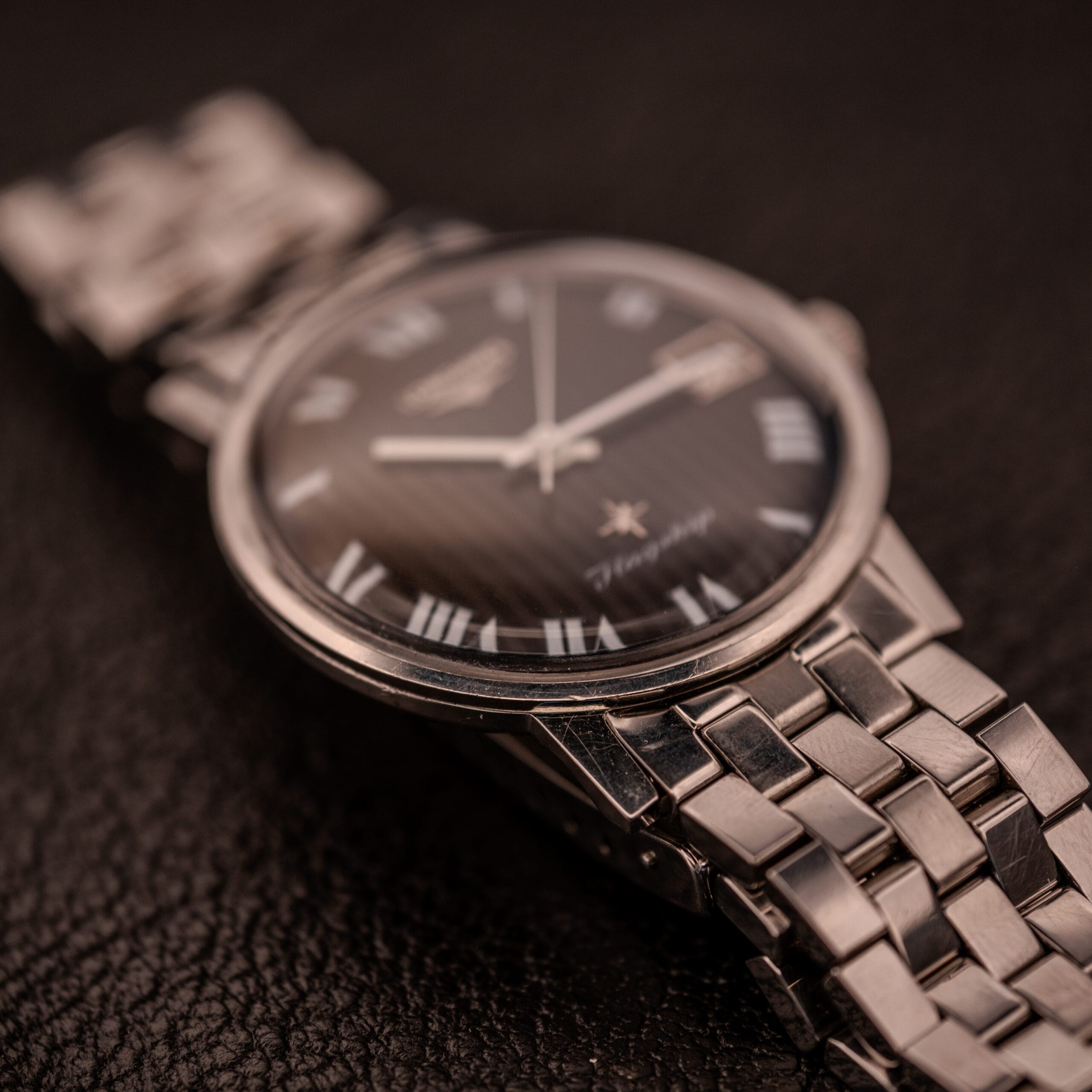
For the vintage collector, Longines represents arguably the best value proposition in the entire industry. During the mid-20th century, Longines was a manufacture that stood shoulder-to-shoulder with Patek Philippe and Omega, producing movements of exceptional quality and finishing. The Flagship line, introduced in 1957, was the brand’s premier manual-wind dress collection, designed to be the ultimate expression of elegance and precision. While the Conquest was the water-resistant sports watch, the Flagship was the watch you wore to sign the contract.
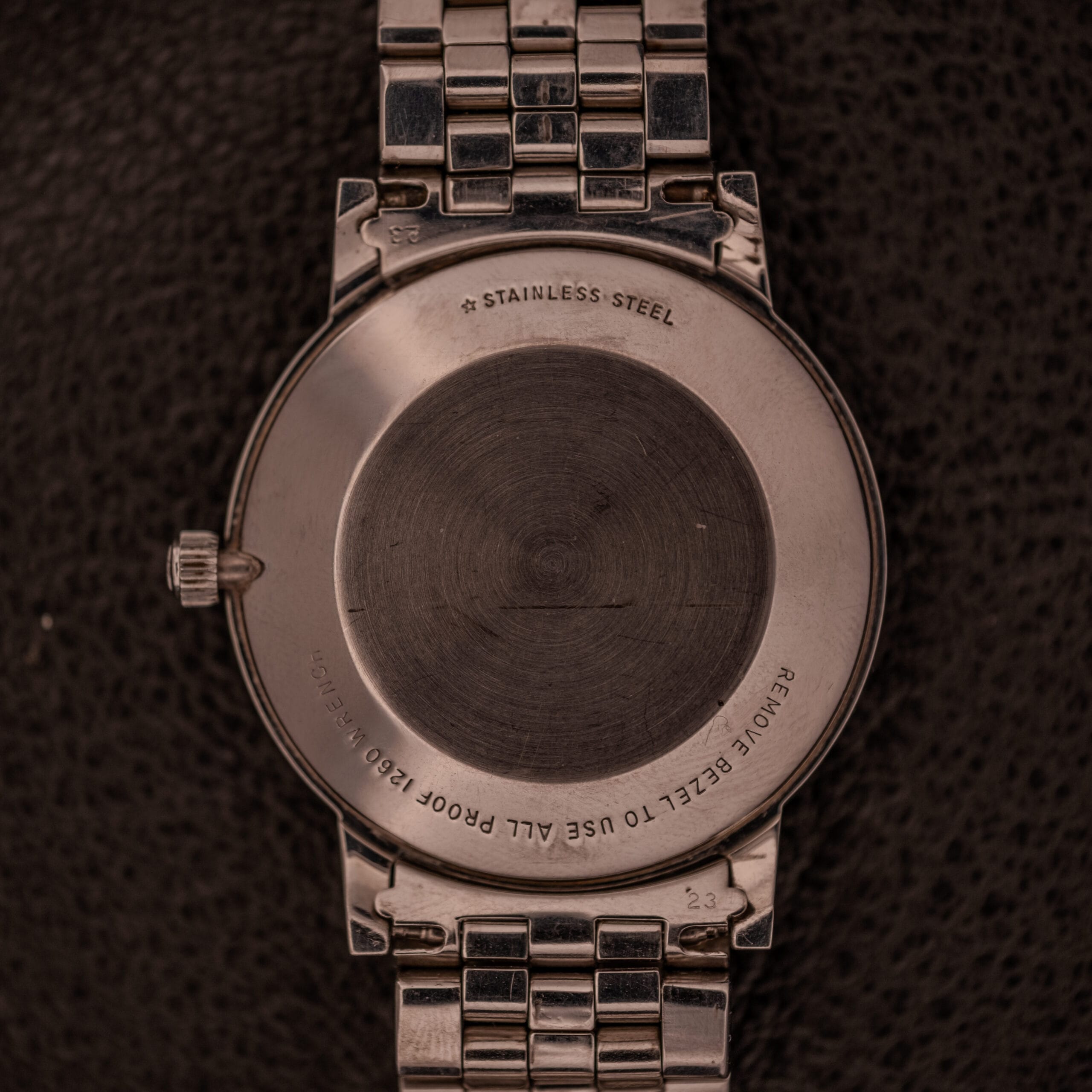
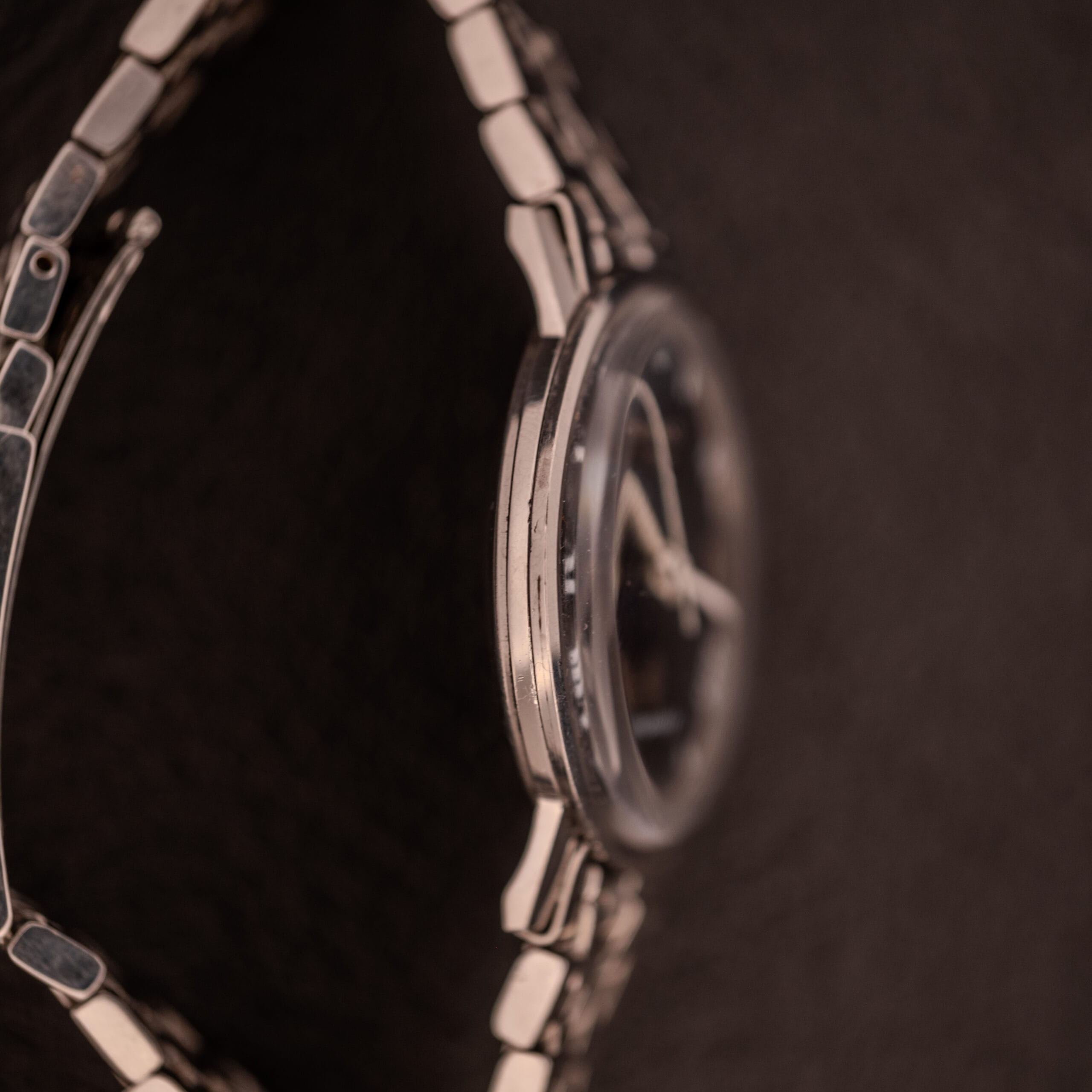
This particular example, produced in 1966, offers a fascinating glimpse into the history of Swiss watchmaking in America. The inside of the caseback is stamped “Longines-Wittnauer” and “Star W. C. Co,” indicating that the case was manufactured domestically by the Star Watch Case Company in Michigan. This was a common practice during this era to avoid high import tariffs on precious metals and finished steel cases, resulting in unique variations that differ slightly from their Swiss-cased counterparts.
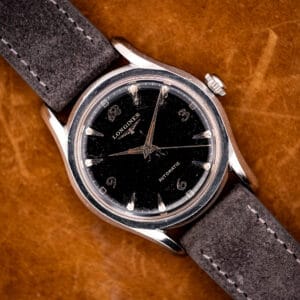
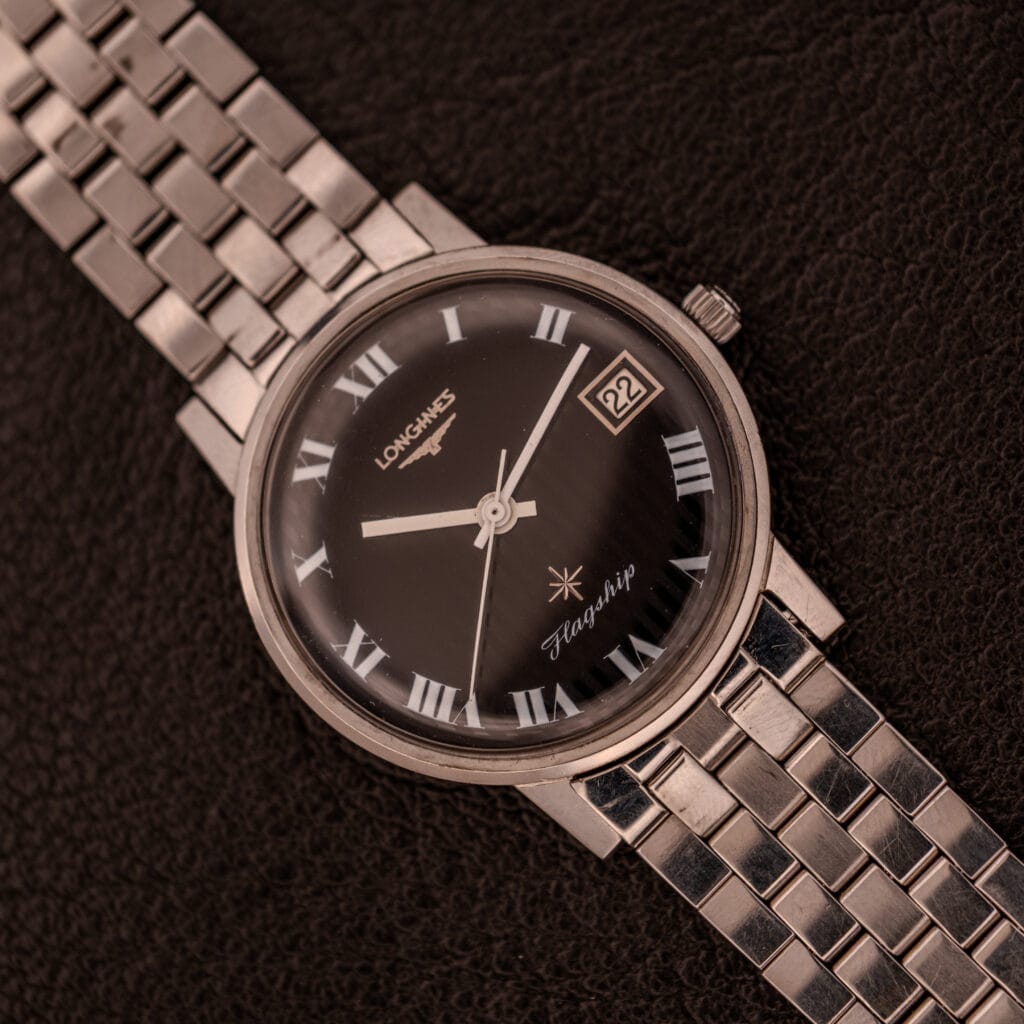
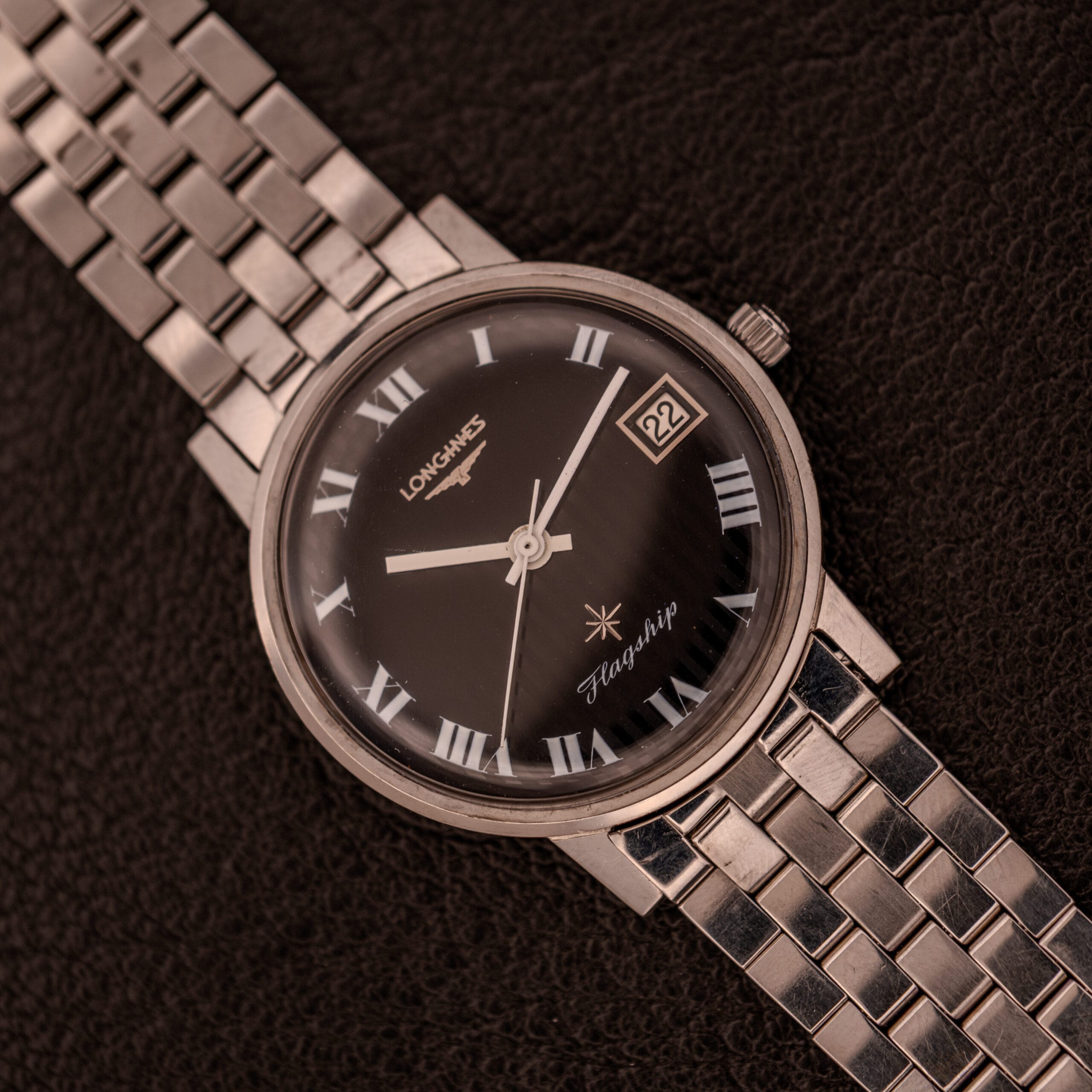
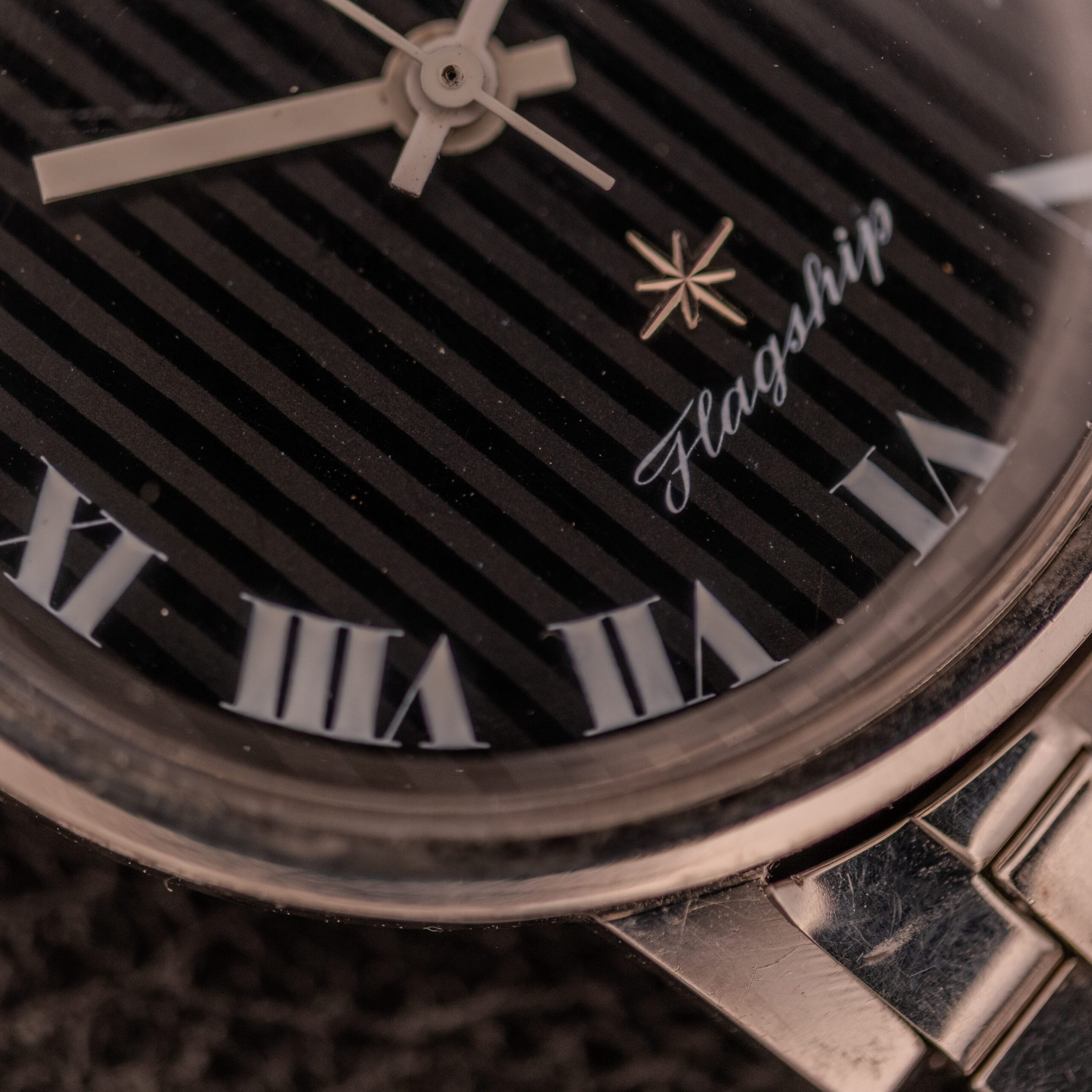
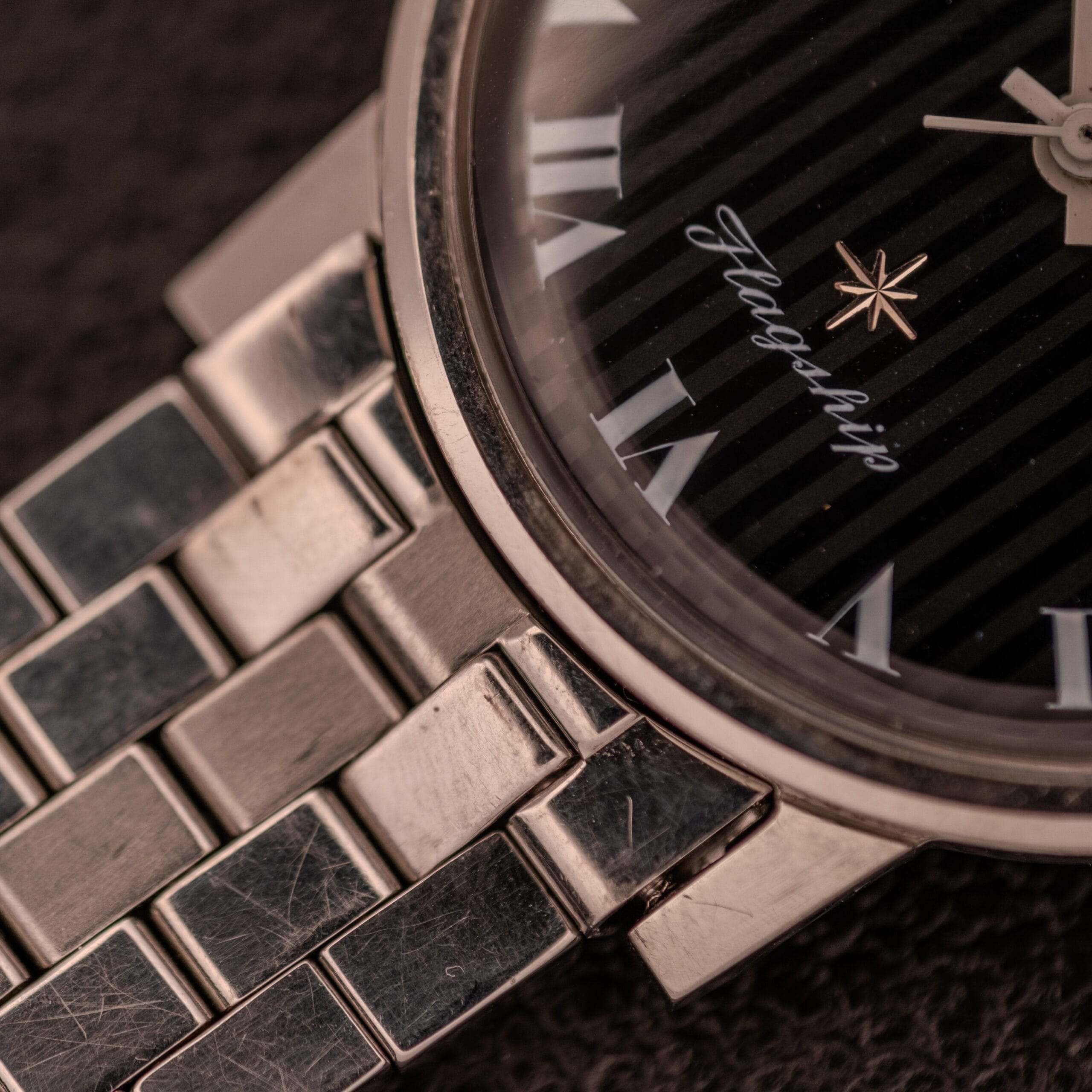
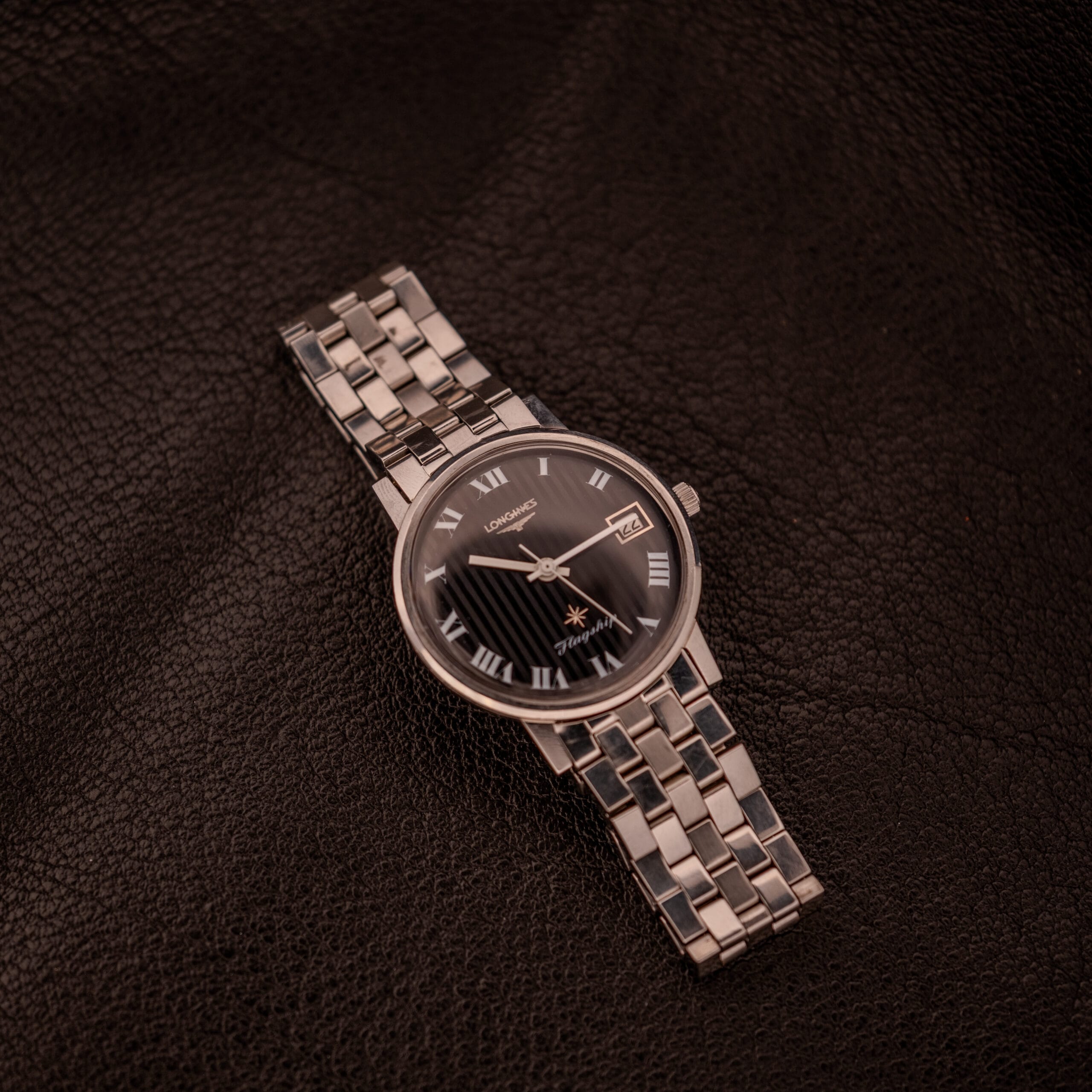
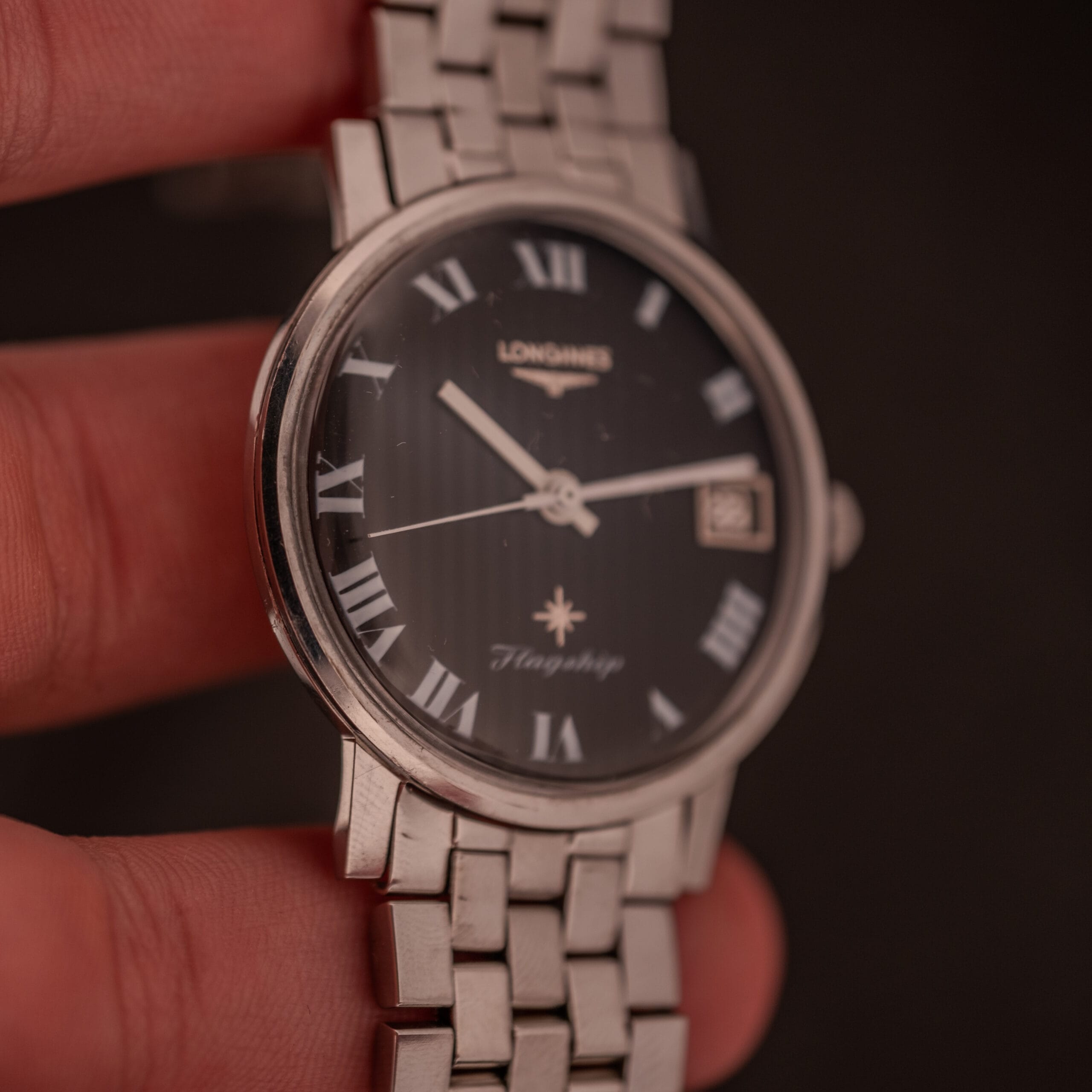
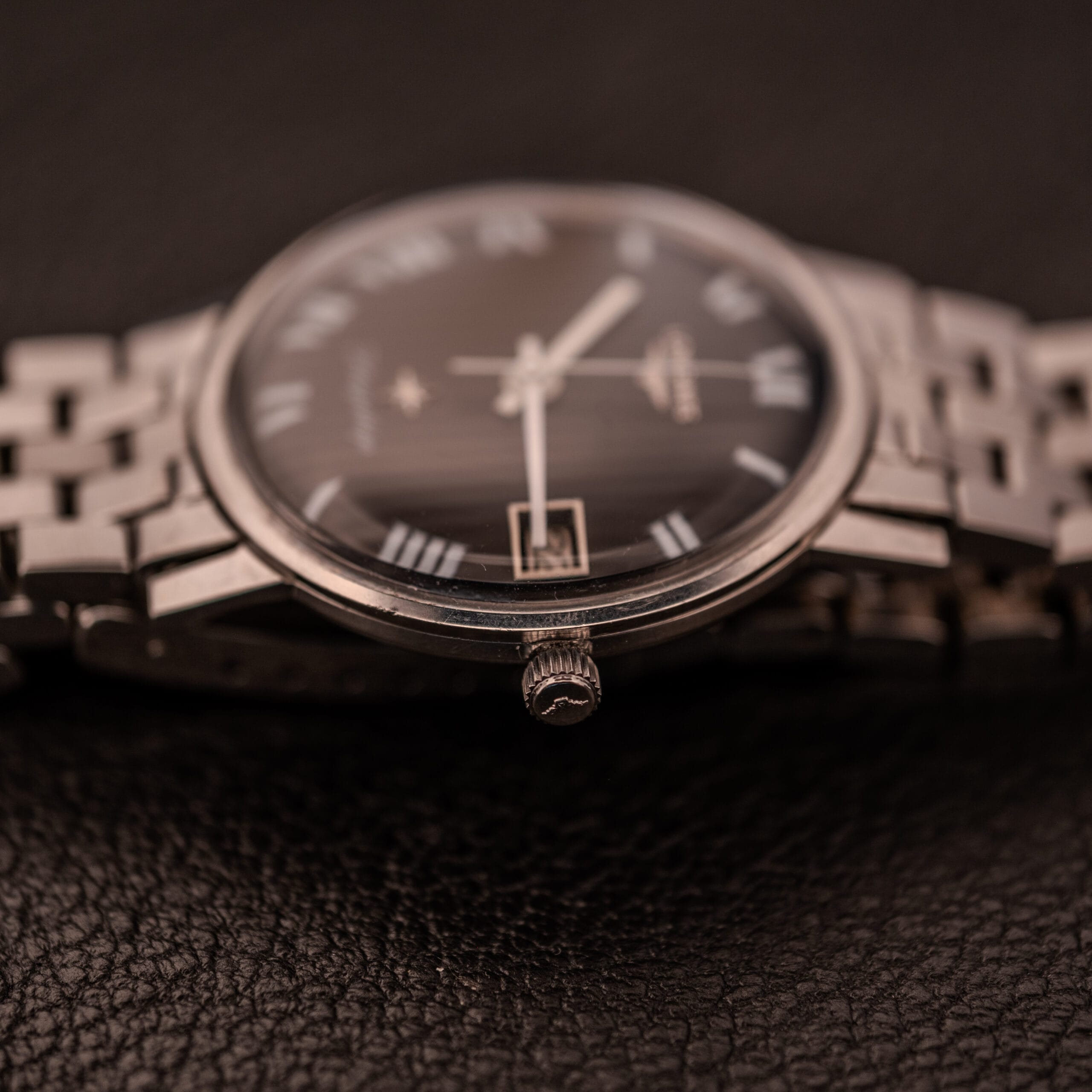
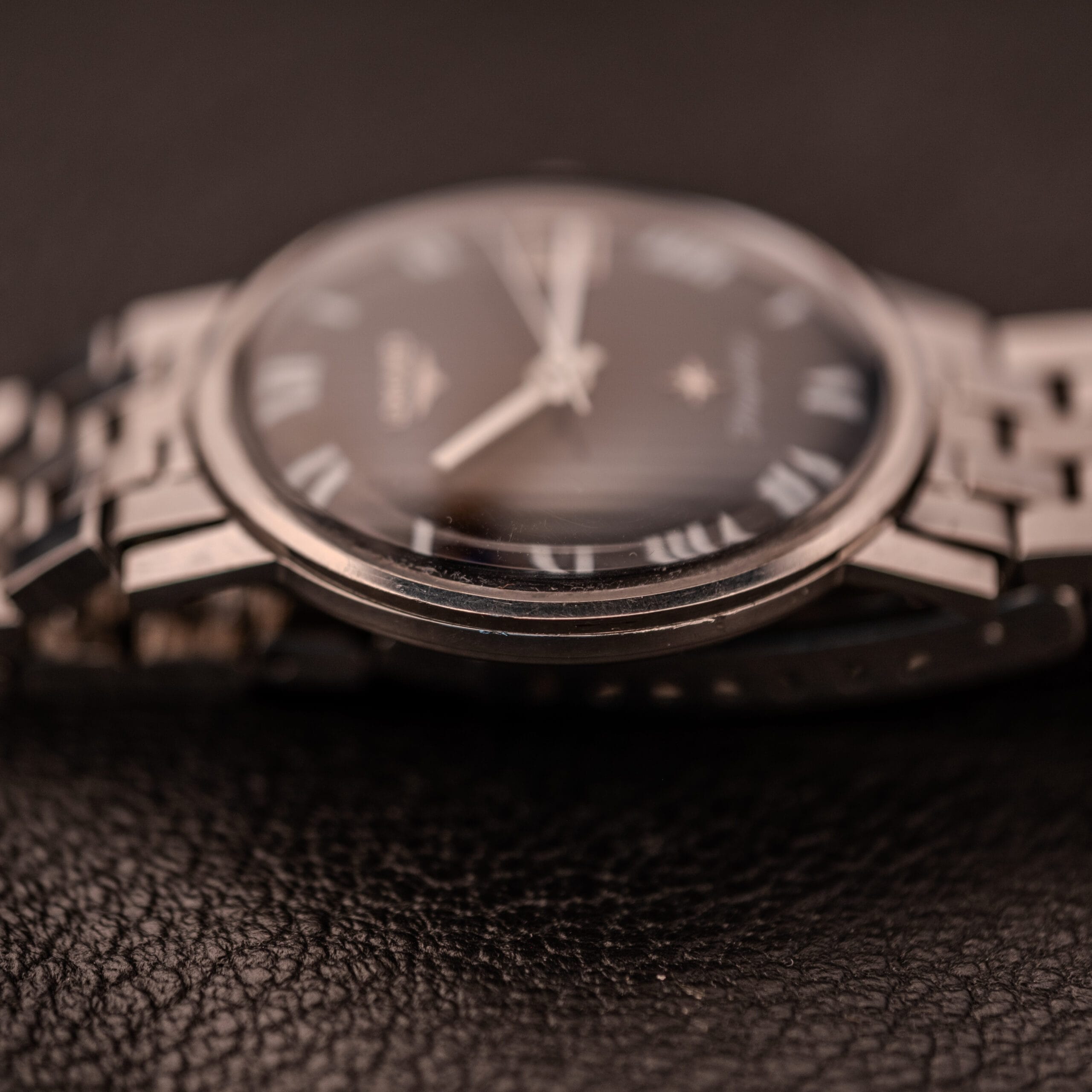
The dial is the true showstopper here. It features a “pinstripe” or “tuxedo” texture—a deep black surface with vertical relief lines that catch the light in a sophisticated, architectural way. This texture transforms a standard black dial into something far more dynamic, giving it the look of fine fabric or a tailored suit. The applied silver Roman numerals at the cardinal points and the faceted baton markers provide a sharp, high-contrast legibility that is pure 1960s modernist design.
The watch is powered by the Caliber 285, a manual-wind workhorse that replaced the legendary 30L movement. It is a robust, high-beat eccentric regulator movement known for its reliability and serviceability. In this example, the movement is clean and dates correctly to the mid-60s with a 13.6 million serial number.
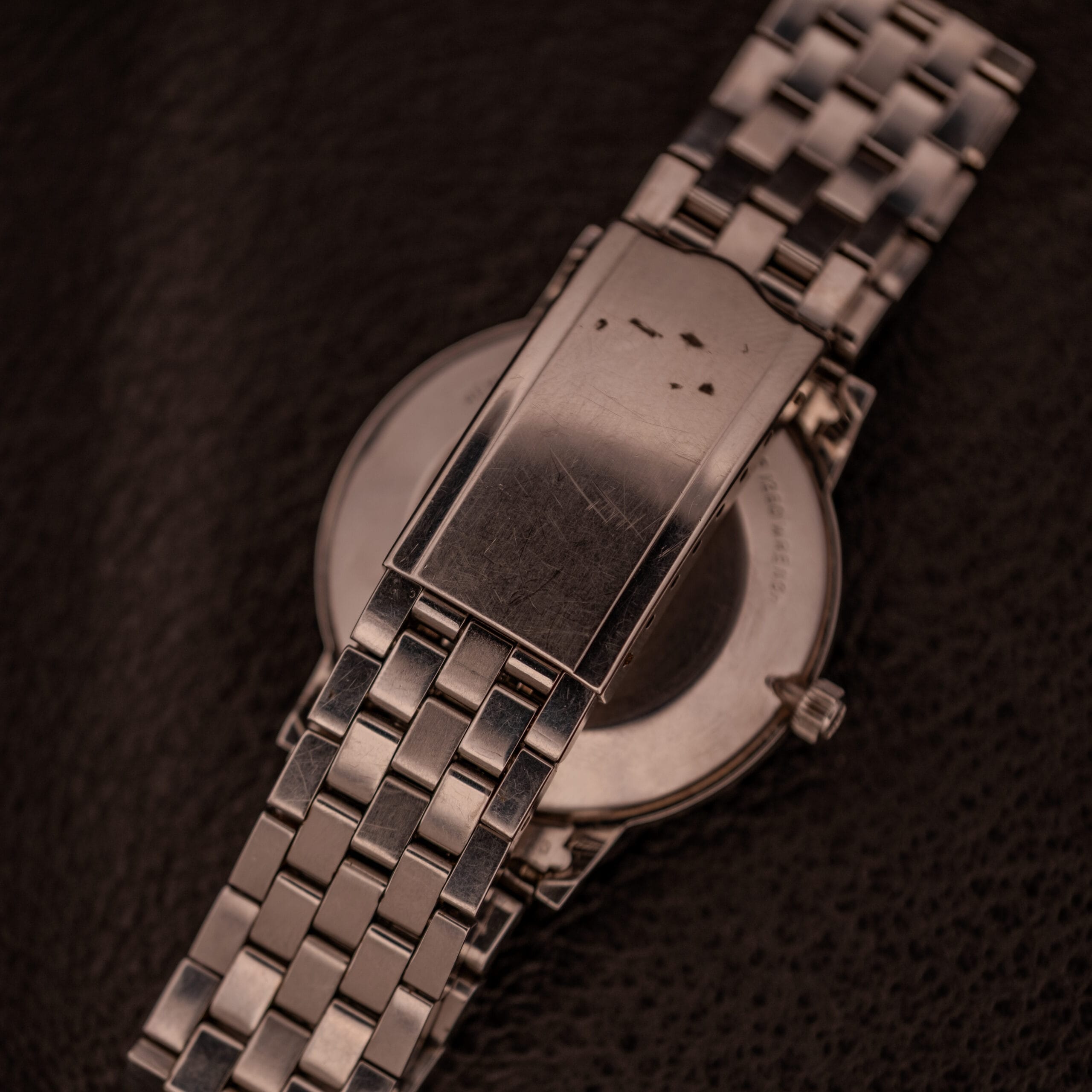
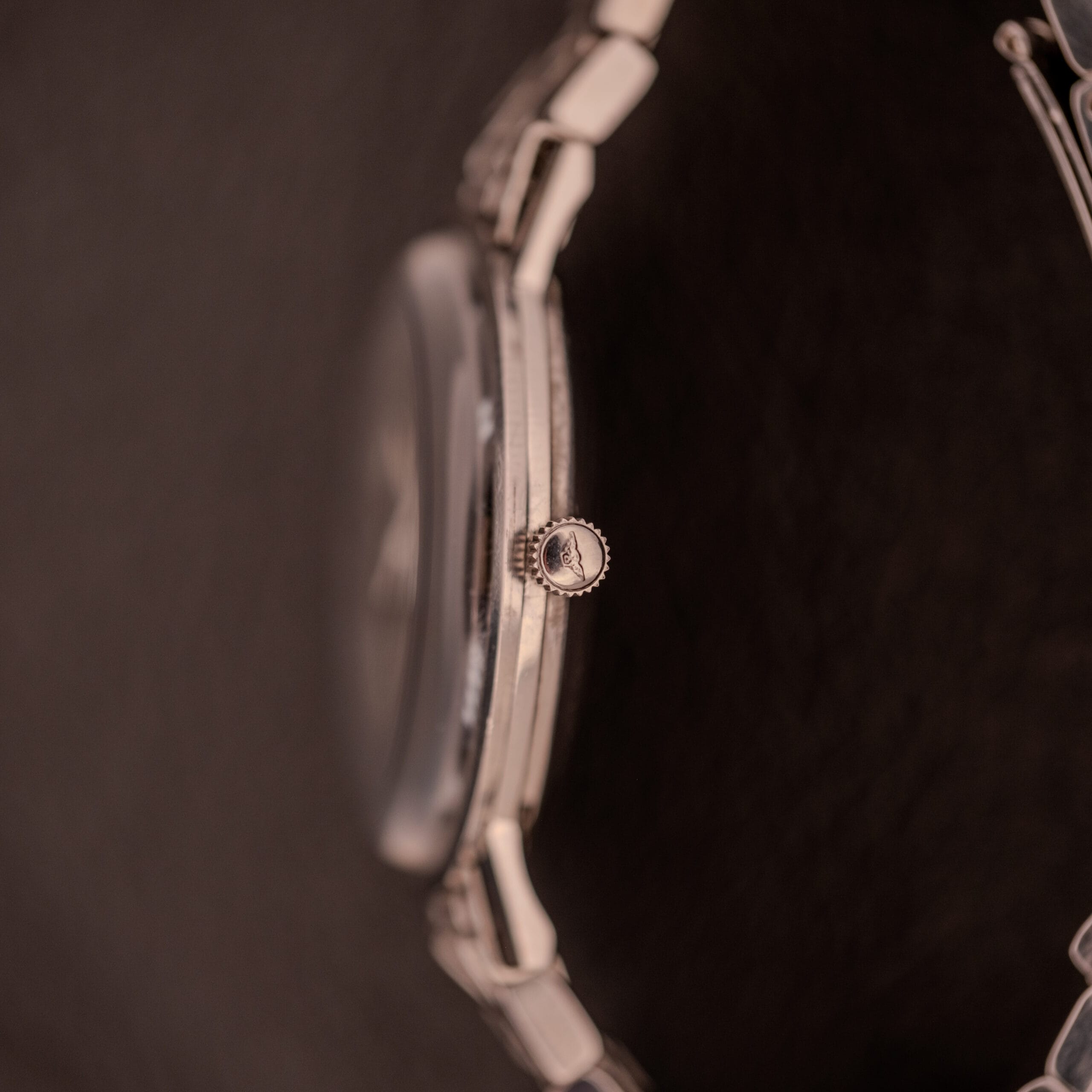
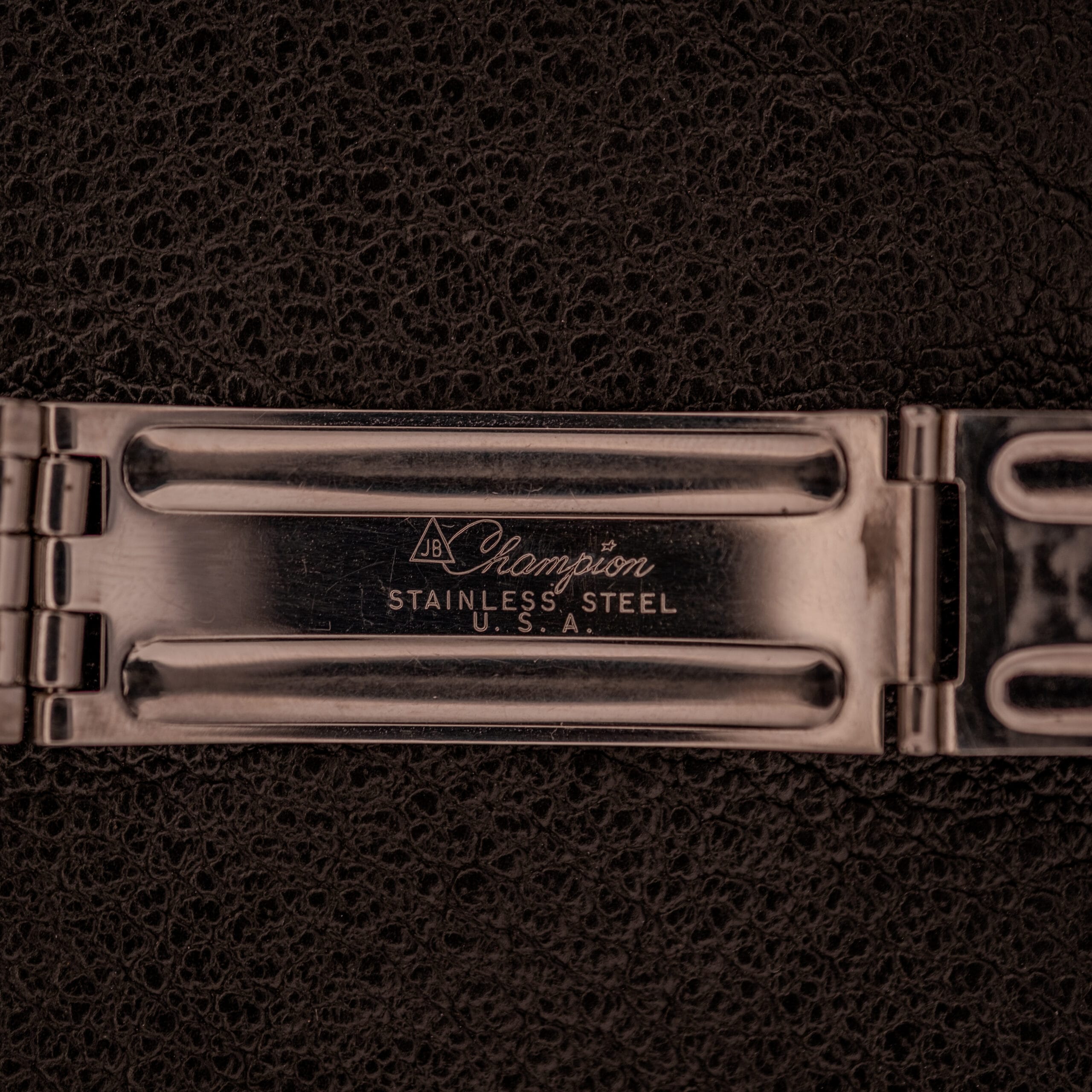
Unusually, this piece comes on a vintage JB Champion stainless steel bracelet. JB Champion was a primary supplier of high-quality bracelets for US-market watches (including the Omega Speedmaster astronauts wore) and finding a Flagship still paired with this period-correct hardware is a treat. The watch shows honest signs of wear consistent with its age, but the case remains sharp and the dial is remarkably well-preserved.
This is a watch for the collector who appreciates the nuance of the American market “contract cases” and wants a dress watch with serious personality. It is formal enough for a wedding but interesting enough for a loupe-heavy inspection at a watch meetup.