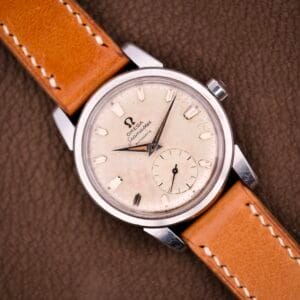
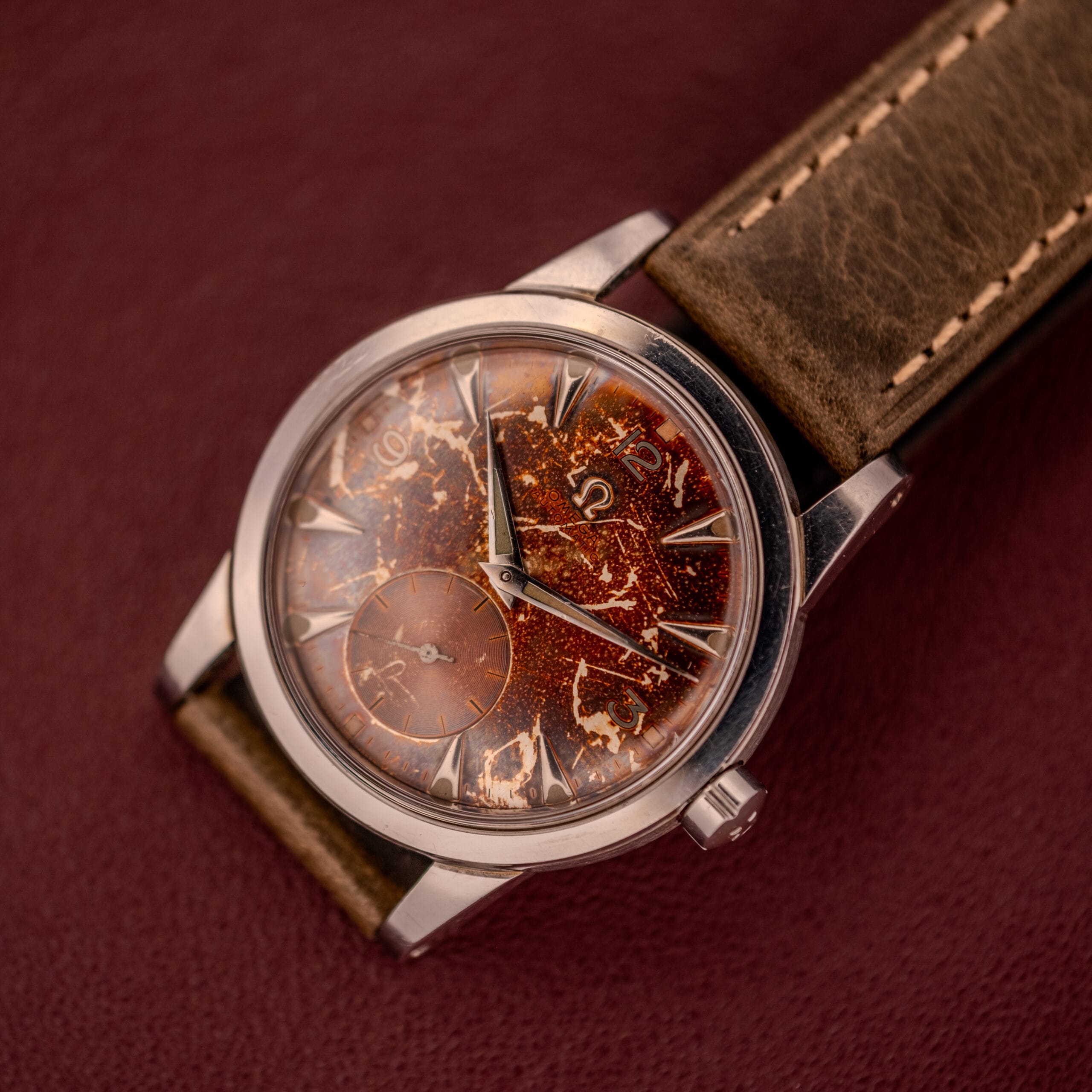
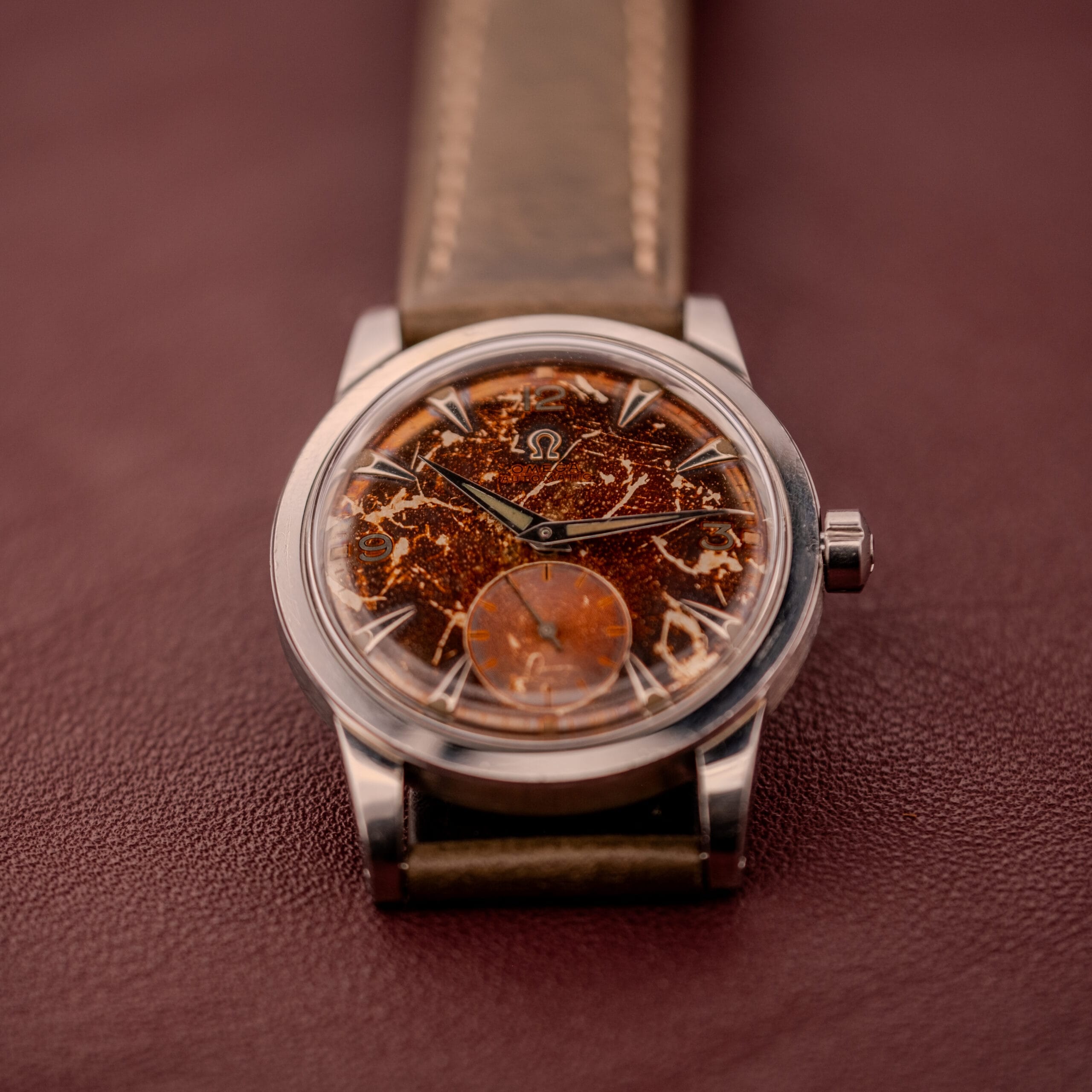
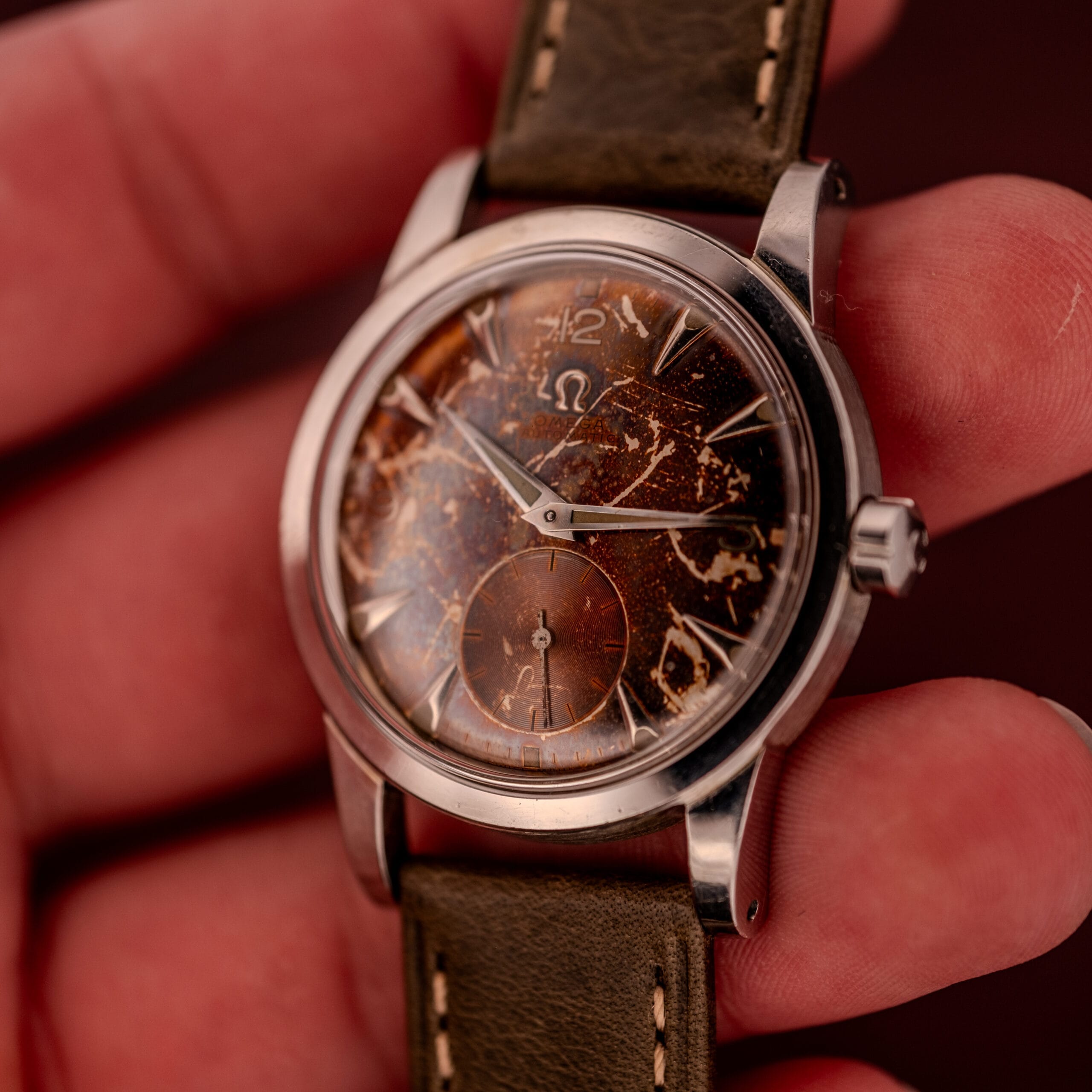
Before there was the Seamaster, there was this. Omega’s Reference 2491 sits at a fascinating inflection point in the brand’s history, produced in the late 1940s and early 1950s, just as Omega was consolidating its range of robust, automatic-winding watches into what would become one of the most legendary model lines in all of horology. These so-called “Pre-Seamaster” references share the DNA that would define the Seamaster’s identity: clean, confident design, exceptional movements, and a quiet sense of purpose. To us, they represent Omega at its most refined, before the marketing machine took over, when the product simply had to speak for itself.
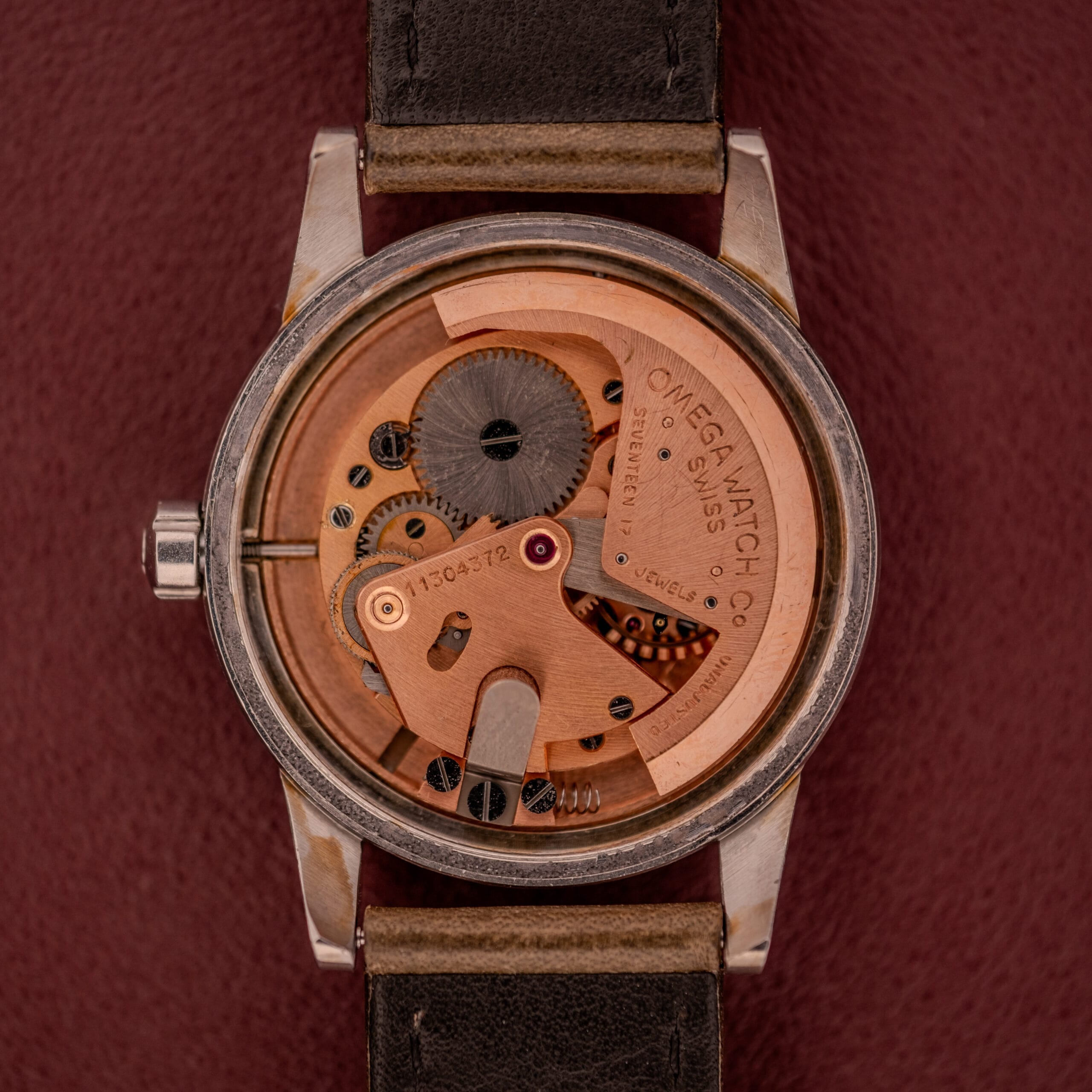
At the heart of this watch is the Caliber 28.10 RA, a 17-jewel automatic-winding movement that is nothing short of gorgeous. Pop the caseback and you’re greeted by that unmistakable rose gold finishing that Omega was famous for during this golden era. The rotor, bridges, and plates are all finished in warm copper tones with beautiful Côtes de Genève striping, signed “Omega Watch Co., Swiss, Seventeen 17 Jewels.” The movement serial places this piece squarely in the early 1950s, and it remains a testament to the robustness of Omega’s mid-century engineering. The cal. 28.10 RA is a bumper automatic, meaning the rotor doesn’t spin a full 360 degrees but instead oscillates back and forth between two buffer springs, giving it that distinctive, satisfying “bump” on the wrist that collectors absolutely love.
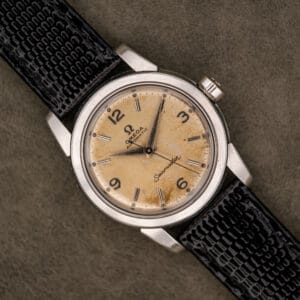
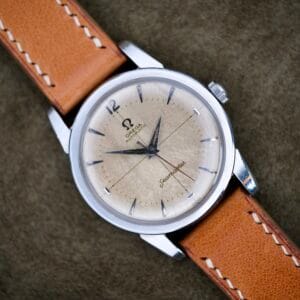
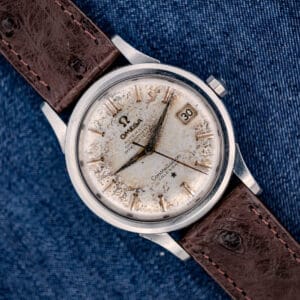
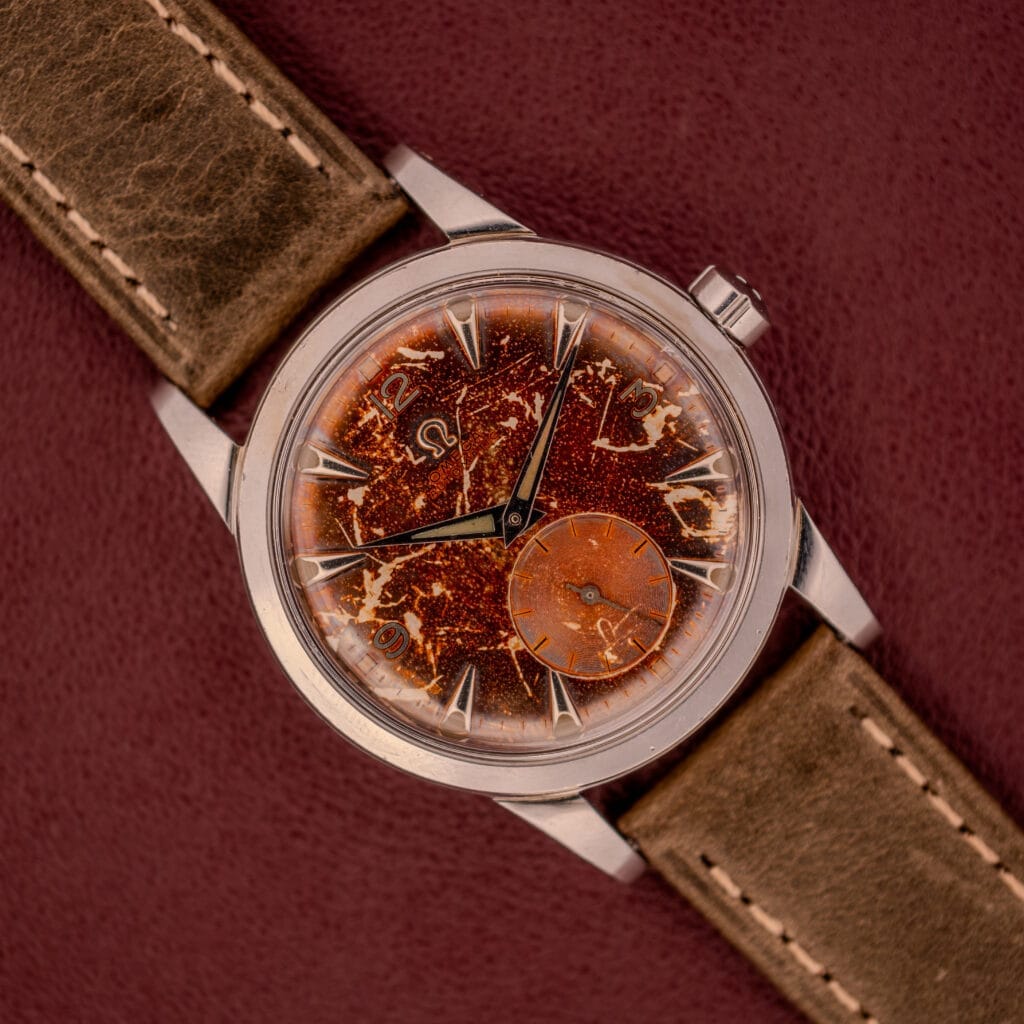
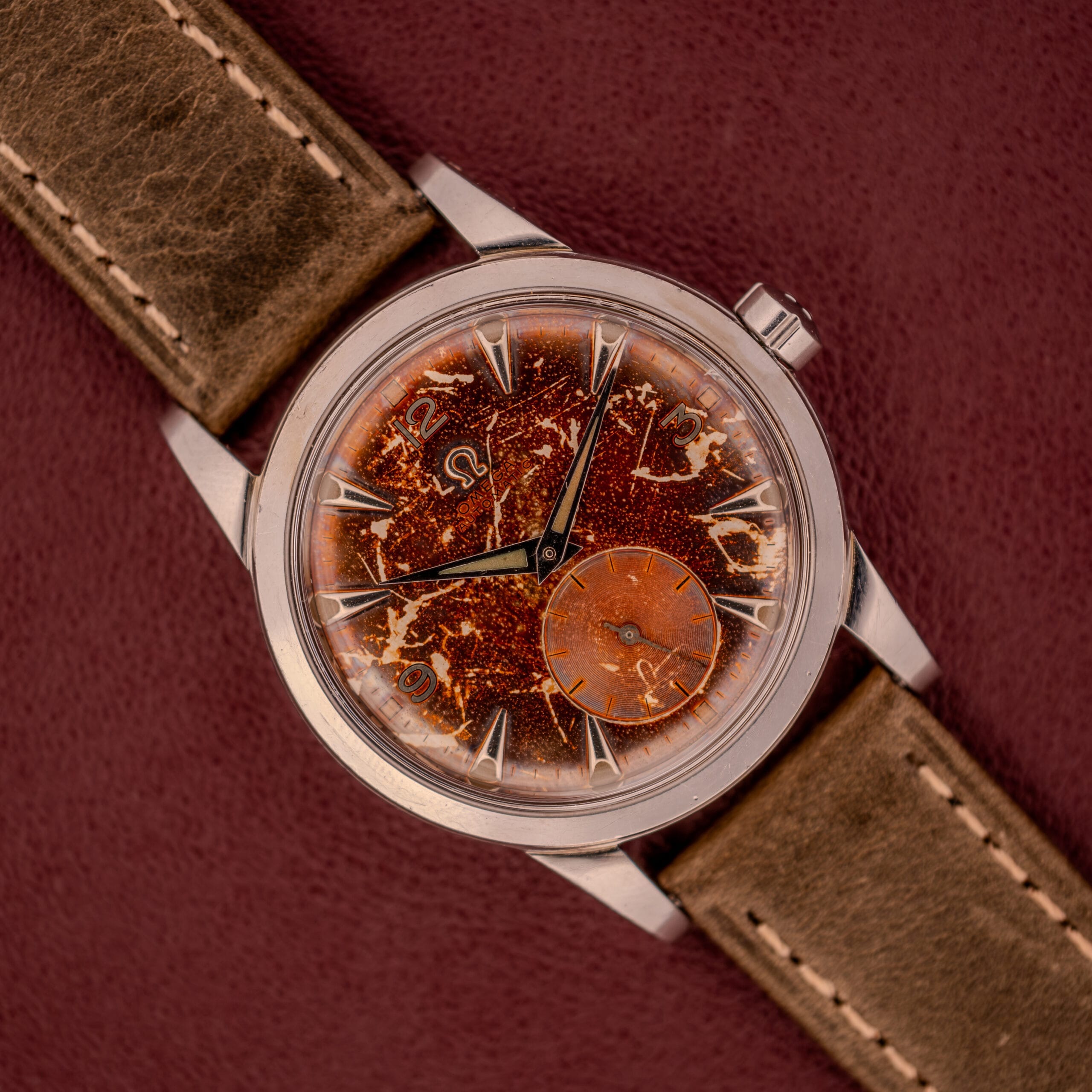
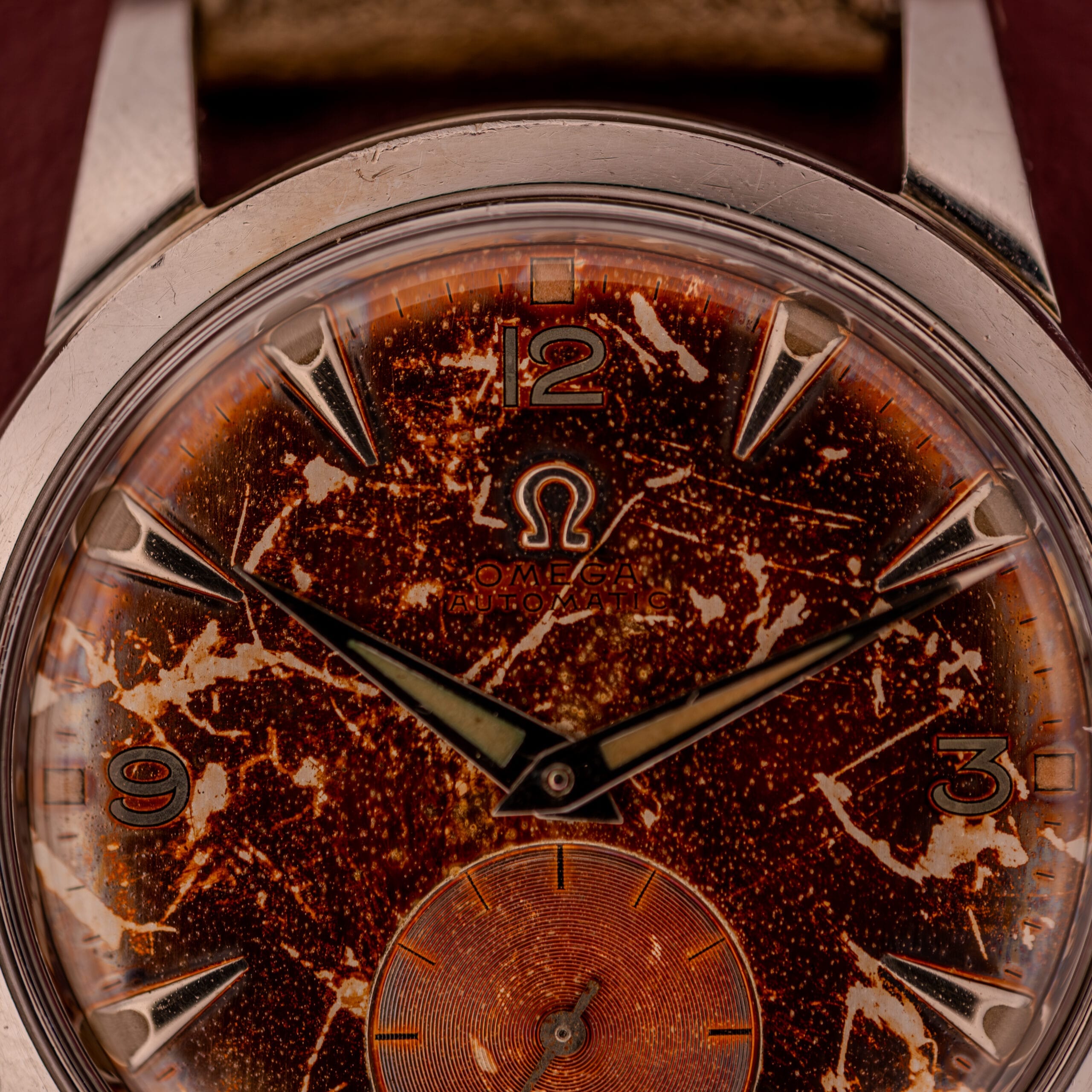
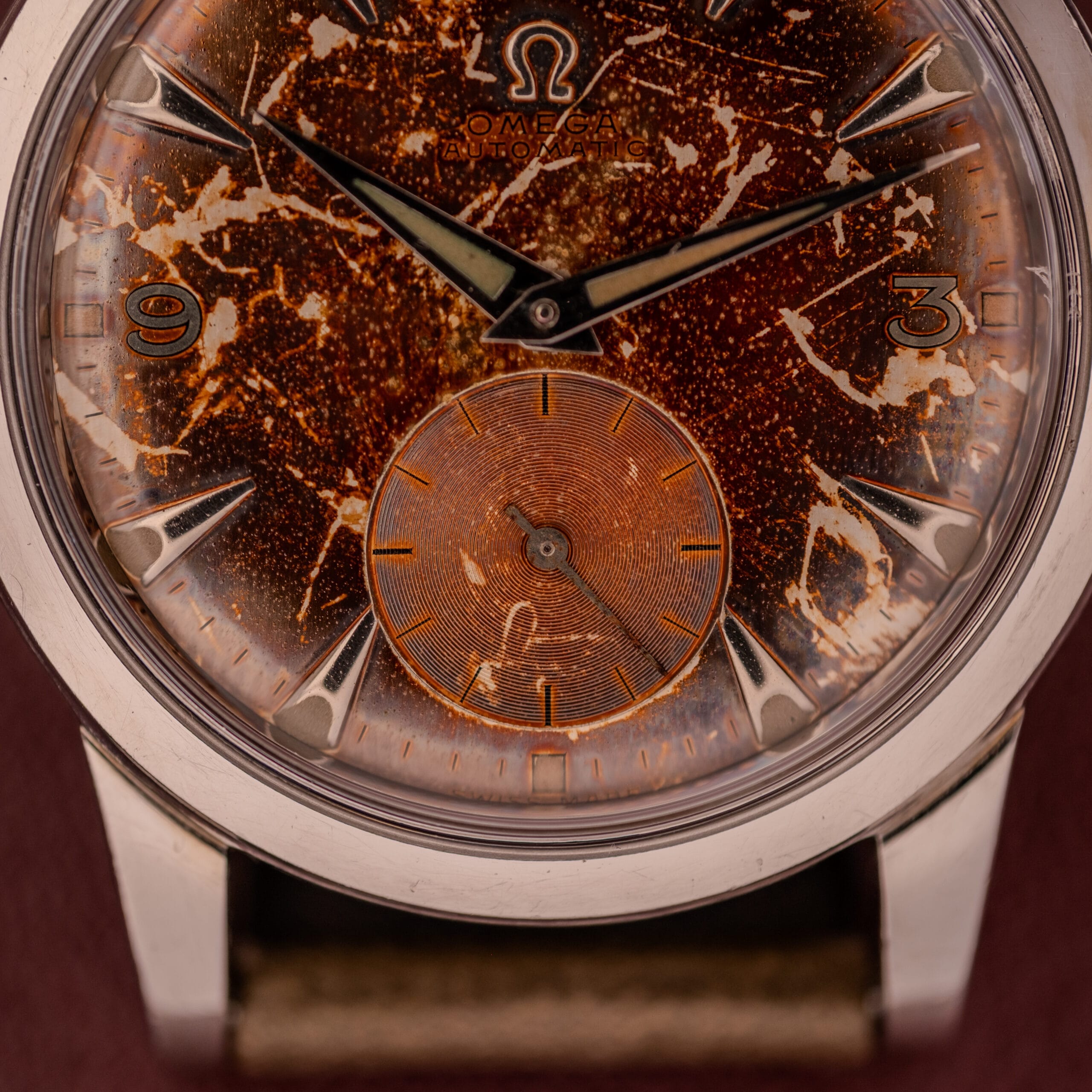
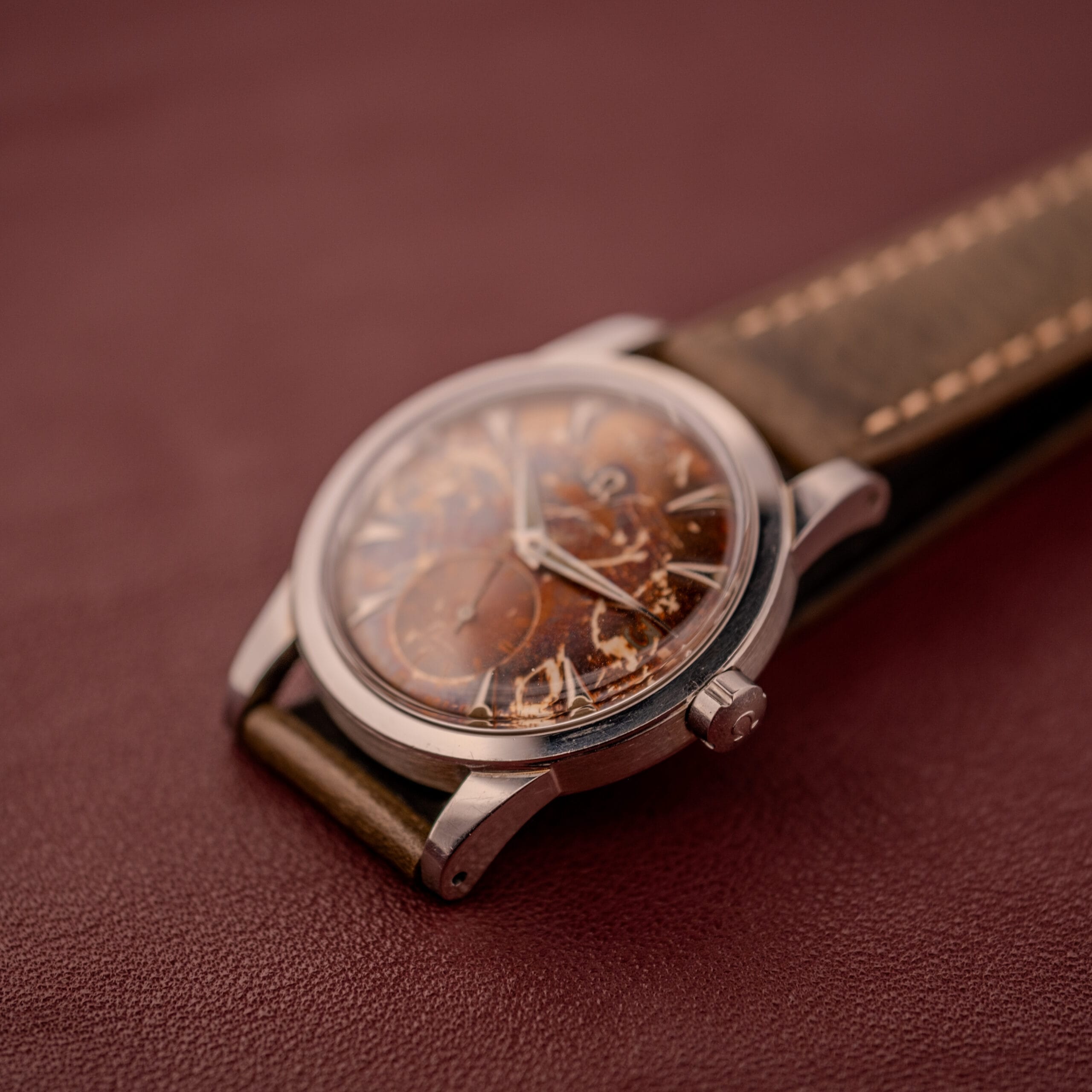
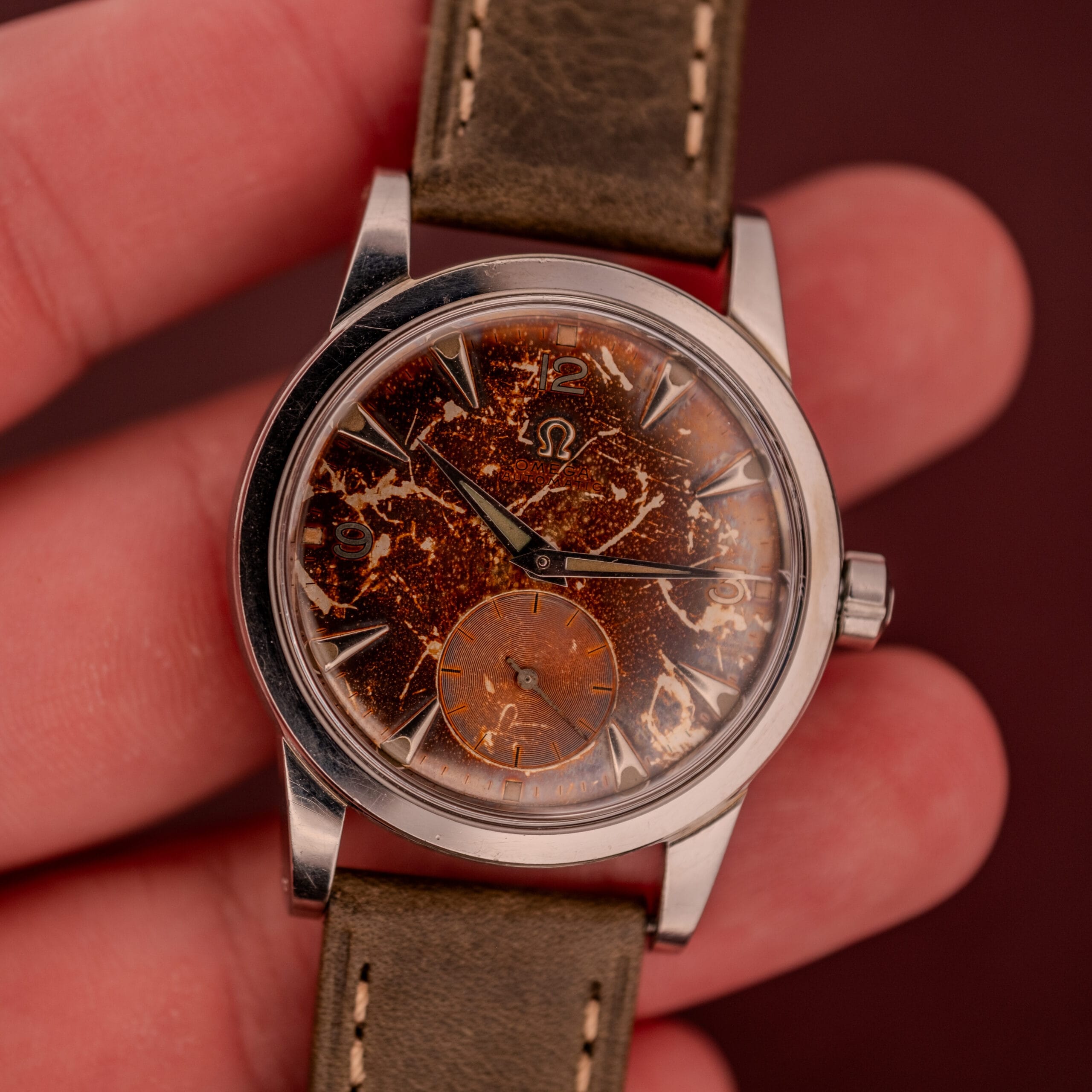
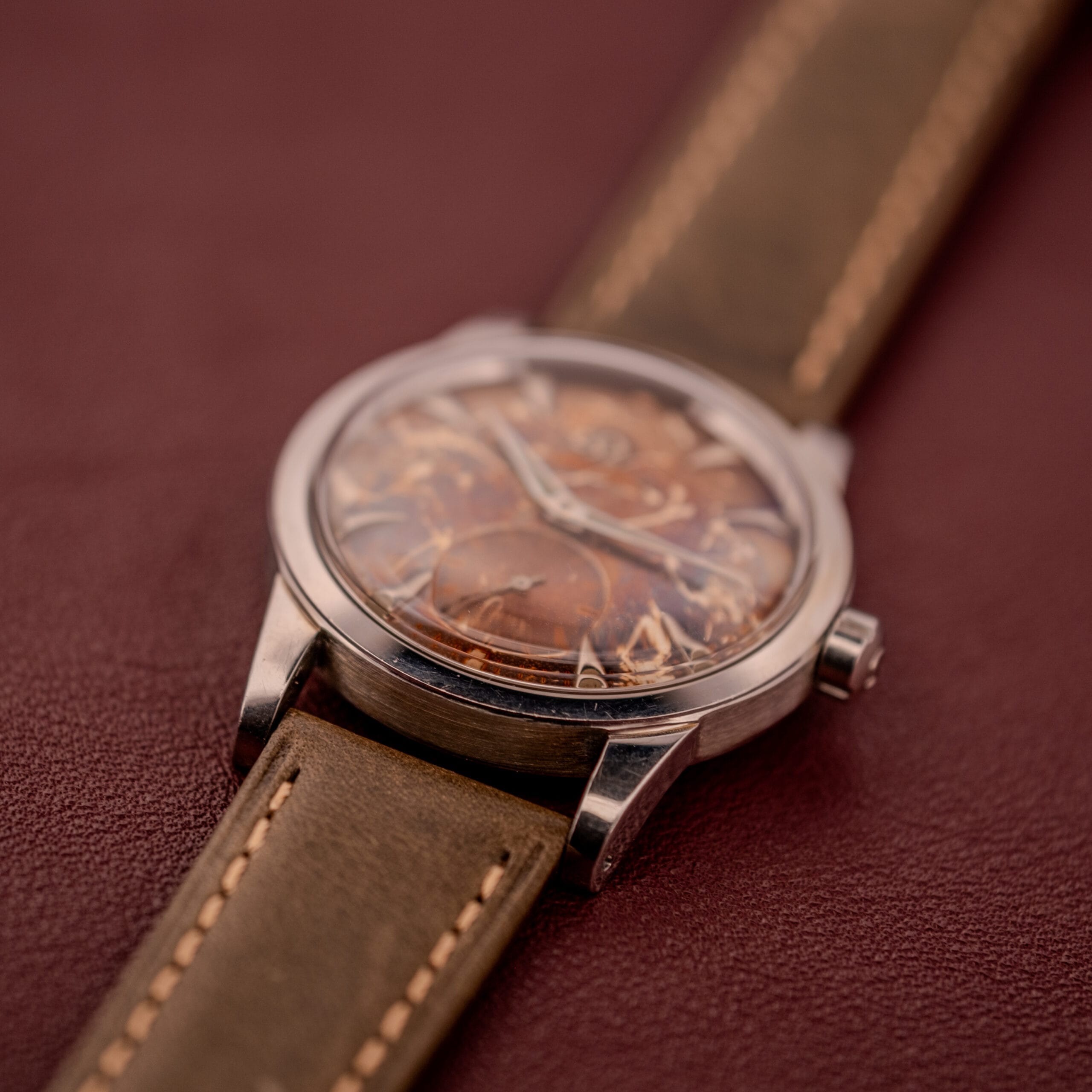
Now, let’s talk about that dial, because it’s wild. This particular example has developed what can only be described as a museum-quality tropical transformation. What was once likely a dark, possibly black or deep brown lacquered dial has, over the course of seven decades, metamorphosed into something resembling a slab of polished jasper or fire agate. The surface is alive with deep amber tones, burnt sienna, and golden speckle, shot through with dramatic veining and marbling where the lacquer has cracked and aged in completely unpredictable ways. No two tropical dials are alike, and this one is particularly striking in its complexity. The applied starburst arrow markers, with their polished triangular forms radiating from the center, remain intact and catch the light beautifully against this extraordinary backdrop. The Arabic numerals at 12, 3, 6, and 9 retain traces of their original coloring, and the subsidiary seconds dial at 6 o’clock has taken on a rich copper hue with its fine concentric graining still clearly visible. It’s the kind of dial that stops you mid-conversation.
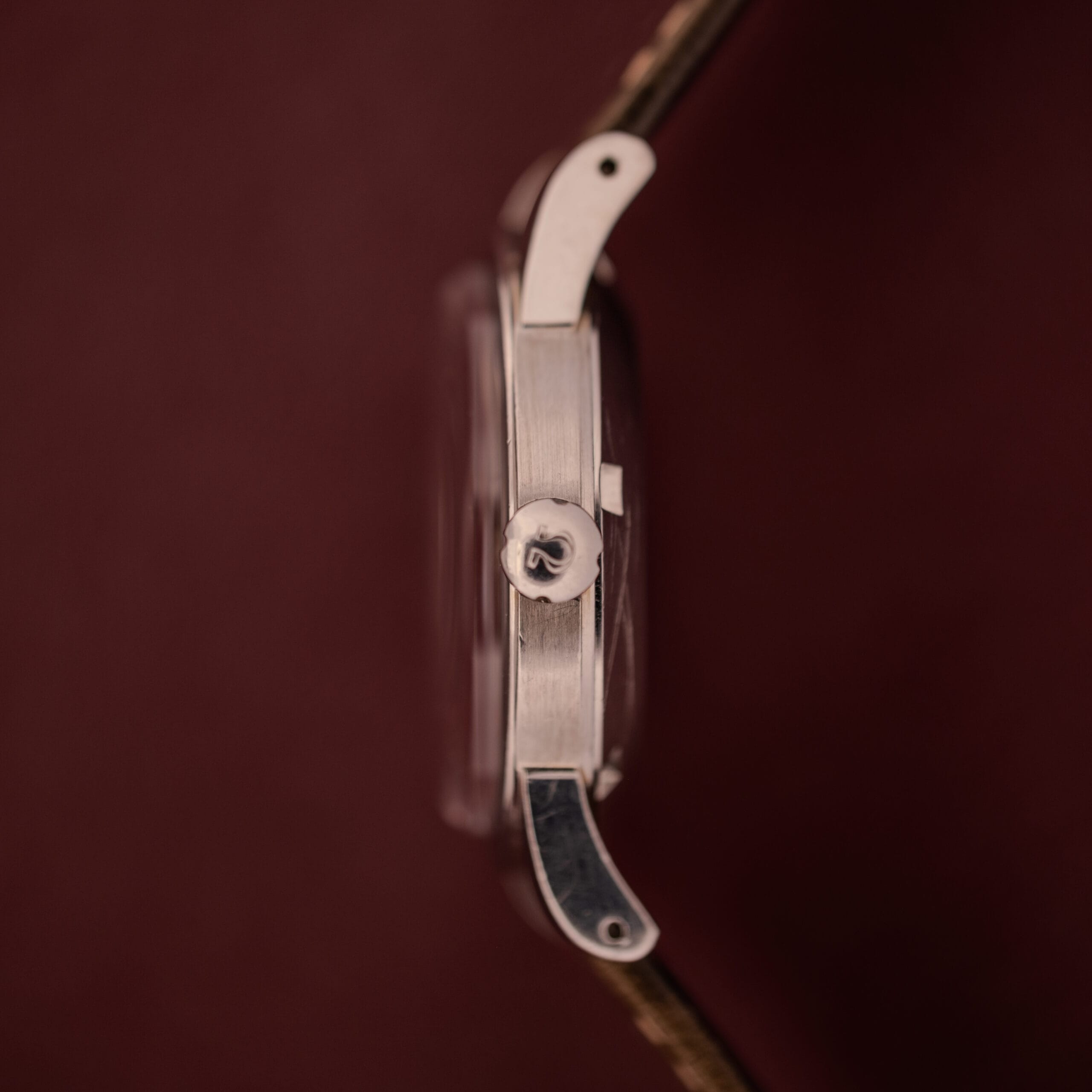
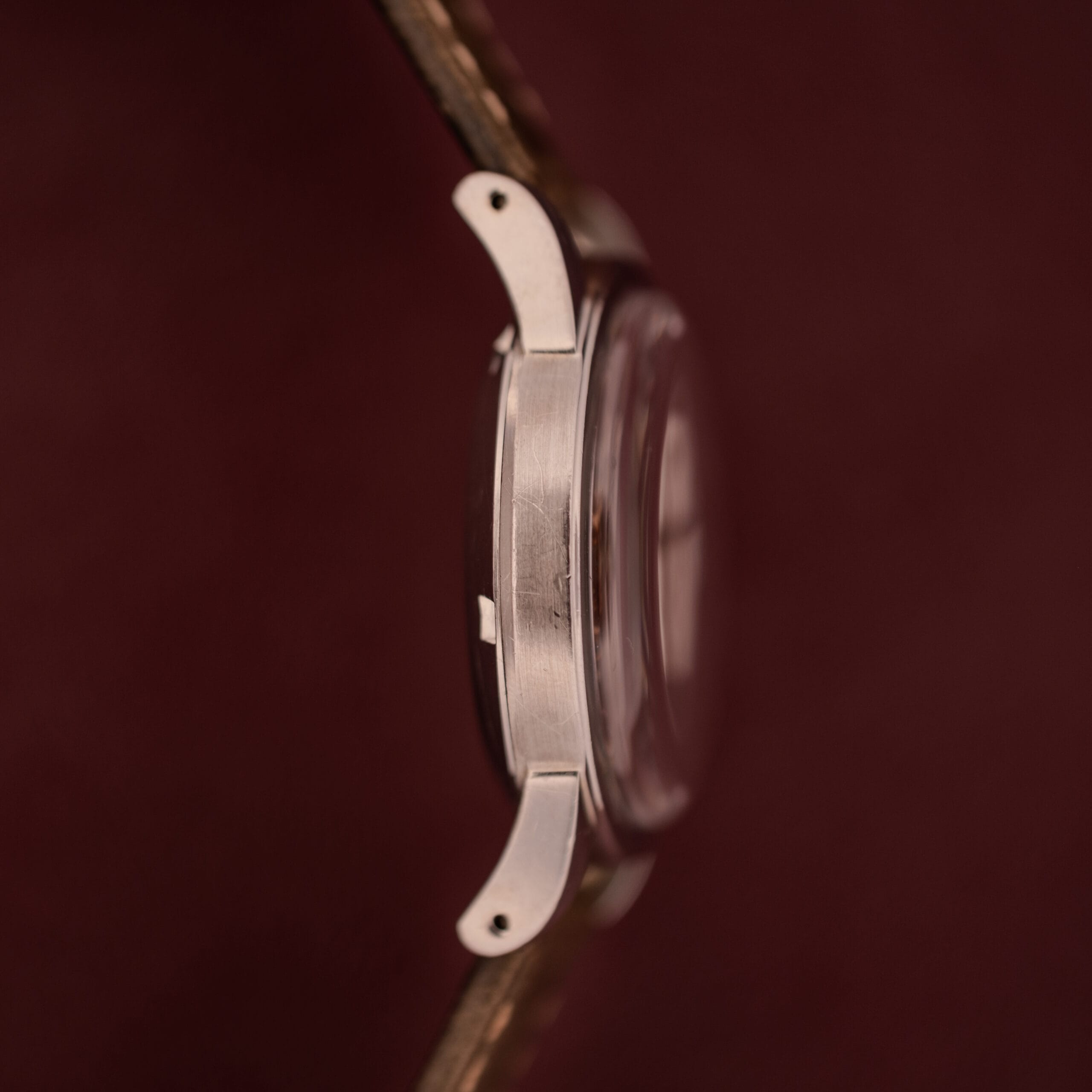
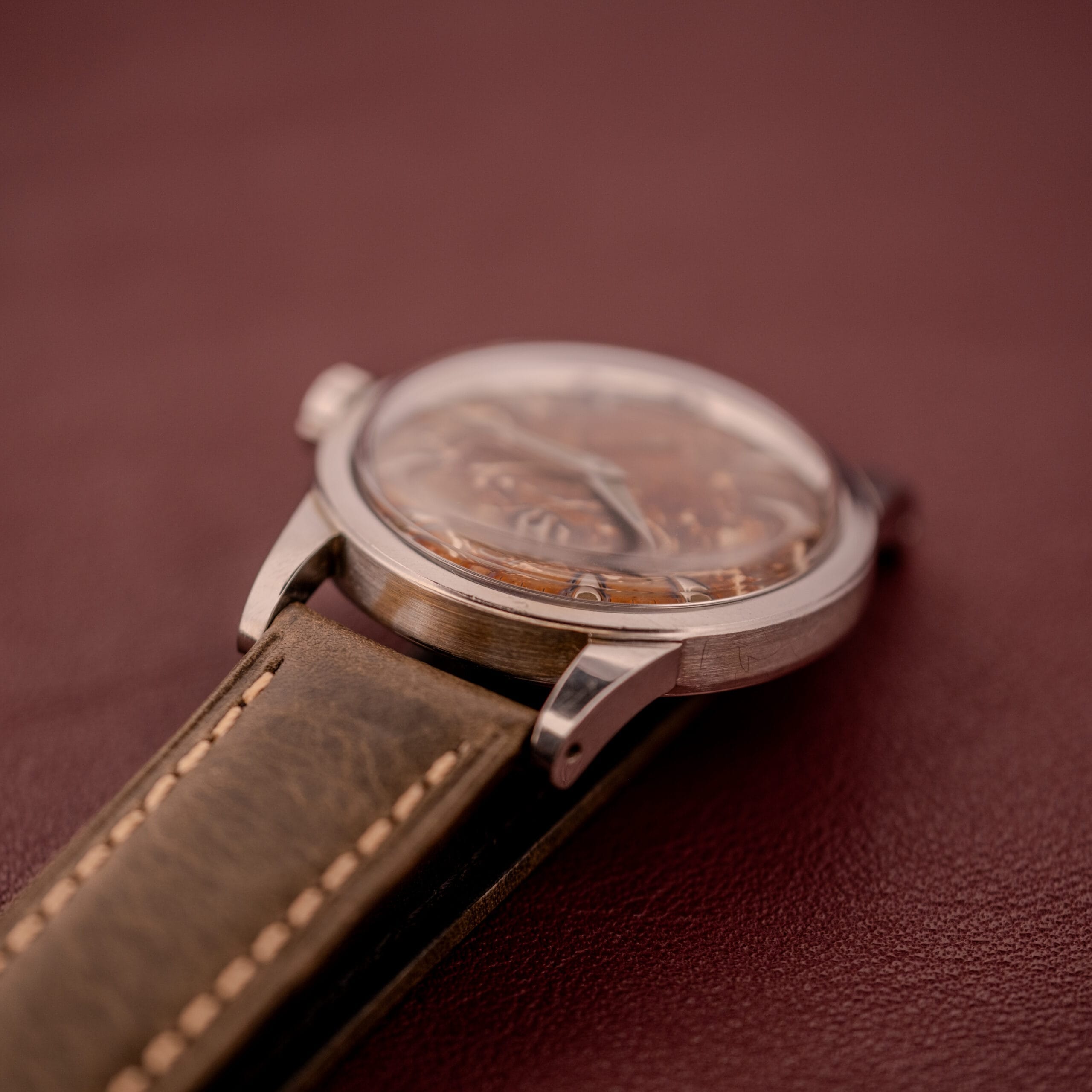
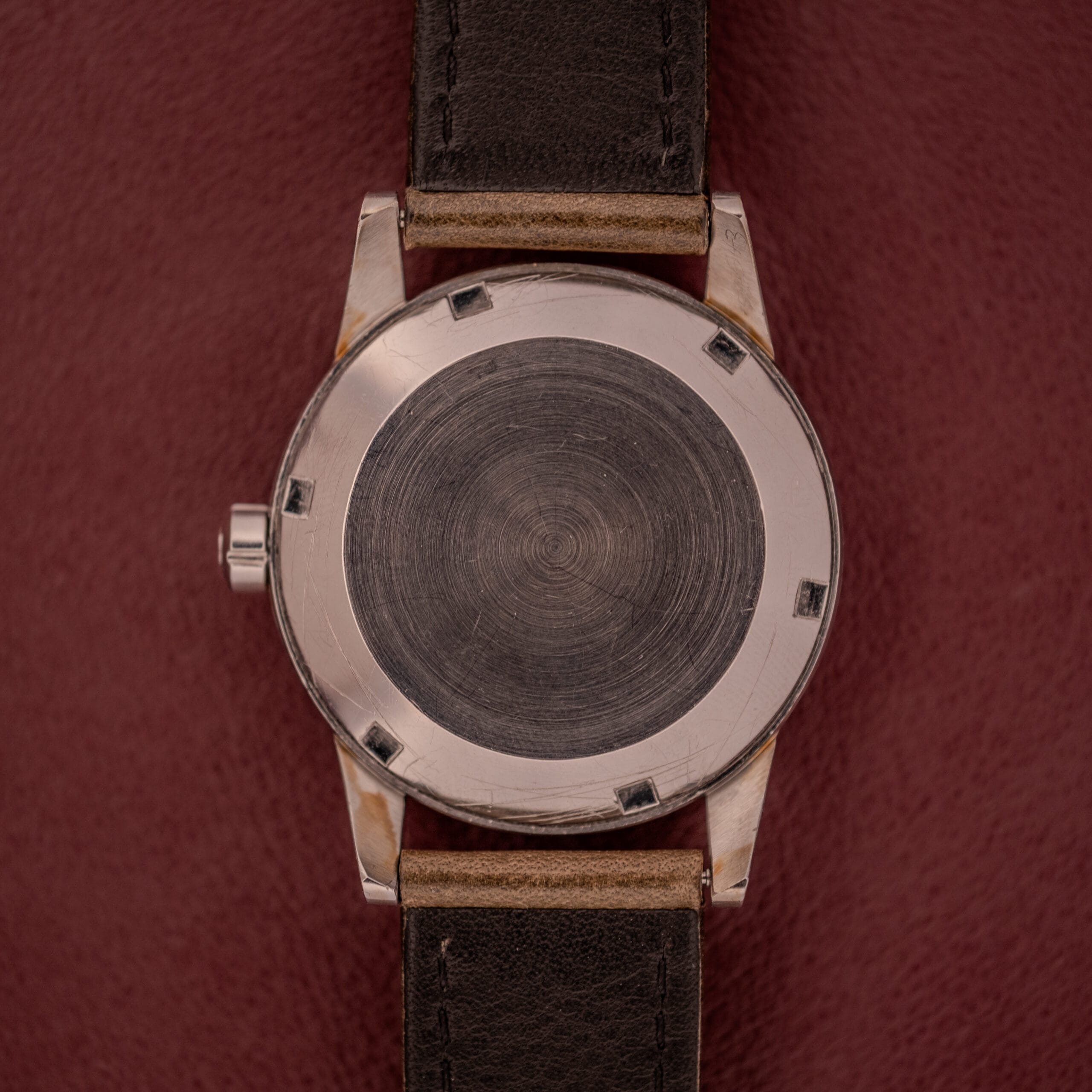
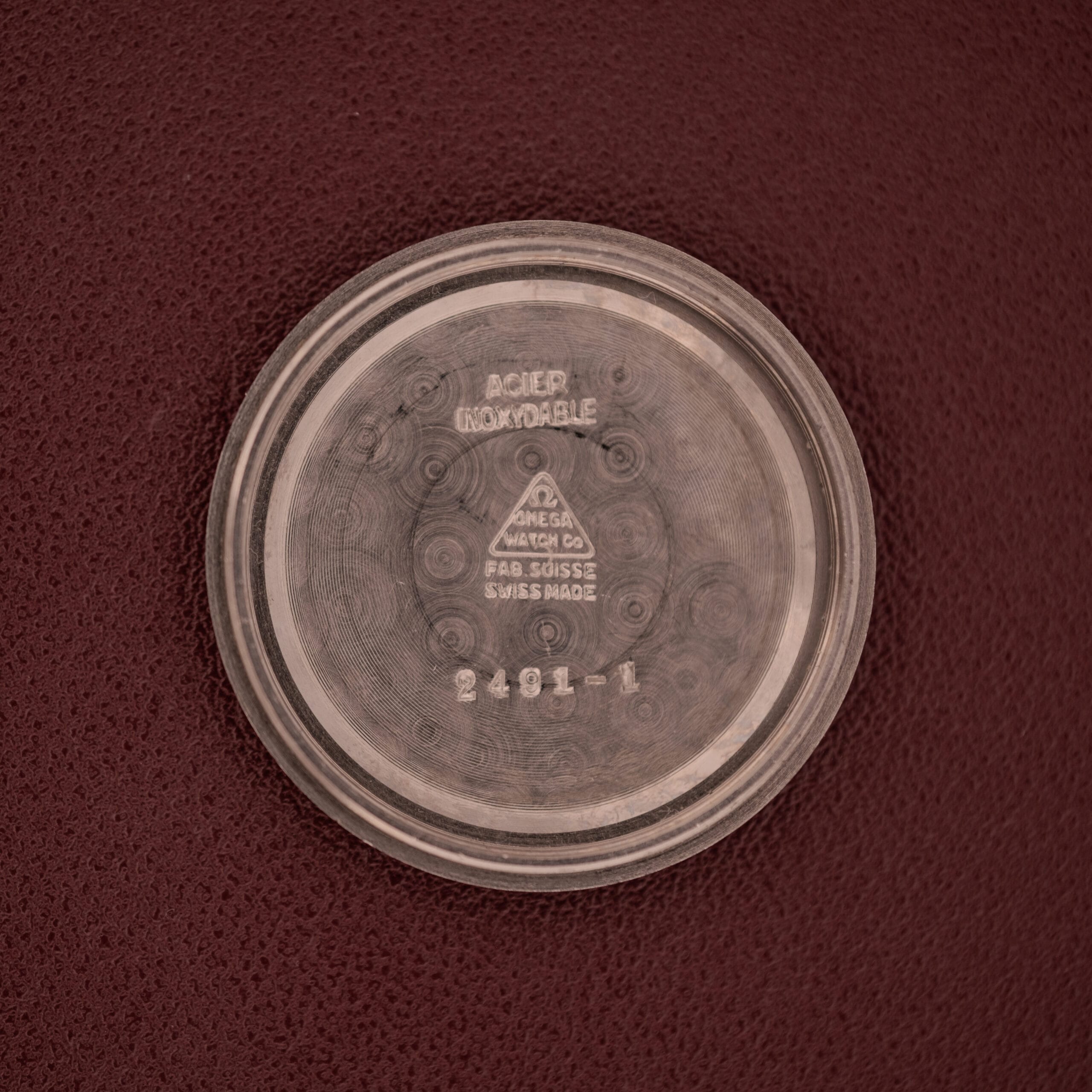
The stainless steel case, stamped “Acier Inoxydable” on the inner caseback and bearing the Omega Watch Co. hallmark, is in excellent, unpolished condition. The lugs remain thick and sharp, with their original brushed finishing intact. You can see the honest life this watch has lived in the gentle wear to the case sides, but there is no evidence of aggressive polishing or reshaping, which is increasingly rare for a piece of this age. The Omega signed crown appears correct for the period, and the overall proportions remain exactly as Bienne intended.
This is the kind of watch that transcends the usual collecting categories. It’s not a tool watch, not a dress watch, not a sports watch. It’s simply a beautiful object with seven decades of character written into every square millimeter of that astonishing dial, powered by one of the most admired automatic movements of the mid-twentieth century, housed in an honest, unpolished case. For the collector who values patina as art and provenance over polish, the Omega 2491 “Pre-Seamaster” with a tropical dial like this is about as compelling as it gets.