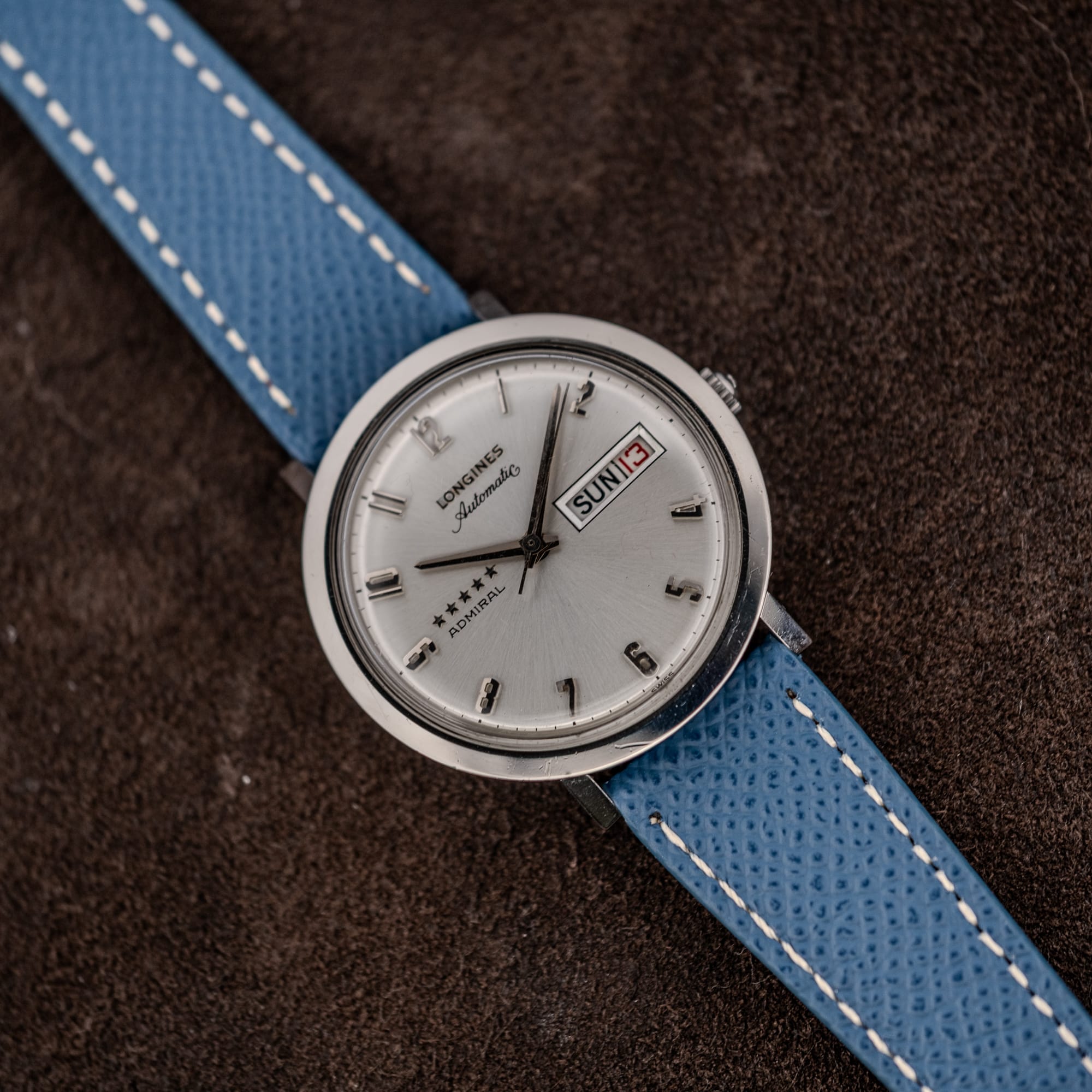
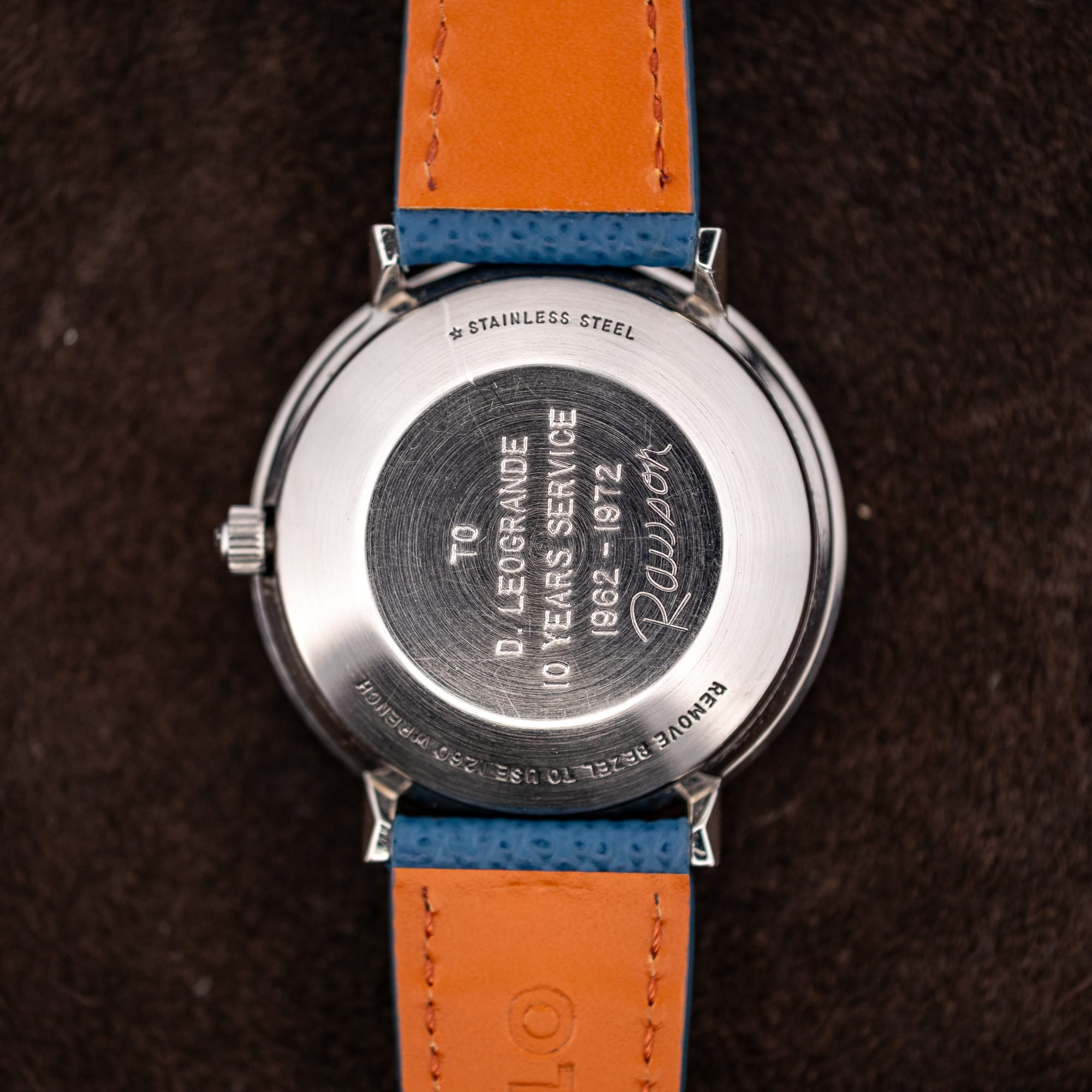
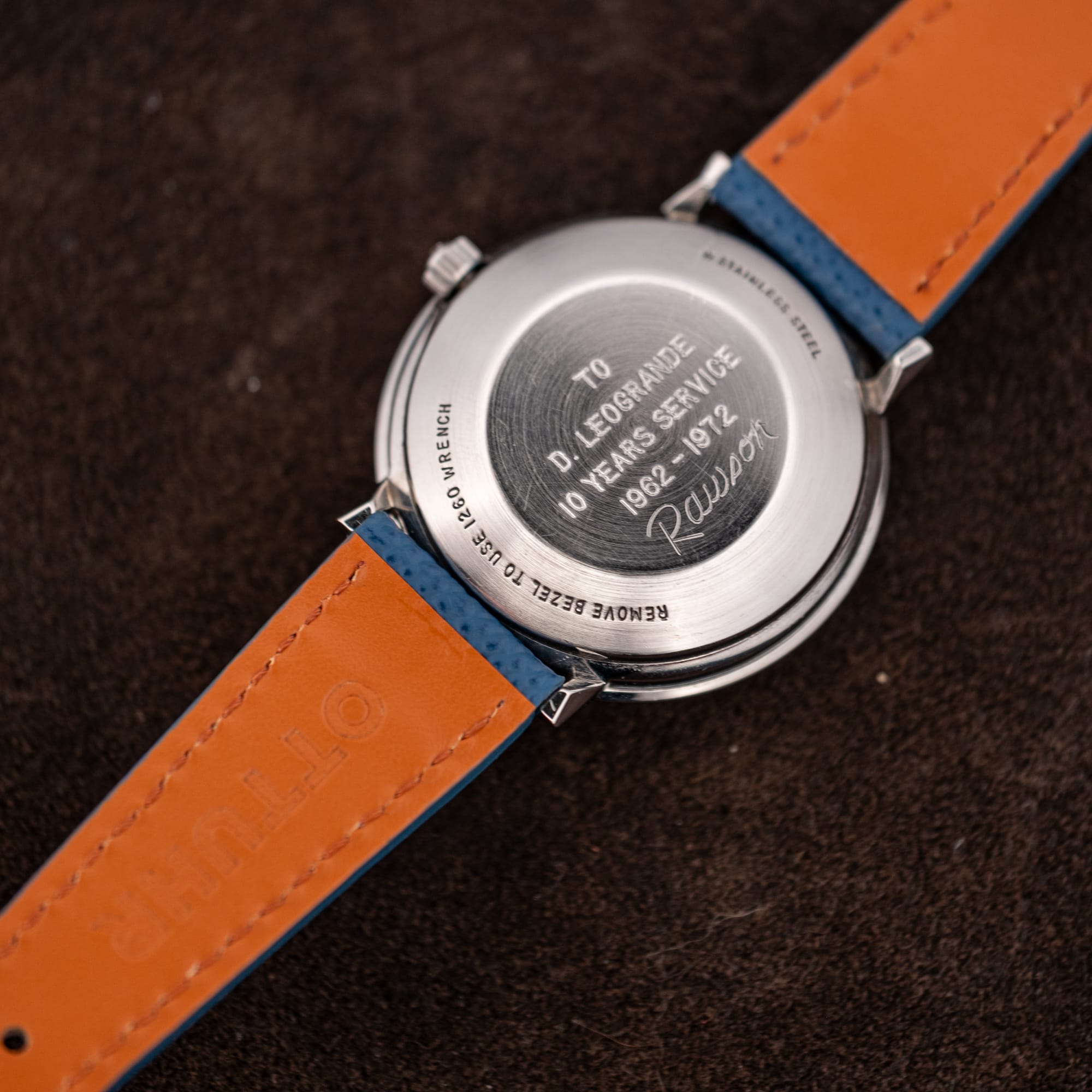

Somewhere in 1972, a company called Rawson decided that ten years of D. Leogrande’s working life deserved a Longines. Firms of that era had a settled vocabulary for the occasion: the decade got marked, and it got marked with something the recipient would actually wear. What arrived was not a plaque or a pen. It was this Longines Admiral automatic, and its back carries the whole transaction in cut lines, TO / D. LEOGRANDE / 10 YEARS SERVICE / 1962 – 1972, with the company’s own name signed underneath in a flowing script.
Watches took this job because a watch was the one object that qualified on every count: durable enough to outlast the tenure it commemorated, personal enough to mean something, and worn where the recipient would see it every day. Engraving it finished the argument. A pen set could be quietly resold; a watch with another person’s decade cut into the back was harder to pass along. Whoever at Rawson chose this one was paying attention, because they did not reach for a thin gold dress watch that would live in a drawer between weddings. Ten years of showing up was answered with a watch built for showing up.
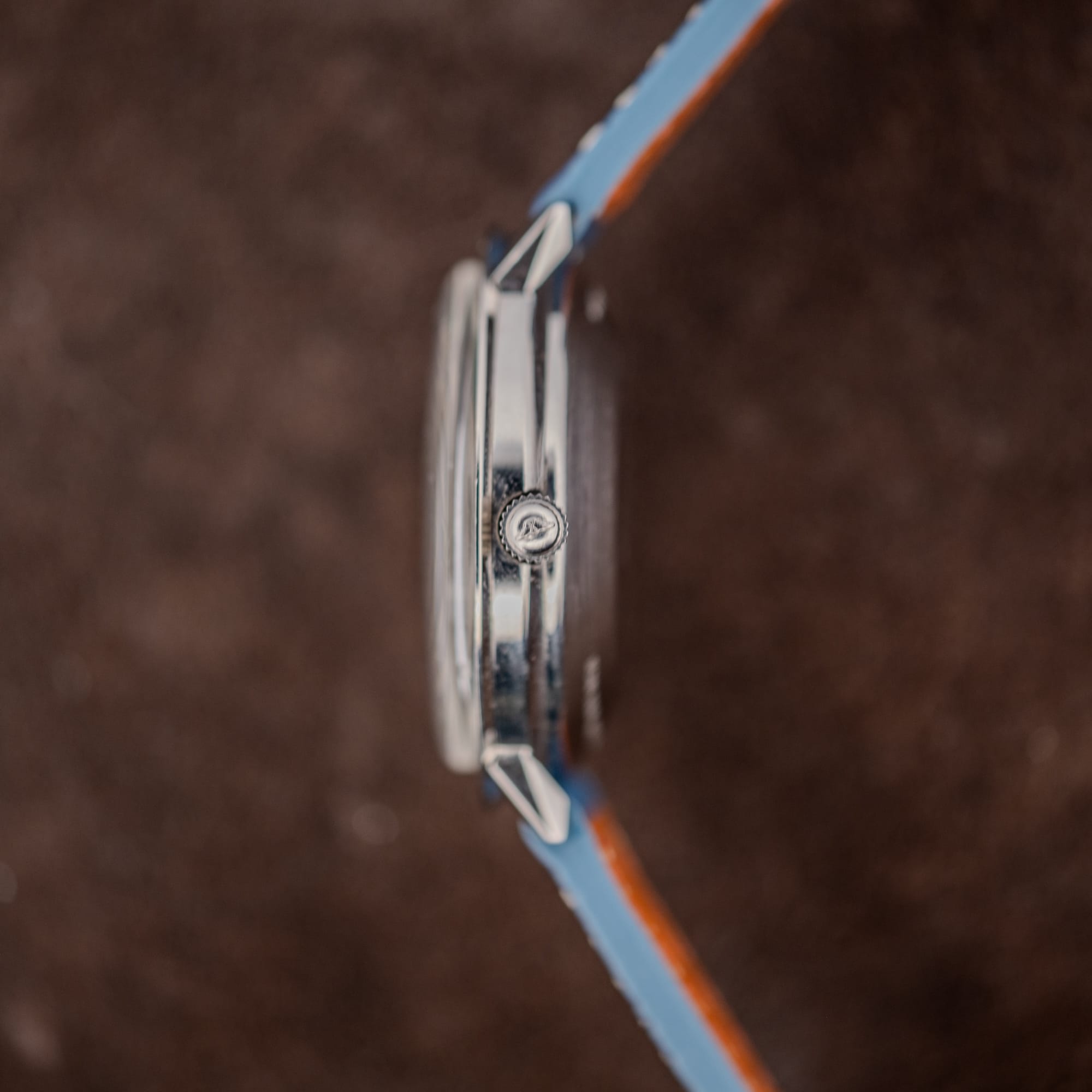
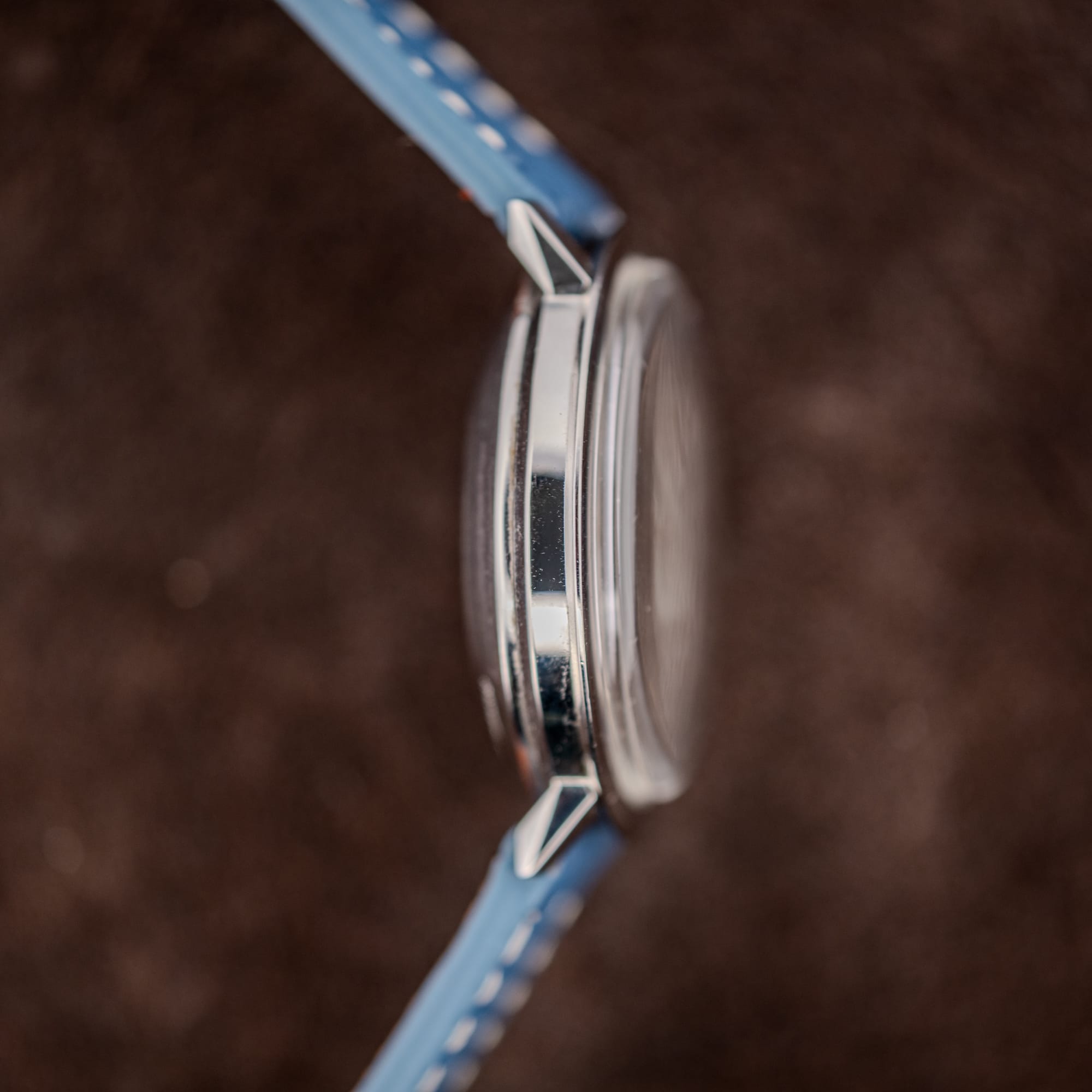
A screwed-on caseback is a component, and a component can be swapped for a clean one in about a minute, which is how presentation watches lose their presentations. This Admiral has no back to swap. Turned over, there is no seam and no notch to pry, just unbroken steel carrying the engraving, a STAINLESS STEEL stamp, and a line of instruction for whoever services it next: REMOVE BEZEL TO USE 1260 WRENCH. This case was built as a single piece. The movement comes out the front once the bezel and crystal lift away, which means the engraved surface is not a lid that happens to sit over the watch. It is the watch.
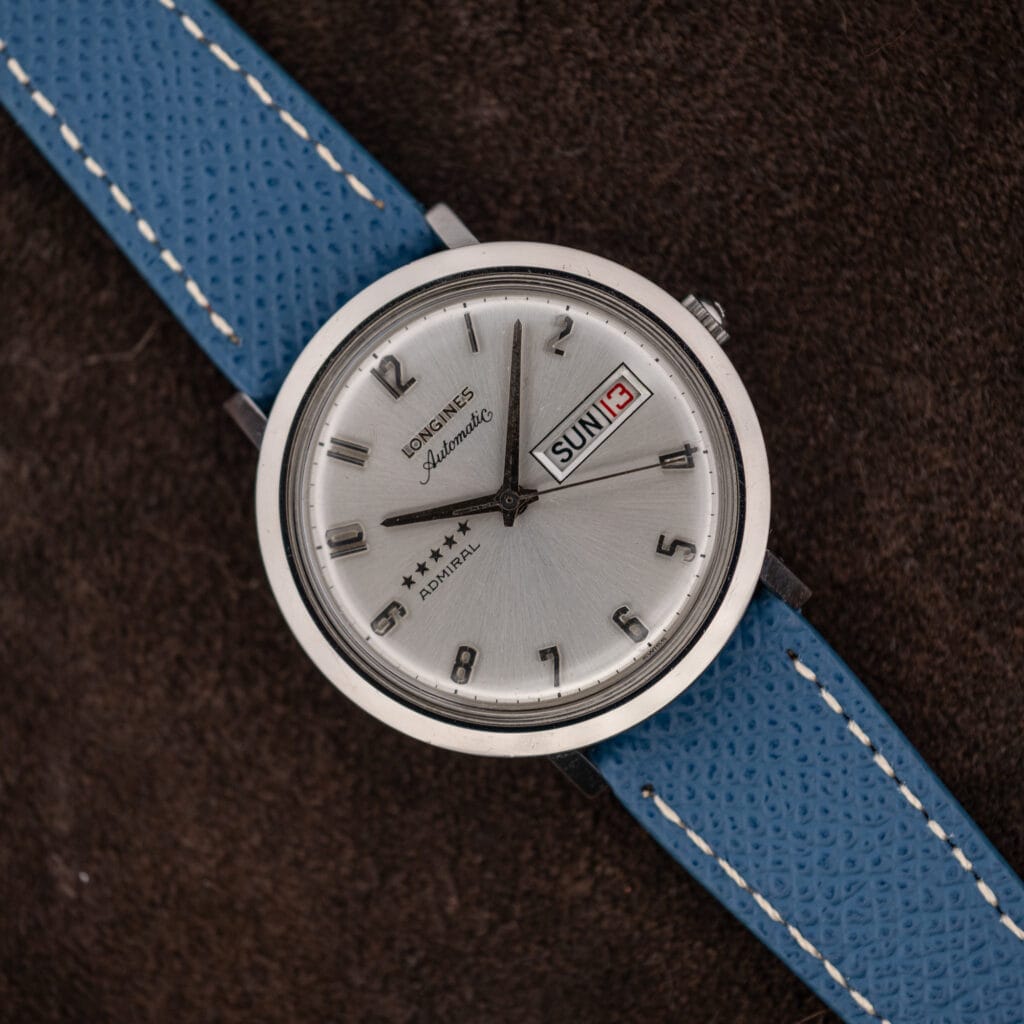
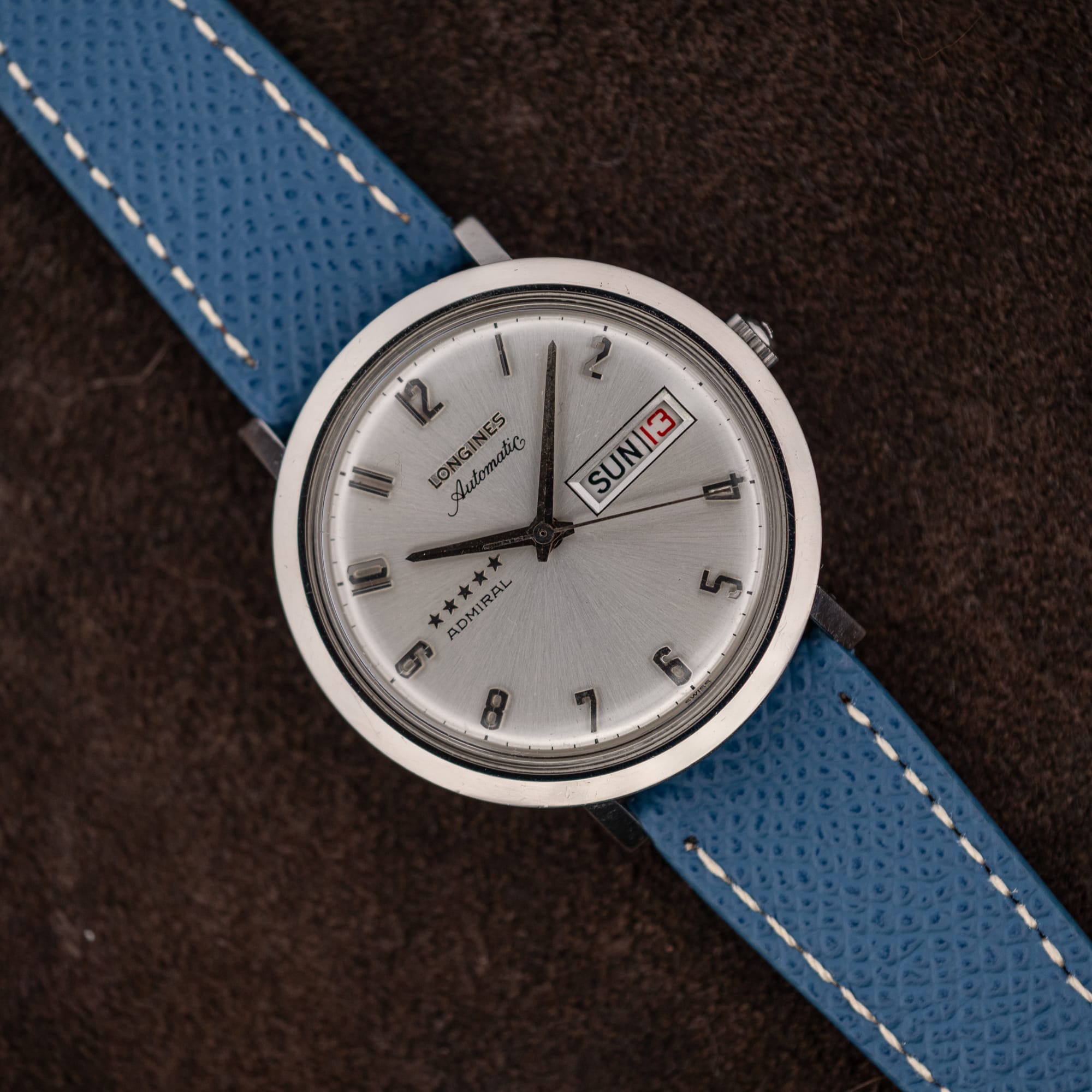
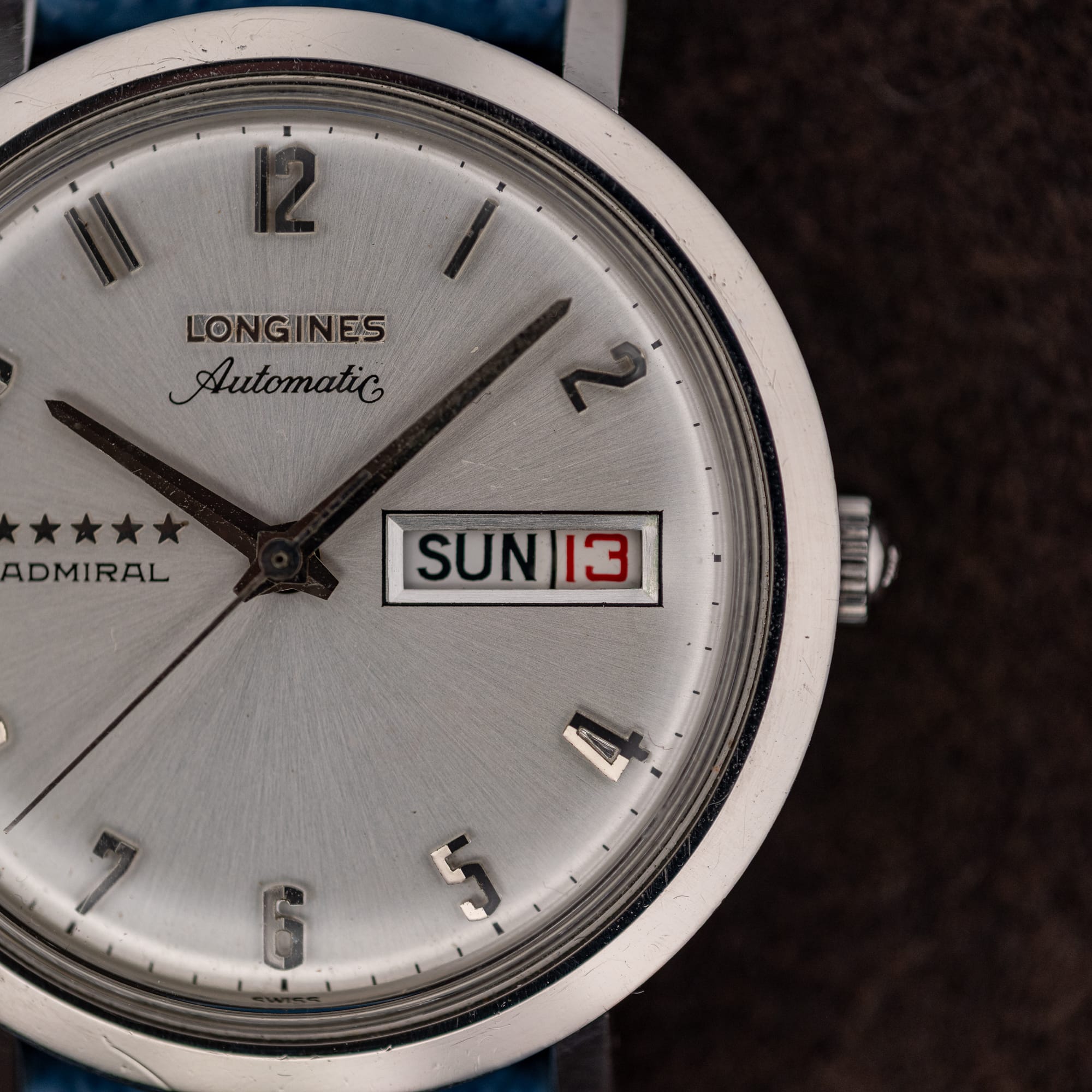
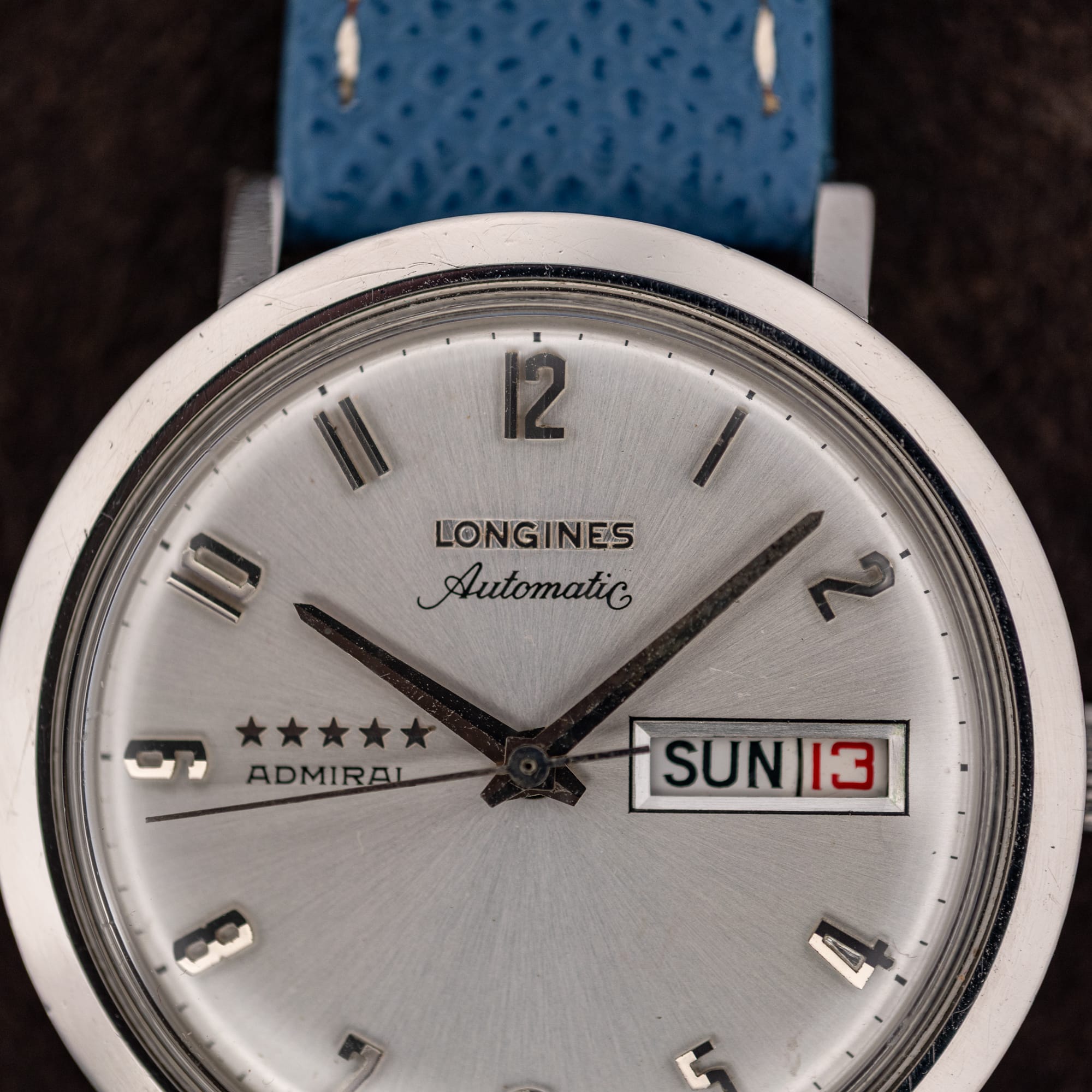
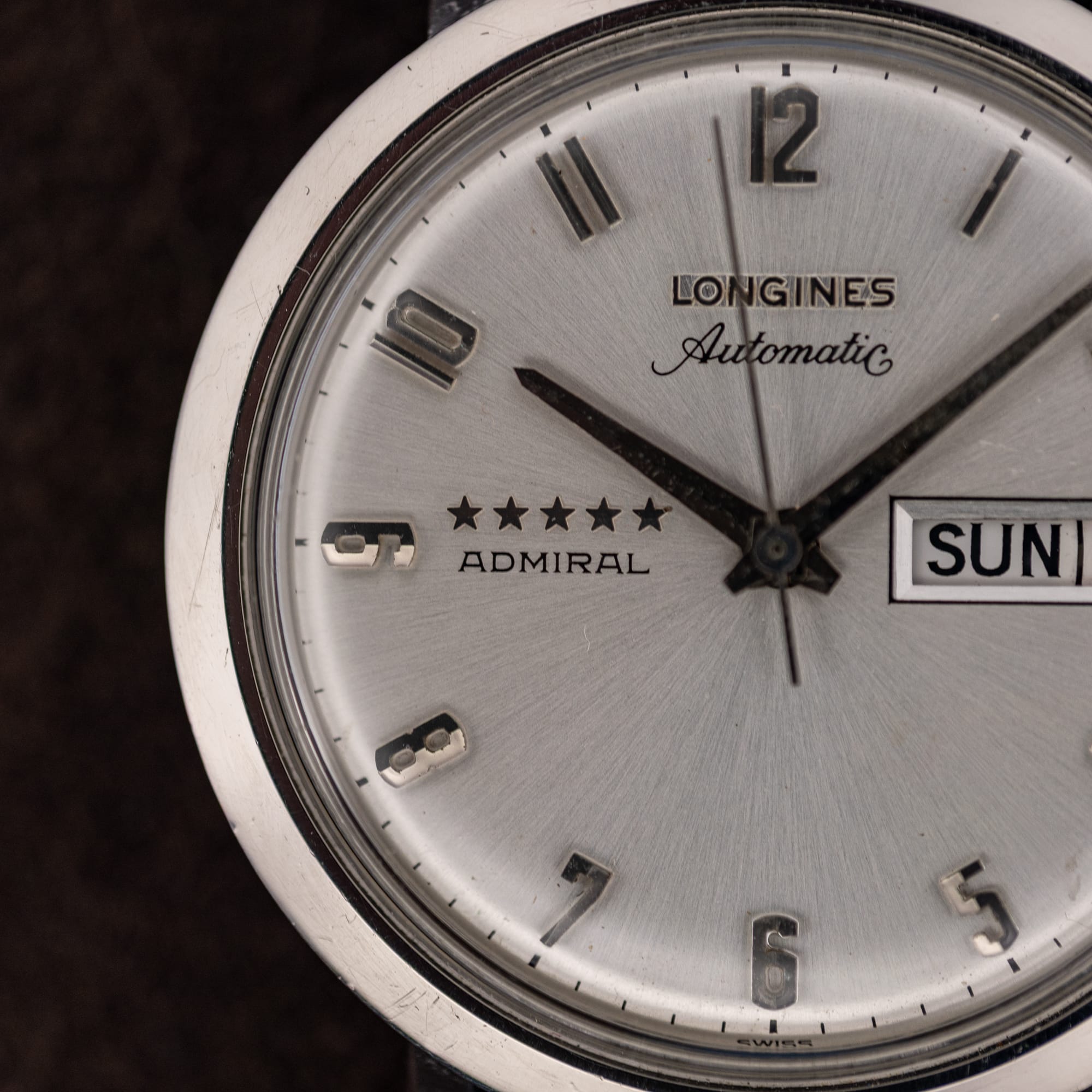
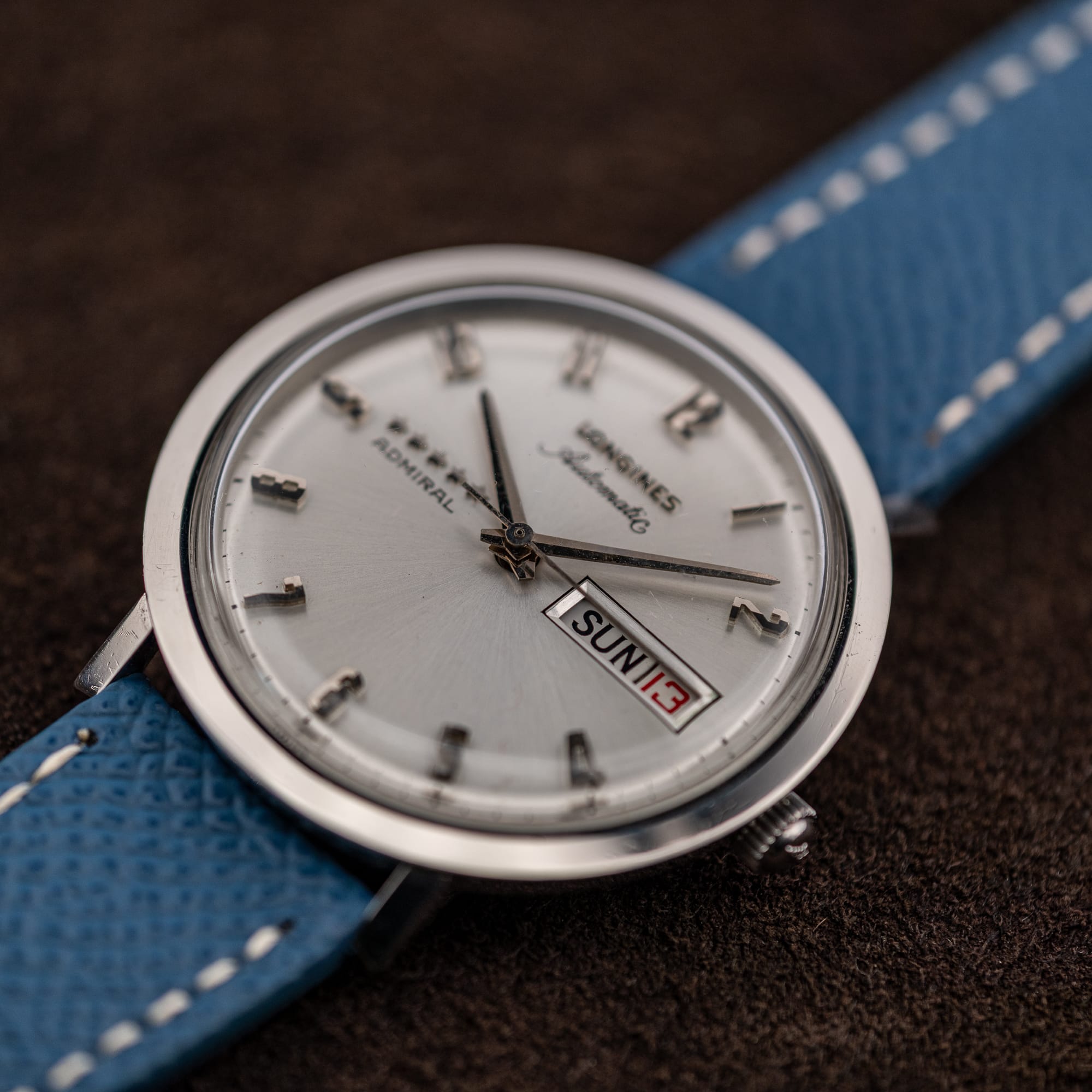
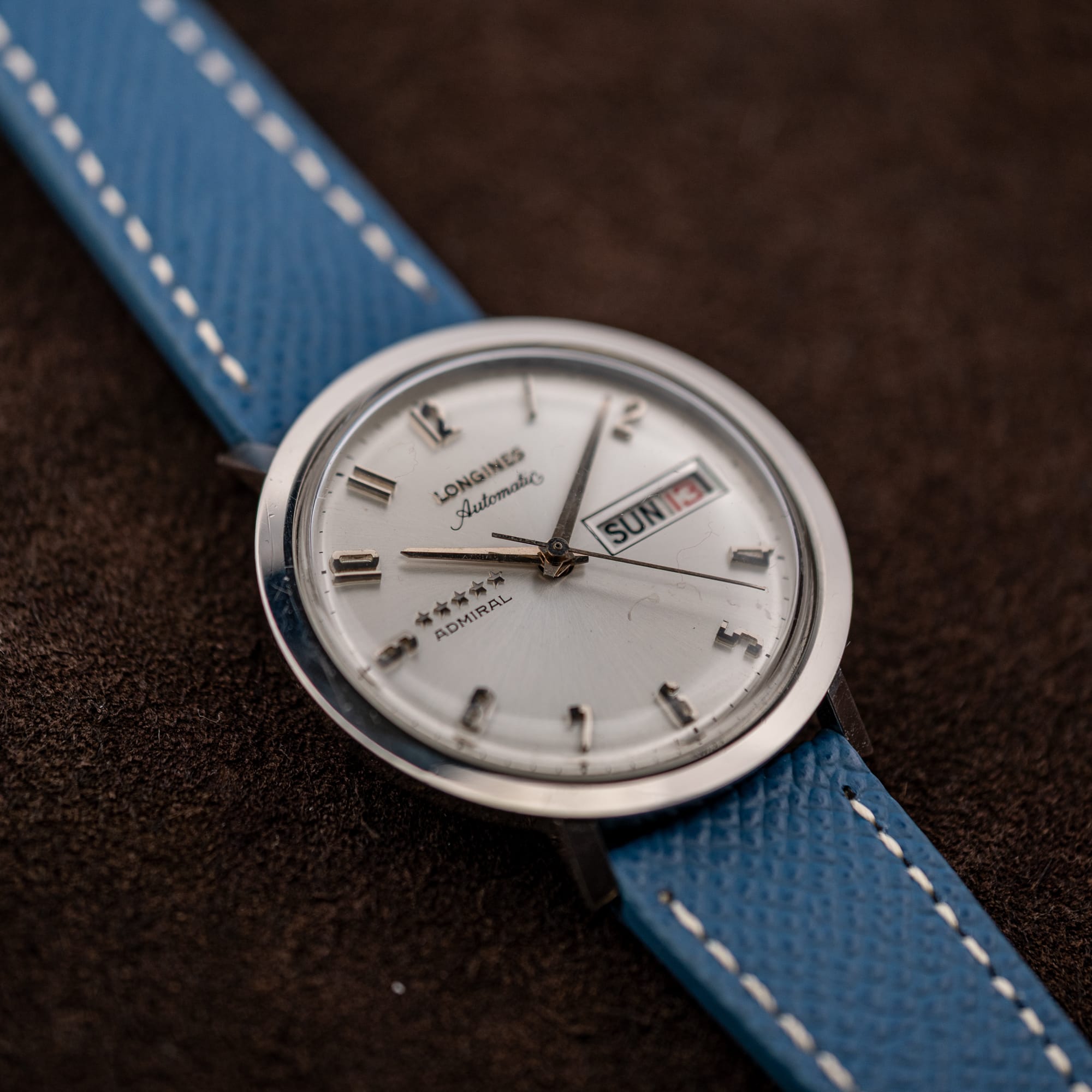
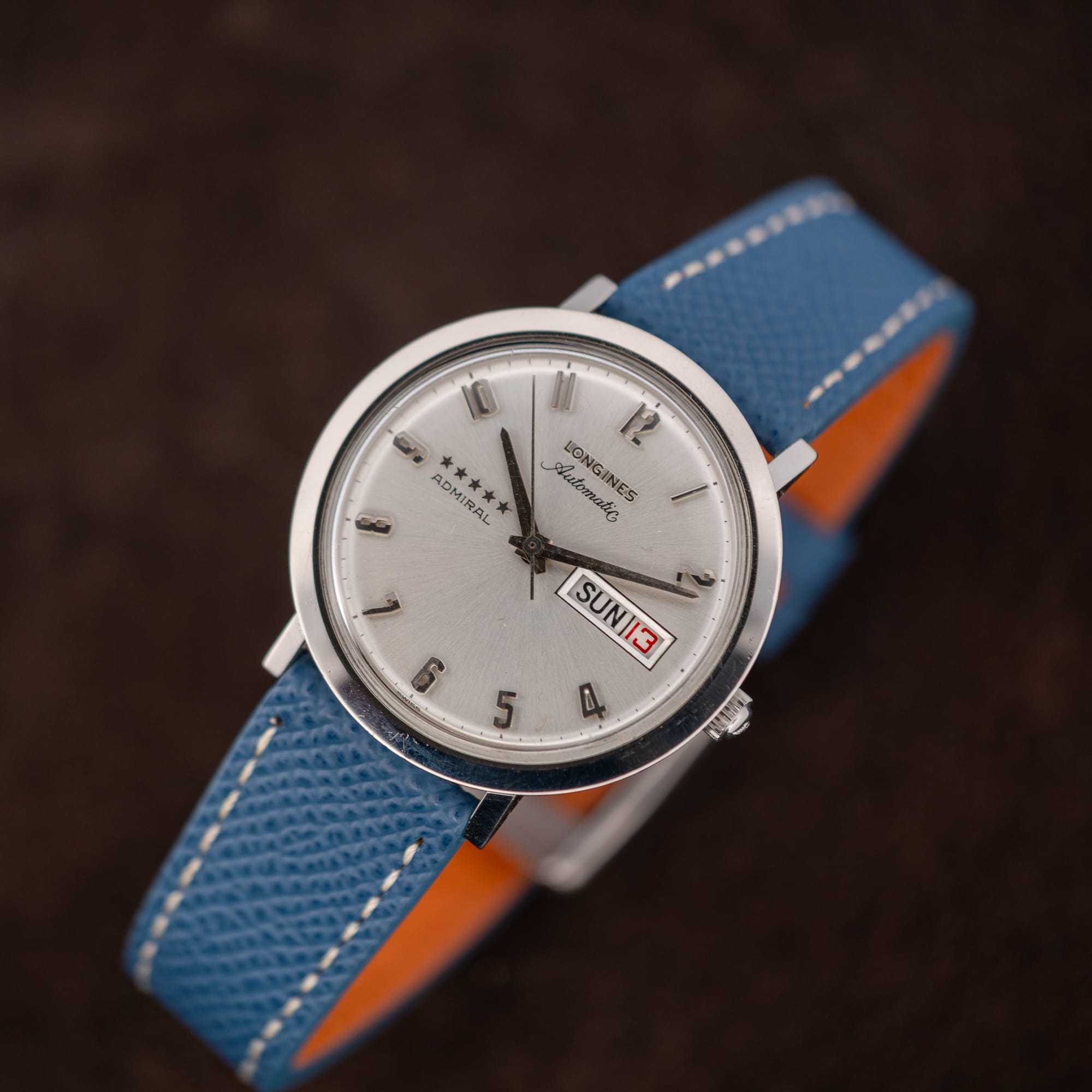
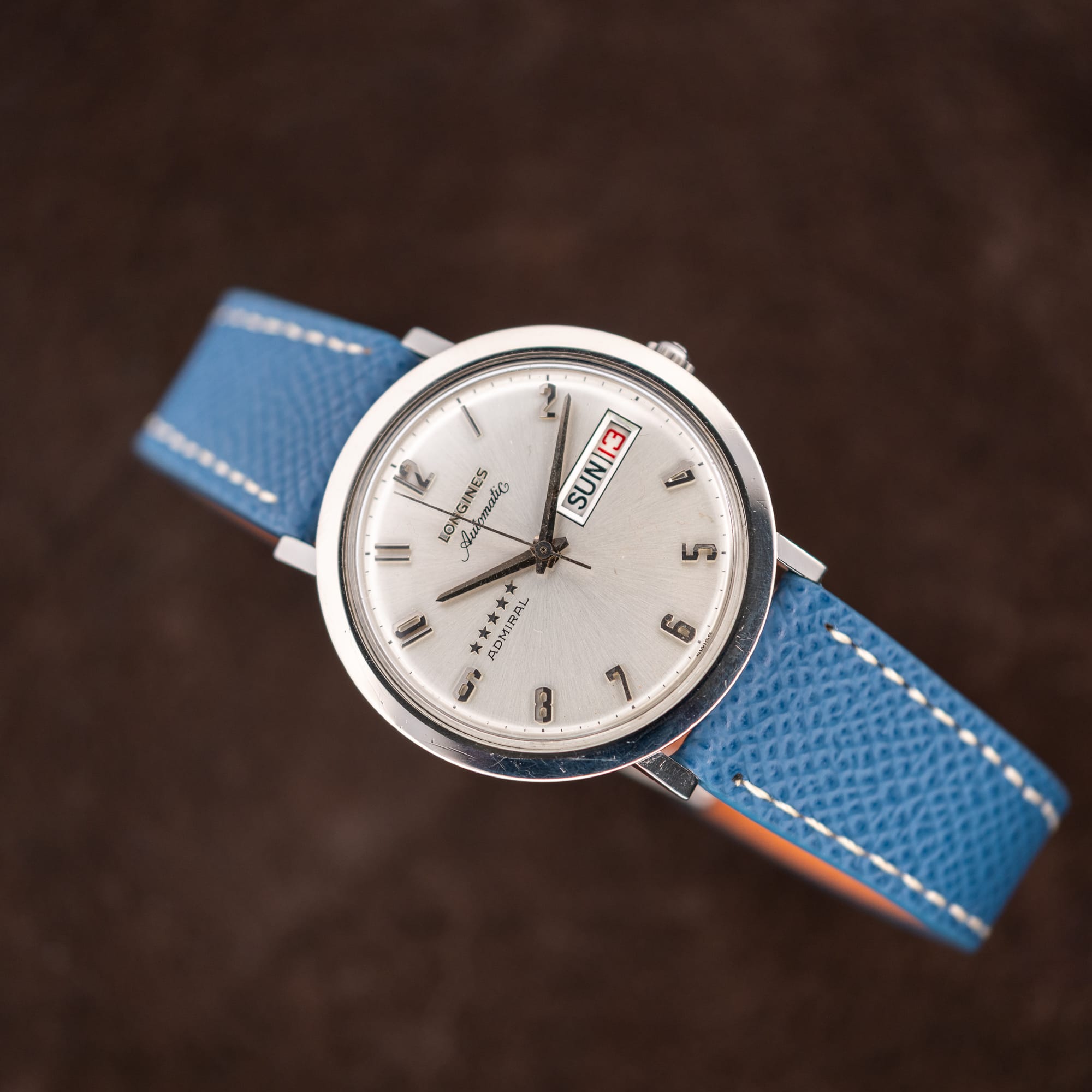
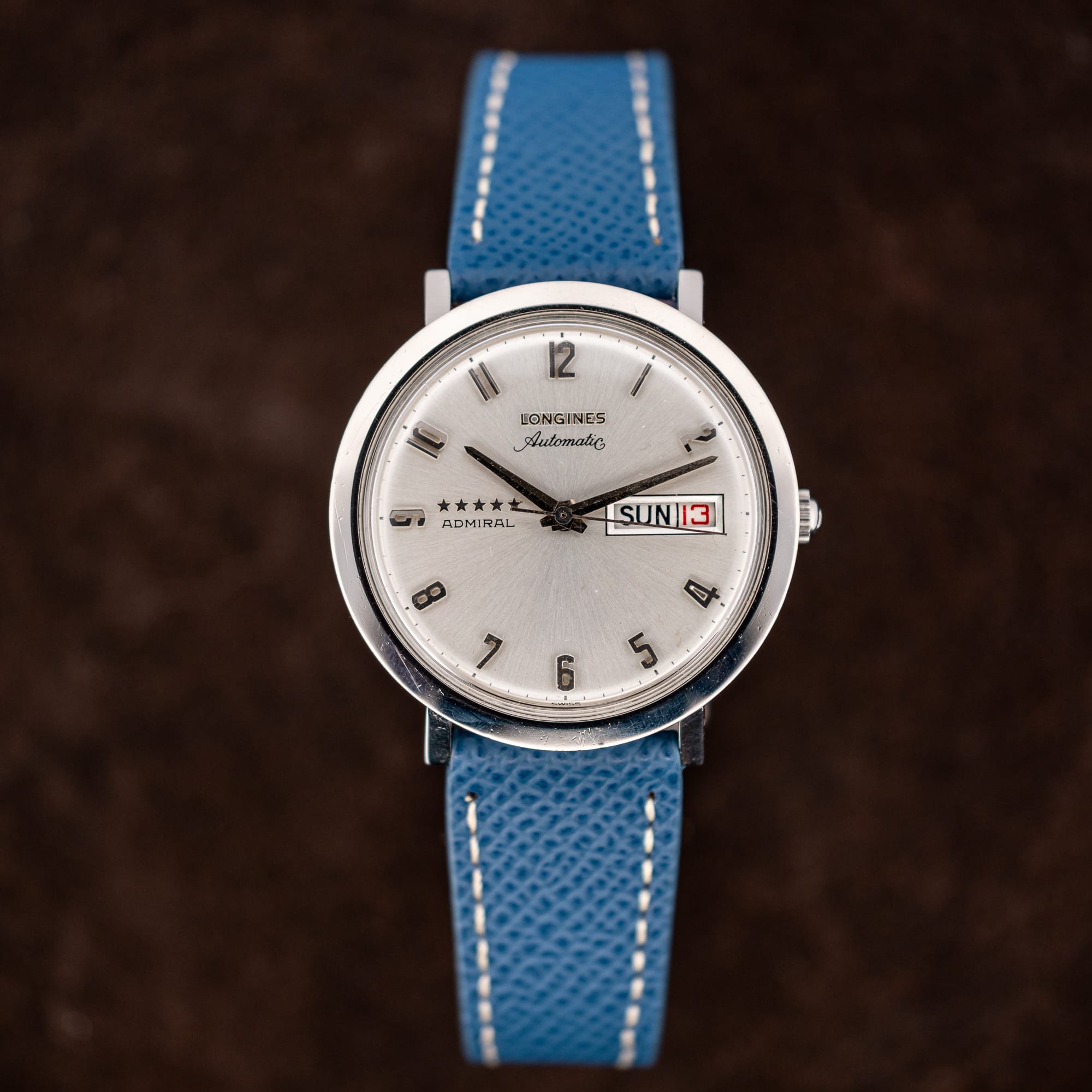
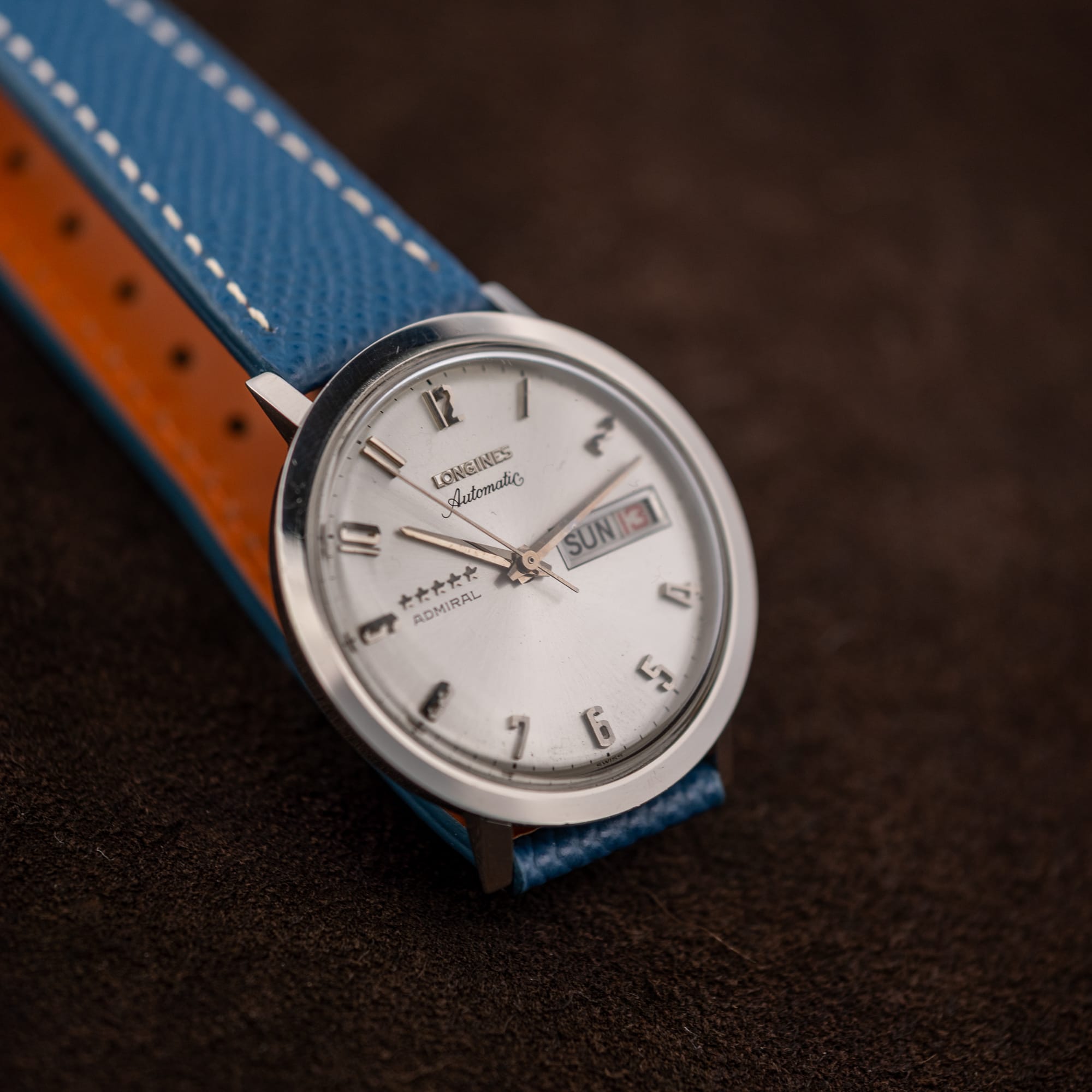
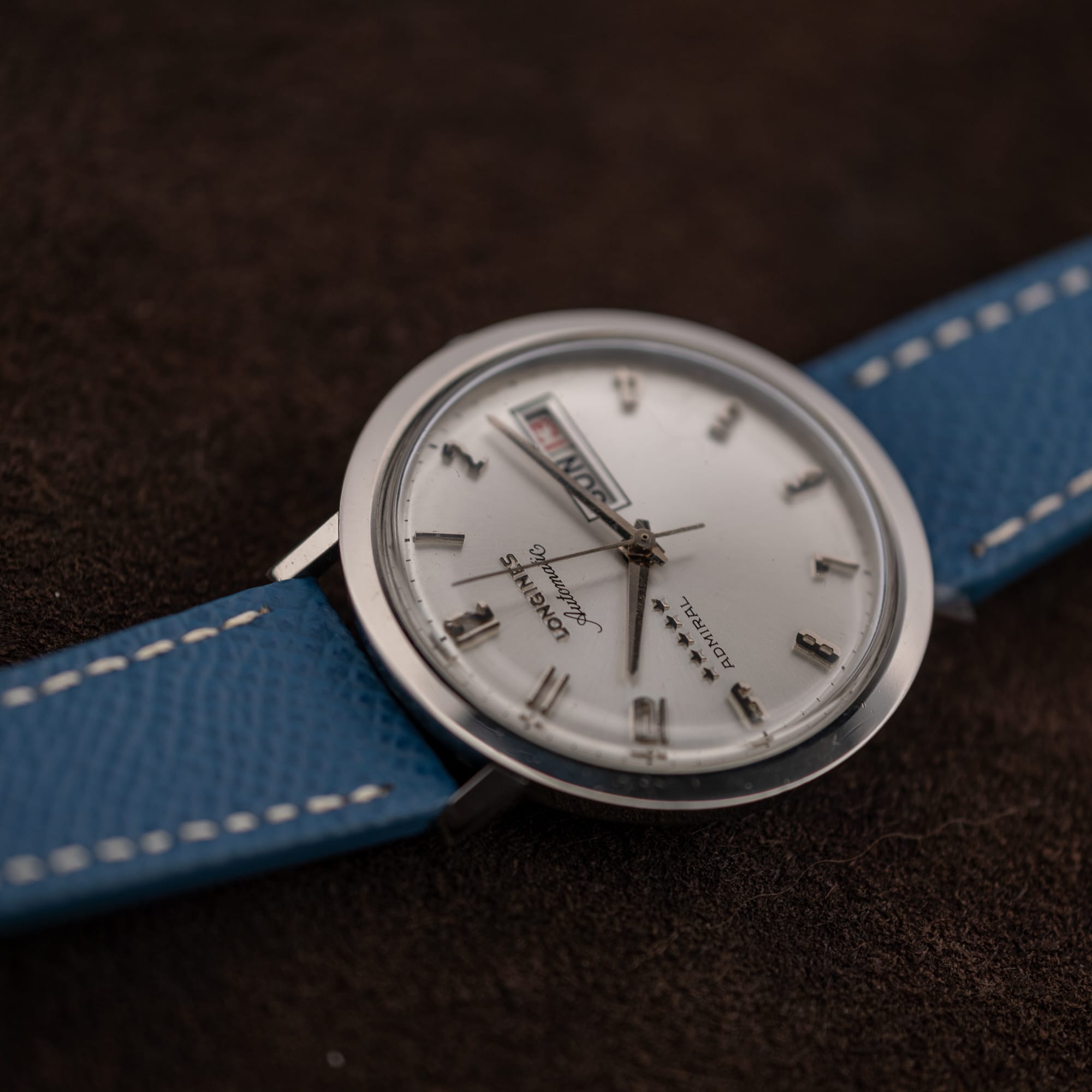
This is the self-winding, wear-it-daily end of the Longines catalog. Five small stars sit printed above the ADMIRAL name, Longines’ in-house mark for the quality and reliability of its movements, five being the top of that scale. Day and date share one chrome-framed window at three, the day in black and the date in red, and neither quicksets, so the date walks forward by rocking the hands through the late evening the way the whole era did it. Inside runs caliber 503, seventeen jewels at 19,800 beats an hour, a Record design Longines took up after absorbing the smaller Swiss firm in 1961. Only a few of the calibers Longines fitted to the Admiral carried a day disc at all; the rest read out the date alone, or nothing but the time. The 503 arrived in 1968, which brackets this watch between that year and the 1972 cut into its back.
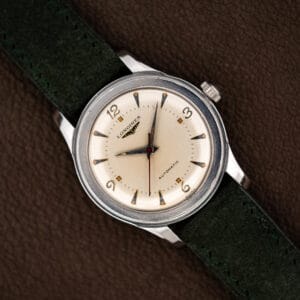
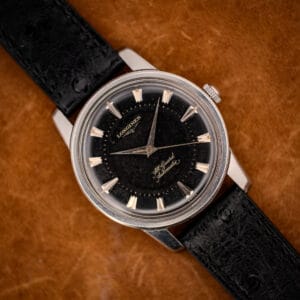
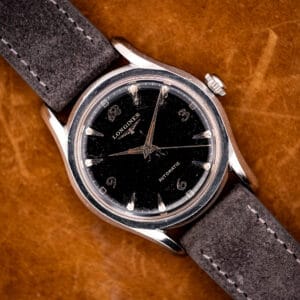
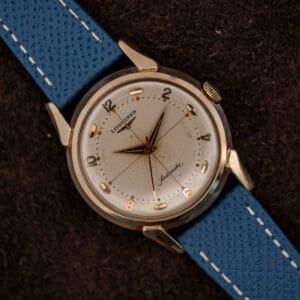
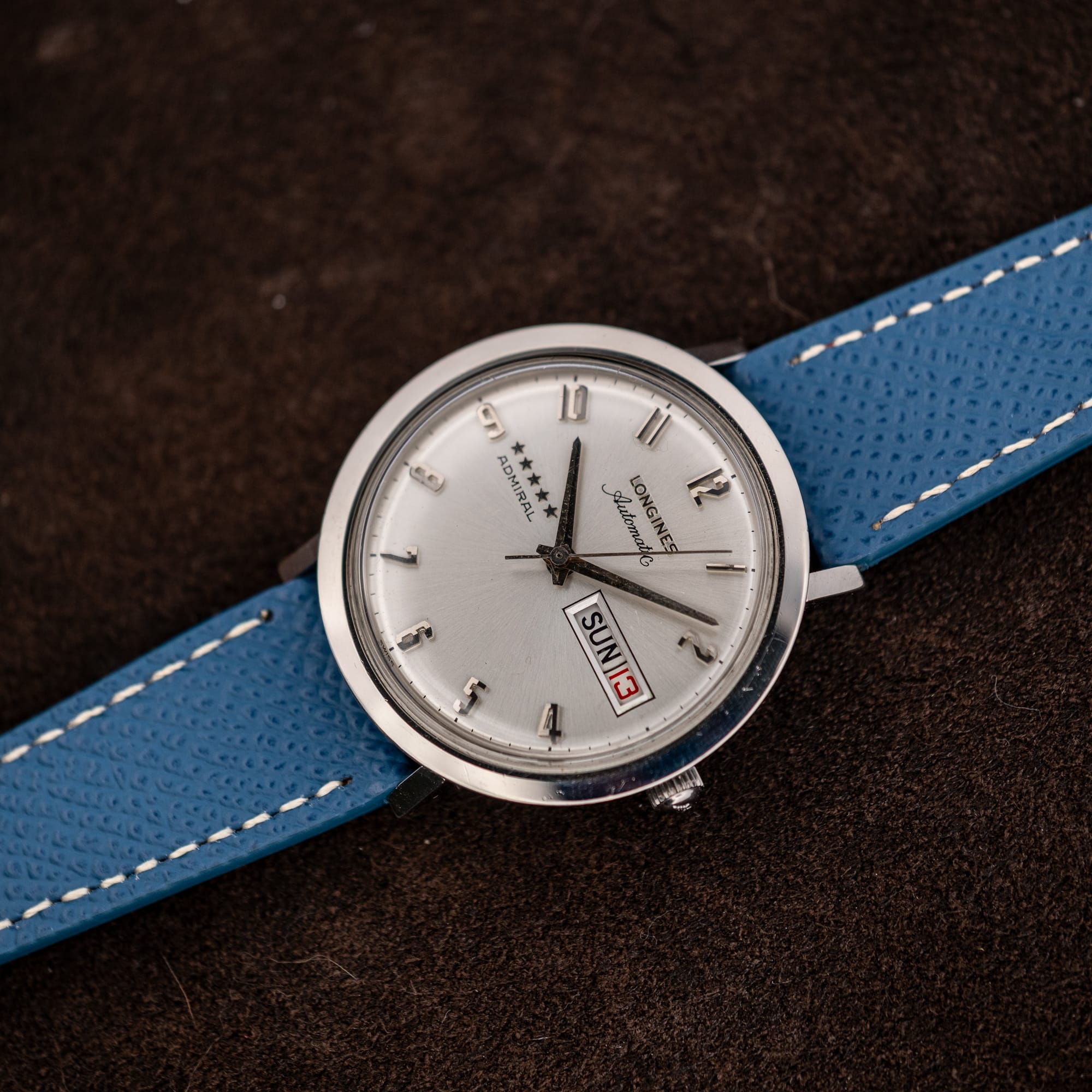
Thirty-six millimeters across and just thirty-eight from lug tip to lug tip, with short faceted lugs turned down hard and a mid case slim enough to vanish under a cuff. The dial is why we took it on, left completely alone: an even silver sunburst fanning from the center, applied polished Arabic numerals with batons at one and eleven, the eleven doubled, printing still crisp, no staining or flaking anywhere on it. The hands carry the honest half of the story, their finish broken down across five decades into mottled dark patches, and the acrylic crystal is widely scratched, the fine kind that comes of a watch being worn rather than stored. Case and bezel say the same, scattered hairlines and a few small dings under an earlier polish gone soft with age.
Serviced in-house at OTTUHR and backed by our 2-year mechanical warranty, on one of our blue leather straps with an orange lining underneath. Rawson counted ten years. The watch has quietly logged another fifty.