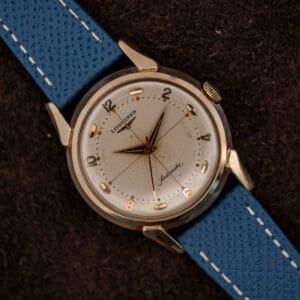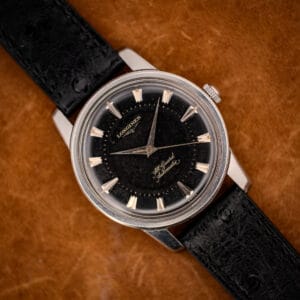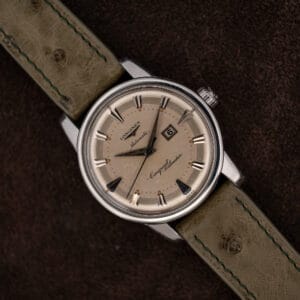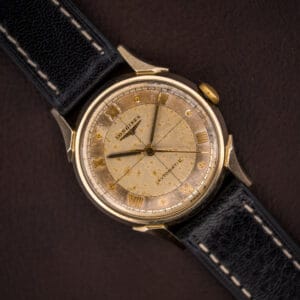

By 1944 the Swiss industry had been building, improving and selling automatic wristwatches for years. Longines had not built one. Rolex had industrialized the 360-degree rotor back in 1931, and St. Imier had spent those years making its name in chronographs and precision timing rather than in self-winding anything. When Longines finally moved, it moved from a standing start: tooling that had to be built before a single part could be cut, and funding that was thin from the day the project opened. This Longines Sei Tacche is what came out the other side.
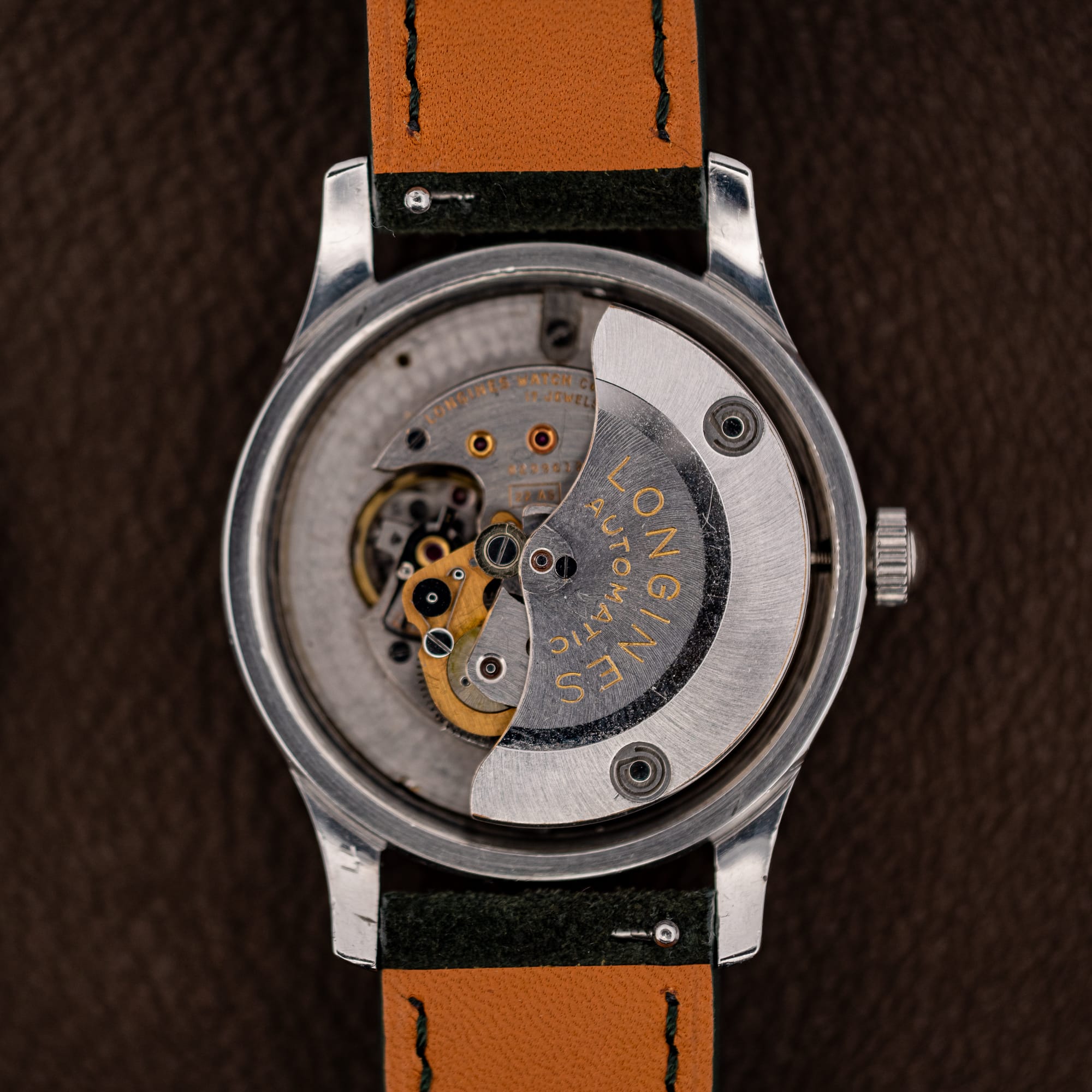
Less than two years later the caliber 22A existed, and with it a decision that still reads well eighty years on. The easy answer in the mid-1940s was the bumper, a rotor swinging through a limited arc against two springs, cheaper to engineer and proven across the industry by then. Longines went past it. The 22A arrived turning a full circle on a central rotor, which is to say the first automatic Longines built in-house was already the modern kind.
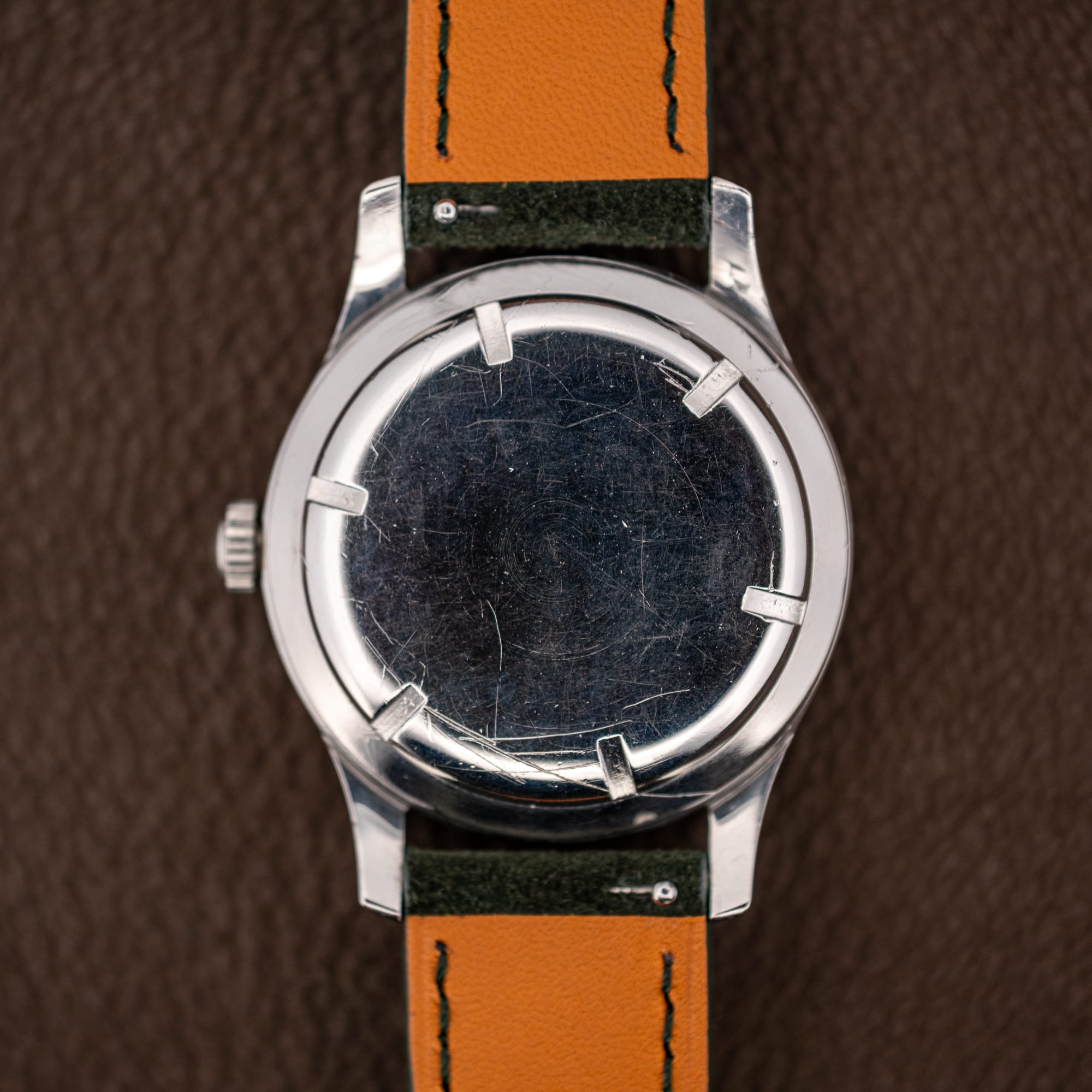
Naming it was somebody else’s job. Longines gave these watches reference numbers and nothing more, so Italian collectors settled the matter decades later the plain way, by counting. Six notches around the case rim, sei tacche. Three on the sibling, tre tacche. The notches were never decoration: they give a case wrench something to grip on a threaded back, and they belong to the late-1930s move away from gasketless snap cases toward screw backs. Italy drove vintage collecting for a generation and its vocabulary came along for the ride, which is how a Swiss manufacturer ended up with a model name it never chose.
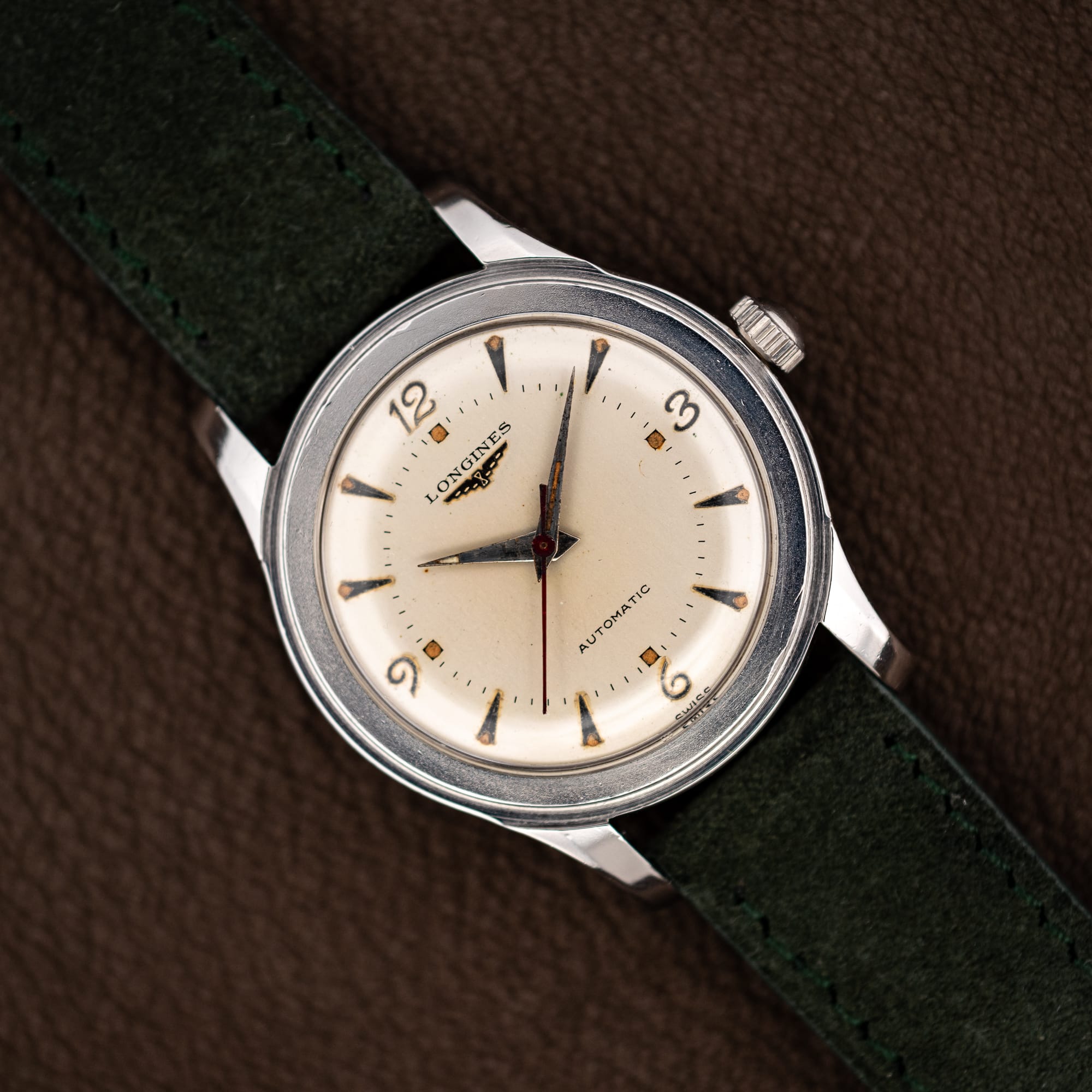
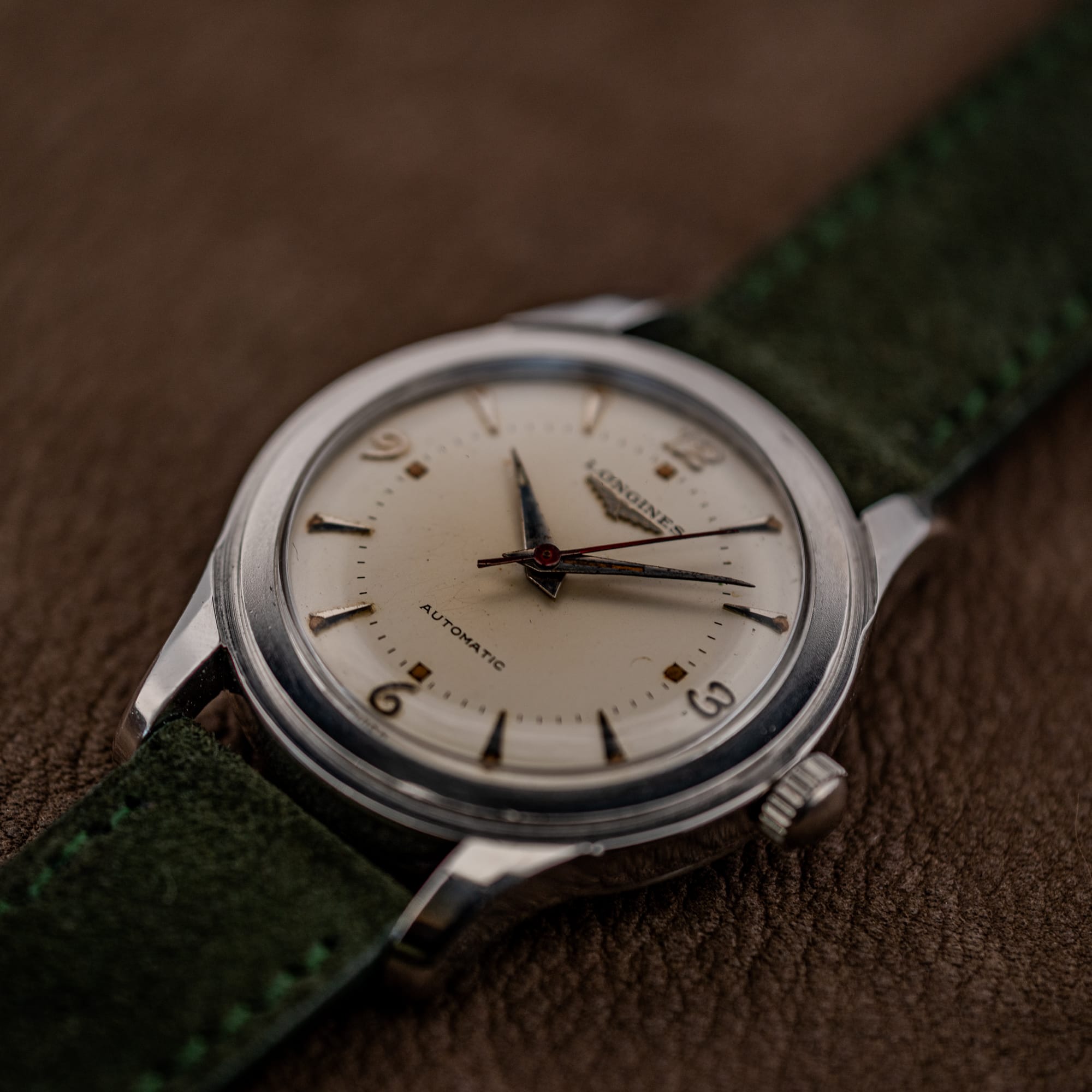
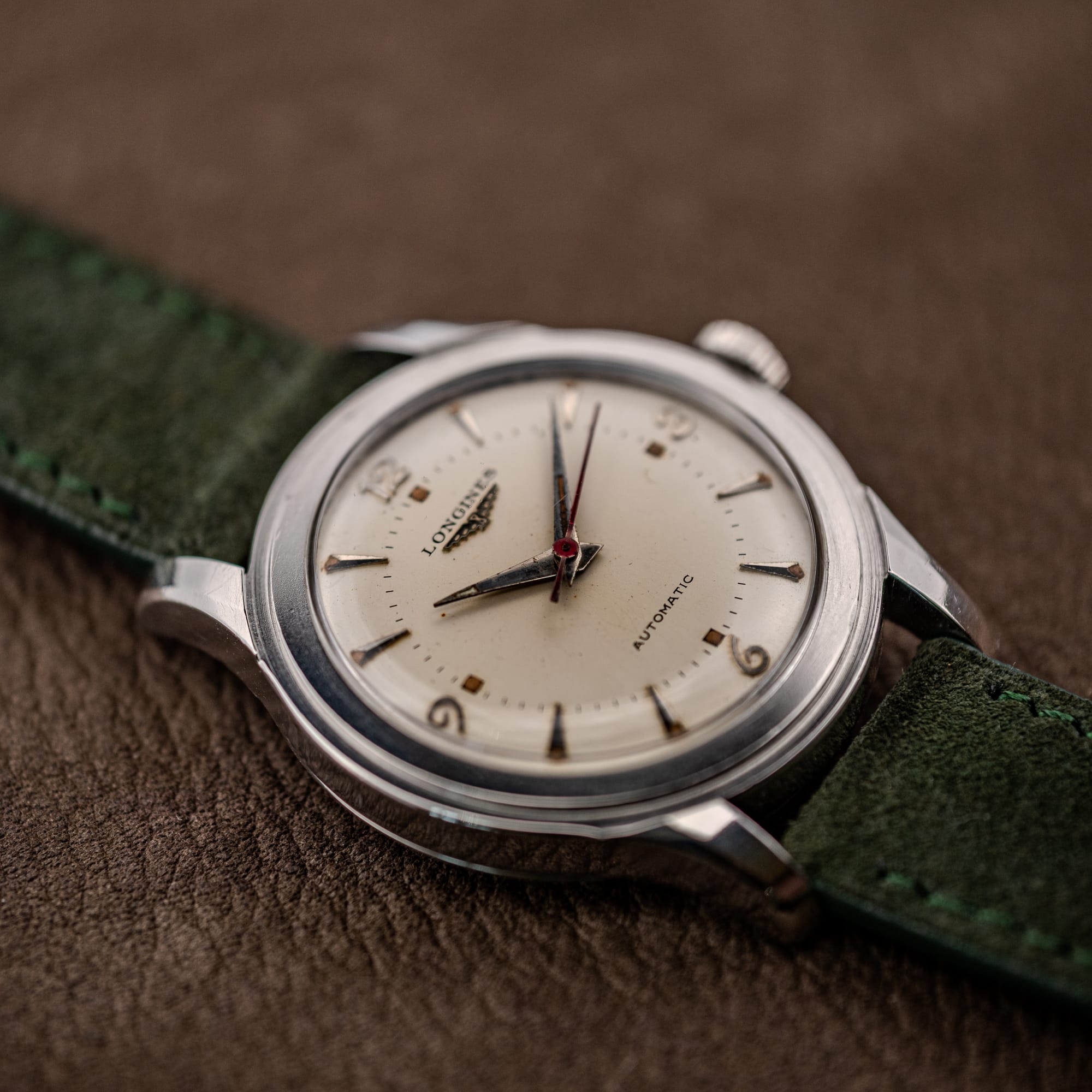
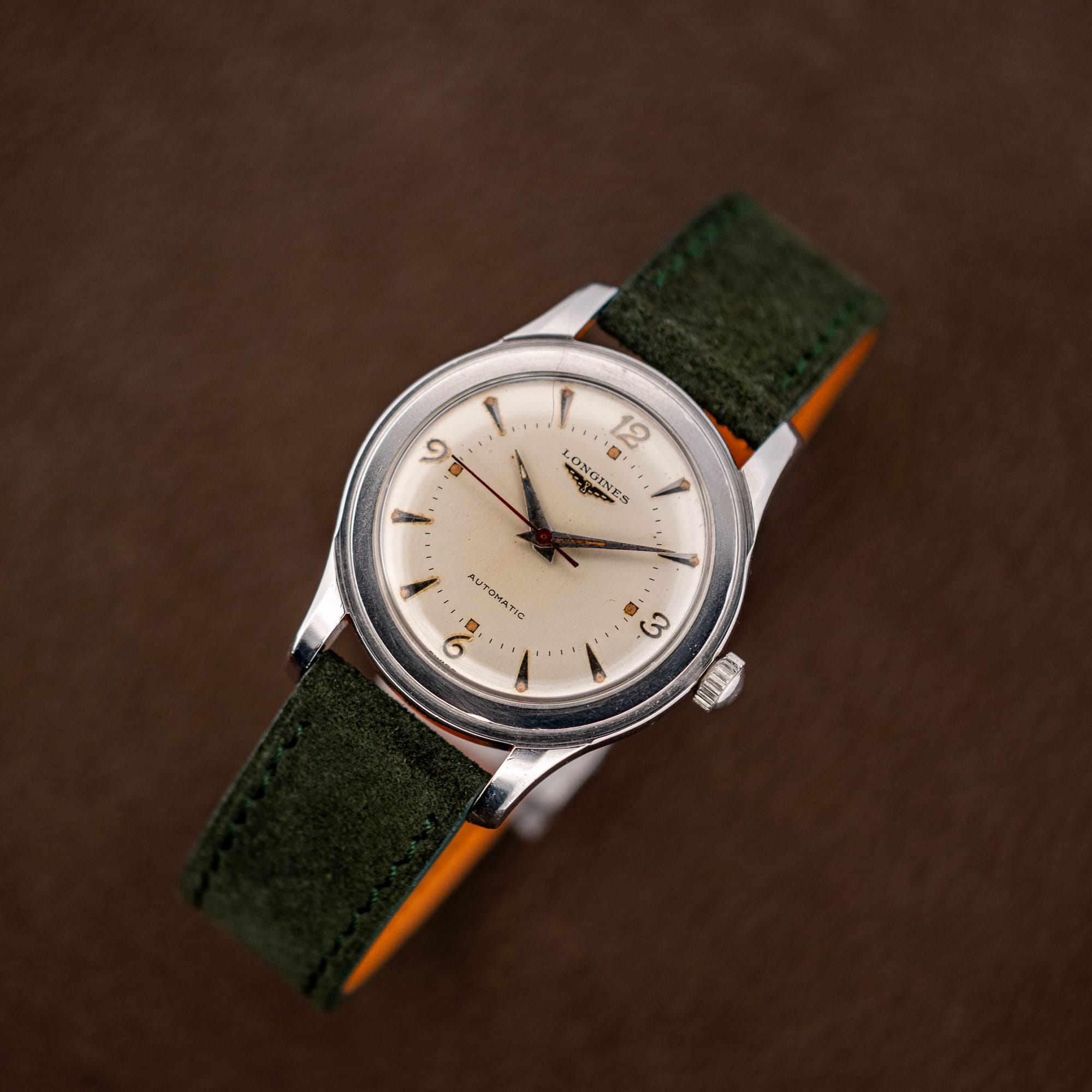
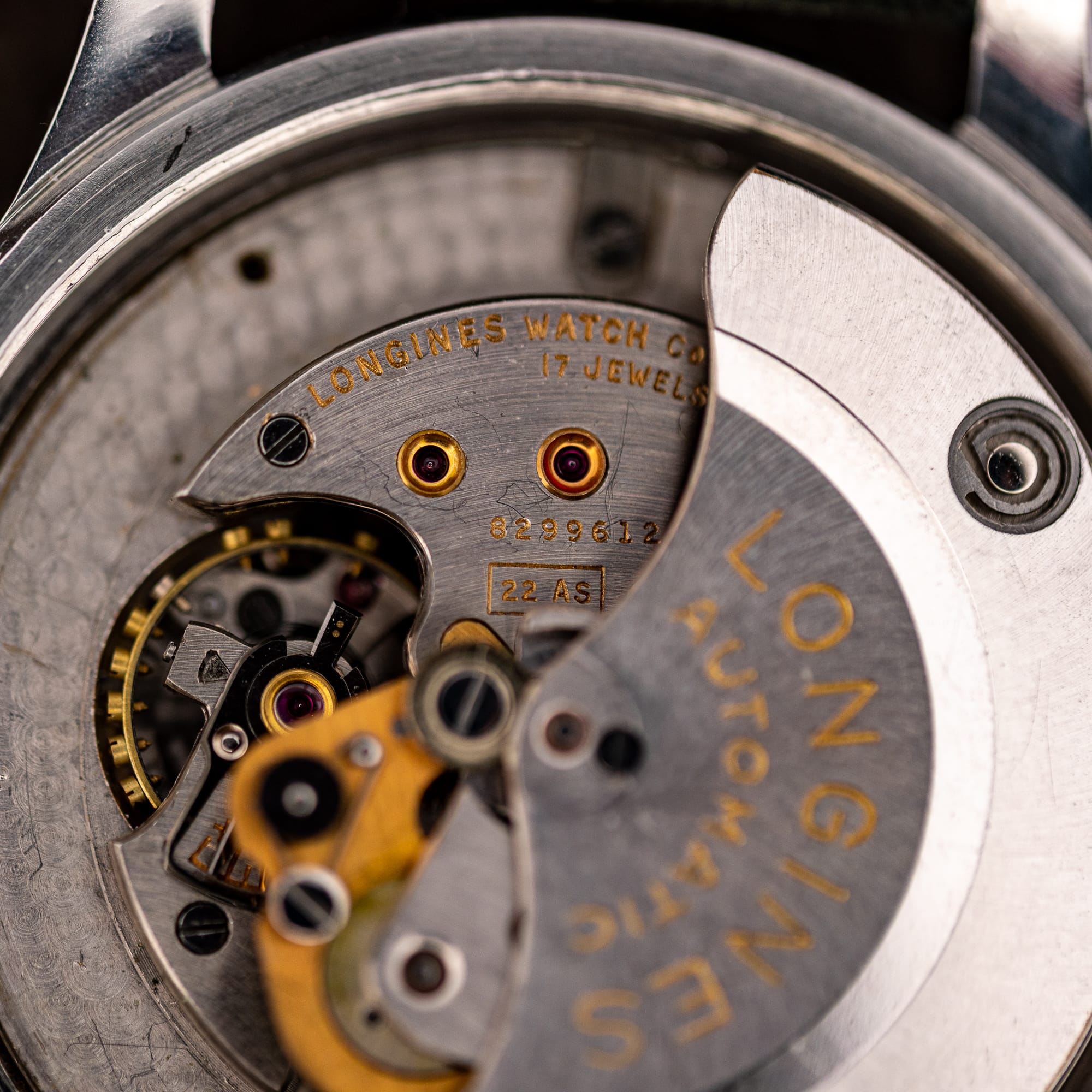
The Sei Tacche name usually attaches to manual-wind pieces from the 1940s. This one is where the two stories meet. The case rim still carries its six notches, and inside runs the caliber 22AS, the center-sweep-seconds version of that first automatic, marked on the bridge beside seventeen jewels and the serial 8299612, which places the movement in 1951. The rotor still wears its gold-filled Longines Automatic engraving, thinning at the tops of the letters.
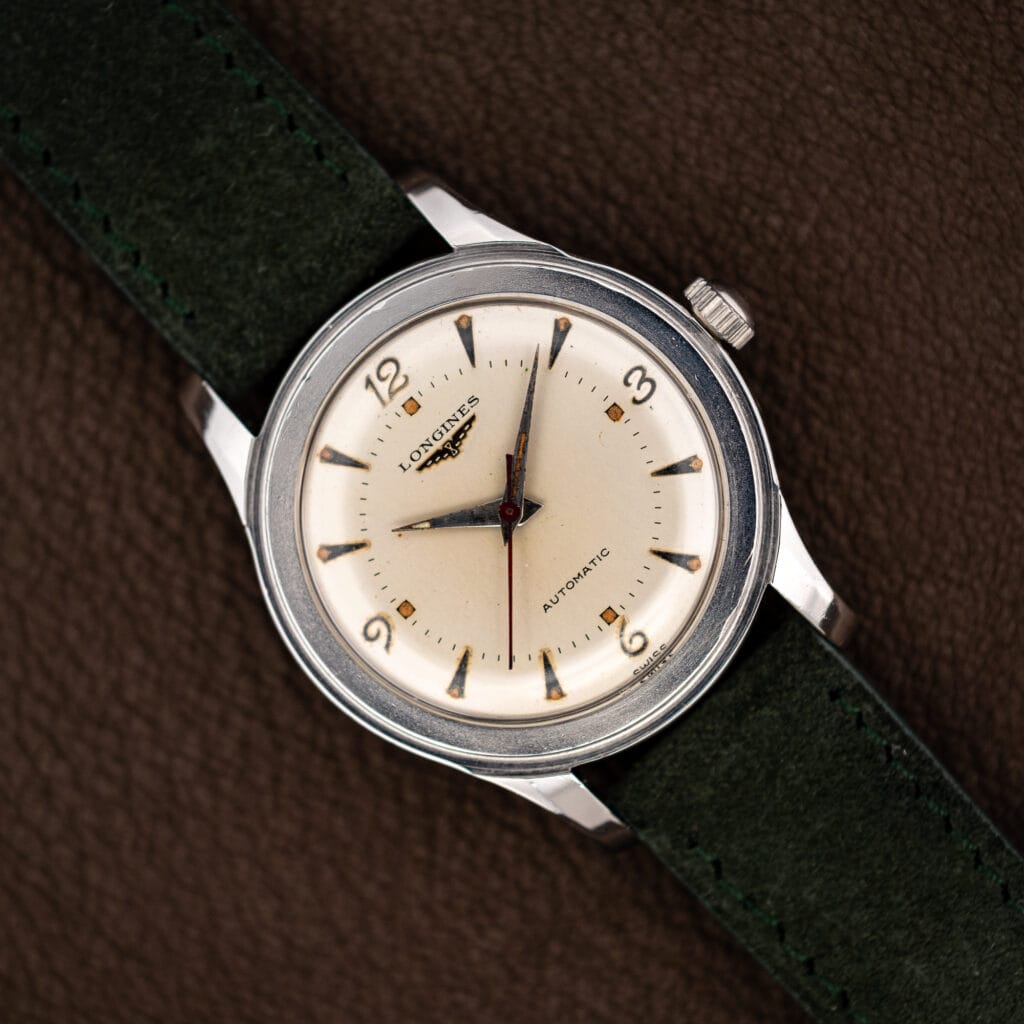
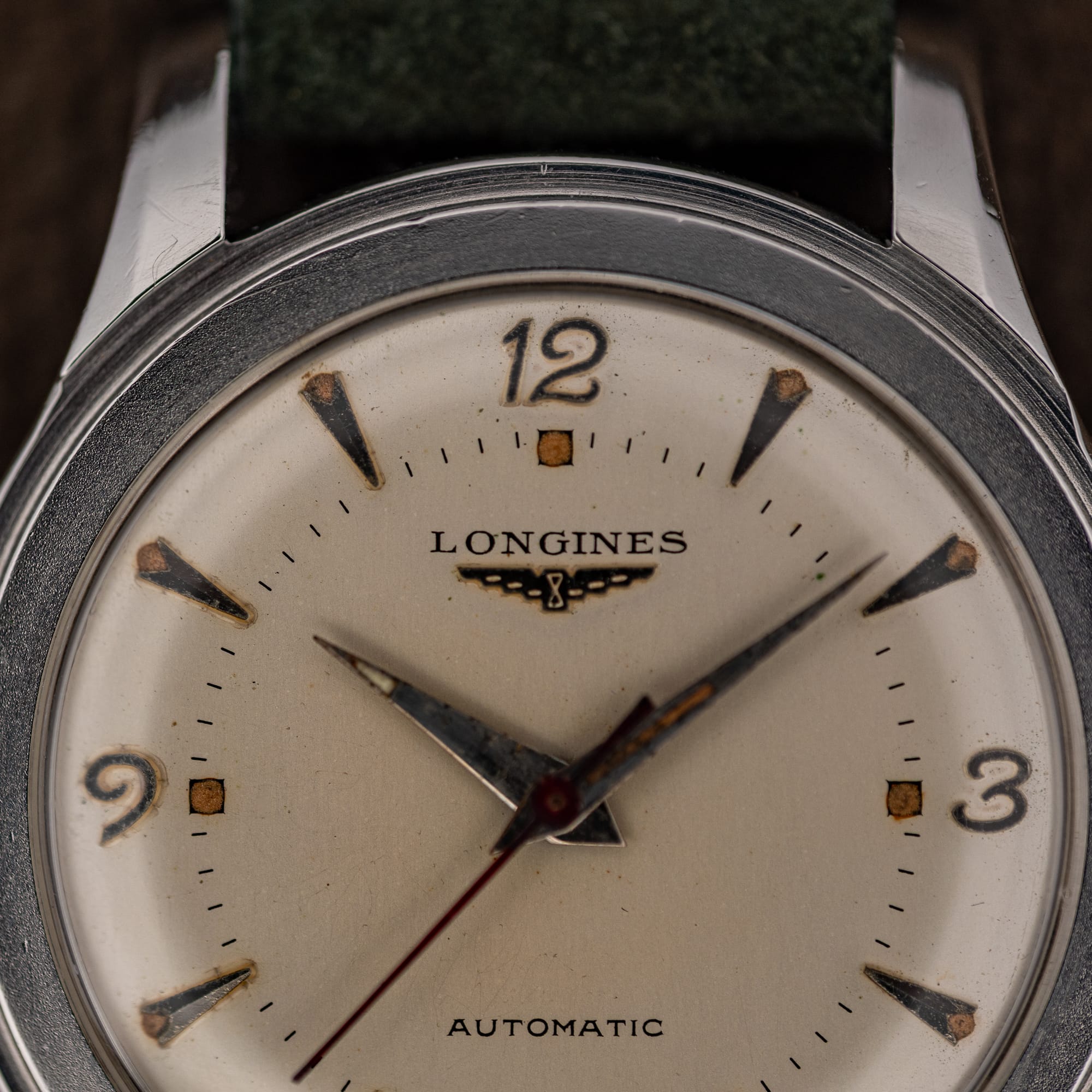
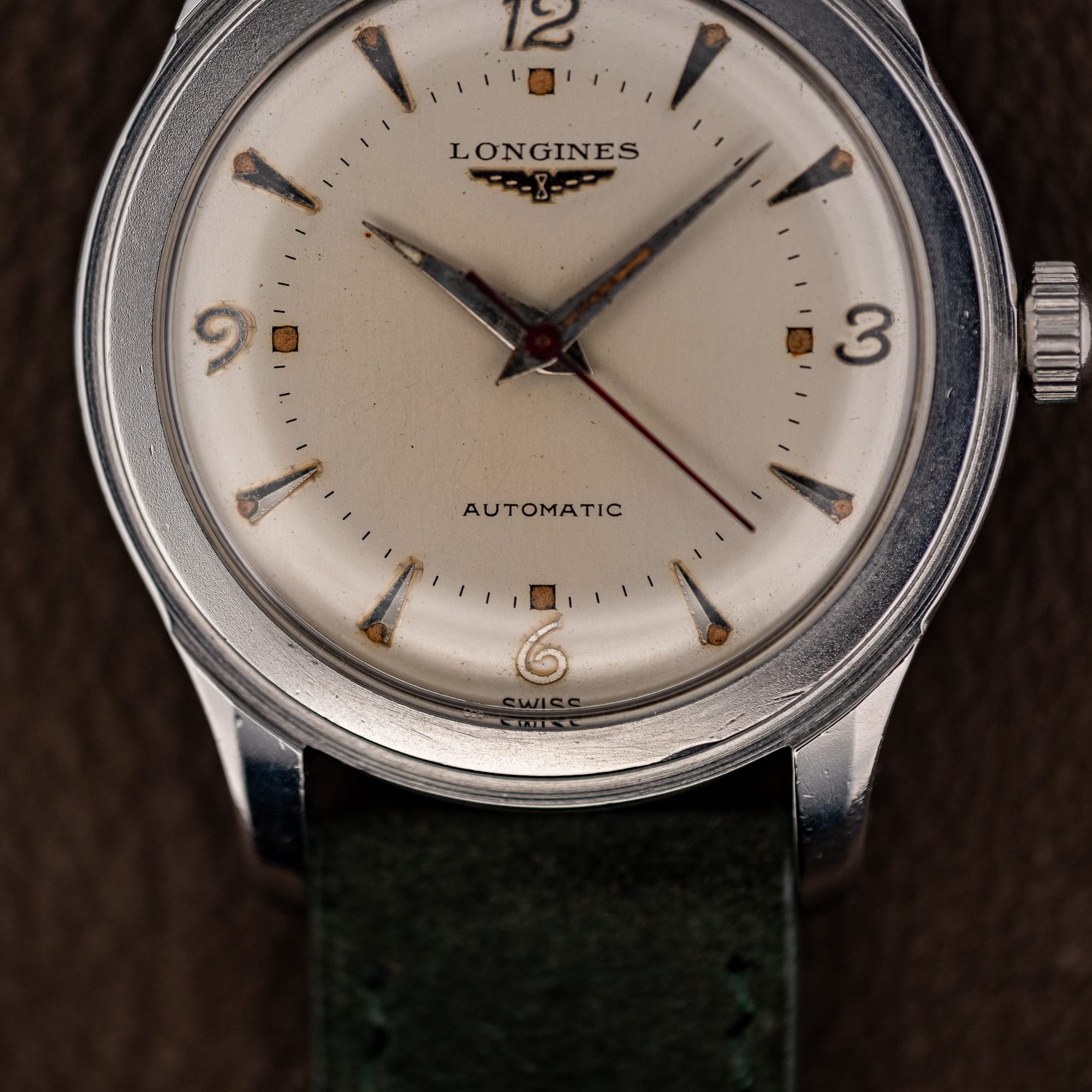
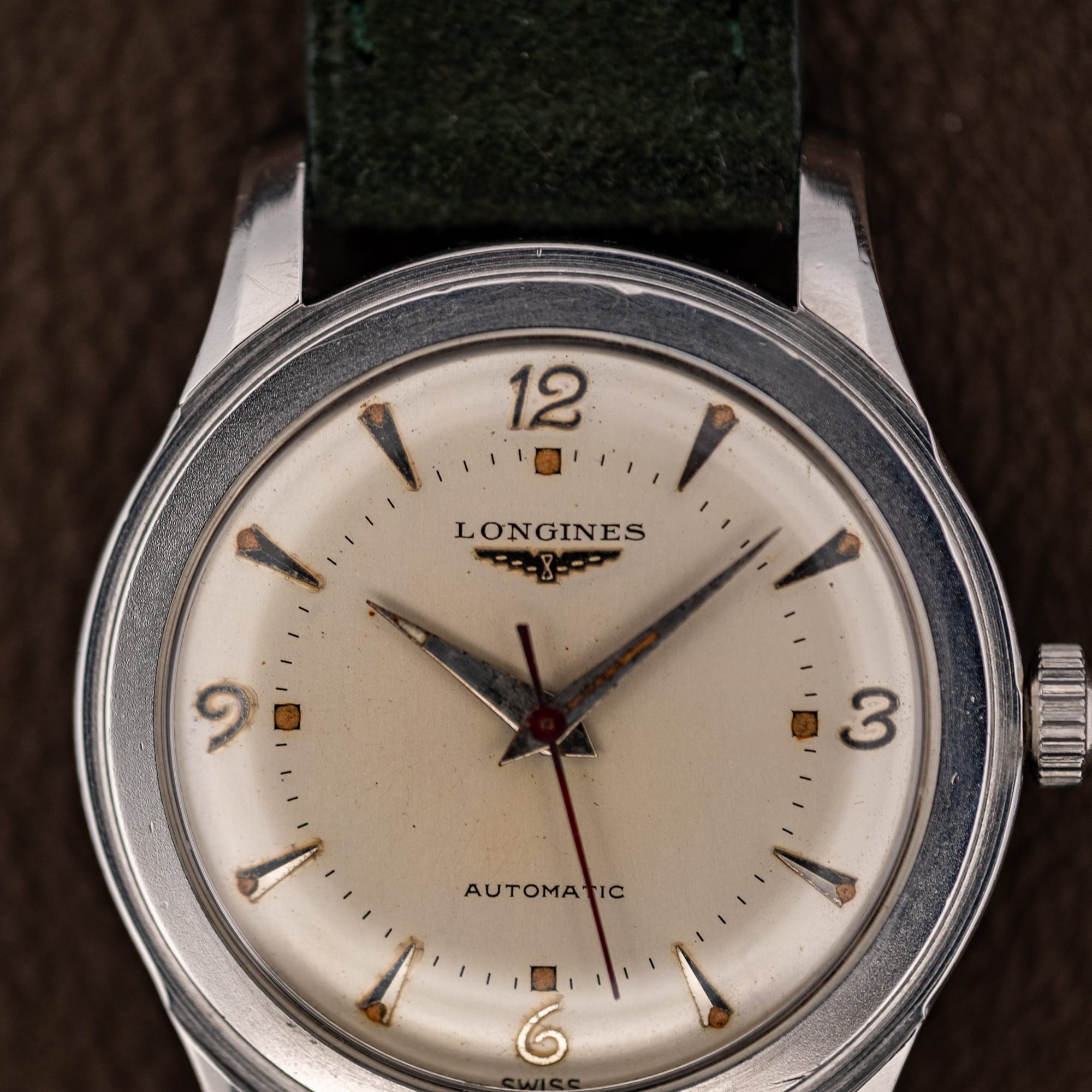
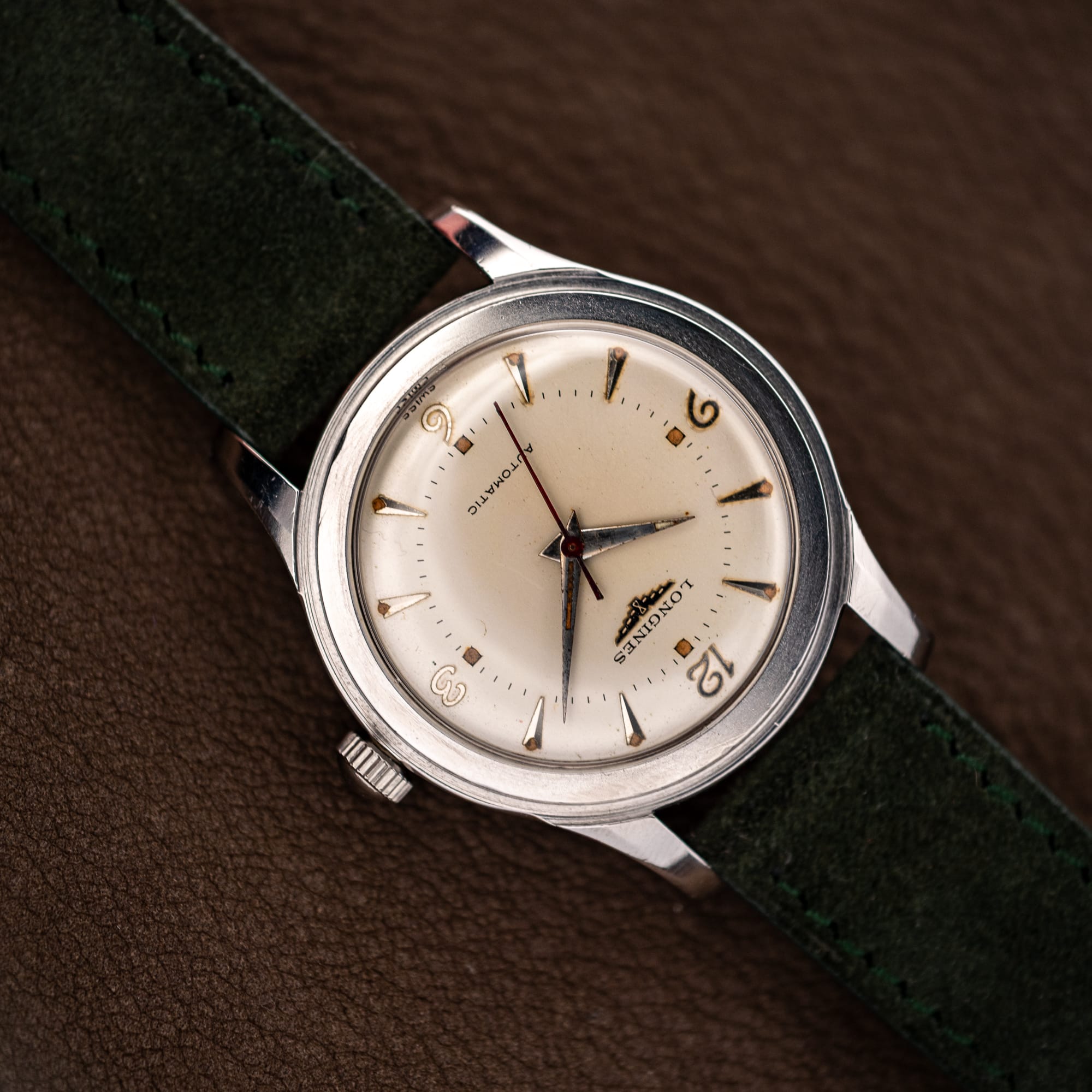
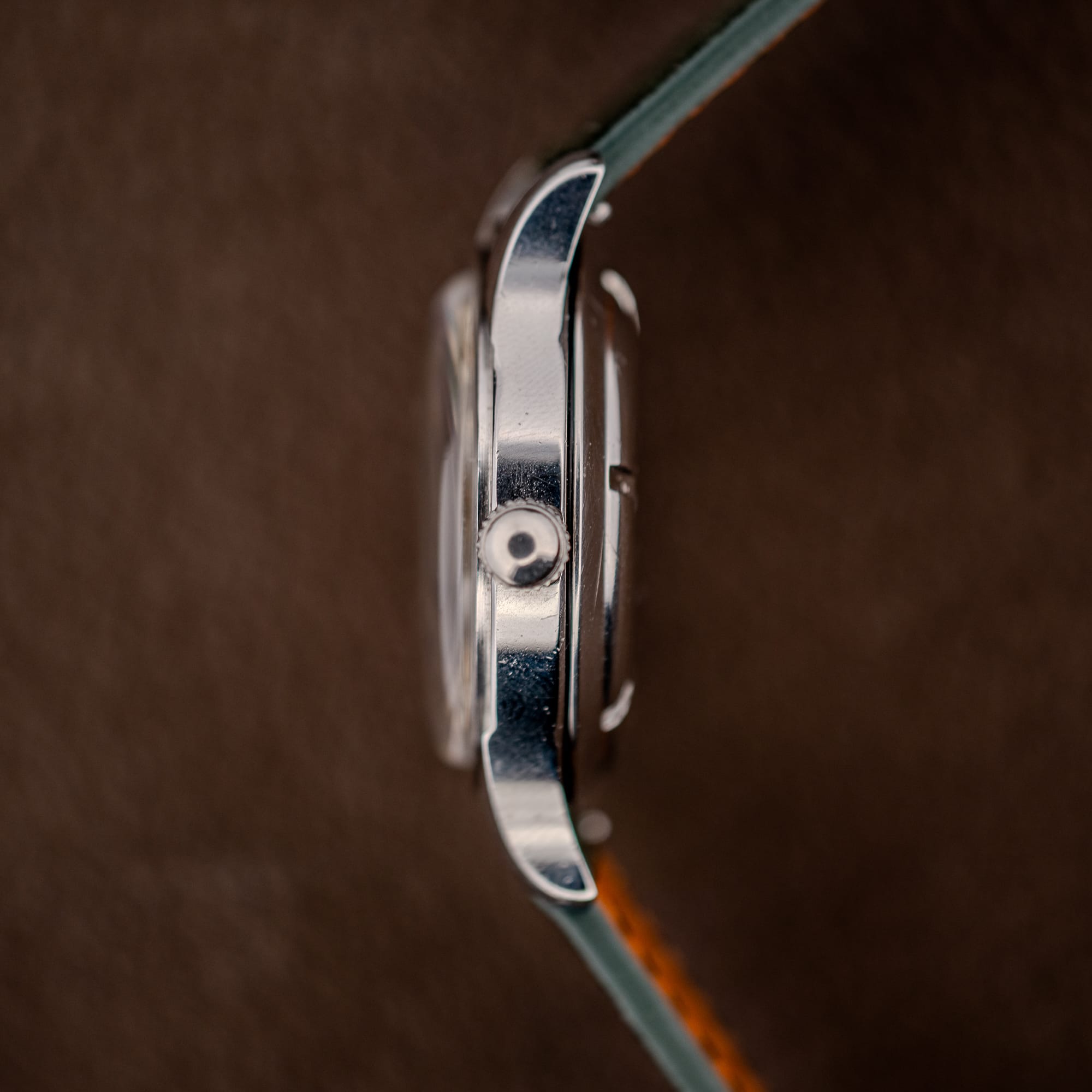
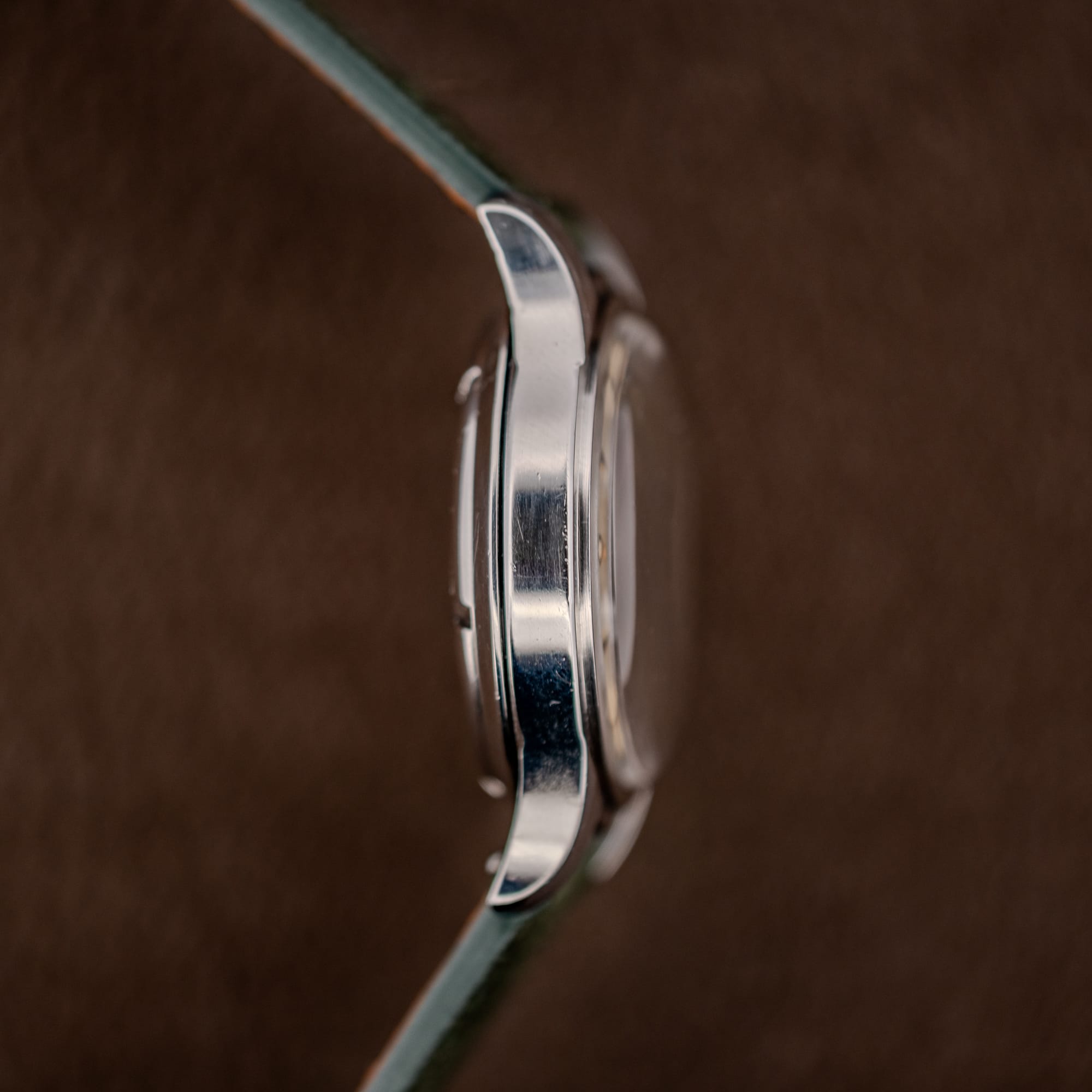
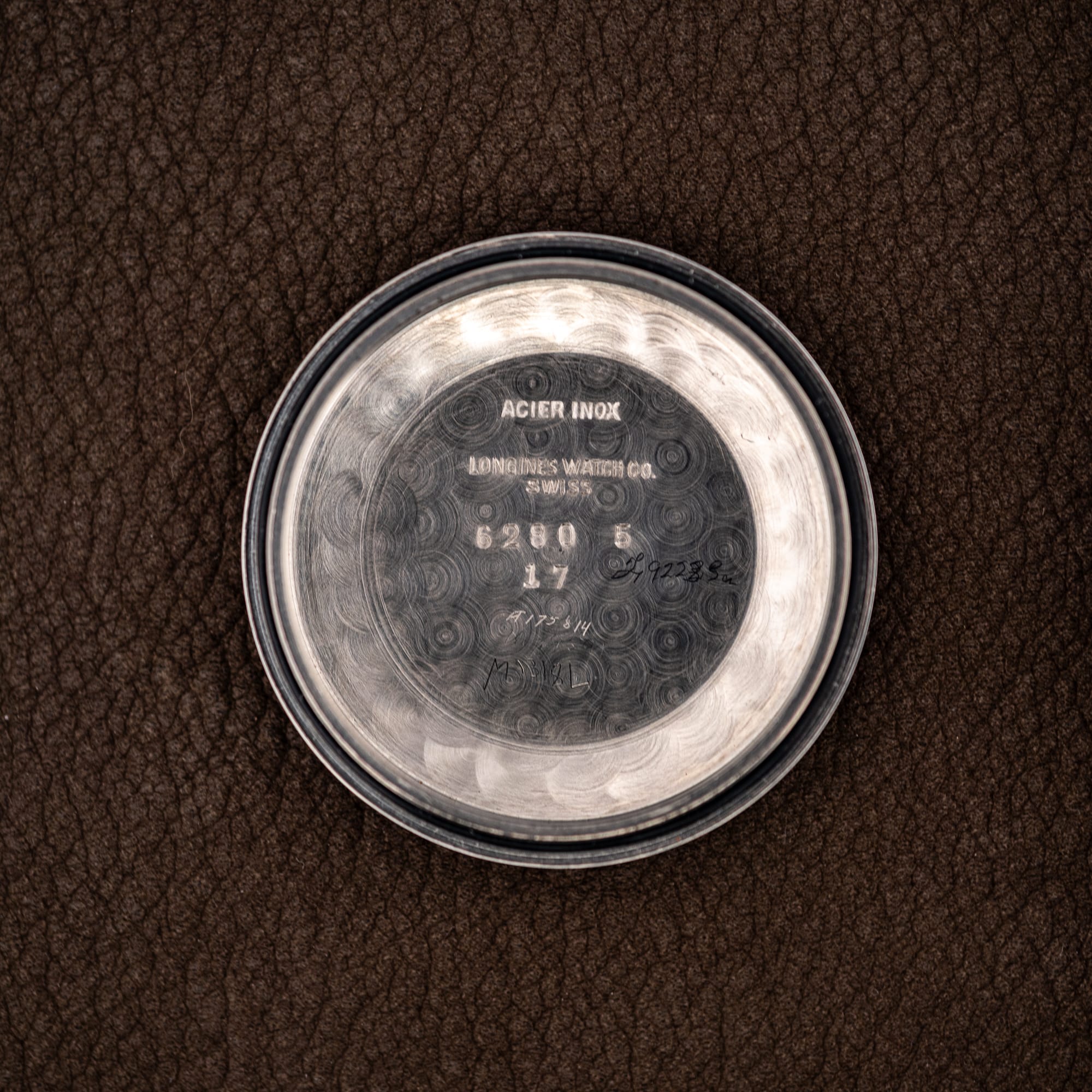
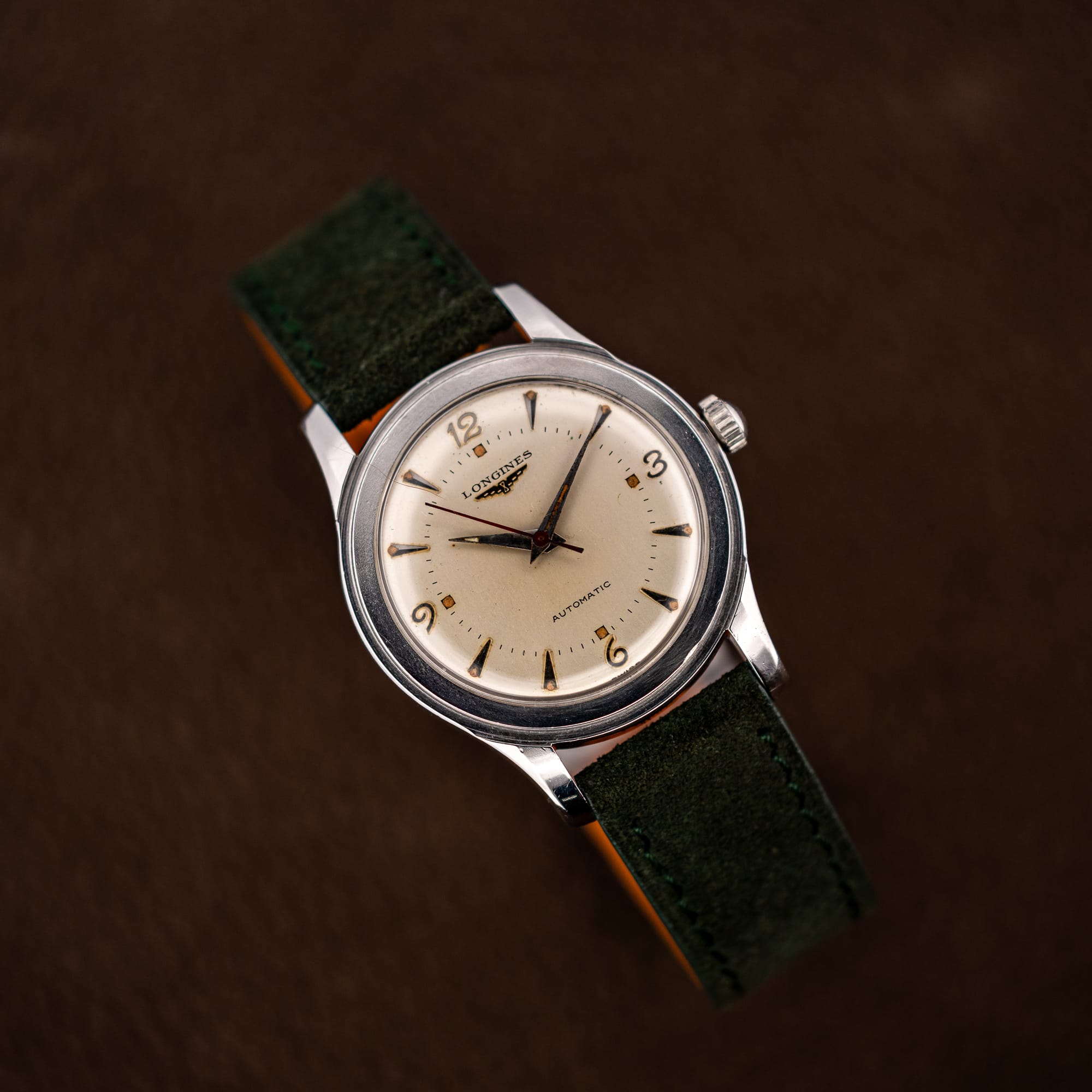
The steel case runs 35 millimeters across and 43.5 lug to lug on 18 millimeter lugs, stamped ACIER INOX inside a back whose factory graining has never been machined away. A cream dial carries applied numerals at 12, 3, 6 and 9, applied daggers at the eight hours between them, and four square lume plots at the quarters, every one of them aged to the same amber, all of it under a domed acrylic crystal with a red sweep seconds hand crossing it. The wear is the readable kind: fine foxing scattered across the dial, the 6 worn back to a pale outline where its fill has gone, a dulled band around the bezel edge, and a caseback carrying the tool swirls and knife slips of every service it has sat through. The hands read differently than the markers, the hour plug noticeably paler and the minute hand darkened along its shaft, and we would rather say so plainly than let a photograph imply a match that is not there.
Serviced in-house at OTTUHR and backed by our 2-year mechanical warranty, on a forest green Italian suede strap with an OTTUHR buckle that leaves the cream dial to do the talking. Longines never gave this watch a name. Six notches on the back did it instead.