
During a 1953 flight from Bangkok to Calcutta, Glycine’s Samuel Glur spent much of the journey beside the captain of a Thai Airways DC-4. The captain described the watch pilots needed: automatic winding, a date, a 24-hour dial and a way to read local time and GMT together. Glur recorded the brief in a letter to the company, and the Glycine Airman arrived later that year.
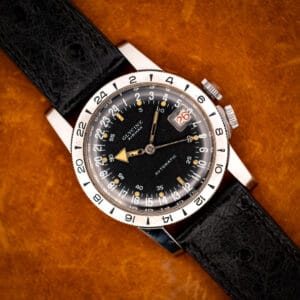
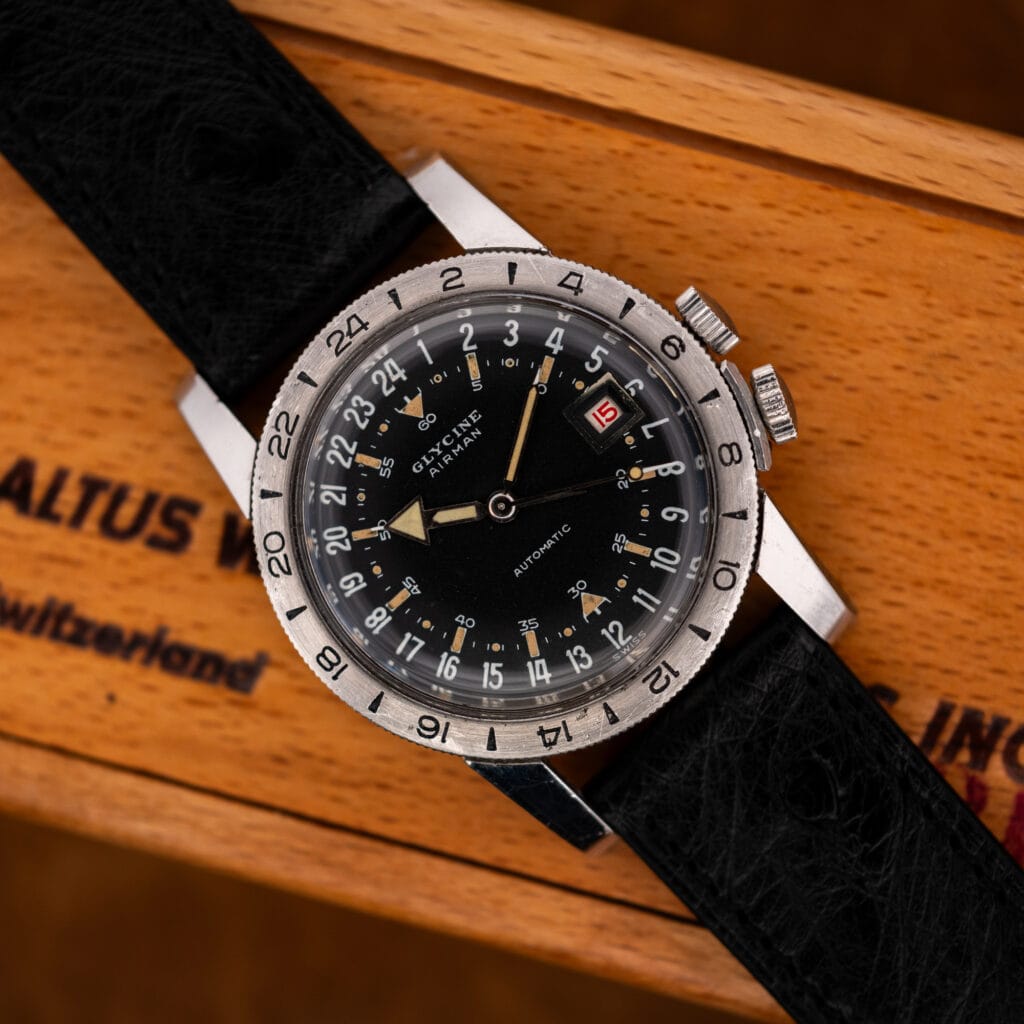
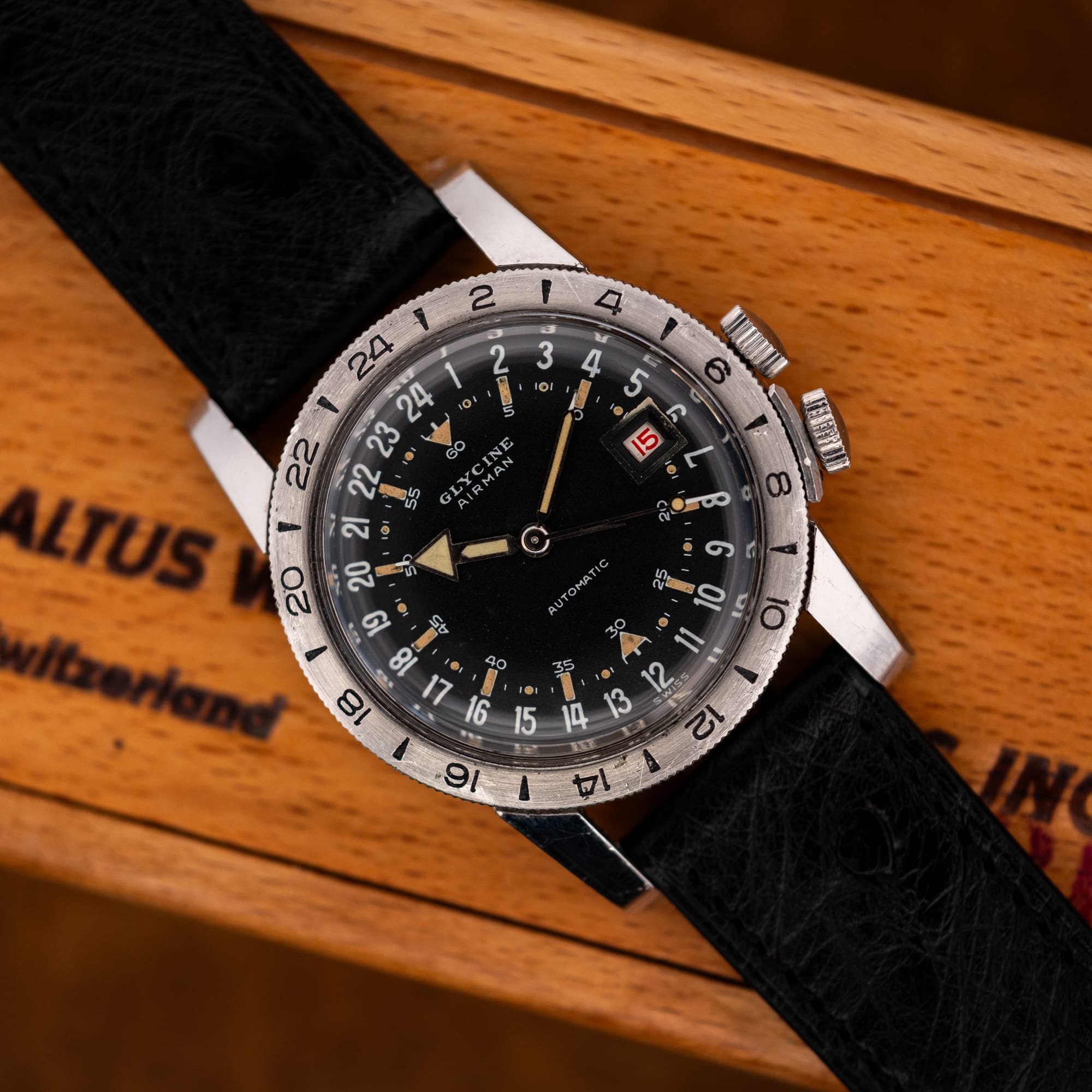
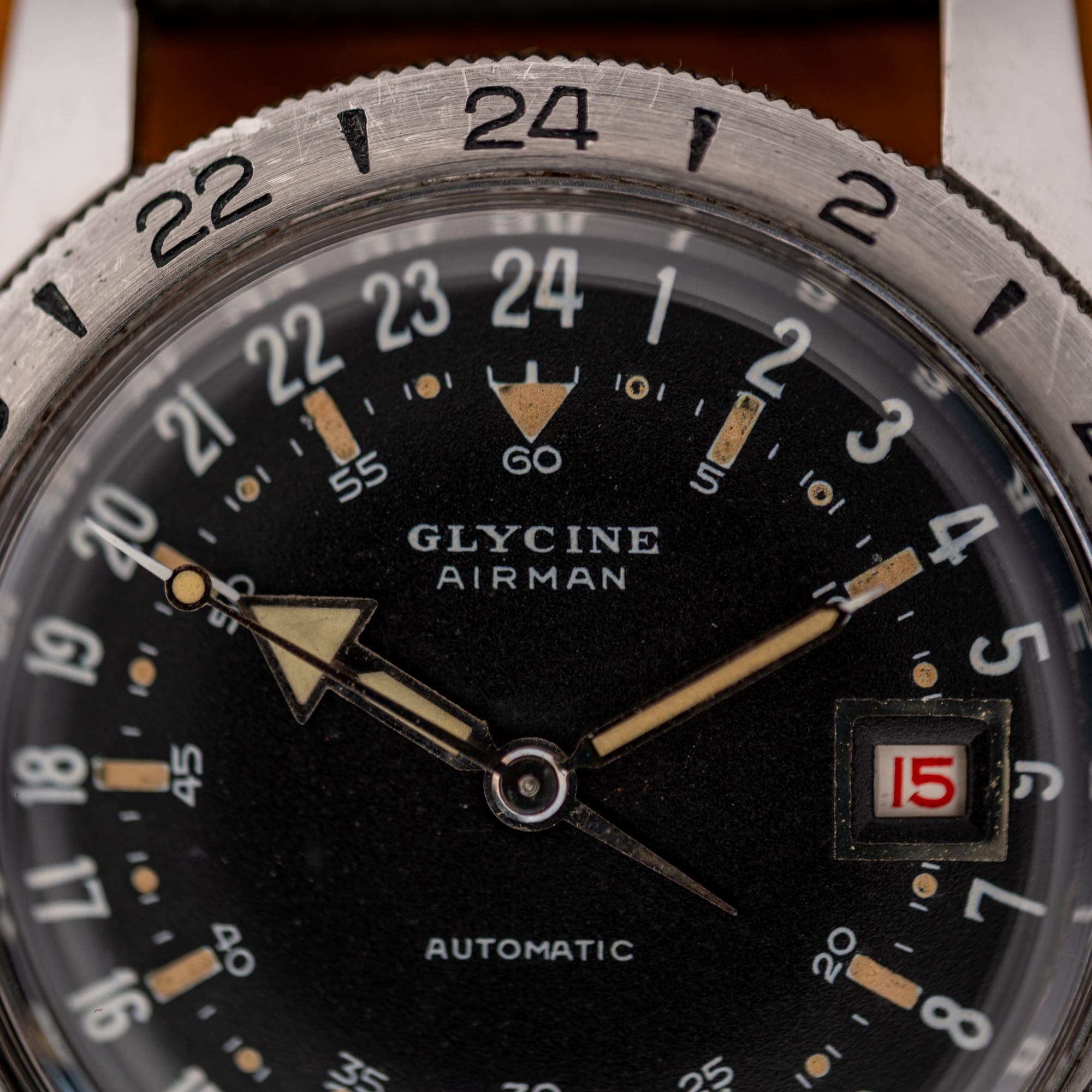
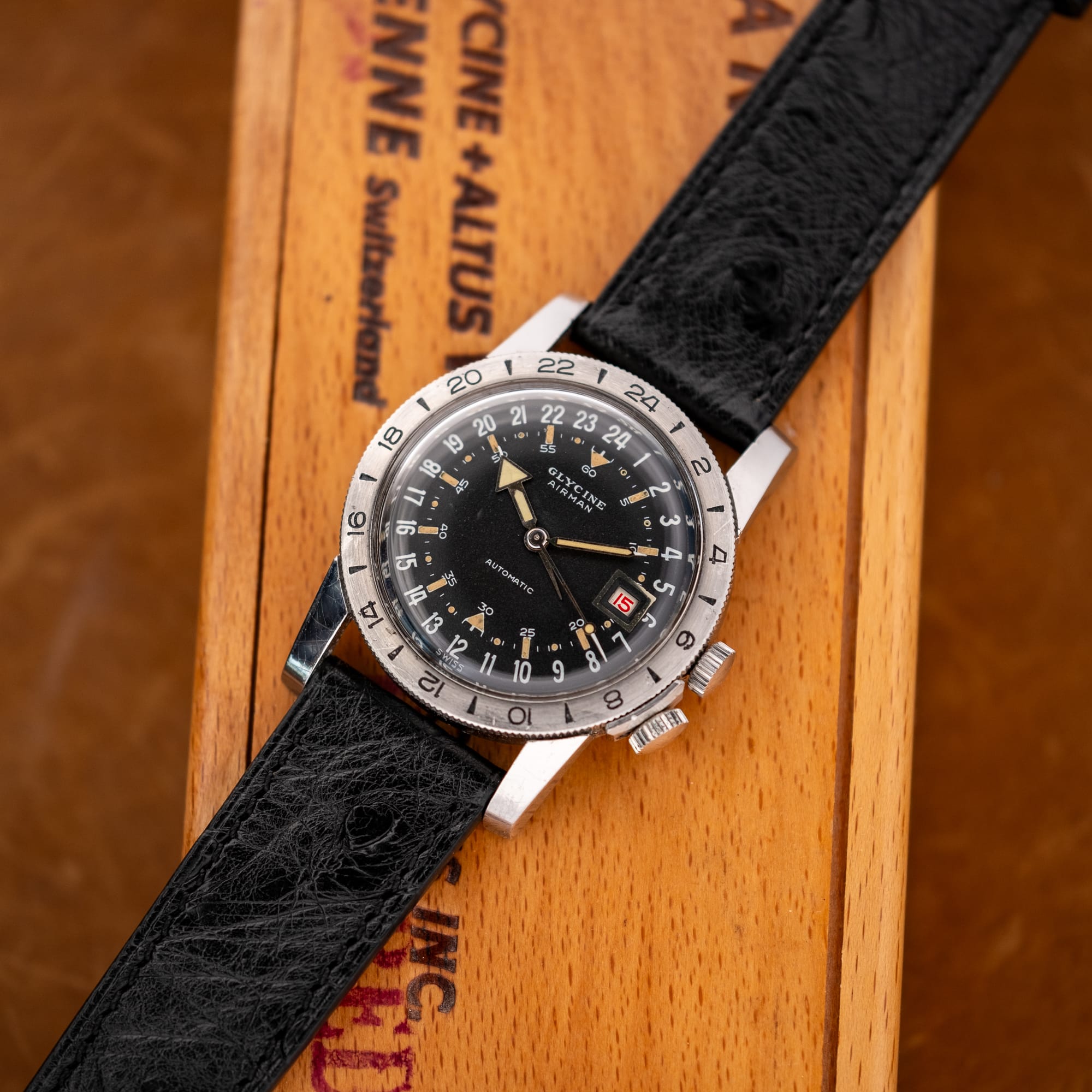
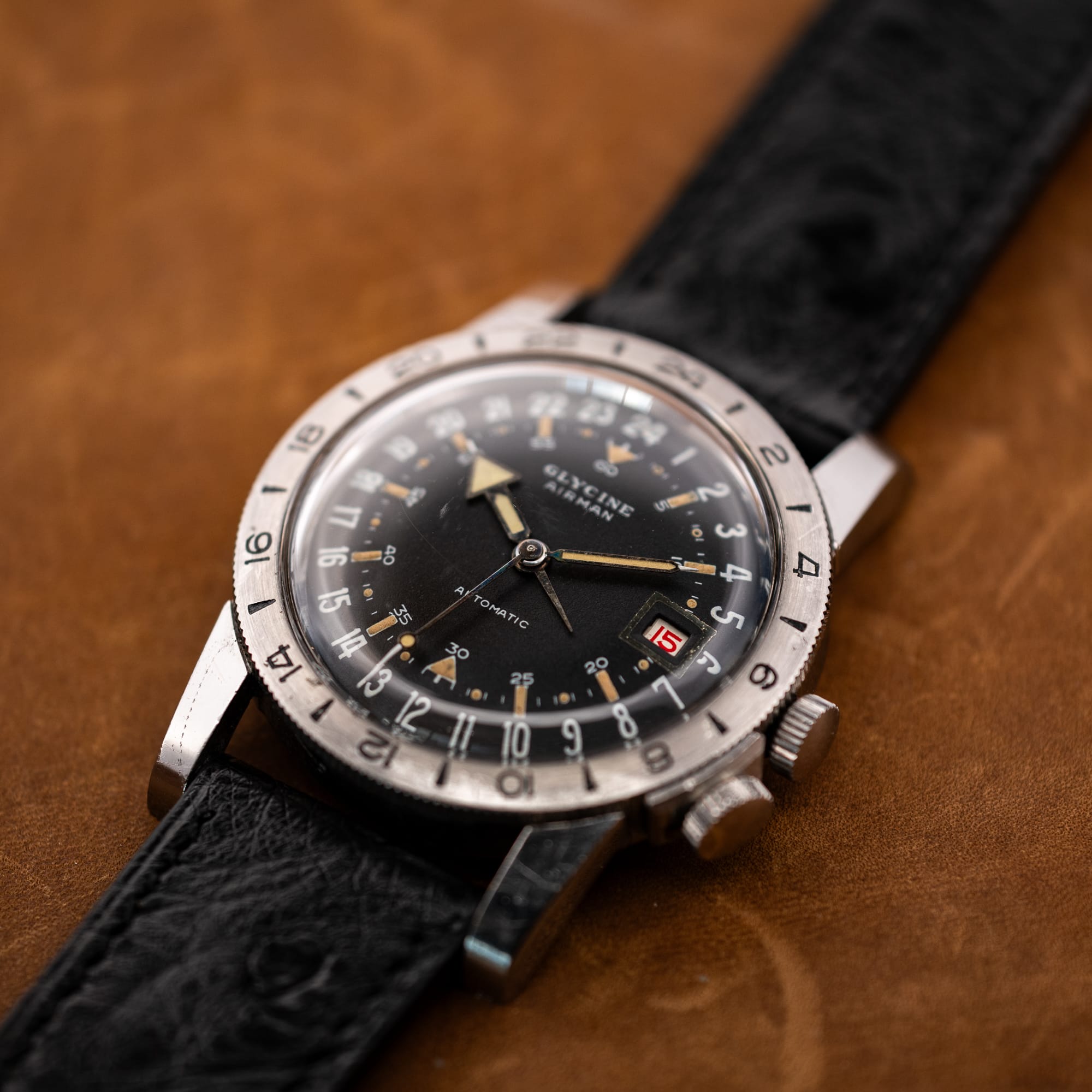
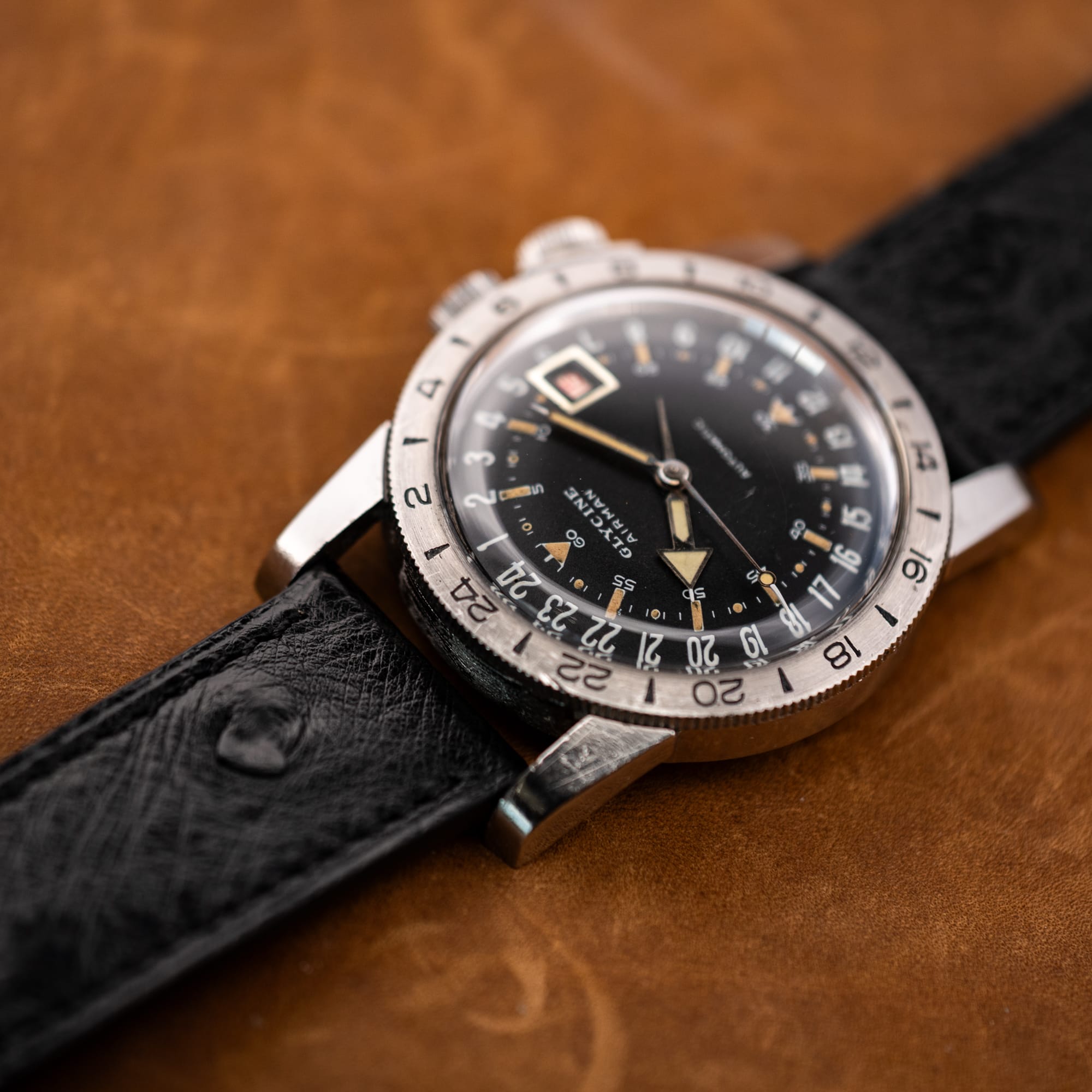
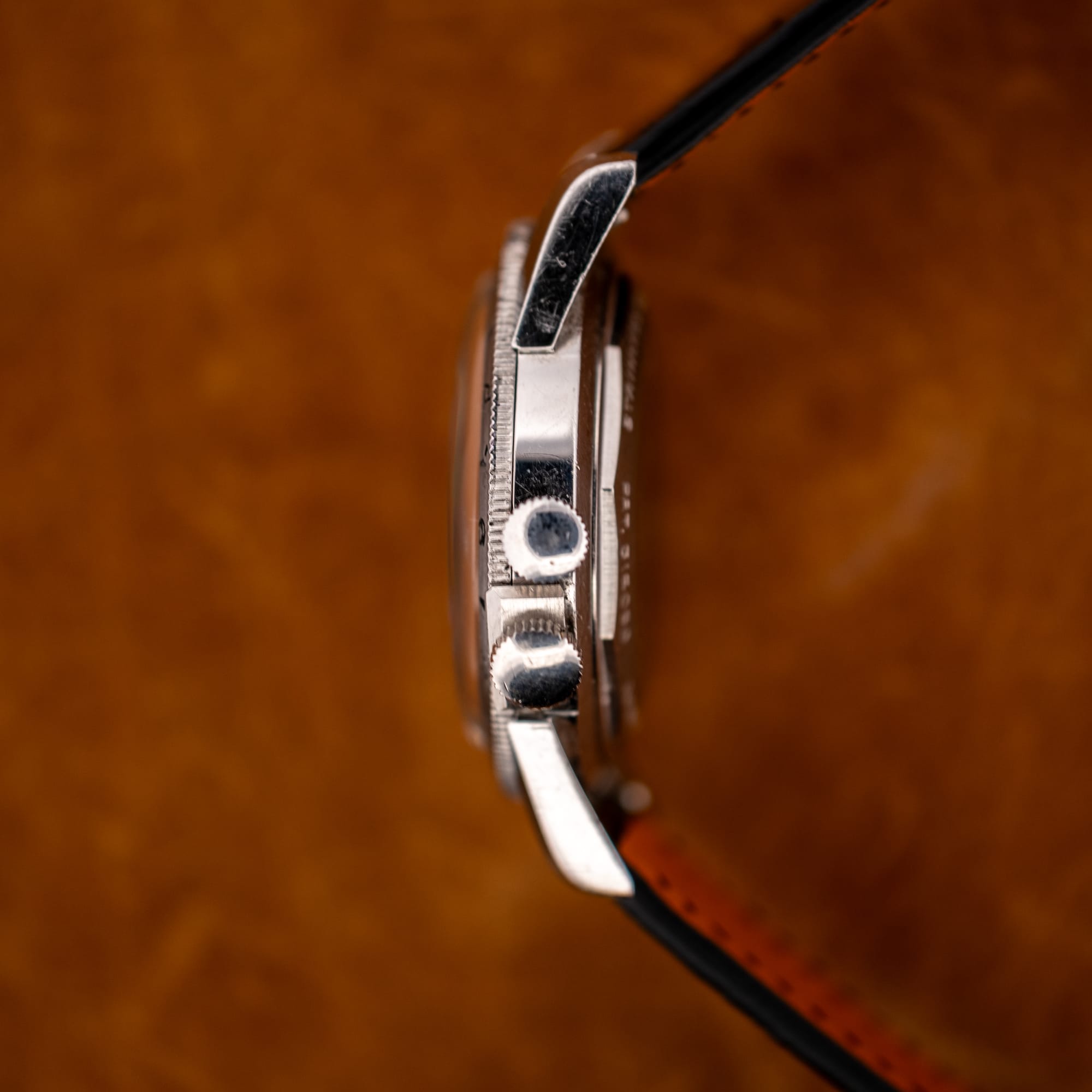
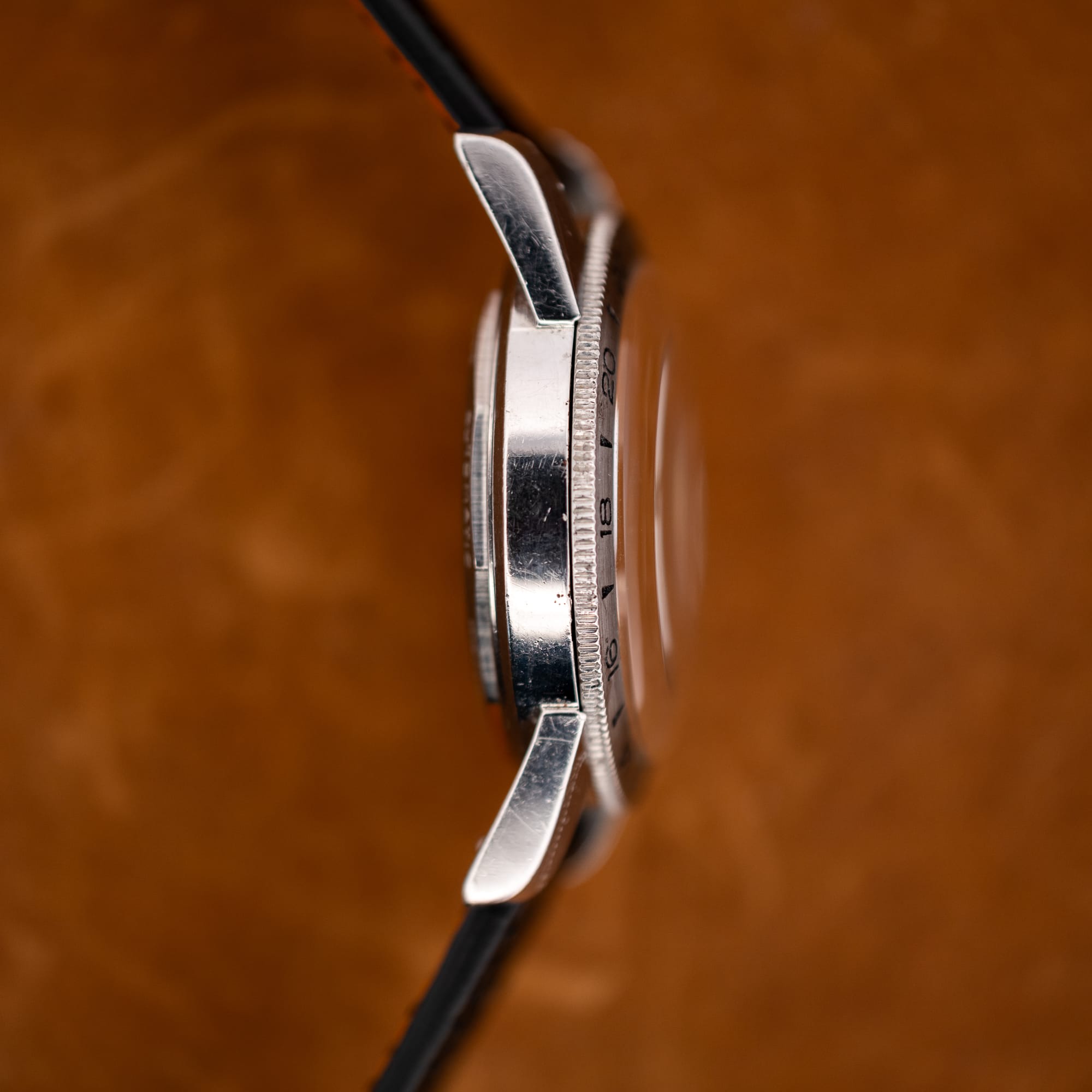
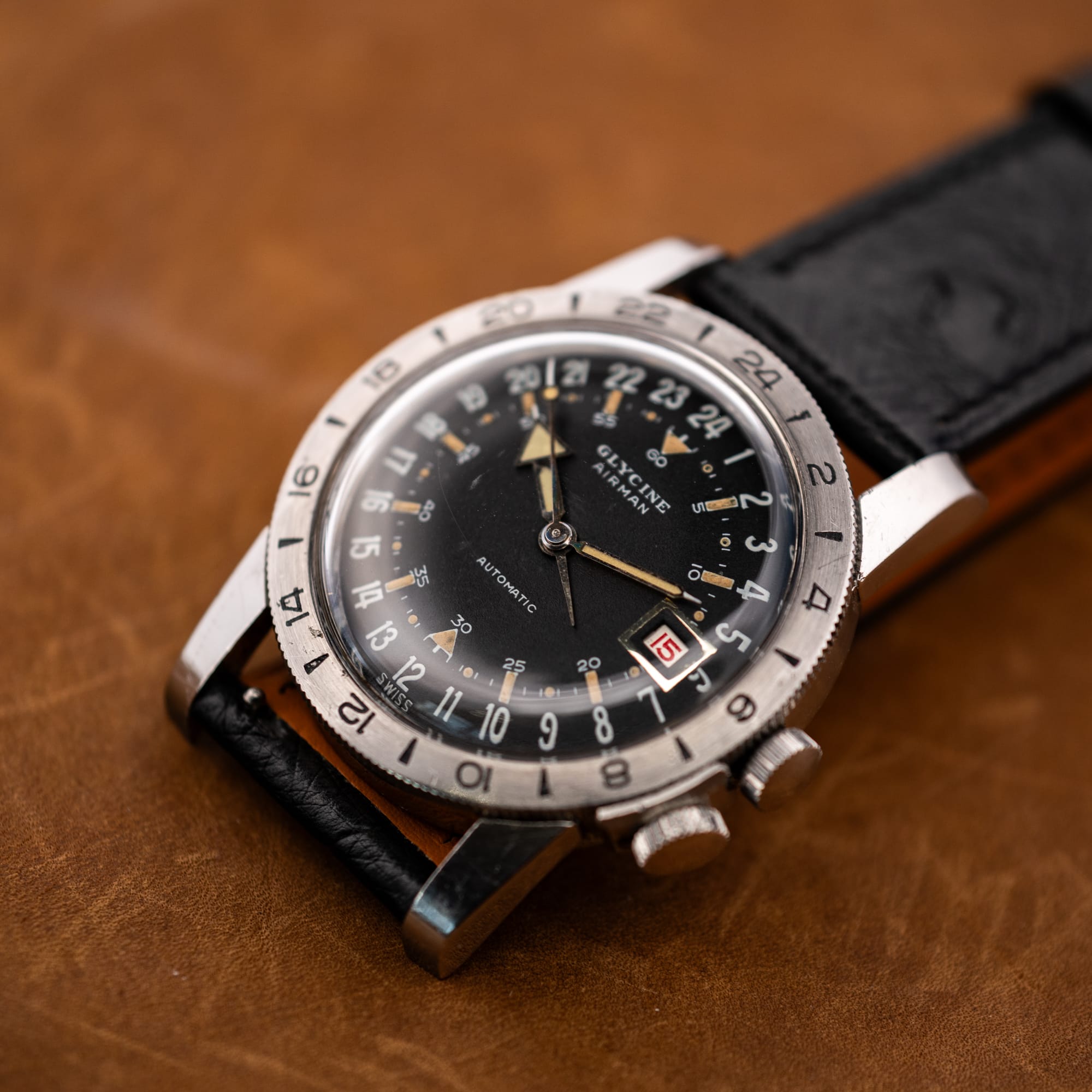
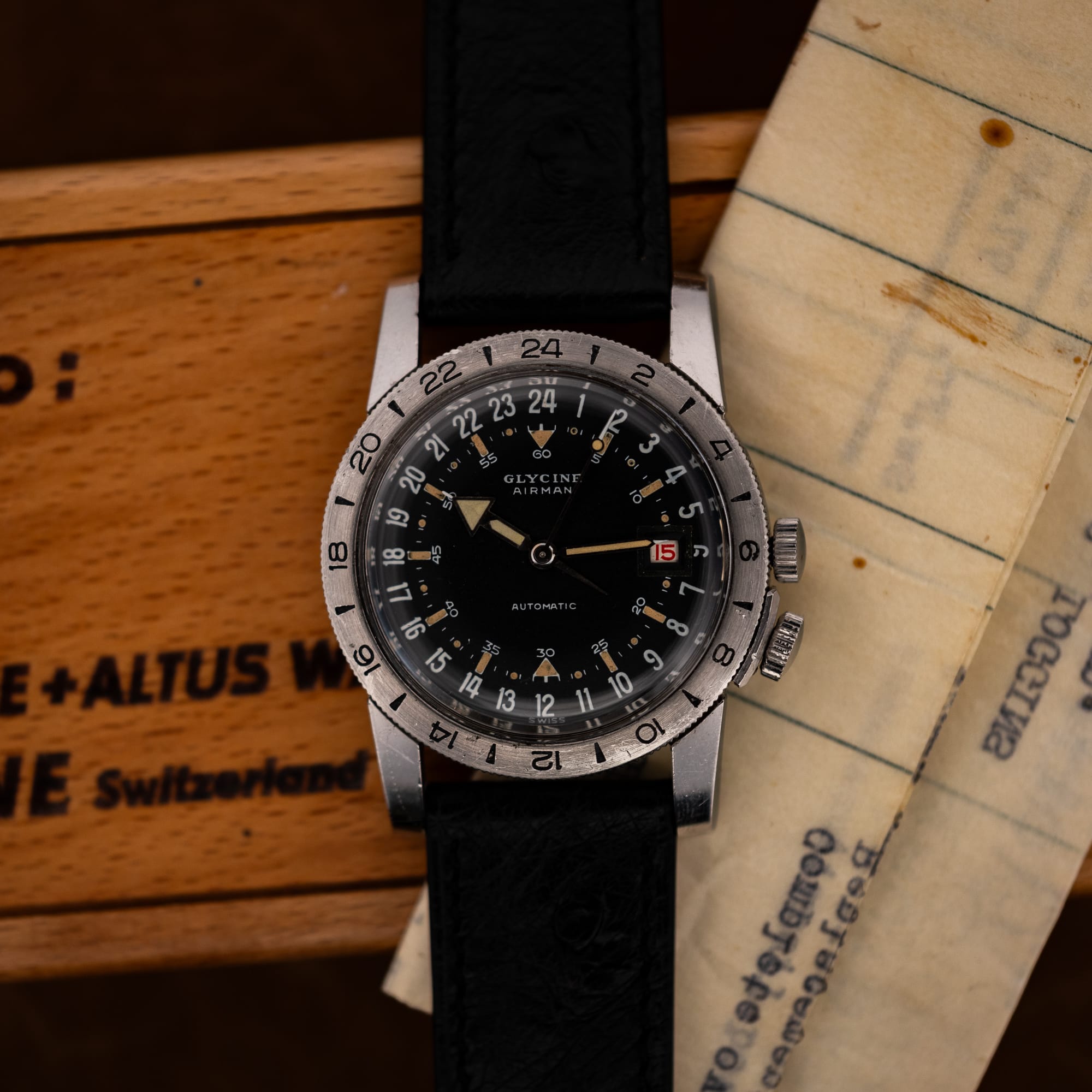
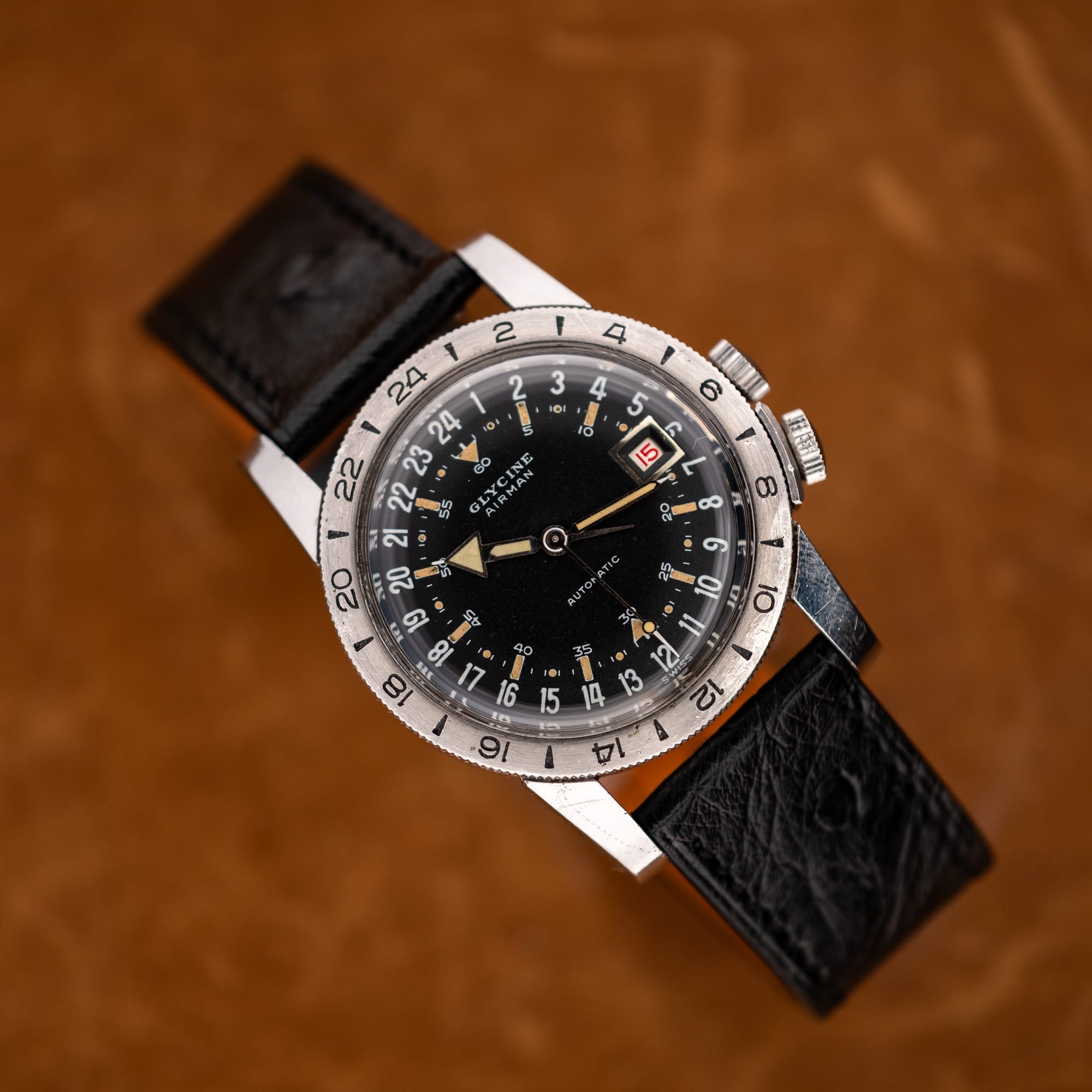
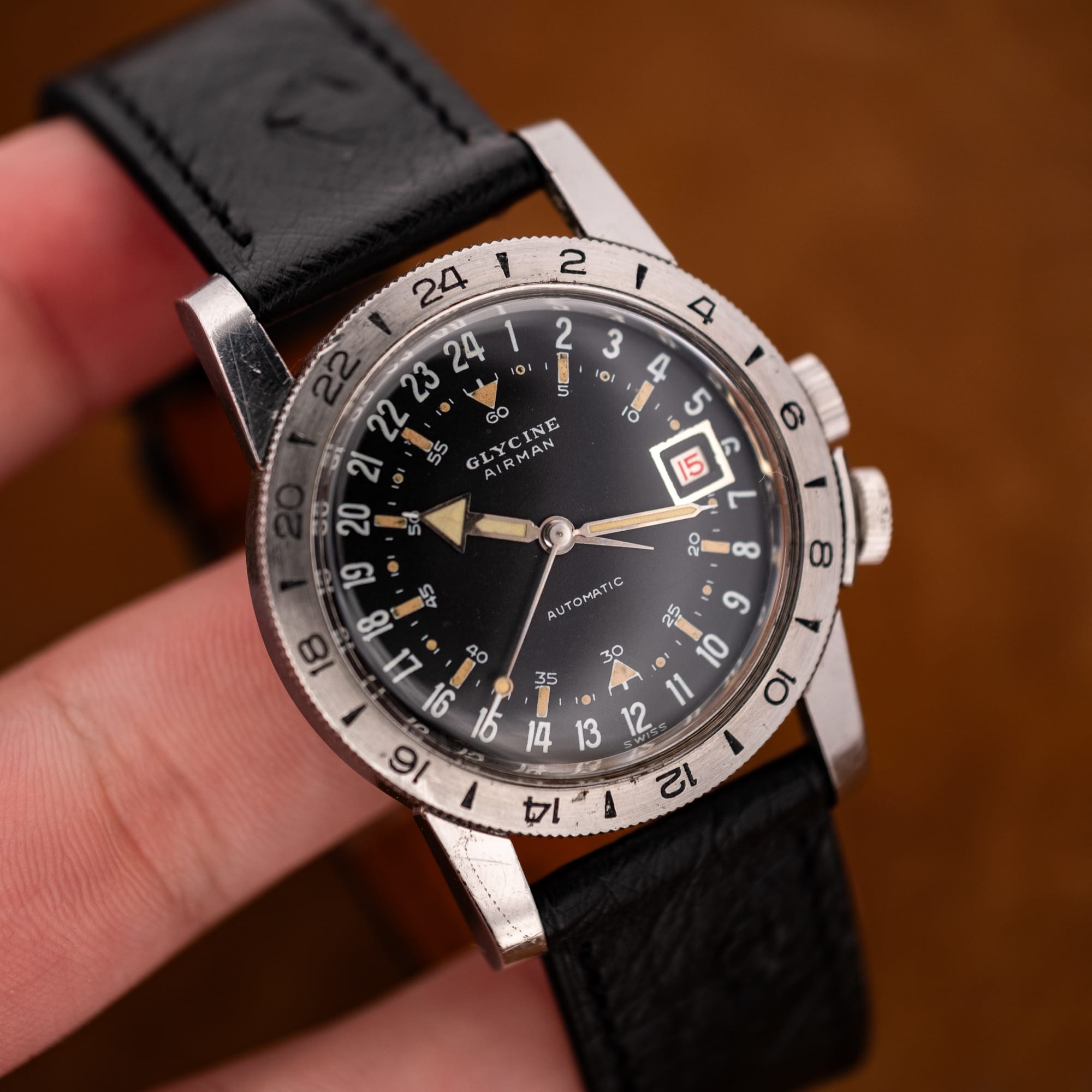
We like how literally the Airman answers that brief. Its hour hand travels once around the dial in 24 hours, putting noon at the bottom and midnight at the top. Rotating the outer 24-hour scale gives the same hand a second time zone to read against; the small lower crown clamps the bezel in place. There is no separate GMT hand. The two time scales do the work.
The hour hand’s long tail has a practical purpose, too. When the arrow points to 20, the tail points to eight, translating the evening hour without any arithmetic. It is a small concession to people accustomed to a twelve-hour dial, built into a watch that otherwise commits to the full day.
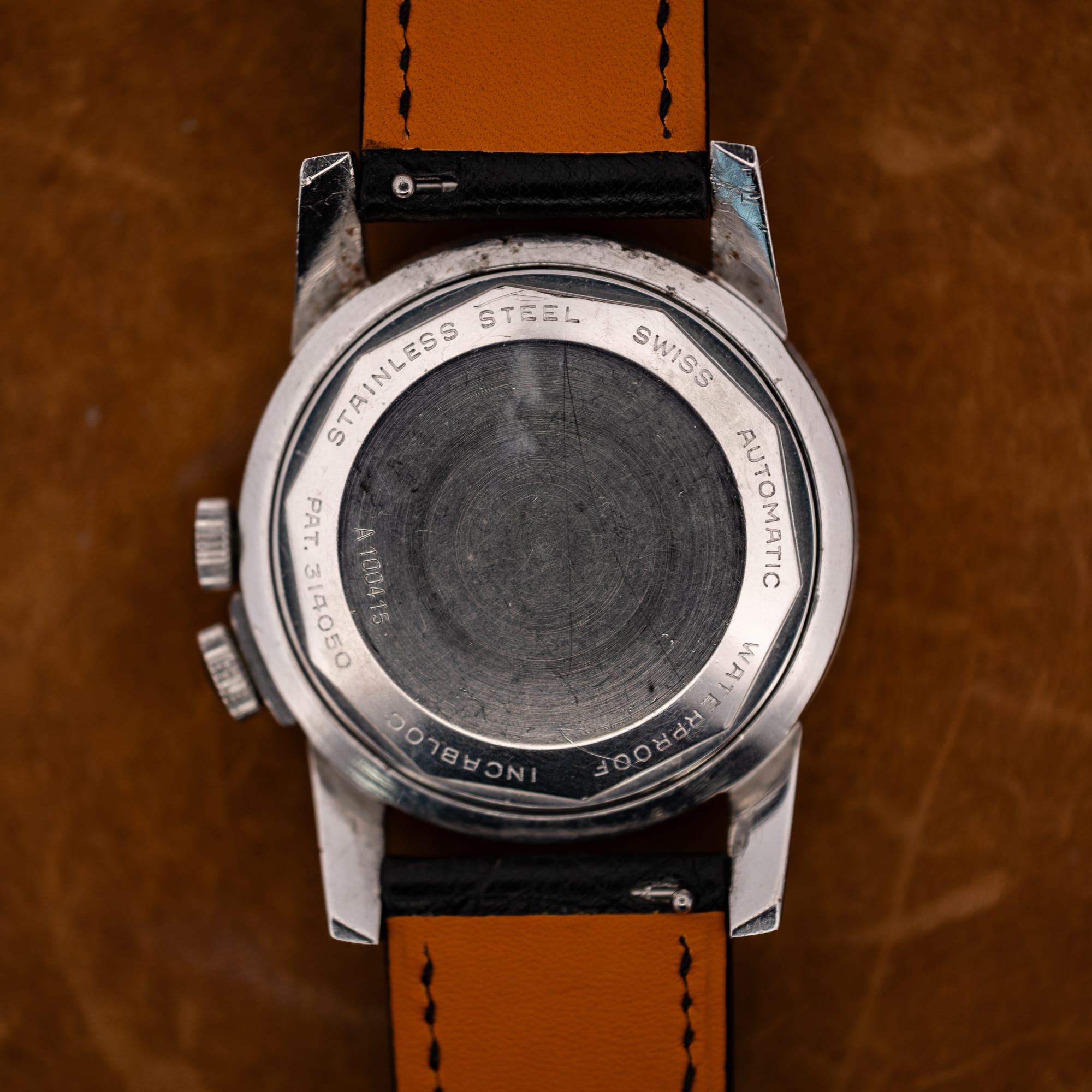
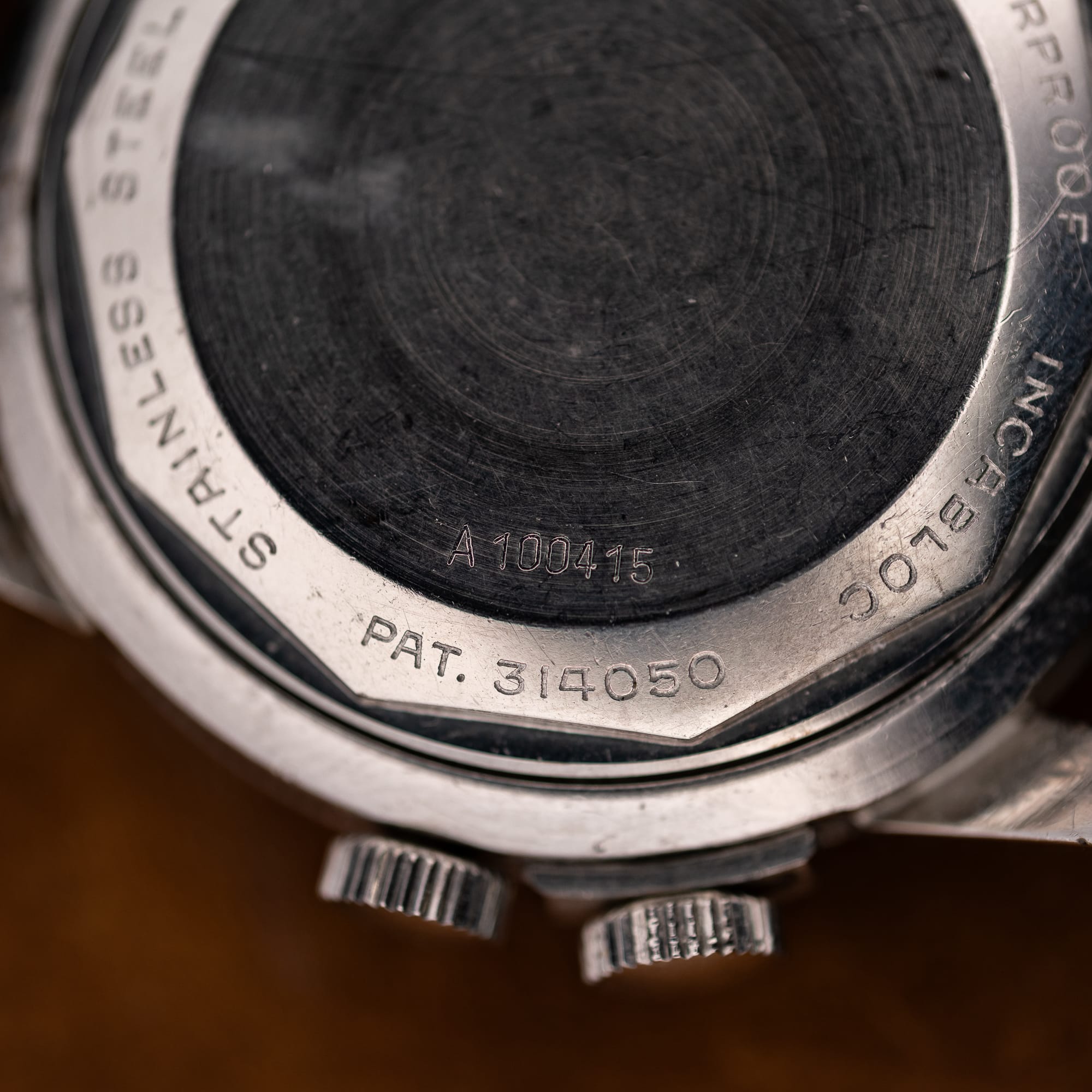
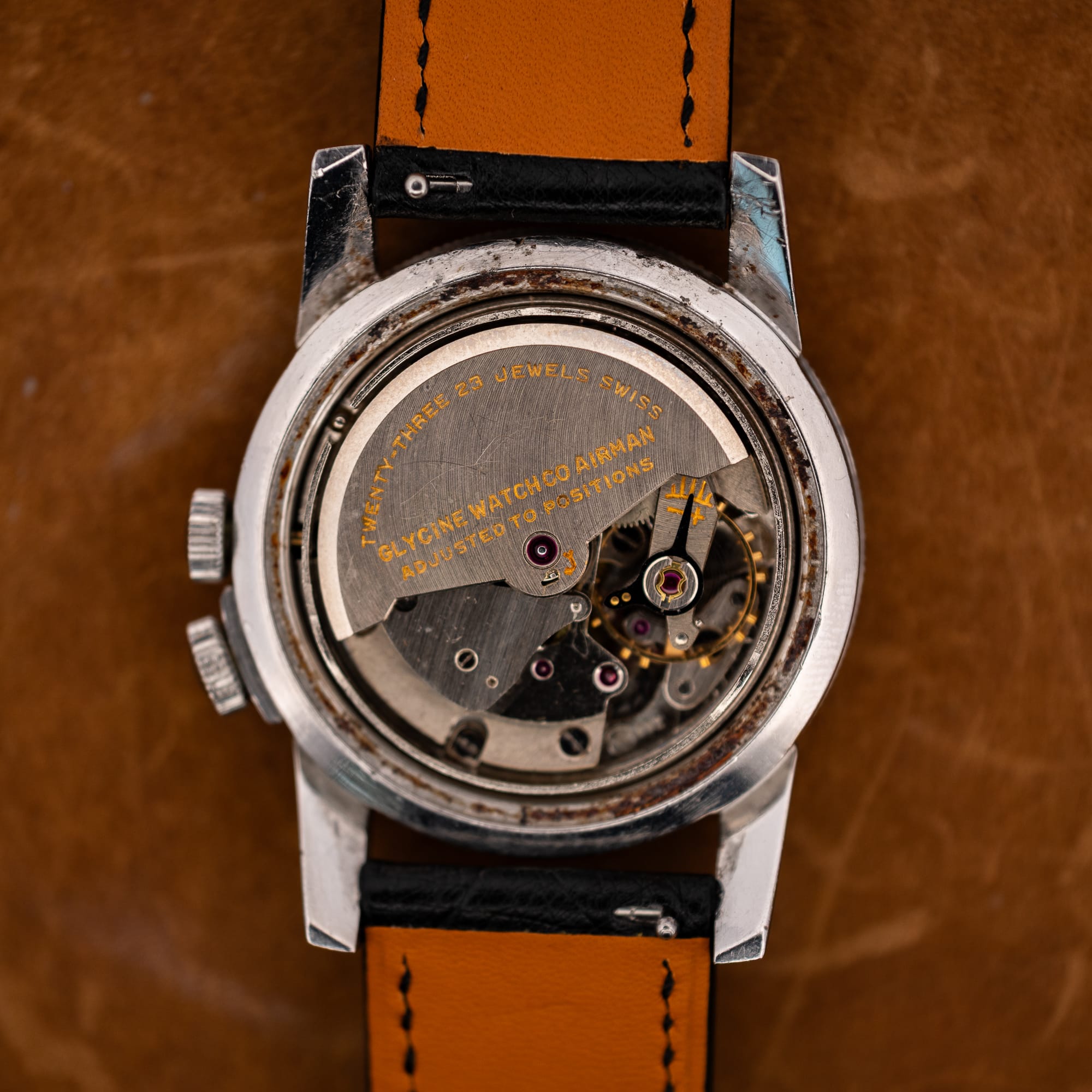
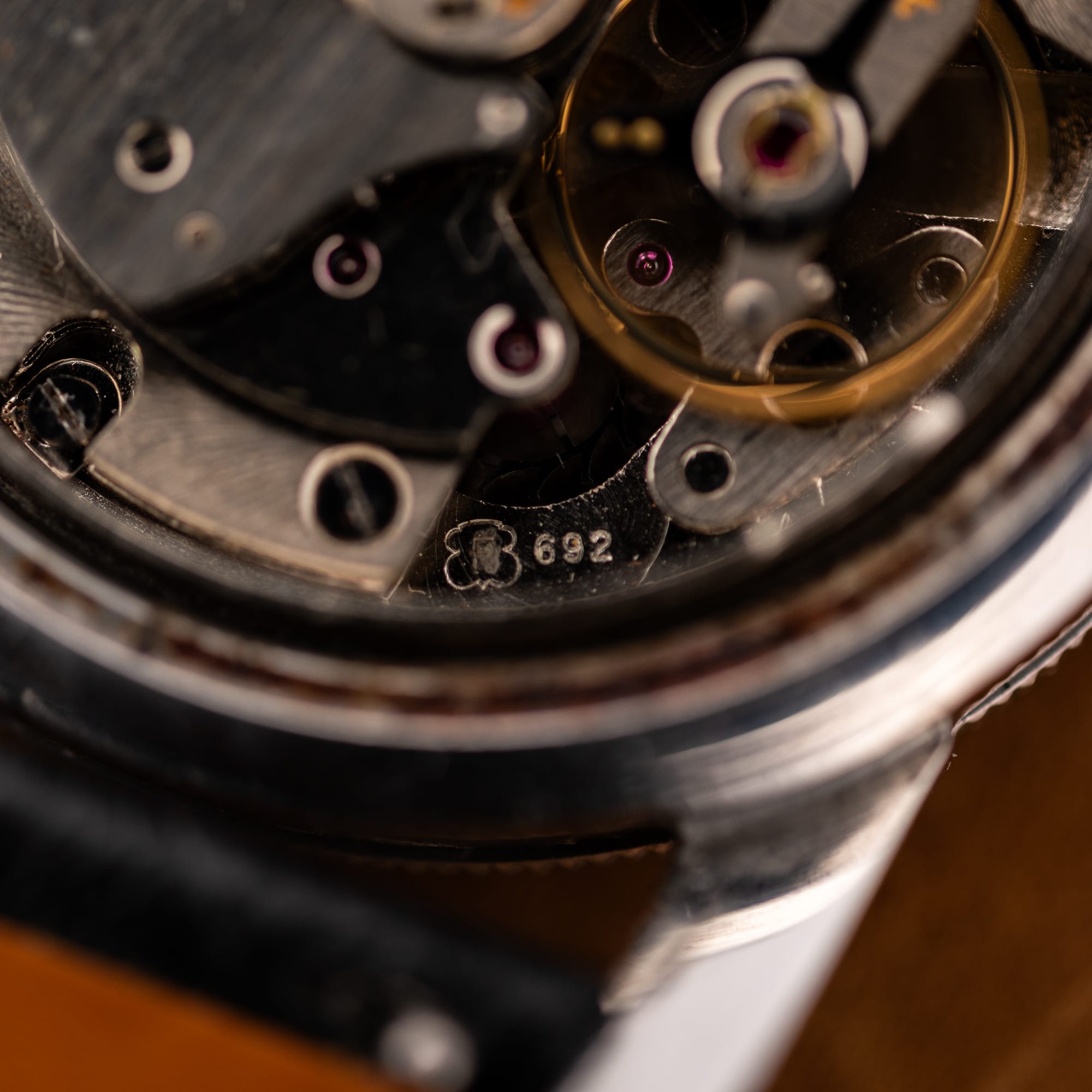
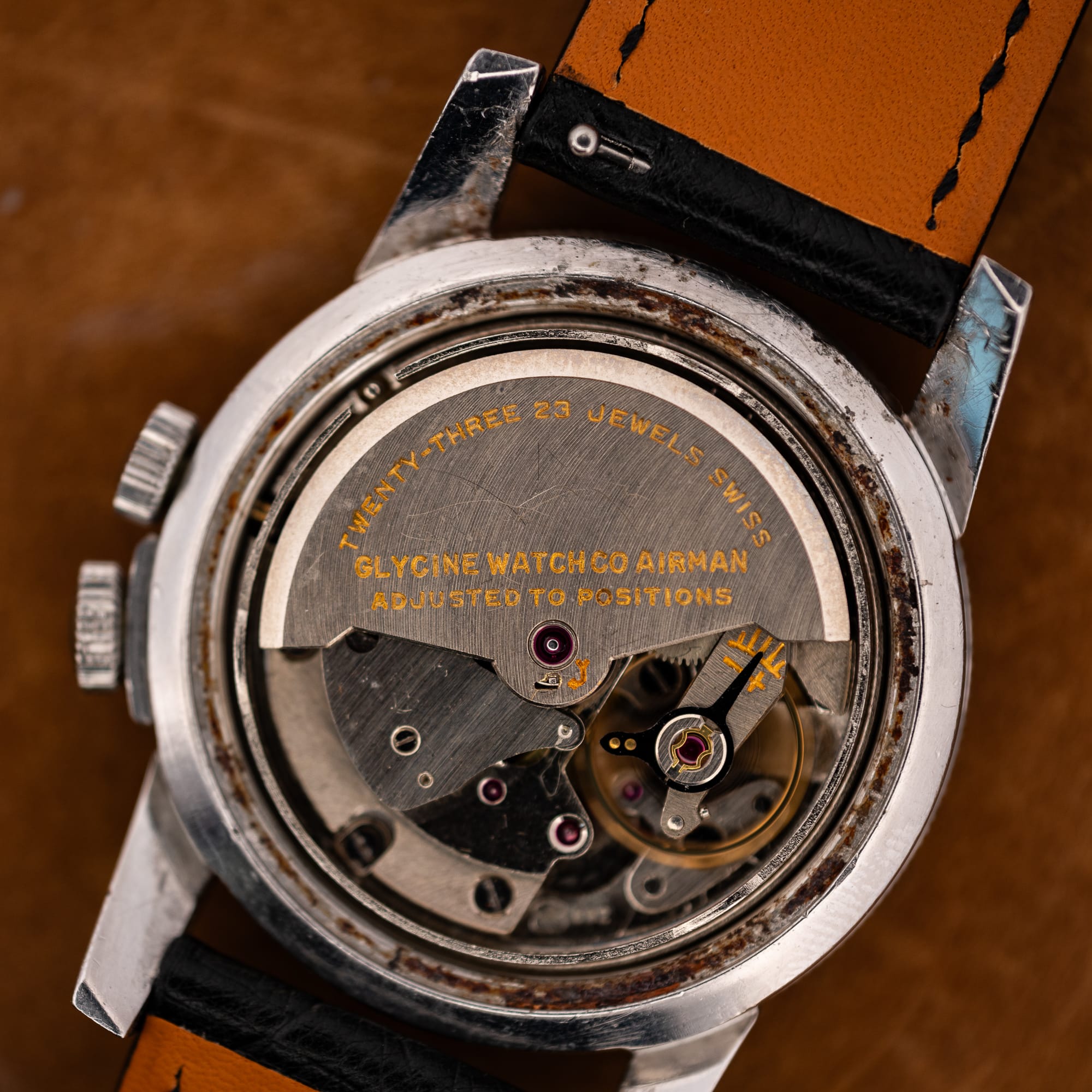
Our example is powered by the automatic Felsa 692, with 23 jewels marked on its rotor. The stainless steel case measures 36mm across and 46mm from lug to lug, and it is fitted to a black ostrich strap.
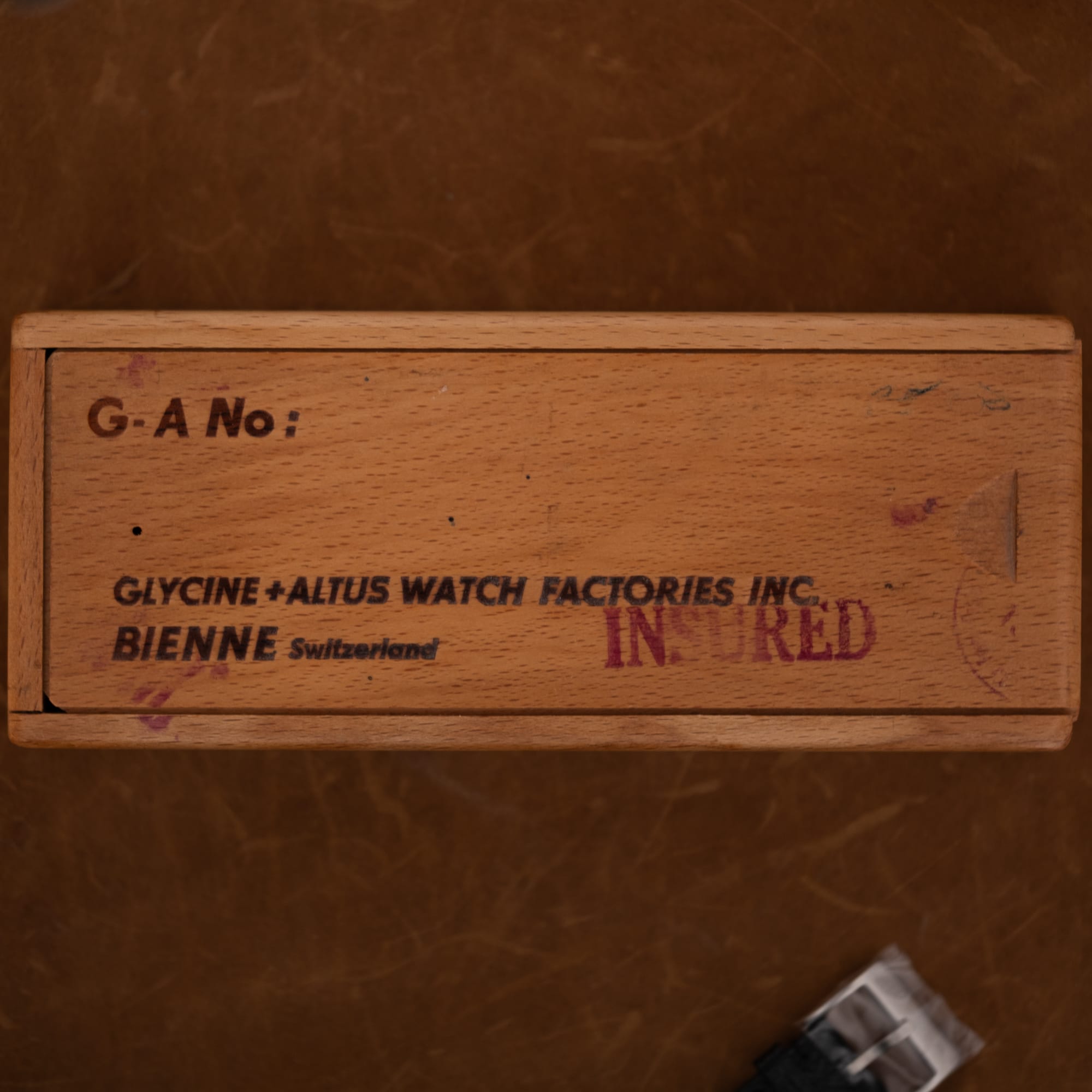
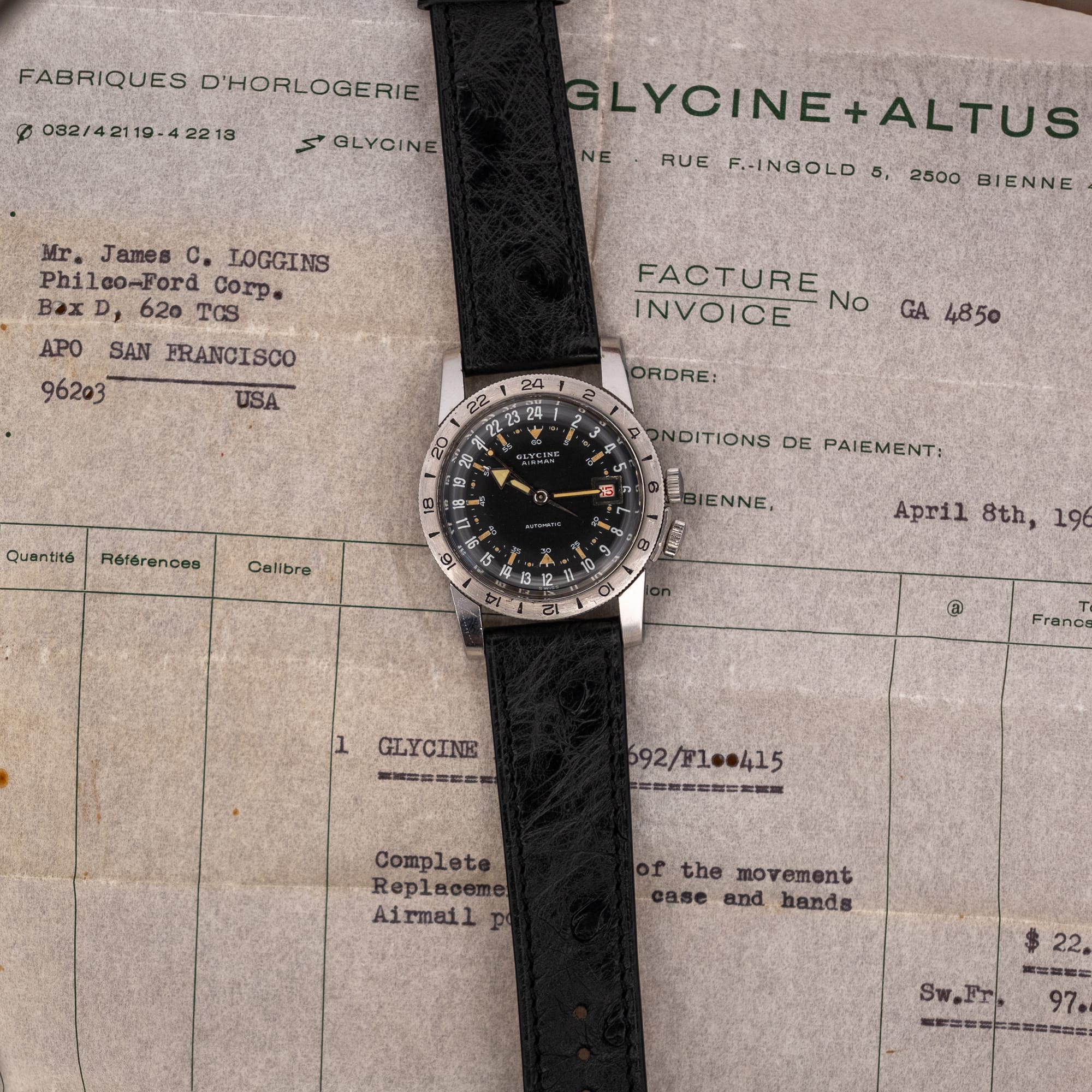
The accompanying paperwork is a vintage service and repair invoice issued by Glycine itself, rather than an original purchase receipt. It records an earlier visit to the manufacturer, not the watch’s original sale.
We would set the bezel to the time of a friend on another continent. The pilot’s solution turns out to be just as useful for choosing when to call.