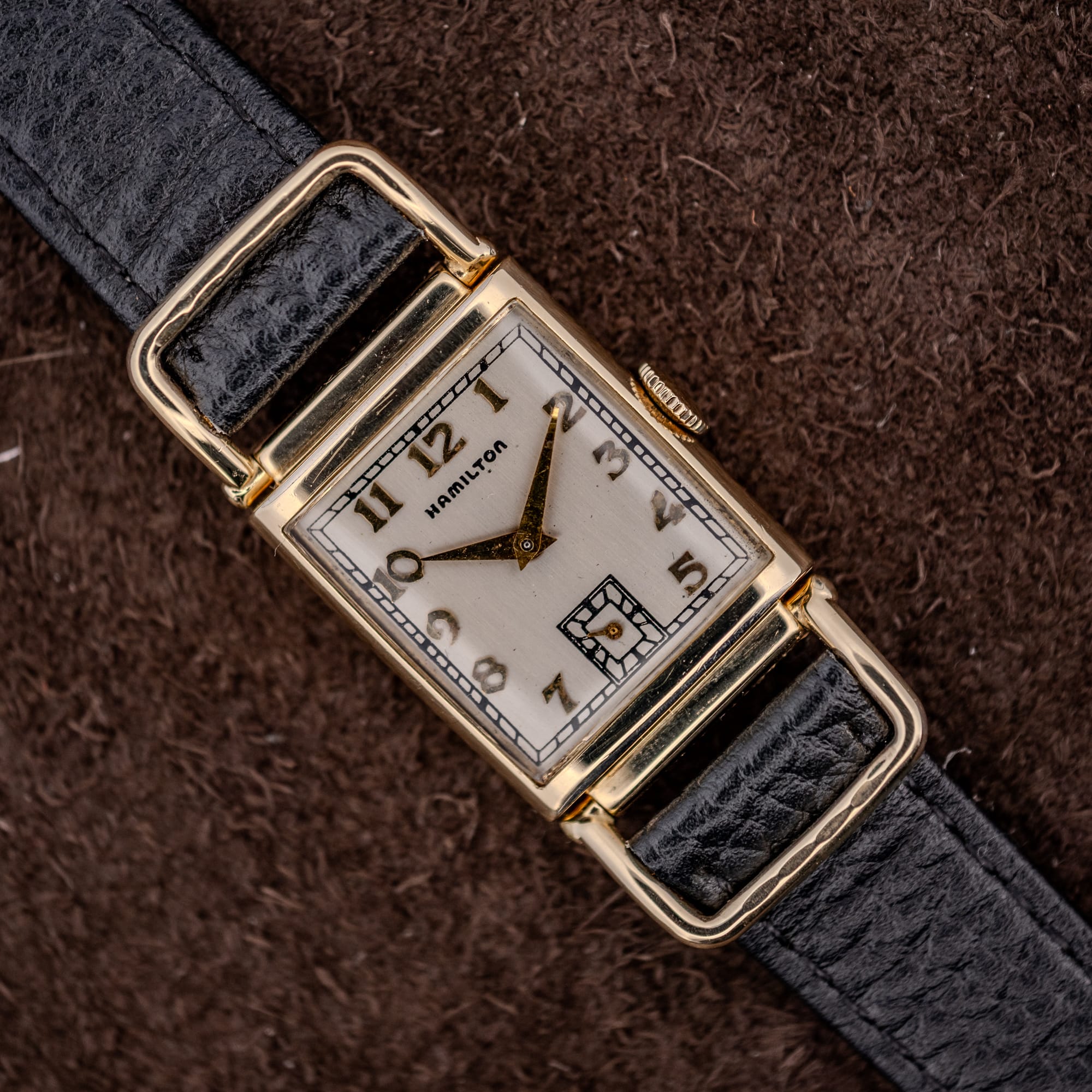
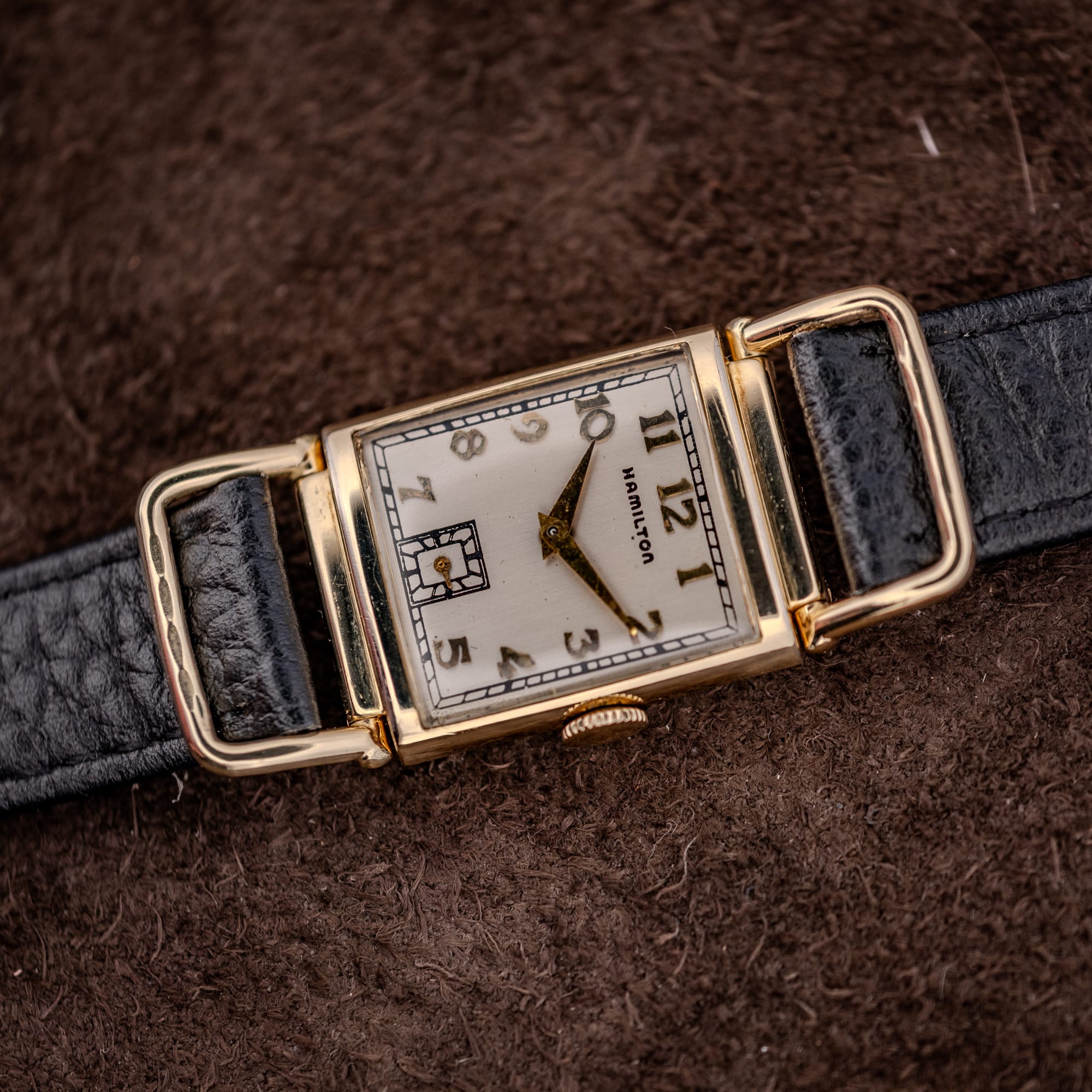
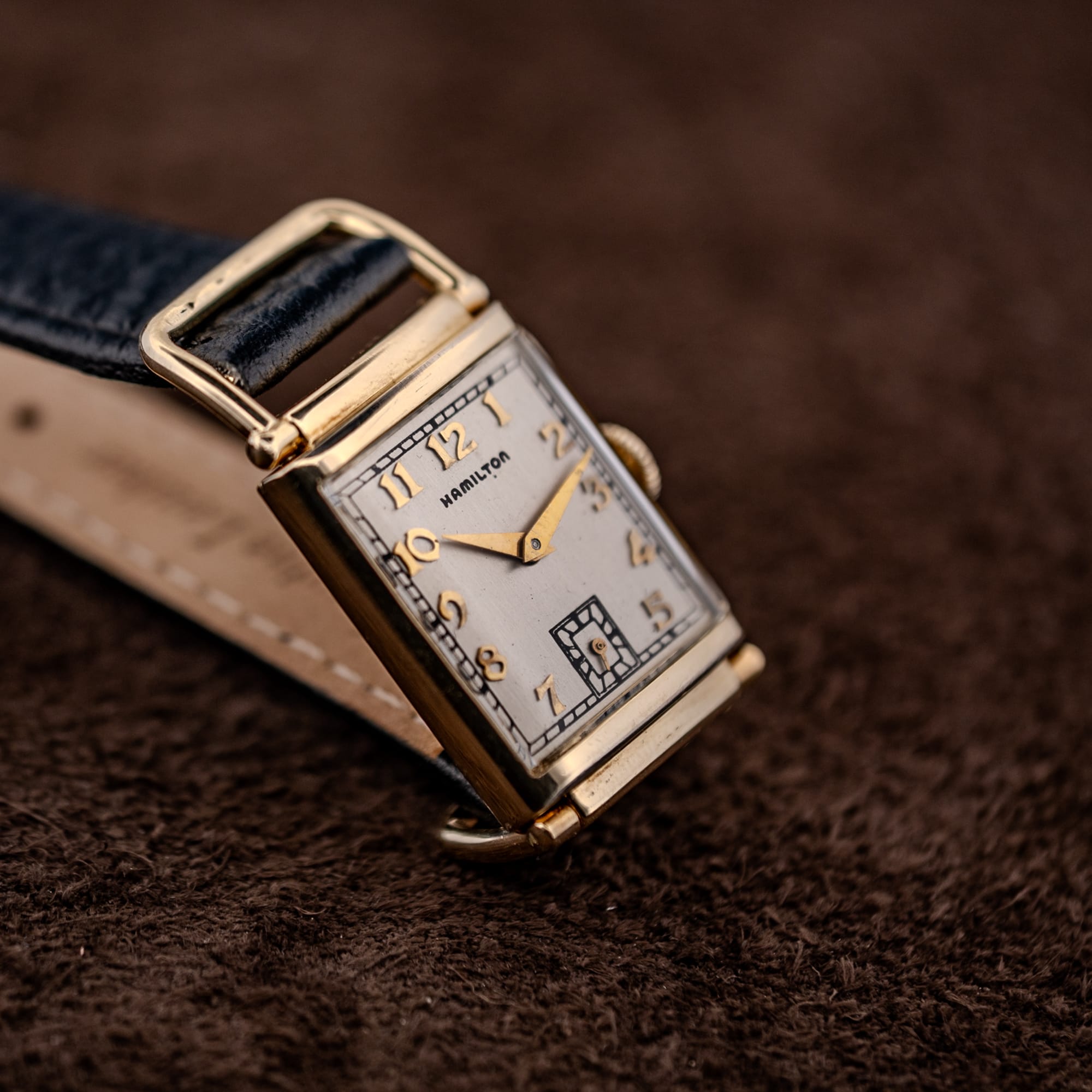
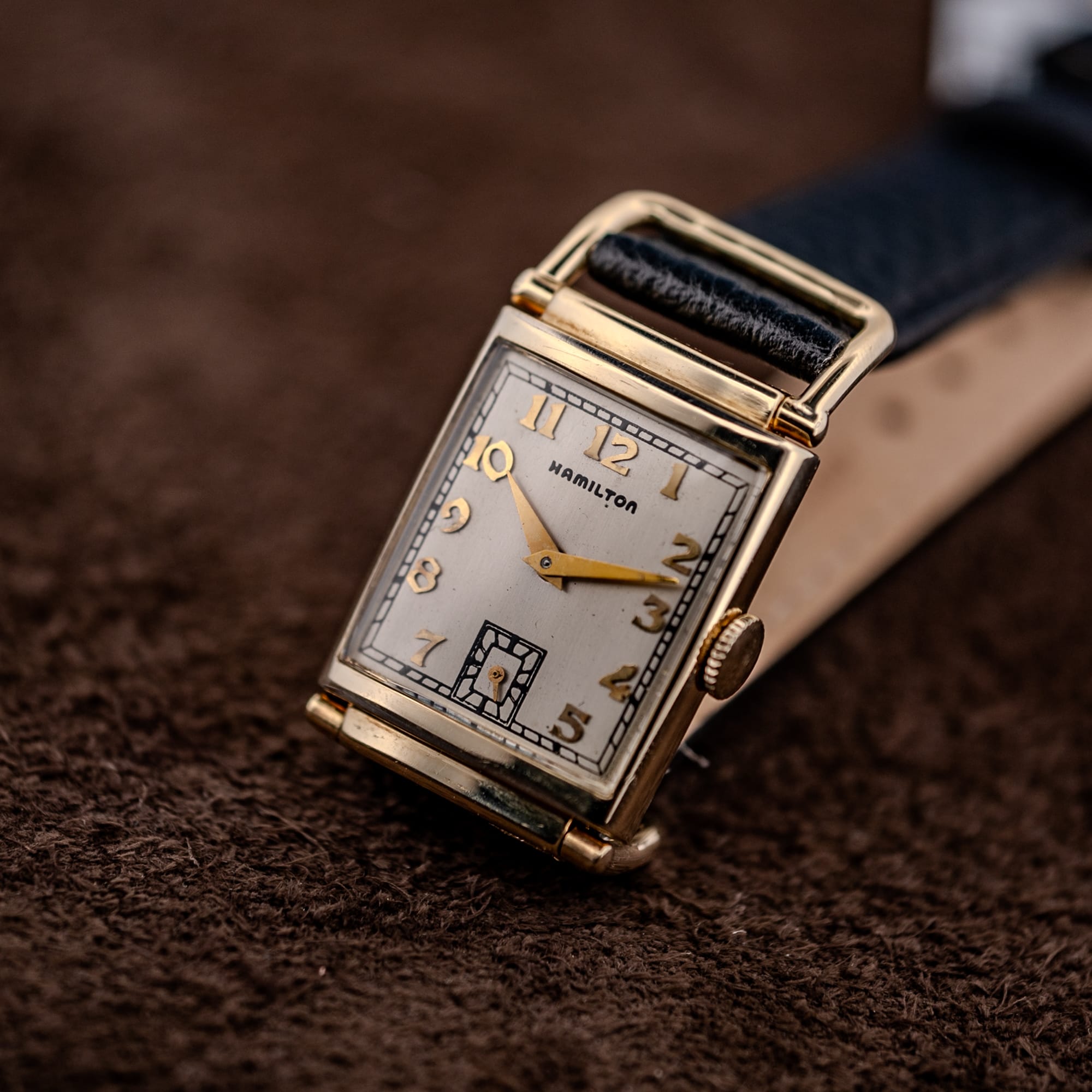
Hamilton made its name on pocket watches accurate enough that American railroads ran their schedules on them, and for the better part of forty years it sold those watches under one promise: the watch of railroad accuracy. The company was founded in Lancaster, Pennsylvania in 1892, and by the 1920s that reputation was firmly set, its railroad-grade movements a benchmark other American watches answered to. Easy to forget, then, that the same Lancaster benches also turned out dress watches, and the Hamilton Wilshire is one of them, a small rectangle of warm gold on a black strap.
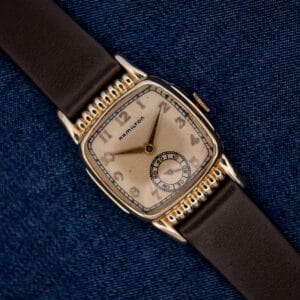
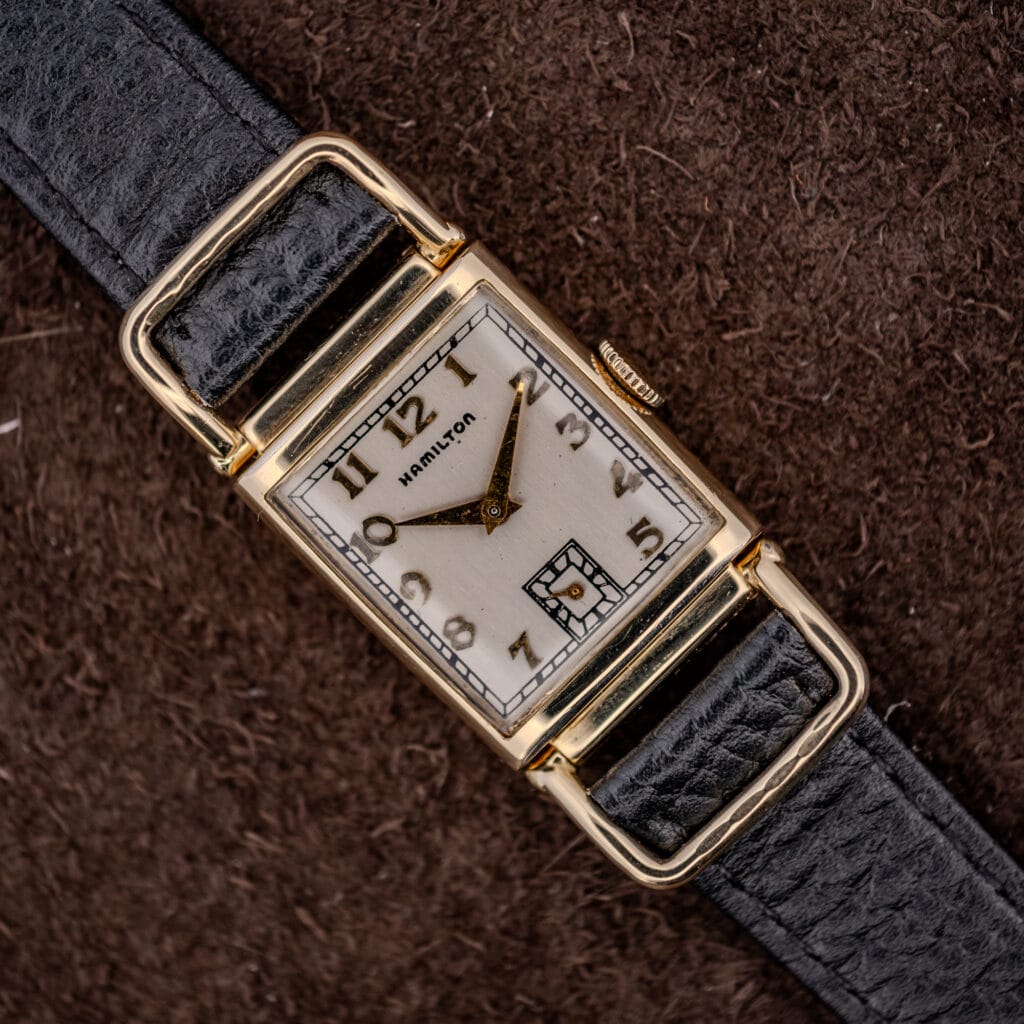
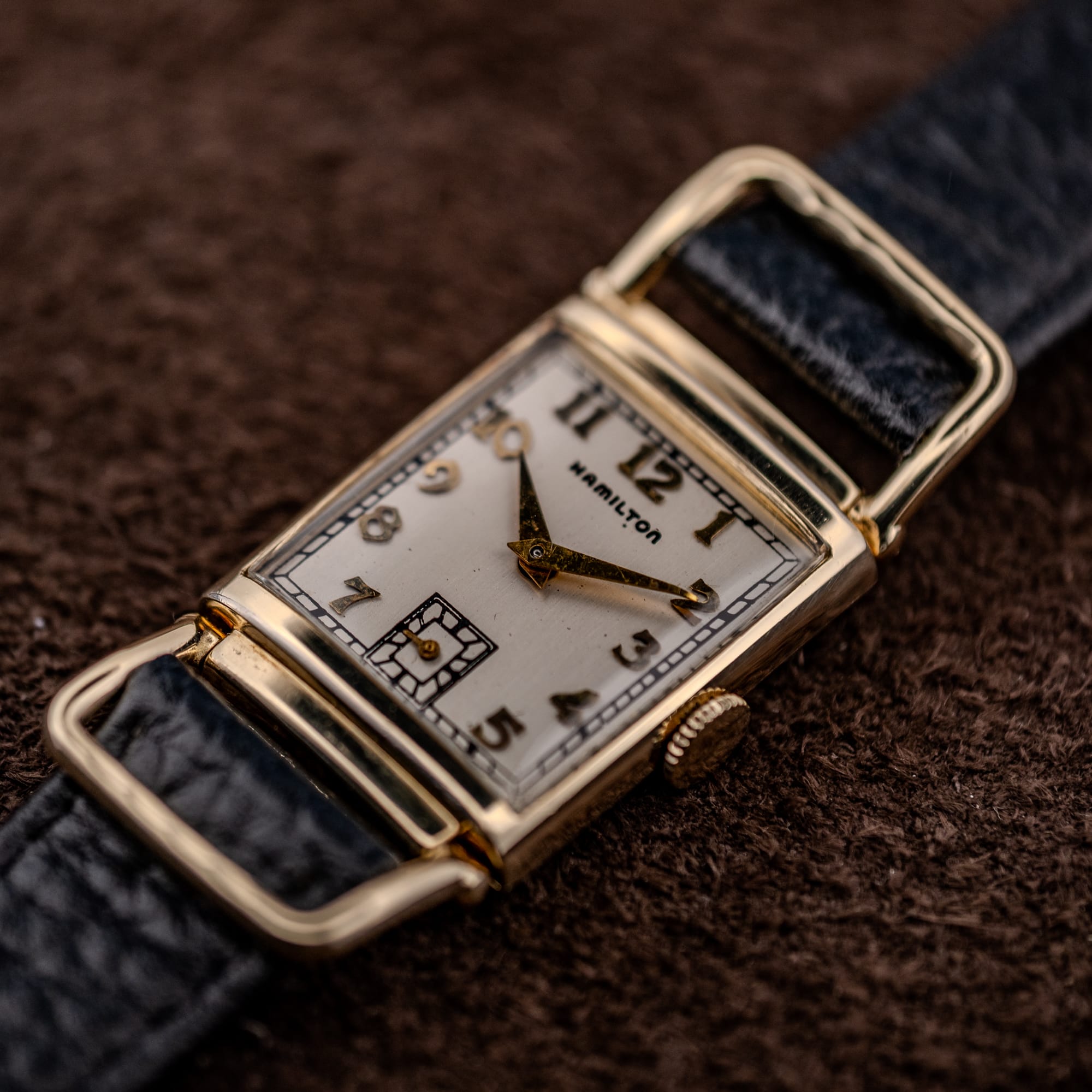
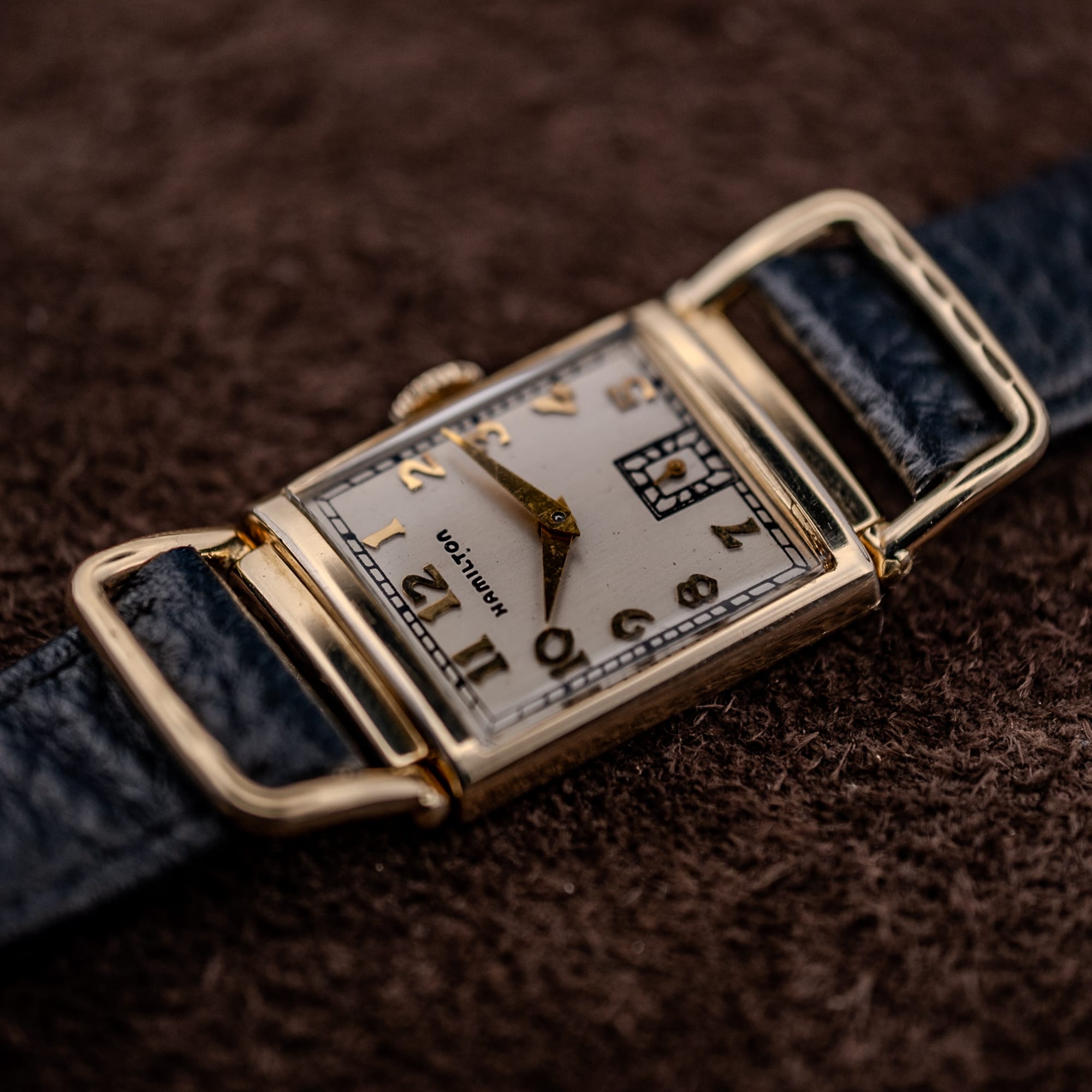
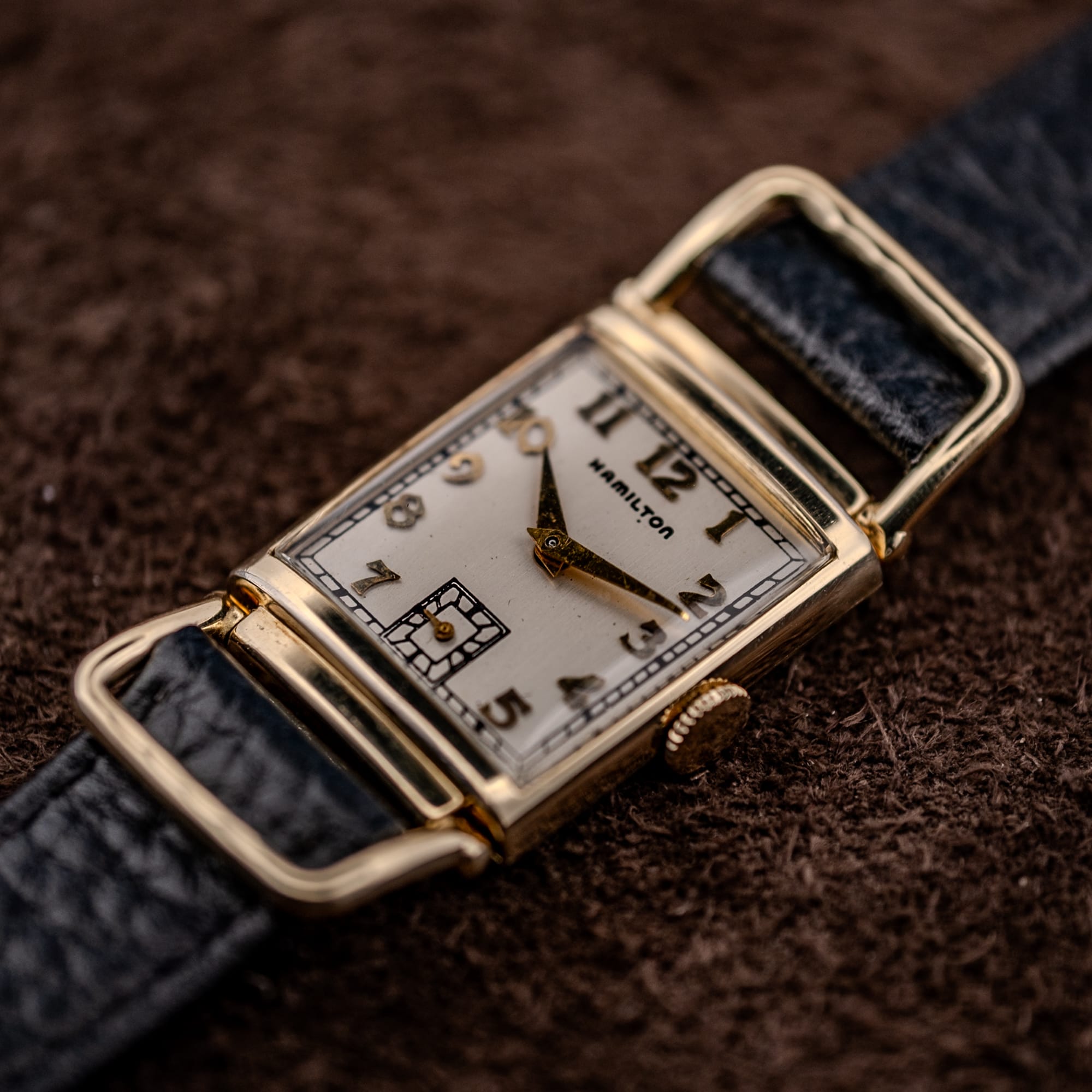
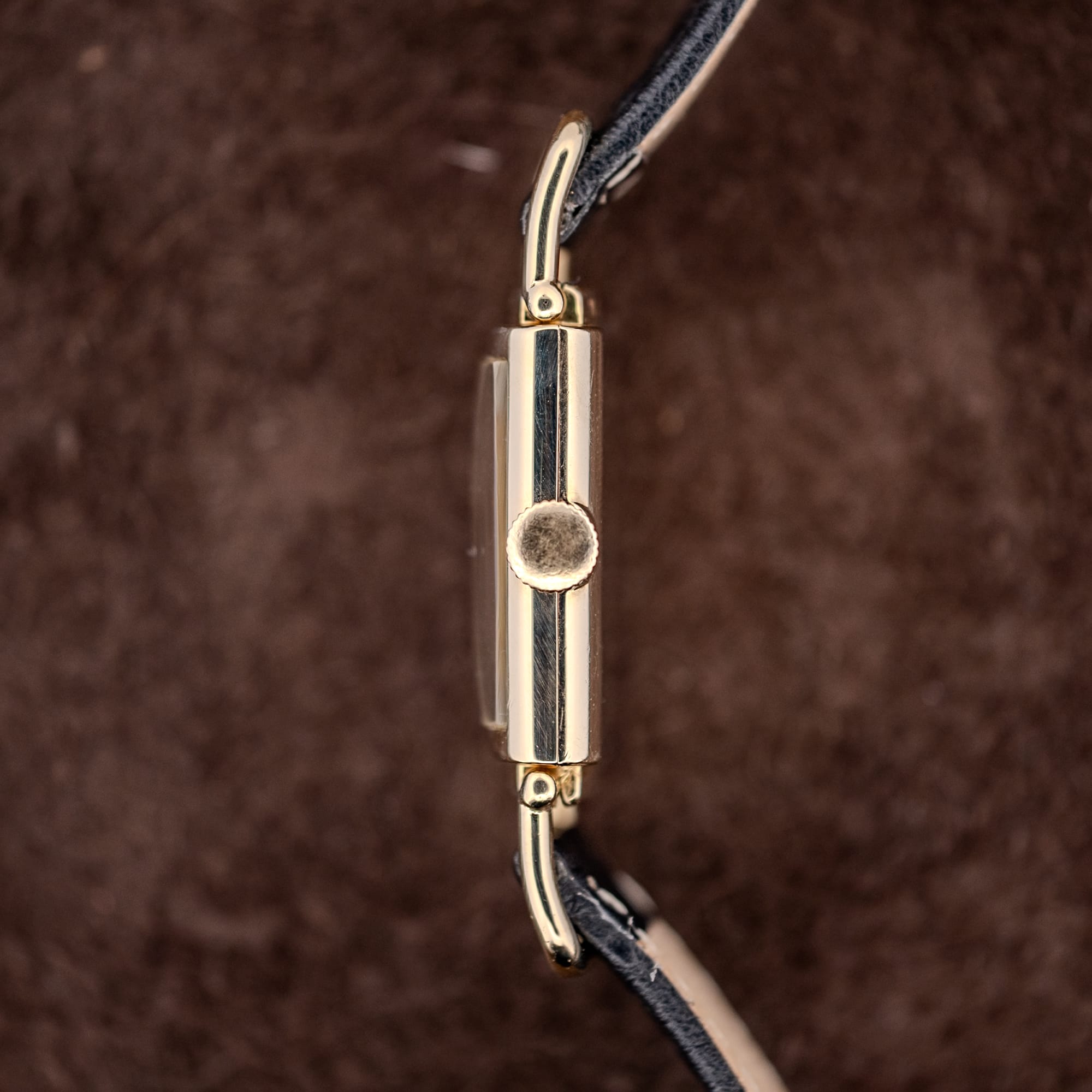
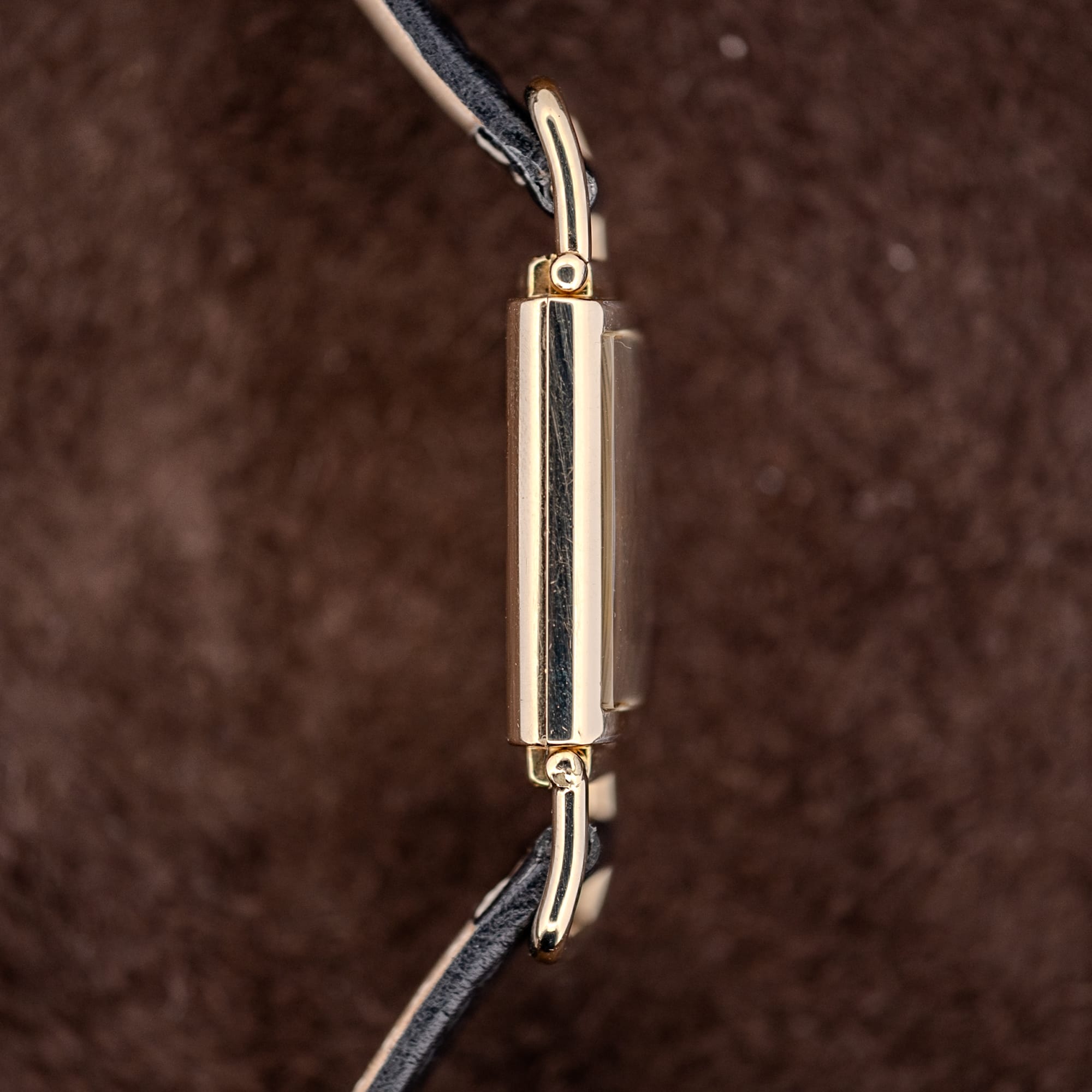
By the late 1930s the company was reaching well past its wealthiest customers. As the country climbed out of the Depression, Hamilton put its in-house manufacturing into a run of popularly priced dress watches, gold-filled rather than solid gold, meant for buyers who wanted a real Hamilton without the solid-gold bill. The Wilshire arrived in that push, introduced around 1938 and 1939 and built for only a few years. Its calling card was the case: looping Art Deco lugs, hinged to flex against the wrist, in a style collectors still call a driver. That was what Hamilton was selling, and for most owners it was the whole watch.
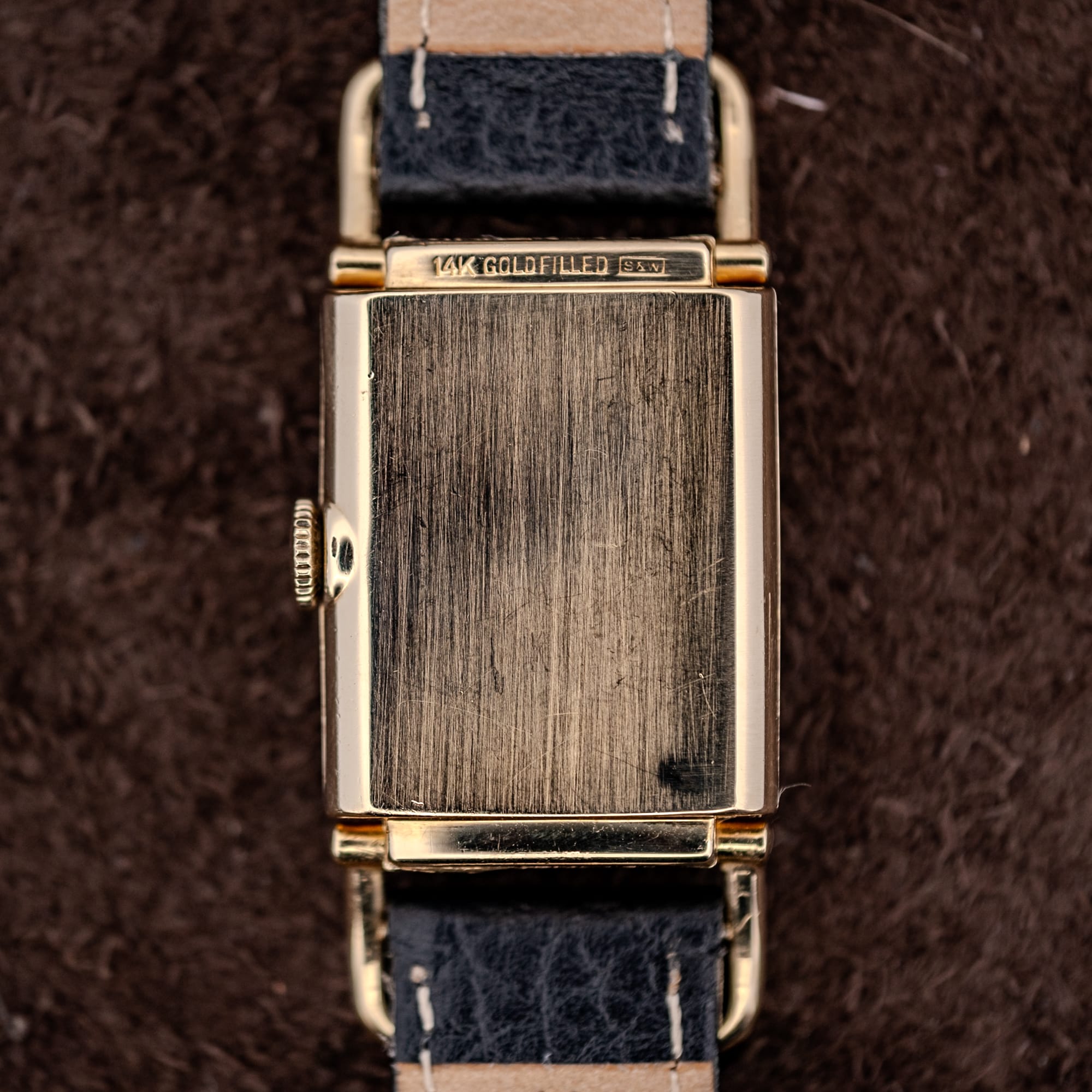
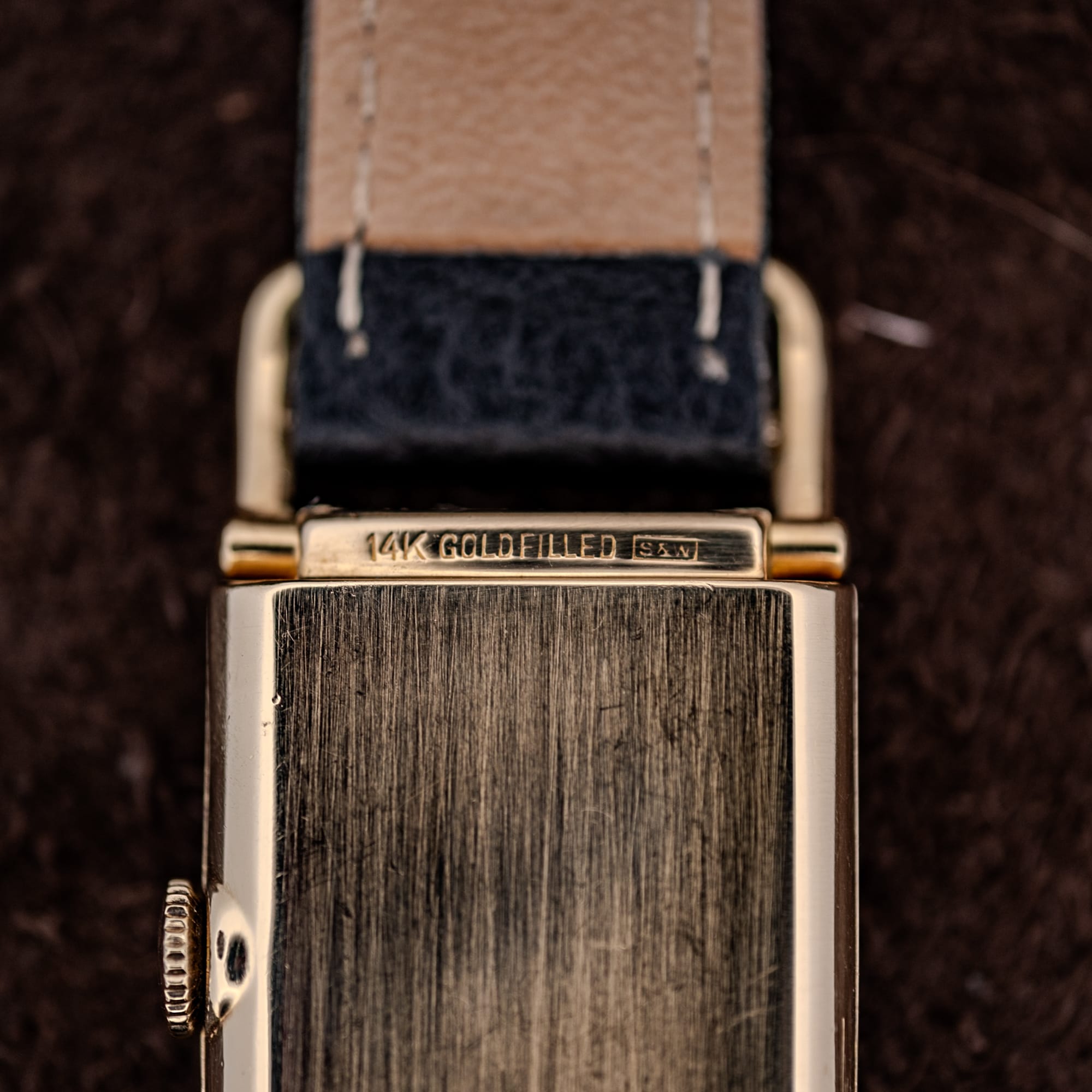
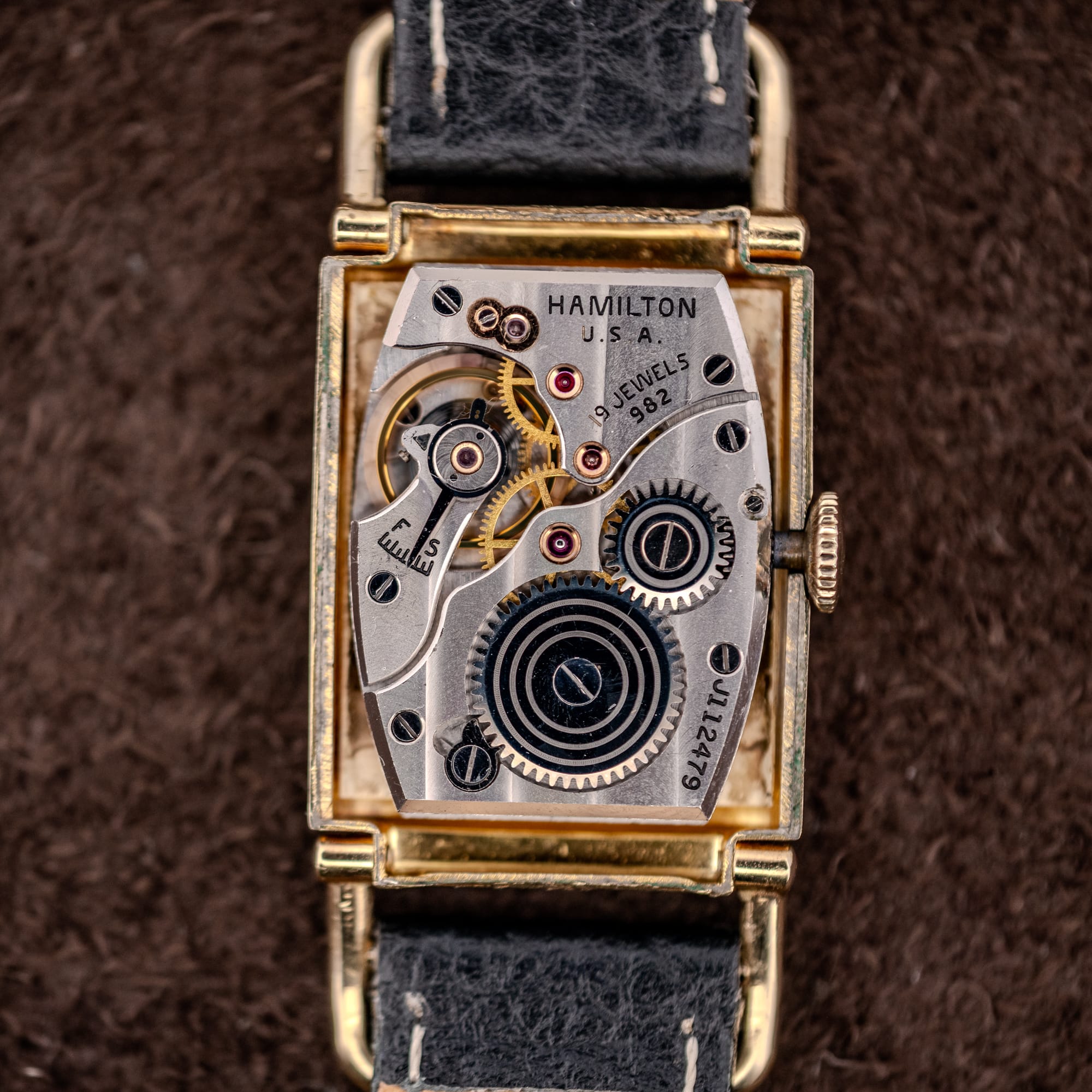
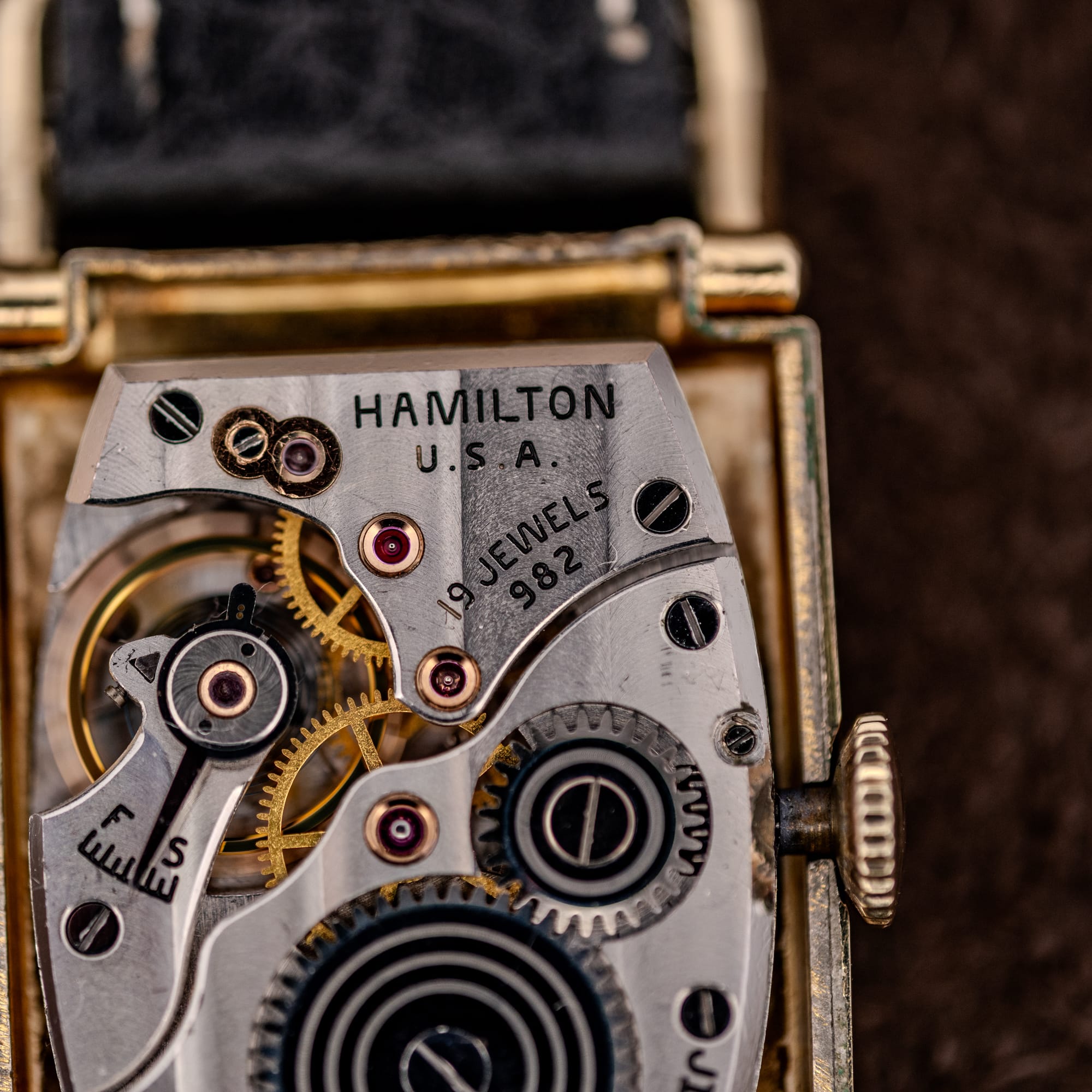
It is not the whole watch. Turn it over and the movement is stamped HAMILTON U.S.A. 19 JEWELS 982, and the 982 was the better of the two grades Hamilton built these small rectangular watches around. The everyday version got the 980; the 982, the better-finished movement, went into the dressier and solid-gold cases further up the line. Finding it inside a gold-filled Hamilton Wilshire from the value line means the modest case is carrying a movement it did not strictly need, the grade Hamilton usually saved for its better watches. The sensible buy, wearing the good movement.
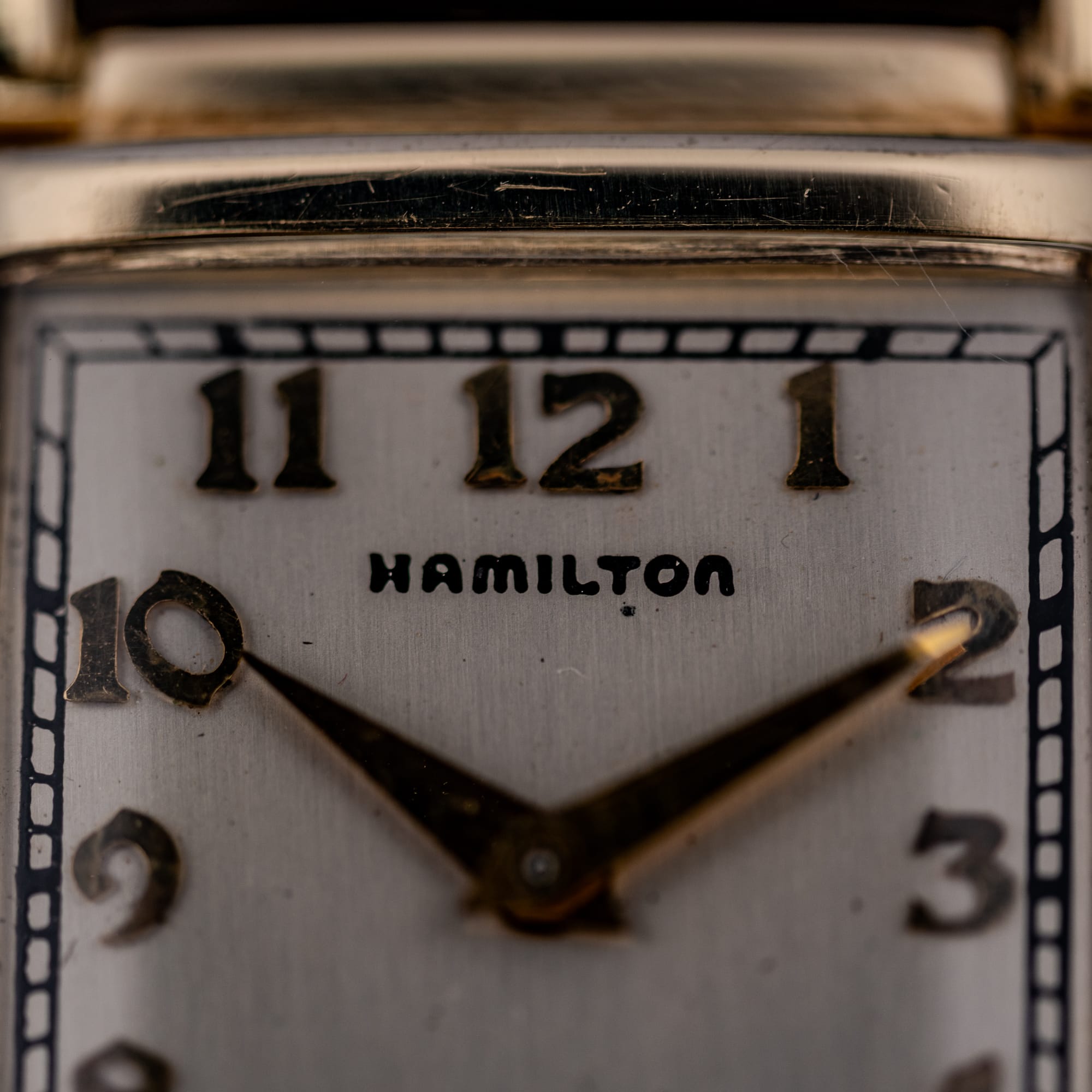
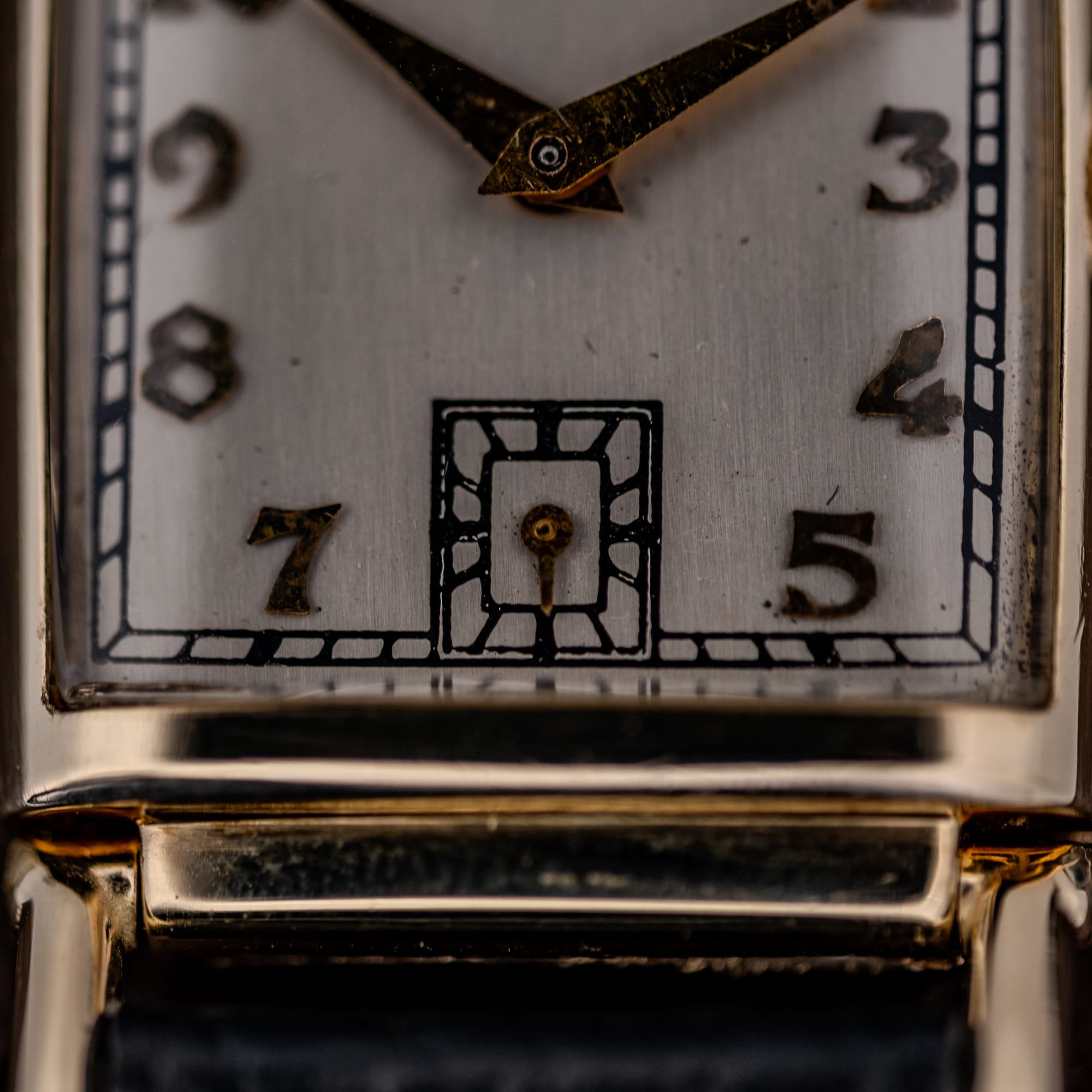
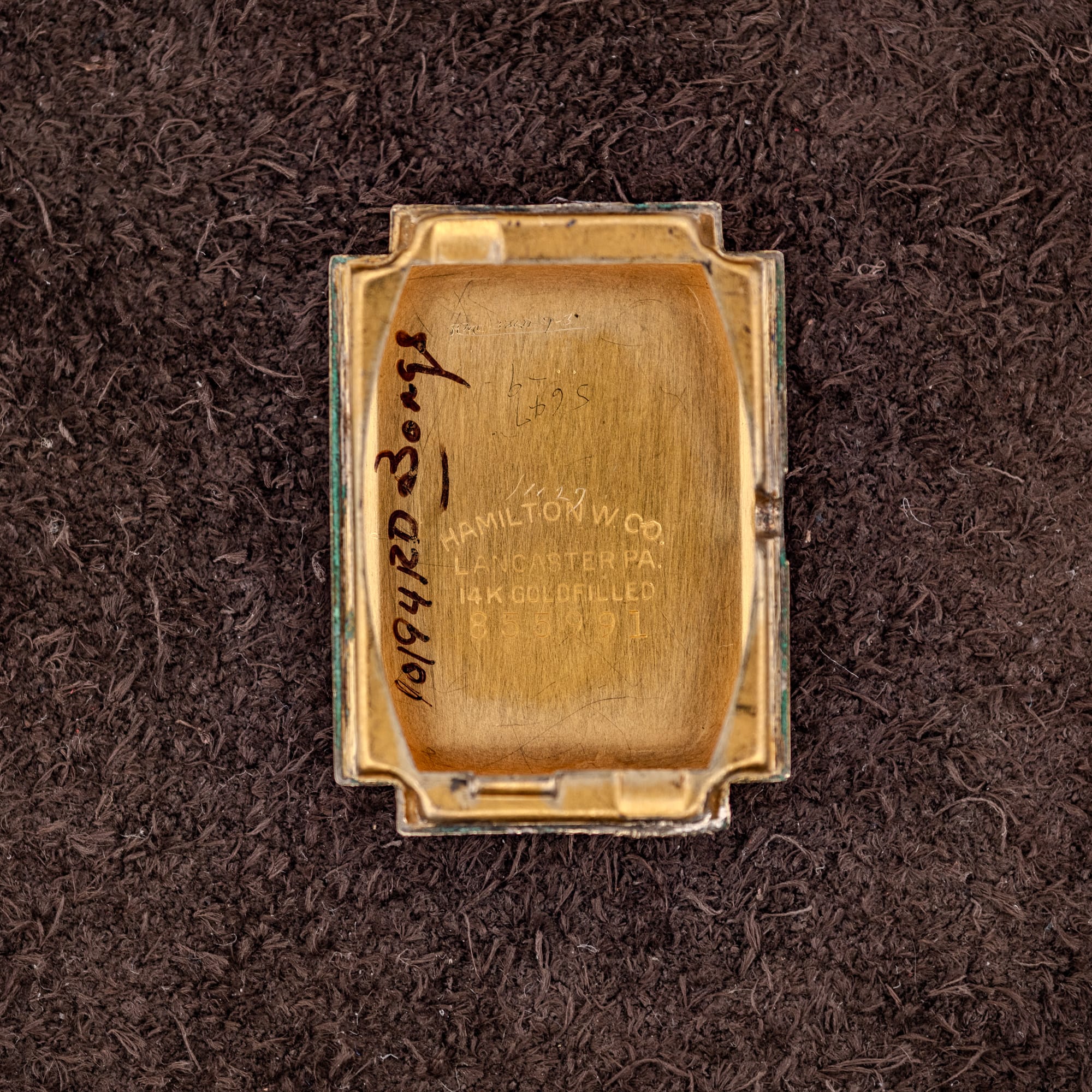
The case measures 22 millimeters across and 30 tall, small on paper but wearing larger for those open lugs, and it is Hamilton’s own, signed inside to the Lancaster works so movement and case read as a matched pair rather than a later marriage. The dial is the original silvered field, HAMILTON printed under twelve, with applied gold Arabic numerals and a fine railroad-style minute track that reads as a quiet wink at the company’s other business. Subsidiary seconds sit at six inside a stepped, latticed Deco frame. Age has freckled the silver and left the gold-leaf hands faintly uneven in tone, while a soft warmth and fine scratches have settled into the gold-filled case, all of it left exactly as we found it.
It is serviced in-house at OTTUHR and backed by our two-year mechanical warranty, ticking cleanly on the black leather strap and gold-tone buckle it wears now. The timing is worth a thought: the Wilshire ran at the tail of the 1930s, and by 1942 Hamilton had stopped making civilian watches altogether, turning the whole Lancaster factory over to marine chronometers for the Navy. Dress watches like this one were among the last civilian pieces that bench built before the war. To us that is the pleasure of it, a modest gold Hamilton that turned out to be more watch than it ever let on.