


The Omega Seamaster 145.006 represents one of the least recognized chapters in Omega’s celebrated chronograph heritage, yet it stands alongside the legendary Speedmaster as a custodian of the revered caliber 321. Produced for a mere two-year window between 1966 and 1968, this reference powered one of the most elegant chronograph cases Omega ever manufactured, housing the very movement that achieved immortality on the lunar surface. Unlike its fame-shadowed sibling, the 145.006 remains substantially undervalued and under-studied despite embody excellence in form and mechanics that few 1960s tool watches achieved.
The 145.006 is fundamentally a three-register chronograph housed in a distinctly approachable 38mm stainless steel or 18k gold case, its “C-shaped” tonneau profile embodying the industrial optimism of mid-1960s Omega design language. The reference operates as a dress chronograph that bridges formality and function, offered across multiple dial configurations from the pragmatic radial silver to the dramatic reverse panda aesthetic. The movement—the legendary caliber 321 with its column wheel and lateral clutch mechanism—operates at an exceptionally slow 18,000 vibrations per hour (2.5 Hz) with a 44-hour power reserve, making it one of the most refined chronograph engines ever miniaturized into a sub-40mm case.
Production volume estimates place the 145.006 within the rarest bracket of 321-powered chronographs. Across all applications (Speedmaster, Seamaster, and ancillary brands), Omega manufactured approximately 18,000 to 20,000 caliber 321 movements between 1957 and 1969. The 145.006 portion represents a fraction of this already limited output—a scarcity further compounded by attrition over sixty years. Collectors describe finding multiple pristine examples of 145.012 Speedmasters (1967-1968 production) for every single 145.006 that surfaces, making this reference substantially more elusive despite simultaneous production timelines.
The 145.006 occupies a peculiar niche in contemporary collecting: it is simultaneously a gateway reference for new vintage Omega enthusiasts and a destination piece for seasoned 321 devotees who have exhausted Speedmaster variants. Secondary market pricing has escalated significantly since 2020, with serviced examples in excellent condition commanding €4,200 to €5,300 (approximately $4,500–$5,800 USD), while pristine radial dial variants and gold cases achieve auction prices in the six-figure range in select markets. Unlike the Speedmaster, institutional research on the 145.006 remains limited, though dedicated community research threads on major horological forums have begun systematically cataloging dial variants, production periods, and component pairings.
Historical Context & Manufacturing Details
Omega introduced the Seamaster 145.006 chronograph in 1966 as a platform to democratize access to the caliber 321 movement within a more refined aesthetic than the sport-oriented Speedmaster. During the mid-1960s, Omega’s product strategy bifurcated chronograph offerings: the Speedmaster family (145.012 and variants) maintained its utilitarian tool-watch positioning, while the Seamaster chronograph lineups offered dress-centric execution with refined finishes and elegant case work. The 145.006 emerged as Omega’s response to demand for a caliber 321 chronograph in a more wearable, sub-40mm footprint—a configuration impossible within the asymmetrical Speedmaster architecture.
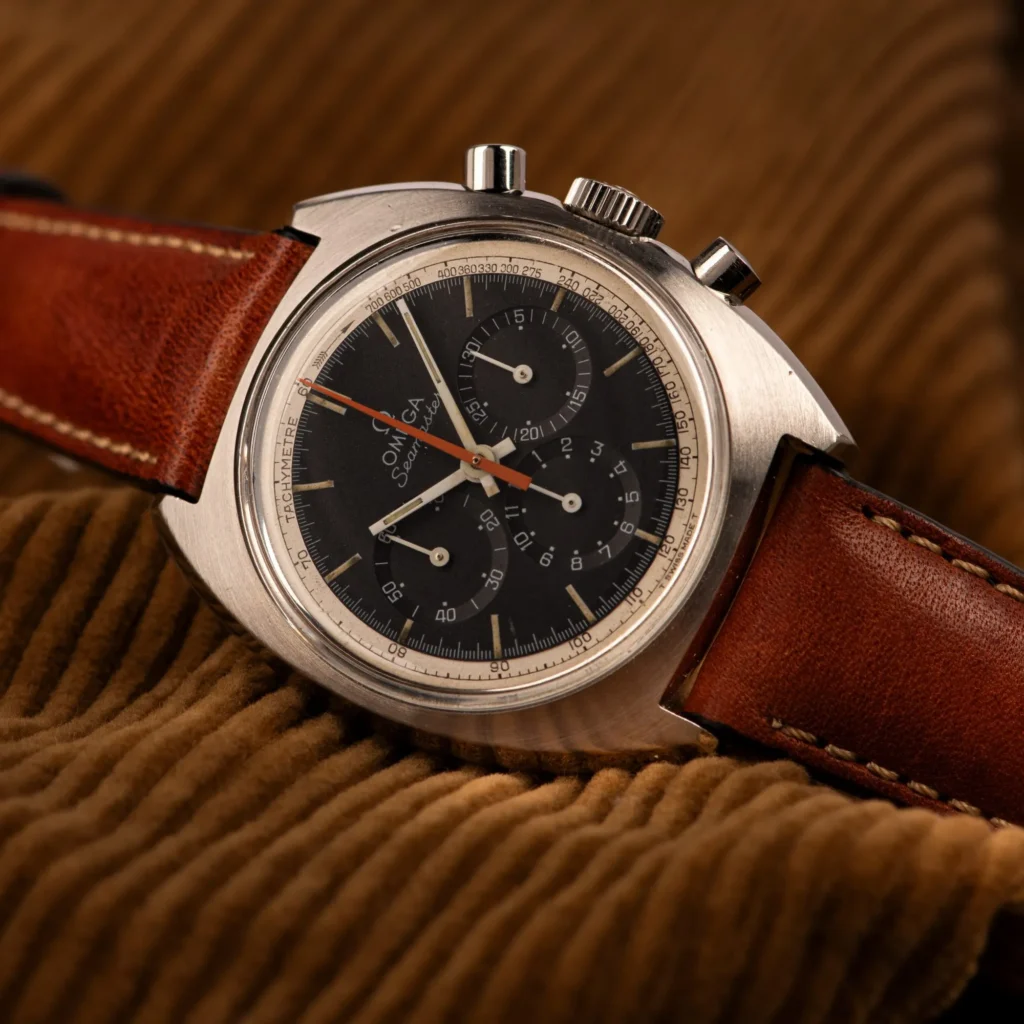
The reference remained in production for only two years (1966–1968), after which it was superseded by the reference 145.016 in 1968. This successor adopted the same case design but substituted the economically demanding caliber 321 with the more cost-effective caliber 861 (a cam-operated movement running at 21,600 vph). The transition reflected Omega’s broader shift in the late 1960s toward manufacturing efficiency and the elimination of the labor-intensive, hand-adjusted column-wheel movement. Production documentation indicates that as Omega wound down caliber 321 production—which ceased entirely in 1969—the 145.006 line was discontinued in parallel.
Manufacturing Context
The 145.006 represented an important but understated addition to Omega’s chronograph catalog. It was not a flagship release commanding extensive marketing attention; rather, it occupied the role of an elegant alternative to the Speedmaster’s sporting character. No evidence of limited-production status or collector-era positioning exists in contemporary Omega materials, suggesting the reference was conceived as a permanent addition rather than a limited run. This miscalculation—mass-producing a reference without understanding that the movement’s imminent discontinuation would render it collectible—resulted in unintended scarcity.
The reference emerged during Omega’s period of manufacturing diversification. In 1966, Omega operated multiple case manufacturing partners, with a portion of 145.006 cases believed produced by external suppliers rather than in-house facilities. The dial suppliers similarly varied: some dials carry the hallmarks of applied printing consistent with Omega’s in-house facilities, while others suggest contract manufacturing relationships with external dial suppliers—a practice common across the Omega chronograph lineup during this era.
Factory & Production Location
Omega watches from this period were manufactured across multiple locations. Movement assembly and regulation occurred at Omega’s Bienne headquarters, with caliber 321 movements hand-adjusted and assembled on-site. Case work involved both in-house manufacturing and sourcing from established case makers. The evidence suggests that stainless steel cases for the 145.006 may have been sourced from La Centrale Boîtes, the renowned case house that also supplied Seamaster designs during this period, though documentation remains fragmentary. Gold cases (18k) were typically manufactured in-house given the material handling requirements and hallmarking obligations.
Crystal assembly and dial mounting occurred at the Bienne facility. The acrylic (hesalite) crystals originated from Omega’s standard suppliers, with the characteristic metal tension ring and center Omega logo stamped during final assembly. No evidence of production location transfers during the 145.006’s lifespan suggests manufacturing remained geographically consistent across the 1966–1968 window, though secondary suppliers and sub-contractor relationships may have shifted.
Horological Significance
The 145.006 occupies a transitional position in chronograph history, bridging two manufacturing eras: the final age of hand-assembled, column-wheel chronographs and the approaching dominance of cam-operated, cost-optimized movements. It represents the last mainstream three-register chronograph produced by Omega in a 38mm or smaller case with the caliber 321—a combination rendered impossible after 1968 when Omega’s commitment to the 321 ended.
The reference is neither groundbreaking nor incremental in a technical sense. The caliber 321 was well-established by 1966, and the case design evolved from existing Seamaster precedents. What renders the 145.006 historically significant is its status as a final exemplar of an obsolete chronograph philosophy: the belief that a calendar-less, three-register chronograph with minimal complications was sufficient for professional timekeeping. By 1968, this philosophy was already yielding to demand for date windows, GMT functions, and higher beat rates. The 145.006 became an unintended artifact of a passing era, one that collectors have only recently begun to recognize as worthy of serious study.
Construction & Architecture
The 145.006 employs a distinctive “C-shaped” or “chunky C” case design, terminology reflecting the curved, substantial lug structure that defines its silhouette. The case measures 38mm in diameter (excluding crown), with a lug-to-lug measurement of approximately 43mm for steel examples and 41mm for certain gold variants—dimensions that position it as a borderline oversized dress chronograph by contemporary standards, yet compact and approachable compared to modern sports chronographs.
Case thickness measures 9.3 to 13.3mm depending on configuration and measurement methodology; the movement itself occupies approximately 4mm of internal height, with the remaining space allocated to caseback assembly and crystal height. The C-shaped case utilizes a monocoque (single-piece) construction methodology, where the lugs are integrated into the case body rather than soldered or screwed on—a manufacturing approach that enhanced structural integrity and justified the substantial lug presence.
Stainless steel cases were constructed in grade 316L or equivalent vintage steel, while 18k yellow gold cases employed solid gold throughout (no plating). The case finishing presents the primary design signature: the top surface and sides display concentric radial brushing in the horizontal direction, a deliberate factory finish distinct from the polished bevels characteristic of later Omega designs. Several early examples exhibit a sunburst or circular grain finish, though collector research indicates radial brushing was the predominant factory specification; sunburst examples may represent dealer-applied finishing or transitional production runs.
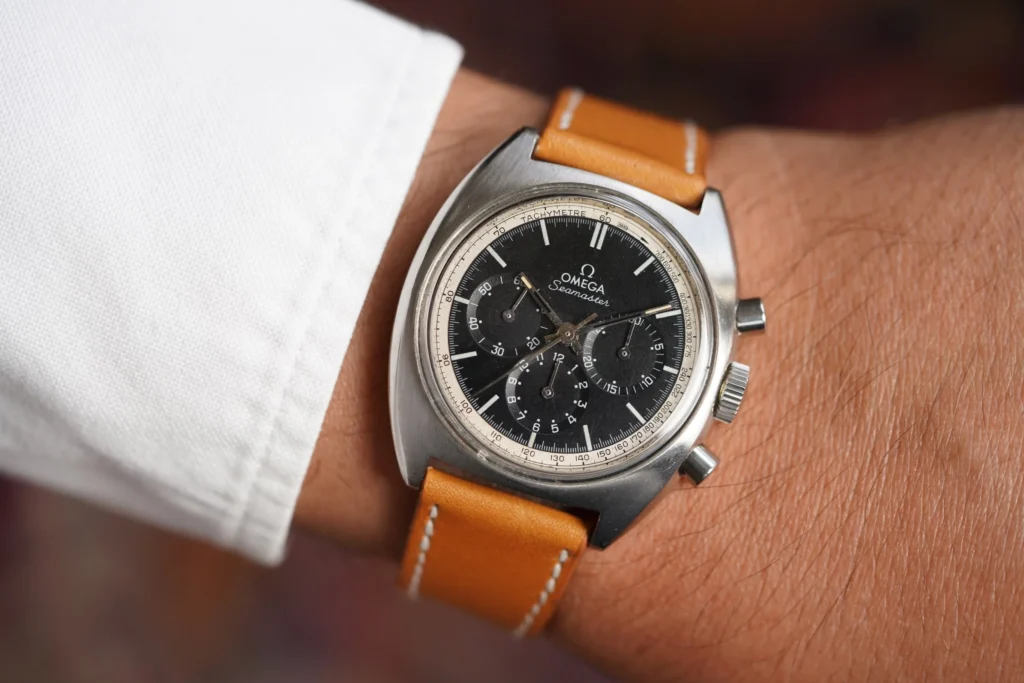
Lug construction is notable for its substantial thickness and refined proportions. Drilled lugs accommodate standard 20mm spring bars, with the holes positioned at approximately 18–19mm from the case body. The lugs taper modestly from body to tip, creating an elegant line-to-wrist transition. Unpolished examples exhibit sharp lug edges and defined internal angles, markers of originality; cases showing rounded or soft lug edges indicate post-factory polishing.
The case back consists of a solid stainless steel or gold disc, engraved with the Omega Seamaster signature, the hippocampus (seahorse) medallion, and internally stamped with the reference number (typically “145.006-66,” “145.006-67,” or “145.006-68” depending on sub-variant). The engraving depth and font style changed subtly across production years; early examples show crisp, deeply cut engravings, while later examples sometimes exhibit lighter or slightly worn dies.
Water resistance, while marked on some examples, was not a design priority. The case design employed a push-pull crown without screw-down capability, and the simple crystal-to-case interface relied on a tension ring rather than a gasket seal. In practice, these watches offer minimal water resistance—adequate for desk diving and occasional splash exposure but unsuitable for immersion. Contemporary documentation rarely specifies a water-resistance rating, and surviving examples often prove non-functional when tested.
Dial Variations
The 145.006 exhibited the widest range of dial configurations of any 321-powered Omega chronograph. Documented variations include:
Silver radial dials: The most common configuration, featuring a matte silver background with radial brushing in the vertical or horizontal direction. White or contrasting tachymetre scale at the outer perimeter, applied or printed indices marking hour positions, and printed minute/second text. Early examples (1966–1967) often feature hand-applied printing or partial application, while later examples show more consistent machine printing.
Black radial dials: Jet black backgrounds with silver or white tachymetre scales, white printed text, and either applied or printed indices. This configuration provides high contrast ideal for legibility and was offered across the entire production run. Variant sub-dials exist: some examples carry “Tachymète” labeling while rare variants include “Pulsométre 30” instead.
Reverse panda radial dials: Black field with white sub-dial backgrounds, creating the inverse of the classic panda chronograph aesthetic. These represent scarcer variants, particularly in stainless steel; gold examples occasionally appear in auction. Applied Omega logos (brass or steel) characterize earlier production, while painted logos appear in later examples. The reverse panda configuration was inspired by Alaska Project Speedmaster aesthetics and creates striking visual contrast with period-correct tritium lume.
Exotic or “tropical” dials: Certain production batches exhibited dial browning or patina—sometimes intentional gilt finishes on gold-cased variants, sometimes the result of lacquer decomposition during storage or shipping. These “tropical” dials have become highly collectible in recent years as collectors have recognized manufacturing authenticity and the accelerated aging of vintage lume materials. Gilt dials on gold cases, in particular, command significant premiums.
White or “albino” radial dials: Extremely rare silver-white field configurations, primarily documented on a handful of stainless steel examples from early 1966 production. These white dials, some with white sub-dial inserts, create an ethereal, almost monochromatic aesthetic and are regarded as among the most desirable 145.006 variants by serious collectors.
Gold radial dials: Reserved for 18k gold cases, featuring gilt or champagne-tone dial grounds with applied gold indices and printed text. These dials are somewhat less common than stainless steel configurations but less universally sought by collectors.
Across all dial types, tritium luminous material application was consistent: circular lume plots on the hour indices, full lume fills on the hand sets, and small lume applications on the chronograph subdial numerals. The lume exhibits characteristic brownish-gold patina consistent with vintage tritium aging (tritium was used from the mid-1960s onward, displacing radium which had been phased out by the early 1960s). Lume condition serves as a critical authentication marker; original tritium displays stable patina and cracking consistent with the material’s decay rate, while modern relumes show uniform color and lack aging characteristics.
Hands
Hand configuration across the 145.006 remained relatively consistent, though subtle variations exist. The primary hour and minute hands adopt a Dauphine or “lollipop” profile—thin, blade-like proportions with gently tapered ends. These hands measure approximately 10mm and 13mm in length respectively and feature printed tritium lume on both surfaces. Printing quality varies between early and late production, with earlier examples sometimes exhibiting slightly uneven lume application.
The chronograph seconds (small seconds) hand at 9 o’clock typically measures around 9mm in length and is finished in white or, distinctively in many 145.006 examples, bright orange. This orange chronograph hand represents one of the reference’s most distinctive visual signatures, often compared to the “Ultraman” orange hand found on special 145.012-67 Speedmaster variants produced contemporaneously (1967–1968). The orange hand likely originated from a common parts bin decision rather than a deliberate tribute to the Japanese television franchise, though the aesthetic parallel is striking. Orange hands vary in hue from burnt orange to vivid red-orange depending on vintage and condition.
The 30-minute counter hand at 6 o’clock and the 12-hour counter hand at 3 o’clock employ similar geometries to the hour and minute hands, finished in white with tritium lume. These hands are proportionally shorter to avoid fouling the counter subdial edges. Examples exist with black hand fills, particularly on black-dial variants, though white is the most common configuration.
Hand finishing uniformity serves as an authentication point: original hands exhibit consistent lume aging and patina across all four hand sets, while replacement or mixed-origin hands often show inconsistent lume color, uneven aging, or mismatched material finishes.
Crown
The 145.006 employed a push-pull, unsigned crown of approximately 6.5mm diameter. The crown tube measures roughly 8–9mm in length and accommodates standard crown stem threads. The crown is typically finished in polished stainless steel or gold (matching case material) with minimal surface detail. Some examples carry subtle Omega markings or signatures, though most remain unmarked. The crown lacks the “T Swiss Made T” or related certifications often found on contemporary dress watches, reflecting the 145.006’s functional rather than haute horology positioning.
Screw-down crowns do not appear in 145.006 documentation; the push-pull design prioritized accessibility over water resistance, consistent with the reference’s design intention. Wear typically manifests as slight flatting on the crown top, micro-scratching on the stem tube, and occasional micro-bending of the crown tube itself due to storage pressure or impact.
Replacement crowns are common in surviving examples, as original crowns are vulnerable to loss or damage. Signed Omega replacement crowns from the late 1960s or early 1970s often substitute for originals without apparent visual distinction, though the correct crown should match the case material (steel crown for steel cases, gold crown for gold cases) and exhibit minimal surface detail or marking.
Crystal
The 145.006 employed an acrylic (polymethyl methacrylate, historically called “Plexiglass”) dome crystal, a choice that prioritized resilience and repairability over scratch resistance. The crystal exhibits a pronounced dome profile—measuring approximately 4.5–5.5mm in height—that imparts visual depth and magnification to the dial. The crystal baseplate includes a metal tension ring (either brass or steel, painted or polished), secured beneath the crystal dome, that bears the Omega logo in the center.
Original crystals carry the distinctive Omega logo with “feet” that do not curl upward—a feature useful for distinguishing original crystals from later service replacements. Incorrect logo geometry (feet curled upward, off-center positioning, or missing details) often indicates non-original or aftermarket crystal installation.
Acrylic crystals inherent to this era are subject to scratching from normal wear; many surviving examples exhibit light to moderate cloudiness from decades of microabrasion. The scratches, however, remain repairable through careful polishing—a process that distinguishes acrylic crystals from harder sapphire or mineral materials that cannot be polished without risking catastrophic fracture. Original crystals in excellent condition (minimal scratching, clear optical properties) command premiums among collectors, as replacement is a straightforward but visible intervention.
Bracelet & Strap Options
Documentation indicates the 145.006 was available with multiple original strap and bracelet configurations, though surviving examples increasingly appear on modern replacements rather than original equipment.
Oyster bracelet: Metal three-link Oyster-style bracelets with solid end-links were offered, typically in reference 1116 or similar designations. The 1116 bracelet paired with reference 548 end-links remains documented across multiple contemporary sales listings, though sourcing original examples today proves challenging. These bracelets feature the characteristic Oyster profile: three-piece articulated links with center polished elements and side-brushed panels, tapered to approximately 16mm at the case connection.
Leather straps: Black, brown, or burgundy leather straps were offered as standard equipment, often with Omega-signed steel or gold buckles. These straps typically measure 20mm at the case attachment and taper toward the buckle. Original Omega straps from this period are distinguishable by crisp stitching, consistent leather grain, and Omega-stamped buckles, though most original leather has degraded or been replaced over six decades.
NATO and fabric straps: While less commonly documented, vintage NATO-style fabric straps occasionally appear in period photographs and surviving examples. These straps likely represented optional or regional market variations rather than standard equipment.
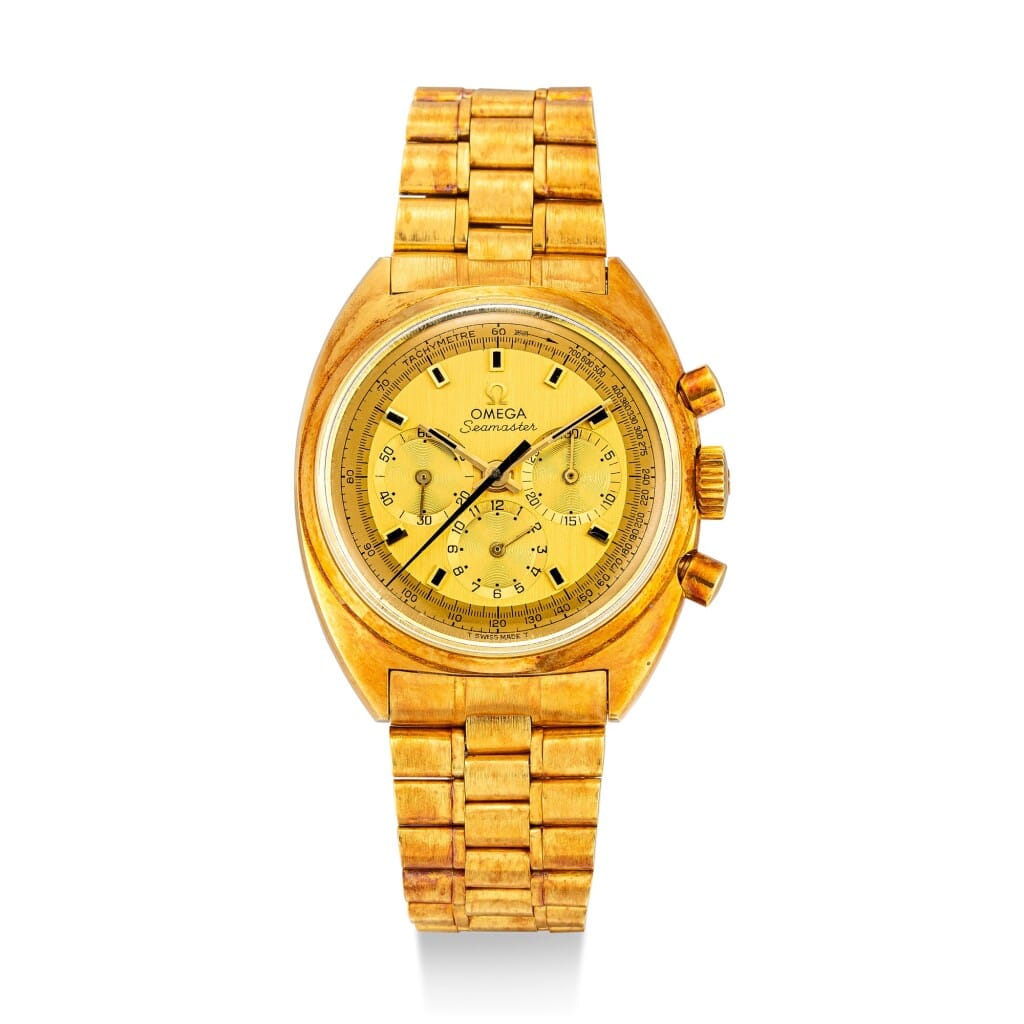
End-link references for the 1116 bracelet bracket include 548 end-links, which integrate a spring-loaded opening mechanism to accommodate the case lug width. These end-links, like the bracelet itself, are increasingly difficult to source and command significant prices in the vintage bracelet market.
Reference Key, Variations & Sub-References
Understanding the taxonomy of the 145.006 reference is essential for authentication and valuation. The reference number itself encodes critical production information, while sub-references (indicated by the two-digit suffix) designate production year. Unlike modern Omega nomenclature, vintage reference numbers were designed for manufacturing brevity rather than collector clarity, making systematic decoding fundamental to serious 145.006 study.
| Sub-Reference | Case Material | Primary Dial Variant | Bezel Type | Bracelet/Strap | Distinguishing Features |
|---|---|---|---|---|---|
| 145.006-66 | Stainless Steel | Silver, Black, Reverse Panda Radial | Fixed Tachymetre | Oyster 1116/548, Leather | Early production; some examples with radial subdials (rare); orange chrono hand; tritium lume |
| 145.006-66 | 18k Yellow Gold | Gold Radial, Silver Soleil | Fixed Tachymetre | Original yellow gold bracelet or leather | Solid gold case; less common than steel; higher price point at sale |
| 145.006-67 | Stainless Steel | Silver, Black, Reverse Panda Radial | Fixed Tachymetre | Oyster 1116/548, Leather | Mid-production run; dial consistency improves; occasional “exotic” tropical browning |
| 145.006-67 | 18k Yellow Gold | Gold Radial, Silver Soleil with Gold Applied Indices | Fixed Tachymetre | Yellow gold bracelet, leather | Mid-production gold variant; applied indices common; excellent lume preservation in some examples |
| 145.006-68 | Stainless Steel | Silver, Black, Reverse Panda Radial | Fixed Tachymetre | Oyster 1116/548, Leather | Late production; transitional phase before 145.016 introduction; printing consistency peaks; occasional movement serial mismatch |
| 145.006-68 | 18k Yellow Gold | Gold Radial, Silver Soleil | Fixed Tachymetre | Yellow gold bracelet, leather | Rarest sub-reference in gold; minimal production; high collectibility |
Taxonomy & Nomenclature Decoding
The reference “145.006” breaks down as follows:
First three digits (145): Designates the Seamaster chronograph case family, distinguishing it from other Seamaster sub-families. This triplet remained consistent across 145.005 (35mm), 145.006 (38mm), 145.012 (42mm Speedmaster Professional), 145.016 (38mm successor with caliber 861), and other related chronograph architectures.
Fourth and fifth digits (00): Historically, these positions indicated chronograph configuration or case material differentiator. In the case of the 145.006, the “00” designation appears consistent across all documented examples, suggesting either a baseline configuration marker or an archival quirk specific to this reference.
Sixth digit (6): The final digit before the hyphen typically indicates the specific model variant. The digit “6” designation for the 145.006 likely correlates to case size (38mm) or a manufacturing generation marker, though Omega’s internal nomenclature remains obscure.
Suffix (post-hyphen numerals): The two-digit suffix denotes the production year. The reference “145.006-66” indicates 1966 production, “145.006-67” indicates 1967, and “145.006-68” indicates 1968. These designations appear stamped on the case back and are cross-referenced with the movement serial number for authenticity verification.
The suffix convention proved inconsistent across Omega’s product range. Some 145.006-66 examples continued production into 1967, while 145.006-68 examples may have been assembled in early 1969 from remaining component stock. The suffix indicates manufacturing year, not original sales or delivery year—a critical distinction when evaluating documentation.
The Mark (MK) System
The caliber 321 movement itself utilized an internal “Mark” designation system that evolved during its 1957–1969 production lifespan. The 145.006, produced during the movement’s final decade, primarily employed caliber 321 movements classified as “Mark II” or later iterations.
Mark I caliber 321 (1957–1962): Early production with simpler finishing, basic clutch bridges, and less refined jeweling. Movement serial numbers typically fall below 11 million. These movements are occasionally found in early 145.006 examples, particularly those with movement serial numbers incompatible with their case production year—a known factory anomaly resulting from parts-bin assembly.
Mark II caliber 321 (1962–1968): Refined production incorporating improved clutch bridge geometry, German silver (nickel silver) coupling wheel cocks, enhanced jeweling (17 jewels standardized), and consistent copper-colored finishes. This Mark dominates 145.006 production. Movement serials typically range from 11 million to 27+ million. The Mark II represents the highest-quality iteration of the 321 and is universally preferred by collectors.
The caliber 321 does not carry overt “Mark I” or “Mark II” designations; identification relies on movement inspection and serial number cross-referencing against established databases. The movement serial number, stamped on the balance cock, serves as the definitive authentication tool.
Variations within Mark II production include:
Clutch bridge evolution: Early Mark II examples (circa 1962–1964) exhibit symmetrical clutch bridges, while later production (1965 onward) standardized asymmetrical designs. This distinction is visible under magnification and has become a tertiary authentication criterion.
Rotor design: Automatic (rotor-equipped) movements do not apply to the 145.006, which exclusively employed manual-wind caliber 321 movements.
Finishing consistency: Later Mark II production shows more uniform copper plating and finishing detail, reflecting improved manufacturing standardization.
Sub-References & Transitional Models
The primary sub-references (145.006-66, 145.006-67, 145.006-68) represent straightforward annual production designations without major case architectural changes. However, several gray-area considerations affect collectibility:
Transitional serial number ranges: A small cohort of 145.006 cases exists with movement serial numbers inconsistent with case production year. For example, a case stamped “145.006-66” (1966) internally may house a movement serial from 1968 or vice versa. Omega’s production documentation confirms this anomaly resulted from planned inventory management and sub-assembly timing variations, not factory error or post-assembly modification. These transitional examples carry no collector penalty provided all components (case, movement, dial, hands) are documented as period-correct.
145.006 to 145.016 transition: By late 1968, Omega phased the 145.006 out in favor of the 145.016, which employed the caliber 861 movement. A minuscule number of cases bearing “145.016-68” designation internally stamped as “145.006” are documented—possible case reworks or labeling errors. These pieces represent true outliers and require archival documentation for legitimate trading.
Service dial replacement: A known practice among authorized Omega service centers involved fitting replacement dials from slightly later production runs (e.g., early 1970s LumiNova dials) to tritium-era watches. These service replacements, while “correct” for function, represent a compromise to originality. Detecting service-replacement dials requires detailed analysis of printing quality, font consistency, and lume material aging relative to hands and case patina.
Case & Component Codes
Caseback stamp codes: The caseback interior carries a reference number, typically “145.006-XX” where XX represents the production year suffix. Correct internal caseback stamps for stainless steel 145.006 watches read “145.006-66,” “145.006-67,” or “145.006-68.” Any deviation (incorrect suffix, transposed numerals, missing stamps, or illegible markings) signals either a service-replaced caseback or a counterfeit/franken watch.
Movement serial number placement: The caliber 321 carries an eight-digit serial number, stamped on the balance cock on the movement’s upper plate (visible when the dial is removed). This serial number must cross-reference with the case serial number for authentication. Case serials appear on the lug interior or case band (a practice standardized after circa 1968), while movement serials are stamped internally.
The movement serial number dating convention for caliber 321 is as follows:
- 10–11 million range: 1957–1962 (Mark I)
- 11.5–27 million range: 1962–1968 (Mark II)
- Movement production ceased 1969
A 145.006-66 (1966) should ideally house a movement from the 12–25 million serial range. Significant deviations warrant inquiry, though verified factory transitional examples exist.
Bracelet and end-link pairings: Original Oyster bracelets (reference 1116) paired with stainless steel 145.006 cases employ reference 548 end-links. These end-links are specific to 20mm lug-width designs and feature a spring-loaded tab mechanism. Mismatched end-links (e.g., Rolex end-links, non-Omega bracelet links, or later-generation Omega links) indicate either loss of original bracelet or inappropriate service restoration.
Clasp codes: Original clasps carry subtle stampings indicating their vintage. A clasp reading “OMEGA” with simple block lettering and a five-digit internal code (typically 54XXX) suggests original equipment from the 1960s. Later clasps (1970s onward) exhibit different stampings or numbered codes, useful for dating bracelet separably from the case.
Material & Production Batches
Steel alloy specifications: The stainless steel employed in 145.006 cases predates the modern 904L alloy standardization. Vintage 145.006 steel typically comprises 316L or equivalent austenitic stainless (17–18% chromium, 10–12% nickel, 2–3% molybdenum), a composition standard across European watchmaking during the 1960s. This material ages gracefully, developing a subtle patina over decades that collector communities reference as “honest aging.”
Gold composition: 18k gold cases employ hallmarked solid 18k (75% fine gold) throughout, never plated or rolled gold. Hallmark stamps—typically Swiss cross symbols and fineness marks—appear on the case band or beneath the caseback rim. Absence of hallmarks on purported gold examples constitutes a red flag for either plate gold or contemporary counterfeits.
Tropical and exotic dial batches: A cohort of 145.006 dials from specific 1967–1968 production runs exhibit pronounced browning or gilt patina—variations now termed “tropical” or “exotic” dials by collectors. These dials originate not from intentional aesthetic choice but from lacquer decomposition and oxidation during storage or shipping in humid conditions. Contemporary Omega documentation does not reference these variants, suggesting they were considered manufacturing defects rather than desirable variations. Paradoxically, modern collector preference has reversed this assessment; pristine examples of tropical dials now command significant premiums due to their rarity and the romance of tropical watch mythology.
Batch-specific patina patterns on dials—including spider dial motifs (concentric webbing patterns from lacquer crazing) and gilt browning—serve as fingerprints for identifying watches from specific production runs or storage conditions. These patina patterns, while visually striking, represent irreversible aging and cannot be artificially replicated without exposing counterfeit attempts.
Movements & Calibers
Caliber Overview & Production Periods
The 145.006 reference exclusively employed the Omega caliber 321 chronograph movement throughout its entire 1966–1968 production run. No caliber transitions or substitutions occurred within the 145.006 reference; this uniformity distinguishes it sharply from the 145.012 Speedmaster Professional, which transitioned from caliber 321 to caliber 861 during its production lifespan.
The caliber 321 represents a direct development of the Lemania 2310 movement, a legendary Swiss chronograph engine first produced in the 1940s. Omega licensed the Lemania 2310 design and implemented proprietary modifications—most notably the enhanced Breguet overcoil balance spring, improved jeweling, and refined finishing—to create the caliber 321. This movement powered virtually all Omega chronographs from 1957 until its production cessation in 1969.
| Movement Designation | Production Years (General) | Production Years (within 145.006) | Jewel Count | Movement Diameter | Height | Origin |
|---|---|---|---|---|---|---|
| Caliber 321, Mark I | 1957–1962 | Rare (transitional examples only) | 17 | 27.4mm | ~7.9mm | Omega, Bienne |
| Caliber 321, Mark II | 1962–1968 | 1966–1968 (primary) | 17 | 27.4mm | ~7.9mm | Omega, Bienne |
All 145.006 movements derive from Omega’s Bienne facility; no evidence of movement sourcing from external suppliers (Lemania, ETA, or others) exists for this reference. Movement assembly and regulation were completed in-house, with each movement hand-adjusted by a single watchmaker—a labor-intensive process that contributed to the caliber 321’s eventual discontinuation in favor of the simpler, cam-operated caliber 861.
Technical Specifications
Frequency: 18,000 vibrations per hour (2.5 Hz, or five beats per second). This rate is extraordinarily slow by modern standards (contemporary movements operate at 28,800–36,000 vph) but represents the pinnacle of refinement for manual-wind chronograph movements of the 1960s. The low frequency enabled a simpler, more elegant train architecture and facilitated the exquisite hand-finishing visible on quality movements.
Power reserve: 44 hours nominal, extending to 55 hours in some modern reconstructions. The mainspring stores sufficient energy to power the movement across nearly two days of inactive rest, a generous reserve for a manual-wind device. In practice, vintage movements often exhibit shortened power reserves (30–35 hours) due to mainspring fatigue and wear; a fresh overhaul typically restores reserves to specification.
Jewel count: 17 jewels standardized across all Mark II production. Jewels are deployed strategically at friction points: pivot bearings for the gear train, balance wheel, and escape wheel. The caliber 321 does not employ jeweling in the chronograph train, a simplification that reduces manufacturing cost while accepting marginally higher wear rates in that assembly.
Movement diameter: 27.4mm, exceptionally compact for a three-register chronograph. This dimension represents a miniaturization achievement; contemporary competing movements (Valjoux 7750, Lemania 5100) exceed 35mm in diameter. The compact caliber 321 footprint enabled Omega’s successful integration into watches below 40mm, a feat impossible for later cam-operated chronographs.
Movement height: Approximately 7.9mm, with variations of ±0.3mm depending on exact measurement methodology and balance spring height variation. This dimension is critical for case fit; case thickness calculations must account for this specification.
Winding type: Manual wind exclusively (no automatic rotor, no hand-winding capability through an automatic rotor as in later designs). The user must manually wind the crown to tension the mainspring; no automatic mechanism supplements this function.
Clutch mechanism: Lateral clutch with column wheel control. This architecture represents the apotheosis of chronograph mechanical design. The column wheel—a precisely machined cam featuring 12 lobes (one for each hour marker)—selectively enables and disables the chronograph seconds hand engagement through a mechanical clutch. When the chronograph is inactive, the seconds hand idles; when the chronograph is activated, a spring-loaded clutch lever engages the seconds hand with the chronograph drive wheel, enabling synchronized timing. Reset occurs through a separate lever that disengages the chronograph train and returns the hand to zero via a jeweled hammer.
Balance spring: Breguet overcoil (Breguet spiral avec Breguet). This superior balance spring design features an elevated outer coil that provides radial compliance, improving isochronism (the property that oscillation period remains constant across varying amplitudes). The Breguet overcoil is labor-intensive to manufacture and represents a mark of haute horologie that justified the movement’s premium positioning and manufacturing cost.
Escape wheel and pallet: The movement employs a lever escapement with jeweled pallet stones (typically ruby) engaging a steel escape wheel. The escapement operates with minimal recoil, typical of high-quality Swiss production of the 1960s.
Shock protection: The balance pivot employs jeweled bearings with a moderate shock-absorption capability, though not the sophisticated shock-protection systems (Incabloc, Kif, etc.) standard on some contemporary movements. The design prioritizes reliability and simplicity over redundant shock protection.
Key Features & Complications
The 145.006, like all caliber 321 movements, implements a three-register chronograph architecture:
60-second register at 9 o’clock: Measures elapsed seconds on a 60-second scale. The chronograph seconds hand (typically orange, as discussed) completes one rotation per 60 seconds of elapsed time.
30-minute register at 6 o’clock: Accumulates elapsed time in 30-minute increments. A dedicated hand (white or black) advances one unit per minute of elapsed chronograph operation. After 30 minutes, the hand returns to zero and the operator must mentally track additional 30-minute increments.
12-hour register at 3 o’clock: Accumulates elapsed time in 12-hour increments, enabling timing of extended durations. A hand advances one unit per hour of elapsed chronograph operation. This register was rarely used in practical horology but remains a specification differentiator from simpler two-register designs.
Hacking feature (stop-seconds): The caliber 321 incorporates a hacking mechanism whereby the balance wheel is stopped when the crown is pulled outward to set the time. This feature enables precise synchronization with an external time reference—essential for timing applications where split-second accuracy matters. The mechanism is mechanical, entirely passive, and operates without battery or electronic intervention.
No quickset date or day-date mechanism: The 145.006 is purely a chronograph with no date window or calendar functionality. This simplification allowed for the elegant three-register chronograph layout without the mechanical complexity of an integrated calendar.
No chronometer certification: While the caliber 321 was capable of chronometer-level accuracy (within -4 to +6 seconds per day per COSC standards), Omega did not submit the 145.006 for official chronometer certification. This decision was likely cost-driven, as certification testing and documentation added expense. Consequently, no “officially certified chronometer” designation appears on 145.006 dials or movements.
Caliber Evolution & Variants
Within the caliber 321 production timeline, distinct “Marks” represent the primary evolutionary vector. The 145.006 exclusively employed Mark II iterations, the refined and standardized version that dominated 1962–1968 production. No documented Mark I to Mark II transition occurs within 145.006 serial numbers, though early 1966 production examples may occasionally house late-generation Mark I movements from remaining stock.
Copper plating finish: The evolution from Mark I to Mark II coincided with standardization of a distinctive copper-colored finish applied to the bridges and plates. This finish—a copper electroplate or integral copper alloy composition—serves as a rapid visual identifier of Mark II authenticity. Completely unfinished (raw German silver/nickel silver) movements or movements with other finishes (silver, gold, black) warrant careful scrutiny.
Jeweling details: The progression toward 17-jewel standardization occurred during Mark II production. Early examples may exhibit 15 or 16 jewels, while later production consistently shows 17. This distinction has minimal practical implication but serves as a dating tool.
Regulator adjustment: Later Mark II movements sometimes incorporated refined regulator mechanisms with improved fine-tuning capability, though the fundamental friction-fit regulator system remained unchanged throughout.
Movement Markings & Identification
Caliber designations: The balance cock clearly bears the engraved designation “OMEGA 321” or simply “321,” along with the movement serial number (eight digits). Early Mark I examples may carry “27 CHRO 12” or transitional designations; Mark II production consistently shows “OMEGA 321.”
Serial number placement and format: The eight-digit movement serial is stamped (punched) into the balance cock upper surface, positioned adjacent to the designation marking. The serial numbers progress chronologically: early 321 production spans 10–11 million range (1957–1962), while 145.006-era movements fall within 12–27+ million range (1962–1968).
Maker’s mark and cross: The movement typically bears small maker’s marks—an Omega logo, a Swiss cross, or a combination—stamped at various locations (balance cock, mainplate, cock screws). These marks authenticate the movement as legitimate Omega product and distinguish it from contemporary Lemania movements (which carry Lemania logos) or non-Omega derivatives.
Adjustment engravings: Some movements bear engraved text indicating regulatory adjustment performed at the factory. These engravings read something like “Adjusted 6 Positions” or “Adjusted to Isochronism,” confirming factory regulation compliance. However, not all 145.006 movements carry visible adjustment markings; their absence does not indicate inadequate regulation.
Service markings and arrows: Later service work may introduce additional markings (watchmaker initials, service center stamps, directional arrows). Original movements should exhibit minimal extraneous markings beyond the factory designations.
Dial side markings: The movement’s dial-facing side typically shows minimal marking, with perhaps a small Omega cross or maker identification. The jewel count (17) is sometimes engraved near the keyless work.
Verification of movement serial numbers against established databases (Speedmaster101.com, Omega Museum archives, dedicated horological forums) serves as the primary authentication method. A movement serial in the 12–27 million range paired with a 145.006-66 to 145.006-68 case carries expected provenance; significant deviations warrant archival research.
Authentication Guide
The vintage watch market’s proliferation of refinished parts, component substitutions, and outright counterfeits demands rigorous authentication protocols. The 145.006, while less frequently counterfeited than the Speedmaster, is increasingly subject to component mixing and casual fraud. Successful authentication requires holistic evaluation of dial, case, hands, movement, and bracelet as an integrated ecosystem; a single discrepancy may indicate a problematic watch.
Dial Authentication
Correct dial variations for production year: Early 145.006-66 examples (1966) primarily featured silver or black radial dials with printed or hand-applied indices. By 1967 (145.006-67), dial printing consistency improved and reverse panda variants became more common. By 1968 (145.006-68), printing quality peaked, and exotic/tropical browning from specific production batches appeared. Understanding these chronological progressions enables temporal validation.
Printing quality and characteristics: Original dials exhibit crisp, evenly applied printing with consistent font weight and letter spacing. The “SEAMASTER” text, tachymetre scale numerals, and chronograph subdial markings show uniform ink density. Early examples sometimes exhibit slight hand-application irregularities (uneven line thickness, minor misalignment), representing authentic period variation rather than defect.
Applied indices: Early 145.006 examples frequently feature applied hour markers—small rectangles, circles, or lozenge shapes of brass, steel, or enamel adhesively bonded to the dial base. These applied indices should exhibit sharp definition, consistent color, and secure adhesion; indices that appear loose, discolored, or misaligned often indicate dial refinishing or service replacement.
Lume plots and aging: Original tritium lume exhibits characteristic browning, ranging from tan to medium brown depending on vintage and storage conditions. The lume should show stable patina with minor cracking patterns consistent with tritium’s known decay rate (50+ year patina is predictable). Modern LumiNova, by contrast, retains yellowish coloration and lacks the aged brown aesthetics of tritium. The chronograph subdial numerals, if lumed, should show patina consistency with the hand lume.
Signs of refinishing: Service replacement or refinishing dials exhibit telltale characteristics:
- Overly uniform, bright finish (lacking subtle aging patina expected in 50+ year old lacquer)
- Font styles inconsistent with period specifications (modern, sans-serif fonts; incorrect letter-spacing relative to original)
- Lume color mismatched to dial patina (bright modern lume on an otherwise aged dial; uniform lume color lacking aging variation)
- Missing or incorrect dial codes and stampings on the dial back (the reverse side often carries tiny maker identifications or codes)
- Text that appears too crisp or perfect for the stated age (refinished dials often show laser-cut precision inconsistent with 1960s printing techniques)
Font & Logo Authentication
Brand logo evolution: The Omega logo on 145.006 dials appears in two primary forms:
- Applied logo (brass or steel, adhesively bonded): Common on early 145.006-66 and some 145.006-67 examples. These logos should exhibit clean edges, consistent thickness, and secure adhesion. Logos that appear glued with visible adhesive, misaligned, or lifting indicate service work.
- Printed logo: Increasingly common on later 145.006-67 and 145.006-68 production. Printed logos should match surrounding printing quality, with consistent ink density and font proportion.
Size variations exist: early logos tend toward slightly larger proportions, while later production shows subtle scaling down. This evolution reflects manufacturing standardization and tooling refinements.
“SEAMASTER” text and associated typography: The Seamaster designation appears in serif or semi-serif font, varying slightly across production years. The text should read cleanly without weight inconsistencies. Early examples sometimes exhibit hand-application or transfer printing irregularities; later examples show machine-printed consistency. The positioning of “SEAMASTER” text—typically centered between 12 and 6 o’clock—remained consistent throughout production.
Tachymetre scale text and formatting: The outer perimeter typically bears “Tachymetre” or “Tachymètre” (with or without accents, varying by dialect and market). This text should match surrounding printing quality. Variant configurations exist: some dials include “Pulsométre 30” instead of or alongside tachymetre markings (an alternative scale for measuring pulse rates). These variants are documented but less common, and their presence requires verification against authentic examples.
Swiss Made, T Swiss T, and related certifications: The 145.006, as a manual-wind chronograph, typically carries “Swiss Made” or “T Swiss Made T” text on the dial. The “T” abbreviations refer to tritium luminous material (tritium markings became obligatory in the late 1960s and early 1970s due to regulatory requirements). Early 145.006-66 examples may lack “T” designations, while later 145.006-68 examples show them consistently. Incorrectly positioned or styled certifications warrant scrutiny.
Hands Authentication
Correct hand styles for each production period: Dauphine or “lollipop” hands dominated 145.006 production. These hands feature blade-like proportions with gently tapered ends, measuring roughly 10mm (hour hand) and 13mm (minute hand). Baton or pencil hands, by contrast, are straighter and more minimalist; these do not appear on original 145.006 examples. Hand shape serves as a primary authentication criterion.
Hand finishing and material: Original hands employ white-printed tritium lume on both sides, creating a slightly translucent appearance when backlit. The tritium exhibits stable browning and patina consistent with the dial lume. Modern relume attempts often show uniform color, bright appearance, or LumiNova characteristics inconsistent with original tritium.
Lume type and appearance by era: Tritium lume dominated 1966–1968 production, with a distinctive tan-to-brown patina depending on storage and age. Radium lume, used in earlier Omega chronographs, was phased out by the early 1960s and should not appear on 145.006 examples. The presence of radium-era lume characteristics warrants authentication challenge.
Chronograph hand color consistency: The orange chronograph hand represents a distinctive 145.006 feature. This hand should exhibit consistent orange-to-orange-red coloration across the blade and lume areas. Modern orange hands, if replacement, sometimes show artificial coloration or inconsistent hue relative to vintage examples. The hand length should extend beyond the 60-second numerals (approximately 50–52mm total length), visually proportional to the dial size.
Hand wear and aging patterns: Original hands exhibit minor wear consistent with decades of operation: slight lume cracking patterns, minimal metal oxidation at the base, and proportionate patina aging. Replacement hands often appear too pristine or show wear patterns inconsistent with the watch’s stated age.
Crown Authentication
Correct crown style for the reference: The 145.006 employed unsigned or minimally marked push-pull crowns of approximately 6.5mm diameter. The crown tube is polished stainless steel or solid gold, matching the case material. Screw-down crowns, signed crowns with elaborate stampings, or crowns with threaded stems inconsistent with the push-pull specification indicate replacement.
Crown dimensions and proportions: Original crowns are relatively compact—not oversized or bulbous. The crown head should sit flush with the case band, neither proud nor recessed. Height (measured from the crown top to the case band) should measure roughly 4–5mm.
Signature details on signed crowns: Early Omega signed crowns for the 1960s typically feature simple block lettering reading “OMEGA” with minimal additional text. Elaborate stampings, small numerals, or complex designs suggest later replacement or non-Omega origins. Depth of engraving should be shallow—legible but subtle—consistent with period tooling.
Crown tube compatibility and correct threading: The crown tube should thread smoothly onto the movement stem without force or cross-threading. The stem itself is a fixed component of the movement; replacement requires movement disassembly by a qualified watchmaker. Any crown showing signs of forced seating or cross-threading suggests either prior damage or a mismatched crown.
Case Authentication
Correct case shape and dimensions: The “C-shaped” tonneau profile, with integrated curved lugs and smooth lug-to-case transitions, defines the 145.006 silhouette. The case diameter should measure 38mm (excluding crown) and lug-to-lug approximately 43mm. Significant dimensional deviations (cases measuring 36–37mm or 40–42mm) suggest either measurement error or non-original case substitution.
Lug style and proportions: The lugs are substantial and gently curved, measuring roughly 7–8mm in thickness at the thickest point (body attachment). Lug edges should be sharply defined on unpolished examples, with clean perpendicular angles between lug top surfaces and side walls. Soft, rounded lug edges indicate post-factory polishing.
Case finishing by production period: Radial brushing in the horizontal direction is the documented factory finish for case top and sides. Sunburst finishes appear on some examples but are debated as to originality; radial brushing is considered more certainly correct. Case polishing (smoothing of the brushed surface) is detectable visually and reduces the visual texture. Substantial polishing softens the lug definition and reduces case thickness slightly (immeasurable but visually apparent under magnification).
Caseback style and engravings: The caseback is a flat, solid disc engraved on the exterior with the Omega Seamaster signature and seahorse medallion. The interior bears a reference number (145.006-66, etc.) and sometimes a maker’s mark or date code. Engravings should be crisp and evenly applied. Shallow, worn, or misaligned engravings suggest either extreme age (unlikely for only 50+ year old watches) or a replacement caseback.
Case serial number placement and format: The case serial number should appear stamped on the interior case band or inside the caseback edge (depending on whether the lug-interior stamping convention had been adopted during the 145.006’s production window). The serial should be eight digits, legibly stamped without excessive depth. Cross-referencing the case serial with the movement serial provides authentication validation; significant deviations warrant inquiry (though documented factory transitional examples exist).
Between-the-lugs stampings and reference codes: The area between the lugs (interior) may carry subtle stampings indicating case manufacturer, assembly location, or revision codes. These markings are subtle and often illegible without magnification. Their presence or absence should not trigger authentication concern provided other components are correct.
Bezel Authentication
The 145.006 employs a fixed tachymetre scale bezel with no rotating element. This bezel is typically anodized aluminum (early production) or printed steel (later variants), securely bonded to the case with no clicking mechanism or movable parts.
Bezel insert material and origin: Aluminum inserts are most common, featuring printed tachymetre scale numerals (60, 100, 120, 150, 200, 300, etc. in descending order as the scale wraps the bezel). The numerals should be clear and evenly printed. Fading or wear is expected after 50+ years; severe degradation (partially illegible, uneven fading) is normal for heavily worn examples but warrants evaluation of whether the bezel has been refinished.
Bezel insert markings and fonts: The font and style of tachymetre numerals should match period printing characteristics. Modern, sans-serif fonts or overly crisp printing suggest refinishing. The numerals should exhibit aging-consistent patina or wear patterns.
Bezel click mechanism (absence): The 145.006 bezel is fixed without clicking or ratcheting function. Any evidence of rotating mechanism, clicking detents, or ratcheting system indicates either a non-original bezel (possibly from a different model) or a case modification.
Bezel retaining system: The bezel is secured to the case through adhesion or friction fit, with no screwed or removable fasteners visible. The bezel edge should sit flush with the case without gaps or misalignment.
Authentication Red Flags Summary
A consolidated checklist of warning signs:
- Mismatched serial numbers: Case and movement serials differing by more than 2–3 years warrant investigation (though documented factory examples exist with greater discrepancies).
- Incorrect hand styles: Baton hands, oversized hands, or hands with modern lume characteristics inconsistent with period tritium.
- Dial refinishing indicators: Overly uniform colors, modern fonts, LumiNova lume on a dial otherwise appearing aged, or missing dial codes and stampings.
- Aftermarket or incorrect replacement parts: Rolex end-links, non-Omega bracelet links, screw-down crowns, or sapphire crystals (the 145.006 used acrylic exclusively).
- Inconsistent aging patterns: A pristine dial paired with heavily patinated hands (or vice versa) suggests component mixing.
- Missing or incorrect caseback engravings: Illegible, missing, or incorrectly formatted reference stamps are red flags.
- Replacement acrylic crystal with incorrect logo geometry: Omega logo feet curled upward, off-center positioning, or missing details.
- Soft lug edges or excessive case polishing: Indicates post-factory refinishing that compromises originality perception.
- Non-original bezel: Rotating bezel, clicking function, or material inconsistent with fixed tachymetre specification.
- Component pairing inconsistencies: A 145.006-66 case paired with a post-1968 dial, for example.
The combination of multiple red flags strongly suggests a compromised or franken watch. Isolated discrepancies (e.g., a service-replacement crown with documented crown loss) are recoverable provided the narrative is transparent and the movement, dial, and case are demonstrably original.
Wearability & Collector Standing
The 145.006 presents itself as a compelling daily-wear or occasional-use chronograph despite its age and vintage architecture. The watch measures a temperate 38mm in diameter and 43mm lug-to-lug, dimensions that sit comfortably between modern 36mm dress watches and contemporary 42mm sports chronographs. On wrists ranging from 6.5 to 8 inches, the case proportion appears balanced and approachable; on larger wrists (8.5+ inches), the proportions read slightly delicate. This moderate sizing appeals to collectors weary of contemporary oversized chronographs while offering a tangible sense of mechanical engineering absent in modern quartz alternatives.
The weight distribution proves favorable. The stainless steel case, leather strap, and movement combine to roughly 90–110 grams (exclusive of bracelet), creating a presence on the wrist without the substantial heft of gold examples or modern sports watches. This equilibrium lends itself to comfortable all-day wear, though vintage acrylic crystals require cautious handling around rough surfaces (acrylic scratches readily and cannot be chemically polished without risk of optical distortion).
Chronograph functionality remains practical. The pusher action—a smooth, column-wheel-enabled engagement—proves butter-smooth compared to the stiffer, cam-operated mechanism of later 861-movement chronographs. The hacking feature enables synchronization with an external time reference, useful for casual timing applications. The three-register configuration, while lacking the date-integrated complication of modern chronographs, provides sufficient timing capability for stopwatch, travel, and sporting use cases.
Water resistance, however, remains the critical limitation. The 145.006 was never intended as a diving watch or water-sports chronograph. The non-screw-down crown, simple crystal-to-case interface, and push-button caseback design provide minimal water exclusion. In practice, these watches accept brief splash exposure (hand-washing, light rain) but are unsuitable for submersion, swimming, or water-sport activities. Collectors with wrist-wash habits must exercise caution; watchmakers universally recommend removing vintage chronographs before water exposure beyond splashes. This limitation necessitates conscious wearing practices unsuitable for daily-wear-as-daily-wear philosophies but manageable for those who respect vintage tool watches as occasional-wear instruments rather than contemporary smartwatch replacements.
Case Size & Modern Wearability
The 38mm diameter positions the 145.006 as a moderate-sized chronograph by contemporary standards. Compared to modern chronograph benchmarks:
- Entry-level 40mm chronographs (Breitling Navitimer 41mm, IWC Pilot’s Watch Chronograph 43mm): The 145.006 reads approximately two sizes smaller, appealing to those finding modern chronographs oversized.
- Vintage Speedmaster Professional (42mm): The 145.006 sits noticeably more compact, offering refined proportions at the cost of marginally reduced wrist presence.
- Modern 36mm dress chronographs (Seiko SPB319, Grand Seiko): The 145.006 occupies the middle ground—smaller than sports chronographs yet larger than dress-watch minimalism.
The lug-to-lug measurement of 43mm translates to moderate wearing comfort across most wrist sizes. For smaller wrists (below 6.5 inches), the proportions approach the maximum acceptable wearing envelope; larger wrists (8.5+ inches) perceive the watch as proportionally delicate. Most contemporary wearers find the 145.006 comfortable without requiring custom lug-shortening modifications (a practice that compromises originality and case integrity).
The case thickness of approximately 12.7mm (including crystal) produces an elegant profile, sitting flush beneath shirt cuffs. This visual cleanliness contrasts with modern sports chronographs’ bulkier profiles and appeals to those preferring refined case geometry. The rounded C-shaped lugs facilitate comfortable wrist-time; straight lugs (as found on Speedmasters) occasionally provoke slight pressure discomfort during extended wear for those with narrow wrists.
Visually, the 145.006 appeals to collectors valuing classic proportions over contemporary “bigger is better” aesthetics. In mixed-watch collections, the 38mm footprint complements vintage tool watches (Seiko SKX, Rolex Submariner, Omega Seamaster Diver) while differentiating itself through the distinct chronograph architecture and refined case work. The C-shaped case imparts a distinctly 1960s visual character that reads neither aggressively vintage nor awkwardly anachronistic when worn on the wrist.
Durability & Practical Considerations
Case construction robustness: The solid monocoque case construction proves inherently robust. The integrated lug design eliminates soldered joints or stress concentration points that plague some vintage watches. The case walls measure approximately 1.2–1.5mm in thickness—adequate for casual impacts and daily wear stress without excessive weight. The case metal (316L stainless or 18k gold) resists scratching better than softer metals, aging gracefully rather than developing visible damage scars. Dings, however, require professional polishing or metalwork; minor case dents are difficult to conceal without refinishing that compromises originality.
Water resistance practical limitations: The non-screw-down crown and simple case sealing mean the watch accepts hand-washing splash exposure but fails rapid water ingress if submerged. The caseback, while solid, employs a push-fit design rather than screw-down or snap-back securing; if the caseback should separate (a rare but documented occurrence during vintage watch impacts), water entry and movement contamination occurs rapidly. Watchmakers universally recommend removing the 145.006 before showering, swimming, or water-sport activities.
Dust resistance and crown sealing: The crown threads into the movement stem with standard Swiss watch engagement; lateral dust entry is minimal during normal wear. However, the push-pull mechanism lacks the enhanced sealing of screw-down crowns. Dust accumulation around the crown is possible over decades of wear, occasionally requiring watchmaker service to clean and re-grease the crown tube.
Crystal durability and maintenance: The acrylic crystal scratches readily—light scratches appear after normal wrist wear over months. These scratches do not affect optical function but gradually reduce optical clarity through cumulative microabrasion. Fortunately, acrylic crystals are repairable through careful polishing with fine abrasives (pumice, automotive polish, or specialized crystal polish). This repairability represents a significant advantage over sapphire or mineral crystals, which cannot be refinished without catastrophic fracture. Approximately every 5–10 years of normal wear, a light polish of the crystal restores optical clarity without requiring replacement.
Bracelet and strap durability: Original leather straps age predictably, developing patina and eventual brittleness over 50+ years. Modern replacement leather straps (commonly offered in vintage styling) provide improved durability while maintaining period aesthetics. Original Oyster bracelets (if surviving) exhibit wear on the articulation joints and occasional spring-bar breakage due to metal fatigue; replacement spring bars and occasional joint re-polishing sustain bracelet wearability indefinitely.
Movement longevity and service requirements: The caliber 321 is extraordinarily durable and requires service (disassembly, cleaning, lubrication, reassembly) approximately every 5–10 years of regular wear—less frequently than contemporary movements due to the slow beat rate and robust construction. A well-executed service by a qualified watchmaker restores the movement to full functionality and adds another 5–10 years of service life. No known obsolescence or parts-unavailability issues affect the caliber 321; replacement springs, jewels, and rubies are either stock items or easily fabricated.
Comfort & Ergonomics
The C-shaped case topology imparts ergonomic benefits and some minor discomforts. The curved lugs create a gentle transition to the wrist, reducing the pressure concentration associated with straight-lugged cases (such as Speedmaster lugs). For wrists with moderate curvature, the 145.006 provides excellent wearing comfort during extended periods.
The pusher design—positioned at 2 and 4 o’clock—allows operation without awkward hand repositioning. Pushers are recessed into the case band, reducing accidental activation risk during normal wear. The action is smooth and requires light pressure (approximately 50–100 grams of force), comfortable for repeated activation without hand fatigue.
Strap or bracelet comfort varies by configuration:
- Original leather straps: Develop improved comfort and supple feel over months of wear as leather breaks in. Original 1960s leather, if surviving in unworn condition, is often brittle and requires careful re-breaking-in. Modern replacement leather straps offer improved durability and comfort from day one.
- Oyster bracelets: The three-piece link articulation offers good flexibility and wrapping comfort around the wrist. End-link fit is critical for comfort; properly fitted end-links (548 type for the 145.006) eliminate lug play and provide secure feel.
- NATO and fabric straps: Lightweight alternatives that distribute pressure evenly across the wrist. These straps lack the formal aesthetics of leather or metal bracelet options but offer practical wearing comfort for sports-oriented use cases.
Clasp comfort depends on configuration. Original Omega clasps from the 1960s feature simple, secure mechanisms without modern safety features (double-lock, dive-extension, security clasps). The clasps remain secure for normal wear provided they are properly tensioned and the diving bar (the small tab preventing lateral over-extension) is intact.
Collector Sentiment & Reputation
The 145.006 maintains a distinctly polarized reputation within the collector community. Seasoned 321-movement aficionados regard the reference with high regard—recognizing it as an undervalued entry point to caliber 321 ownership. The watch press and recognized horological authorities (Hodinkee, Fratello Watches, specialists like Hairspring and Watchurbia) have increasingly featured 145.006 pieces in recent years, elevating awareness and appreciation. Notable watch collectors and dealers consistently describe the 145.006 as superior to the simultaneously produced 145.012 Speedmaster in terms of aesthetics and wearing experience, though the Speedmaster’s historical prominence and NASA association sustain its higher market prices.
Common praise: Collectors admire the 145.006 for its refined case proportions, elegant C-shape design, exceptional dial variations (particularly reverse panda and tropical examples), the legendary caliber 321 movement, relatively straightforward maintenance, and—critically—its attainability compared to contemporary Speedmaster variants. The watch is frequently described as an “underrated gem,” a “hidden masterpiece,” or the “real deal” for 321 ownership without paying Speedmaster premiums. Reviewers highlight the smooth chronograph action (attributable to the column-wheel mechanism), the reasonable case size for contemporary wrists, and the refined aesthetic that bridges dress and sports watch categories.
Common criticisms: Detractors note the limited water resistance, the requirement for careful use due to vintage engineering (non-screw-down crown, acrylic crystal susceptibility to scratching), the relative obscurity of the reference among casual collectors (making resale or trade logistics more challenging), and the significant maintenance costs of a 60-year-old mechanical chronograph. Some collectors object to the refined case design as insufficiently “tool-watch” authentic; they perceive the 145.006 as compromising the utilitarian character that defines vintage chronographs. The absence of a date window, while intentional and elegant, is occasionally cited as a practical limitation for daily wear.
Reputation trajectory: Over the past 5–10 years, collector sentiment has shifted substantially in the 145.006’s favor. The watch has transitioned from “forgotten Seamaster variant” to recognized entry point for 321 ownership. This trajectory mirrors broader horological trends toward appreciating overlooked vintage references and recognizing value discrepancies. Unlike established collectors of Speedmasters (which have enjoyed consistent recognition for 20+ years), 145.006 appreciation represents relatively recent scholarship and community consensus.
Rarity & Availability
The 145.006 stands among the rarest references in Omega’s chronograph catalog. Production spanned only 1966–1968—a two-year window during which perhaps 5,000–8,000 examples were manufactured across stainless steel and 18k gold variants. Contemporary production records are incomplete, so these estimates remain scholarly consensus rather than confirmed figures.
Current market availability: Surviving examples are genuinely scarce. A dedicated collector actively searching the vintage market might discover 2–4 examples annually across all variants and conditions. Comparison with contemporary Speedmaster references (145.012 and successors) illustrates the scarcity: for every single 145.006 that surfaces on the secondary market, collectors encounter approximately 10–15 Speedmaster variants from the same era. This ratio reflects both lower initial production and higher attrition of Seamaster chronographs (which were perhaps treated less carefully than the iconic Speedmaster).
Geographic distribution: The 145.006 exhibits uneven geographic distribution. European markets (particularly Switzerland, Germany, and the UK) show higher availability relative to North America. Japanese vintage markets occasionally show concentrated clusters of 145.006 examples, suggesting possible batch purchases or regional stock concentrations. These geographic variations affect local pricing and discovery opportunities for patient collectors.
Variant-specific scarcity:
- Radial subdial variants (early 145.006-66 only): Extraordinarily rare; perhaps 10–20 examples known to surviving collectors. These fetch significant premiums.
- Reverse panda dials: Scarce but more common than radial subdials; approximately 30–50 examples estimated to survive. Pricing shows consistent premiums ($1,000–$2,000 above comparable black-dial examples).
- Tropical/exotic browning dials: Moderately scarce; approximately 40–60 examples documented. Pricing for pristine examples is competitive with or exceeds silver-dial variants.
- 18k gold examples: Substantially rarer than stainless steel; approximately 15–20% of production. Gold variants command significant premiums in the auction market but prove difficult to locate on the secondary market.
Popularity & Collector Following
The 145.006 has developed a dedicated but niche collector following distinct from the mainstream Speedmaster enthusiast community. This following consists primarily of:
Caliber 321 devotees: Collectors specifically hunting all iterations of the legendary 321 movement recognize the 145.006 as attainable entry point (typical pricing €3,500–€5,500 vs. €5,000–€8,000+ for comparable Speedmaster examples). This demographic appreciates the technical excellence of the movement independent of brand prestige and recognizes the 145.006’s under-recognition as a market inefficiency.
Seasoned Omega collectors: Those with established Omega collections (Seamaster Divers, Constellation, De Ville examples) recognize the 145.006 as a logical and elegant addition. The reference’s position within Omega’s chronograph lineage appeals to brand completionists seeking non-Speedmaster alternatives.
Vintage watch enthusiasts favoring refined proportions: The 145.006’s elegant C-shaped case and 38mm proportions appeal to collectors preferring refined sizing and aesthetic over contemporary oversizing trends. This demographic often avoids Speedmasters (perceived as utilitarian and masculine) in favor of dress-oriented chronographs.
Japanese watch collectors: A notable concentration of 145.006 appreciation appears in Japanese collecting communities, where refined, vintage Japanese watches (Seiko, Universal, Omega) enjoy particular reverence. Japanese dealers occasionally surface multiple 145.006 examples in coordinated sales.
Trending interest: Collector interest in the 145.006 has demonstrably increased since approximately 2018–2020. During this period, several influential watch writers (Hodinkee, Fratello, independent reviewers) featured 145.006 pieces, elevating awareness among aspirational collectors. Pricing has accelerated accordingly; examples that sold for €2,500–€3,000 in 2018 now routinely achieve €4,000–€5,000. This trend appears sustainable, with further price appreciation anticipated as collector awareness deepens and available inventory contracts.
The 145.006 remains considerably less popular than the Speedmaster Professional or contemporary Seiko vintage chronographs (SKX, 6139) but has transitioned from obscurity to recognized classic status within serious vintage watch circles. The reference’s popularity trajectory suggests it will likely achieve broader mainstream recognition within 5–10 years as supply constraints tighten and collector education deepens.
Conclusion
The Omega Seamaster 145.006 represents a culminating masterpiece of mid-1960s Swiss chronograph engineering—a reference that merits serious collector attention despite its historical overshadowing by the Speedmaster’s space program association. The watch combines the unparalleled caliber 321 movement with an elegant, refined case design that demonstrates that Omega understood sophisticated timekeeping extended beyond the utilitarian tool-watch aesthetic.
For collectors seeking authentic caliber 321 ownership without Speedmaster premium pricing, the 145.006 presents compelling value. For those appreciating refined case proportions, elegant dial variety, and mechanical excellence in sub-40mm form factors, the reference offers uncompromising satisfaction. The rarity, scarcity of original examples in fine condition, and recent scholarly recognition of the reference’s merits position the 145.006 as a logical appreciation prospect for patient vintage watch collectors willing to embrace a reference less visible than its Speedmaster contemporary yet equal in technical execution and superior in refined aesthetic.
Authentication and component verification remain essential, as increasing collector interest has motivated component mixing and casual fraud. A thoughtfully sourced, documented 145.006 example—with verified original dial, hands, case, and movement—represents an entry point to genuine horological excellence and a time-capsule artifact of the final era when column-wheel chronographs commanded mainstream production resources. The 145.006 is neither investment mechanism nor speculative asset class; it is instead a refined, functioning mechanical instrument of singular elegance and historical significance, rewarding serious study and careful stewardship.