

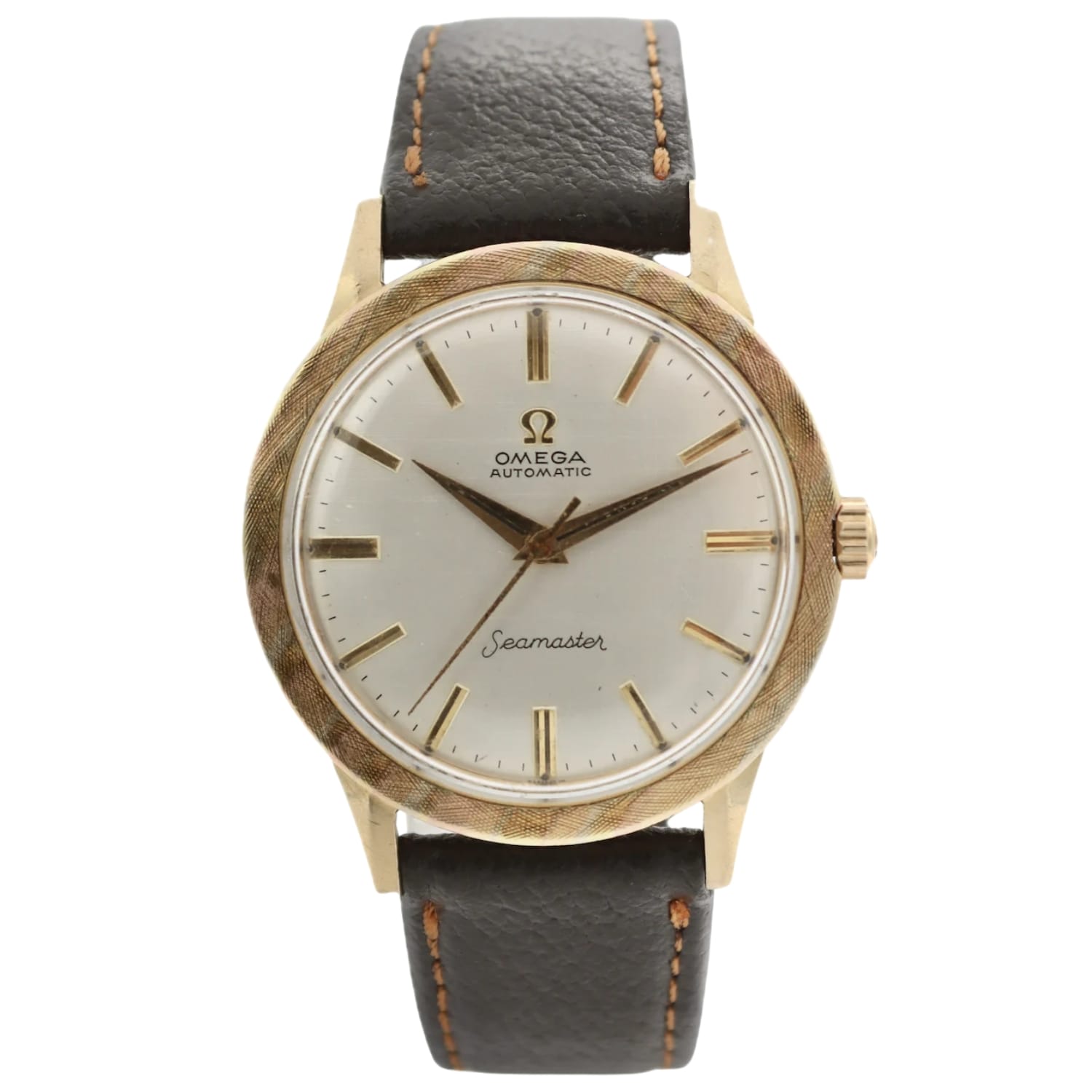
The Omega Seamaster L6300 represents a fascinating chapter in mid-century American horological history, a watch specifically tailored for the United States market during the golden age of mechanical watchmaking. While the Seamaster name conjures images of professional dive watches and James Bond glamour, the L6300 tells a different story: one of elegant dress watches, import regulations, and a uniquely American distribution strategy that created one of the more intriguing collector’s footnotes in Omega’s vast catalog.
What makes the L6300 significant is its position as a US-exclusive configuration, cased domestically to navigate import tariffs while maintaining Omega’s Swiss watchmaking pedigree. Combined with its characteristic tri-color aesthetic and the rare caliber 560 movement found in many examples, the L6300 offers collectors a well-proportioned dress watch with genuine scarcity and historical intrigue.
History & Production Period
The Omega Seamaster L6300 emerged during the early-to-mid 1960s, specifically between approximately 1963 and 1967, during a period when the Seamaster line was rapidly diversifying beyond its dive watch origins. This era saw Omega expanding the Seamaster family to include sophisticated dress watches that could transition seamlessly from boardroom to cocktail hour, capitalizing on the brand’s reputation while offering more accessible price points for the American consumer.
The L6300’s story is inextricably linked to the Norman Morris Corporation, Omega’s exclusive US distributor from 1930 through 1980. Norman Morris, an Austrian immigrant who founded his corporation in 1924, transformed how Swiss watches entered the American market. To circumvent high US import duties on fully assembled watches (particularly those with movements containing more than 17 jewels), Morris developed a system where Swiss-made movements, dials, and hands were imported separately and then cased in the United States using domestically manufactured cases.
Vintage 34mm Omega L6300 Seamaster Men’s Automatic
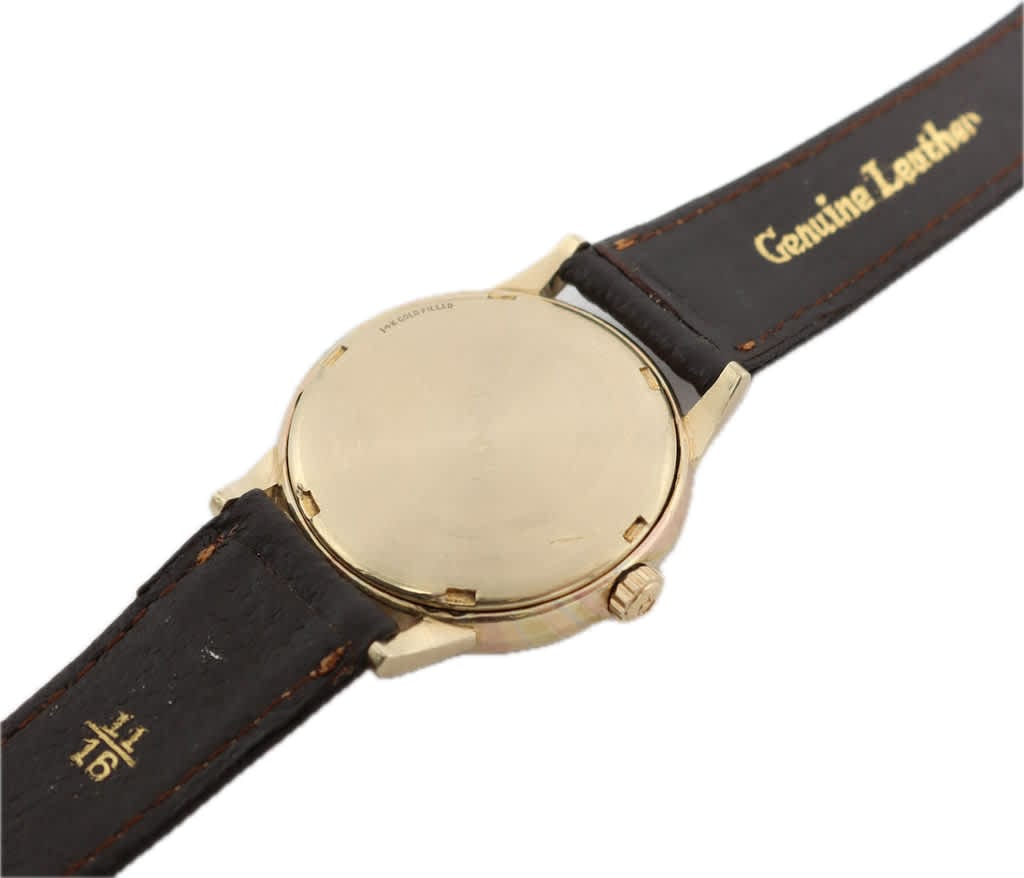
The L6300 case reference was one result of this arrangement. The cases were manufactured by Ross, a prominent American case maker based in the United States that produced gold-filled cases for several Swiss manufacturers during this period. Ross cases are identifiable by their maker’s mark stamped inside the case back alongside the Omega Watch Co. marking. This domestic casing operation allowed Omega to offer gold-toned dress watches at price points competitive with American brands while maintaining Swiss movement quality.
The “L” prefix in the L6300 reference denotes its status as part of Norman Morris’s US-specific catalog. Other Norman Morris case references from this era used prefixes including “KL,” “KM,” and “LL,” all indicating US-market configurations. Production numbers for the L6300 specifically are not documented, but given the limited nature of caliber 560 production (only 3,000 movements total across all references from 1959-1967) and the relatively short production window, examples are considerably less common than their Swiss-cased counterparts.
The L6300 was phased out as Omega transitioned its US distribution strategy in the late 1960s and as import regulations evolved. The practice of domestic casing would continue into the 1970s but became less prevalent as trade agreements changed.
Technical Specifications
The Omega Seamaster L6300 presents classic dress watch proportions refined for the American wrist of the 1960s:
| Specification | Detail |
|---|---|
| Case Diameter | 34mm |
| Case Thickness | Approximately 10-11mm (varies by movement) |
| Lug Width | 18mm |
| Lug-to-Lug | Approximately 40-41mm |
| Case Material | 14k Gold Filled |
| Case Maker | Ross (USA) |
| Crystal | Acrylic (Hesalite) with Omega logo at center |
| Case Back | Snap-back with hippocampus medallion |
| Water Resistance | Nominal splash resistance (30m equivalent) |
| Case Construction | Three-piece (bezel, case body, snap back) |
Vintage 34mm Omega L6300 Seamaster Men’s Automatic
The 34mm case diameter, considered modest by contemporary standards, was typical for men’s dress watches of the era and wears comfortably on wrists from 6.5 to 7.5 inches. The relatively short lug-to-lug measurement ensures the watch doesn’t overhang smaller wrists, contributing to its elegant, understated presence.
Movements/Calibers
The Omega Seamaster L6300 was primarily fitted with two movements from Omega’s mid-500 series, both representing significant chapters in the brand’s automatic movement development:
Caliber 560 (Most Common in L6300)
The caliber 560 is the primary movement associated with the L6300 and represents one of the most intriguing rarities in Omega’s production history.
Technical Specifications:
- Production Period: 1959-1967
- Total Production: 3,000 movements across all references
- Jewel Count: 17 rubies
- Frequency: 19,800 vph (2.75 Hz)
- Diameter: 27.9mm
- Thickness: 4.5mm
- Power Reserve: Approximately 50 hours
- Features: Automatic winding with bi-directional rotor, indirect center seconds, hacking function absent
- Adjustment: Available in two versions: “Unadjusted” or “Adjusted 2 Positions” (marked on rotor bridge)
The caliber 560 was essentially a cost-reduced variant of the 24-jewel caliber 562, specifically engineered for the US market to avoid import duties on movements with more than 17 jewels. Despite the lower jewel count, the 560 shared the same fundamental architecture as its more elaborately jeweled siblings in the 500 series, based on the designs of Marc Favre, whose company Omega had acquired.
What makes the caliber 560 particularly interesting to collectors is its extreme scarcity. With only 3,000 movements produced over an eight-year period, divided among nine different model references (including three Seamaster De Villes, one generic Seamaster, and one Omega Automatic), each configuration effectively becomes a limited edition. The caliber 560 movements found in L6300 cases typically date from the mid-1960s, with serial numbers ranging from approximately 20 million to 23 million.
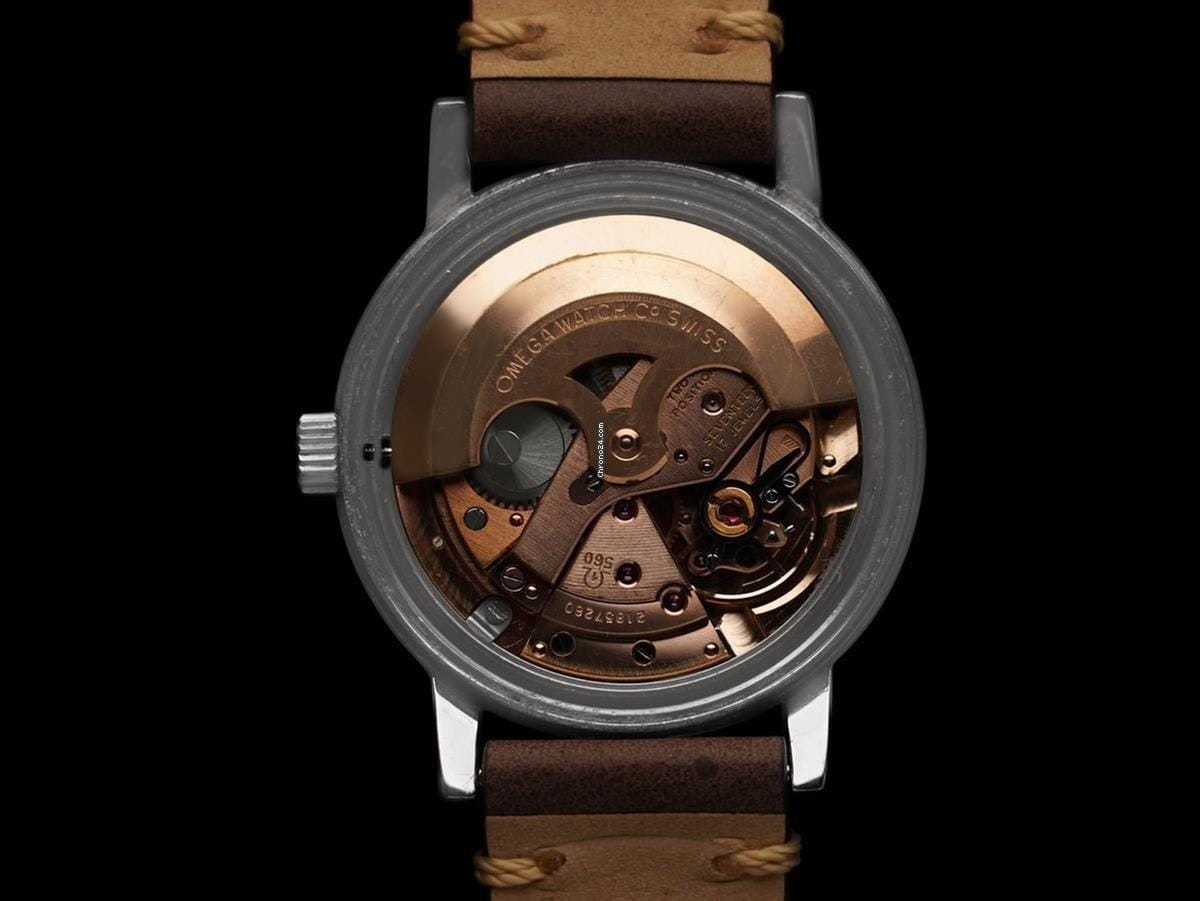
Omega 1964 Vintage Mens Cal. 560 Stainless Steel Watch, Automatic, Date – Rare Only 3000 Made
Variations exist between early and late production caliber 560 movements. Earlier examples (generally pre-1965) are more likely to carry the “Adjusted 2 Positions” marking on the rotor bridge, indicating superior regulation. Later examples often show only “Unadjusted” marking, though both variants perform admirably when properly serviced. Additionally, US-market caliber 560 movements typically bear the “OXG” stamping, the import code assigned to Norman Morris Corporation by US Customs.
Caliber 550 (Less Common in L6300)
Some L6300 examples house the caliber 550, the base movement of the entire mid-500 series.
Technical Specifications:
- Production Period: 1958-1969
- Jewel Count: 17 rubies
- Frequency: 19,800 vph (2.75 Hz)
- Diameter: 27.9mm (caliber designation: 12.5”’)
- Thickness: 4.5mm
- Power Reserve: Approximately 50 hours
- Features: Automatic winding with bi-directional rotor, indirect center seconds
The caliber 550 served as the foundation for an entire family of 17 related movements, including chronometer-grade variants (caliber 551), date complications (caliber 561), and day-date versions (caliber 751). While mechanically identical in most respects to the caliber 560, the 550 enjoyed significantly wider production and can be found in many more references across Omega’s international catalog.
Both movements share the characteristic mid-500 series architecture: a brass plate with Geneva stripes or perlage finishing, a four-armed Glucydur balance wheel, a Nivarox balance spring with micrometric swan-neck regulator (on adjusted variants), a straight-line lever escapement, and Omega’s distinctive indirect center seconds system that isolates the seconds gear from the going train. This isolation provided flexibility in dial design and improved serviceability, though at the cost of slightly reduced efficiency compared to direct drive systems.
Servicing intervals for both calibers typically fall between five and seven years, depending on use conditions. When properly maintained, these movements demonstrate excellent longevity and continue to provide accurate timekeeping well into their sixth decade.
Dial Variations
The Omega Seamaster L6300 is perhaps most distinctive for its tri-color dial and bezel configuration, a characteristic feature that lends the reference its collector nickname.
The Tri-Color Configuration
The “tri-color” designation refers to the combination of three different gold tones incorporated into the watch’s aesthetic: rose gold, yellow gold, and white gold elements that create a subtle yet sophisticated interplay of warm and cool tones. This configuration typically manifests as:
Vintage 34mm Omega L6300 Seamaster Men’s Automatic
- Applied Hour Markers: Faceted, elongated baton markers in alternating gold tones (often rose and yellow gold)
- Hands: Dauphine or leaf-style hands in a contrasting gold tone from the markers
- Dial Text: “Omega Automatic” at 12 o’clock and “Seamaster” at 6 o’clock in contrasting finishes
The tri-color effect is most pronounced on silvered or champagne dial variants, where the interplay of different gold tones against the light background creates depth and visual interest without ostentation. The applied hour markers are typically solid gold, not gold-plated, with black enamel inlay for contrast.
Vintage 34mm Omega L6300 Seamaster Men’s Automatic
Dial Colors and Finishes
Champagne/Silver Sunburst: The most common dial finish for the L6300, featuring radial sunburst finishing that catches light dynamically. The champagne variant leans warmer with cream or ivory undertones, while the silver variant presents cooler, more neutral tones.
White/Silver Matte: Less common, presenting a flatter, more subdued appearance without sunburst texture.
Black: Rare for the L6300 configuration, though occasionally encountered. Black dials tend to show more pronounced patina and are more susceptible to refinishing in the vintage market.
Dial Printing and Markings
Authentic L6300 dials feature several key elements:
- Omega Logo: Applied at 12 o’clock, positioned above the “Automatic” text
- “Omega Automatic”: Printed in a serif font at 12 o’clock
- “Seamaster”: Printed in Omega’s characteristic script font at 6 o’clock
- “Swiss”: Printed at bottom of dial at 6 o’clock position
Luminous Material: Examples from 1963-1967 would have used tritium-based luminous paint, replacing the radium used in earlier Seamaster models. However, given the L6300’s dress watch orientation, luminous material is typically minimal or absent altogether. When present, original tritium lume has aged to a cream or light yellow patina. Watches serviced by Omega in later decades may have had luminous material replaced with modern SuperLuminova, which glows bright green-blue rather than the warm cream color of aged tritium.
Hands
Period-correct L6300 examples feature either:
- Dauphine hands: Faceted, tapered hands in gold finish, the most common configuration
- Leaf hands: More decorative, with broader centers tapering to points
- Baton hands: Straight, minimalist hands (less common on L6300)
All hands should show a patina consistent with the dial’s aging.
Case & Bezel Variations
14k Gold Filled Construction
The defining characteristic of the L6300 case is its 14k gold-filled construction, a distinctly American approach to accessible luxury that differs fundamentally from both solid gold and gold plating.
Gold-filled cases consist of a base metal core (typically brass or copper alloy) with a thick layer of gold alloy mechanically bonded to the exterior under heat and pressure. By US law, gold-filled items must contain at least 5% gold content by total weight, and the gold layer on mid-century examples typically measures approximately 80 microns (0.08mm) in thickness. This is substantially thicker than gold plating (typically 20 microns) but thinner than gold-capping (200 microns), offering a middle ground between durability and cost.
Vintage 34mm Omega L6300 Seamaster Men’s Automatic
Advantages of Gold-Filled Construction:
- Superior wear resistance compared to plating, rarely showing wear-through if properly cared for
- Complete coverage including case back, threads, and lug undersides (unlike gold-capped)
- Sharper case edges and more complex shapes possible compared to gold-capped
- Maintains luster over decades with minimal care
- Substantial gold content provides a genuine precious metal feel
Identifying Gold-Filled Cases:
The L6300’s gold-filled status is indicated by markings between the lugs or on the case back interior reading “14K Gold Filled” alongside the Ross case maker’s mark and Omega Watch Co. stamp. The absence of gold hallmarks (750, 585, etc.) and the presence of “Gold Filled” marking are key identifiers distinguishing these cases from solid gold examples.
Case Finishing and Design
The L6300 case follows a classic round dress watch template with:
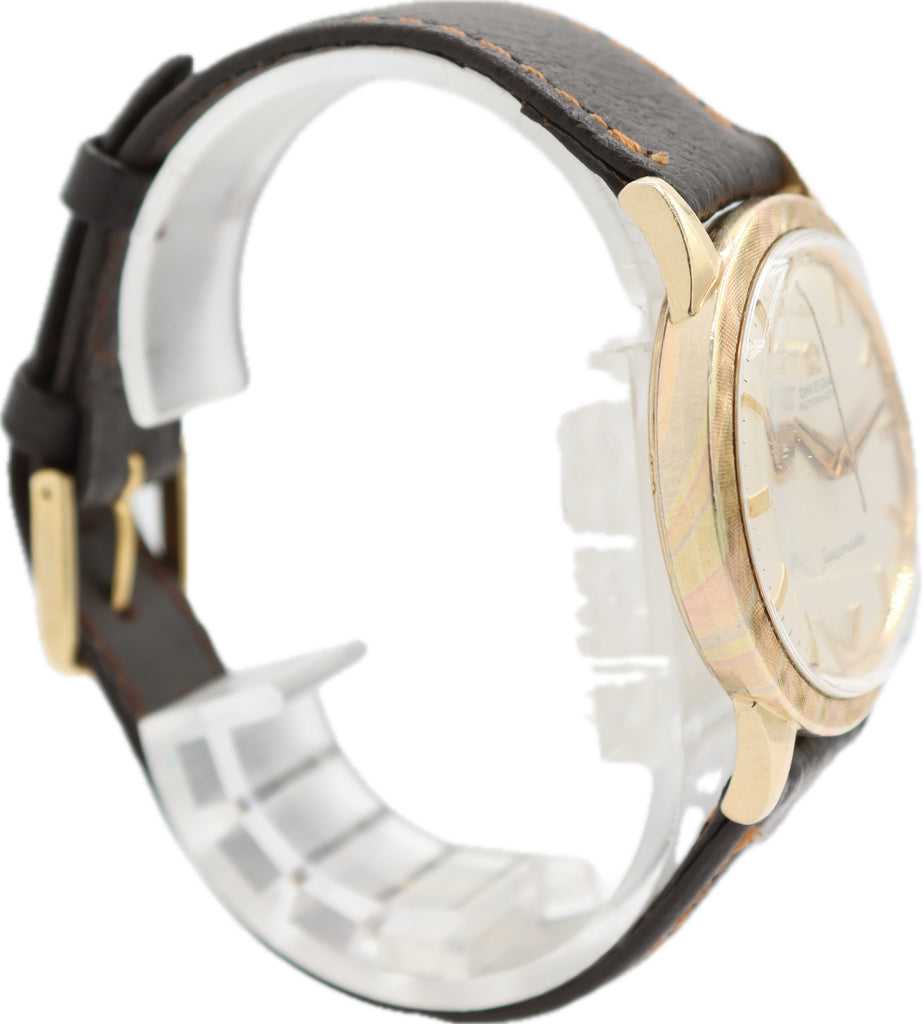
- Lugs: Straight, tapered lugs with polished top surfaces and brushed sides
- Bezel: Fixed, polished bezel that frames the dial
- Crown: Signed Omega crown at 3 o’clock position, typically smooth without fluting
- Case Back: Snap-off case back featuring Omega’s iconic hippocampus (seahorse) medallion in relief
The case profile is relatively flat and elegant, designed to slip easily under a shirt cuff. Case edges should show sharp, well-defined lines, though after six decades, some softening from polishing is common and acceptable if the form remains intact.
Condition Considerations
When evaluating an L6300, careful attention to the gold-filled case condition is essential:
Acceptable Wear:
- Light surface scratching consistent with age and use
- Minor softening of case edges from careful polishing
- Light patina or tarnishing (easily addressed with gentle cleaning)
Problematic Wear:
- Wear-through to base metal at lug tips, bezel edges, or crown area (appears as darker, copper-toned metal showing through)
- Heavily rounded or misshapen case edges from aggressive polishing
- Significant denting or deep scratches
Gold-filled cases that show wear-through cannot be economically repaired, as re-plating costs typically exceed the watch’s market value. NATO or pass-through straps should be avoided on gold-filled watches, as they can wear through the case back over time.
Bracelet & Strap Options
The Omega Seamaster L6300 was not offered with a factory metal bracelet, reflecting both its dress watch character and the economic considerations of the US market configuration.
Original Equipment
Leather Straps: L6300 examples left the retail environment fitted with leather straps, typically:
- Dark brown or black calfskin
- 18mm width tapering to 16mm at the buckle
- Minimal padding (thin profile appropriate for dress watches)
- Simple pin buckle, occasionally gold-filled to match case
Original Omega-branded straps from the 1960s are exceptionally rare to find intact after six decades of wear. Most survivors have been fitted with replacement straps over the years.
Period-Correct Replacement Options
For collectors seeking period-appropriate aesthetics:
Omega Vintage Bracelets: While not original equipment, some collectors pair their L6300 with vintage Omega bracelets from the same era. Appropriate references include:
- 1502, 1036, 8220, 3010: “Beads of Rice” style bracelets with 18mm end links
- 7077, 7912, 1035: Flat-link bracelets with 18mm end links
- End link references: 570 or 70 for proper fitment
Original vintage Omega bracelets command premium prices ($300-500+) and require careful authentication, as reproduction examples are common.
Leather Straps: Modern leather straps offer the most authentic aesthetic at accessible prices:
- 18mm width tapering to 16mm buckle
- Thin profile (2-3mm thickness)
- Materials: calfskin, alligator, lizard, or cordovan
- Colors: brown, black, or burgundy
Quality vintage-style straps are available from makers including Balabanoff, Tuns Leather, HD Straps, and others specializing in mid-century aesthetics.
Identifying Original vs. Replaced Parts
The vintage Omega market presents authentication challenges, and the L6300’s US-market origins add additional complexity. Understanding what constitutes correct, original configuration is essential for collectors.
Dial Authenticity
Correct Original Dials:
- Crisp, well-defined printing with no bleeding or fuzzy edges
- Omega logo with proper proportions and positioning
- Applied markers seated flush with no glue residue visible
- Patina that appears uniform and natural (not artificially induced)
- Text spacing and font matching period-correct examples
- Signature aligned (not canted or mispositioned)
Warning Signs of Refinished/Replaced Dials:
- Overly vibrant colors inconsistent with 60-year aging
- Soft, indistinct printing edges
- Luminous plots that appear “new” or glow bright colors under UV light
- Glue residue around applied markers
- Incorrect fonts or spacing
- Spelling errors or incorrect text placement
- Modern SuperLuminova without explanation of service history
Dial refinishing was common practice during the 1970s-1990s when original dials showed age. While a professional refinish can be aesthetically pleasing, collectors strongly prefer original dials with honest patina over refinished examples, typically accepting premium values of 30-50% for original dial condition.
Hands
Original Hands:
- Gold finishing consistent with dial marker tones
- Patina matching dial aging
- Proper lengths (minute hand reaching marker tips, hour hand centered on markers)
- No evidence of replacement luminous material
- Style appropriate to reference and production year
Replacement Hands:
- Mismatched patina (too bright or wrong color compared to dial)
- Incorrect style for the reference
- Poor fit (hands touching dial or each other)
- Modern luminous material visible
Movement Authenticity
Correct Caliber 560:
- Movement serial number in 20-23 million range (1963-1967 production)
- “OXG” marking present (Norman Morris import code)
- Rotor marked “Adjusted 2 Positions” or “Unadjusted”
- Movement serial aligns with case serial for dating
- Omega caliber 560 marking visible on movement
Concerns:
- Movement serial number not matching production period for L6300
- Absence of OXG marking (suggests movement swap)
- Incorrect caliber altogether (some sellers incorrectly list caliber 550 as 560)
- Evidence of amateur repair or modification
Case and Crown
Original Case Elements:
- “14K Gold Filled” marking clearly legible
- Ross case maker mark present
- Omega Watch Co. marking on case back interior
- Hippocampus medallion well-defined on case back
- Case proportions consistent with factory specifications
Original Crown:
- Omega logo visible (may be worn but present)
- Appropriate size and thread pitch for case
- Gold-filled finish matching case
Replacement crowns are common and acceptable if properly fitted, as original crowns often wore heavily or were lost during servicing. An unsigned replacement crown should be noted but does not significantly impact value if period-appropriate.
Crystal
Original Omega acrylic crystals from the 1960s feature a tiny Omega logo etched at the center on the underside (not visible when mounted, only when removed). This is absent on replacement crystals. While original crystals are prized, replacement is both common and necessary when originals become scratched or clouded. Modern acrylic crystals can be polished if scratched, making them practical choices.
Collector Notes & Market Context
The Omega Seamaster L6300 occupies an interesting position in the vintage watch market: simultaneously accessible and genuinely rare, embodying both mid-century American marketing ingenuity and Swiss watchmaking excellence.
Market Positioning
Current Market Range (2024-2025):
- Good Condition (original dial, working movement, acceptable case): $800-1,500 USD
- Excellent Condition (outstanding dial, unpolished case, caliber 560): $1,500-2,200 USD
- Exceptional (full original condition with papers, rare dial variant): $2,200-3,000+ USD
These valuations represent the L6300’s position as an entry-level vintage Omega dress watch, offering genuine scarcity (particularly with caliber 560) and quality construction at prices accessible to beginning collectors. The L6300 commands moderate premiums over more common Swiss-cased Seamasters from the same era but remains well below the prices of iconic references like the Seamaster 300 dive watches or Constellation chronometers.
Value Drivers
Several factors influence L6300 pricing:
Caliber 560 Premium: Examples housing the rare caliber 560 command 15-25% premiums over otherwise identical caliber 550 examples, reflecting the movement’s genuine scarcity and collector interest.
Dial Condition: Exceptional dial condition represents the single largest value driver. An L6300 with pristine original dial showing perfect printing and uniform patina can command double the price of an identical example with a refinished or damaged dial.
Case Condition: Gold-filled cases must be evaluated carefully. Examples showing no wear-through and retaining sharp lines are increasingly difficult to find and command premiums. Conversely, cases with visible wear-through to base metal see significant value deductions.
Tri-Color Configuration: The characteristic tri-color dial and marker configuration is the most desirable L6300 variant. Plain dial variants without the tri-color effect trade at discounts.
Completeness: While box and papers are rarely encountered with L6300 examples given their 60+ year age, their presence can double or triple valuation.
Collecting Considerations
Strengths:
- Genuine rarity, particularly with caliber 560
- Classic dress watch proportions highly wearable for modern tastes
- Quality Swiss movement with good parts availability for service
- Distinctive tri-color aesthetic sets it apart from common vintage Omegas
- Historically interesting US-market provenance
- Accessible entry point for Omega collecting
Challenges:
- Gold-filled cases require careful evaluation for wear-through
- Refinished dials common in the market
- Relatively unknown compared to iconic Omega references
- Limited documentation and production records
- Modest brand recognition outside collector circles
What to Avoid
Red Flags:
- Any wear-through to base metal on gold-filled case (not economically repairable)
- Obvious dial refinishing or replacement
- Mismatched or incorrect movement (caliber other than 550/560)
- Heavy polishing resulting in shapeless cases
- Missing case maker markings (suggests case replacement)
- Sellers describing as “solid gold” rather than gold-filled
Compromises Worth Considering:
- Replaced crystal (common, practical, inexpensive)
- Replaced crown if properly fitted
- Light case polishing if edges remain defined
- Service replacement hands if style-appropriate and well-matched
- Replaced strap or bracelet (originals effectively impossible to find)
Market Outlook
The vintage Omega dress watch market has seen steady appreciation over the past decade as collectors increasingly appreciate the quality and design of mid-century pieces beyond the sport watch categories that dominate headlines. The L6300, with its genuine scarcity and historical interest, is well-positioned to benefit from this trend, though it’s unlikely to see explosive appreciation given its nature as a lesser-known reference.
For collectors, the L6300 represents an opportunity to own a genuinely rare Omega with interesting provenance at prices that reflect wearability and enjoyment rather than speculation. The watch’s modest size and elegant design make it highly practical for regular wear, aligning with the current trend toward smaller vintage proportions.
Servicing and Maintenance
Both caliber 550 and 560 movements remain readily serviceable through qualified watchmakers, with parts availability generally good through Omega’s service network and aftermarket suppliers. Expected service costs range from $300-500 for a basic overhaul at independent watchmakers, or $500-700+ through Omega’s official service centers.
Gold-filled cases should be cleaned only with soft cloths and mild soap, never with abrasive polishing compounds. Professional polishing should be avoided unless absolutely necessary, as each polishing removes gold material that cannot be replaced.
Acrylic crystals can be polished by the owner using polywatch or similar compounds, making minor scratch removal straightforward without professional intervention.
Conclusion
The Omega Seamaster L6300 embodies a unique moment in horological history when American import regulations, Swiss manufacturing excellence, and mid-century design sensibilities converged to create watches specifically tailored for the US market. While not among Omega’s most celebrated references, the L6300 offers collectors authentic rarity, quality construction, and distinctive aesthetics at accessible price points.
For the collector drawn to well-proportioned dress watches with genuine provenance and historical interest beyond mainstream icons, the L6300, particularly in tri-color configuration with the rare caliber 560 movement, represents a compelling acquisition. These watches deserve preservation and appreciation not as speculative investments but as wearable links to an era when watchmaking excellence was accessible, innovative distribution strategies shaped product offerings, and a 34mm gold dress watch represented both aspiration and achievement.
Whether acquired as a first vintage Omega, a daily wearer, or a focused collecting interest, the L6300 rewards those who take time to understand its context and appreciate its understated elegance. In an market often fixated on the latest auction record or Instagram sensation, the L6300 offers something increasingly valuable: substance, wearability, and a story worth telling.