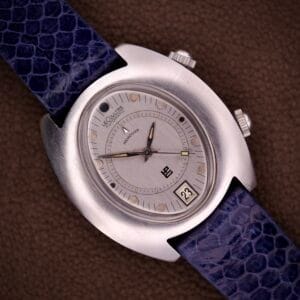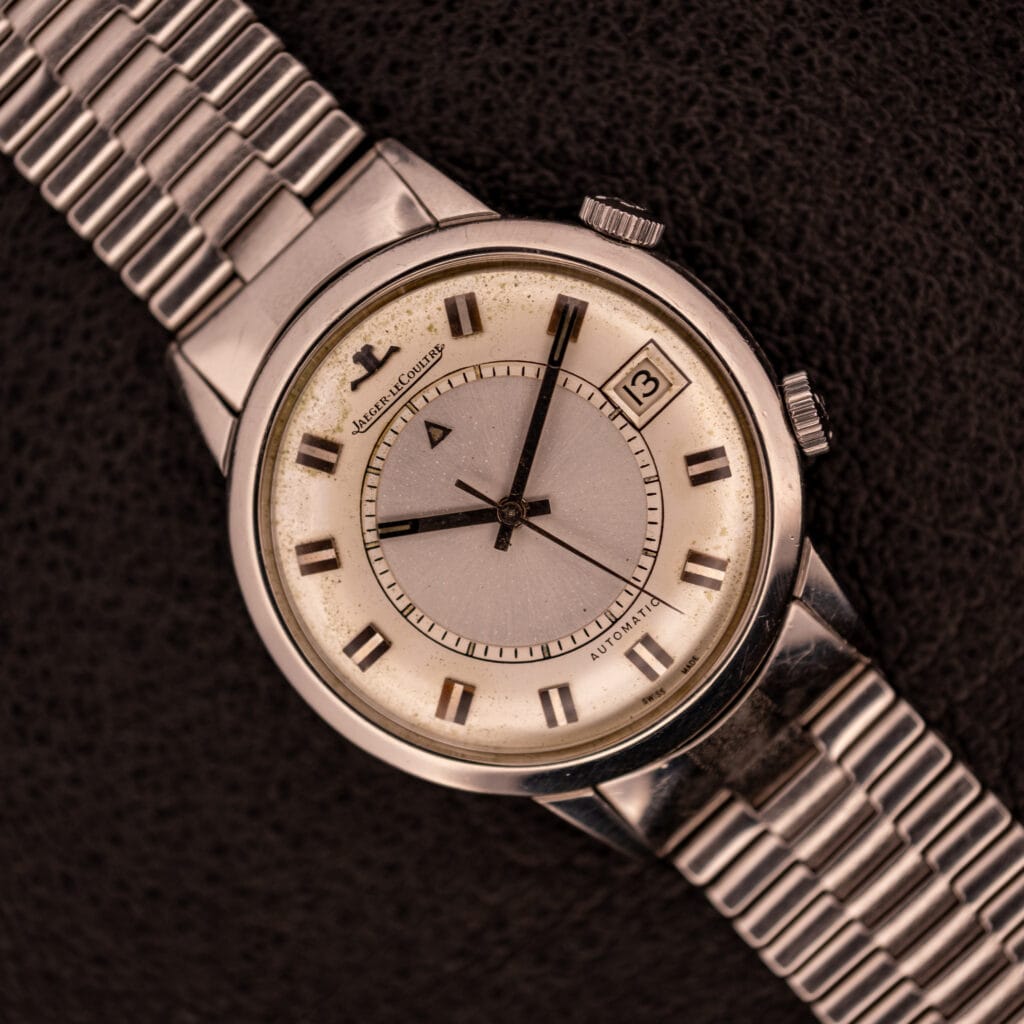
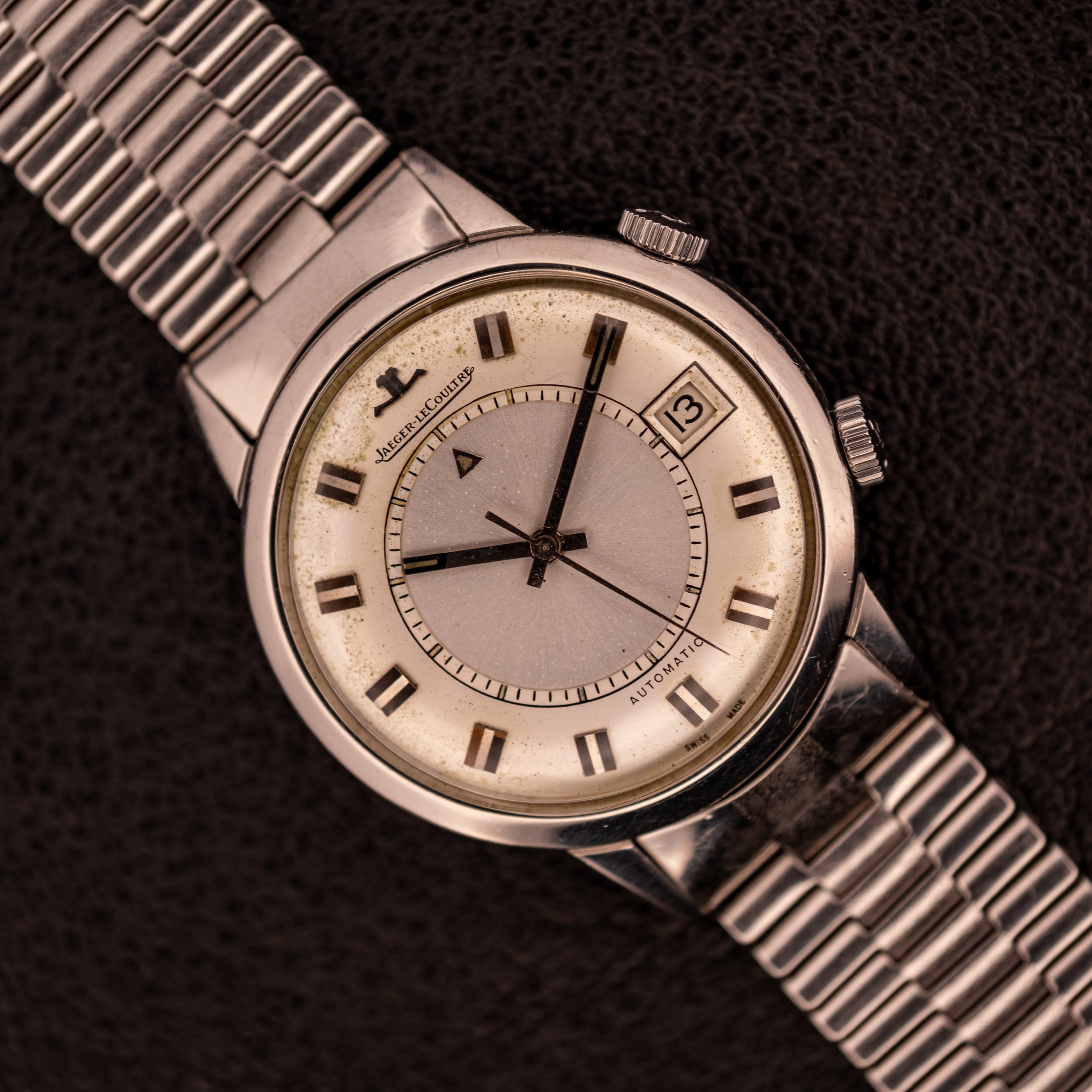
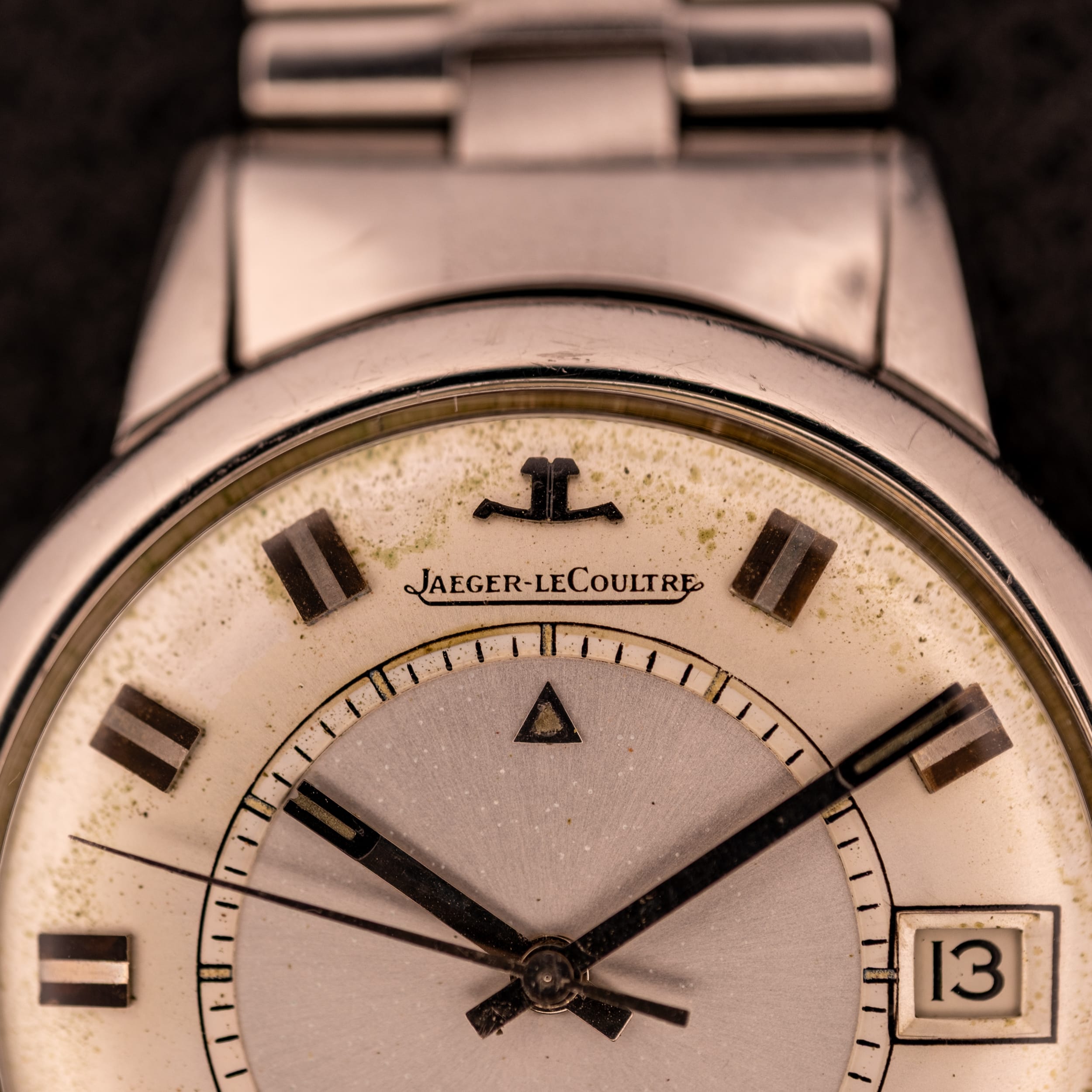
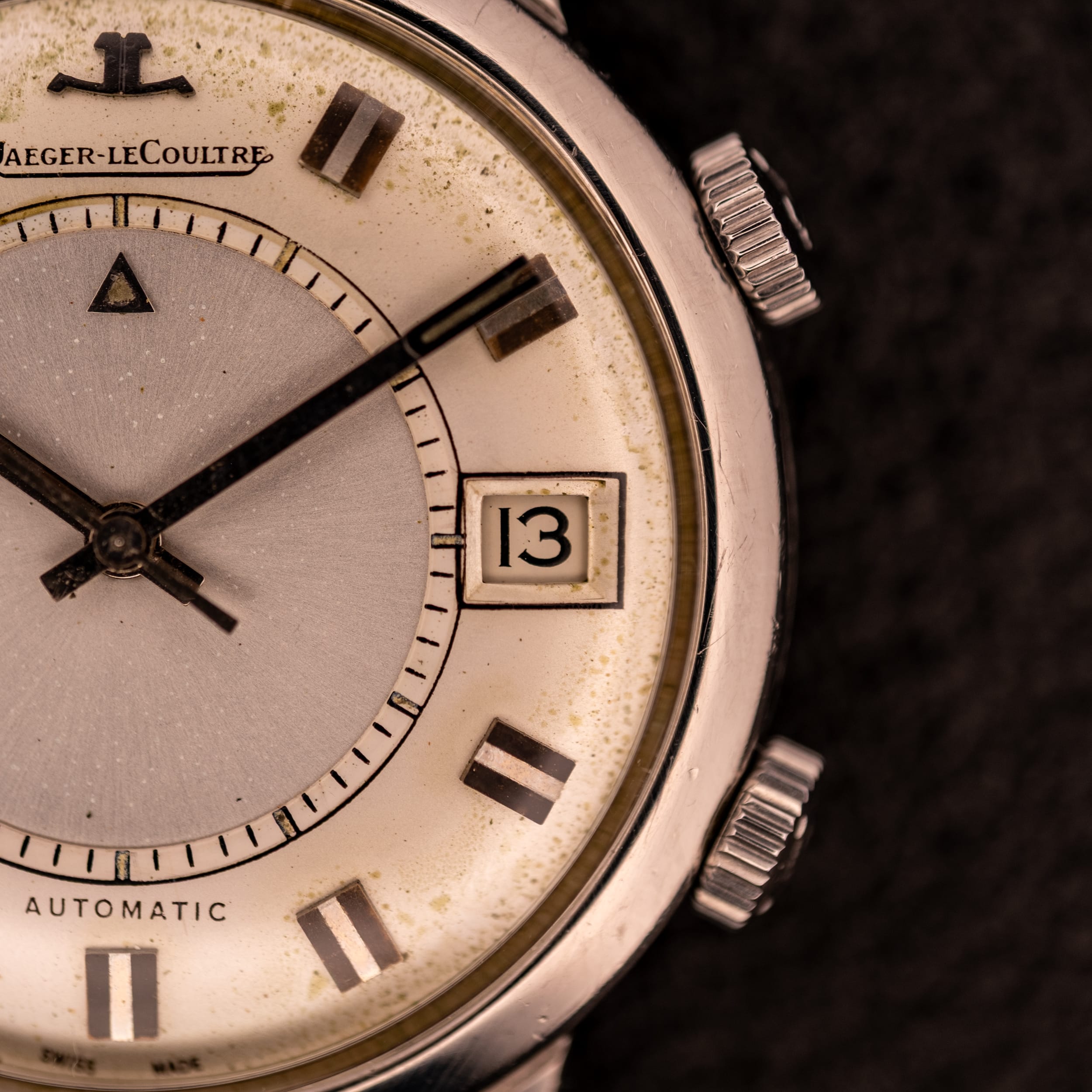
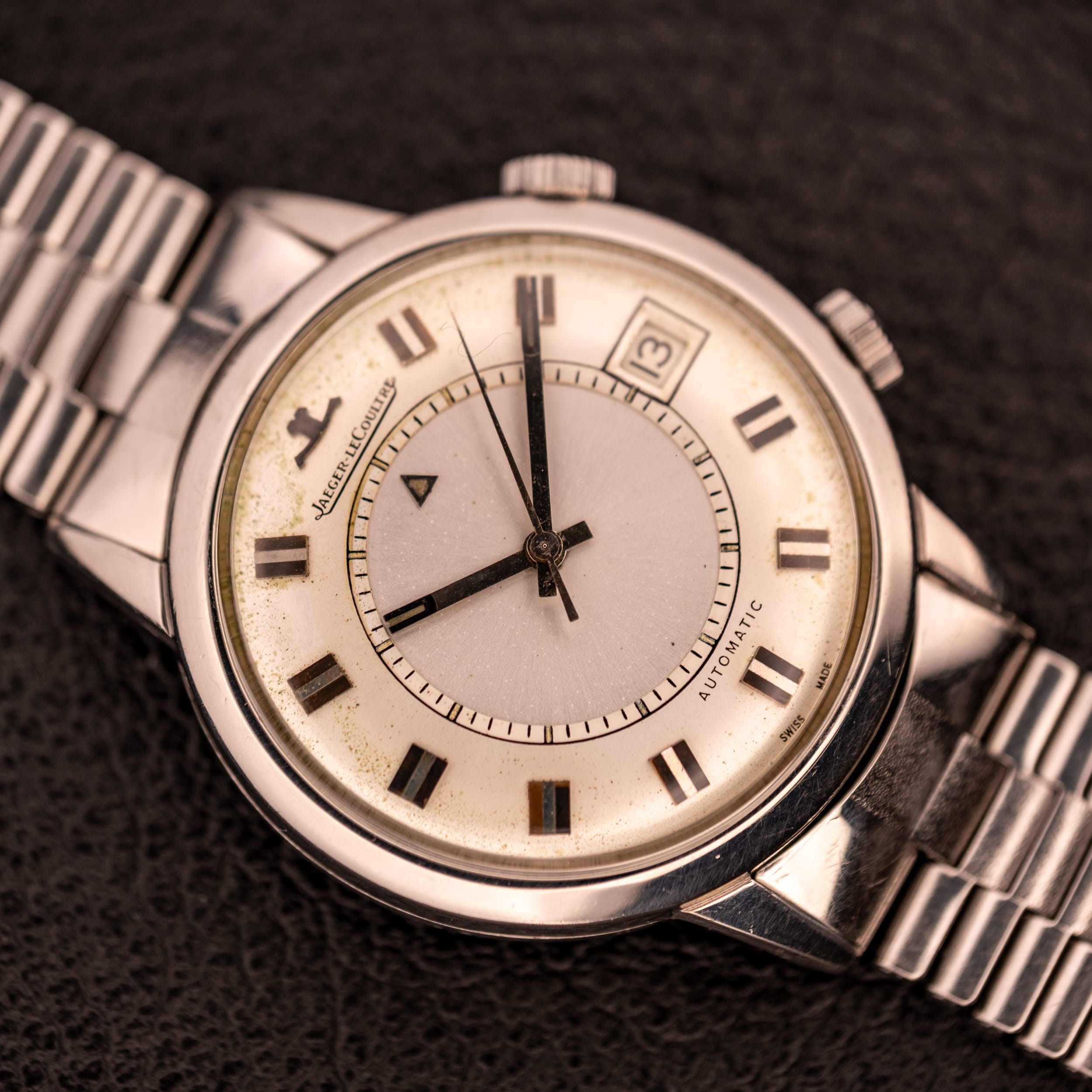
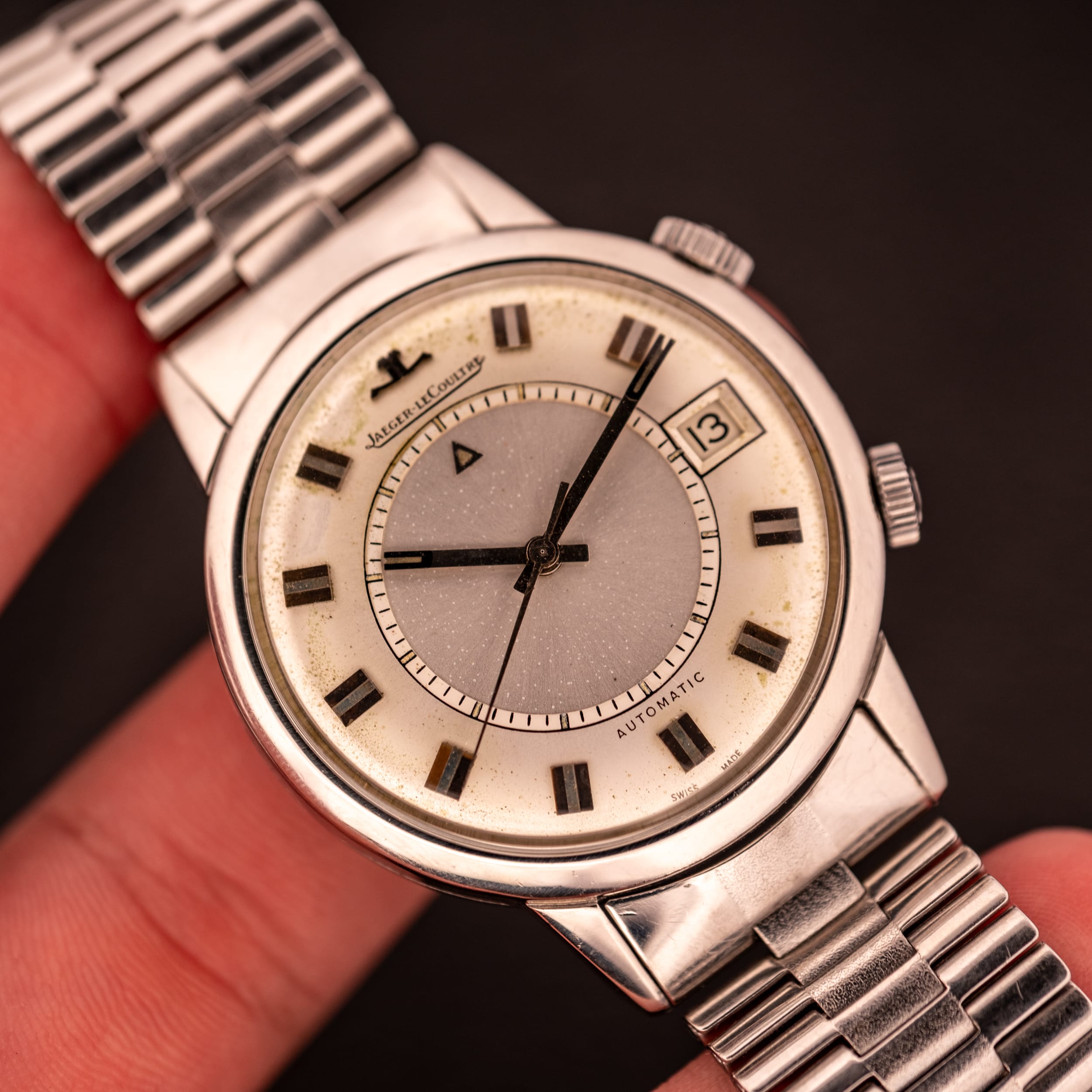
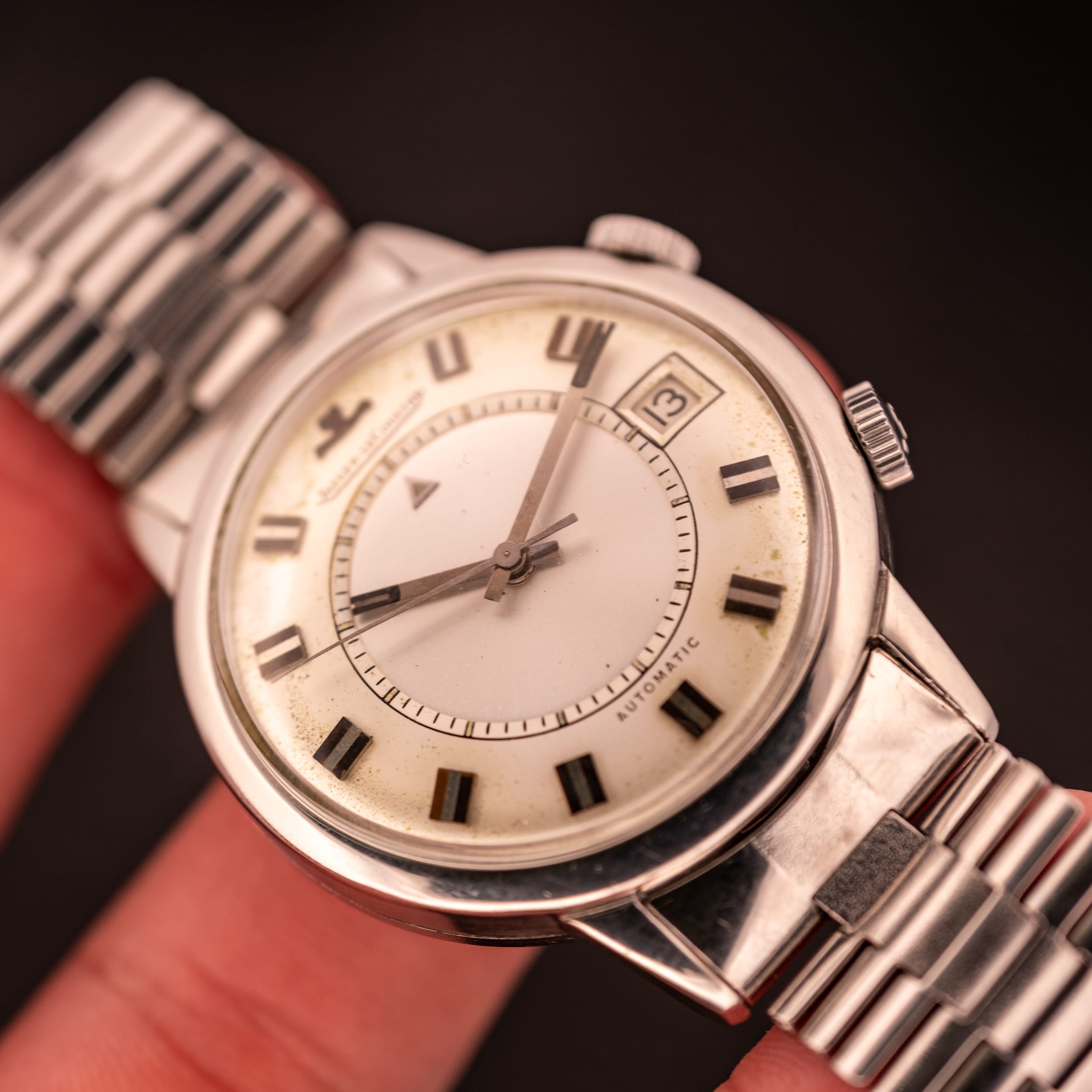
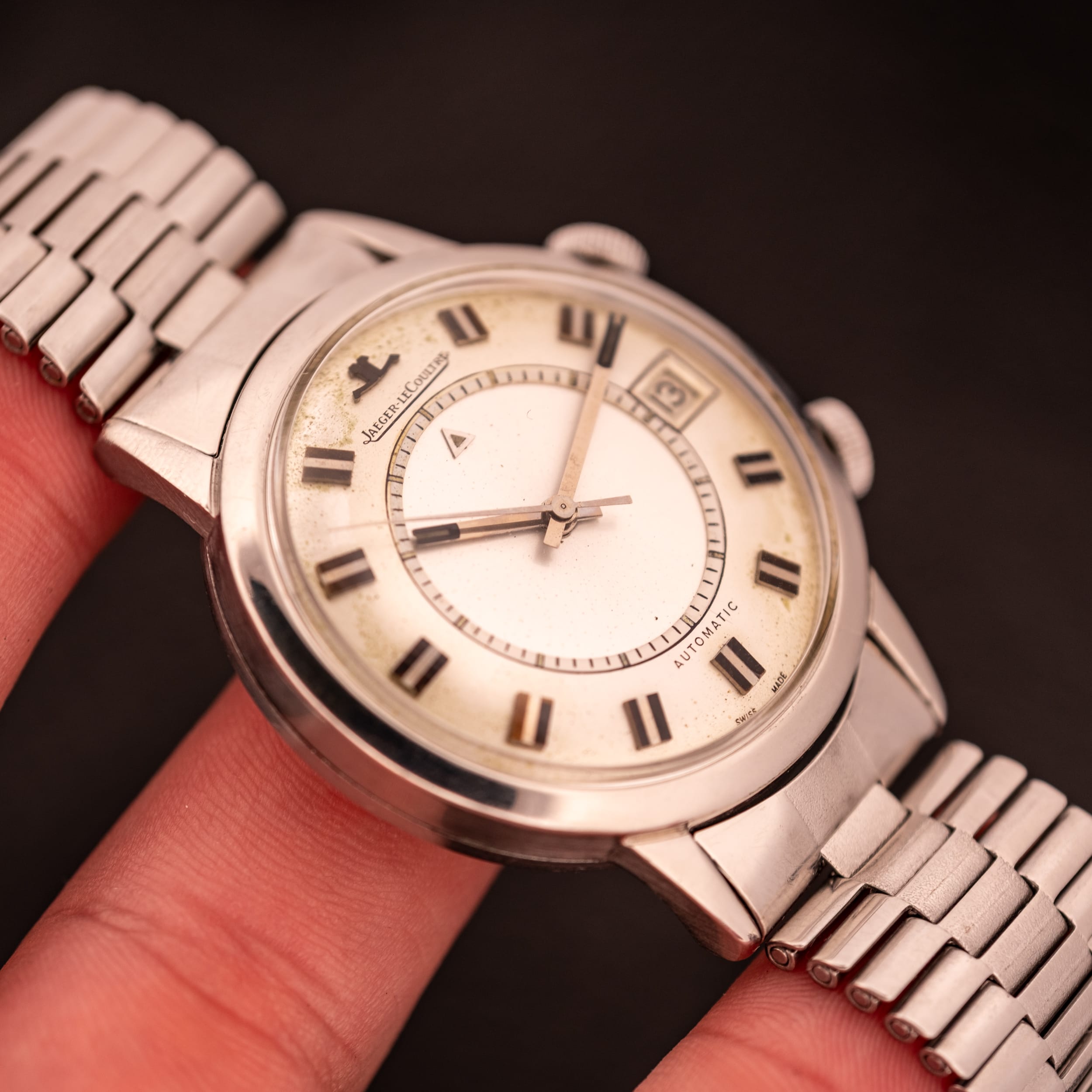
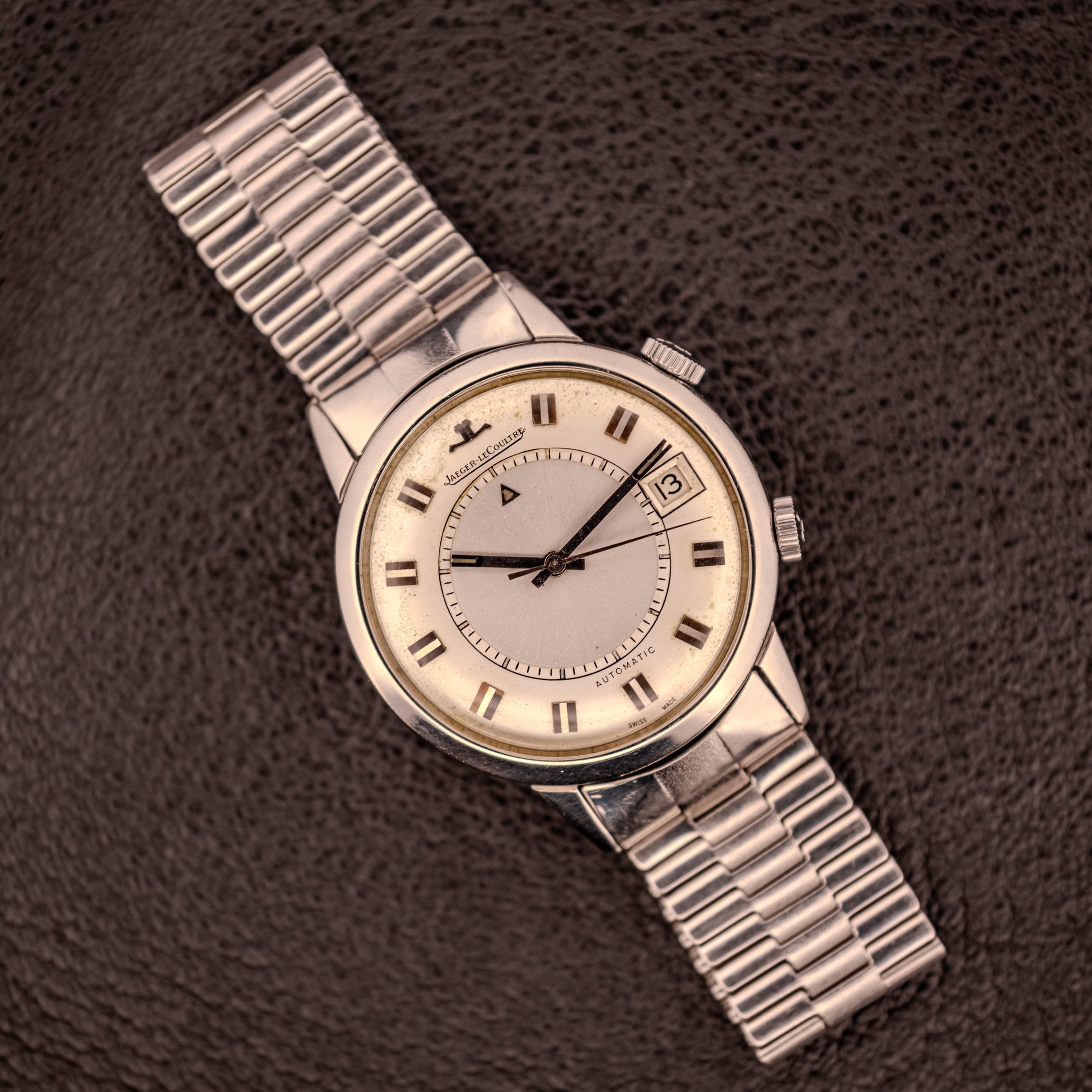
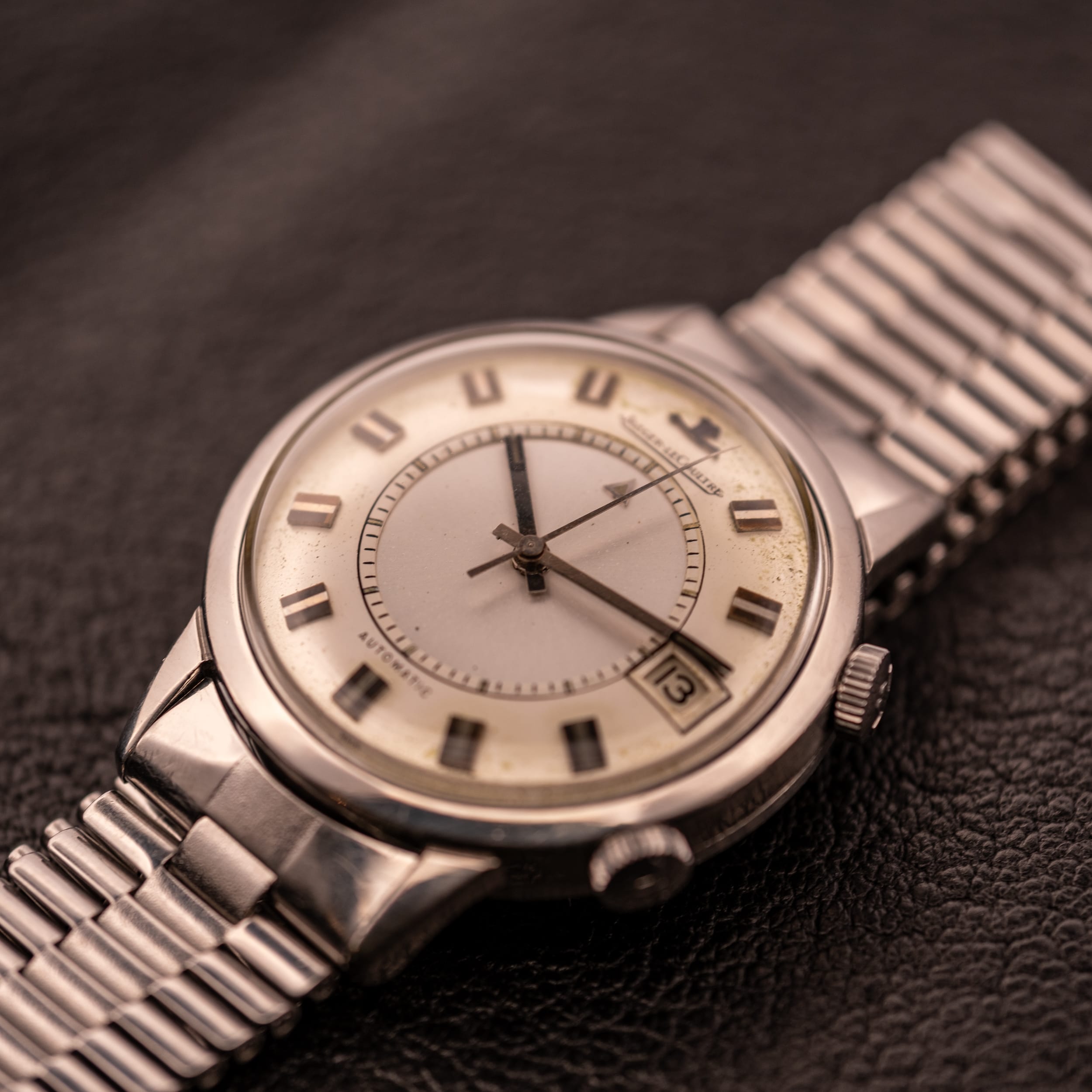
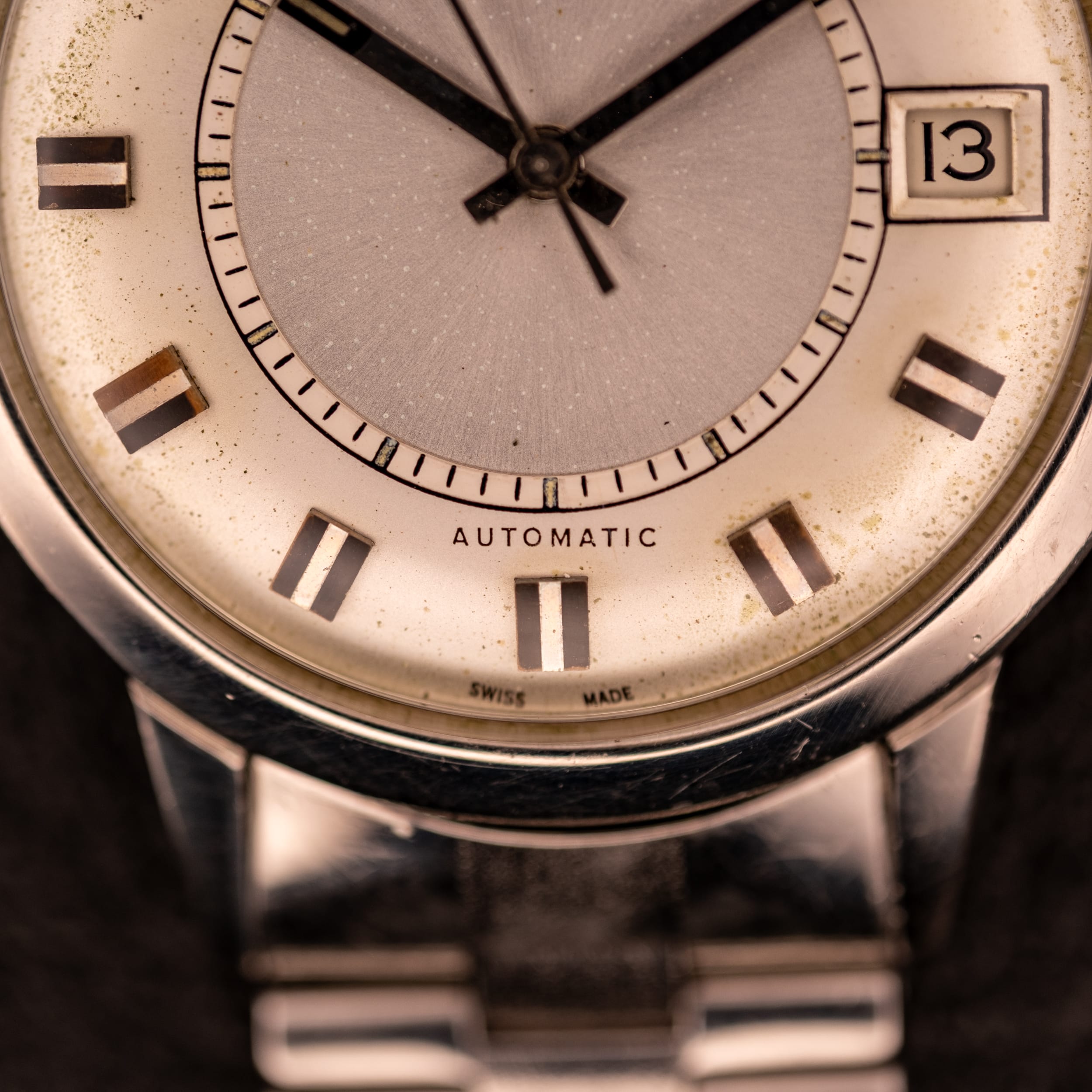

A silver outer chapter ring carrying applied steel baton markers, an inner sunburst recess framing the alarm disc, and a single applied steel triangle pointing skyward at twelve. That is the canonical Jaeger LeCoultre Memovox dial, and on the right reference in the right case material, it is in our opinion the design choice that defines the alarm wristwatch of the 1960s. We mean the Reference E855, the steel-cased bumper-automatic Memovox that arrived in 1960 and quietly ran for a decade as the manufacture’s flagship dress alarm.
A bit of context for those new to the model. The “E” prefix is Etanche, JLC’s house designation for a water-resistant case. The E855 succeeded the earlier E852 and joined the K825 caliber to the date complication for the first time in a Memovox, which made it the first automatic alarm wristwatch ever produced with a date window. Jaeger-LeCoultre ran the reference from 1960 through roughly 1969 in steel, gold-capped, 18k yellow gold, and 18k pink gold, with dial options that grew across the decade to include lacquered two-tone silver, lapis lazuli, faux tortoiseshell brownie, and the storied worldtime variant. It was the dress alarm of the manufacture’s catalogue and, for collectors today, the reference that most cleanly tells the bumper-era Memovox story in a single glance.
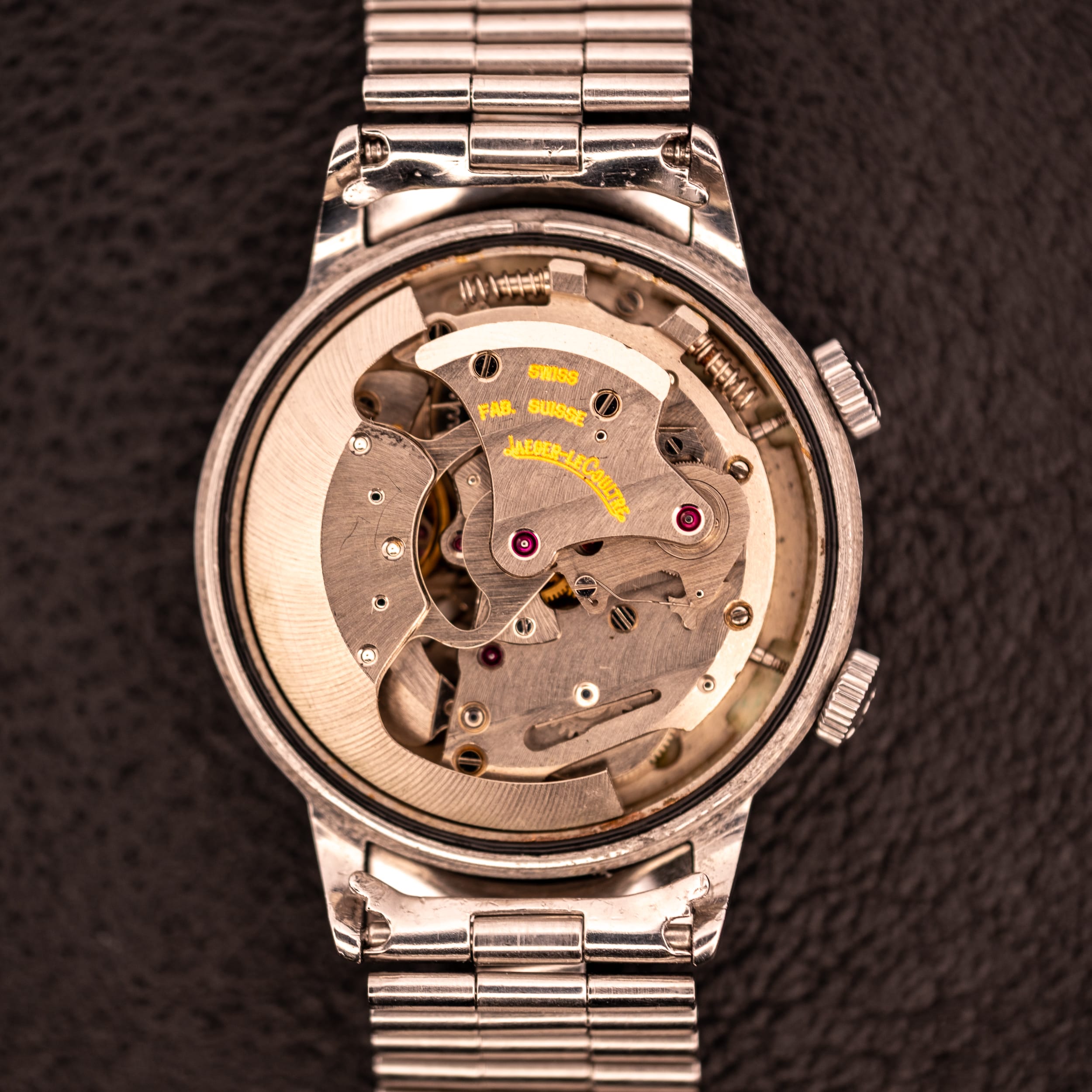
The K825 caliber is worth understanding on its own. A bumper automatic does not turn the rotor a full 360 degrees the way a Rolex or a modern self-winder does. Instead, the oscillating weight rotates roughly 270 degrees and is caught by coiled springs at either end, bouncing back the other direction. This was the workaround the industry adopted while Rolex’s full-rotor patent was still in effect, and Jaeger-LeCoultre’s execution is widely considered among the finest of the genre. Seventeen jewels, 241 individual parts, separate barrels for the time and alarm trains, 18,000 vibrations per hour, and roughly 45 hours of power reserve. JLC built about 67,000 K825 calibers across the 1959 to 1969 production window, and that population had to cover the E855, the original Polaris E859, and the E861, so the survival rate of clean, original examples is genuinely thin.
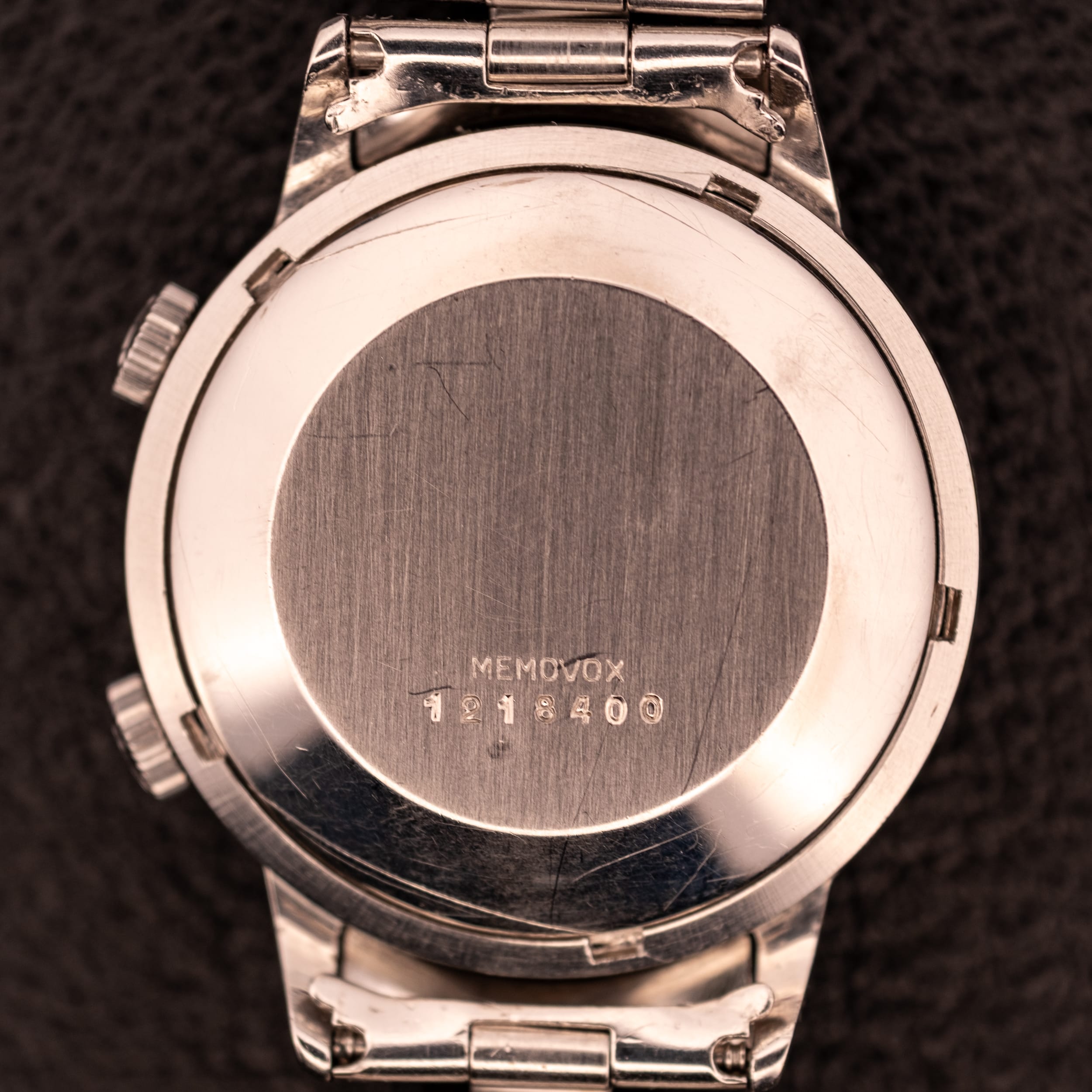
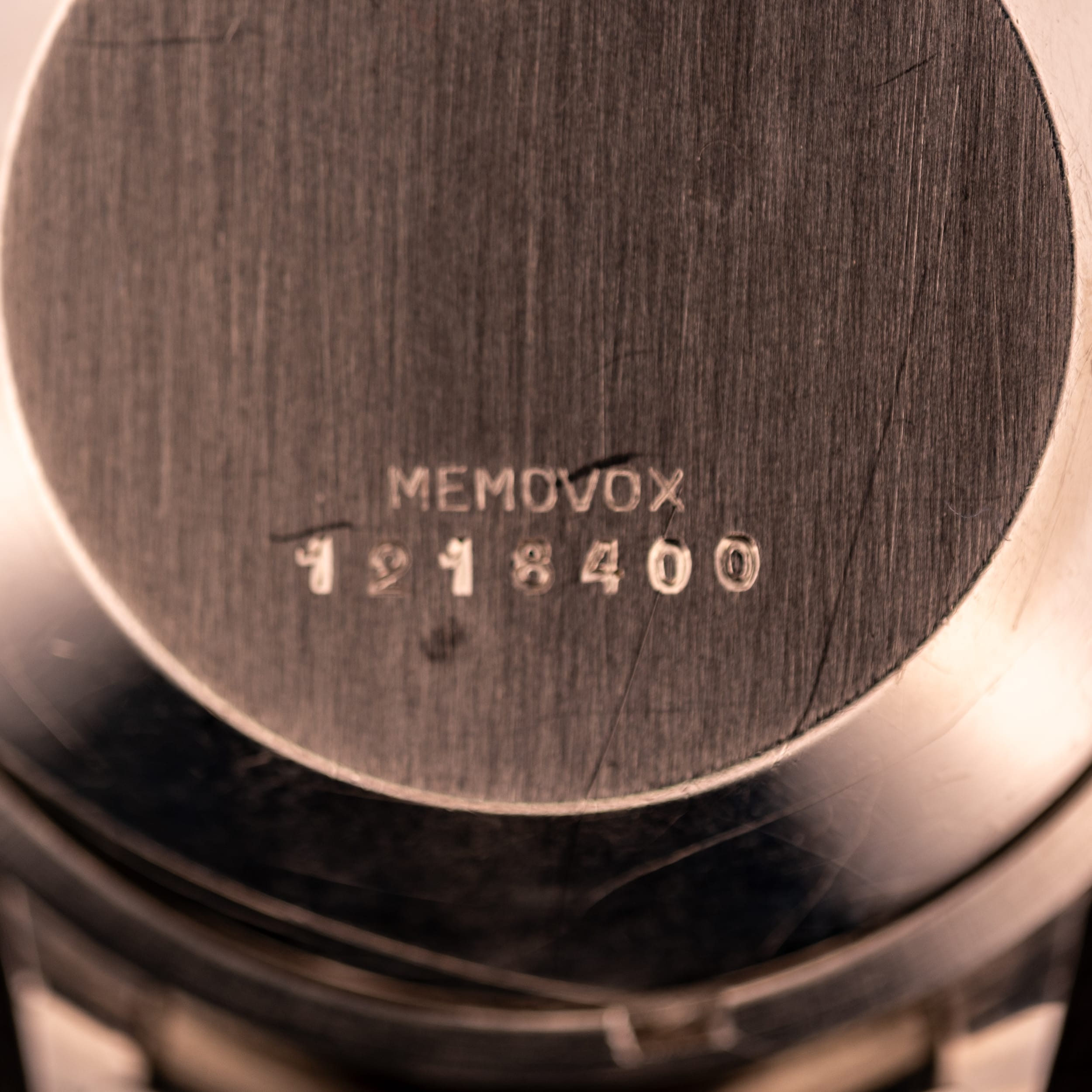
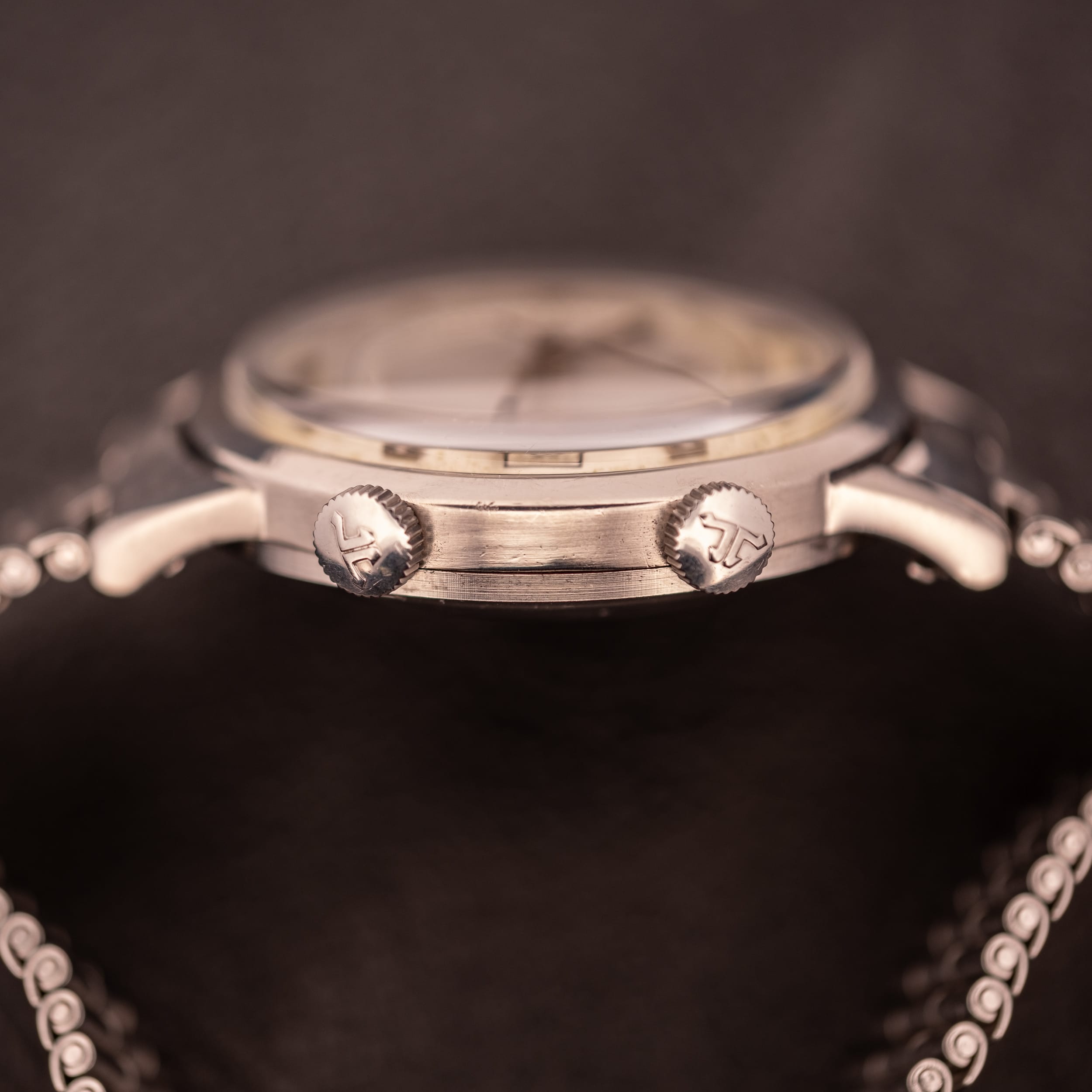
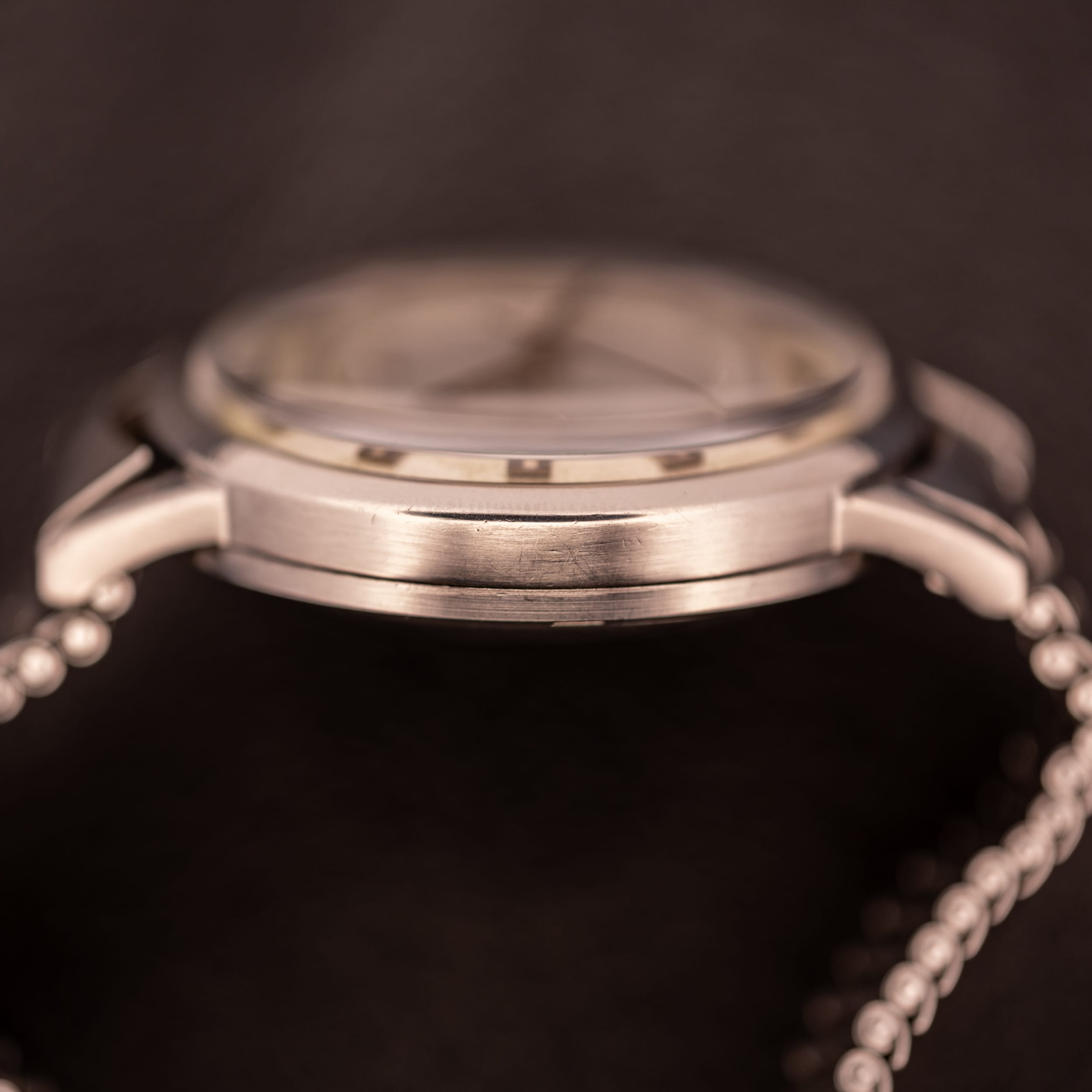
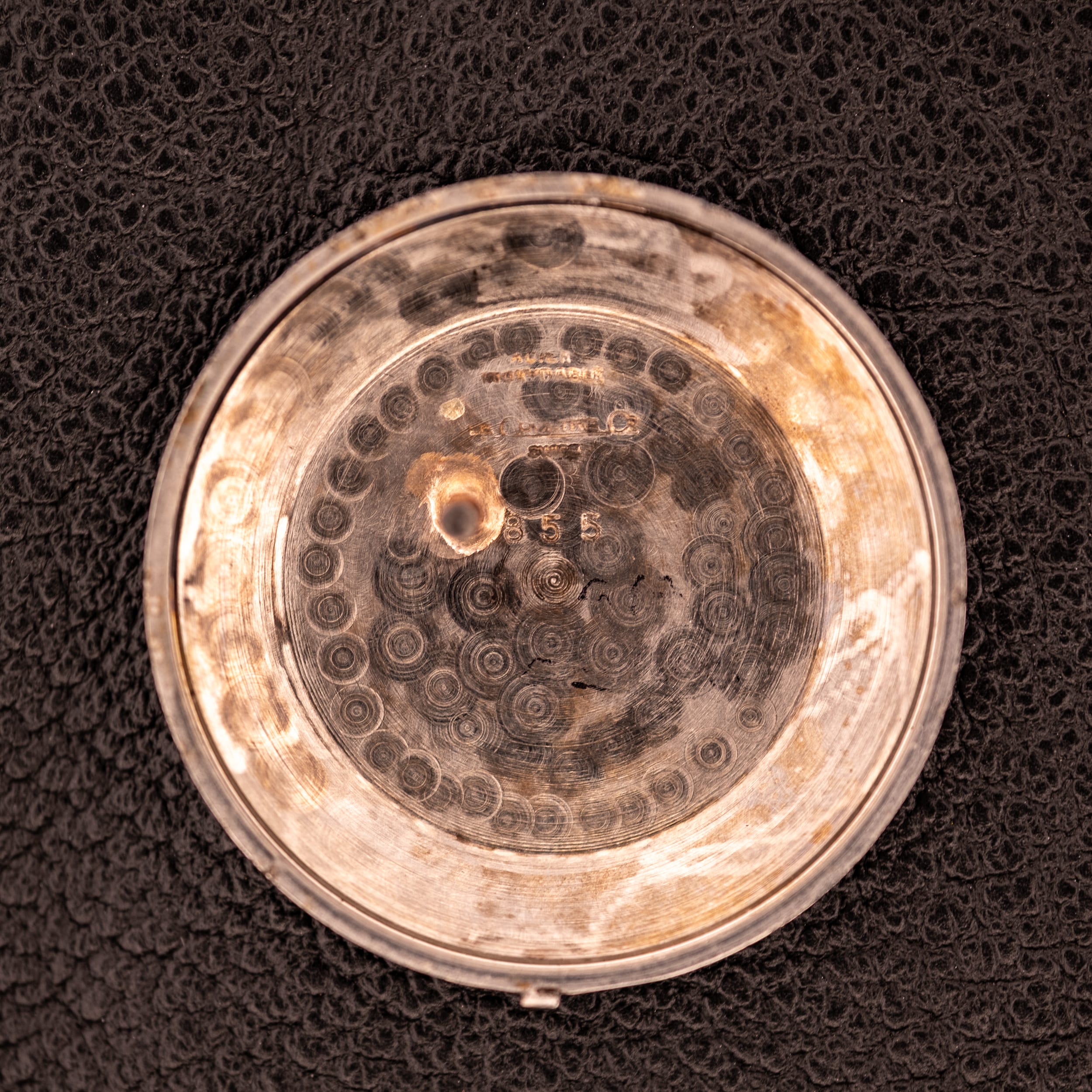
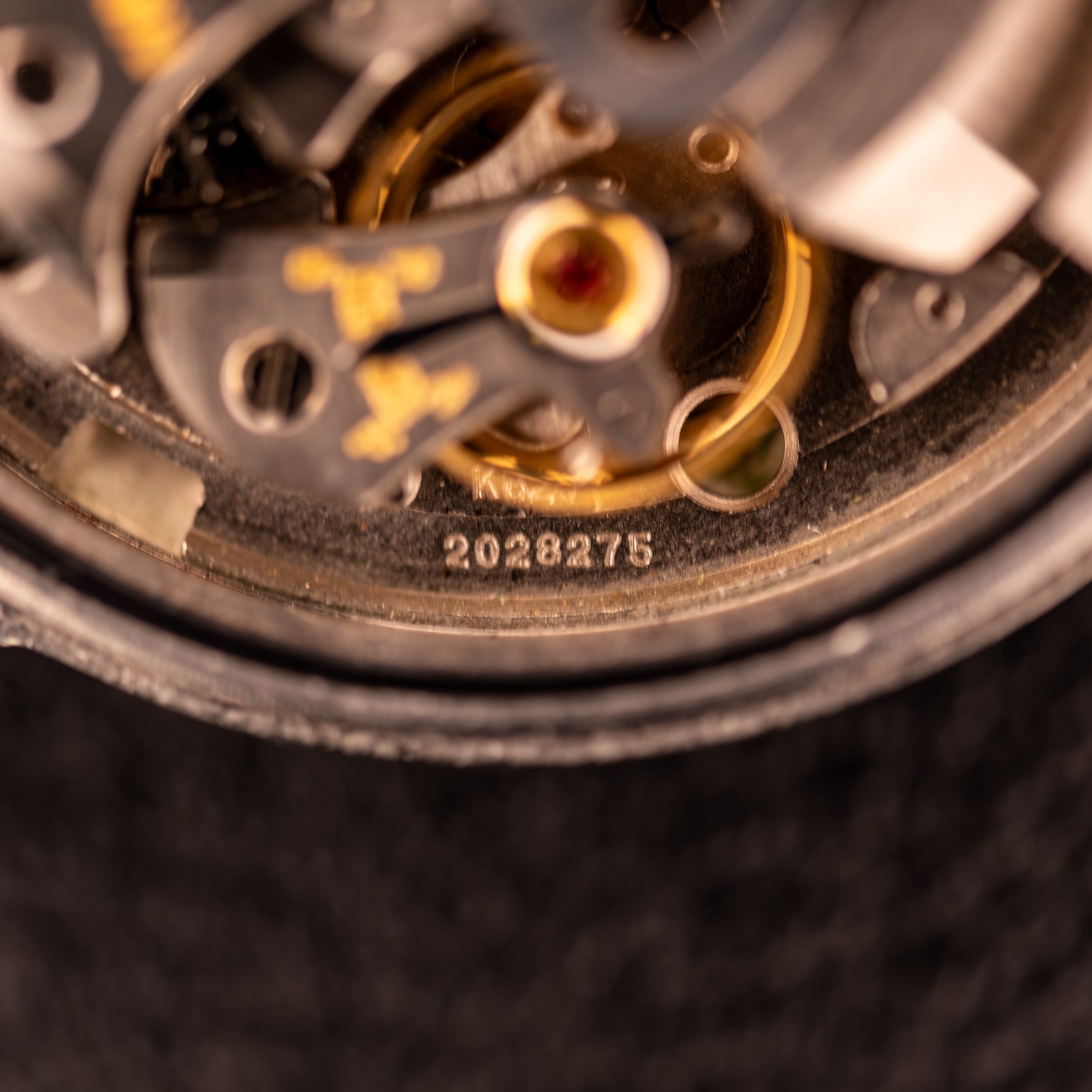
The case is a 37mm three-piece configuration in stainless steel with twin crowns at two and four o’clock, both correctly signed with the Jaeger-LeCoultre logo and the period-correct toothed edge. Edges remain crisp through the lugs and around the bezel, the mid-case is satin brushed exactly as JLC drew it, and light honest wear is visible across the case sides and the lug tops, consistent with a watch that has been worn but never aggressively polished. Flip it over and the screw-down caseback is engraved MEMOVOX above case serial 1218400. Pry the back open and the inner caseback shows the concentric percussion surface that the K825 hammer strikes against to produce the alarm tone, which is the structural detail that gives the Memovox its unmistakable voice. The K825 itself reads JAEGER-LECOULTRE and FAB. SUISSE in gilt lettering across the bumper rotor bridge, with movement serial 2028275 placing production firmly in the mid-to-late 1960s window.
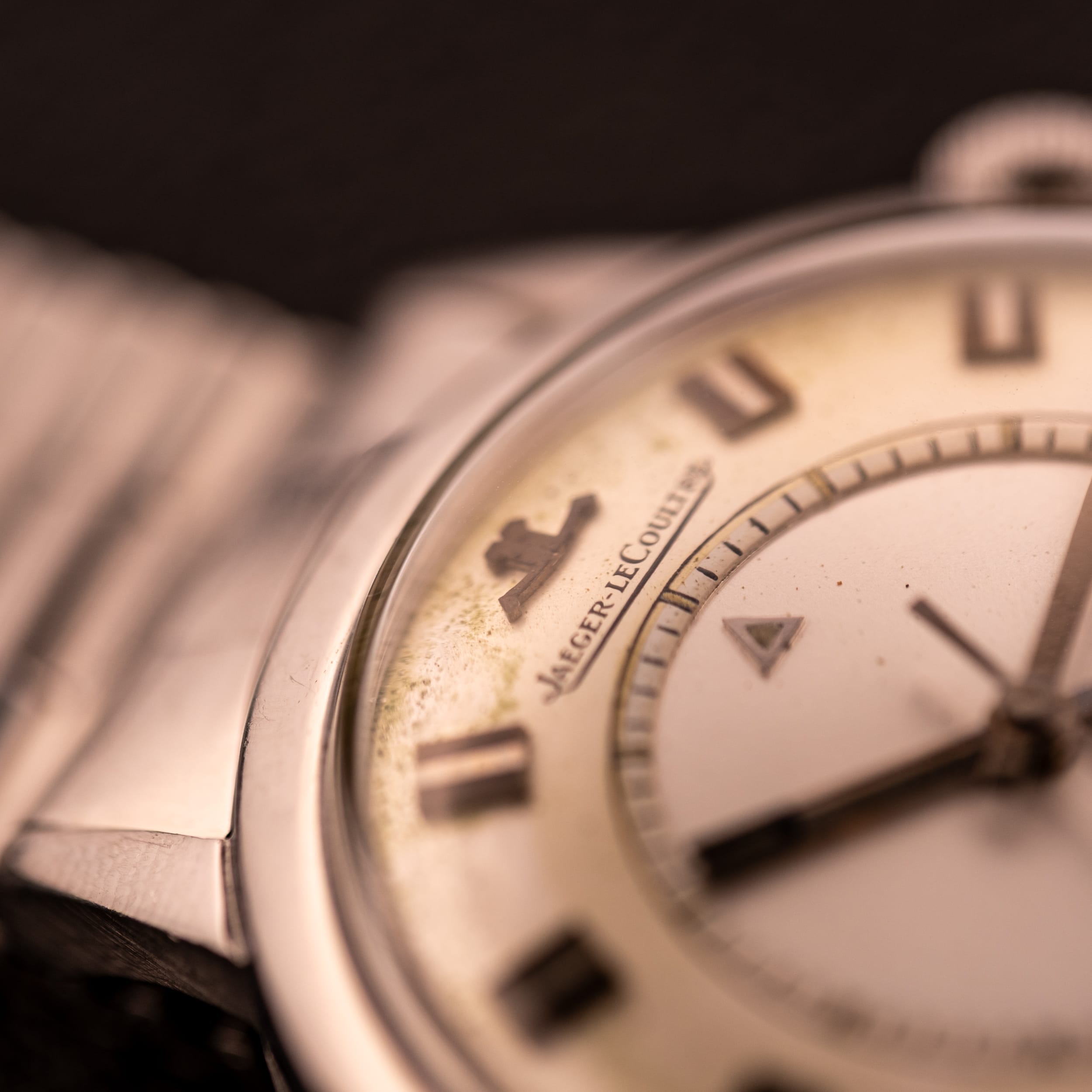
The dial is the headline. The outer chapter ring is silver with applied steel baton markers at every hour position, polished to catch light, and finished with a fine inner minute track. The inner recess is a sunburst-finished silver field that holds the rotating alarm disc and the applied steel triangle pointer. The applied JL hatchet logo sits at twelve with the Jaeger-LeCoultre wordmark printed in fine script directly below, AUTOMATIC is printed at the inner edge above six, and SWISS MADE runs along the lower edge of the chapter ring. There are no luminous markings on this dial, which is correct for the steel E855 as a dress-grade reference built without tritium. The date sits in a framed silver-bordered aperture at three. Across the outer chapter ring the dial has aged into a soft moss-and-cream spotting that drifts across the upper half particularly, while the inner sunburst recess remains noticeably cleaner. To us, this is exactly the right kind of patina for a sixty-year-old alarm watch, the kind that proves the dial has never been touched by a refinisher and has earned its character honestly across decades on a wrist.
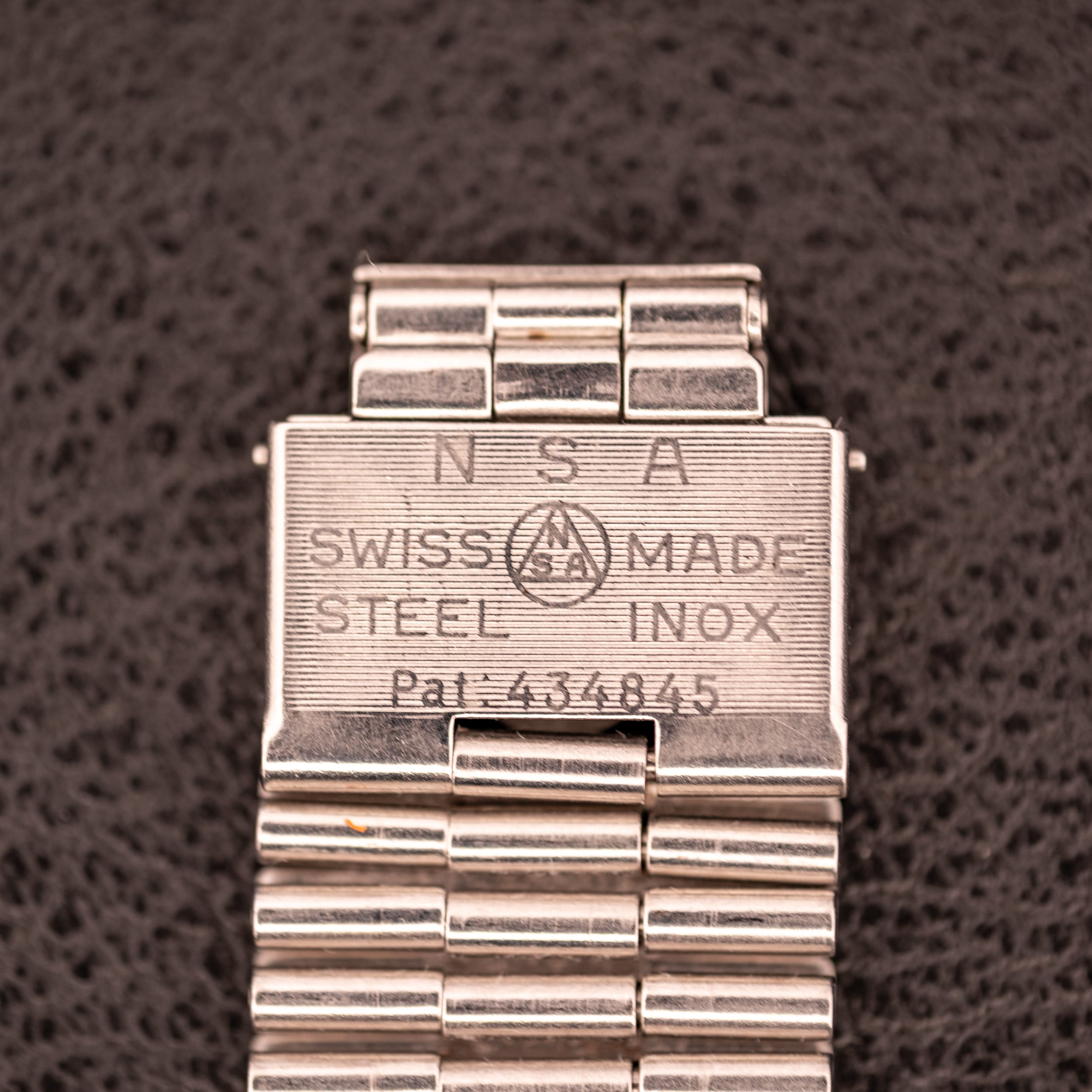
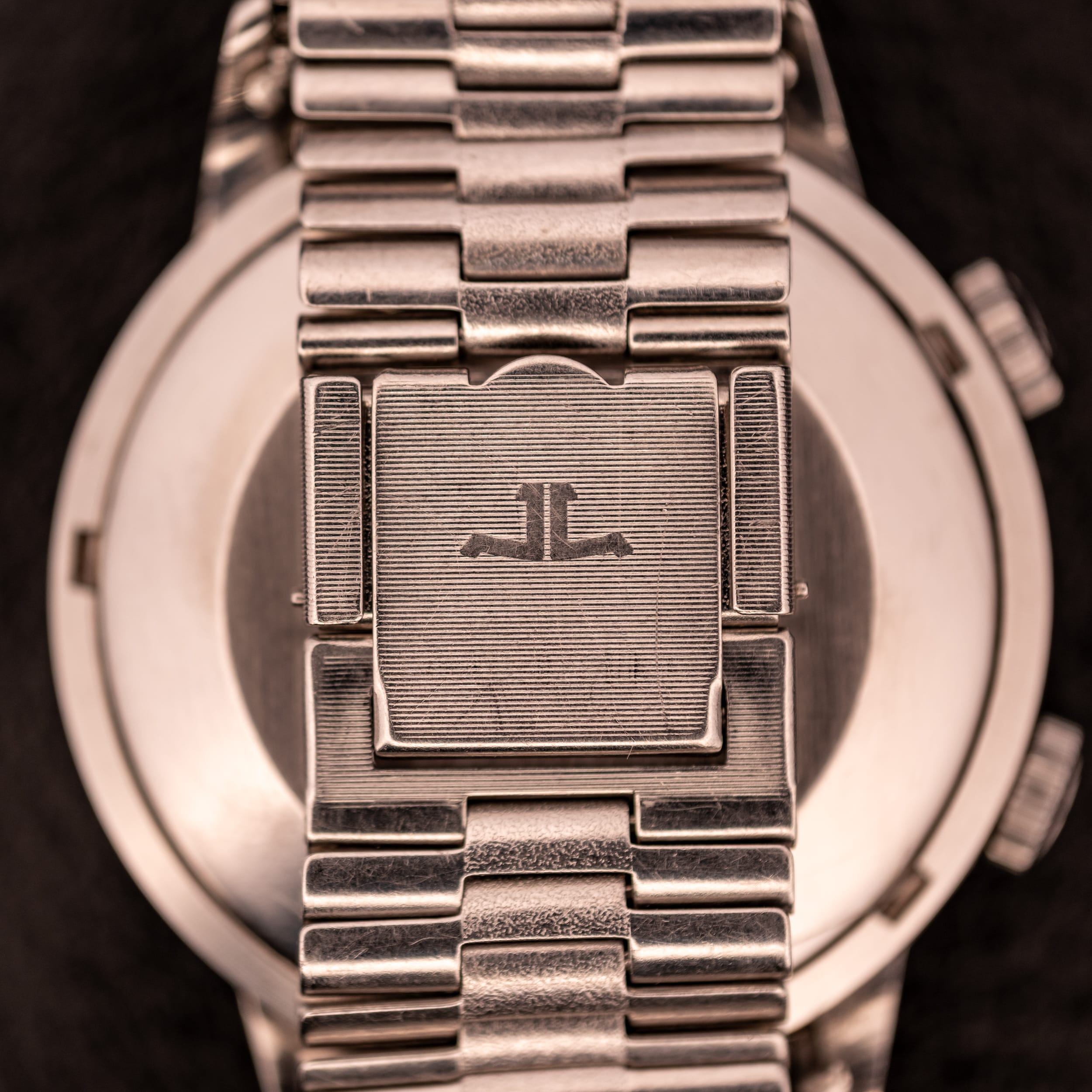
The stick-style steel hands are the correct factory pair, oxidized into a dark grey-black tone that reads beautifully against the silver dial, with a slim center alarm-setting hand running concentrically. Where this example earns serious bonus points is the bracelet. It arrives on its original signed Jaeger-LeCoultre NSA bracelet, the Swiss-made stainless steel reference that JLC paired with the Memovox during this era. The underside of the deployant clasp is stamped NSA above SWISS MADE STEEL INOX with the patent number 434845, and the top of the clasp carries a square cap engraved with the JL hatchet logo on a fine engine-turned ribbed ground. The rolling-link construction has aged into a warm, broken-in patina that vintage steel bracelets develop only with time on a wrist. Finding a steel Jaeger LeCoultre Memovox Ref. E855 still on its correct period NSA bracelet is genuinely uncommon, and finding one with the bracelet in this kind of honest condition is rarer still.
Serviced in-house at OTTUHR and backed by our 2-year mechanical warranty, this is the Memovox the model deserves to be remembered by. A bumper-automatic alarm watch with date from the manufacture that defined the alarm wristwatch, riding on its original signed bracelet, with a dial that has earned every bit of its character. For the collector who values originality and provenance over polished perfection, who appreciates that the most important alarm watch of the 1960s is also the most quietly wearable, this is the kind of vintage Jaeger-LeCoultre we love bringing in. To us, the case for the bumper-era Memovox really does come down to a single E855 example as good as this one.