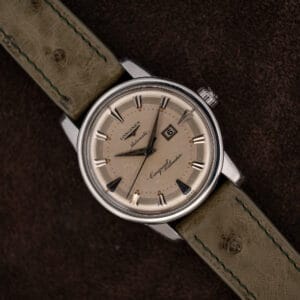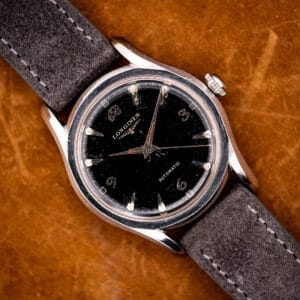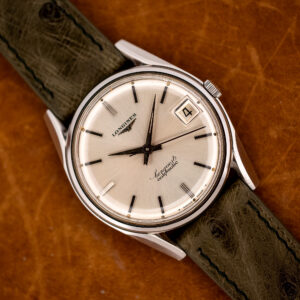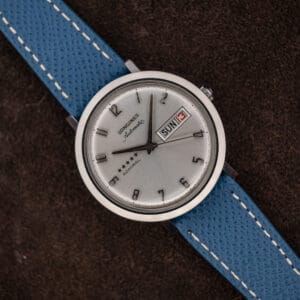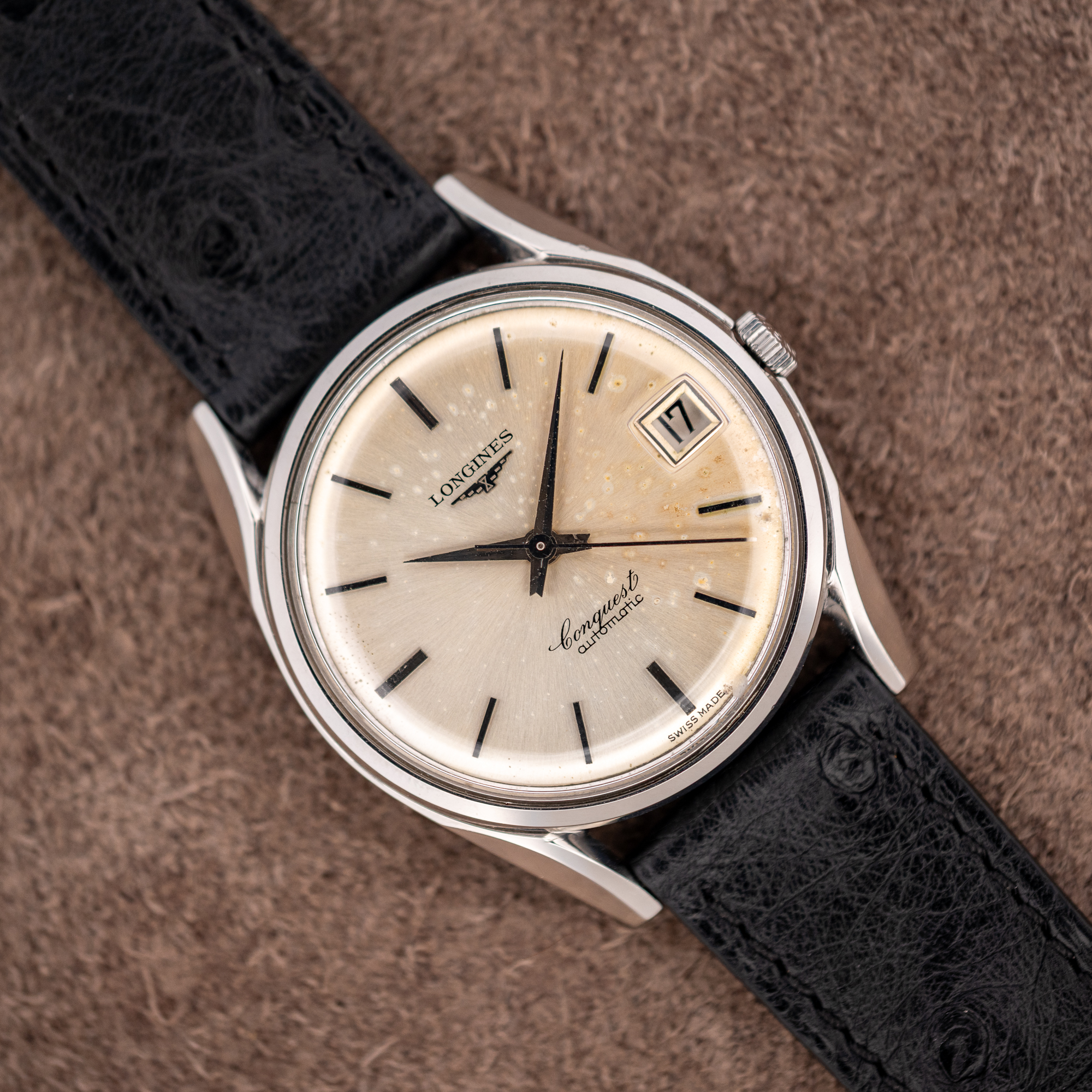
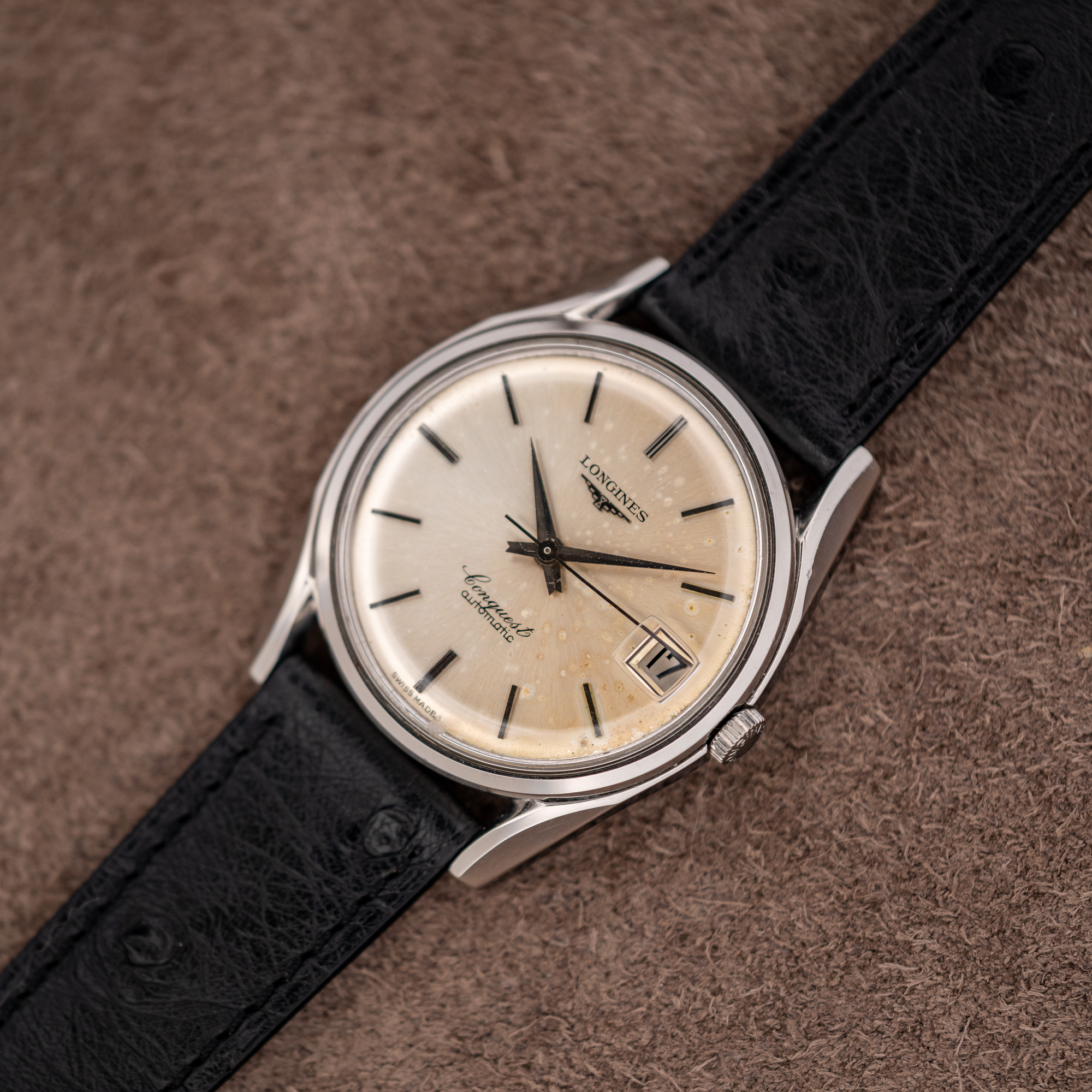
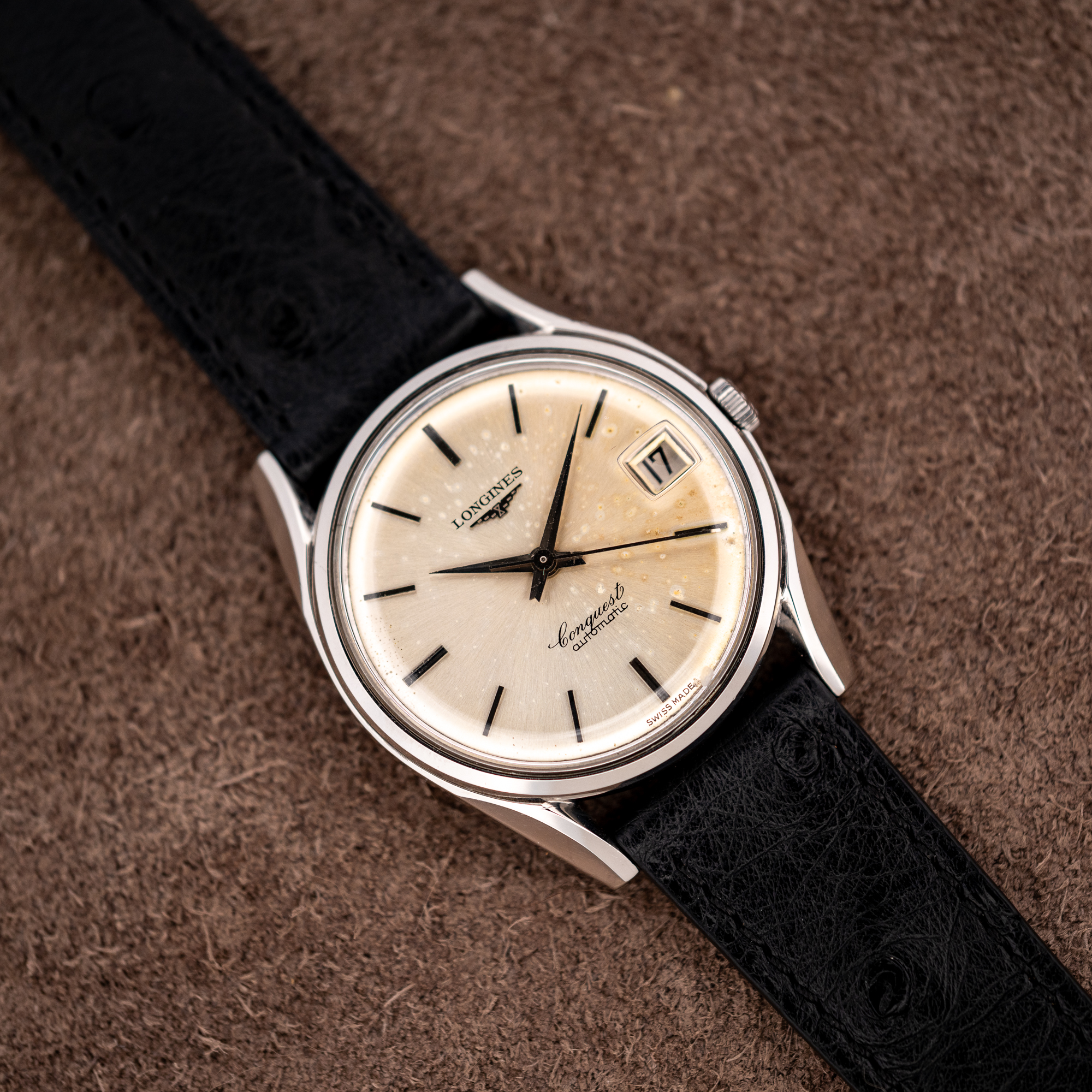
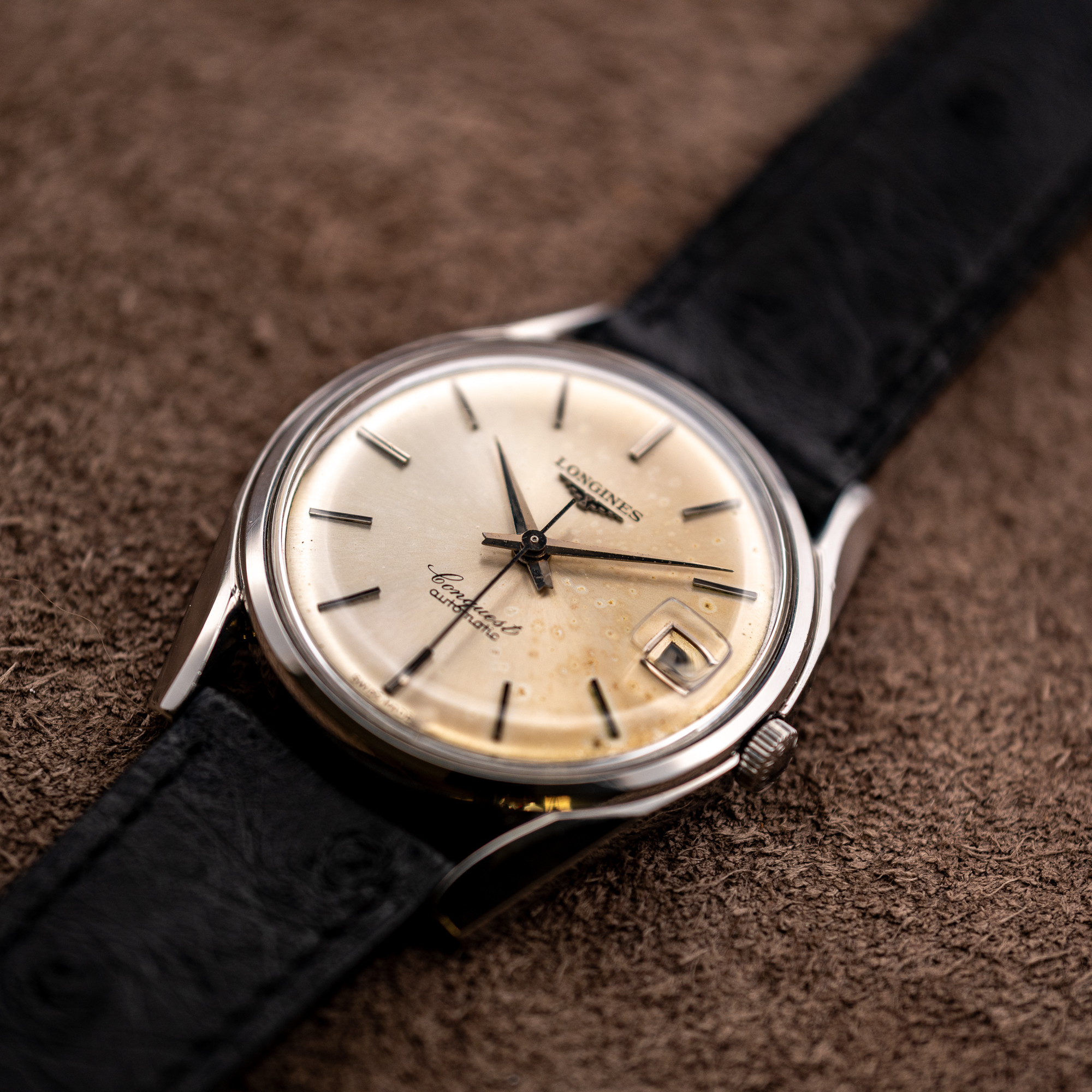
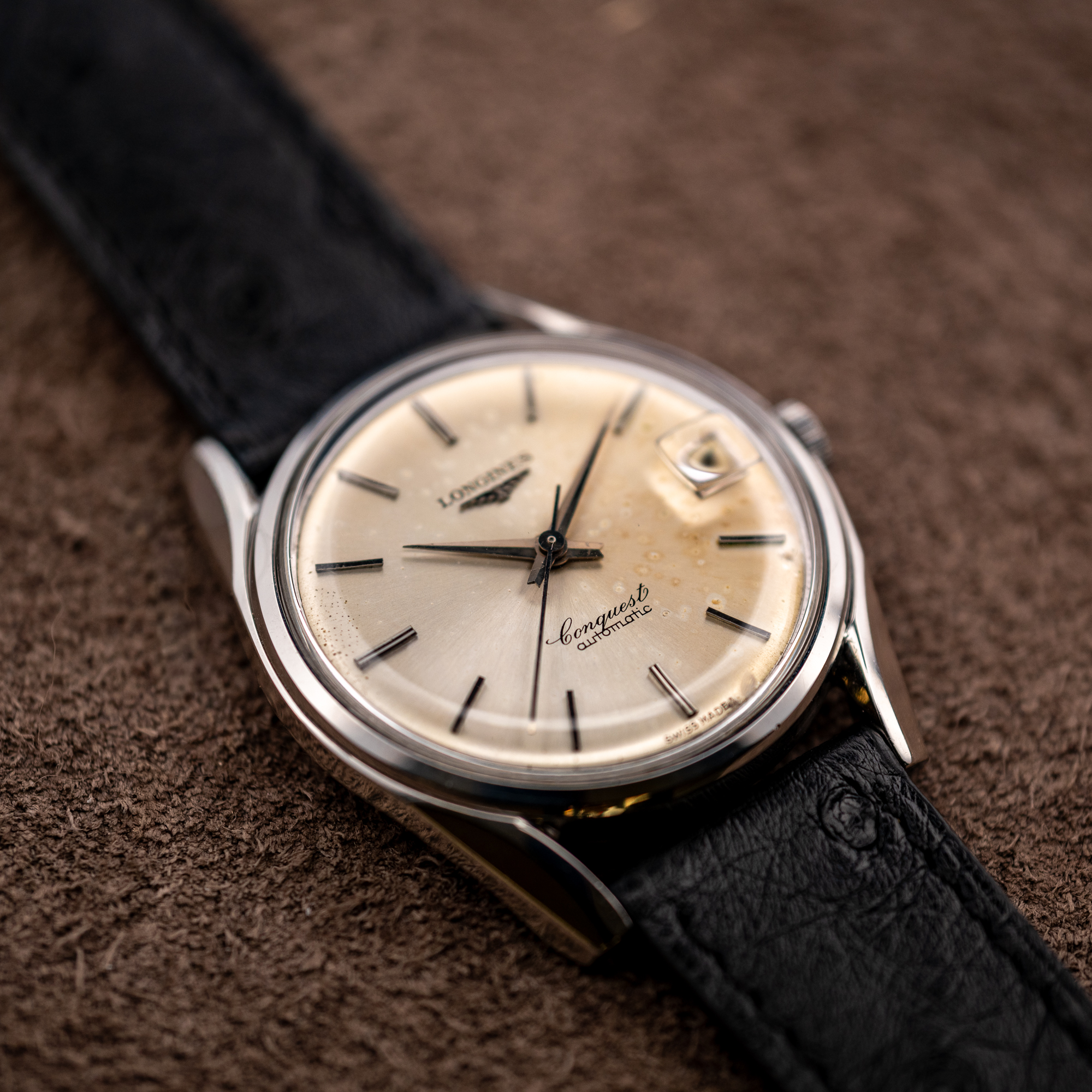
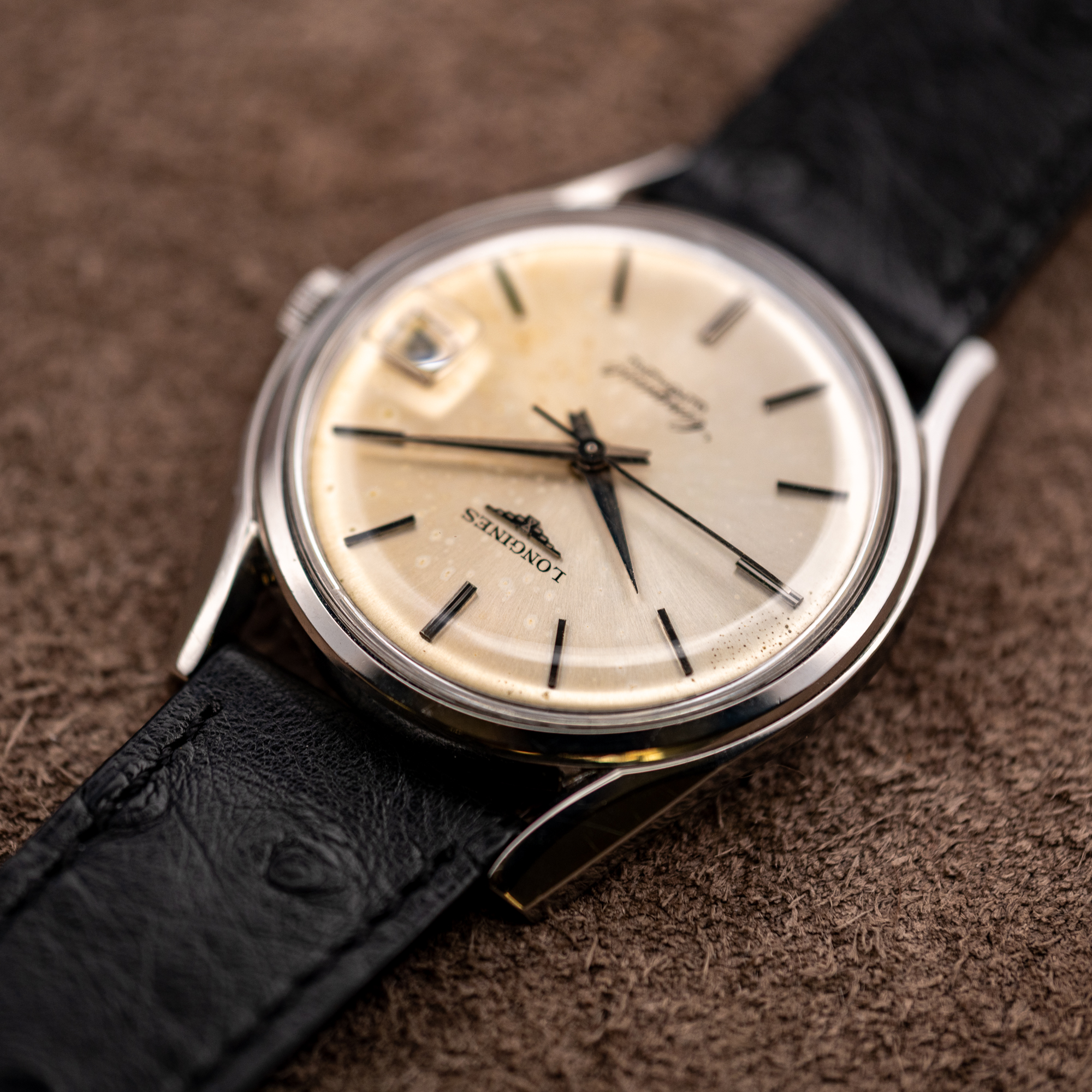
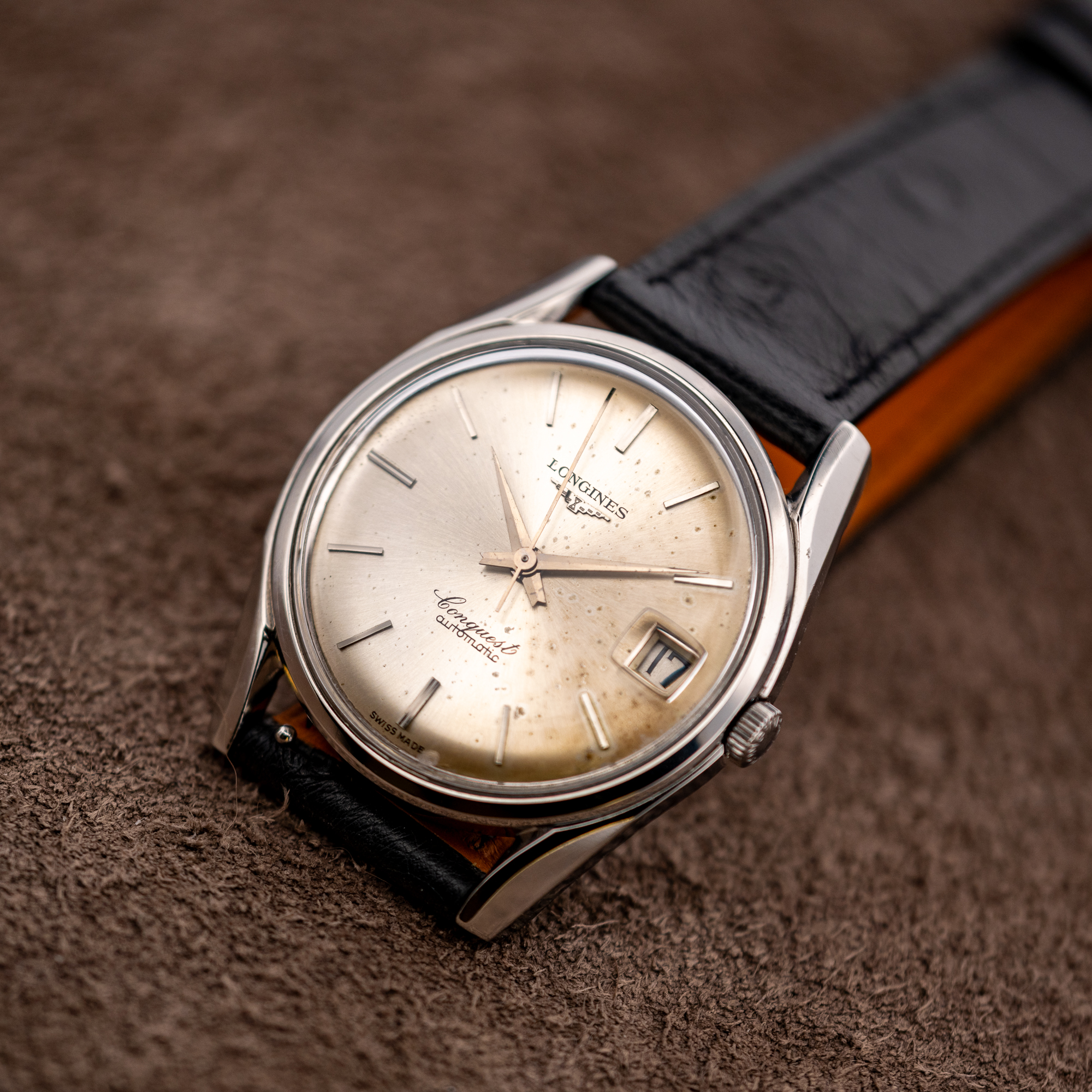
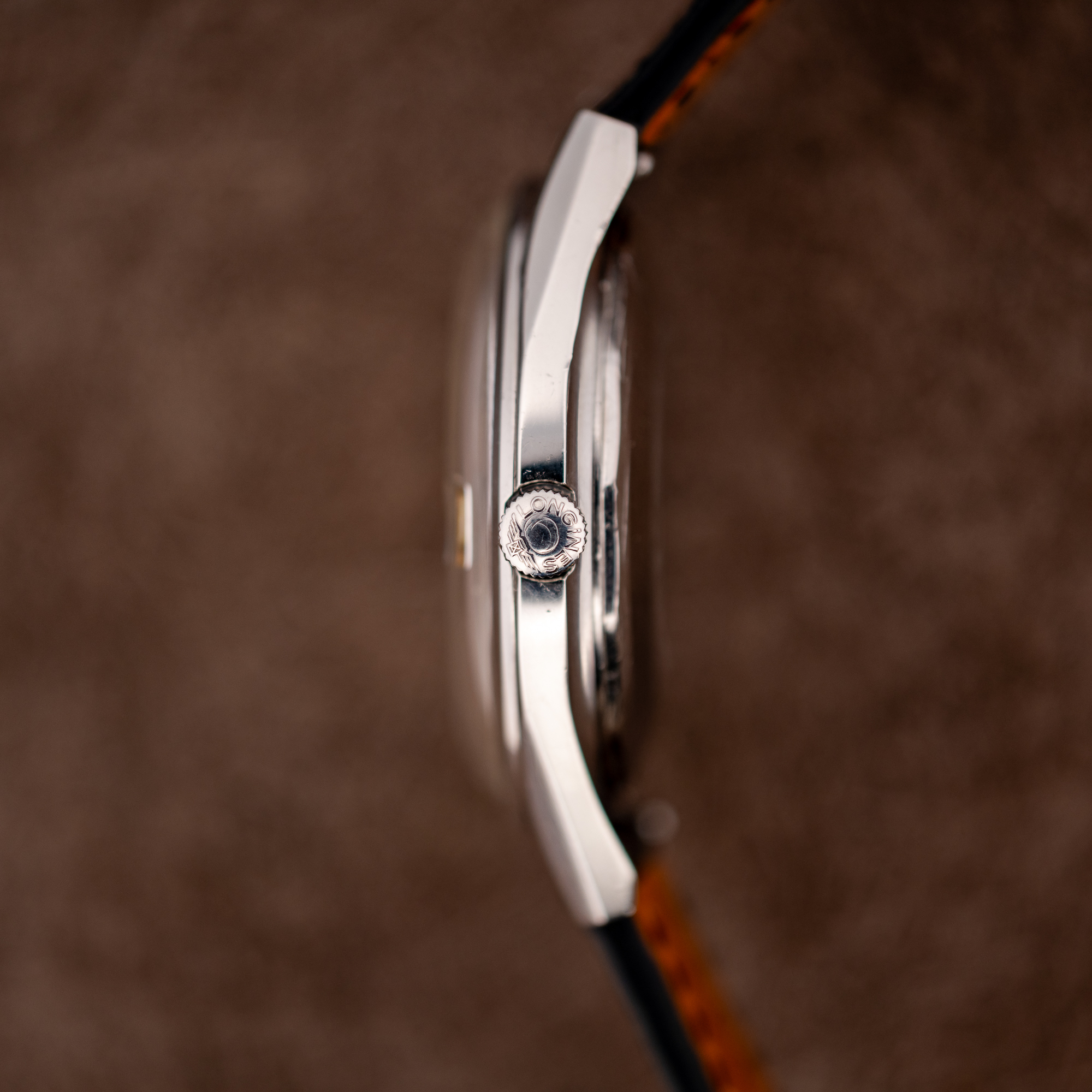
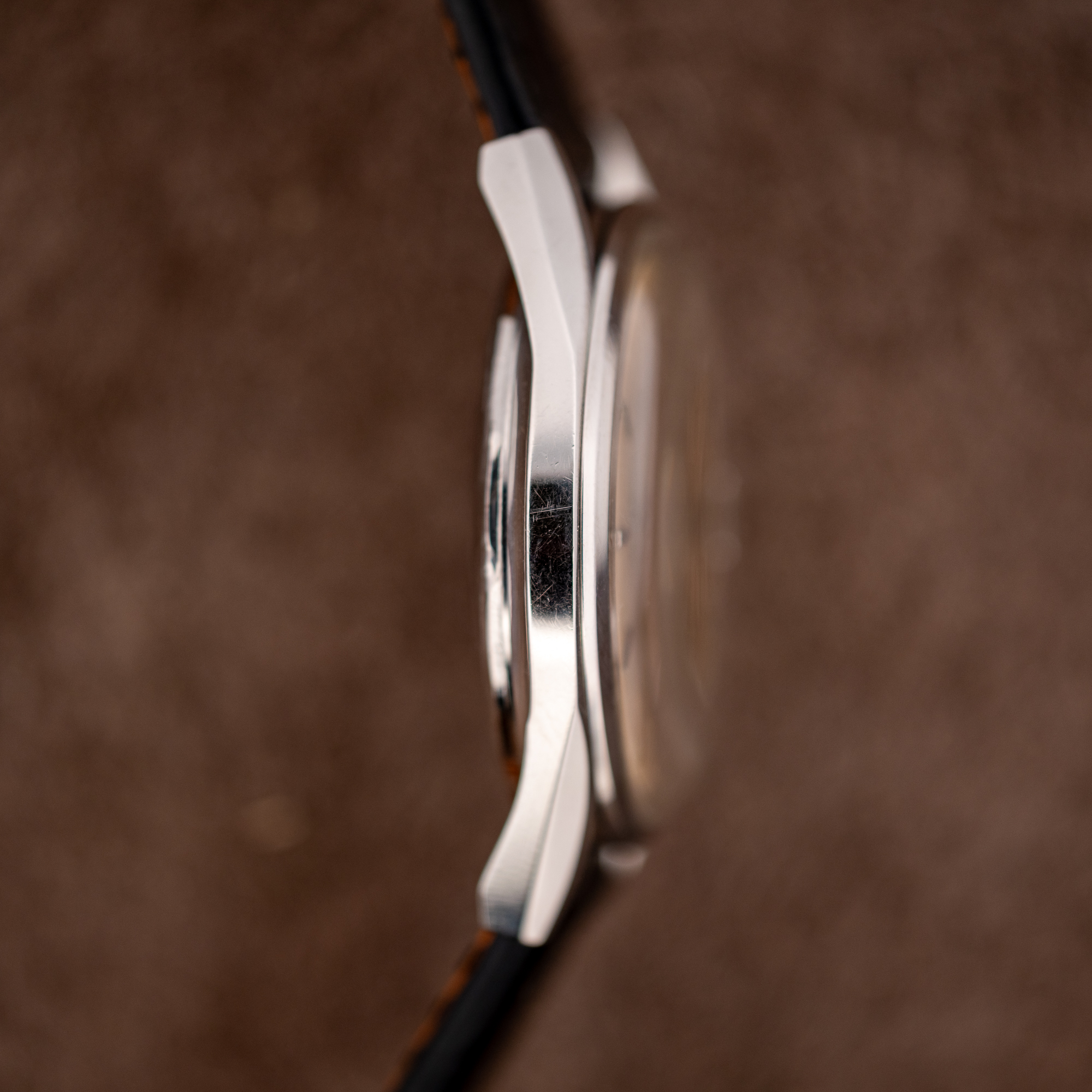
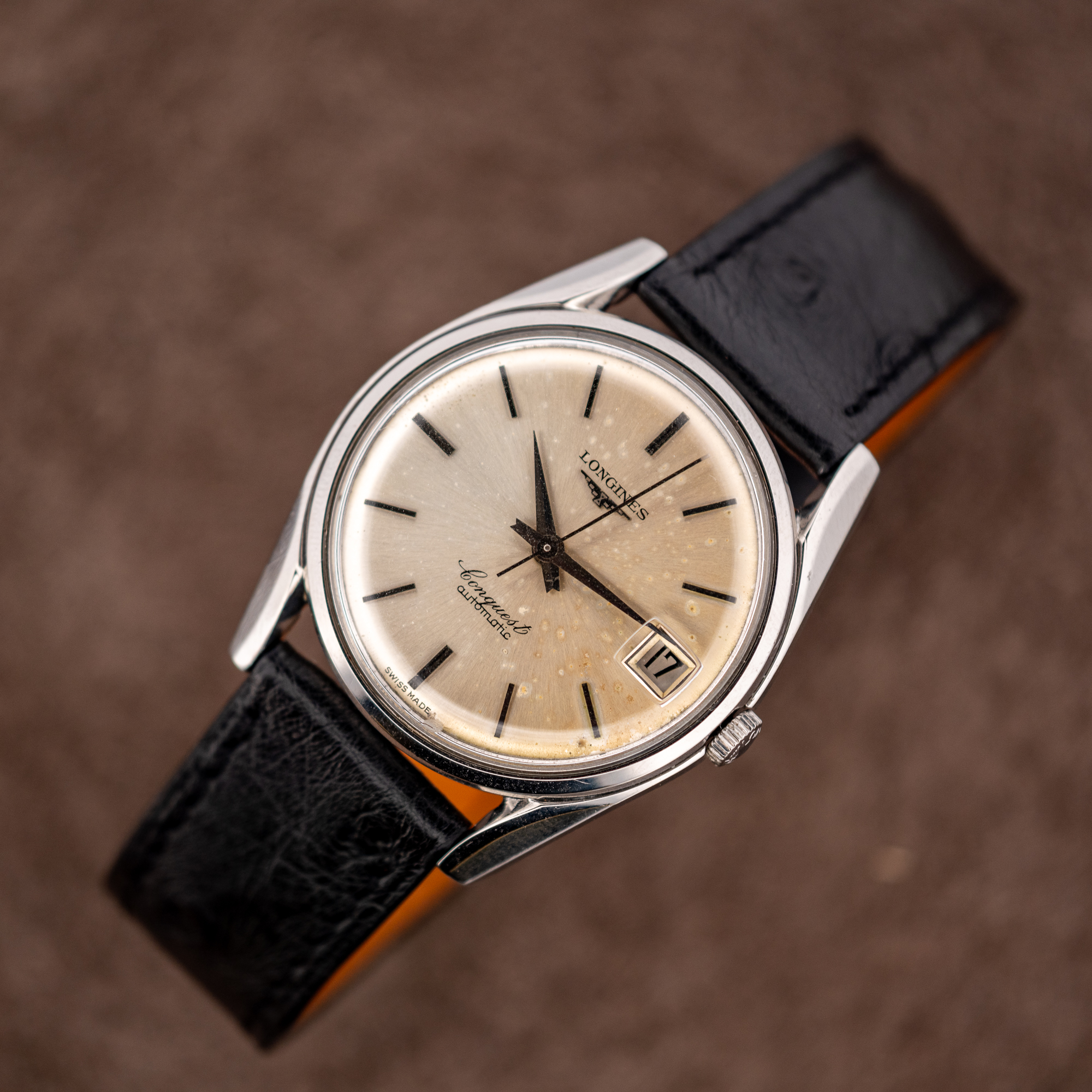
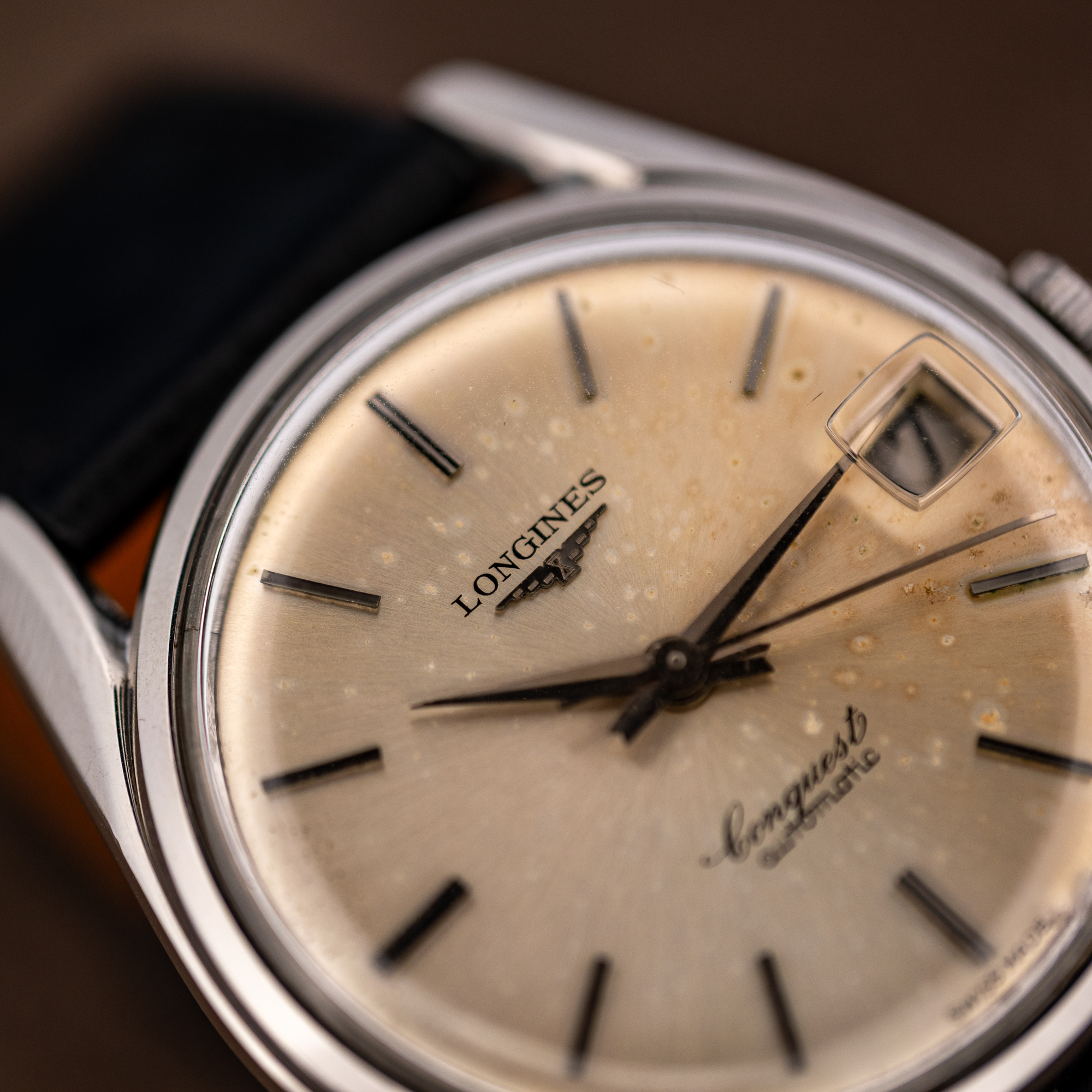
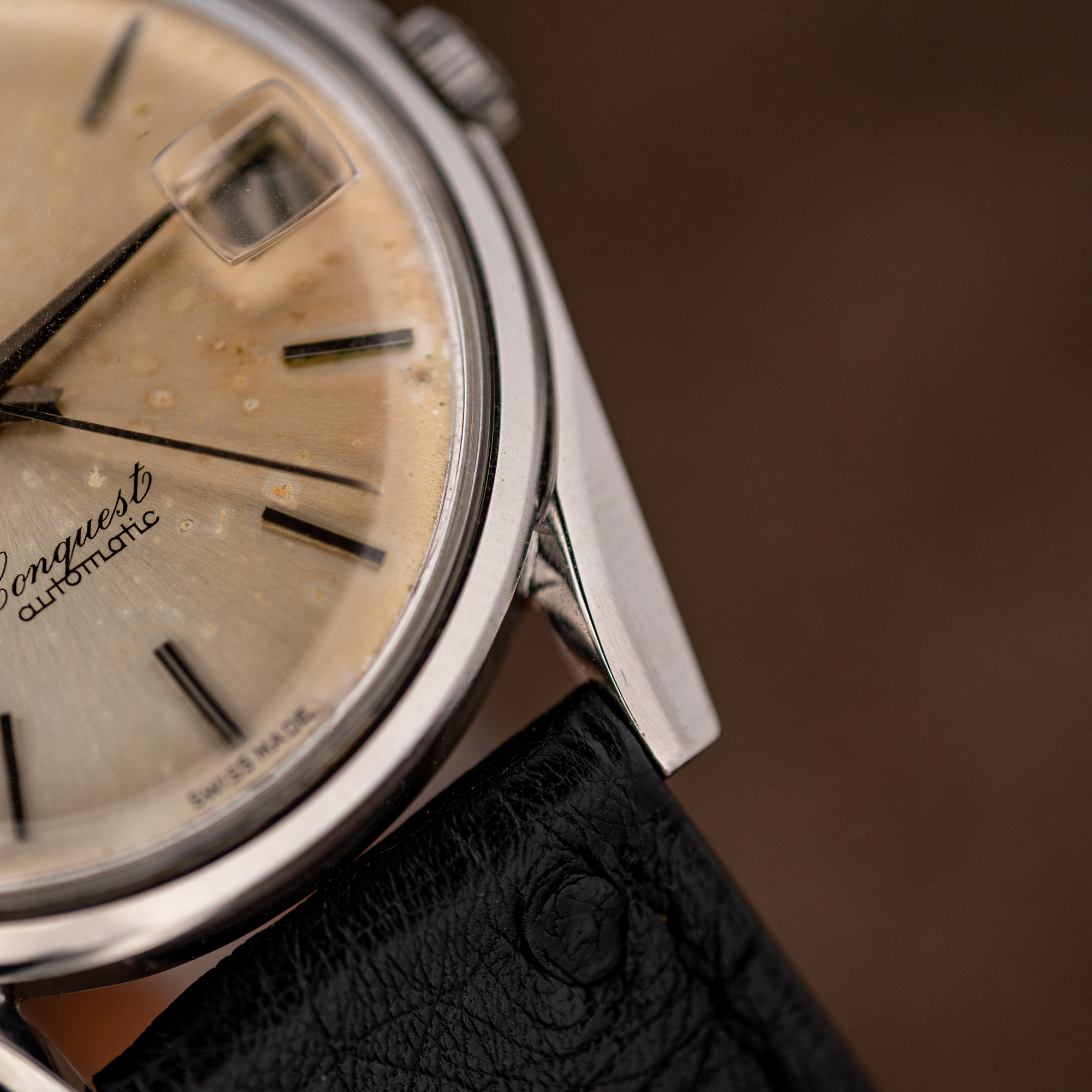
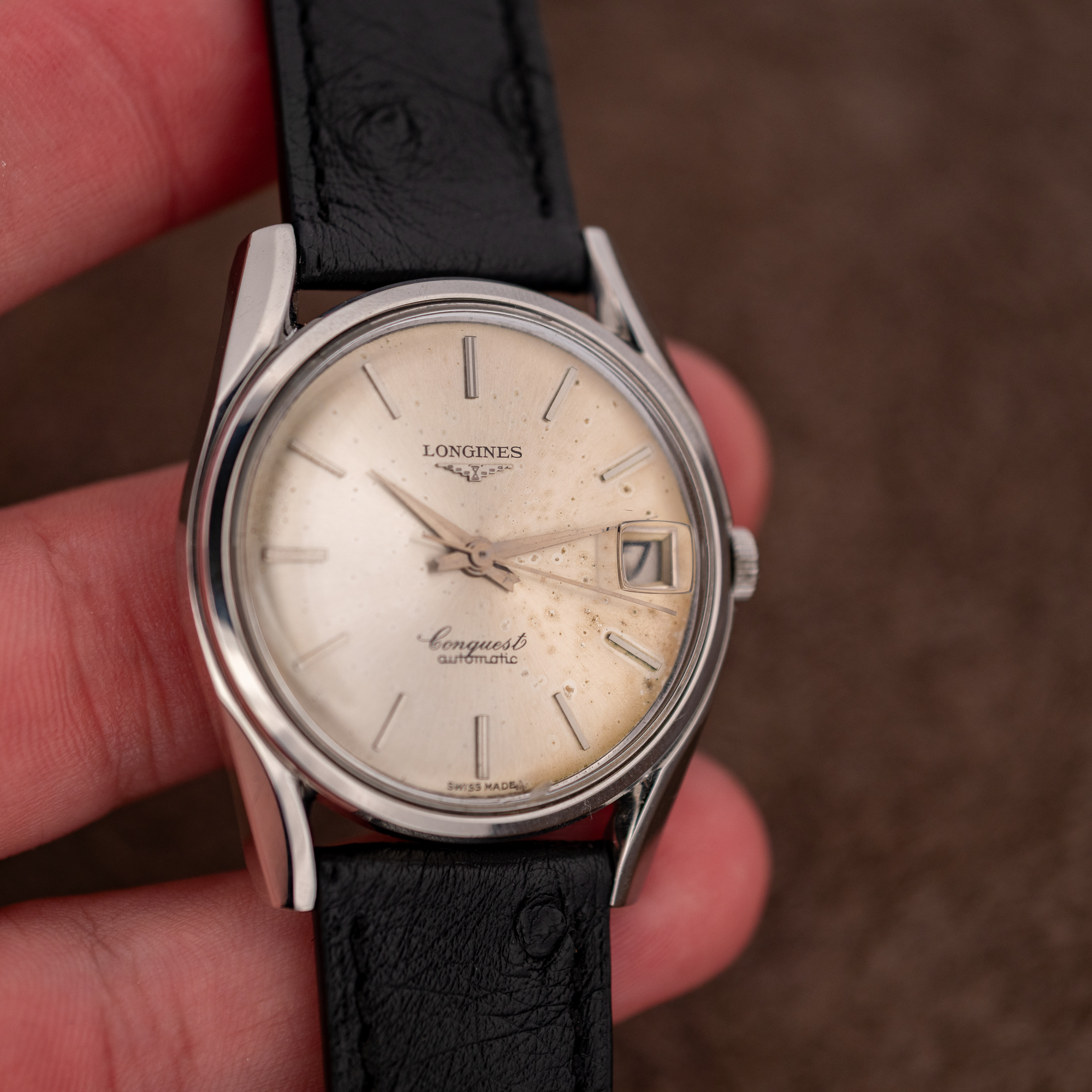
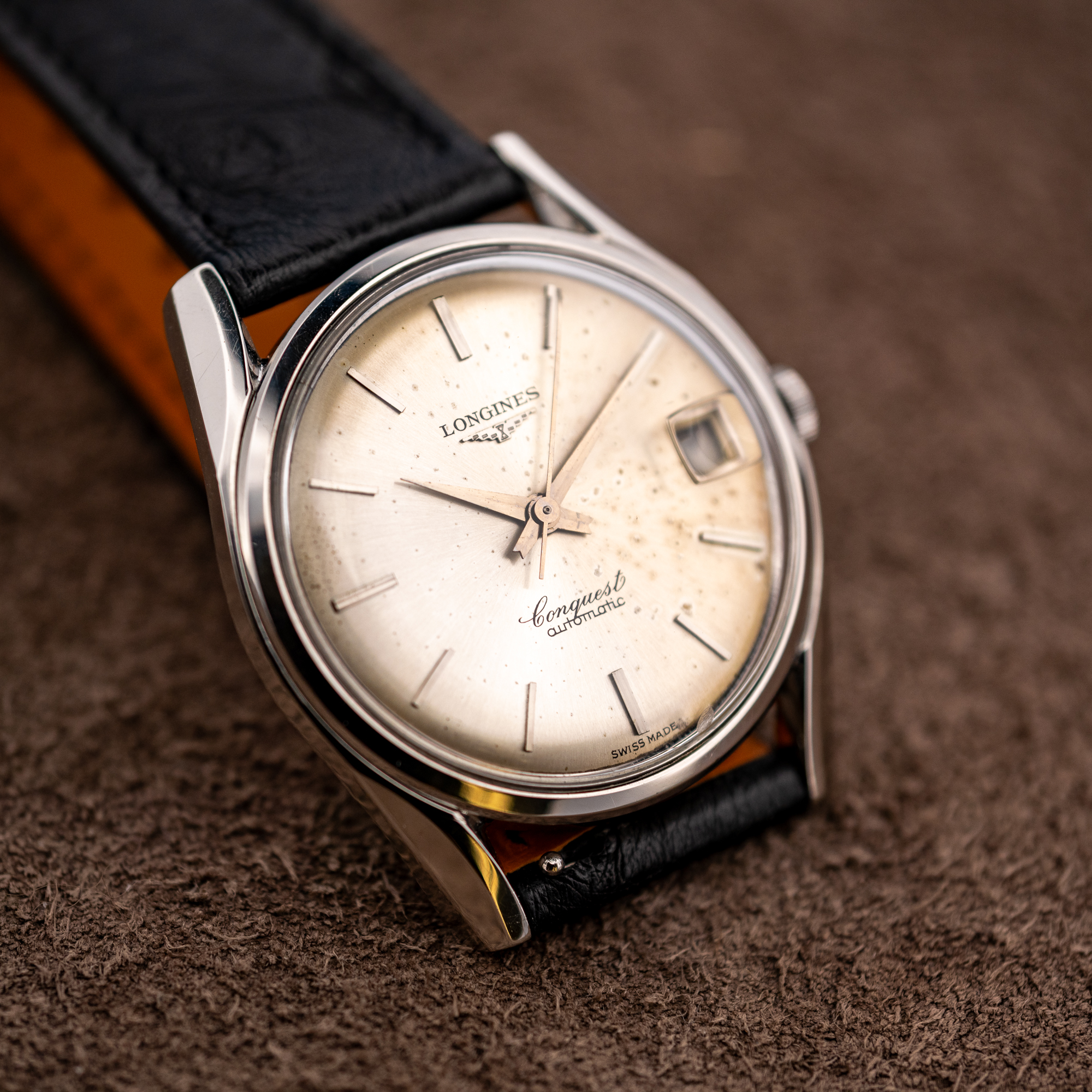

Thirty-six millimeters reads small on paper. The Longines Conquest 7171-5 answers with its lugs, which run long, taper and curve down toward the strap, carrying the steel case out to 42mm from tip to tip. On the wrist that reach covers more ground than the diameter suggests.
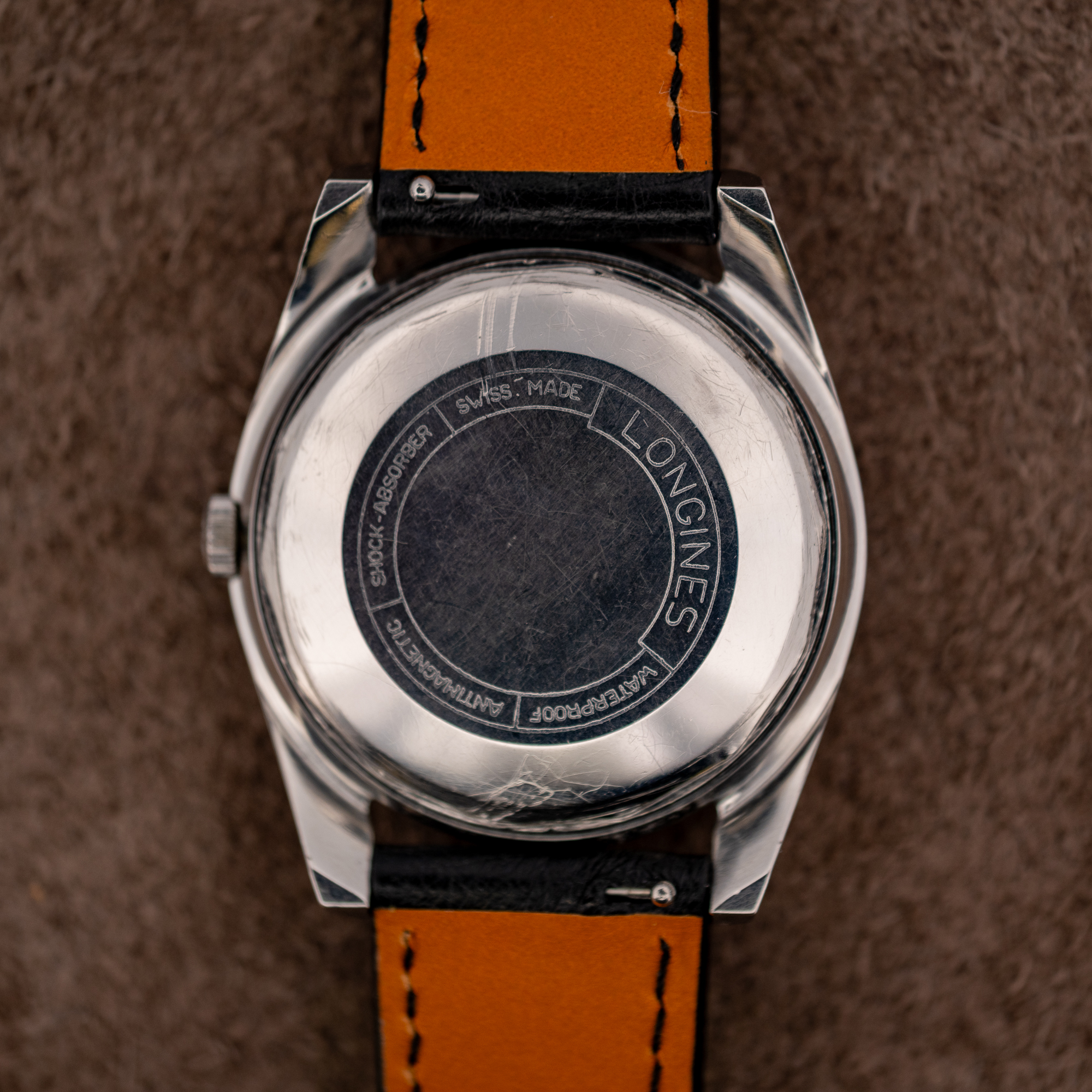
Around the edge of the back, in curved segments of capitals, run LONGINES, WATERPROOF, ANTIMAGNETIC, SHOCK-ABSORBER and SWISS-MADE, the last with its small hyphen. After the name, the words list what a steel automatic of the period was expected to shrug off, water, magnets and knocks, and then where it came from. Those words did not carry equal weight. American trade rules, in force until 1999, told sellers not to call a watch waterproof, shockproof or nonmagnetic, while antimagnetic, backed by a magnetic-field test, stayed a fair claim. ANTIMAGNETIC sits on the permitted side of that line; WATERPROOF does not, and through the 1960s the industry let the word fade in favor of water resistant. They are period promises, not test results for a case of this age.
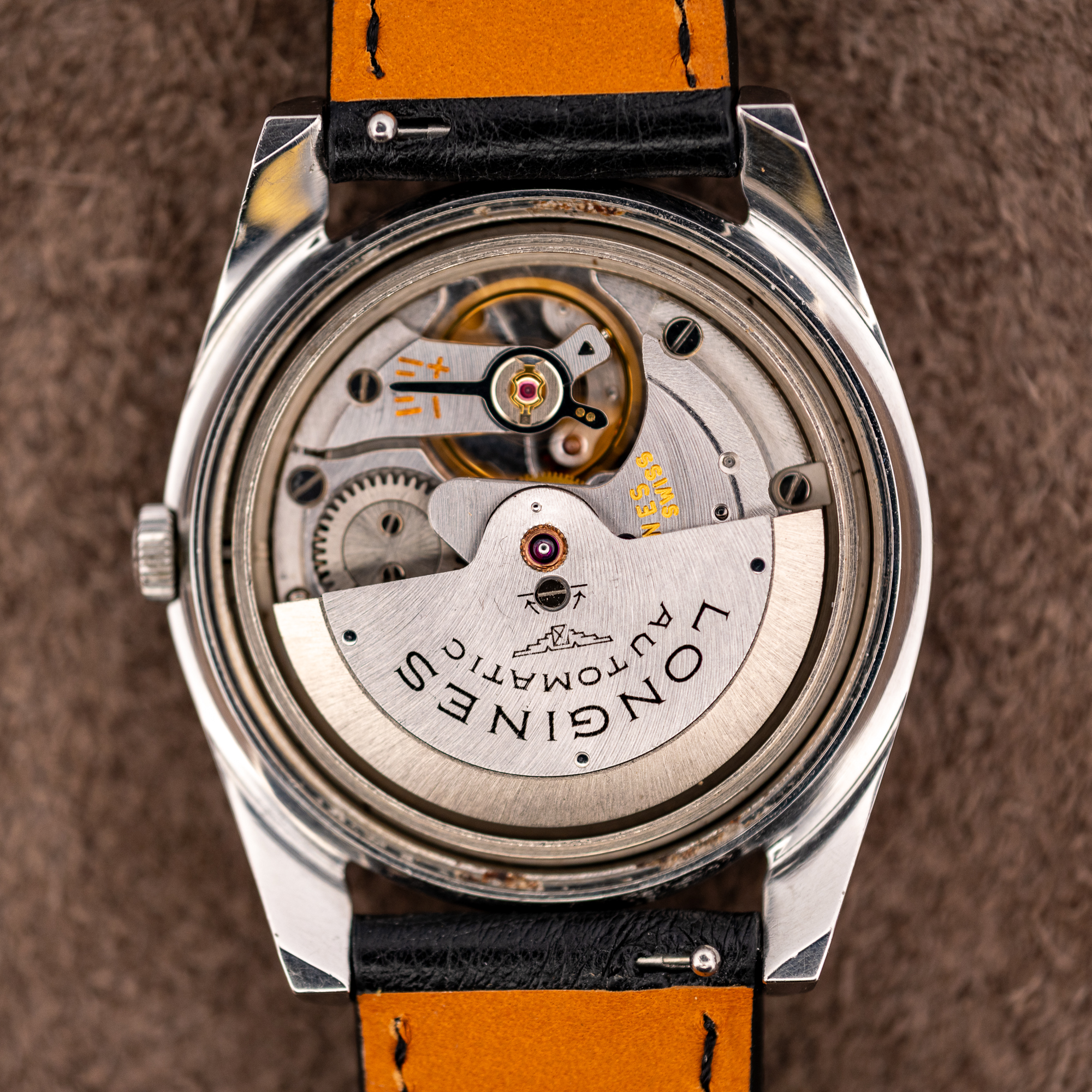
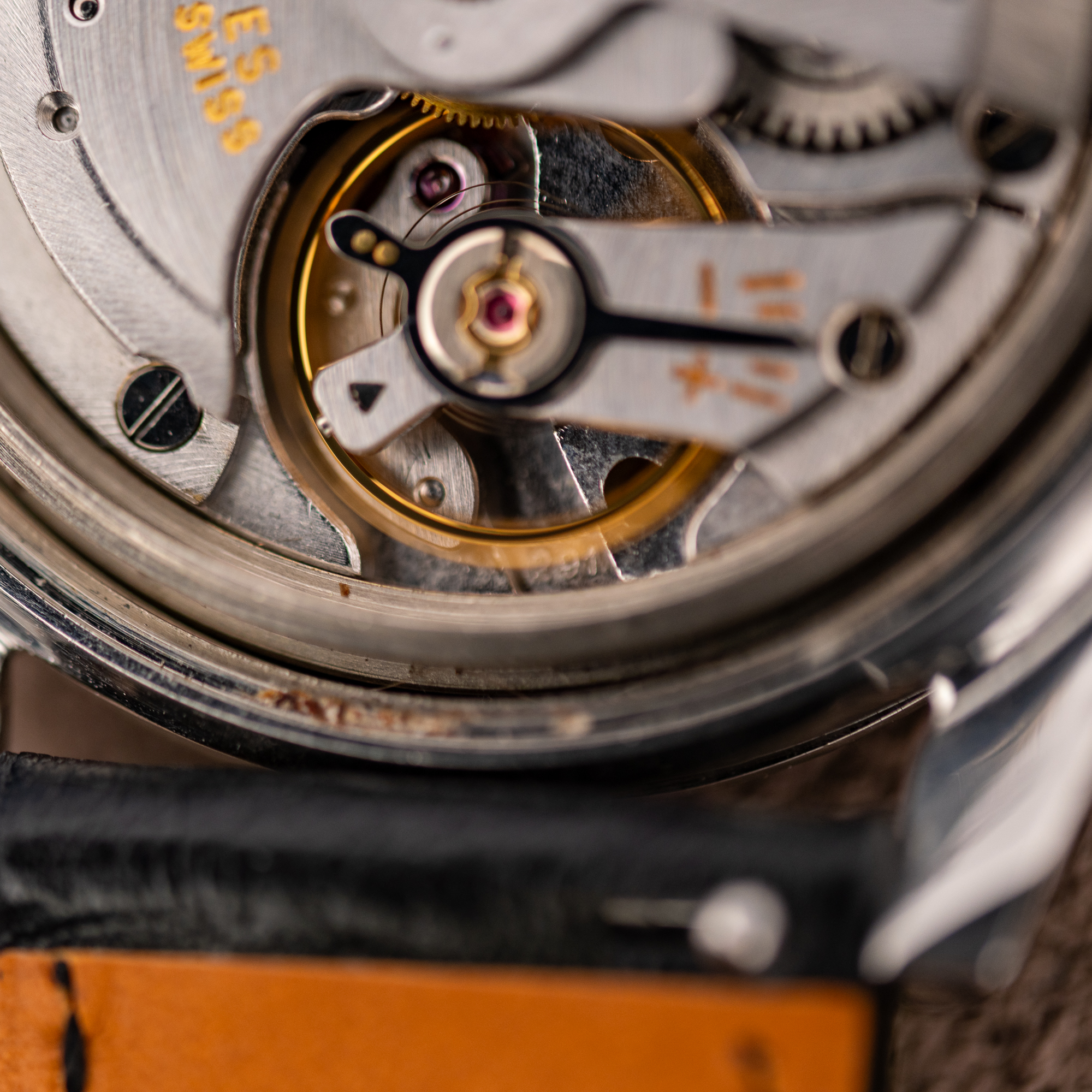
The 7171 reference belongs to the second generation of the line. The first Conquests ran on caliber 19AS, and by the early 1960s Longines had moved the Conquest to a new, flatter automatic. This reference was built around its date version, caliber 291, with Incabloc protection on the balance and about 45 hours of reserve.
Its no-date twin, the 290, was given harder work. Longines fitted it to the Super-Compressor diver of the mid-1960s, reference 7594, a 42mm watch with an internal rotating bezel and a rating of 120 meters, later raised to 200. That Super-Compressor came back in 2007 as the Legend Diver, so the caliber behind this dress-shaped Conquest has a close relative that went diving.
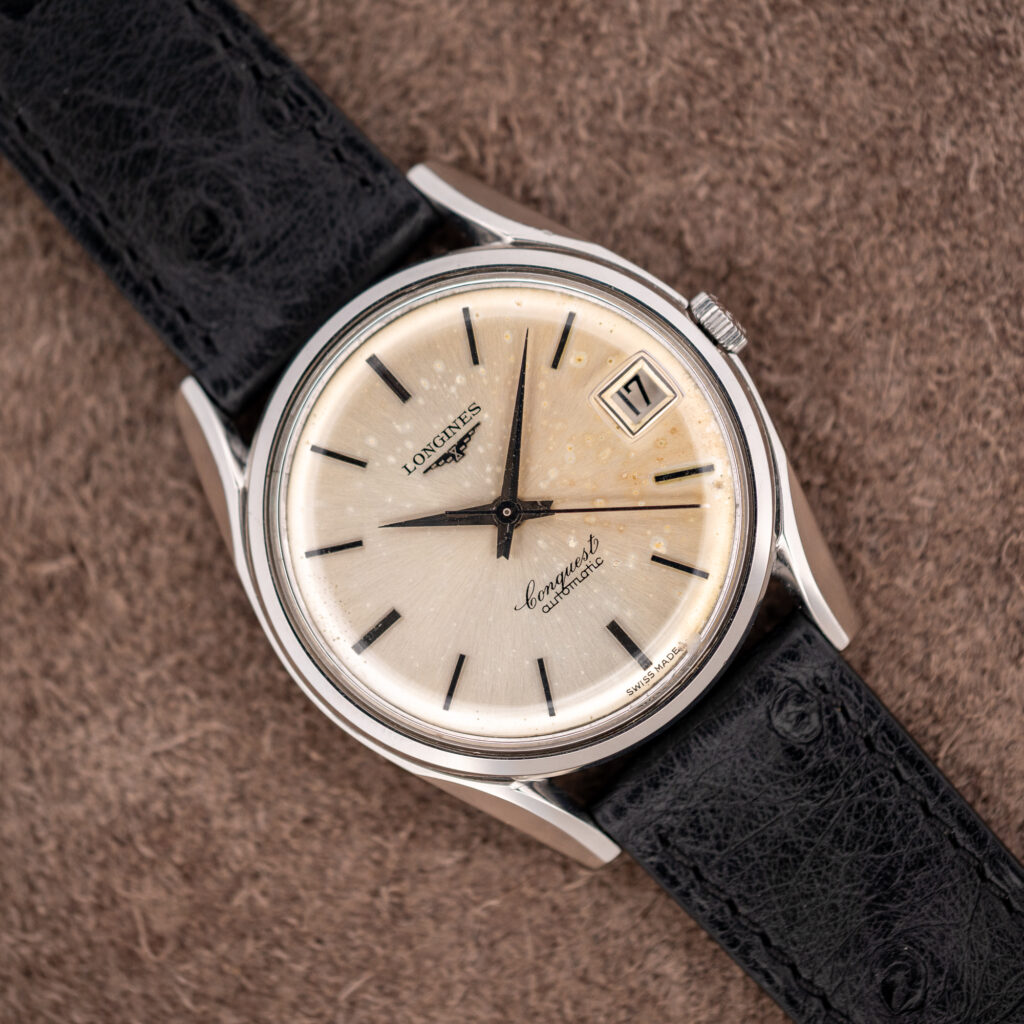
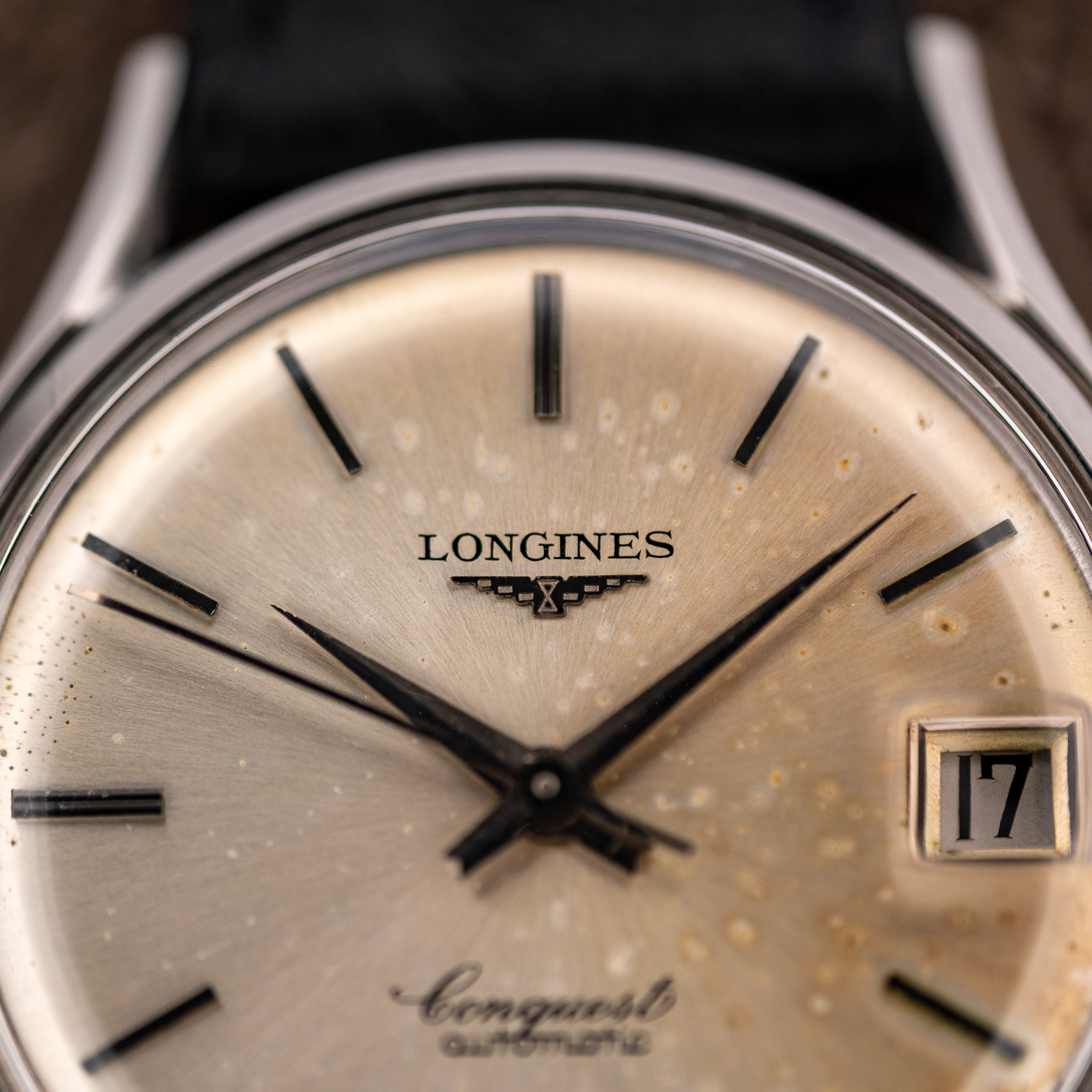
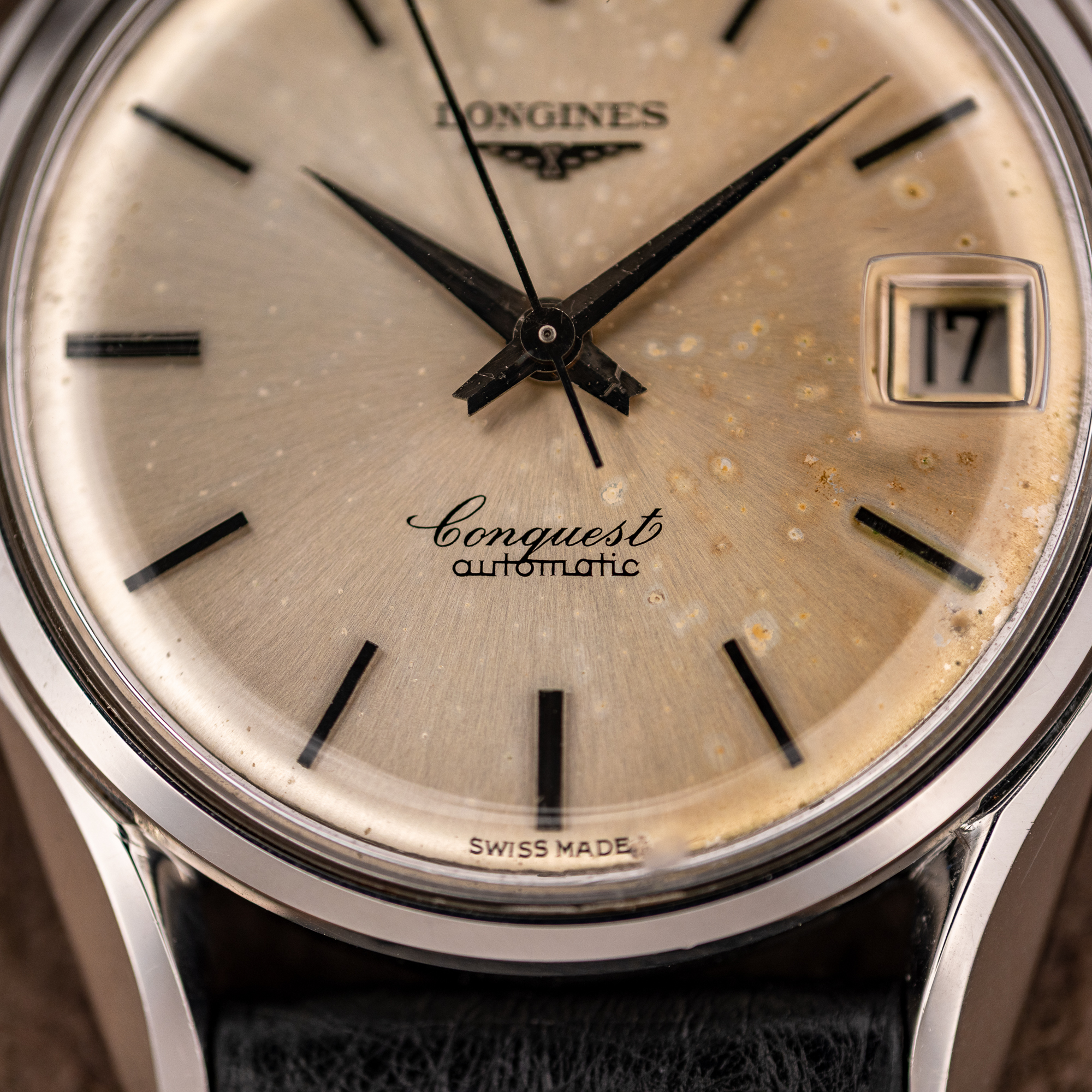
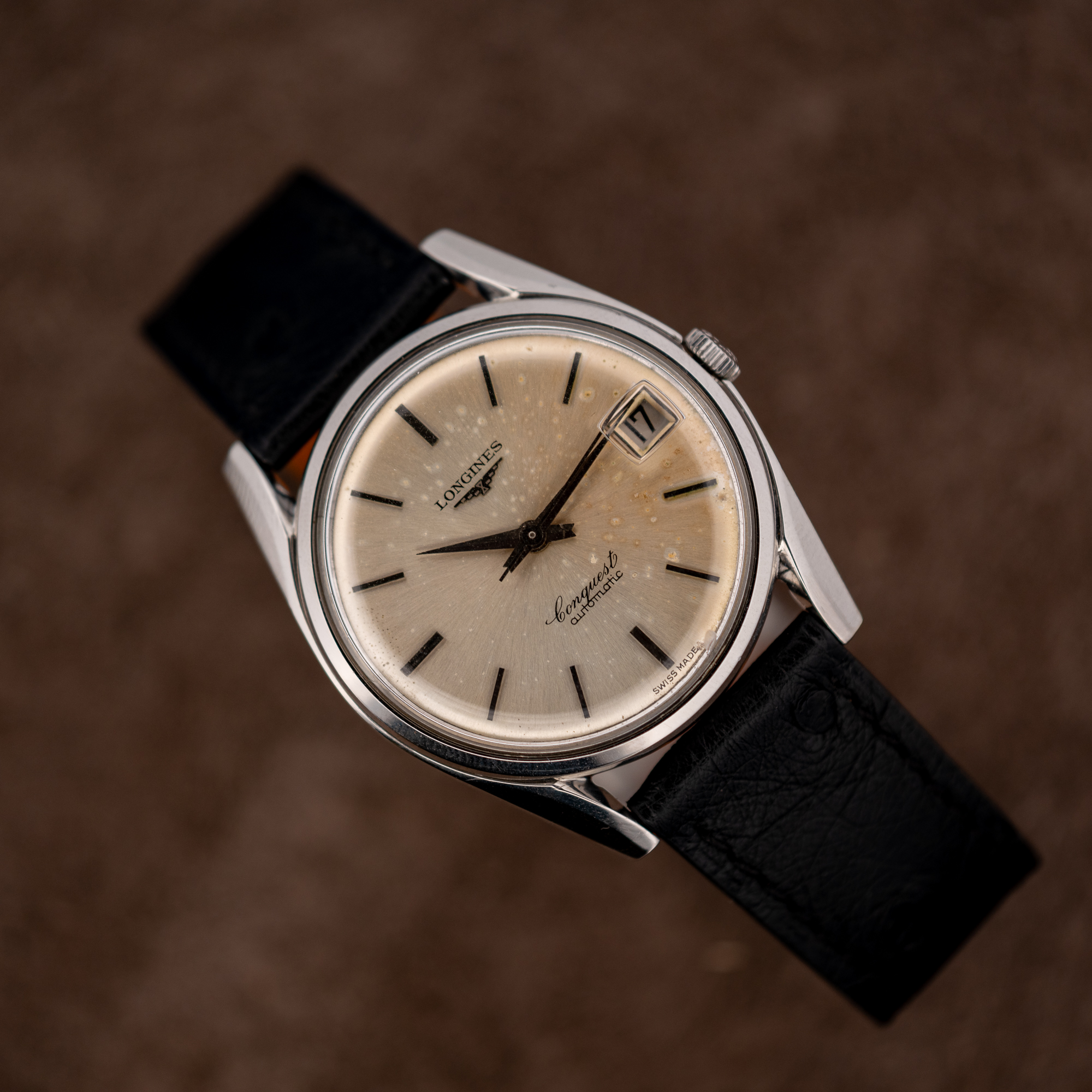
The silver dial, with Longines’ winged-hourglass emblem applied beneath the name, carries a sunburst finish under slim, mostly uniform batons, and the date at three sits below a magnifier in the crystal. Age has marked it plainly: pale circular spots and brown specks are scattered across the surface, thickest toward the outer edge, and the right side has warmed toward cream. The hands are mottled, the flanks carry fine scratches and the back is densely marked.
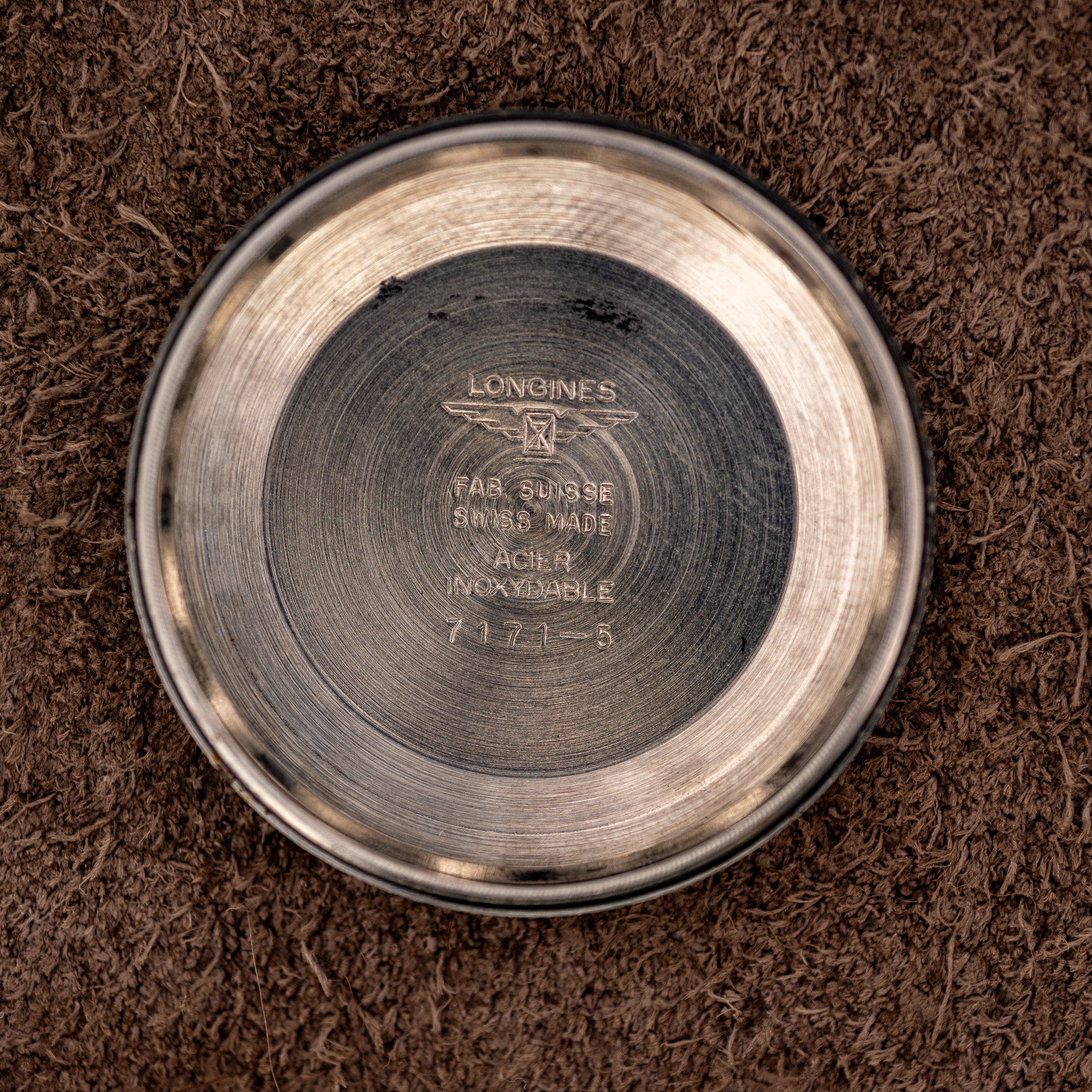
Inside, the caseback is stamped 7171-5 beneath FAB. SUISSE and ACIER INOXYDABLE, French for Swiss manufacture and stainless steel, and the rotor is signed in black-filled letters. On a black ostrich strap, those long lugs look longer still.