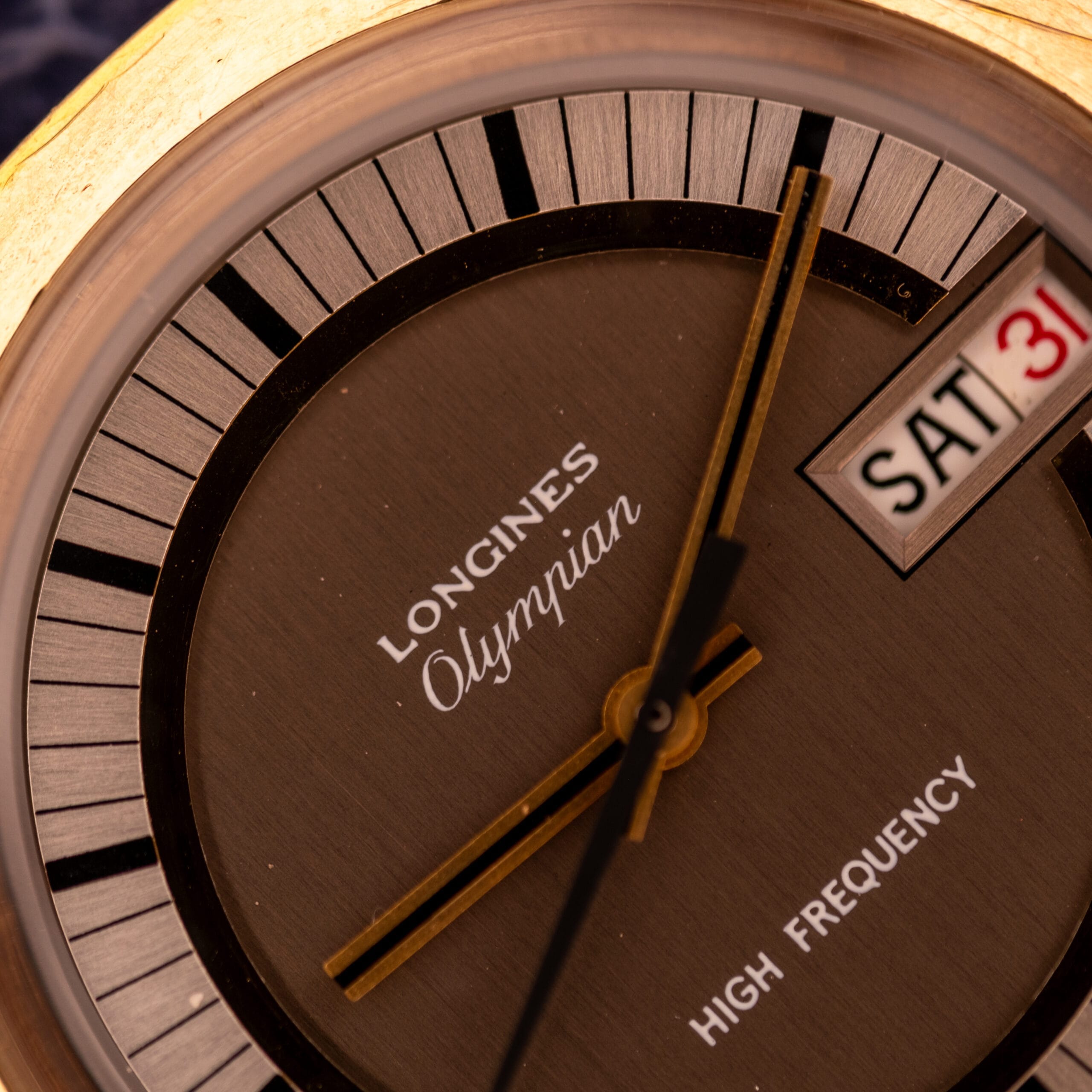
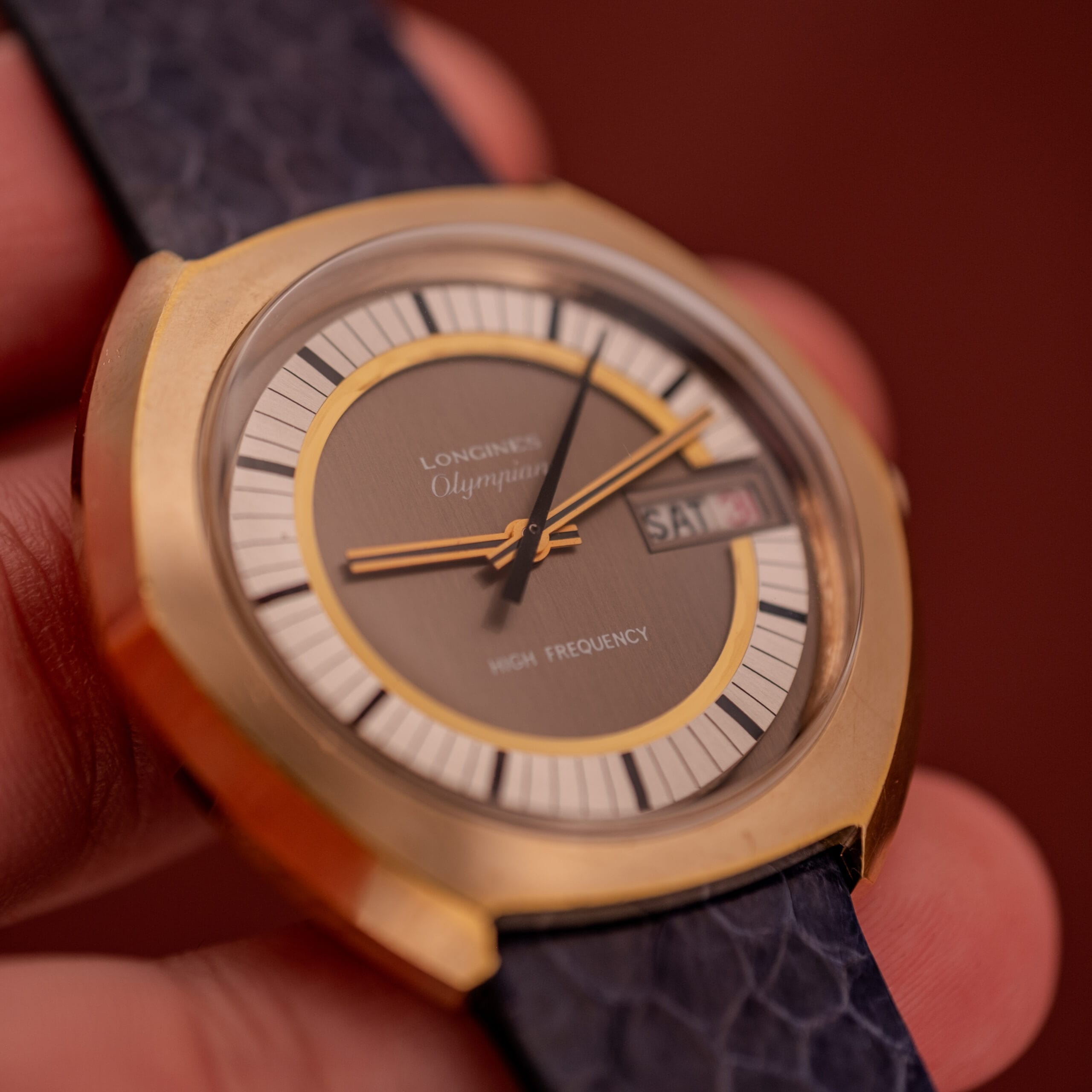
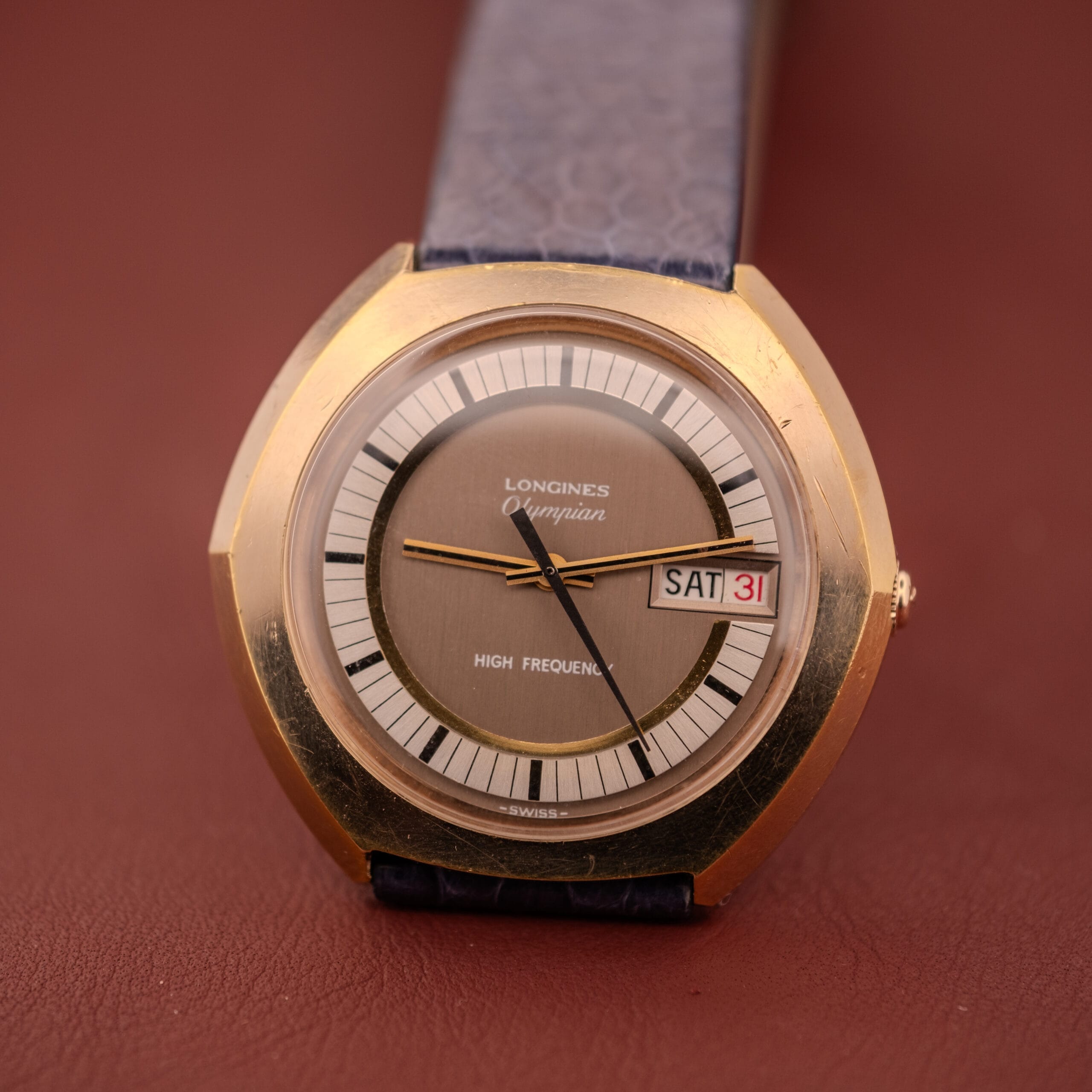
In the early 1970s, the Swiss watch industry was locked in an arms race for accuracy. Before quartz completely took over, the “High Frequency” mechanical movement was the pinnacle of precision engineering. Longines was a leader in this field, having experimented with high-beat technology since the early 20th century for sports timing. The Olympian line, fittingly named given the brand’s long history as an Olympic timekeeper, served as a canvas for these technical achievements, blending space-age performance with the funky, geometric aesthetics of the era.
This specific example, produced in 1972, is a time capsule of that transitional moment. It is powered by the Caliber 6972, a manual-wind movement that beats at 28,800 vibrations per hour. While the famous “Ultra-Chron” pushed to 36,000, the 28,800 frequency became the industry gold standard for balancing accuracy with component durability, a standard that remains in place for most luxury watches today. To the collector, this movement represents the final, perfected form of the classic manual-wind caliber before the battery era arrived.
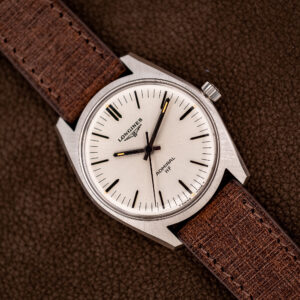
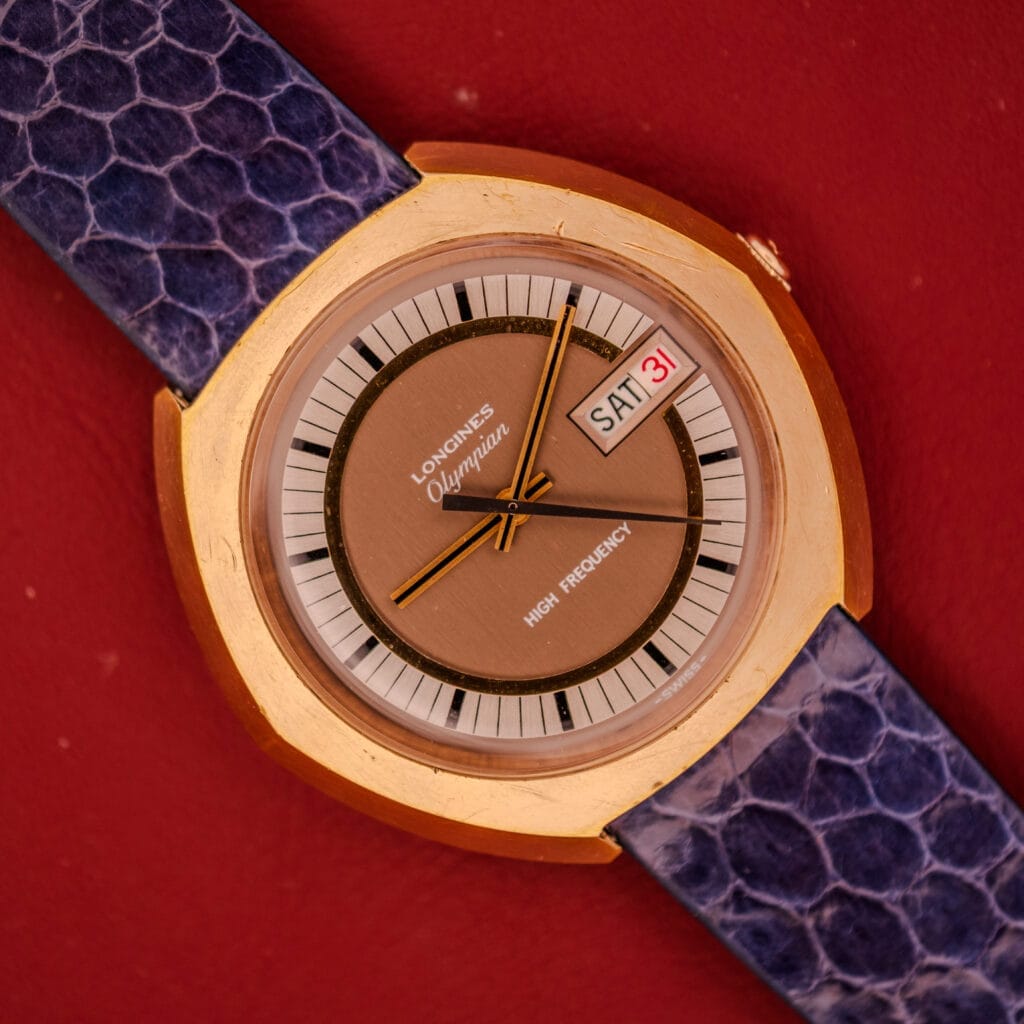
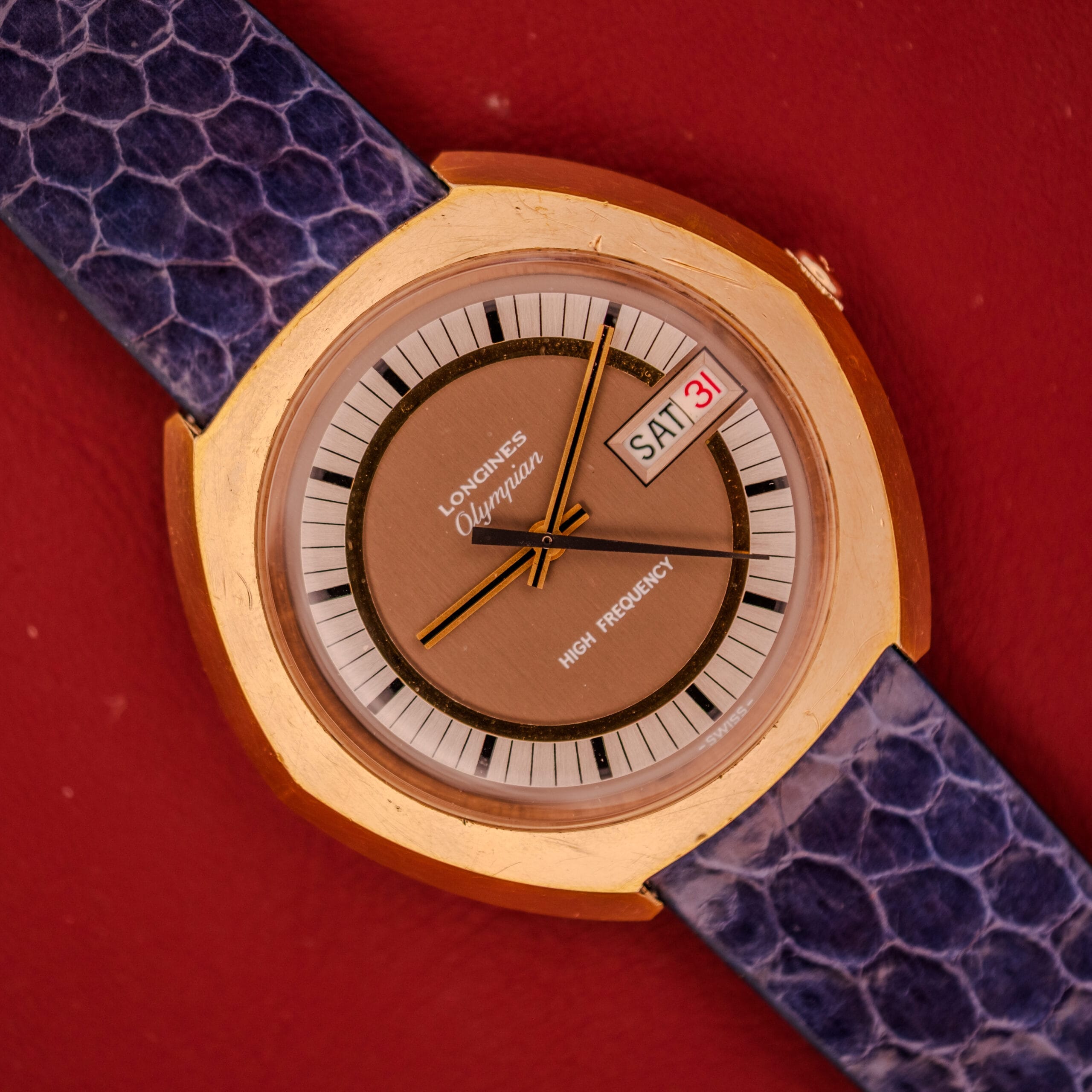
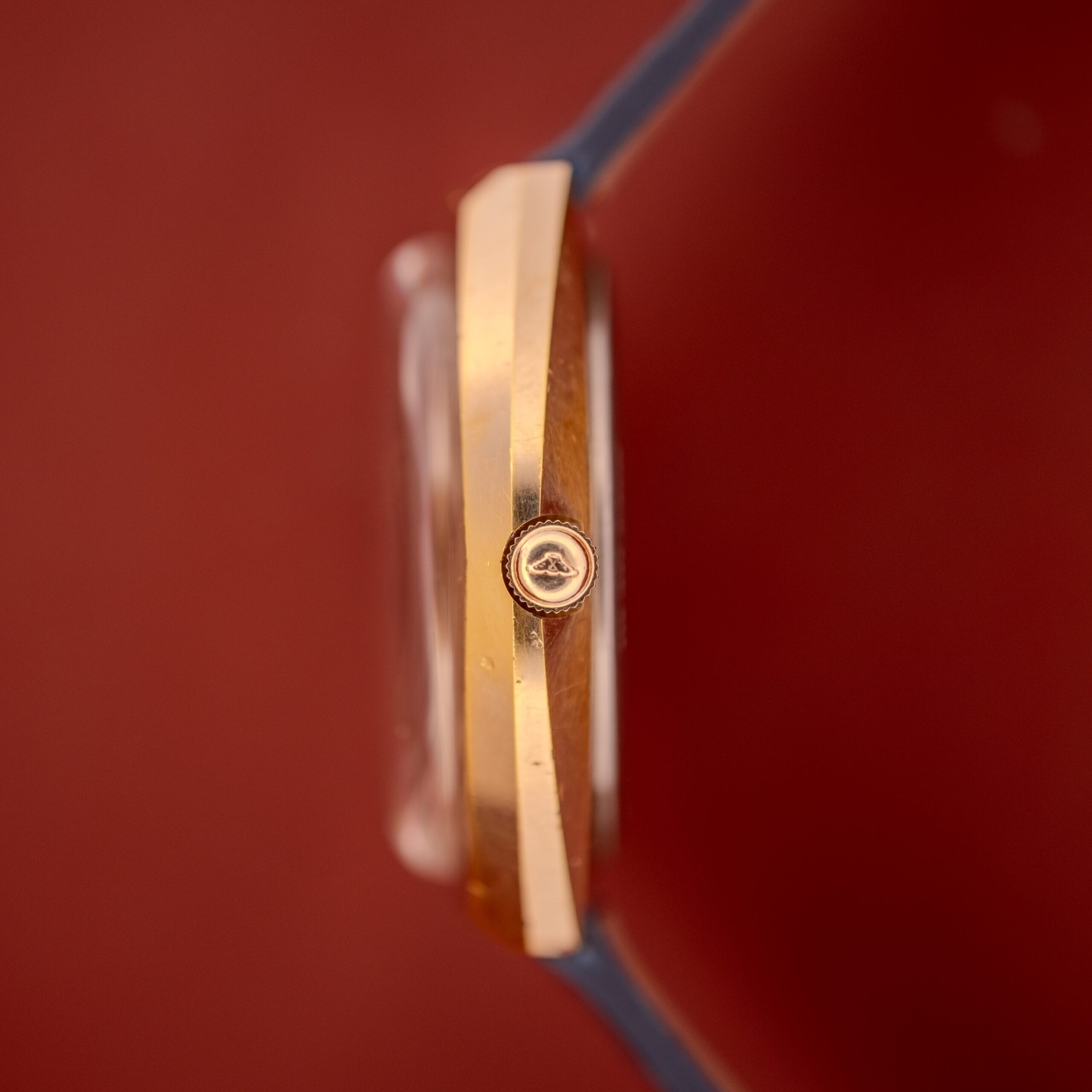
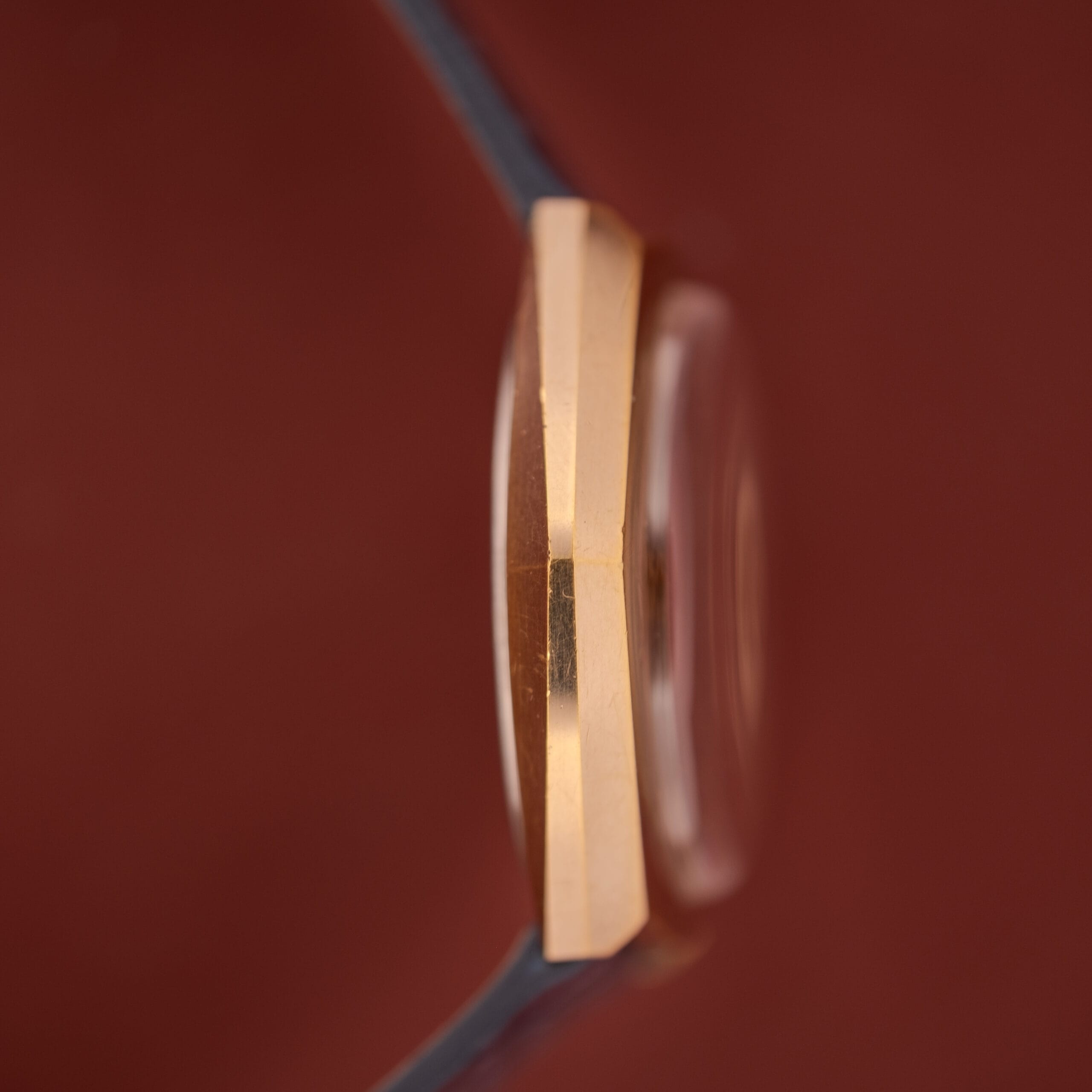
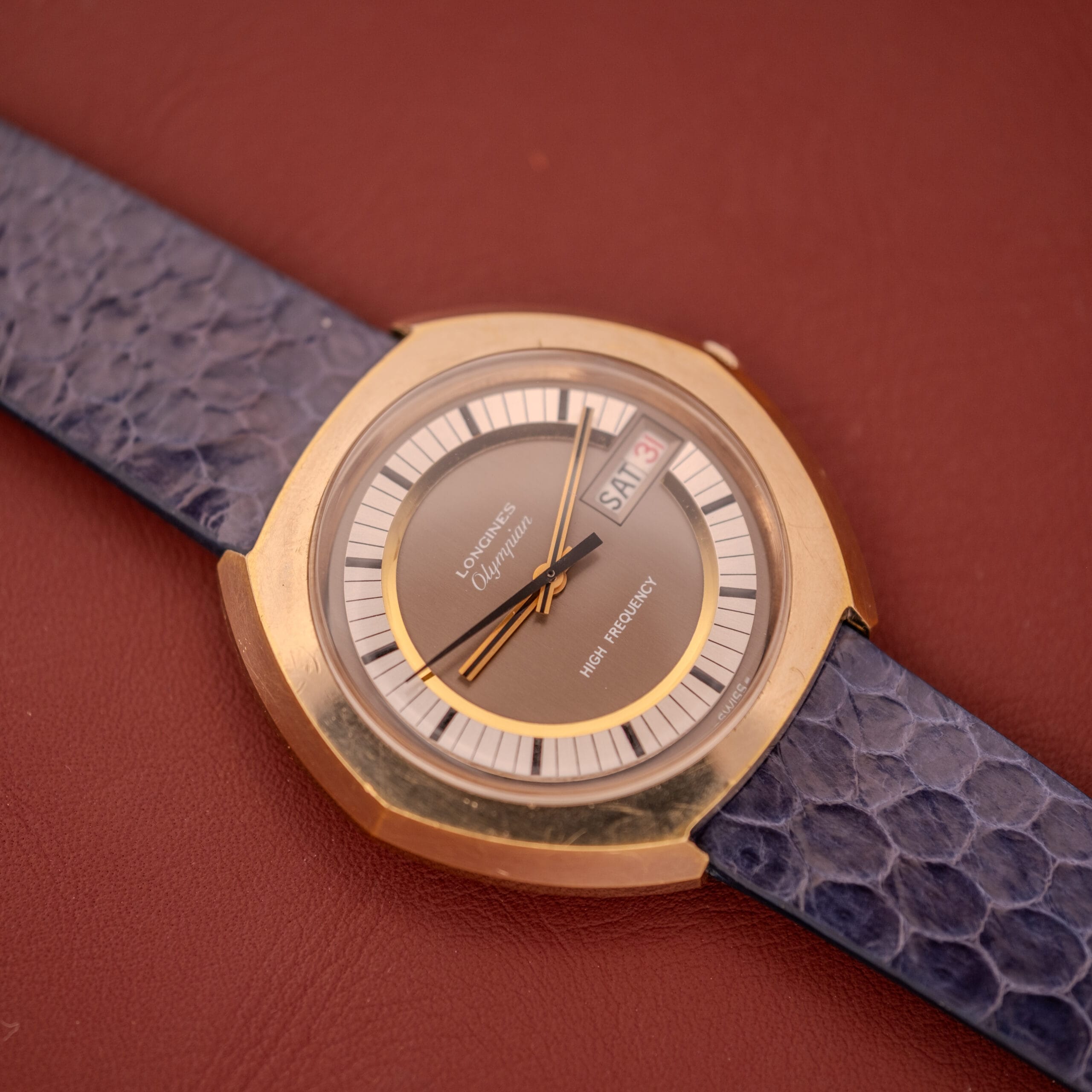
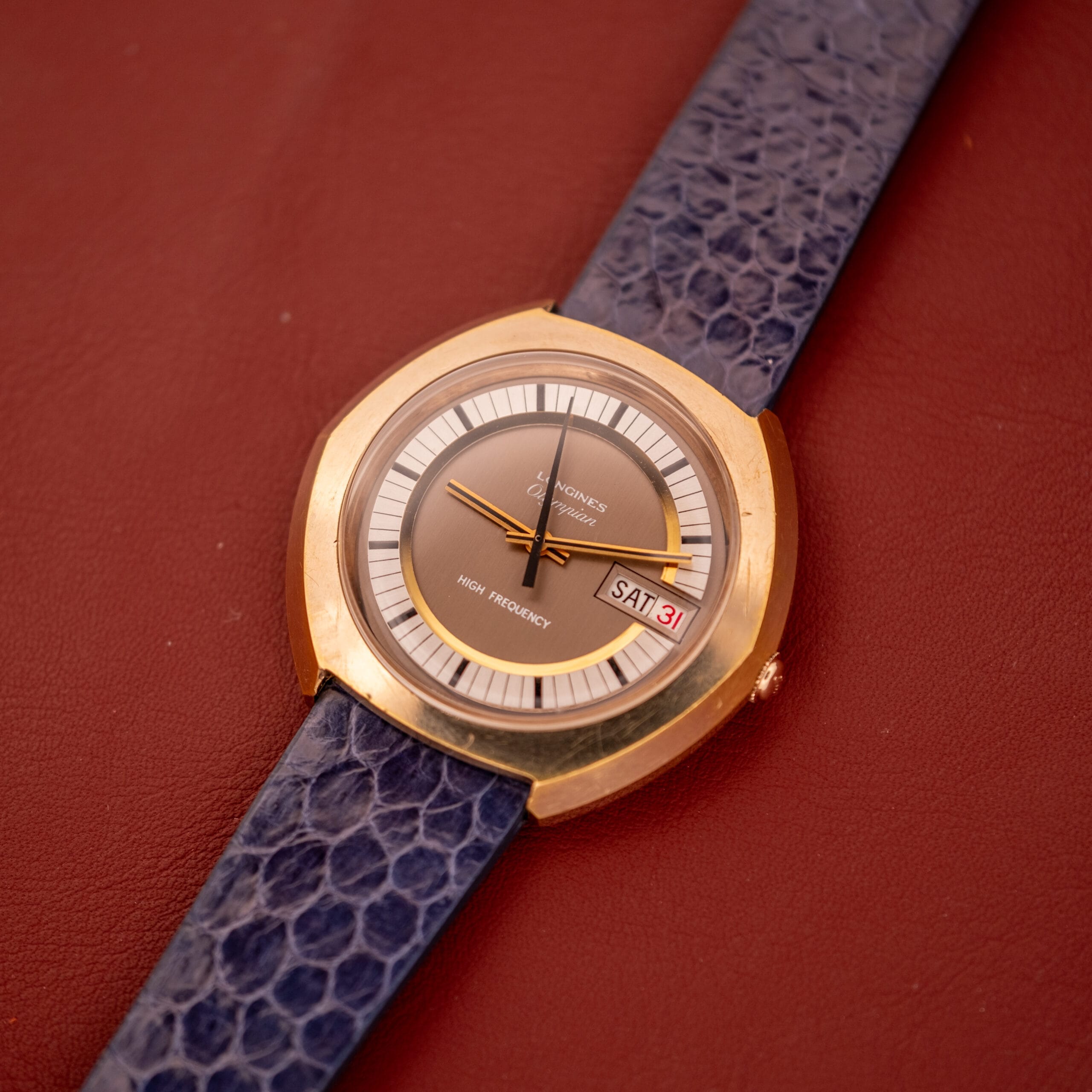
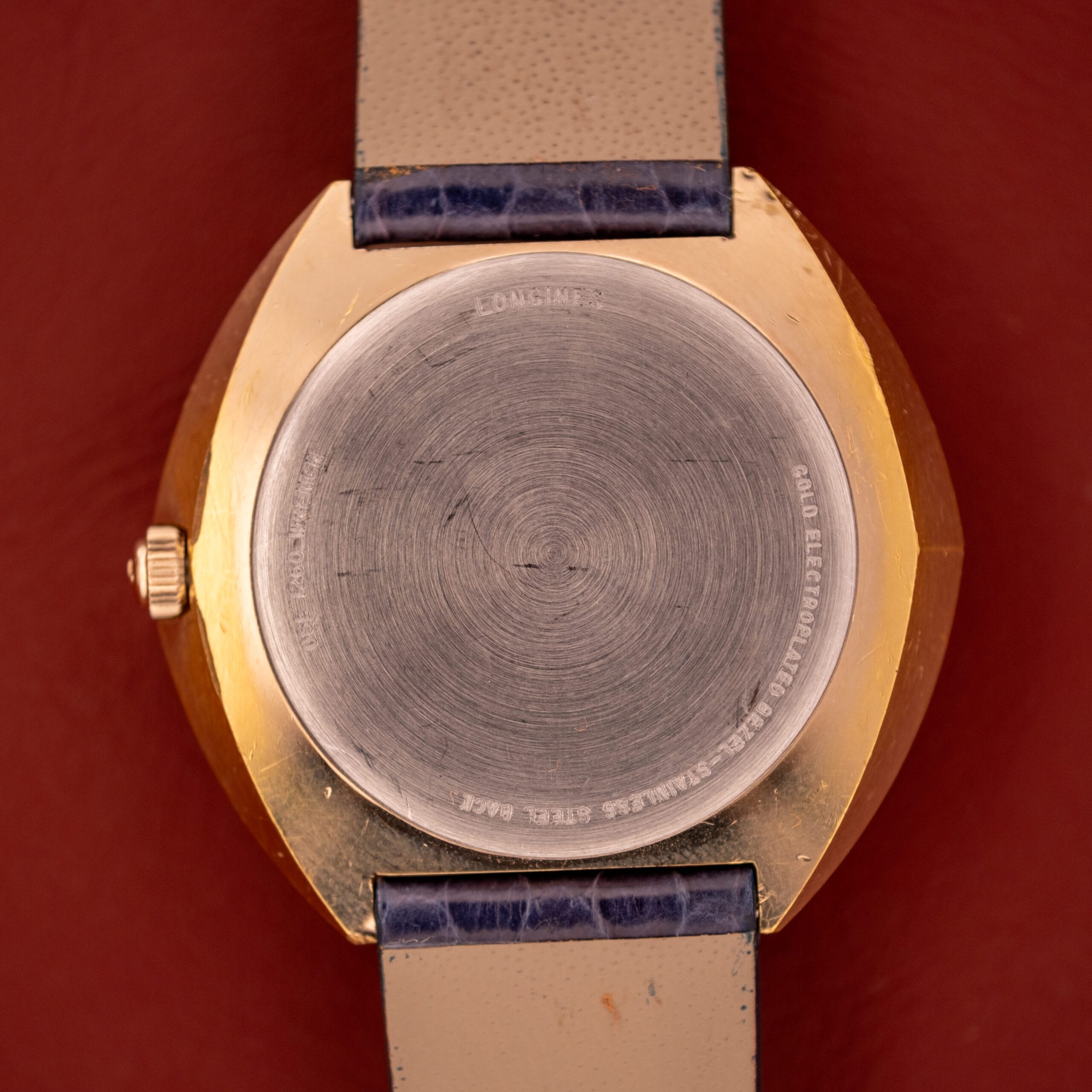
The design is pure 1970s cool. The cushion case, with its hidden lugs and gold electroplated finish, sits on the wrist with a substantial, architectural presence. What makes this piece particularly interesting to US collectors is the “Star W. C. Co.” stamp inside the caseback. This indicates the case was manufactured domestically by the Star Watch Case Company in Michigan, a common practice at the time to circumvent import tariffs, making this a distinct variation from its Swiss-cased cousins.
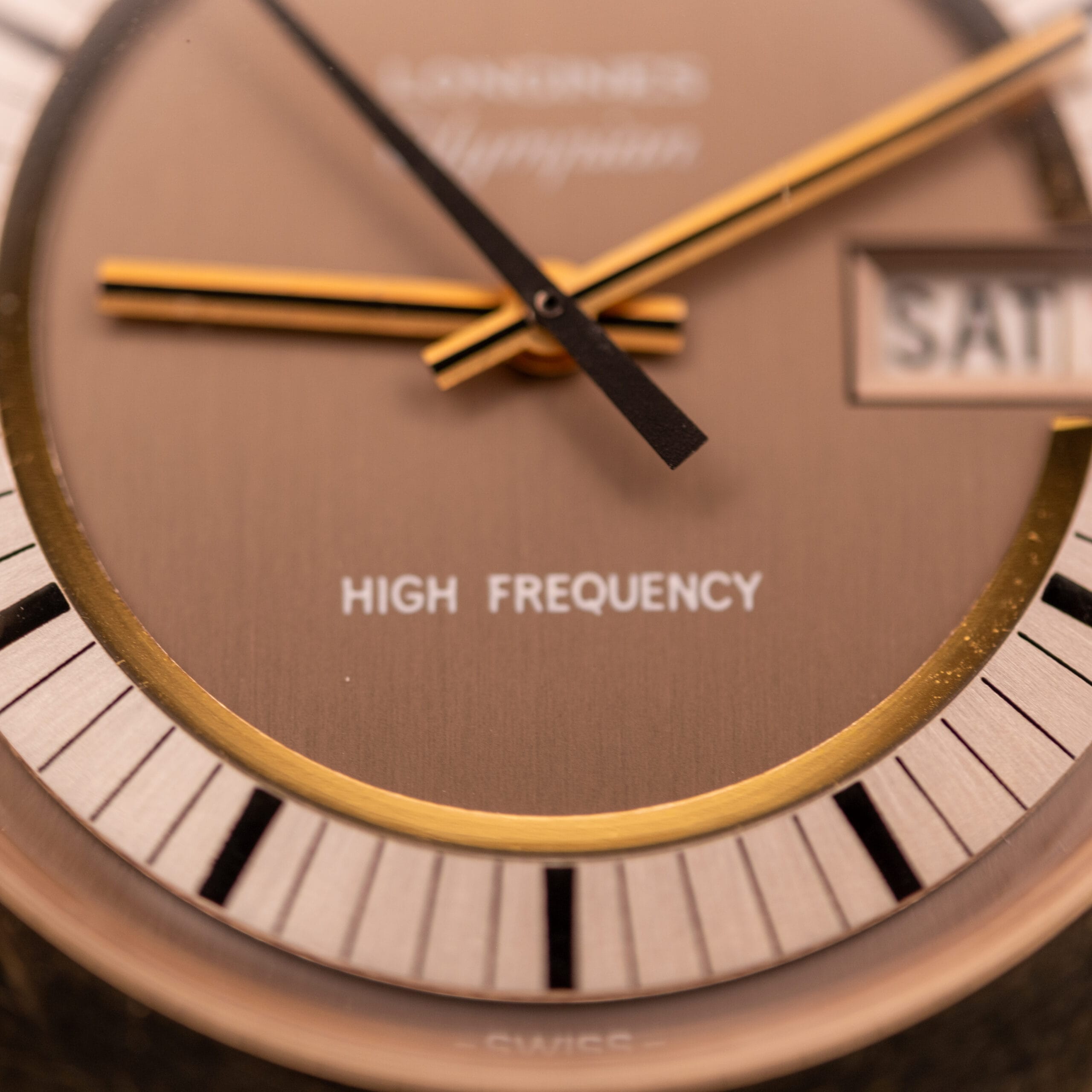
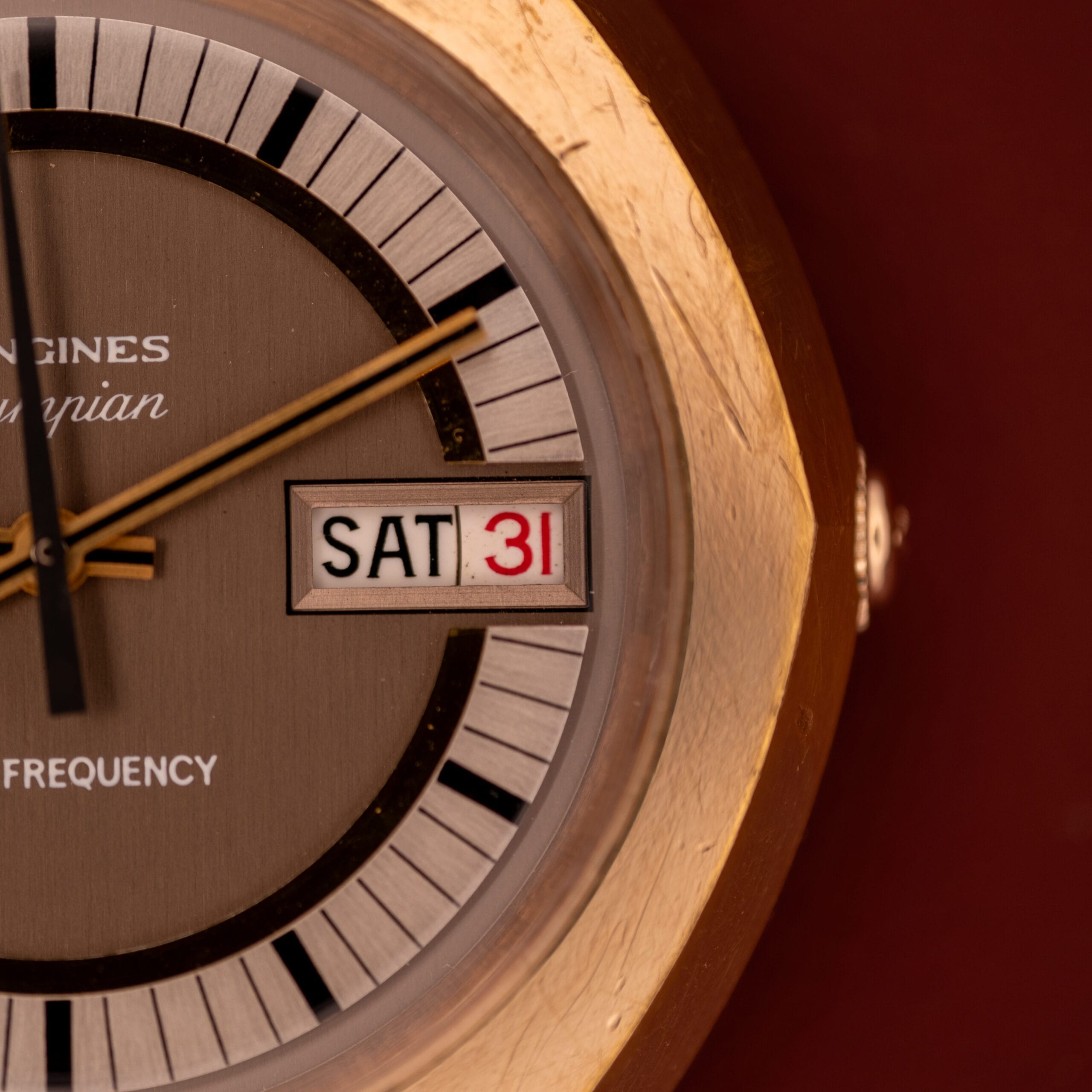
The dial is the visual highlight, featuring a champagne sunburst finish framed by a stark white “racing” style minute track. This two-tone effect, combined with the blocky, applied indices and the “High Frequency” text, gives the watch a technical, dashboard-instrument vibe. The day-date window adds practicality, while the original black-striped hands ensure legibility remains sharp.
Condition-wise, the gold plating shows honest wear consistent with its age, particularly on the high edges, but retains a warm, vintage luster. The dial is crisp and clean, and the movement, bearing the serial number 51 million, remains a testament to Longines’ engineering prowess.
This Olympian is for the collector who loves the “last stand” of mechanical innovation. It is a piece of history from when engineers were pushing springs and gears to their absolute physical limits, wrapped in a design that could only have come from the 1970s.
Production Note: The movement serial number dates the production of this watch to 1972.