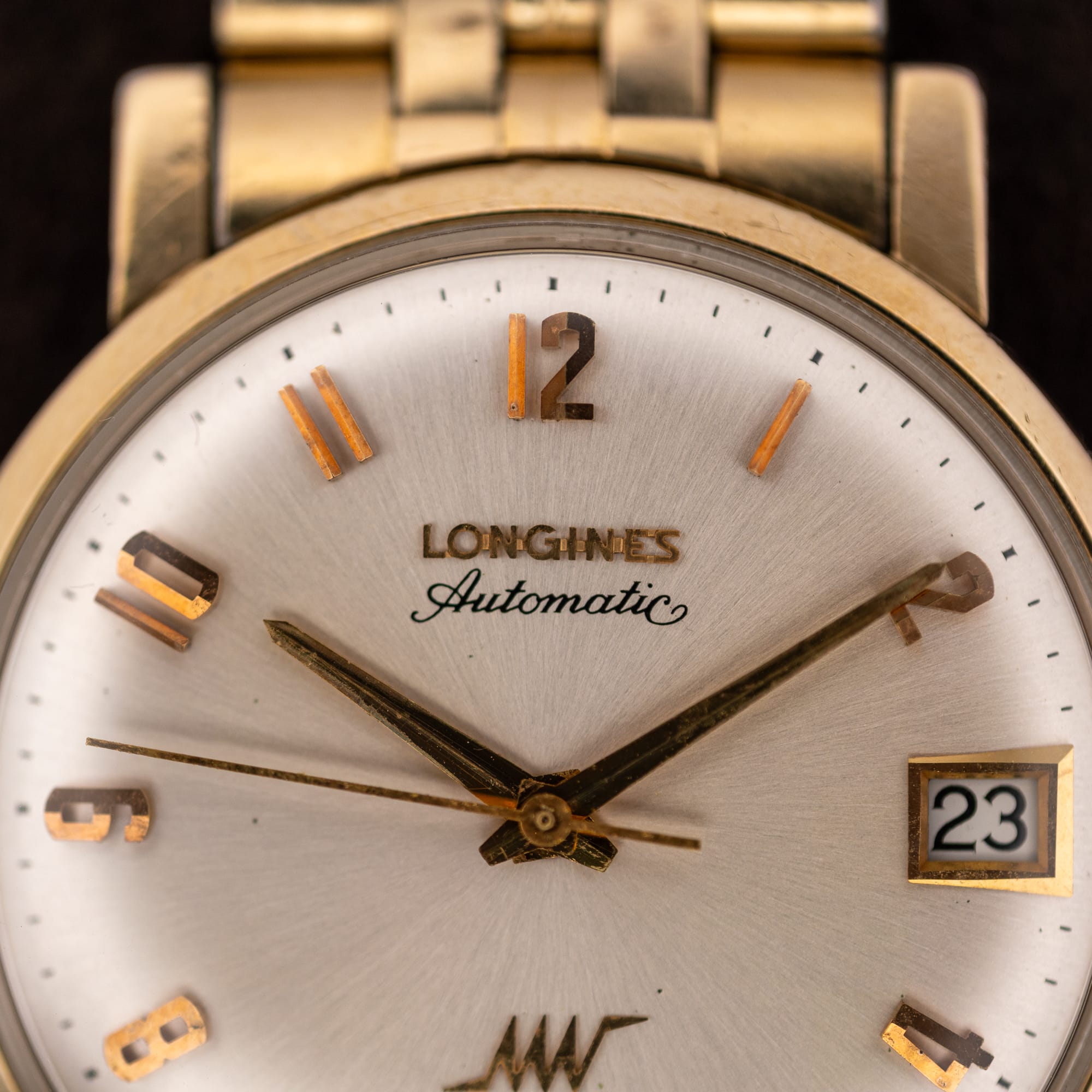
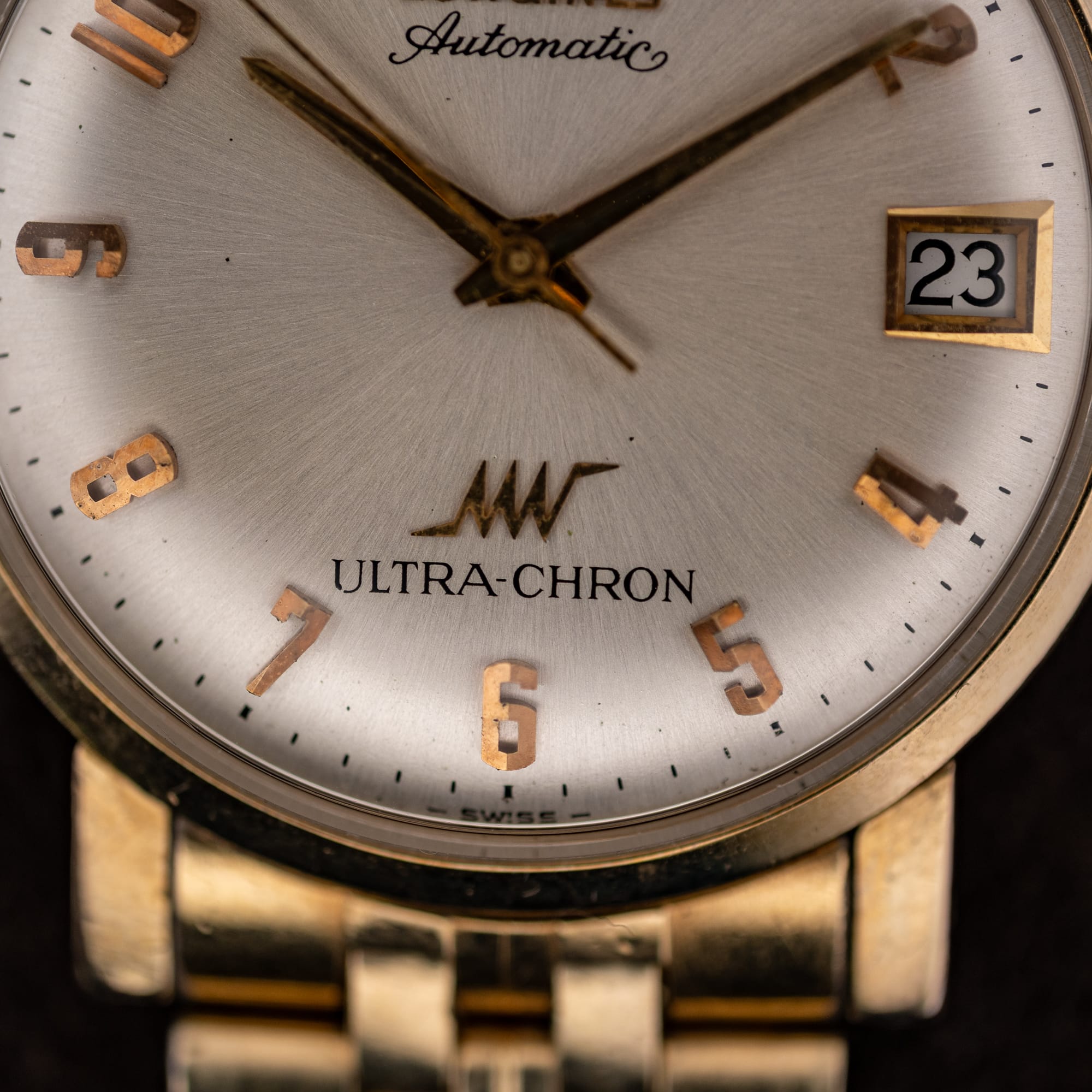
Longines marked a hundred years at its Saint-Imier factory in 1967 by putting a number in writing. That was the year the Longines Ultra-Chron launched, advertised as “the world’s most accurate watch” and guaranteed “accurate to within a minute a month,” which works out to roughly two seconds a day and sat tighter than the official Swiss rating standards of the period asked for.
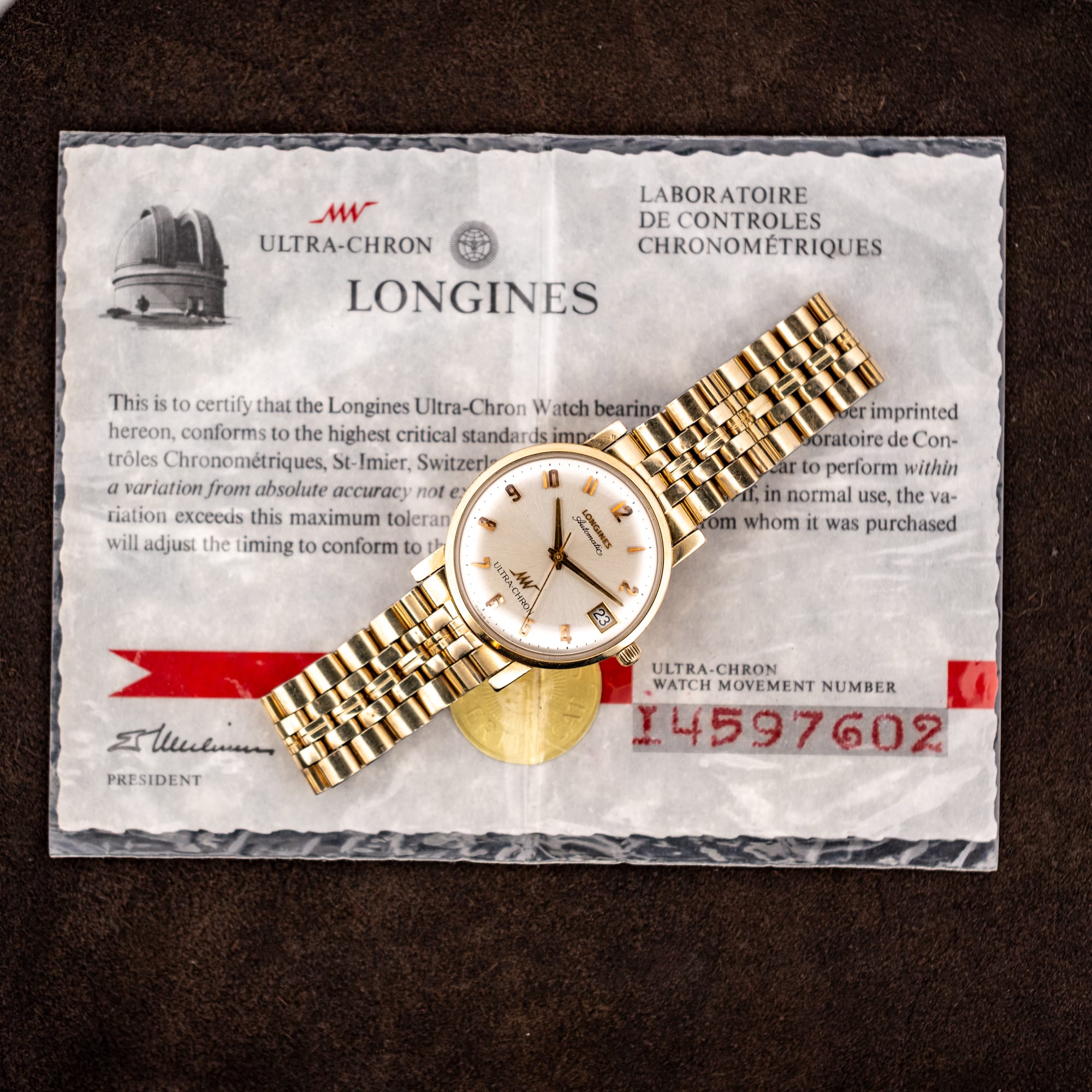
That promise shipped with the watch, and this Longines Ultra-Chron still has its paper. We photographed the certificate alongside it: the winged hourglass at the head, the movement number 14597602 printed in red at the lower right, and a declaration that the watch conforms to the standards imposed by the Laboratoire de Controles Chronometriques in Saint-Imier. The clause underneath does the real work. If the watch varied beyond tolerance in normal use, the dealer who sold it was obliged to adjust the timing until it conformed. Published serial tables place that movement number in 1968.
Making the promise good meant doubling the pace. A standard automatic of the period beat at 18,000 vph; the Ultra-Chron caliber ran at 36,000, ten beats a second, which buys stability by leaving the balance less time to drift between them. High frequency had spent most of its life in observatory competition, Longines’ own hand-built caliber 360 of 1959 among the entries, and by the mid sixties more than one Swiss house was pushing it toward series production against the same obstacle, wear, because conventional oils give out at that speed. Longines answered with a dry molybdenum disulphide lubricant, a coating rather than an oil, and the Clinergic 21 escapement, whose escape wheel carries 21 teeth where the convention was 15.
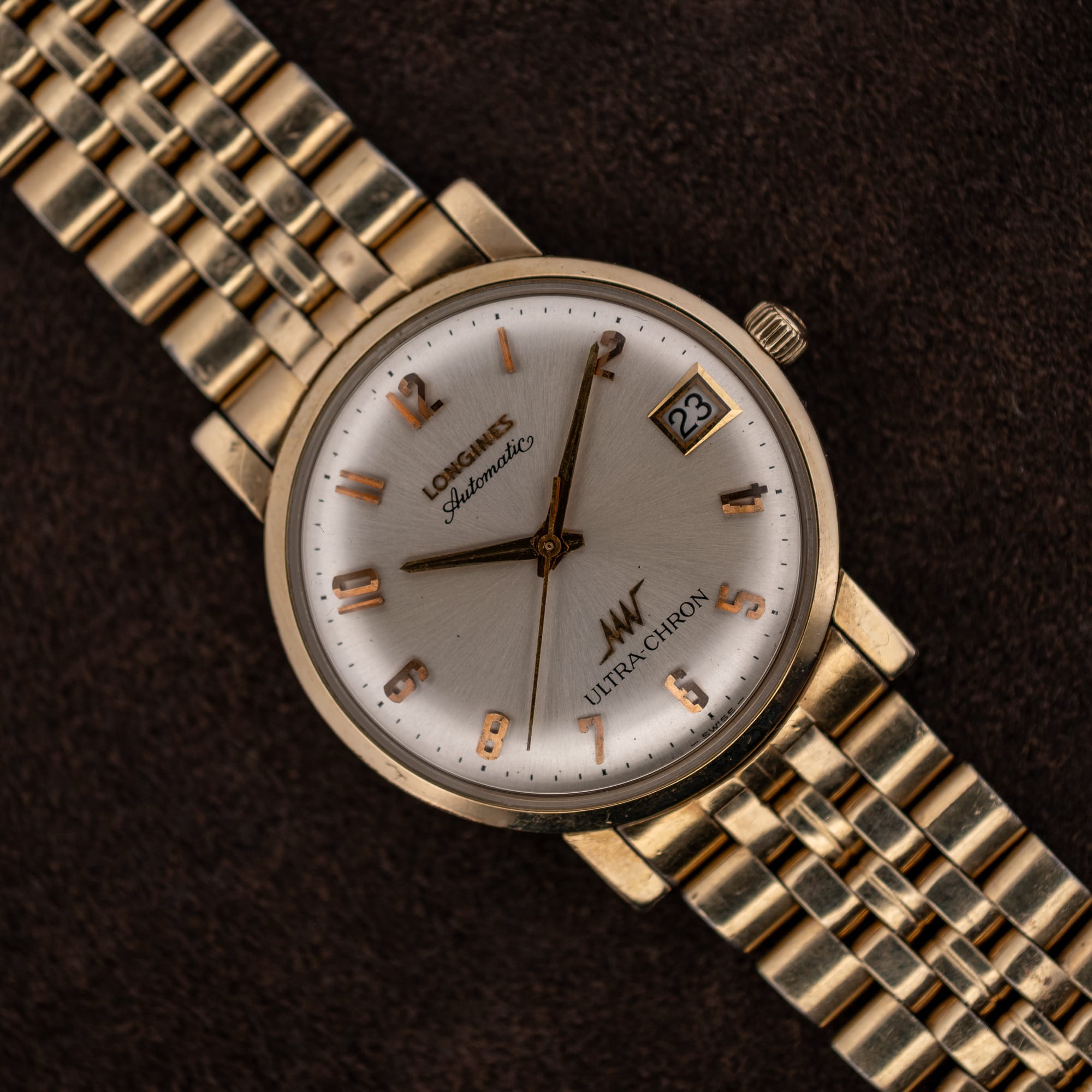
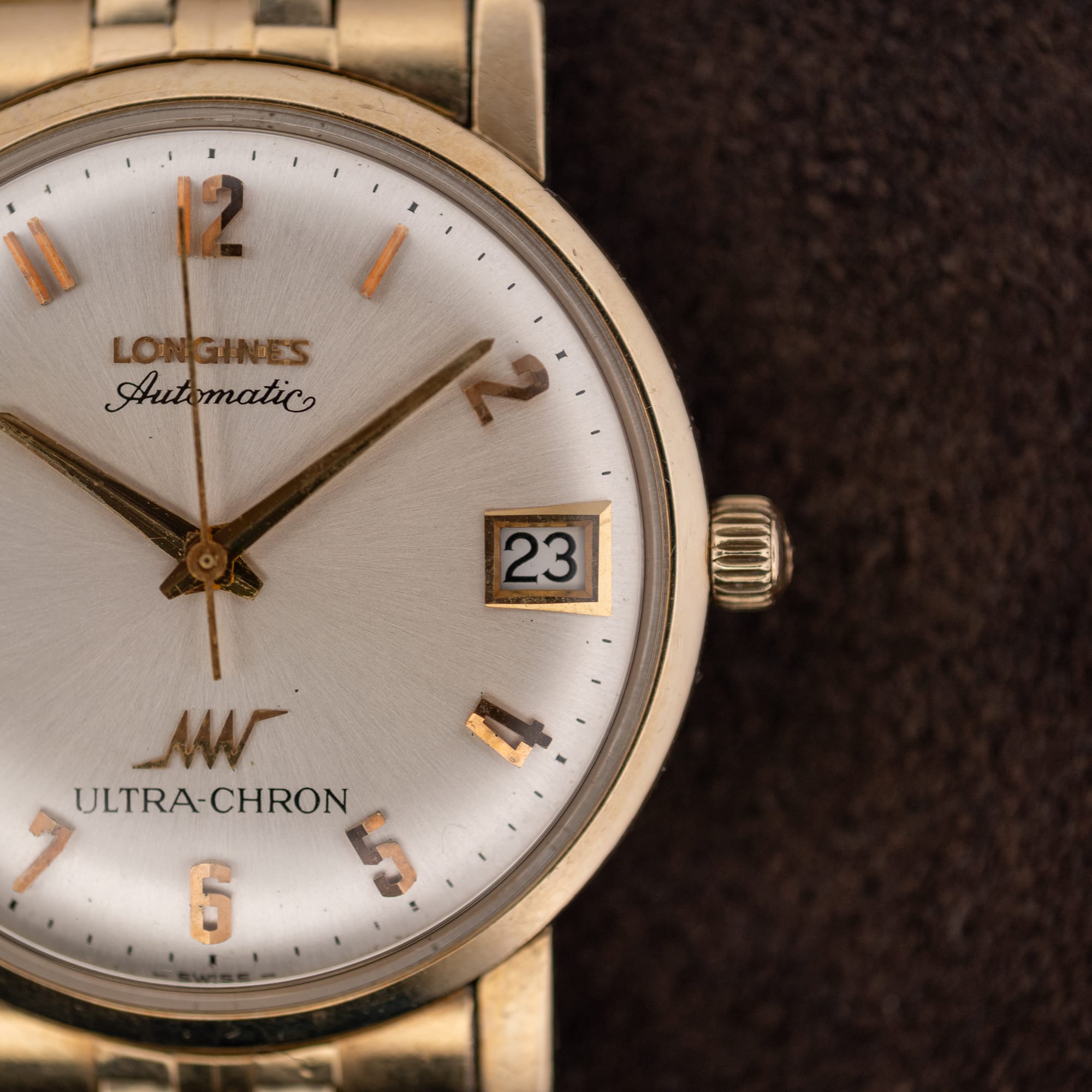
That window closed fast. Zenith put 36,000 vph into an automatic chronograph with the El Primero in January 1969, and Seiko’s quartz Astron arrived that December and took the accuracy argument somewhere mechanical watchmaking could not follow. Longines built the Ultra-Chron around the 431 until roughly 1972, and configuration identifies which one this is: the 43x calibers were split by function, and the 431 is the version with a center seconds hand and a date, which is exactly what this dial carries.
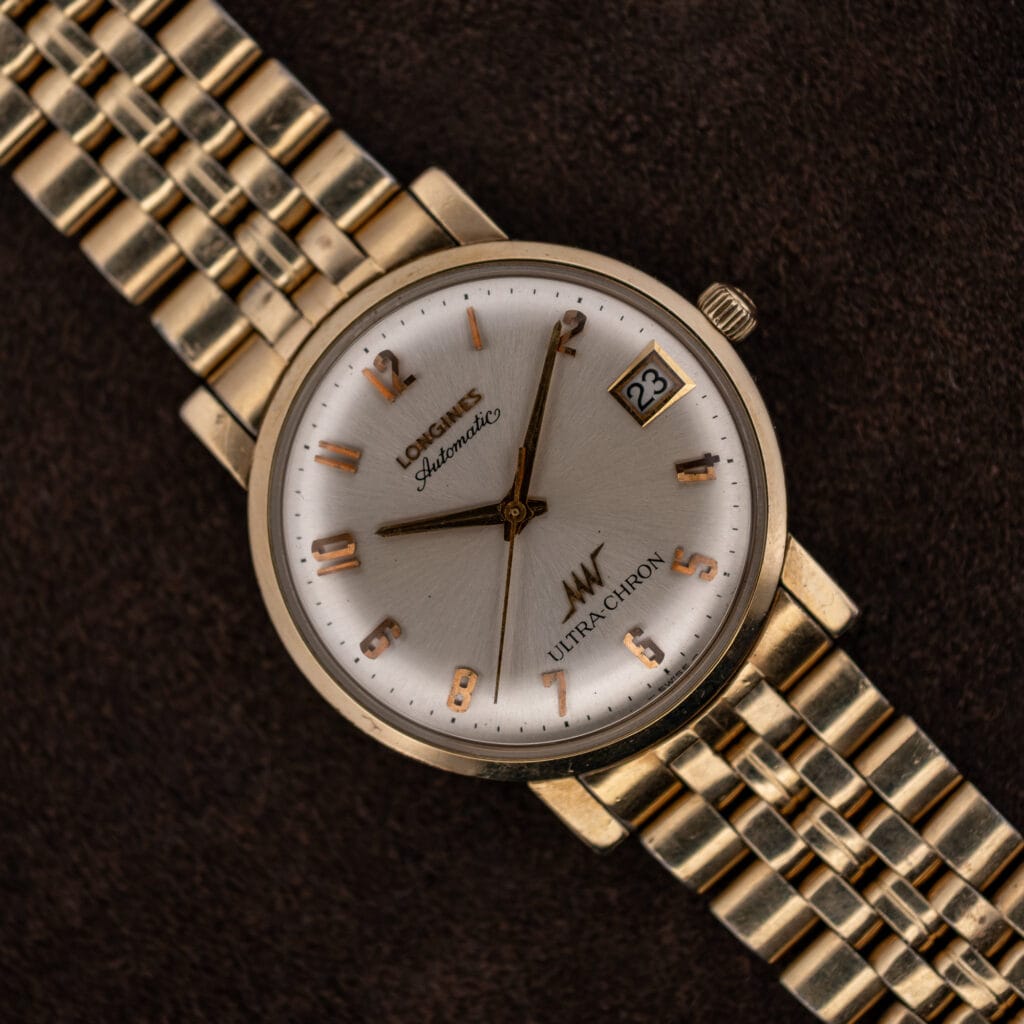
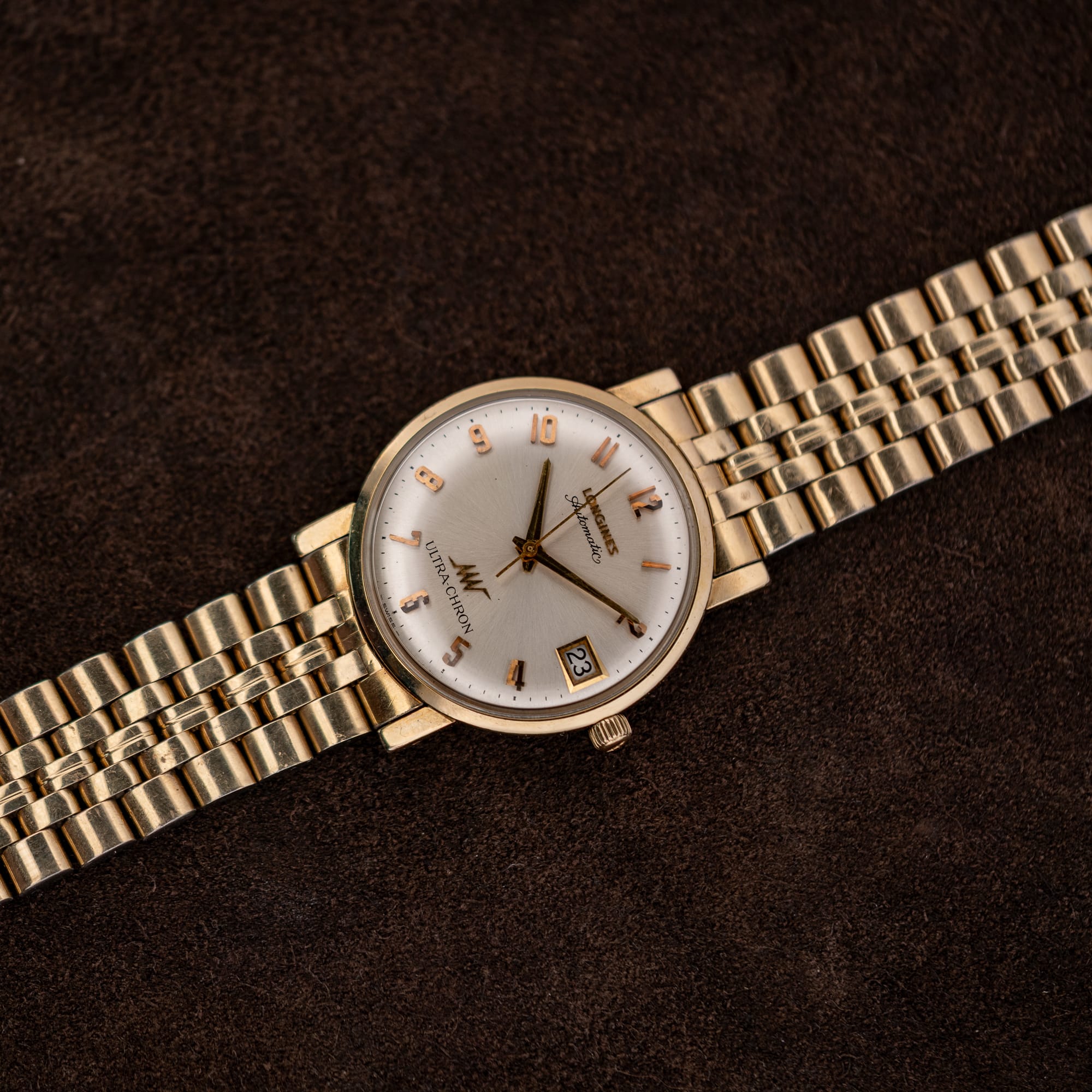
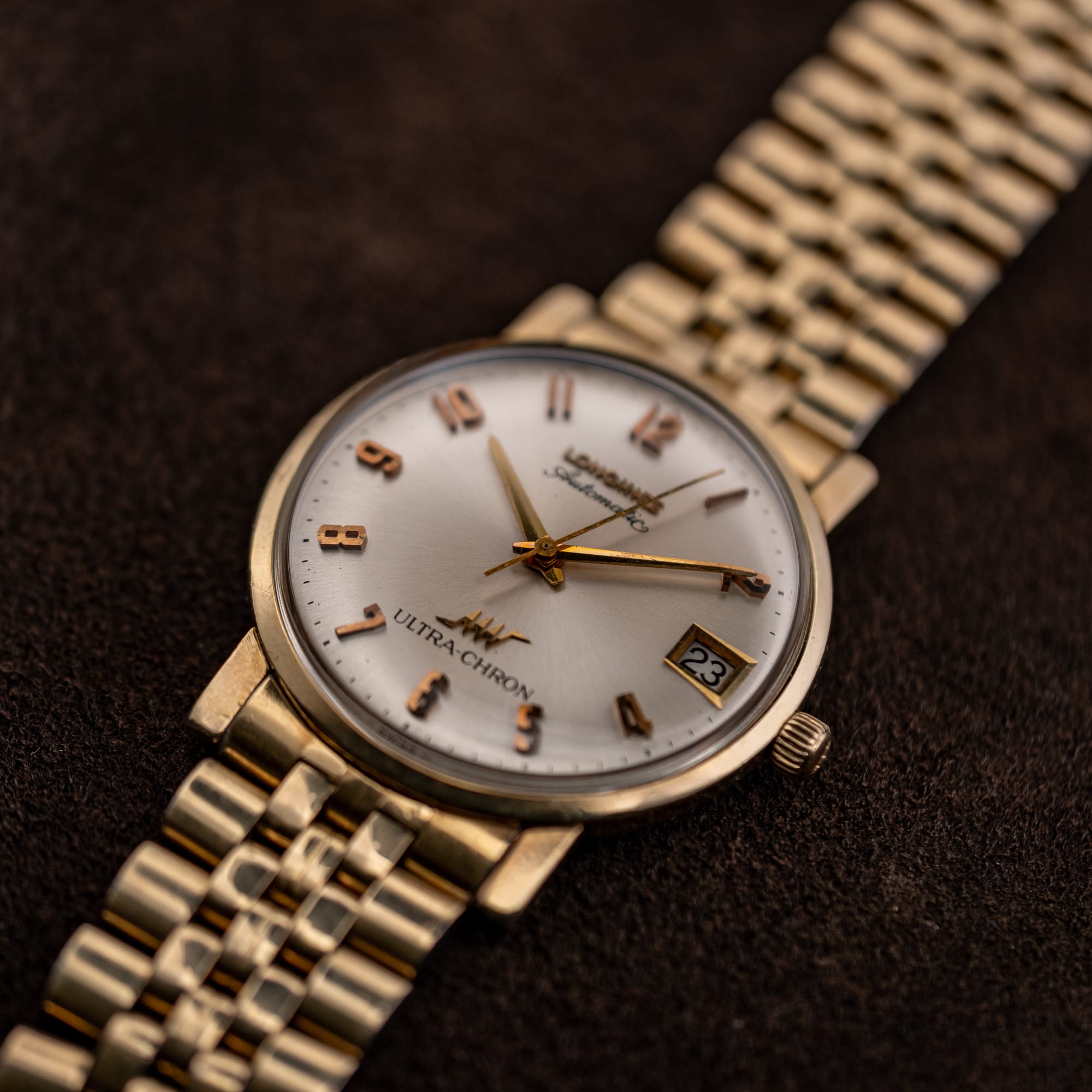
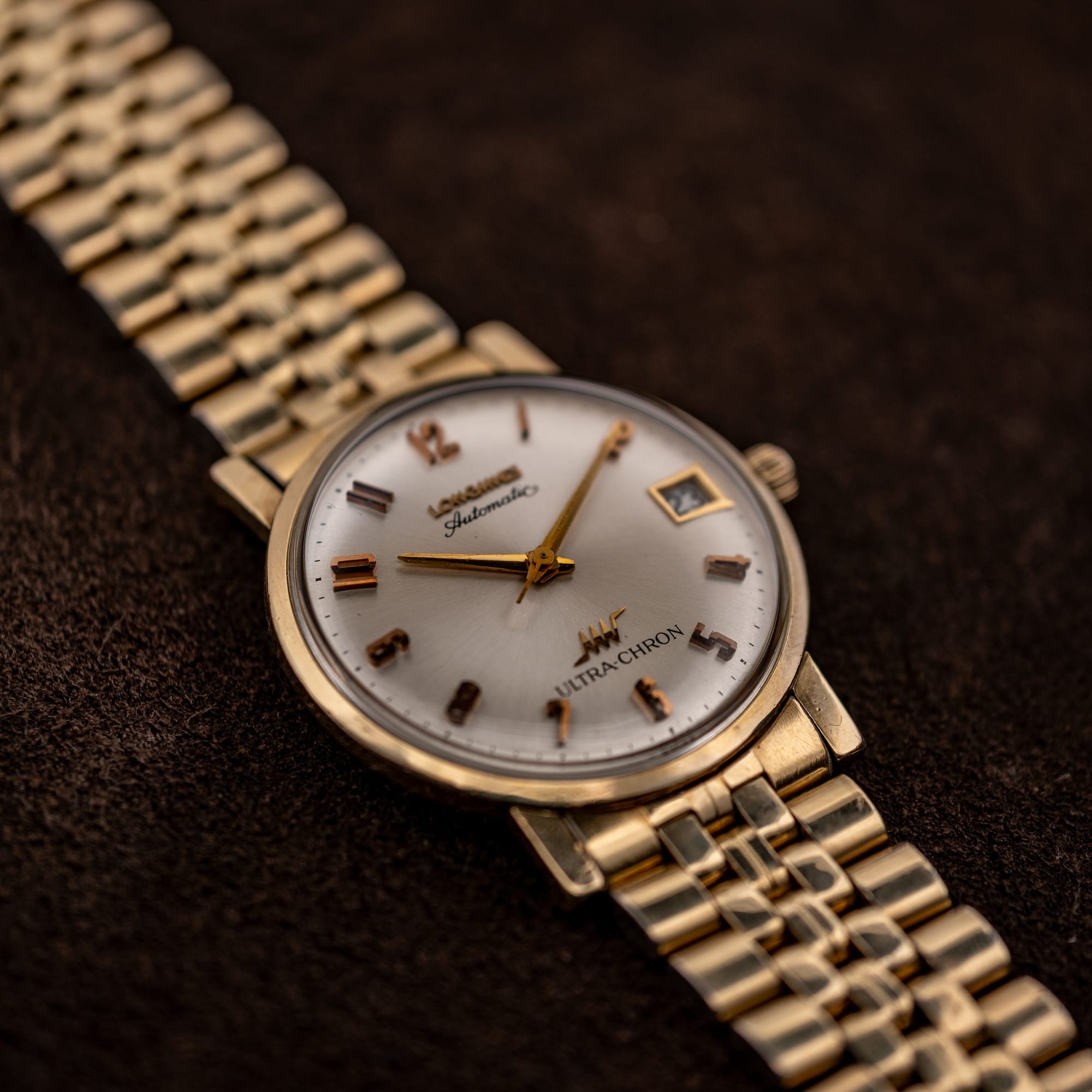
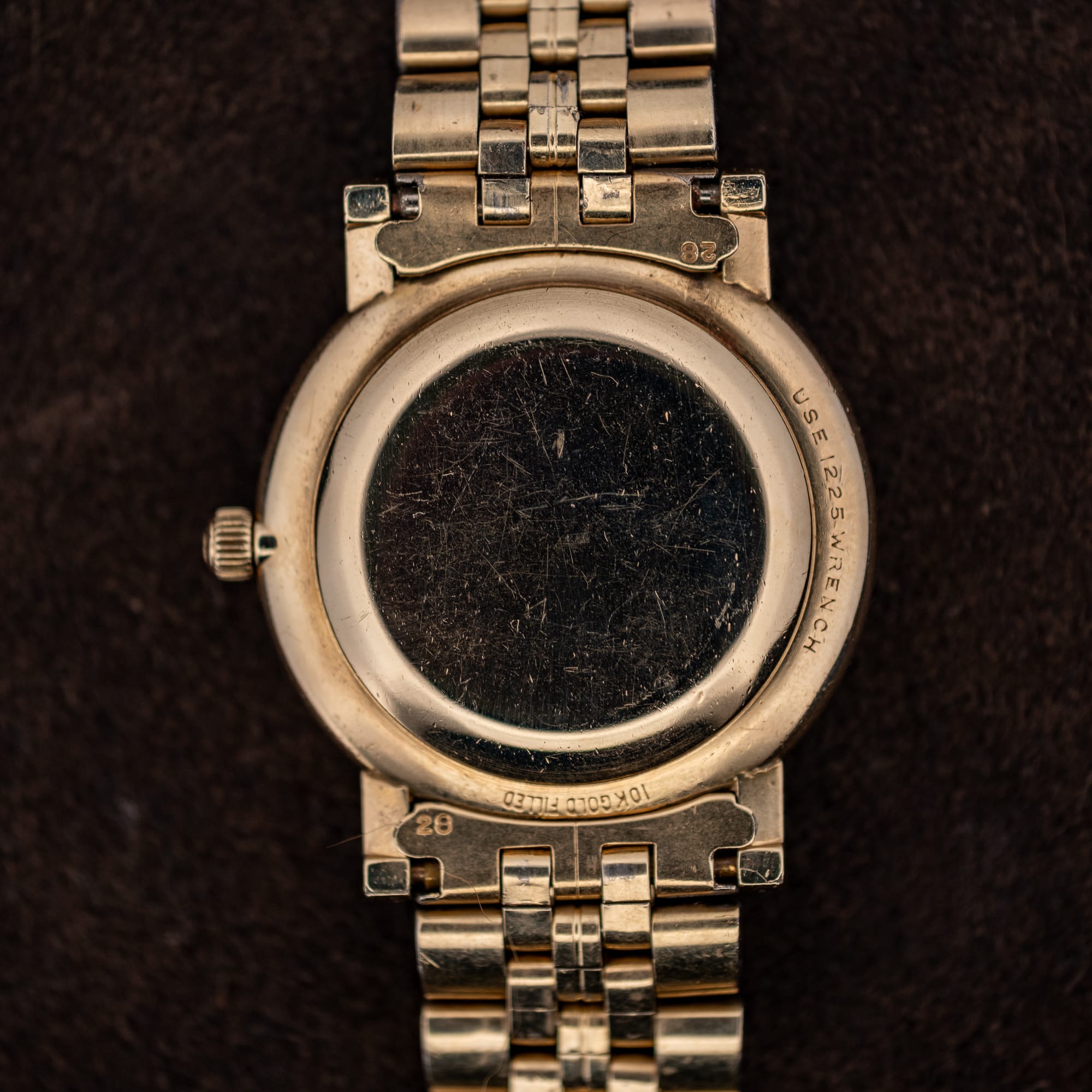
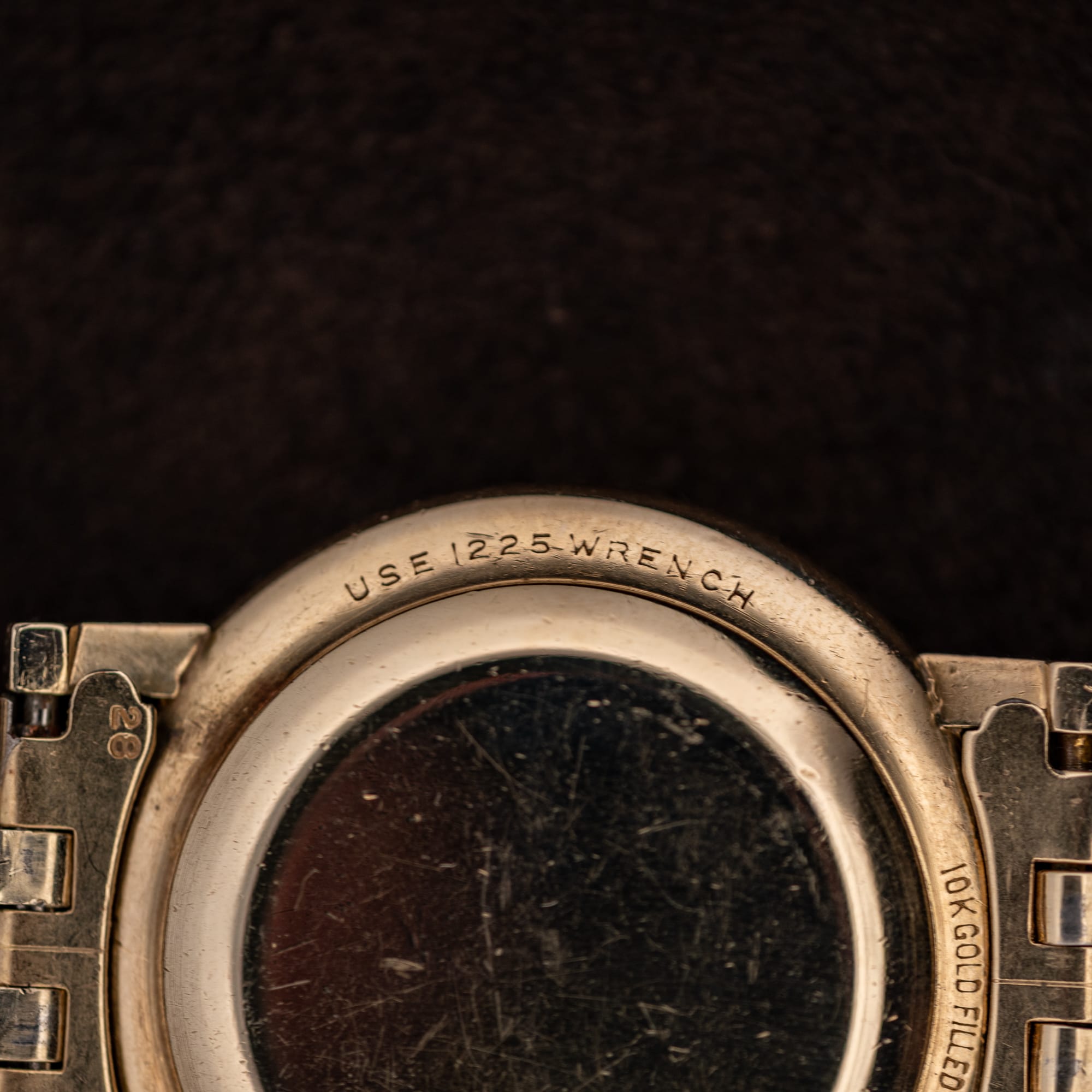
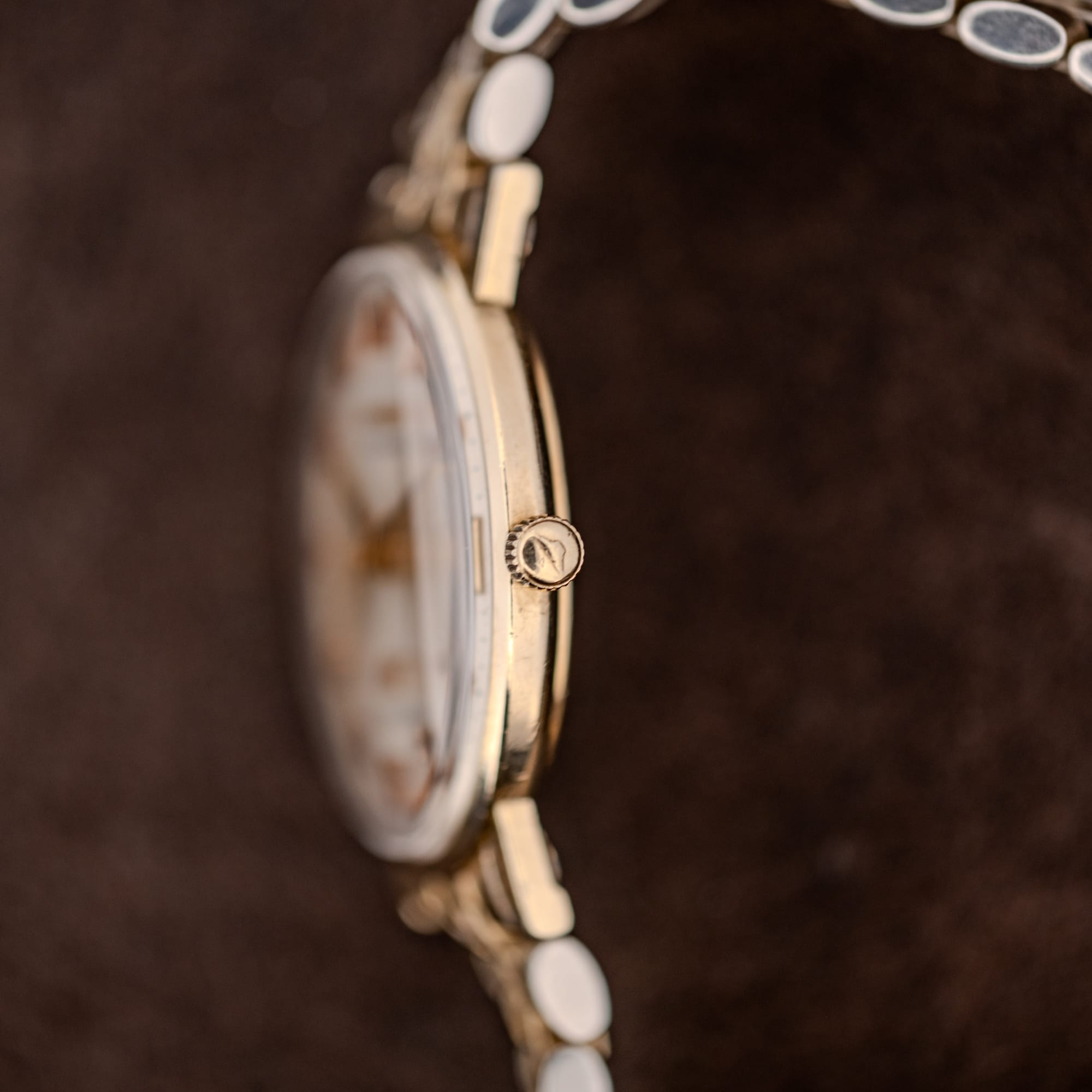
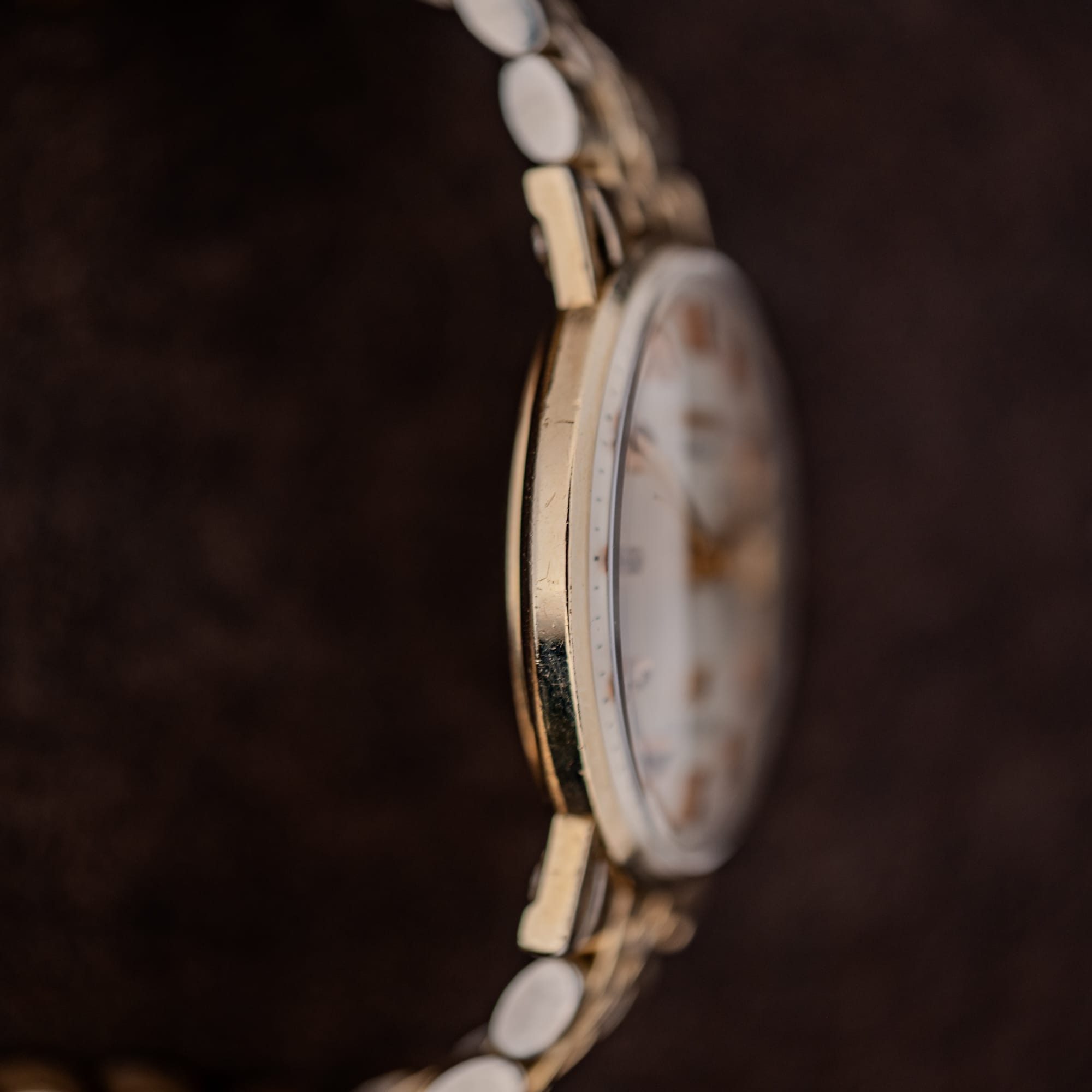
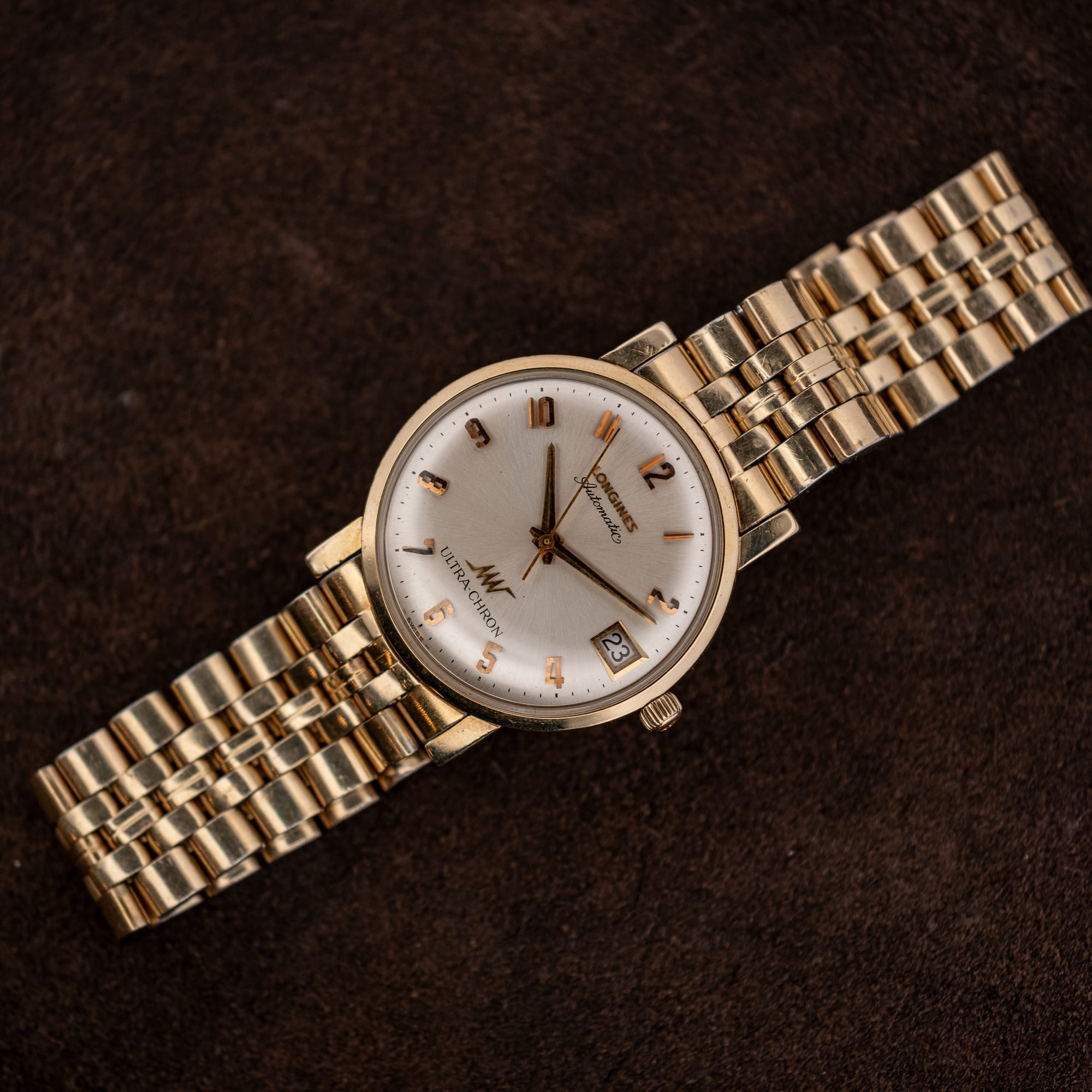
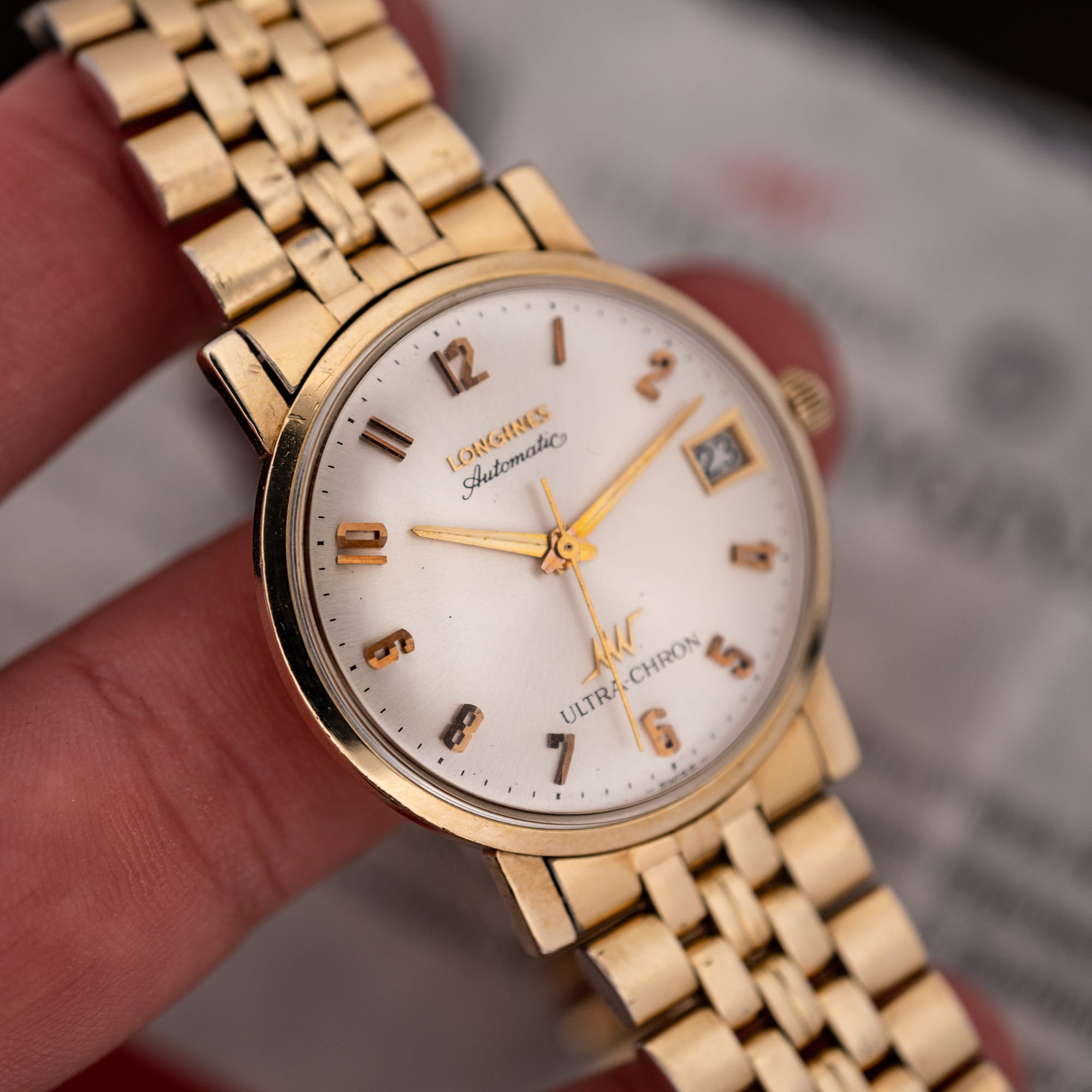
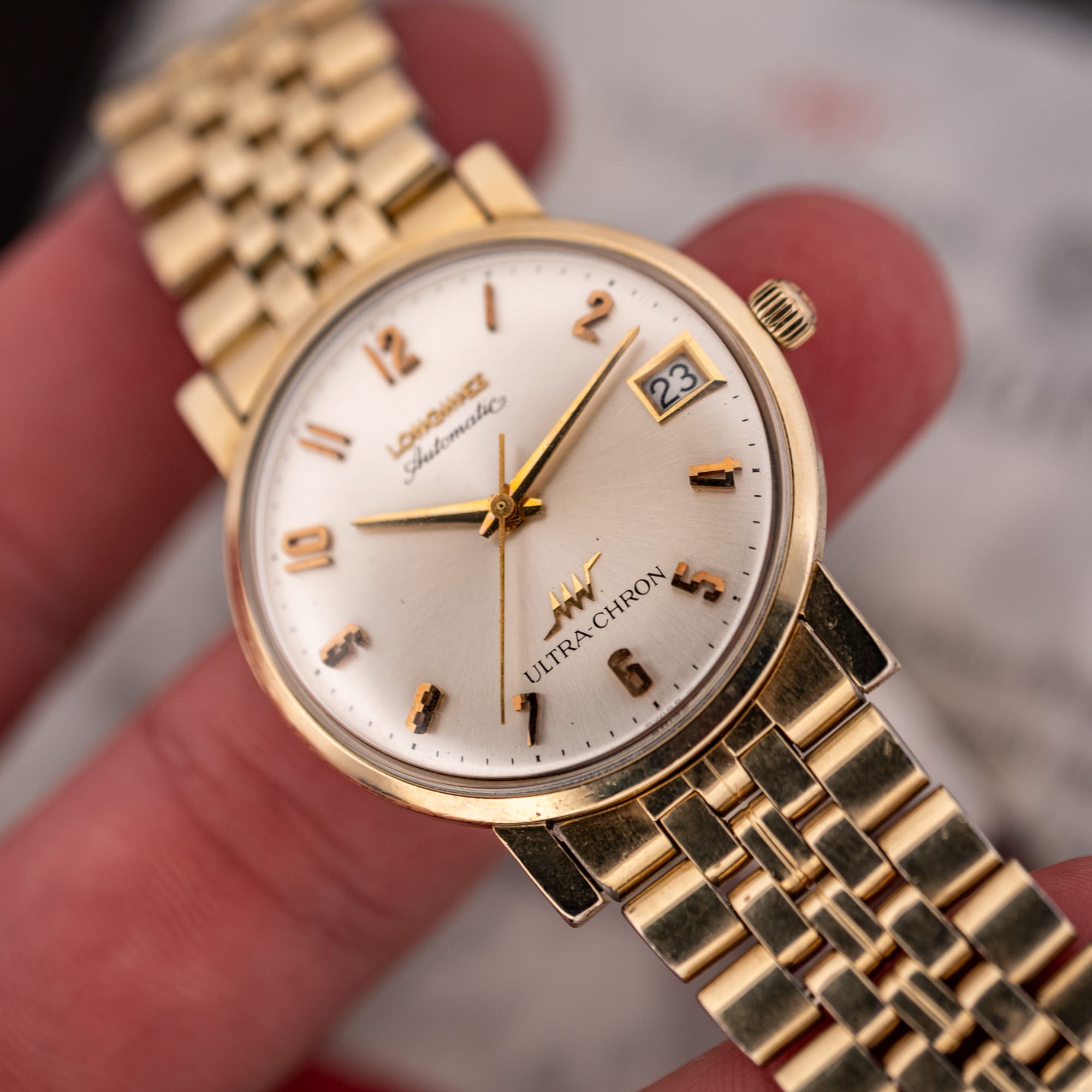
Housed in a 34mm 10k gold filled case with short downturned lugs and a low domed crystal, it shows a silver sunburst dial with applied rose gold Arabic numerals, batons at one, three and nine, a double baton at eleven, and a faceted gold frame around the date. Gold dauphine hands have gone mottled and dark where the plating thinned, and we would not trade that for a fresh set. The caseback is engraved “10K GOLD FILLED” and hairlined across its center from decades of cuff contact, with rubbed bands along the flanks where the high points wore and a scratch field across the crystal that stops short of any chip or crack. The dial itself shows no sign of a refinish: clean, bright, every applied marker present and seated.
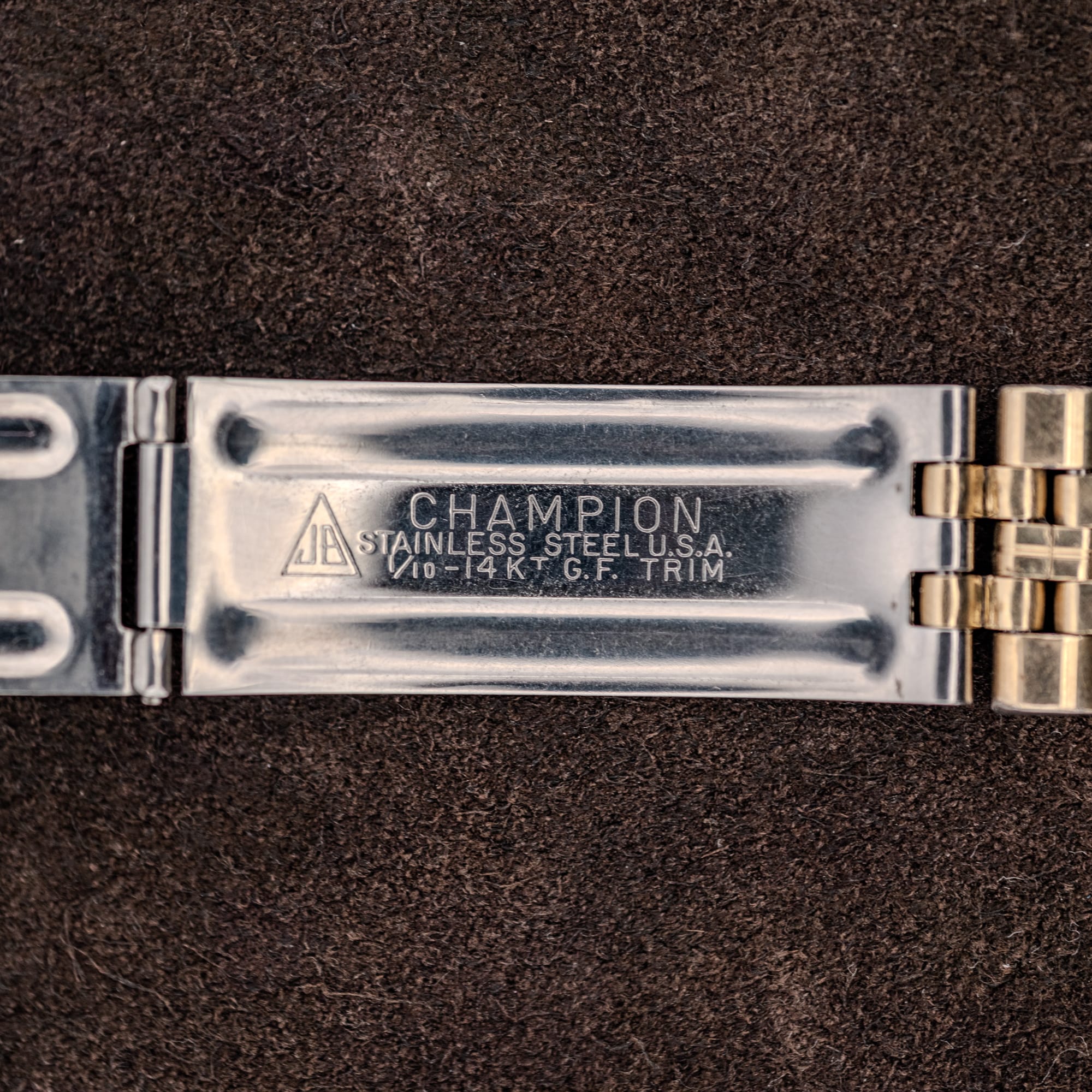
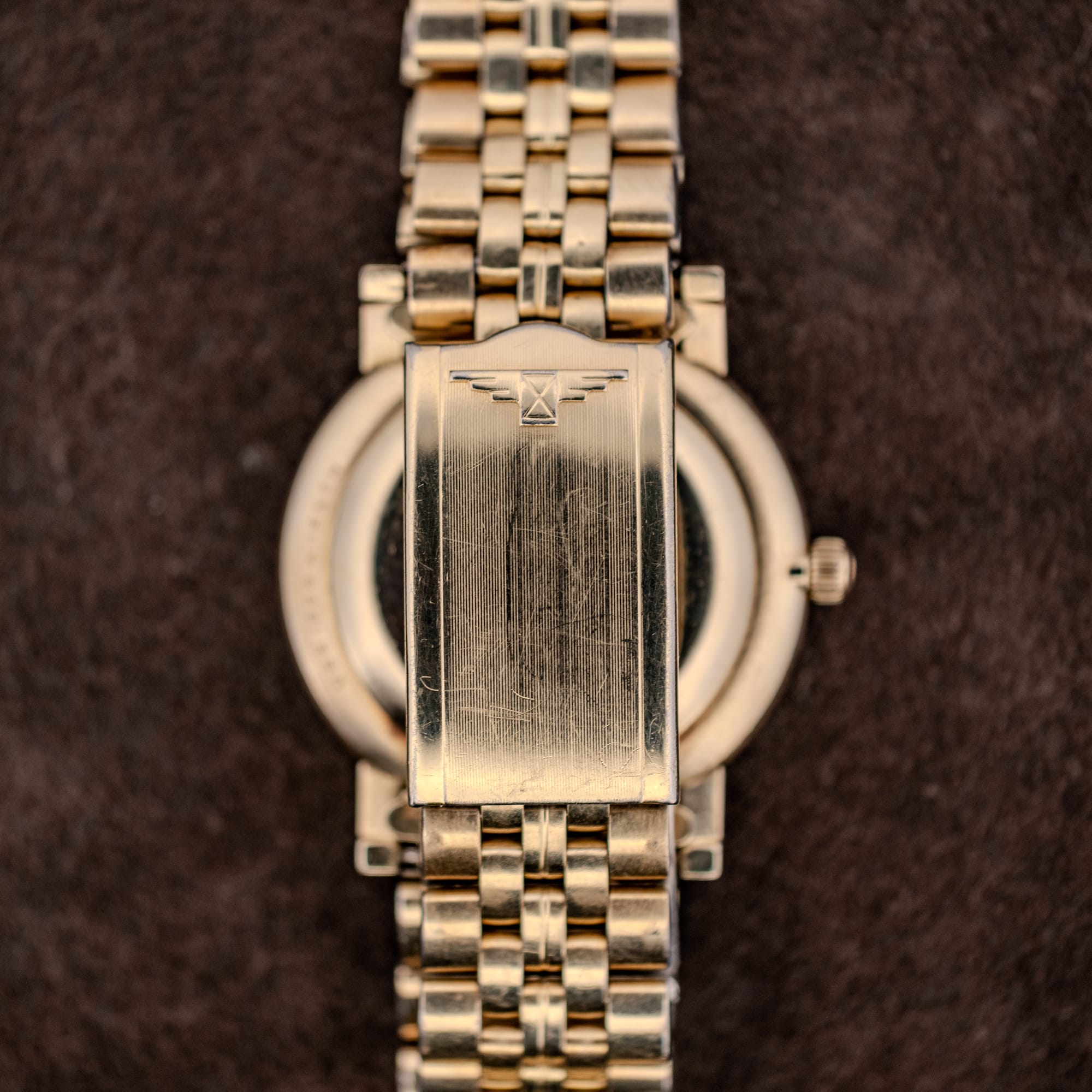
Serviced in-house at OTTUHR and backed by our 2-year mechanical warranty, on a Champion bracelet in stainless steel with its own 14k gold filled trim, a period American piece, scratched and swirled from use, carrying a Longines emblem on the clasp cover though it is not a factory Longines bracelet. Longines wrote the promise down in 1968 and handed over the paper with the watch. Fifty-eight years later, the two have still not been separated.