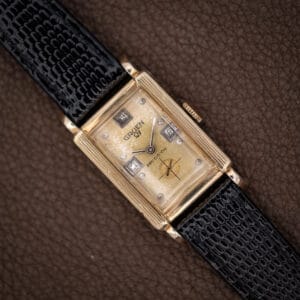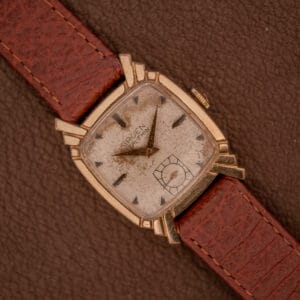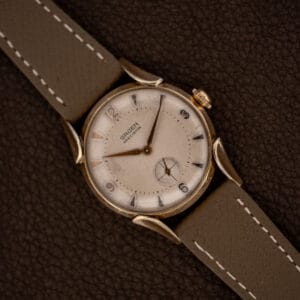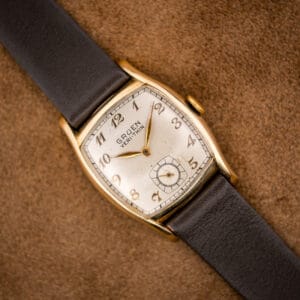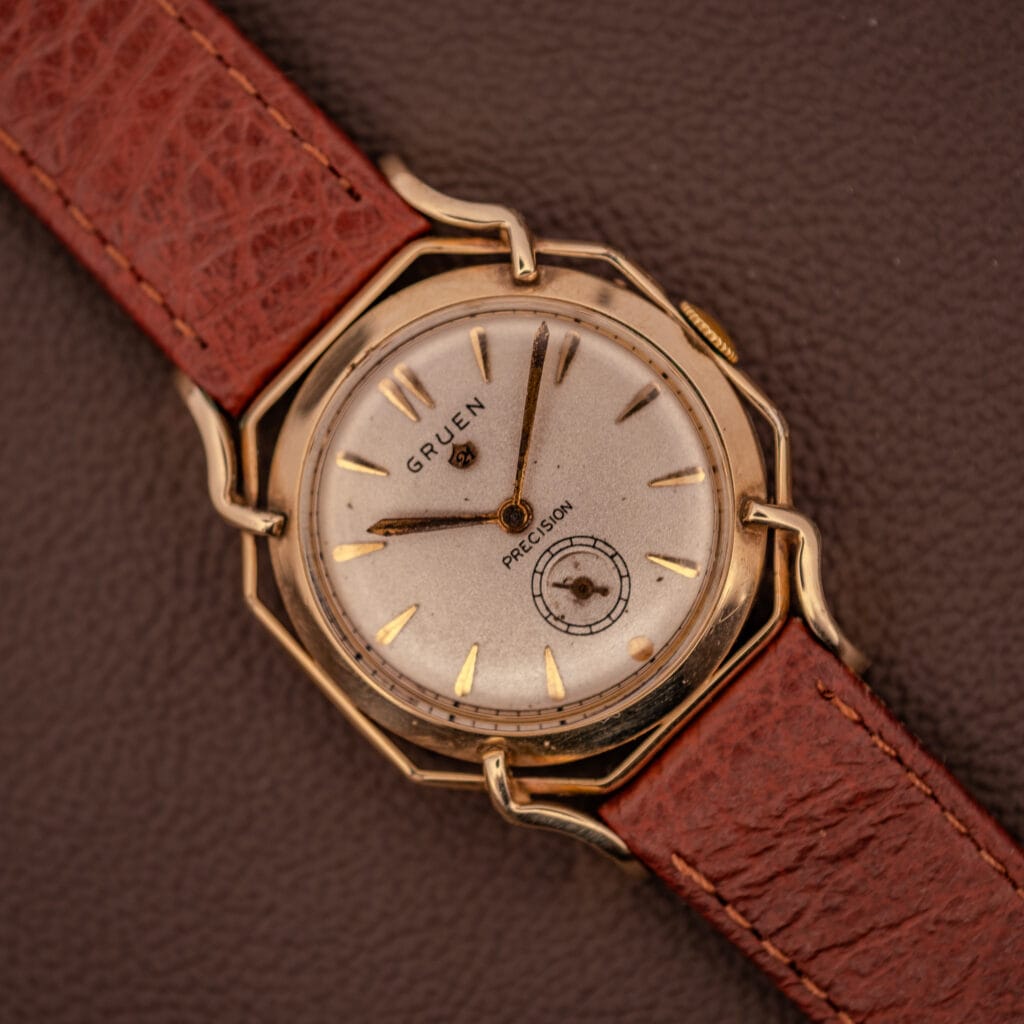
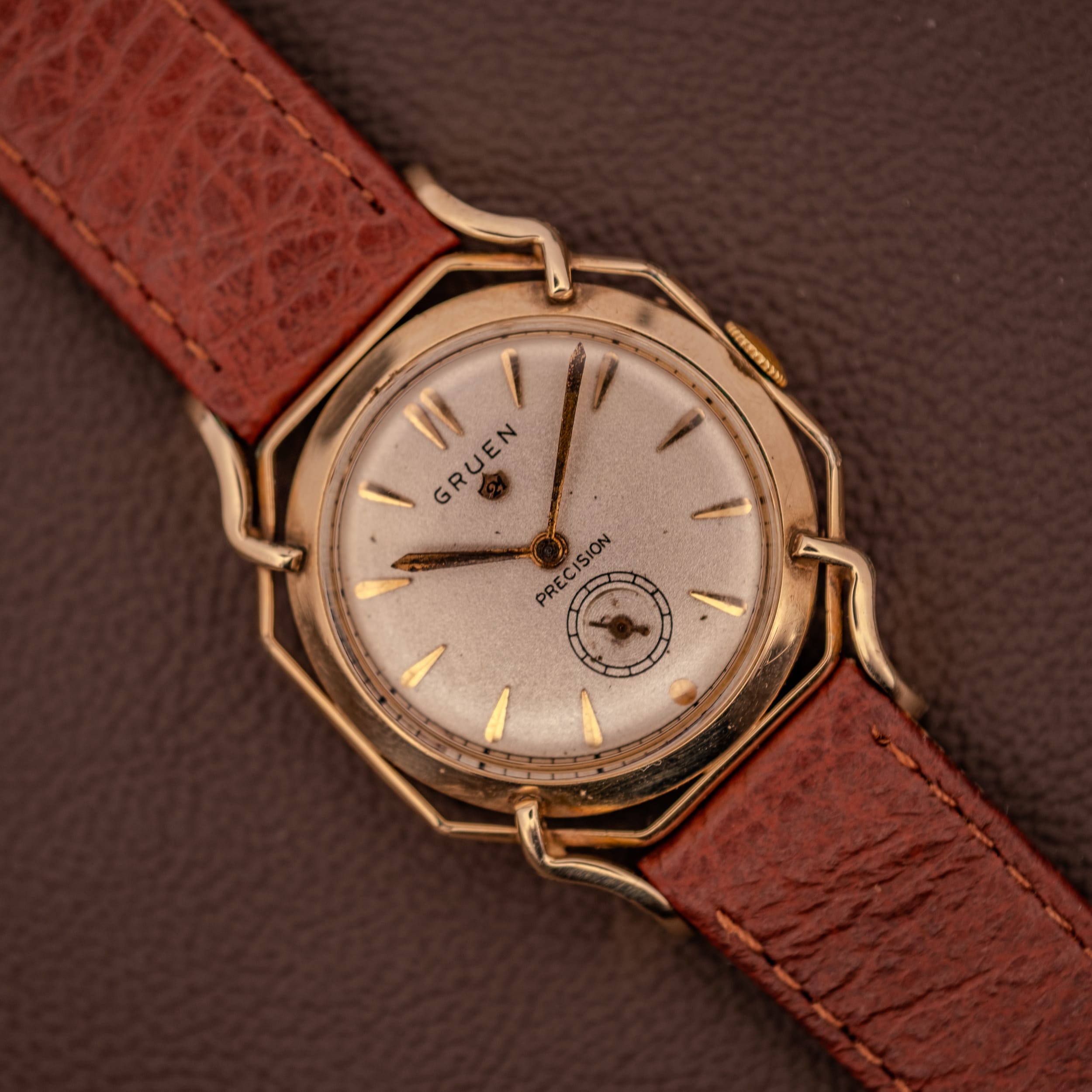
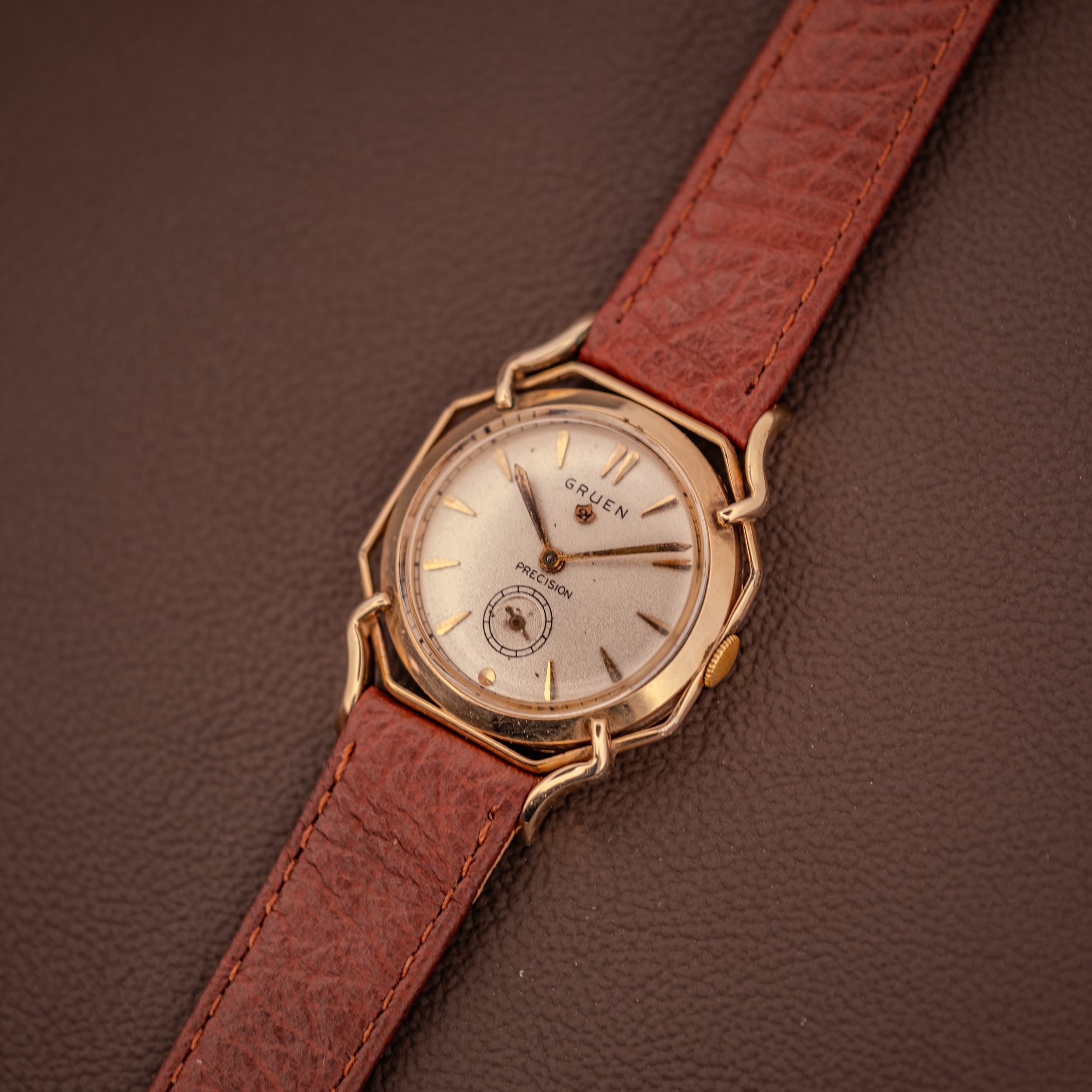
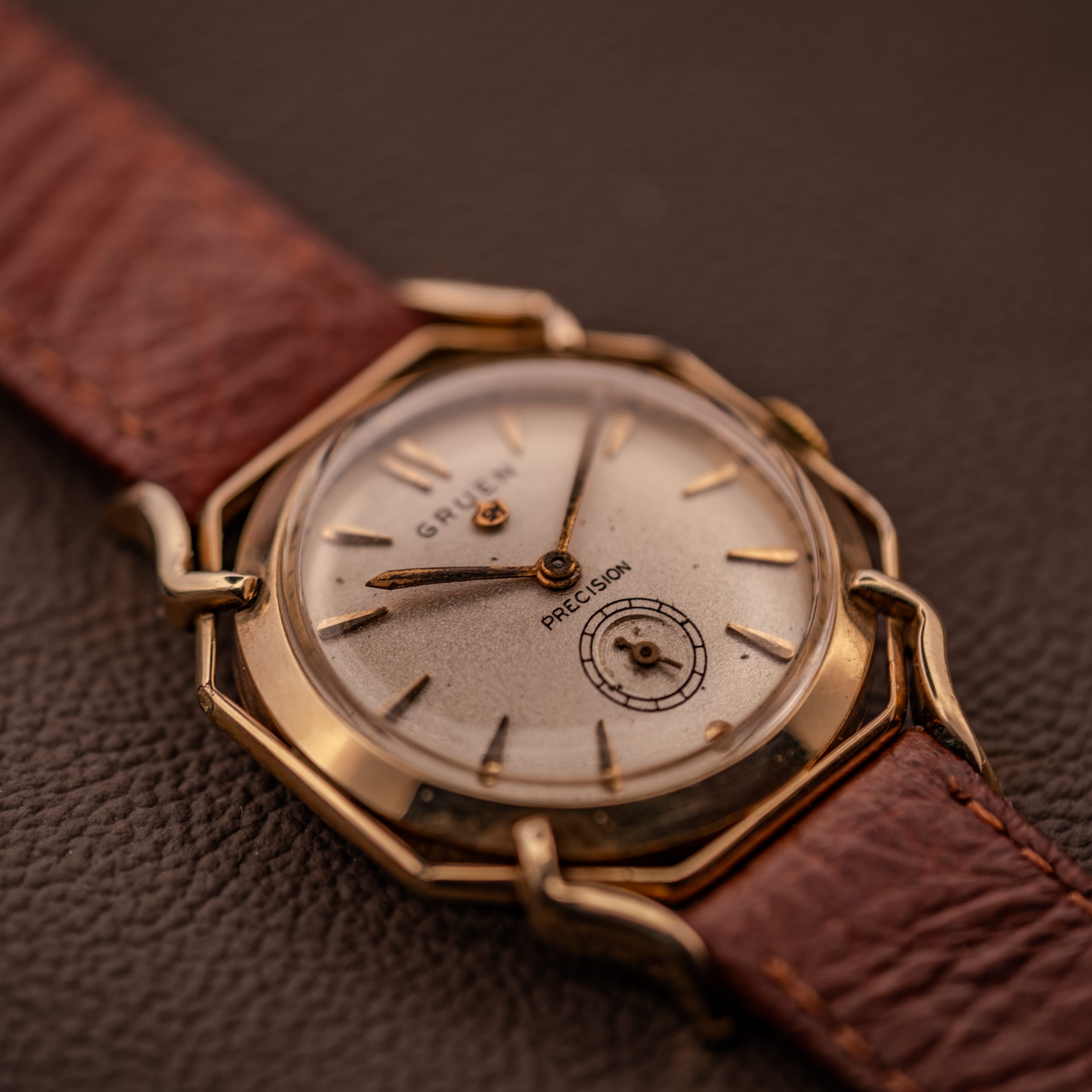
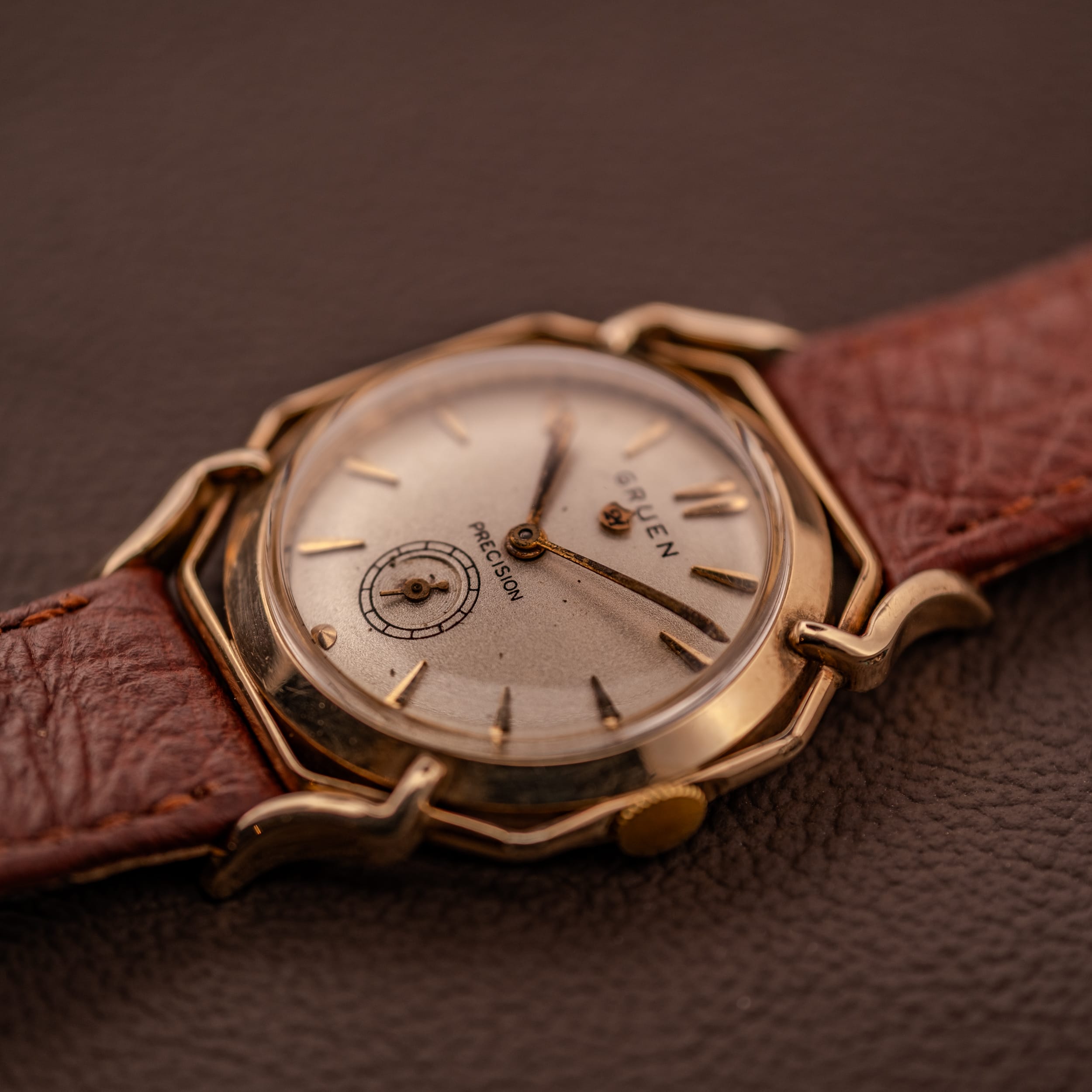
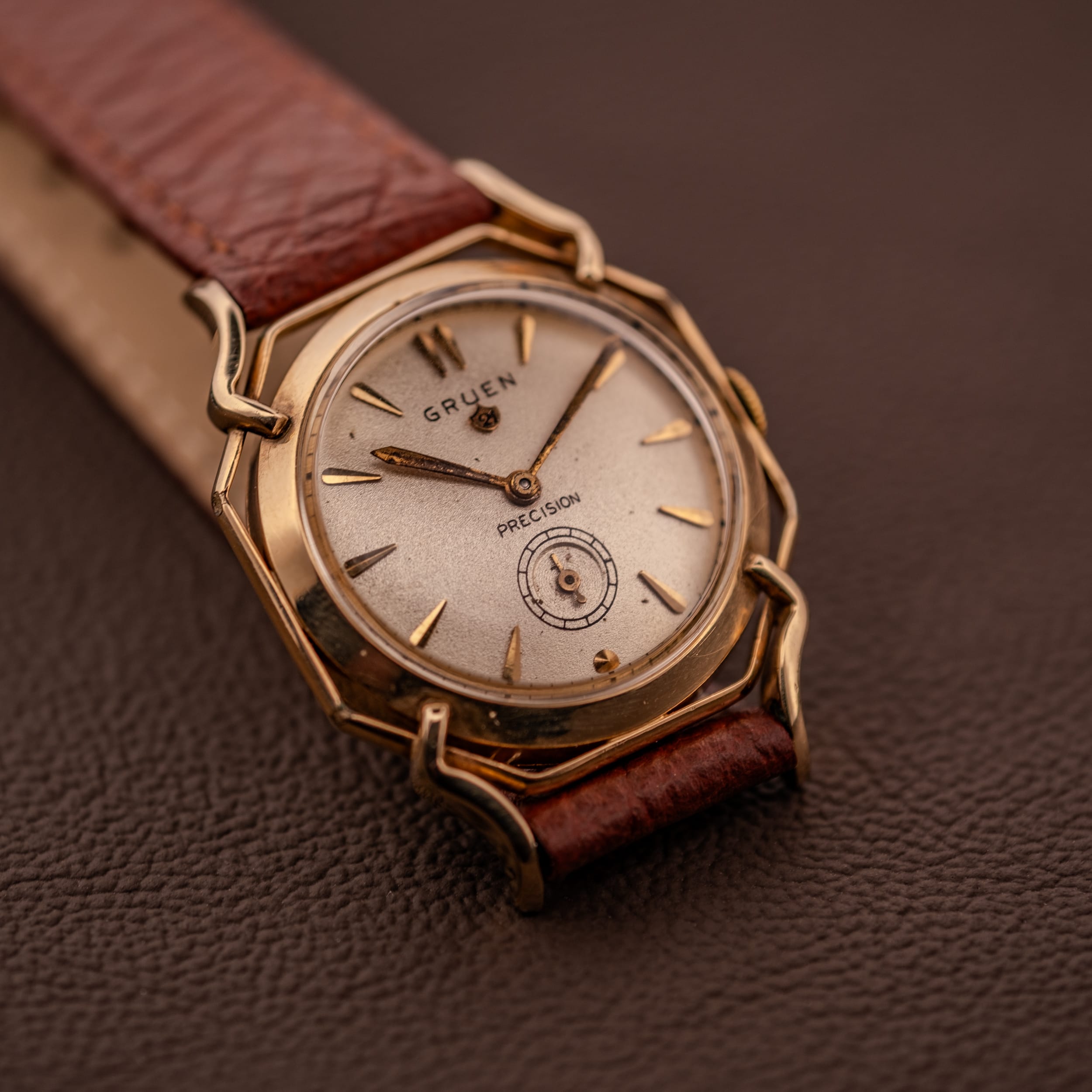
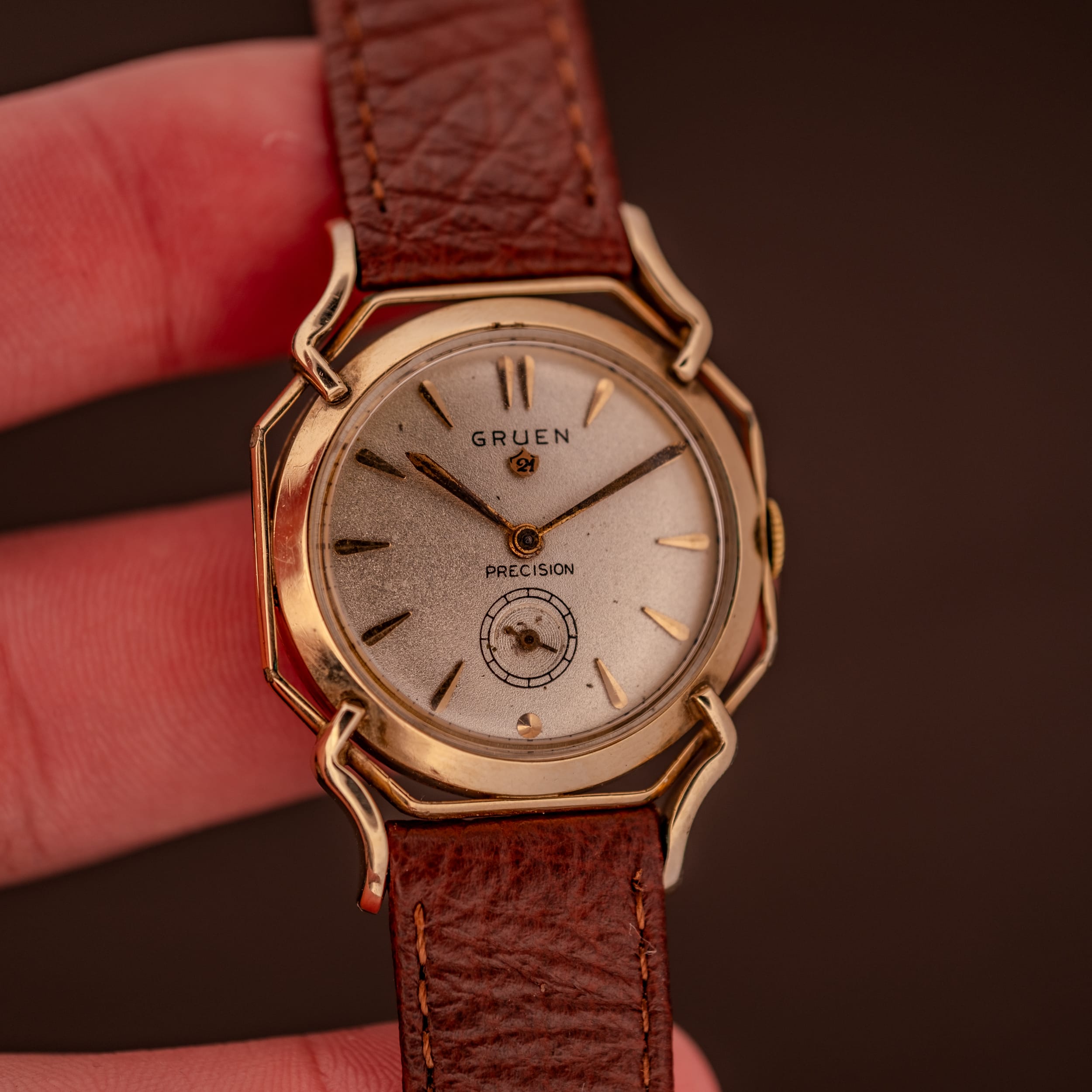
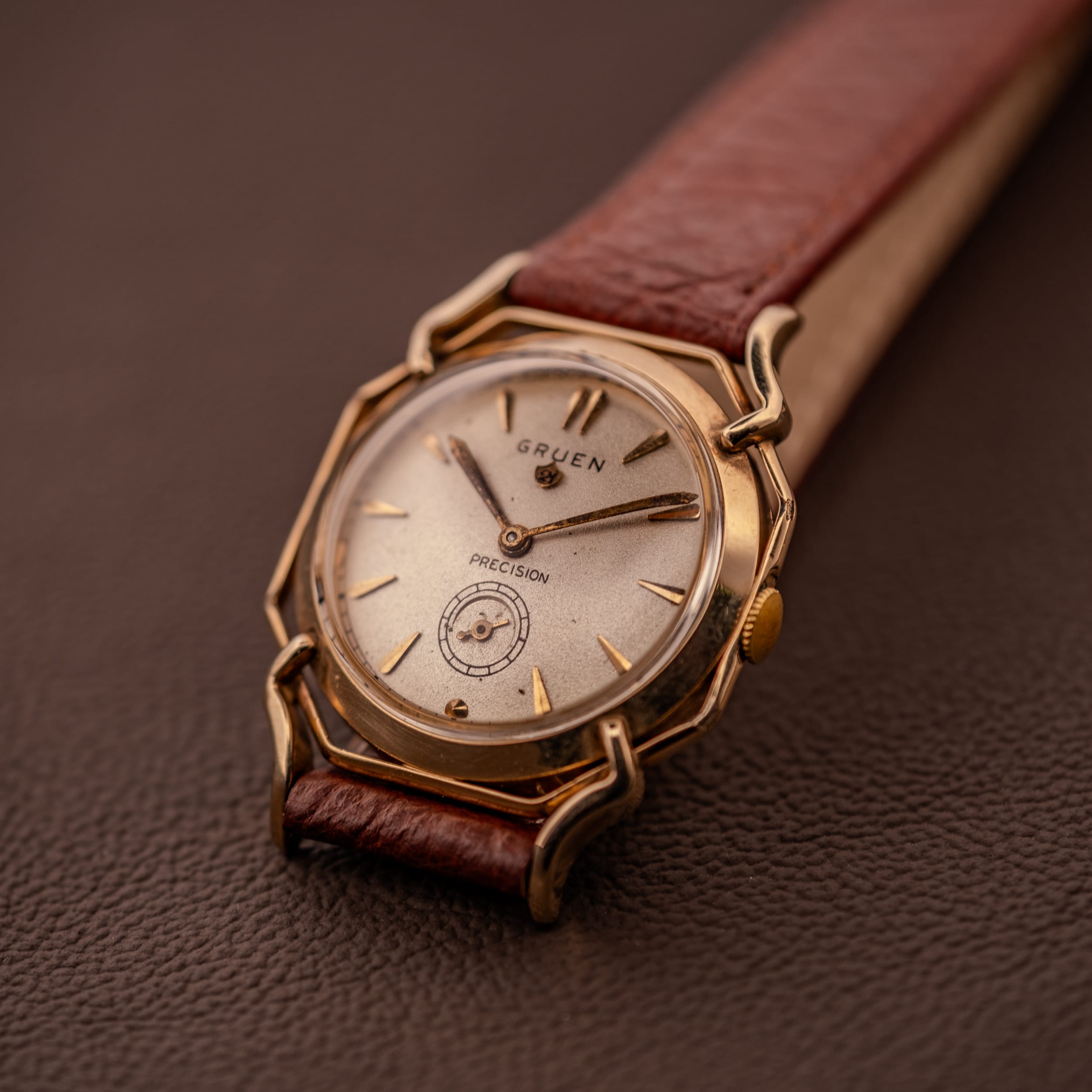
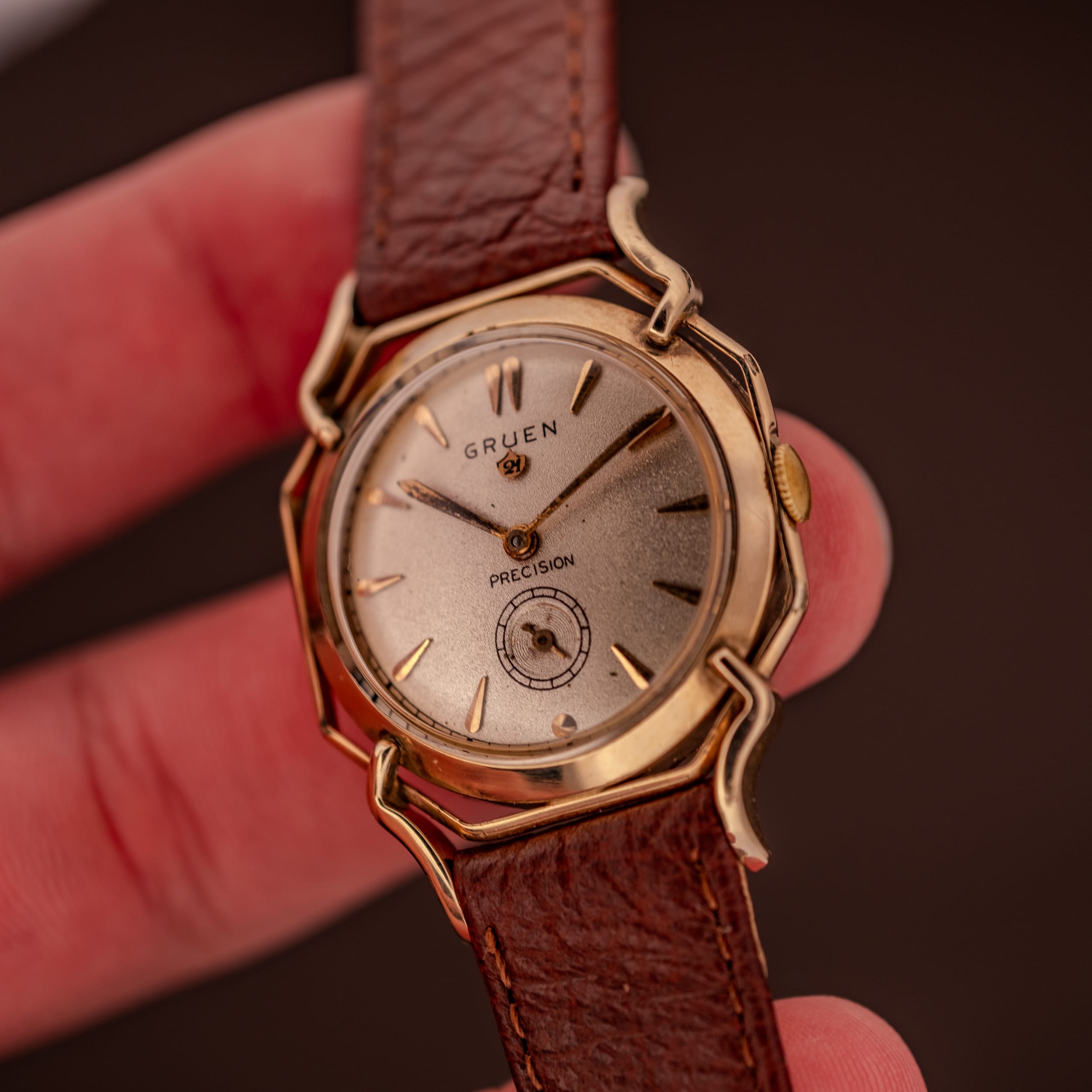
Eight curling gold filled arms wrap an octagonal frame around a round case. That is the Gruen 21 Barclay on the table, the watch the collector community has called the Spider since the early 1950s for the obvious reason. To us the design is one of the more compositionally ambitious pieces American-distributed Gruen ever pushed out of Cincinnati, and the more time we spend looking at it the more convinced we are that the cage-and-case construction reads as a serious mid-century design statement rather than a novelty.
The Gruen 21 was a marketing and engineering lineup the company launched in 1953 around its 21-jewel calibers, the named-model series the brand built to compete with European dress watches arriving on the American counter in volume in the early 1950s. The Barclay was one of the more architecturally adventurous models in the lineup, sitting alongside the simpler round dress references the line is more frequently associated with. Production of the Gruen 21 Barclay sat in the narrow window when Gruen’s Cincinnati operation was still putting serious engineering money behind movement development at the Norwood facility, and the watch carries the visual confidence of a brand still believing in itself.
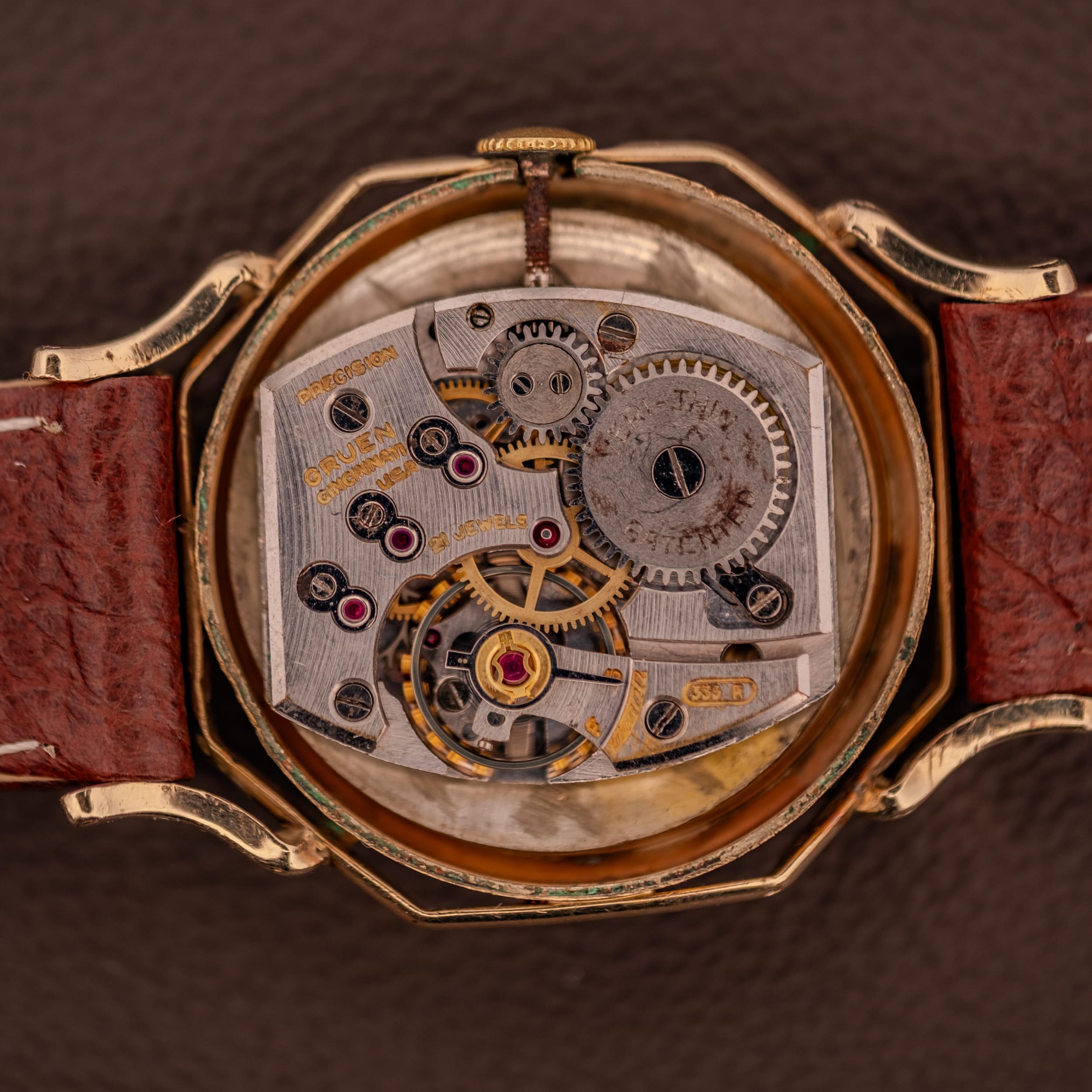
Inside is the Gruen caliber 335, a 21-jewel manual wind movement laid out across a tonneau-shaped plate. That detail matters and it is the piece of the Barclay story the spec sheets routinely flatten. The 335 was designed and tooled at Gruen’s Norwood facility in Cincinnati, with the schematic drawings dated 1949 and the production tolerance on the plate recesses held to within .0004 inches, well below the .001 inch thickness of a human hair, an unusually specific manufacturing standard for the late-American Gruen catalogue. Most of the caliber 335 production was domestic, one of the relatively few movements actually built in the United States by Gruen rather than designed in Biel and finished in Cincinnati. The tonneau plate sitting inside the round Barclay case is the kind of inventory-pragmatic choice late-Norwood Gruen made when its engineering ambition was running ahead of its case-design budget, and to us it reads as the most quietly interesting fact on the watch. The bridges read PRECISION GRUEN STAINLESS METAL across the gilt-printed signature in the period-correct serif lettering, with the caliber designation 335 visible along the lower bridge edge.
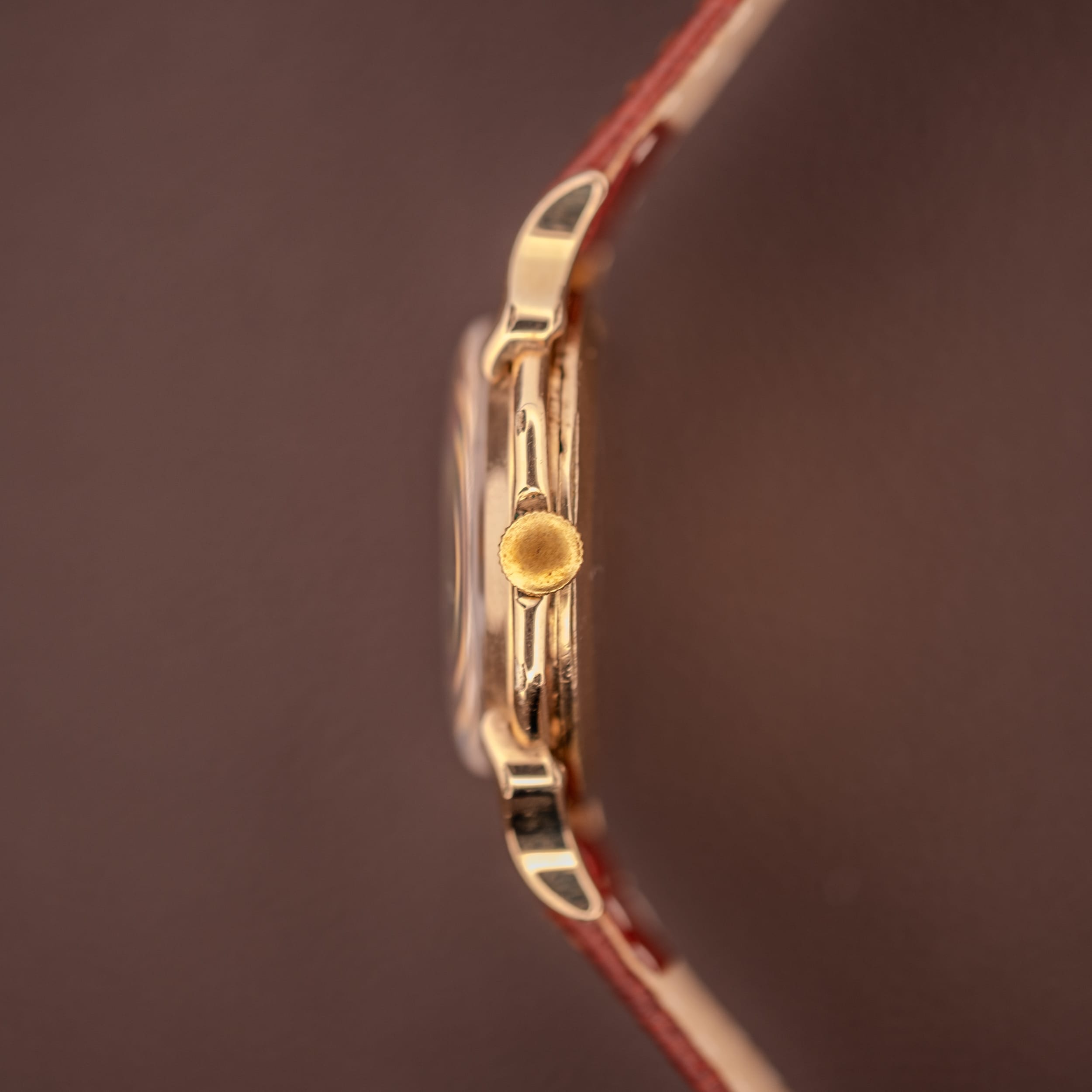
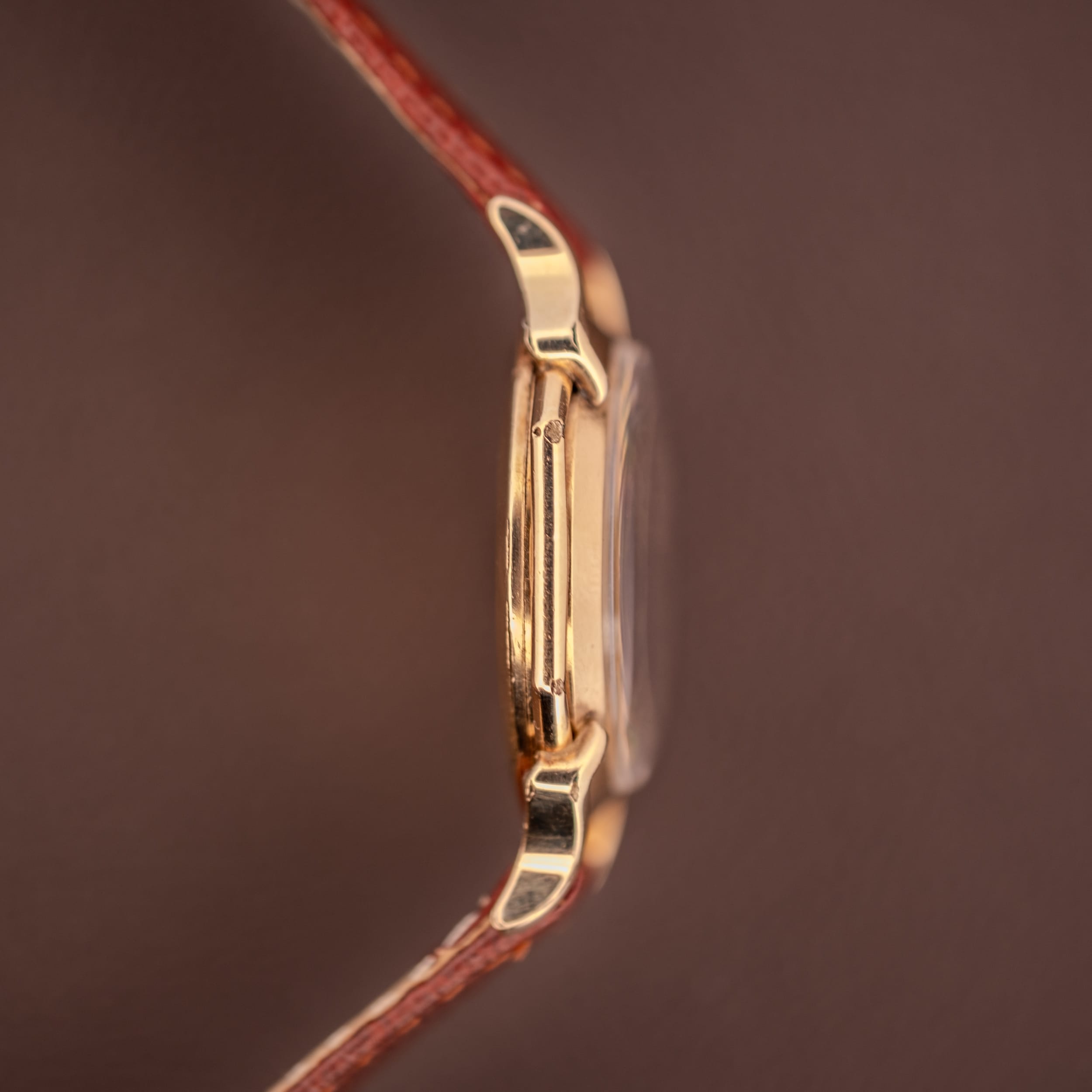
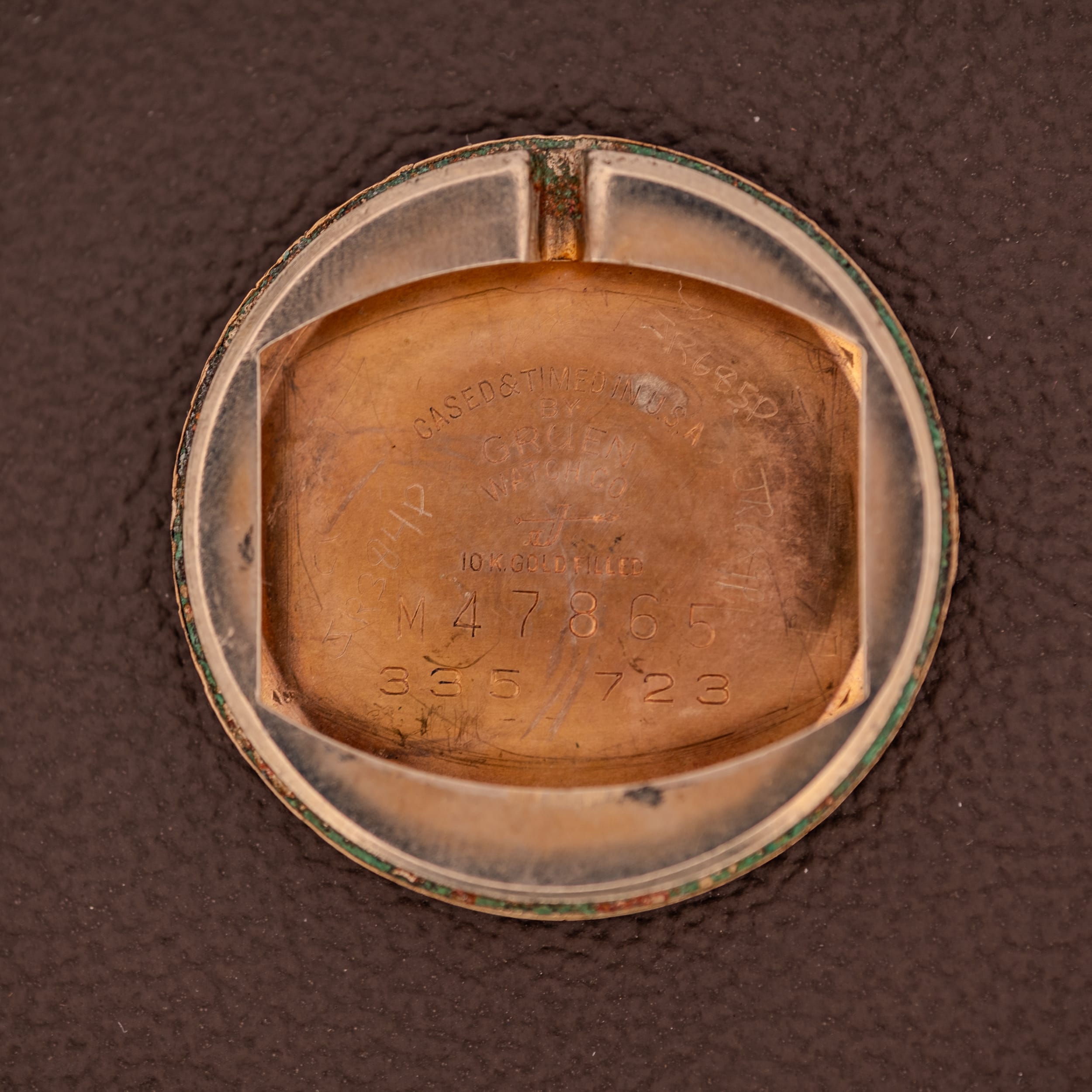
The case is a 31mm round body in 10k yellow gold filled, with a 40mm lug-to-lug span and the 16mm lug width that pairs it cleanly with the brown leather strap the watch is wearing. The Spider cage is the visual story. Eight articulated lug arms in matching gold filled, two per quadrant, wrap outward from an octagonal frame and finish in twin downturned tips that cradle the strap from above and below. The whole assembly was made by Jonell Watch Case Company, the period American case supplier Gruen contracted for the 723 case style, and the construction is more sculptural than the 31mm dimension would suggest. The inner caseback carries the most important stamping on the watch. CASED AND TIMED IN U.S.A. arcs along the upper edge in the period serif cartouche, 10K GOLD FILLED sits across the center, and the serial M47865 reads cleanly above the case reference 335 723 stamped along the bottom of the recess. Honest wear scatters along the polished case sides, the spider arms carry the faintest brassing at the contact points where a wrist meets the cage, and the overall presentation is the soft warm color that 10k yellow gold filled develops with seventy years of careful living. Gold filled is bonded layered gold rather than the thinner electrodeposited finishes that hit the market in later decades, and on this case the layer is intact across all eight spider arms and across the bezel face.
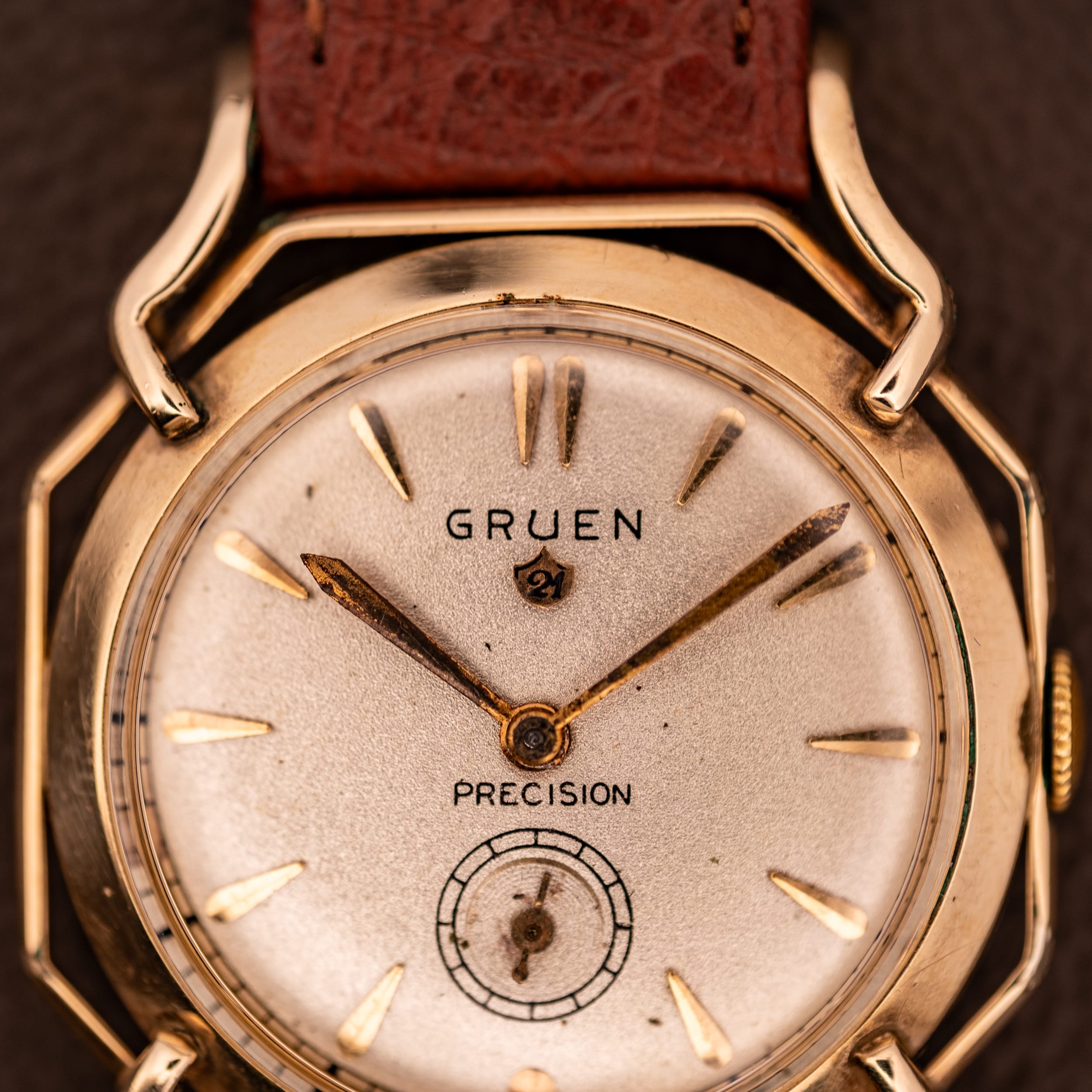
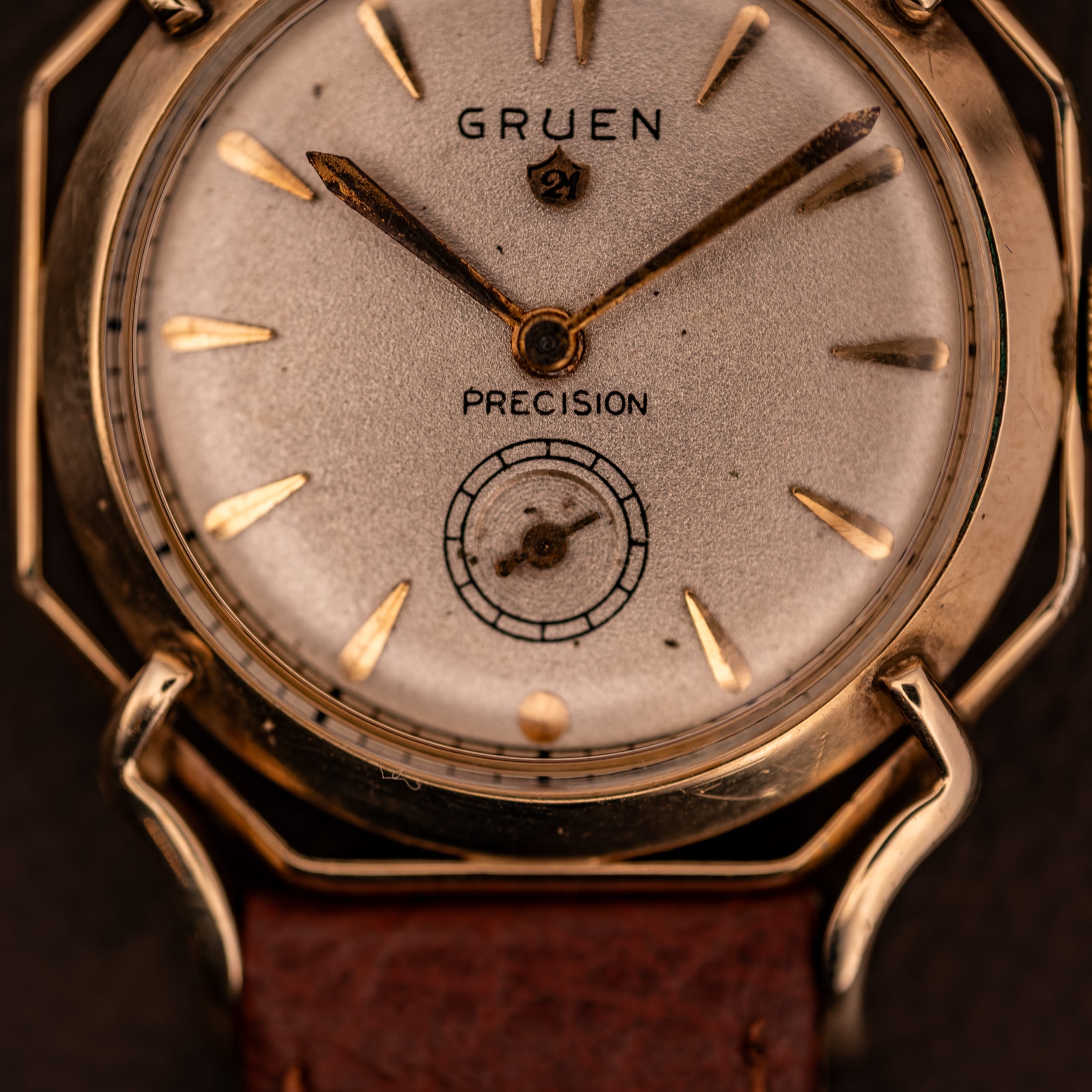
The dial is the original factory silver field, lightly speckled across decades of honest wear into the softly warmed character that survivor Gruen dials in this condition routinely show. The GRUEN wordmark sits applied across the upper portion of the dial in the period script font, with the applied 21 shield emblem set immediately below the wordmark signaling the 21-jewel grade designation the brand was emphasizing across the lineup. Applied gilt dart indices mark every hour position around the chapter ring, faceted along their length and catching light cleanly. The hands are the original gilt set, with the minute hand showing some honest tone variation across its length where the gilt has aged unevenly across seven decades, exactly the kind of character a watch worn rather than safe-queened will show. PRECISION sits printed above the recessed sub-seconds aperture at six, with the crosshair pattern reading clearly inside the sunken register and the small sub-seconds hand intact. There is no tritium and no SuperLuminova on this dial, exactly correct for an early-1950s Gruen dress watch built before the tritium era had fully replaced radium across the American catalogue. The printing reads original throughout, the wordmark and emblem application is factory, and there is no evidence of refinish anywhere on the silver field.
We have paired the Spider with a brown leather strap and an OTTUHR signed buckle. The warm brown reads as a deliberate complement to the yellow gold filled cage and the softly aged silver dial, letting the architectural lug cage stay the dominant visual element on the wrist exactly where the design wants it.
Serviced in-house at OTTUHR and backed by our 2-year mechanical warranty, this is the kind of Norwood-era Gruen we get genuinely excited about. Factory original dial with intact applied wordmark and 21 emblem, factory hands, signed caseback with the full reference and serial intact, and the 21-jewel Gruen caliber 335 running cleanly on the bench. For the collector who reads the Spider cage as the architectural design statement it actually is, and who wants a 1950s American-built Gruen that carries the brand’s late-Cincinnati engineering ambition in the metal, the Gruen 21 Barclay is exactly the kind of watch we love bringing in.