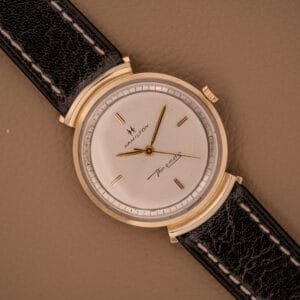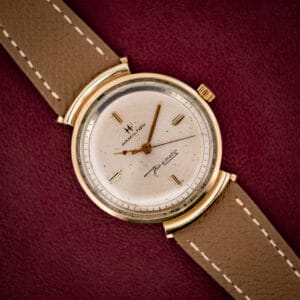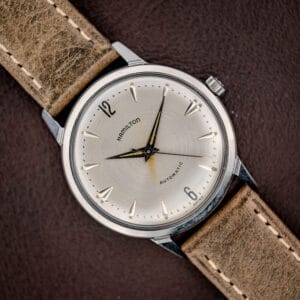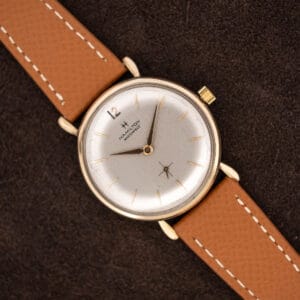
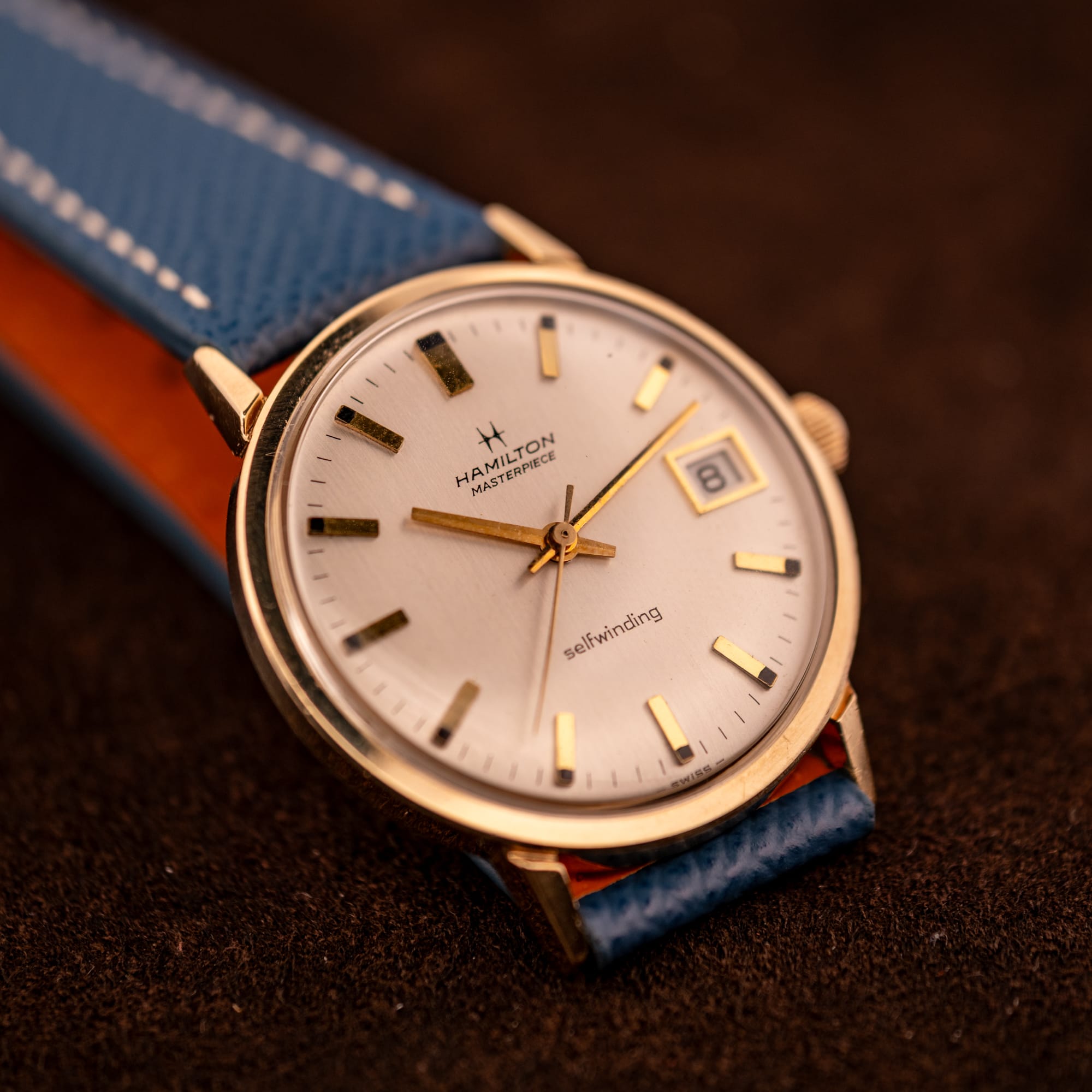
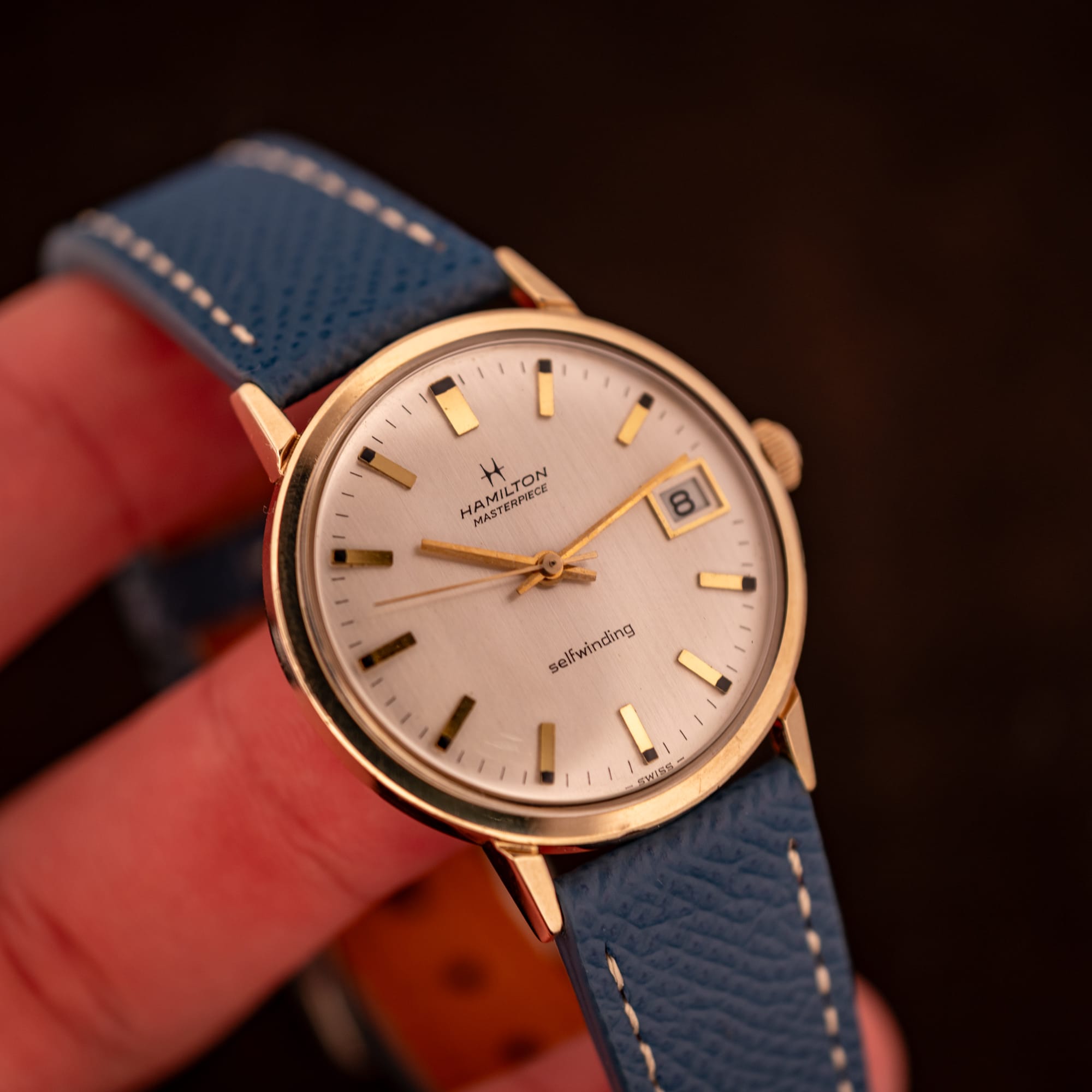
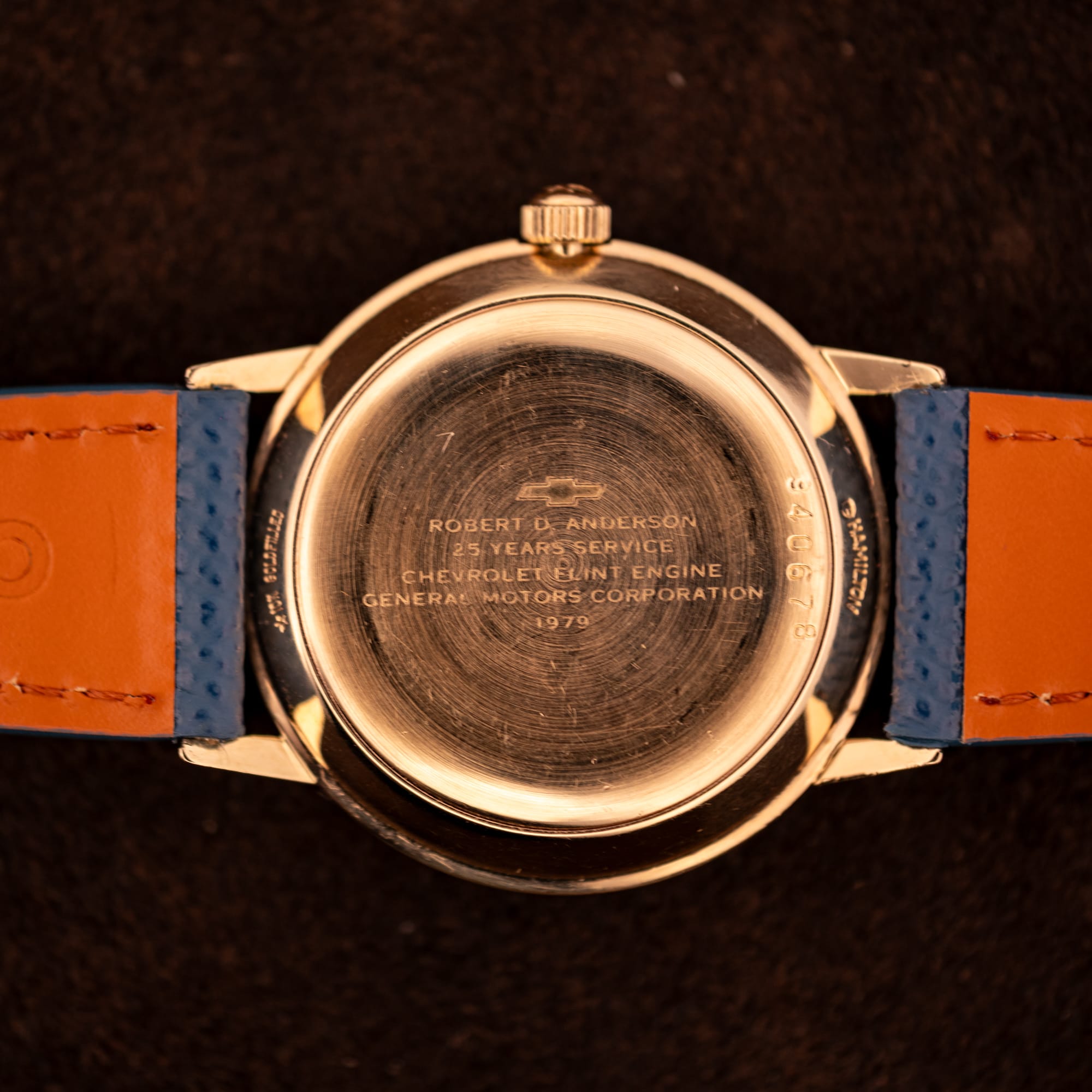
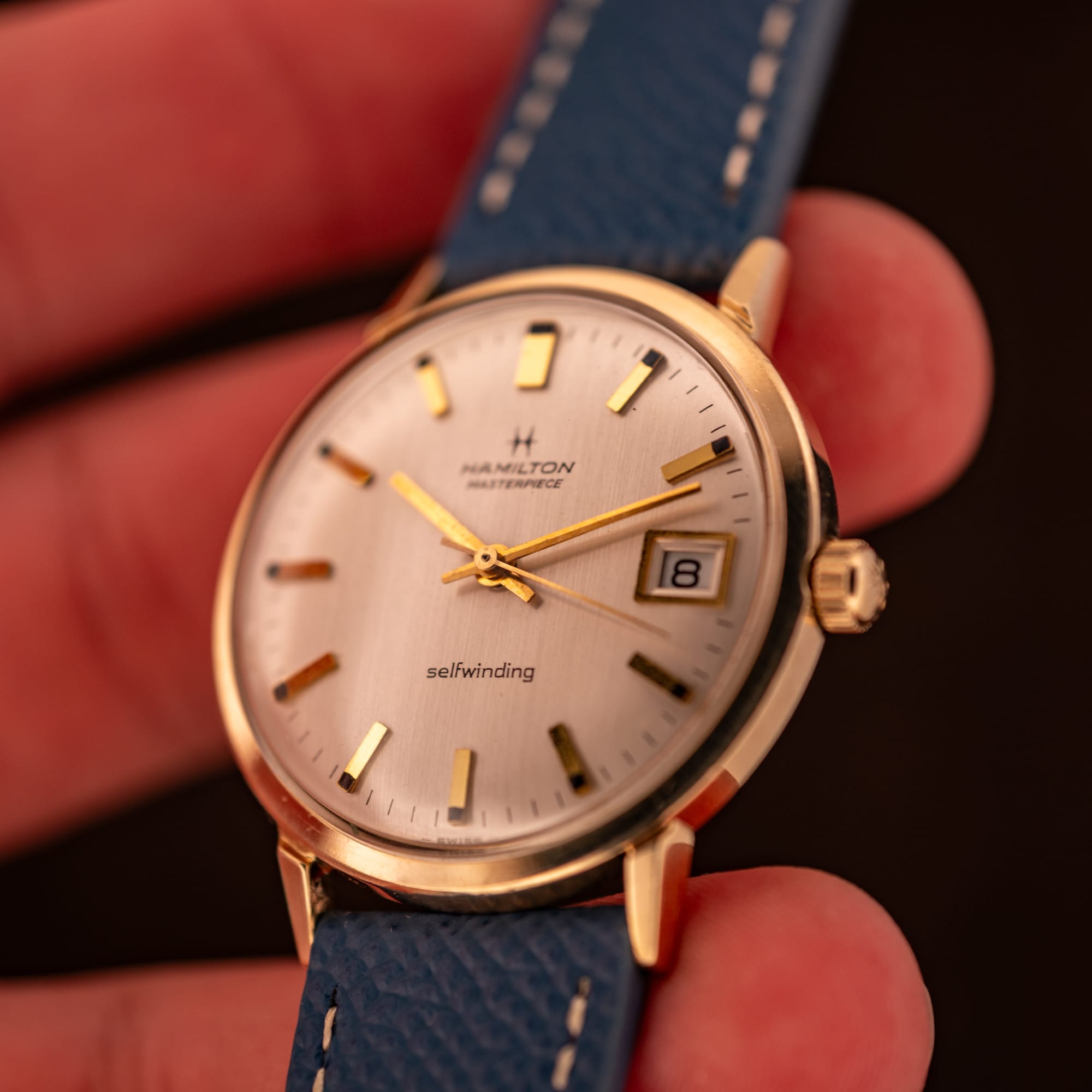
The headline on this one is not the dial, and it is not the caliber. It is the back. We have handled a fair number of vintage Hamilton Masterpiece automatics over the years, and the ones we end up keeping the longest are almost always the engraved corporate-award pieces, the watches that have a name and a year and a place attached to them. In our opinion this 1975 example, dedicated to a quarter-century of service at the Chevrolet Flint Engine plant, is exactly that kind of watch.
The Masterpiece designation sat at the top of the Hamilton catalog by the 1970s, the line the company reserved for its dressier yellow-cased automatics intended as long-service and retirement gifts to American executives, foremen, and skilled tradesmen. By 1975 Hamilton had been Swiss-owned for three years, folded into SSIH alongside Omega and Tissot, and Masterpiece production had shifted firmly to Swiss movements in Swiss-finished cases, often distributed through the Hamilton Watch Company’s traditional corporate-award channels back in the United States. That distribution arrangement is the reason so many of the best surviving examples carry caseback engravings with American factory addresses on them.
The caliber 836 is a Hamilton-signed Swiss automatic of the post-SSIH era, a clean ETA-derived movement with a quickset-friendly date complication and the kind of unfussy reliability that made the Masterpiece automatics quietly excellent at the job they were built for, namely keeping accurate time on the wrist of a working man for the next thirty years. There is nothing exotic about it and there does not need to be. The 836 is the movement that holds up after decades in a sock drawer between special occasions, which is exactly the duty most of these watches were sent home to do.
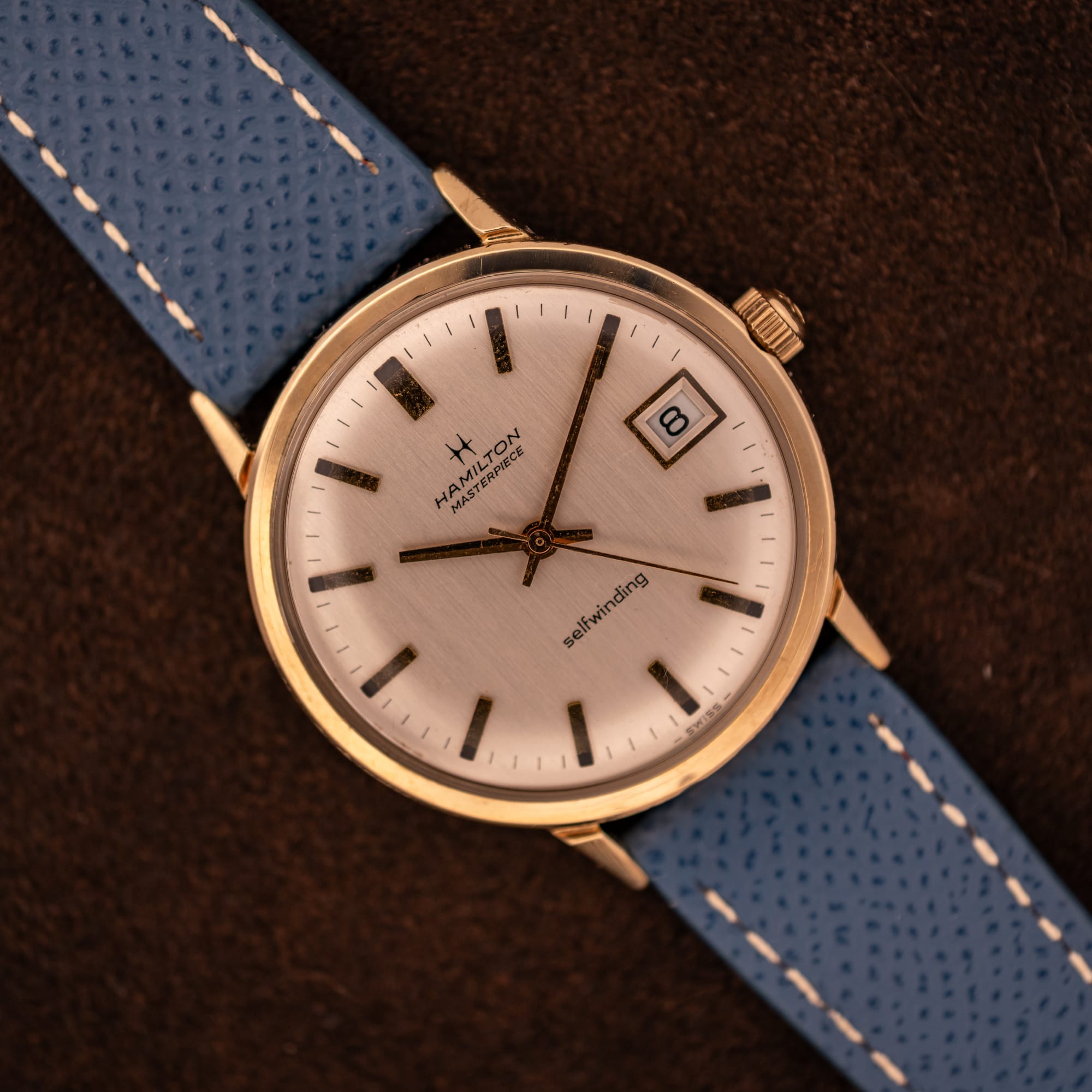
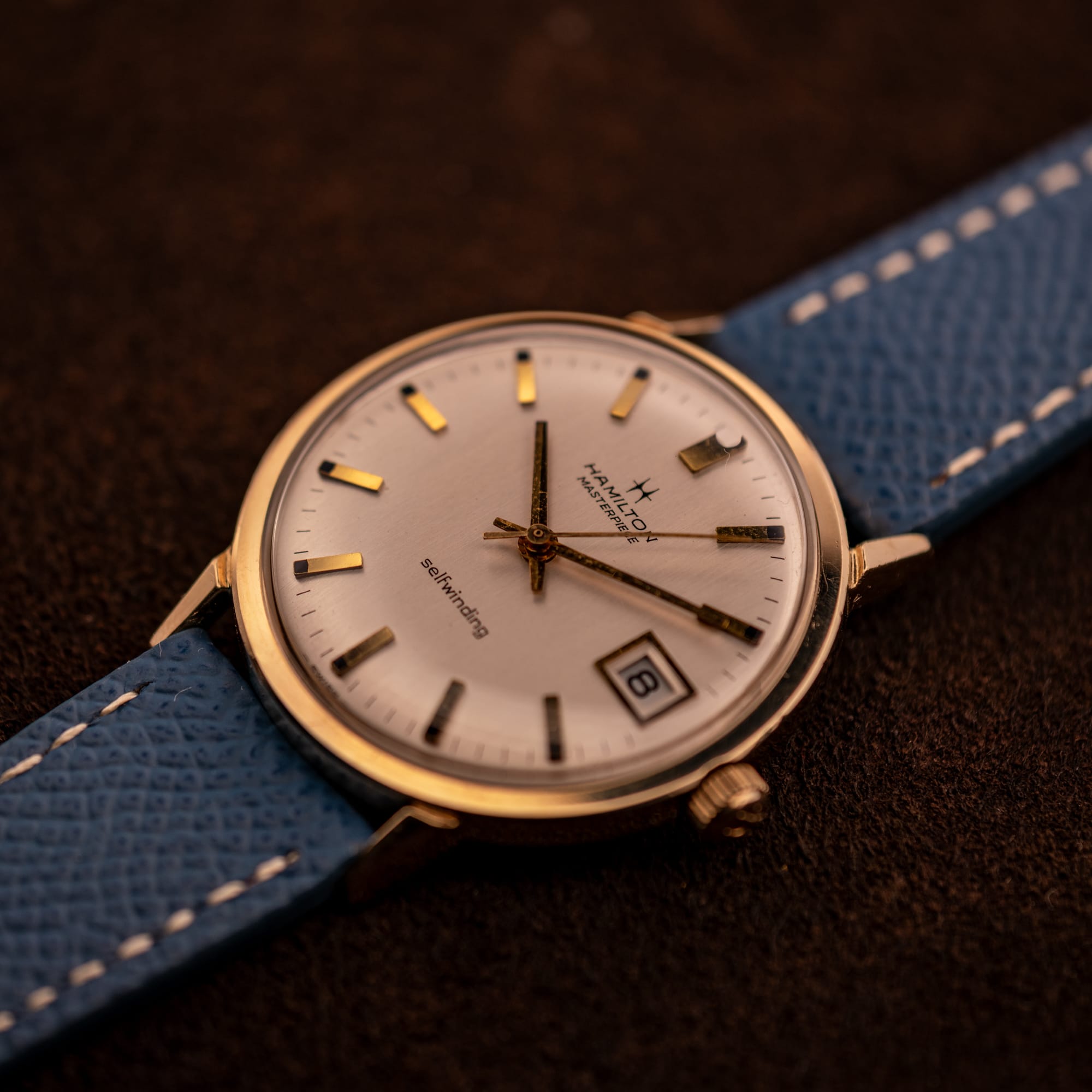
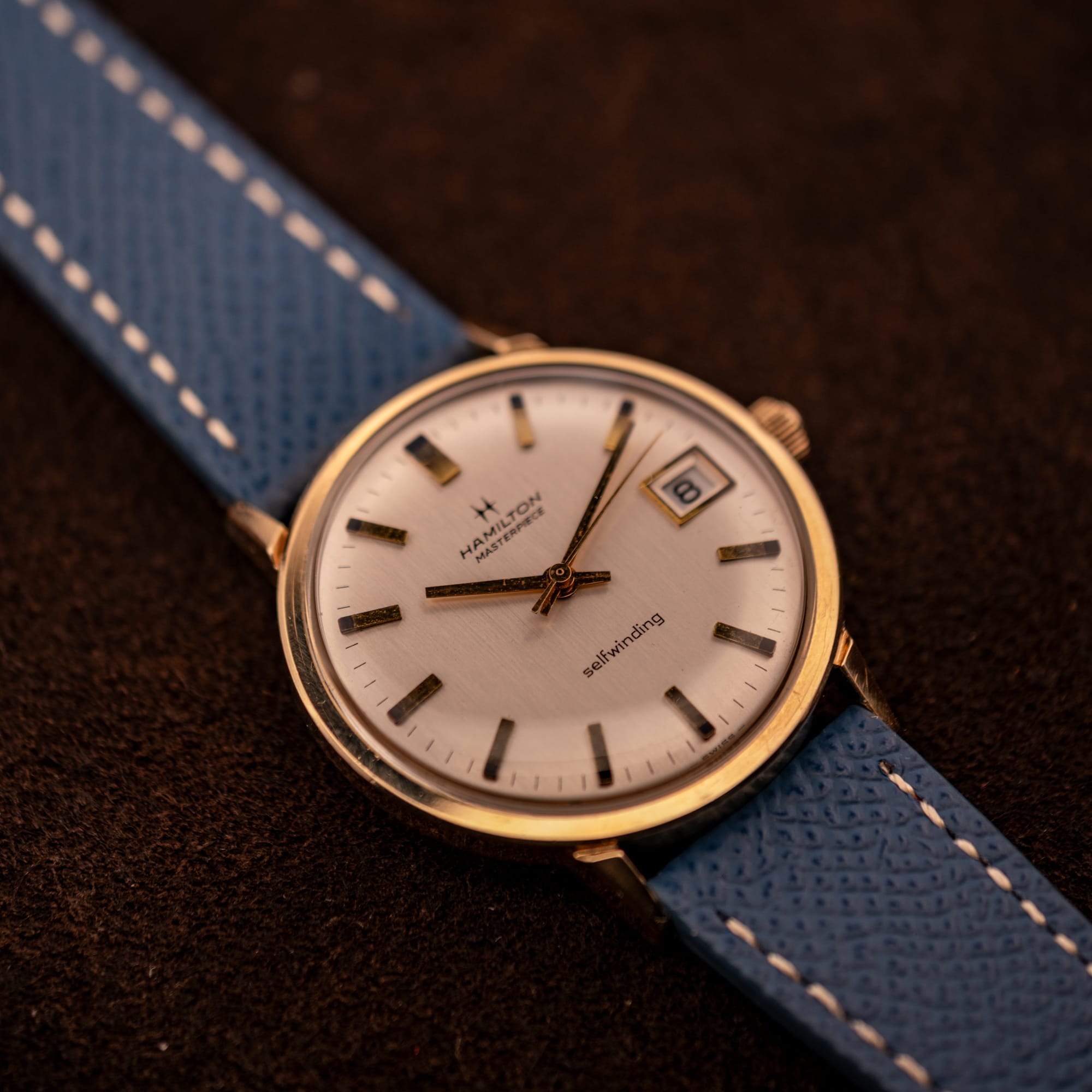
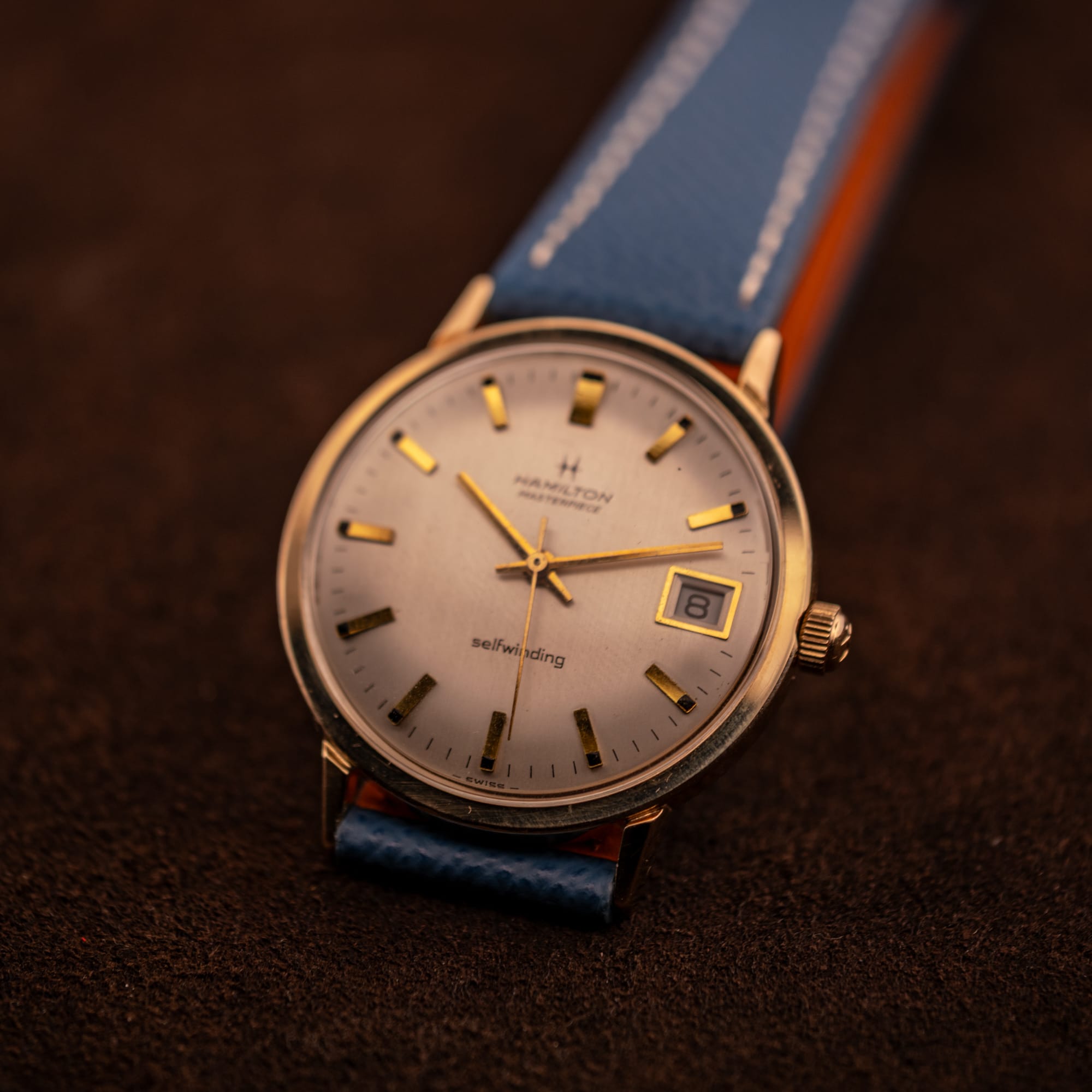
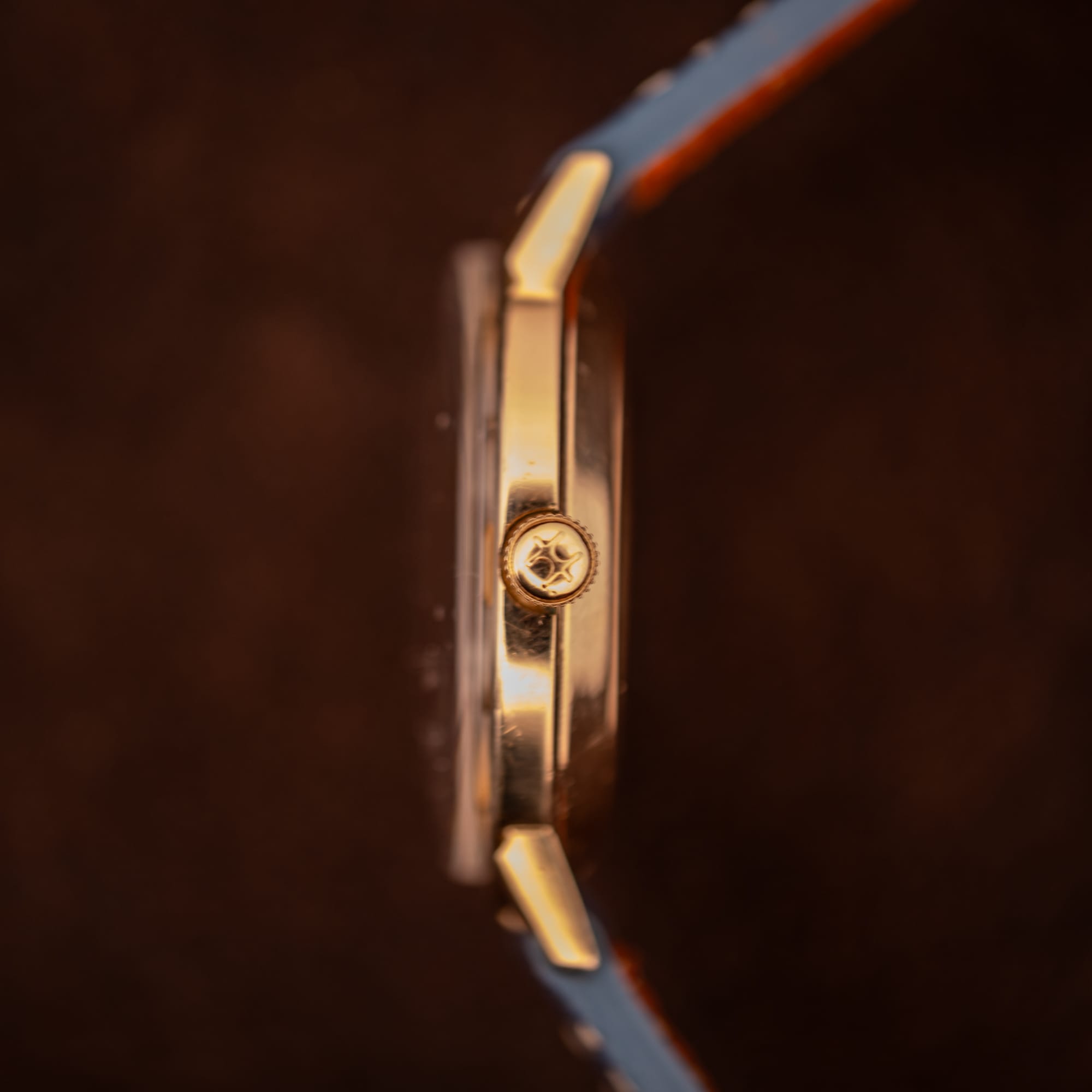
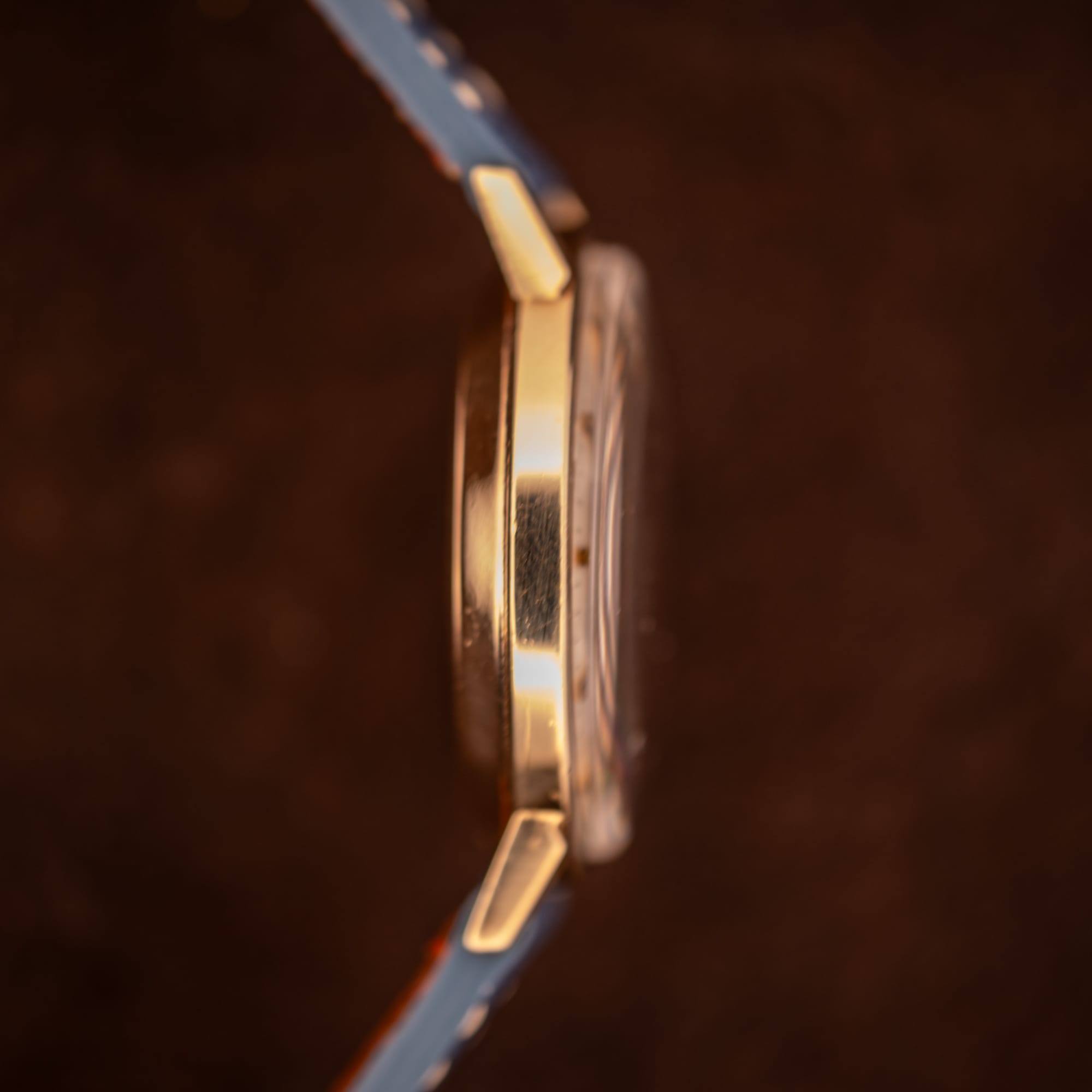
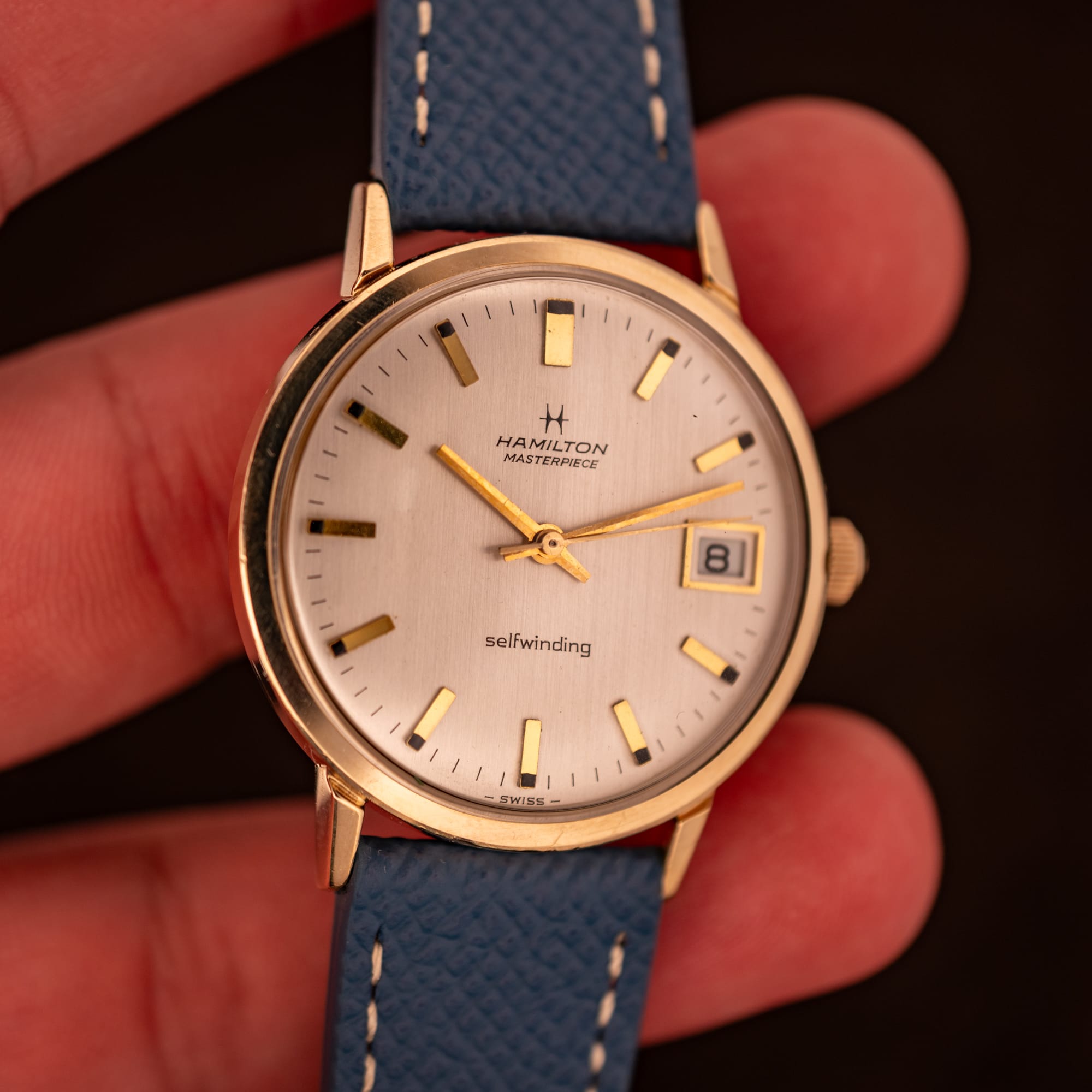
The case is 34mm across by 39mm lug to lug with an 18mm lug width, executed in 10k yellow gold filled, which on a Hamilton of this period means a thick, properly bonded gold layer over a substantial base, not the thin electrodeposit you find on dressed-up novelty pieces. Wear is honest and limited, a few light surface marks across the bezel and the polished sides, with the lug bevels and the broad case flank still cleanly defined. The caseback carries the engraving that gives this watch its character, reading ROBERT D. ANDERSON / 25 YEARS SERVICE / CHEVROLET FLINT ENGINE / GENERAL MOTORS CORPORATION / 1975 beneath the Chevrolet bowtie, faithfully cut and patinated into a warm brassy tone that we would not touch.
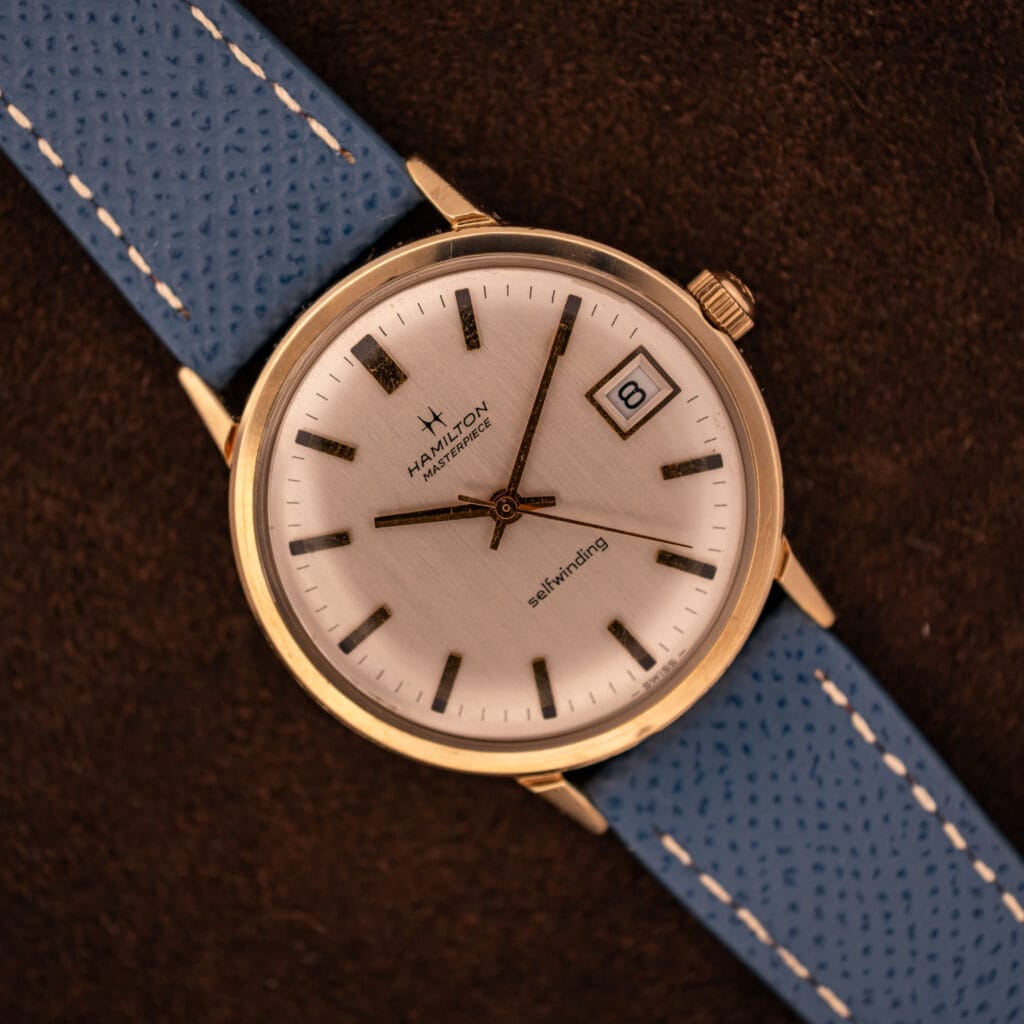
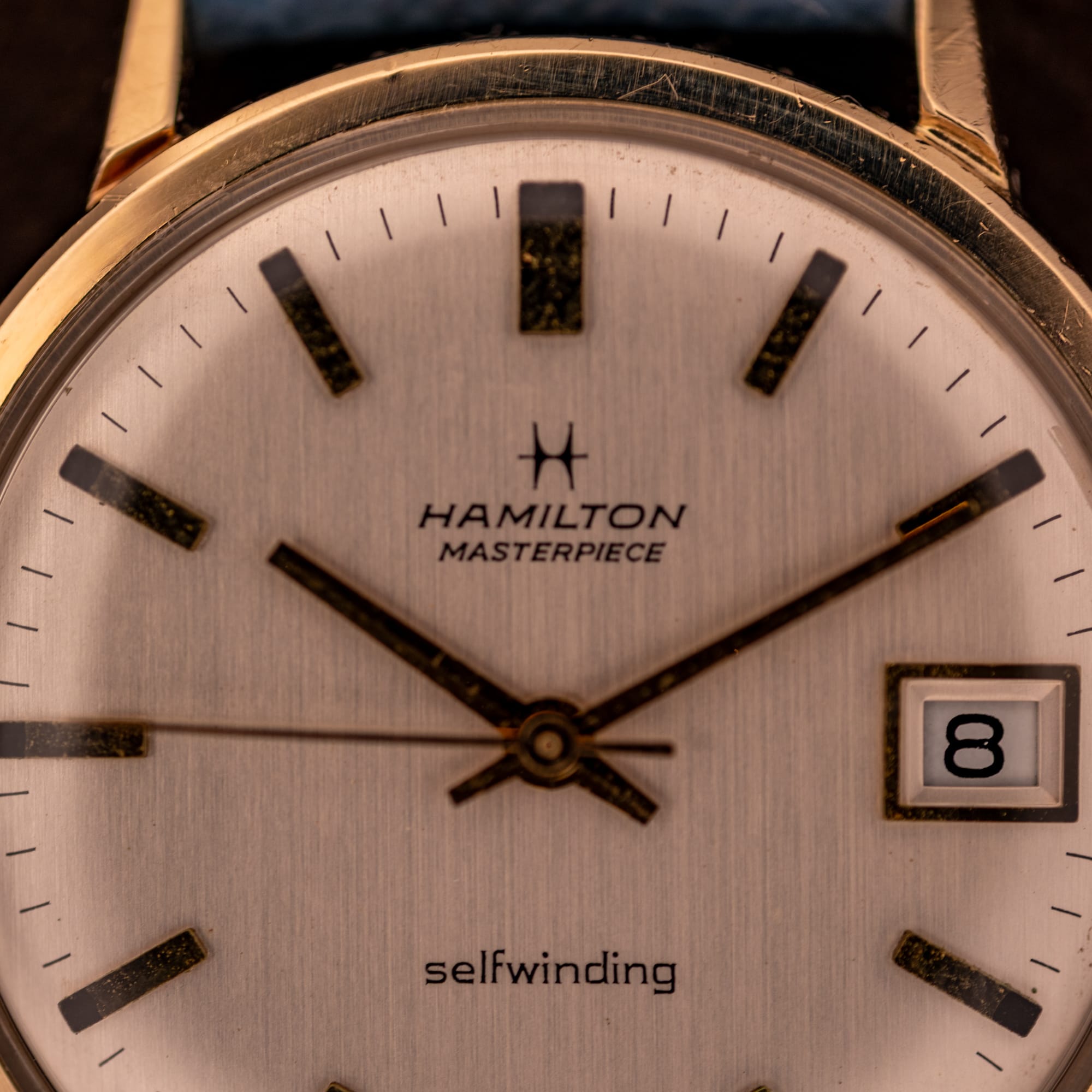
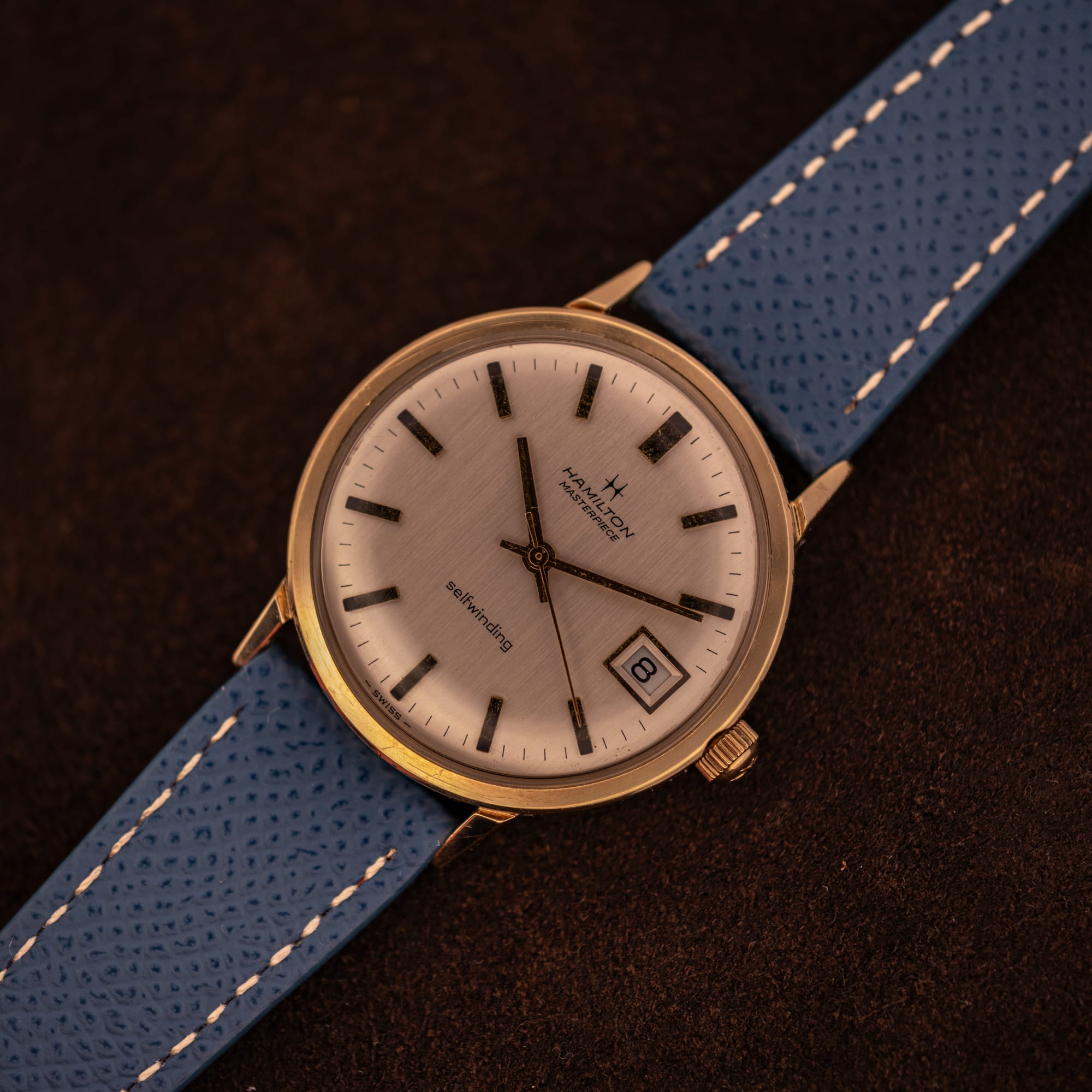
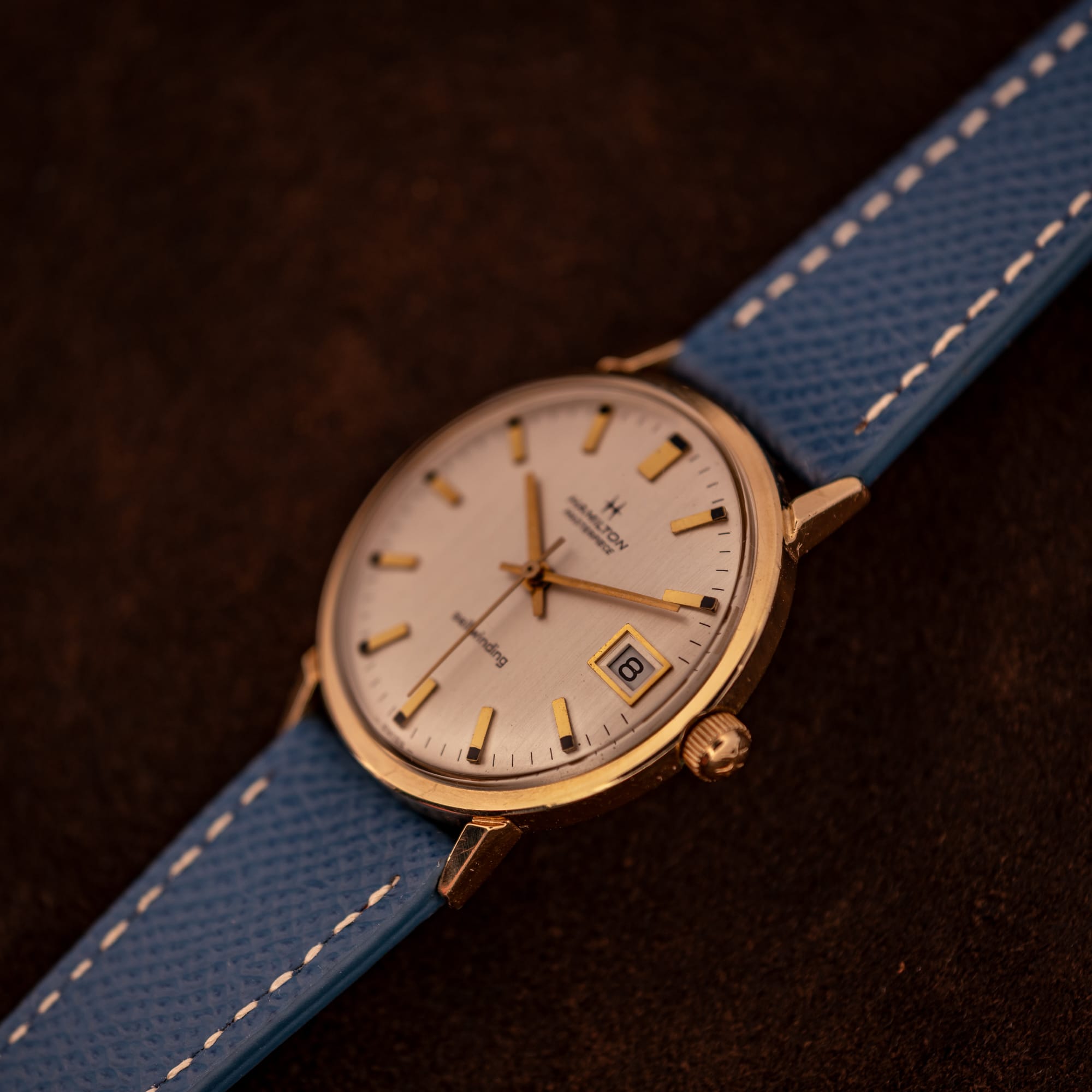
The dial is factory-original and unrestored, a brushed silver sunburst signed HAMILTON / MASTERPIECE beneath the Hamilton H-star logo at twelve and selfwinding in script above six, with SWISS printed cleanly at the dial base. Applied yellow gold dagger indices run the hour positions, each with a darkened insert that has aged into a speckled patina across the long axis, a quietly characterful effect that reads as a connecting thread between the indices and the brassy patina on the caseback. The handset is the factory configuration, slim yellow gold baton hour and minute hands with a fine center seconds, all original and matched to the indices. The date sits at three behind a polished gold-bordered aperture with a clean white wheel. The crown is signed with the Hamilton H-star emblem and turns with the soft, well-defined click of a properly serviced movement.
We have paired the watch with one of our blue Saffiano leather straps, cream stitched, fitted with our OTTUHR signed buckle. The blue picks up against the warm yellow gold of the case in the way that complementary colors usually do, and the Saffiano grain reads dressy enough for the Masterpiece’s intended role without crossing over into anything formal.
Serviced in-house at OTTUHR and backed by our 2-year mechanical warranty, this is a vintage Hamilton Masterpiece we are genuinely glad to be the temporary stewards of. For the collector who cares more about a watch with a name and a year and a story than about chasing model numbers, who values factory-original dials and honest engravings over polished perfection, and who understands that a 1975 American factory-award piece is its own kind of historical document, this is, to us, the right one.