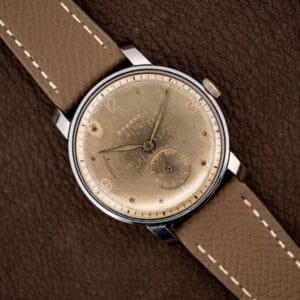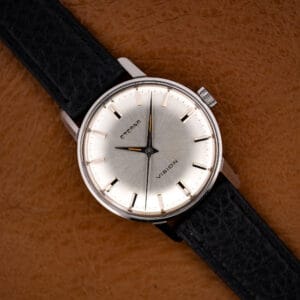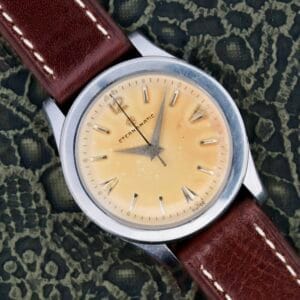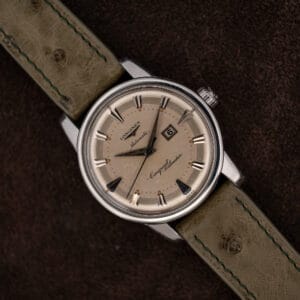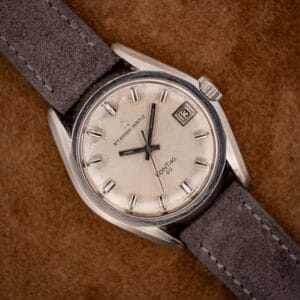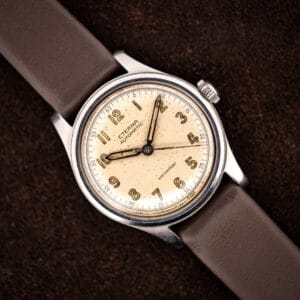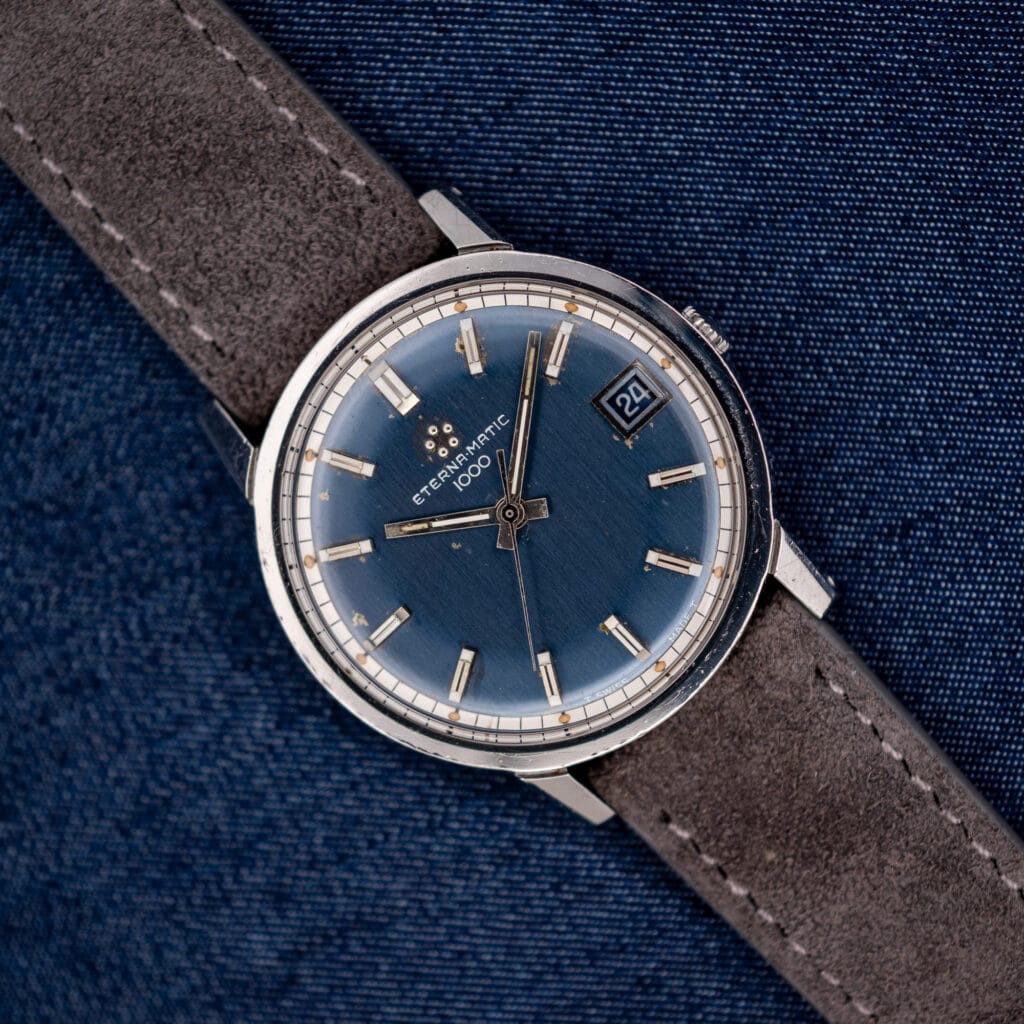
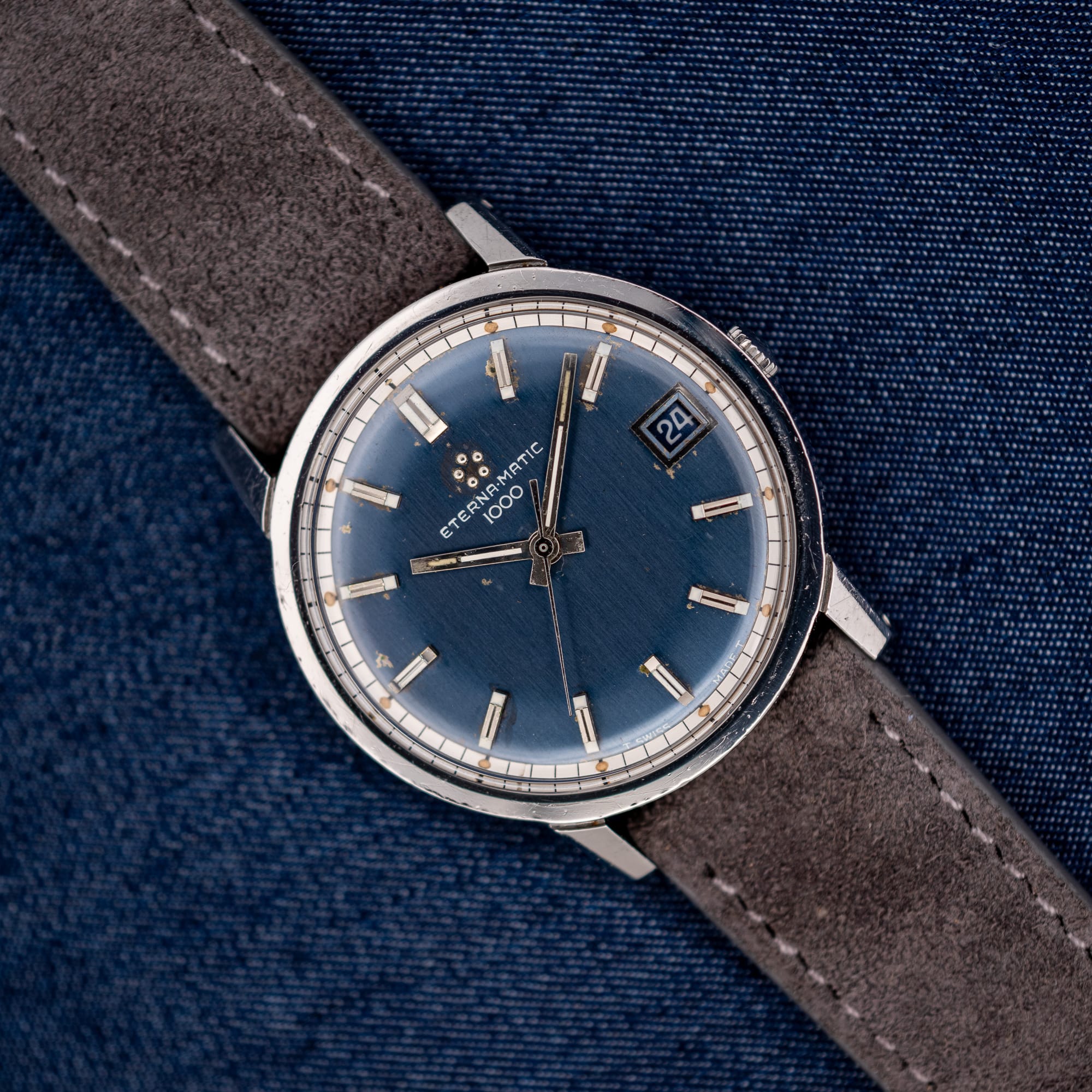
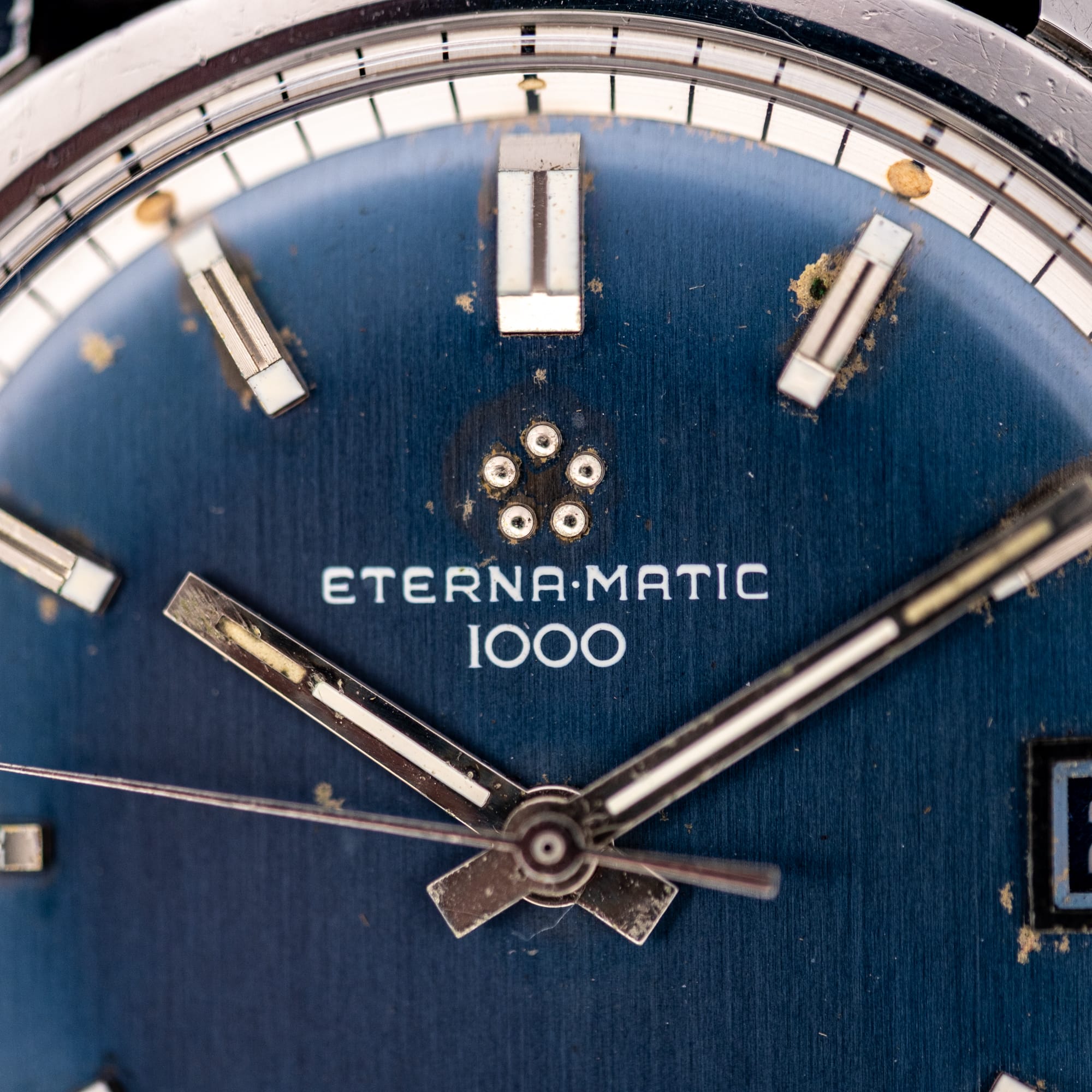
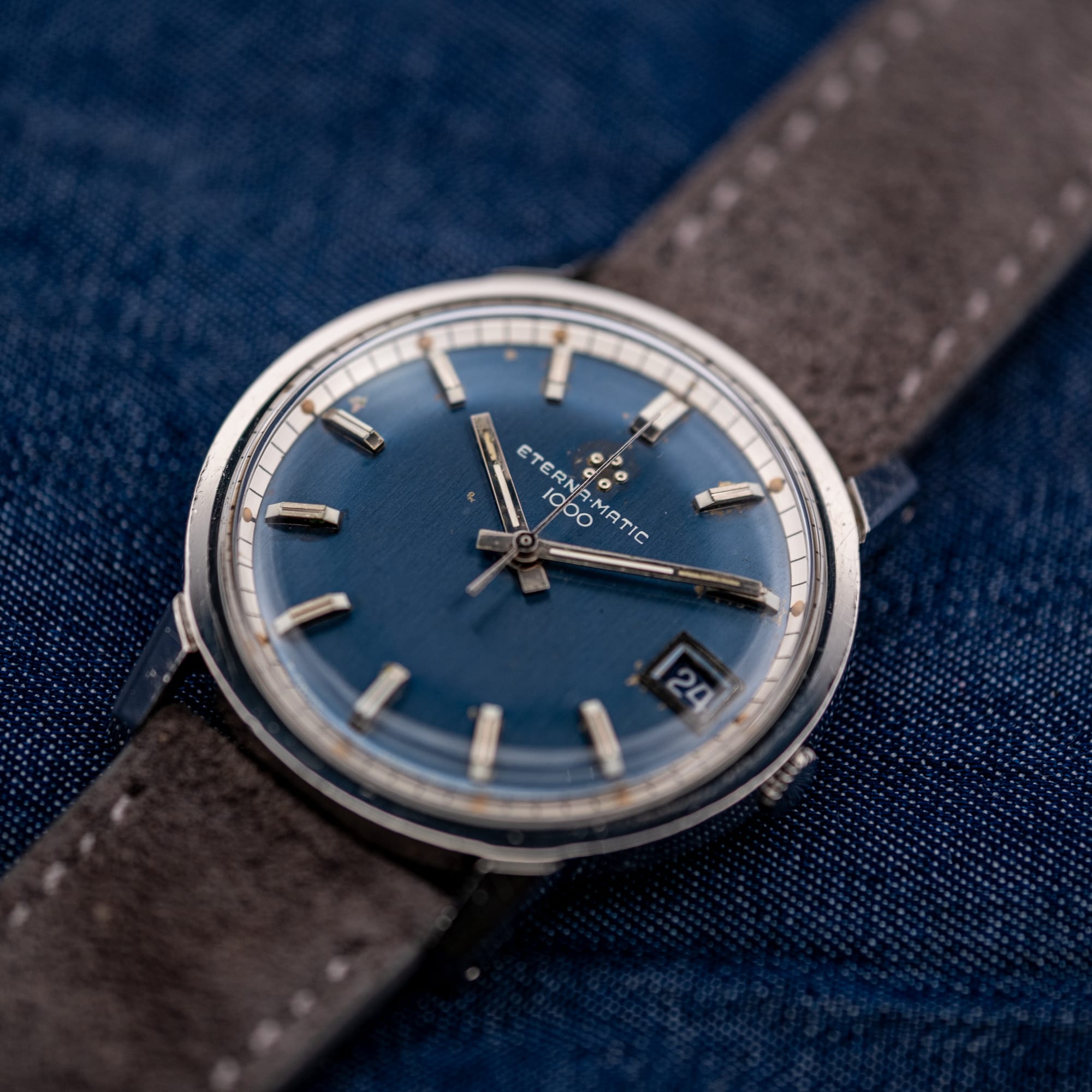
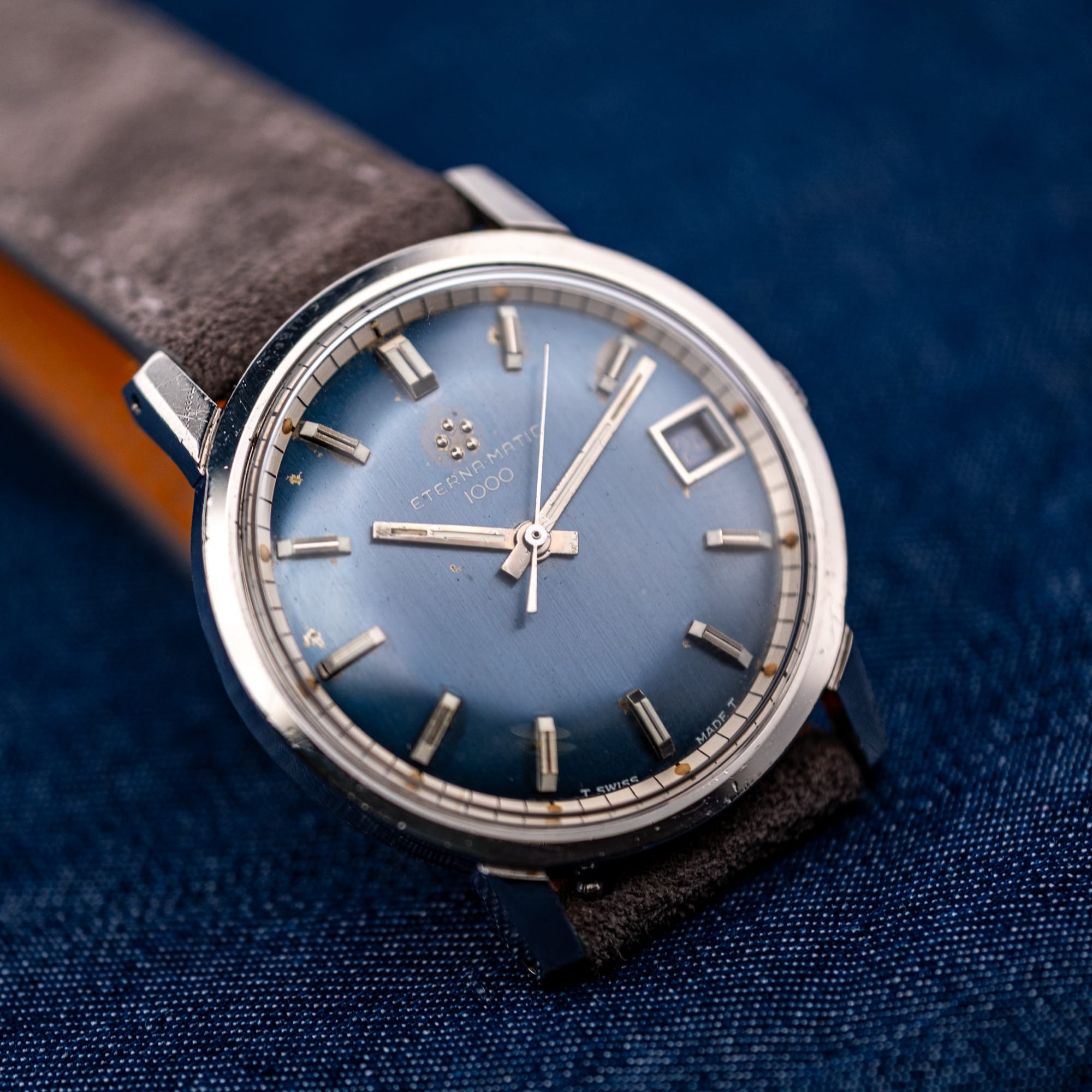
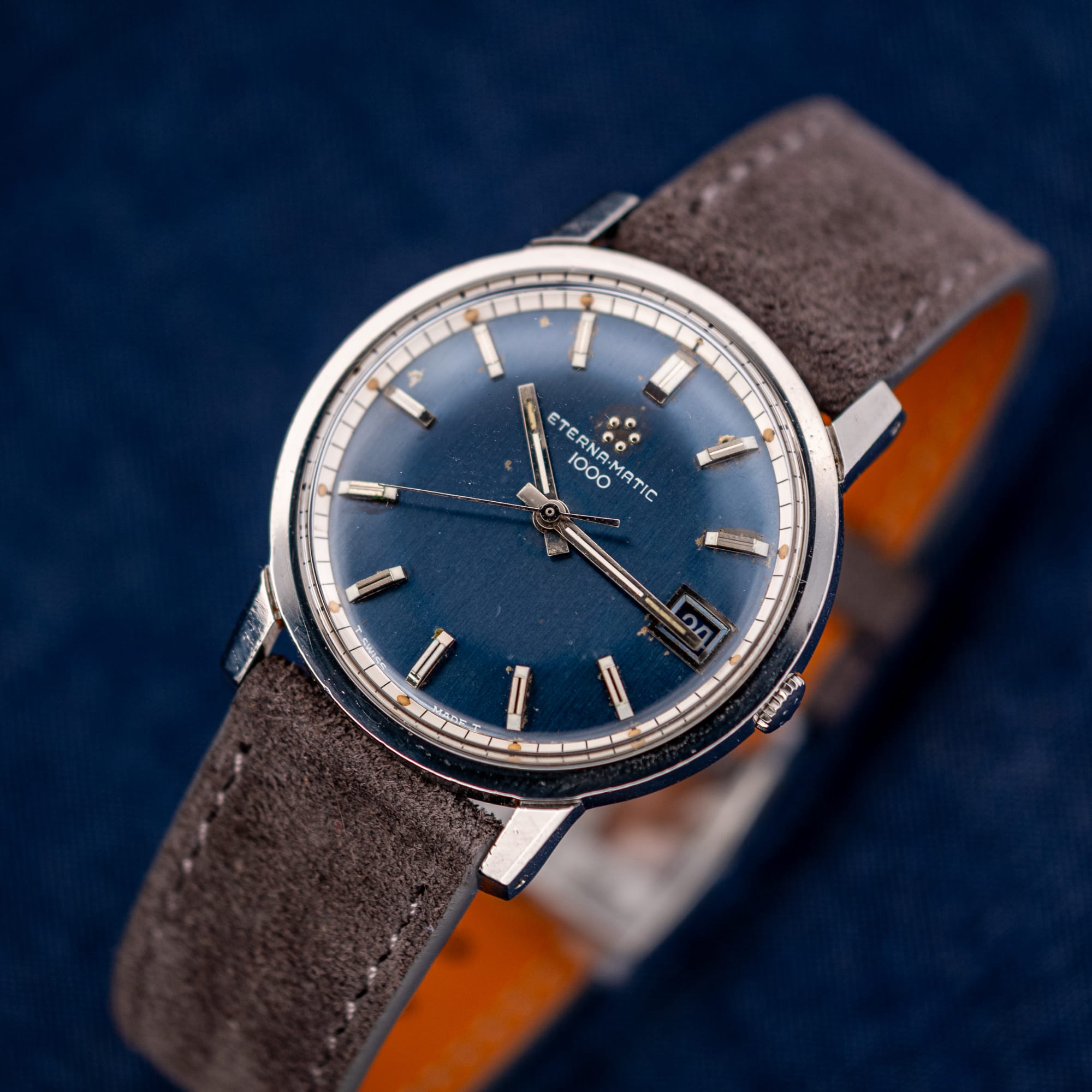

Look at the top of this dial and, beneath the Eterna-Matic 1000 name, you will find five small dots. They are a quiet landmark in Swiss watchmaking. In 1948 Eterna solved a problem that had dogged the automatic watch from the start: the rotor that wound the mainspring kept wearing out the post it turned on. Eterna’s answer was to set that rotor on five miniature ball bearings, each smaller than a pinhead, so it spun with almost no friction and kept spinning for decades. The company thought so much of the fix that it made those five bearings its emblem that same year, and it has printed the five dots on its dials ever since.
The idea did not stay Eterna’s secret for long. The first Eterna-Matic went into a lady’s watch in 1948, the gentlemen’s version followed in 1949, and the ball-bearing rotor went on to shape how the industry built its self-winding watches, including the movements ETA, the house Eterna helped found, later supplied across Switzerland. It is a real milestone, and it belongs to 1948, not to the watch in these photos. This Eterna-Matic 1000 came decades later and never claimed to invent anything. What it does is carry the mark, and the mechanism behind it, into an everyday automatic from the end of the 1960s.
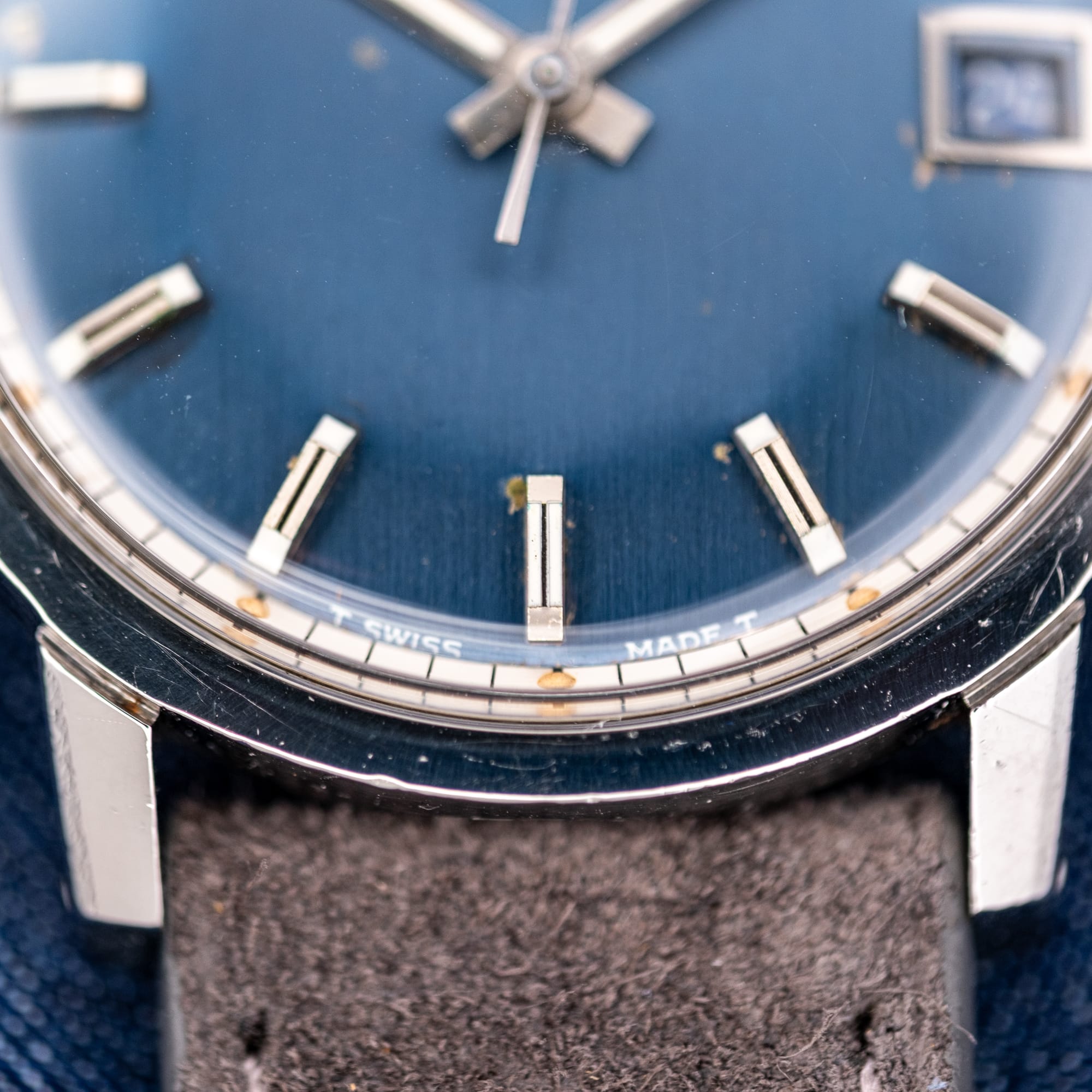
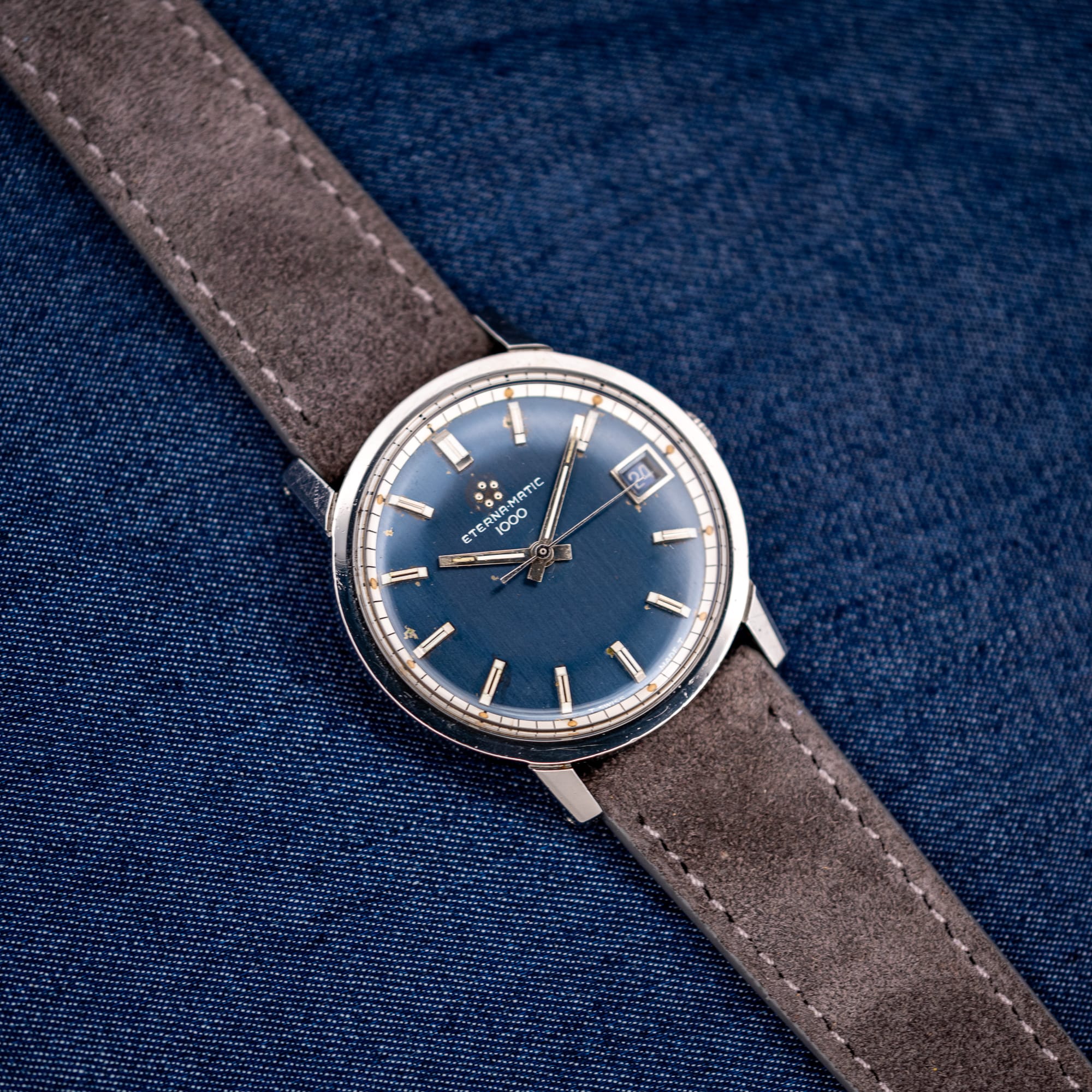
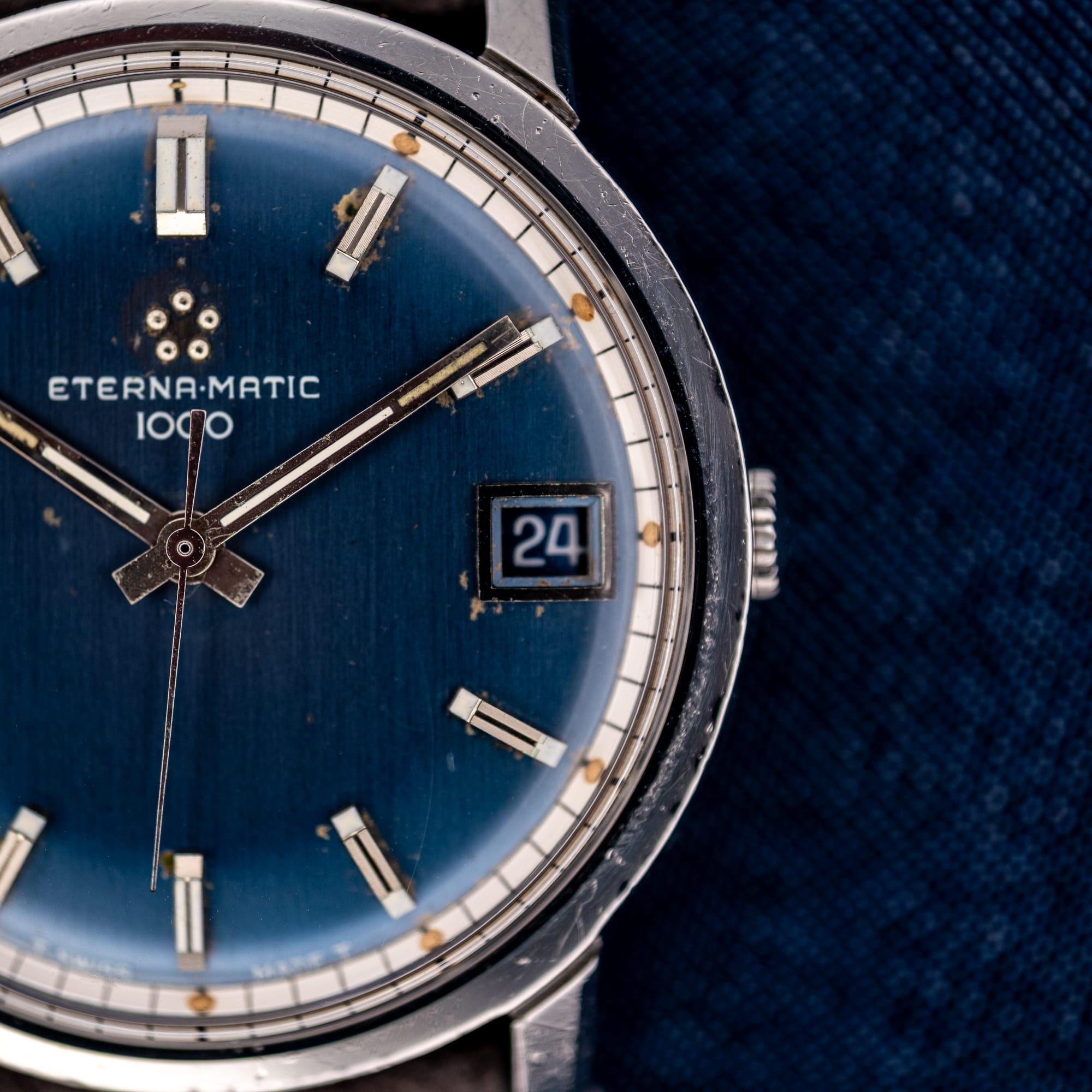
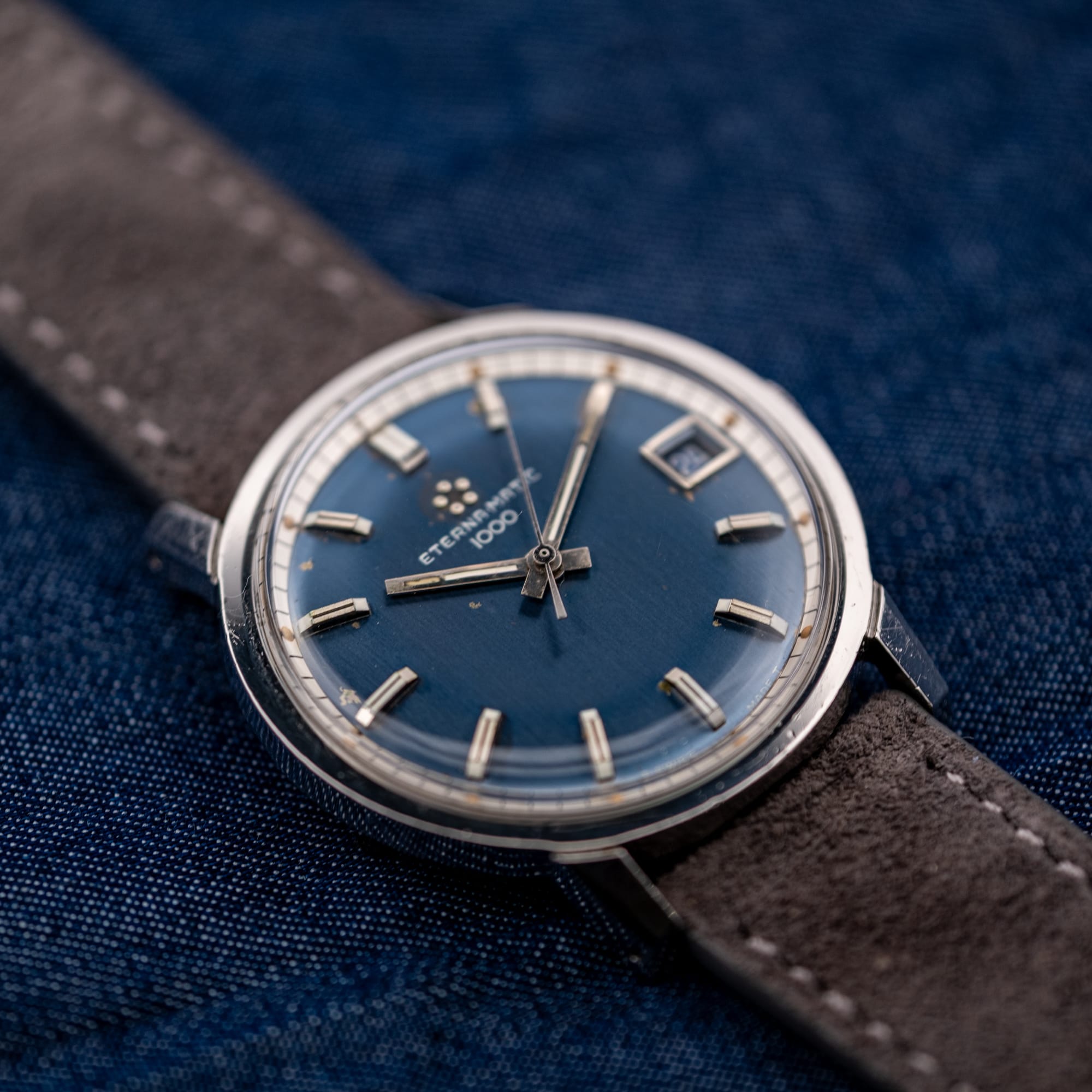
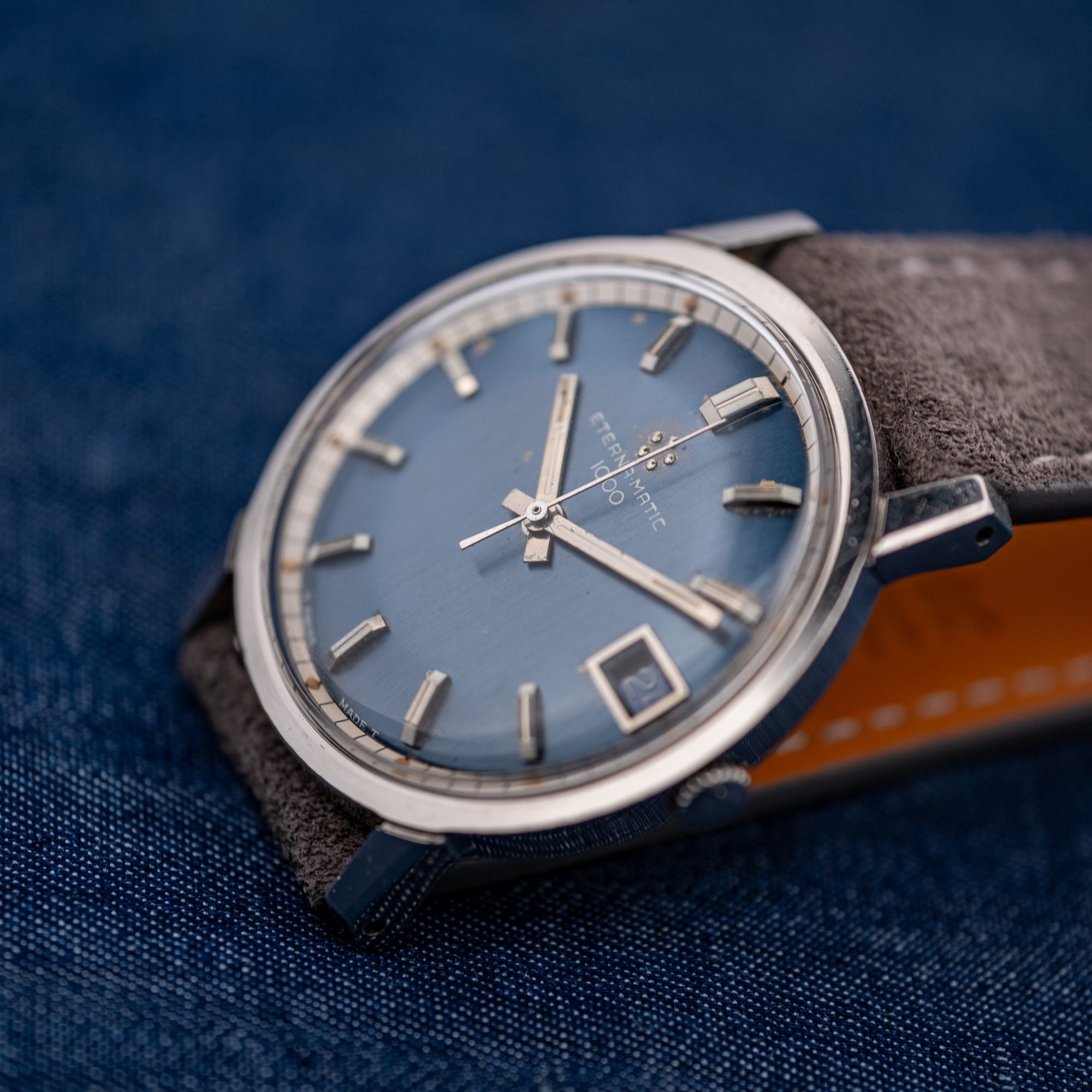
And what an everyday watch it is. The dial is the reason to stop here. In flat light it sits deep and navy, nearly black at the rim; turn it toward a window and the whole face lifts into a brighter steel blue, the brushing throwing light out from the center. To us that shift is the best thing about the watch. Applied faceted batons mark the hours, their white lume long since gone to a soft cream, and a small date clicks over at three. The Eterna-Matic 1000 was never the brand’s adventurer, that role went to the KonTiki. This was the tasteful automatic a person wore to the office and to dinner both, and it has aged into exactly that kind of quiet good taste.
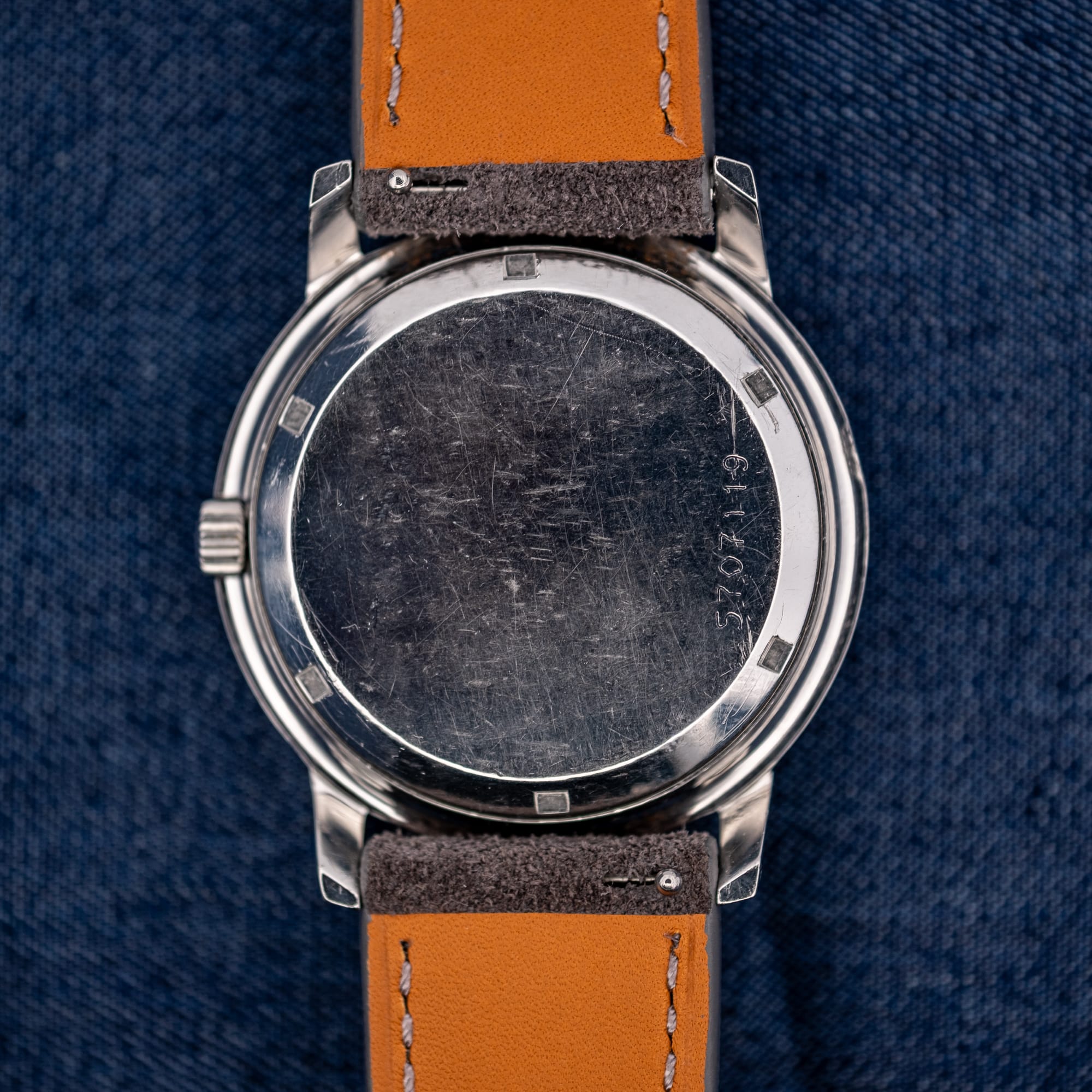
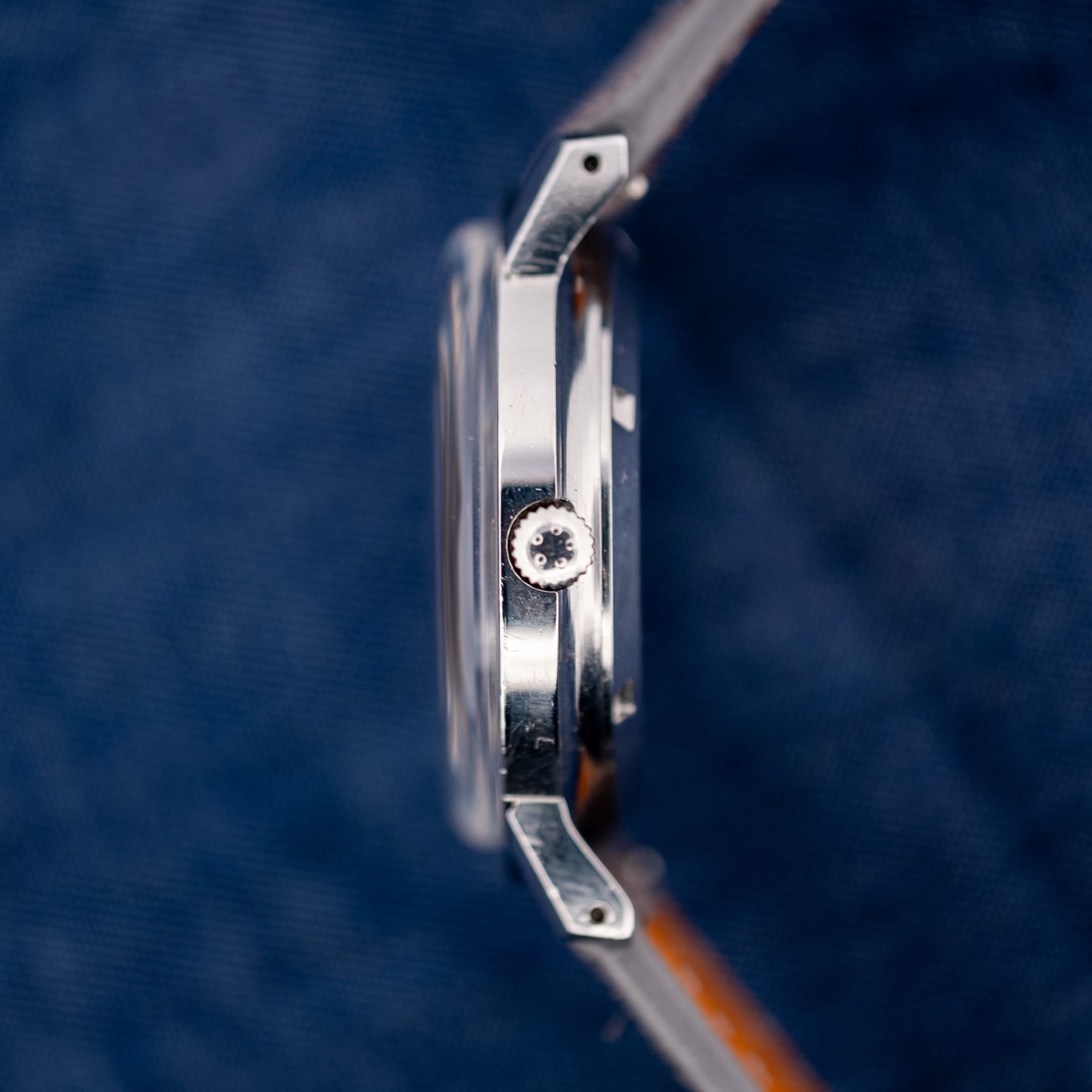
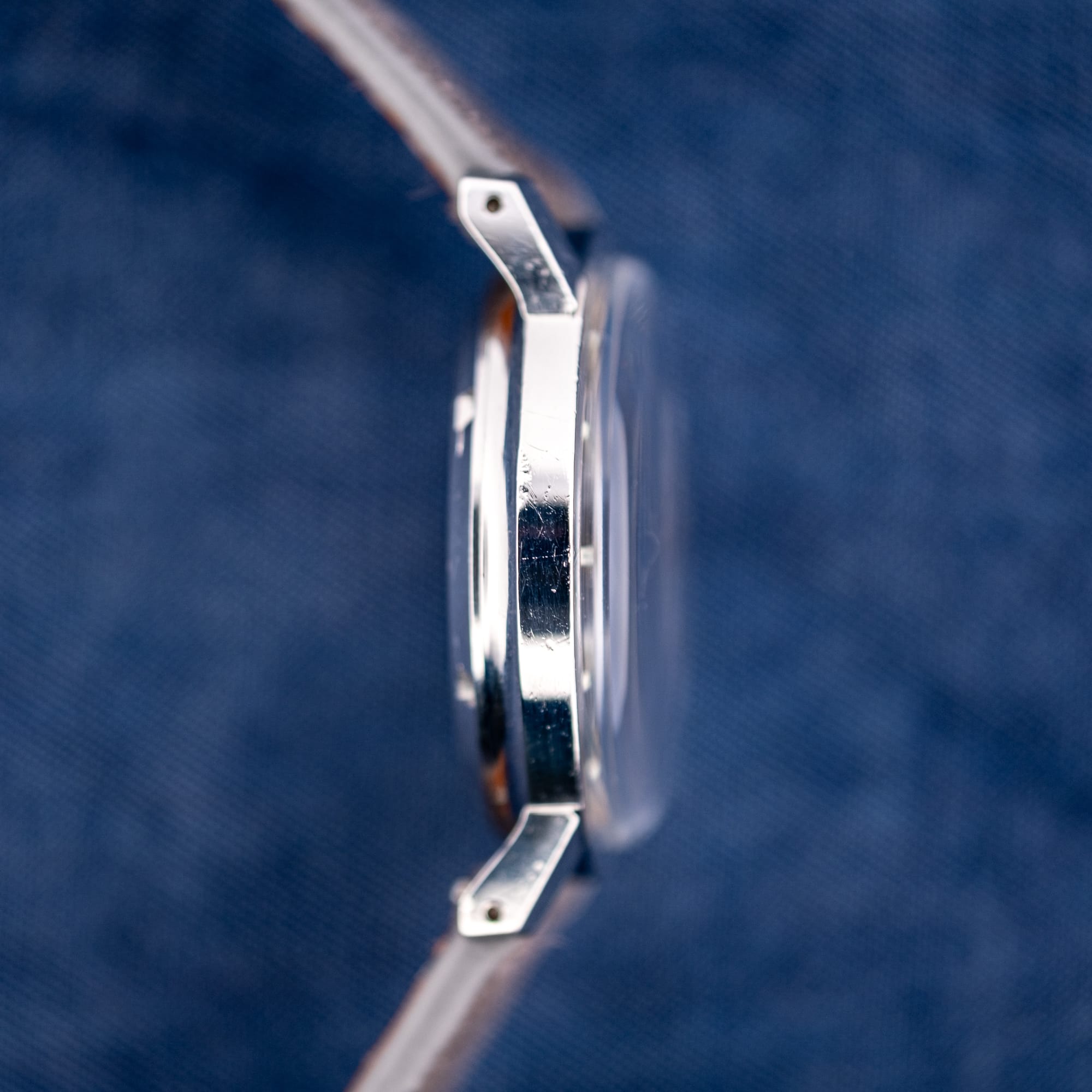
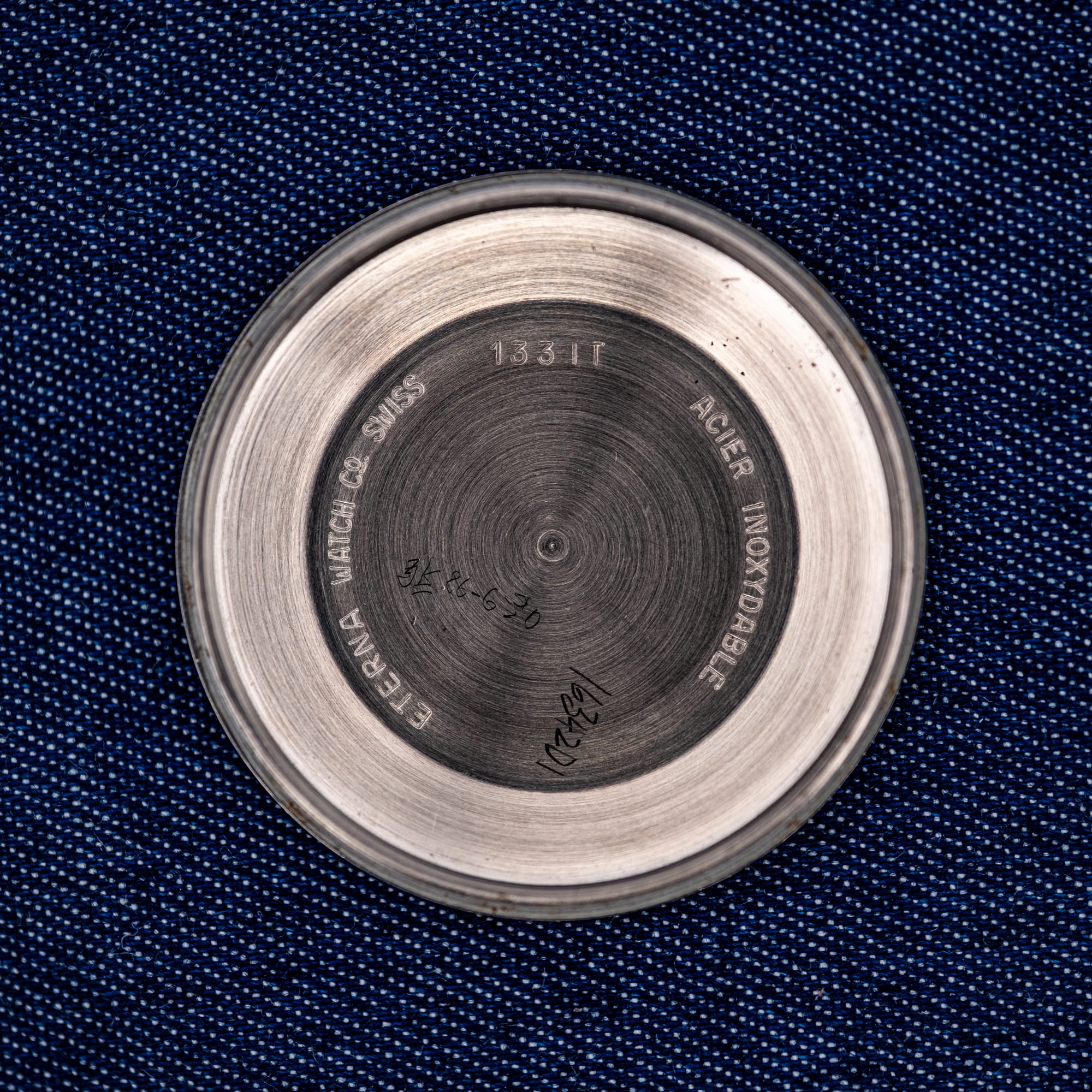
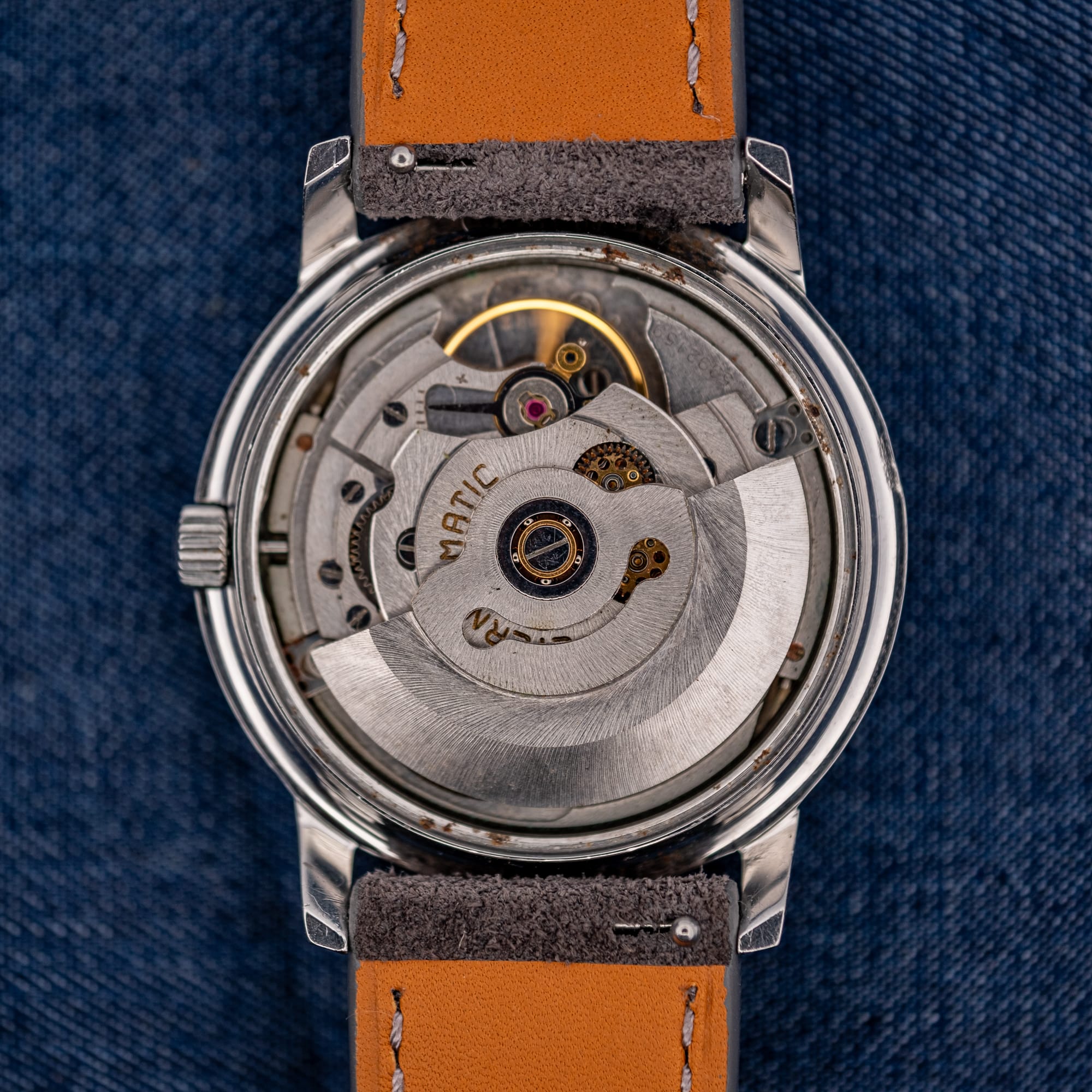
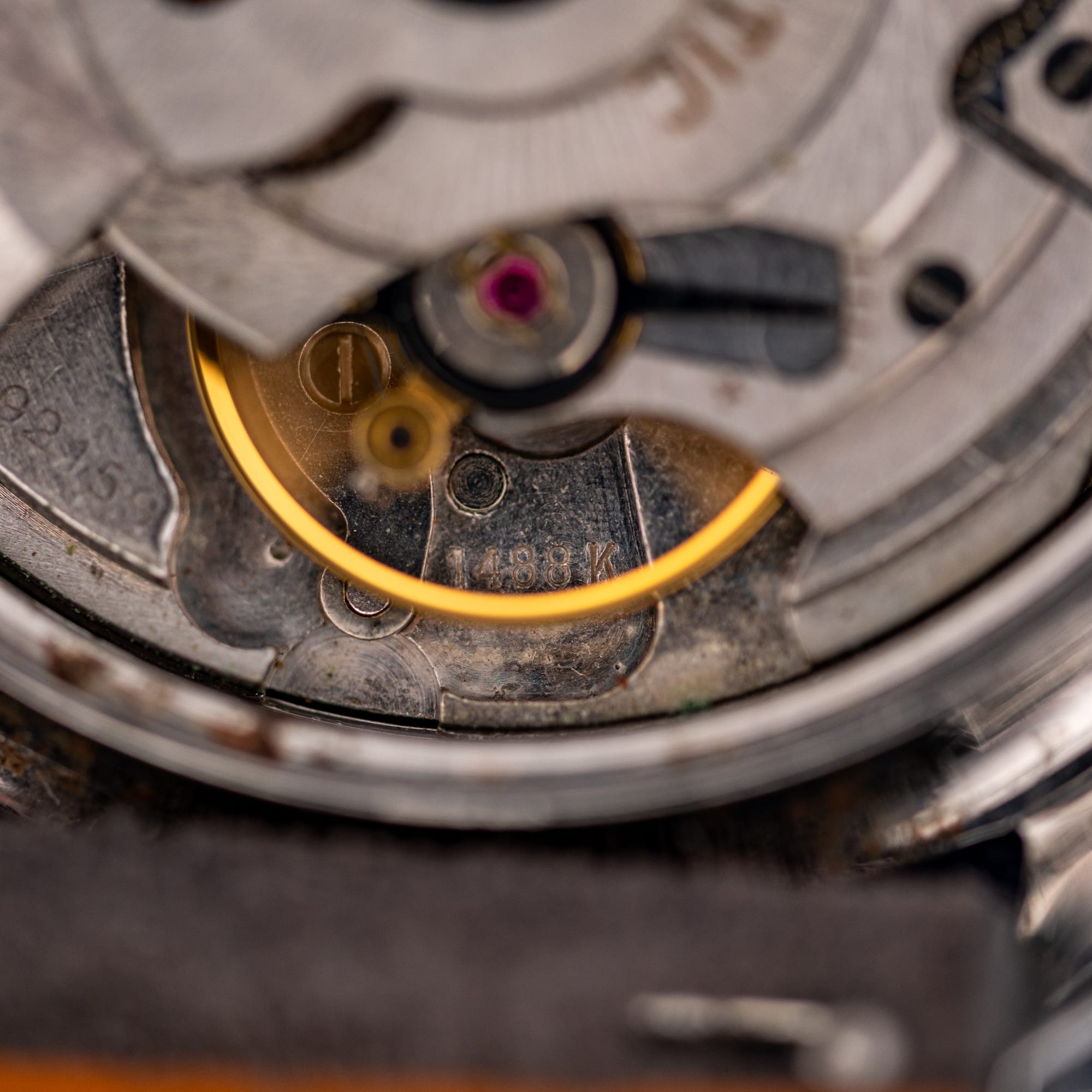
The case is stainless steel, 35mm across and honestly worn, its polish holding the fine hairlines of a watch that was used rather than shelved. Under the dial runs the Eterna caliber 1488K, a 21-jewel automatic beating at 21,600 vibrations an hour with roughly two days of reserve, its full rotor signed ETERNA-MATIC and spinning on the same ball-bearing principle the five dots celebrate. The dial reads T SWISS MADE T above the six, the tritium marking that places it in the tritium years. Open the back and the inside is signed ETERNA WATCH Co SWISS and ACIER INOXYDABLE, French for the stainless steel it is cut from, with the 133 IT reference stamped alongside and an old watchmaker’s service scratches for company.
The blue dial shows its age fairly, a few faint foxing spots freckling the surface and the lume plots gone tan, nothing hidden and nothing refinished. It arrives on an anthracite Italian suede strap closed by an OTTUHR buckle, serviced in-house and backed by our two-year mechanical warranty, and it comes without box or papers, which is where the price sits. Few will ever register the five dots on the dial. The ones who do are looking at the small invention that taught the automatic watch how to last.