
Eterna began in Grenchen on 7 November 1856, and neither of the two men who signed the papers was a watchmaker. Dr. Josef Girard was a physician. Urs Schild was a schoolteacher, twenty-eight years old. What they founded was not a watch brand in the sense we would recognize now. It was an ébauche house. What it made went out to other firms to be finished, cased and sold under their own names, which is the reason a vintage Eterna so often turns out to be better underneath than its dial lets on.
Ten years in, Girard sold his shares to Schild for 35,000 Swiss francs and left, and the schoolteacher carried on alone. Making blanks for other people is unglamorous work. There is no name on the dial at the end of it, no shop window, nothing to point at. What it does instead is teach a company to care about the part of a watch that nobody looks at and everybody depends on. Eterna carried that forward in public as well: in 1914, at the Swiss National Exhibition in Berne, it introduced the first series-produced alarm wristwatch.
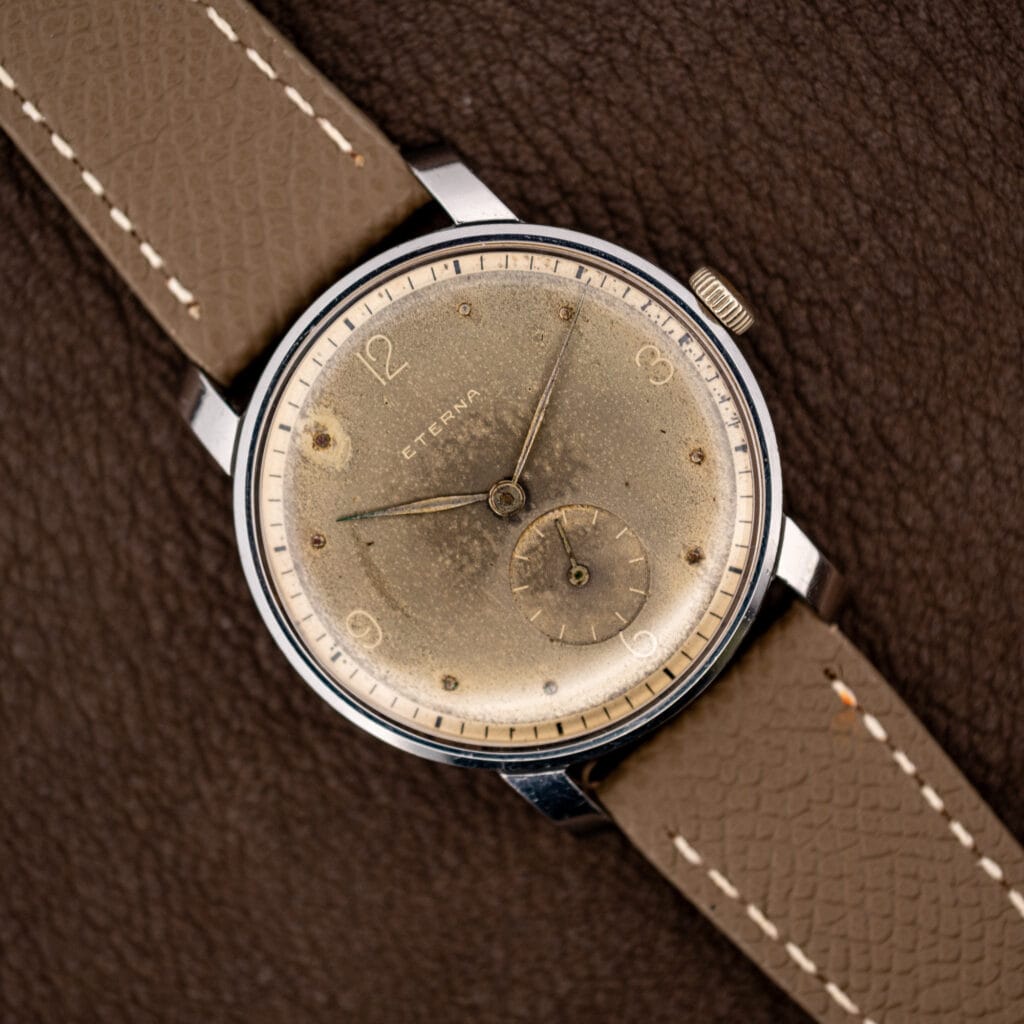
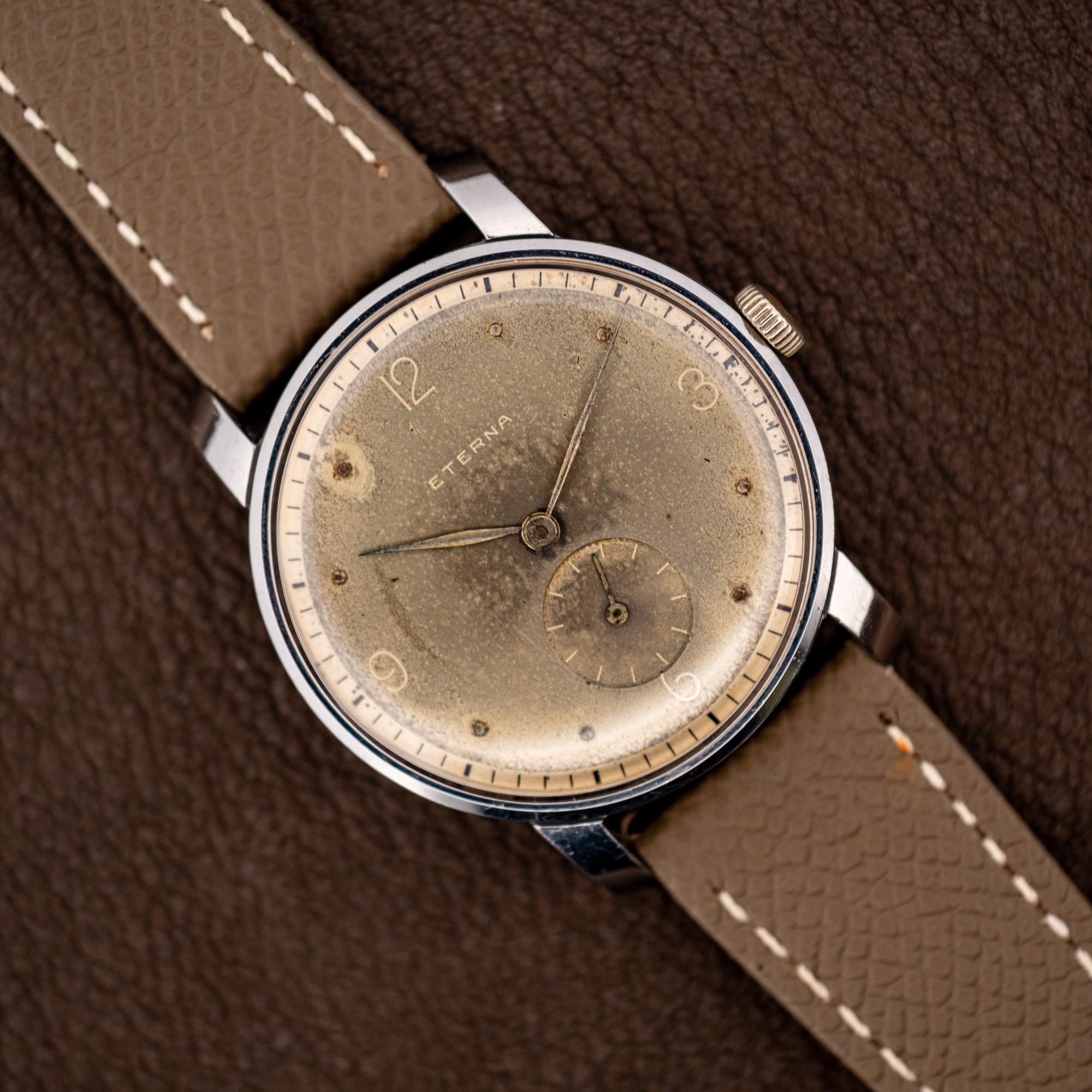
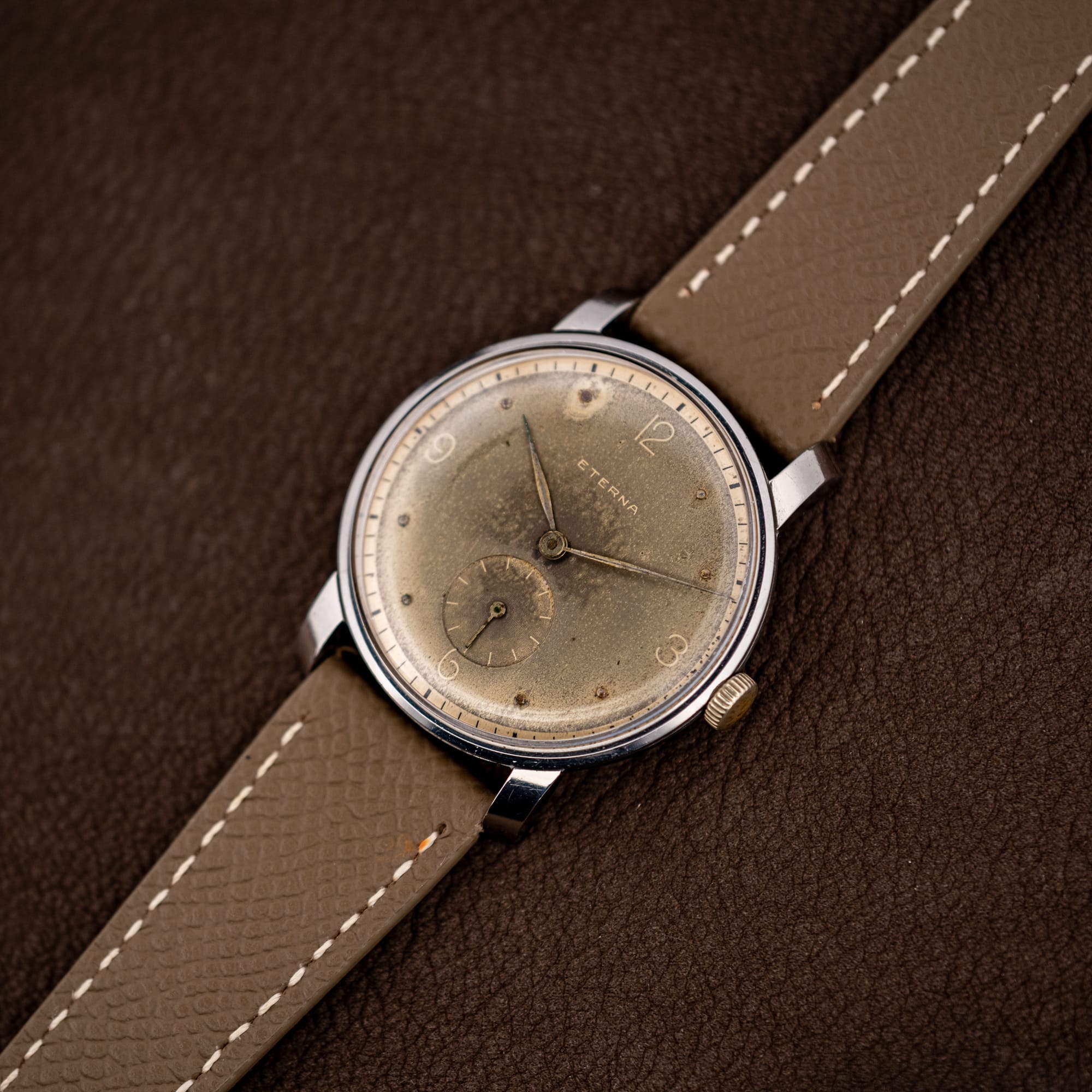
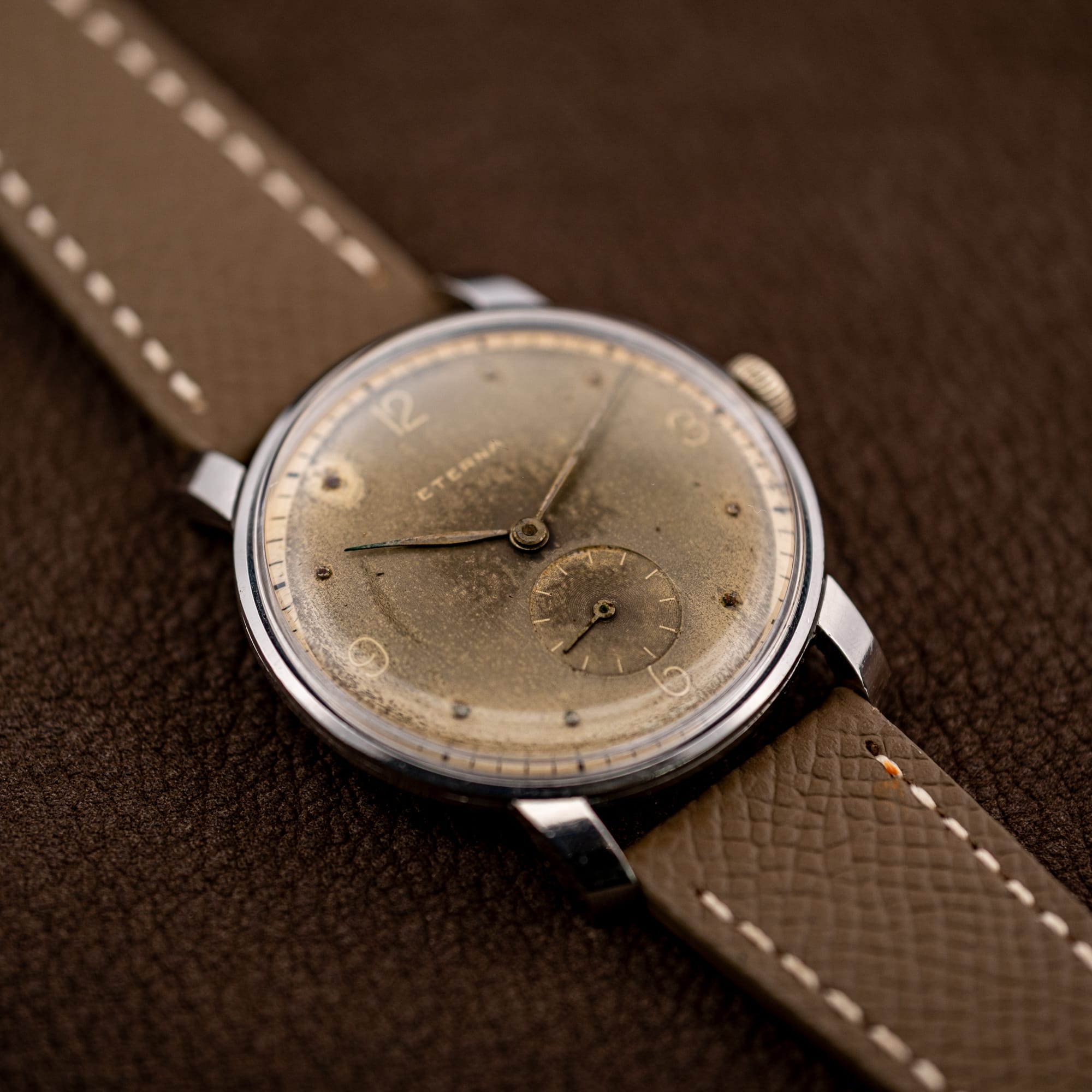
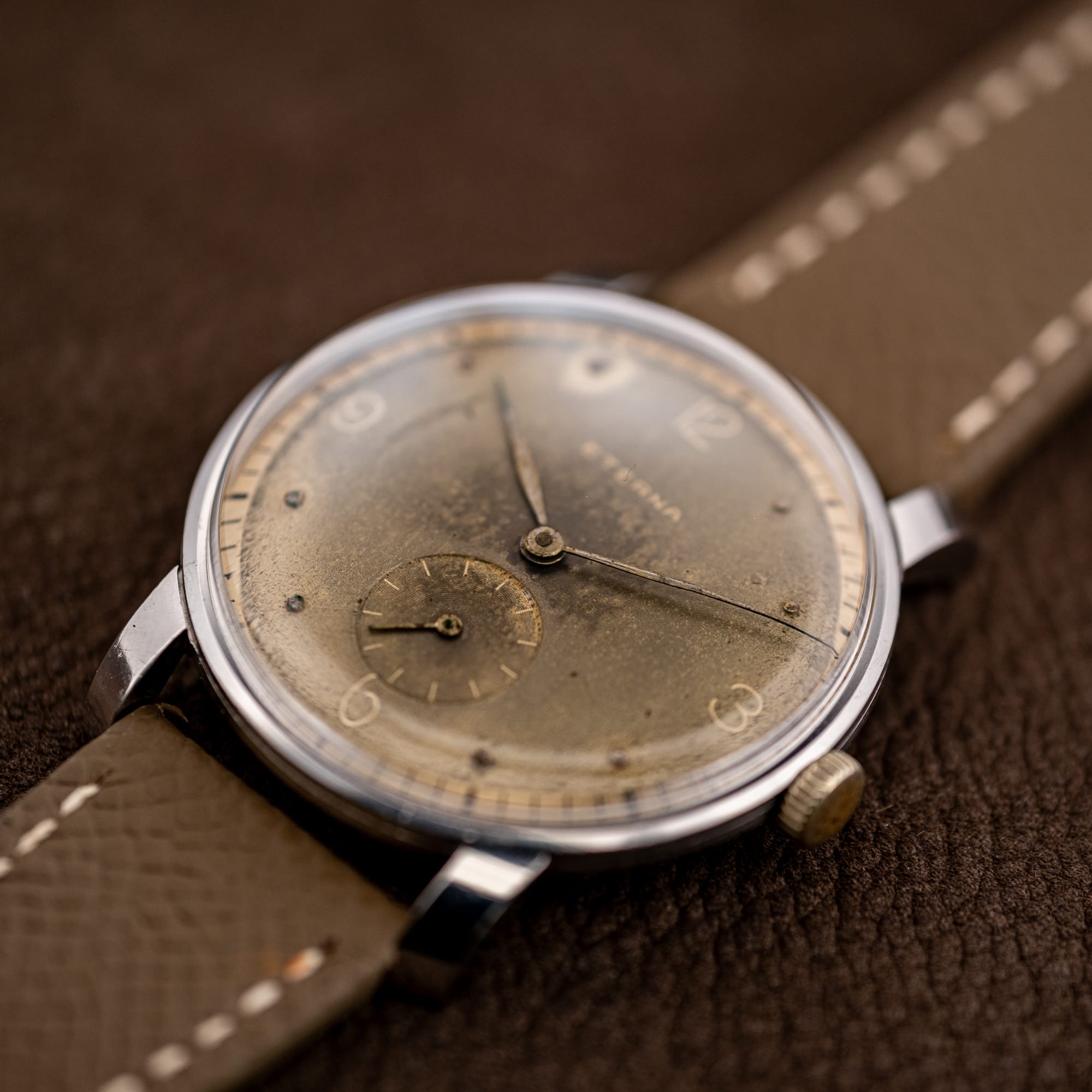
So the Eterna that follows most honestly from that first workshop is not the complicated one. It is this one. A plain round watch, hand-wound, a small seconds register above six, and nothing else asked of it. No date to break, no rotor to service, no complication competing with the dial for attention. To us that is the more candid arrangement, the whole proposition resting on the quality of a movement and the patience of whoever owns it.
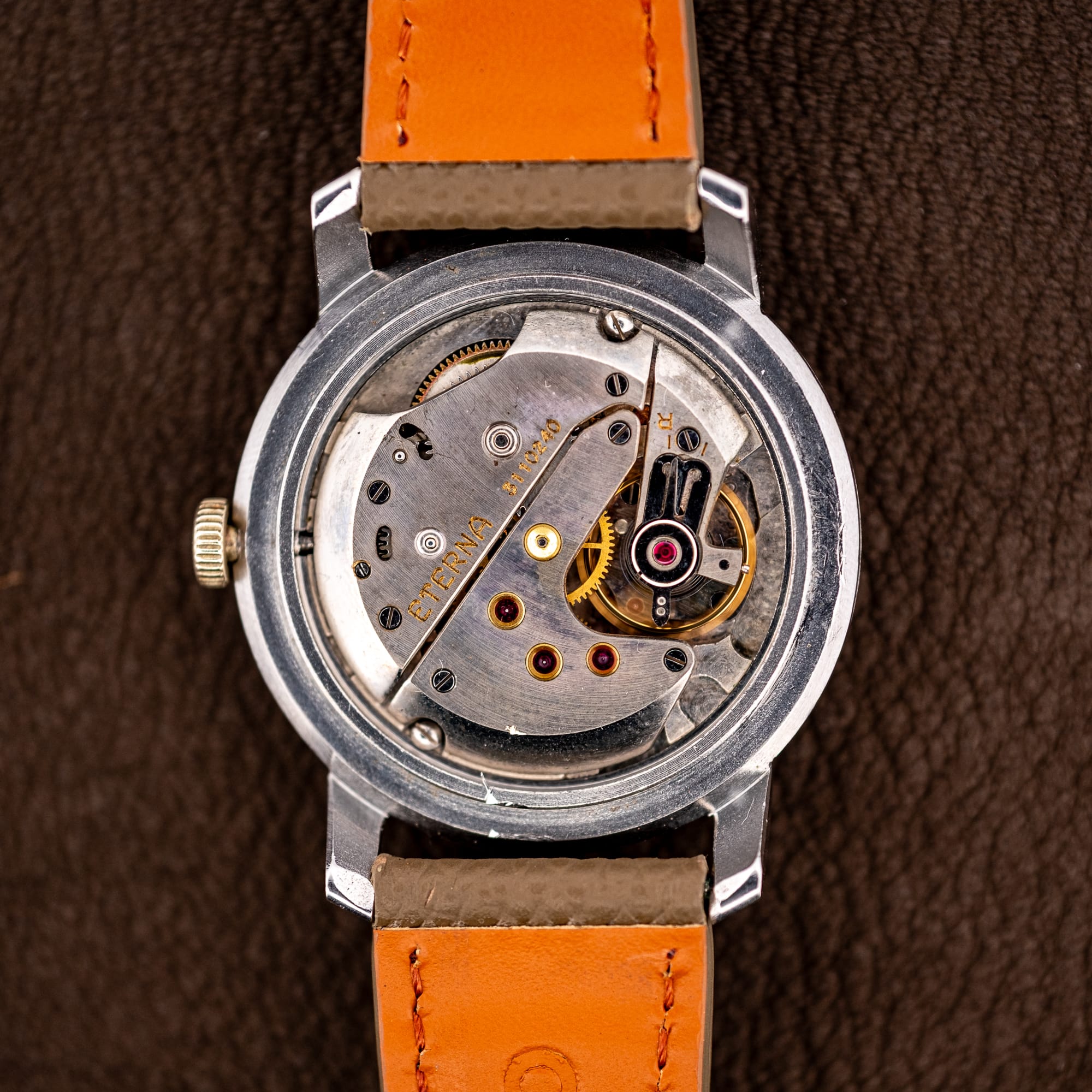
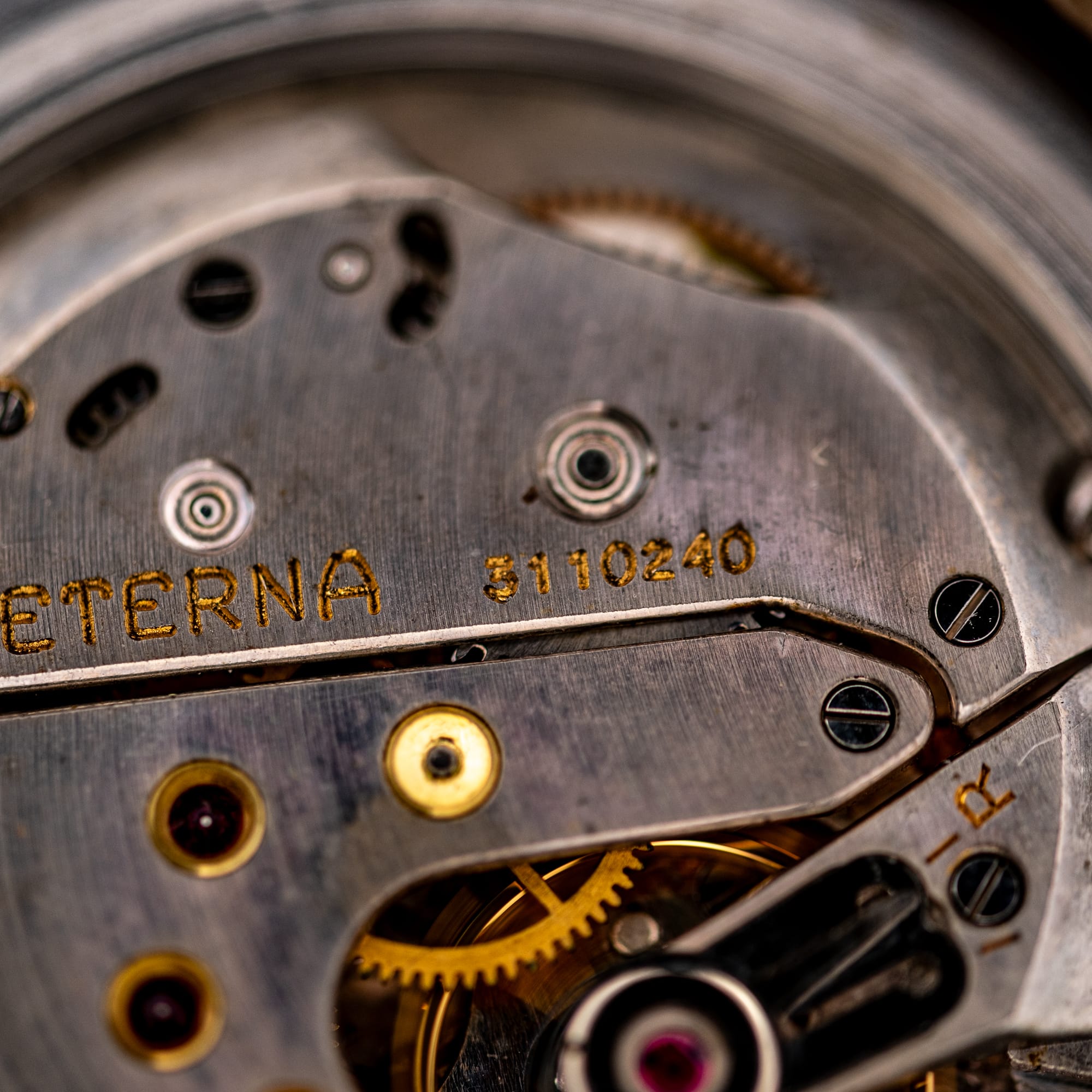
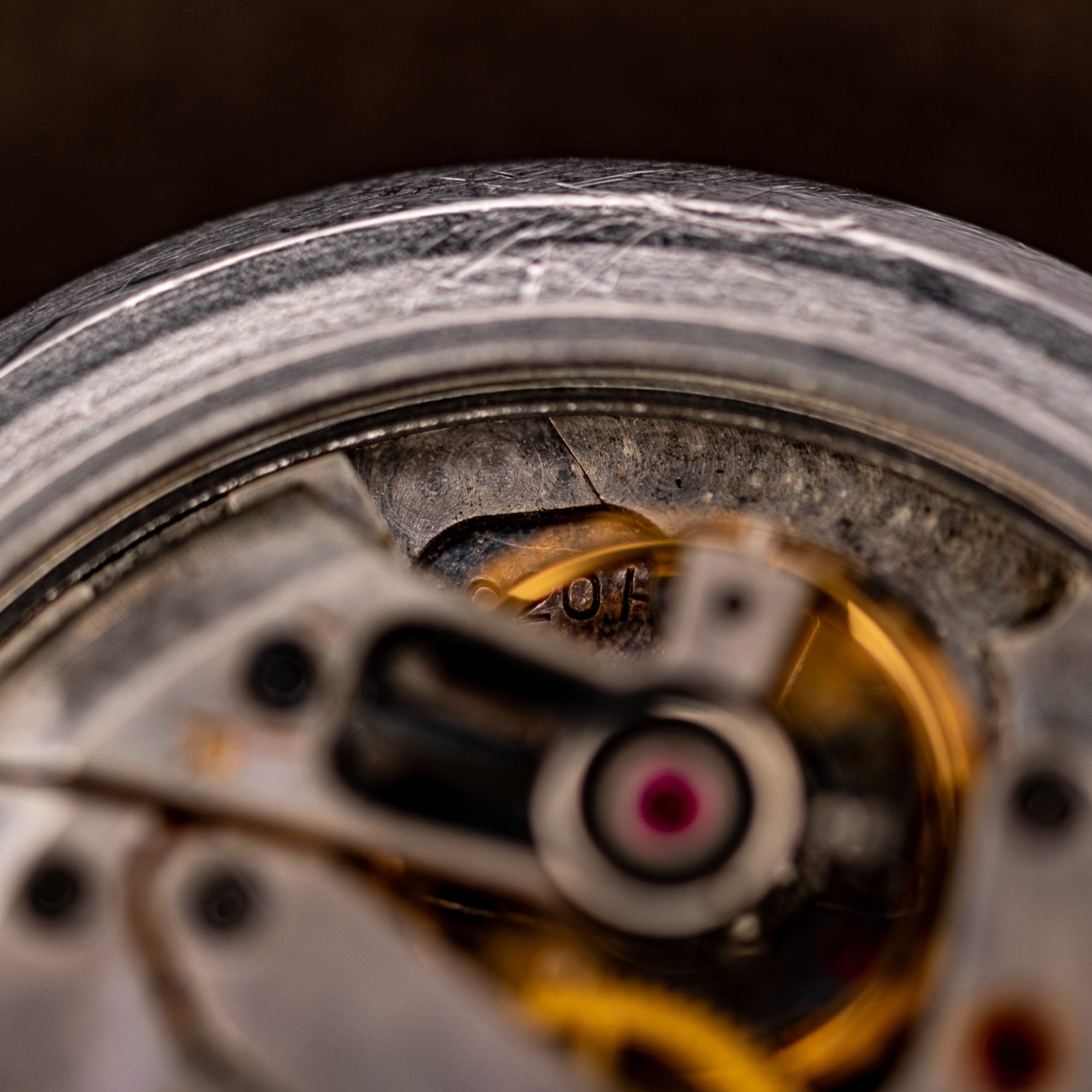
Under the back is what makes a vintage Eterna worth turning over: the caliber 965, hand-wound, ten and a half lignes, its bridge signed ETERNA in gilt with the serial 3110240 alongside, a shock-protected balance and jewels seated in gold chatons. There is no rotor, and the absence is the point. A self-winding movement has to carry an oscillating weight, and that weight costs height, so leaving it out is how a dress watch of this period stayed slim. Eterna kept hand-wound calibers in its catalogue alongside the automatics for decades afterward.
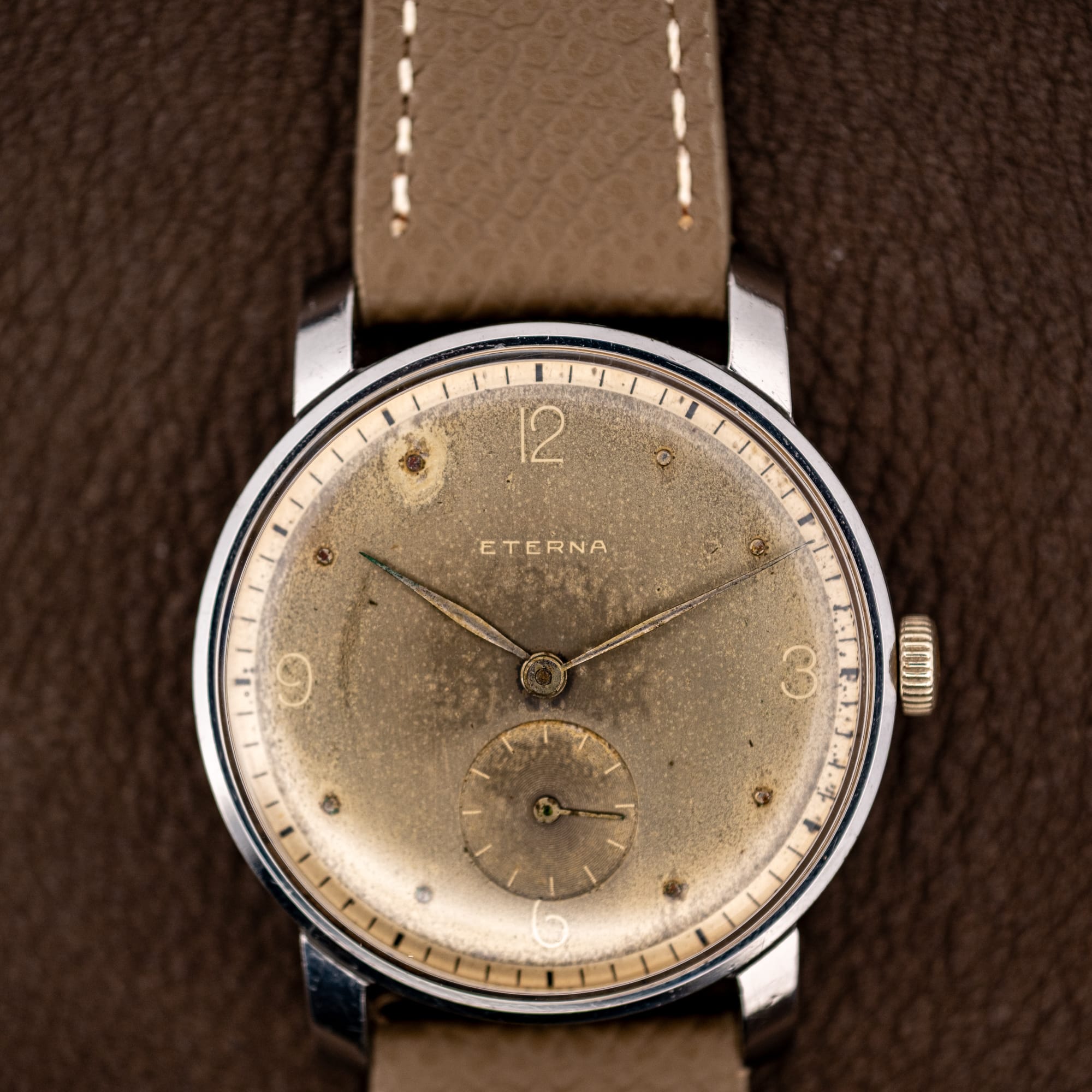
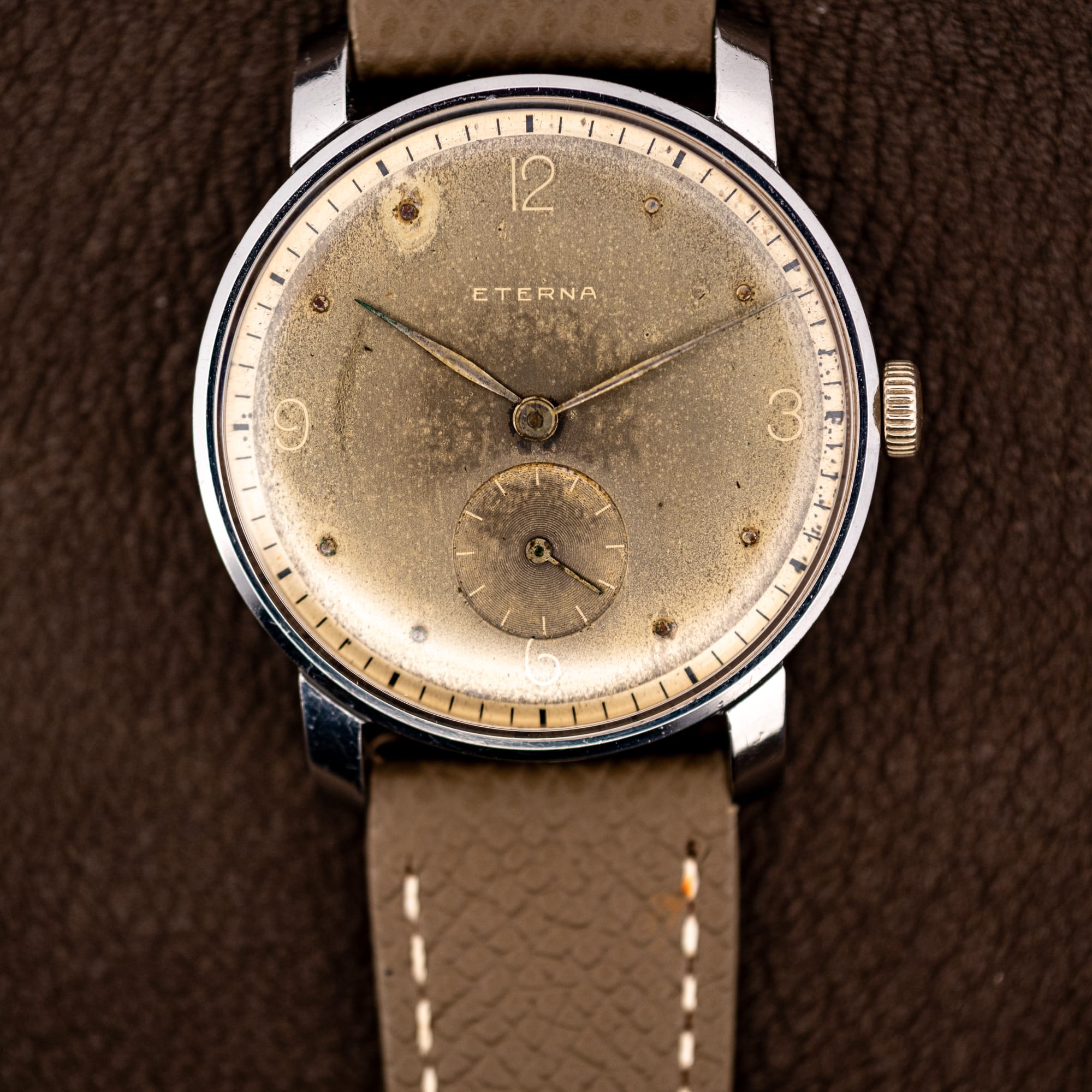
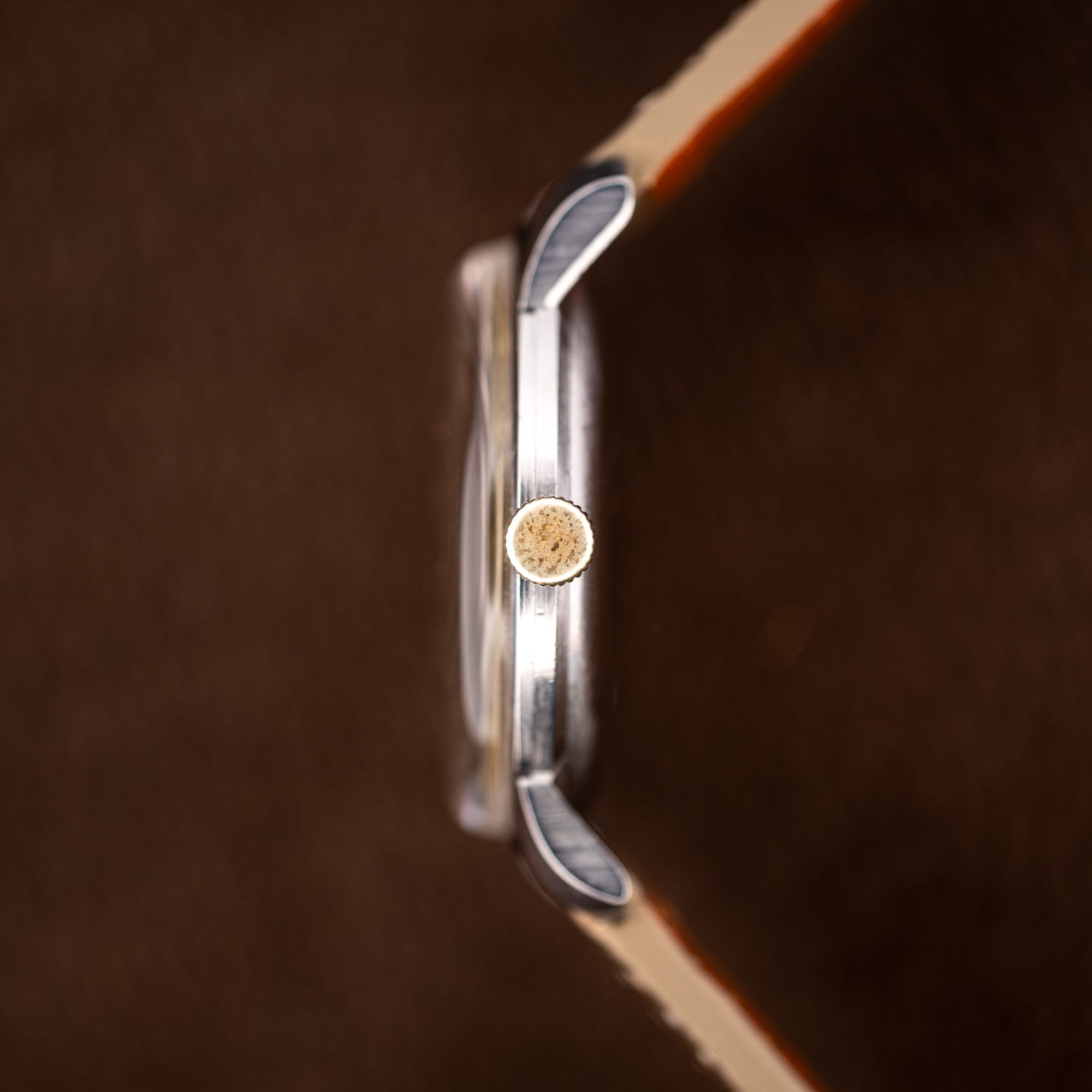
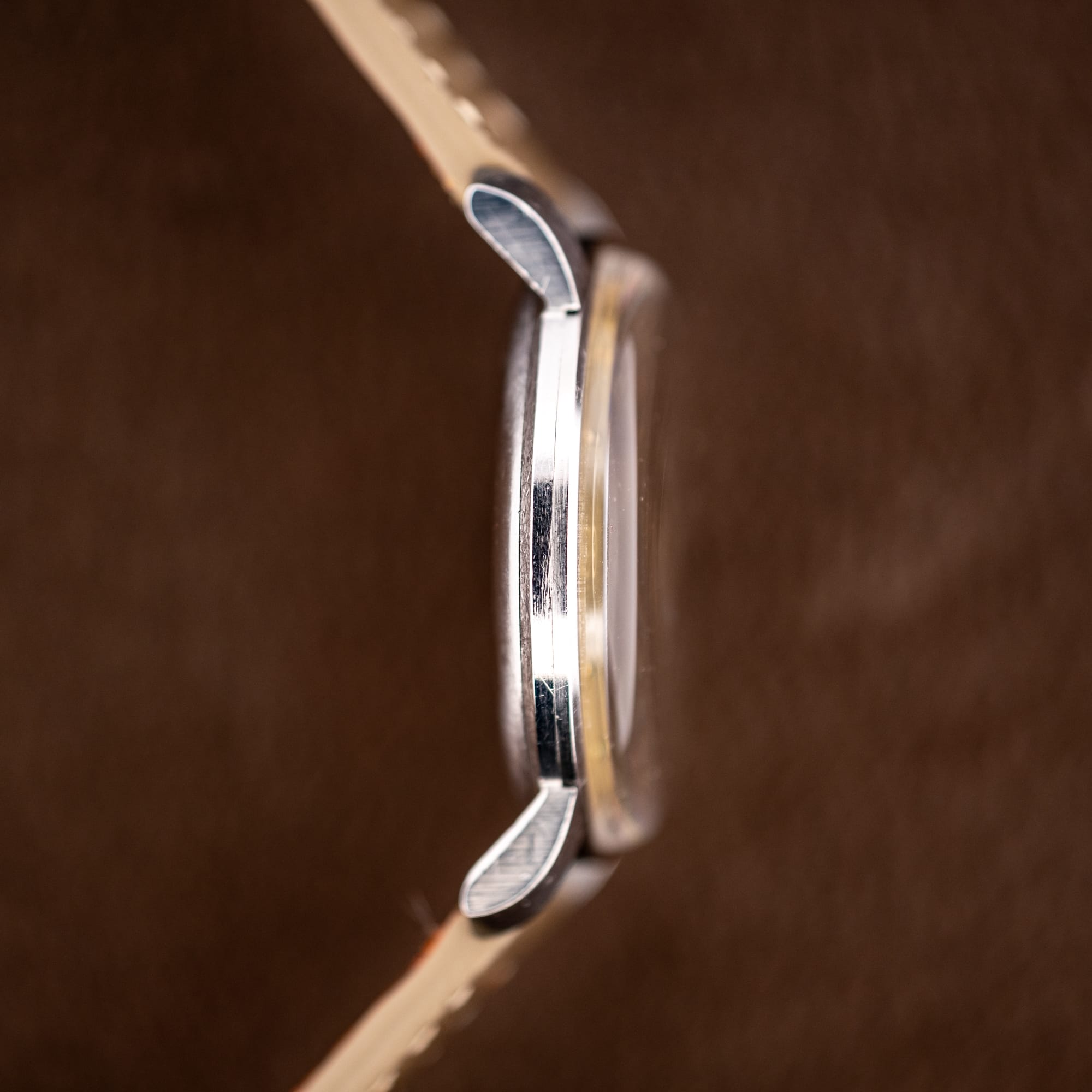
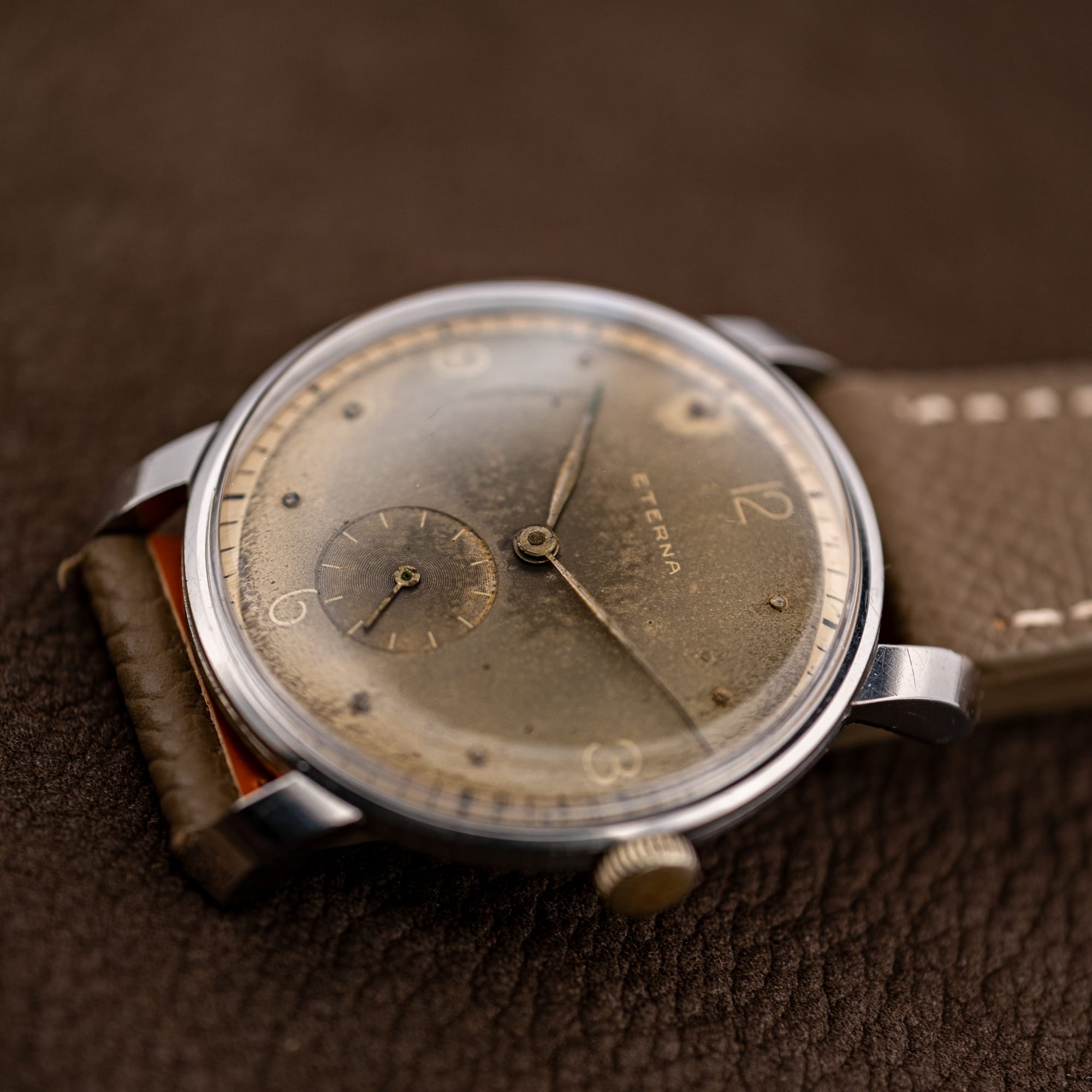
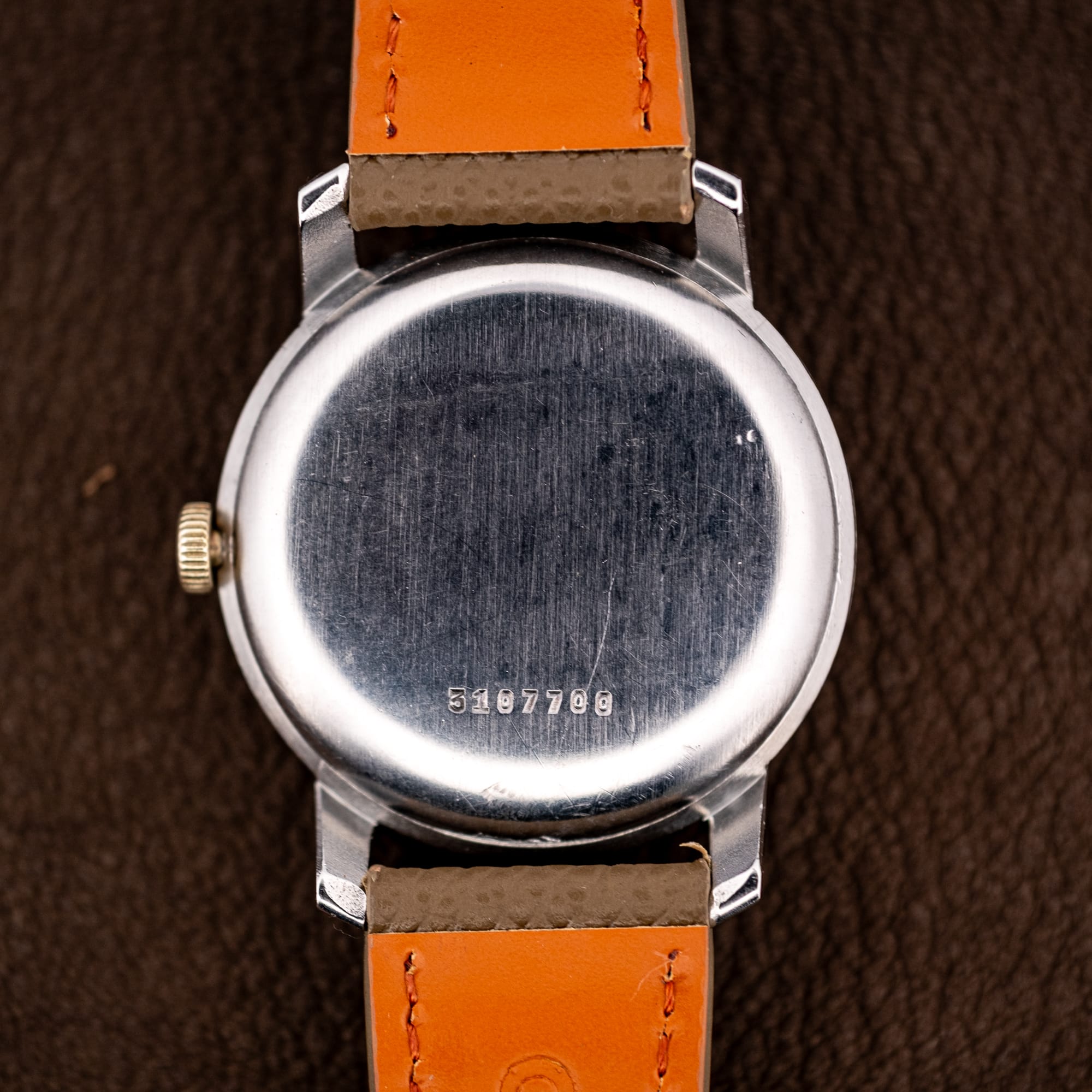
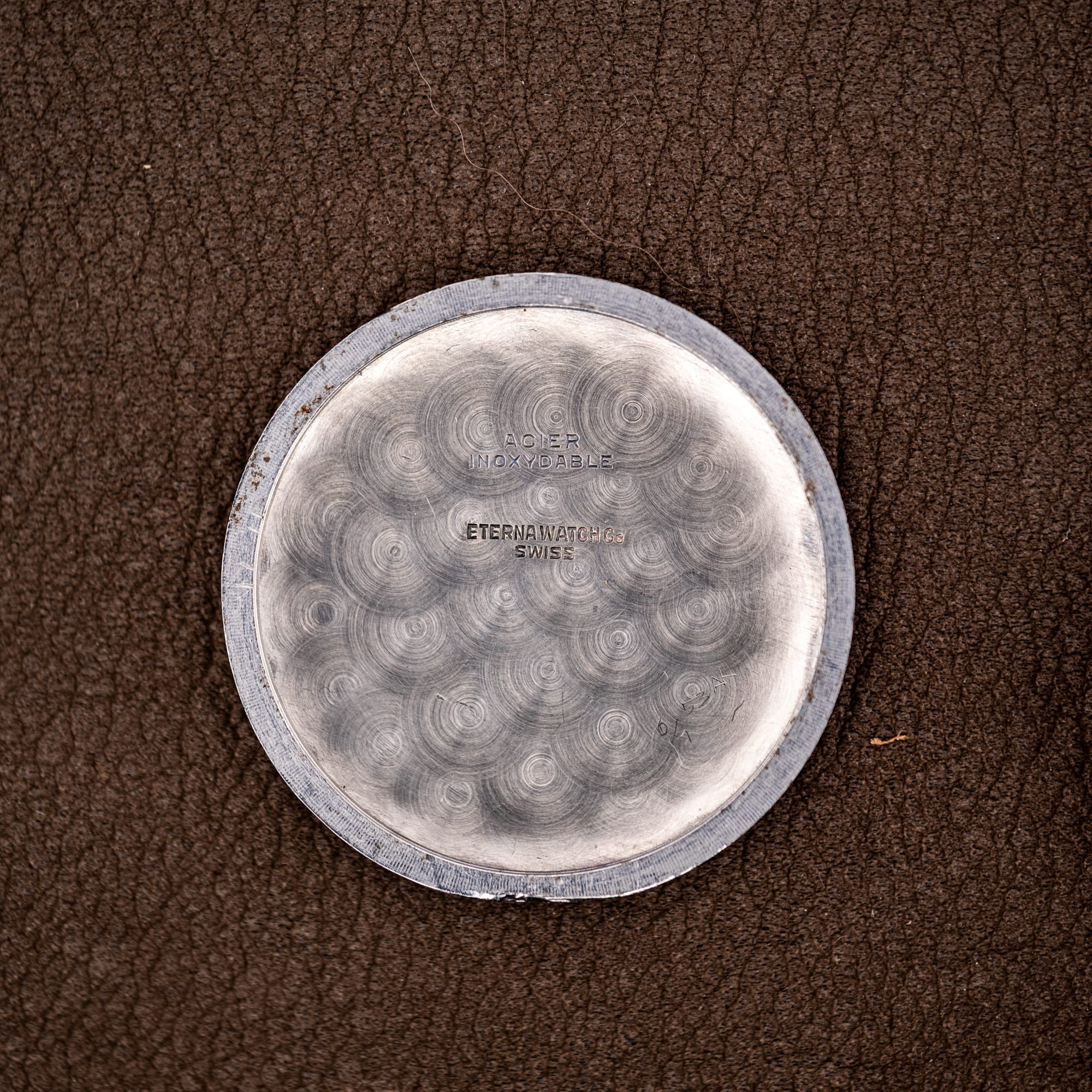
The case measures 34mm across, full size for a 1950s dress watch, when the going size ran roughly 33 to 35mm. The bezel is narrow and it spans 40mm lug tip to lug tip, so the dial does nearly all the work on 18mm lugs. Body and back are not the same metal here, and we will not pretend otherwise: a base metal case with a stainless steel back, stamped ACIER INOXYDABLE inside, a cluster of hand-scratched watchmaker’s marks beside it, the private shorthand a service technician leaves behind. The dial has gone somewhere no factory could have sent it, a warm taupe field speckled fine and even inside a cream chapter ring. Outlined Arabic numerals mark twelve, three, six and nine, the period lume plots have darkened to red-brown and one has bloomed a soft halo into the lacquer, and the lance hands carry a trace of green at their tips.
Serviced in-house at OTTUHR and backed by our 2-year mechanical warranty, on a taupe grained leather strap with our own buckle. A doctor and a schoolteacher started a workshop to make the parts nobody sees. This is what that looks like with the back off.