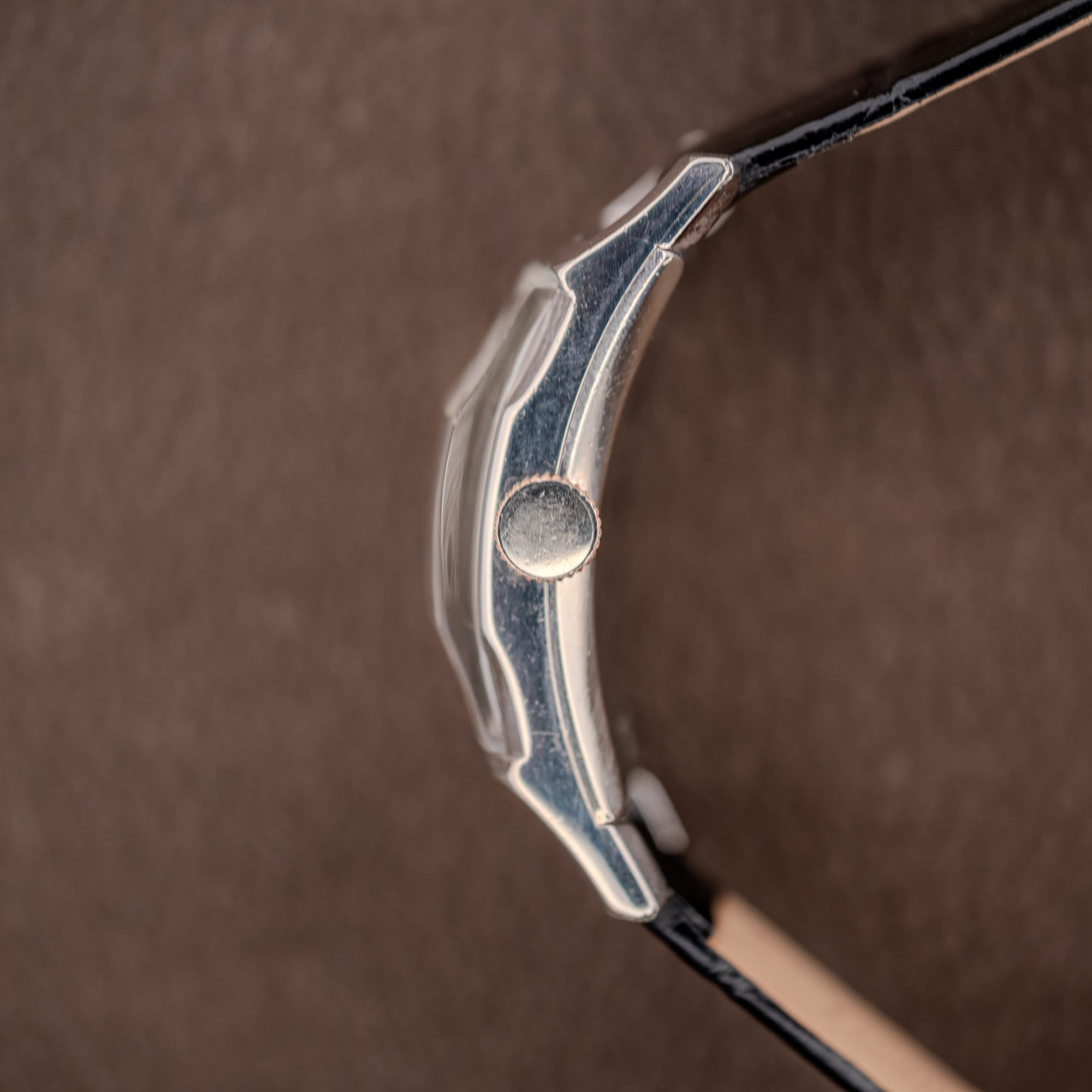
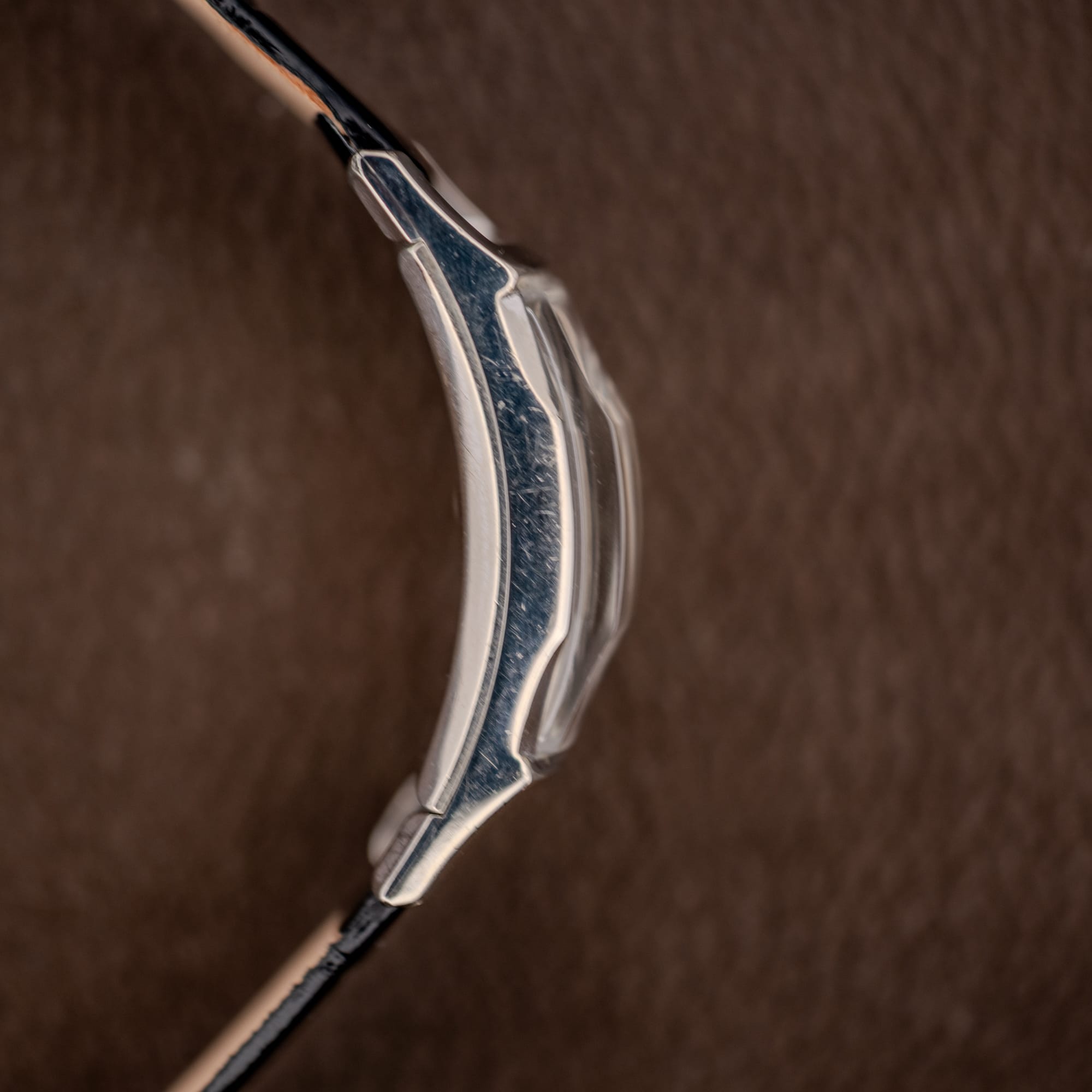
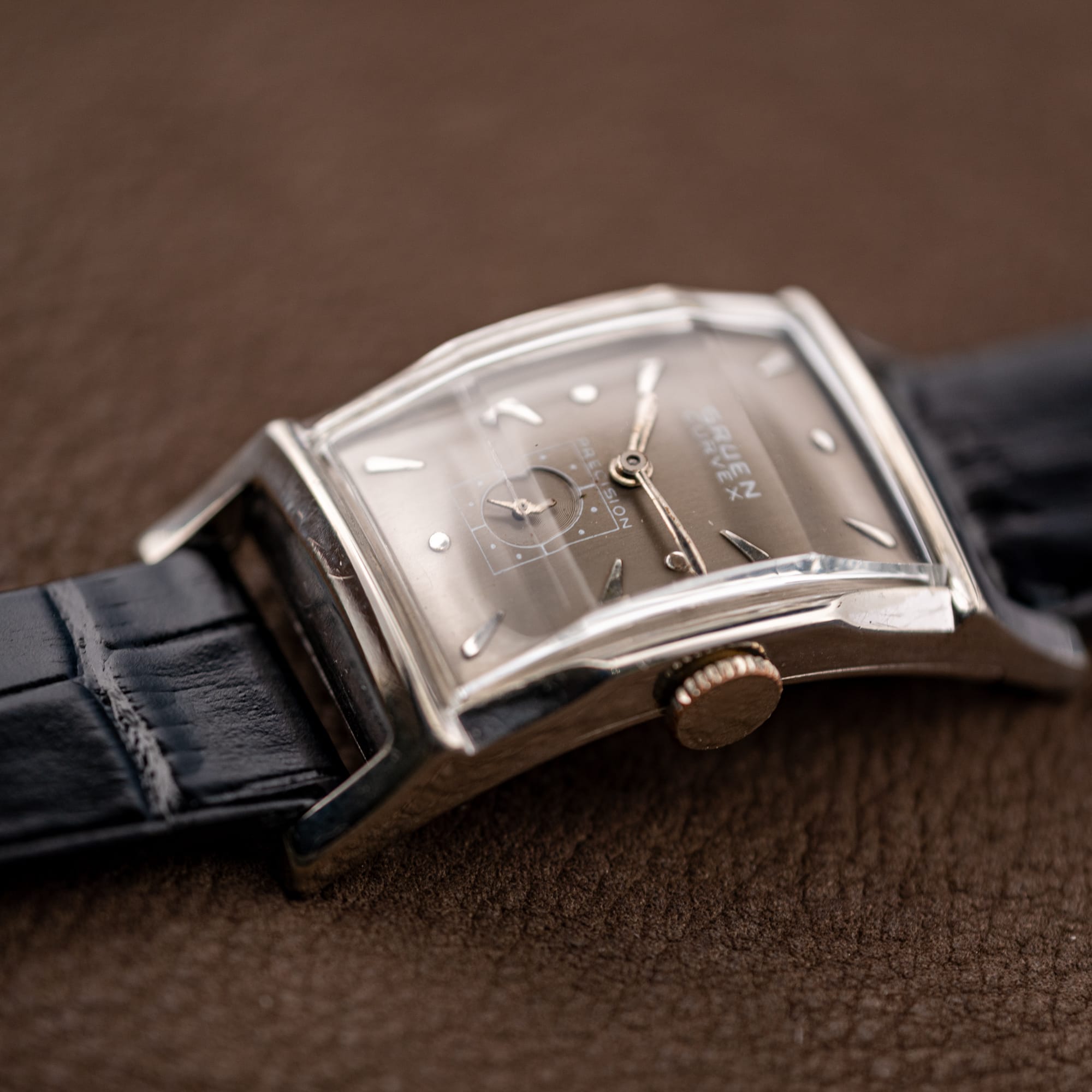
Anybody could bend a watch case in 1929. Bending what went inside it was the hard part, and that is the part Gruen patented. Working through Emile Frey, its agent in Bienne, the company filed in Switzerland that April and in the United States that December, and the grant came through on 26 April 1932 as US patent 1,855,952. It covered a movement whose gear train was laid out along the curve, not a curved case, which any case maker could already stamp. That single distinction is why a Gruen Curvex Precision like this one exists, and why for as long as the patent held almost nothing else did.
The competitive effect was blunt. A rival who wanted a curved watch had to drop a small flat caliber into a bent shell and leave the rest of the space hollow, while Gruen could fill the curve with movement, and a bigger movement is a more reliable one. That was a good thing to own through the Depression, and Gruen owned it for the rest of its best years. The first Curvex reached the market in 1935 on the caliber 311, and only four movements were ever built as true Curvex calibers: the 311, the 330 of 1937, the 440 of 1940, and the 370 of 1948. Nothing else the company made qualifies, including the 500 series it went on selling alongside them.
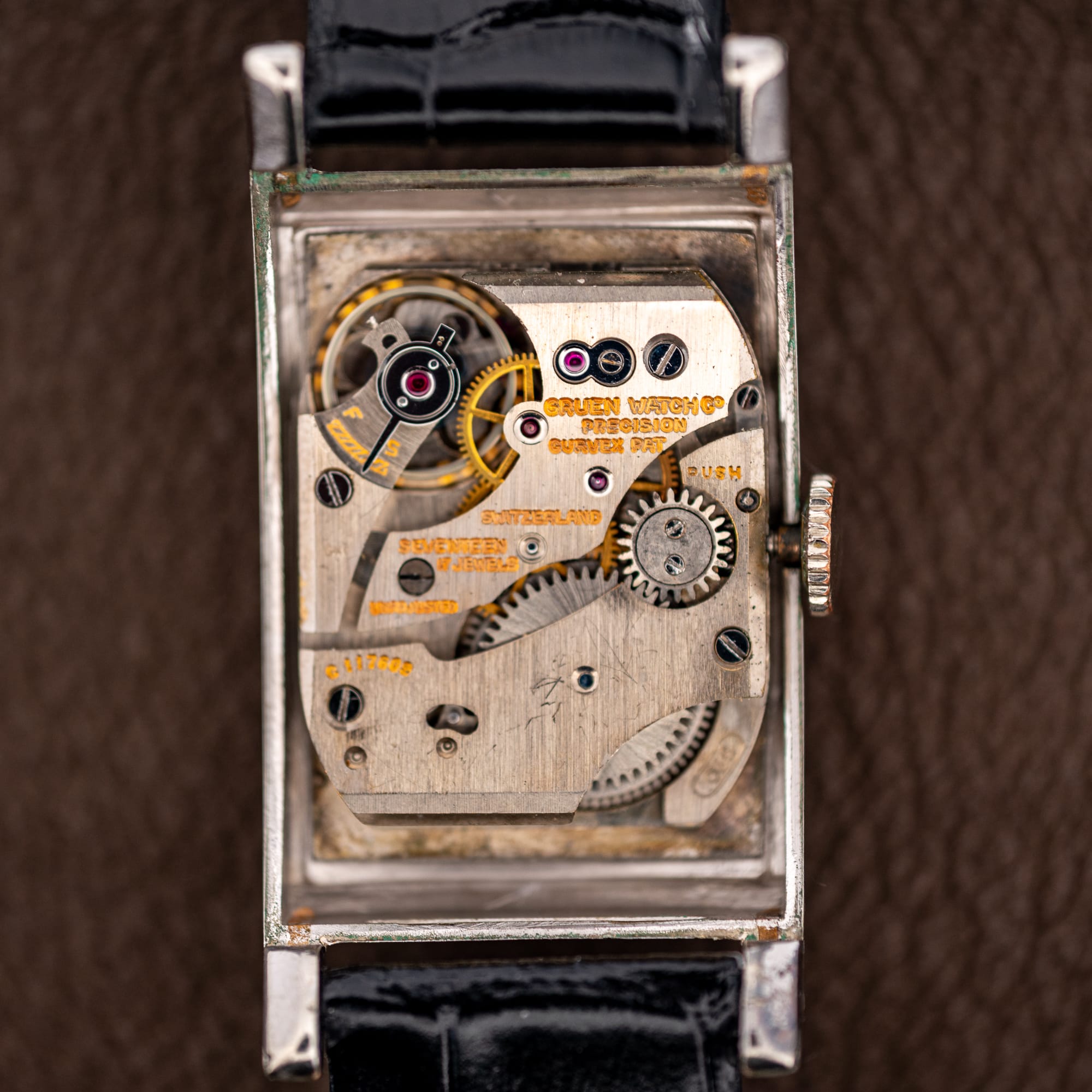
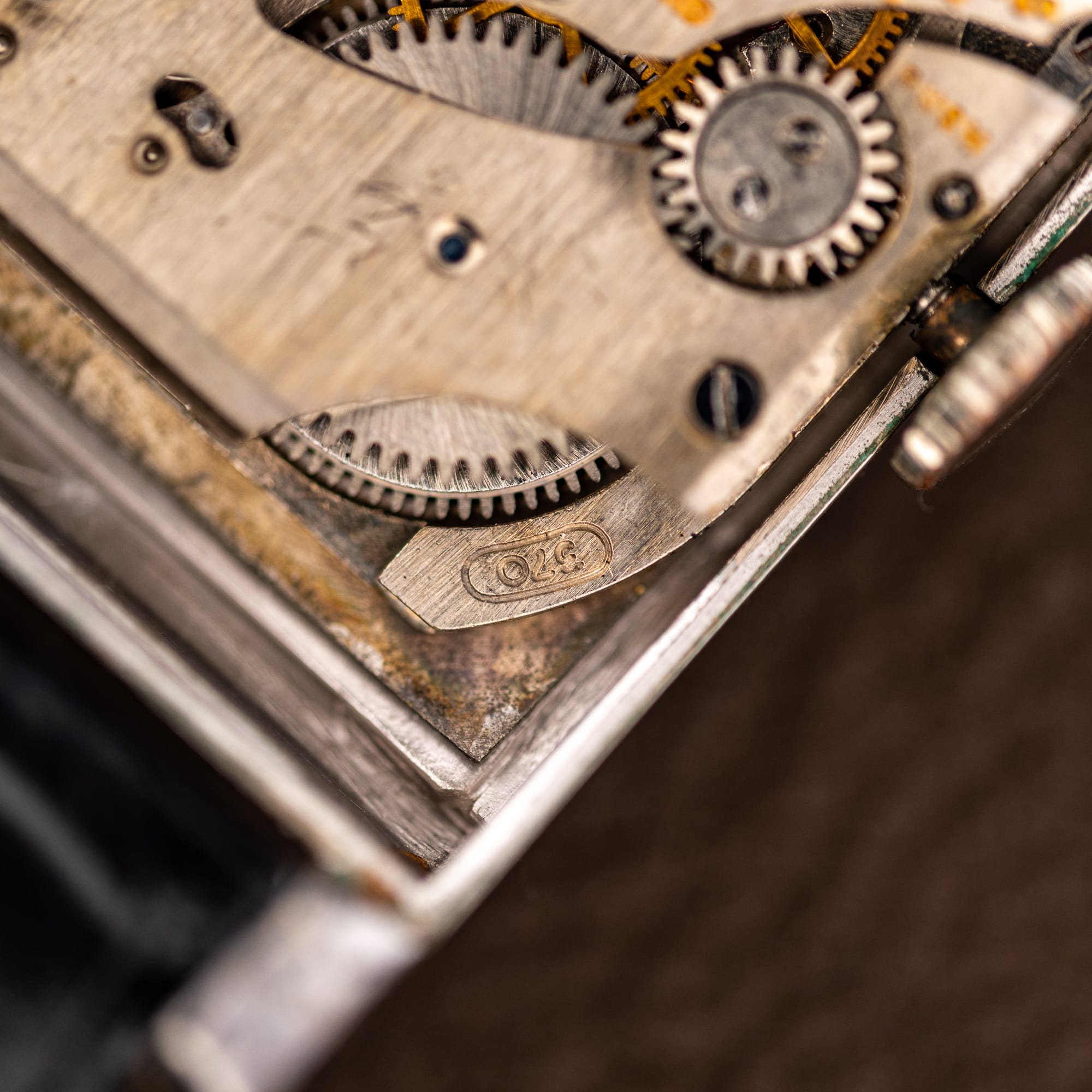
The 370 is the one that closed the series. Shorter and squarer where the 1930s calibers had been long and thin, it took up improved features of the original design, even though most of its gear train stayed interchangeable with the 440 it overlapped, and it remained in production into the mid 1950s. Nineteen years after that filing, this is where the idea had settled. Under the caseback, the claim is still printed across the bridge in gold: CURVEX PAT. The movement beneath is rectangular and reaches corner to corner, which is the whole patent made visible in about two seconds. It also reads UNADJUSTED, which we will state plainly, because the dial above it says PRECISION. That was Gruen’s grade name inside the line rather than a timing certificate, and the movement is candid about the difference.
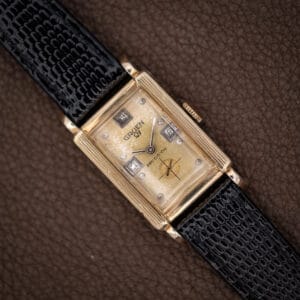
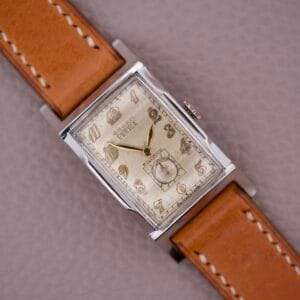
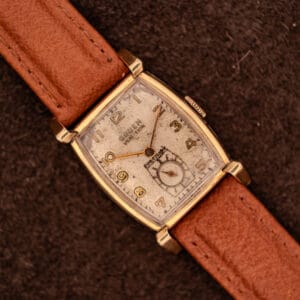
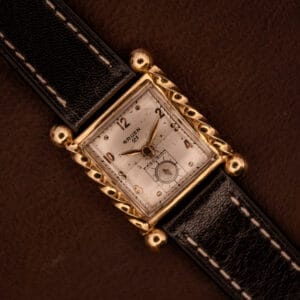
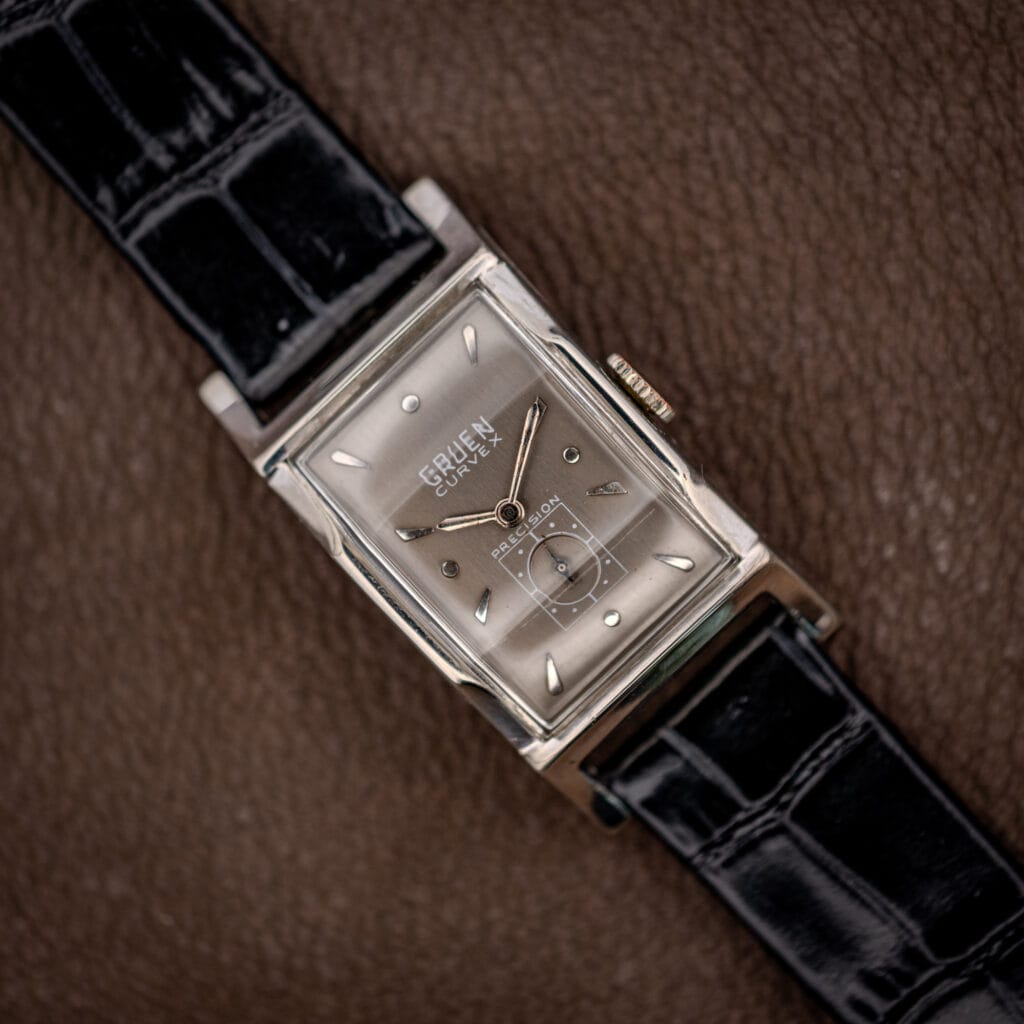
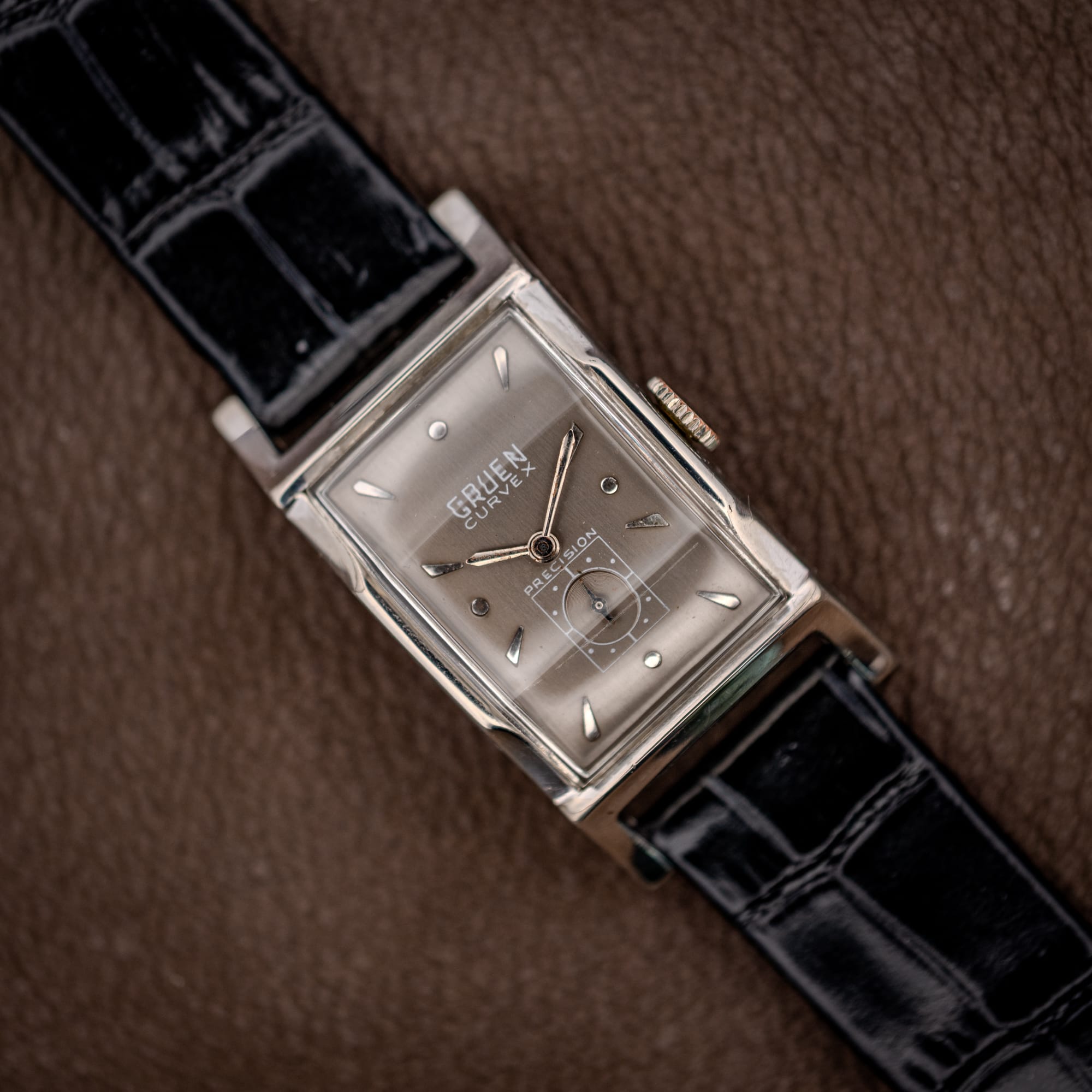
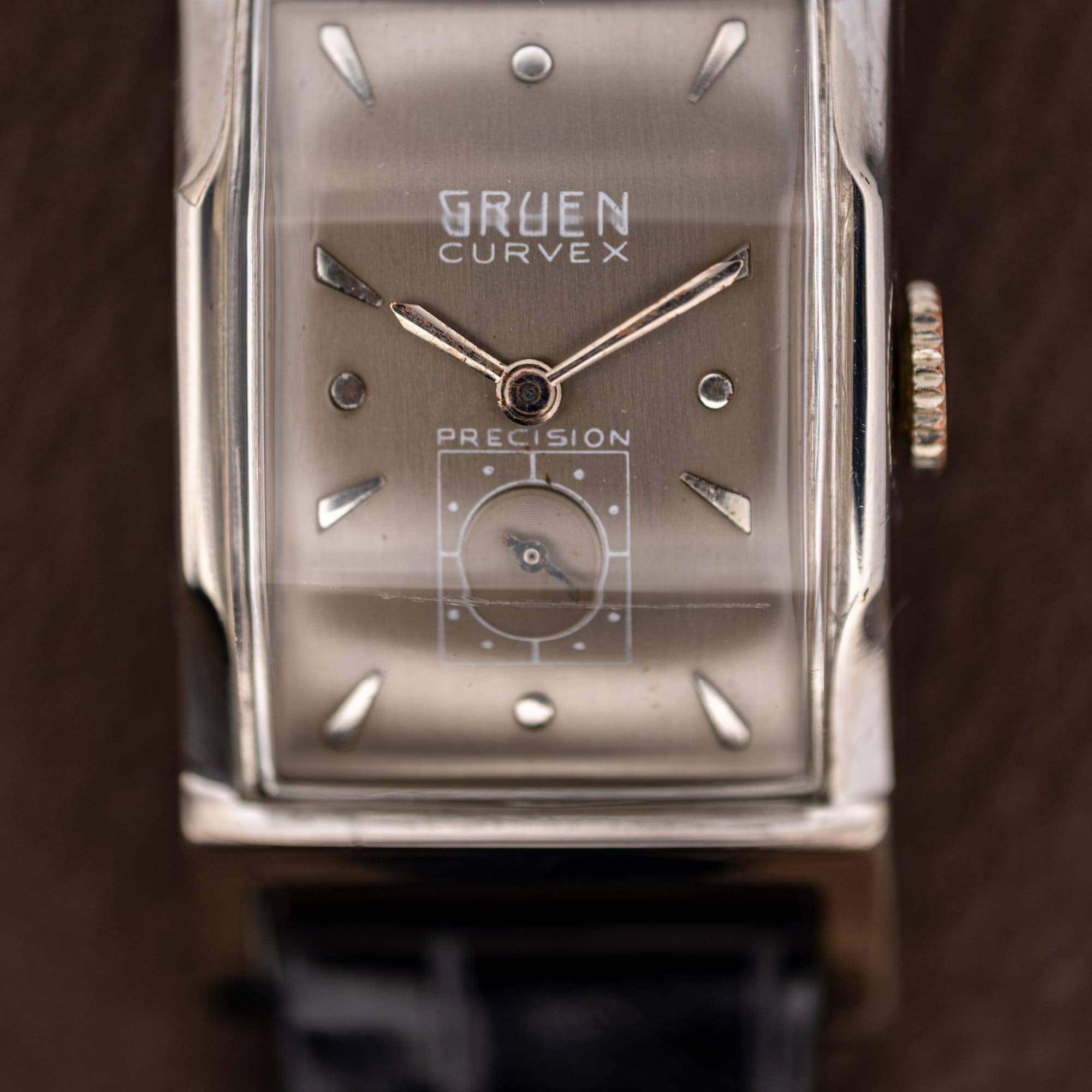
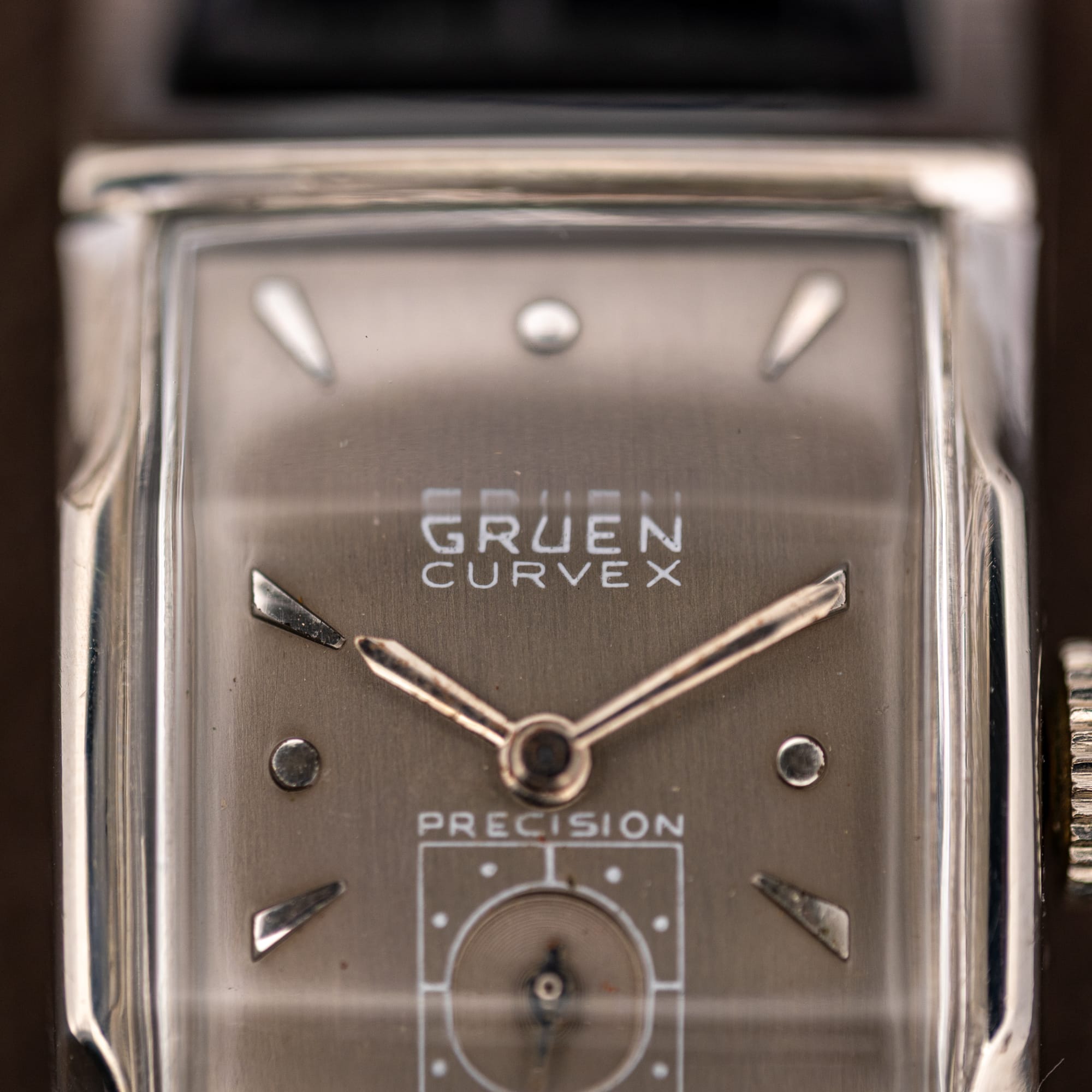
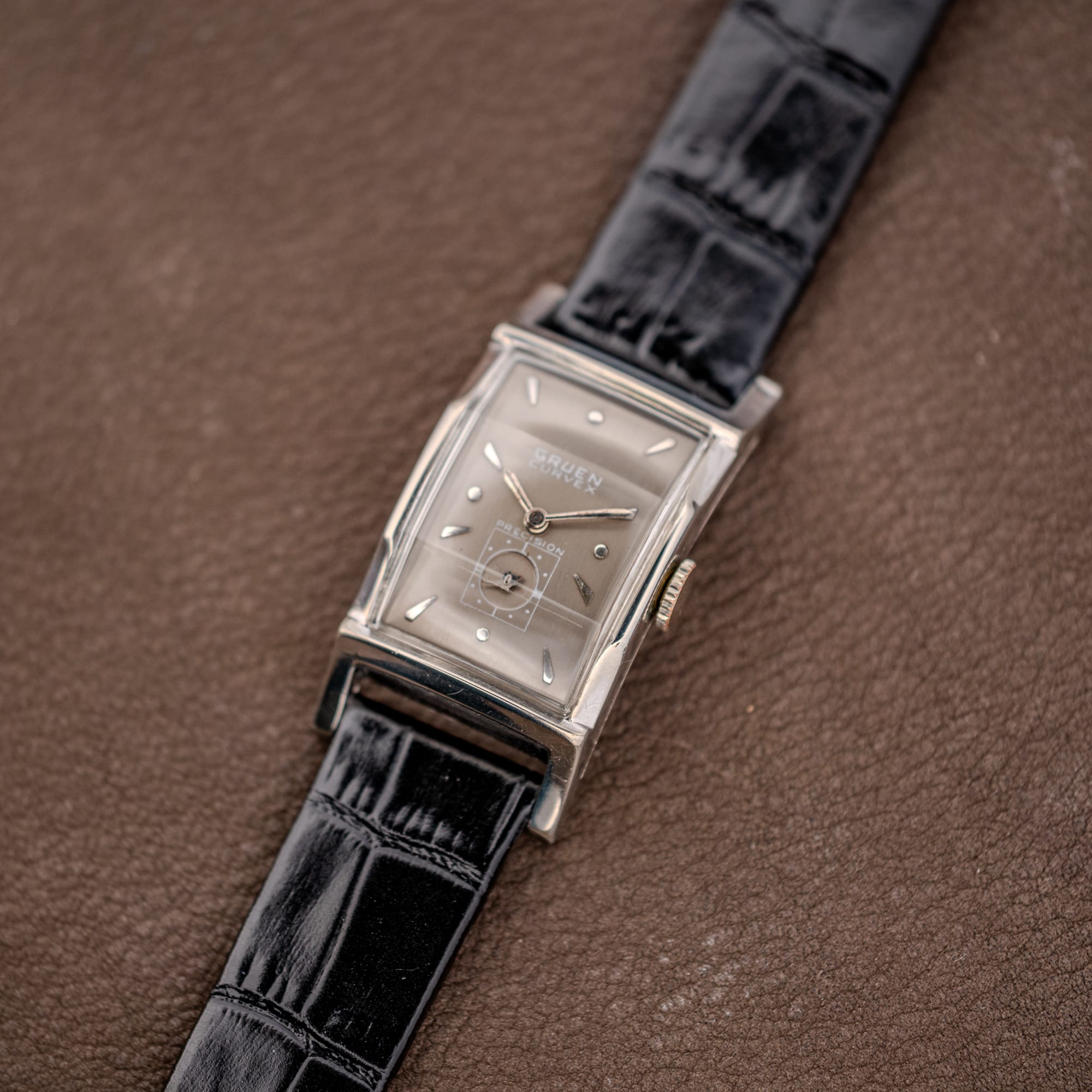
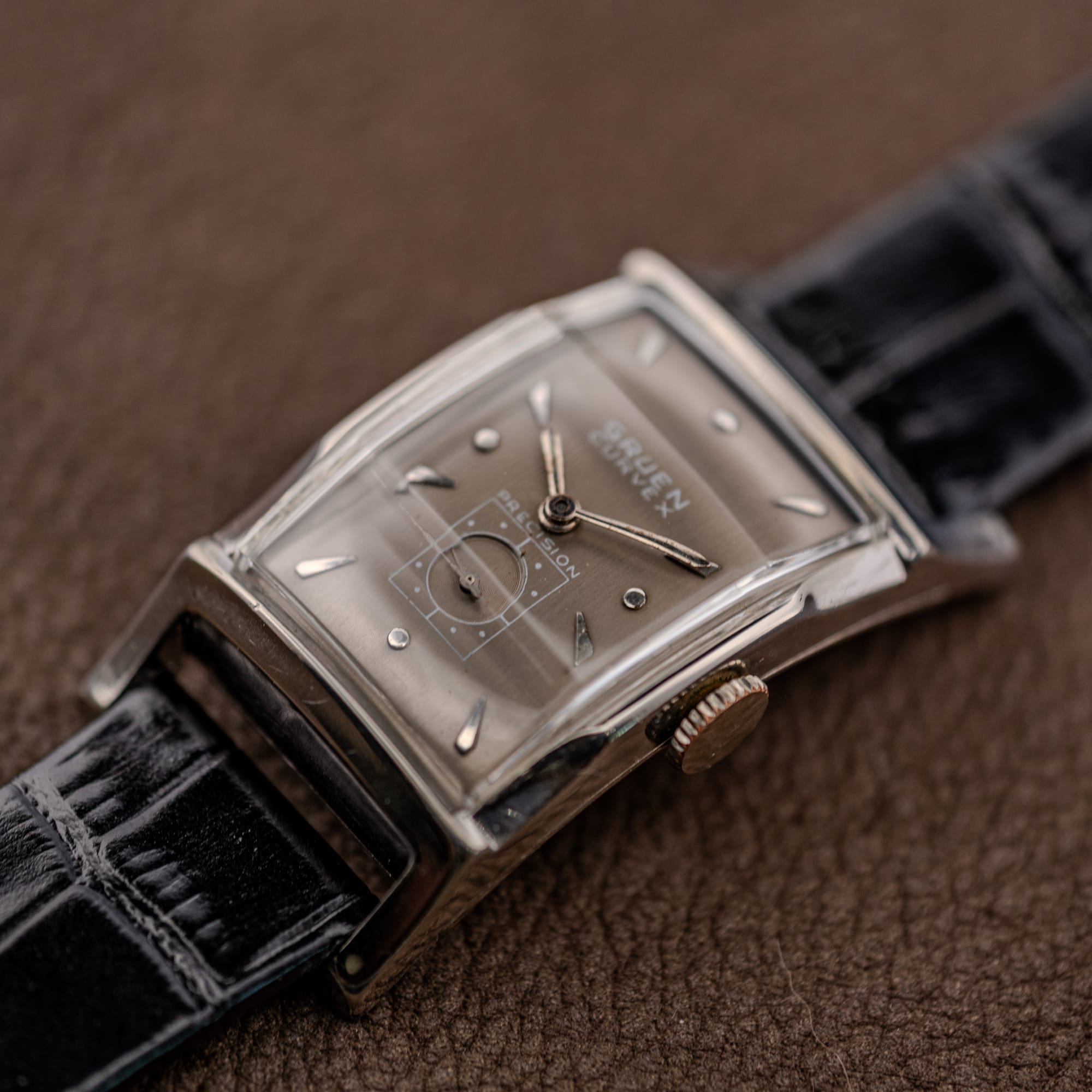
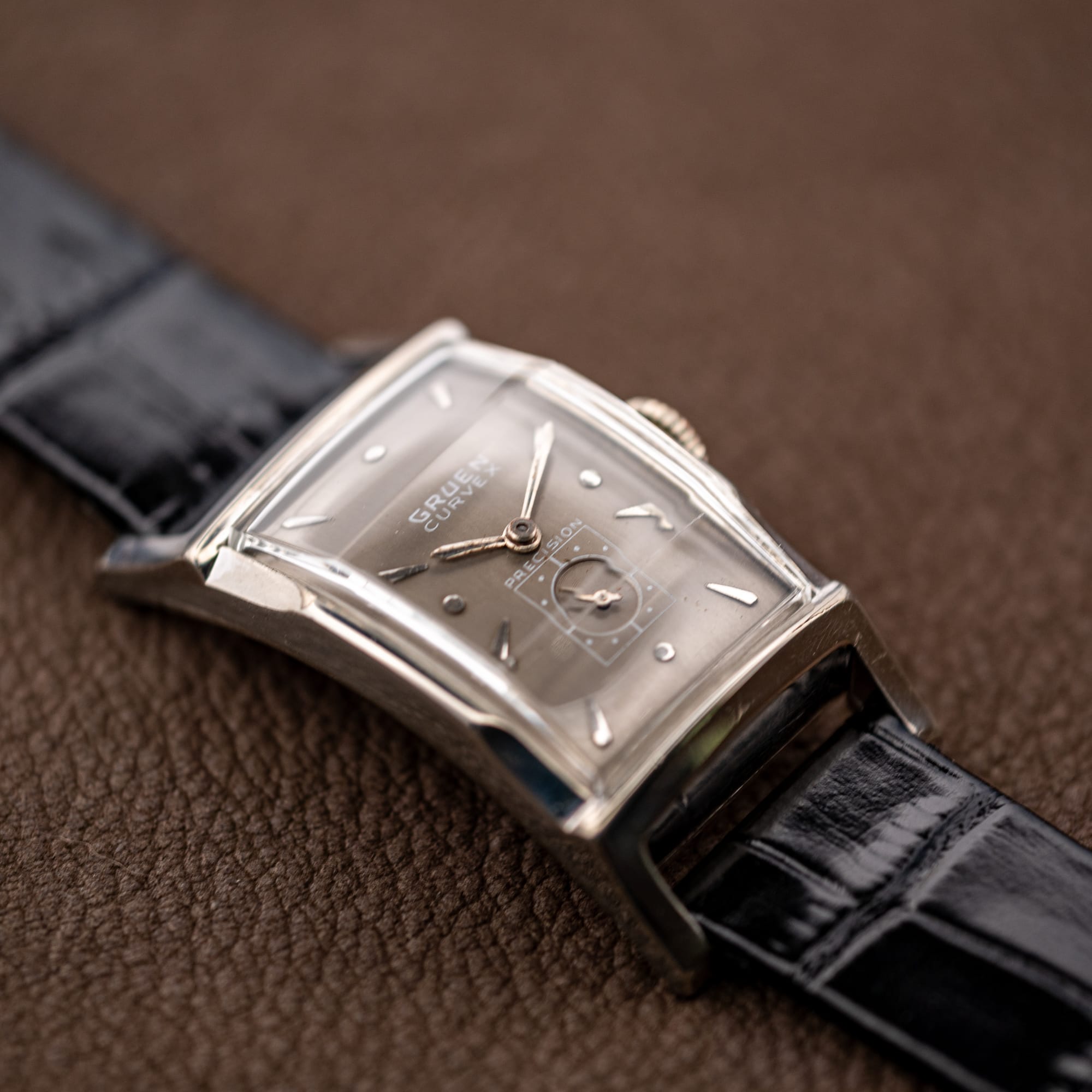
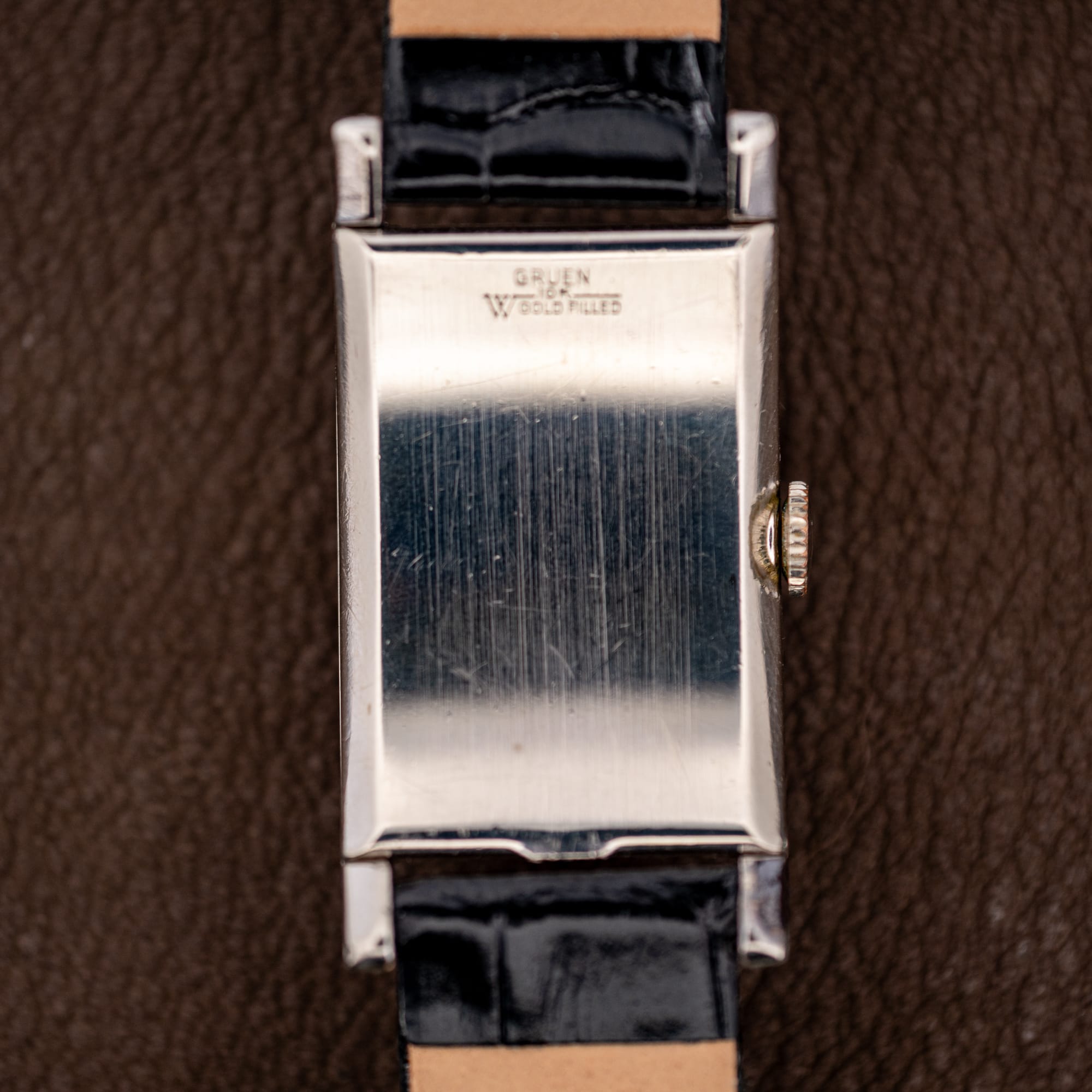
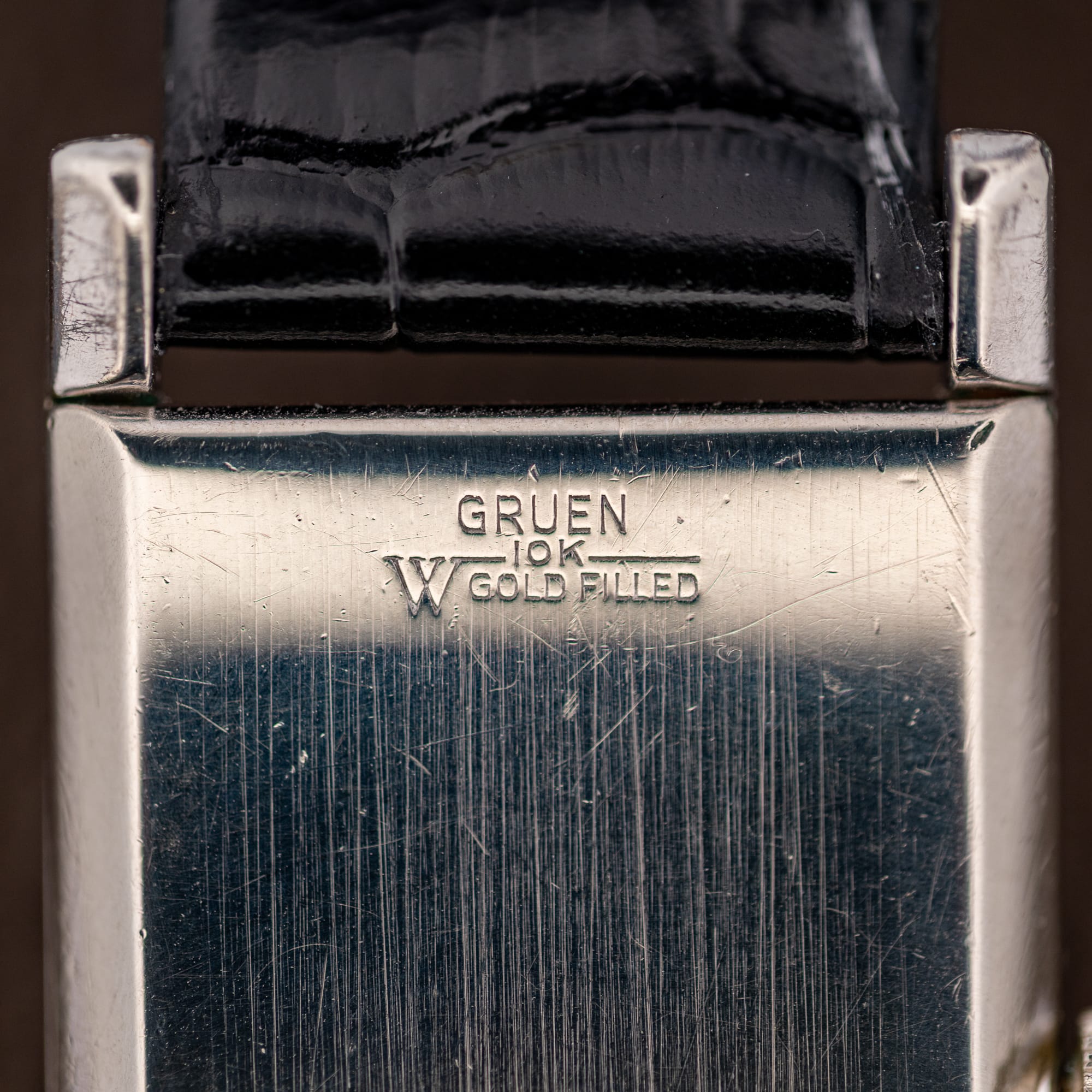
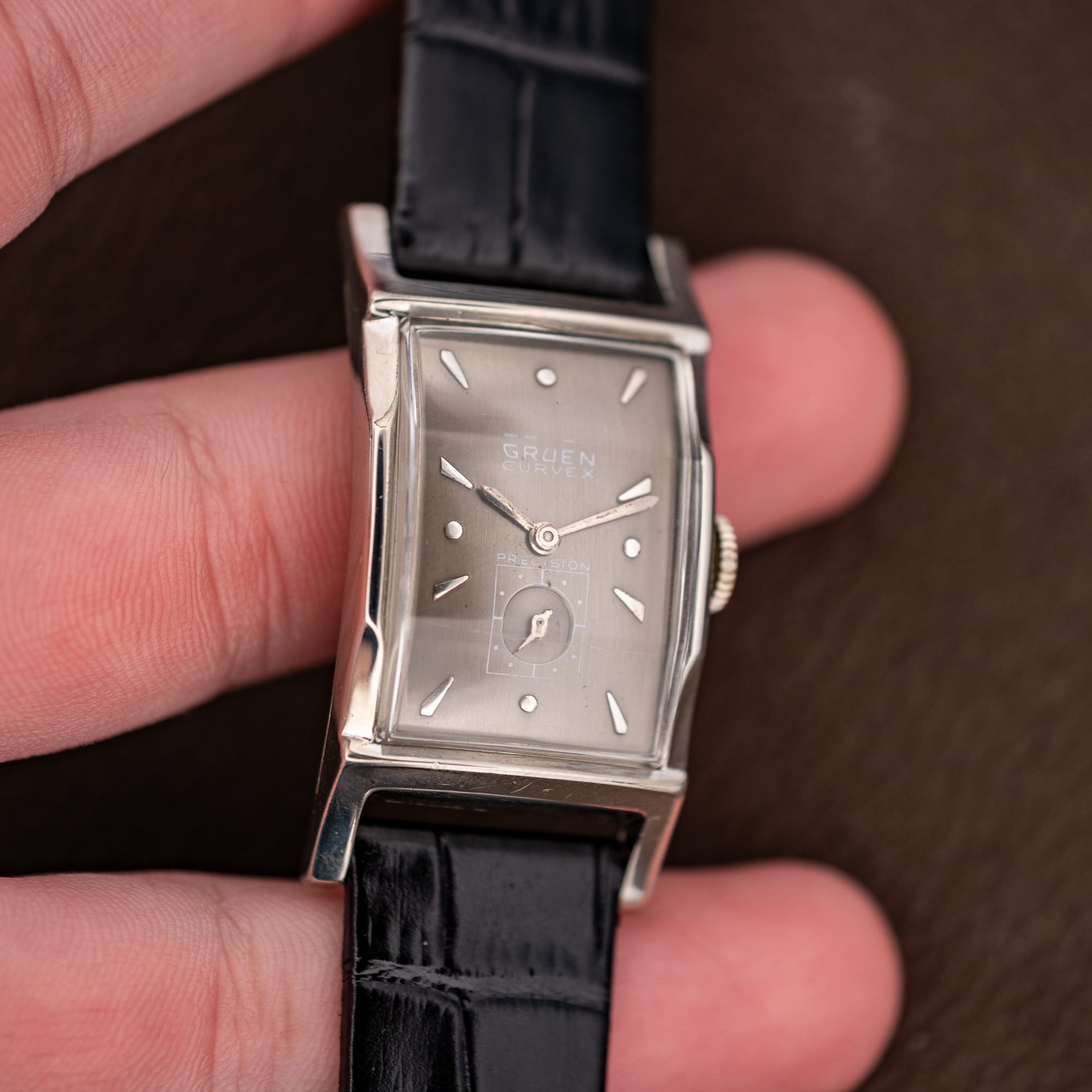
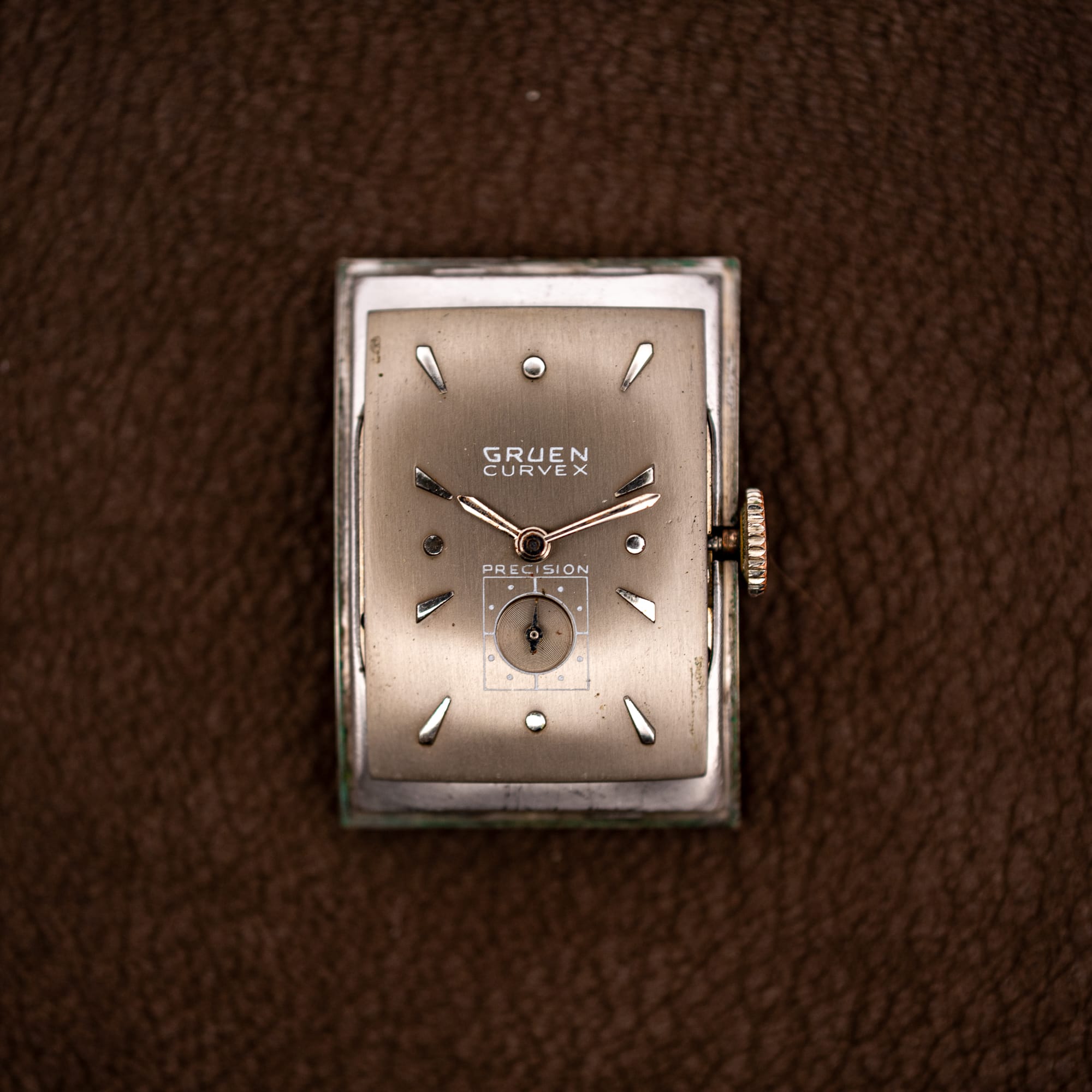
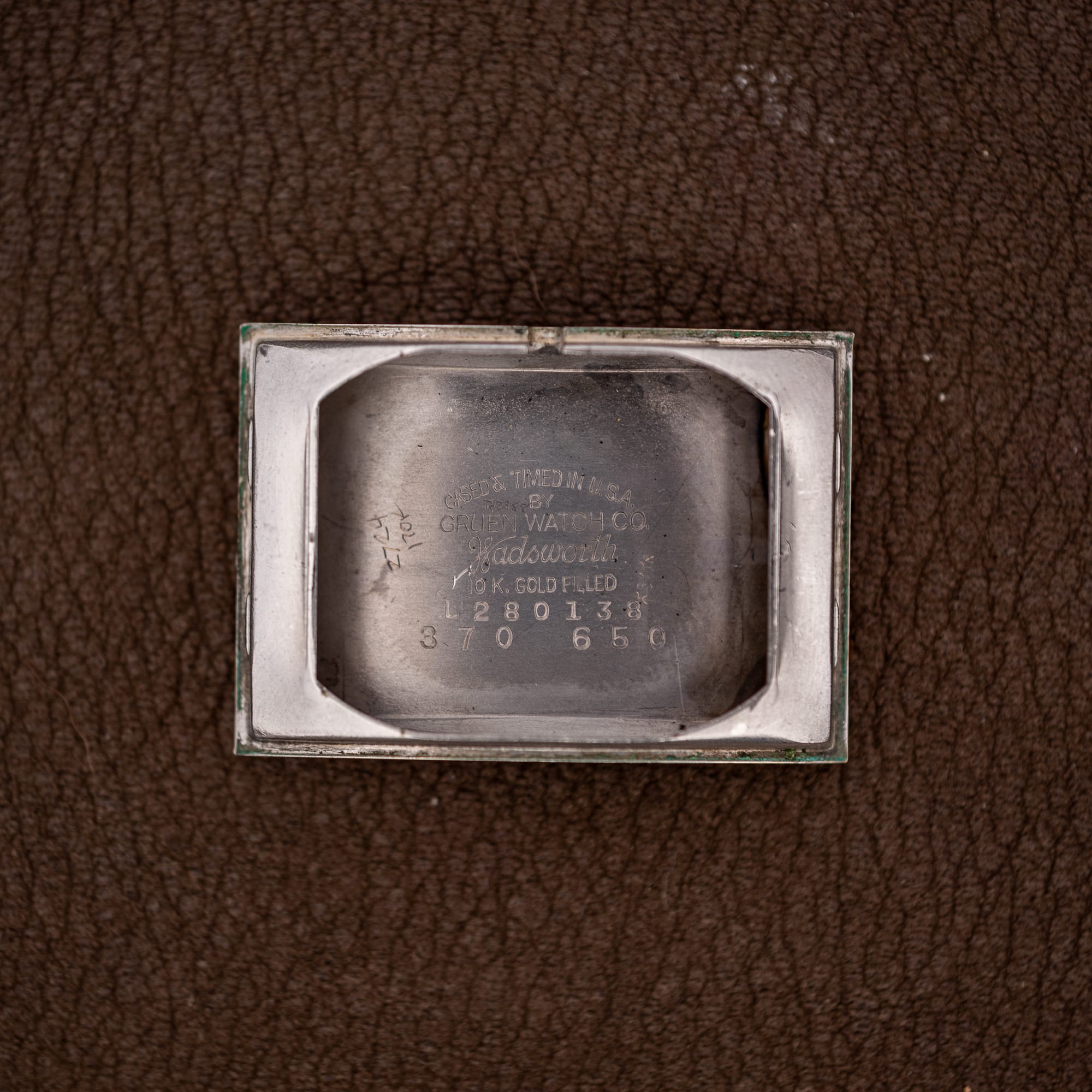
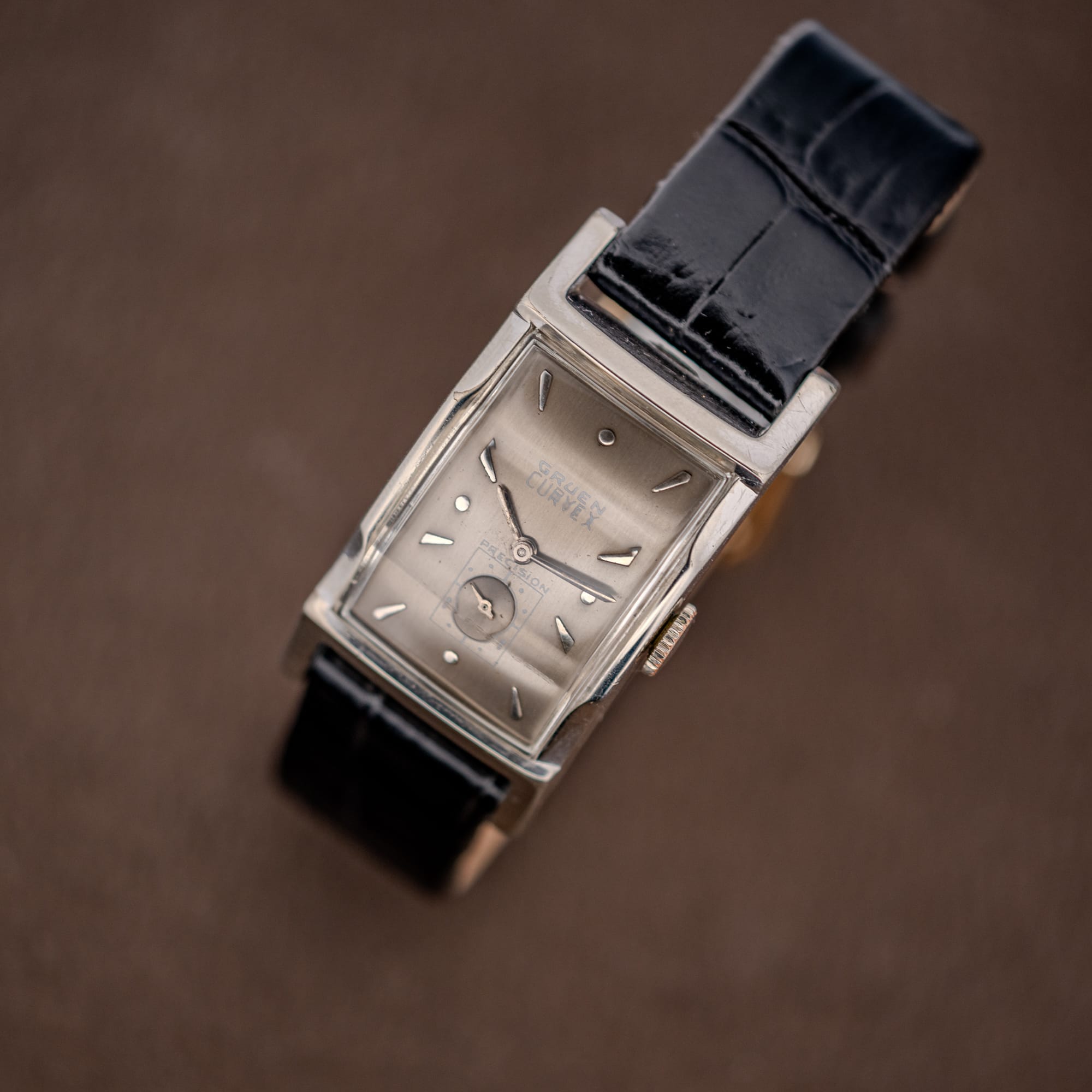
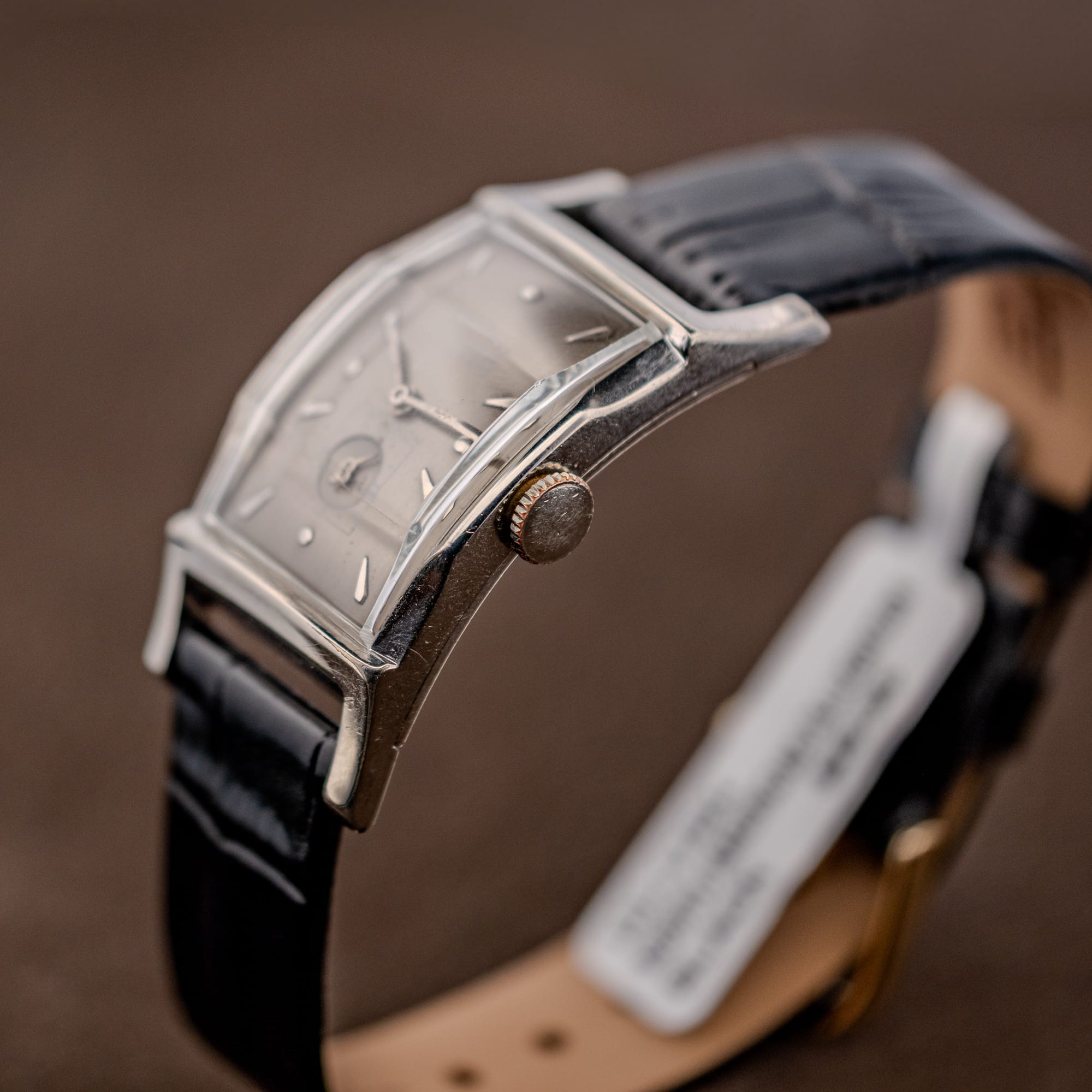
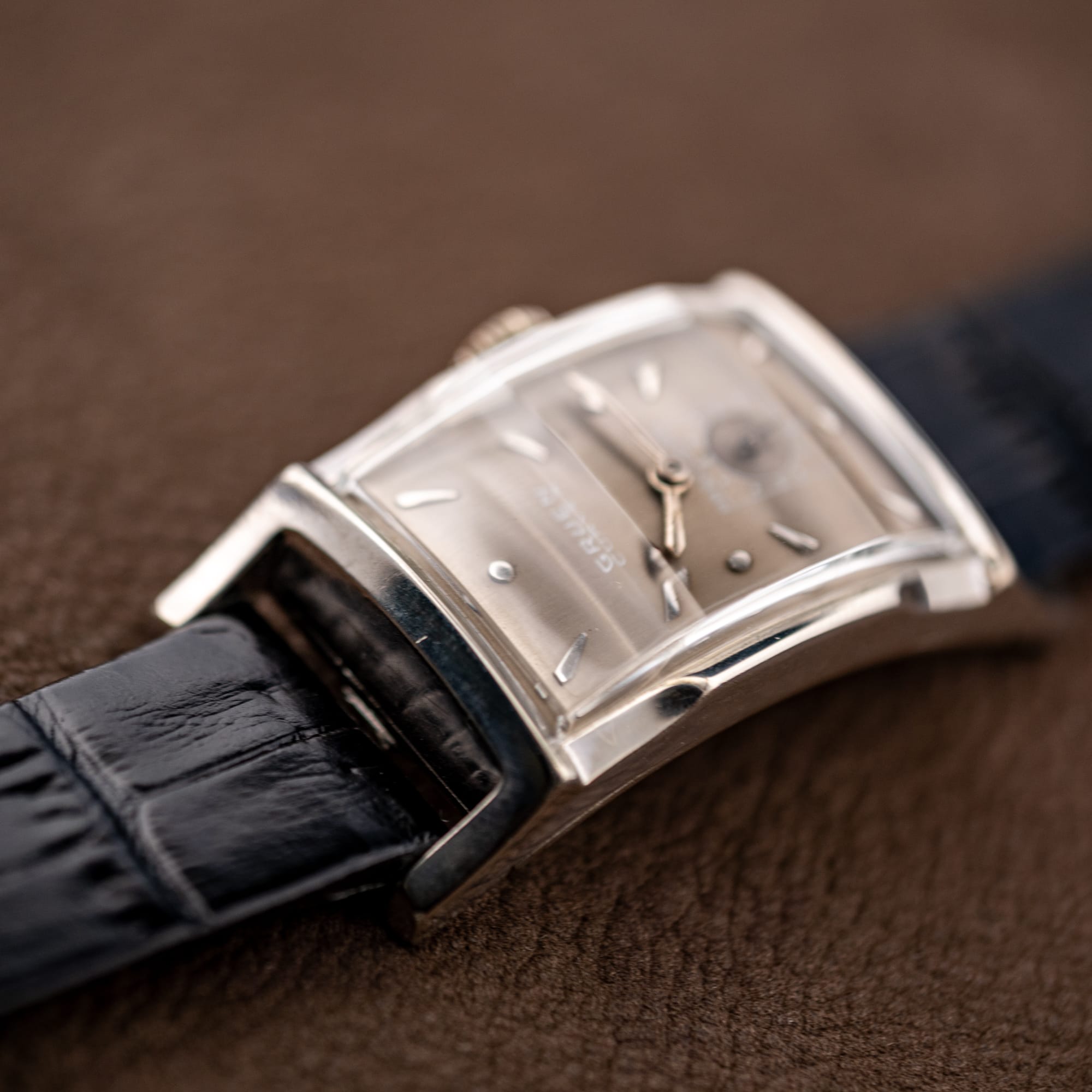
The inner caseback carries the other half of the company: CASED & TIMED IN U.S.A. BY GRUEN WATCH CO., signed in script by Wadsworth, the American case maker, with 370 650 stamped beneath it. A Swiss movement in an American case. The case is 10k white gold filled, 32mm across and 40mm top to bottom, a stepped and faceted rectangle with notched flanks and lugs that turn down hard into the strap. The dial is brushed anthracite and shades deeper where it curves away at the top and bottom, with applied darts at the eight off positions and round dots at the quarters. The subsidiary seconds sits low inside an engraved rectangle dotted at its corners, the one piece of undiluted 1930s geometry the design held onto. The hands have gone mottled and dark, the back wears seventy-odd years of fine hairlines, there is a little green oxidation around the inner rim, and a watchmaker’s scratched marks inside record the service visits. We have left all of it alone.
Serviced in-house at OTTUHR and backed by our 2-year mechanical warranty, on a black leather strap. Gruen’s hold on the idea expired a long time ago. The curve it bought is still doing the work.