
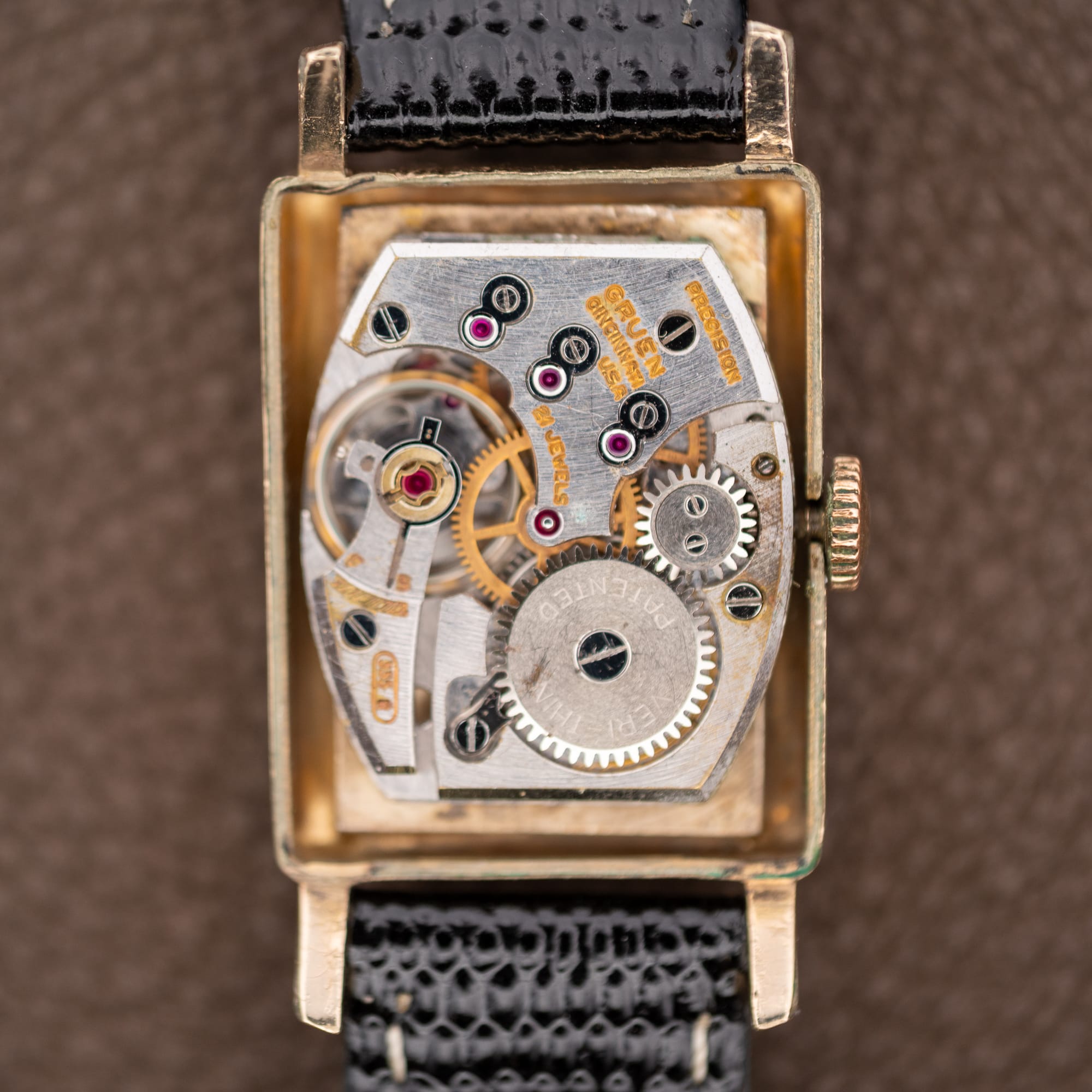
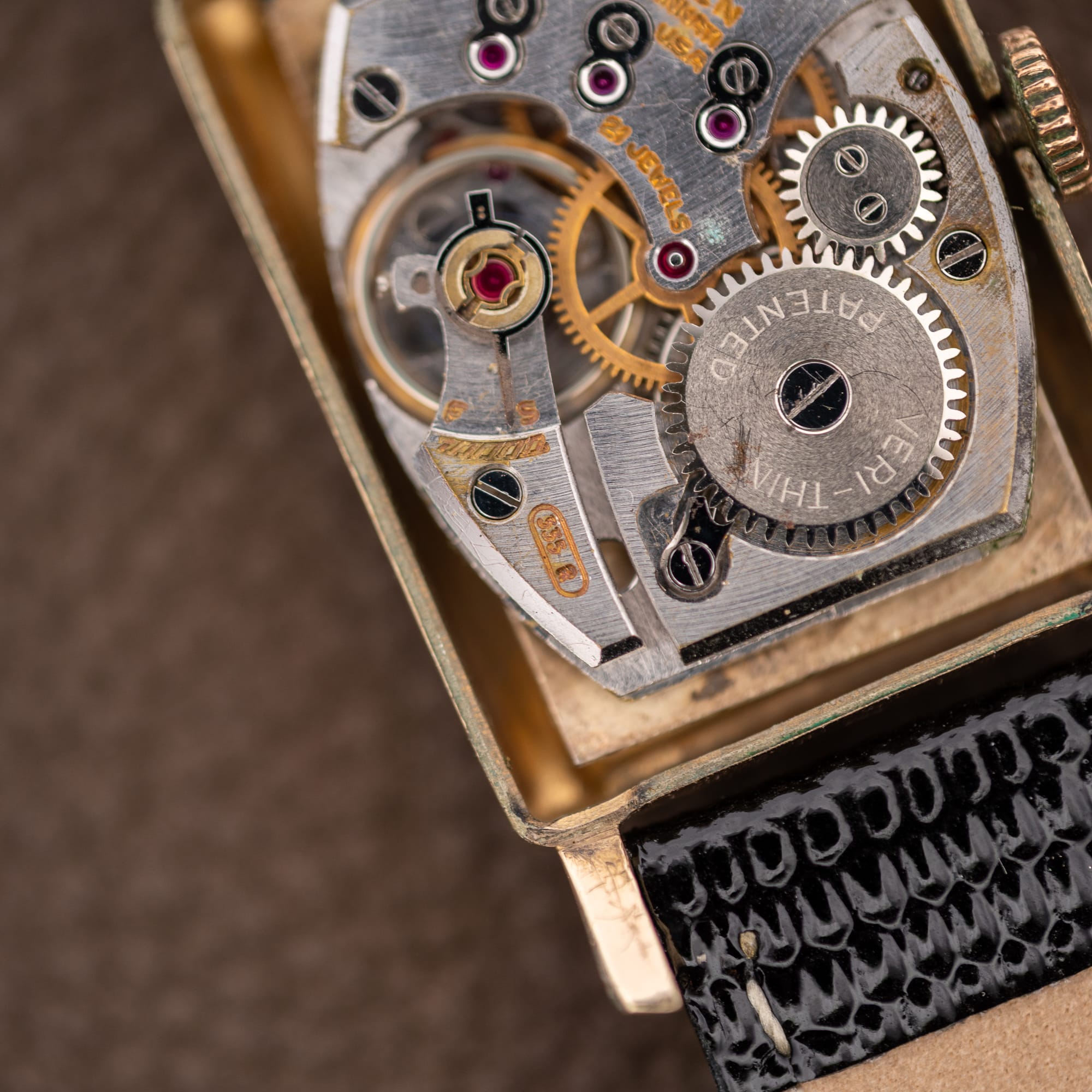

Ernest Duebendorfer worked at Gruen’s Norwood, Ohio, facility in the early 1950s. Among the papers he saved were engineering drawings for the caliber 335. His son later shared them with Gruen researchers, preserving a close-up view of how this little movement was made. That is the less visible attraction of this Gruen Precision: behind the diamond markers is an American-made movement with surviving factory drawings.
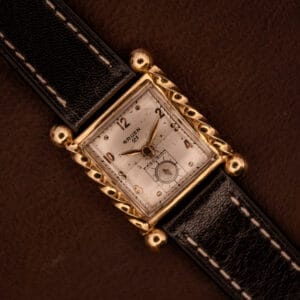
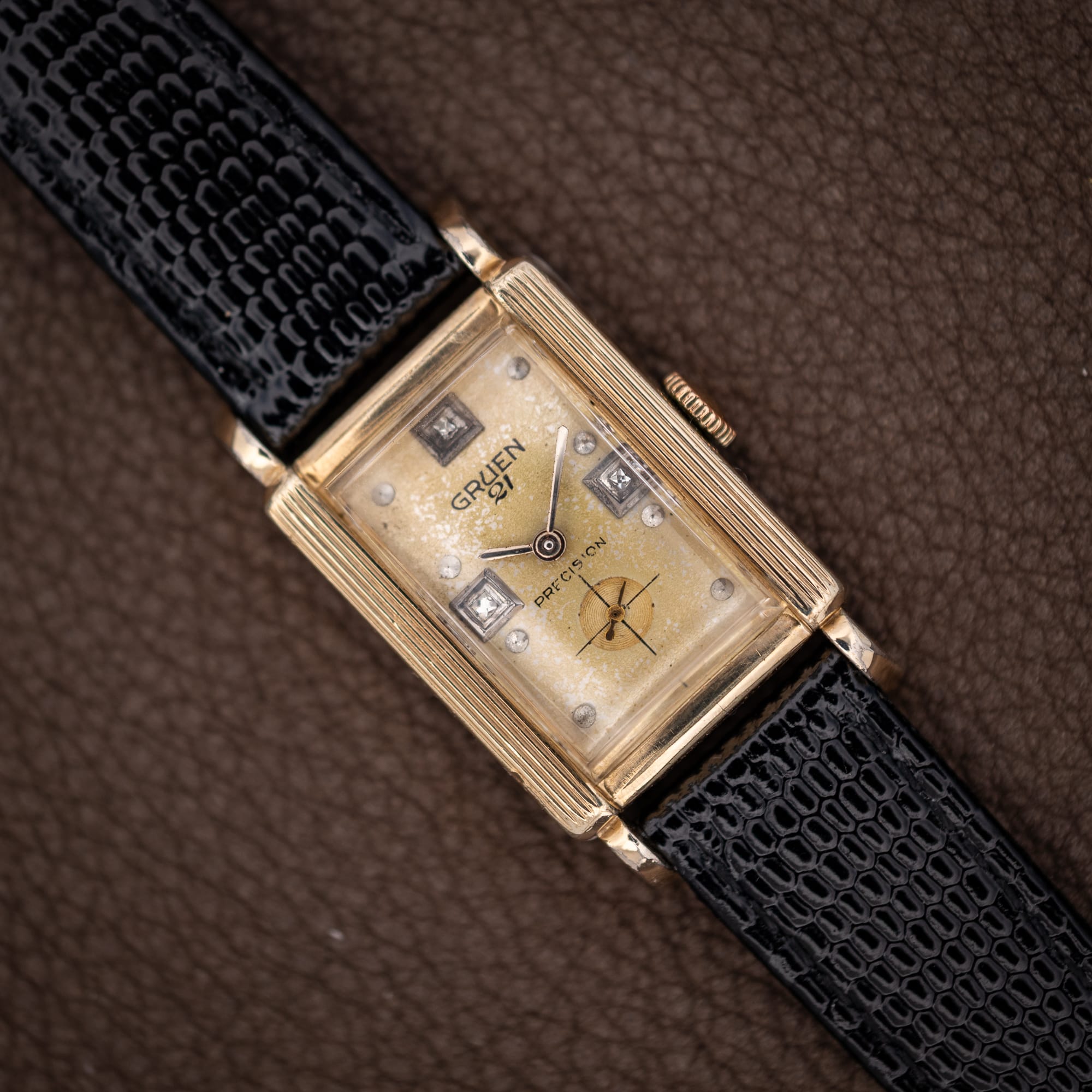
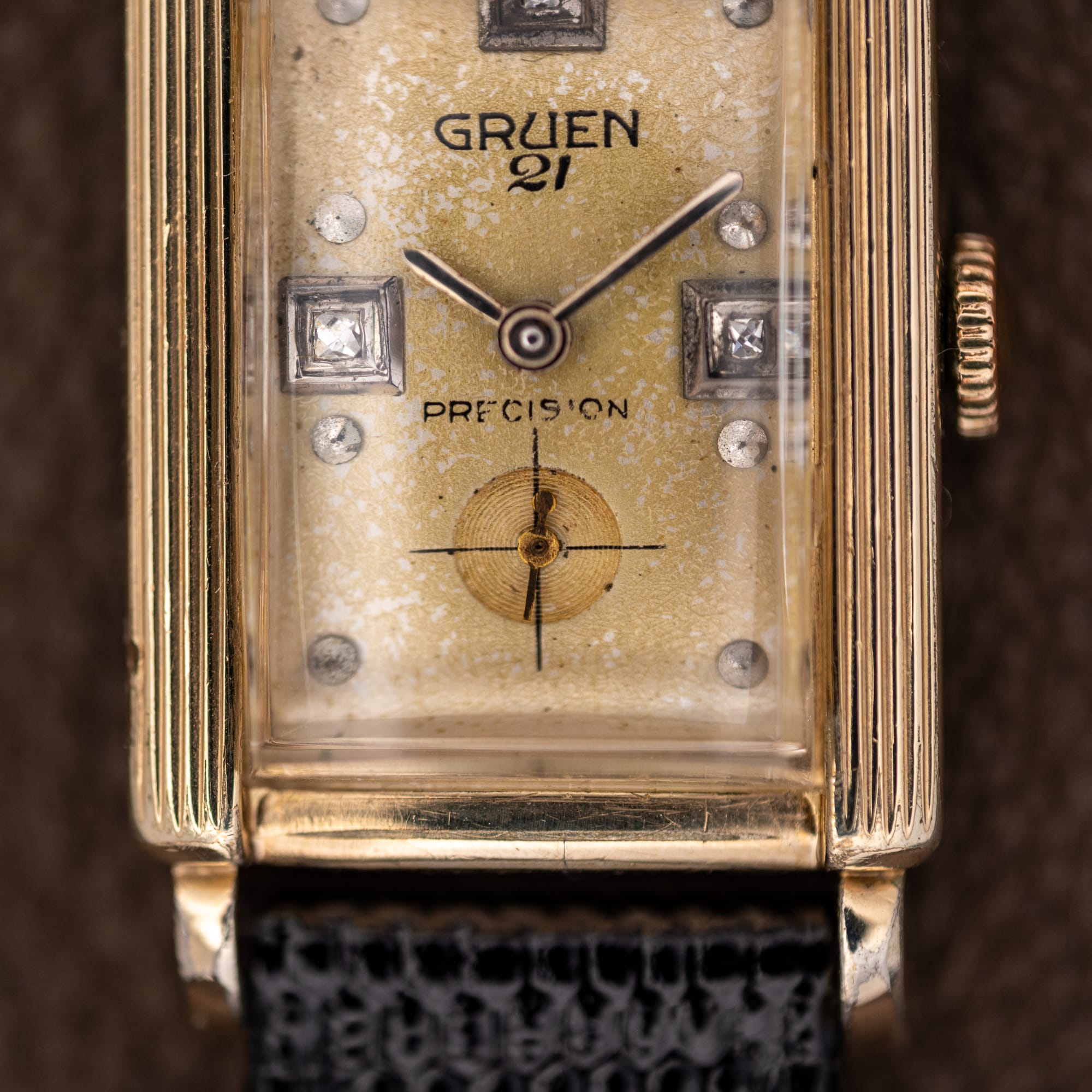
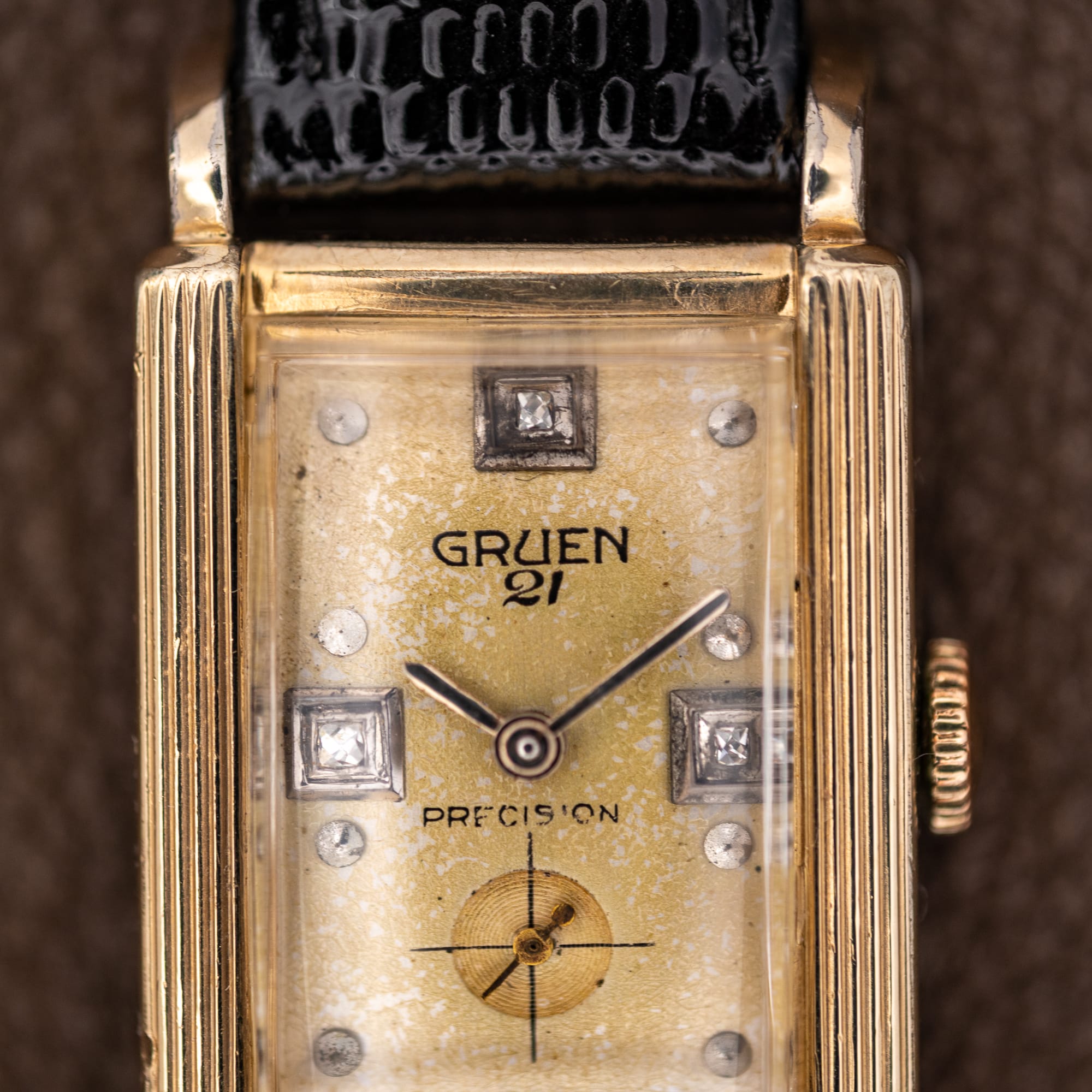
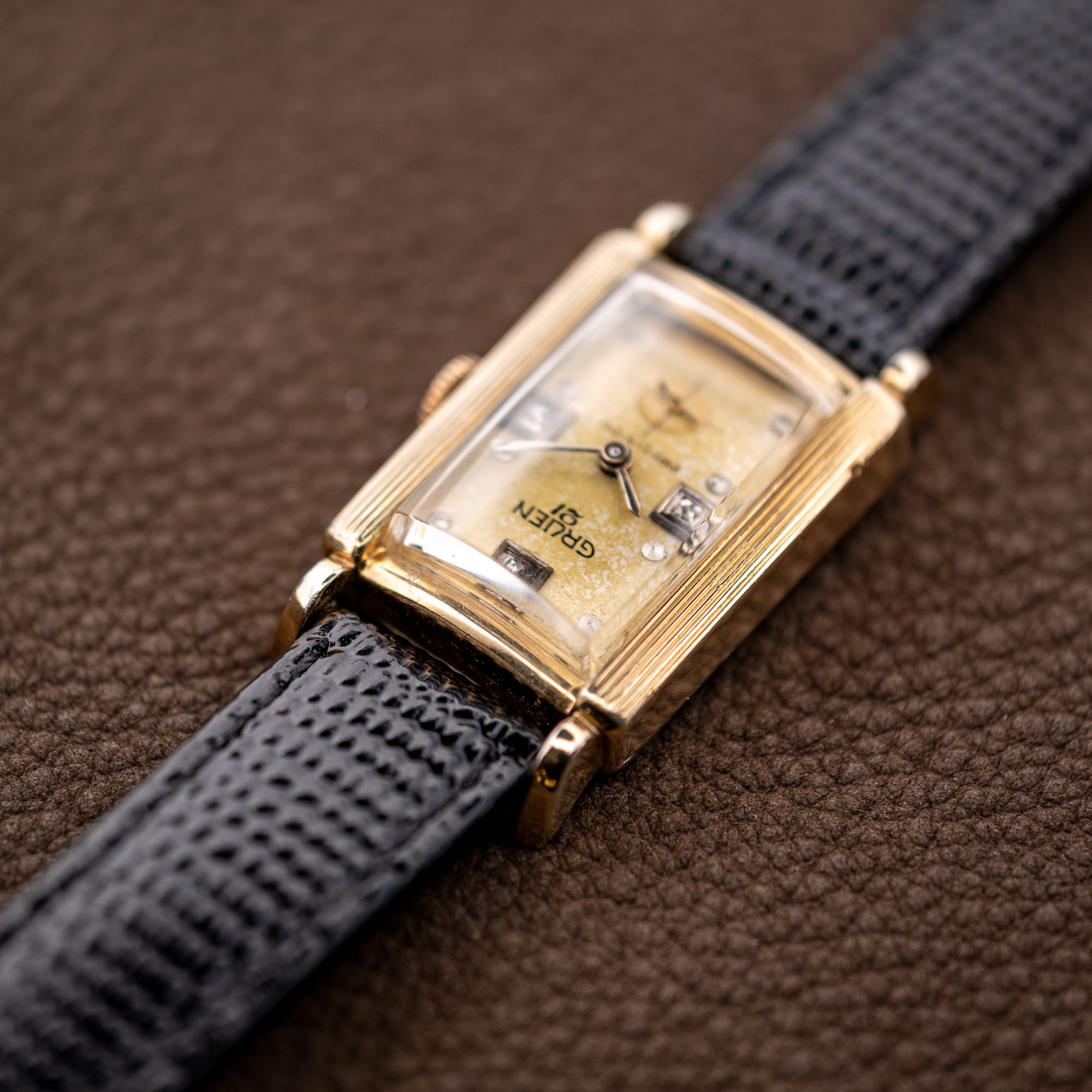
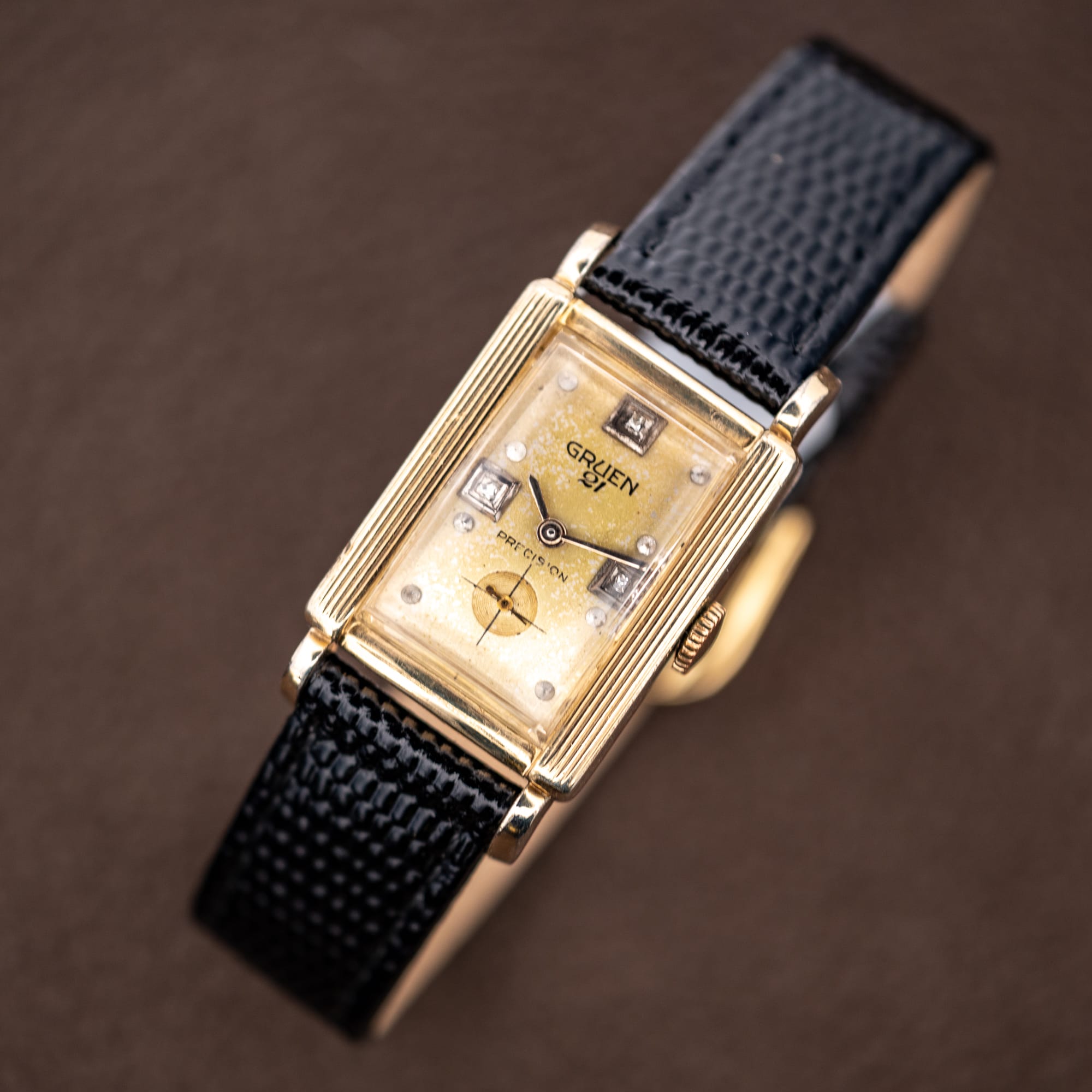
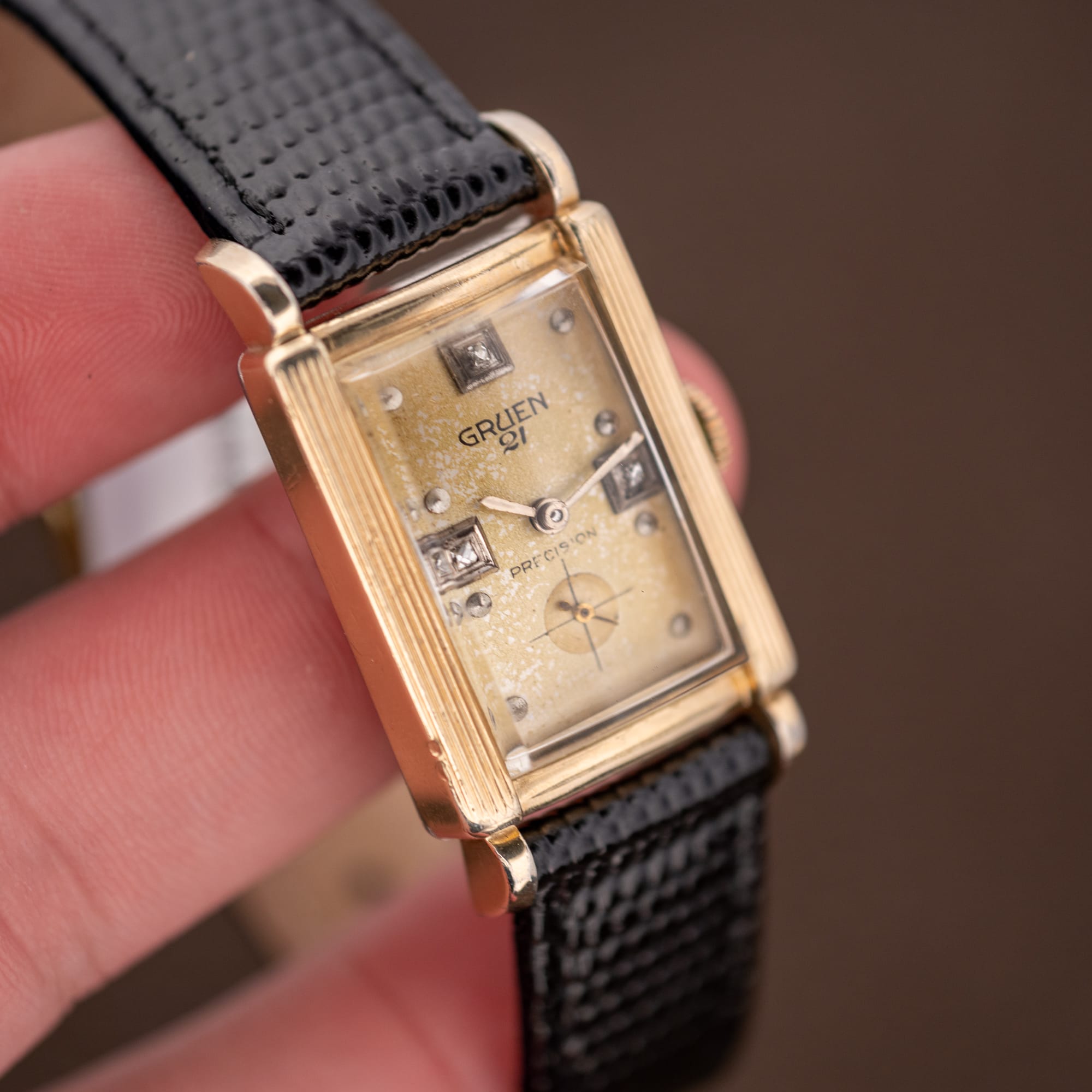
Dated 1949, those drawings cover the movement plates and the stages involved in making a cannon pinion. The plate recesses were specified to within .0004 inches. This example carries the 21-jewel version of the hand-wound 335, with Cincinnati named on the movement bridge. The “21” beneath Gruen on the dial refers to the movement’s jewels, a separate matter from the three diamonds marking twelve, three and nine.
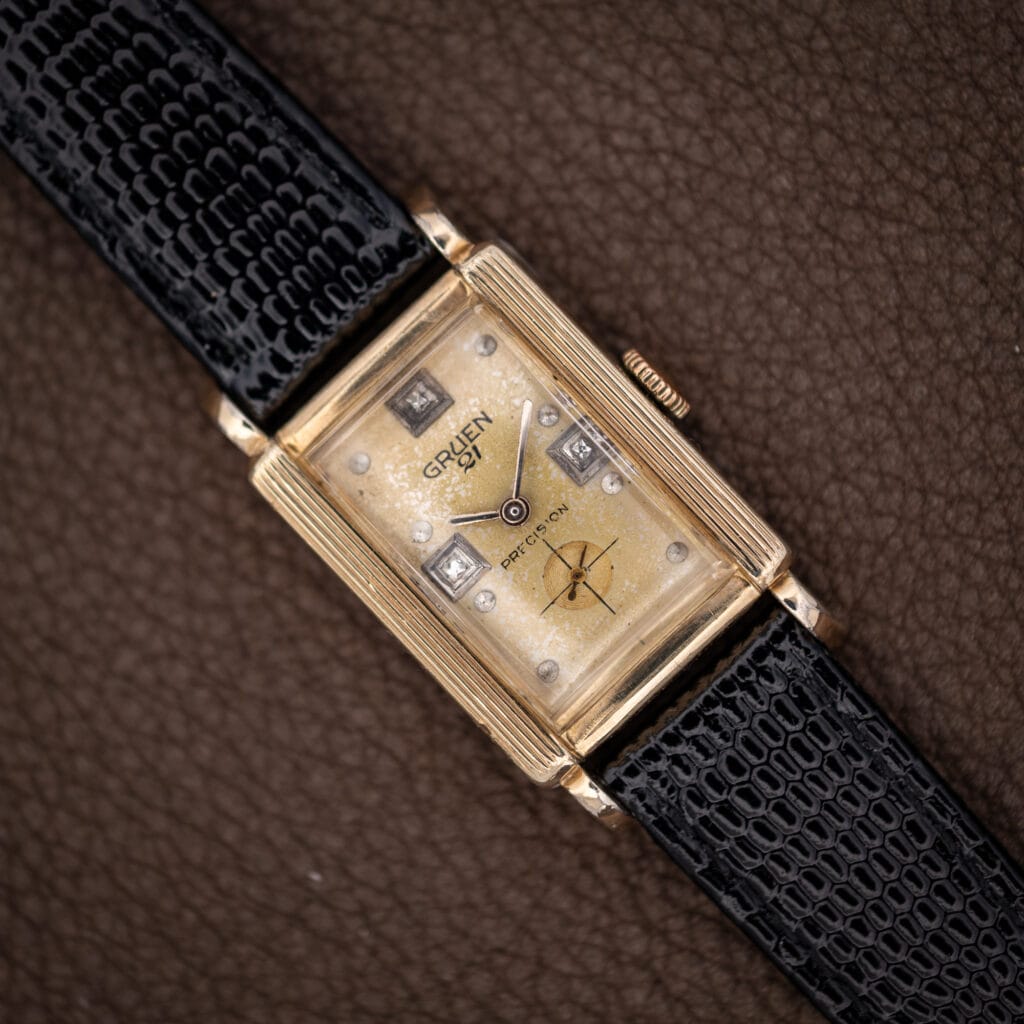
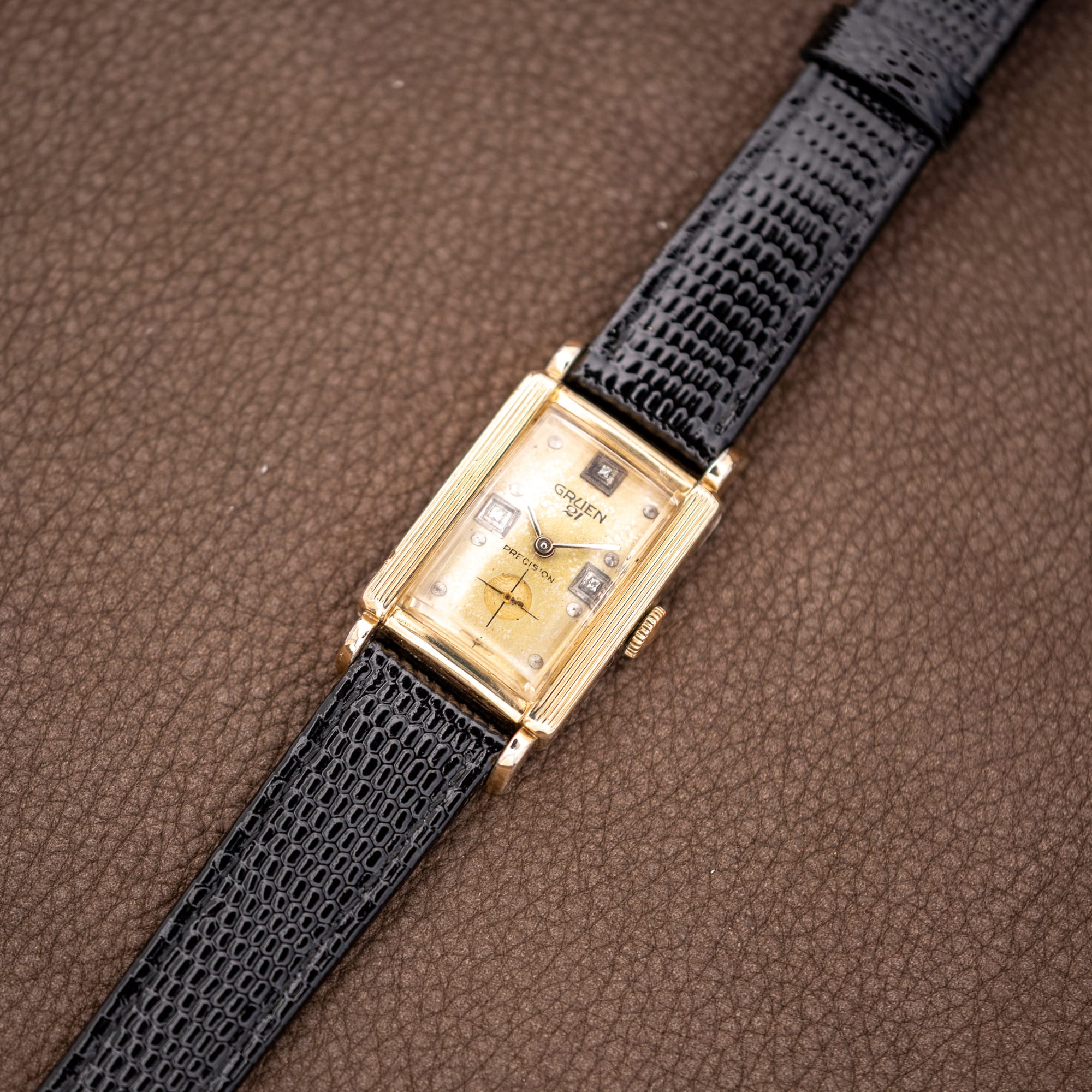
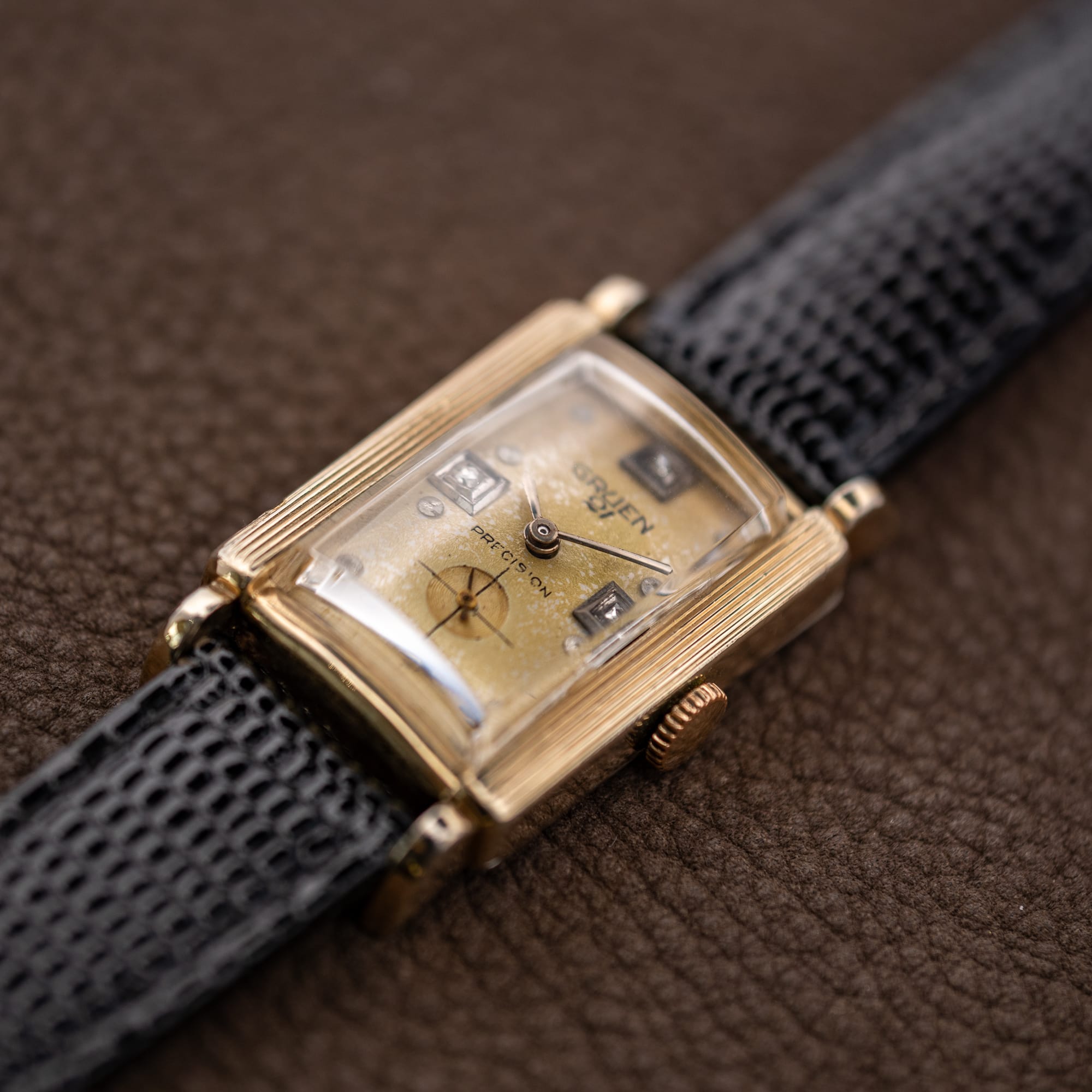
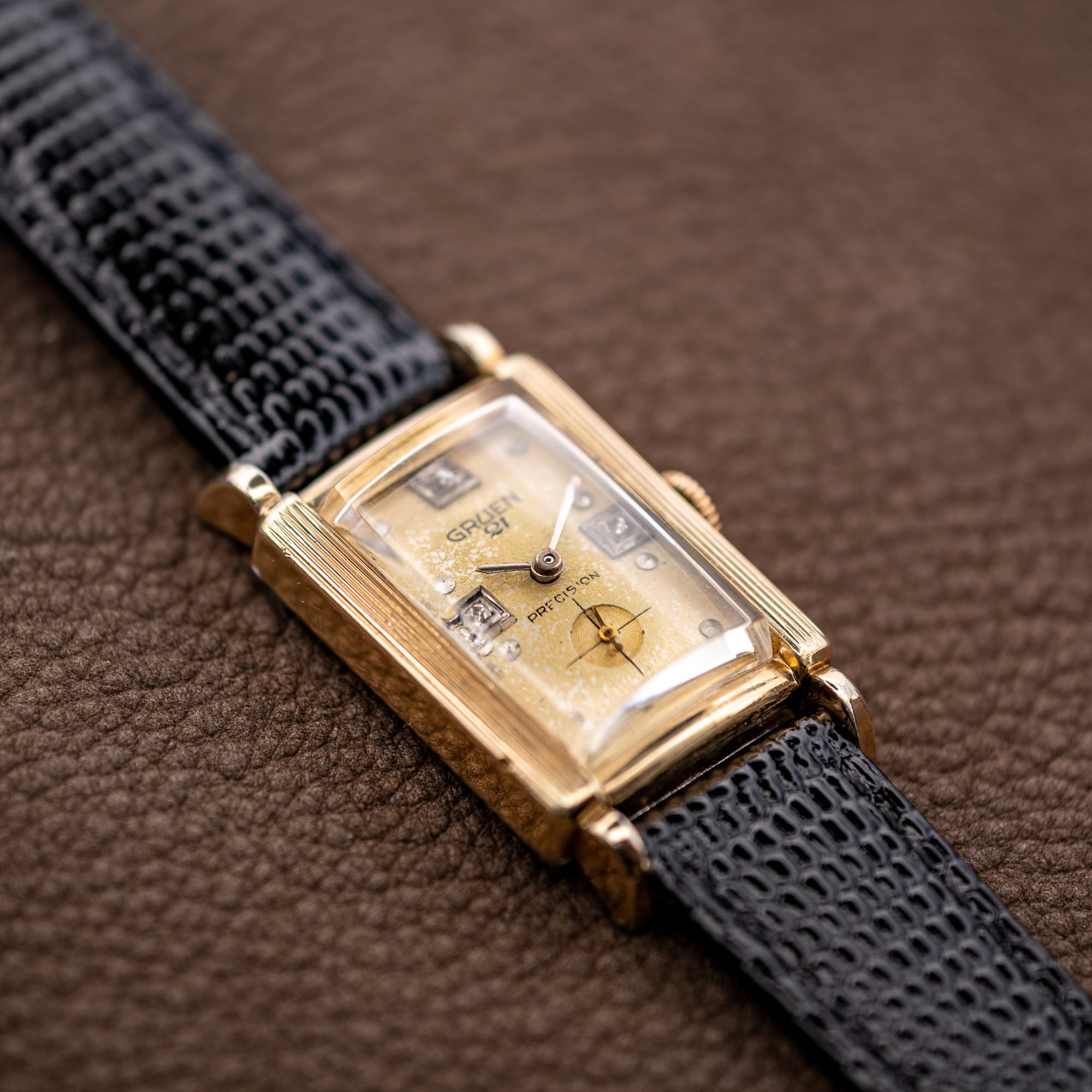
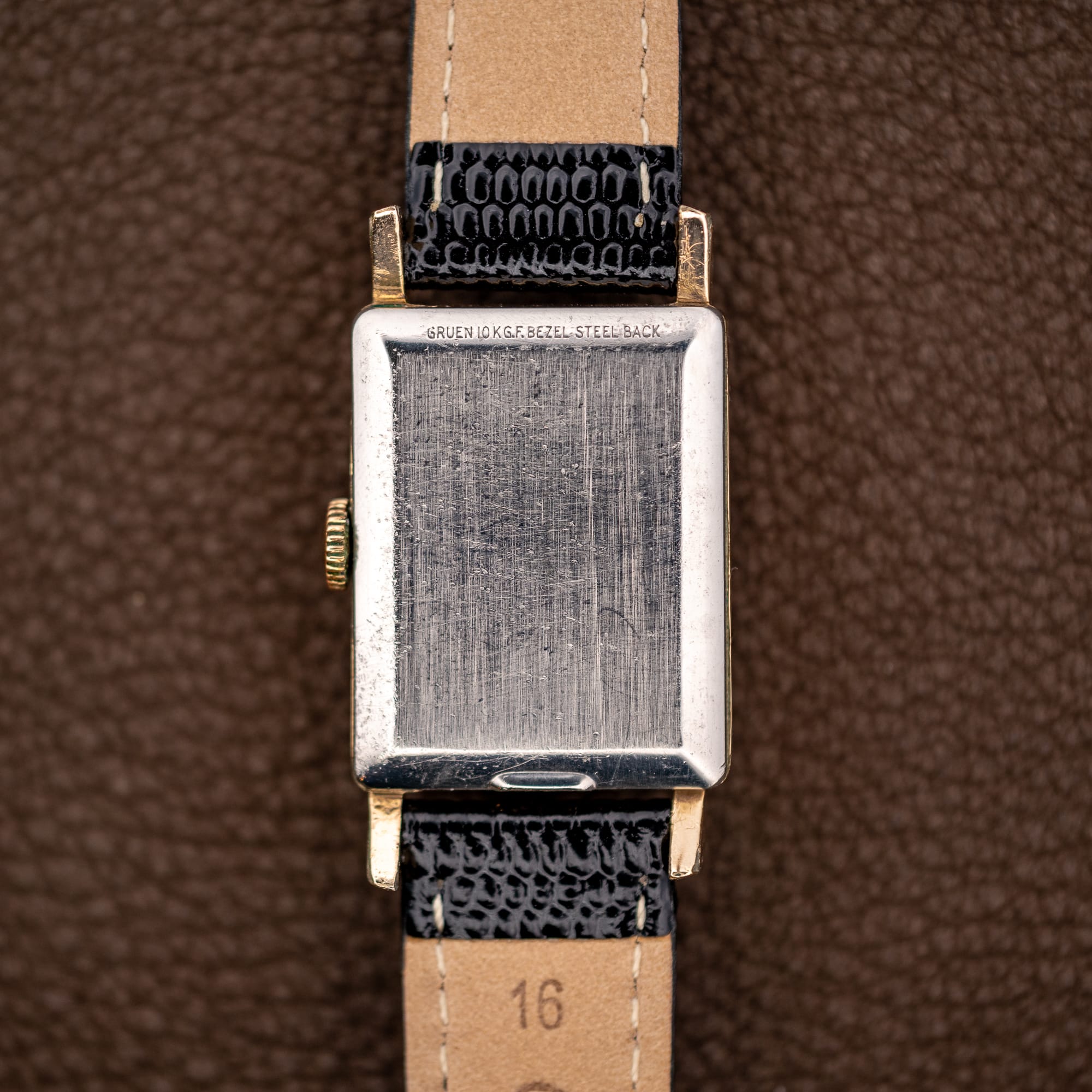
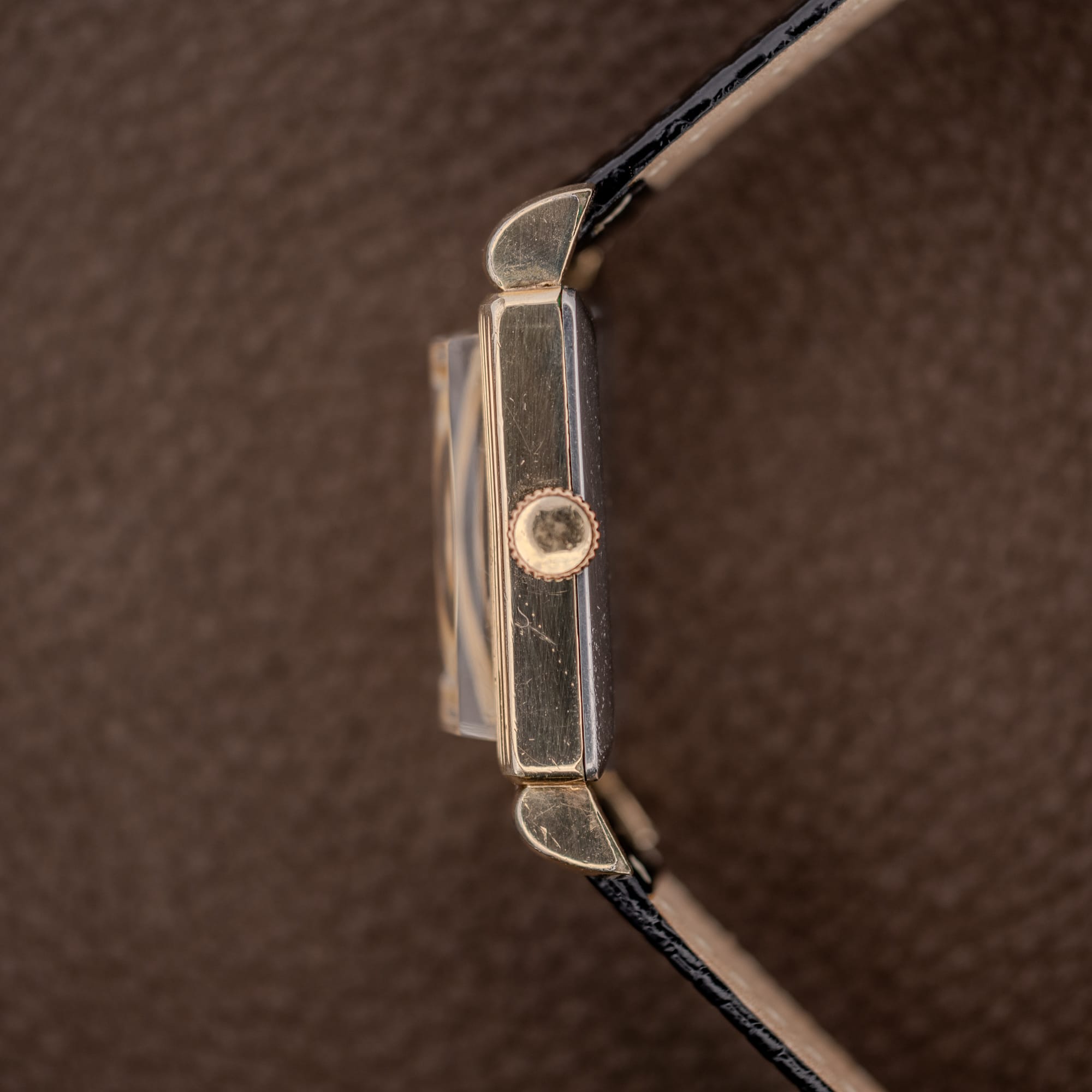
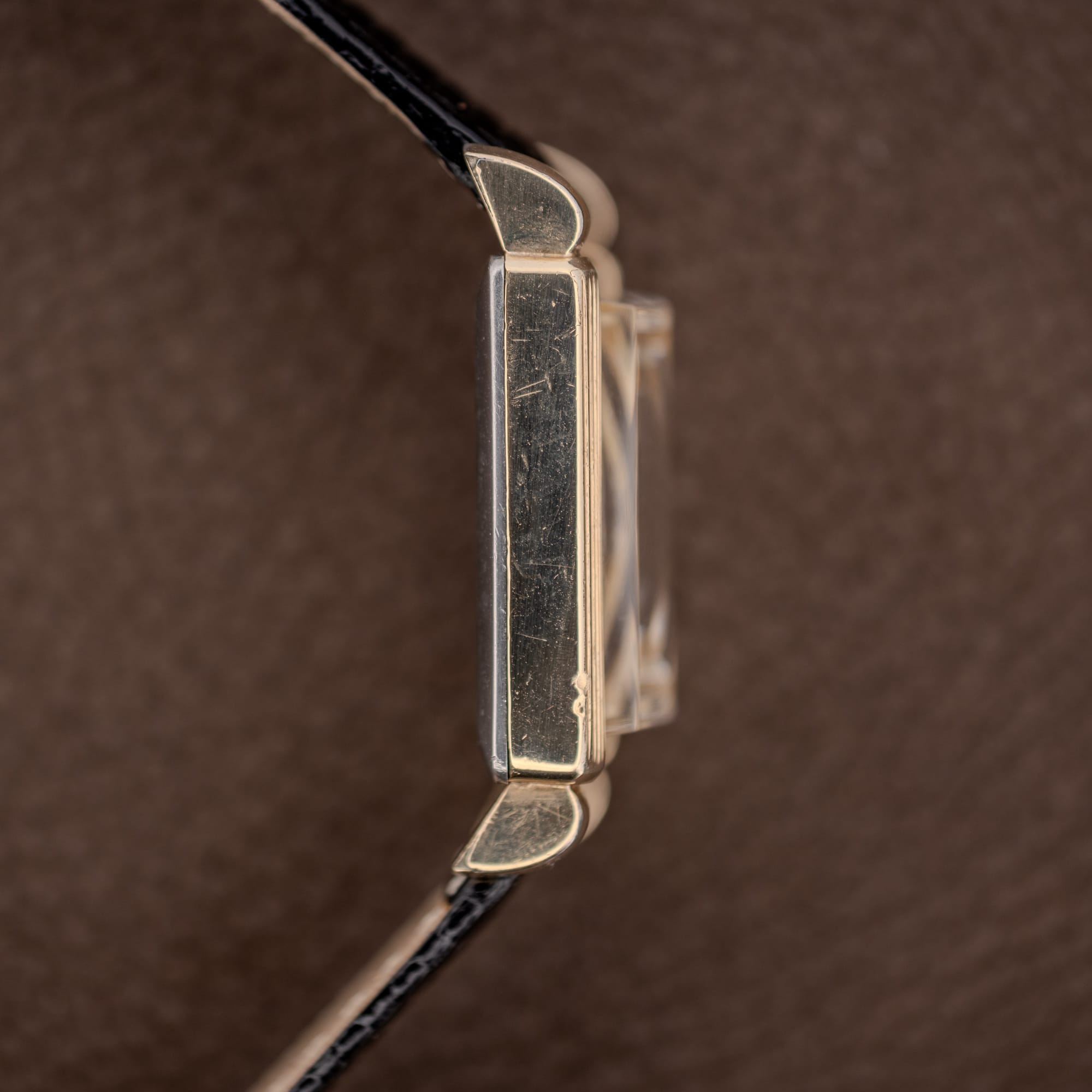
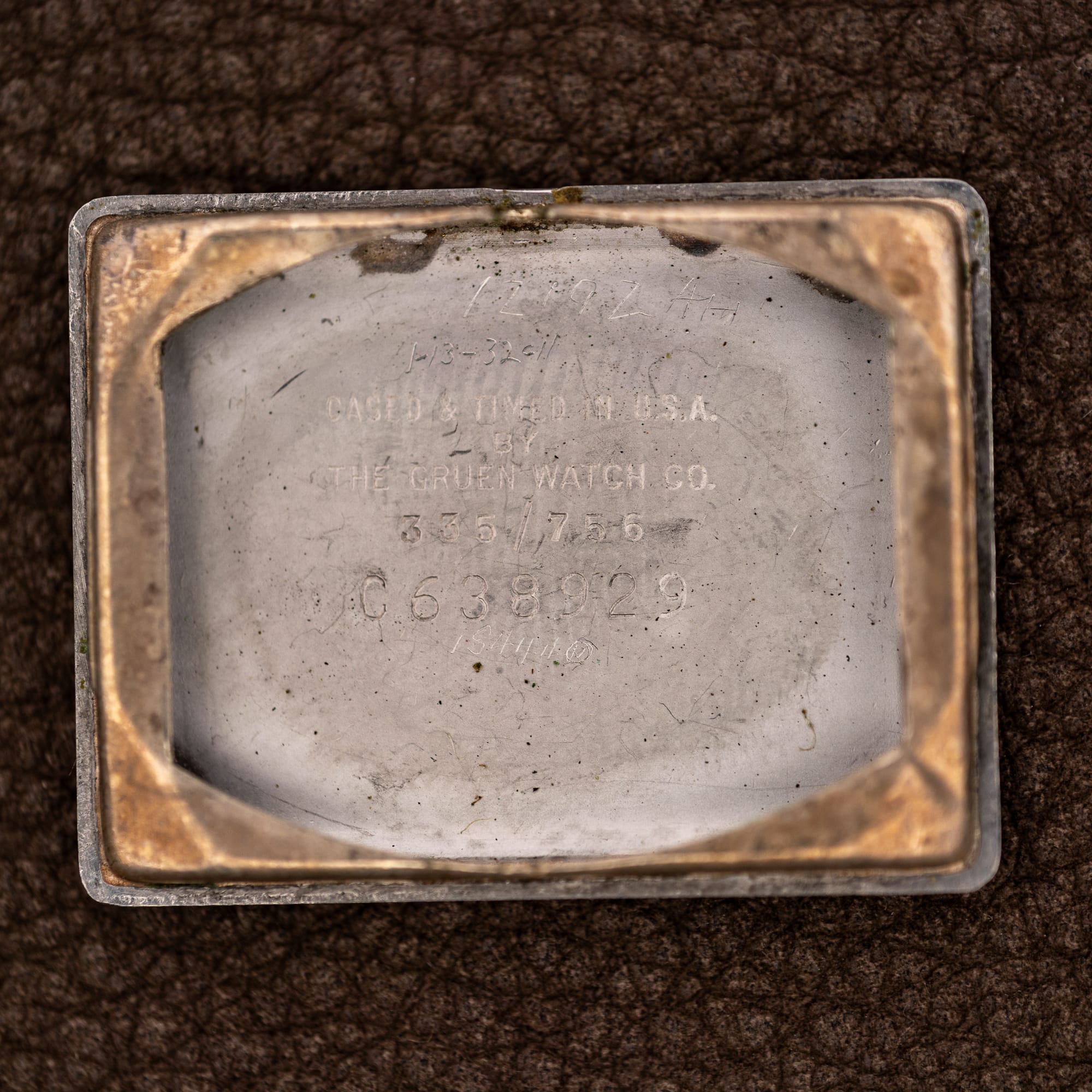
The rectangular case measures 22mm across and 40mm from lug to lug, with a 10k gold-filled bezel and steel back. Its fluted sides frame a champagne dial with pale, mottled aging and a crosshair seconds register at six. A black lizard strap completes the pairing. The proportions are narrow and elongated, rather than simply a smaller version of a round dress watch.
We are drawn to the combination: a little jewelry facing outward, and a piece of Ohio’s watchmaking history working underneath. The diamonds make the introduction; the caliber gives the conversation somewhere else to go.