Two Swiss patents sit one number apart in the register. CH329804 was filed on 21 June 1954 by Hans Kocher, chief design engineer at the Buren Watch Company: a self-winding movement whose oscillating weight sat inside the plane of the caliber rather than on top of it. CH329805 followed eleven months later from Universal Geneve, describing very nearly the same device under a different name, the Microtor. The numbers landed side by side, but the filing dates settle the order, and Buren had arrived first. The movement inside this Hamilton Thin-O-Matic is the side that won.
The consequences were spelled out in metal. Universal spent the next few years engraving PATENTED RIGHTS PENDING around the rotor on its movement plates, visible to anyone who opened a Polerouter, and paying Buren four Swiss francs per movement for the use of the design. Only in 1958, when its own patent was finally granted, did that engraving give way to the number 329805. Buren licensed the architecture more amicably elsewhere, and one of those licensees was an American firm in Lancaster, Pennsylvania. Hamilton launched the Thin-O-Matic on Buren micro-rotors in 1959 and named the line for the single thing the design did best. It liked the arrangement enough that in 1966 it stopped licensing and bought Buren outright. The customer became the owner.
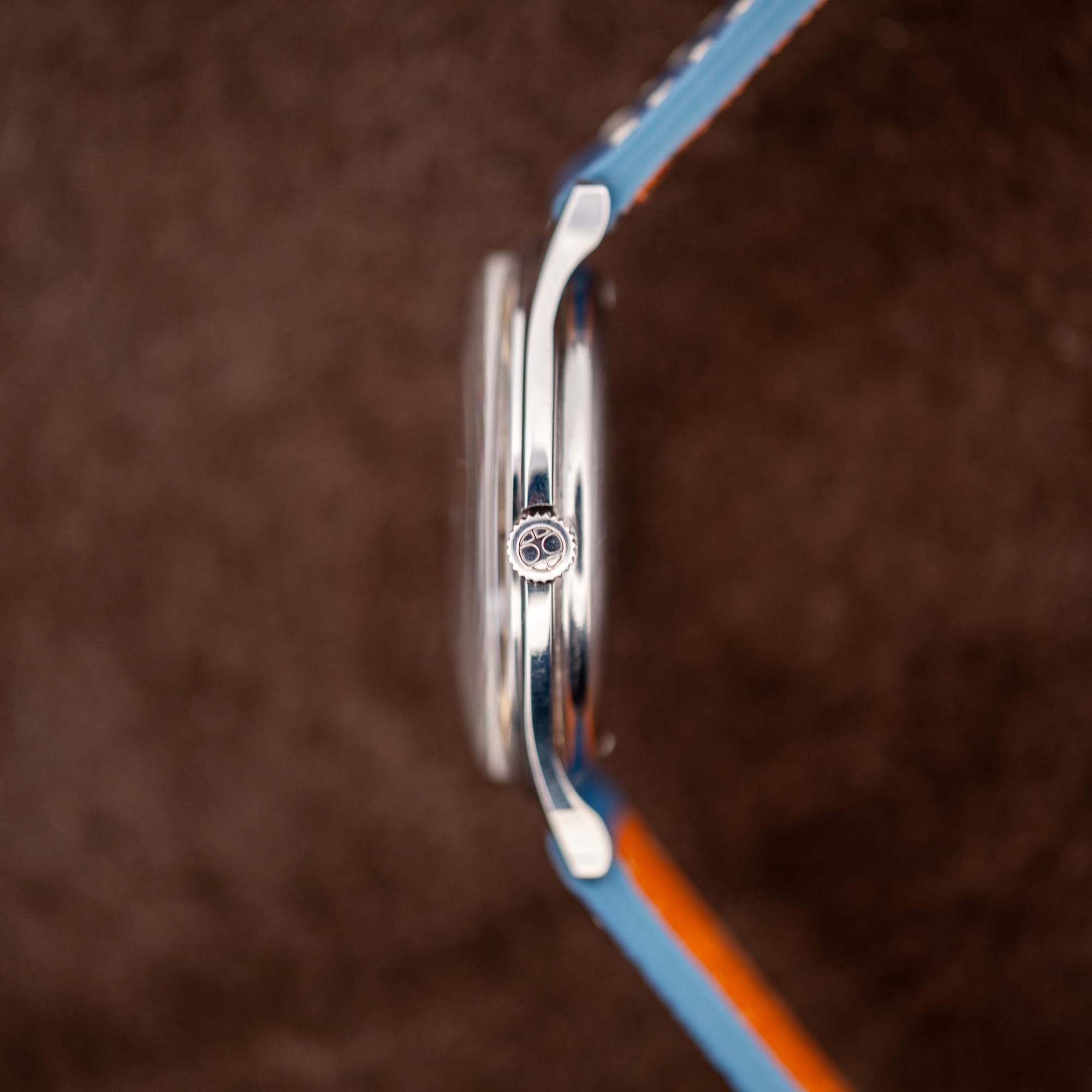
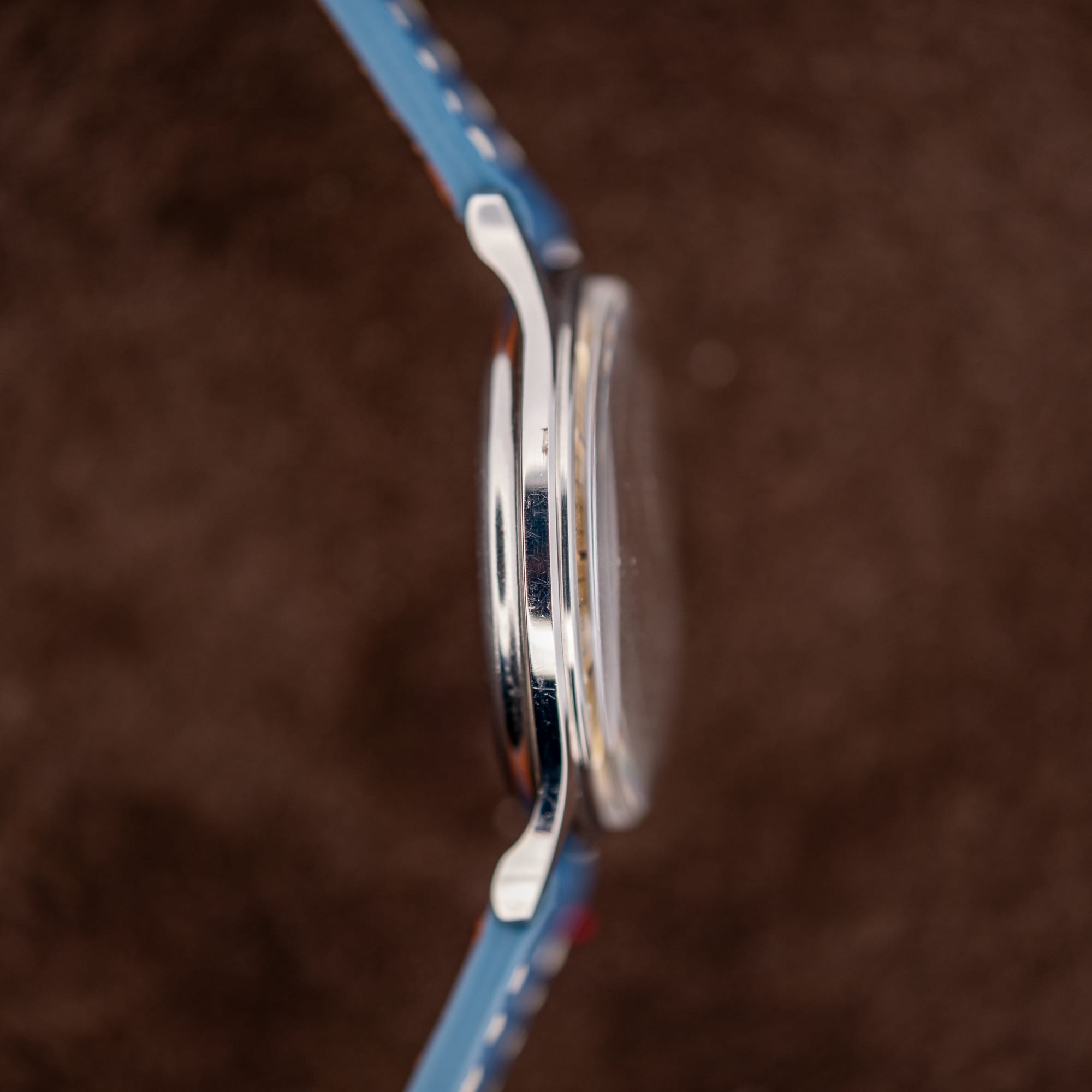
The caliber 663 is Hamilton’s name for a Buren 1000-family micro-rotor of seventeen jewels, the Kocher patent in production under someone else’s signature. The point of it shows the moment we stand the watch on edge. A conventional automatic of the period carried its rotor above the movement like a lid, and the case had to grow to cover it; Buren dropped the weight into a recess in the plate instead, so a self-winding Hamilton could sit close to the height of a hand-wound one. Hamilton had its own movement plant in Lancaster and still went to Switzerland for this line, which is a fair measure of what the micro-rotor was worth in 1959.
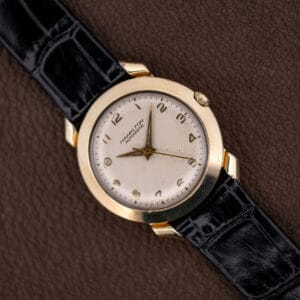
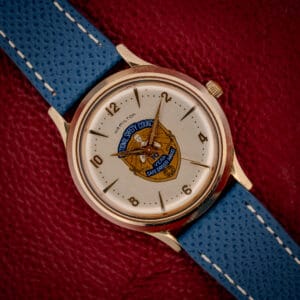
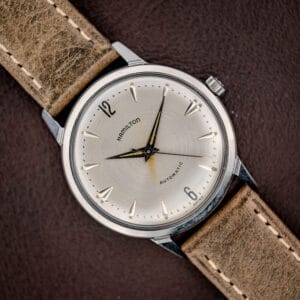
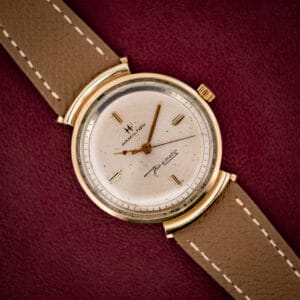
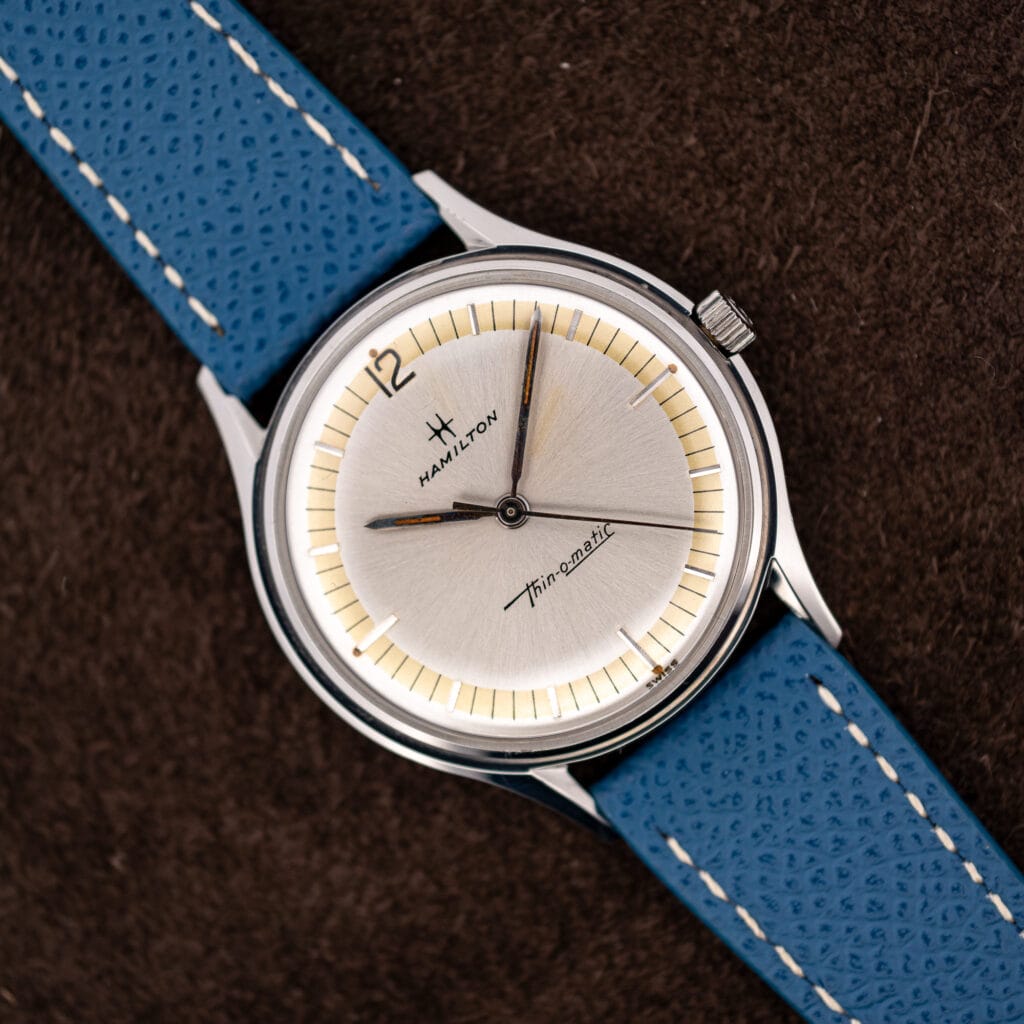
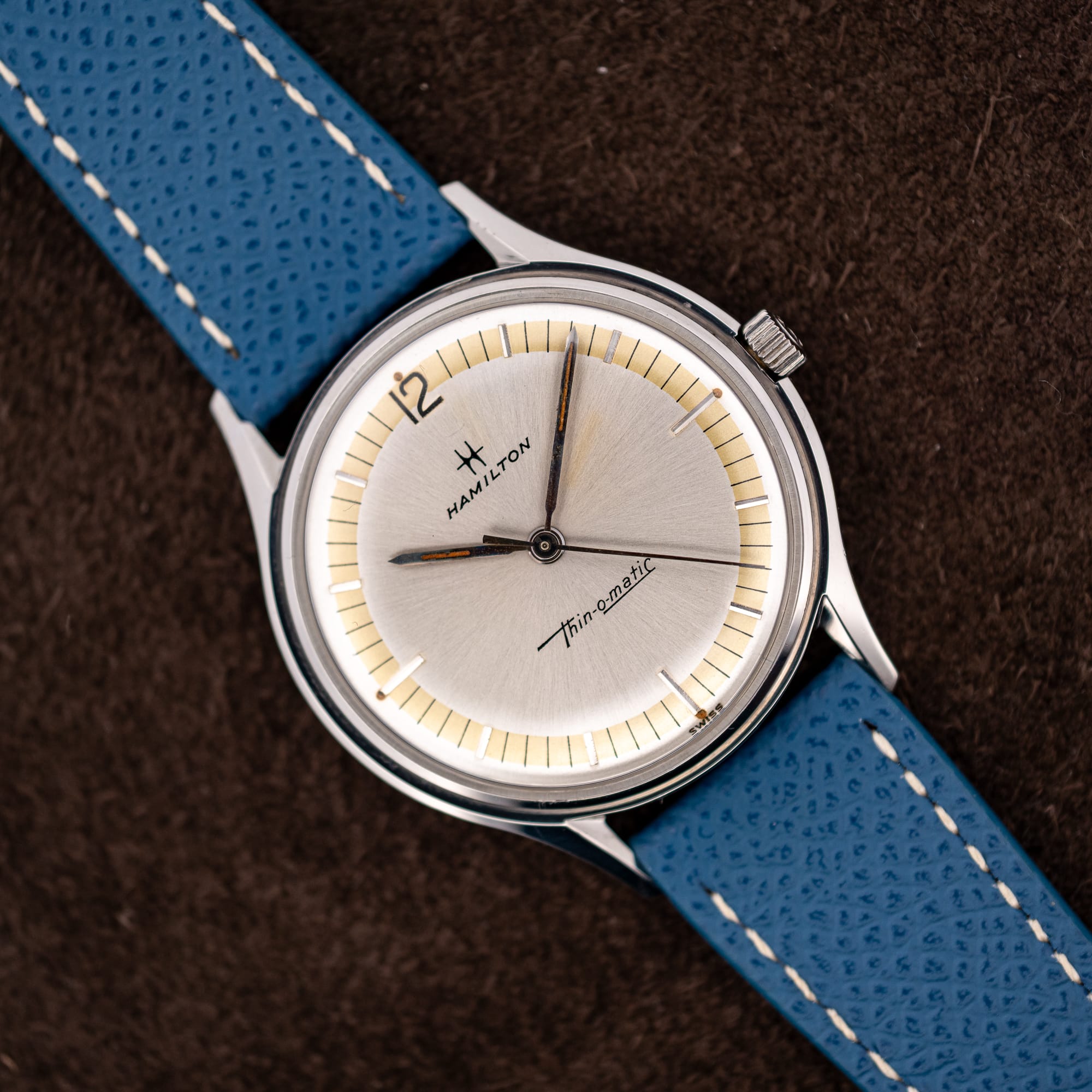
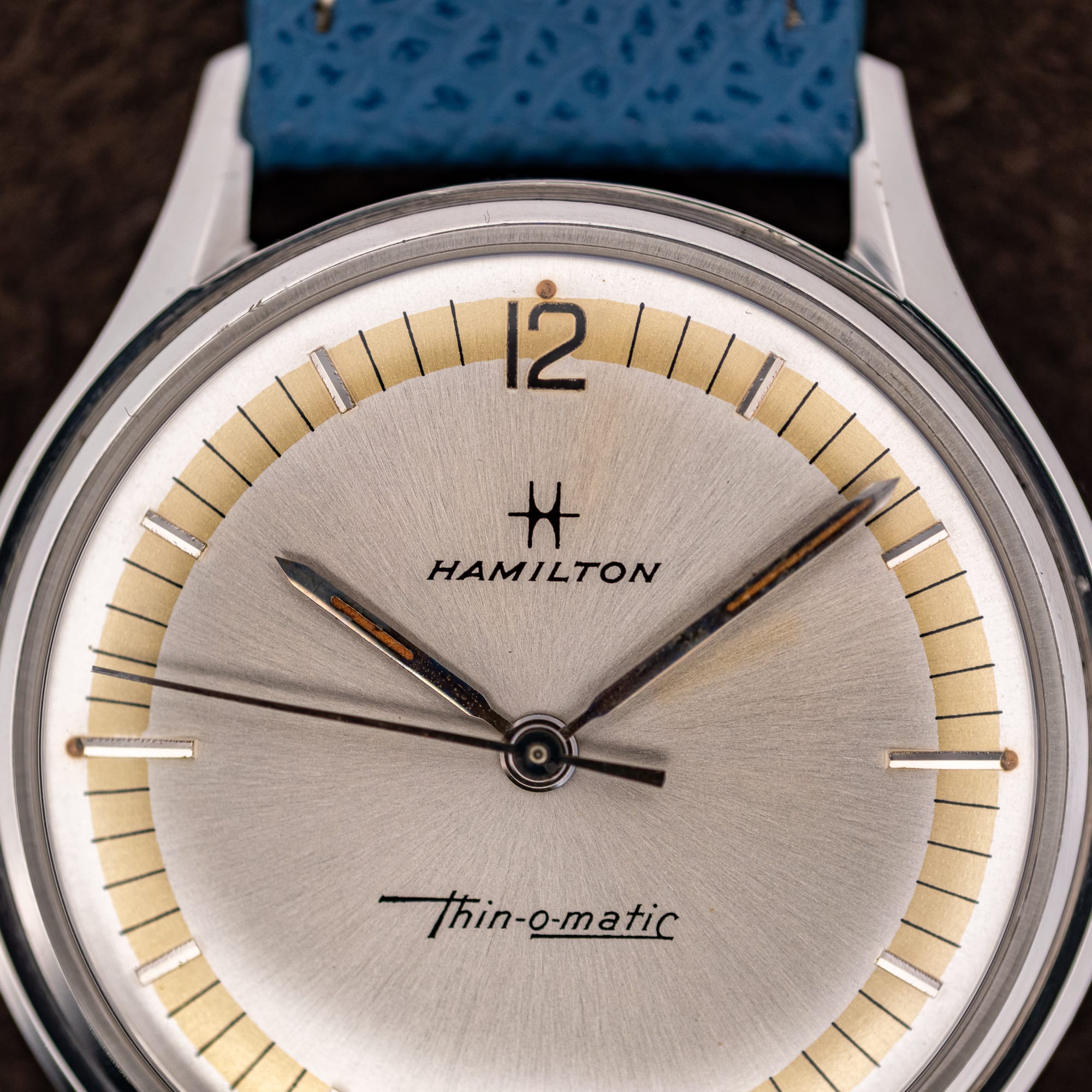
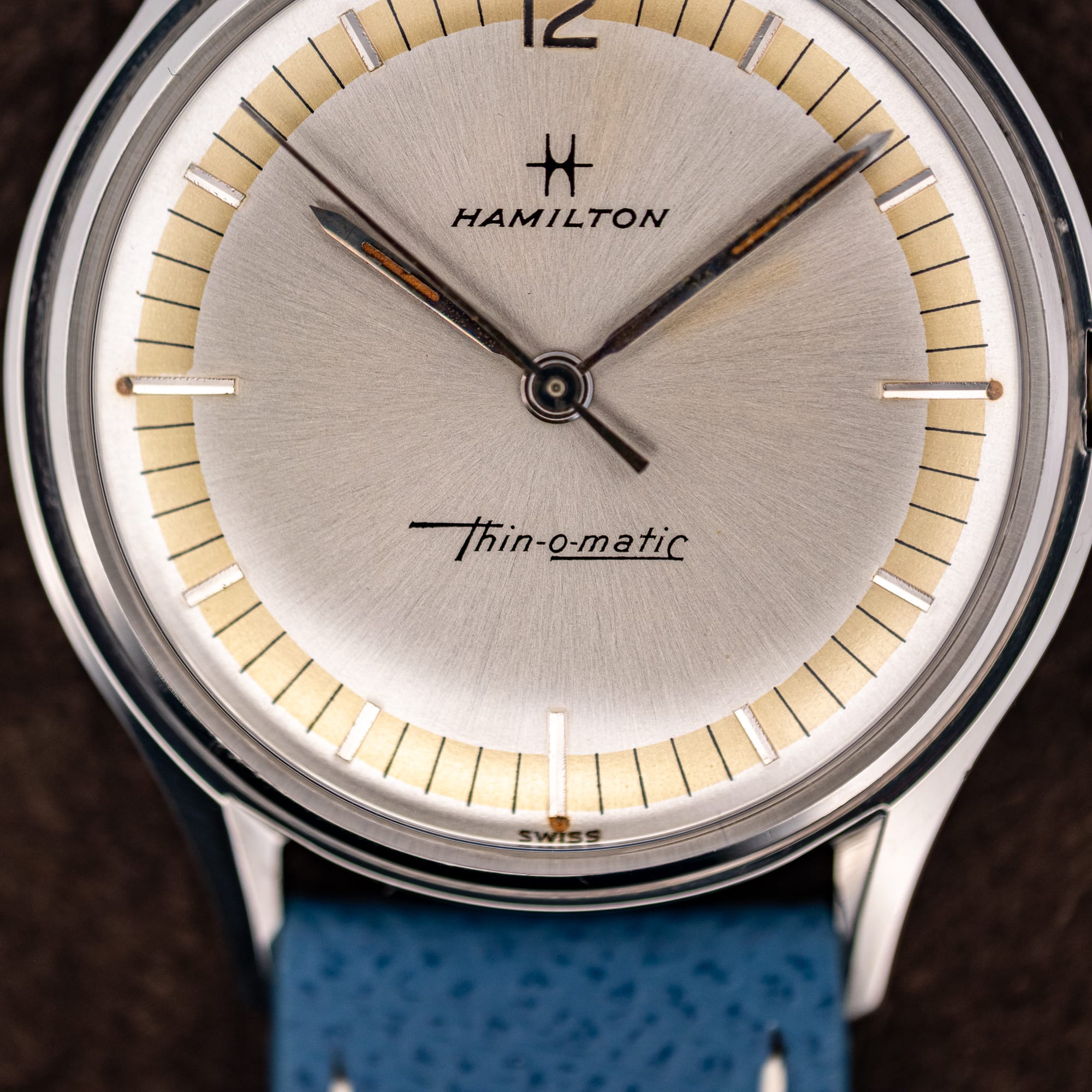
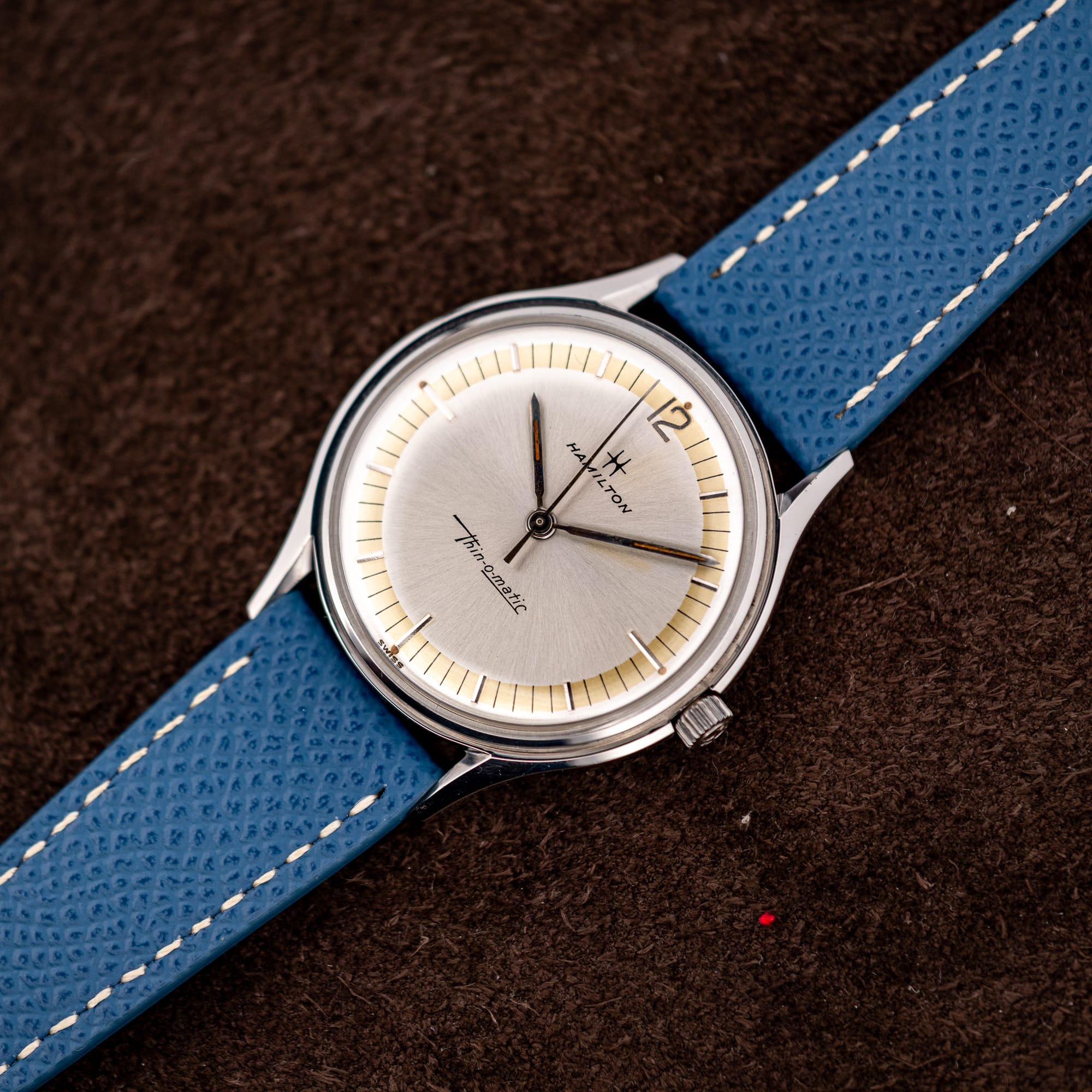
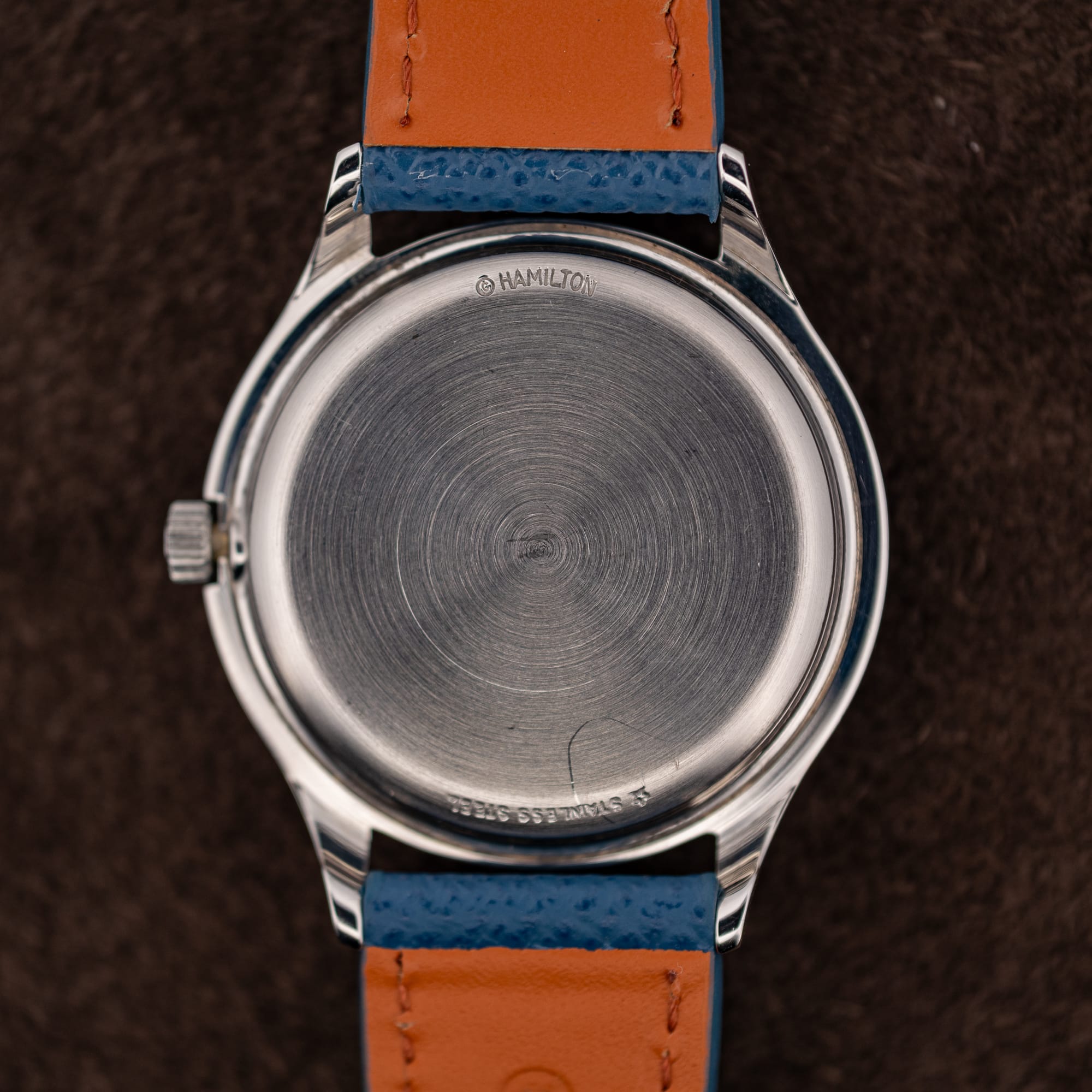
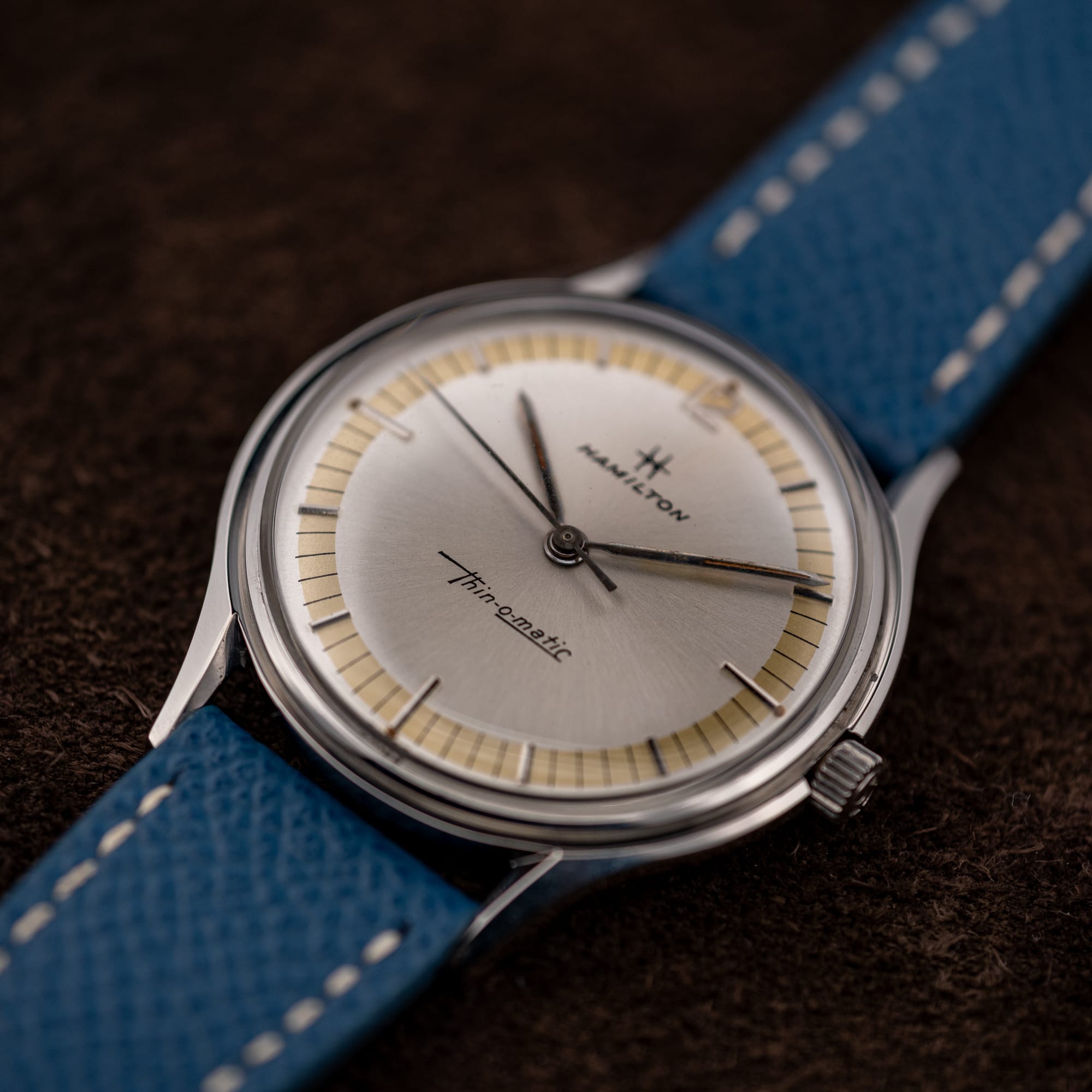
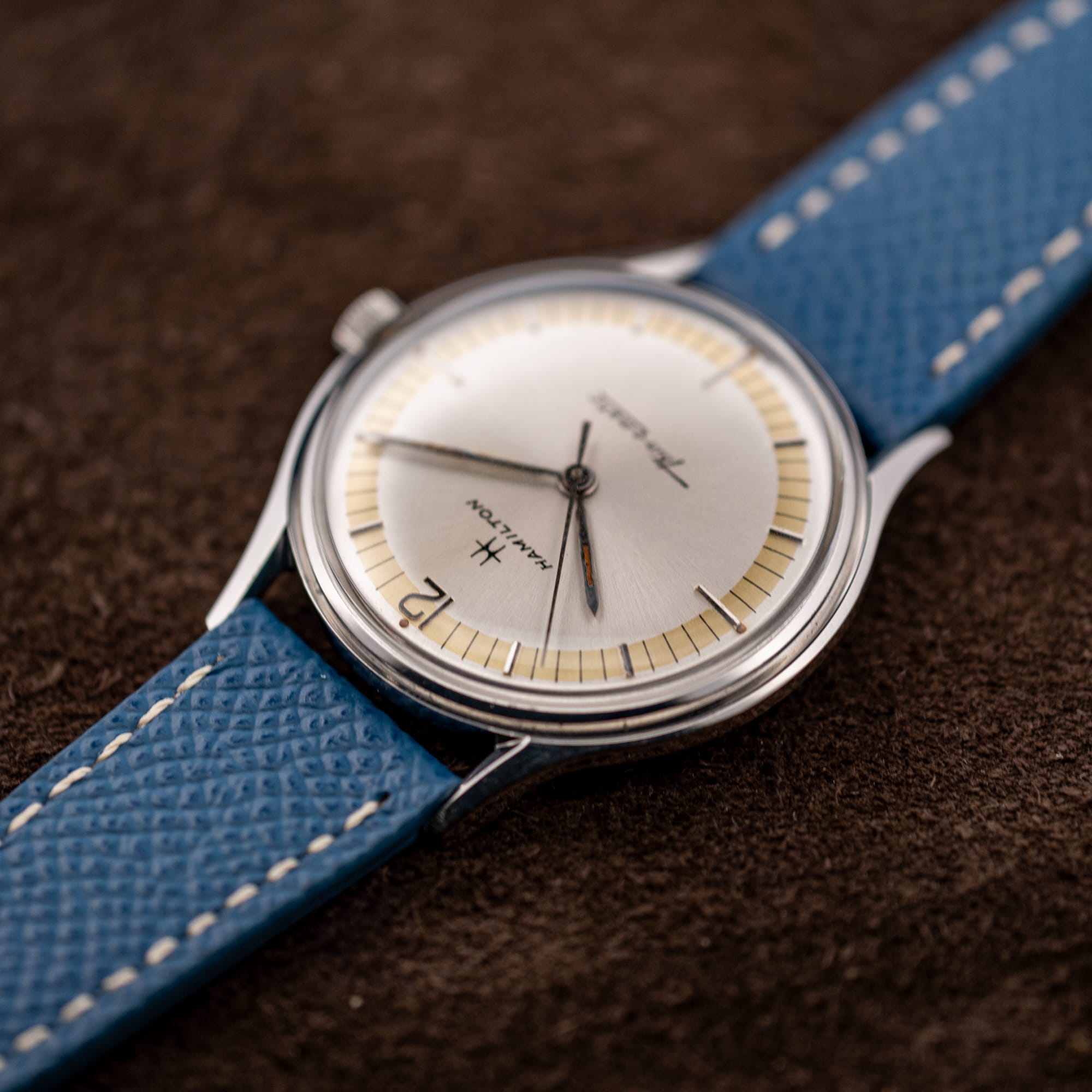
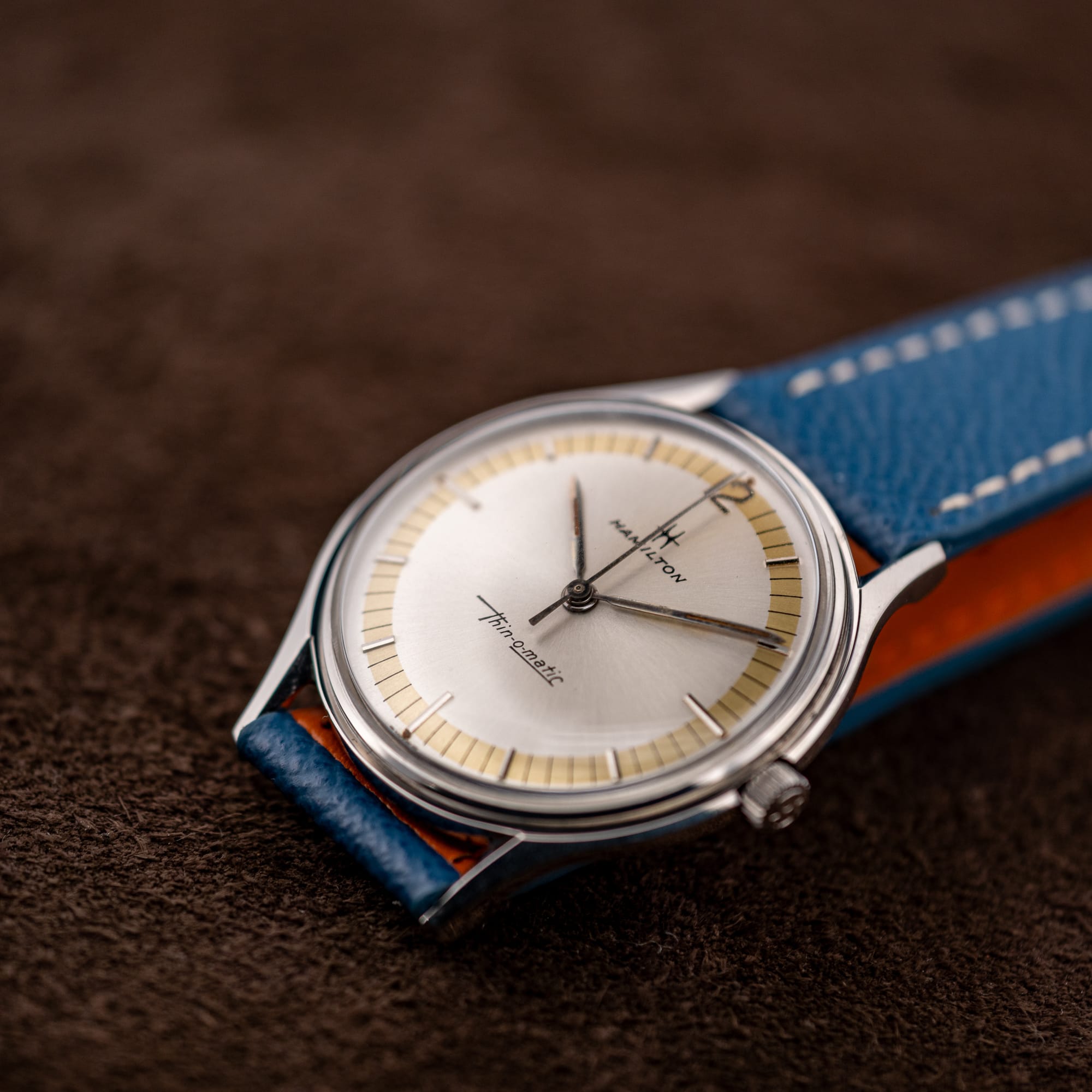
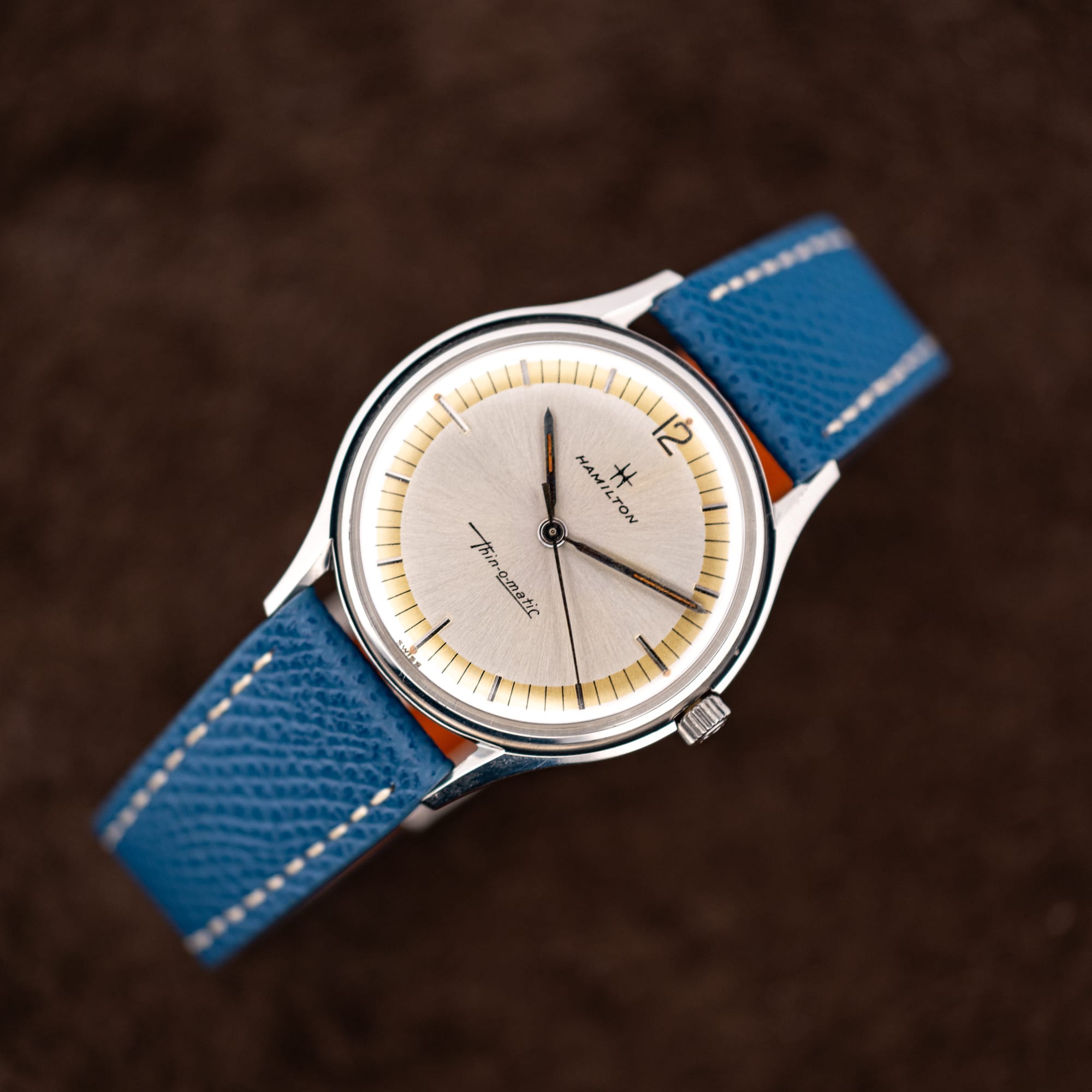
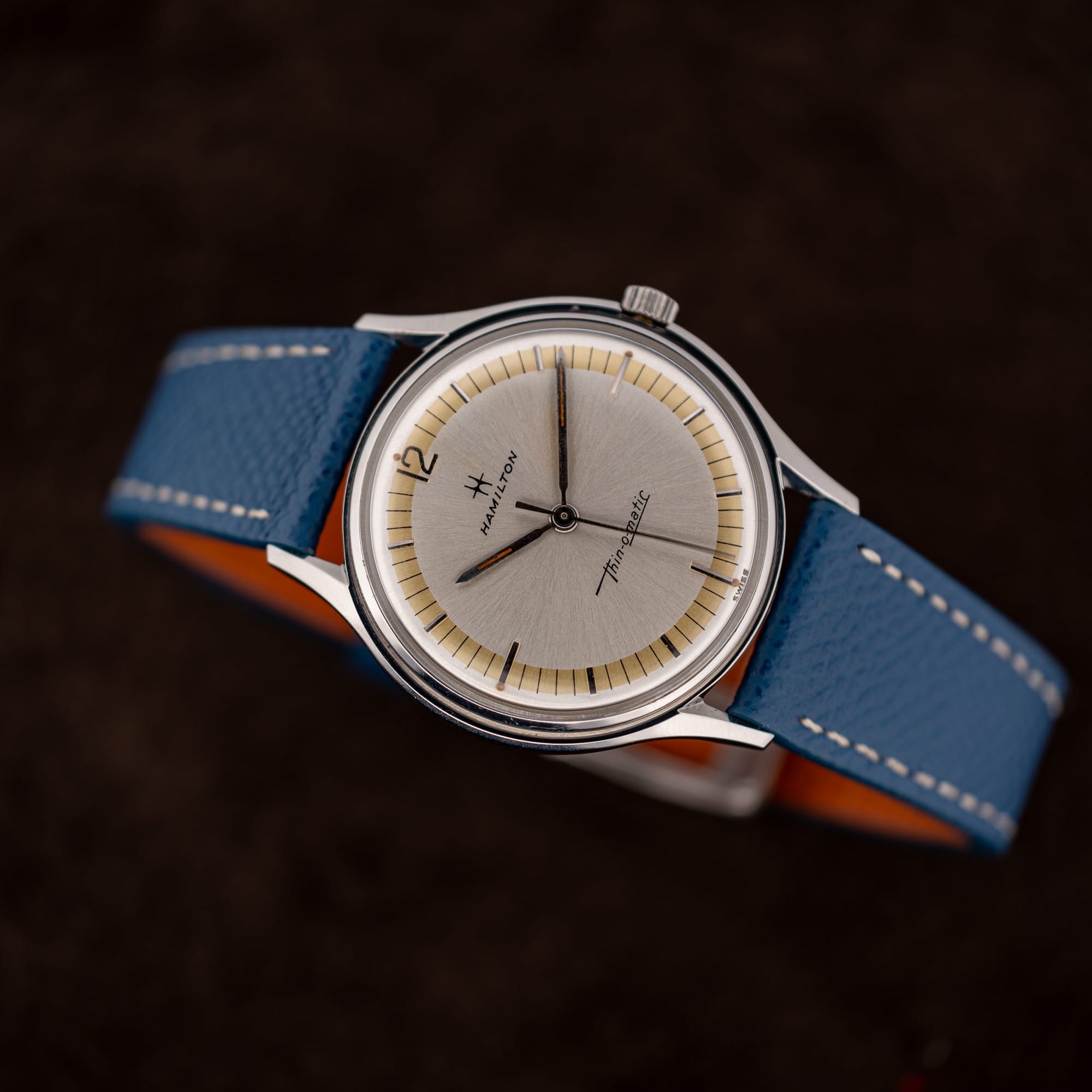
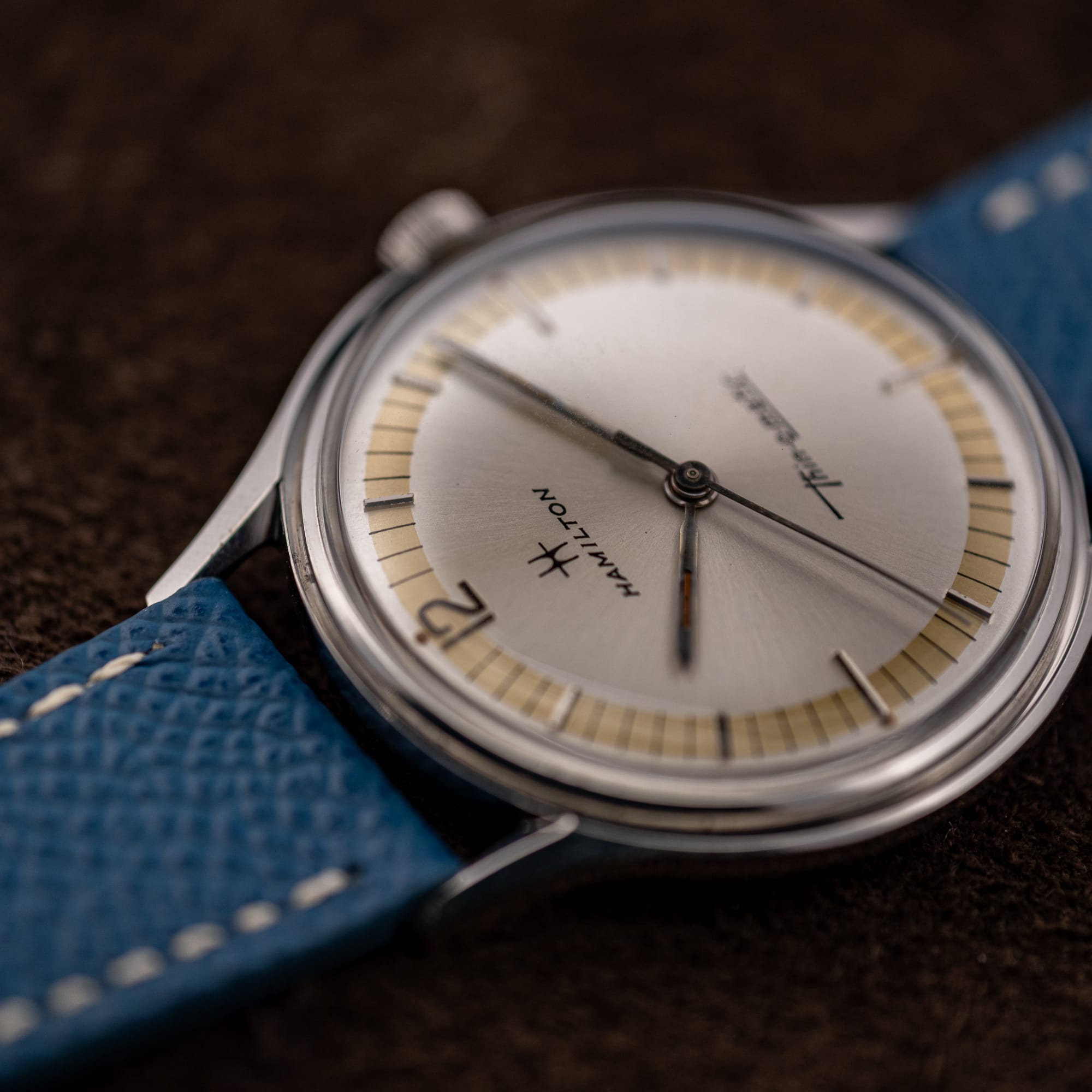
This Hamilton Thin-O-Matic is 34.5mm of stainless steel and 41mm across faceted lugs that turn down hard at the tips, with a domed acrylic crystal over a dial built in two levels. The recessed centre is silver under a fine radial brush; the raised outer ring has aged to warm champagne, combed with fine lines, carrying the minute track and the applied steel batons on its inner edge with an open-outline 12 at the top. The model name runs in script at six, and below it, small enough that we nearly missed it, the single word SWISS. Lume at the hour markers and in the hands has gone a warm rust orange and the steel of the hands has darkened alongside it. The aging runs consistent across dial and hands, which reads to us as original rather than relumed. The snap-on caseback names the brand and the metal and nothing else: no reference, no serial, nothing on this one to date it beyond the caliber’s own arrival in 1959. Fine hairlines and a small scratch across the caseback, the polish otherwise intact.
Serviced in-house at OTTUHR and backed by our 2-year mechanical warranty, on a blue grained leather strap with cream stitching. Nothing on the watch admits to any of the argument behind it, which suits a movement designed to disappear into its own plate.