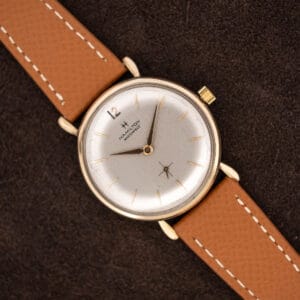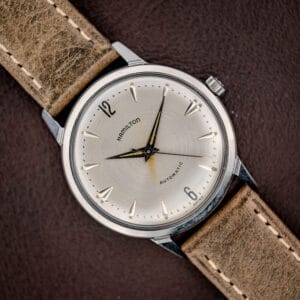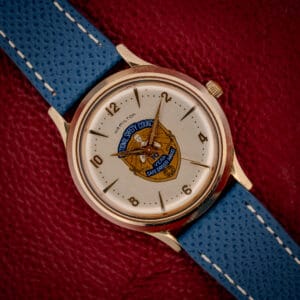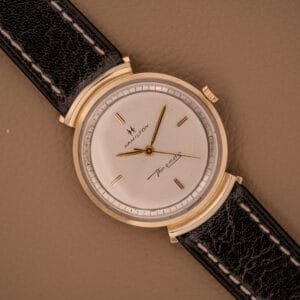

Hamilton spent the first half of the twentieth century as the watch America trusted with the things that mattered. Railroad timing. Military contracts. The factory in Lancaster, Pennsylvania was the whole argument, and the argument was simple enough: an American watch owed a Swiss one nothing. For fifty years the company had the movements to back it up. The Hamilton K-455 on this page is what that argument looked like when it finally bent.
Then the automatic arrived, and with it, eventually, the Hamilton K-455 on this page. Building a self-winding caliber from nothing is a different proposition from refining one a factory has made for fifty years, and Hamilton went to Switzerland for it. Its first automatics landed in 1954 running the Swiss cal. 661, and the K-series that followed was built that way from the start. Lancaster kept turning out manual watches the whole time, which is the part that makes the decision read less like surrender and more like triage. By 1956, when the K-455 entered the catalog, nobody was apologizing for it anymore.
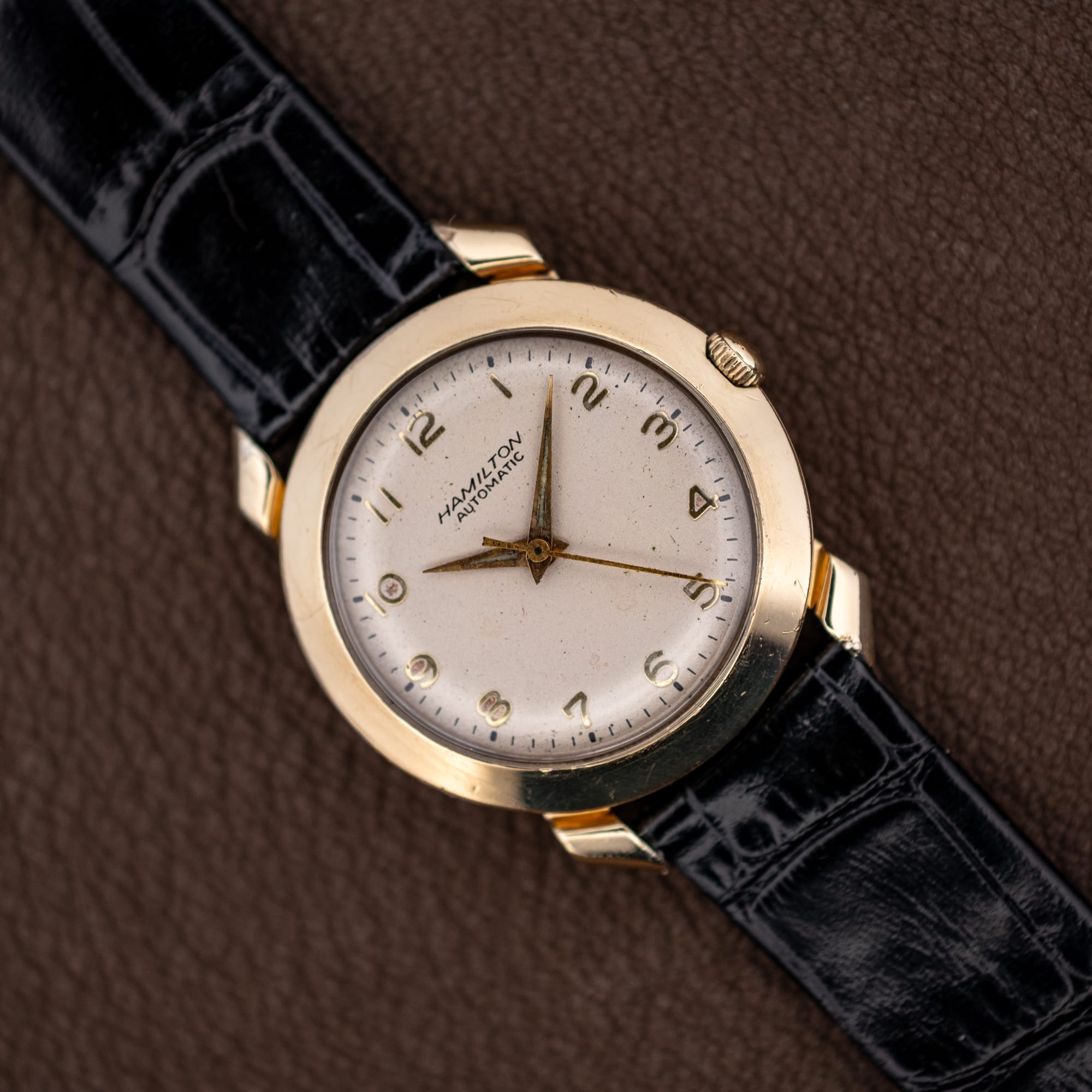
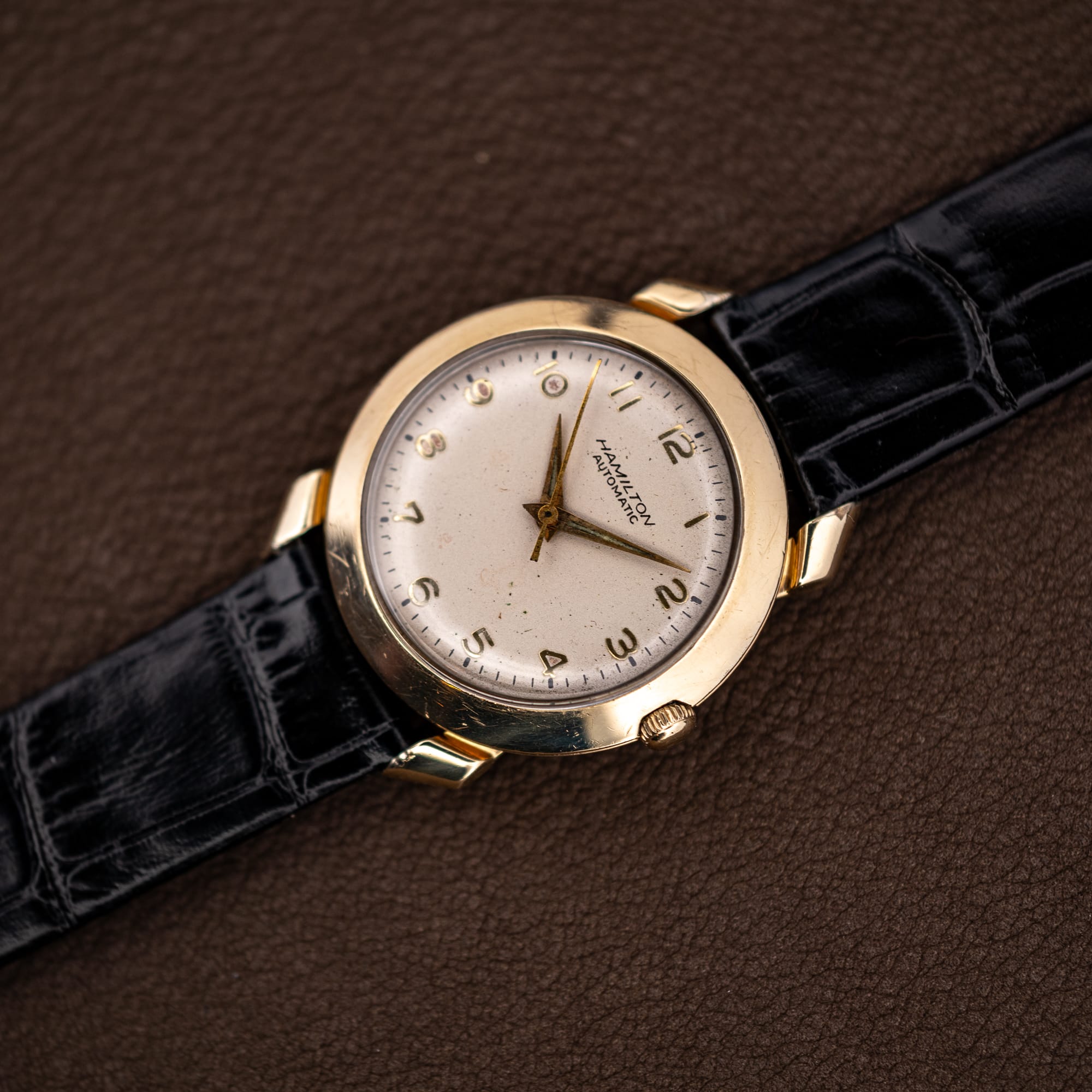
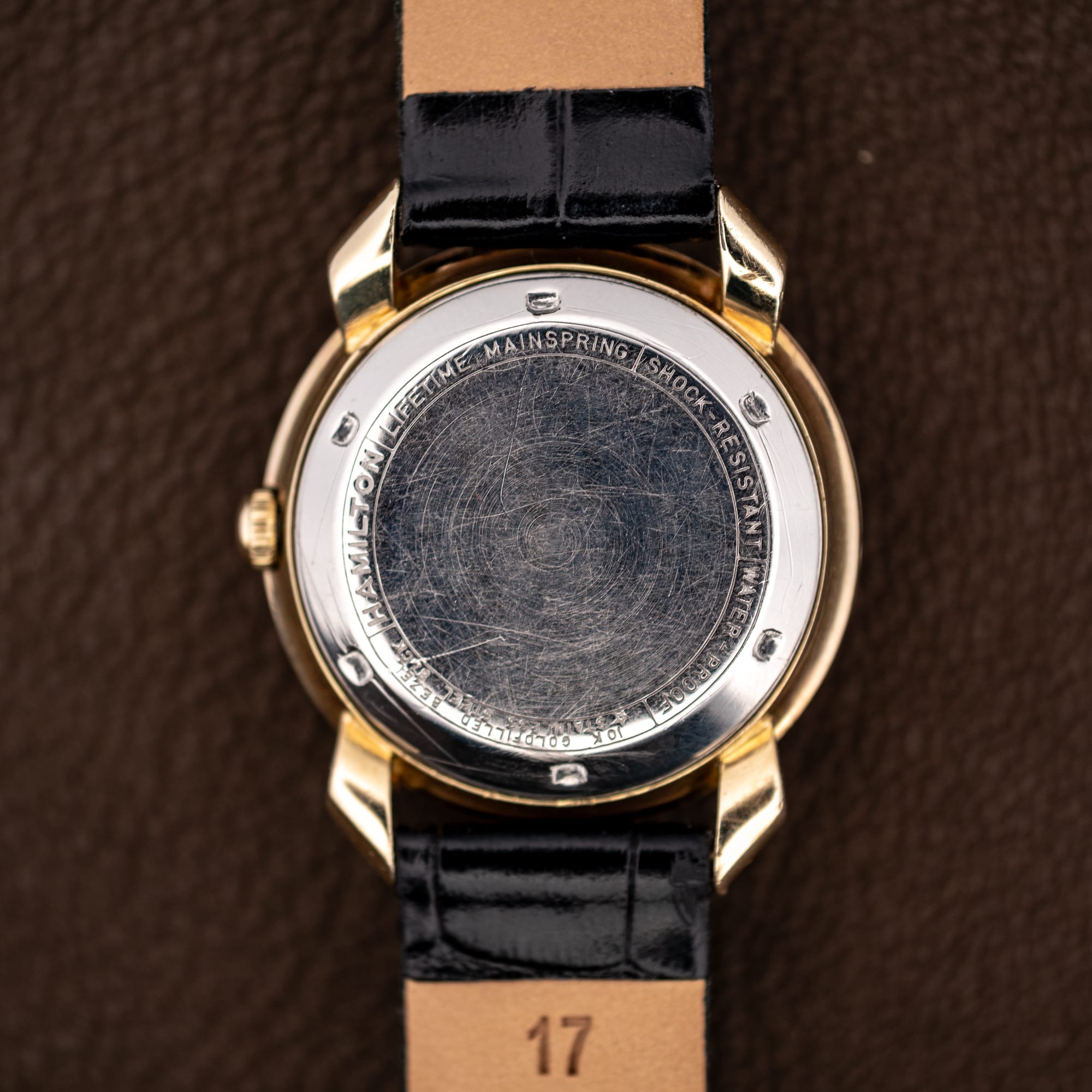
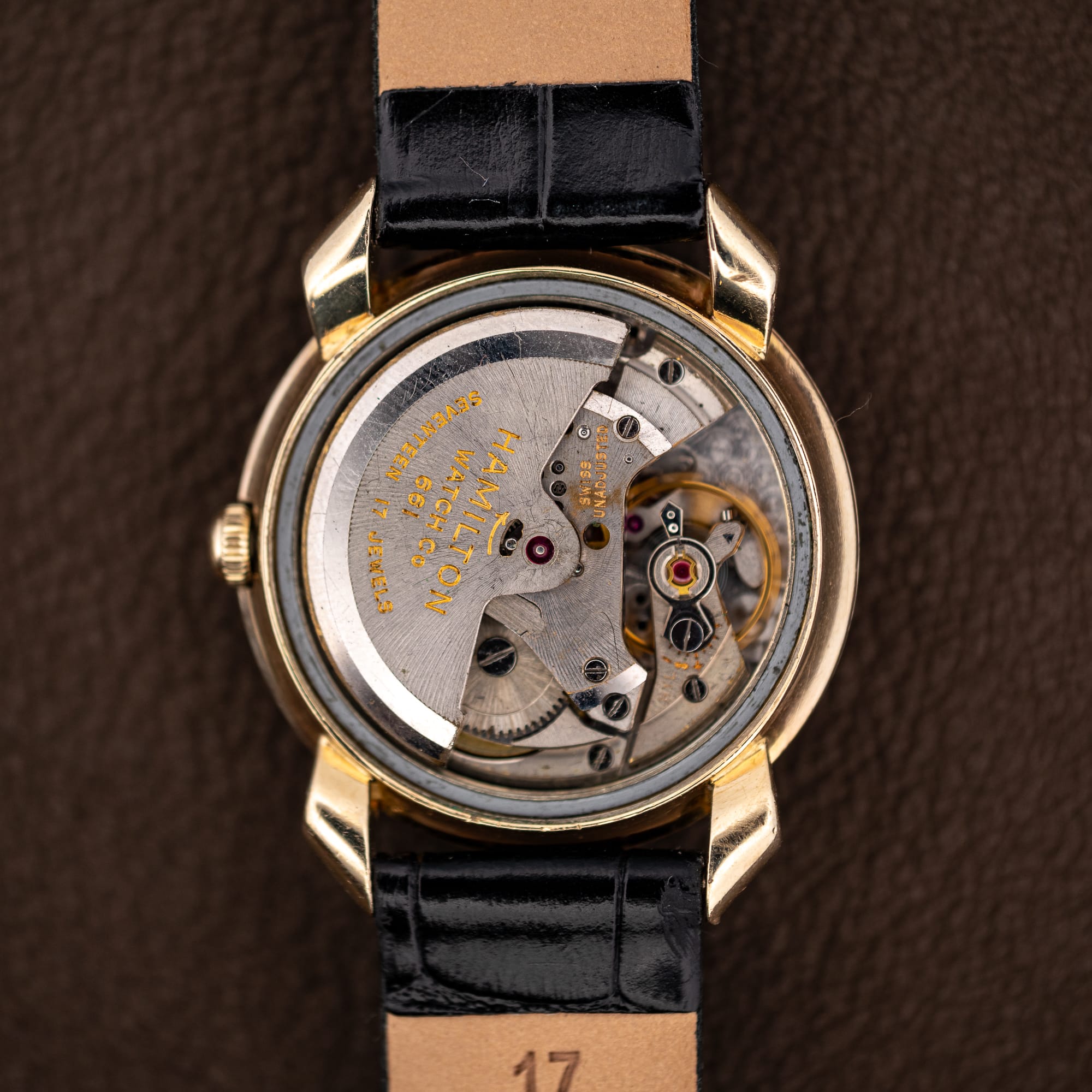
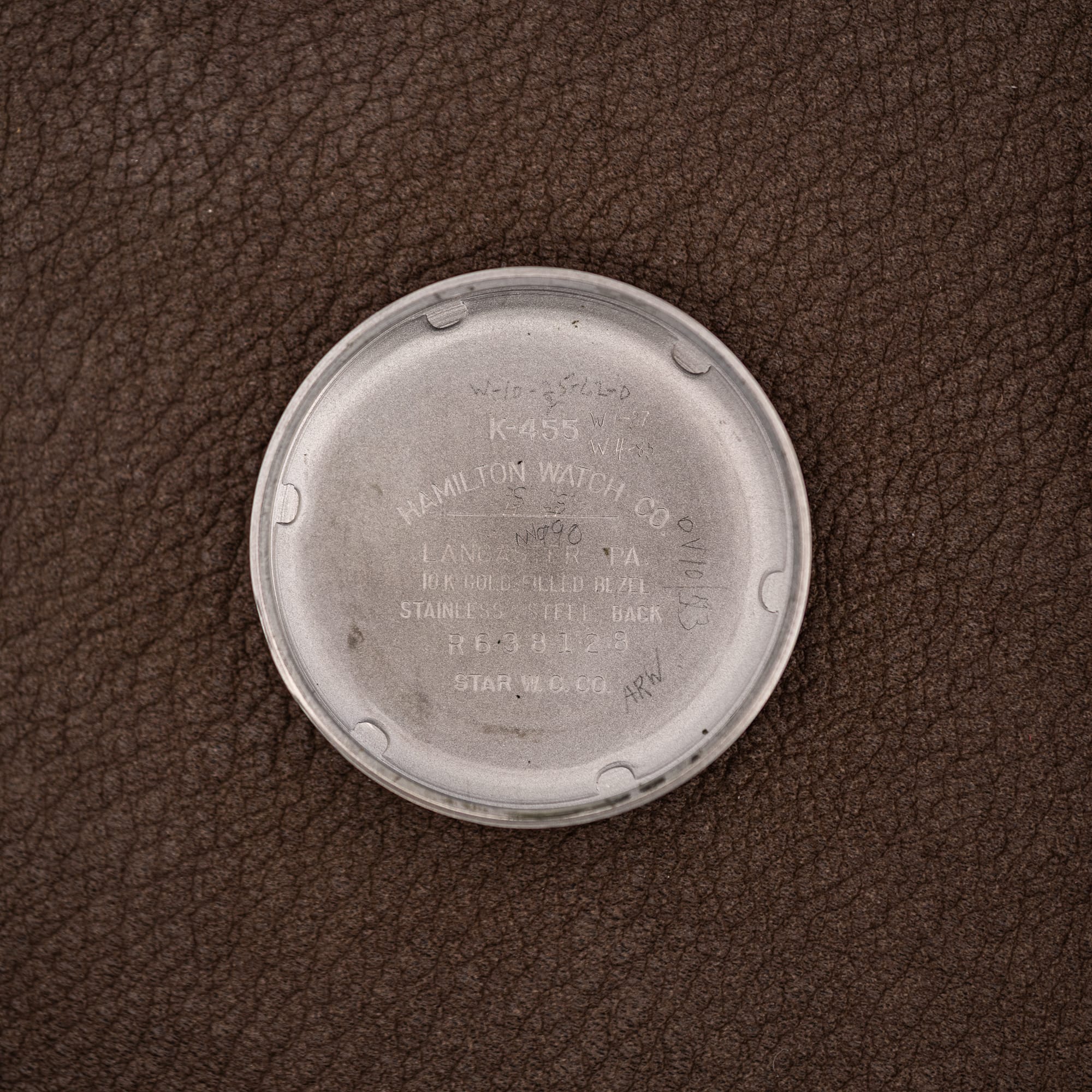
The arrangement is written on the watch itself. Inside the caseback, directly under the model number, the stamp reads “HAMILTON WATCH CO. LANCASTER PA.” The movement sitting beneath it was made in Switzerland. That is what an American watch looked like in 1956, and it is why the K-series reads differently from the manual watches Lancaster kept building alongside it. The case belongs to the same moment, a wide low profile of the kind sometimes called a flying saucer.
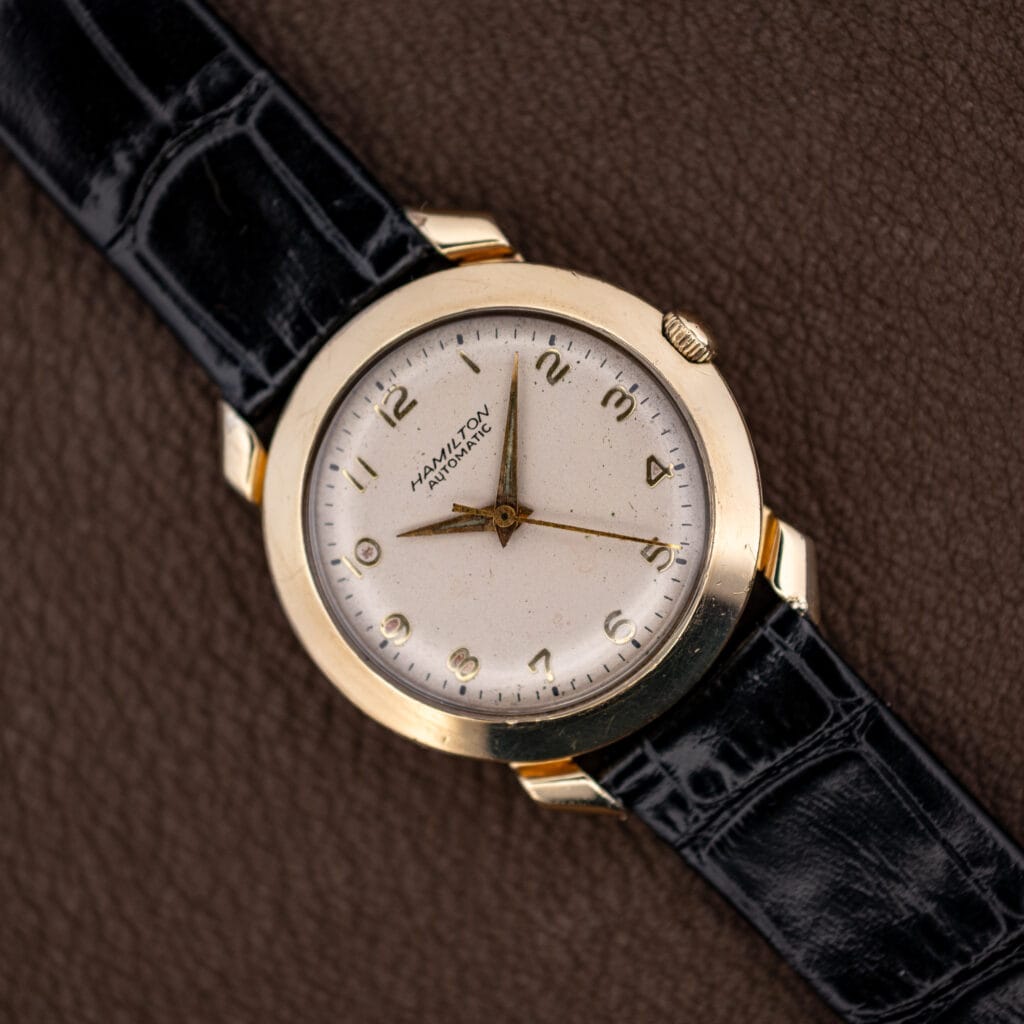
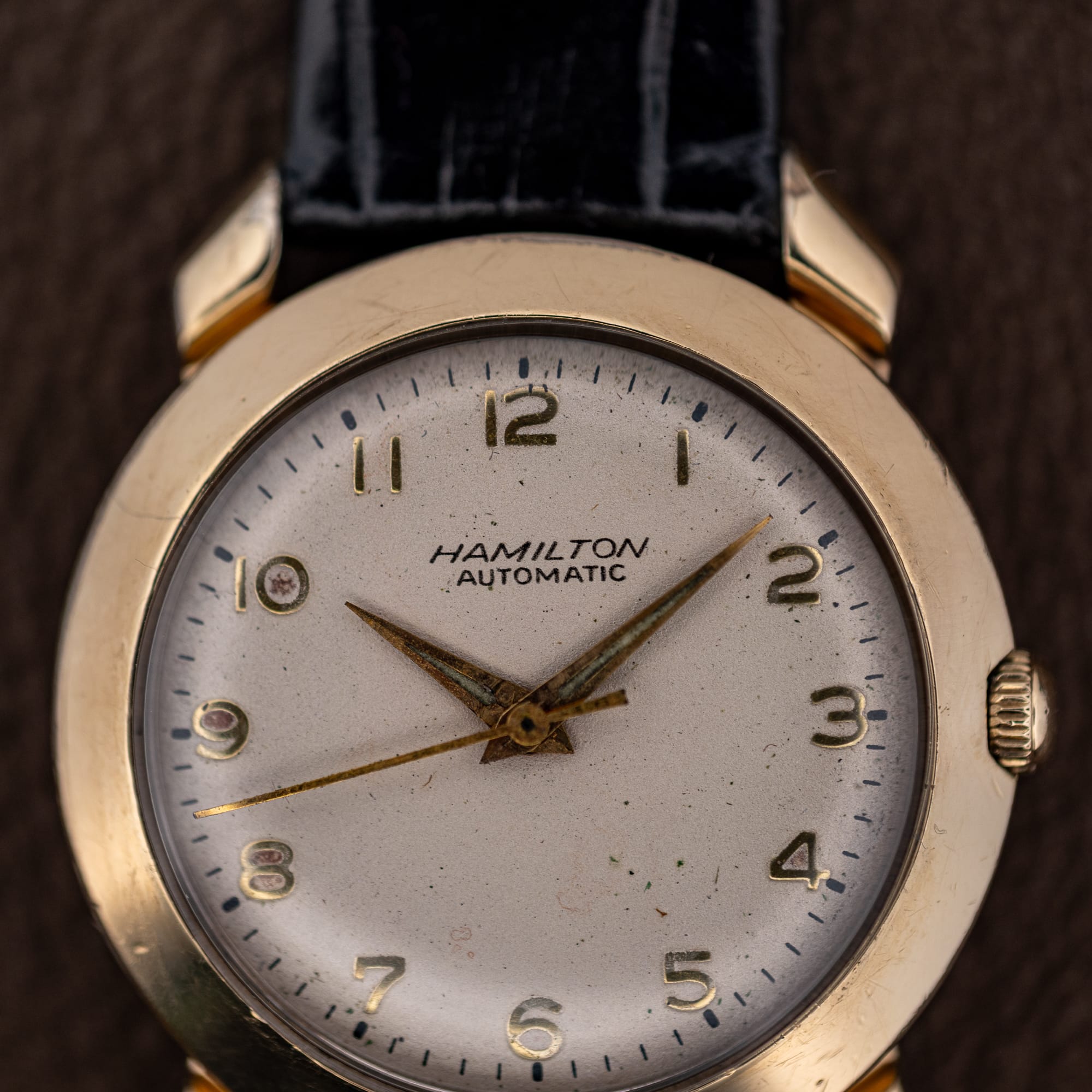
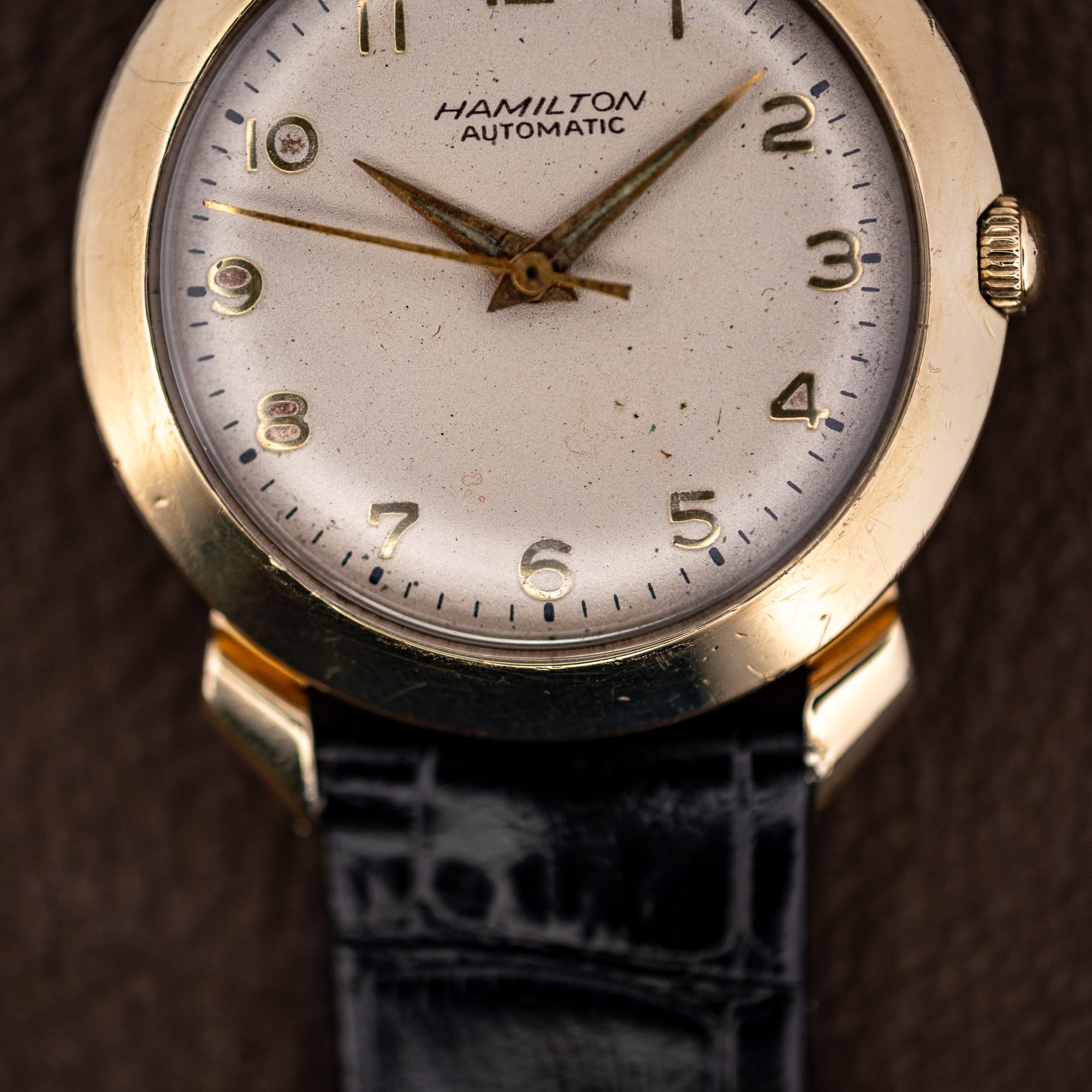
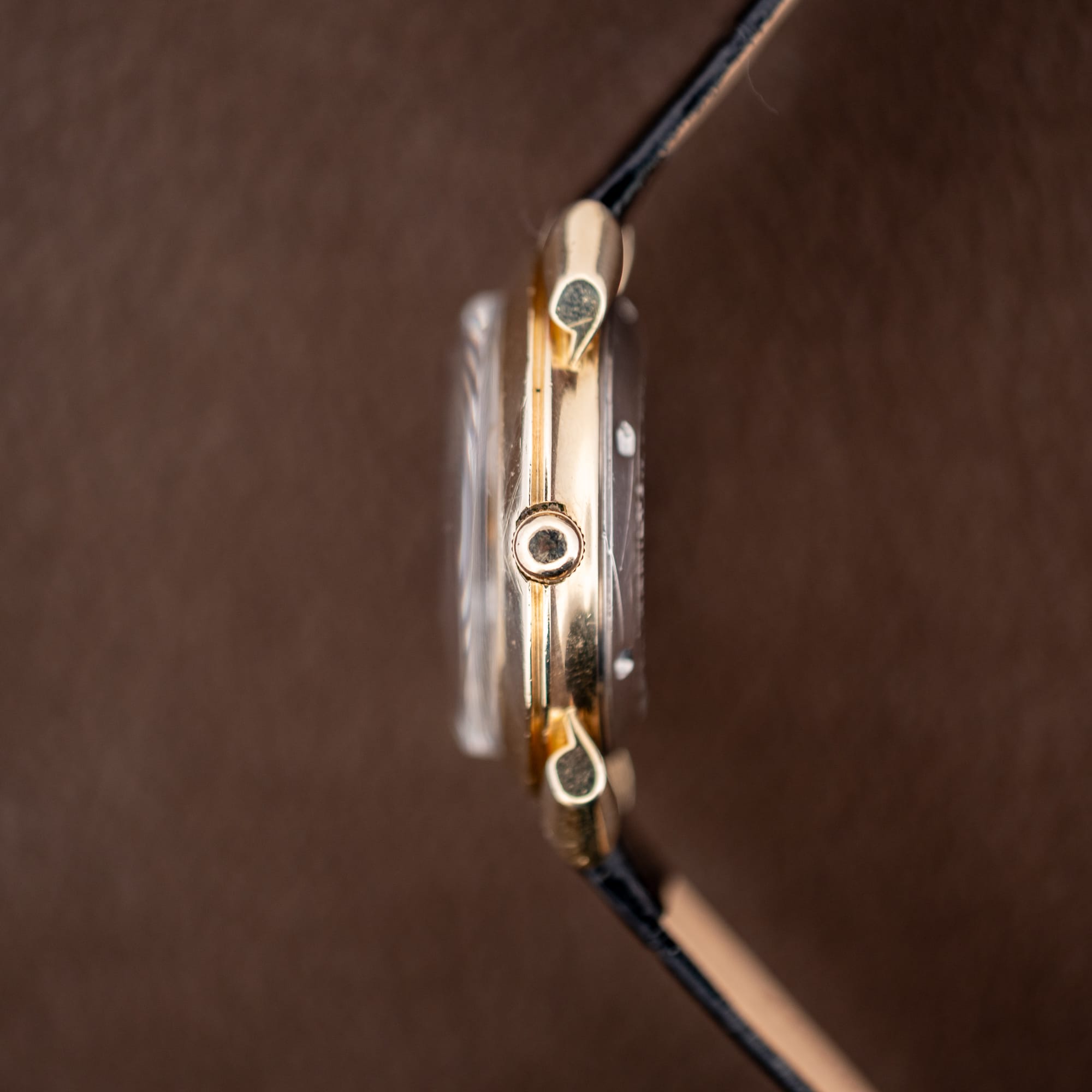
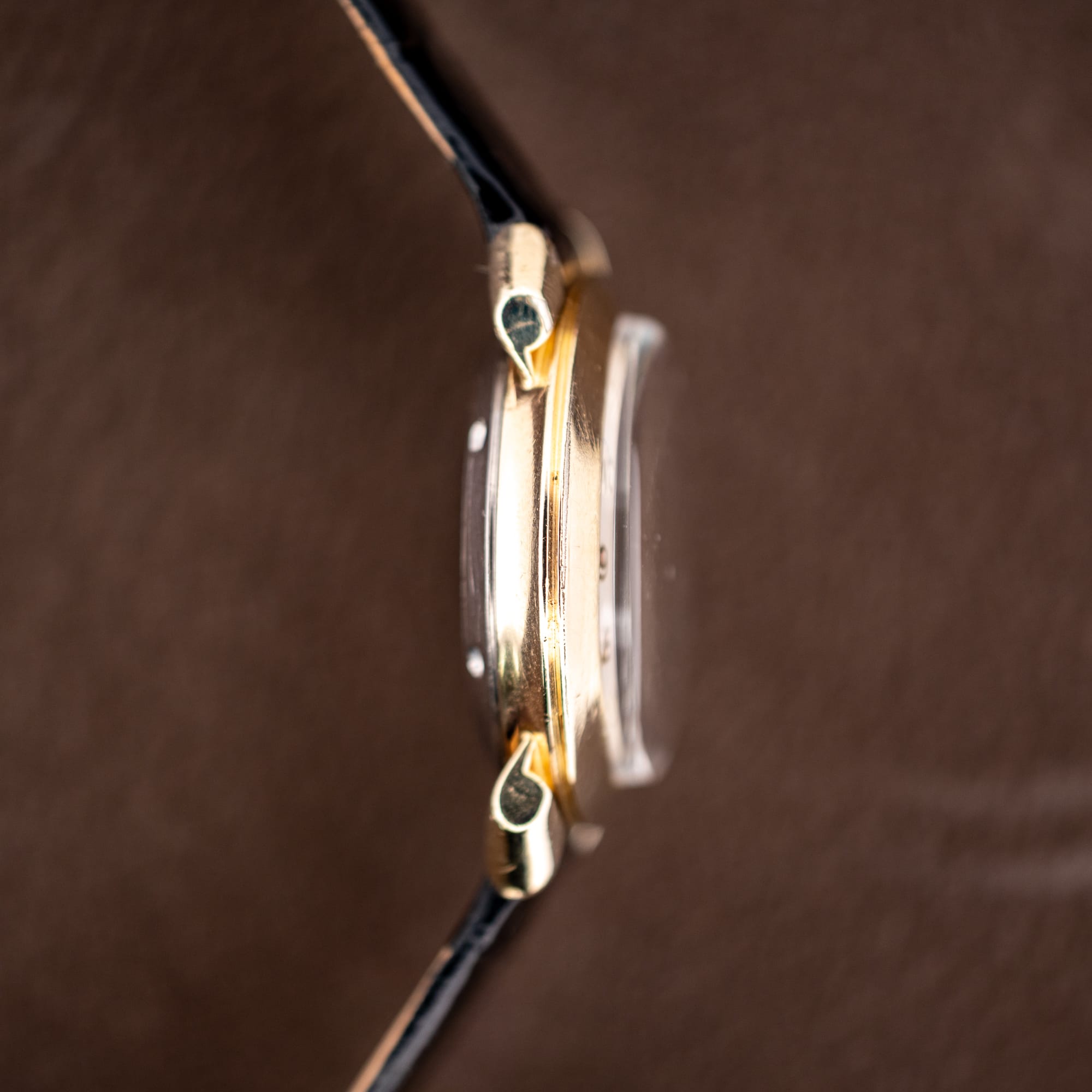
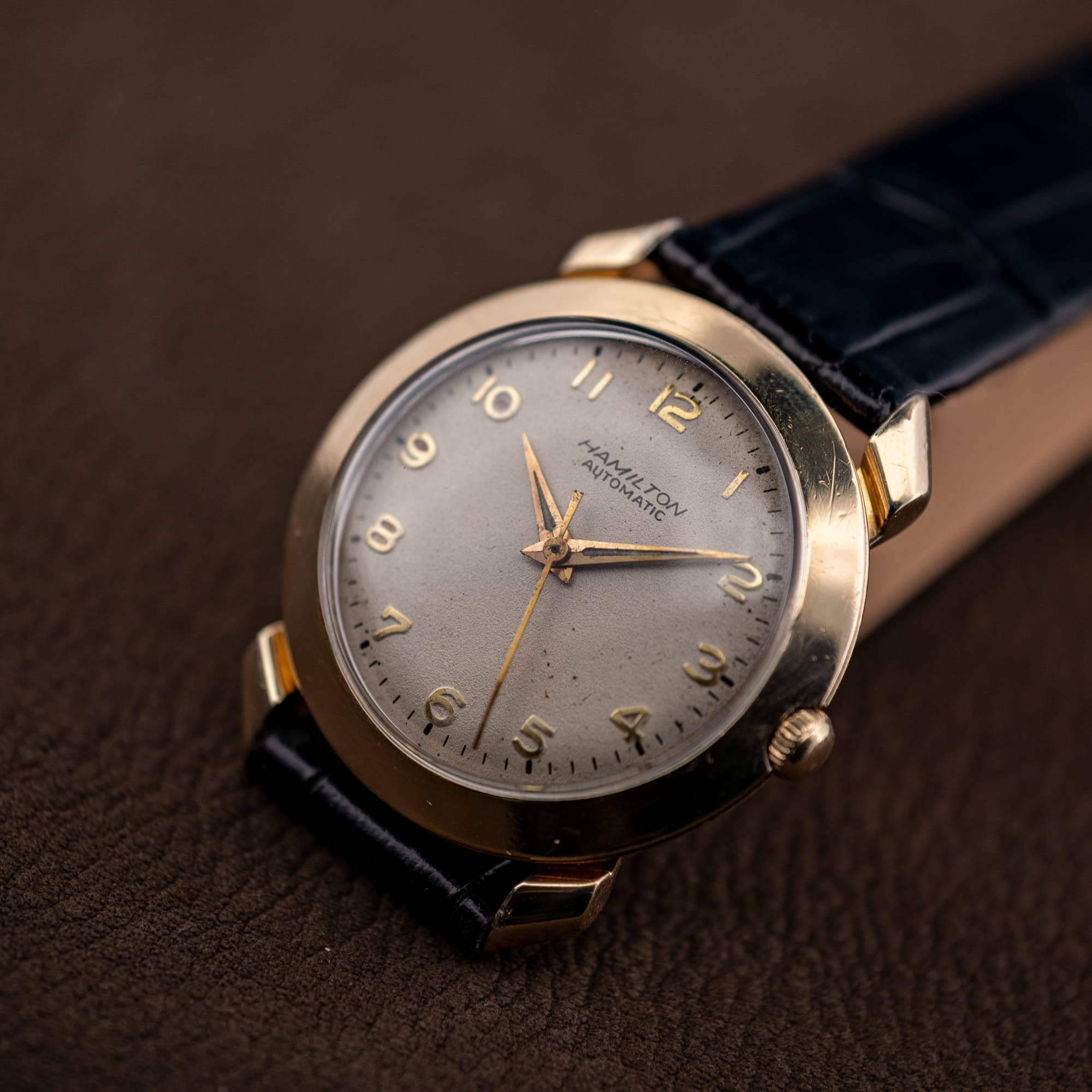
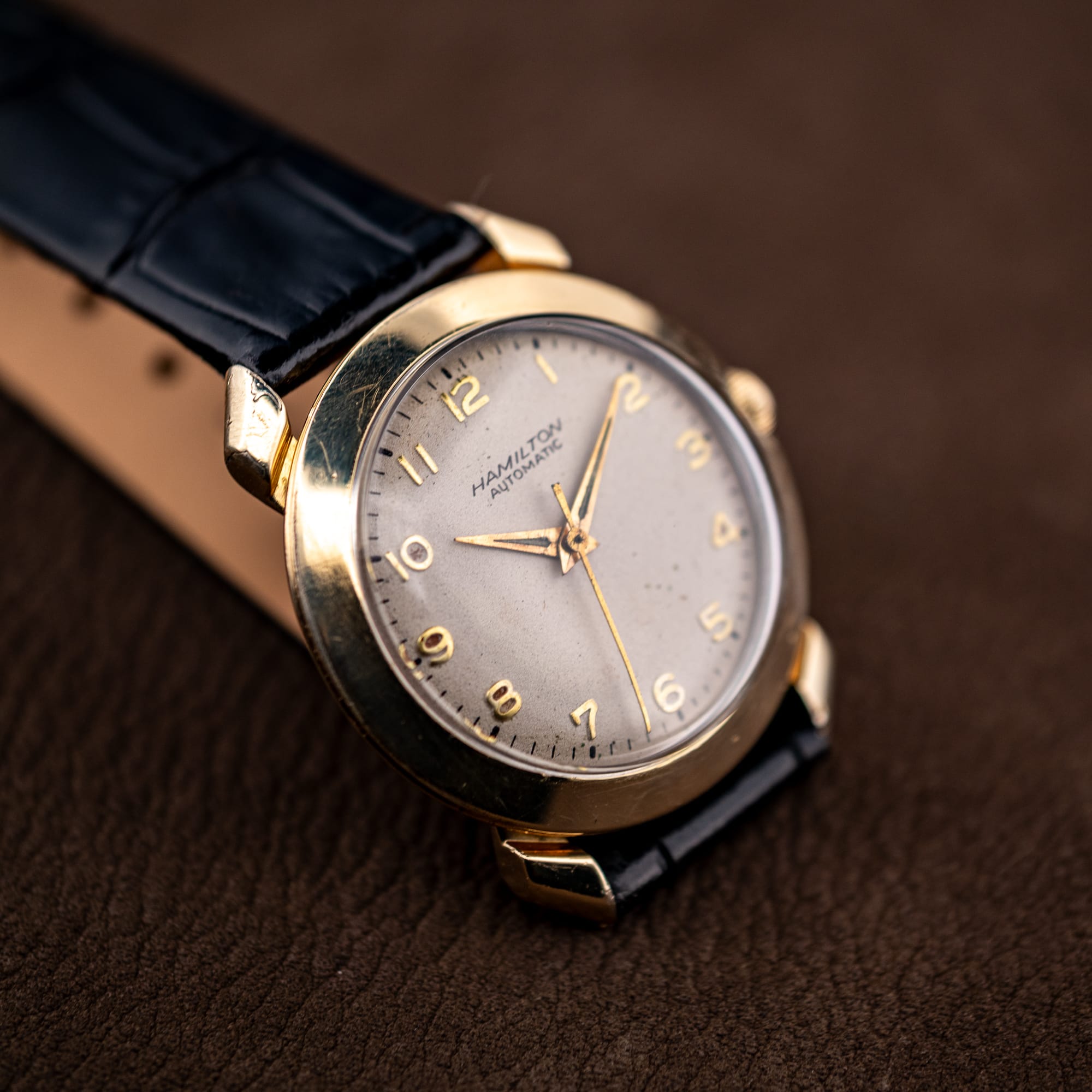
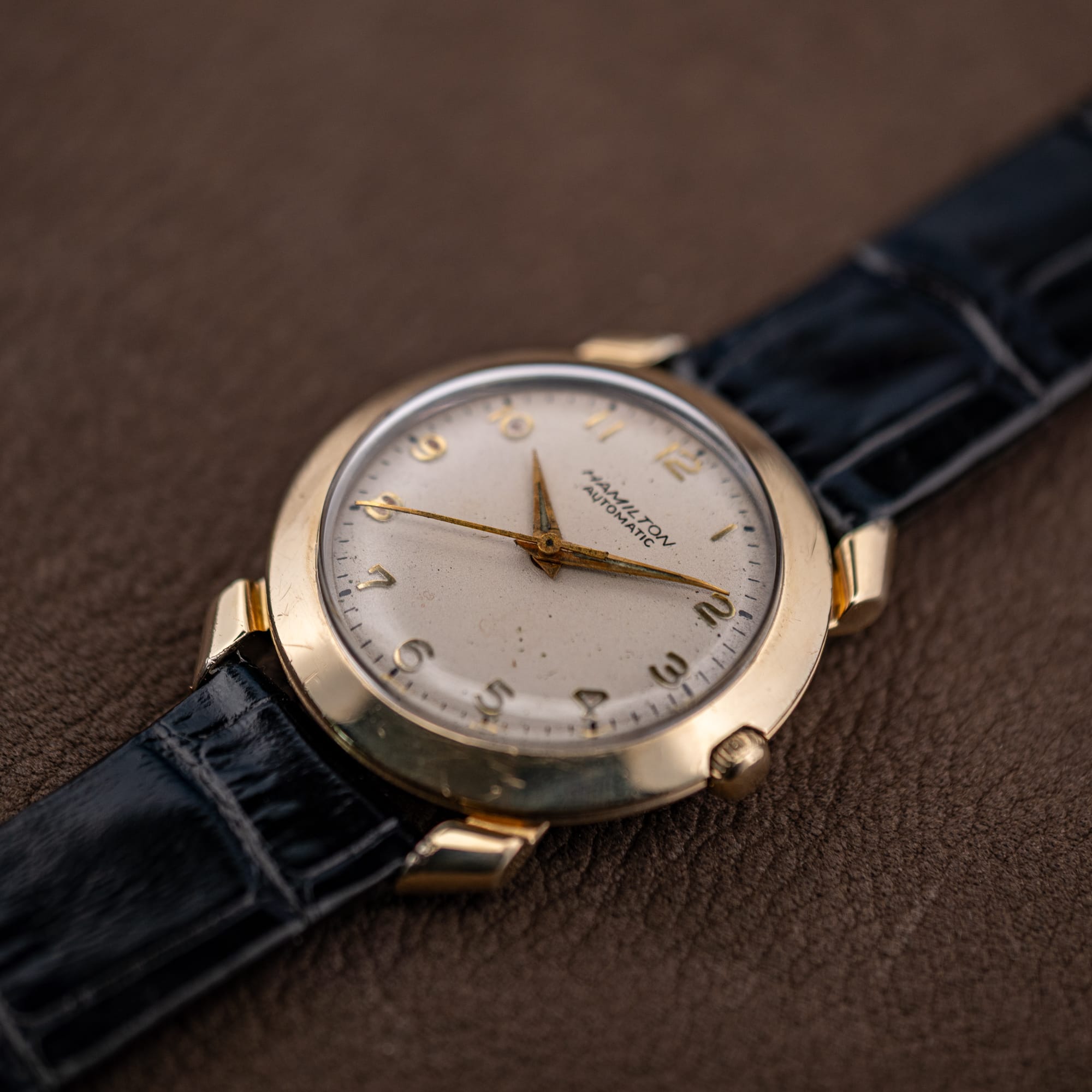
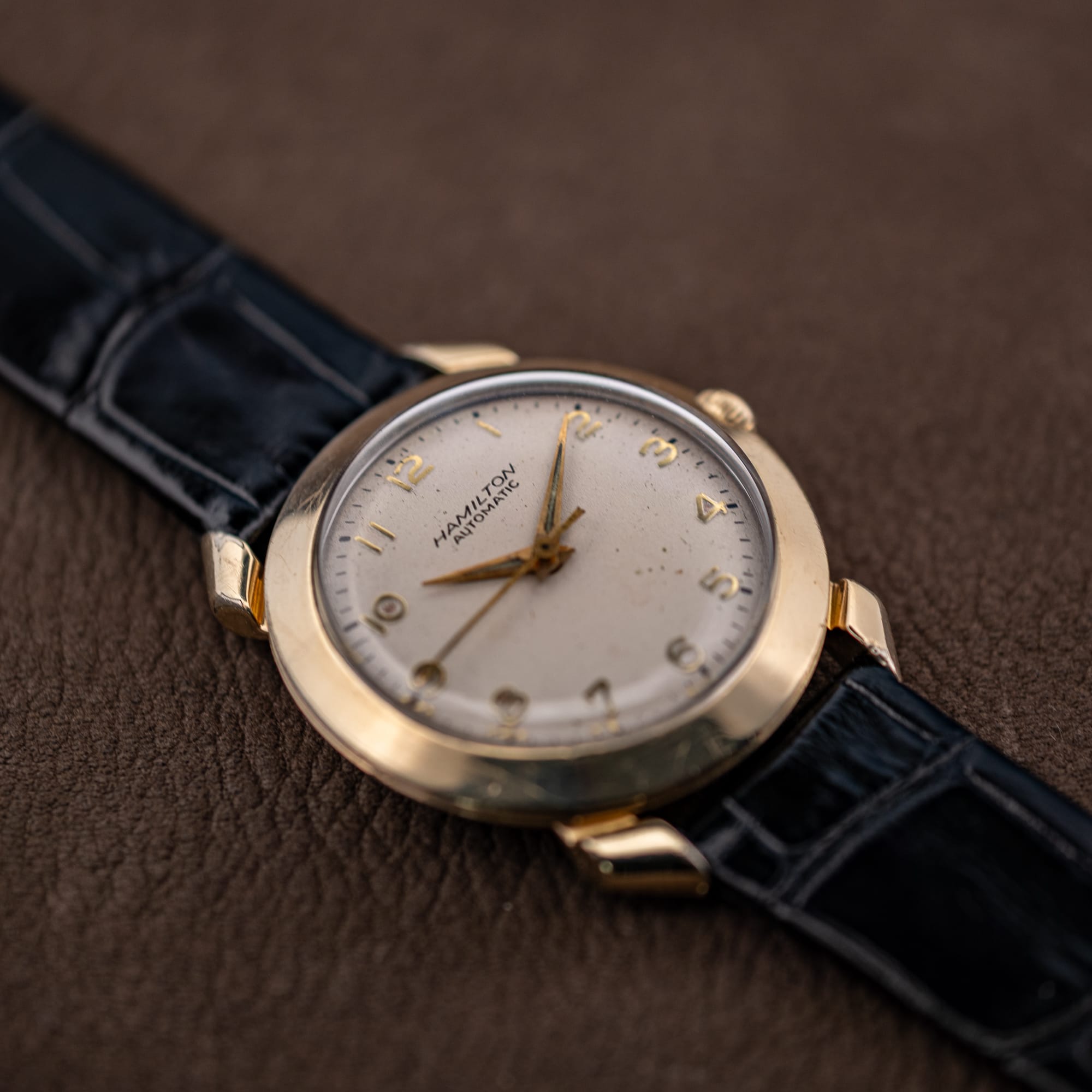
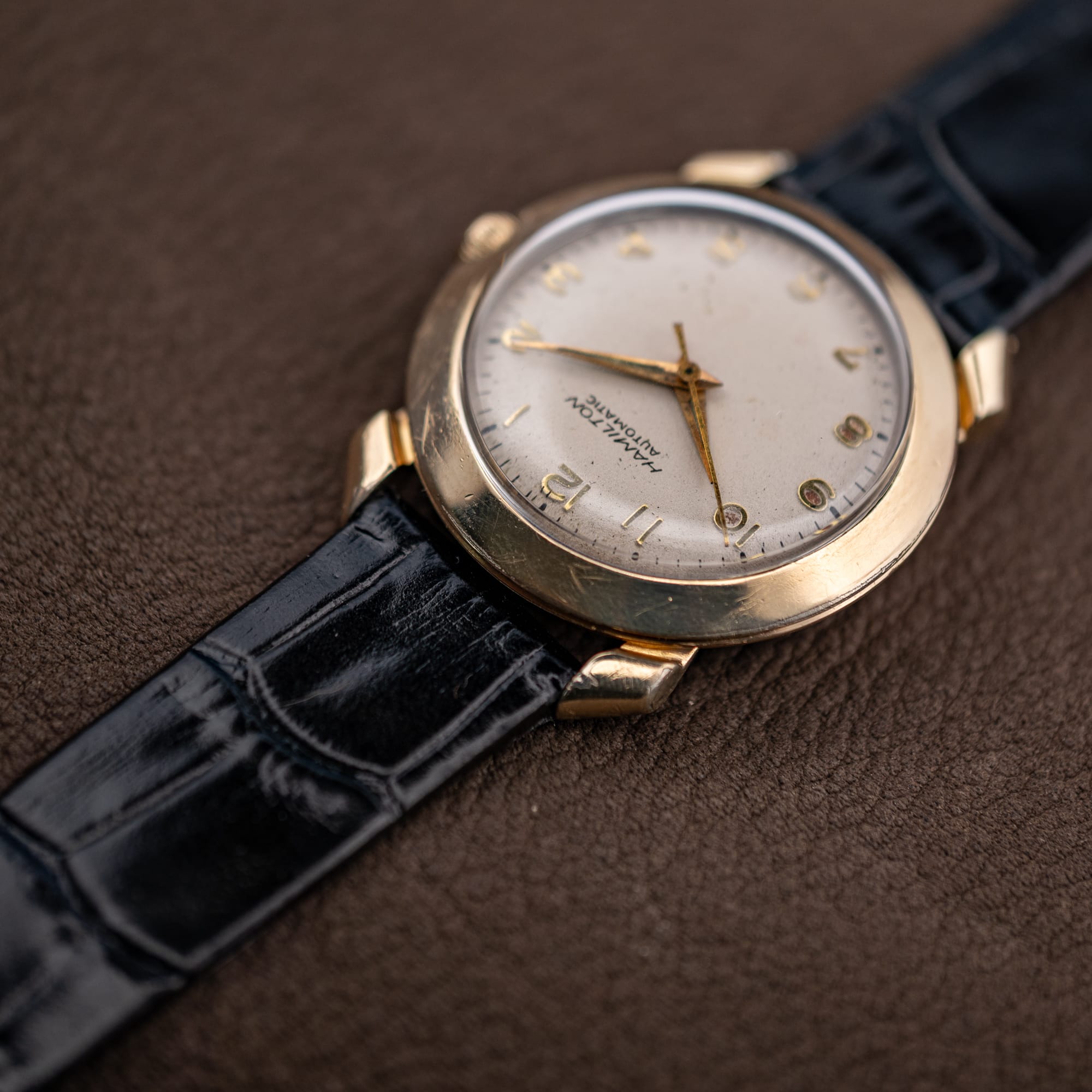
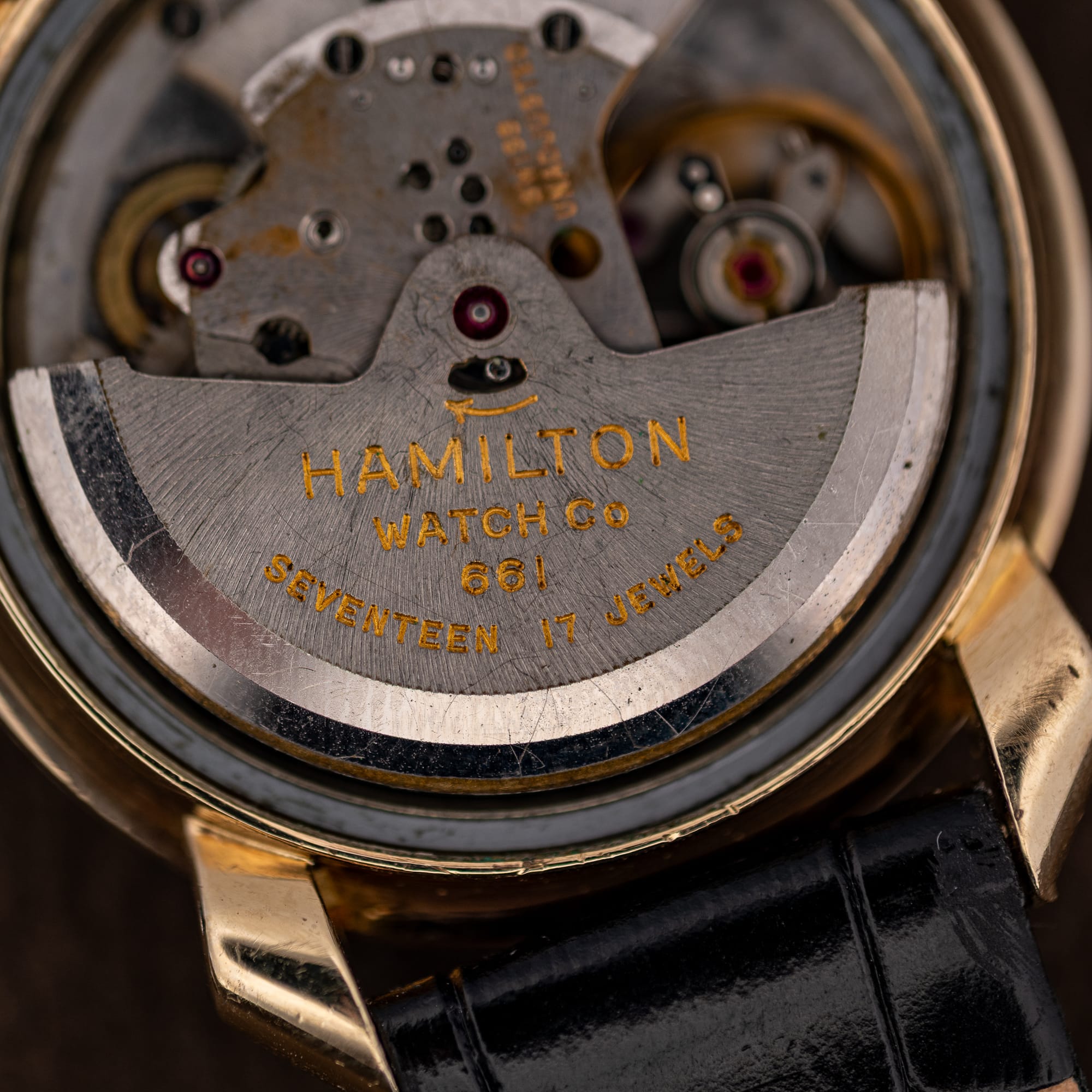
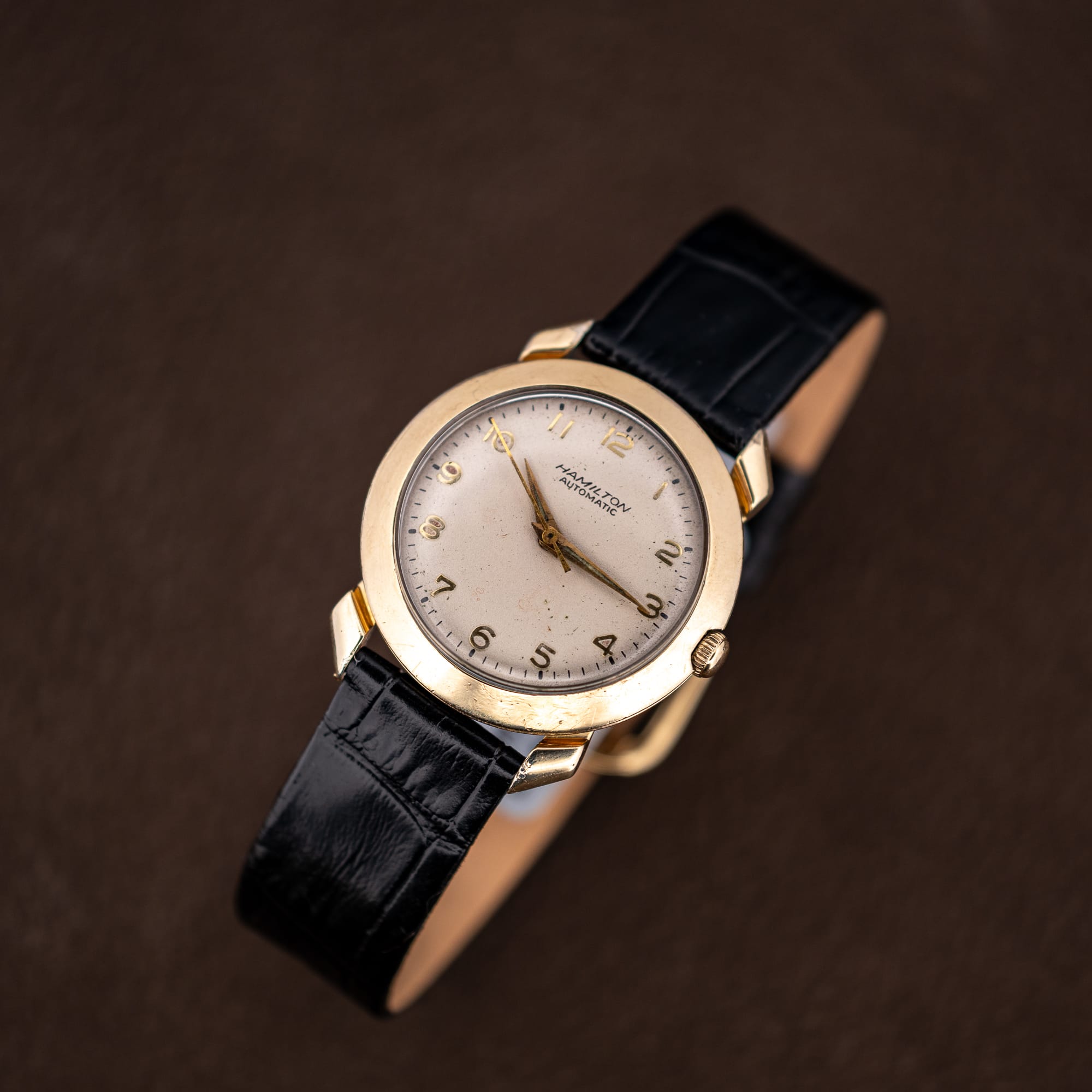
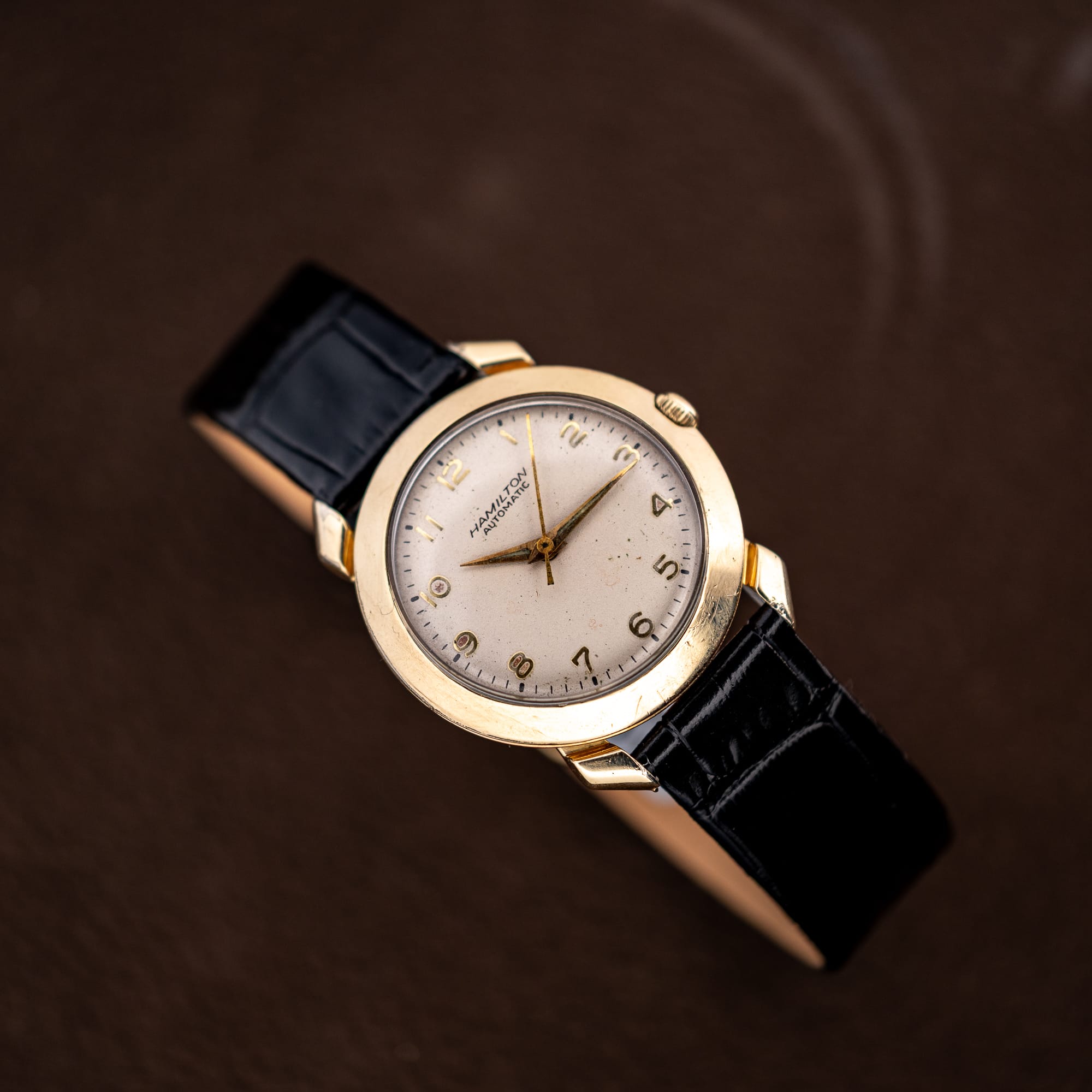
The caliber is Hamilton’s 661, seventeen jewels and forty-two hours of reserve, wound by a full rotor. The same movement is catalogued as the Certina 25-45. It is a big movement, and big movements need deep cases, which is why Hamilton automatics of this decade sit tall. The case answers with a 10k gold filled bezel and a stainless steel back from the Star Watch Case Company, and lugs that flare and facet outward instead of running straight down to the strap. The dial carries applied gold numerals at all twelve hours with luminous plots on the outer track, one of the two patterns Hamilton catalogued for this model.
One detail we get asked about on this reference. The K-455 shares its case with a model called the Transcontinental A, and Hamilton seems to have ended up with more Transcontinental A backs than K-455 backs, because a good number of K-455s went out into the world wearing a caseback stamped for the other watch. This one is stamped K-455.
It arrives on a new black alligator strap and carries our two-year warranty. The gold filled surfaces show the fine hairlines of seventy years, the silvered dial has warmed the way silvered dials do when they are left alone, and there is a light speckling across it that arrived with the same decades. Hamilton conceded the movement and kept the watch.