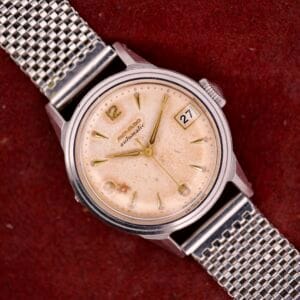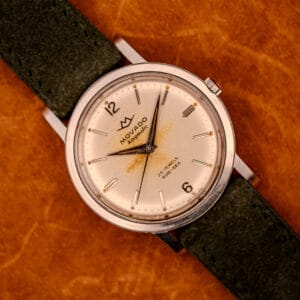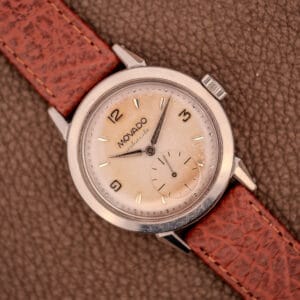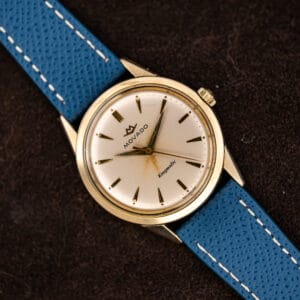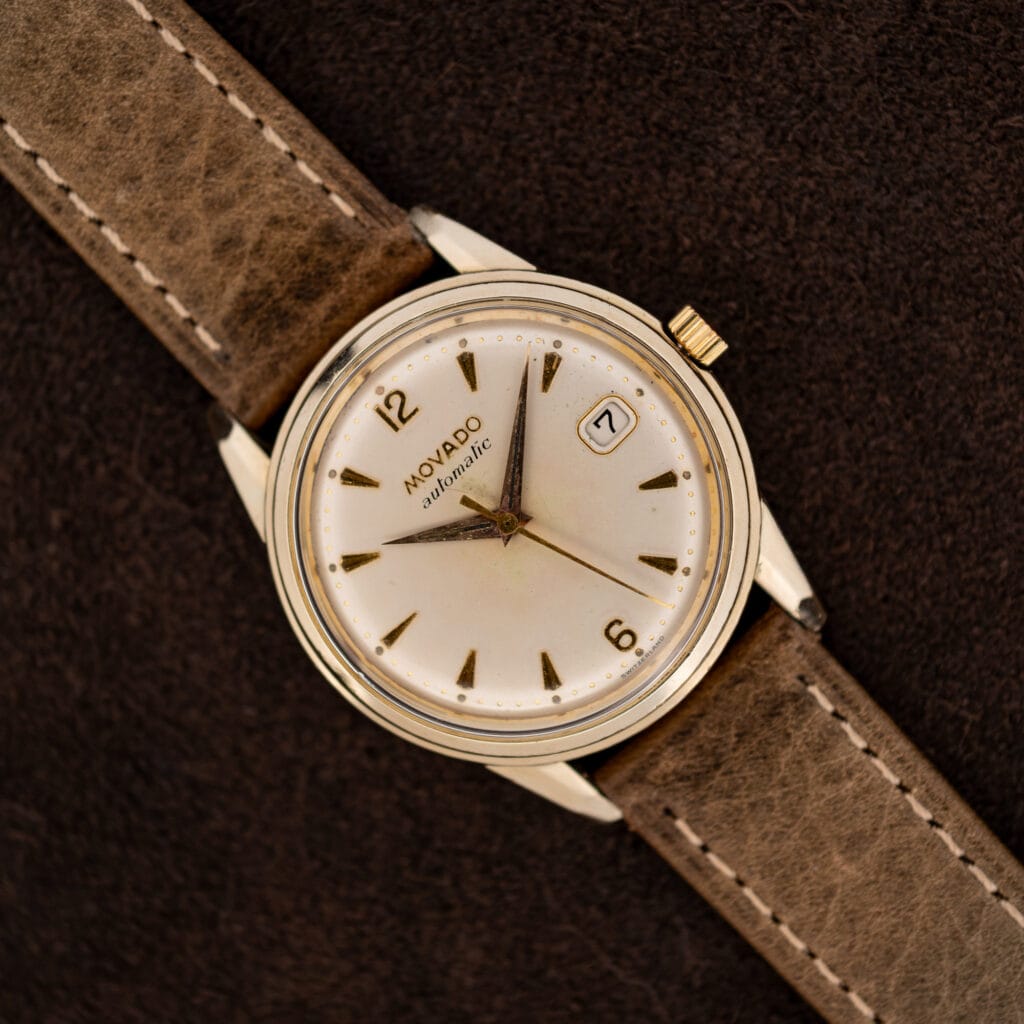
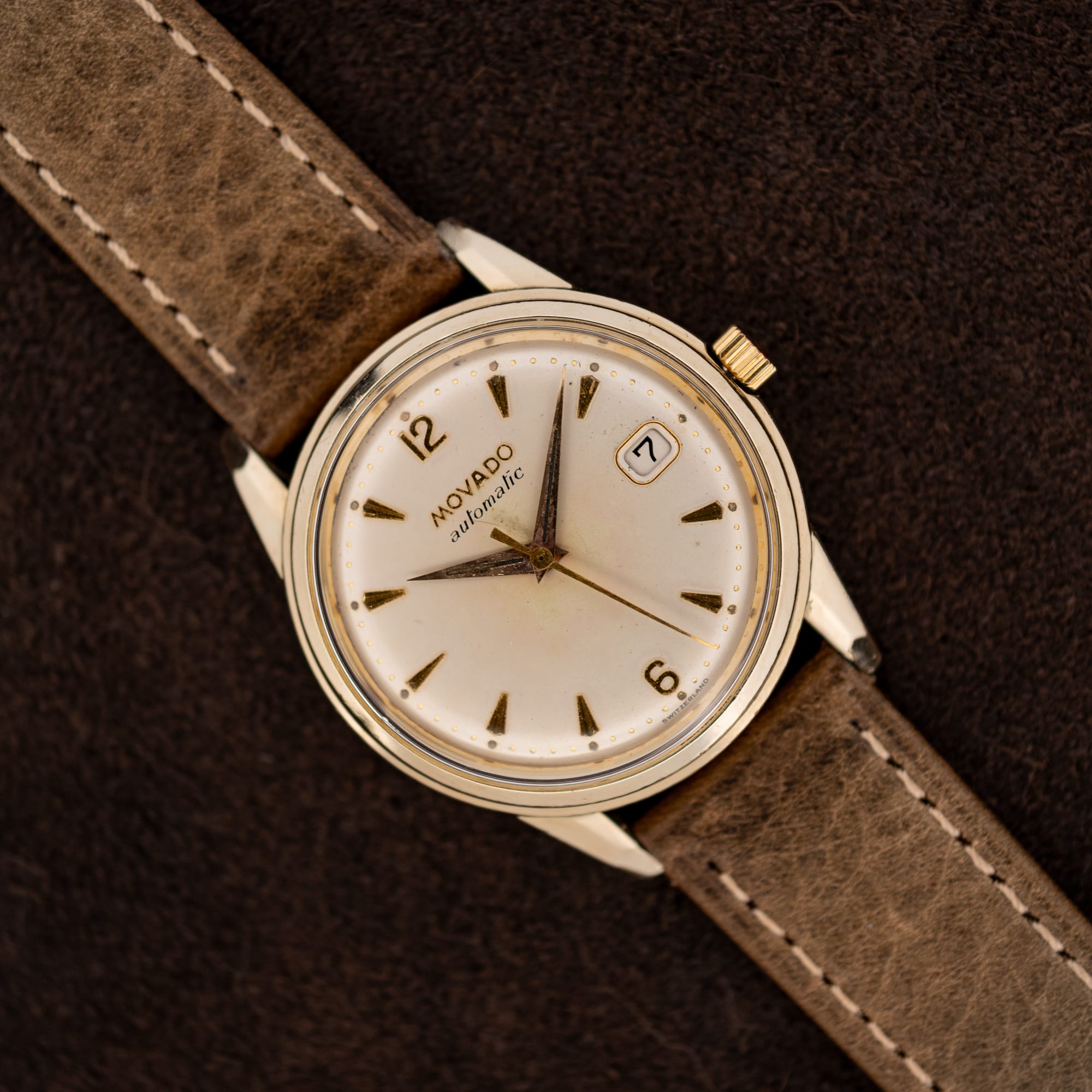
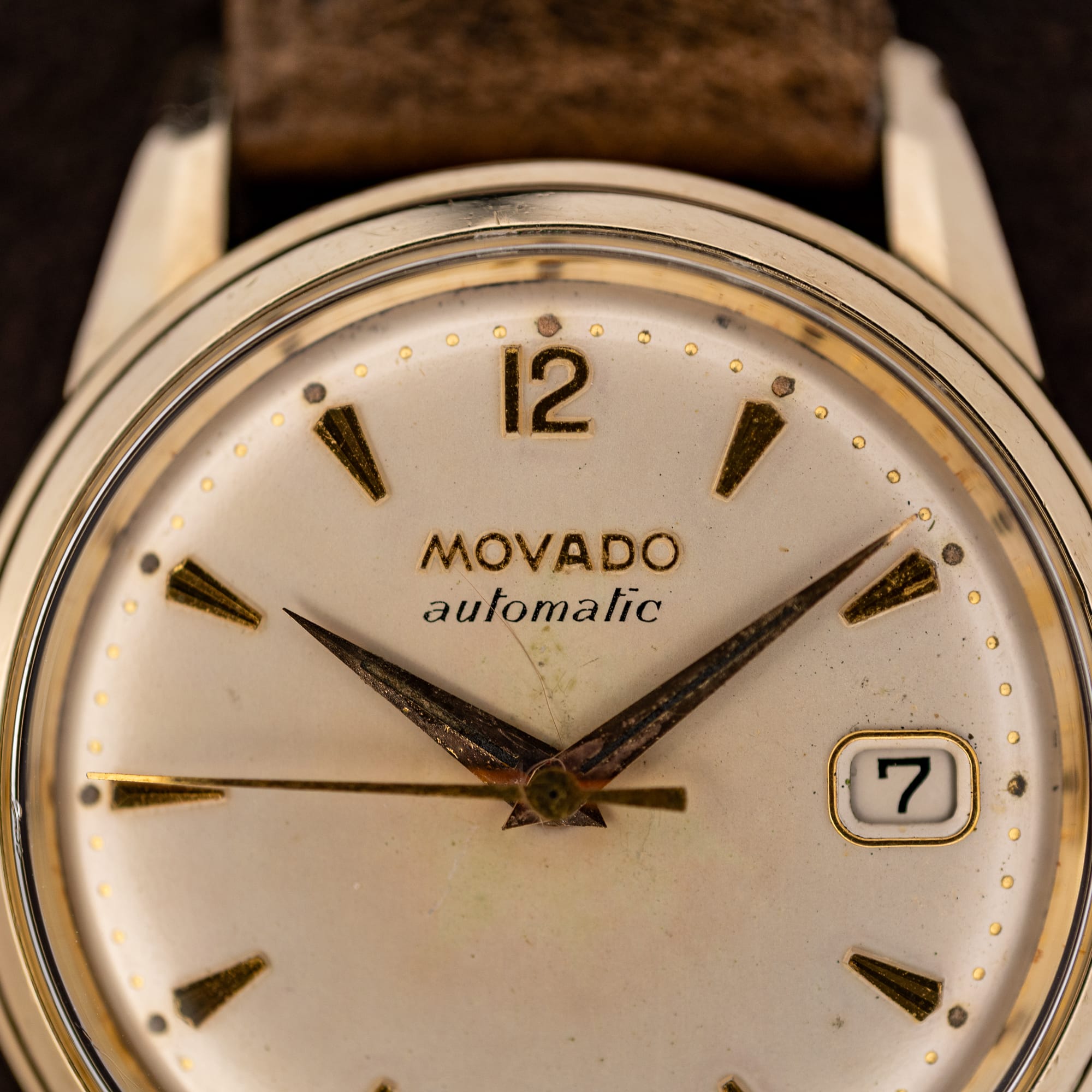
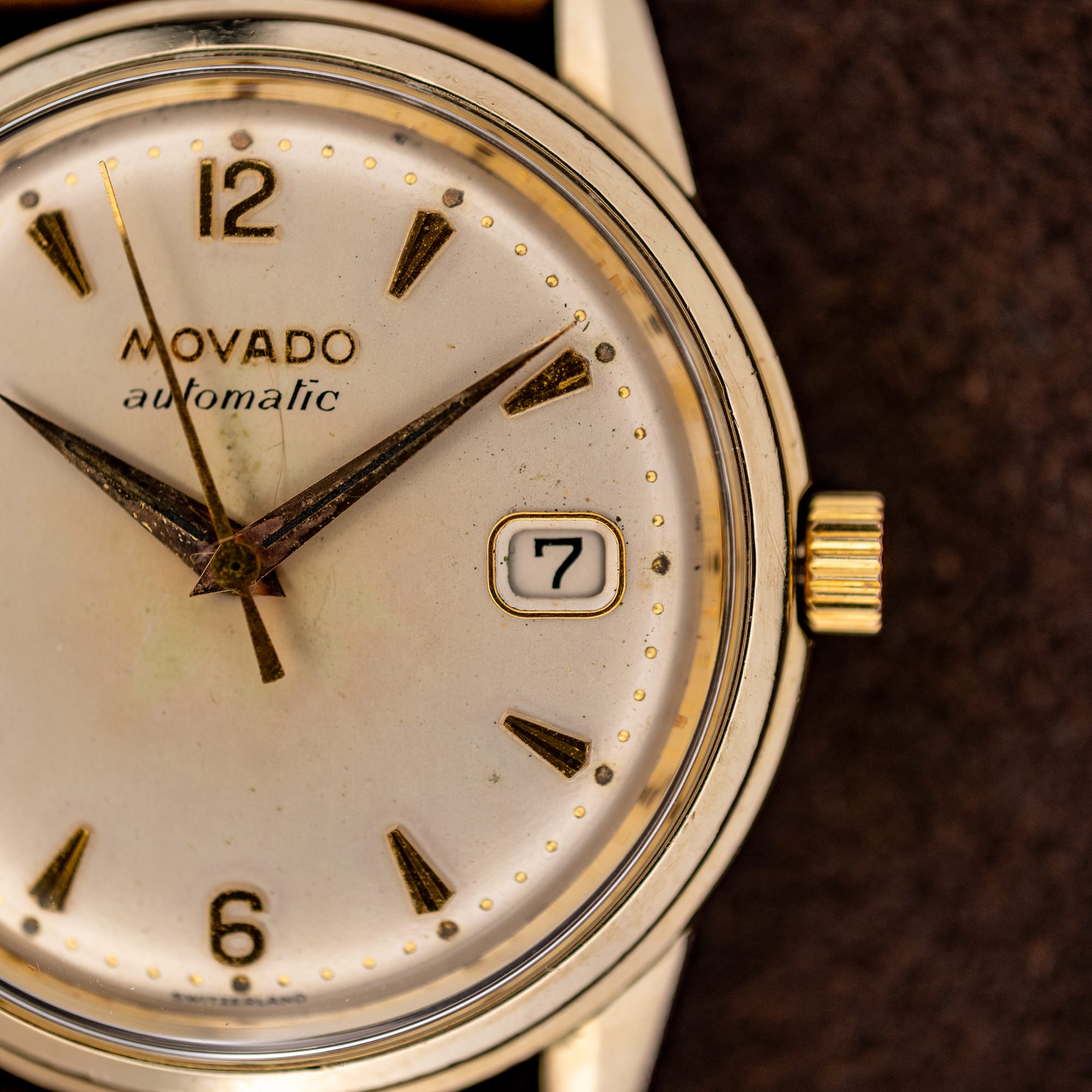
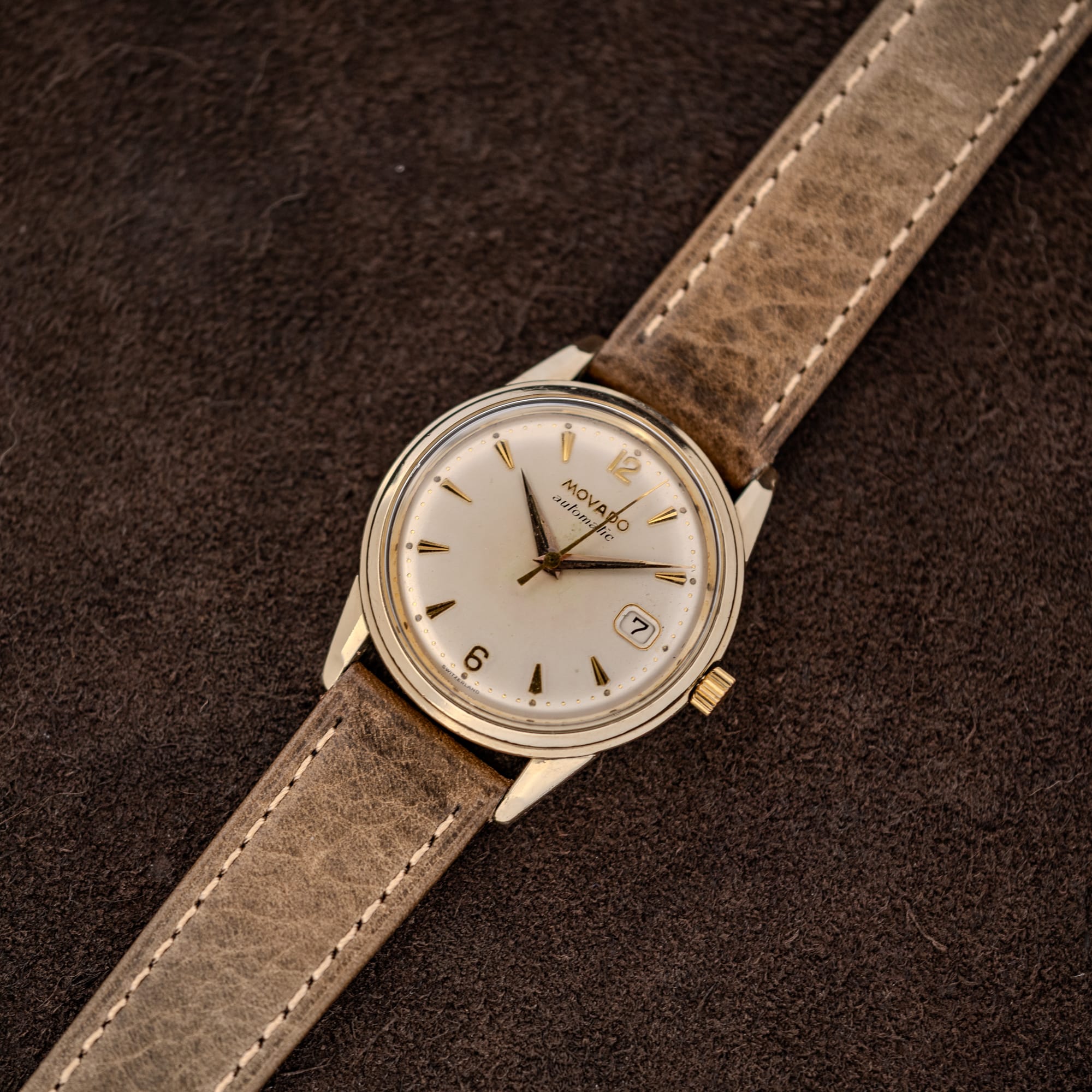
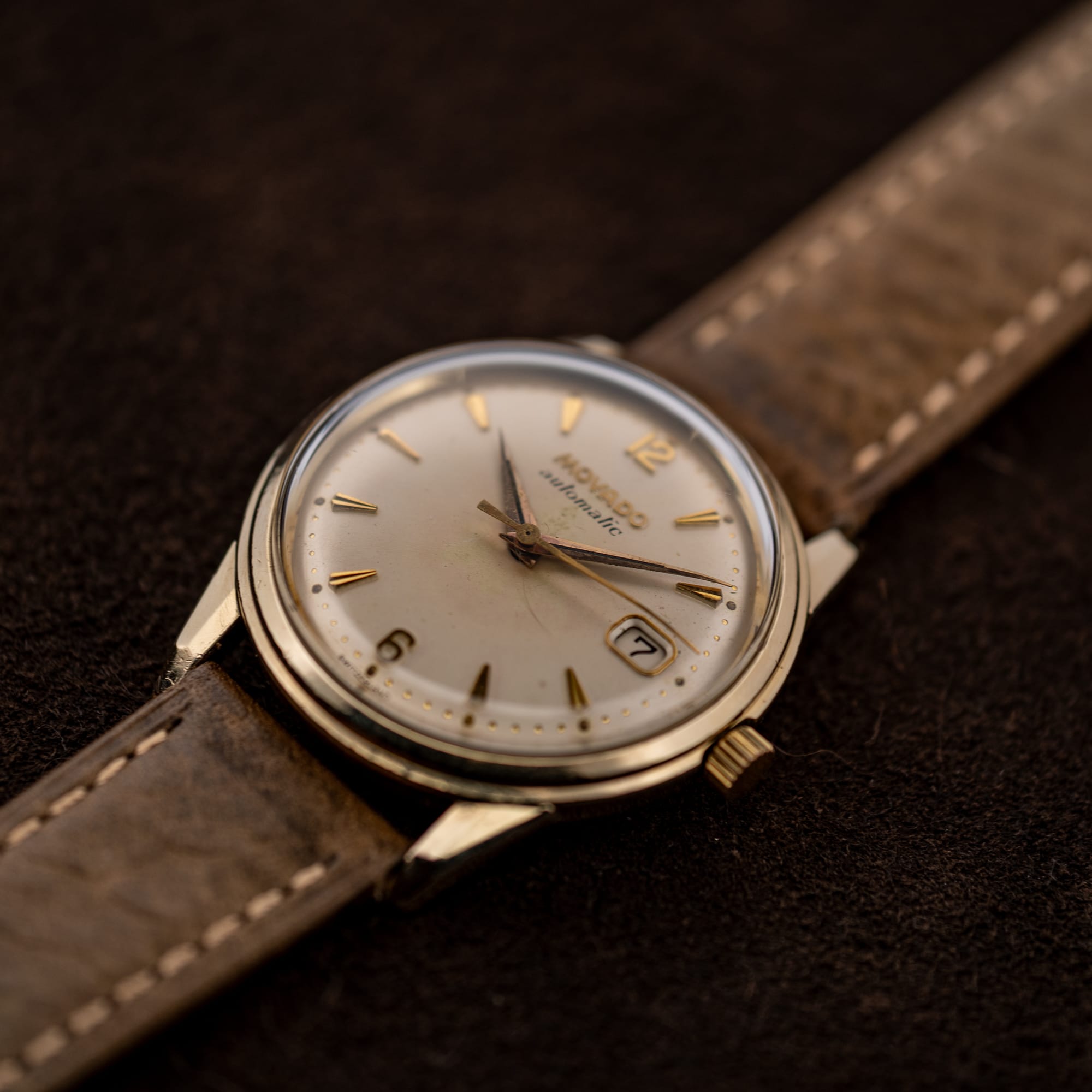
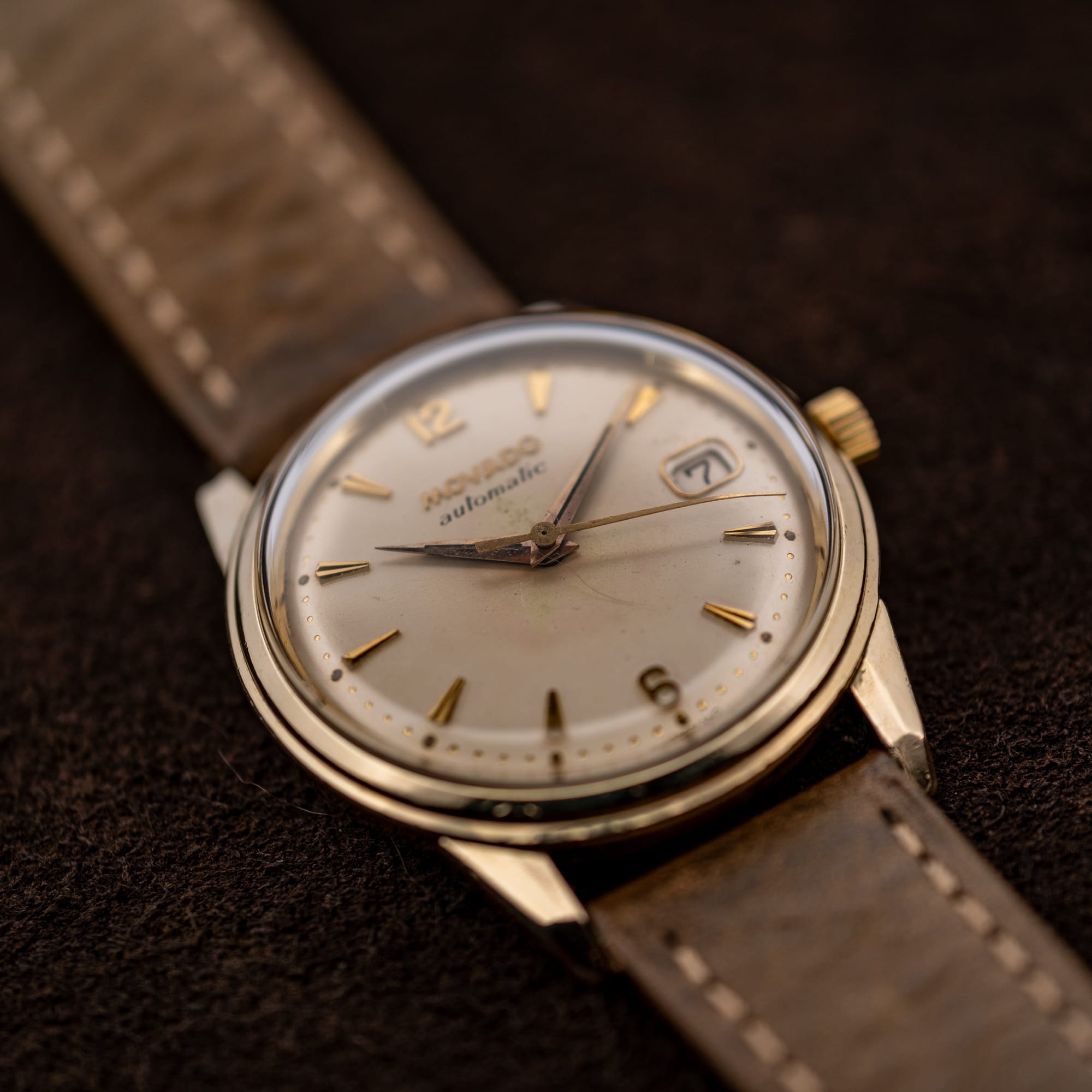
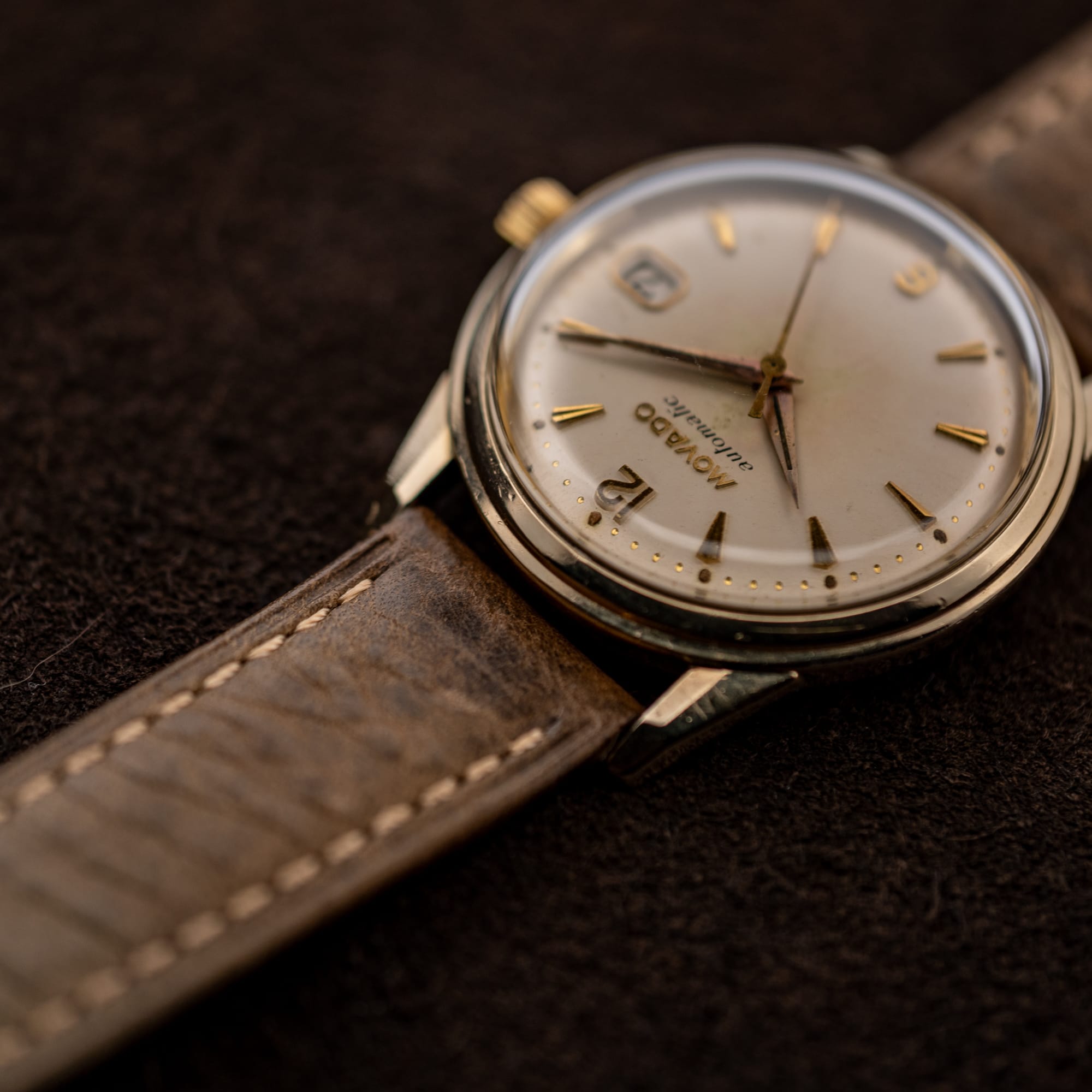
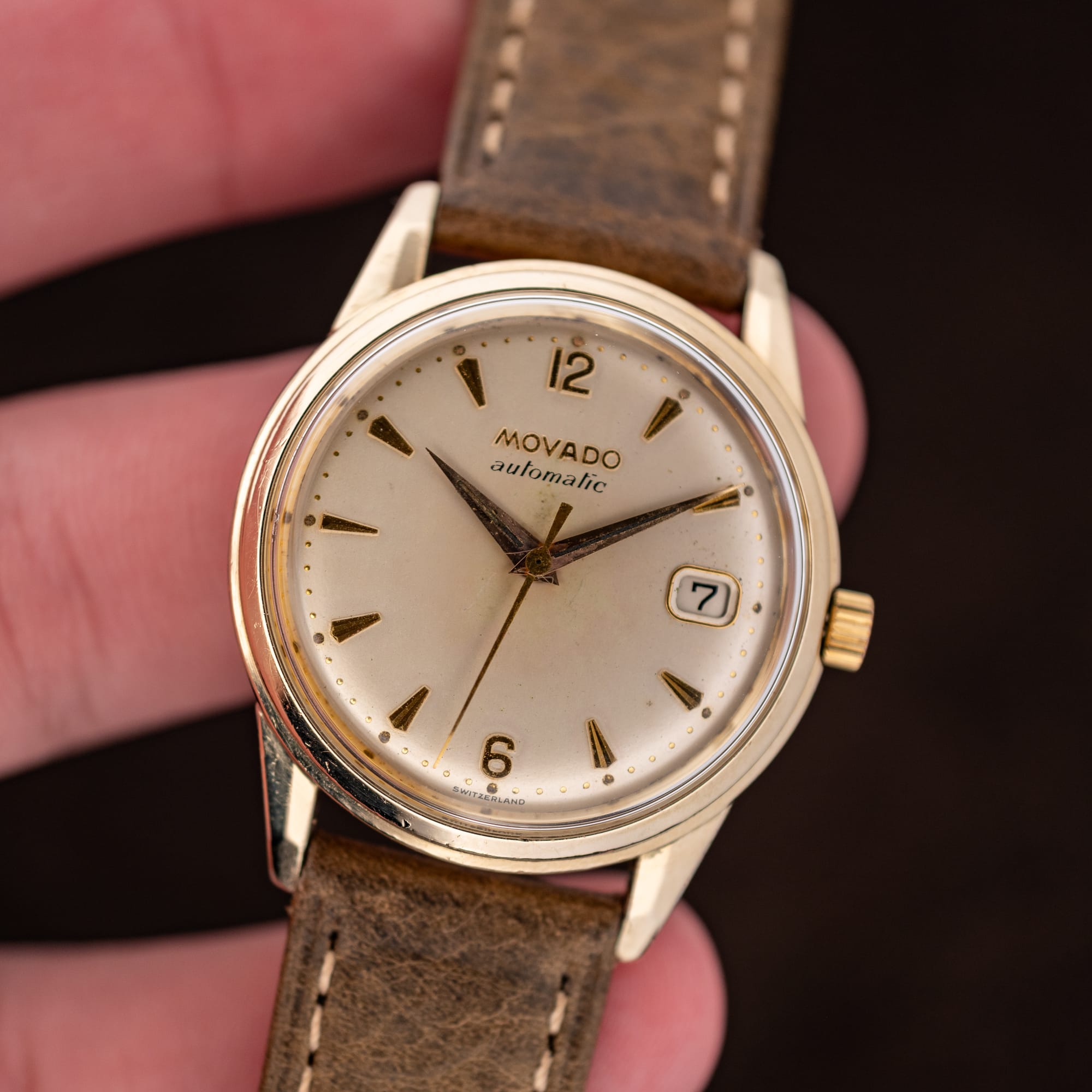
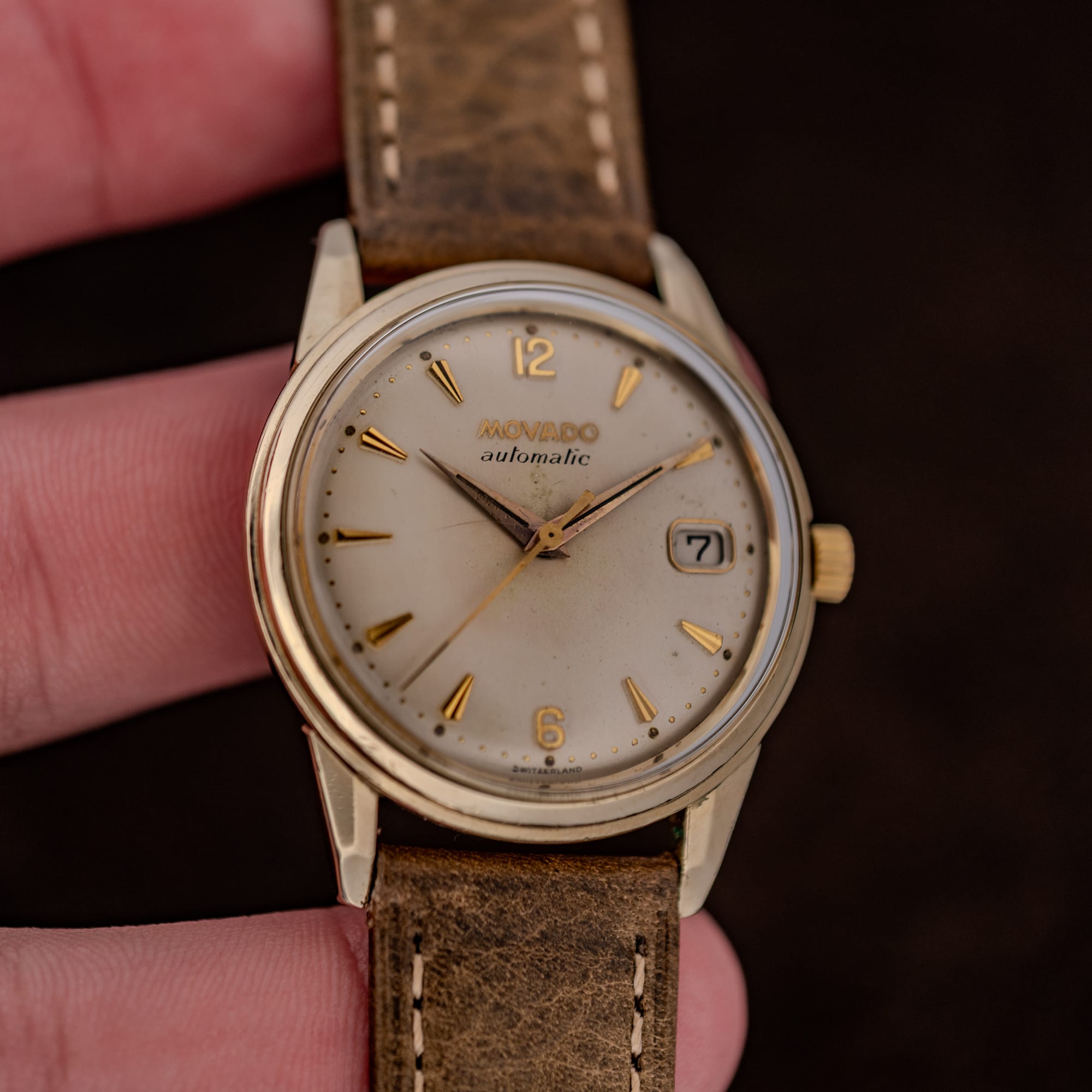
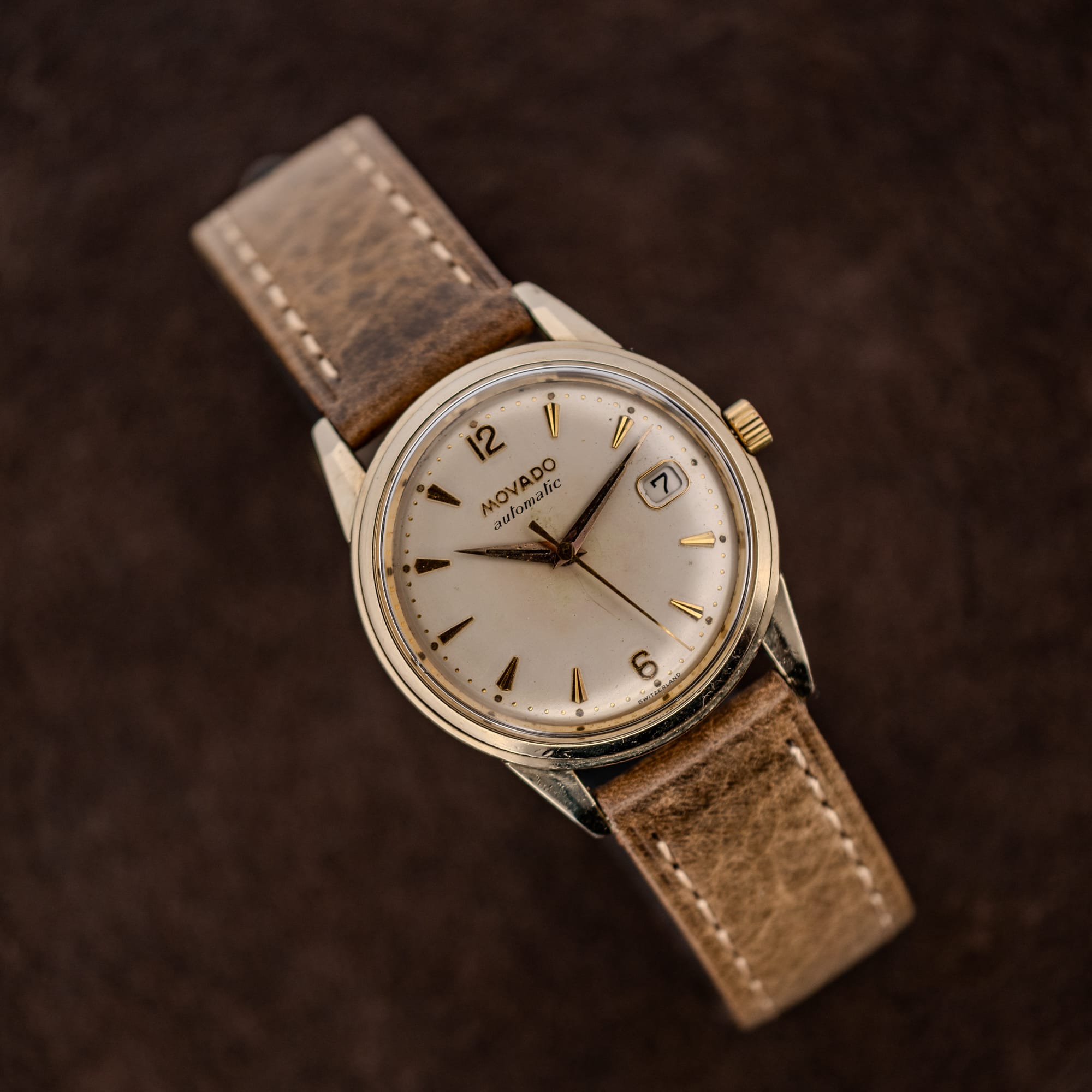
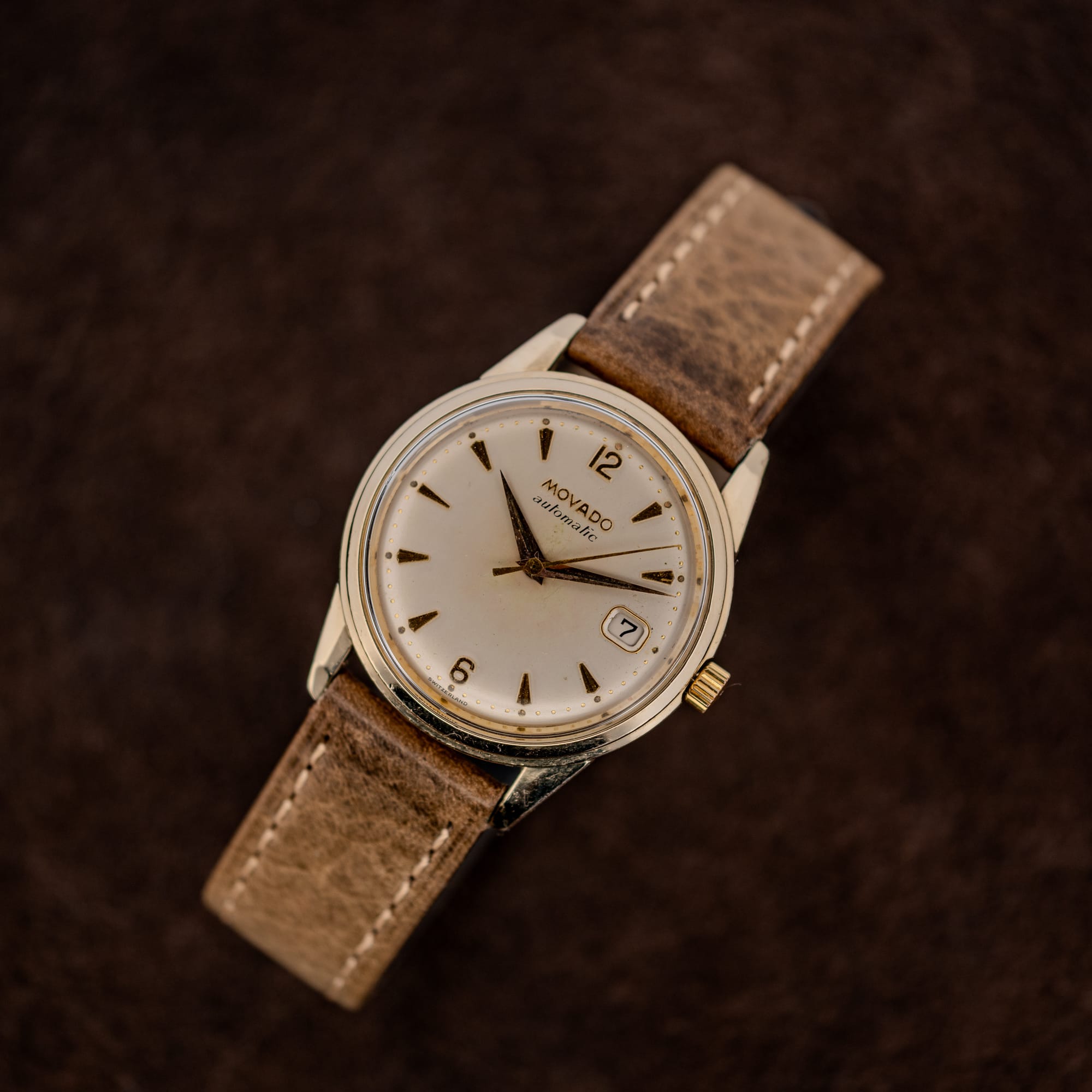

Nathan George Horwitt’s 1947 dial design reduced the hours to a single dot at twelve, an idea now inseparable from Movado’s Museum watches. This vintage Movado automatic speaks an entirely different language. Applied numerals, pointed markers and a framed date give the reference 64389 a more detailed face, without making it busy. We enjoy encountering the familiar name above a face with this much to look at, from the generous twelve to the fine italic lettering.
The Museum story itself is less straightforward than the modern association suggests. New York’s Museum of Modern Art credits Horwitt as the designer of its 1947 Wristwatch Face, but names Vacheron & Constantin-Le Coultre as the manufacturer of the object in its collection. Movado’s own history credits Horwitt too, explaining the dot as the sun at high noon. That is a surprisingly layered history for such a spare design. Here, we are interested in the other side of Movado’s vocabulary, where applied metalwork and conventional hour markings give the dial its identity.
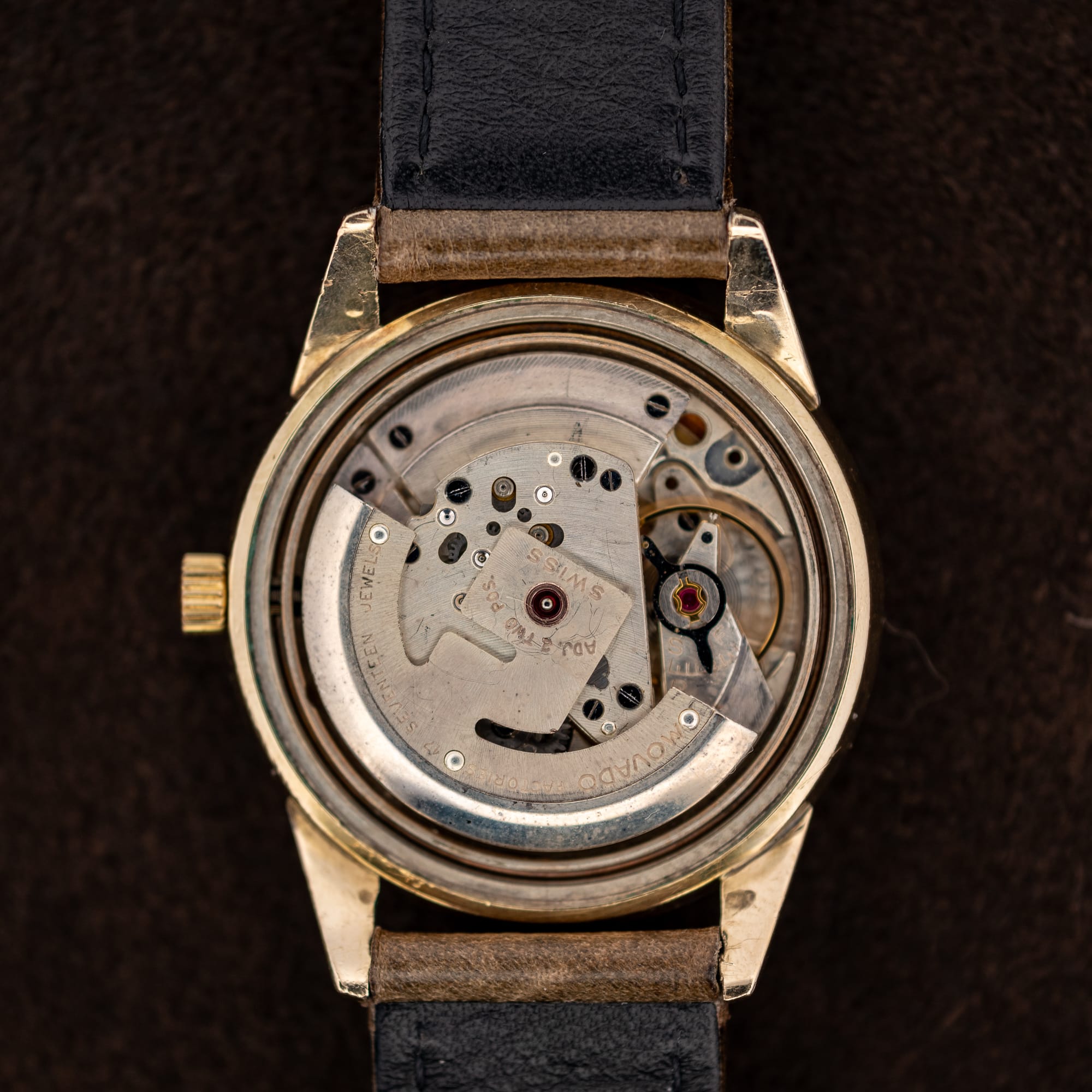
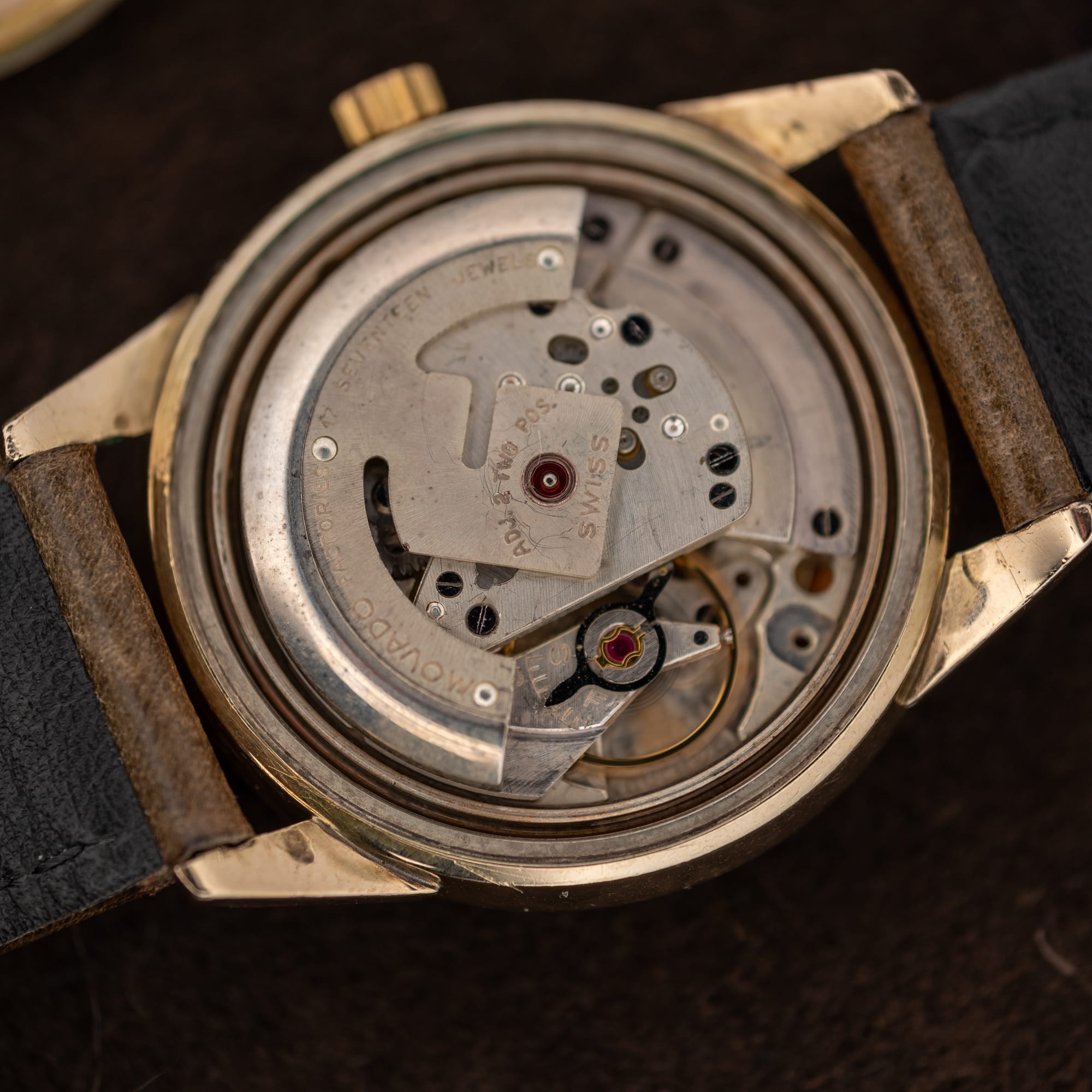
There is a mechanical reason to explore it as well. Movado developed its own automatic movements, moving from bumper designs to full-rotor winding by the middle of the 1950s. This example’s caliber 438 belongs to that broader automatic tradition and adds a date display. Its full rotor is signed by Movado and carries a 17-jewel inscription. The broad, curved rotor gives the movement a distinctive silhouette of its own. We like being able to follow the maker’s identity from the dial to the signed mechanism, rather than having the visual interest end at the caseback.
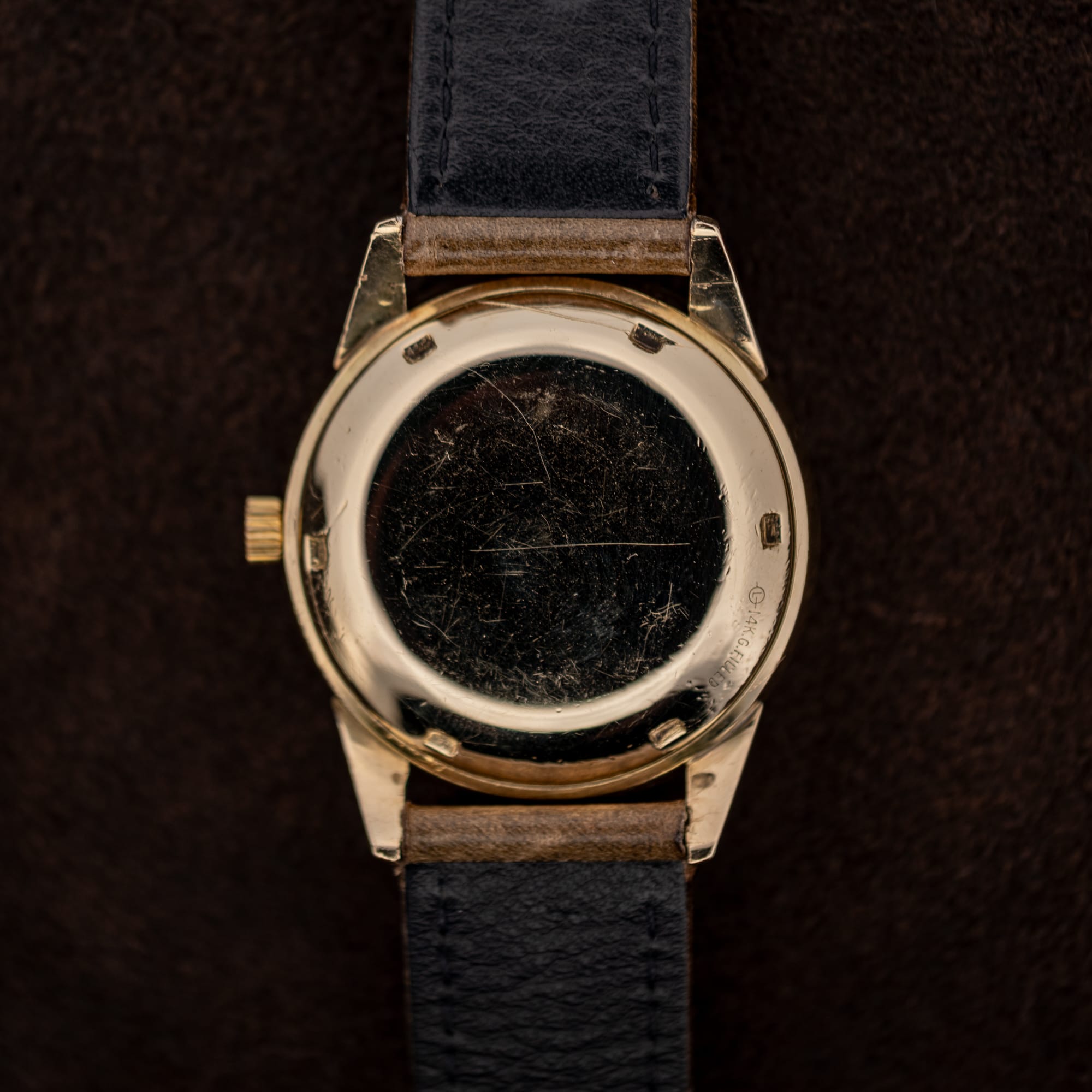
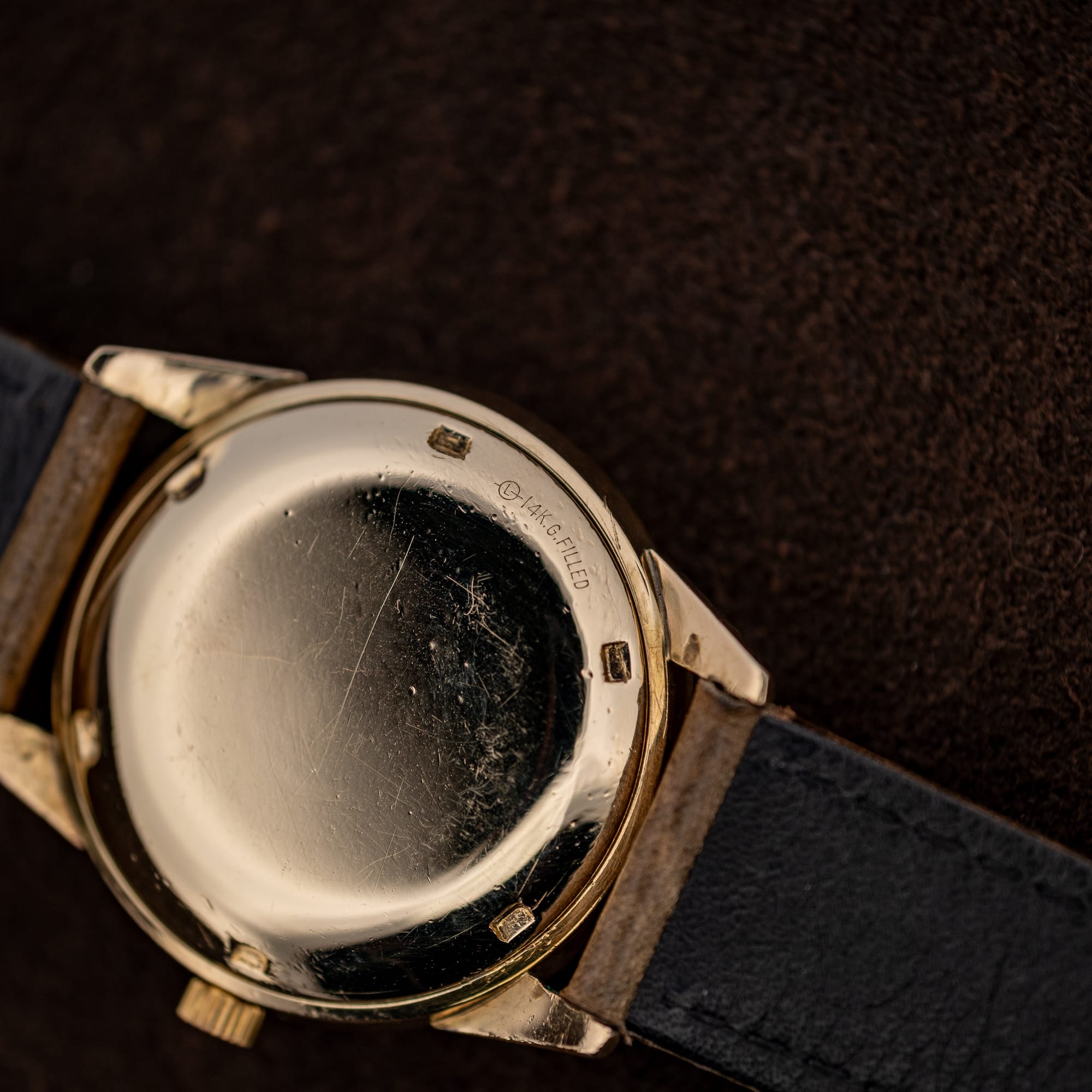
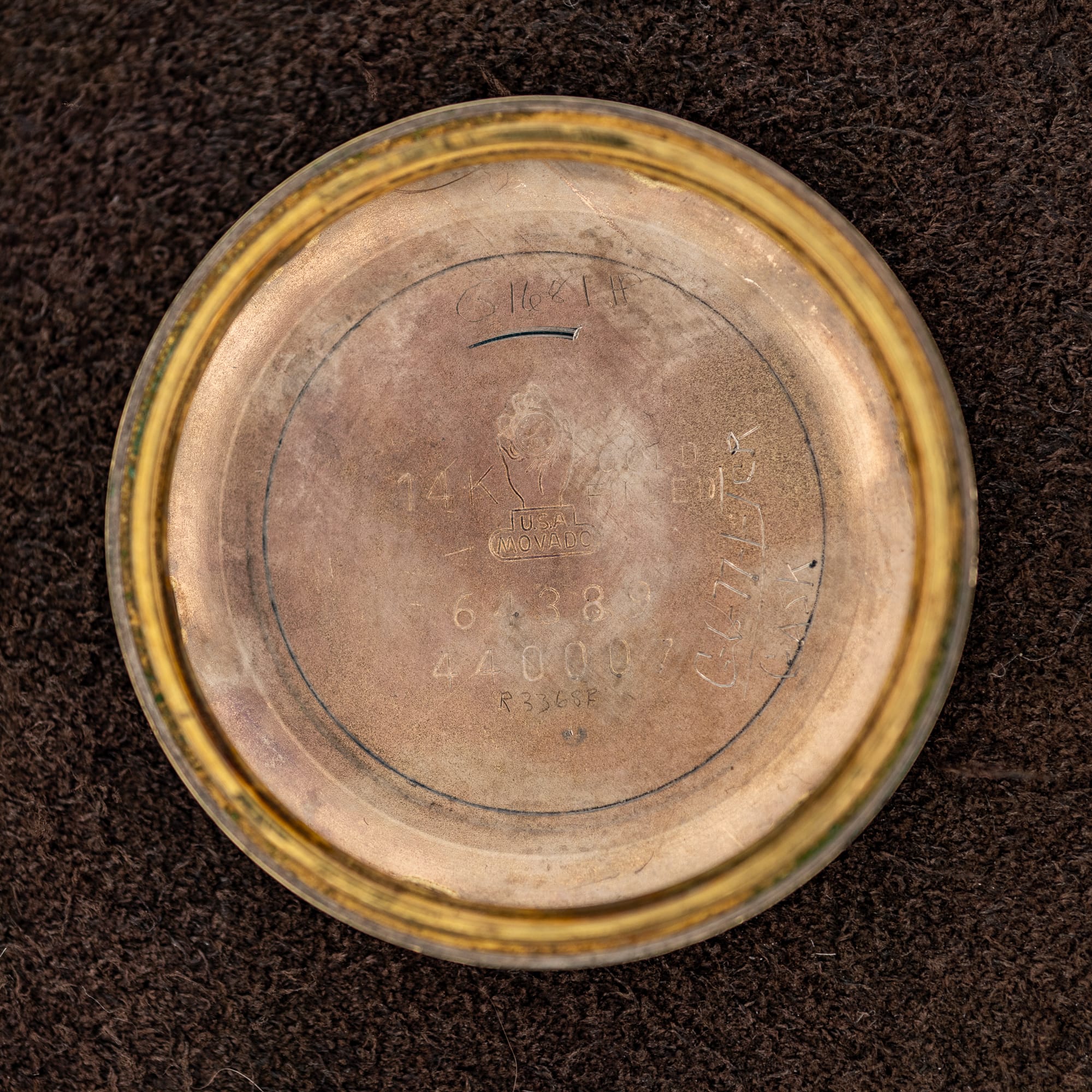
The reference 64389 has another detail that makes it more specific than a general story about Swiss watchmaking. Its movement is Swiss, while the inside of the gold-filled case carries a U.S.A. stamp. Those two geographic signatures belong to the same watch, a reminder that the movement’s origin and the case’s origin are separate parts of its description. The hidden American marking gives this particular example a detail that its dial alone would never disclose.
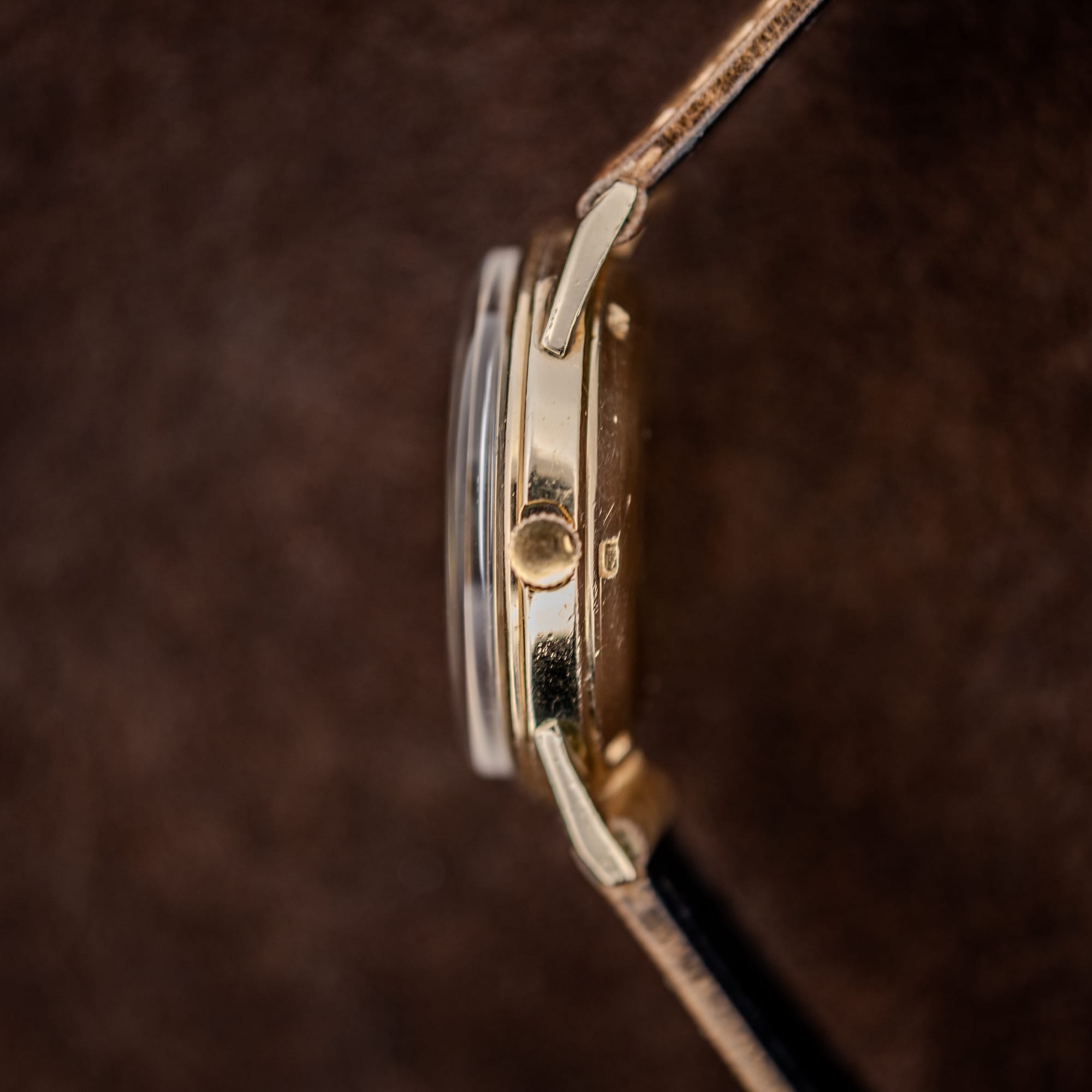
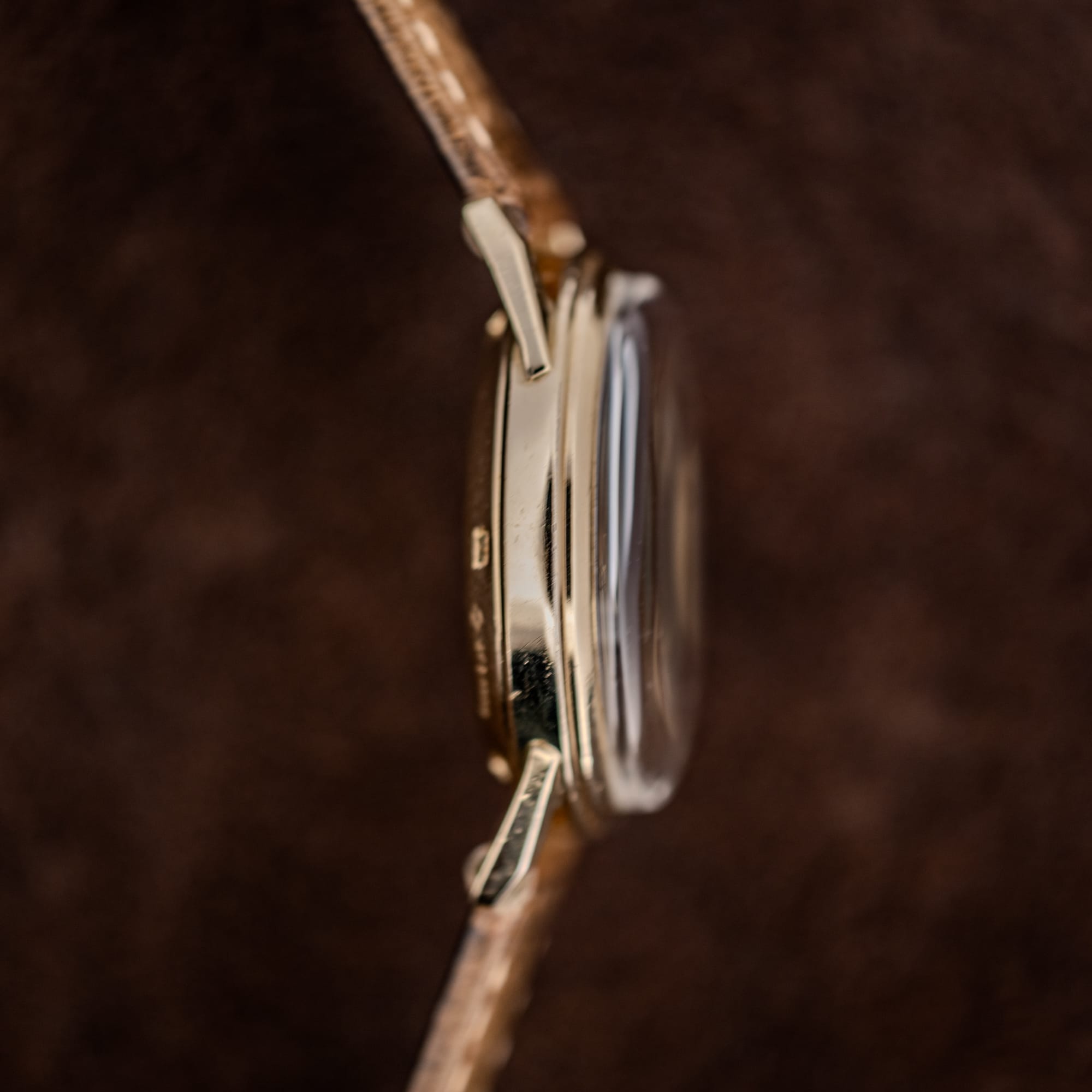
The round 14k gold-filled case measures 34mm across and 40mm lug to lug, with a smooth bezel and tapered lugs. On the white dial, applied Arabic numerals at twelve and six alternate with faceted wedge markers, while dauphine hands and central seconds sit above a dotted minute track. The date at three has its own rounded rectangular frame, a small architectural detail that we particularly like. Fine speckling and gentle tonal variation soften the dial, with hand patina and light exterior case scuffs adding to its vintage character. An olive leather strap fits the 18mm lugs.
The pleasure of this vintage Movado automatic is in how much it offers without feeling crowded. We keep returning to the date surround: rounded corners against pointed hands and markers, with just enough visual weight to balance the dial. The contrasting shapes make a familiar arrangement feel considered rather than routine.