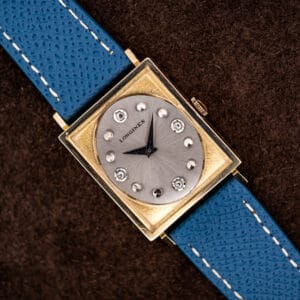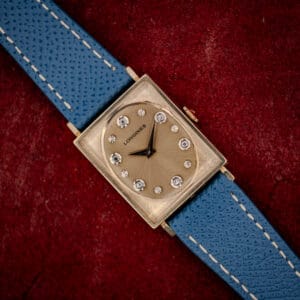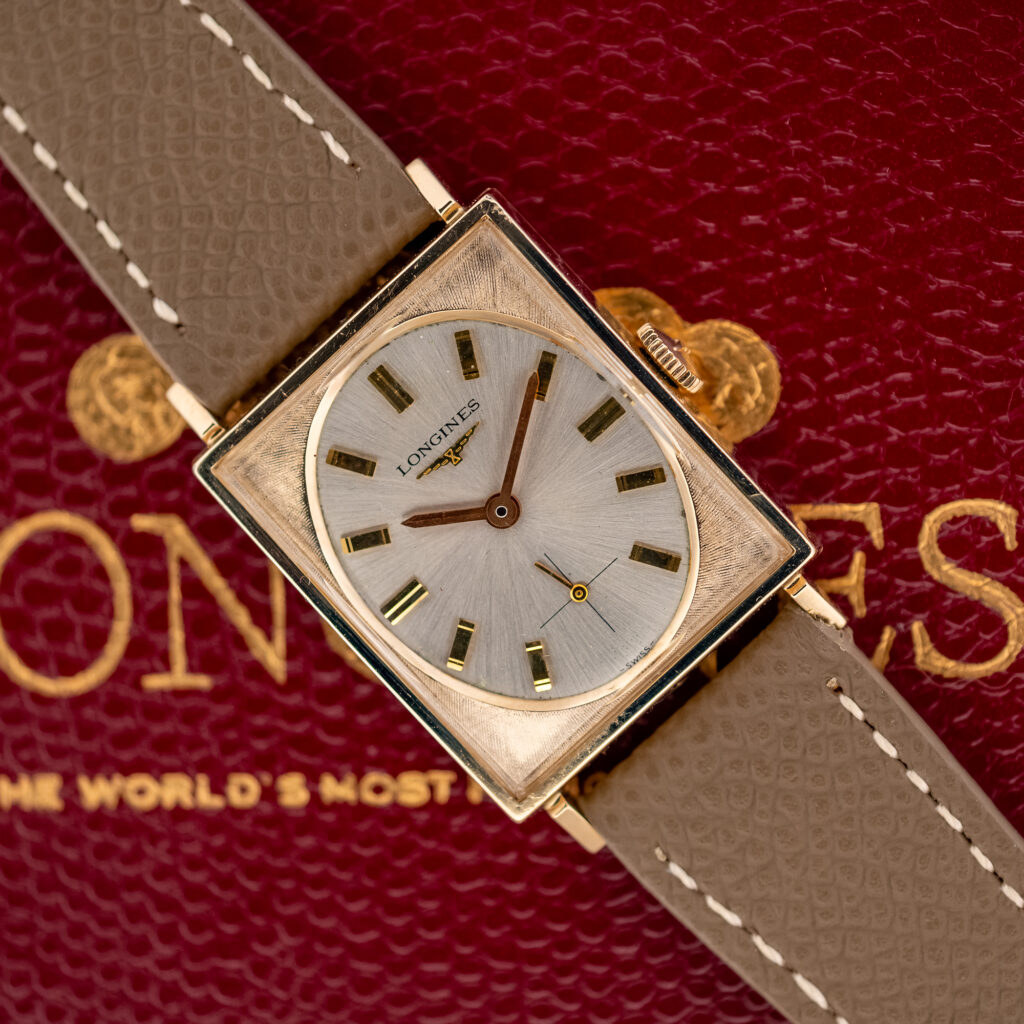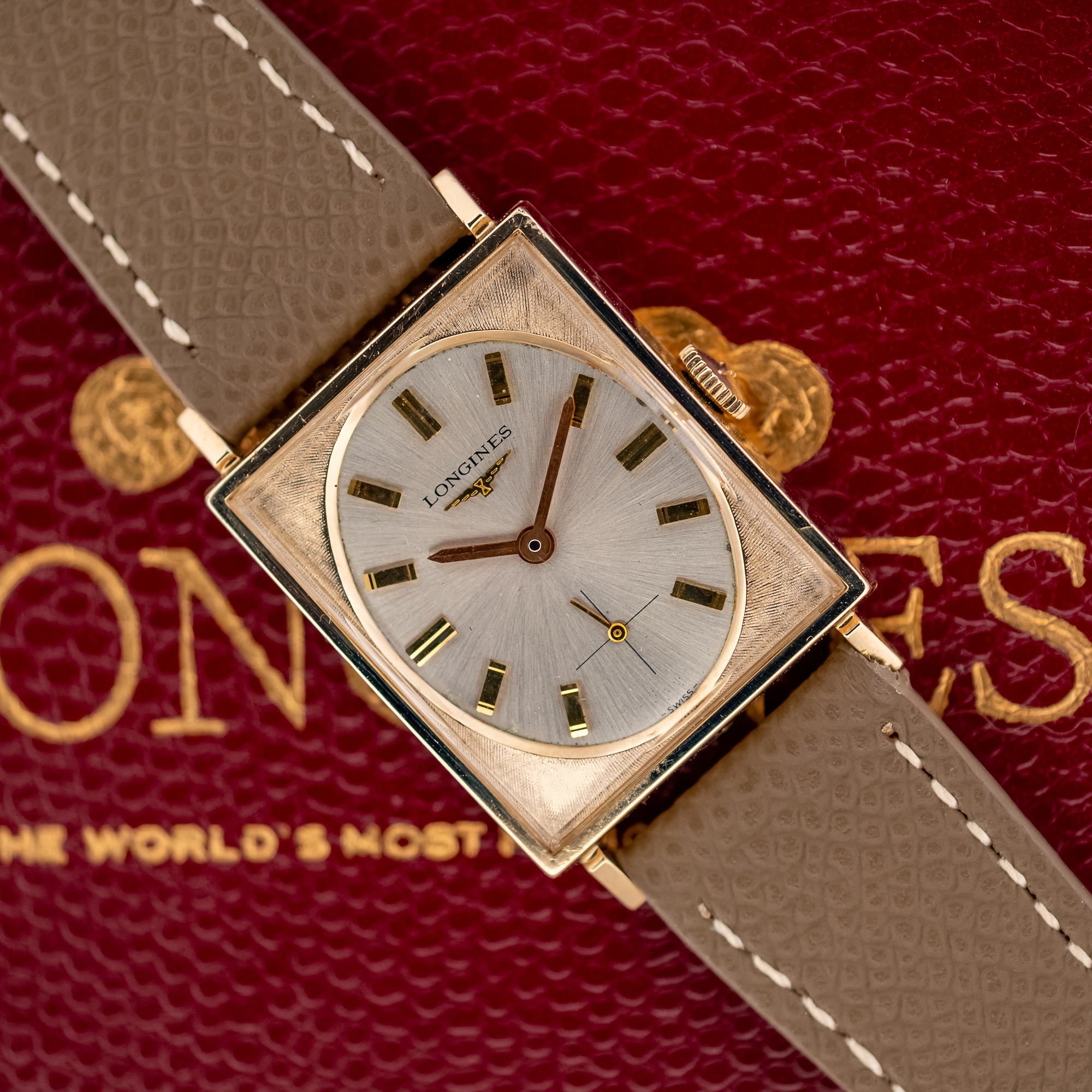
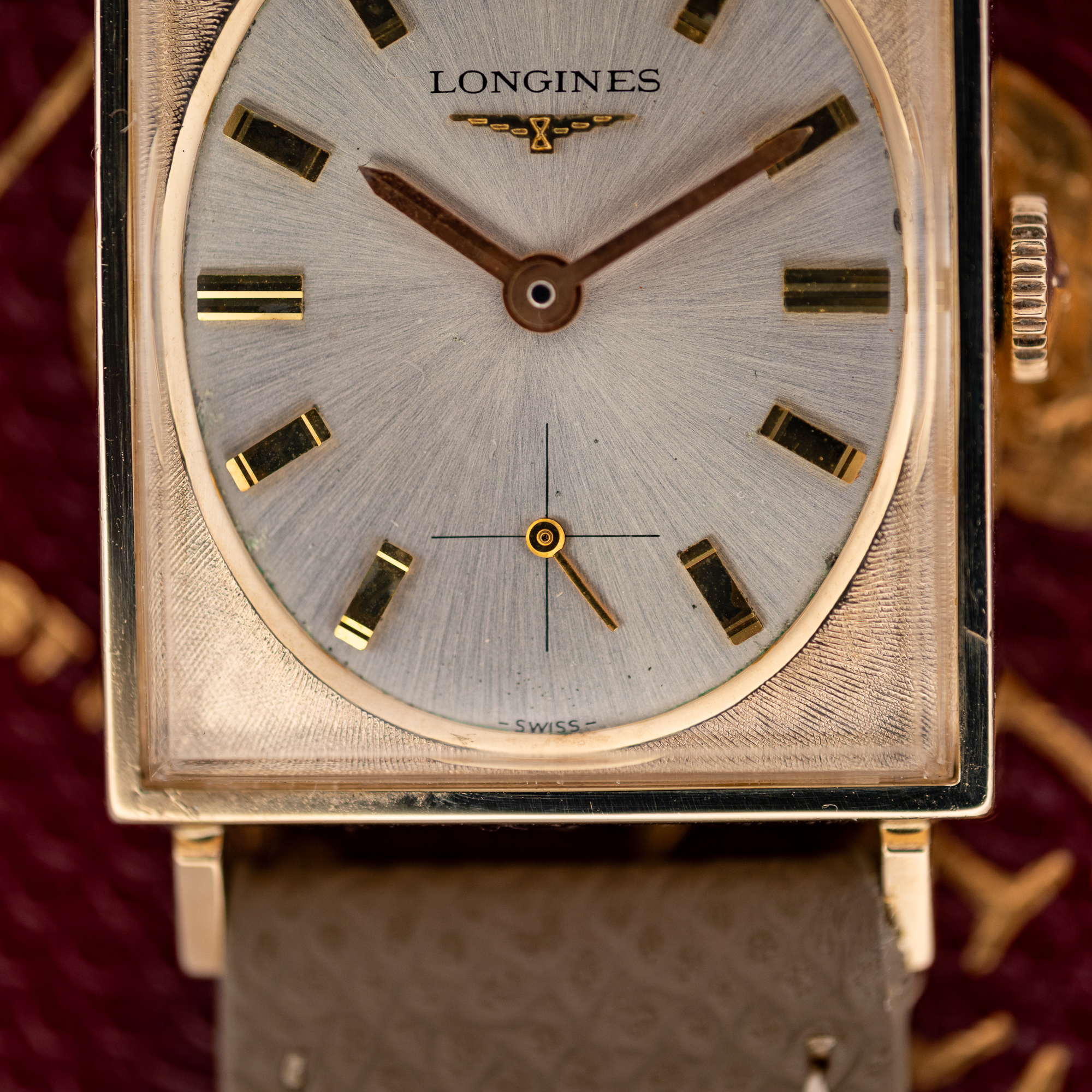
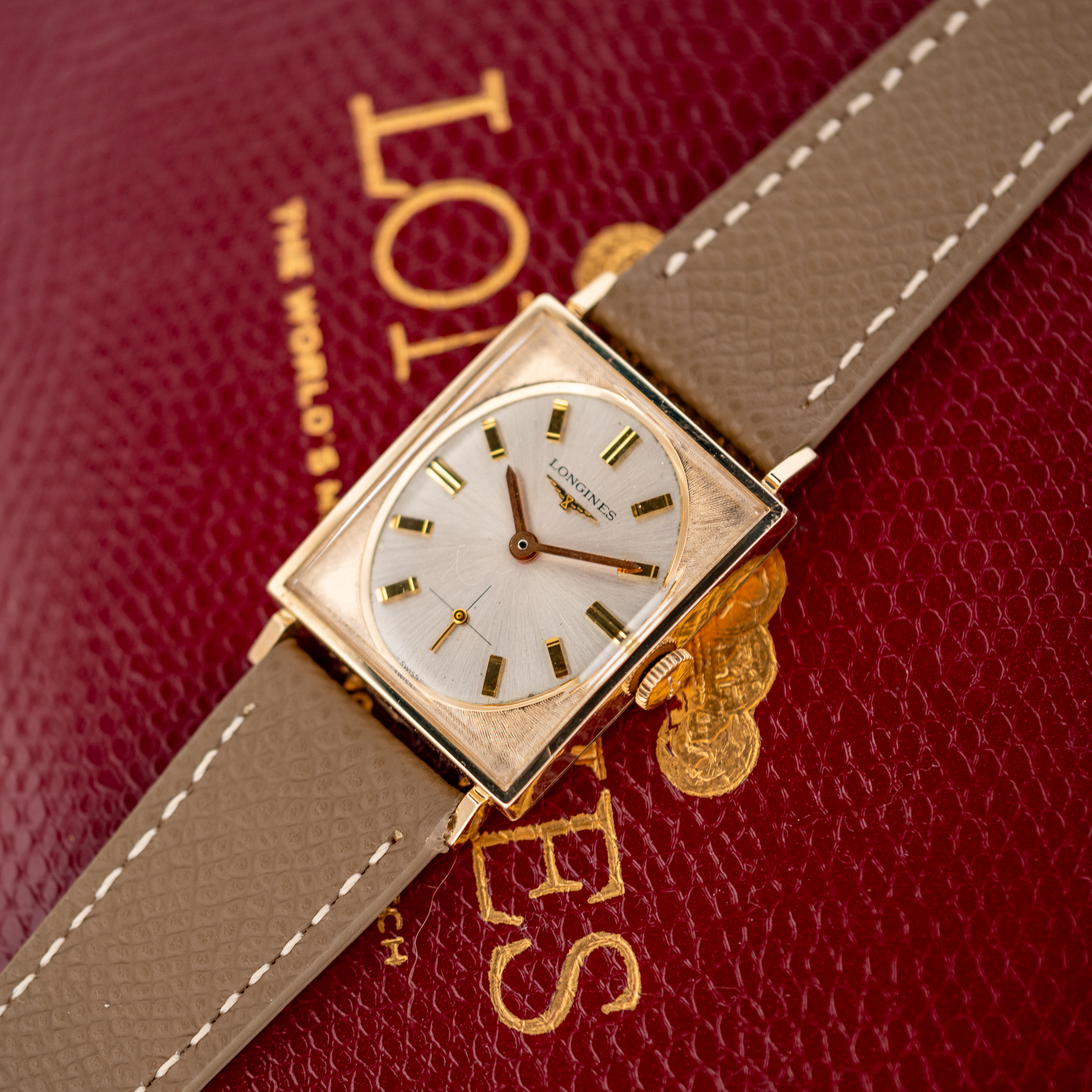
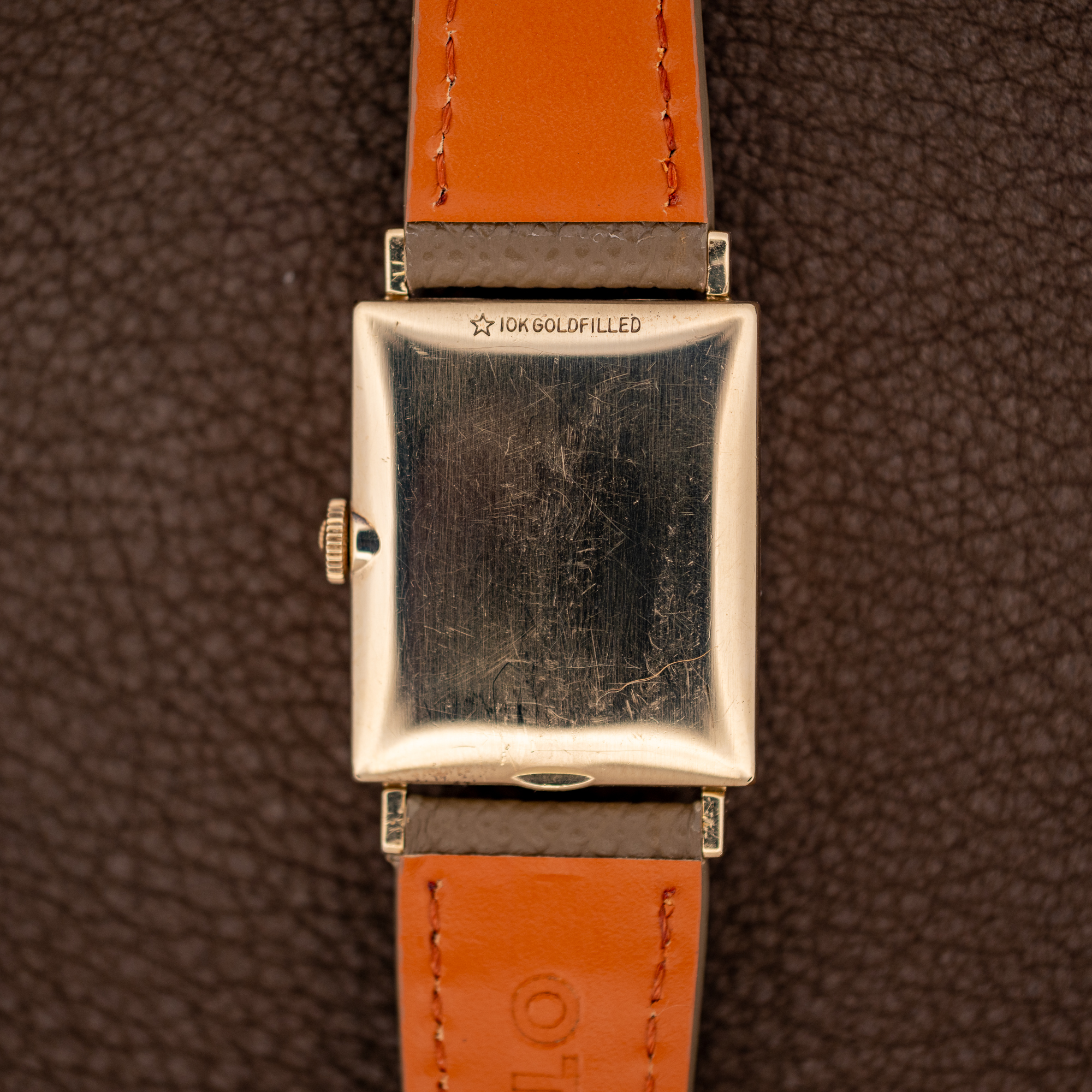
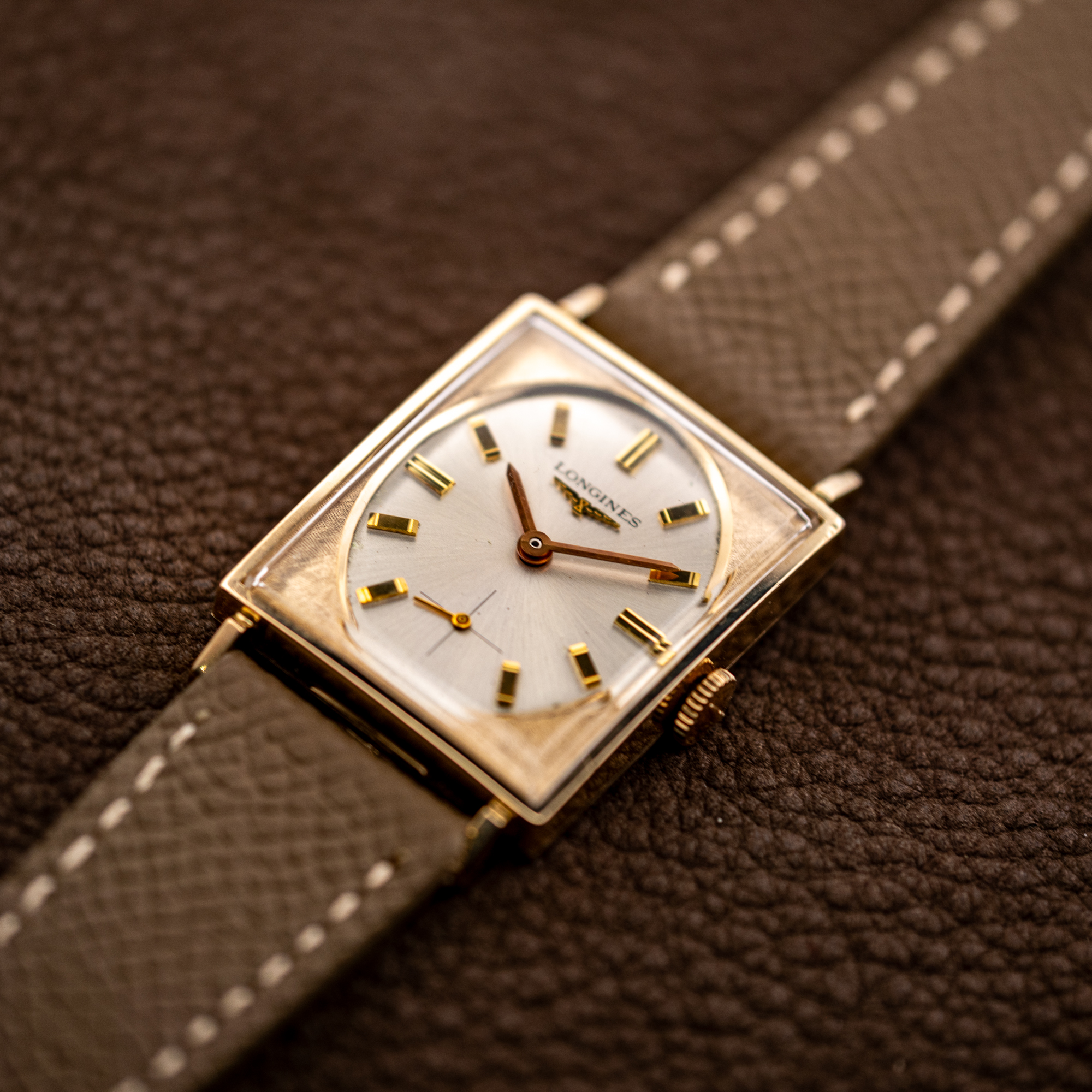
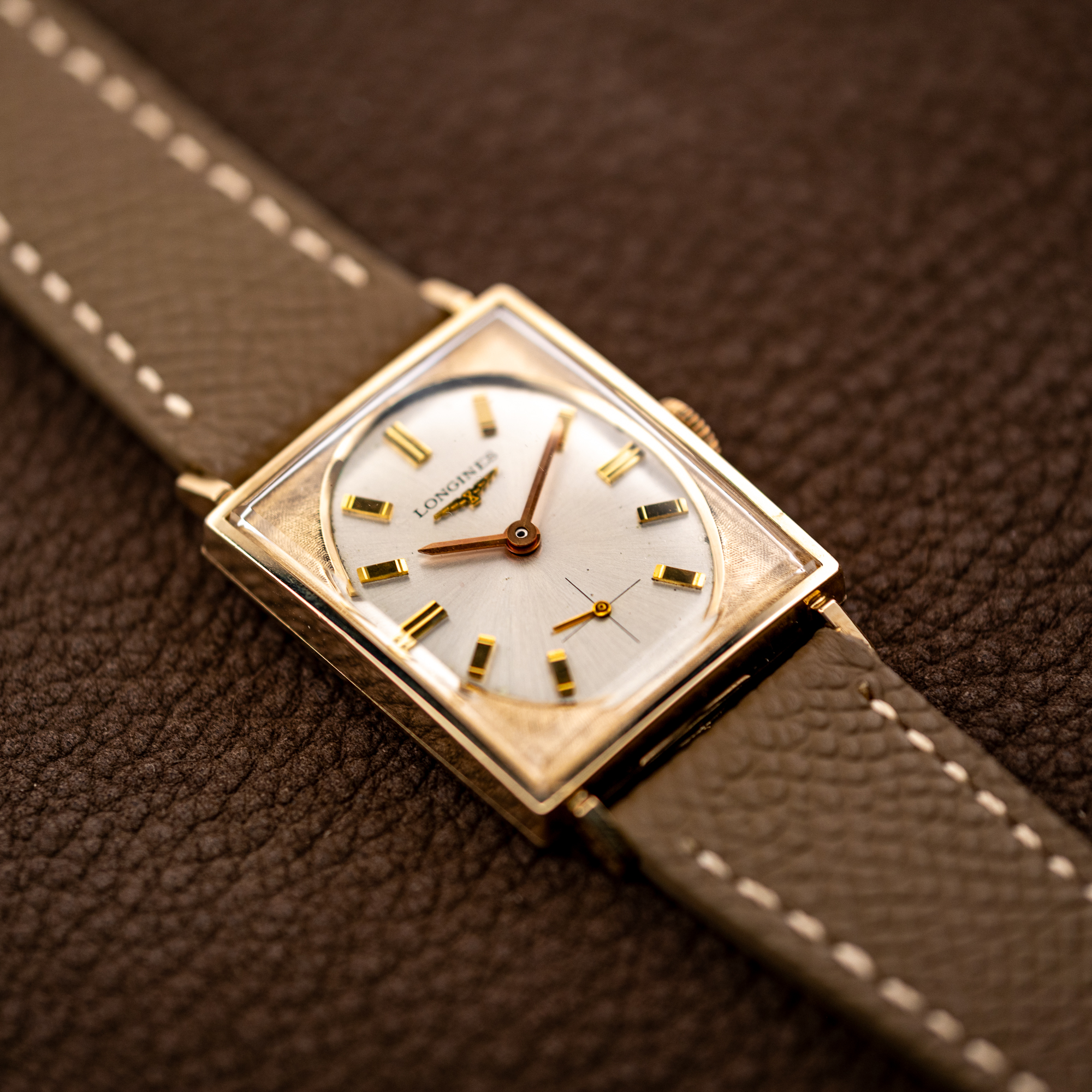
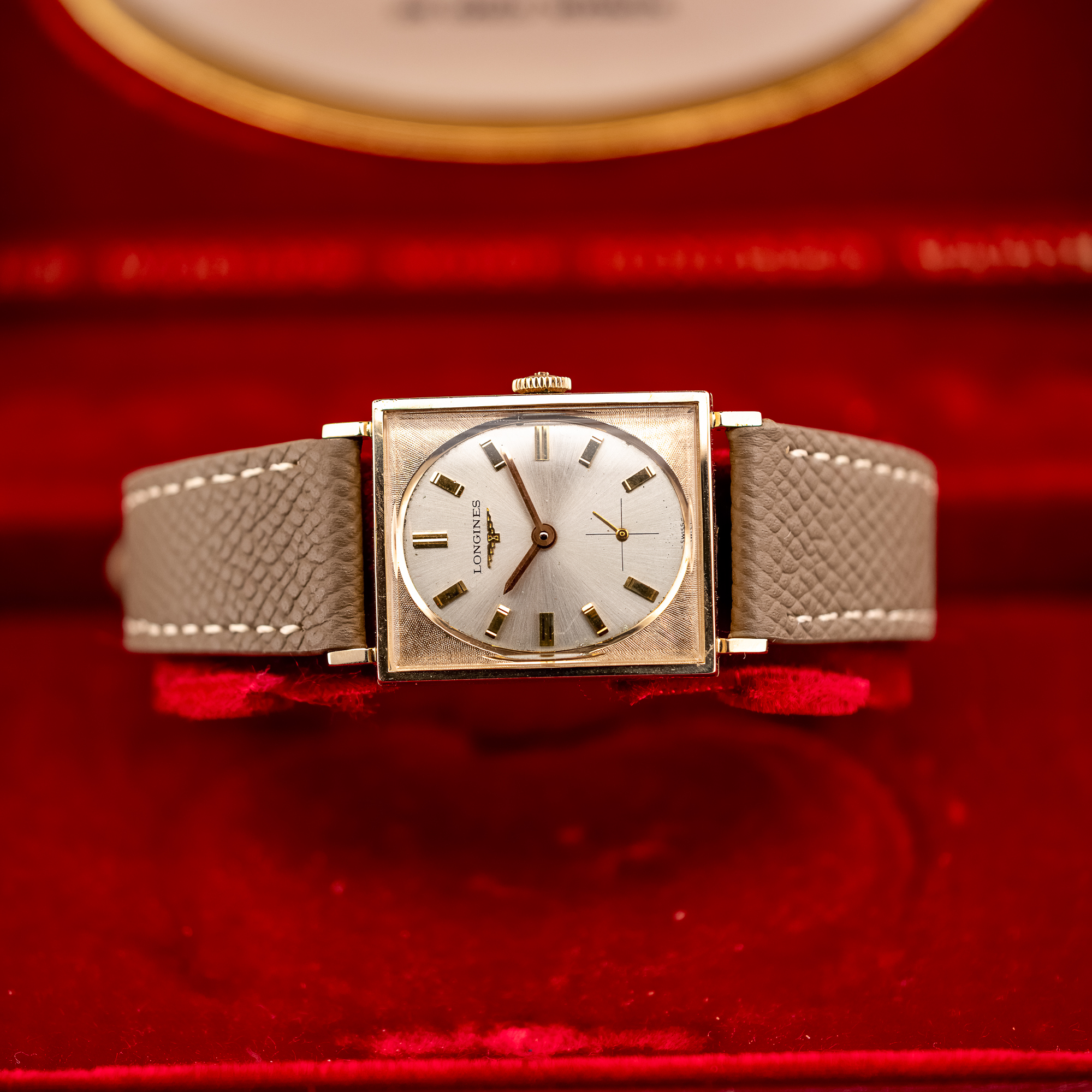
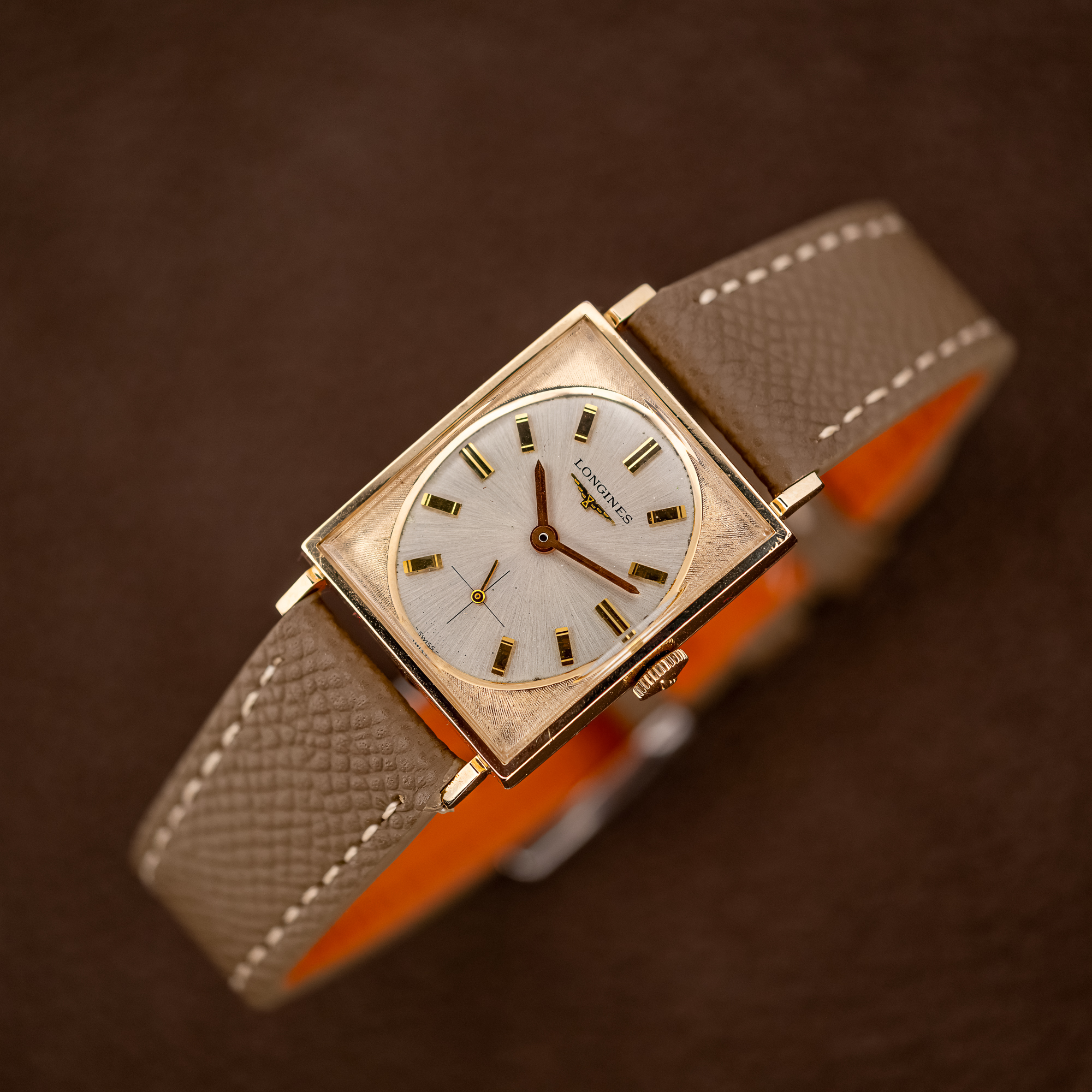

A rectangle outside, an oval within. The Longines 1137-370 sets its dial the way a jeweler sets a cameo: inside the tank case, a textured, gold-toned frame narrows from the corners into an oval, and inside that oval sits a field of silver sunburst. The reference sometimes goes by the name portrait dial, and the name earns its keep on the wrist, where the oval stands upright like a picture hung the tall way.
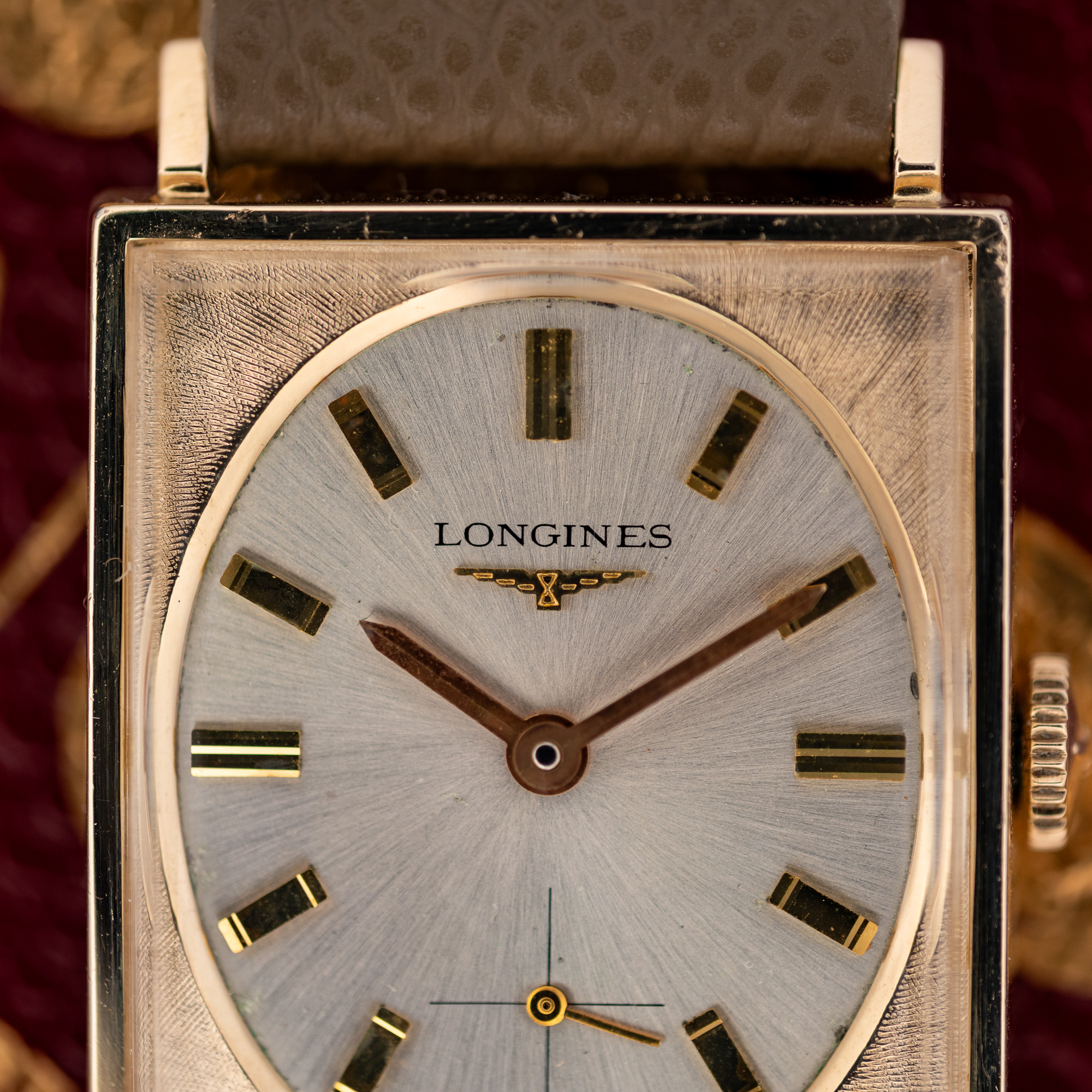
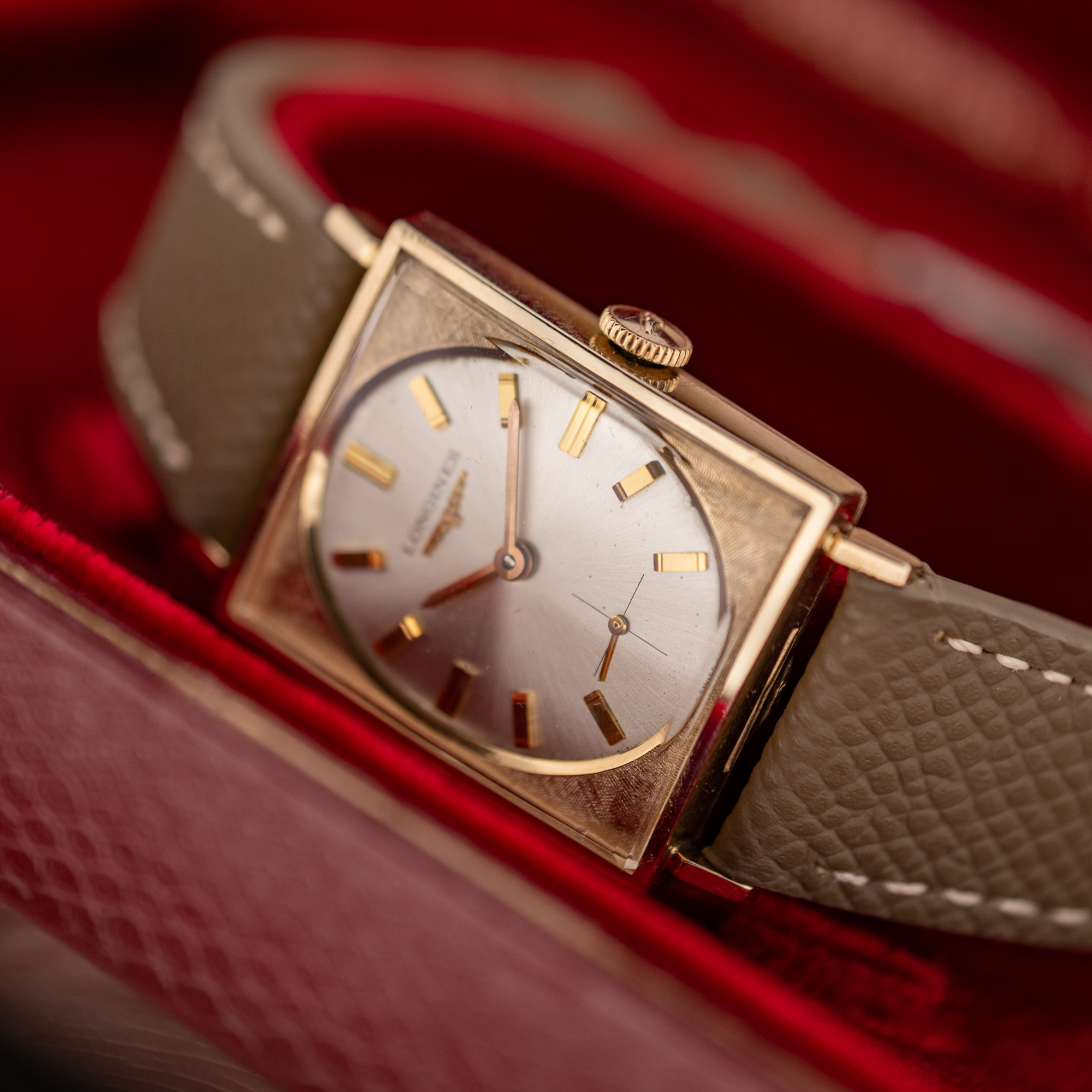
Some 1137-370s carry a golden dial. This example keeps to silver at the center with warmer champagne tones around it, and it lets the light do the work: the radial brushing brightens and dims as the wrist turns. Beneath the Longines signature sits the winged-hourglass emblem, with baton markers set around the oval.
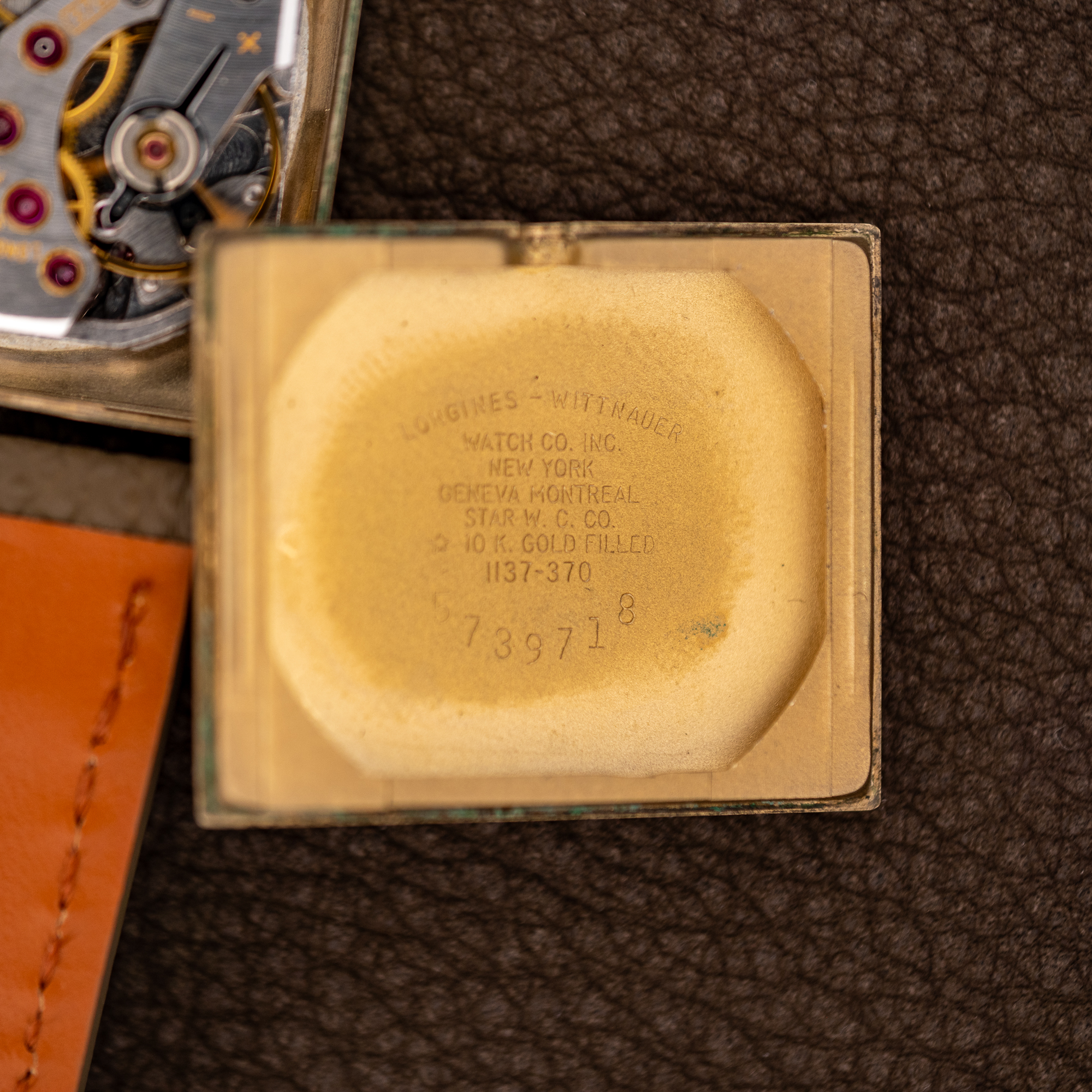
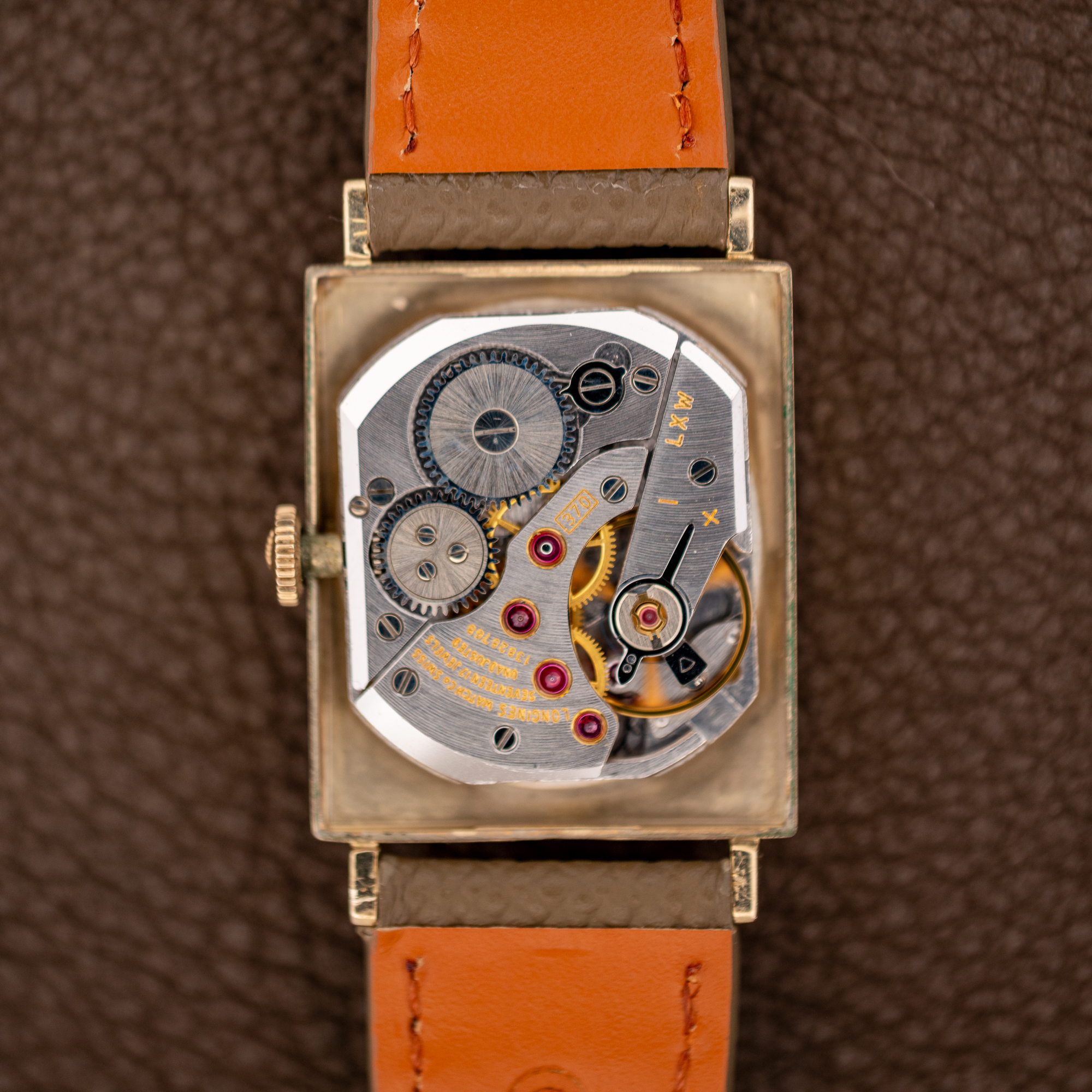
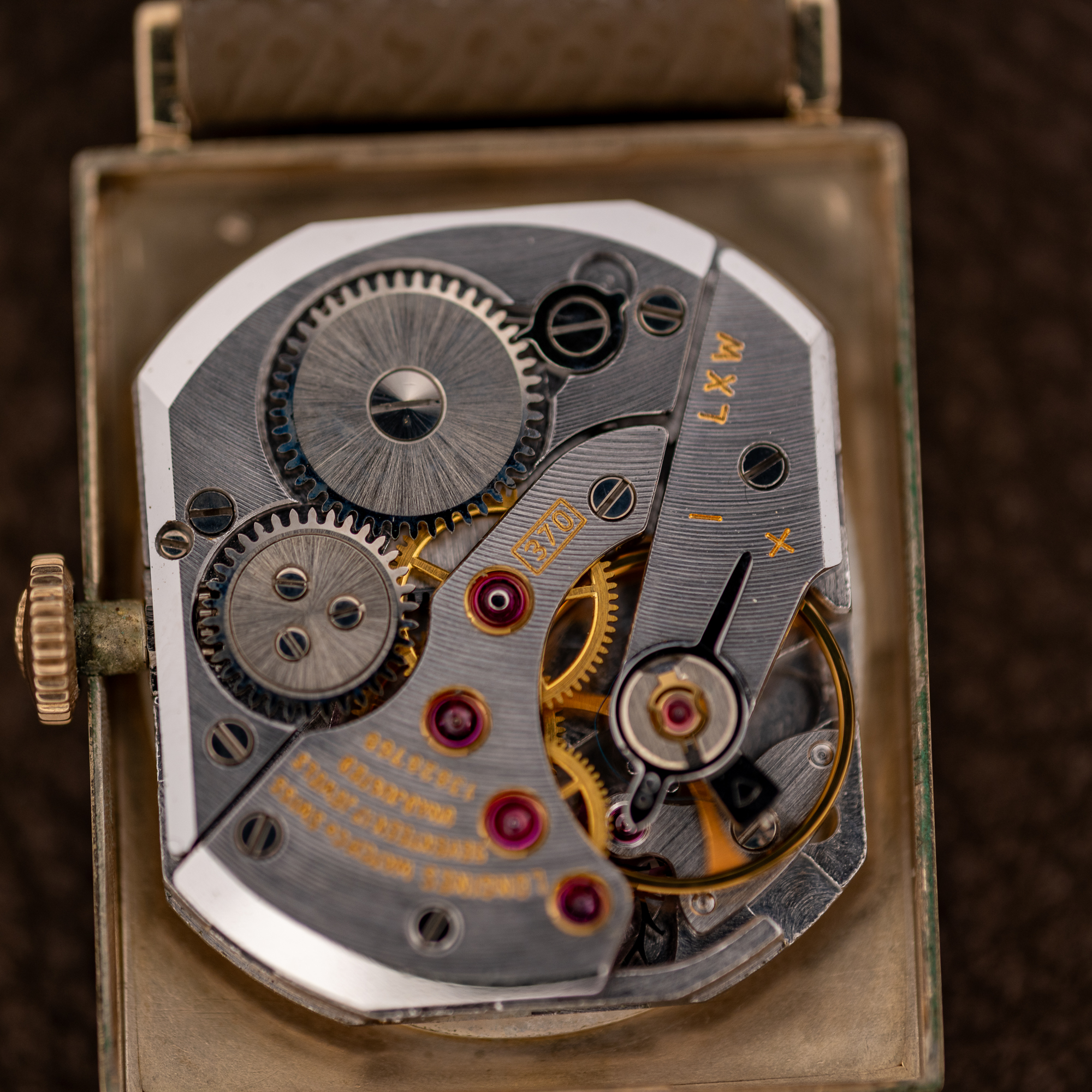
Caliber 370 does the work out of sight: seventeen jewels, small seconds at six marked with a fine crosshair and a turn of the crown each morning make up the whole program. It is a hand-wound movement of the 1960s that Longines drew and built at its own factory in Saint-Imier, as it then did even for a gold-filled dress watch like this one. Quartz upended the Swiss trade in the following decade, and by 1983 Longines belonged to the group that later became Swatch, with movements eventually sourced from outside. The 370 comes from the years before that shift, when a modest tank still got a caliber of its maker’s own design.
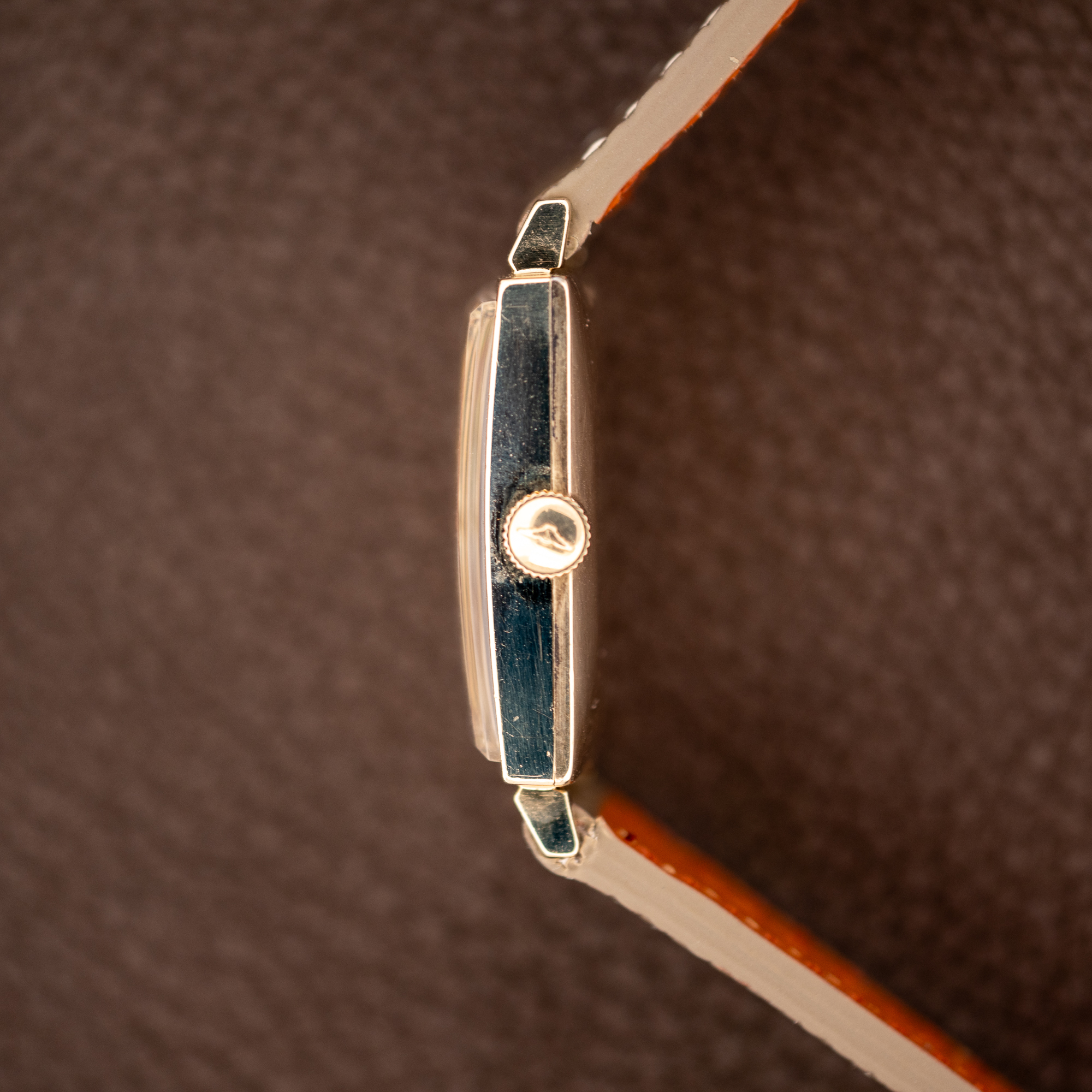
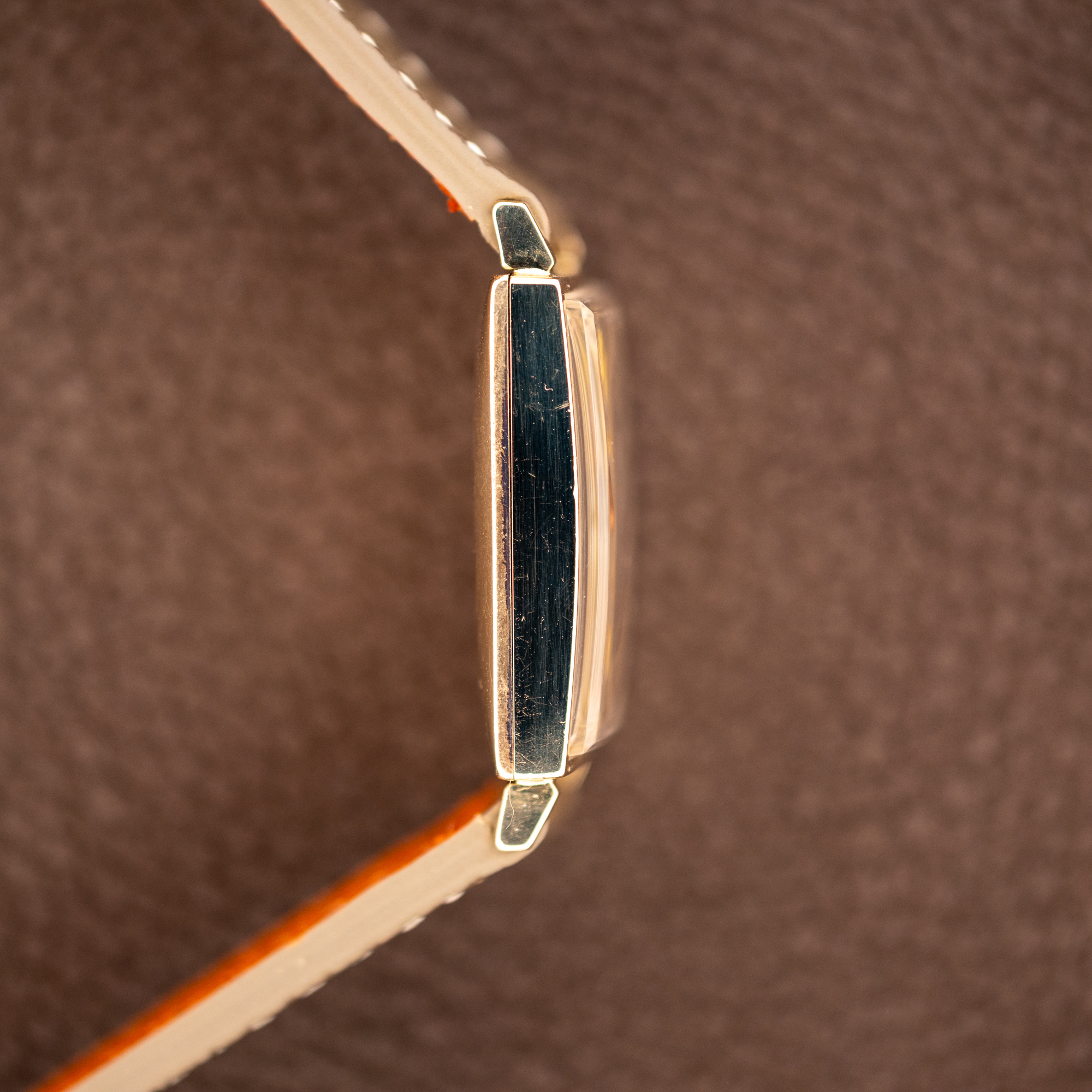
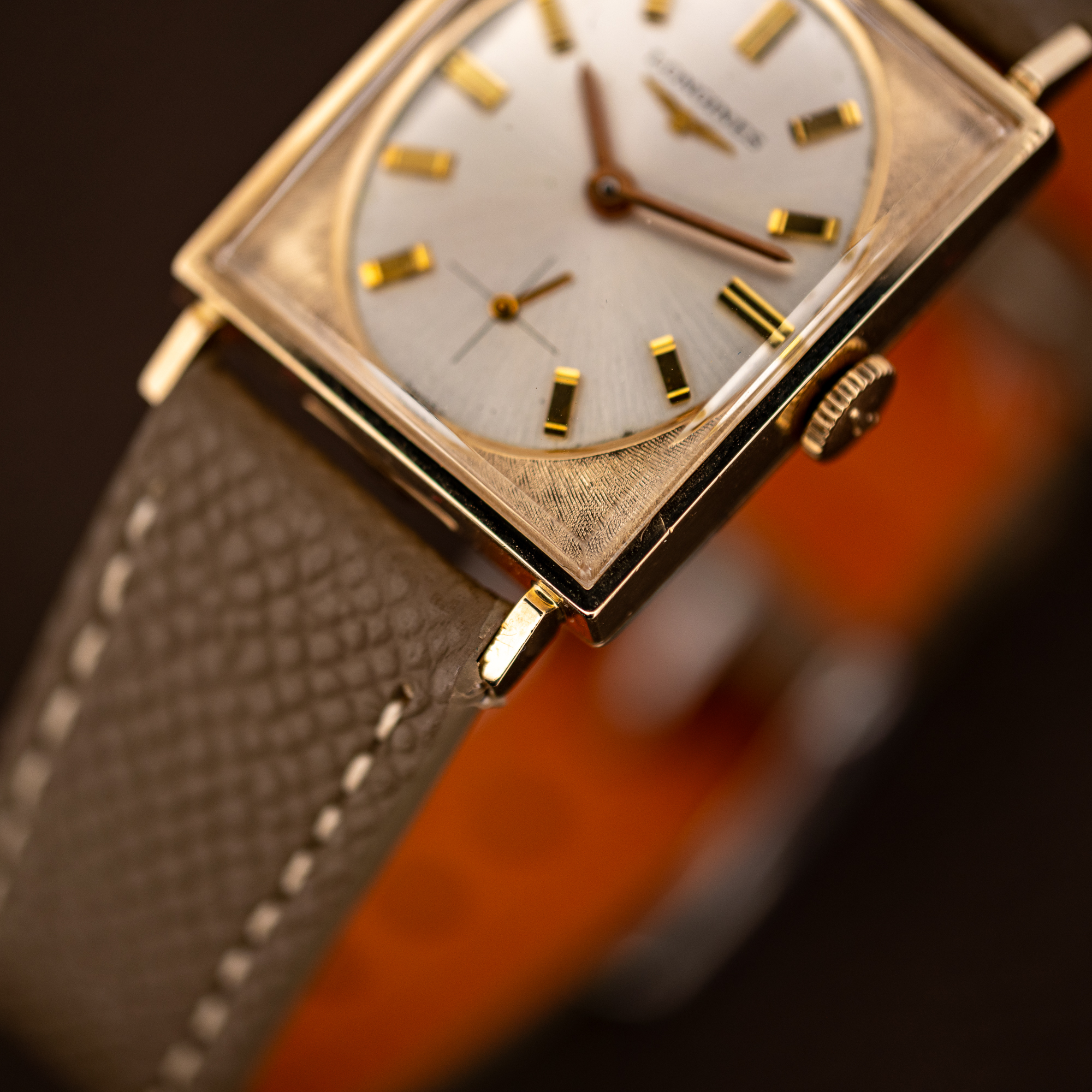
Other examples of the reference have surfaced on gold-filled expansion bracelets by Speidel and Kesten. This one sits on a taupe leather strap, which leaves the case to speak for itself. At 24 millimeters across and 36.5 from top to bottom it wears taller than its width suggests, and the short, straight lugs keep the outline tidy. In profile, a raised crystal stands above the case edge.
Wear is plain to see: fine hairlines along the case sides, a back crossed with scratches and a few small specks on the dial and hands. Catch it at an angle and the textured corners hold steady while the sunburst in the middle takes the light and lets it go.