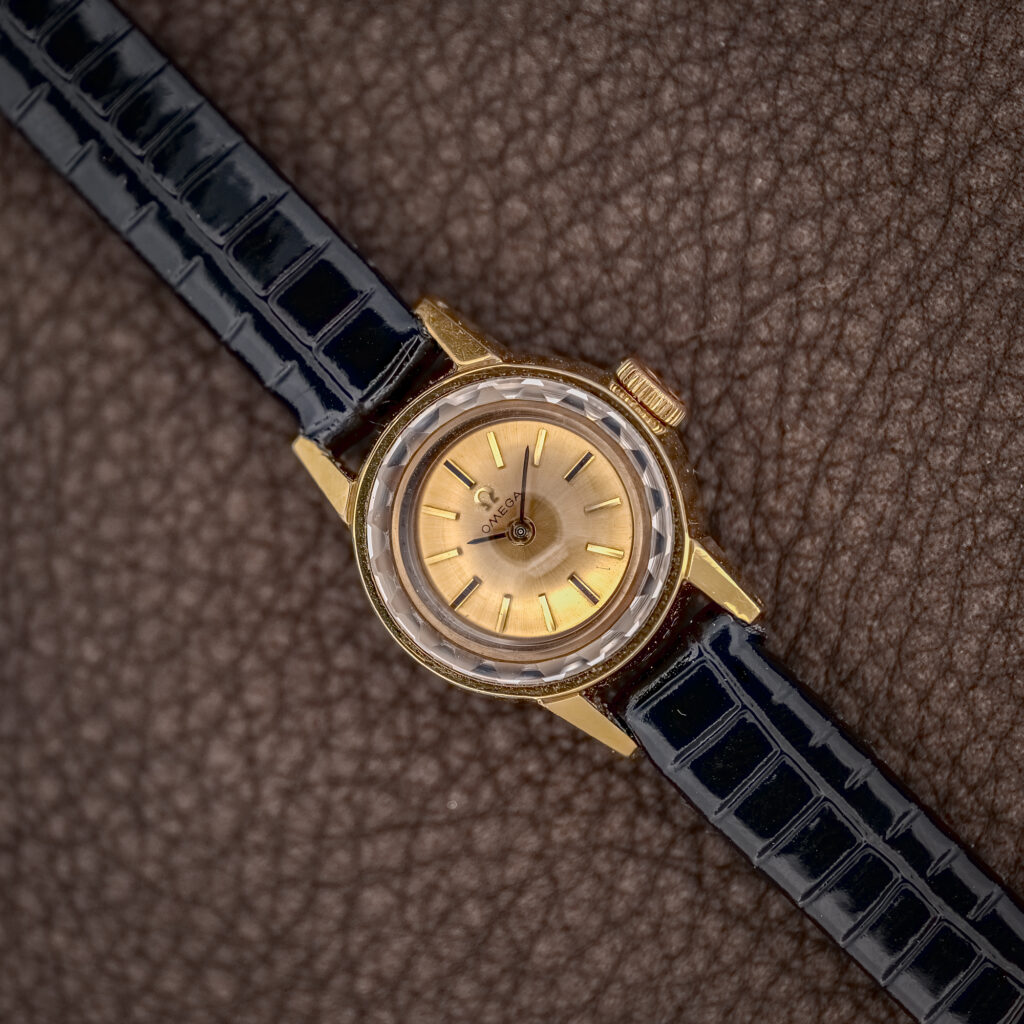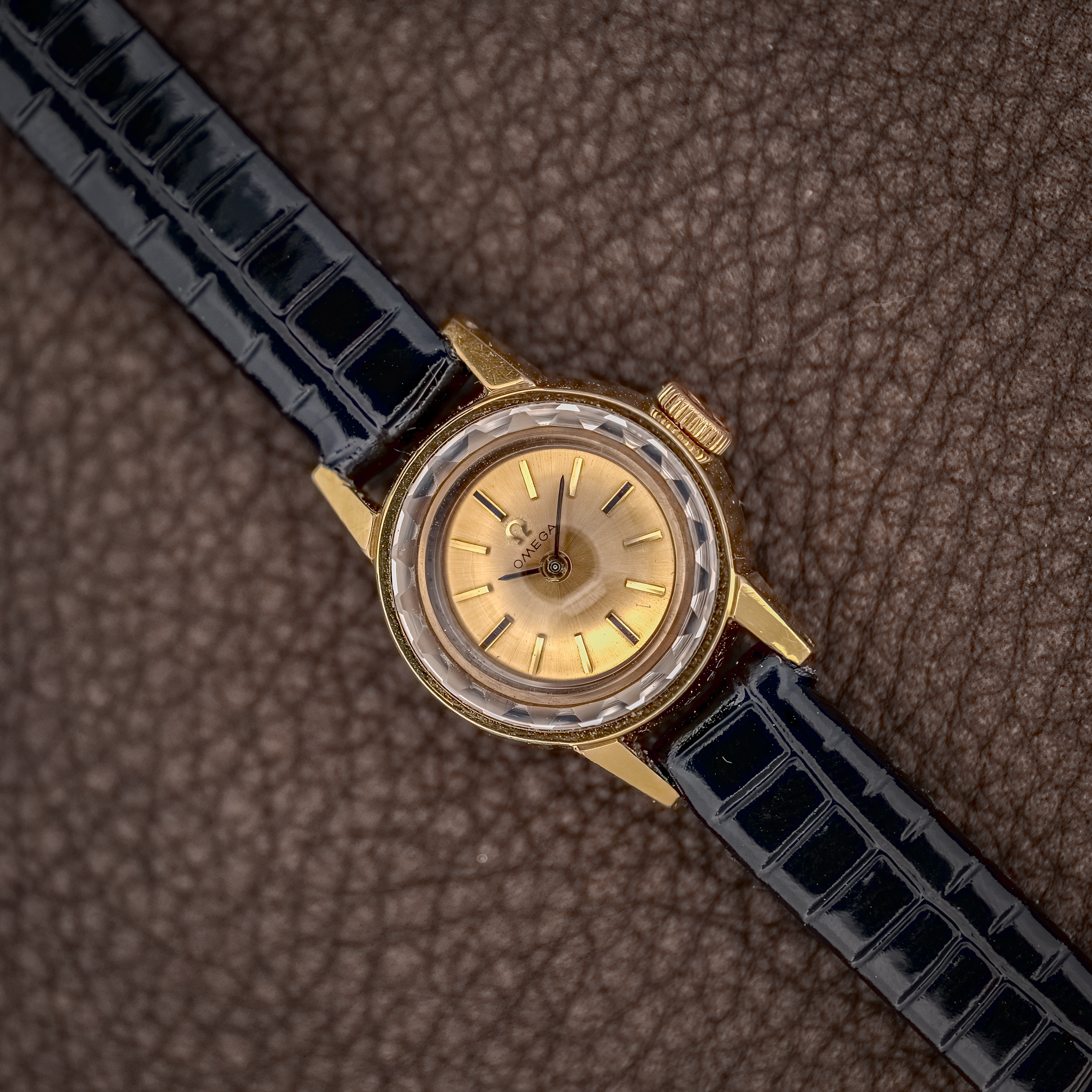
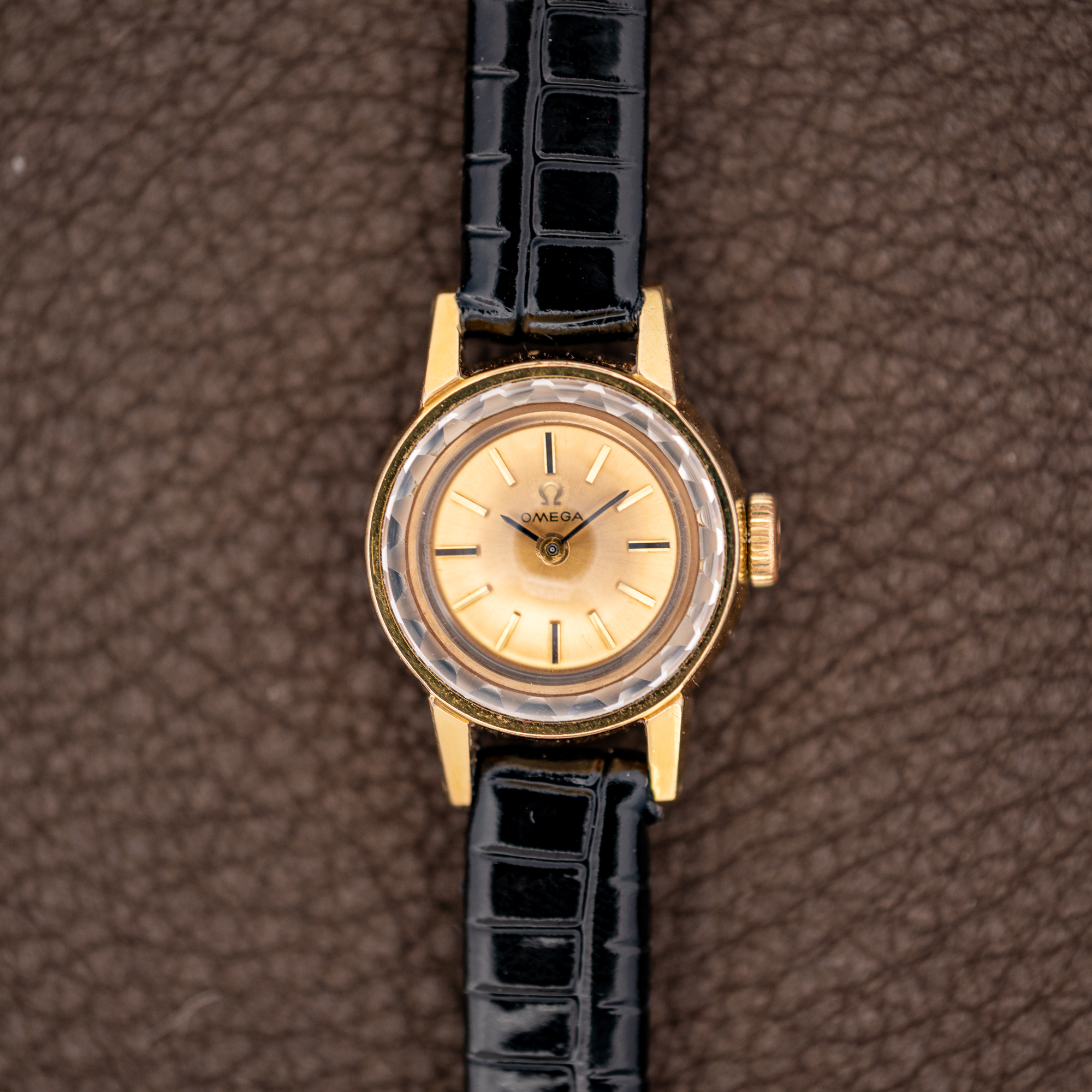
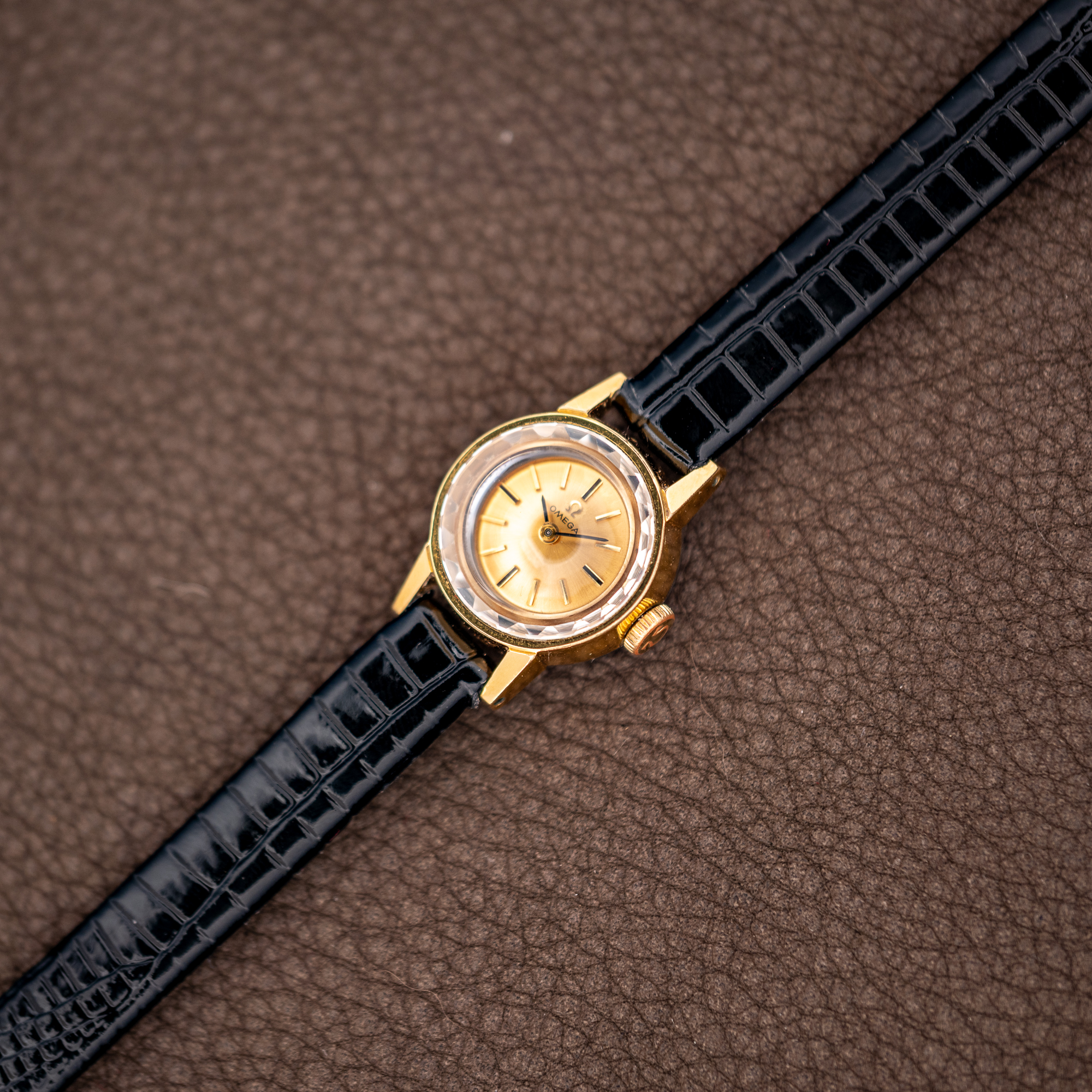
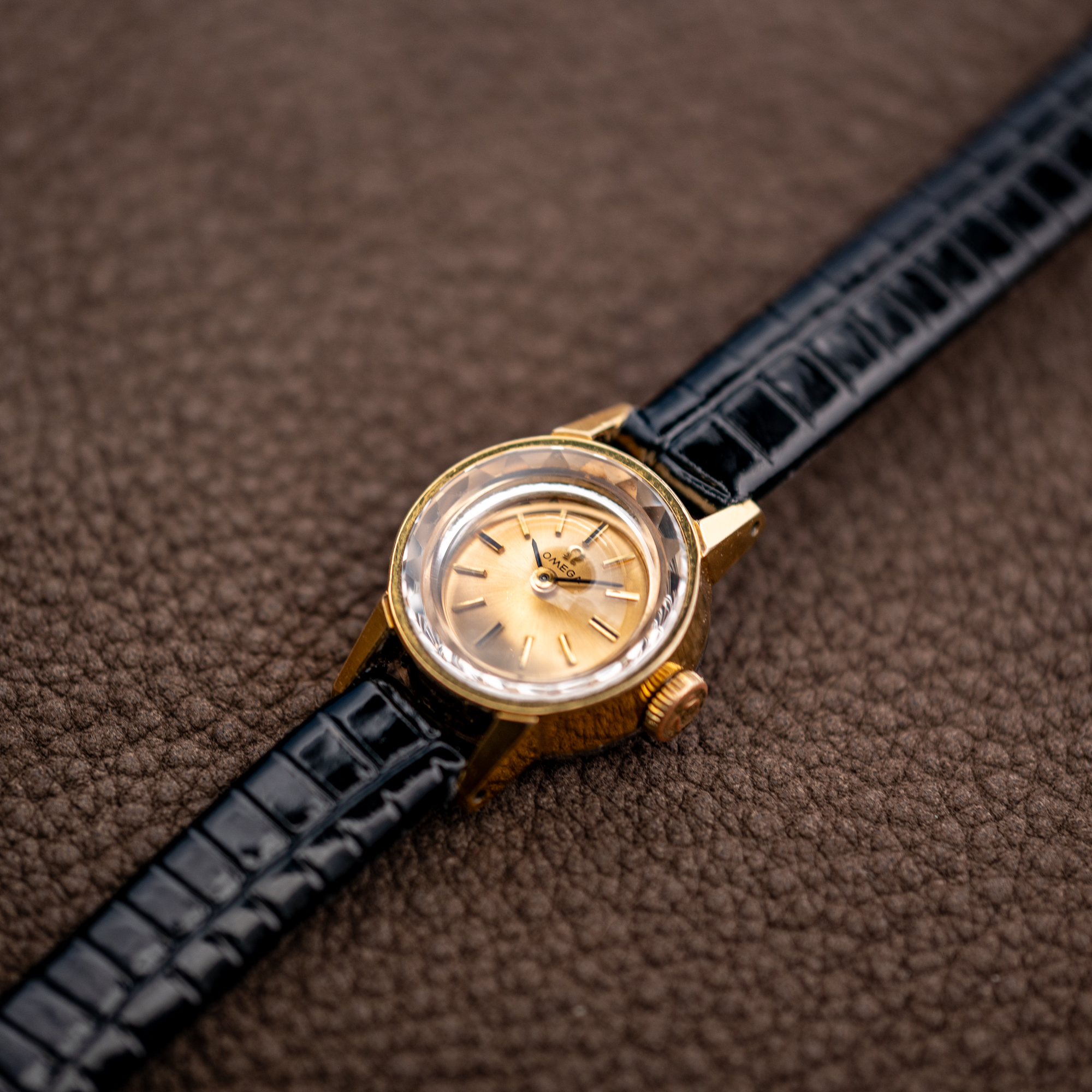
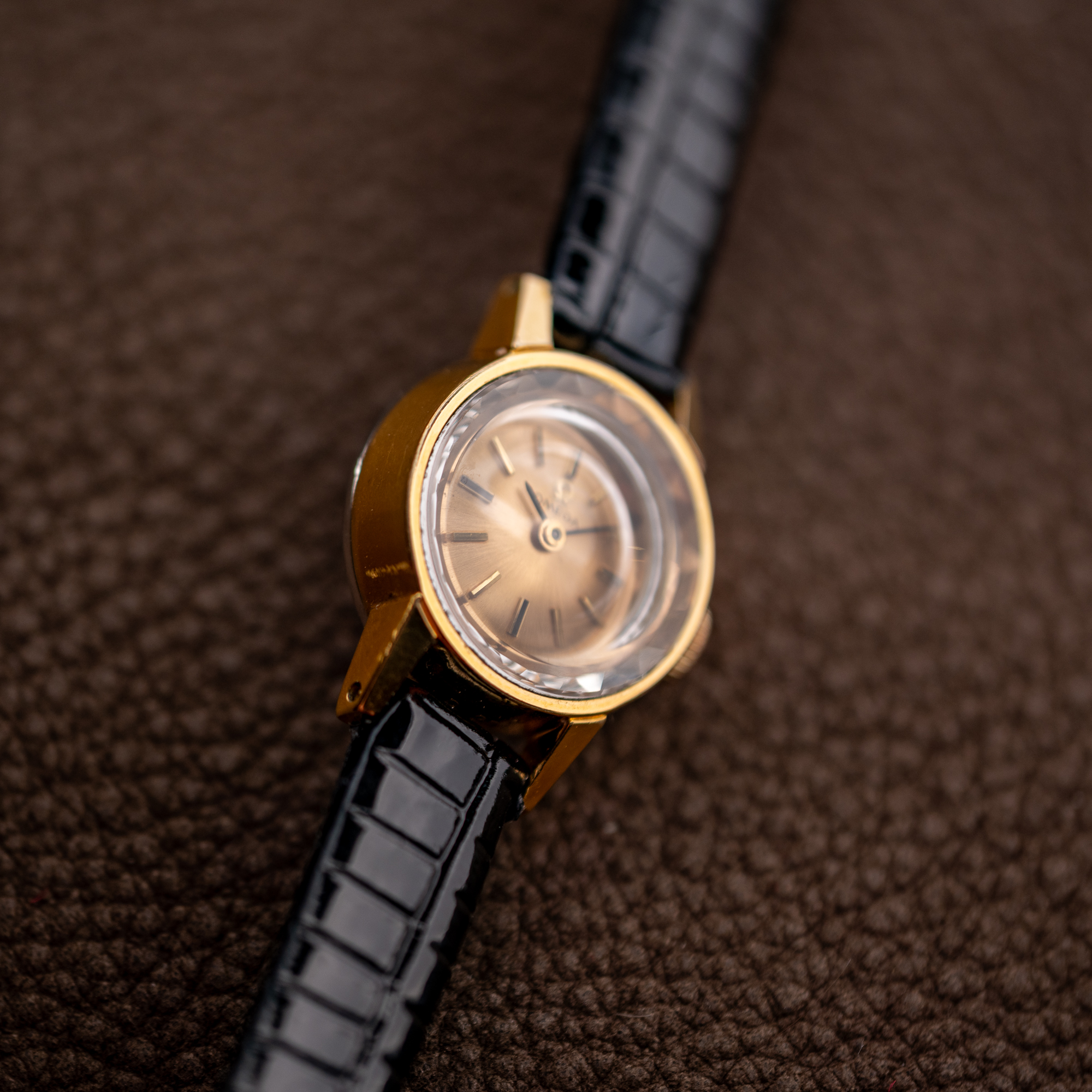
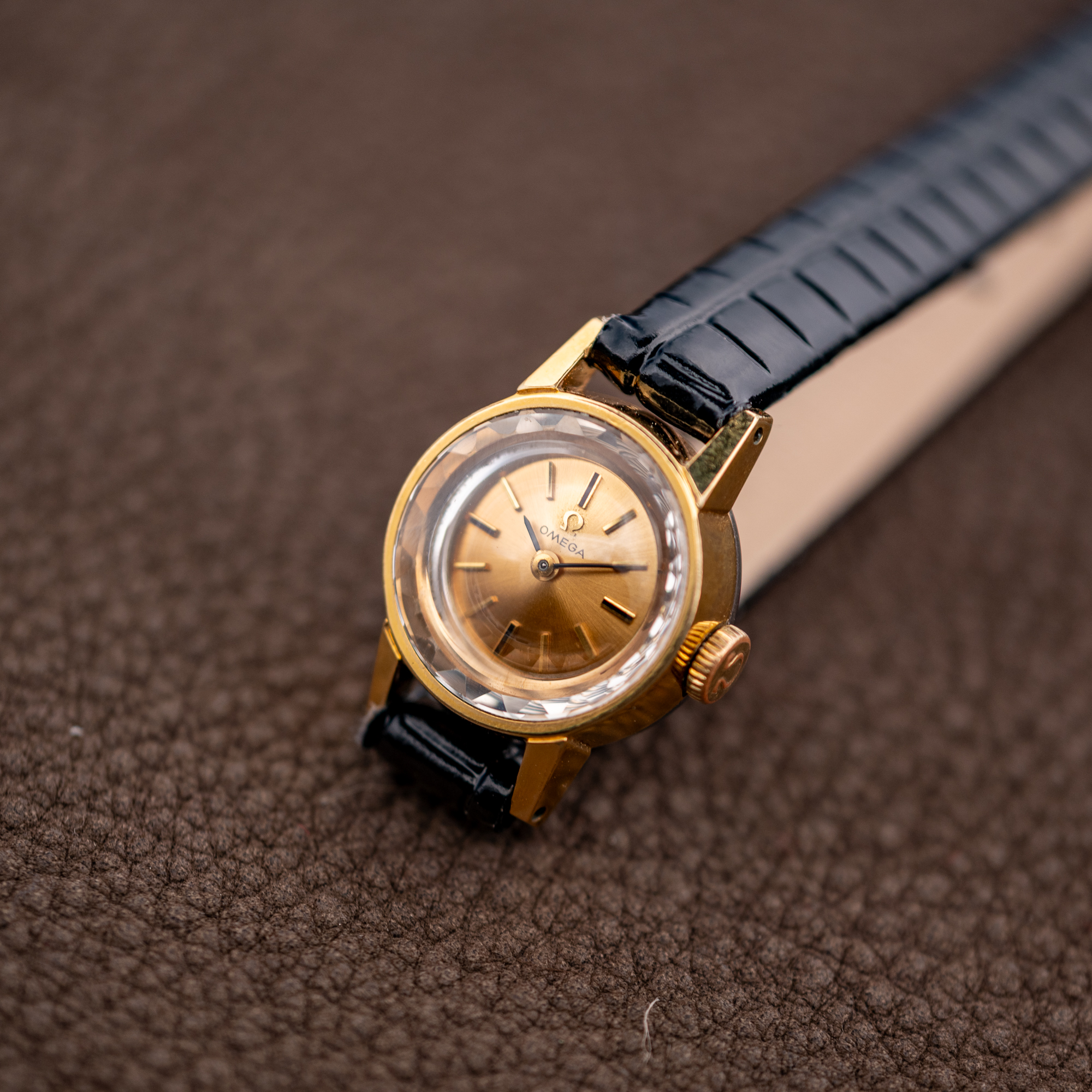
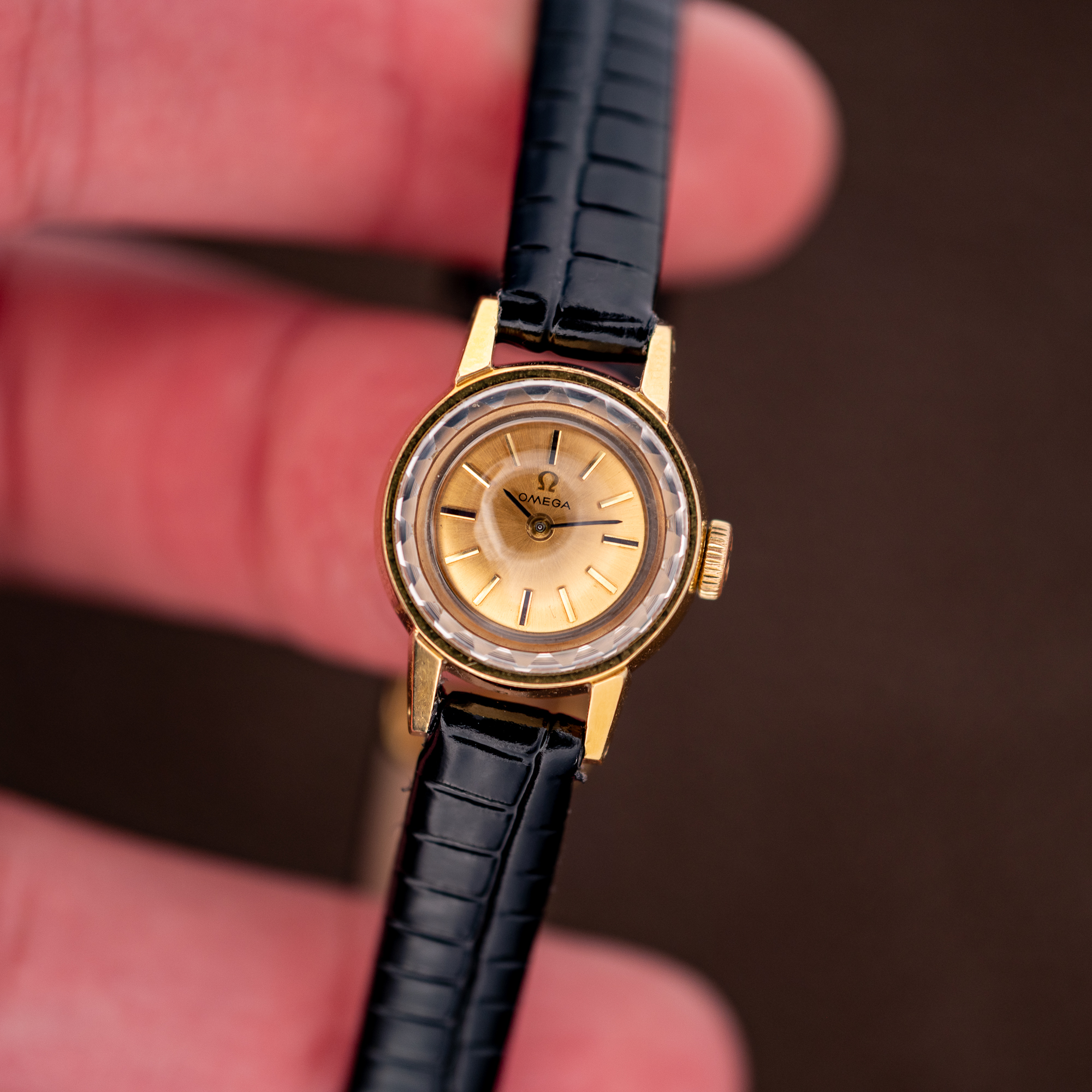
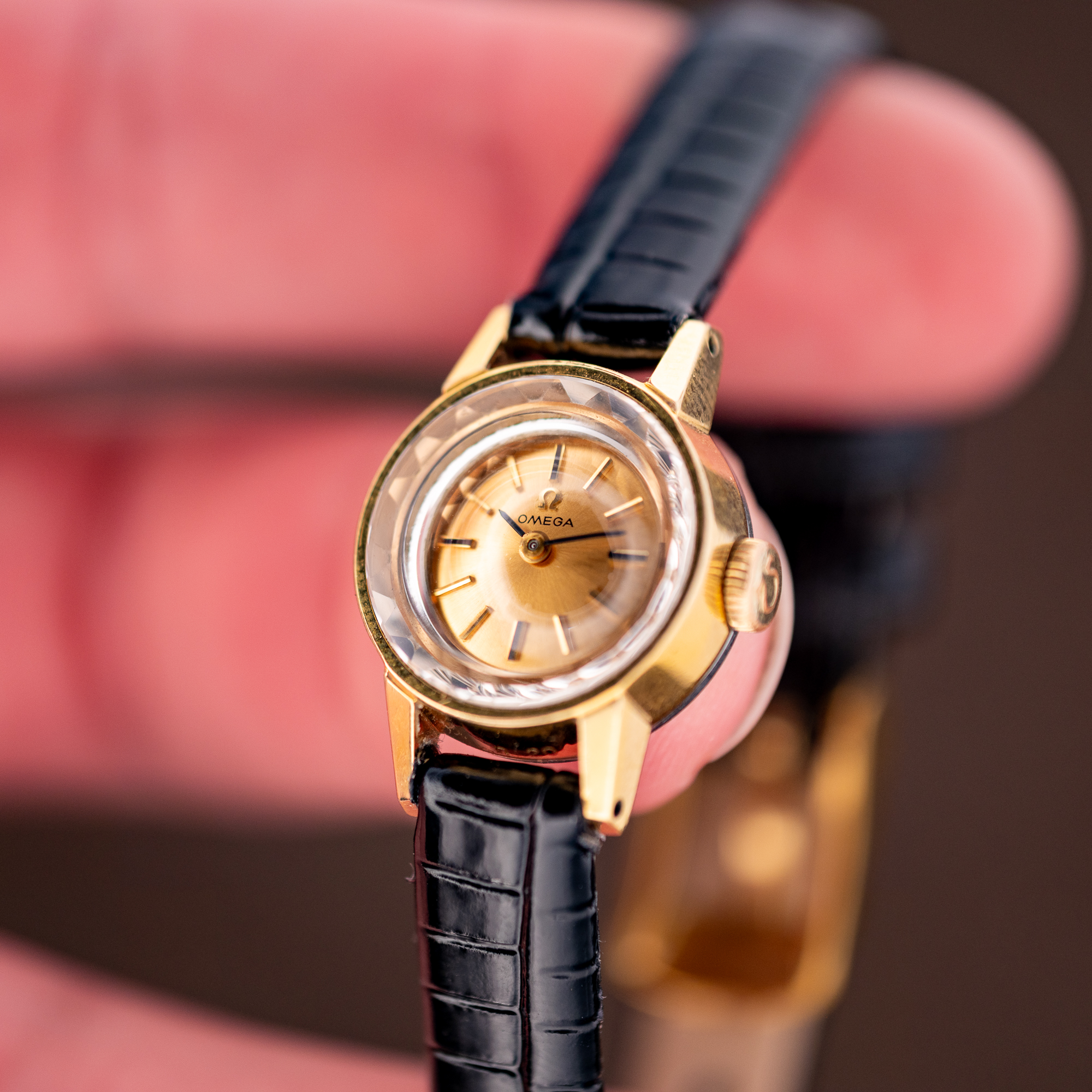

Light reaches this small Omega at the edge first. Its crystal is cut with a ring of facets around the perimeter, so the rim breaks into bright little planes as the wrist moves while the center stays clear over the champagne dial. On a case only 18mm wide, that cut edge supplies the sparkle a jeweler would otherwise have set in stones.
Omega knew the effect well. In 1966 it made the Saphette, a solid-gold ladies’ model fitted with a synthetic sapphire crystal faceted around its perimeter, and one of them carried the reference BA 511.0236. The Omega 511.166 is a different model with a gold-plated bezel, not a Saphette, yet its crystal is ringed with facets in much the same way.
Collectors call pieces like this cocktail watches: petite, dressy ladies’ watches of the 1950s and 1960s, made to be worn as jewelry as much as to tell the time. The 511.166, faceted and dressy, fits that description, though nothing on it is set with a stone.
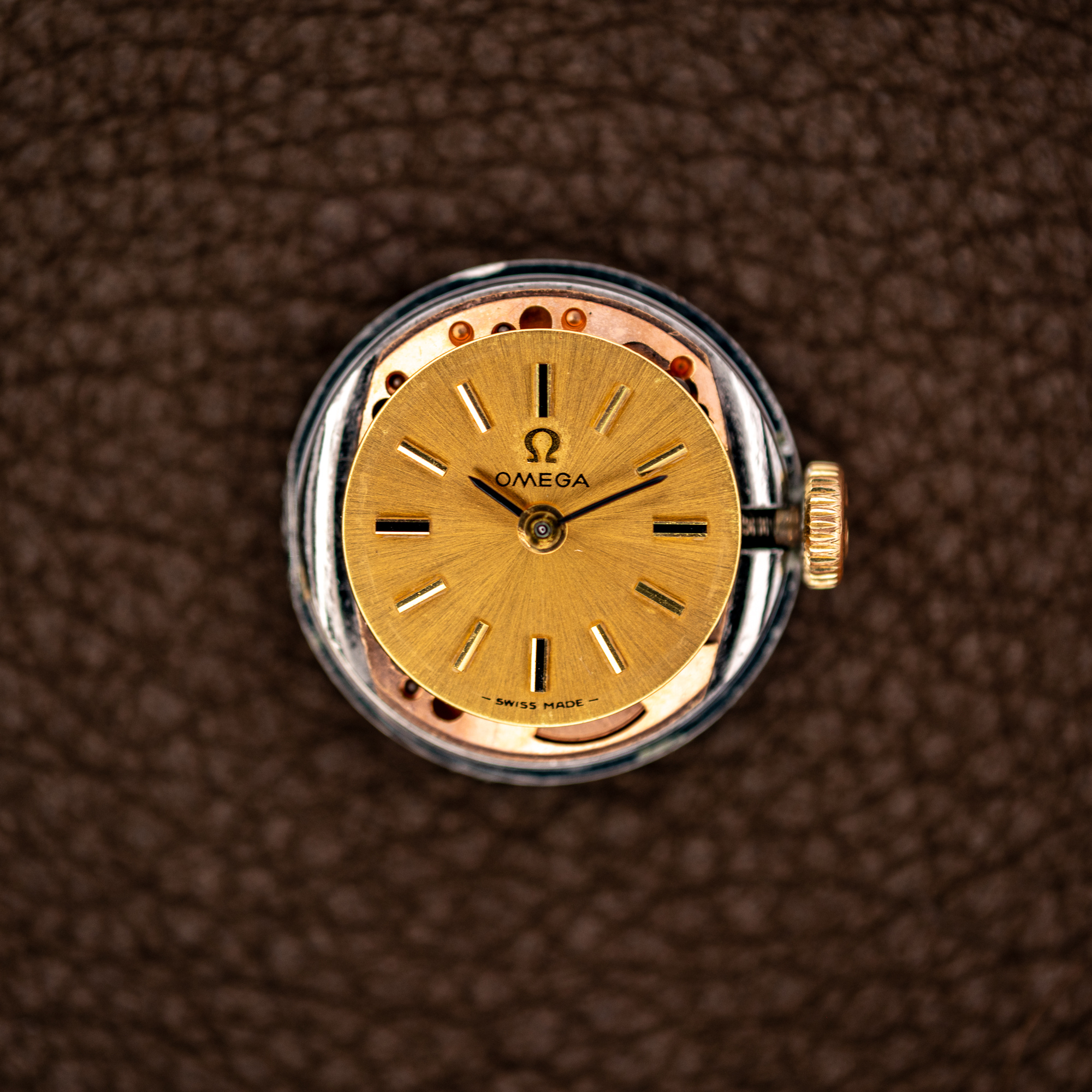
The dial keeps to two hands and applied baton markers on a radial-brushed champagne surface, signed with the Omega symbol and name. With no seconds hand and no date, nothing on it moves fast enough to catch, and the brushing picks up whatever light the facets let through.
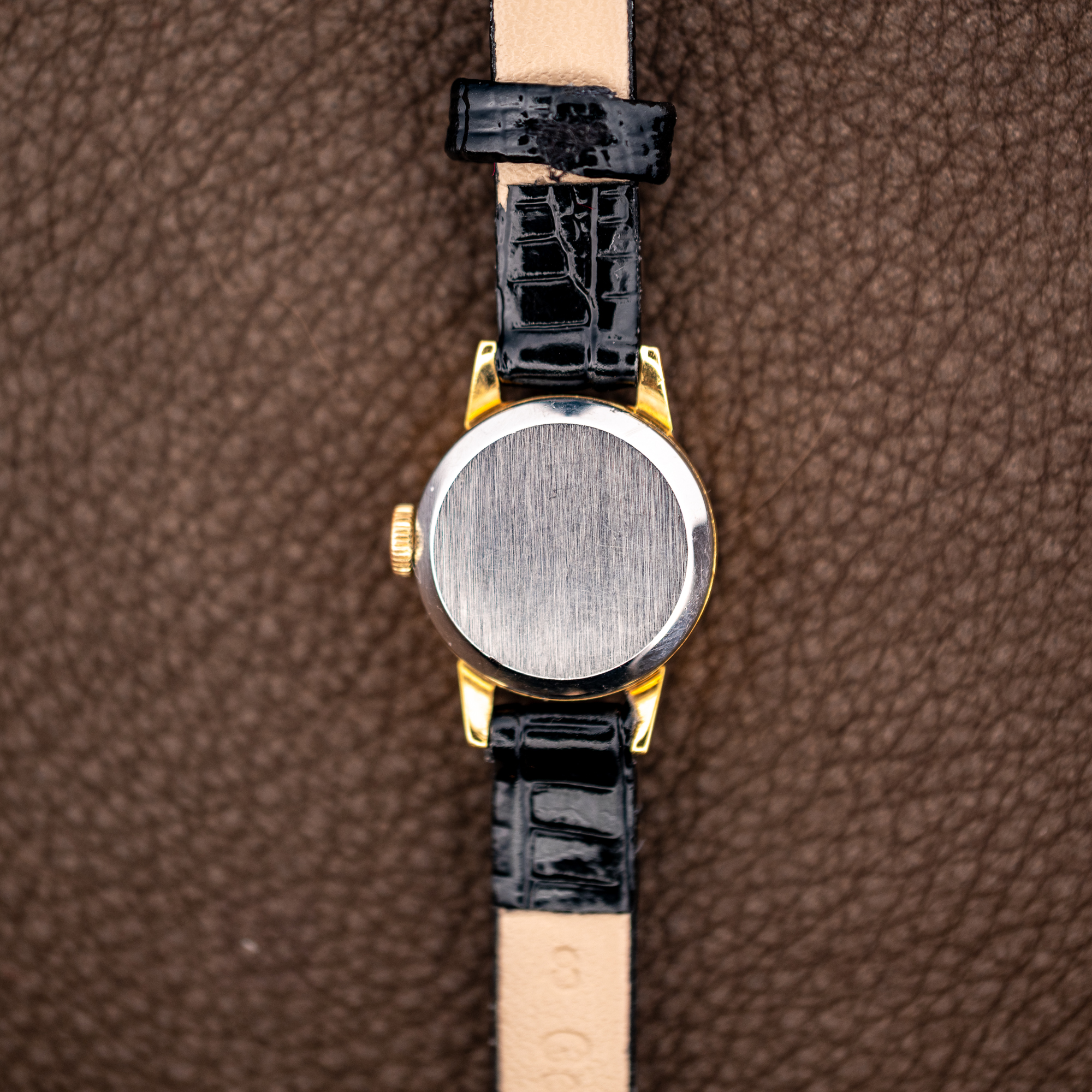
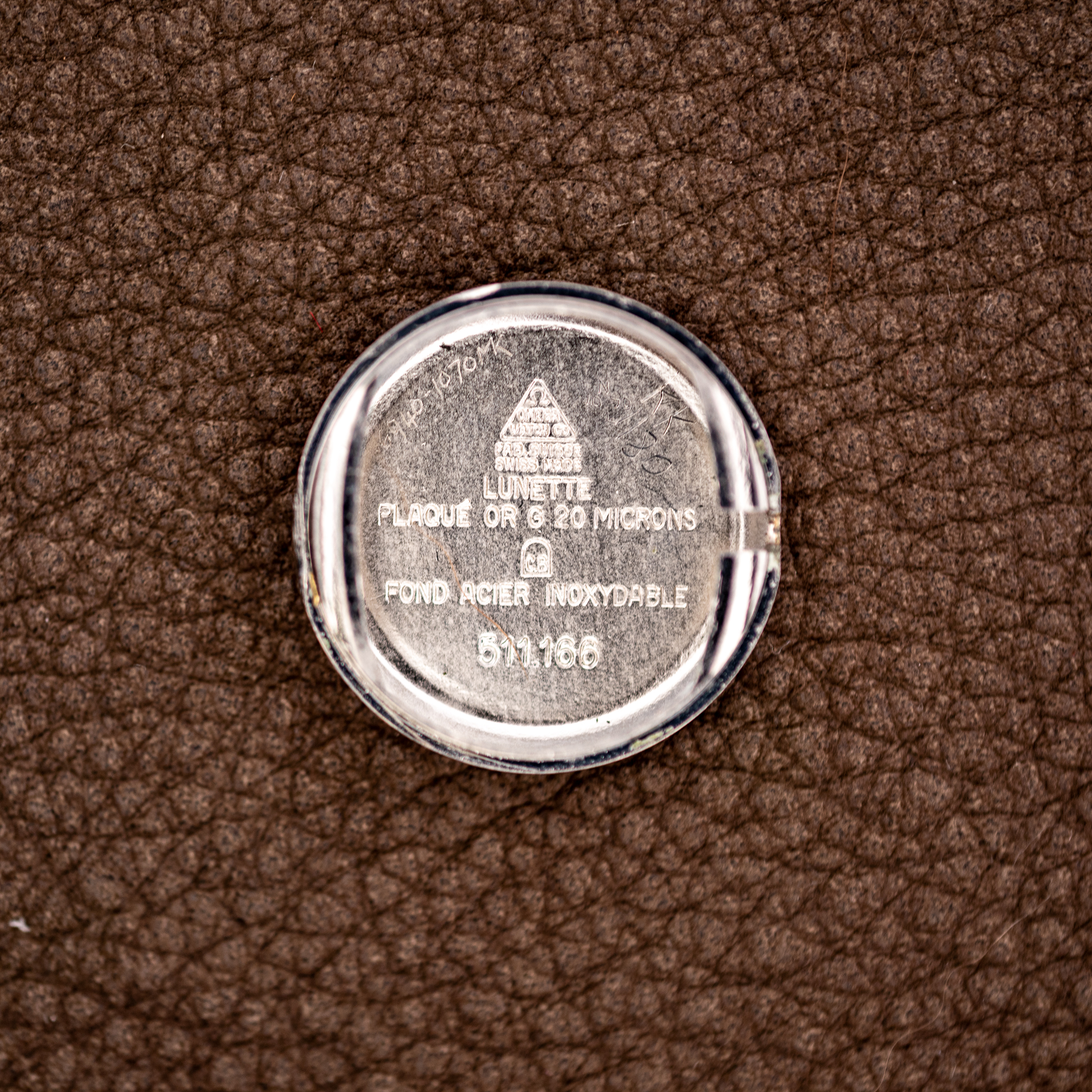
The construction is spelled out in French inside the back. LUNETTE, the bezel, is gold plate (PLAQUE OR G 20 MICRONS), while FOND, the back, is ACIER INOXYDABLE, stainless steel. Gold where the eye goes, steel against the skin. From outside, the back is plain and vertically brushed with a polished border.
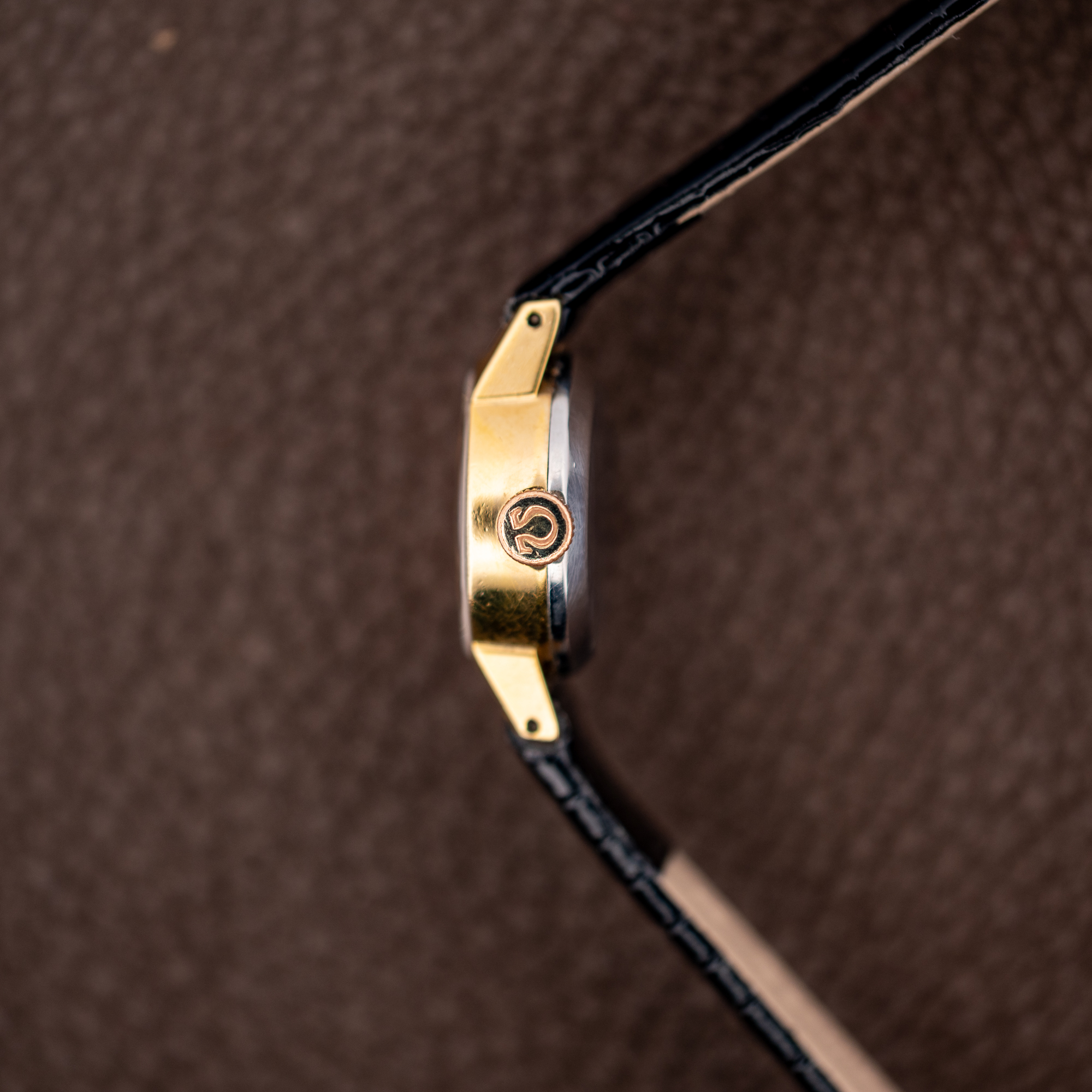
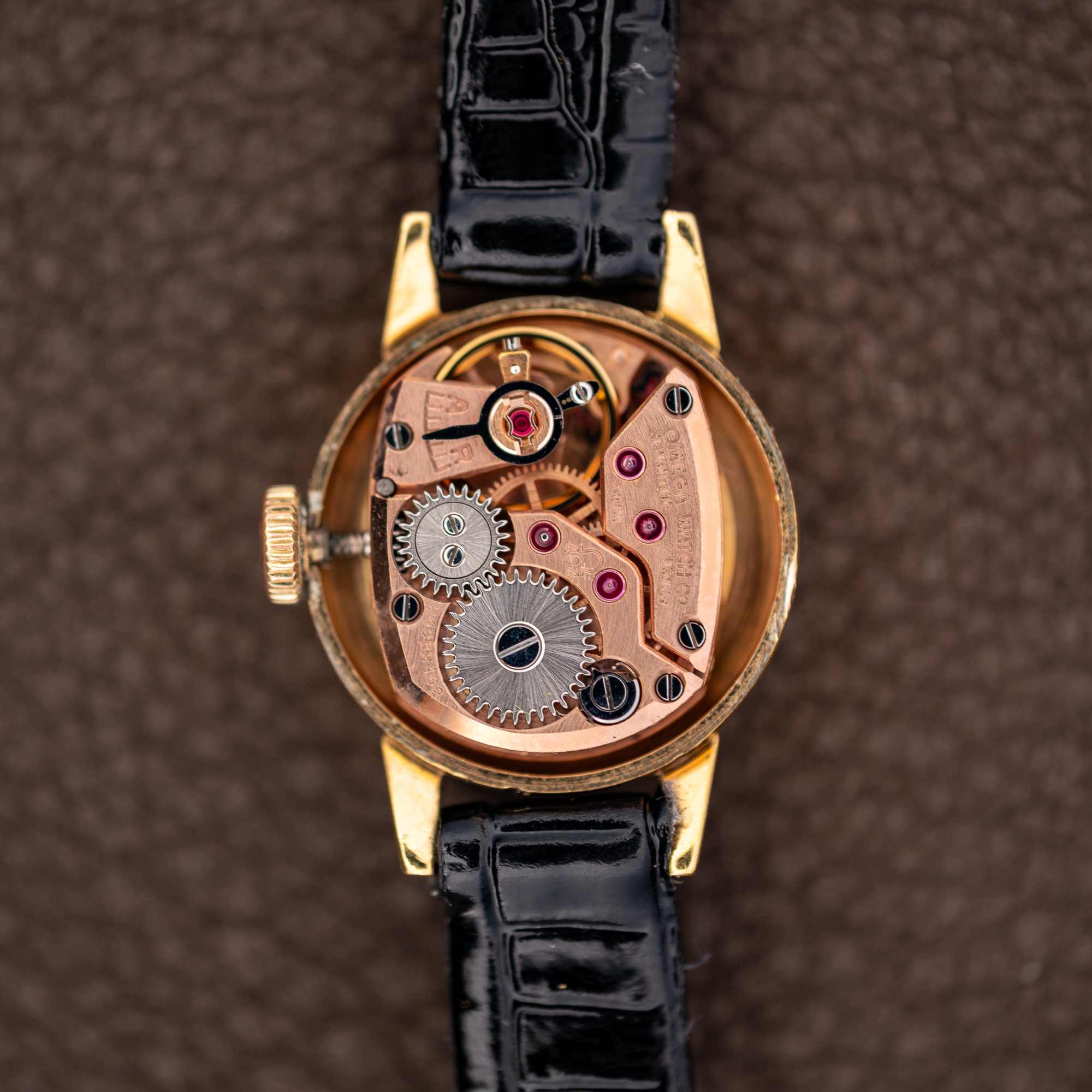
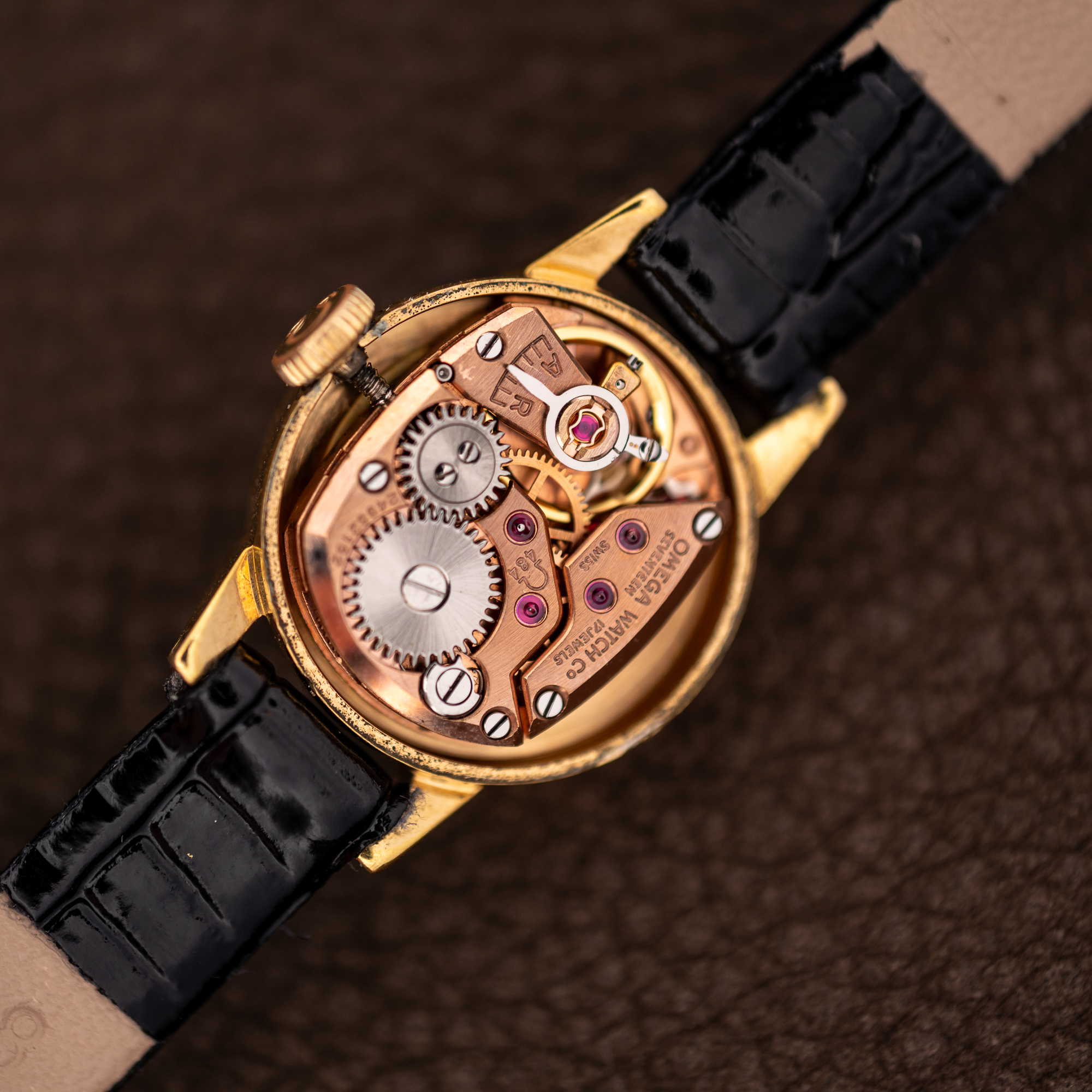
Caliber 484 runs it, a hand-wound Omega movement of the 1960s that measures just 12.5 by 15.5 millimeters, with 17 jewels and Omega’s name on the bridge. A turn of the signed crown each morning keeps it going.
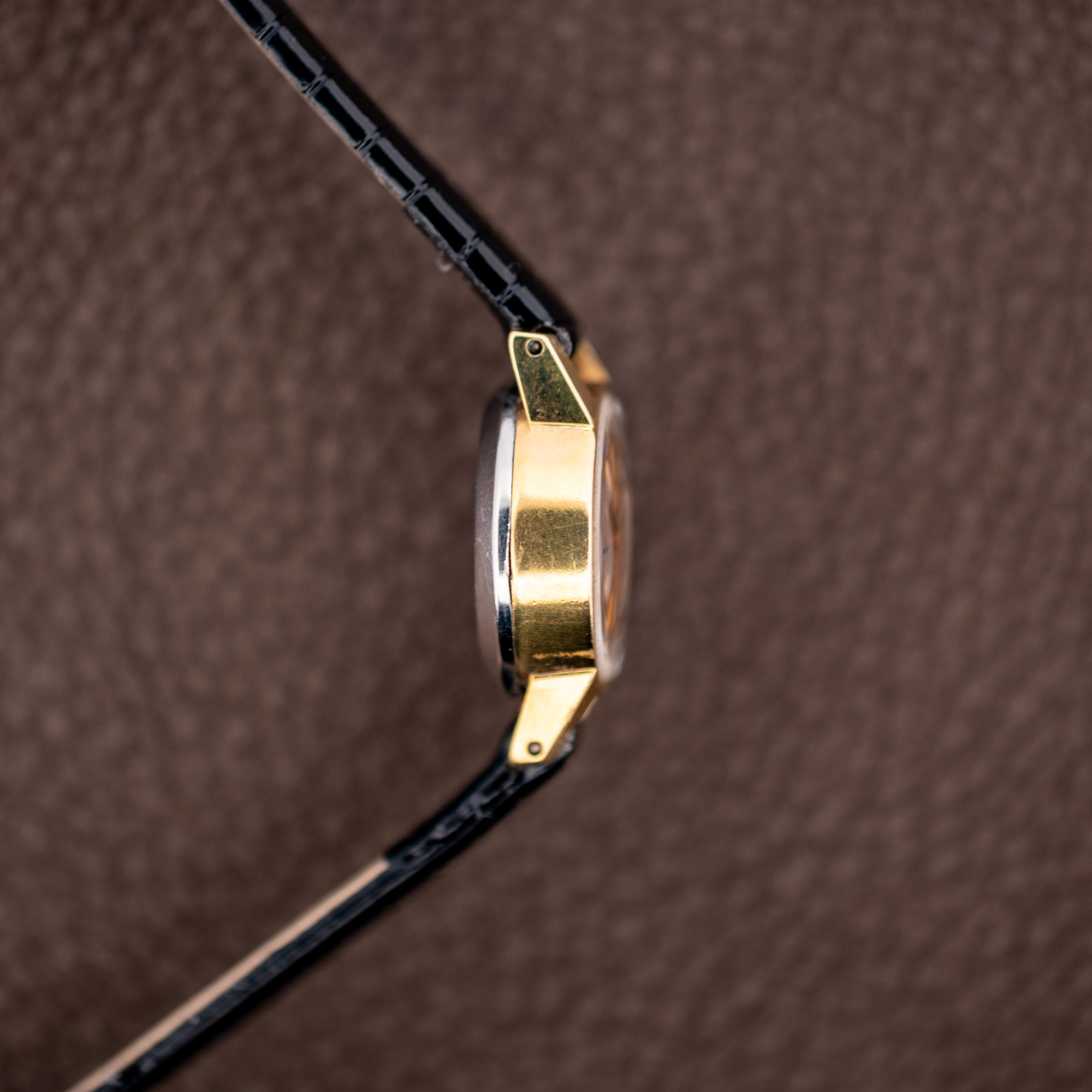
The case measures 18mm across and 24mm lug to lug, with drilled lugs, and it rides on a black leather strap. Small marks and a few dark specks sit along the bezel edge and lugs. Tilted toward the light, the faceted rim scatters bright points across the dial, the same trick Omega played in solid gold and sapphire on the Saphette.