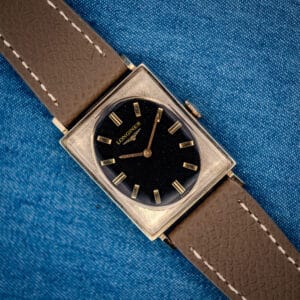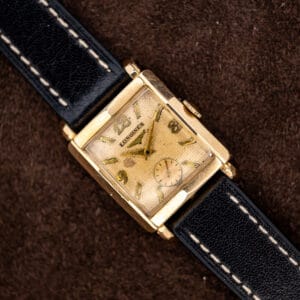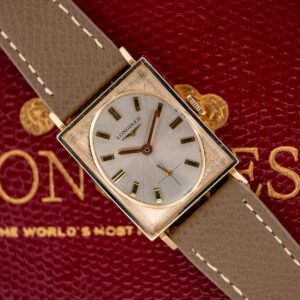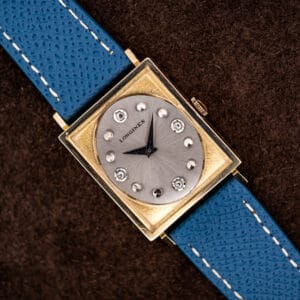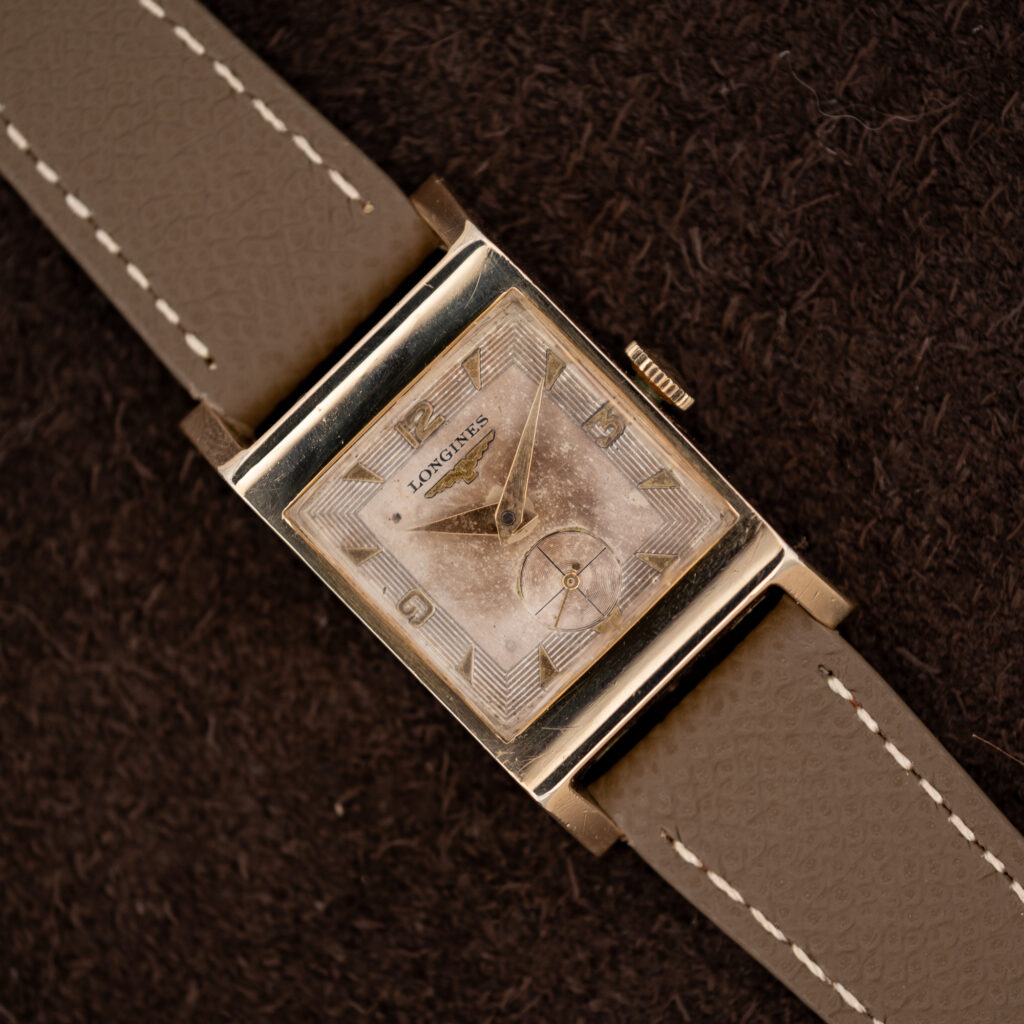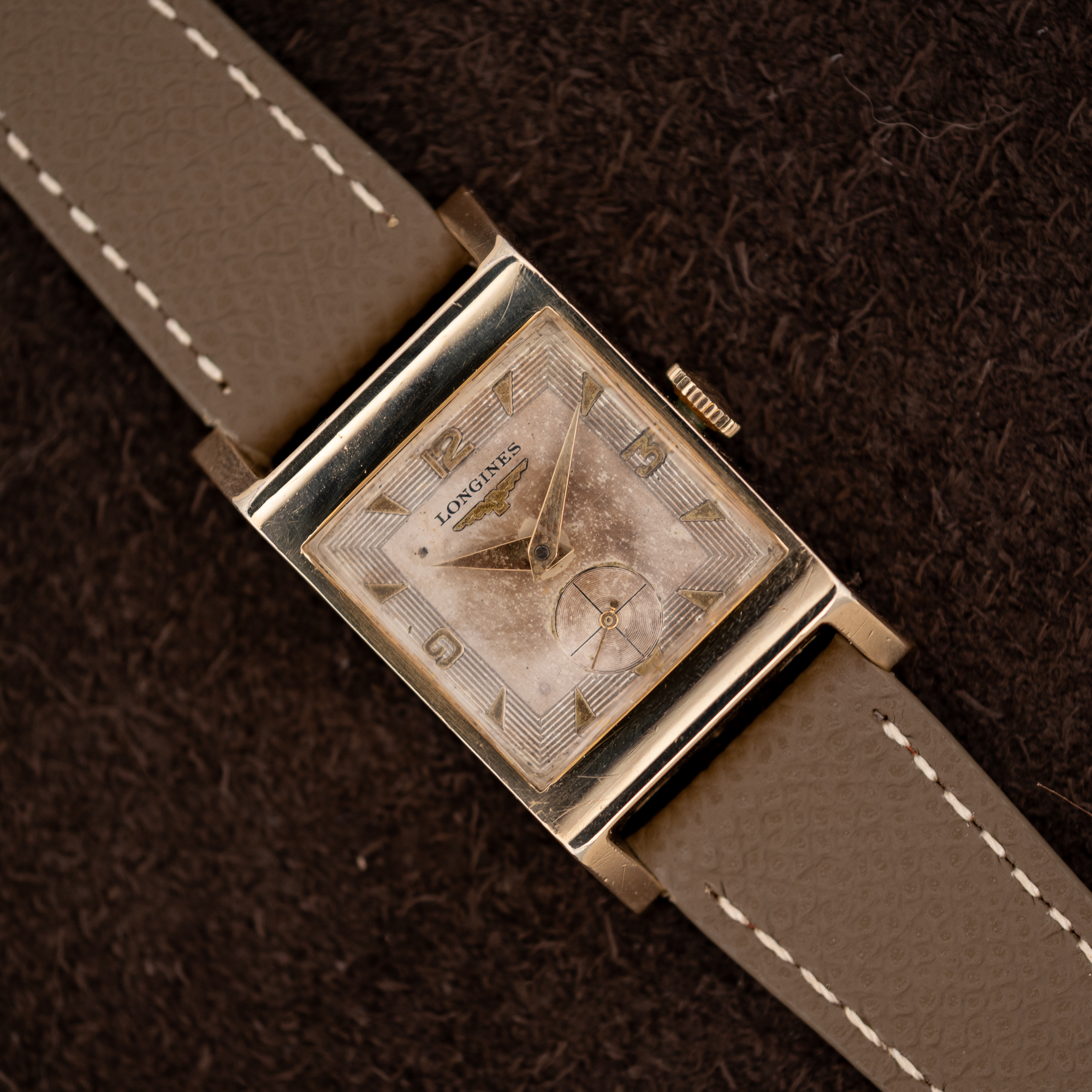
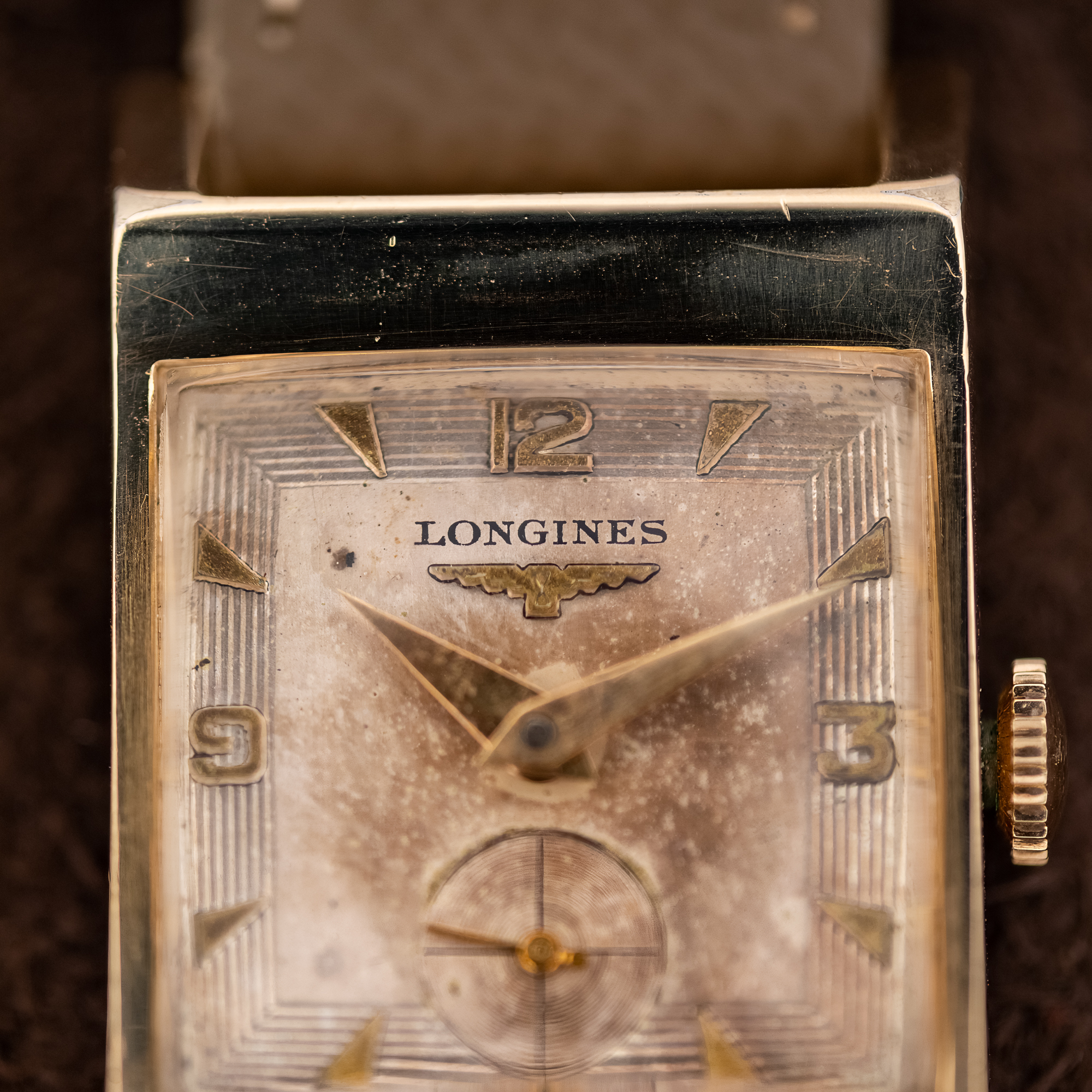
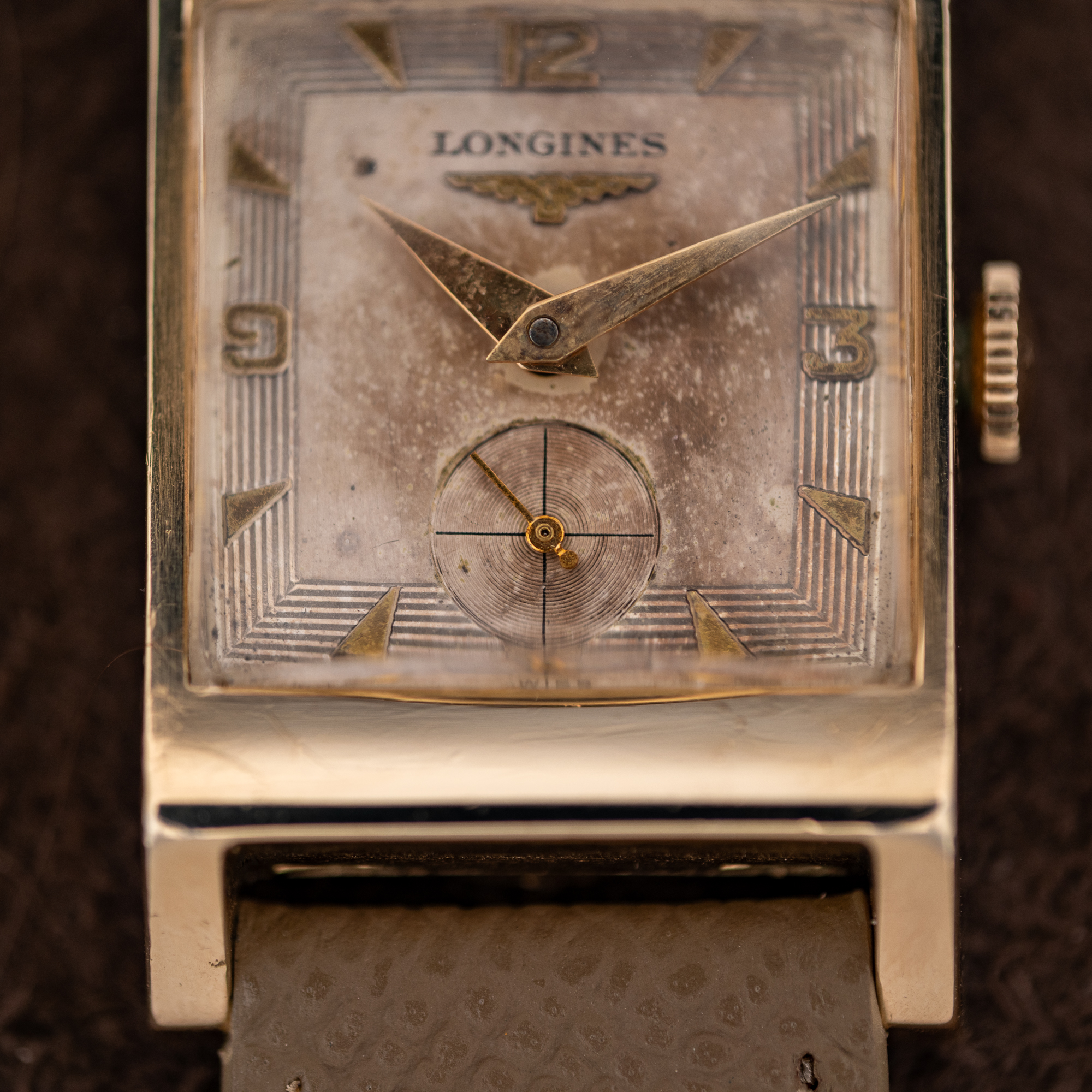
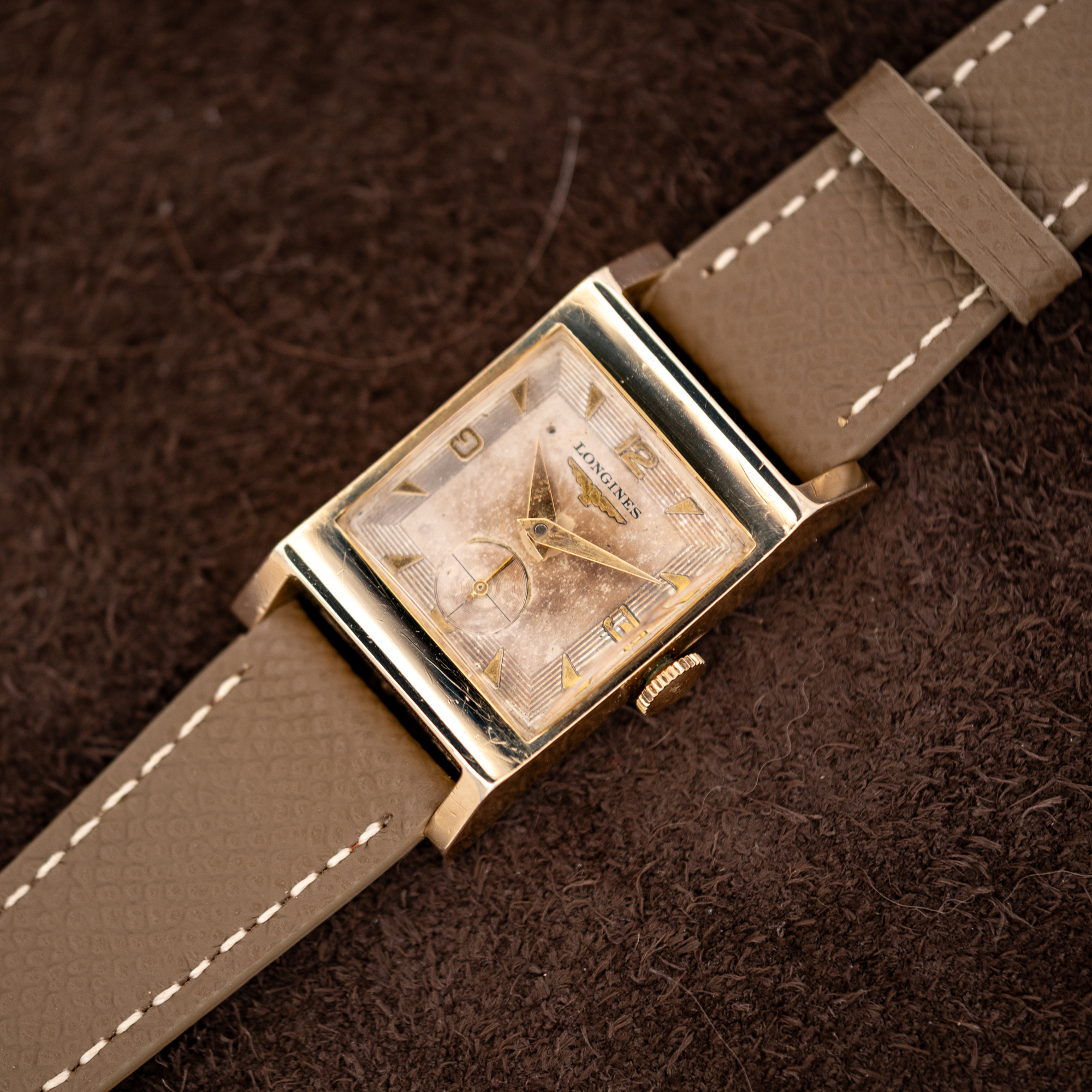
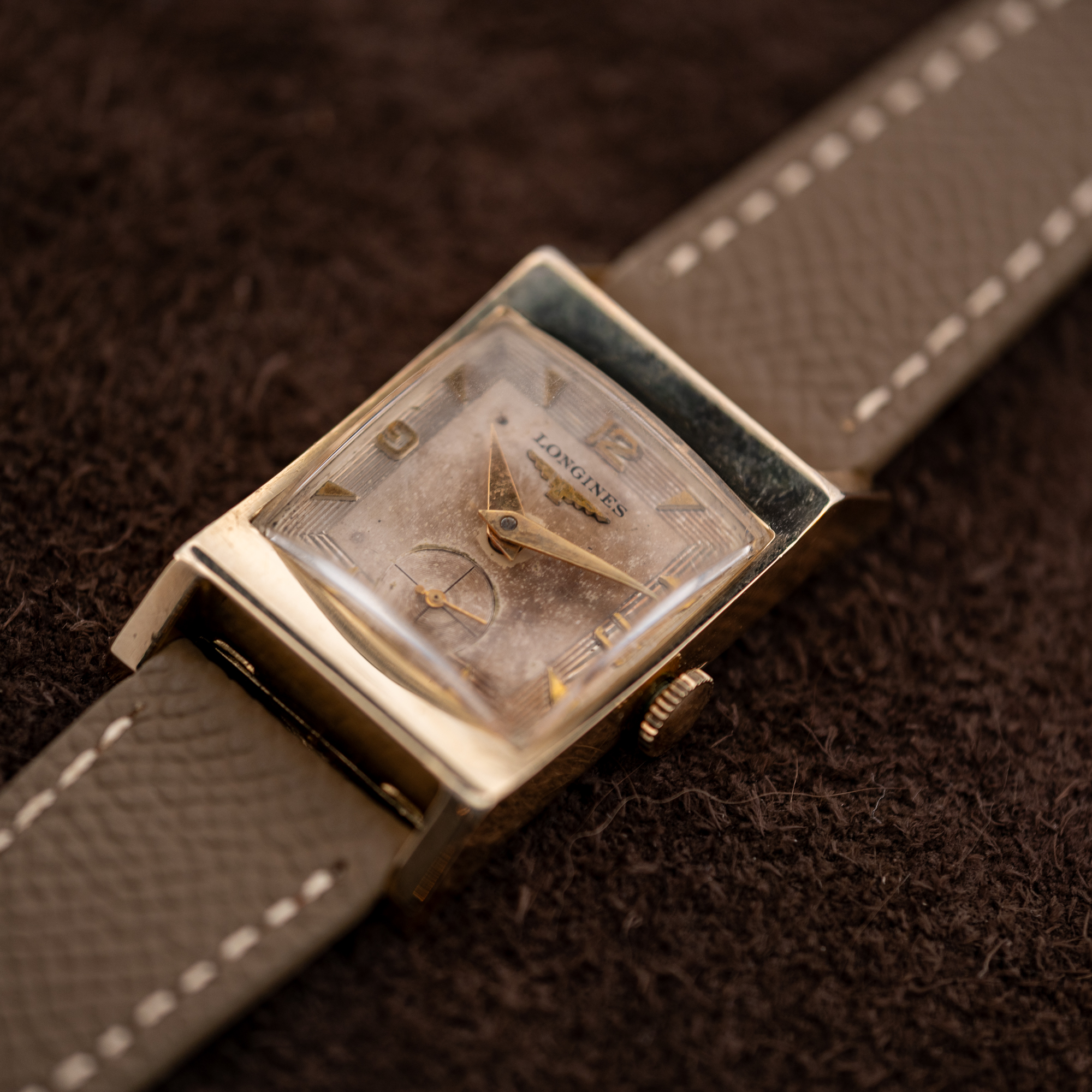
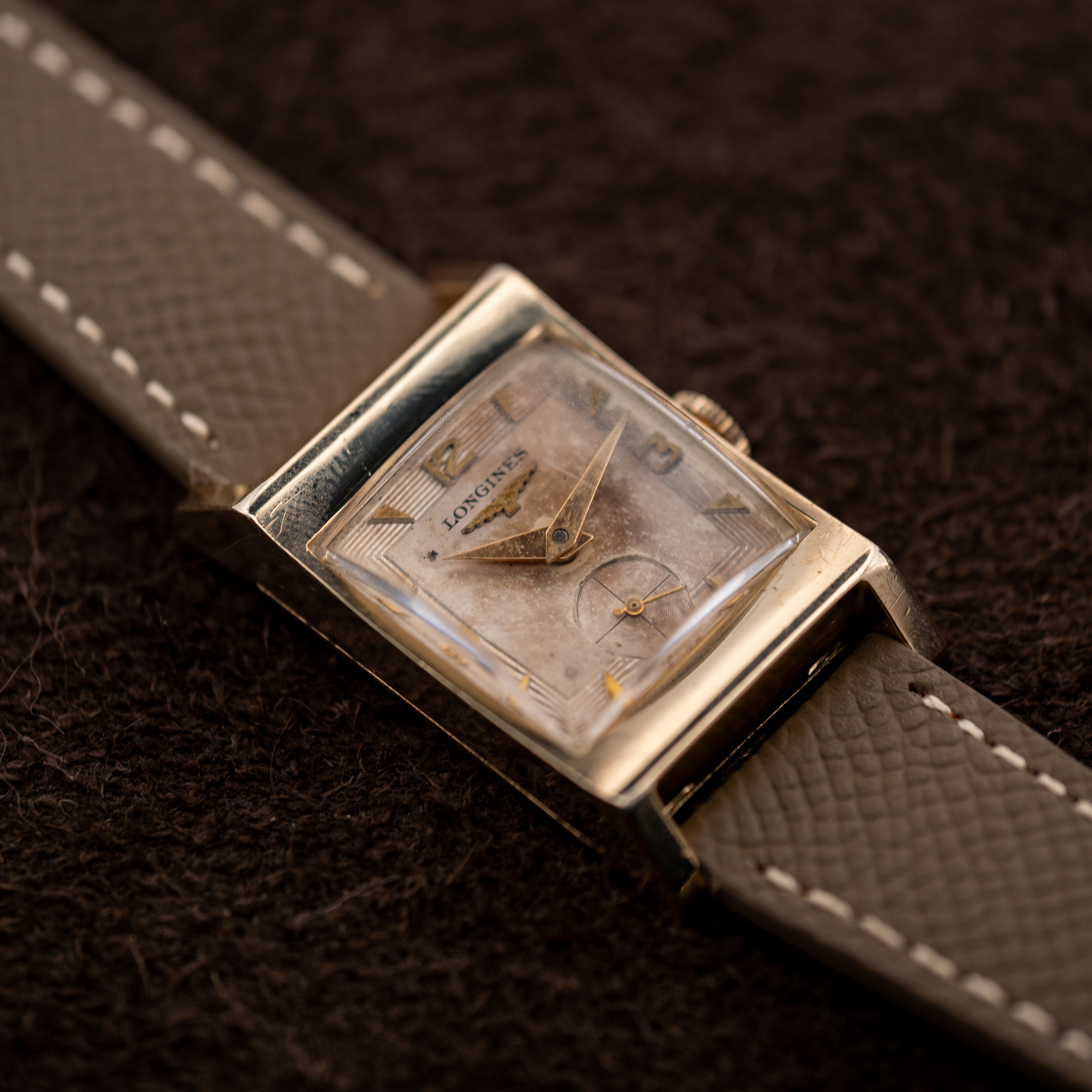
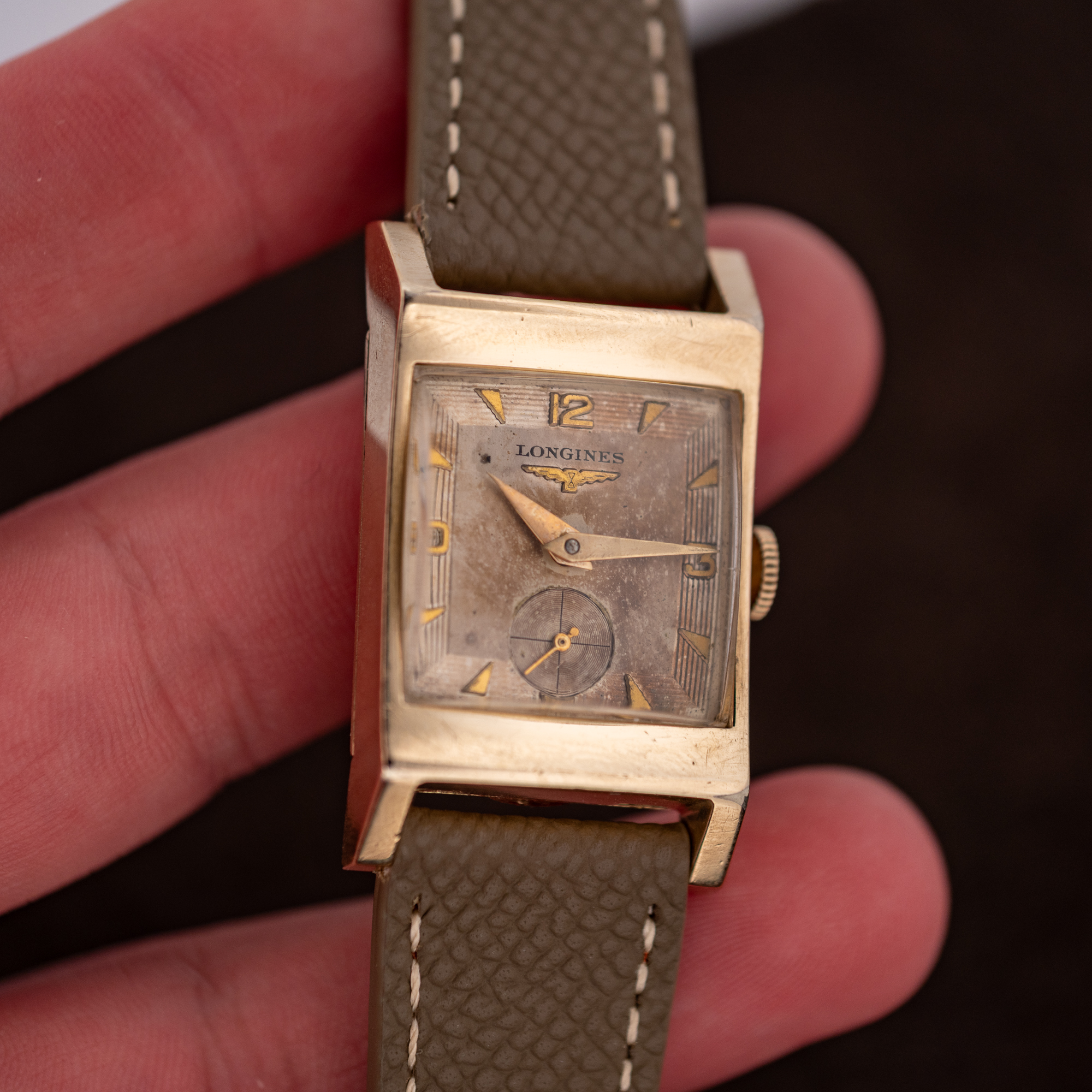
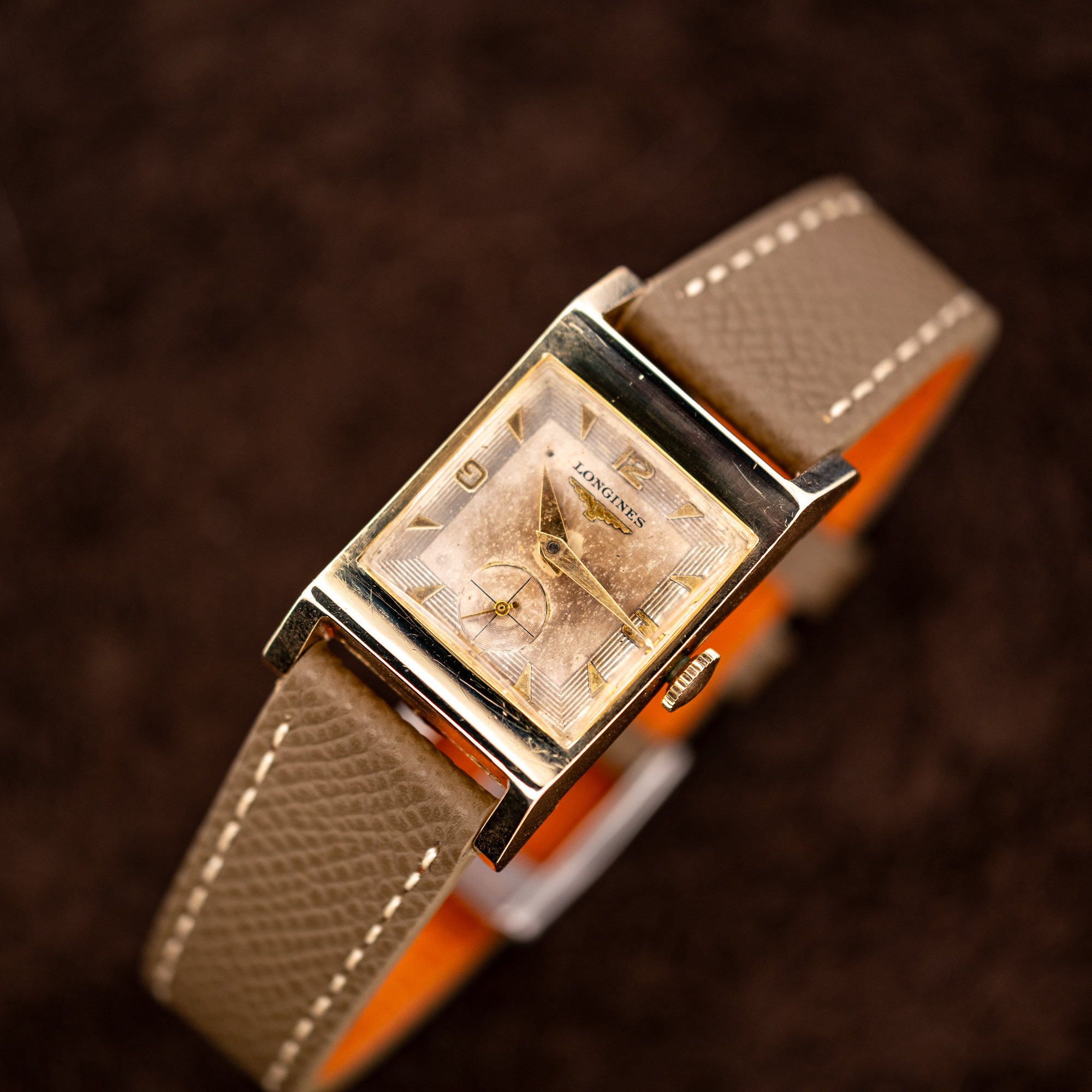
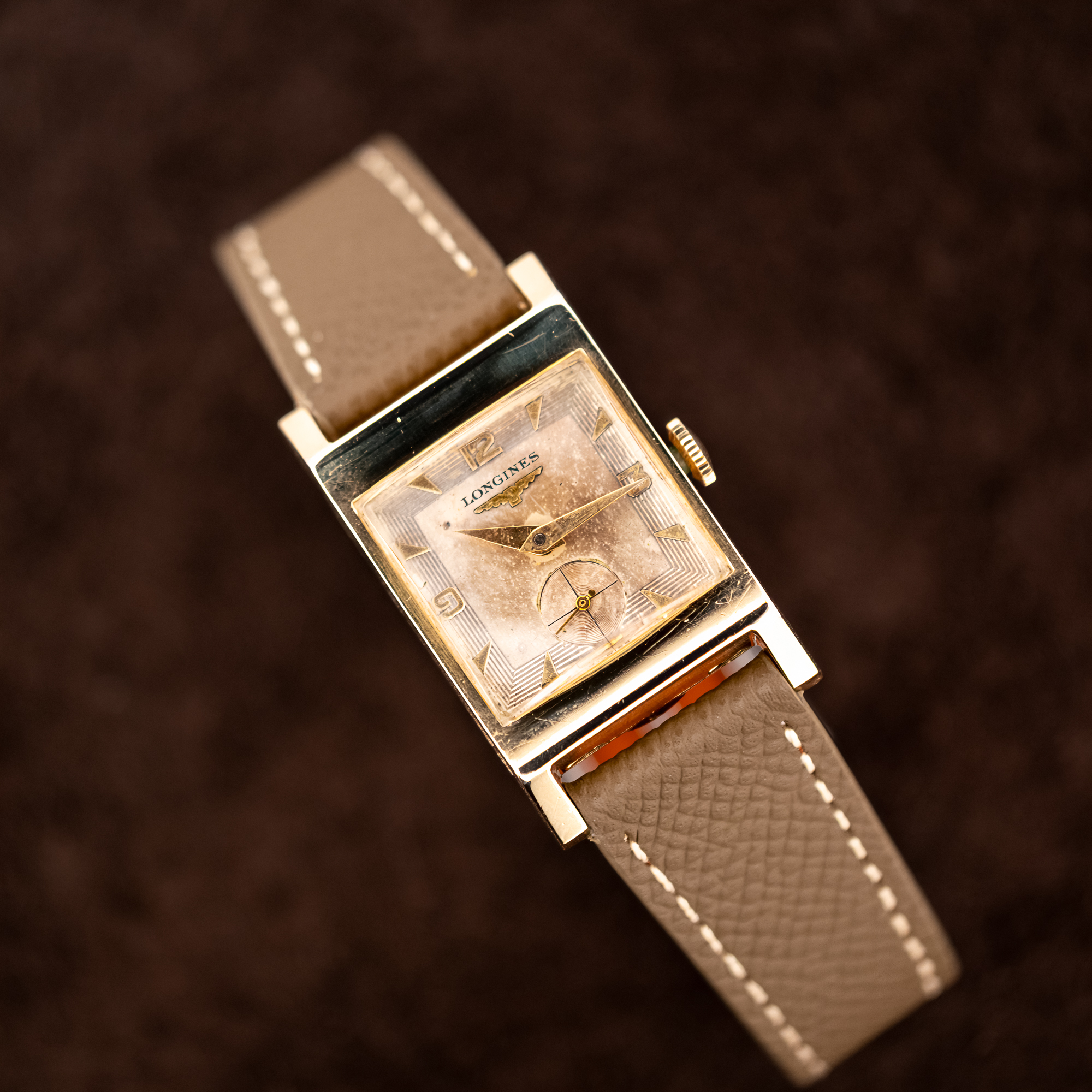

Three numerals carry this Longines dial: 12, 3 and 9, applied to an eggshell ground. The six gave up its place to the small seconds, a circle quartered by a crosshair. Triangles stand in for the remaining hours, and around them a border of stepped parallel lines follows the rectangle all the way round, setback after setback, like the profile of an Art Deco tower seen from the street.
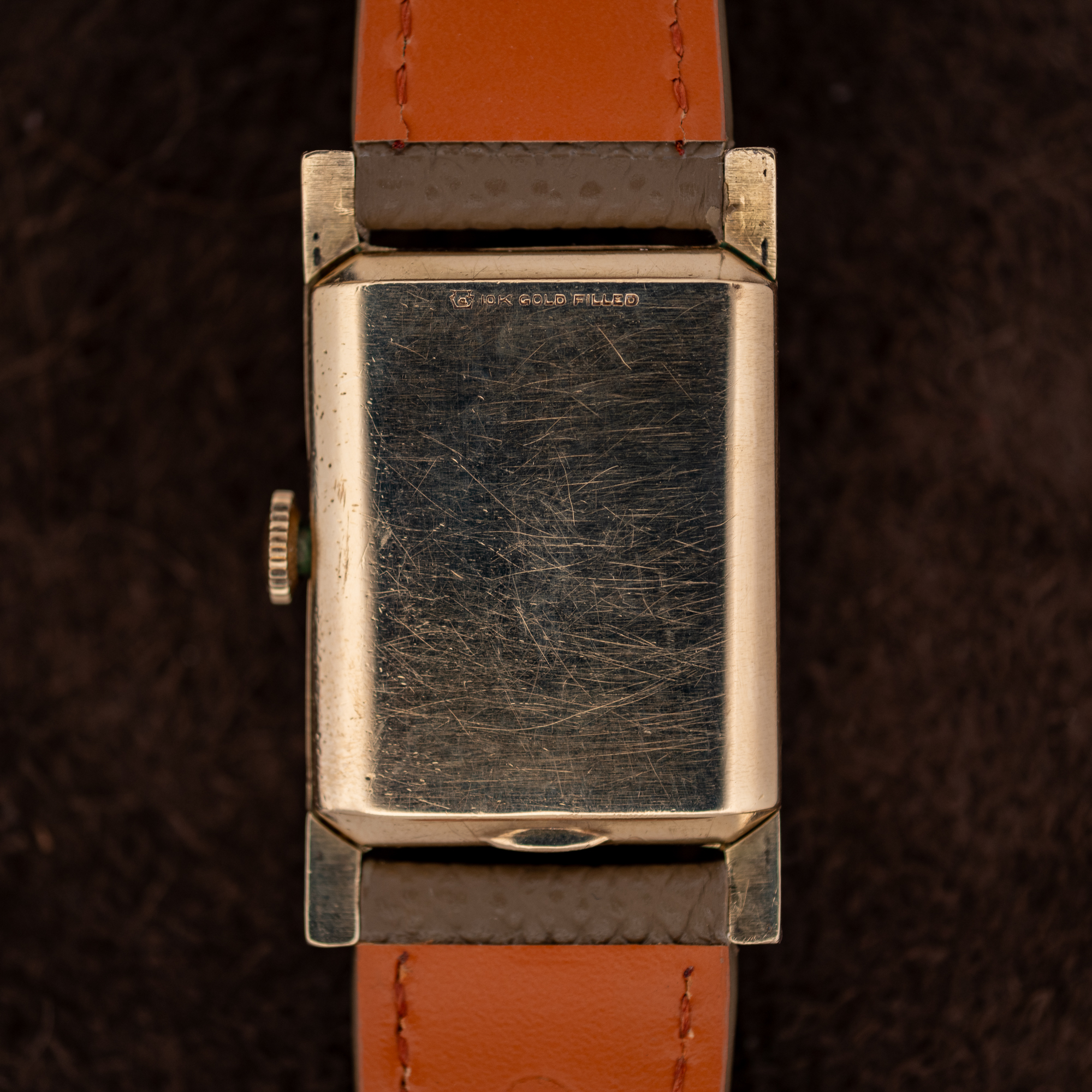
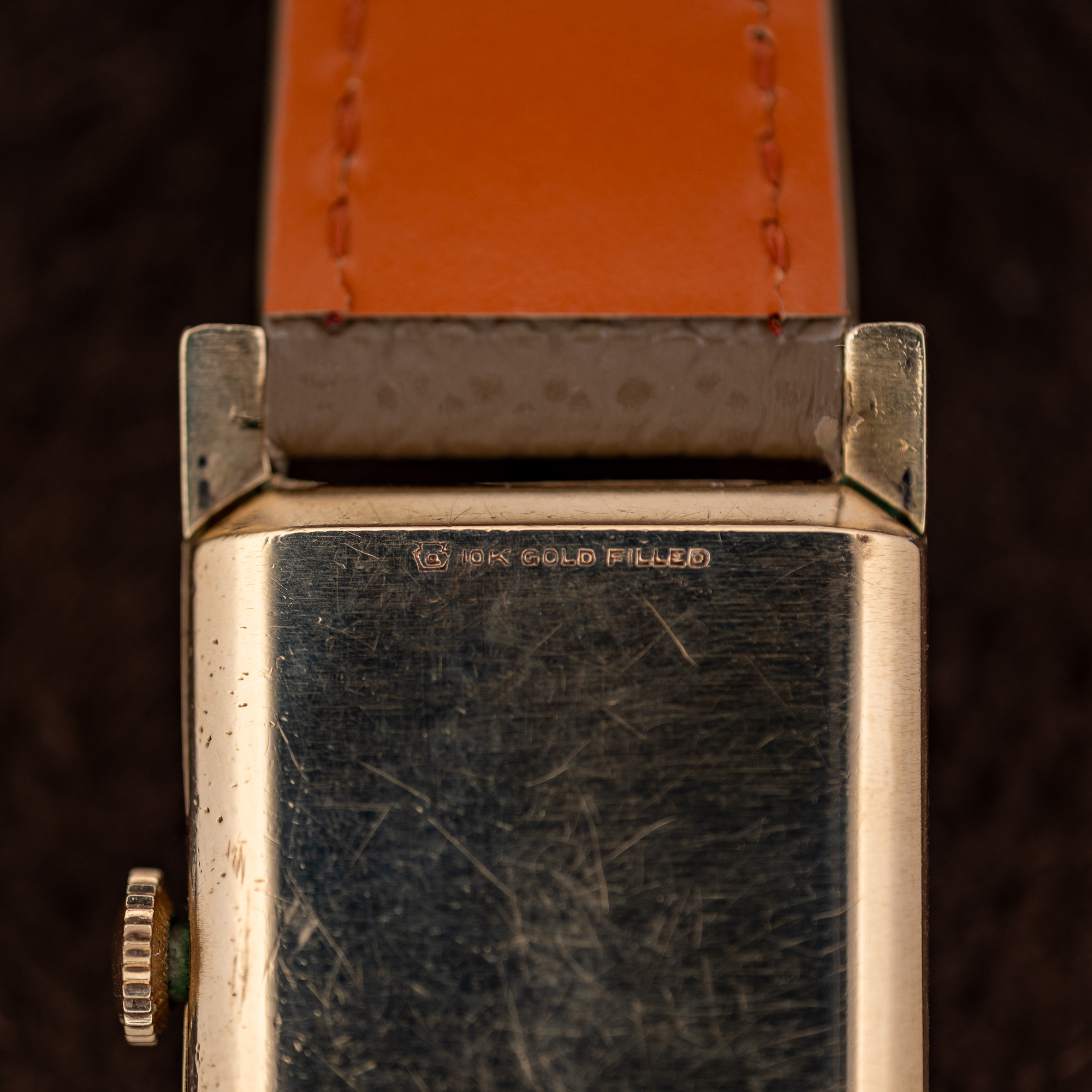
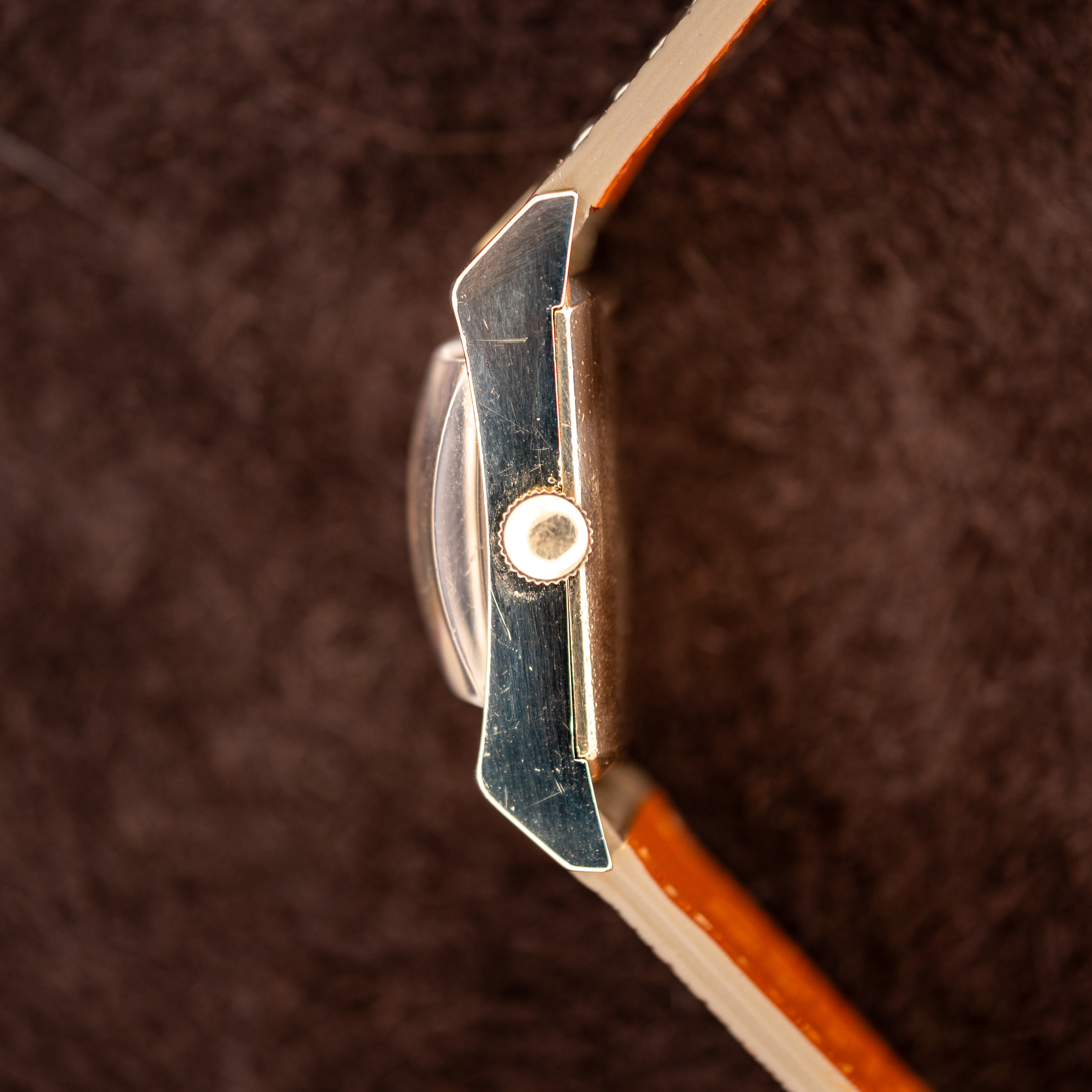
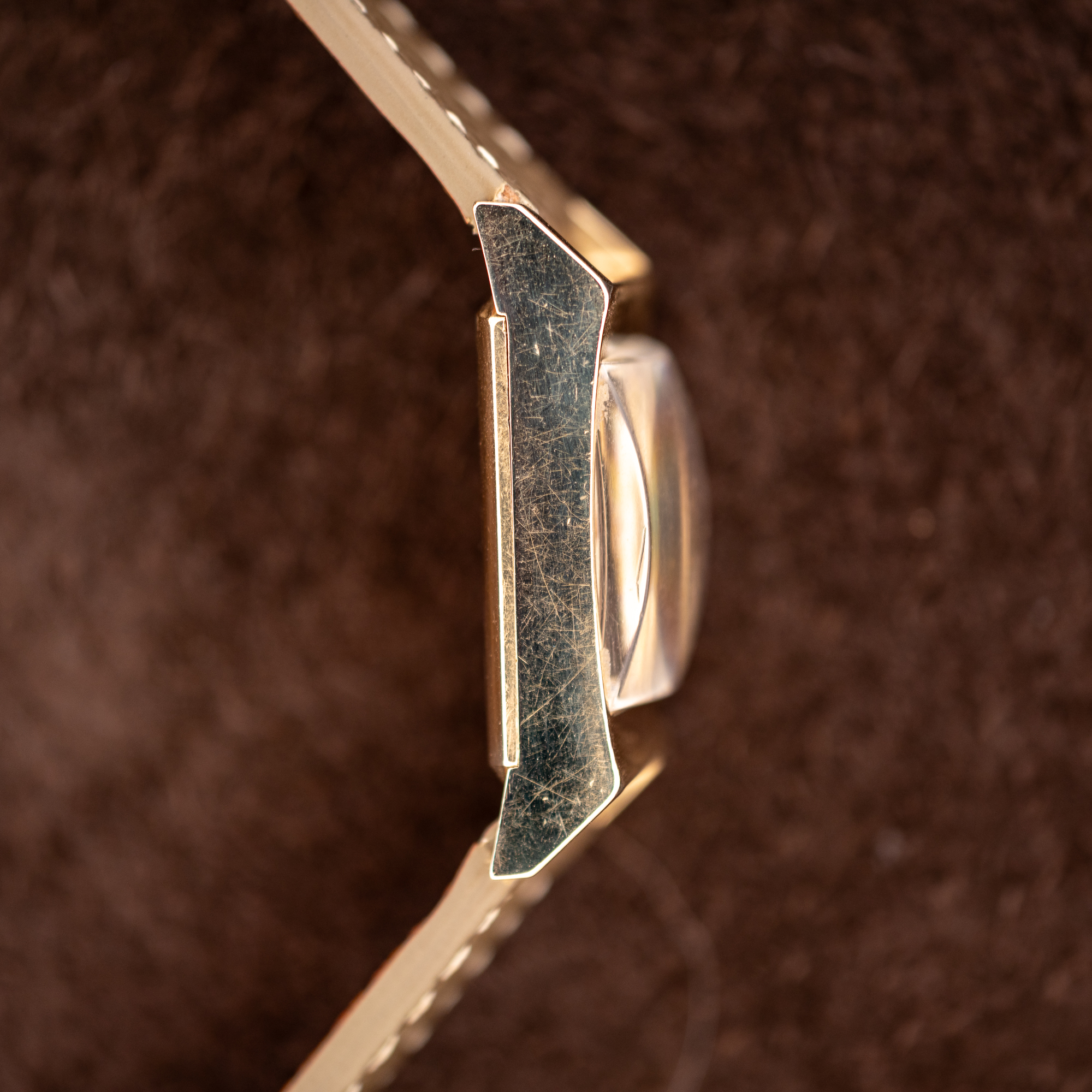
Outward from the dial, the case repeats the idea. Broad shoulders curve down into the lugs, and the Longines Tank 2172-10 runs 38 millimeters long against 22.5 wide in 10k gold-filled metal. It is dress design reduced to a few lines and a lot of length, and the movement was shaped to match.
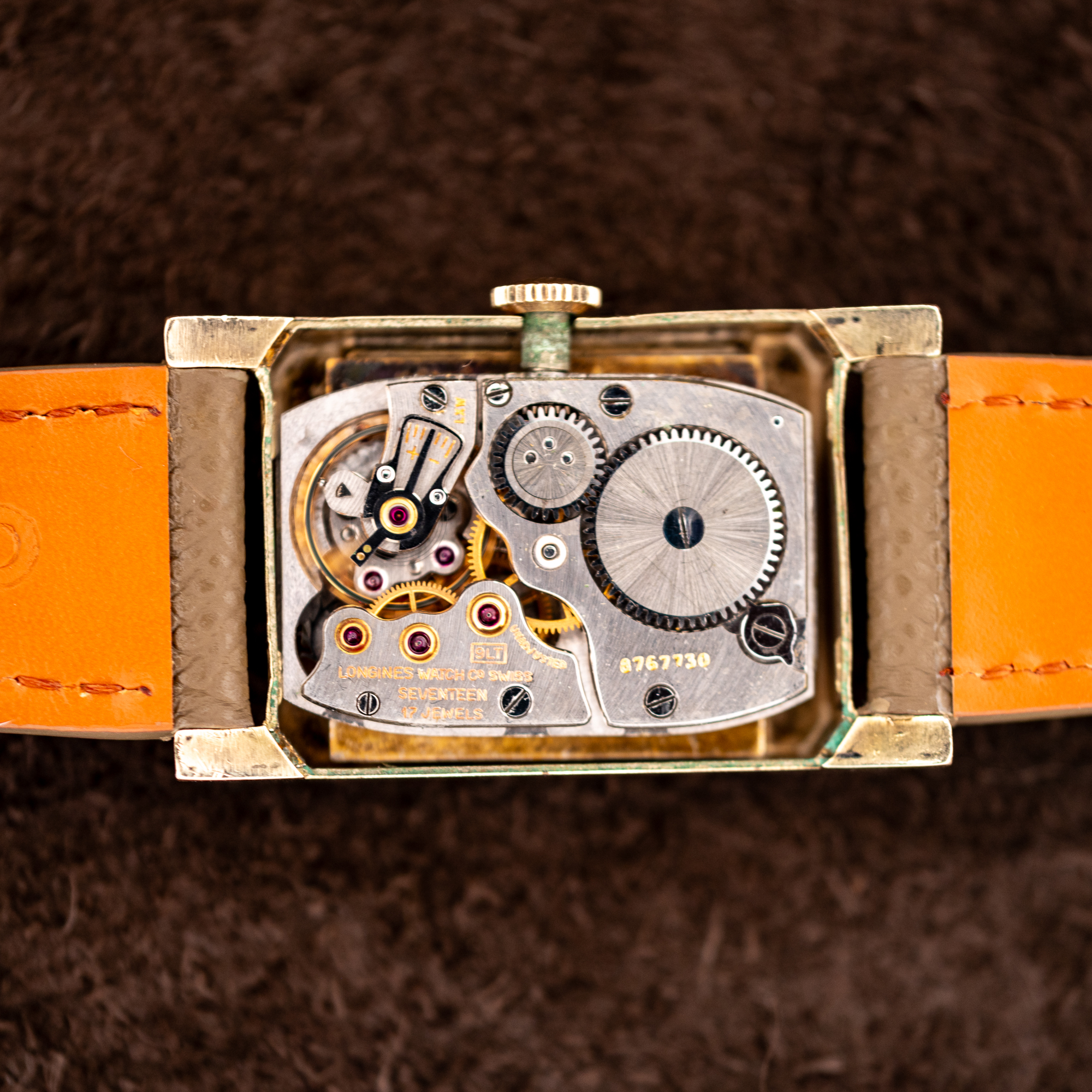
Caliber 9LT is a long, narrow rectangle of roughly 18 by 26.5 millimeters, so movement and case share one outline instead of a round movement floating in a stretched box. Longines built it in-house as an updated version of its 1940s caliber 9L, and the factory knew the same movement by a second name, 25.17ABC. The 9L family served across the Longines wristwatch range, in gold-filled and solid gold cases alike. This one is signed LONGINES WATCH Co SWISS, and its serial dates it to the early 1950s.
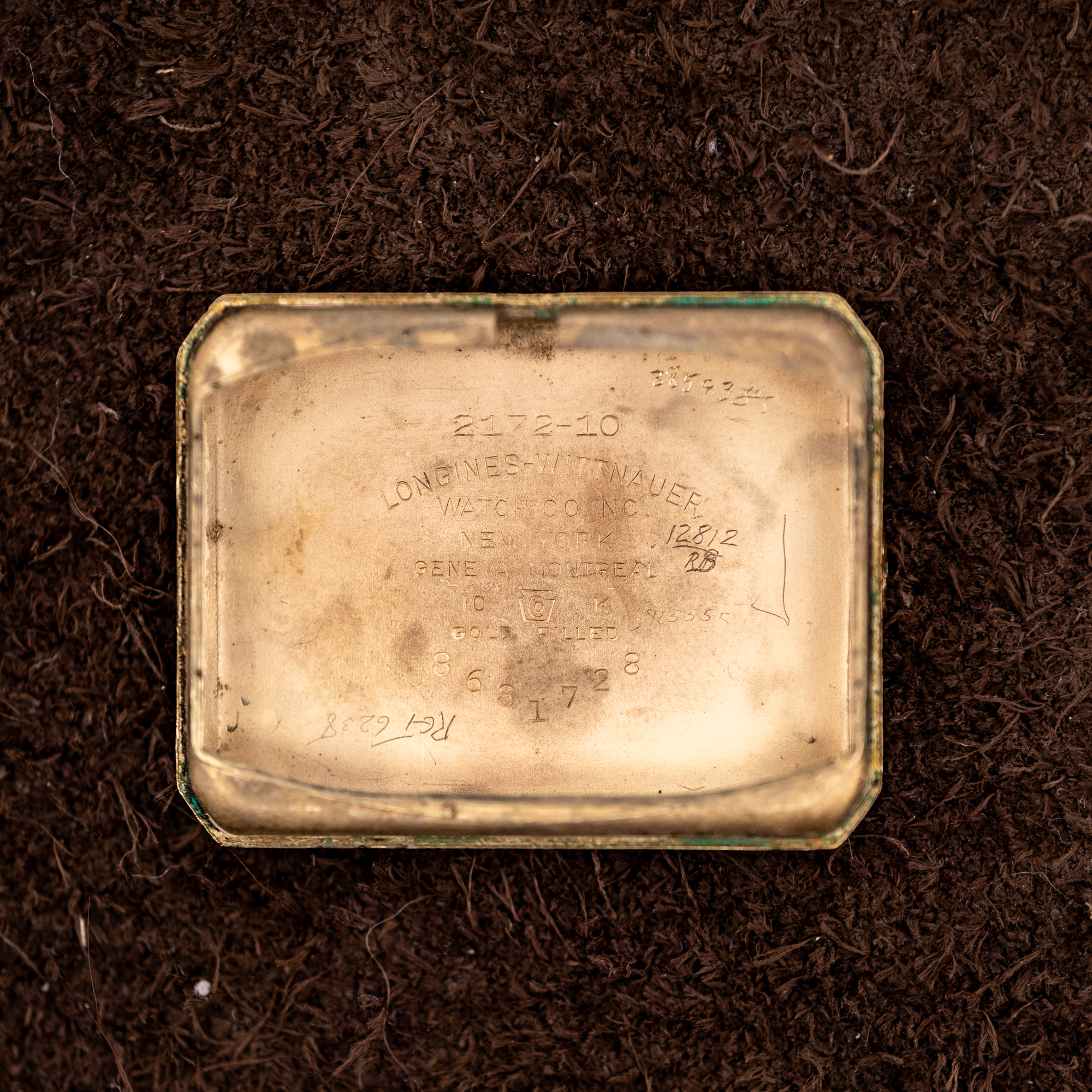
Those were also the years when Washington capped what American stores could charge for listed Longines watches. Inside the back, this case is stamped LONGINES-WITTNAUER WATCH CO INC. above NEW YORK. In June 1951, with the Korean War under way and price controls in force, the Office of Price Stabilization fixed retail ceiling prices for the Longines and Wittnauer watches on a list that New York company had filed from 580 Fifth Avenue that May. From August 25 of that year no retailer could offer a watch covered by the order unless it was marked or tagged with its ceiling price and the regulation behind it. The controls lapsed in 1953.
The eggshell dial has mottled and spotted with age, with one darker mark beside the signature, and the case and back show the scratches of long use. On a taupe leather strap the length reads slim and upright. And on the dial the three numerals hold their posts at 12, 3 and 9, squared up inside the stepped frame, while the small seconds hand circles its crosshair where a six would be.