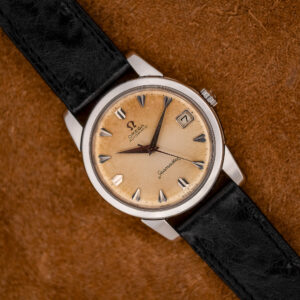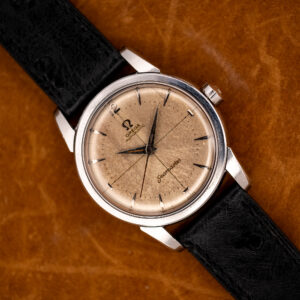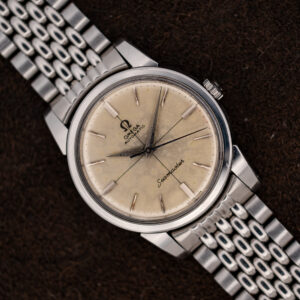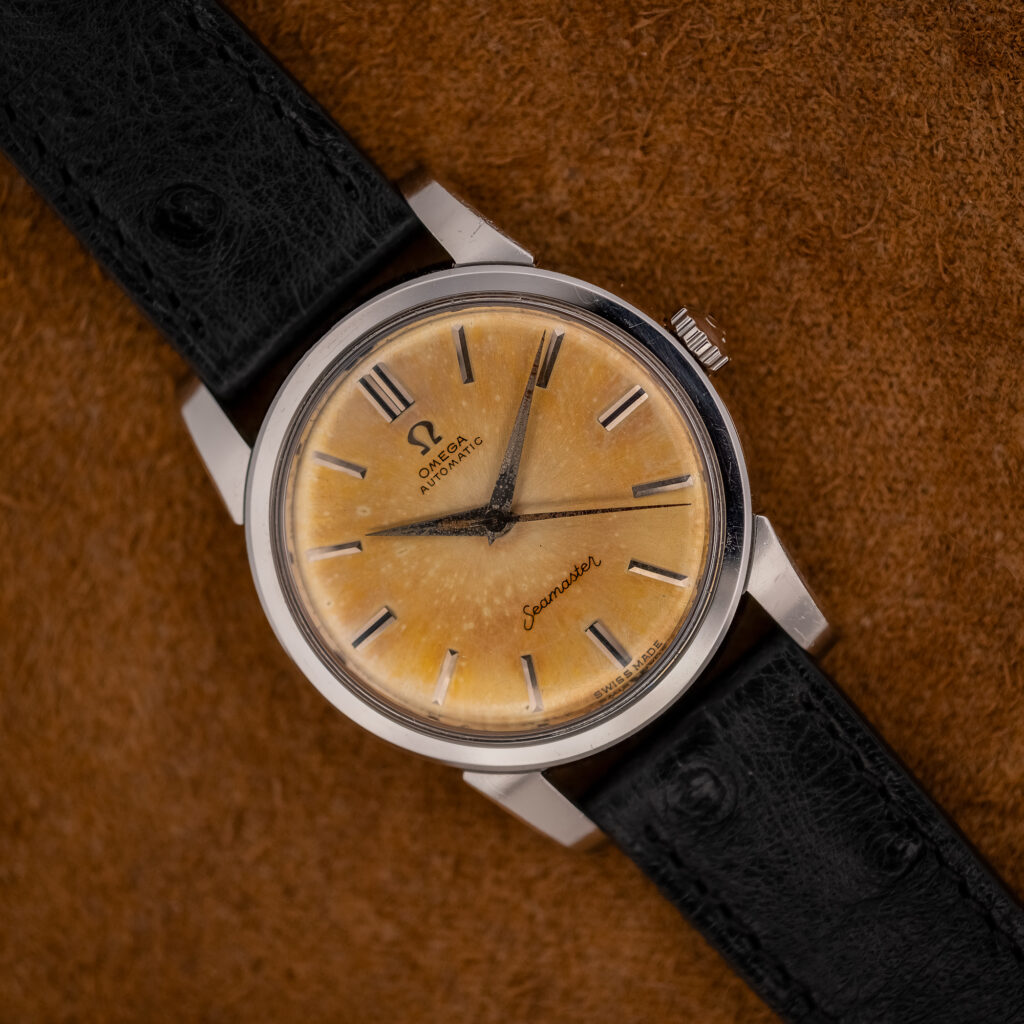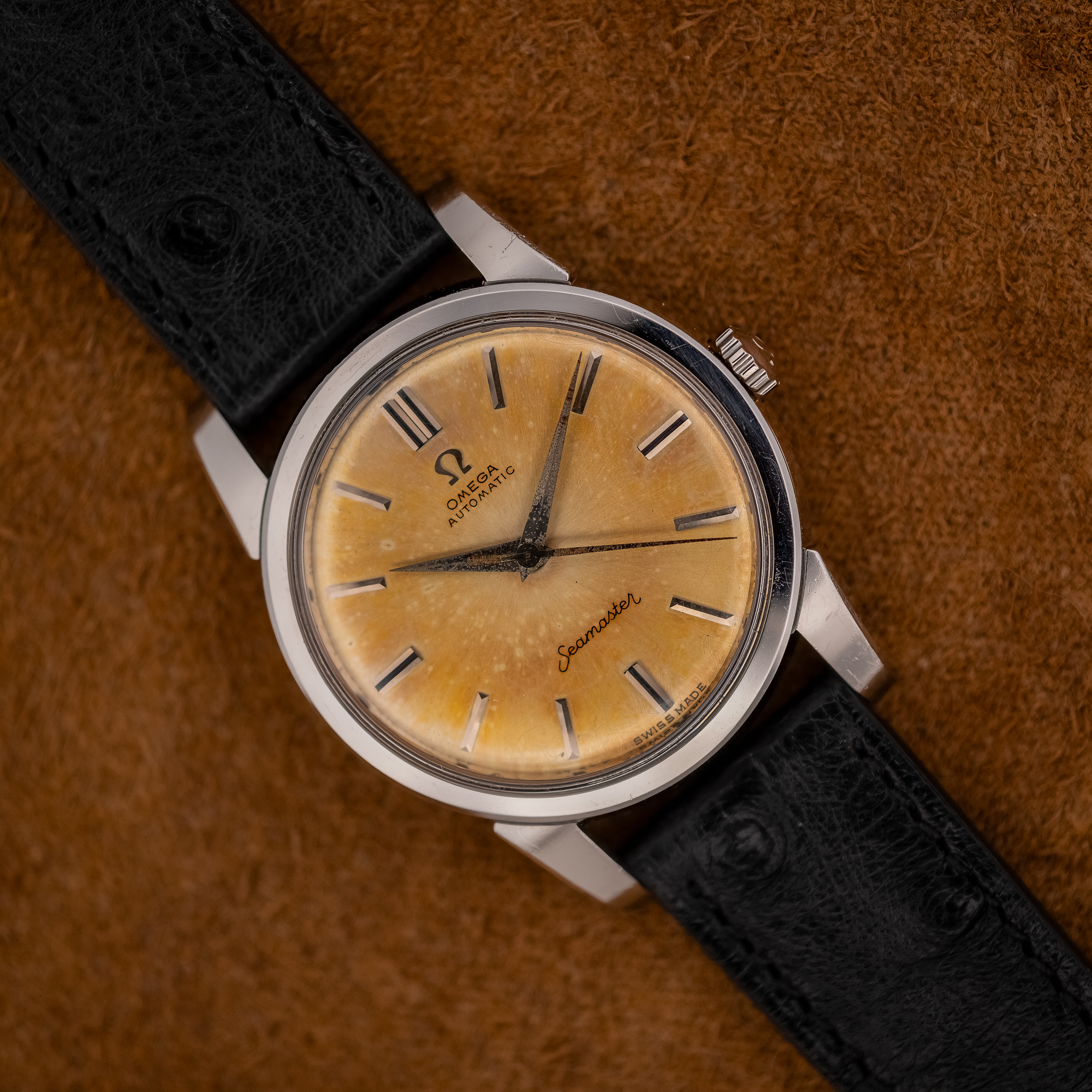
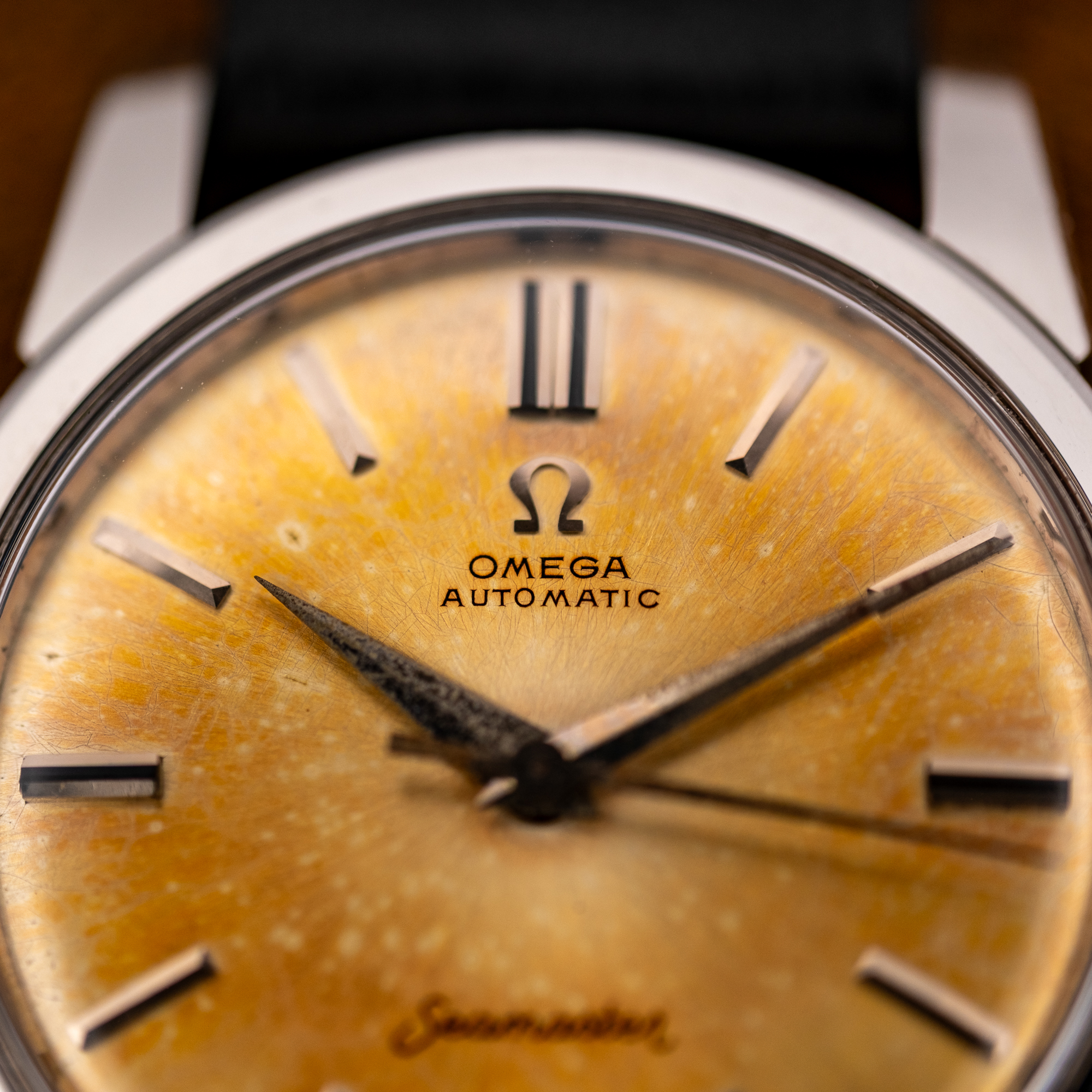
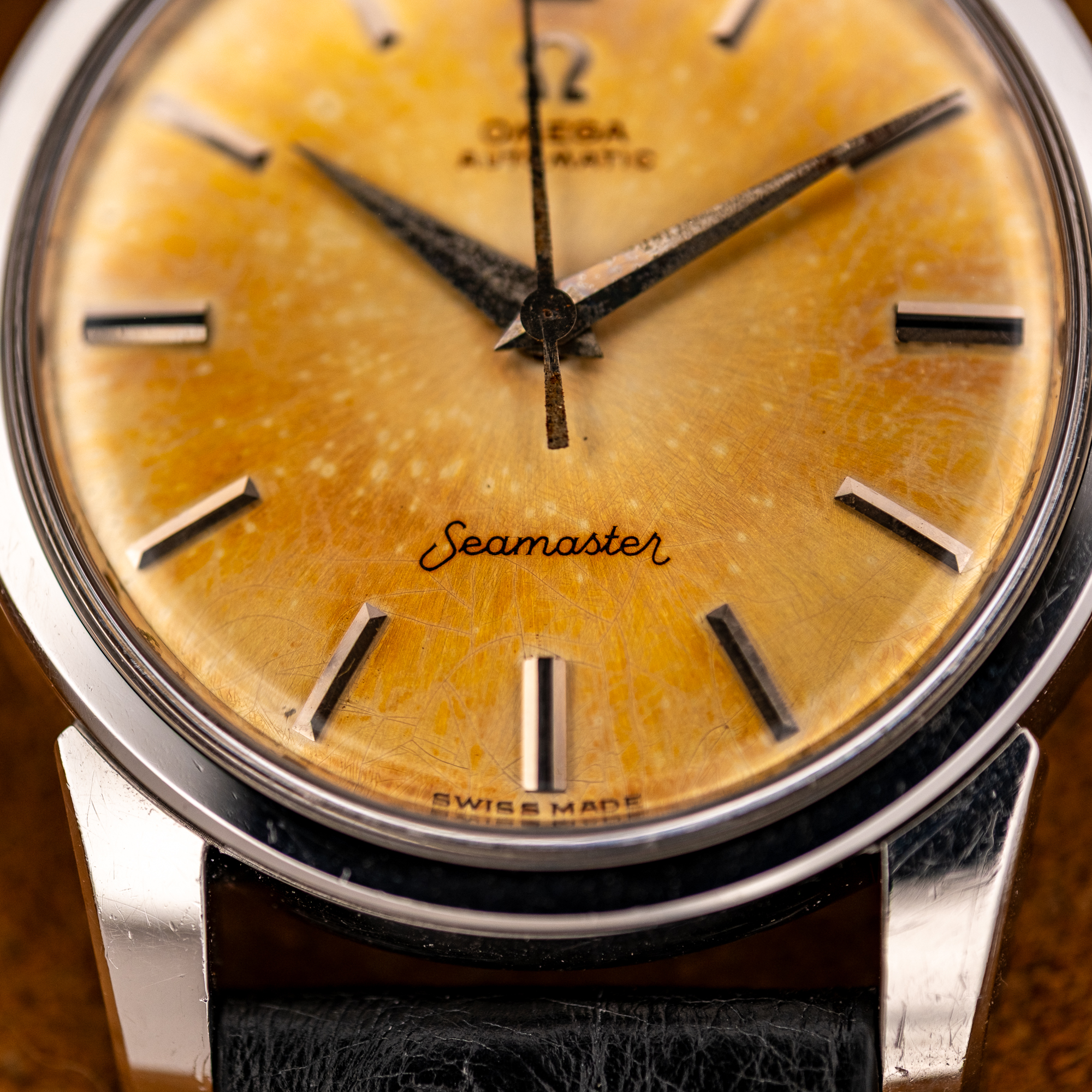
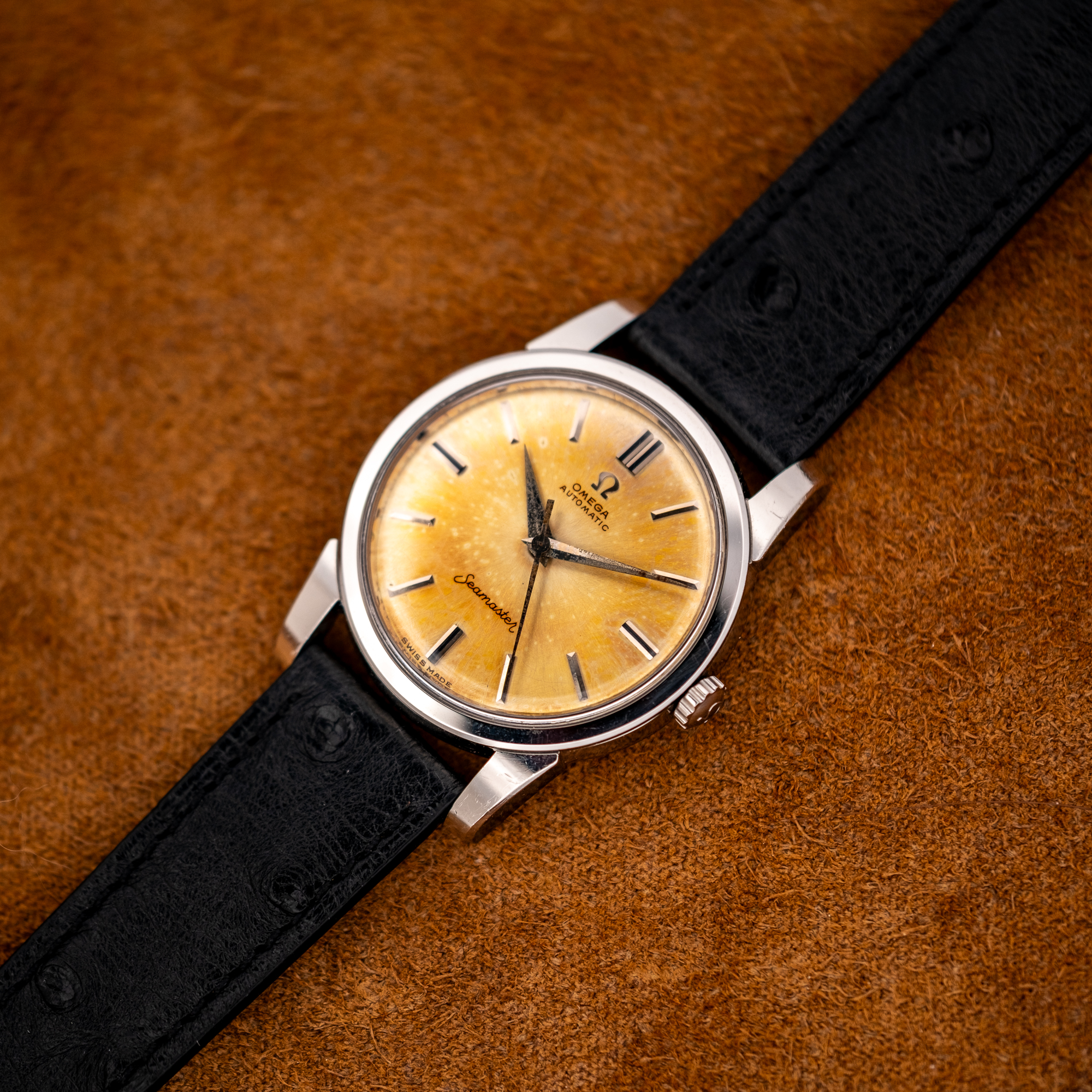
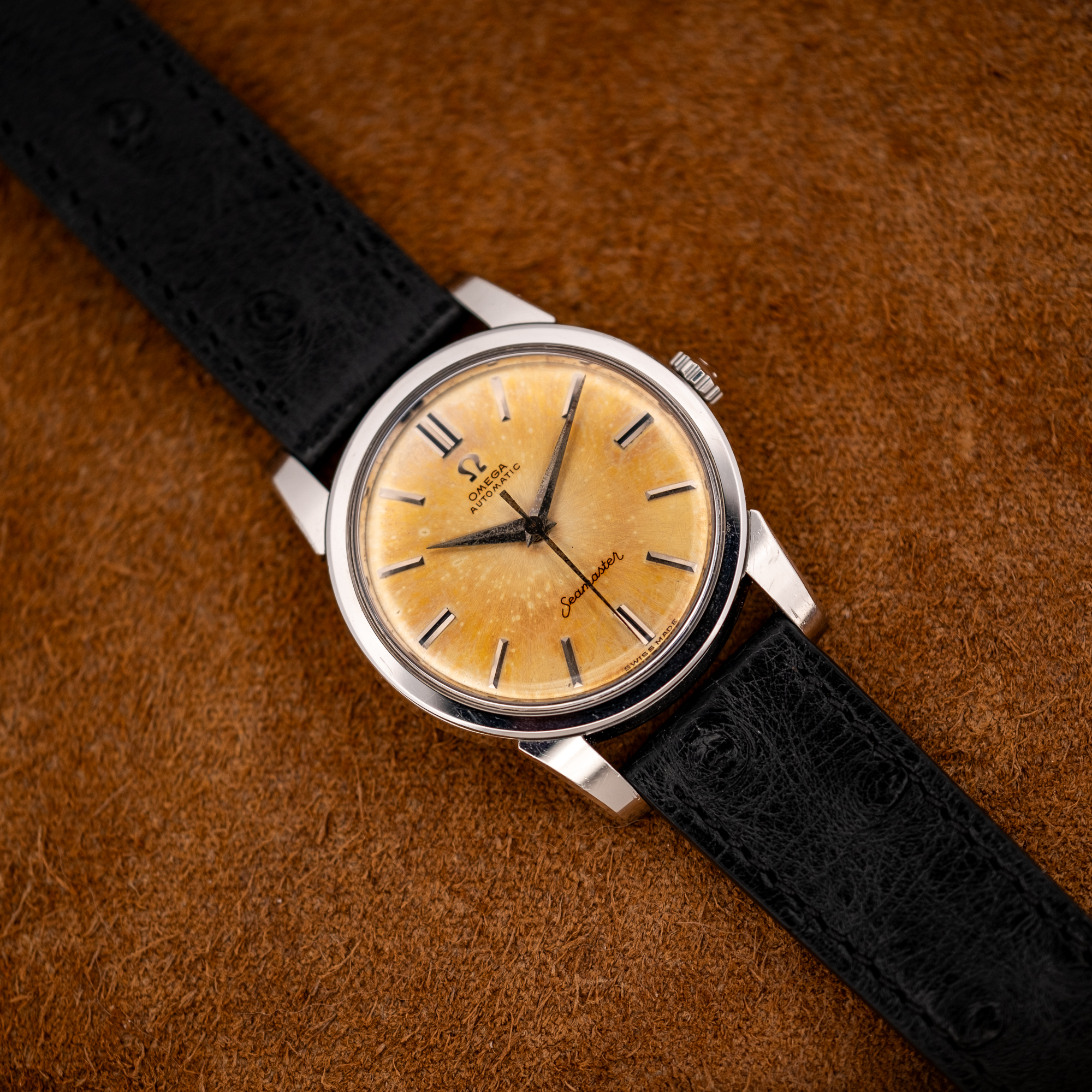
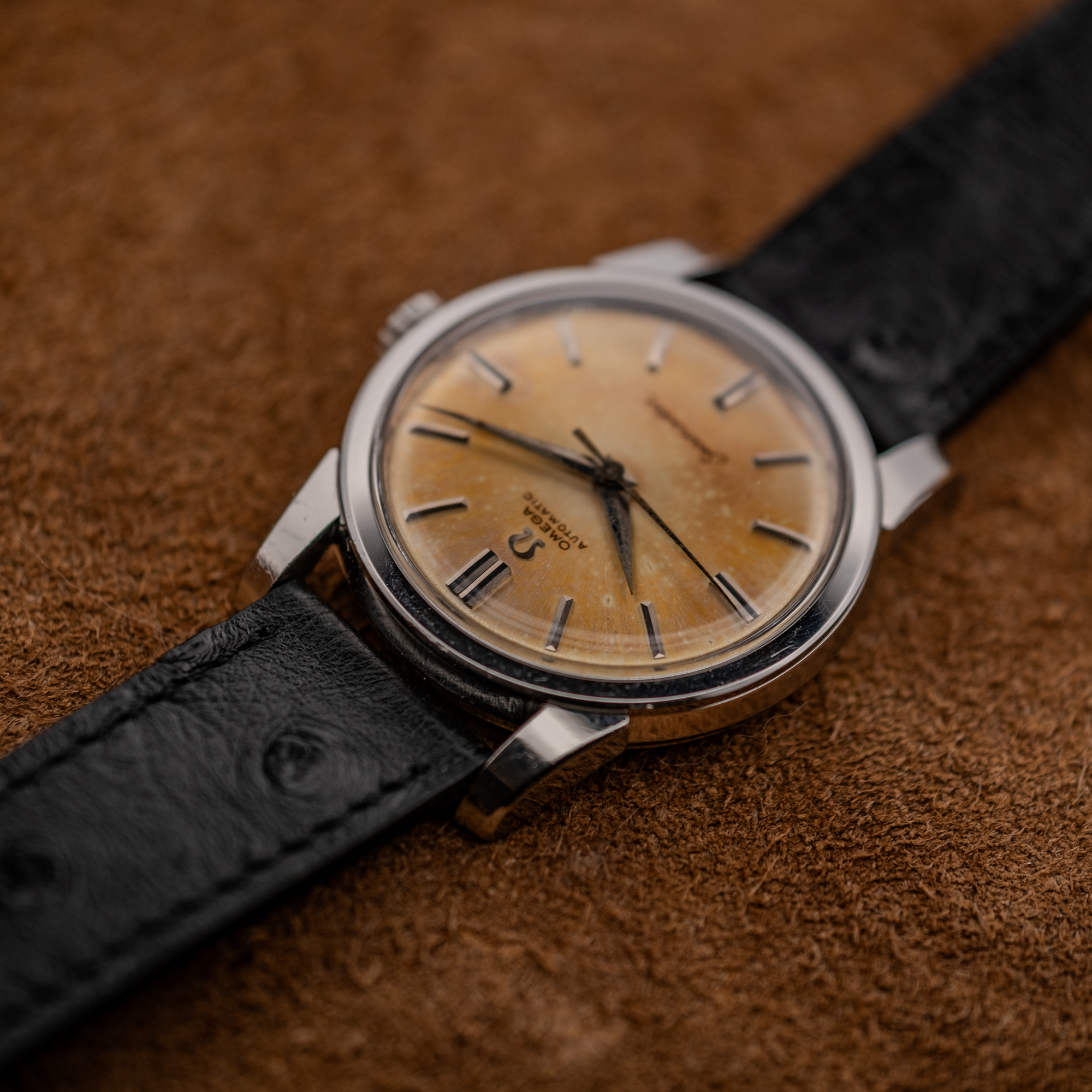
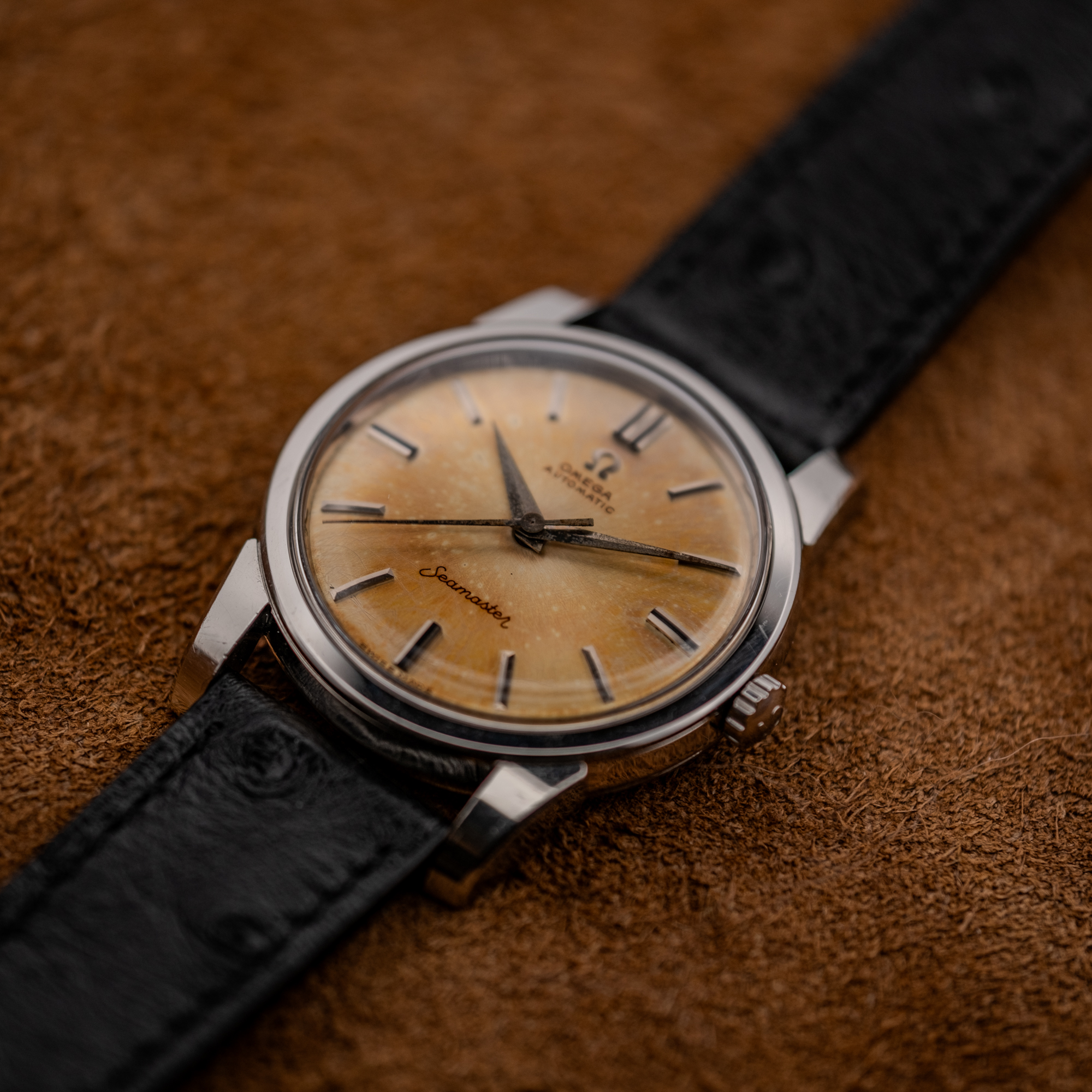
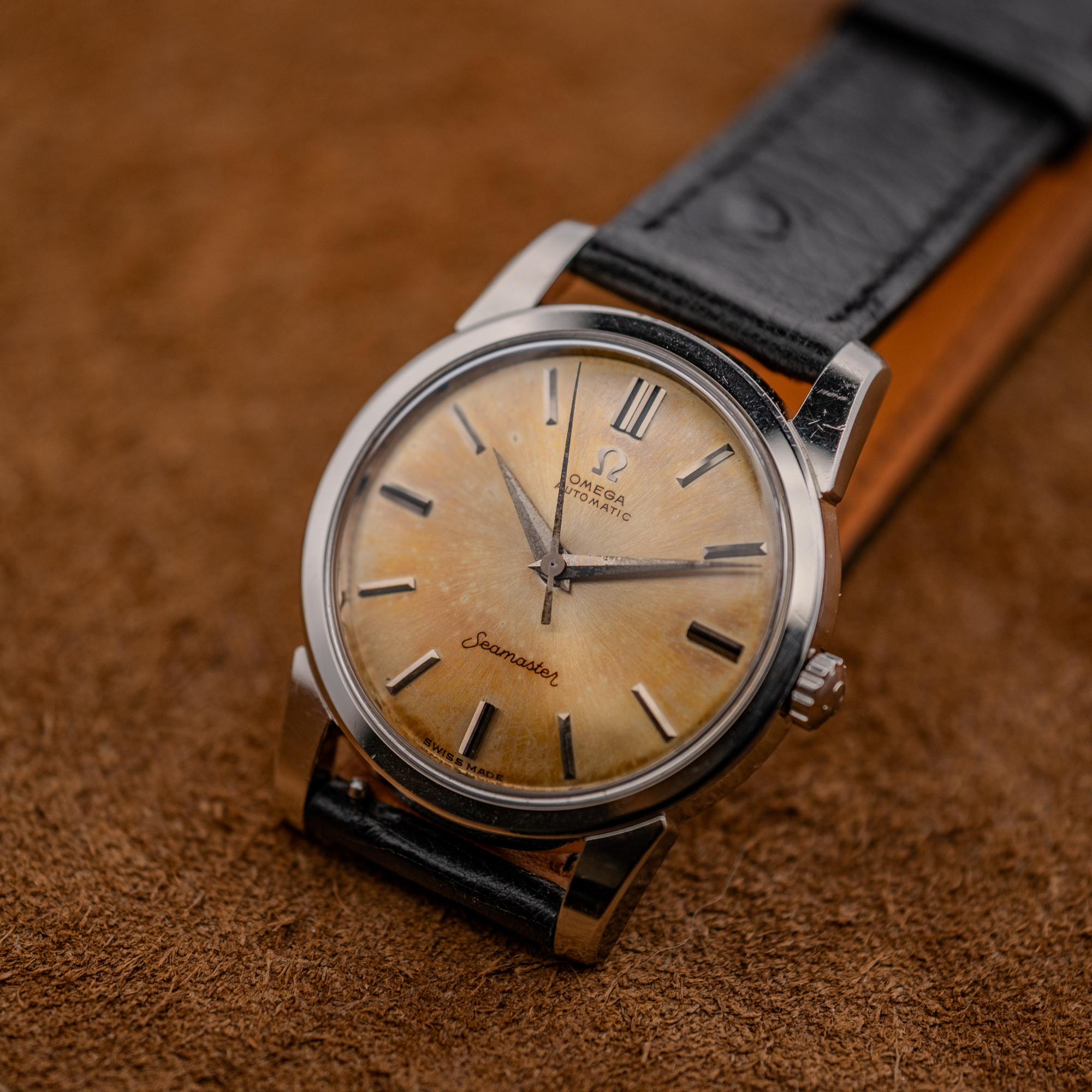
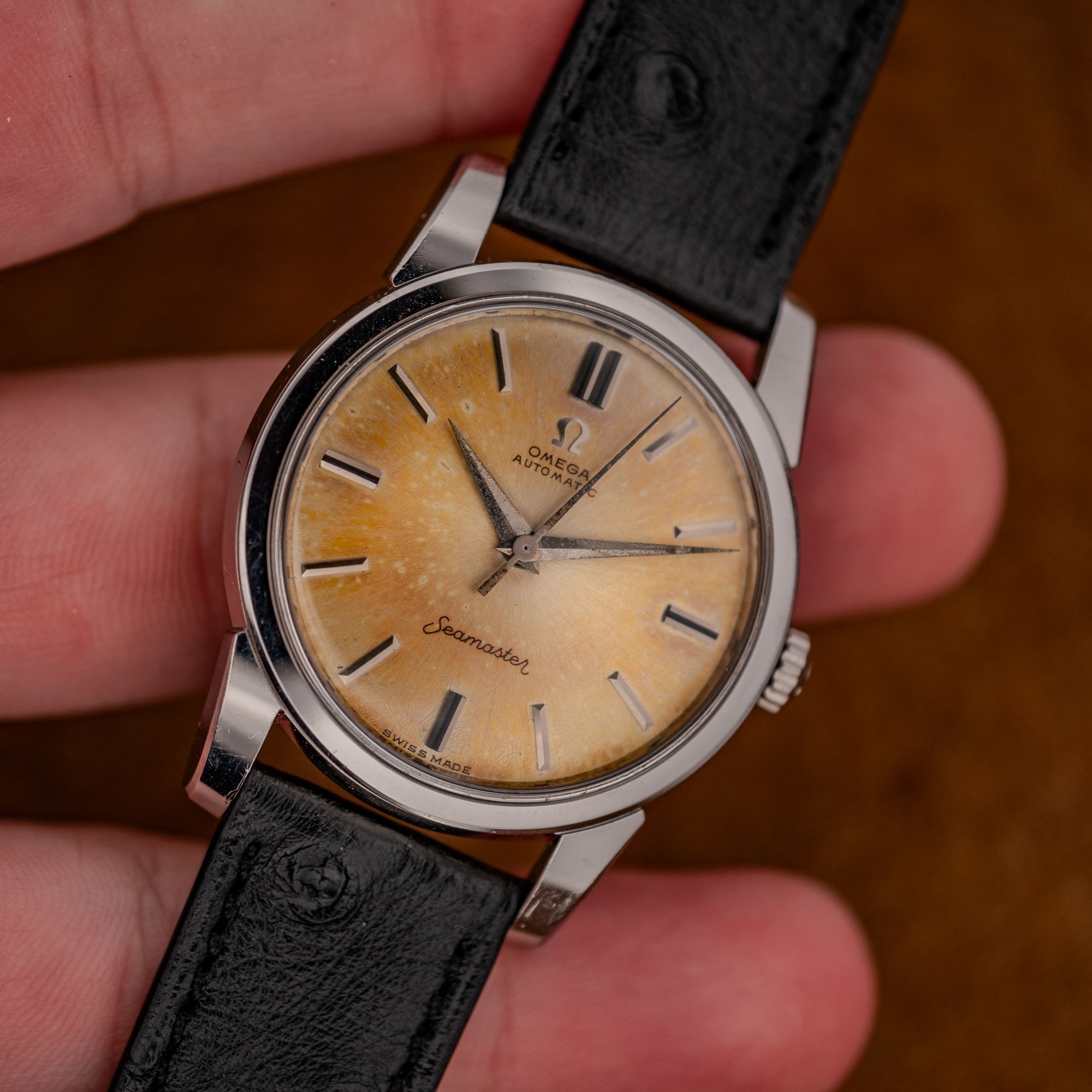
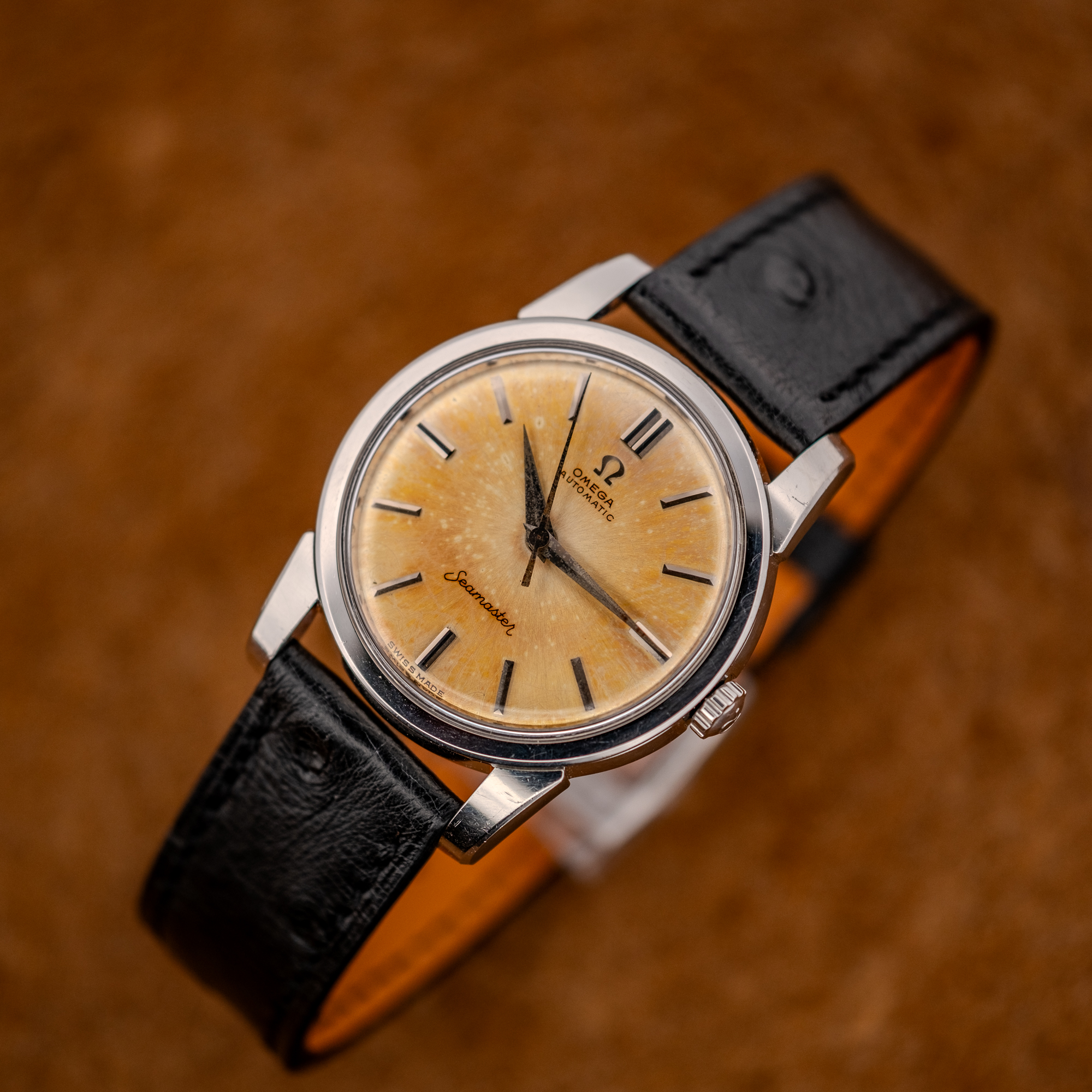
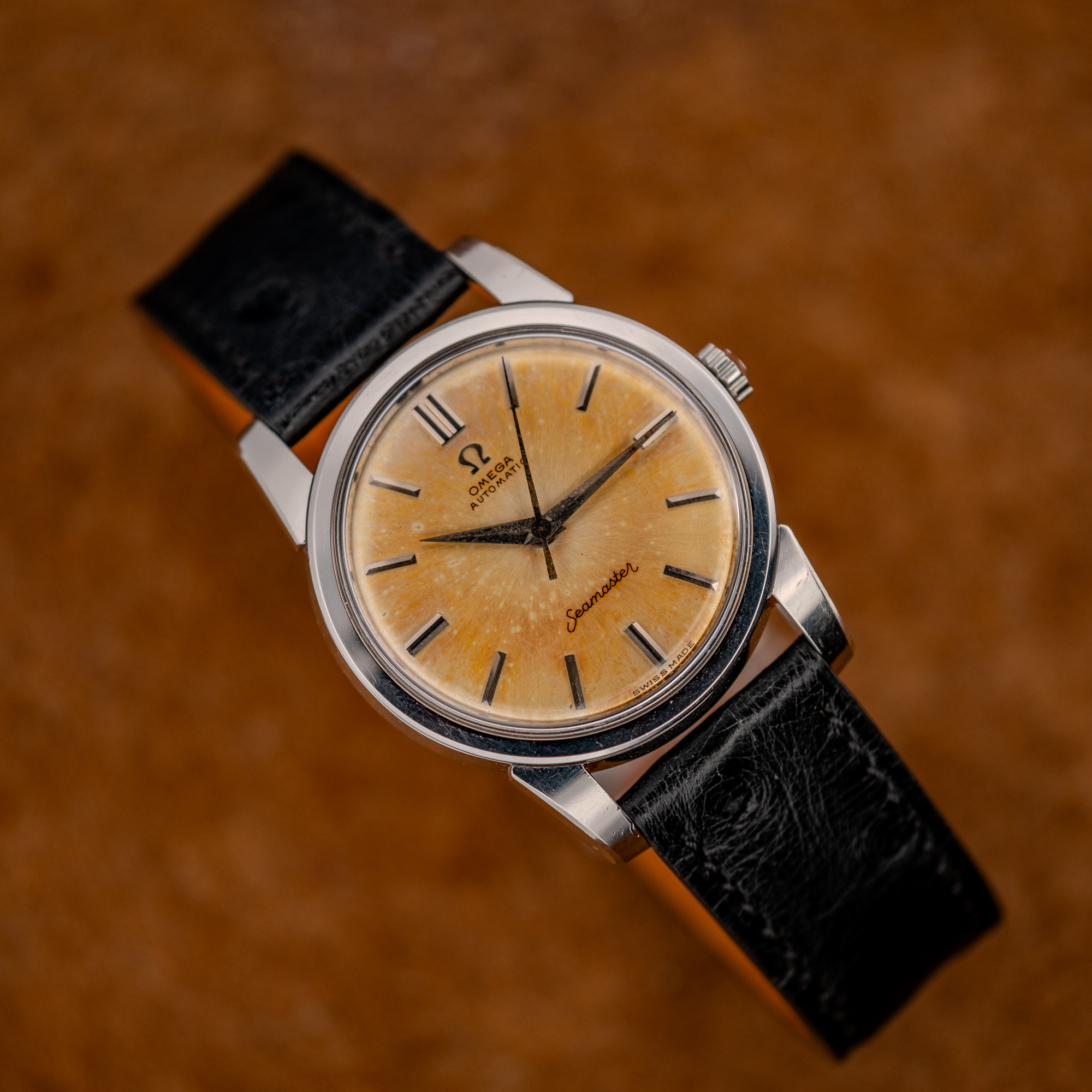
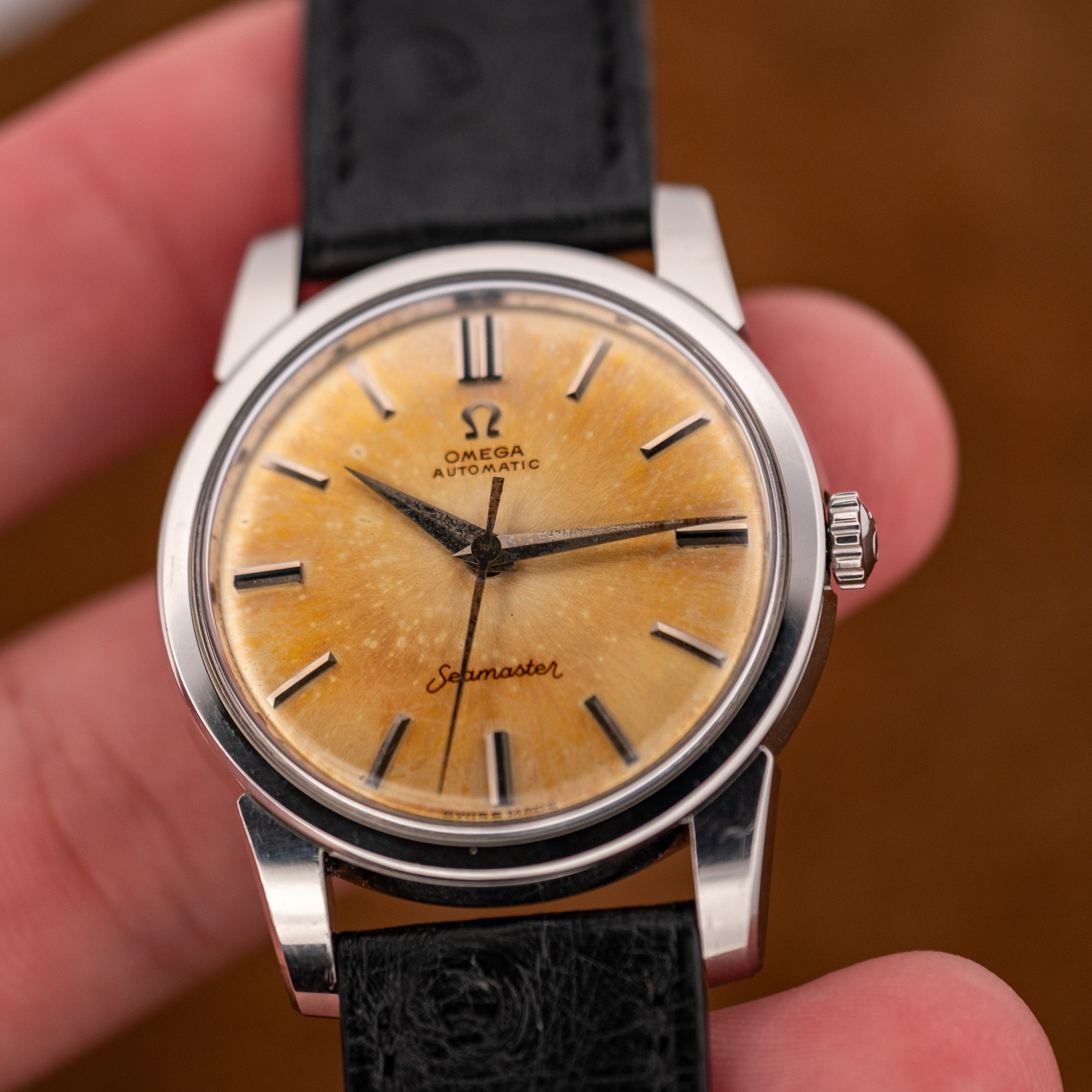
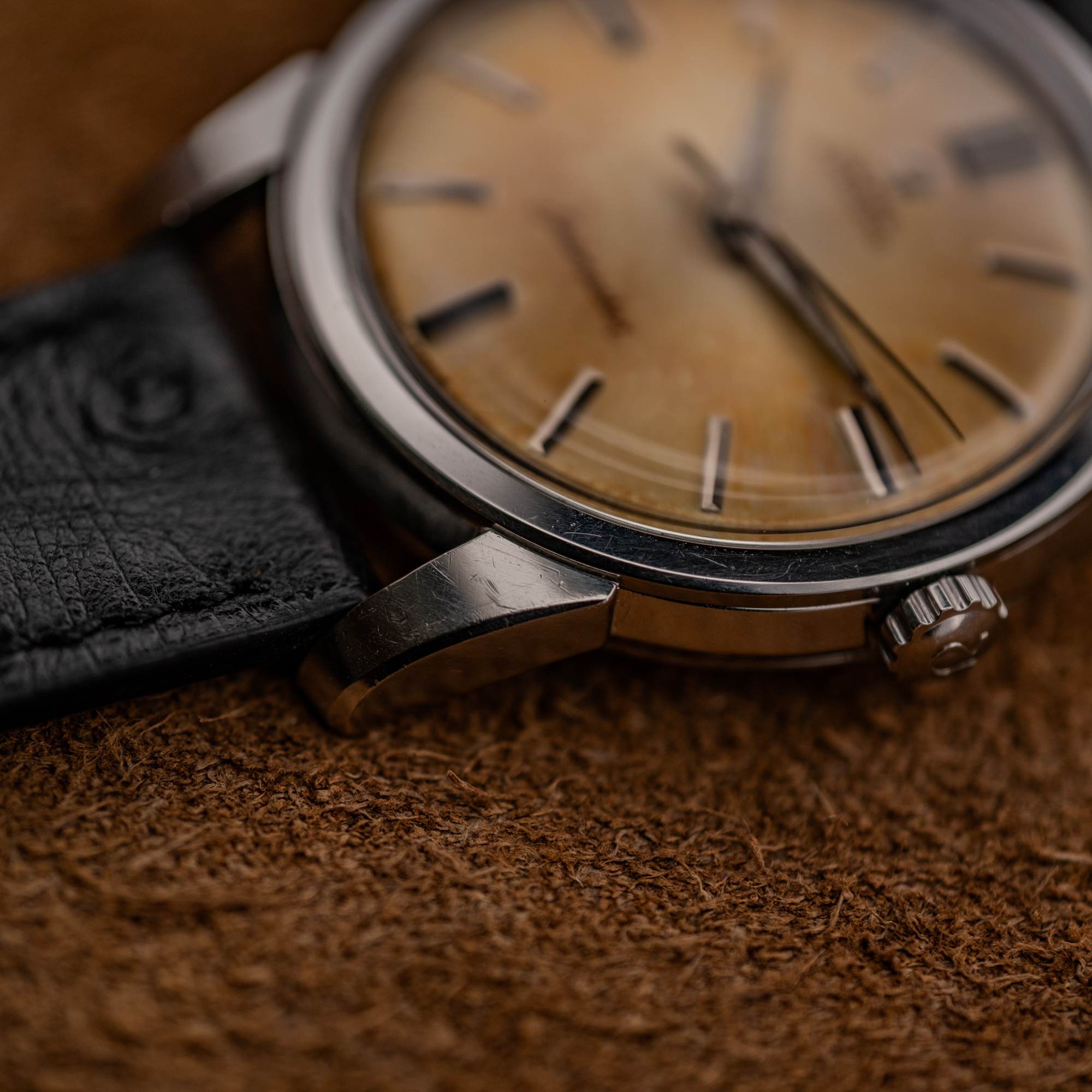

Tropical is a word collectors borrowed from the Rolex crowd. It came out of the Vintage Rolex Forum in the early 2000s, where members needed a word for black dials that had gone chocolate brown. This vintage Omega Seamaster sits at amber: a warm, uneven field with pale specks and faint rings across it, so no two parts of the dial read as quite the same shade.
On a field that busy, the markers carry the work of telling time. Each is a silver-tone applied baton with a strip of black inlaid down its center, and the twelve is doubled, two batons standing side by side, so the top of the dial is found at a glance. The broad, pointed hands carry dark mottling of their own, which keeps them in the same warm register as the dial. No date window breaks into it; between the applied Omega symbol and the Seamaster script there is only amber.
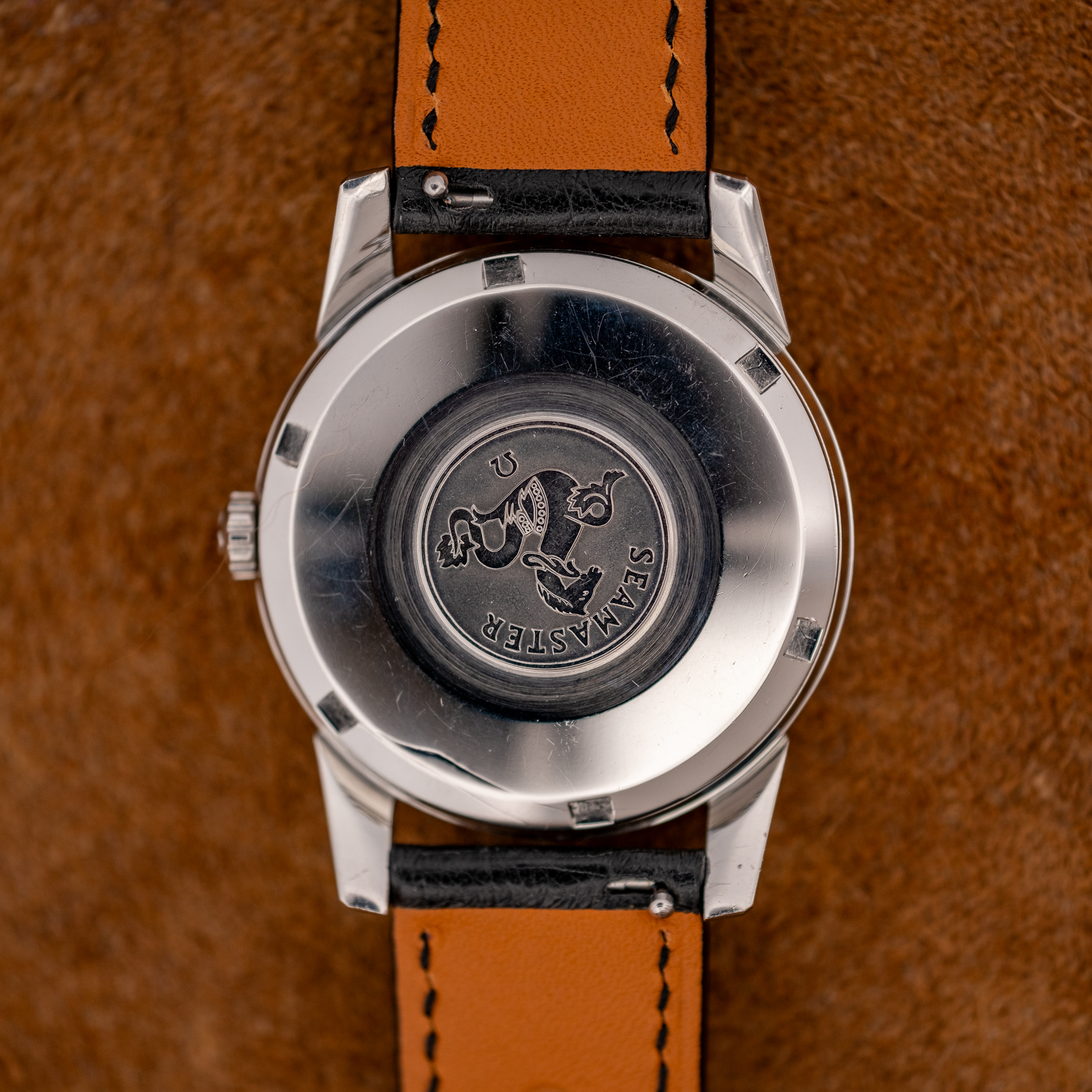
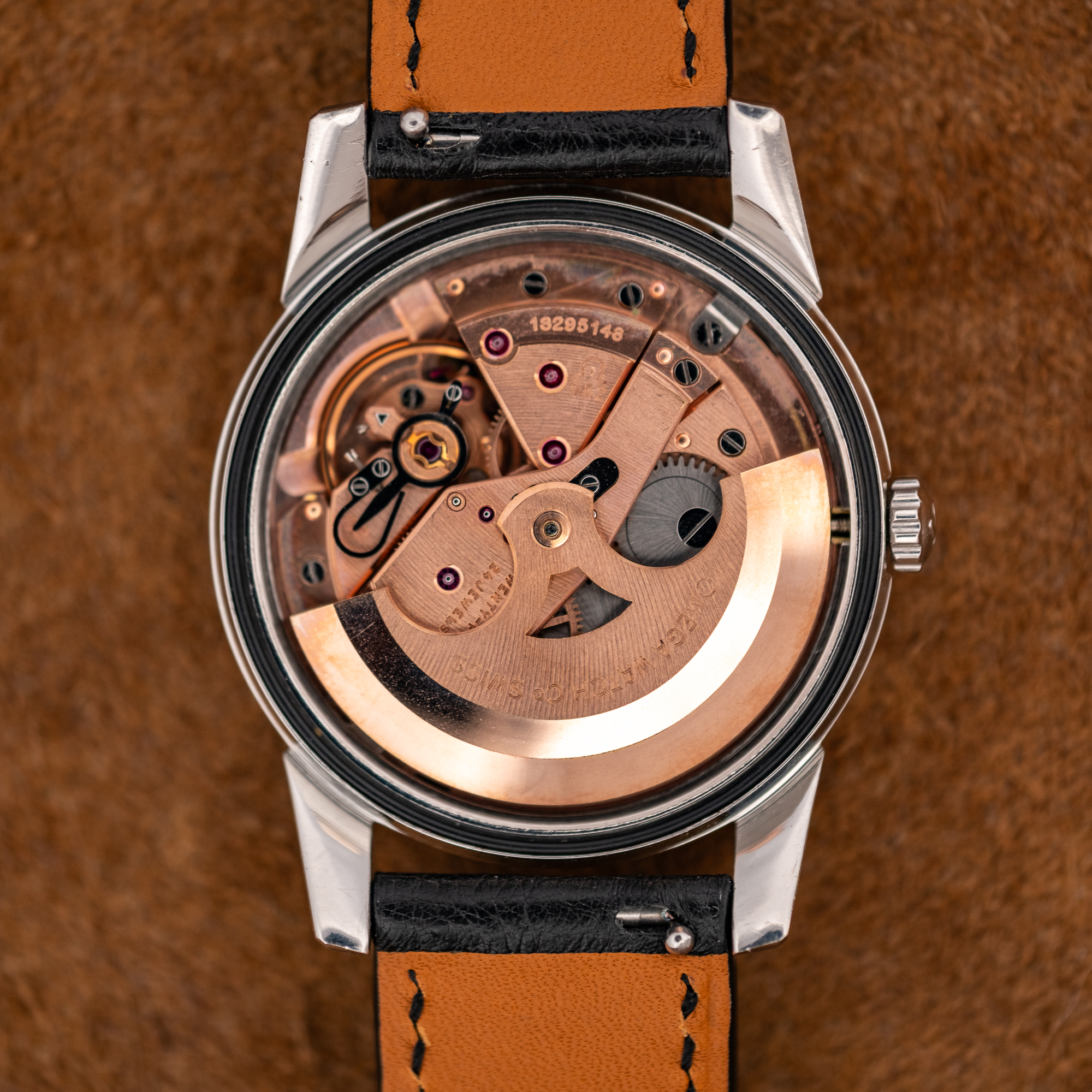
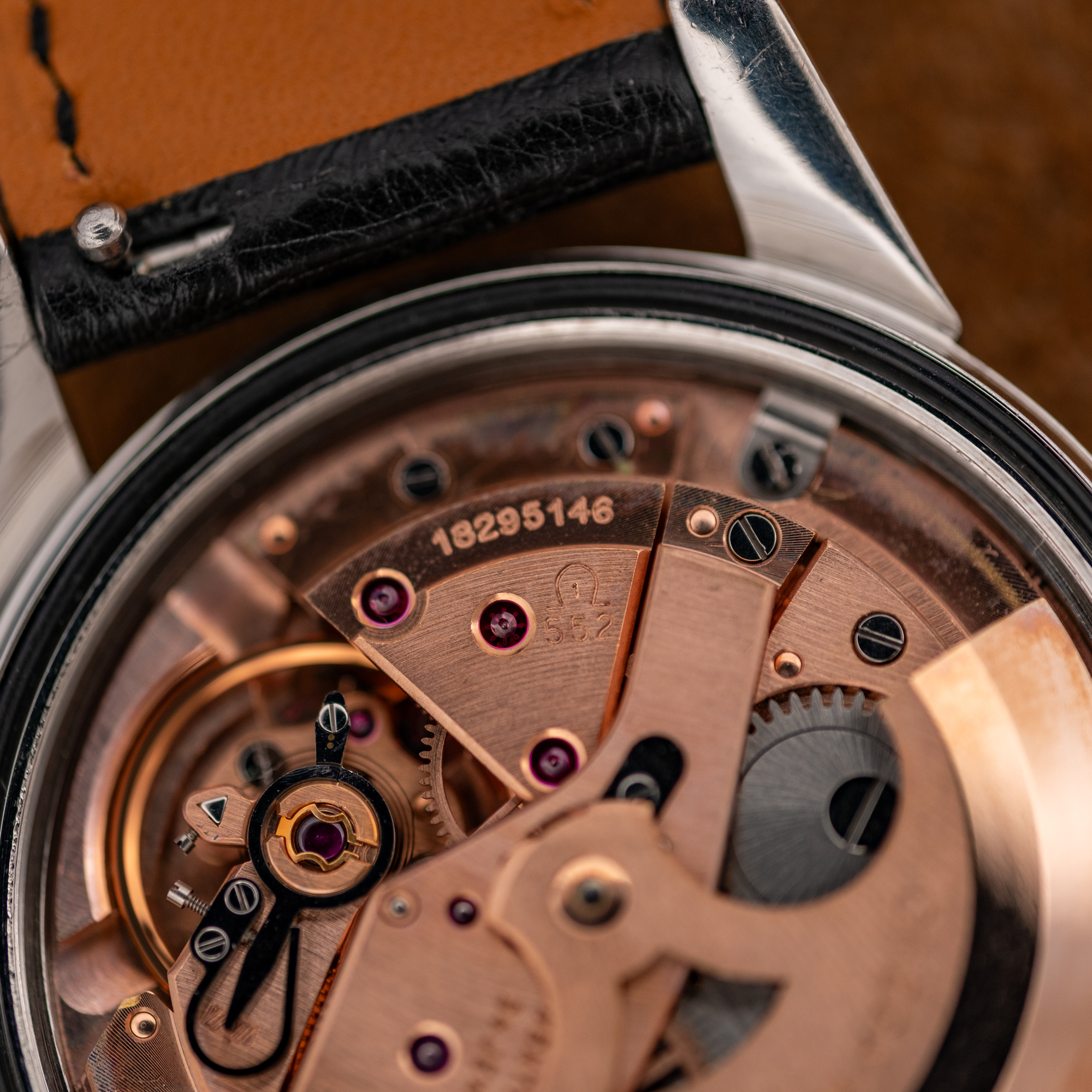
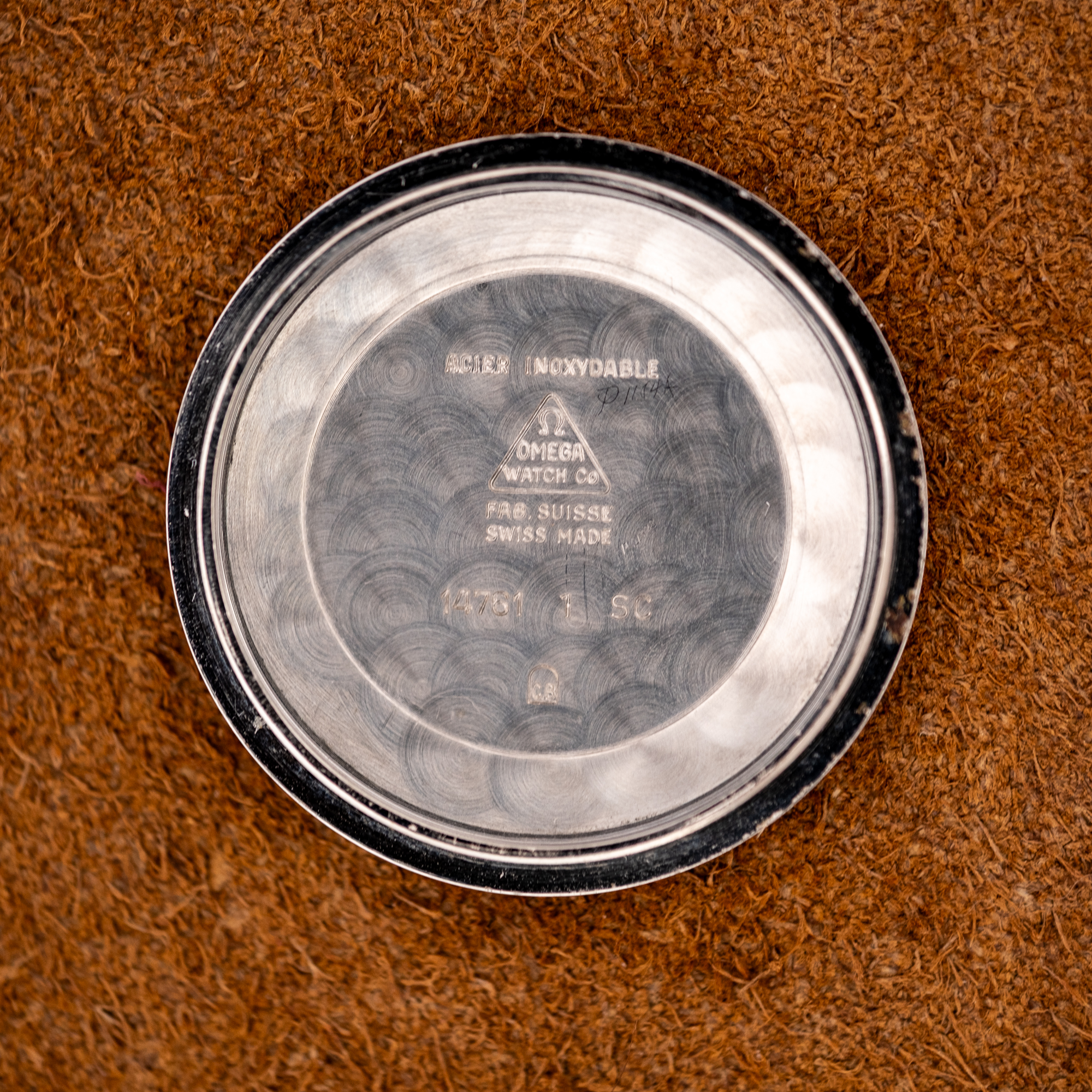
Omega added reference 14761 to its international collection in 1960, a round 34mm stainless steel Seamaster closed by a screw-in back. Inside this one the back is stamped 14761 1 SC, and the movement serial, 18295146, comes from the numbers Omega was engraving around 1961. That puts this watch within a year or so of the reference’s debut.
That same 1960 collection held a near neighbor, the steel Seamaster Calendar CK 14760, which added a date window; the 14761 left its dial whole. It sat on the everyday side of the Seamaster name rather than the diving side, a self-winding steel watch with no rotating bezel.
Caliber 552 does the winding, a 24-jewel automatic that runs about 50 hours when fully wound.
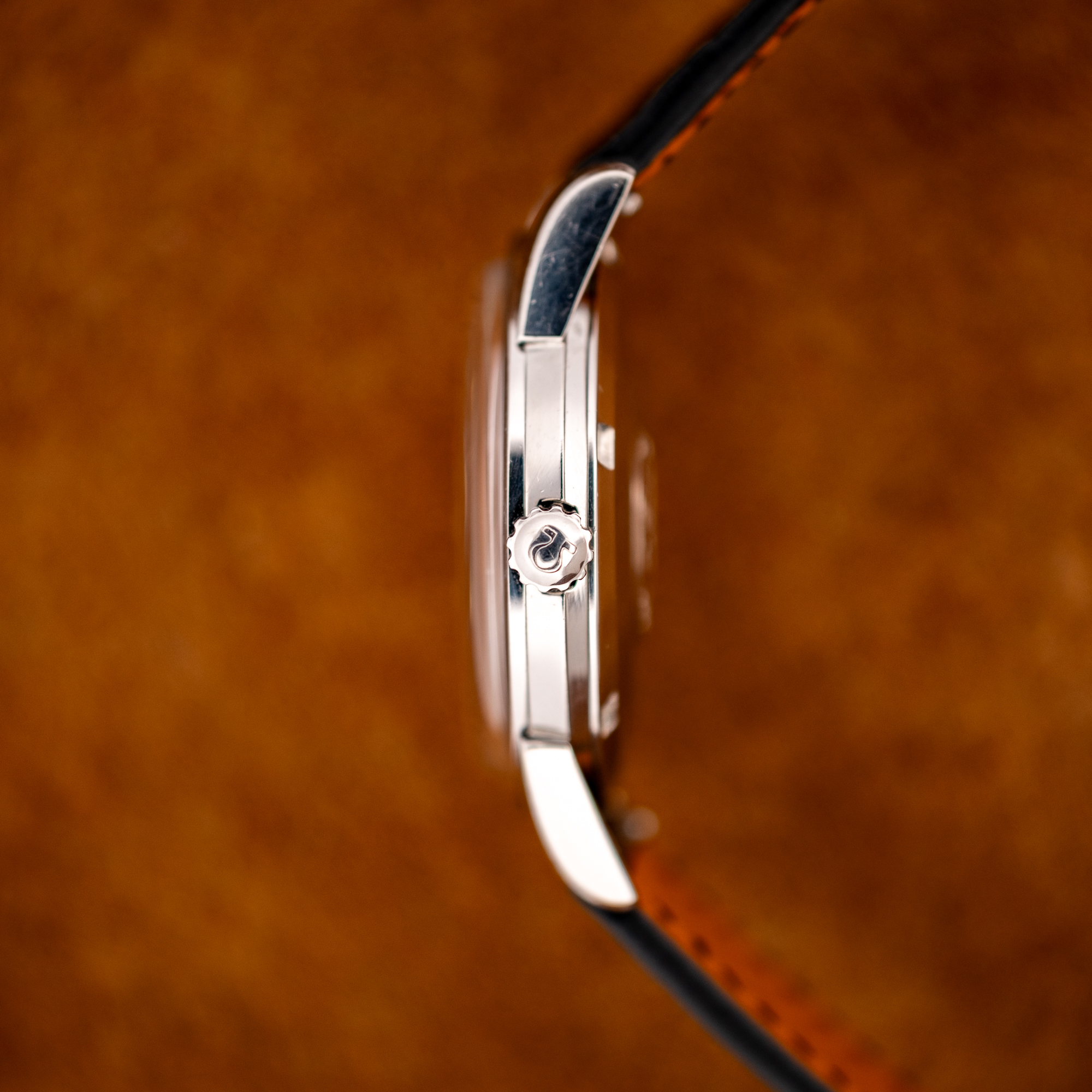
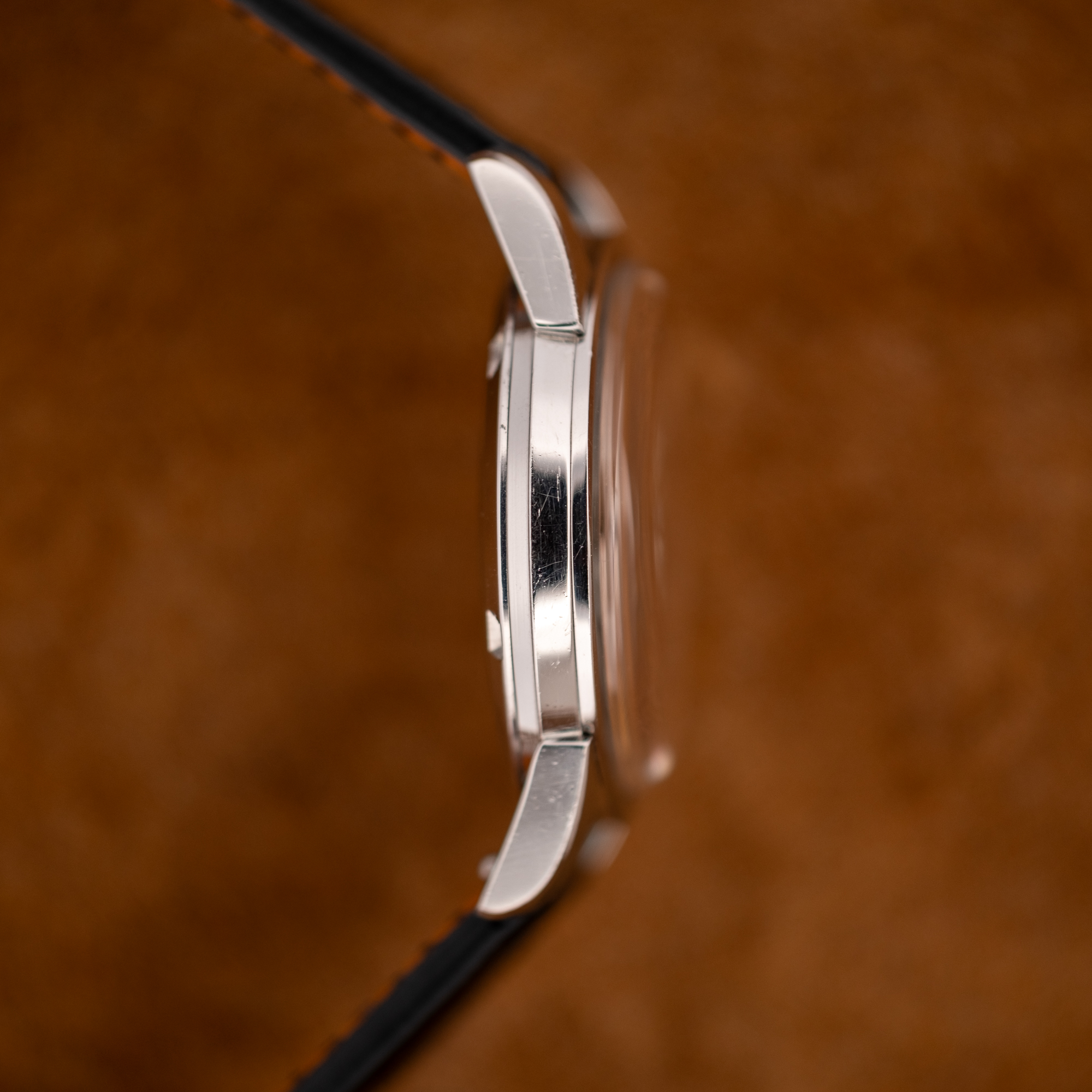
Its footprint is compact, 34mm wide and 42mm long from lug tip to lug tip, while the crystal’s dome climbs high over the bezel and gives the case more height in profile than its width suggests. An Omega symbol sits on the fluted crown. Years on a wrist have left fine scratches across the steel.
It wears a black ostrich strap, its raised quill marks picking up the speckle on the dial. With the strap on, that black is echoed by the thin line down the center of each marker.