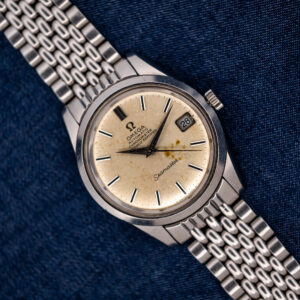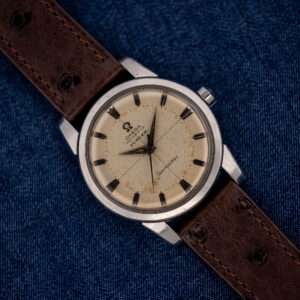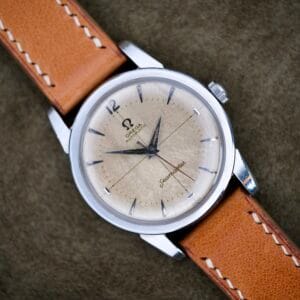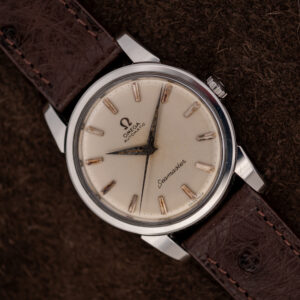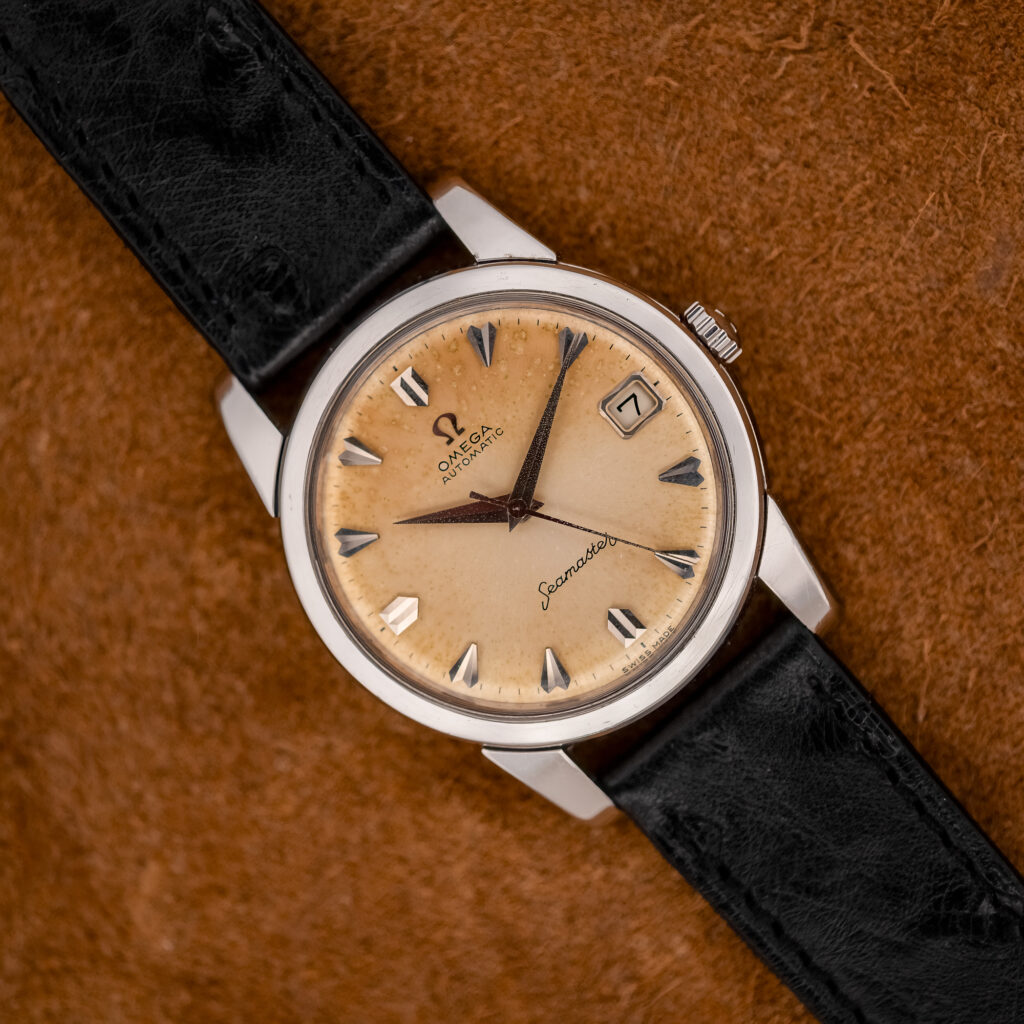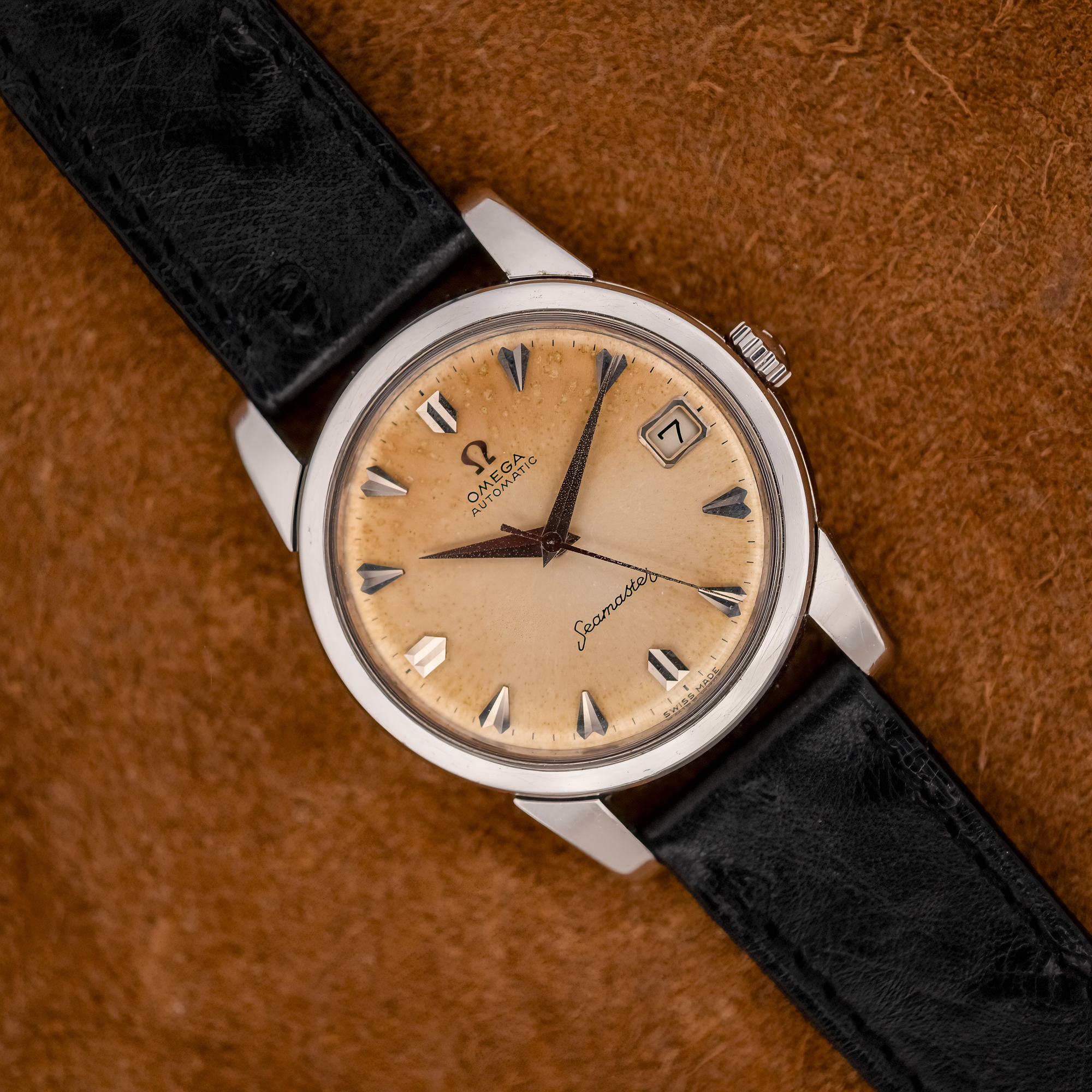
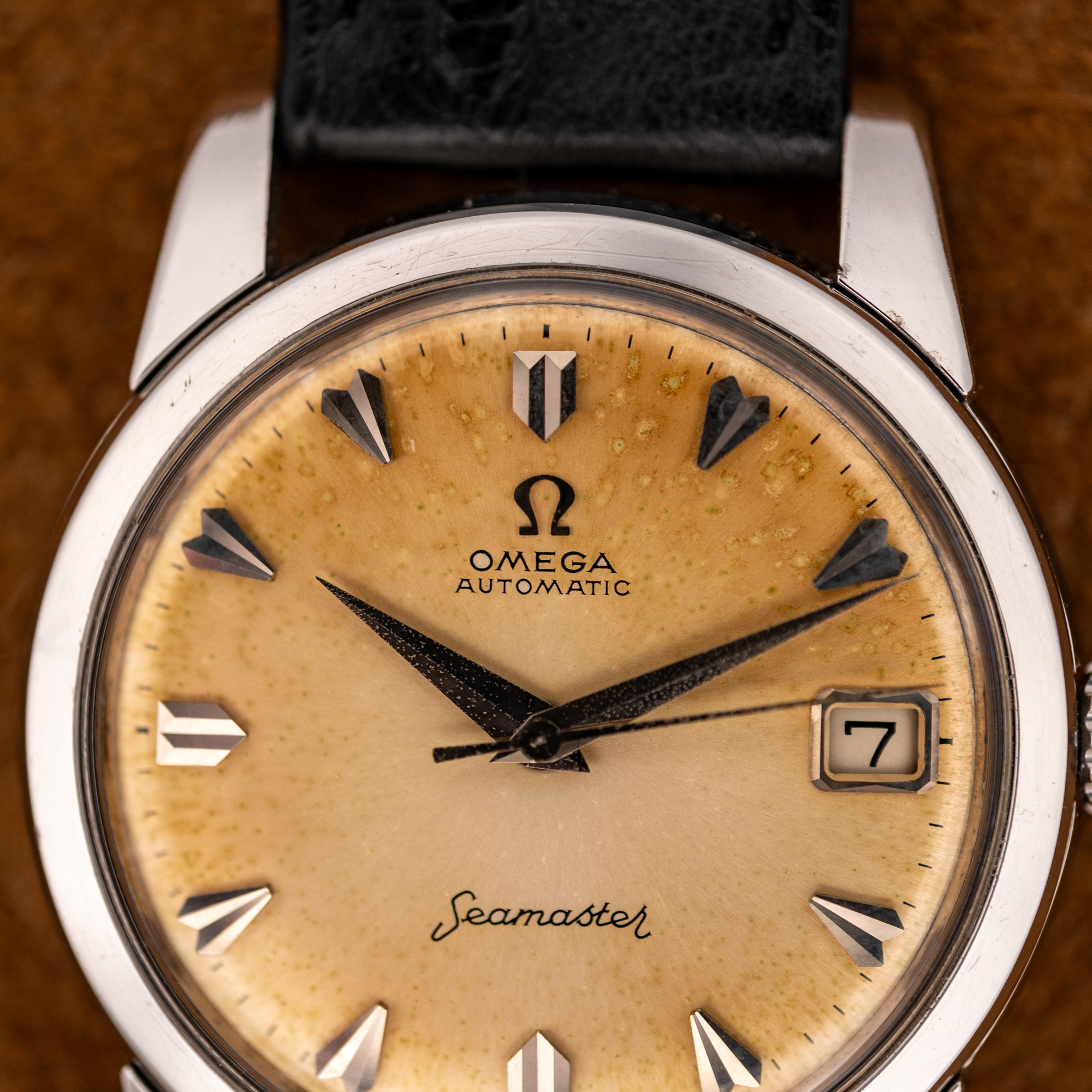
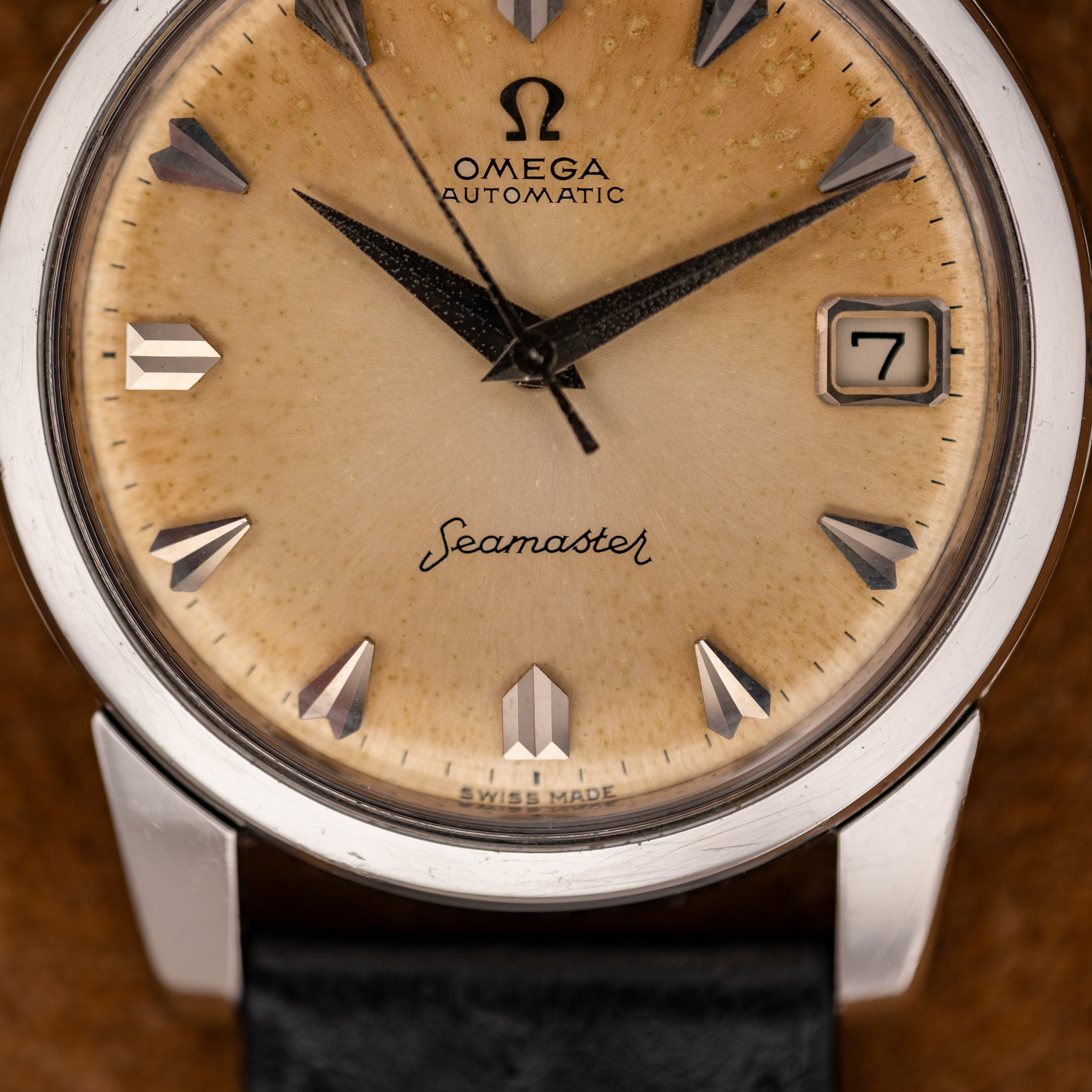
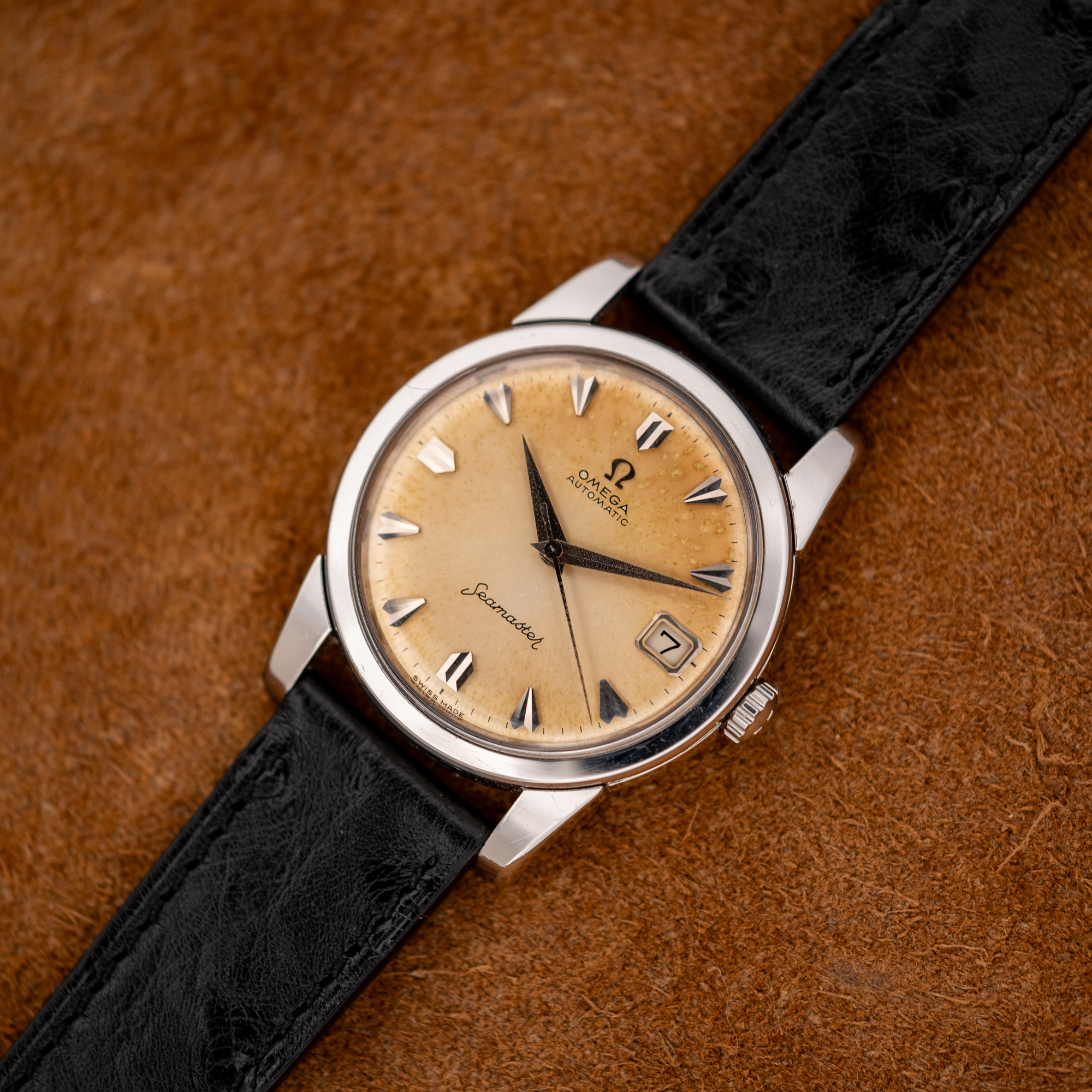
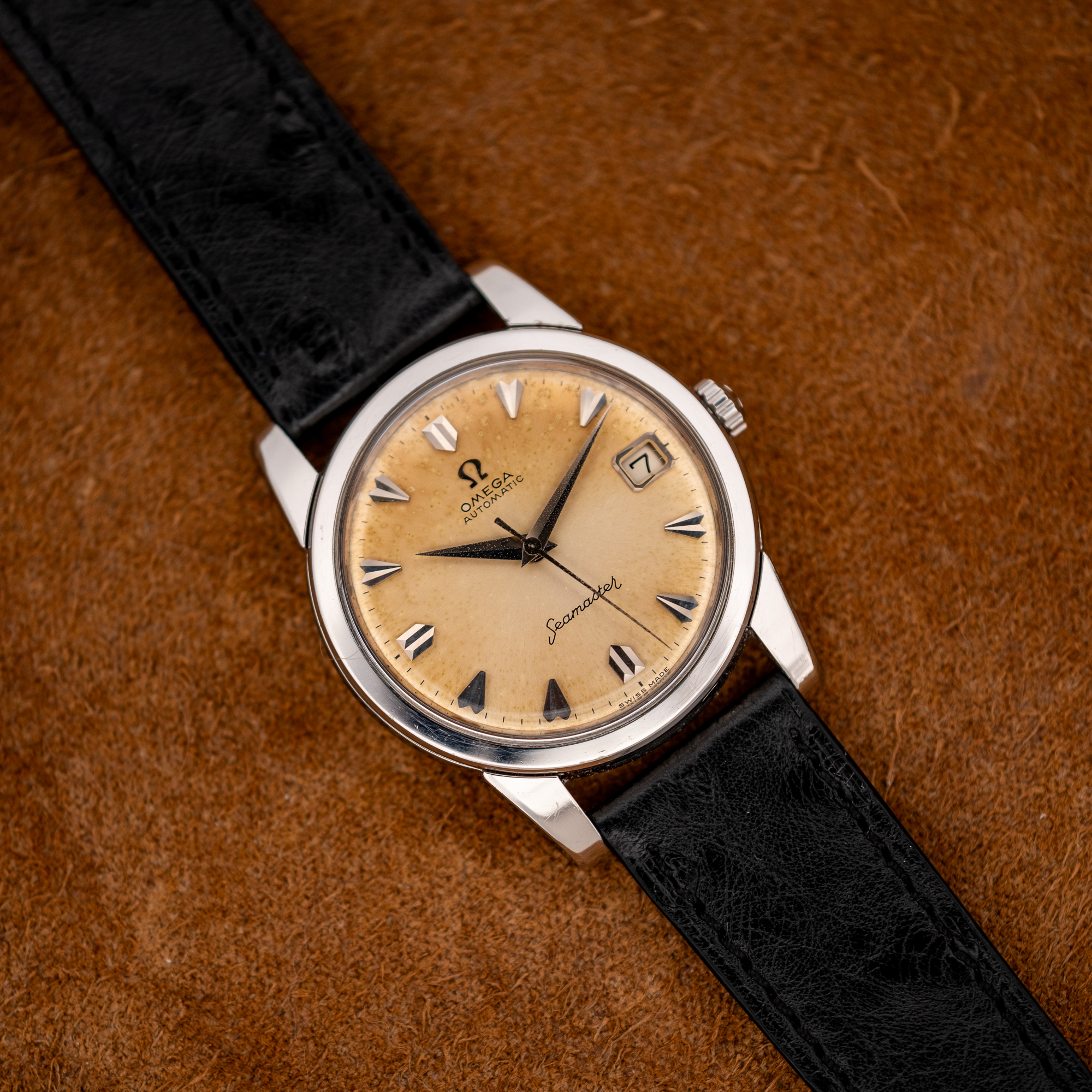
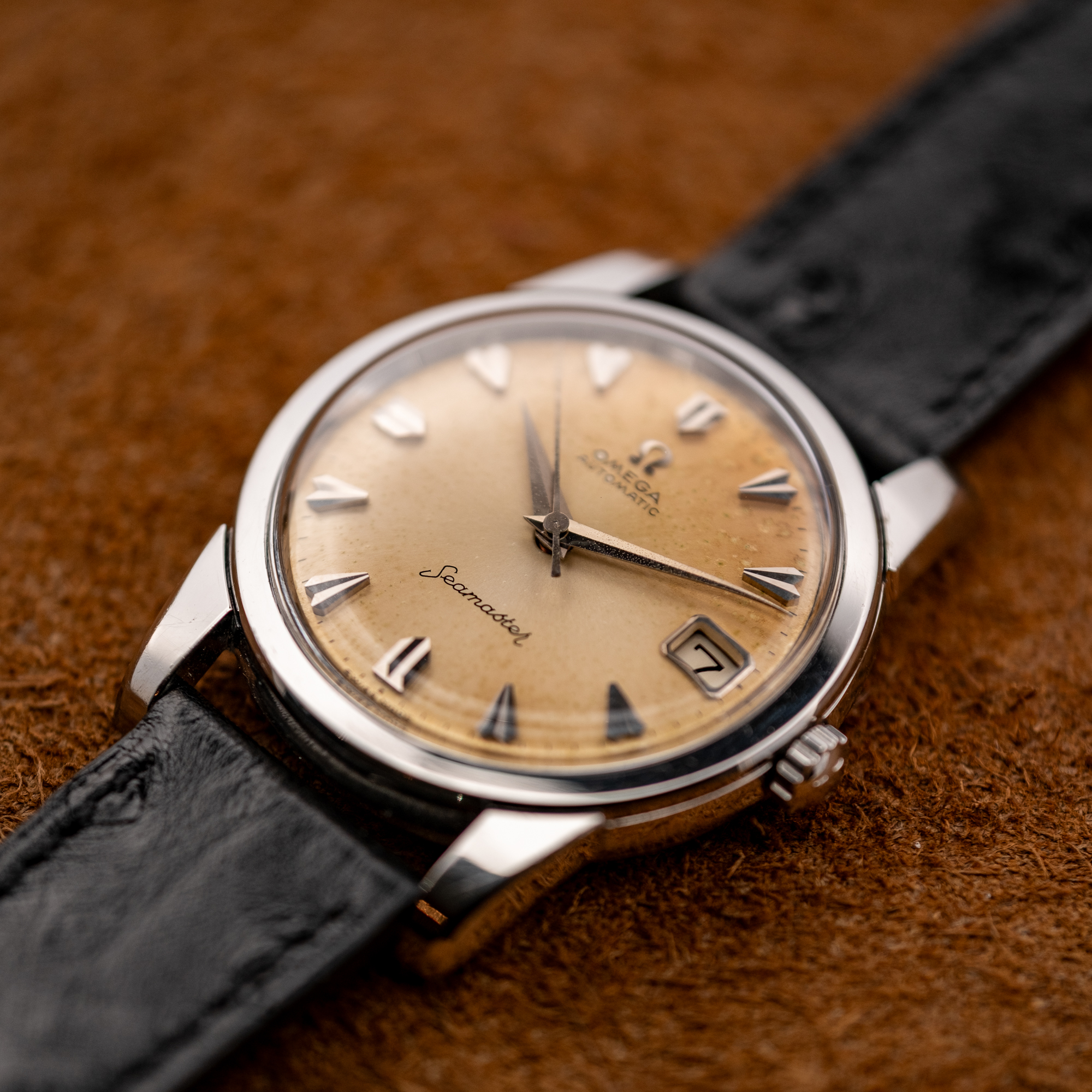
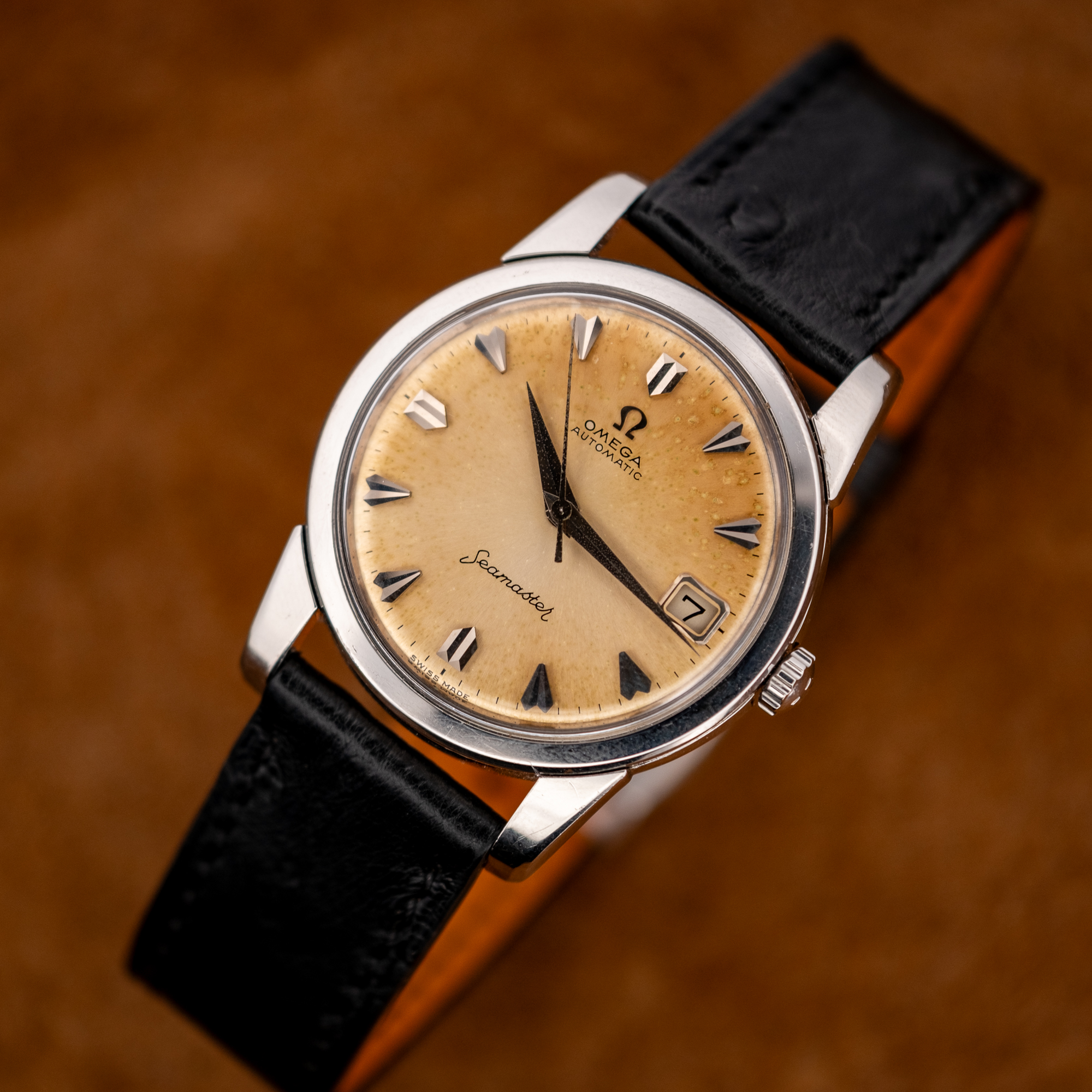
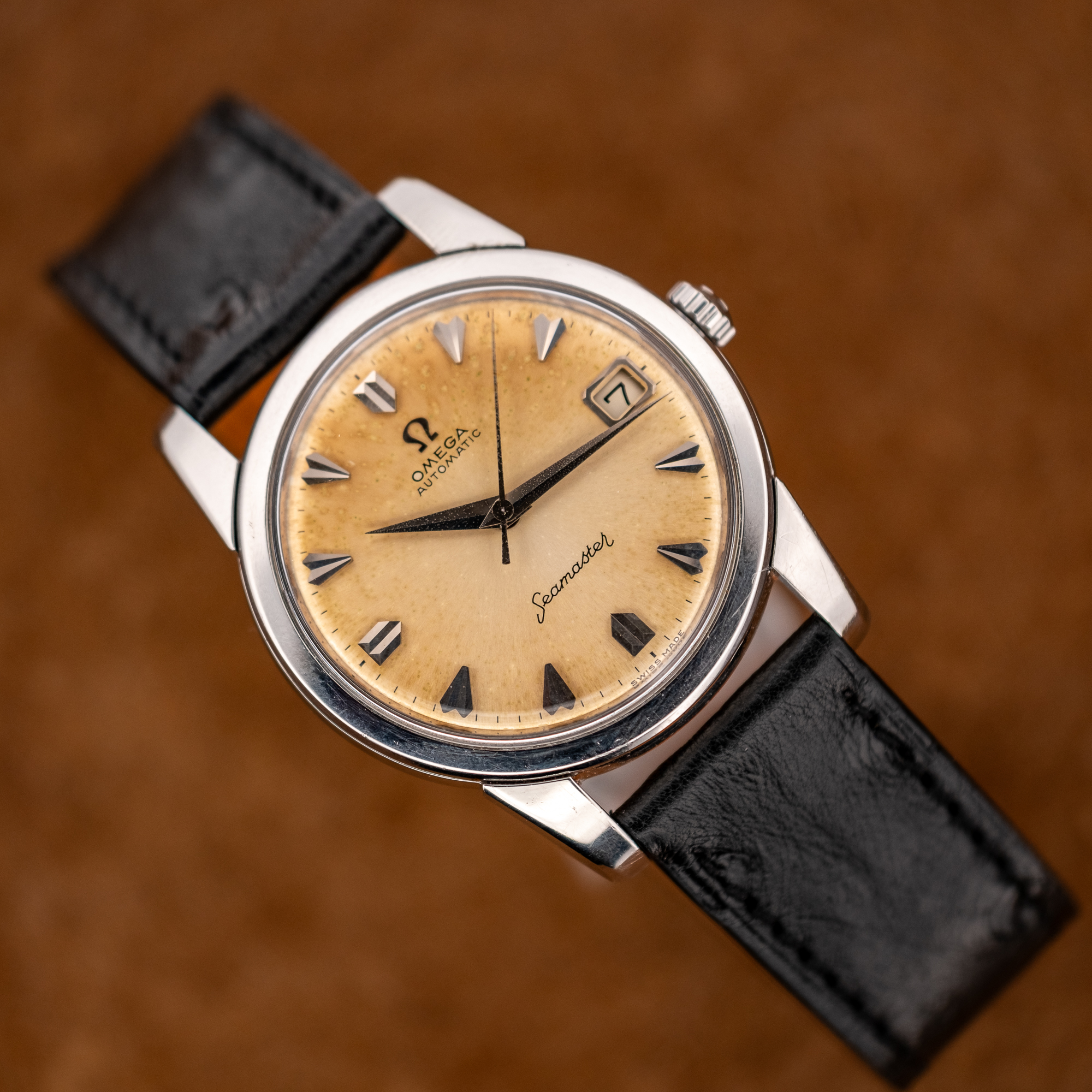
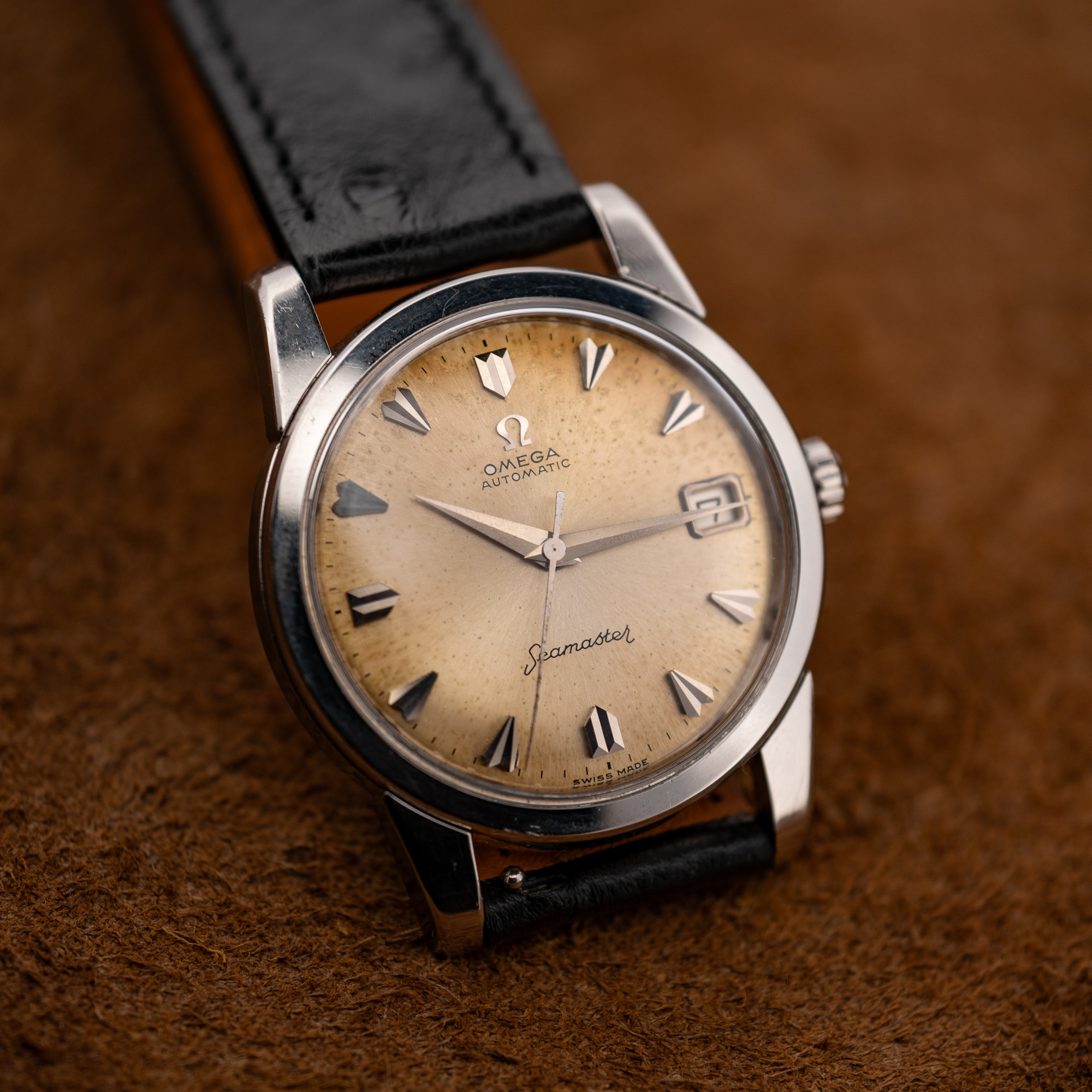
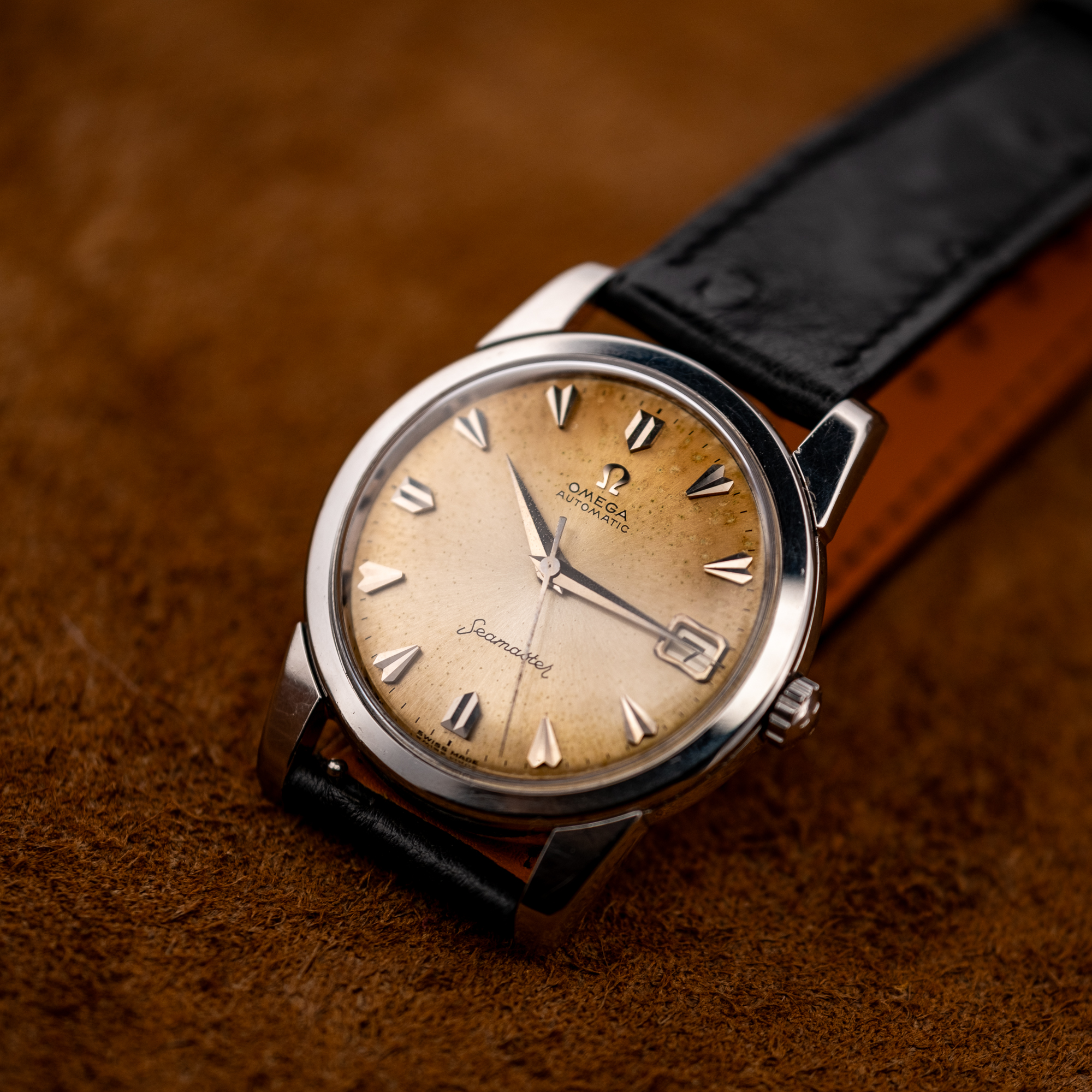
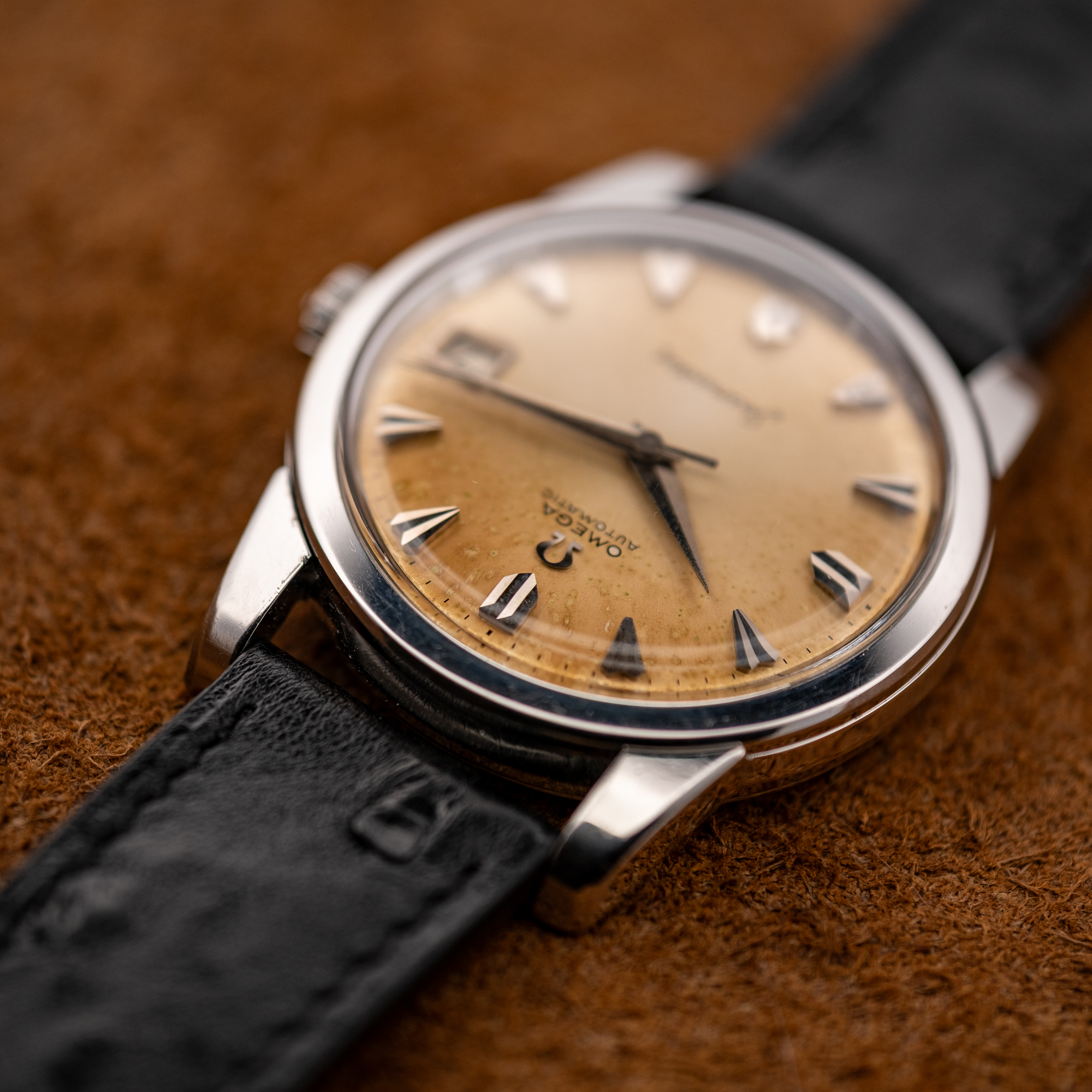
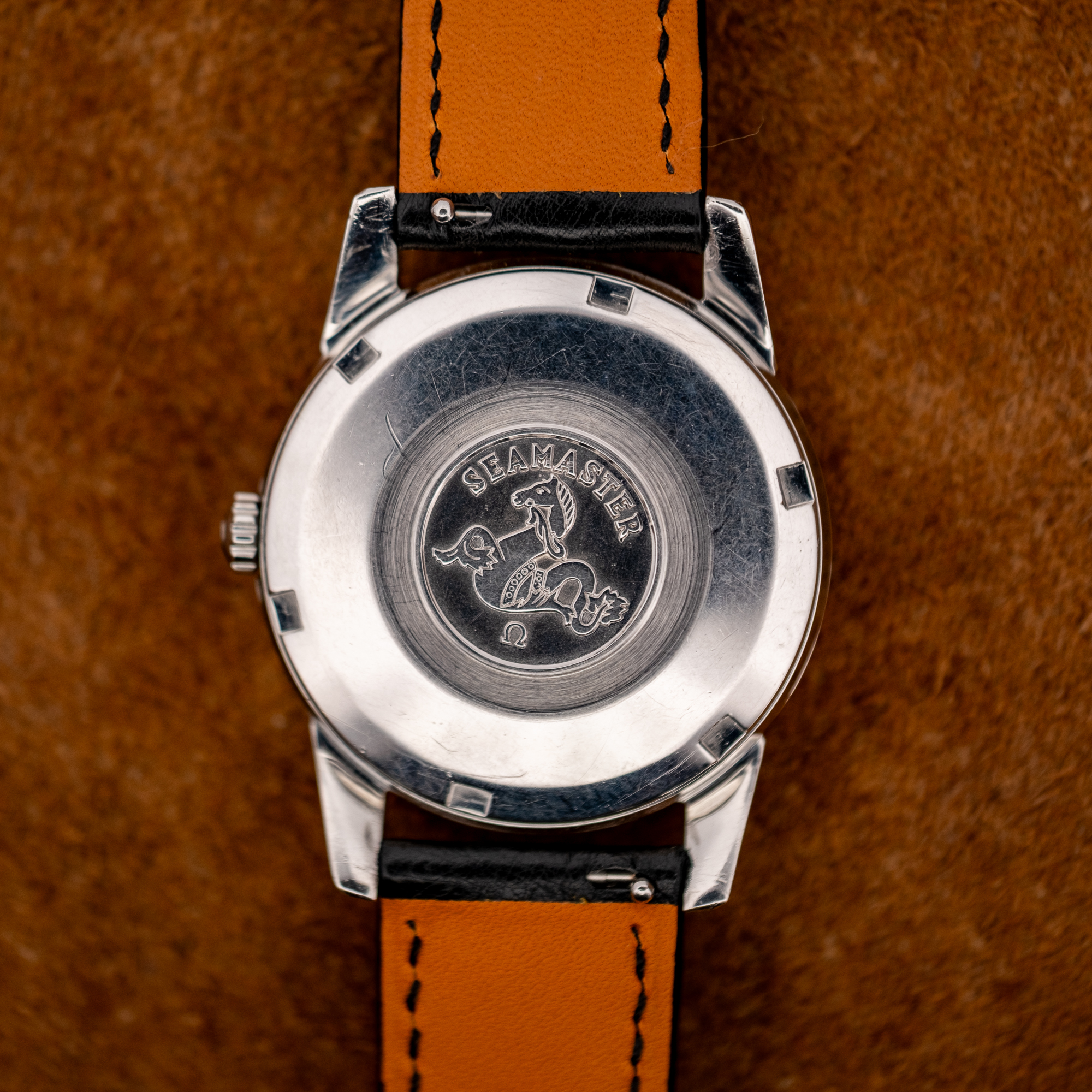
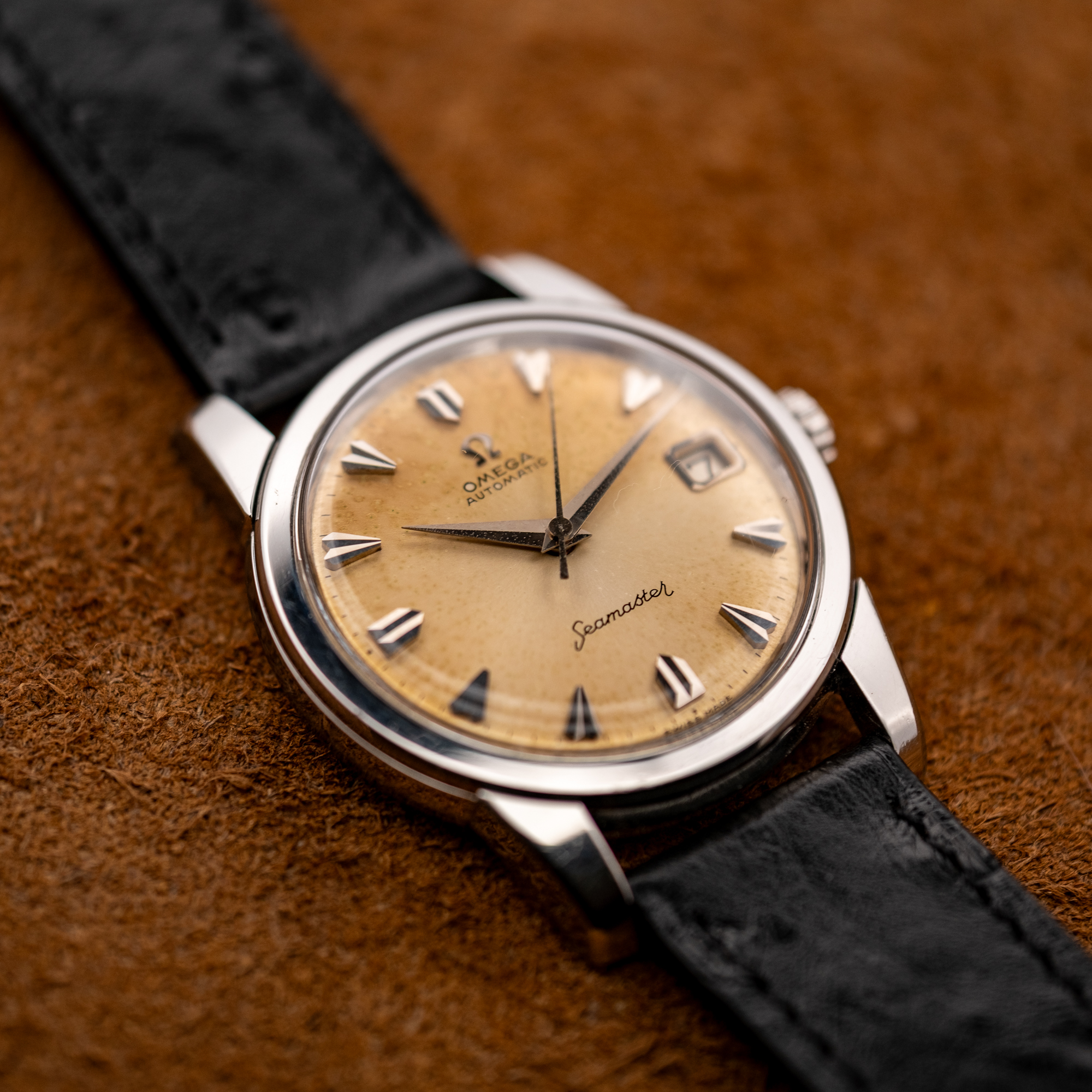
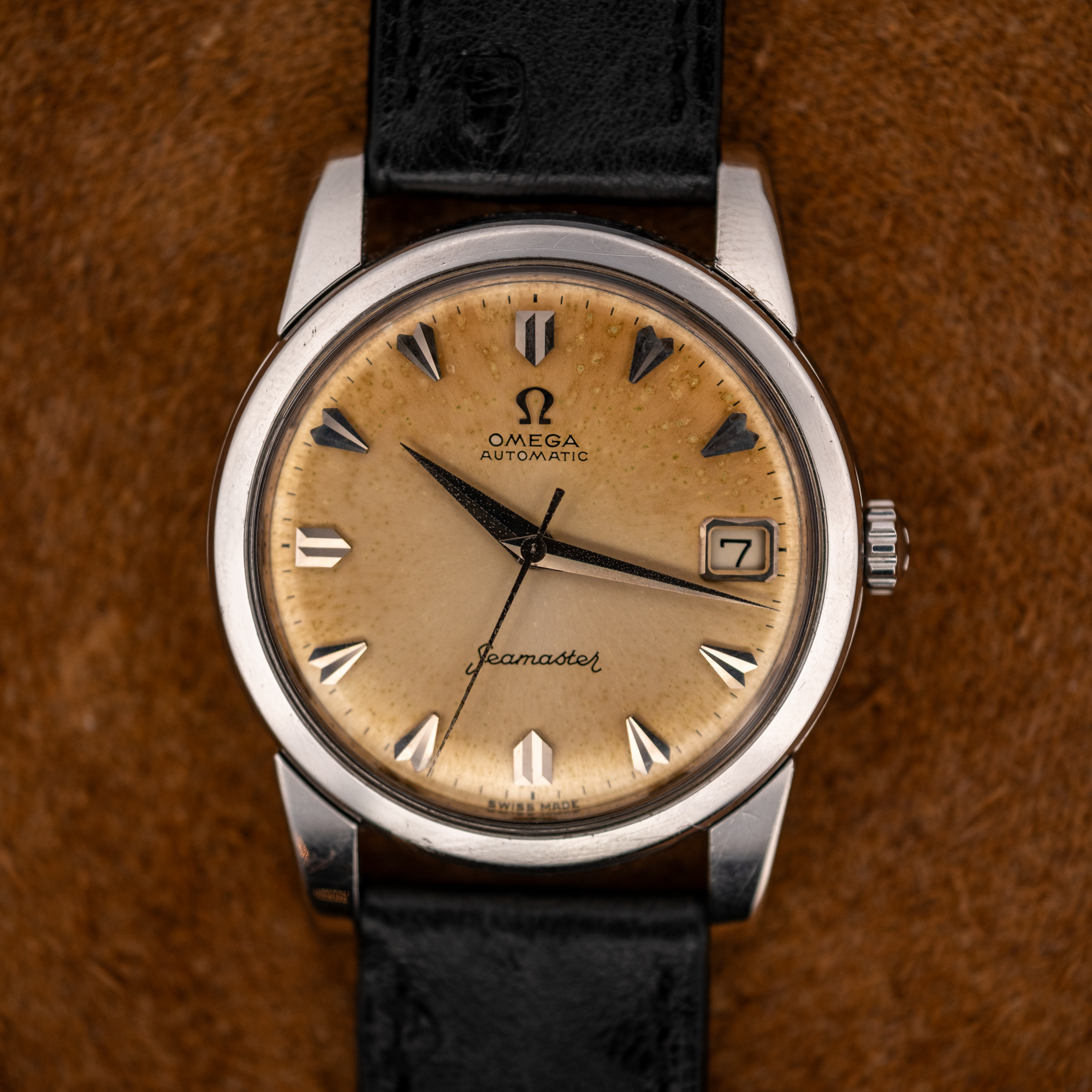

The amber on this Omega Seamaster 166.009 dial gathers at the rim and fades out well short of the center, as if it had been poured in from the edge and then stopped. The outer ring has turned a deep amber scattered with pale freckles, heaviest across the top half, while the middle keeps a soft silver-cream. The print stays out of its way: OMEGA AUTOMATIC above the center, Seamaster and SWISS MADE below it, and no retailer name anywhere.
Against that warm ring the hour markers stay bright. They are arrowheads, sharply faceted, pointed toward the center and broadened at 12, 6 and 9. The hands are faceted dauphines cut to the same angles, so the whole dial is built from ridges that catch the light on one side and fall into shadow on the other. As the wrist turns, the facets trade bright silver for near black, and the amber ring shifts along with them.
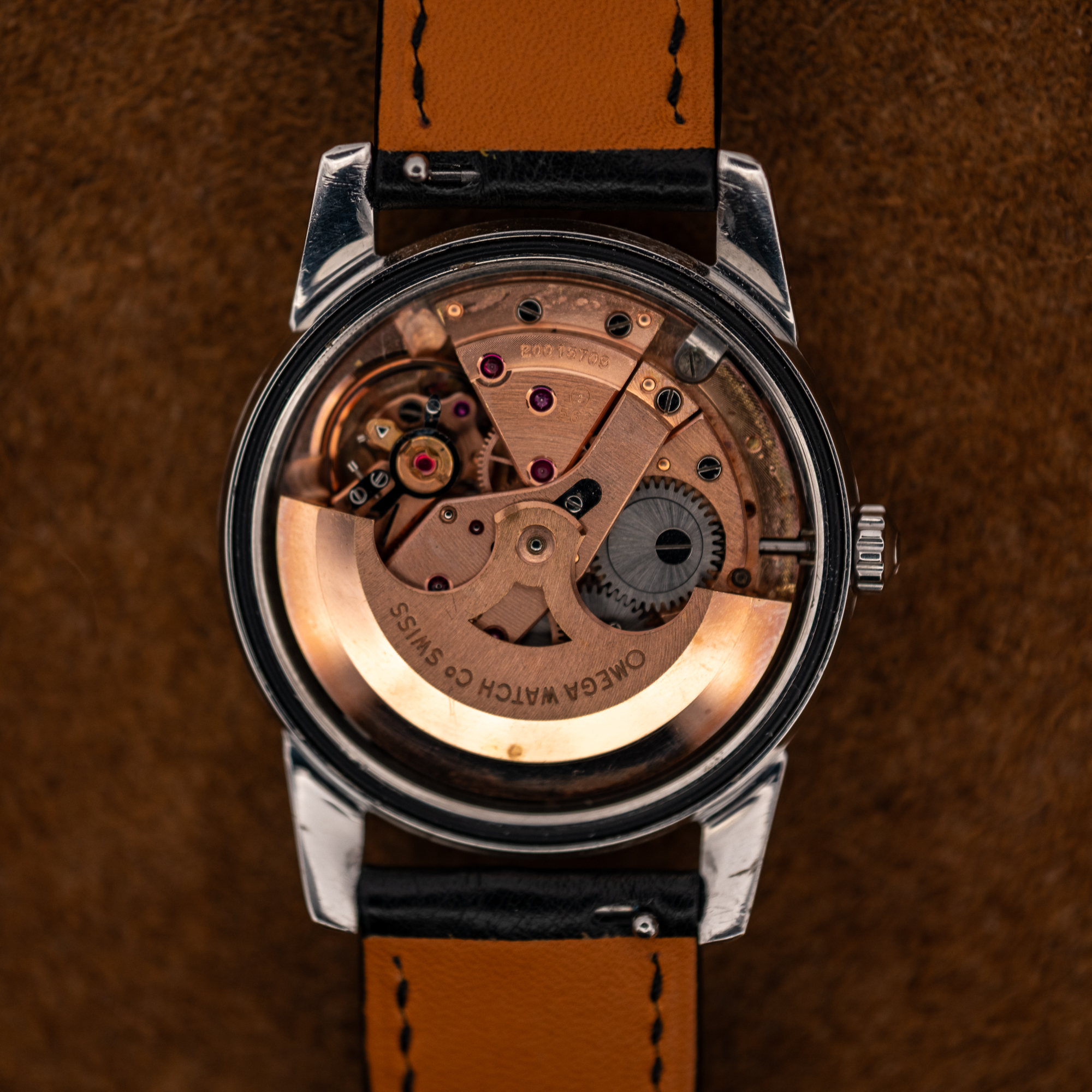
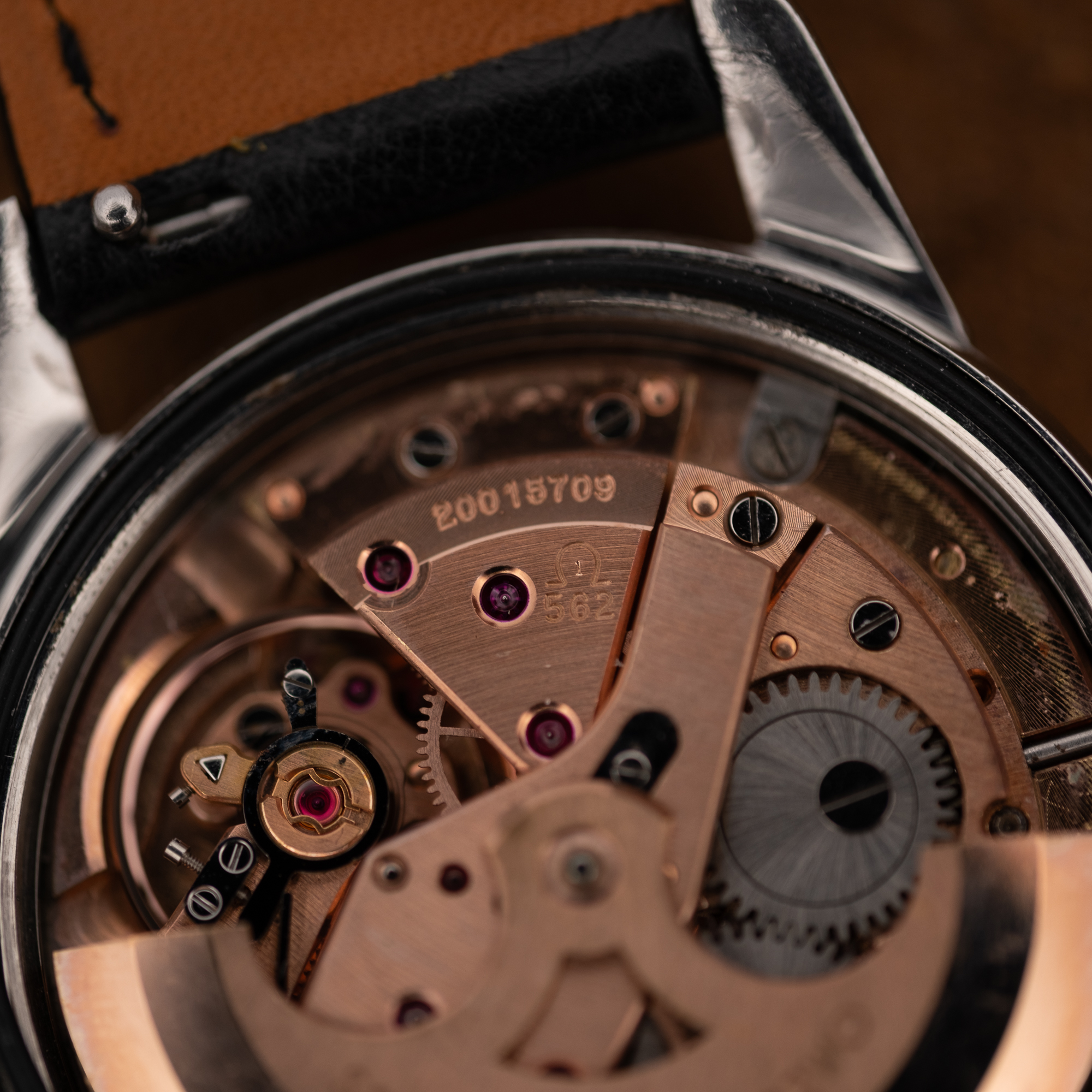
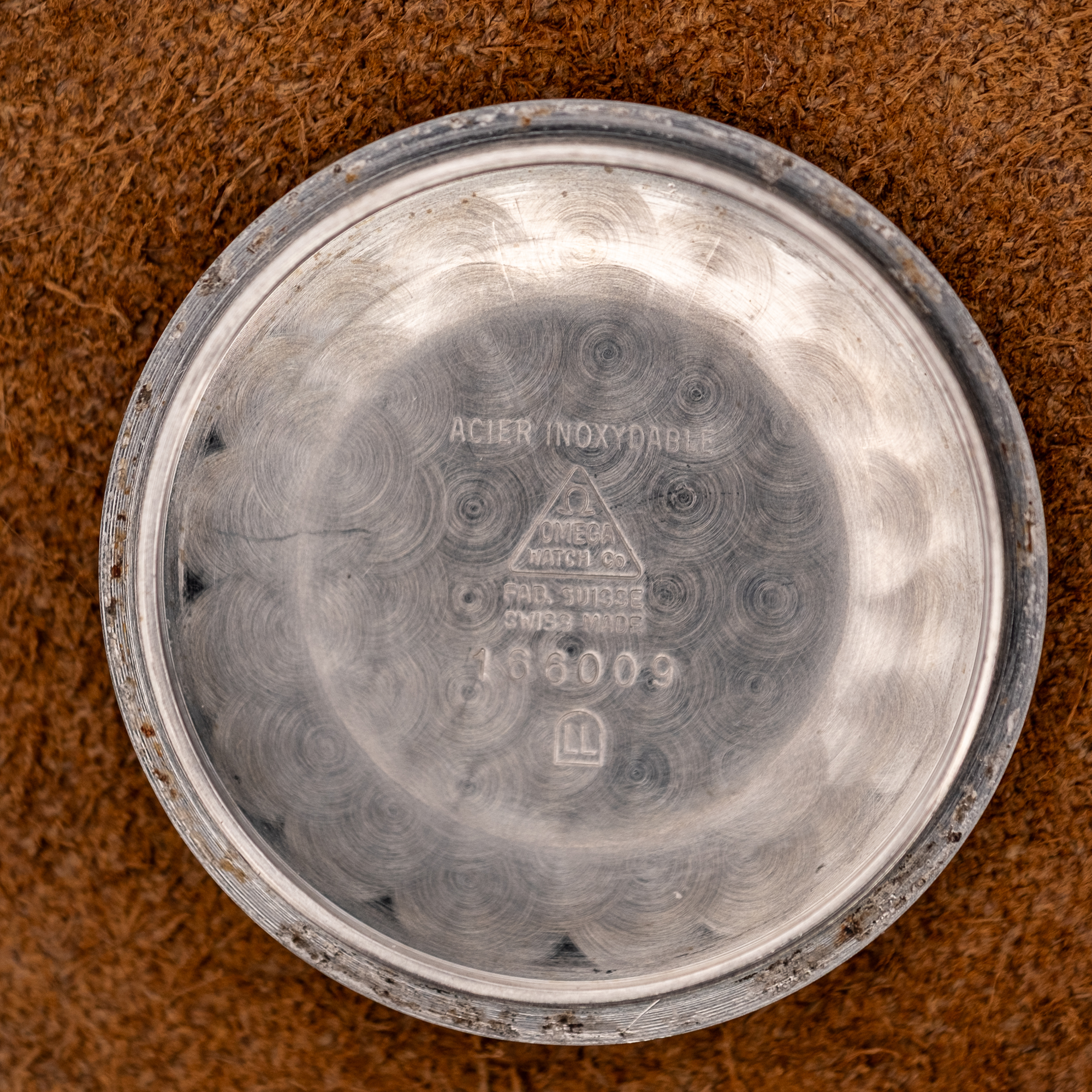
The number stamped inside the back reads 166009, and on this reference those first three digits form a short sentence. Omega began coding its references this way in 1962: the 1 marks a gentleman’s watch, the first 6 a self-winding movement with central seconds, the second 6 a calendar watch in a case Omega classed as water-resistant. The 009 after the point carries no code at all; it simply names the model. The 166.009 itself first appeared in 1962, the same year as the code, and this one followed soon after, with a movement serial, 20015709, that points to about 1963.
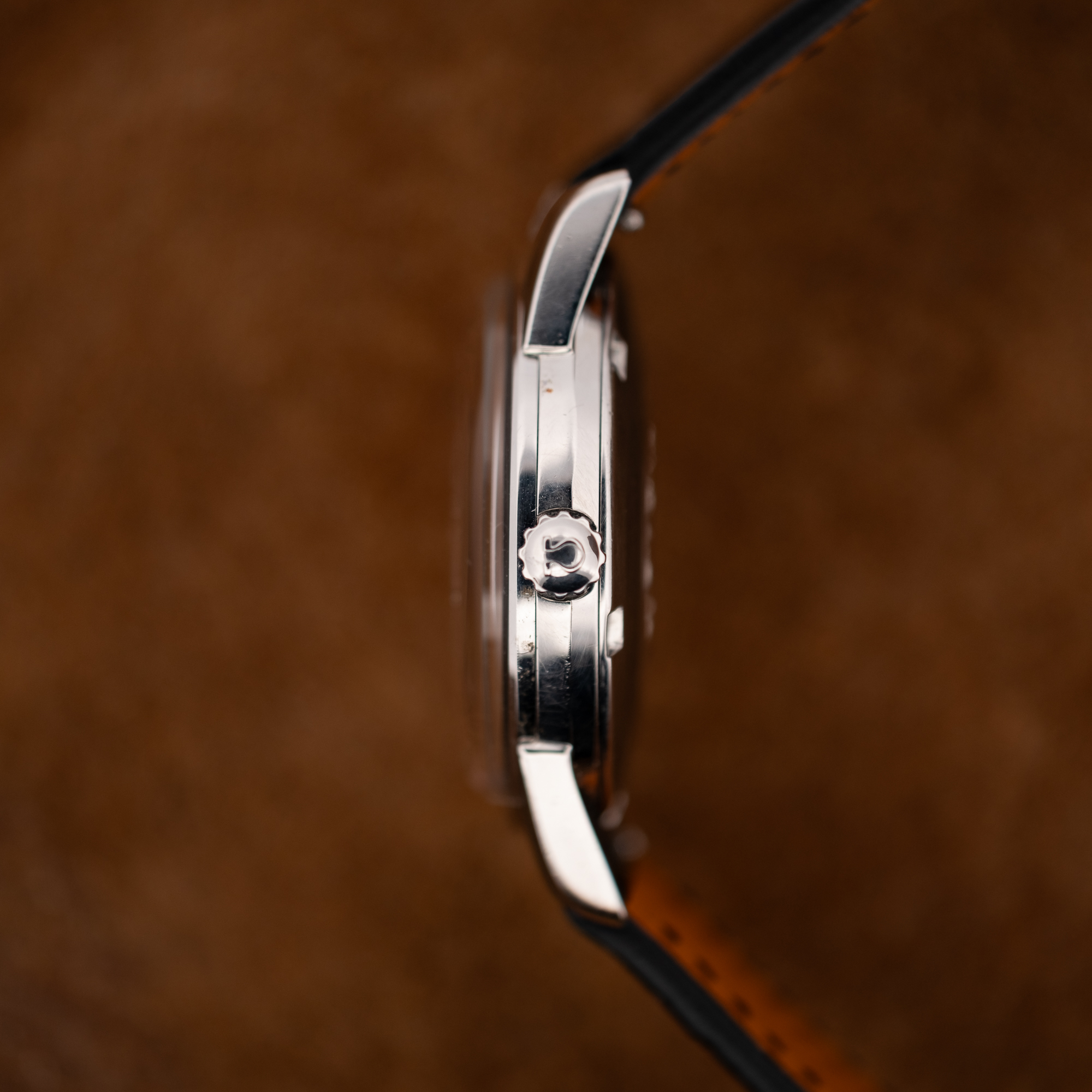
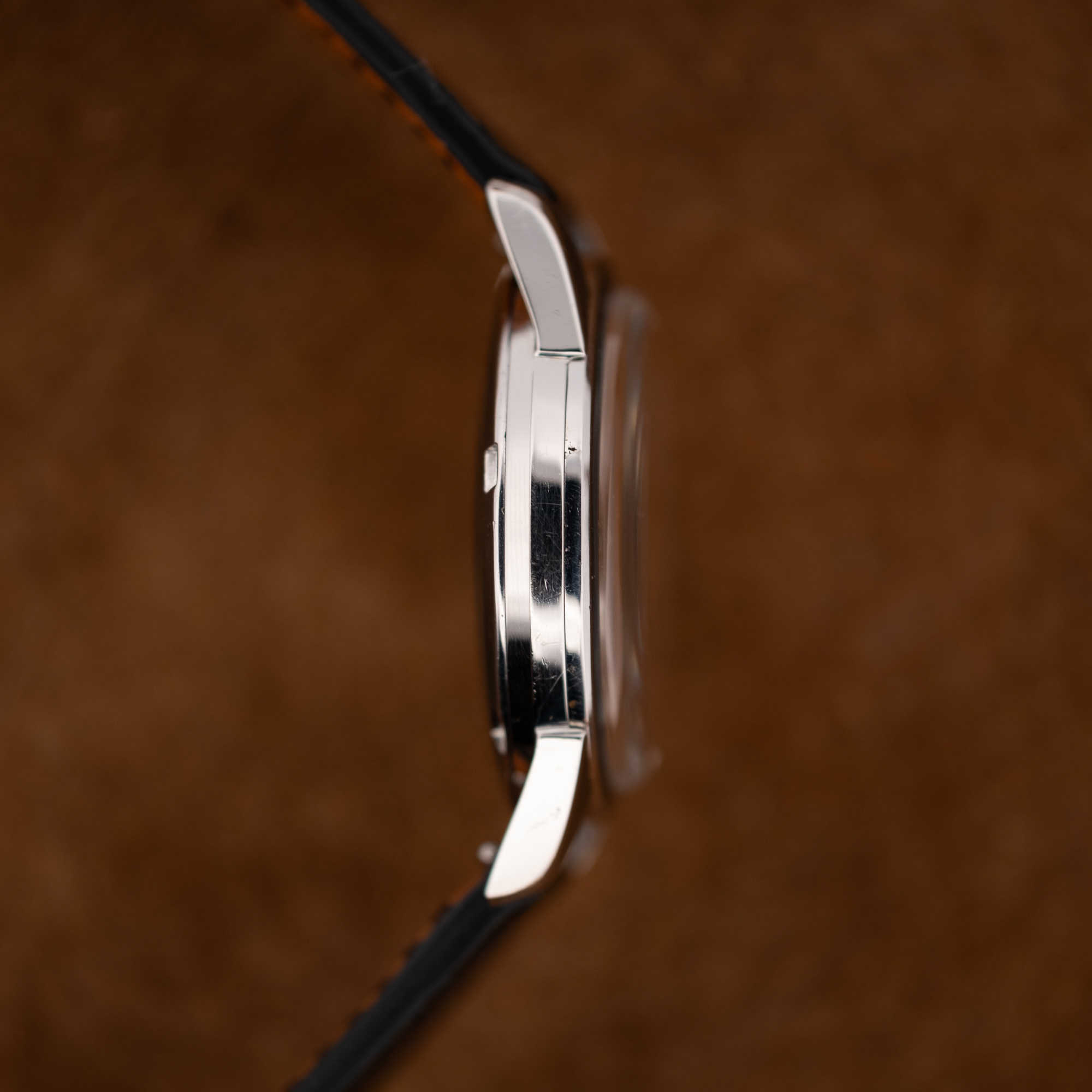
The round steel case measures 34mm across and 42mm from lug end to lug end, so it sits close and compact on the wrist, and its straight, separate lugs carry the strap out without a curve. A smooth bezel rings the domed crystal, an Omega symbol marks the crown, and inside the back a small LL maker’s cartouche sits beneath the reference. The steel shows fine scratches across the bezel, flanks and back, and the hands carry light mottling; a black ostrich strap with raised quill points completes it.
Inside, caliber 562 does the work, a 24-jewel automatic with date that Omega introduced in 1958. There is no quickset; instead the date is advanced by working the hands to and fro past midnight.