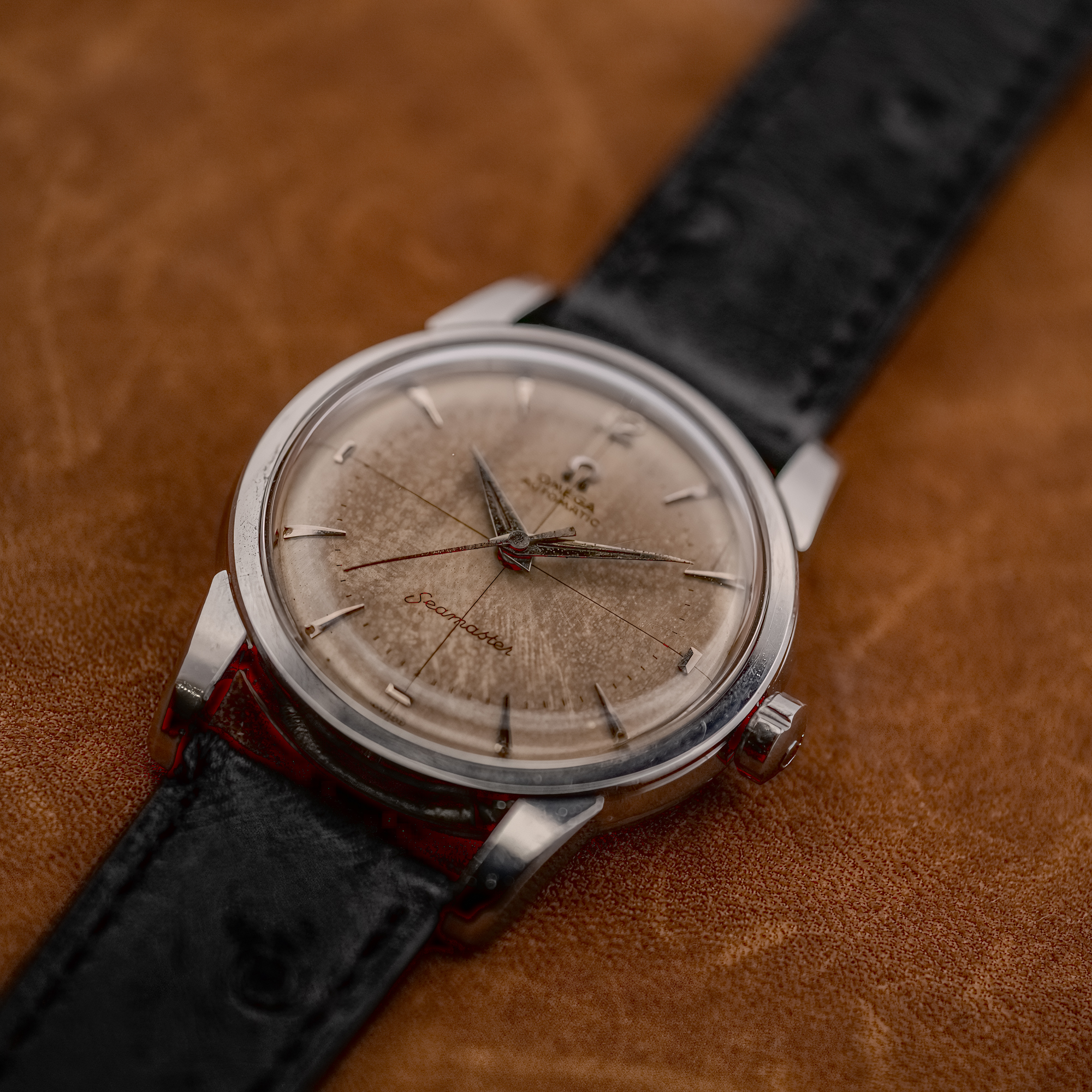
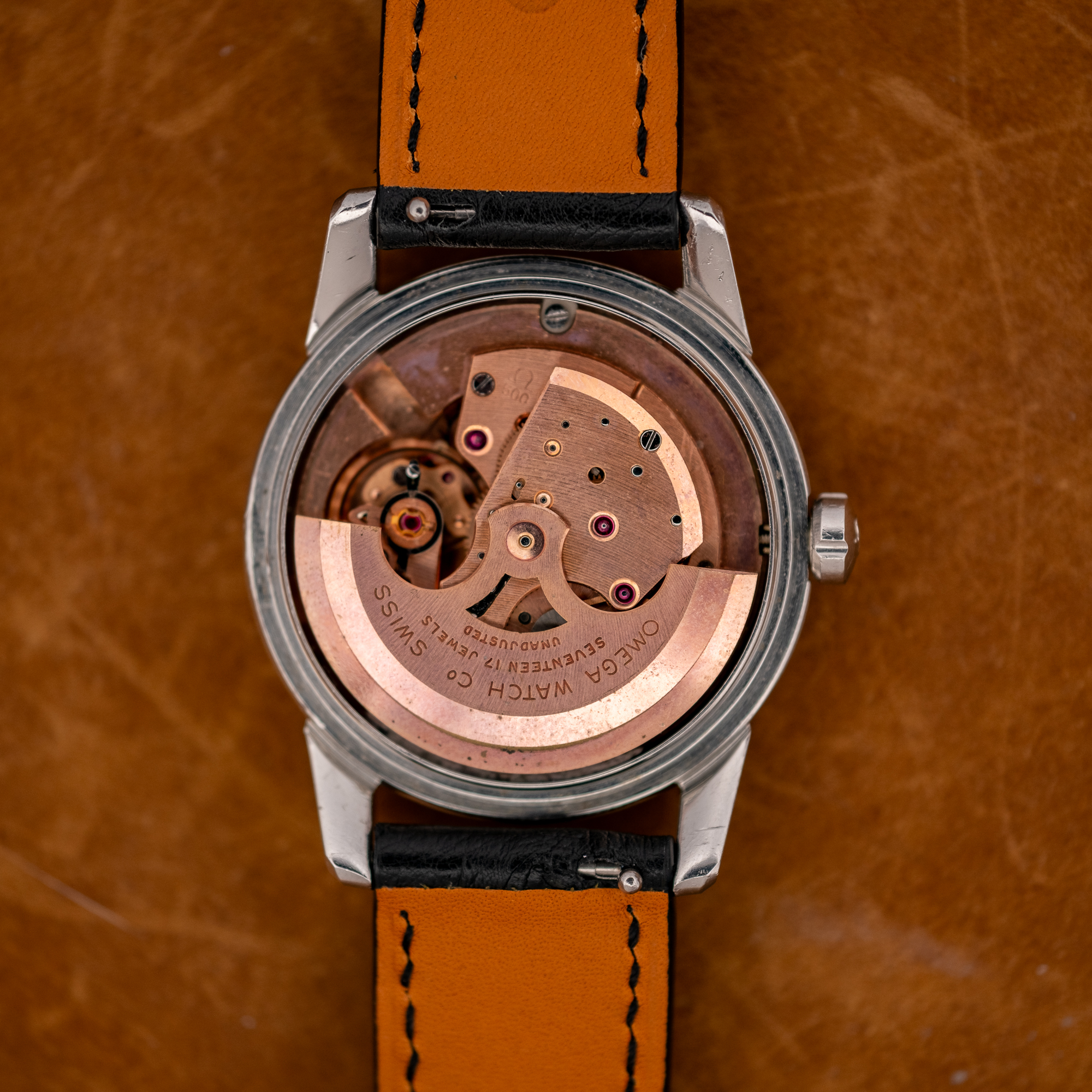
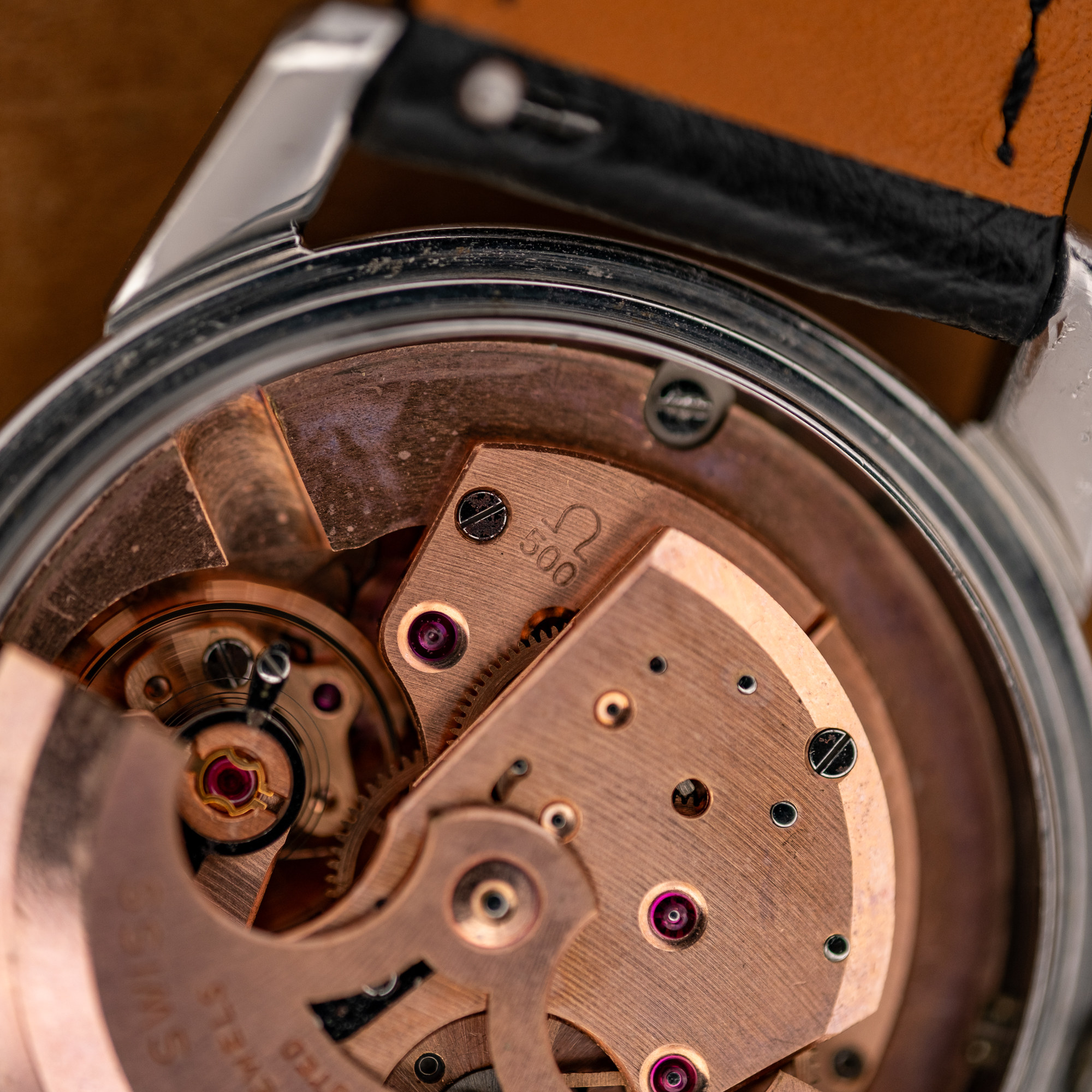

The plates and rotor of the caliber 500 inside this Omega Seamaster 2846-1 SC carry the warm color of rose gold, and Omega gave the finish that name in some of its own promotions. There is no gold in it. The parts are beryllium bronze, a hard copper alloy, under a thin plating of copper.
The 500 belongs to the family Omega introduced in 1955 to replace its bumper automatics. Its rotor turns a full circle and winds in both directions, where the older bumper weight rocked through part of a turn. That family went on to replace Omega’s entire 300-series line of bumper calibers, and between 1955 and 1960 the factory built upward of a million movements across the 470, 490 and 500 lines. The 500 sits on the larger 28mm branch, against the 470’s 25mm, and this is its 17-jewel version, beating 19,800 times an hour.
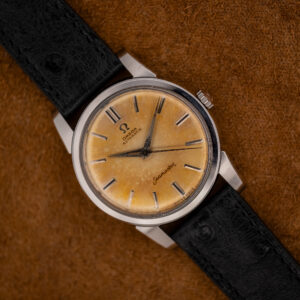
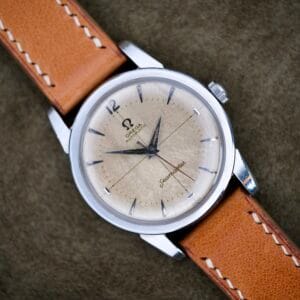
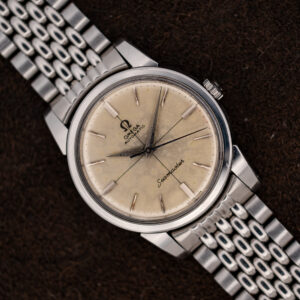
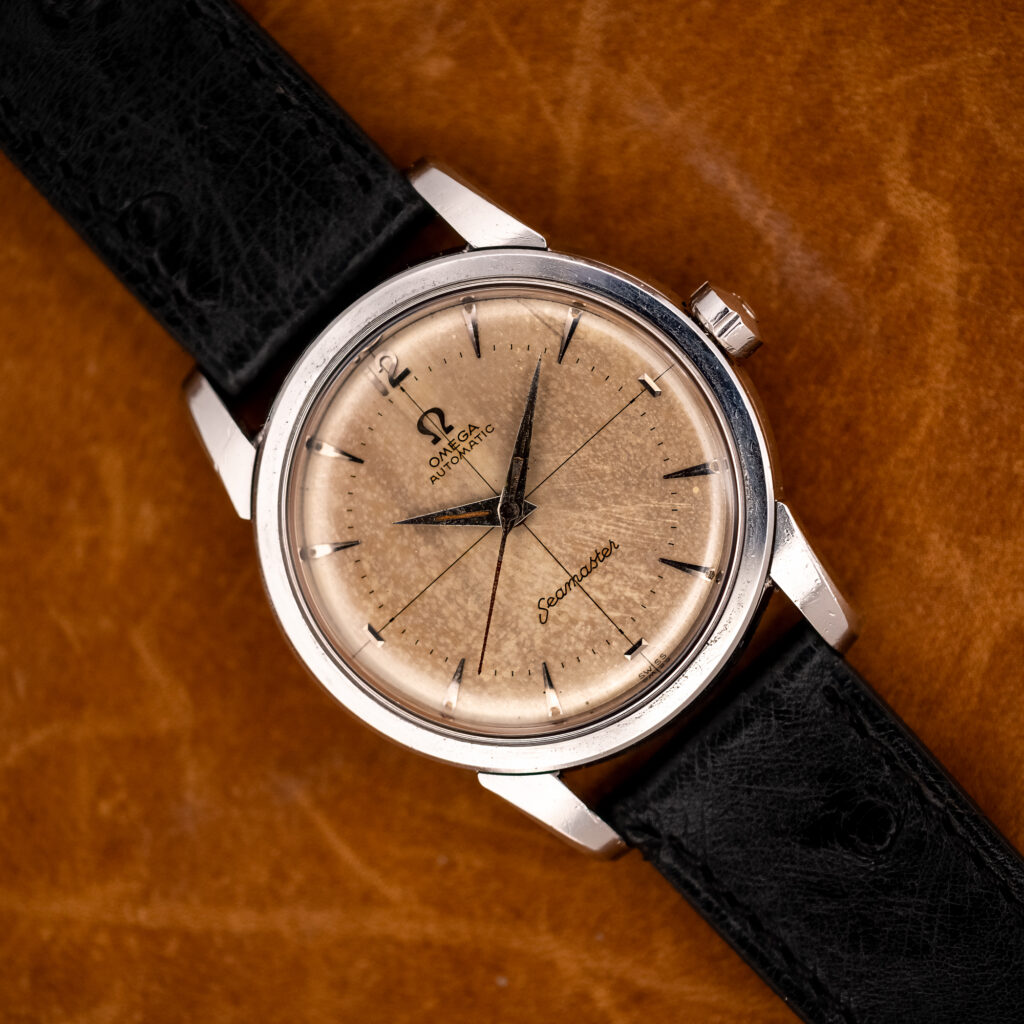
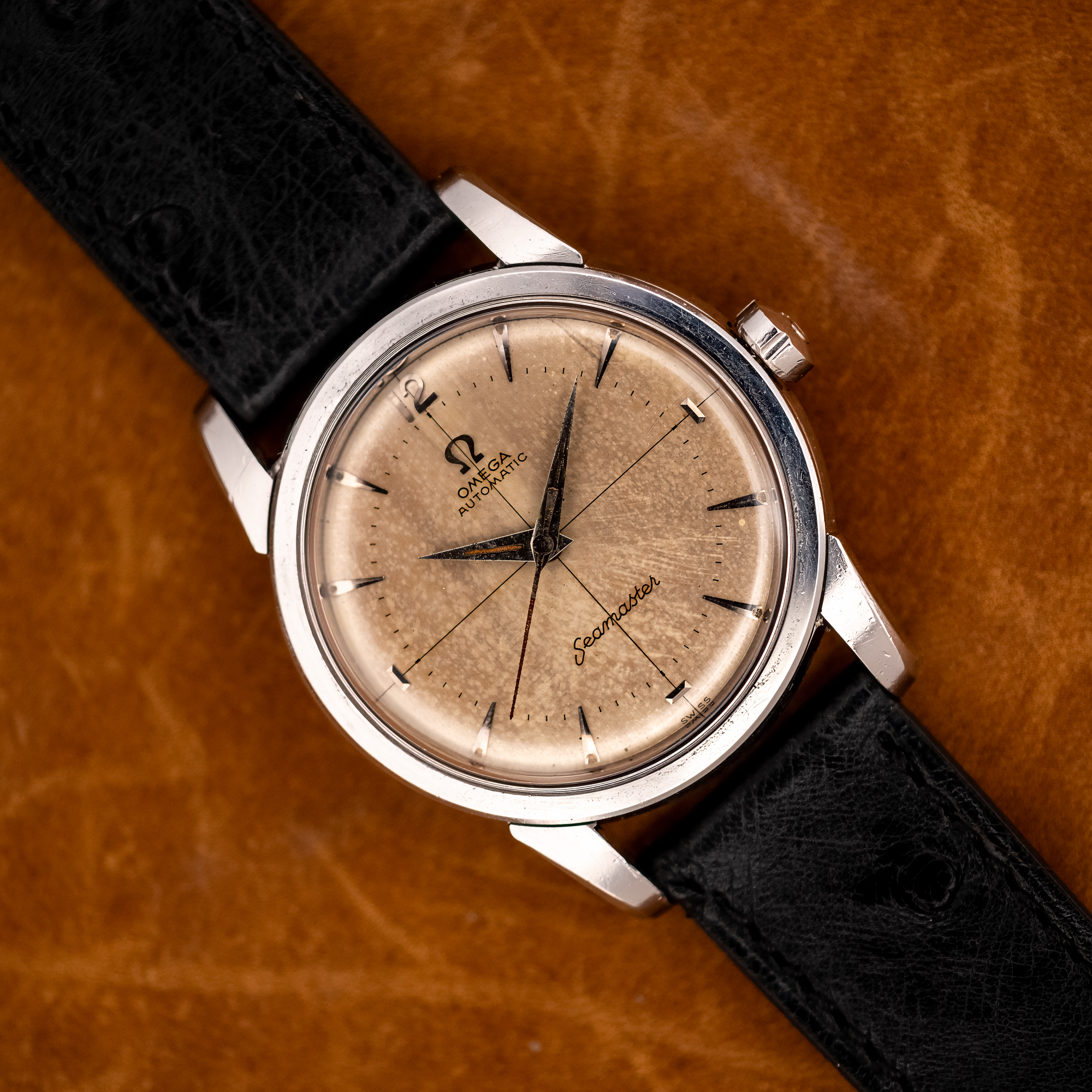
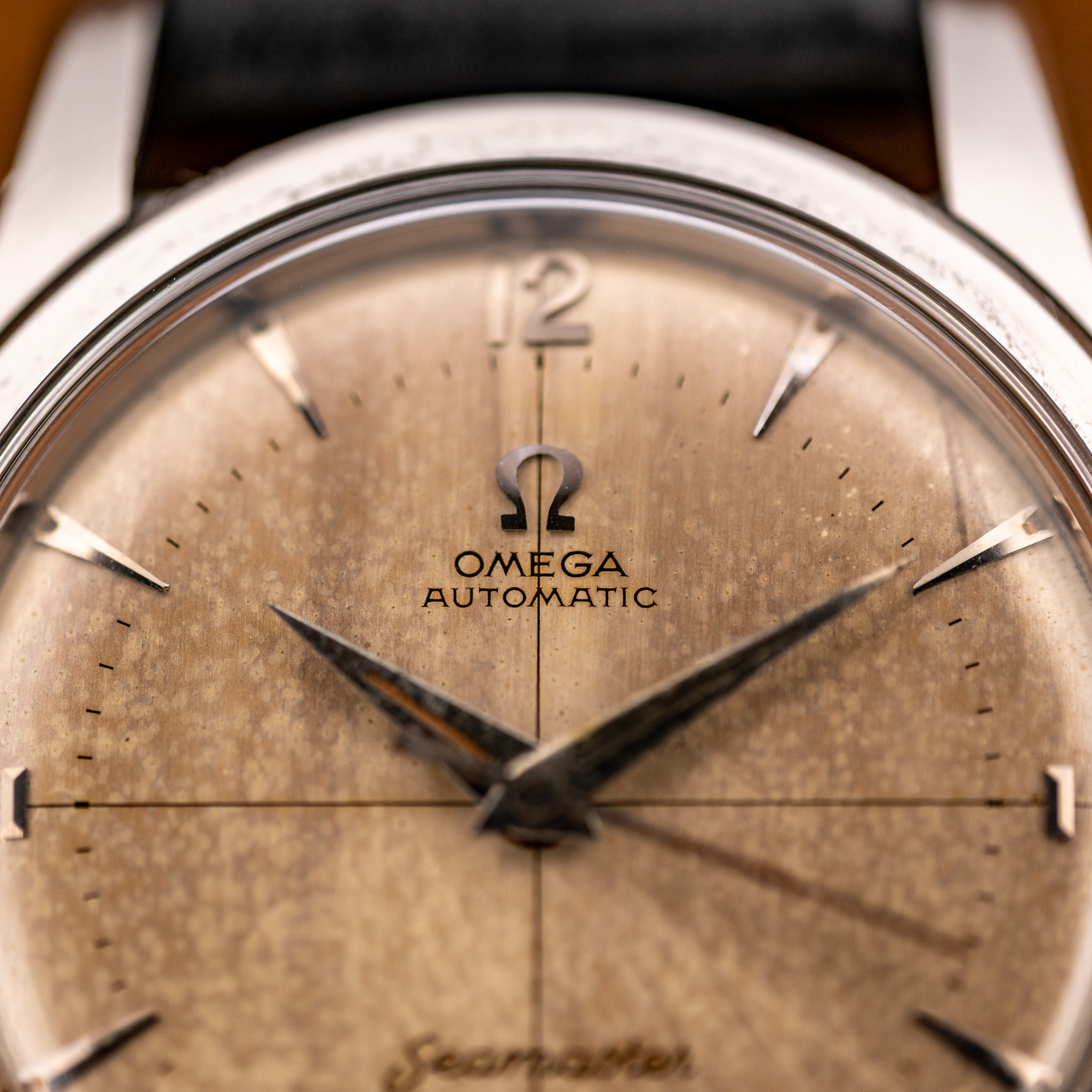
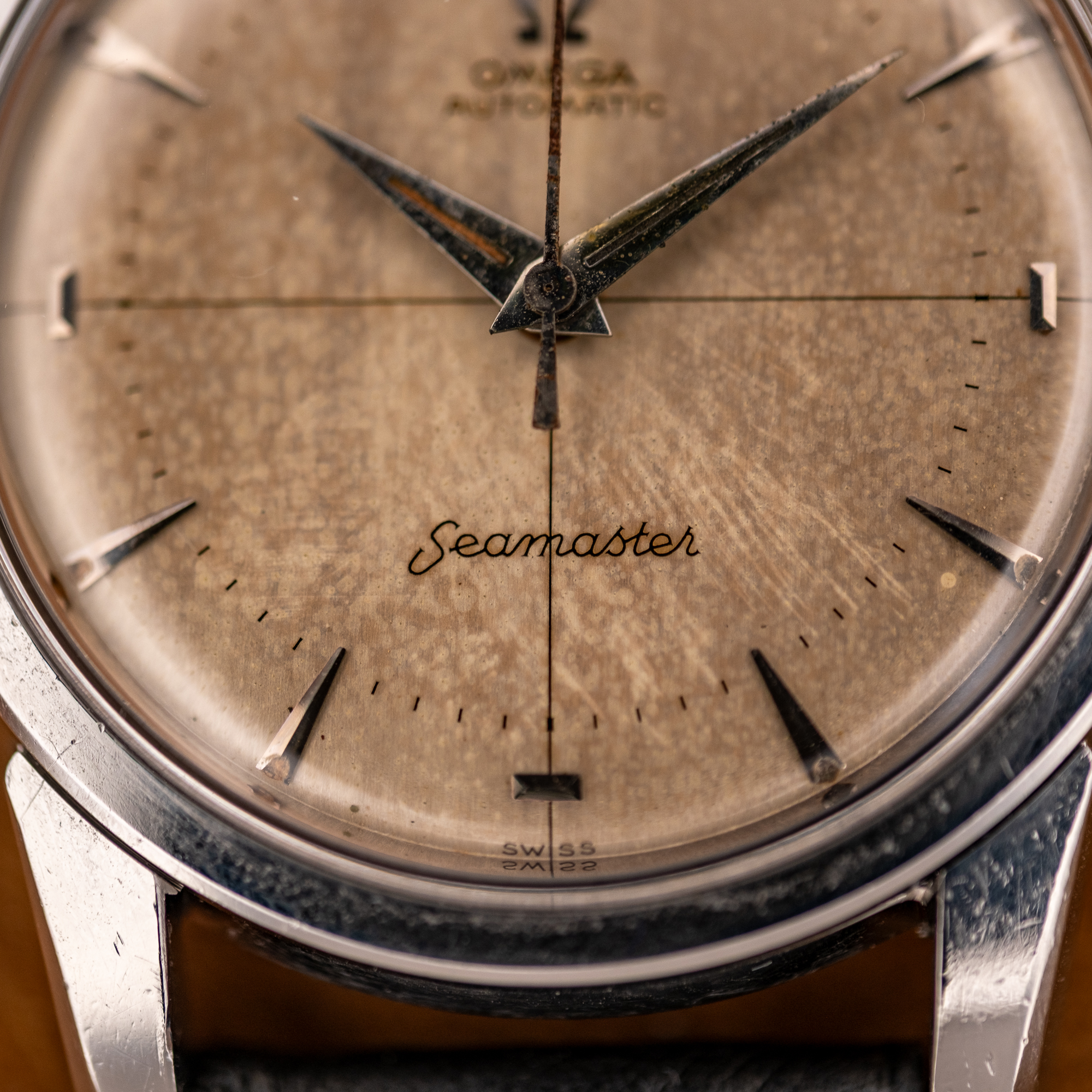
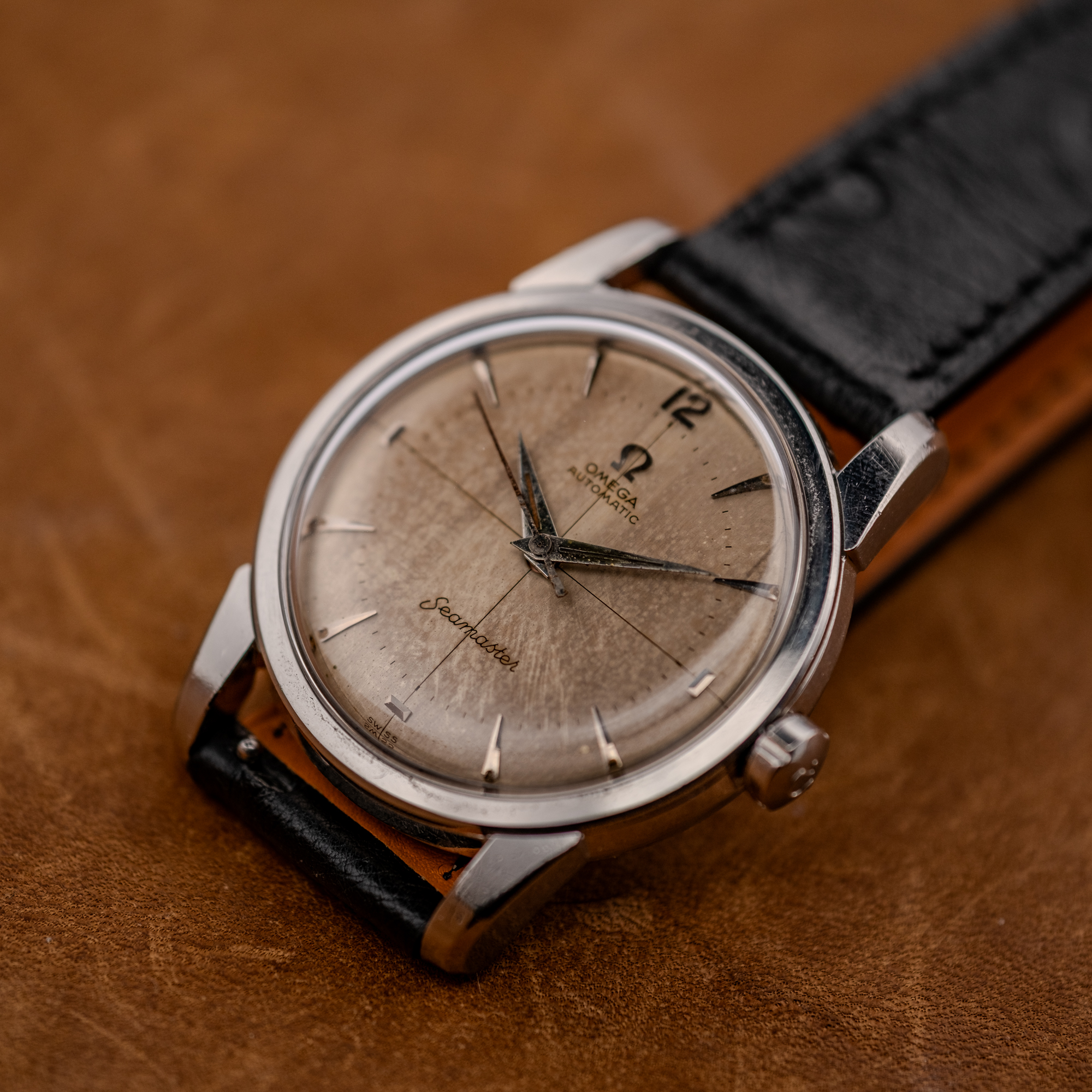
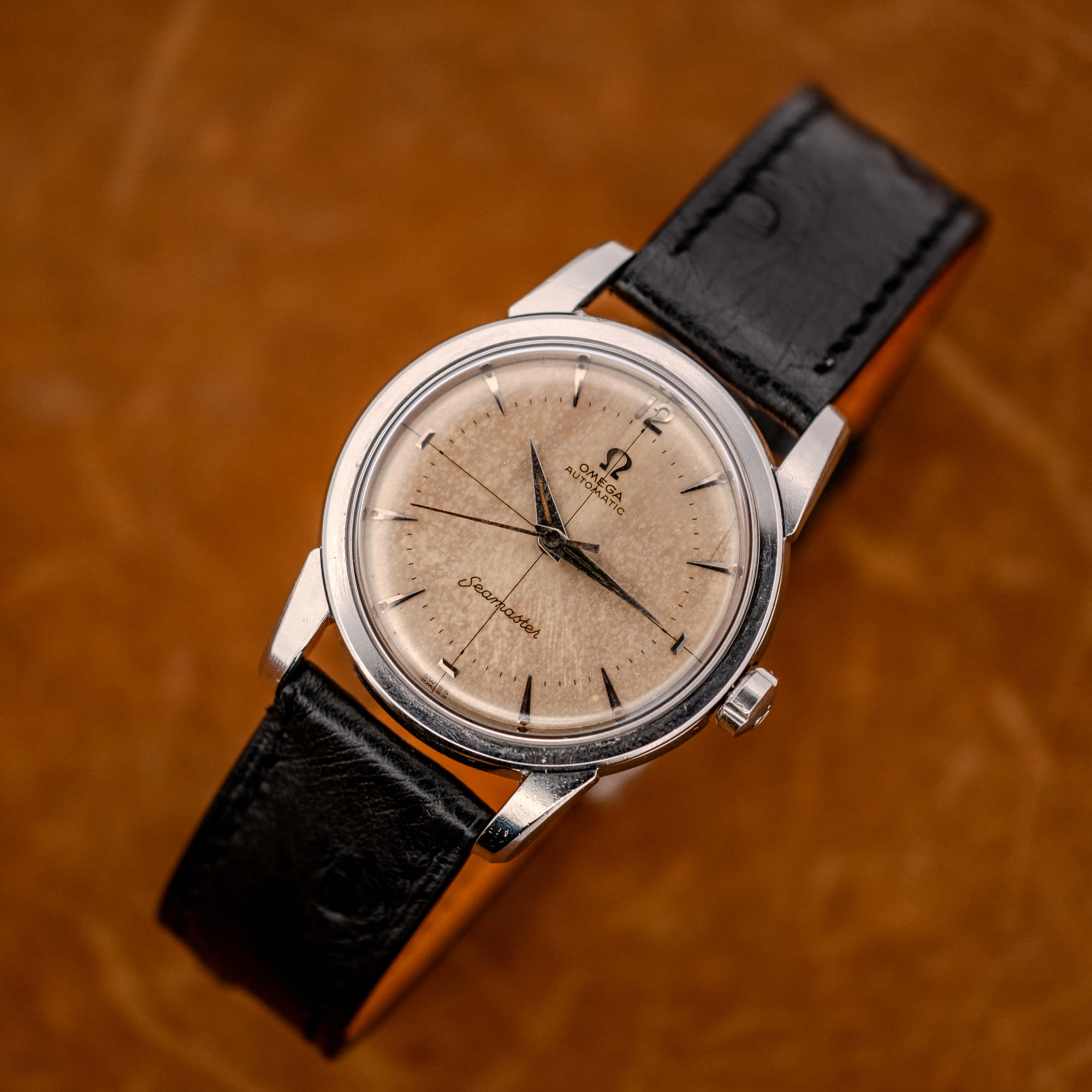
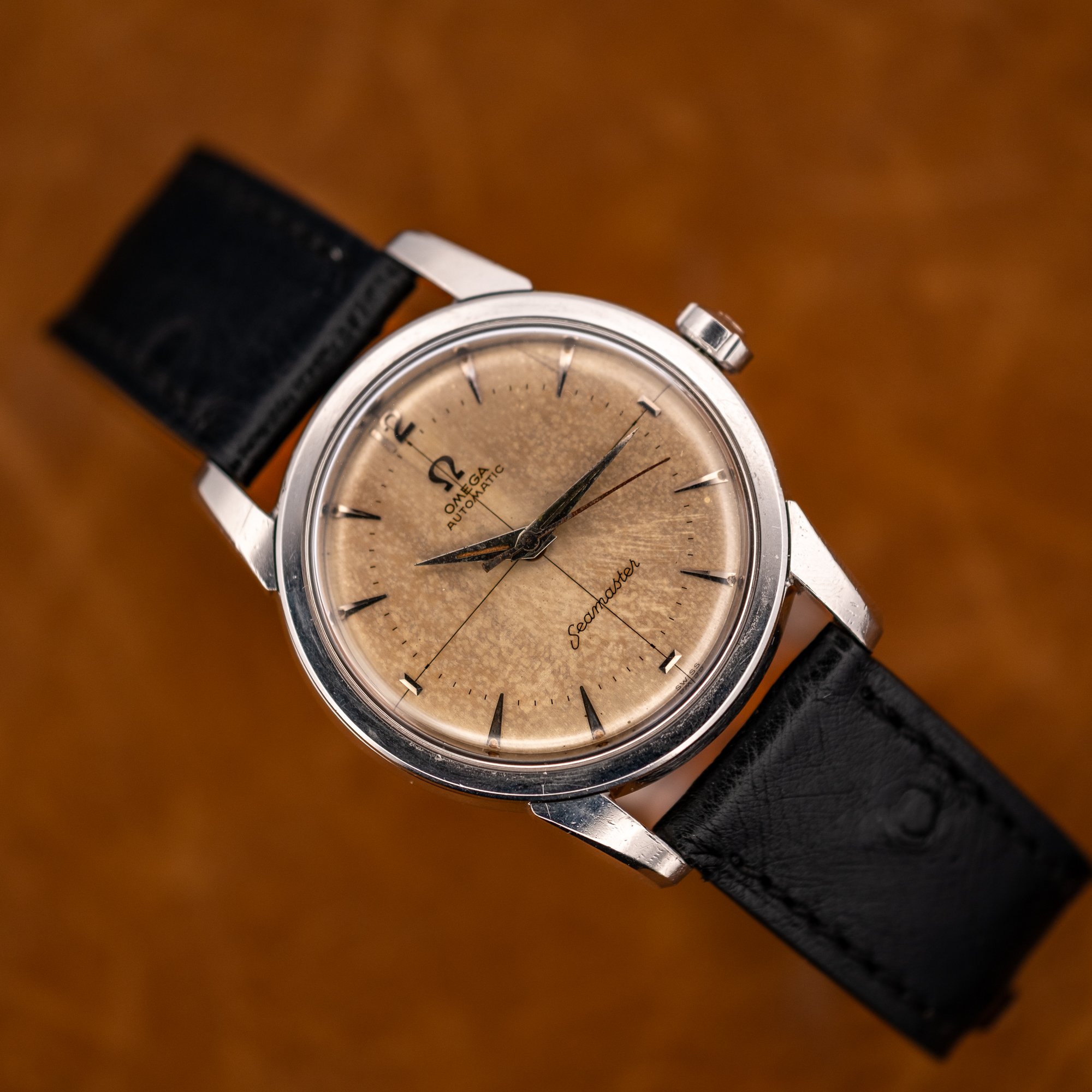
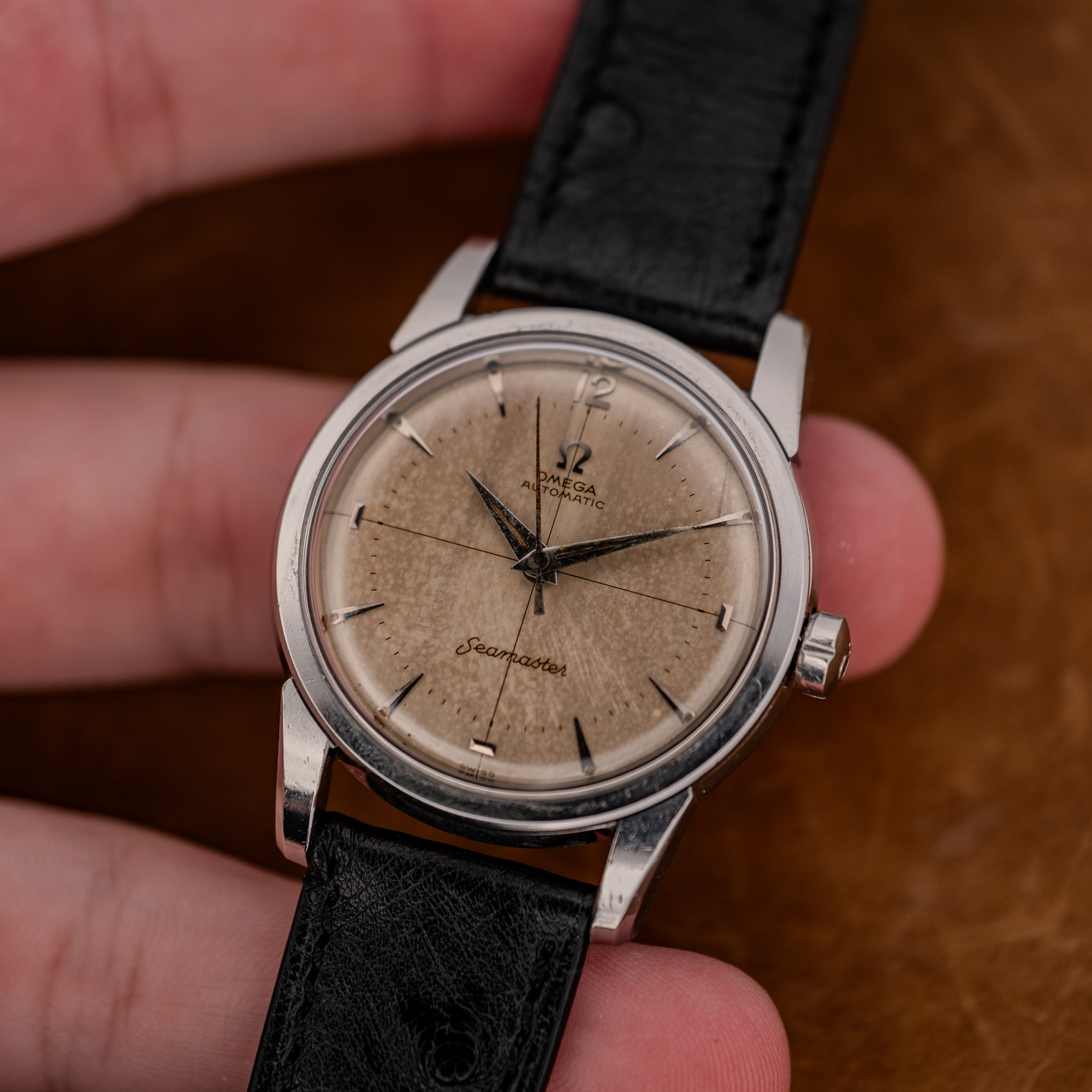
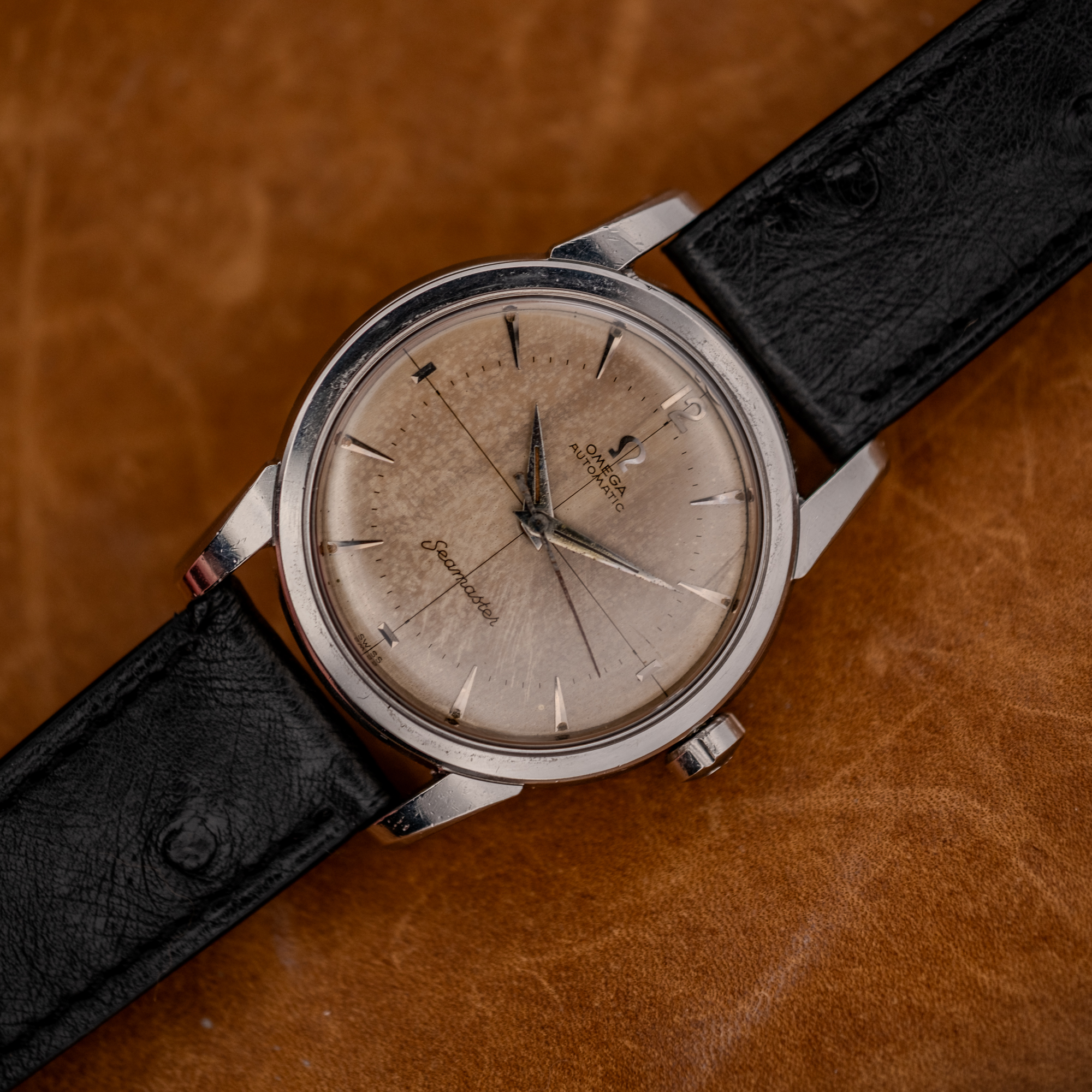
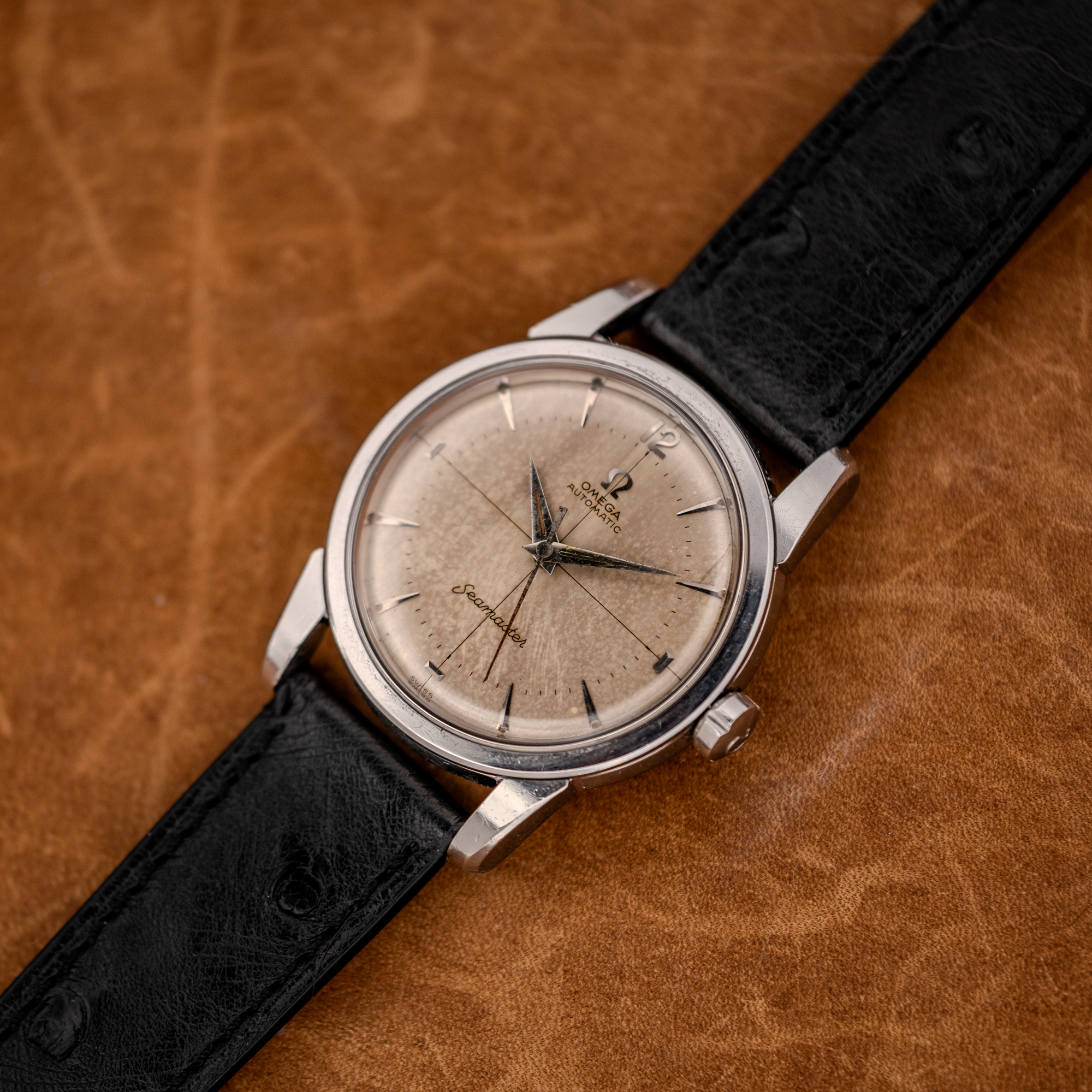
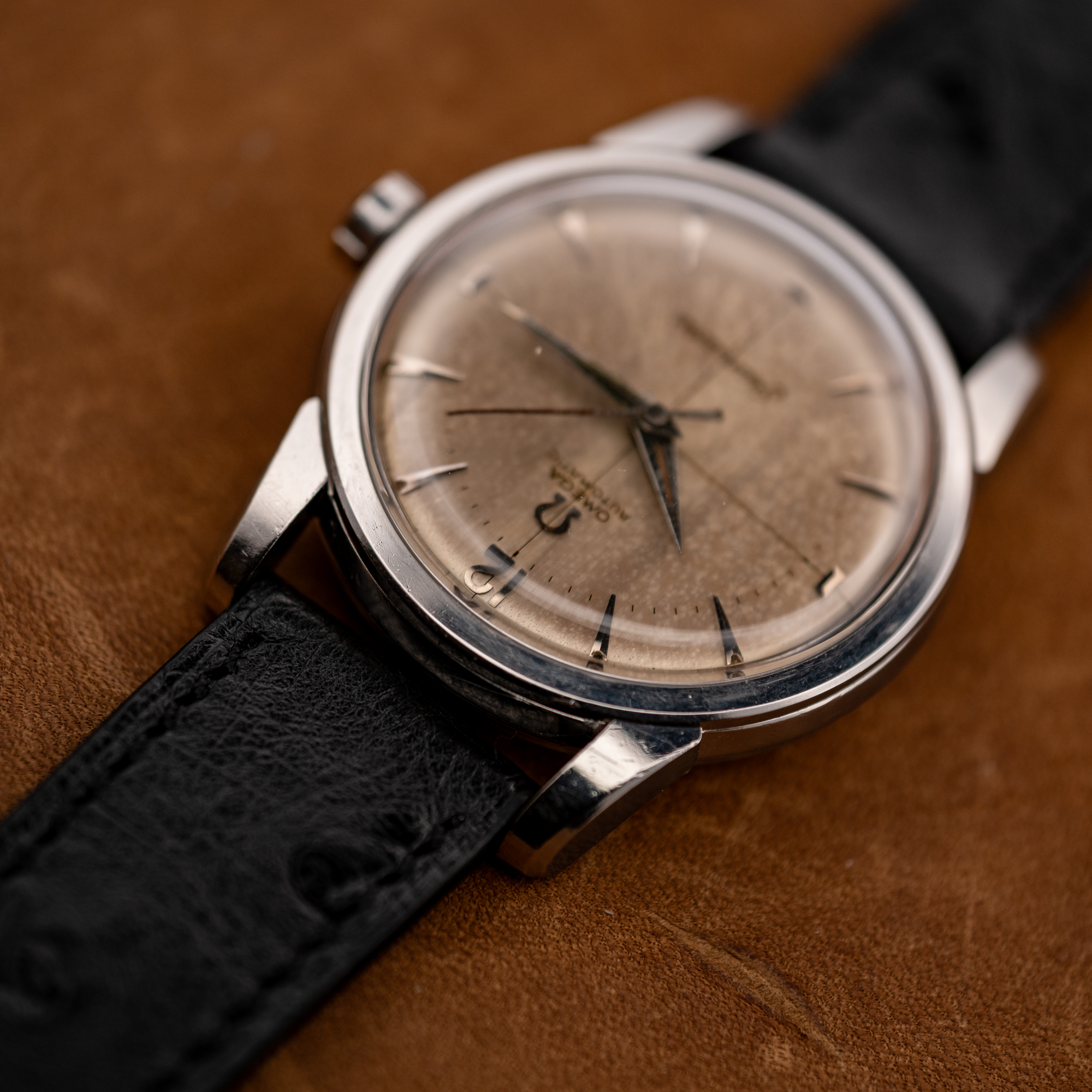
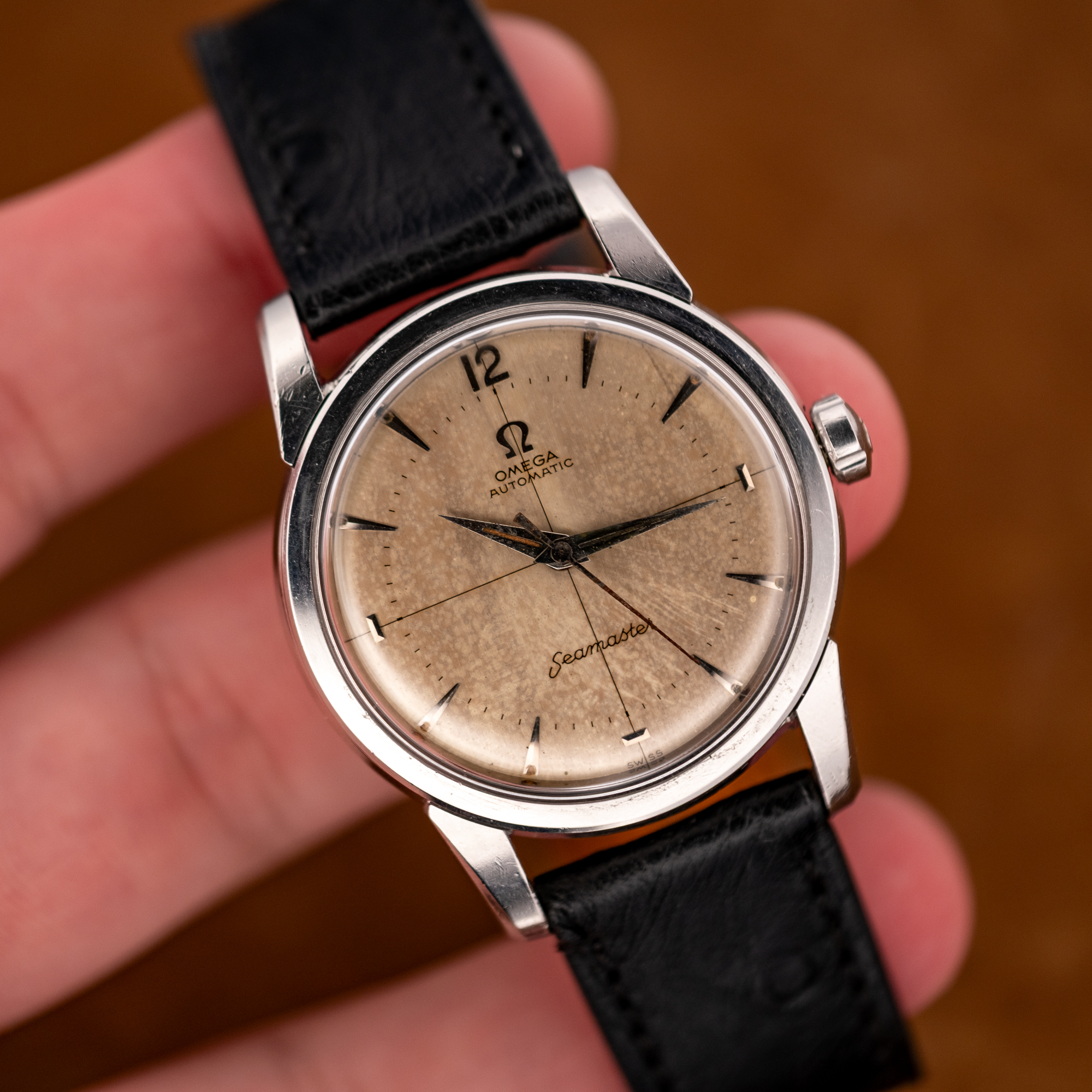
No factory could schedule a dial like this one. Dense pale and tan marbling has spread across it, around an applied Arabic 12, narrow arrowhead indices and small rectangular markers. The marbling covers the whole surface, so the crosshair lines sit on patina rather than on a clean field. SWISS sits alone at six beneath the Seamaster script.
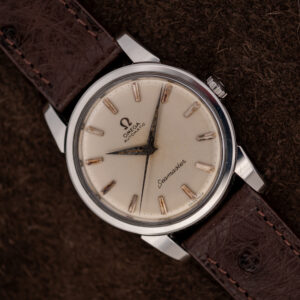
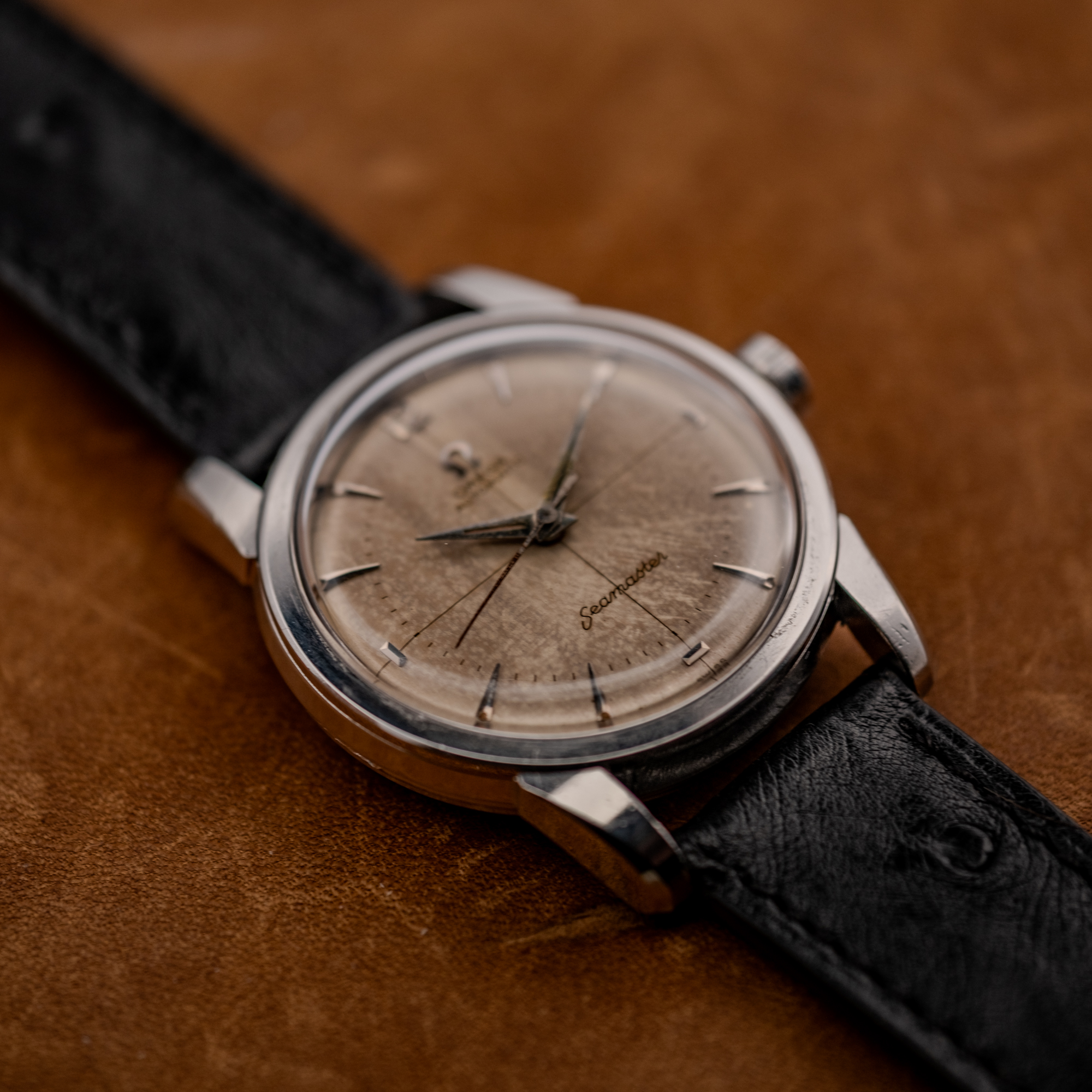
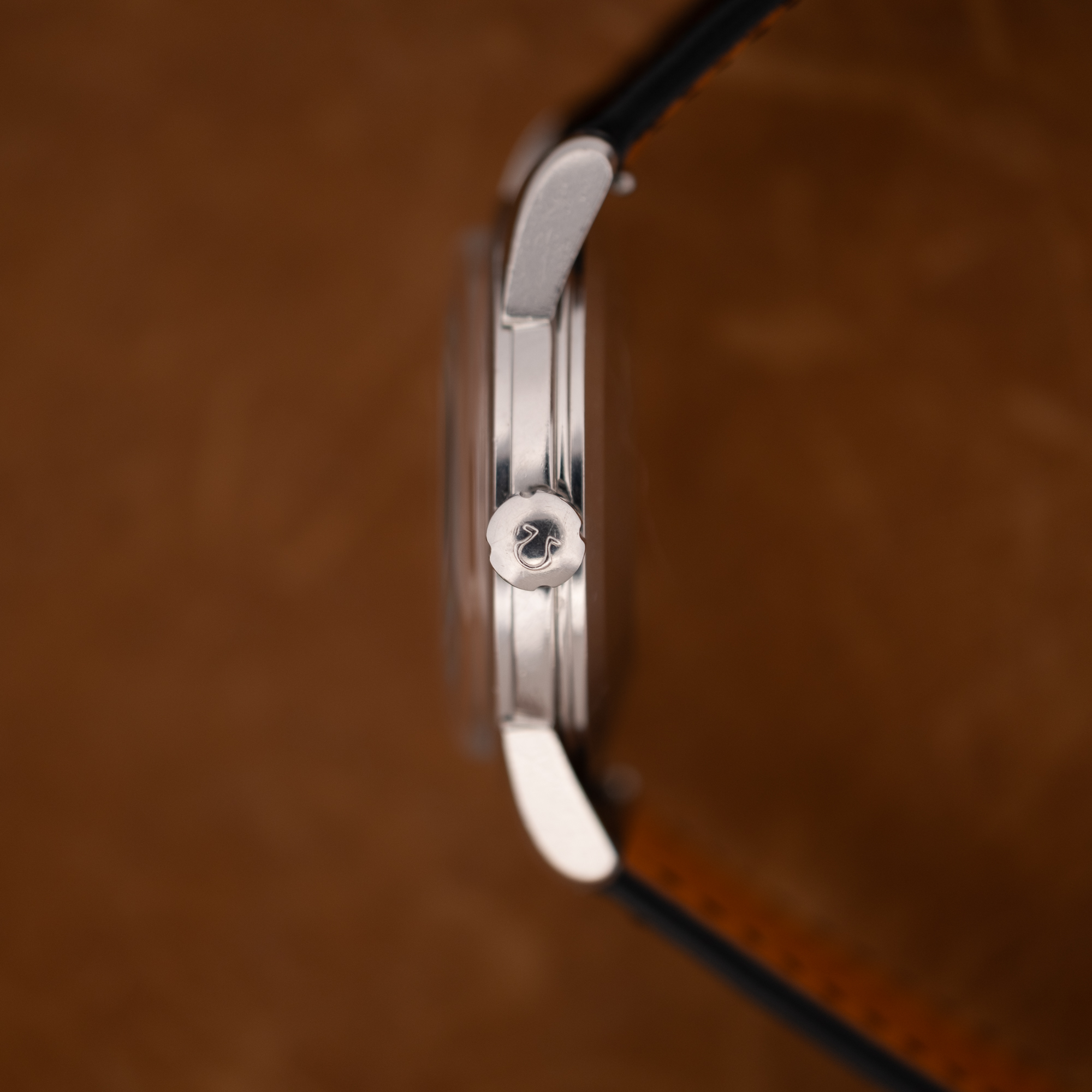
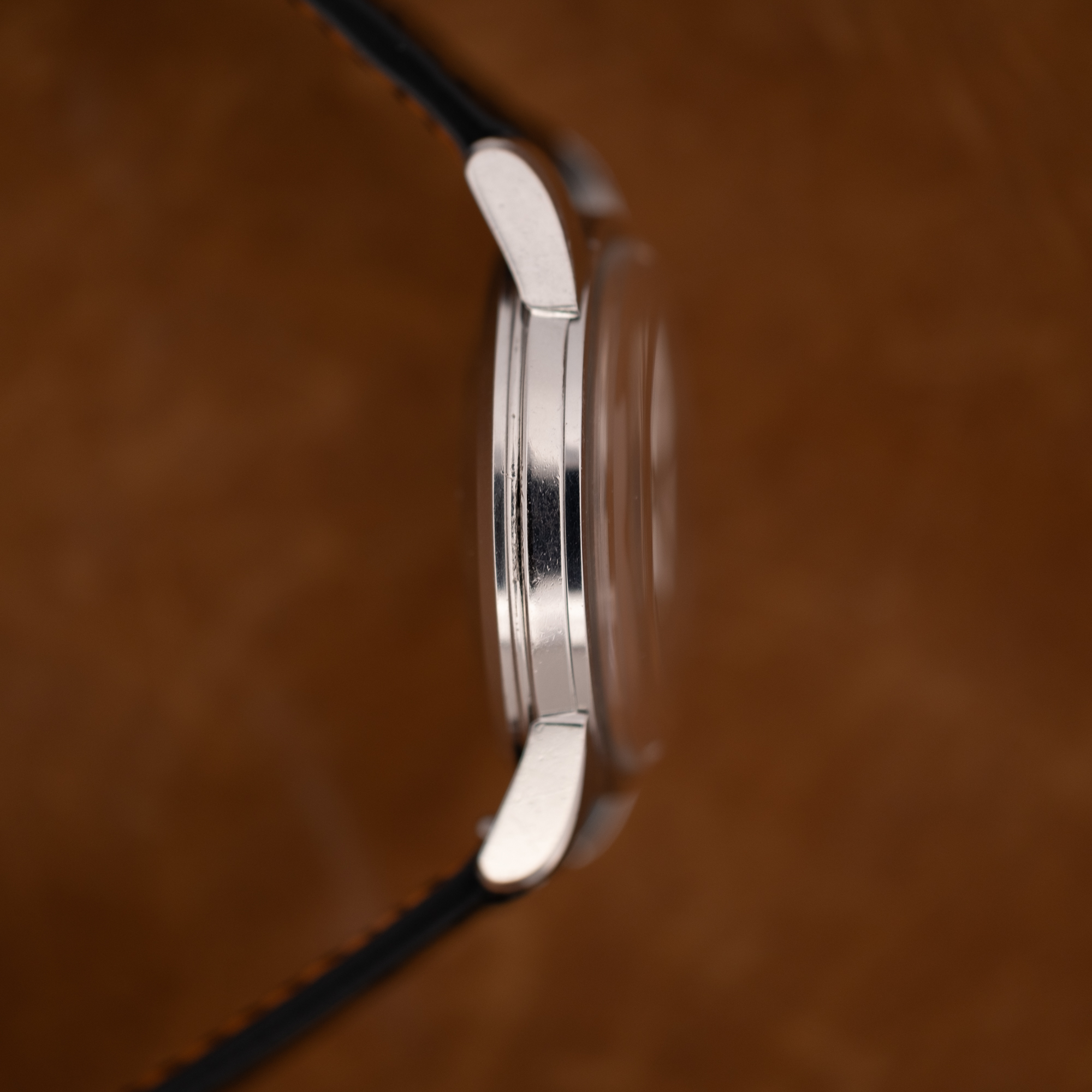
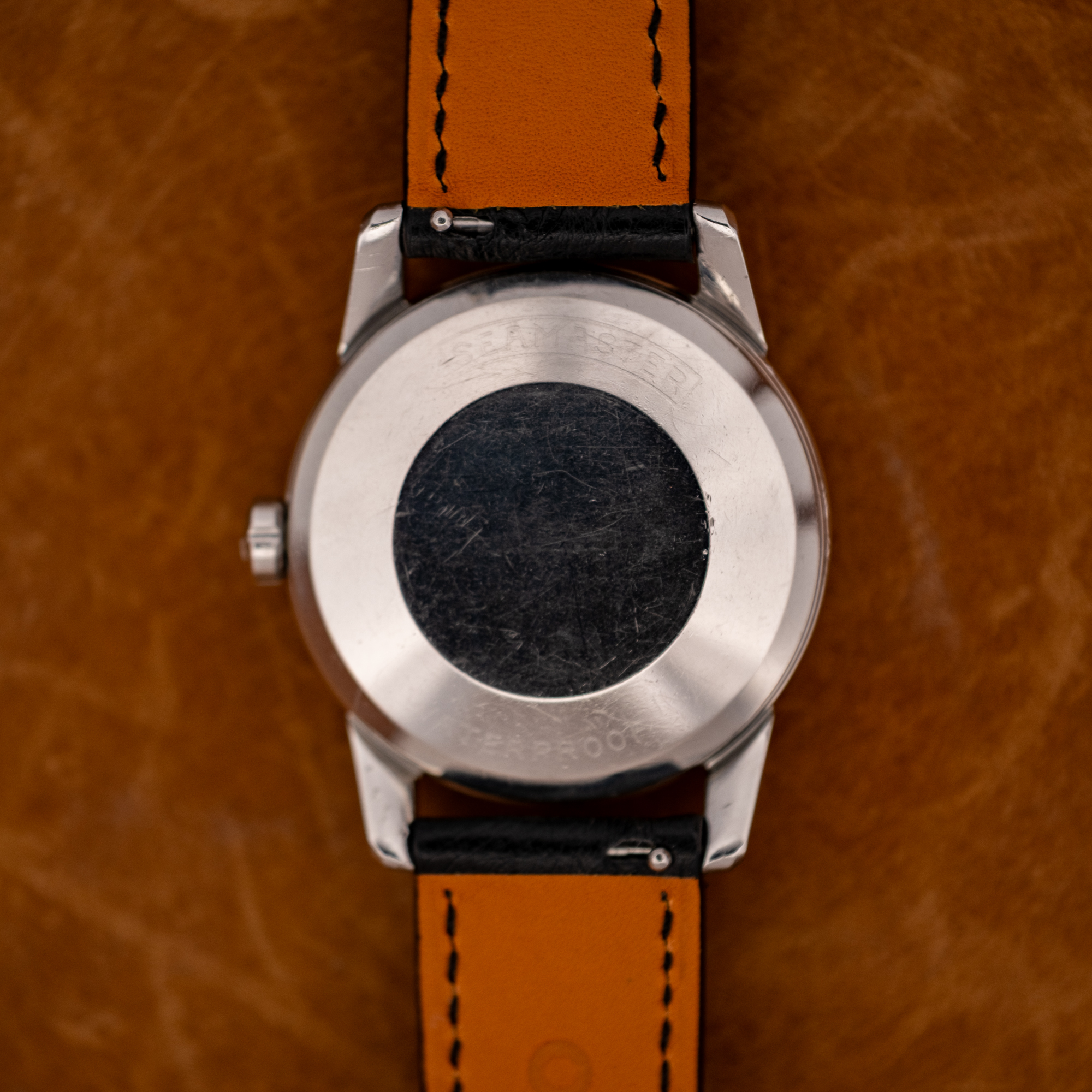
The pointed hands are speckled dark with amber-toned lume. Fine scratches show on the bezel and the flanks of the 34mm steel case, which sits on a black ostrich strap.
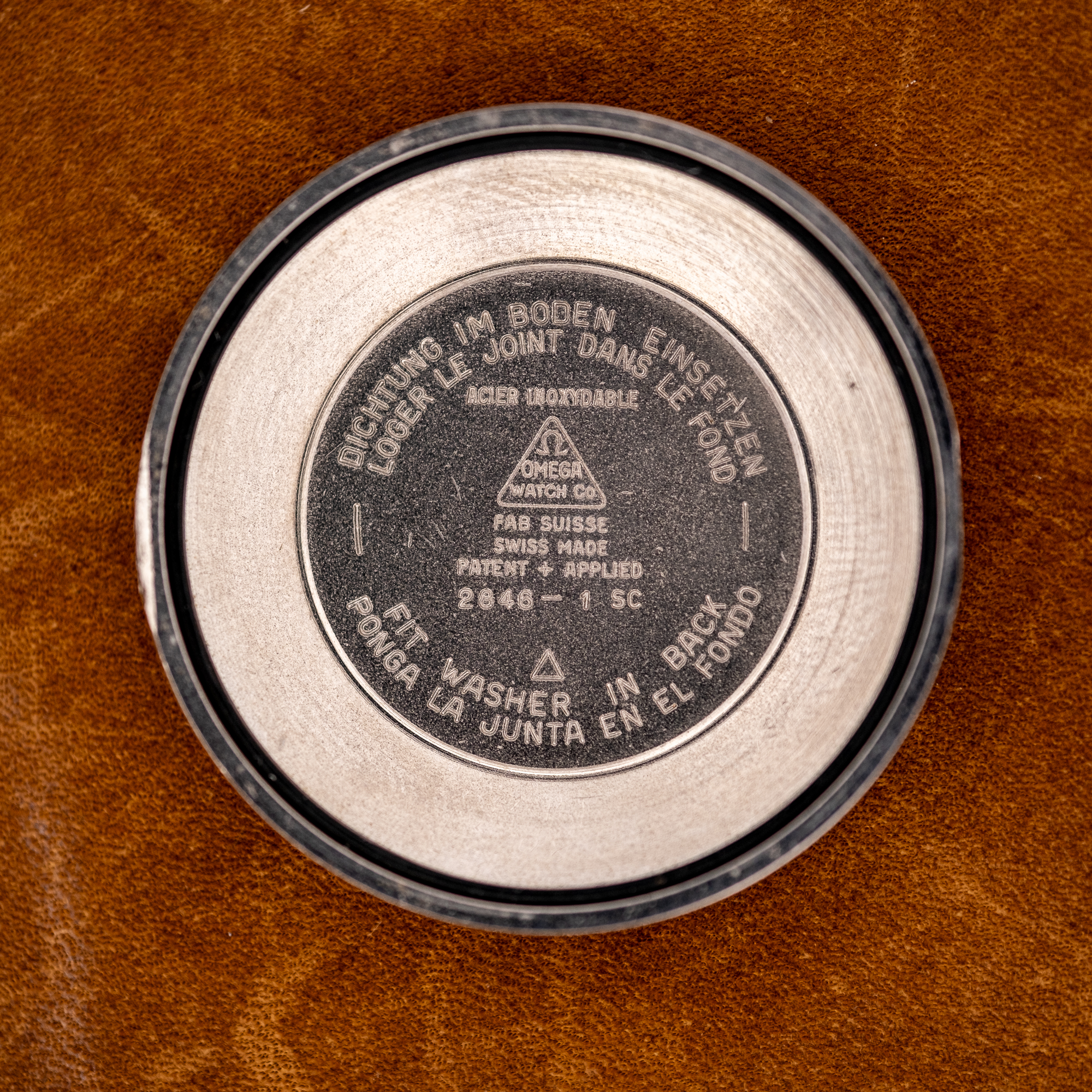
Inside the back, Omega addressed whoever would open the case next, and did it in four languages. The German line reads DICHTUNG IM BODEN EINSETZEN, the Spanish one PONGA LA JUNTA EN EL FONDO, and French and English sit between them. All four give the same order, put the gasket in the back, because the case was built around a seal seated there.
Below them, a shorter line reads PATENT + APPLIED, with the Swiss cross standing between the two words and no number after them.