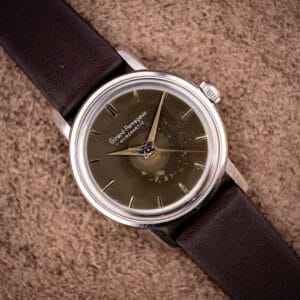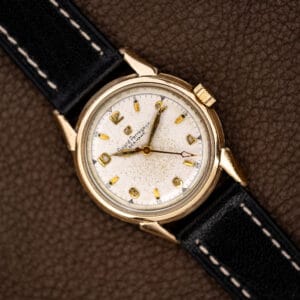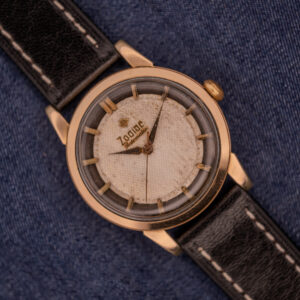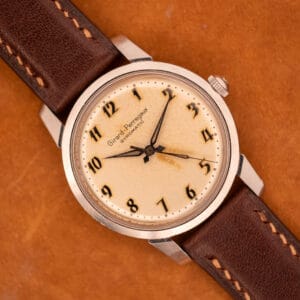
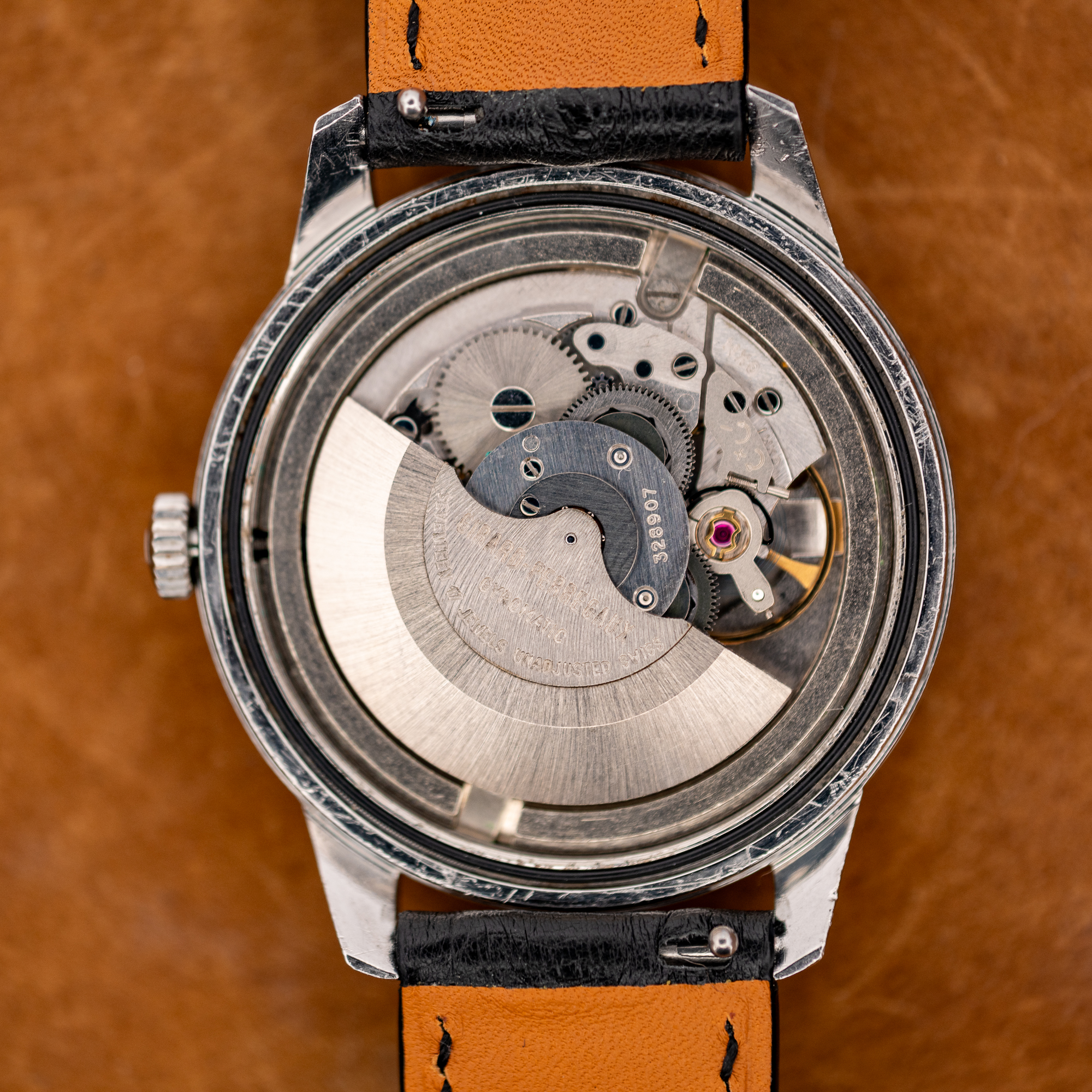
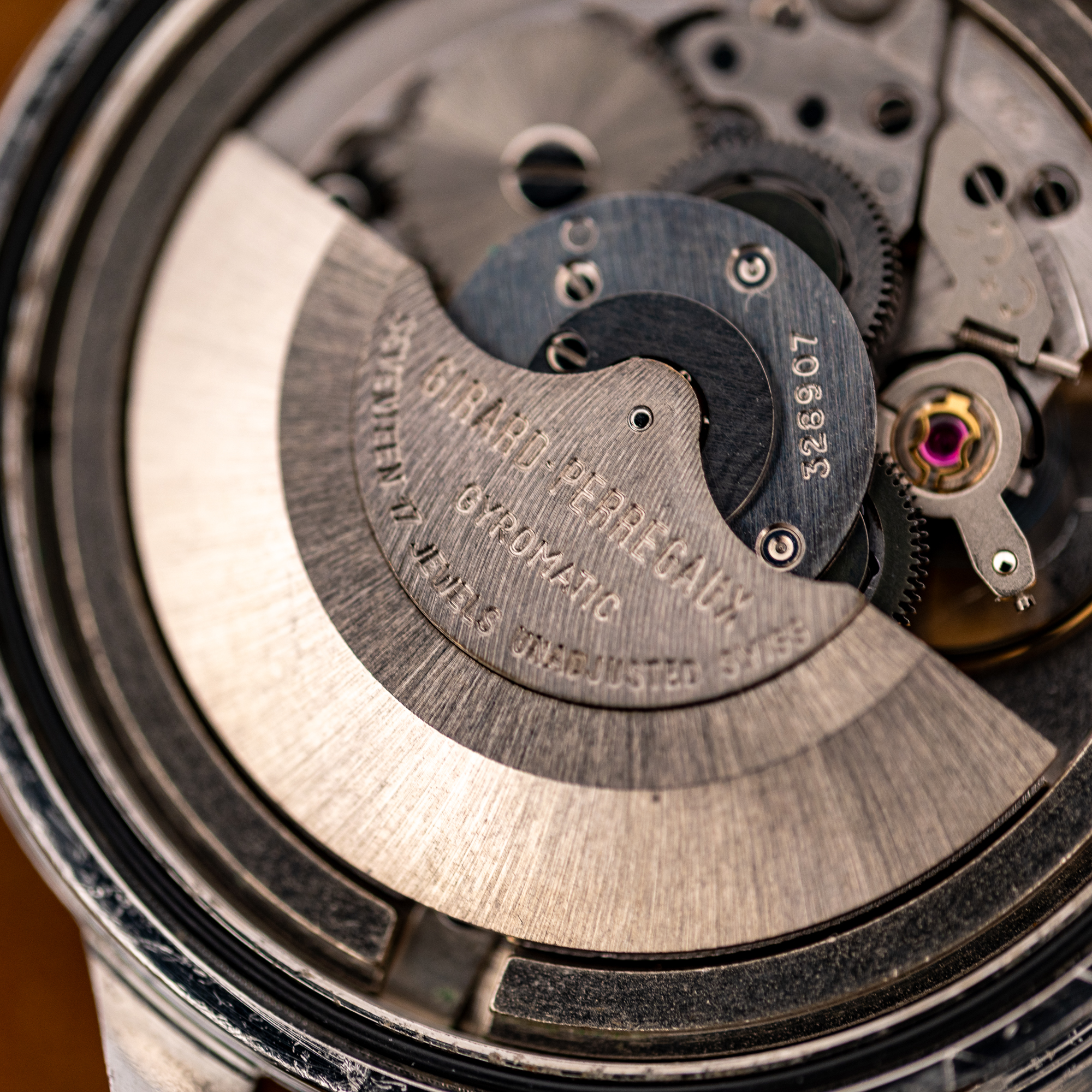
The rotor inside this Girard-Perregaux Gyromatic spells out its jewel count in words, then again in figures, and next to them carries the word UNADJUSTED. None of that was written for the person wearing the watch. It was written for United States customs. Under the tariff that ran from 1930 into the Gyromatic’s early years, an imported movement had to declare its jewels in words and numbers, and anything above 17 jewels paid a flat $10.75. That was more than $8 over the duty on a typical 17-jewel men’s movement.
The gap was wide enough to invite workarounds. Importers brought in 17-jewel movements and fitted jeweled self-winding units after they landed, roughly halving the duty. Twenty-nine jewels, engraved on the rotor itself, sit squarely in the top bracket.
UNADJUSTED sounds like a confession. It is a customs term. The same law charged a separate duty for every adjustment marked on a movement, with temperature counting as two, and a movement without one had to say so. A 1940 Treasury ruling defined unadjusted as not specially manipulated, beyond ordinary assembly, for temperature, isochronism or position. It is tax paperwork, cut into metal.
Gyromatic is the other name on that rotor. Girard-Perregaux introduced the system in 1957. Its watchmakers in La Chaux-de-Fonds replaced the ratchet wheels that usually turned a rotor’s swing into winding with one-way clutches fitted with rollers, which looked like the coaster brake on a bicycle hub. For the wearer, the rotor loses less of its swing before it starts winding, and the system was compact enough to keep watches slim. Thousands of GP watches carried it.
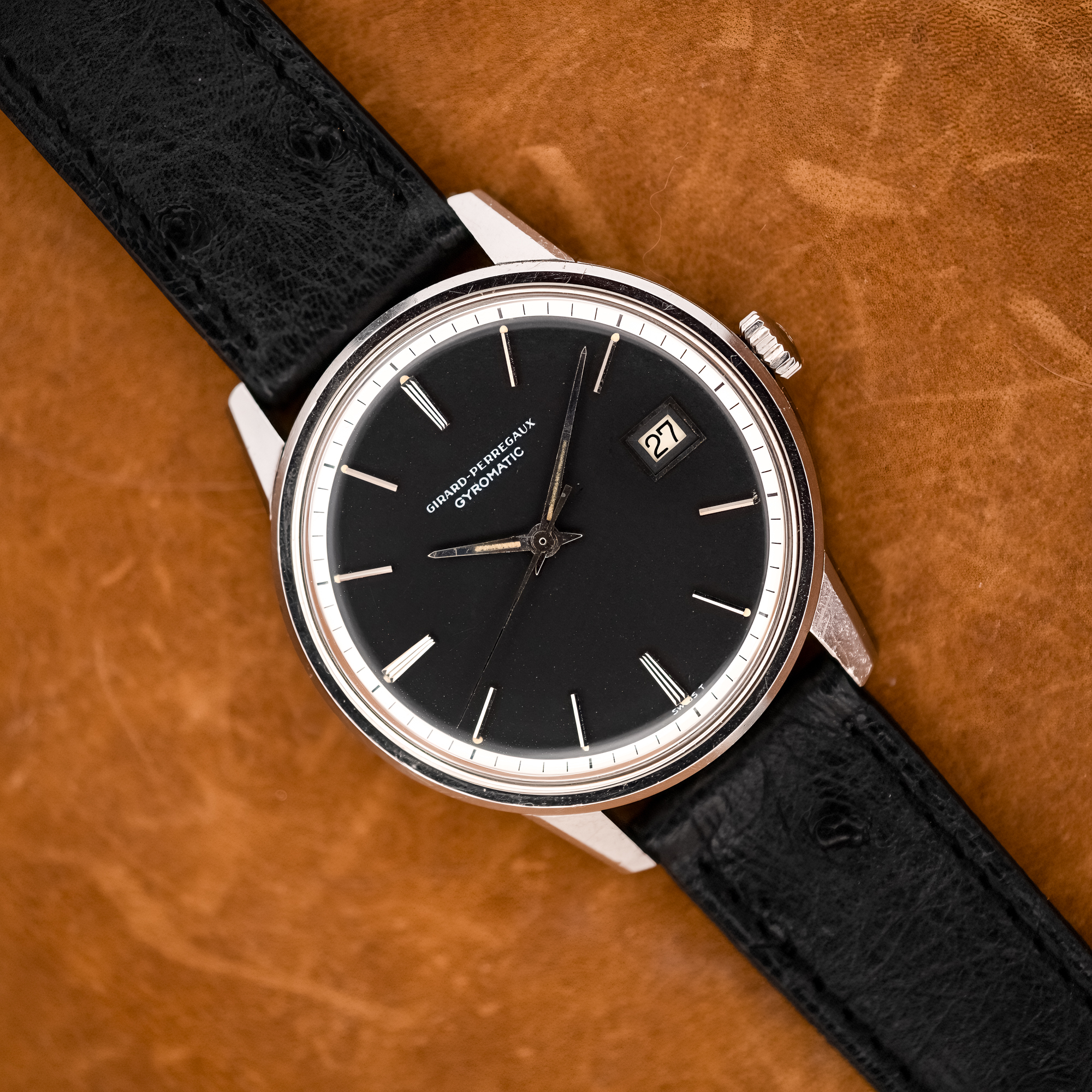
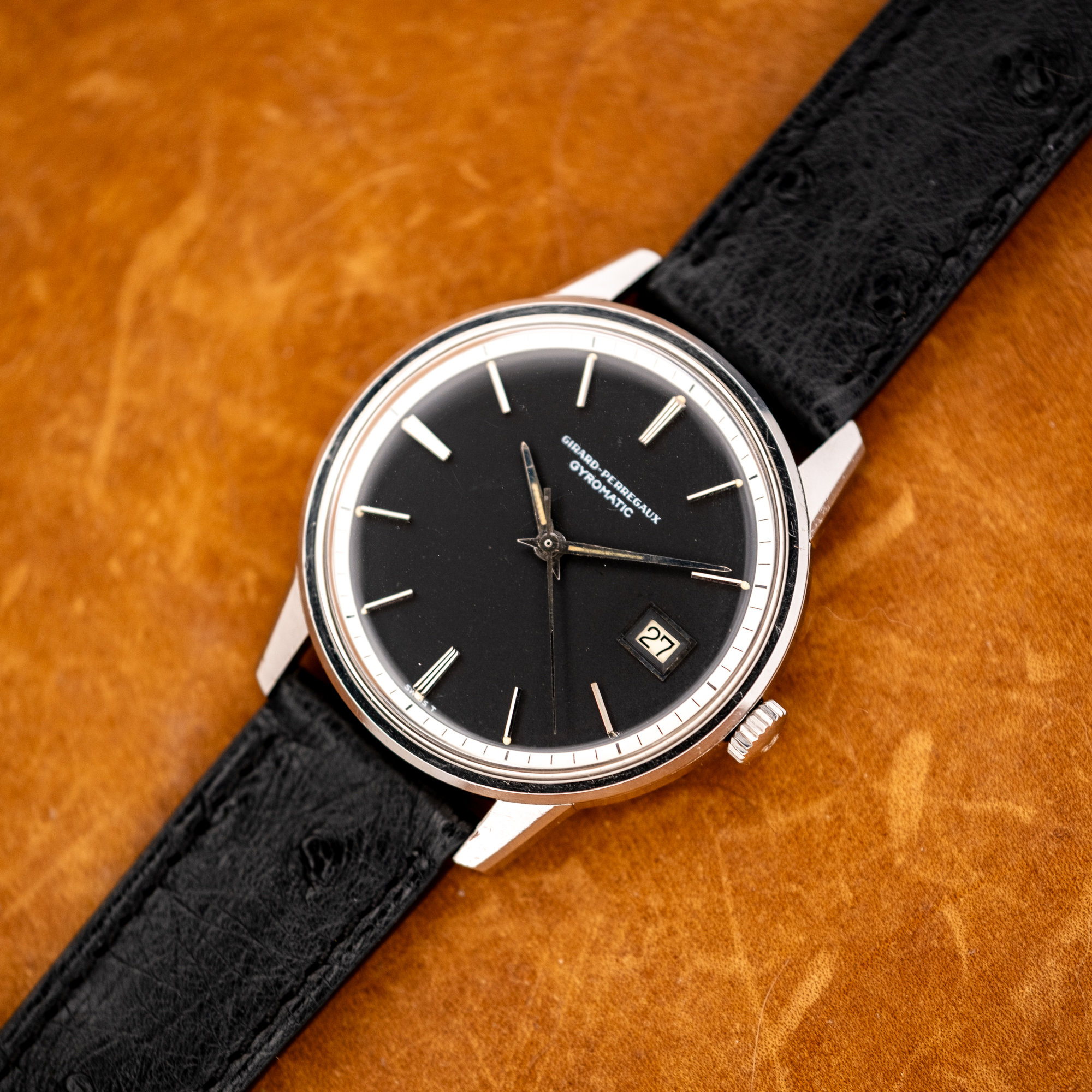
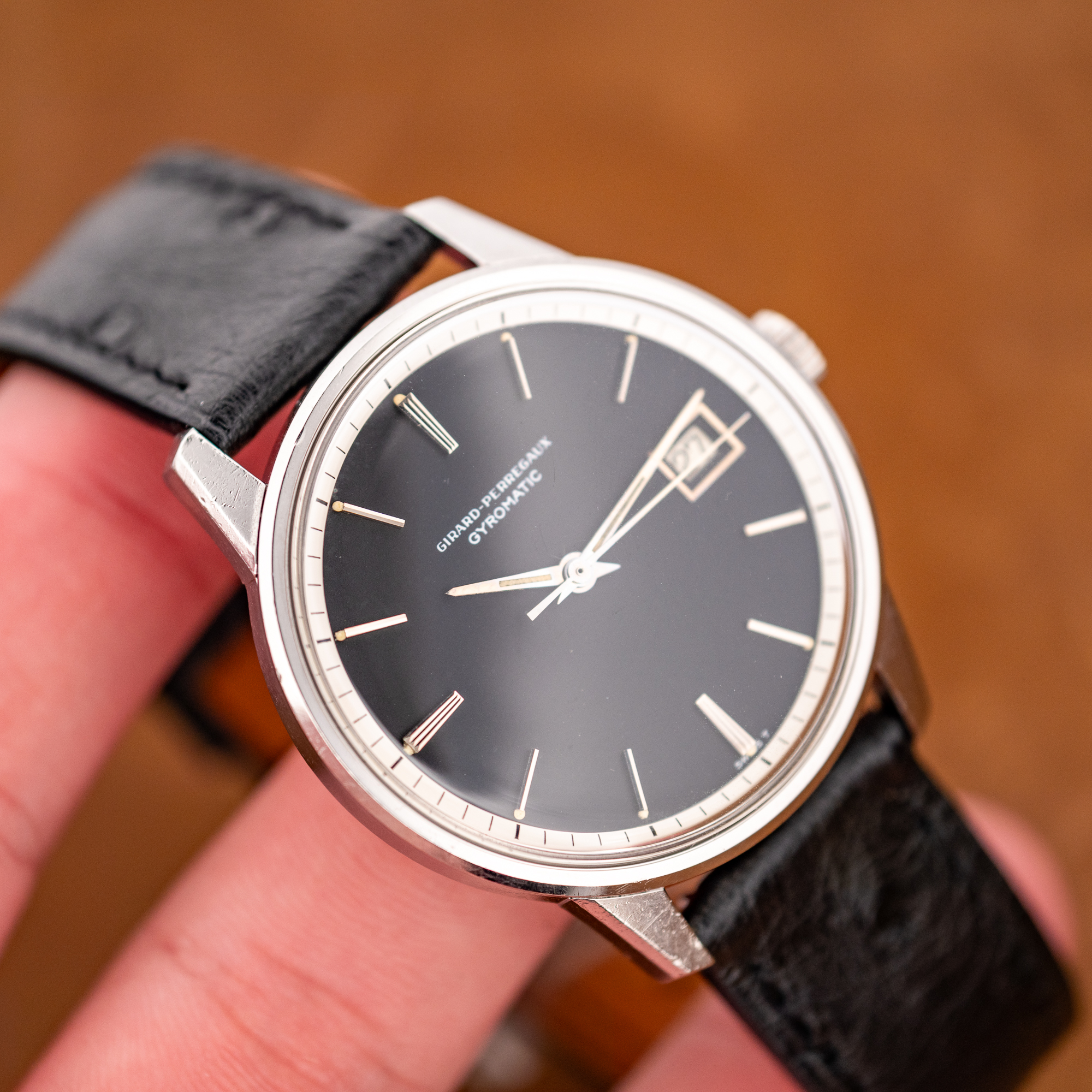
The company returned to this era for its 225th anniversary in 2016 with the GP 1957, 225 numbered pieces in a 40mm steel case with a modern movement behind a sapphire back. It took the early Gyromatics’ look and left the roller clutches behind. This one carries the original name on its own rotor, in a 36.5mm stainless steel case three and a half millimeters smaller than the tribute.
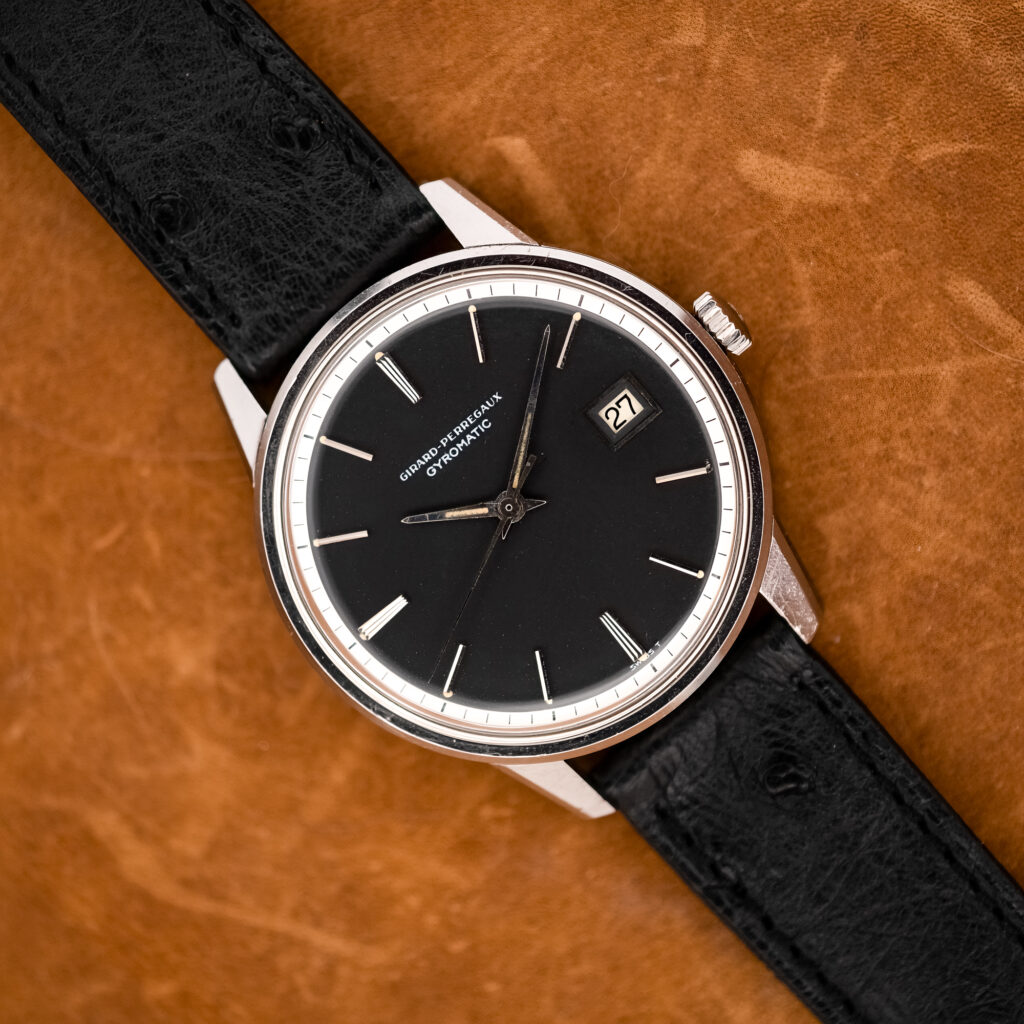
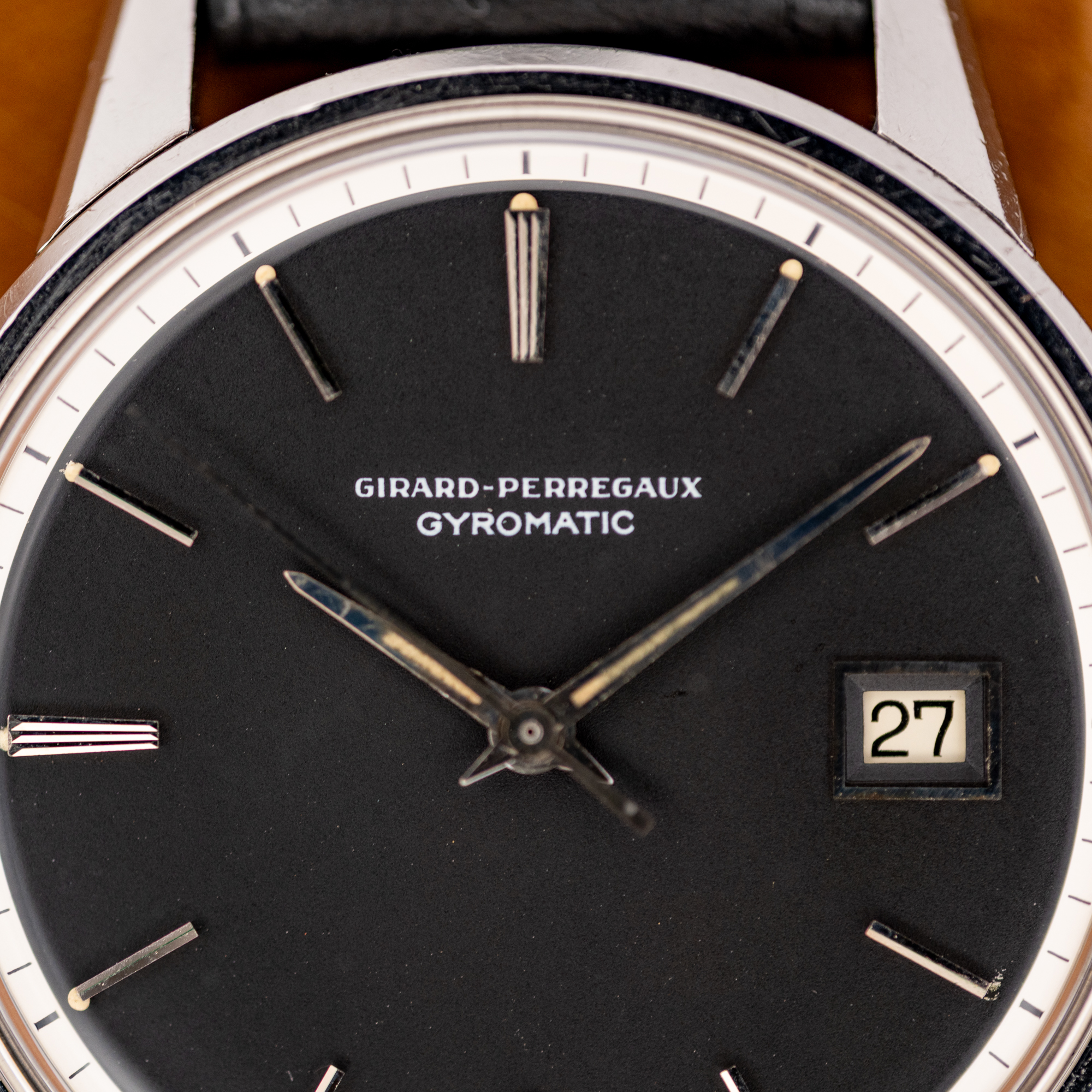
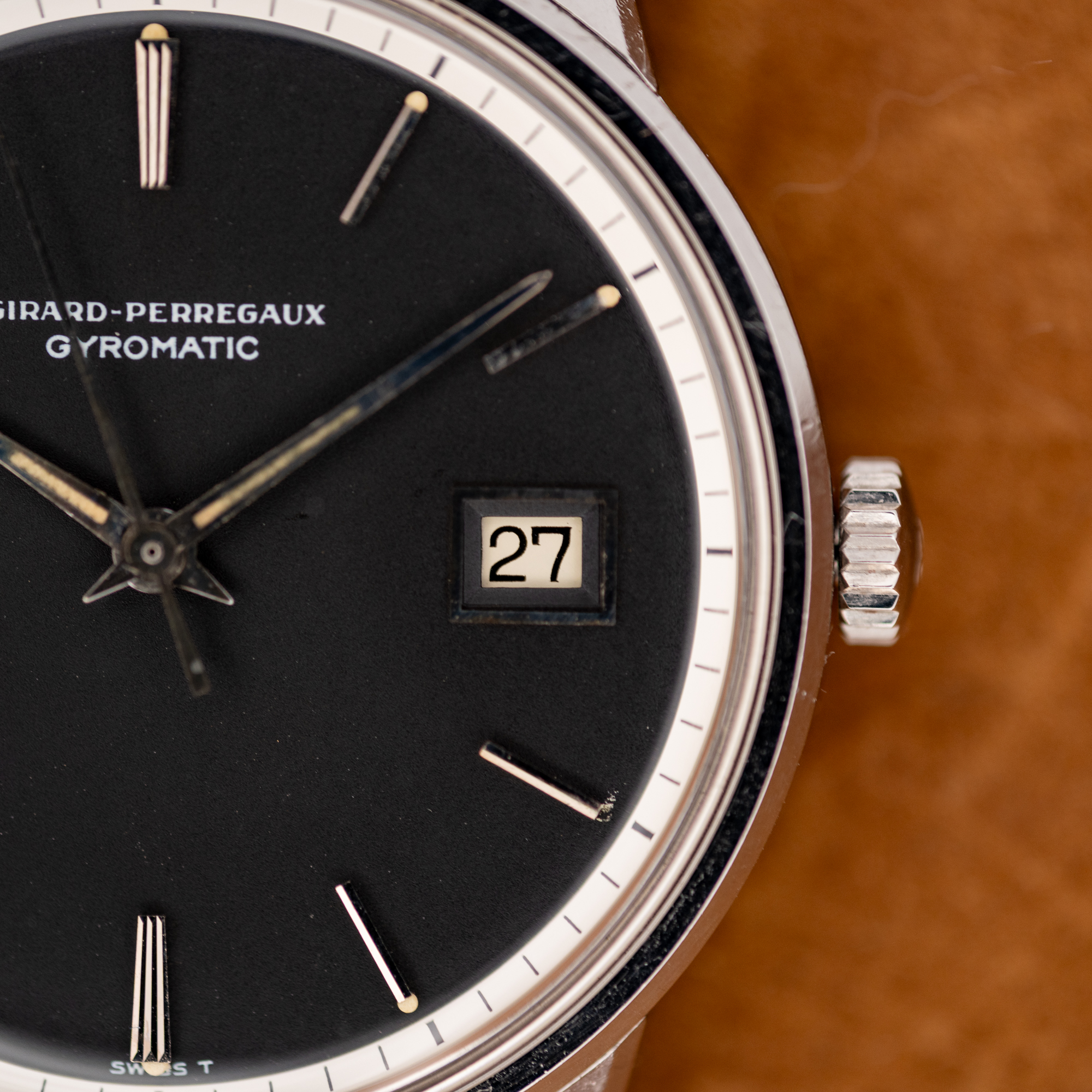
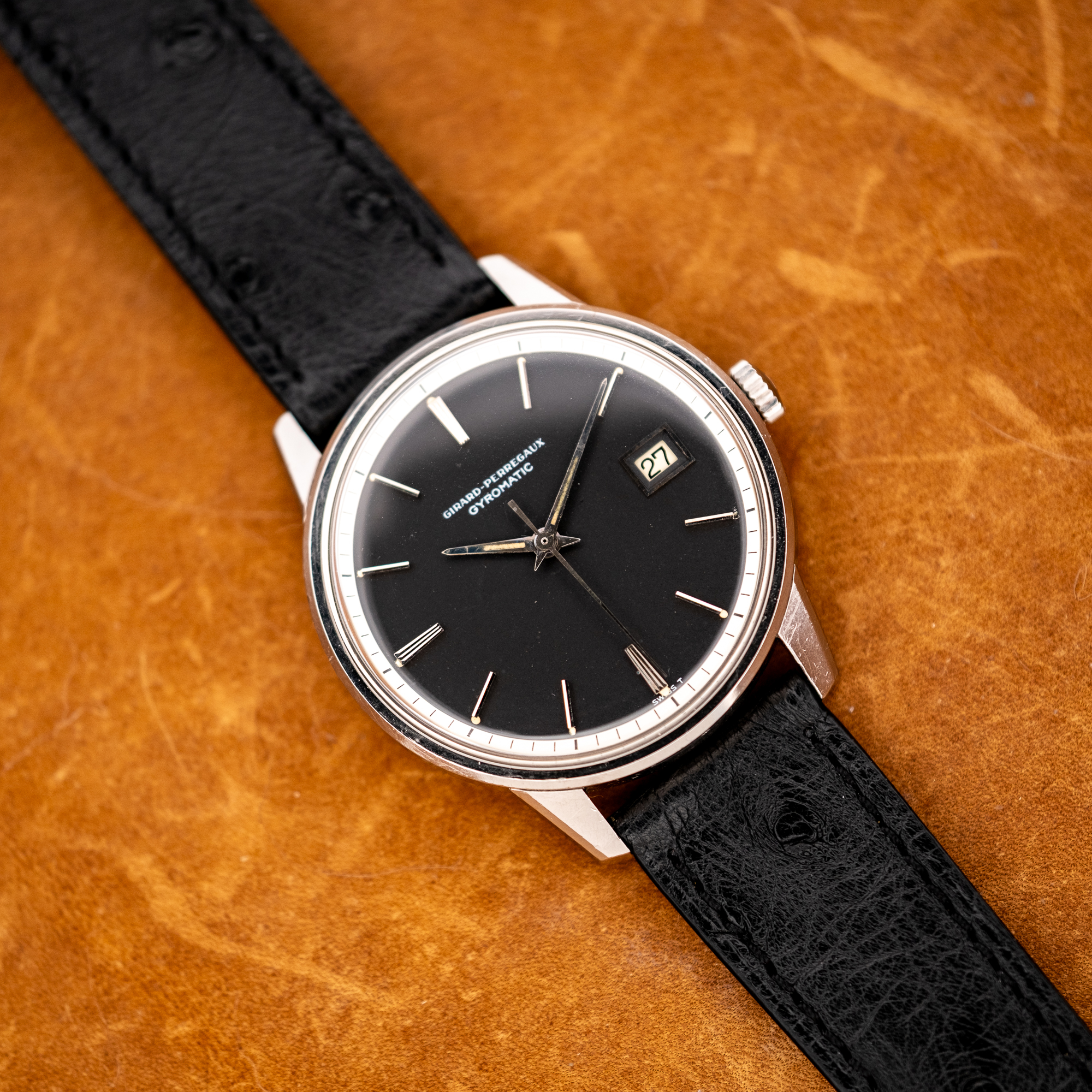
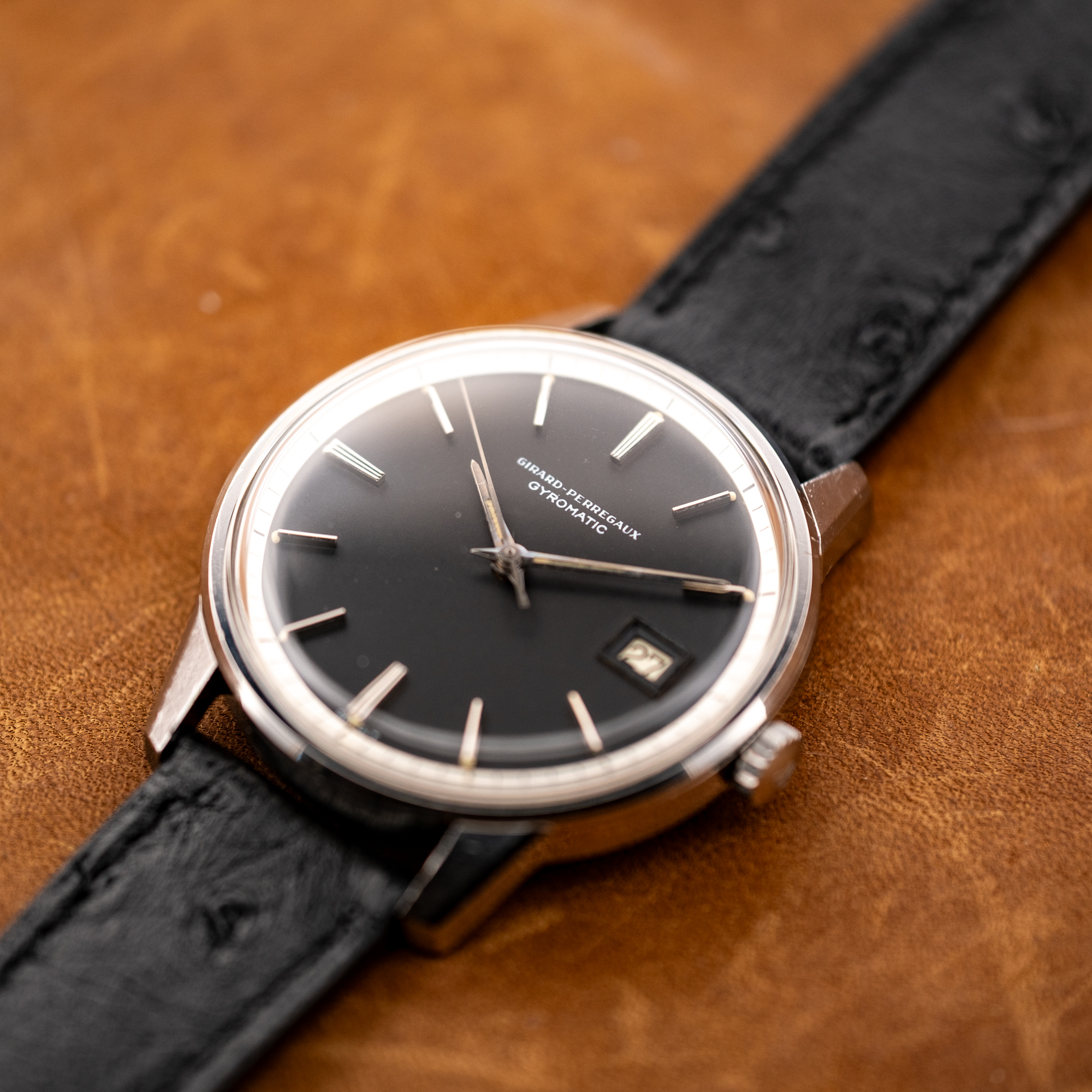
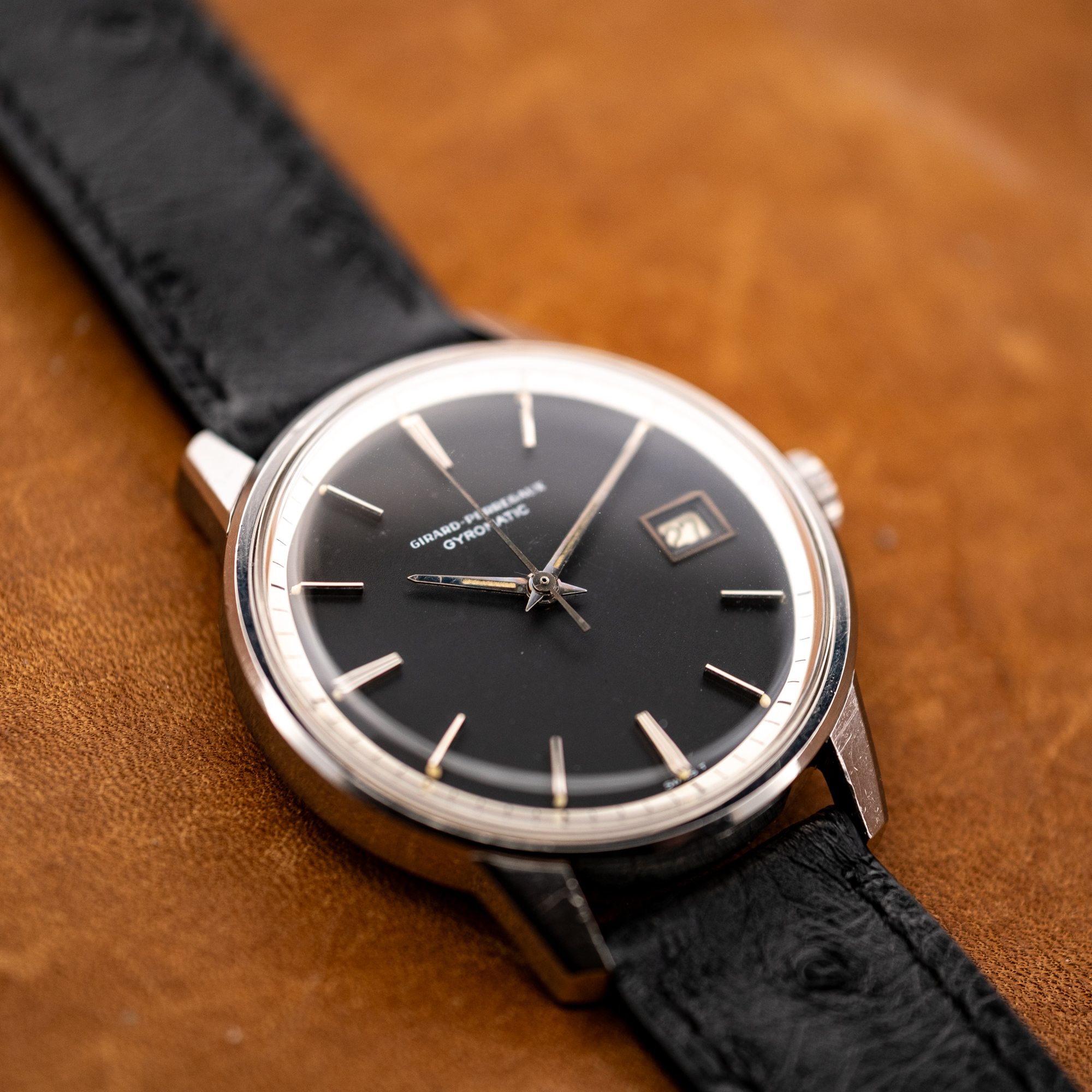
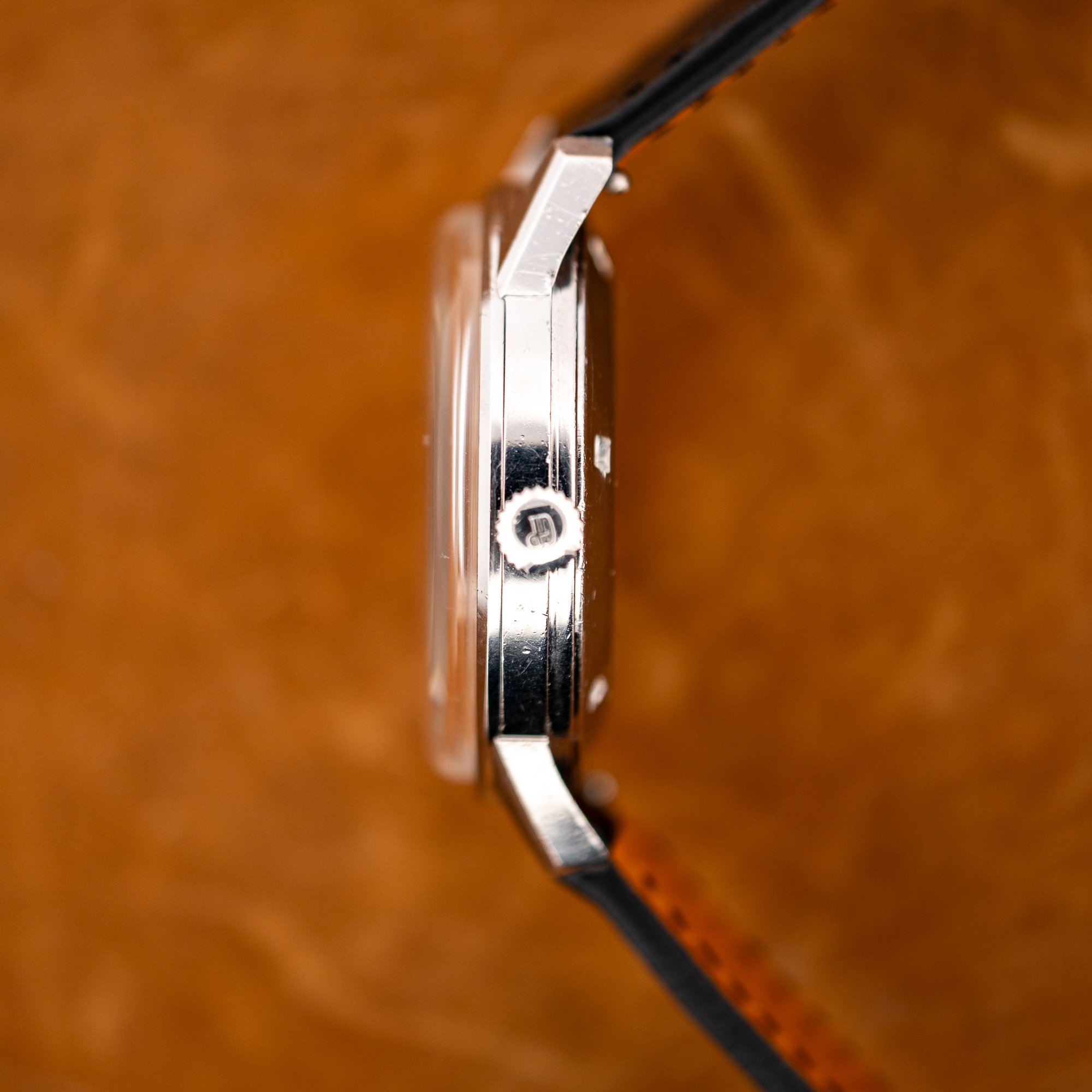
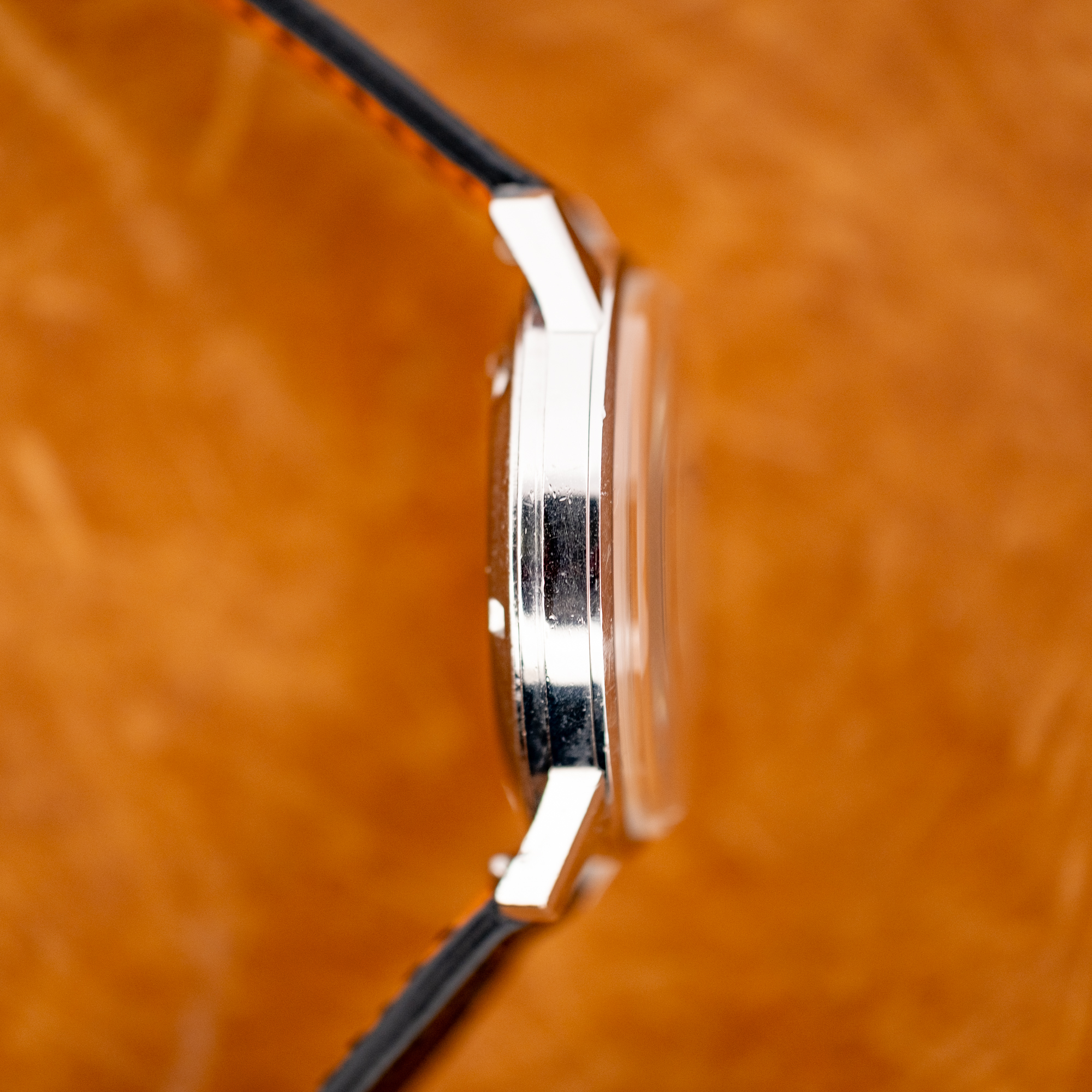
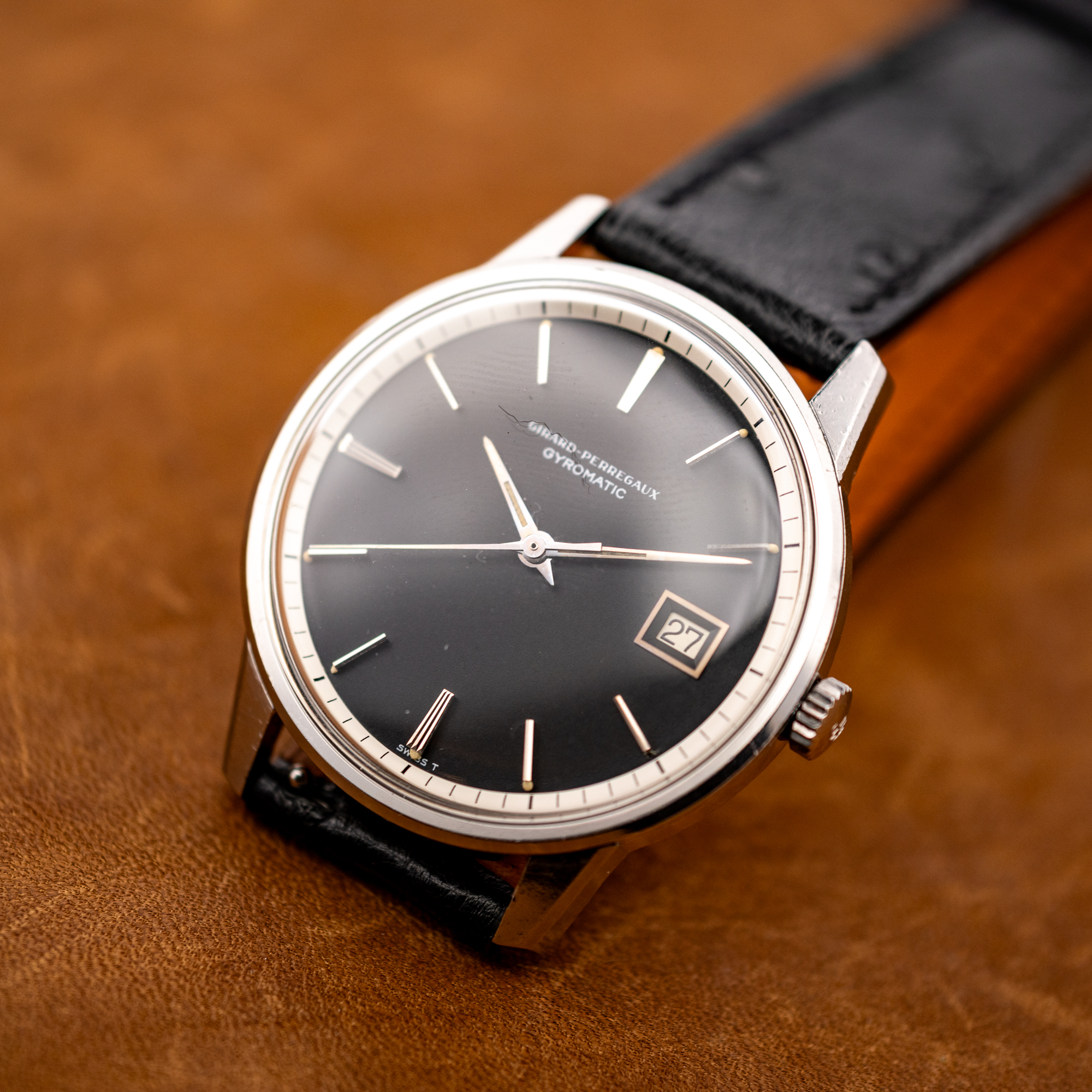
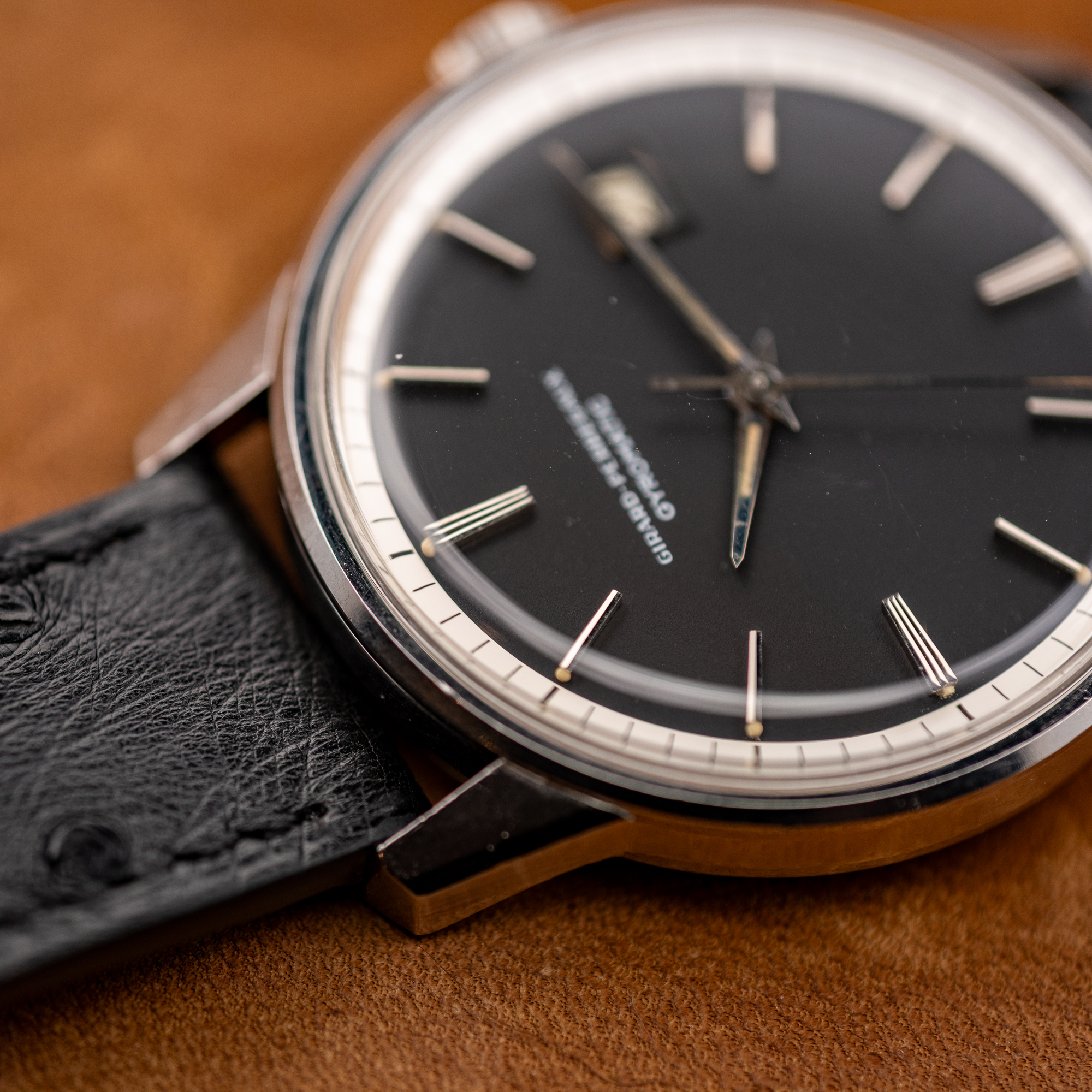
Tuxedo is our word for the dial, not the factory’s, and the dial earns it. A black center sits inside a broad white minute ring, so the hands sweep over black while the minutes are counted on white. Applied batons mark the hours, with grooved markers at the cardinal points, and a framed date window sits at three. In profile the crystal stands tall above a narrow case band, and the straight, flat lugs catch the light against the black dial.
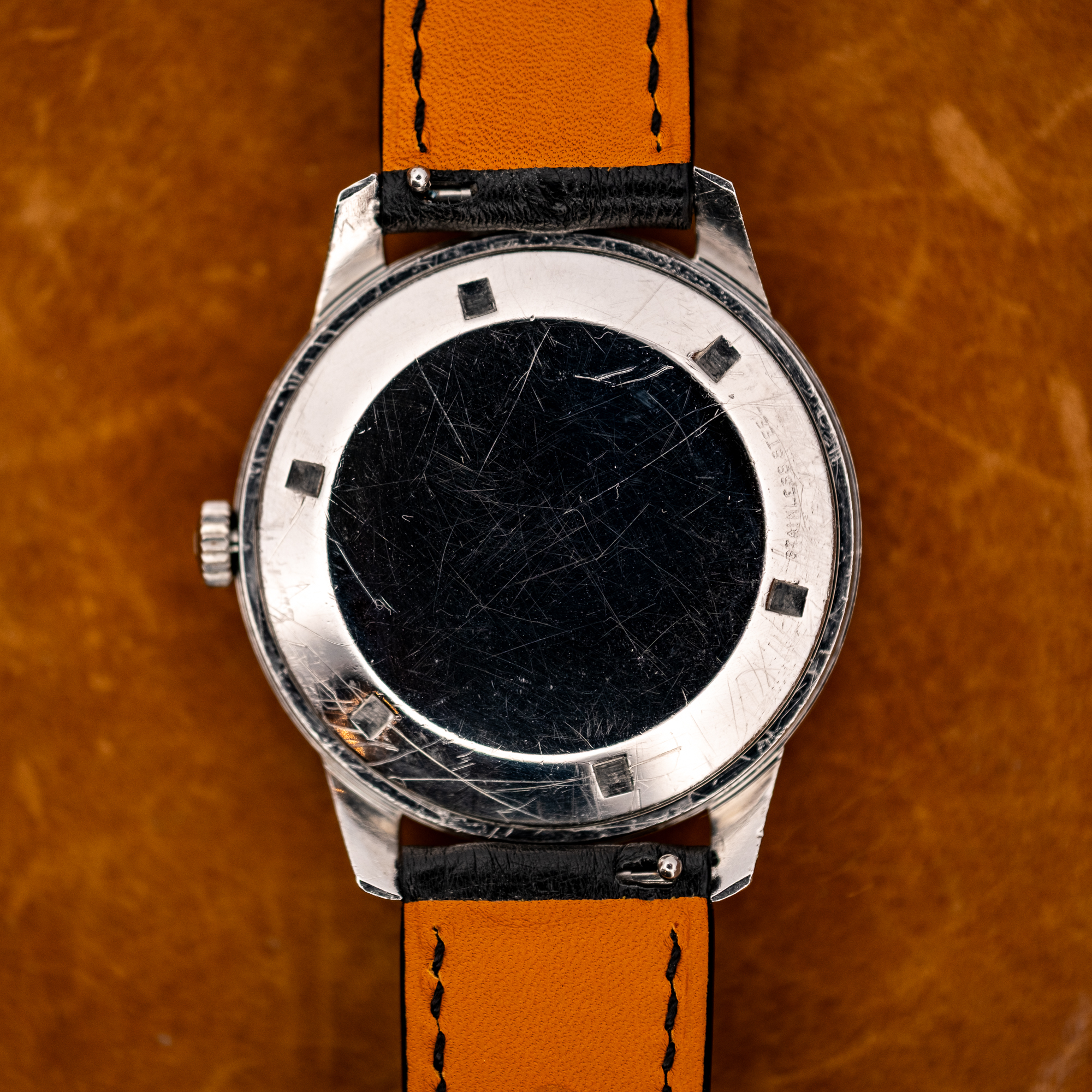
It rides on a black Ostrich strap, which keeps the whole watch in black, white and steel. Under the closed steel back, the rotor still carries its declaration to the customs house: twenty-nine jewels, unadjusted, Girard-Perregaux.