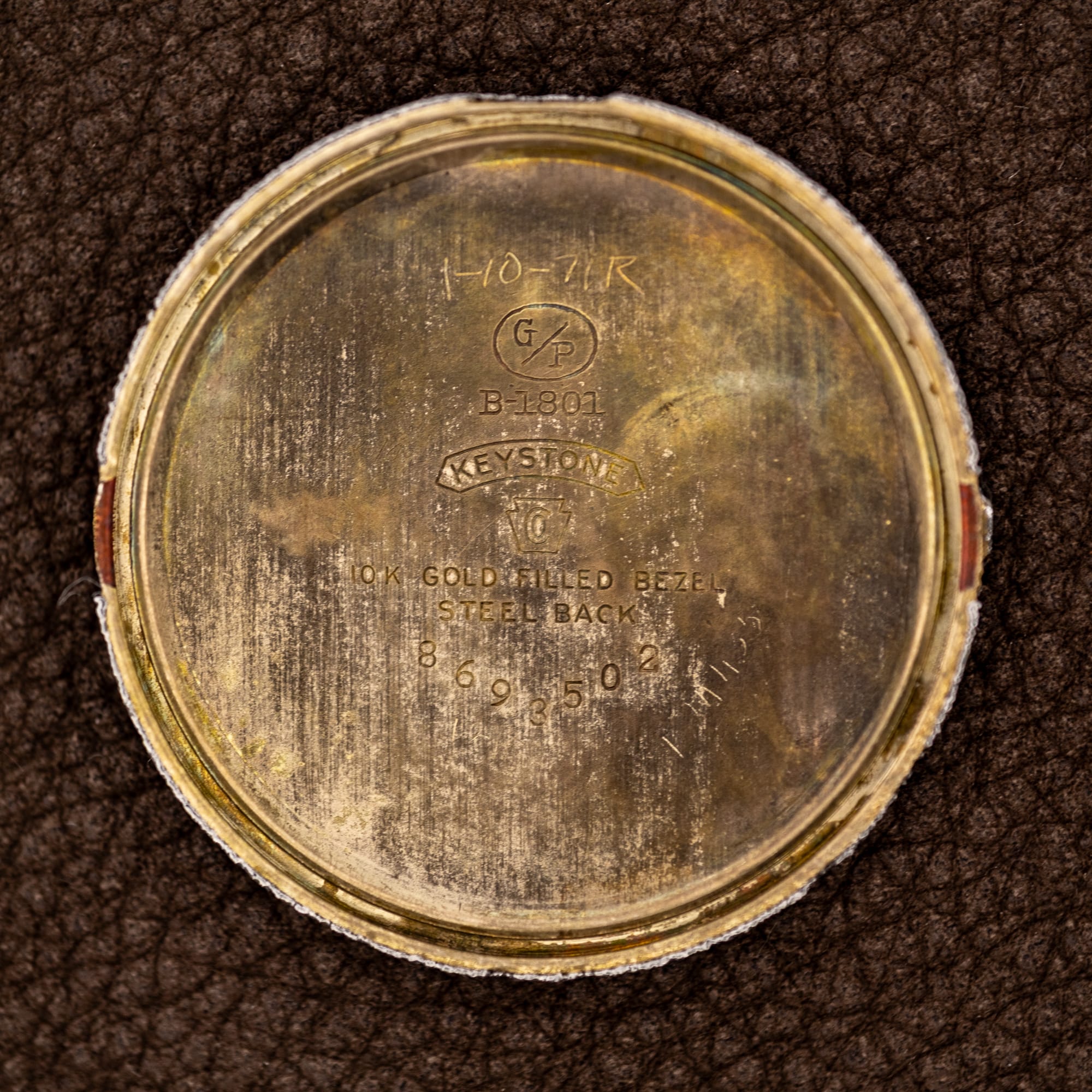

Inside the caseback of this Sea Hawk, beside the G/P oval and the reference B-1801, is the word KEYSTONE. That is the mark of an American casemaker, and it says a good deal about this vintage Girard Perregaux Seahawk. Swiss houses selling into the United States commonly shipped their movements bare and had them cased on arrival, because a finished watch paid more import duty than a movement on its own. The dial says Swiss and the movement is Swiss, but the case around them was made in America.
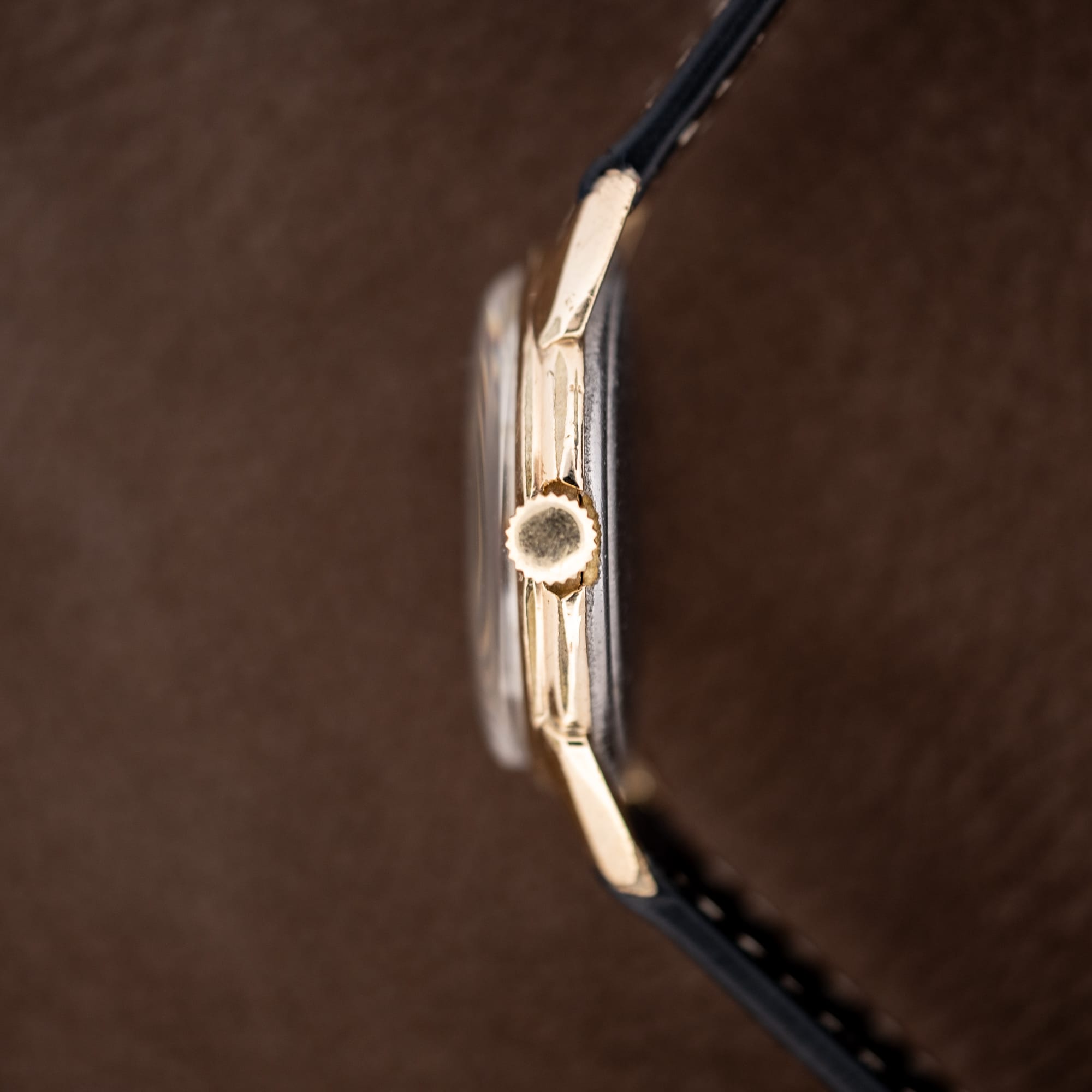
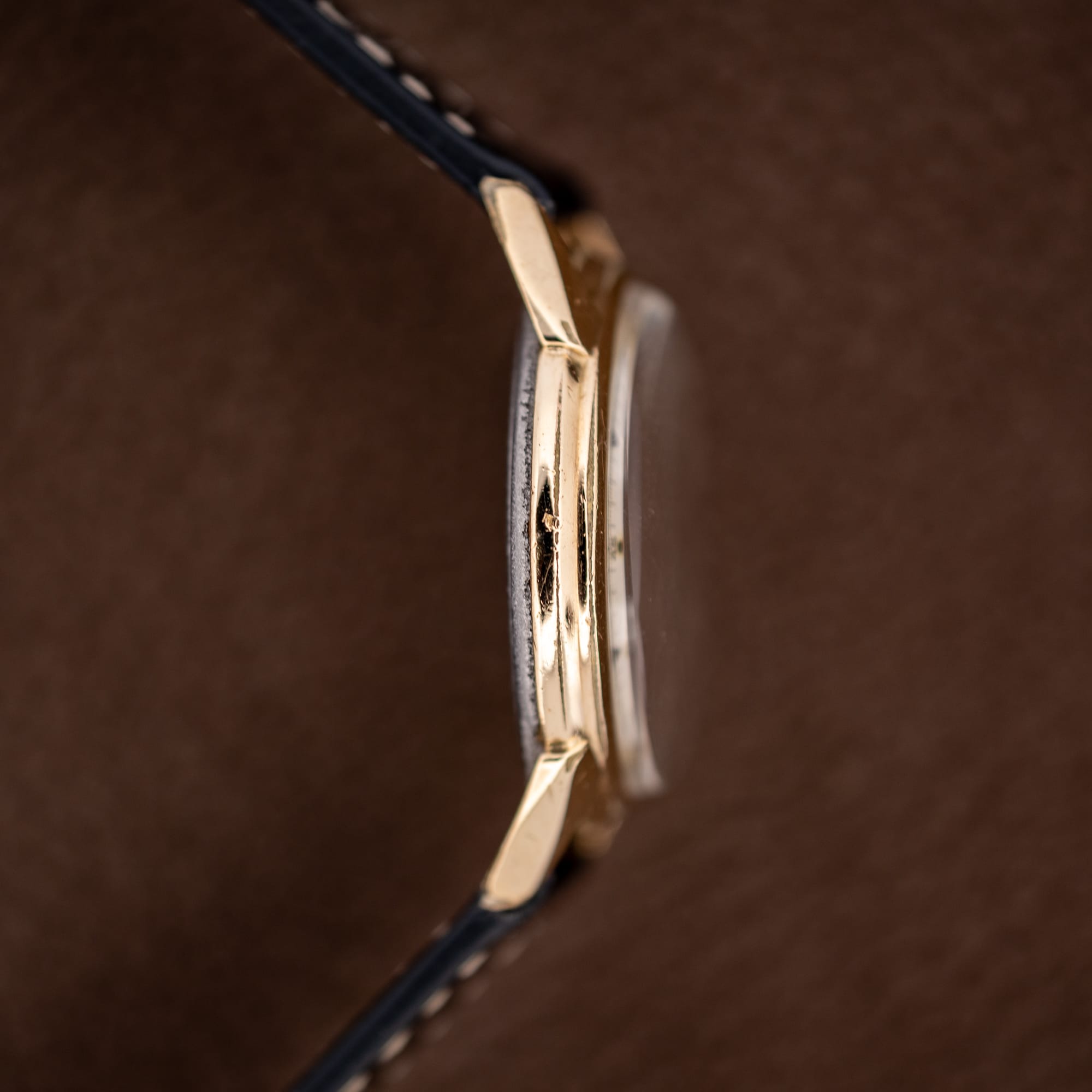
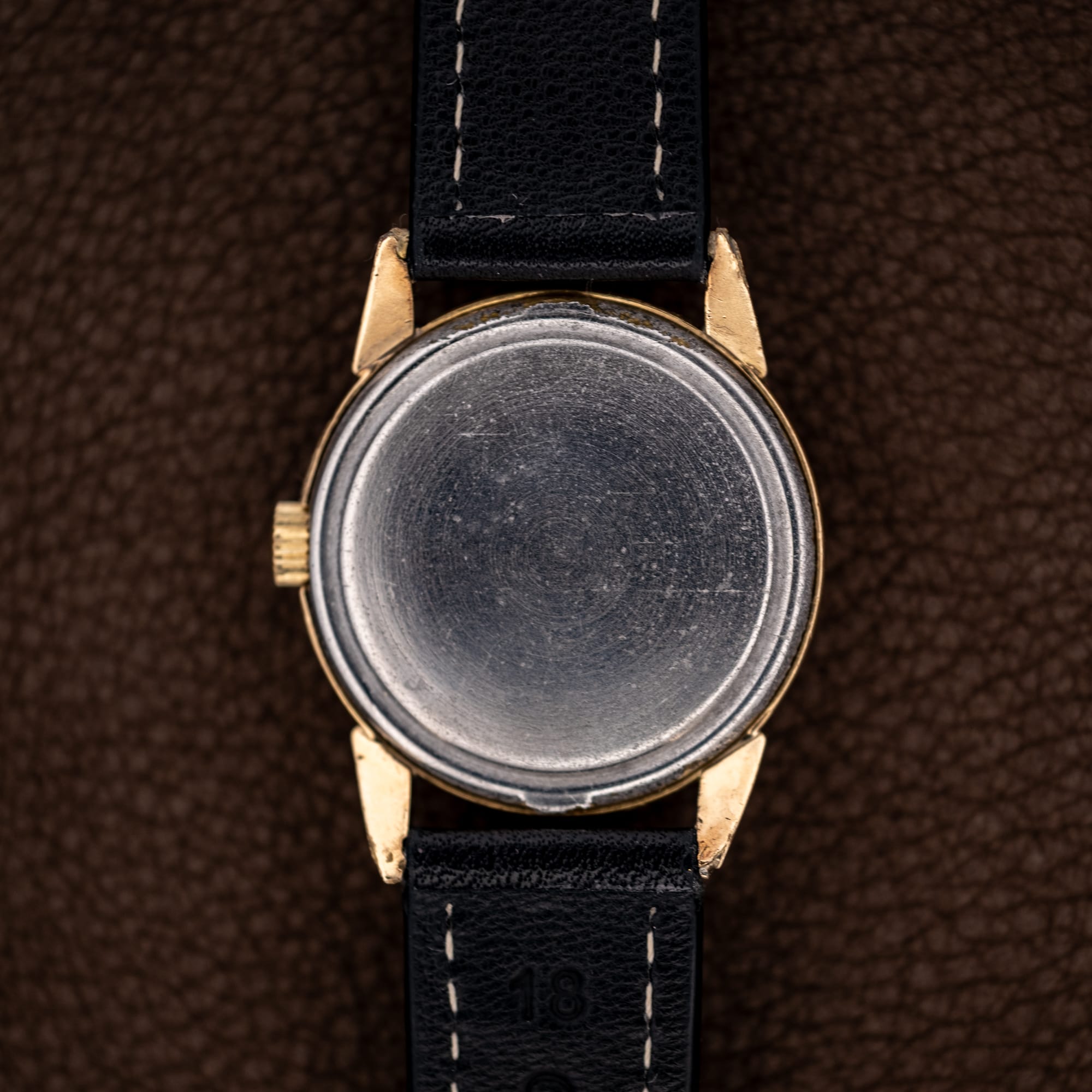
Keystone’s line runs back to James Boss, who patented a method for making gold-filled watch cases in May 1859. The patent passed through a series of Philadelphia owners before the business was reorganized as the Keystone Watch Case Co. in the 1880s, and Keystone went on to absorb so many rival casemakers that the federal government sued it under the Sherman Antitrust Act. The material Boss patented is the one Keystone used on this watch, and used sparingly. The caseback stamp specifies a 10k gold-filled bezel over a steel back, so the gold sits where it shows and the steel sits against the wrist. From either side, the gold-filled upper case gives way to the silver tone of the back.
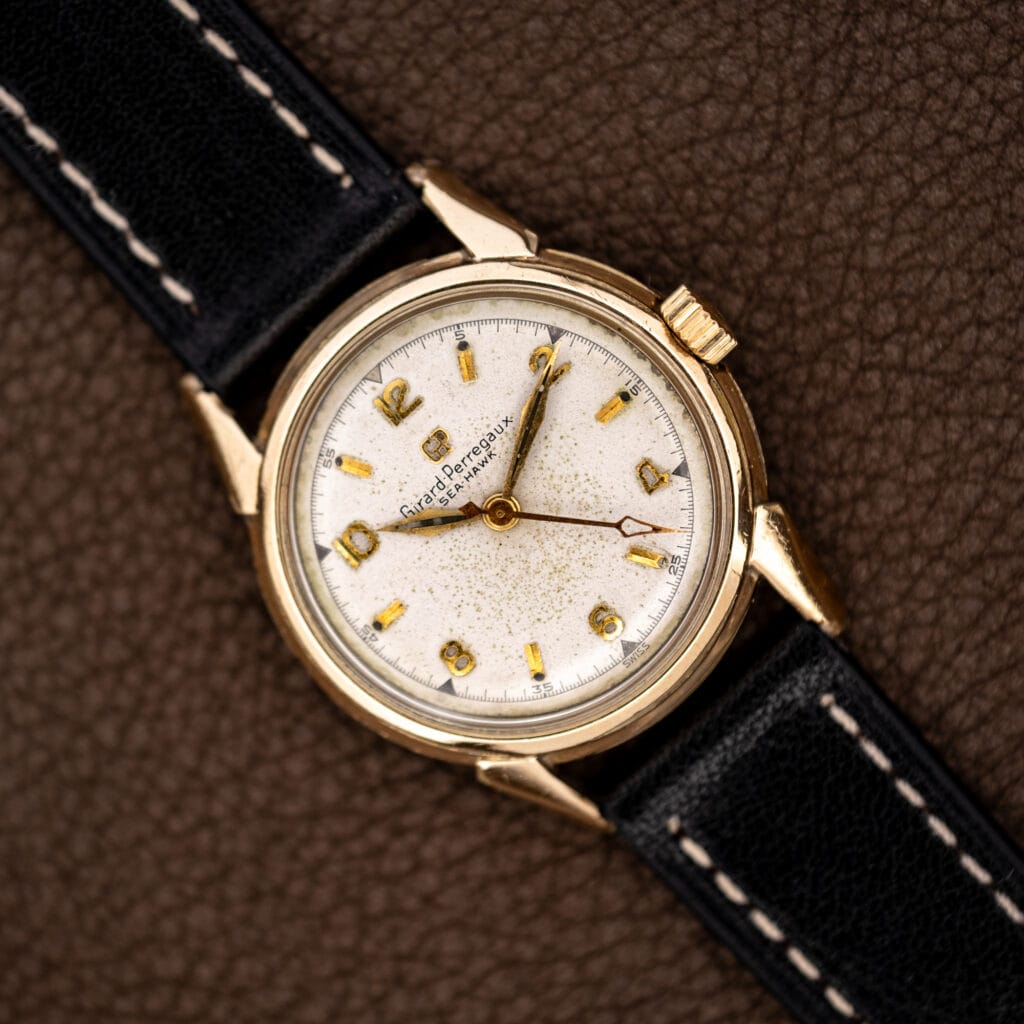
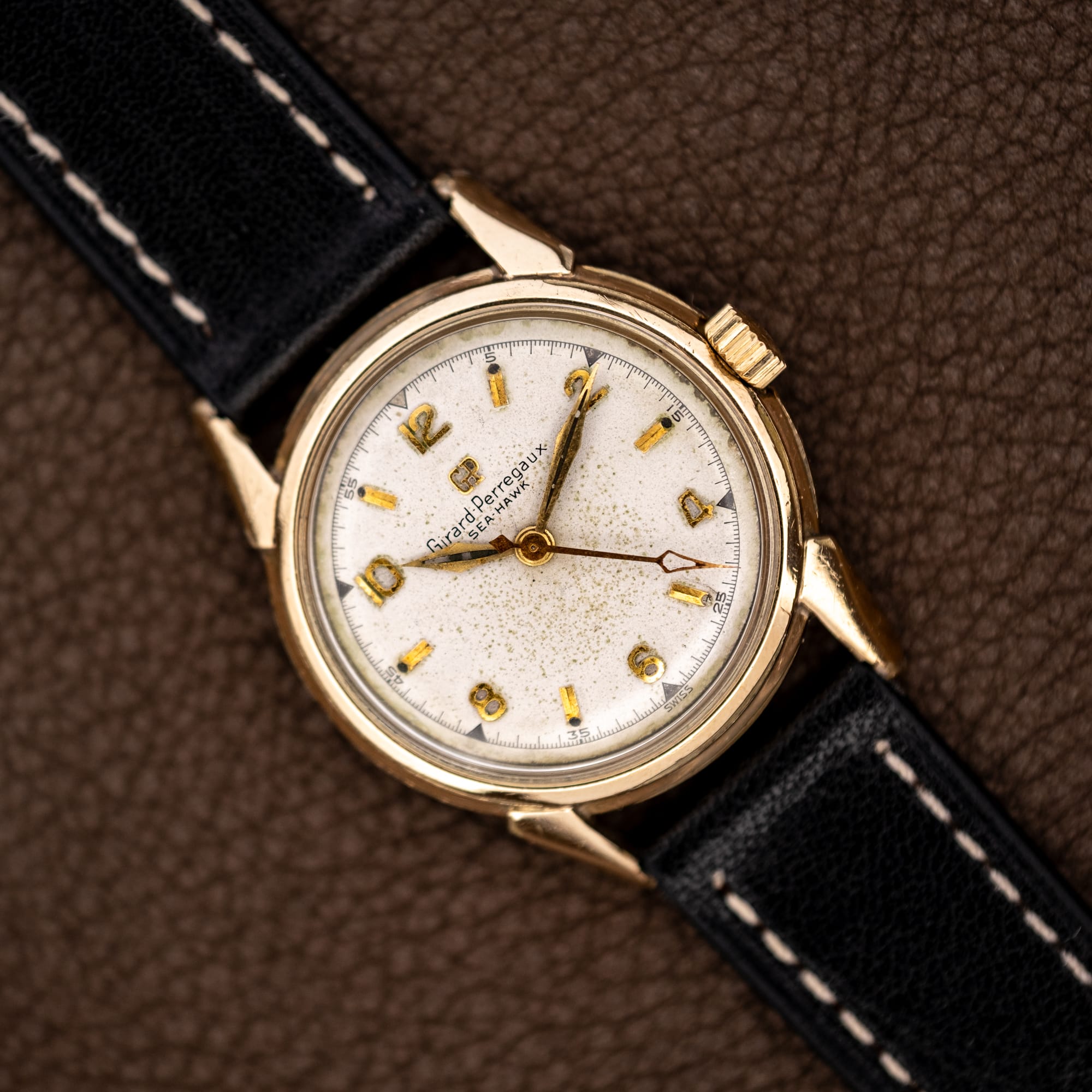
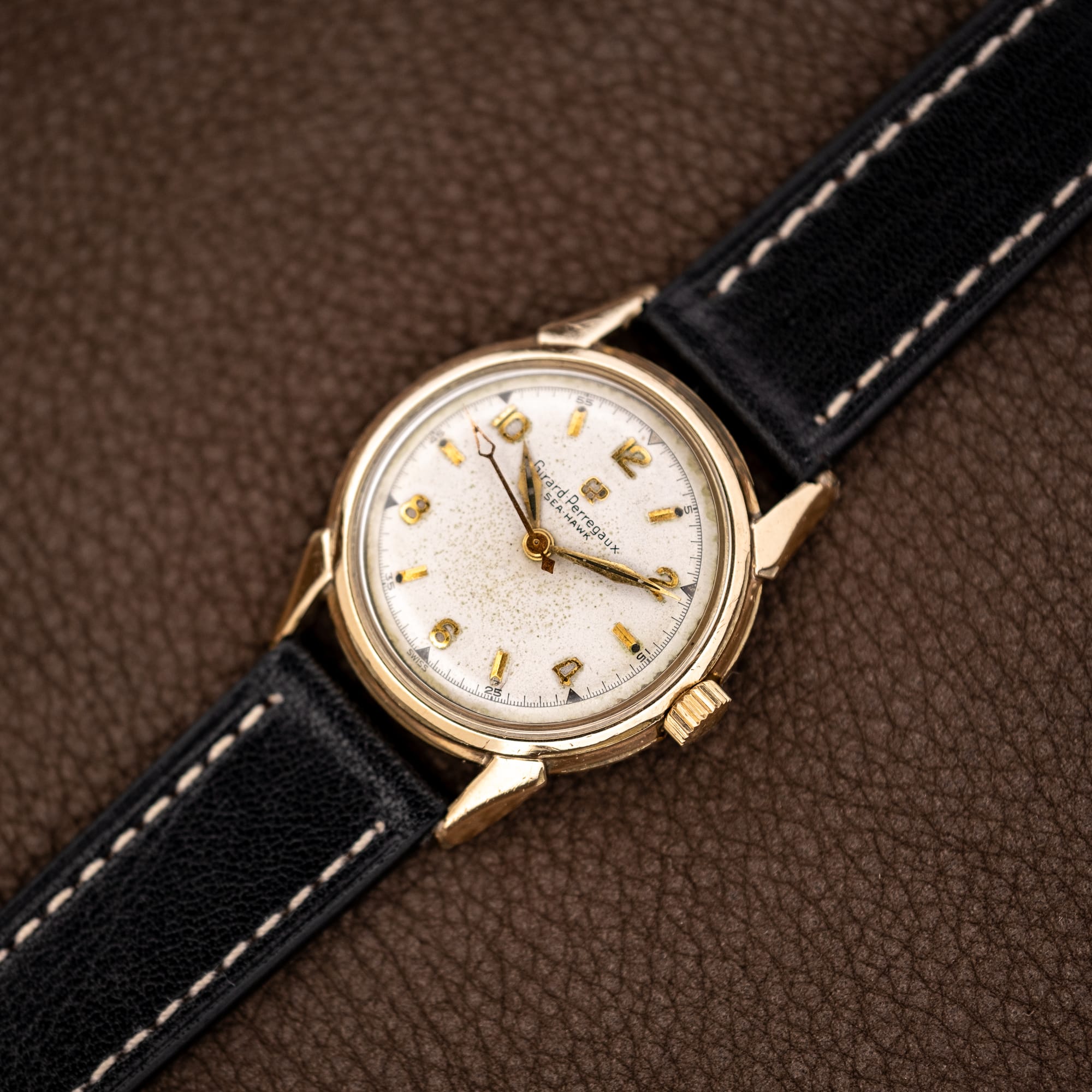
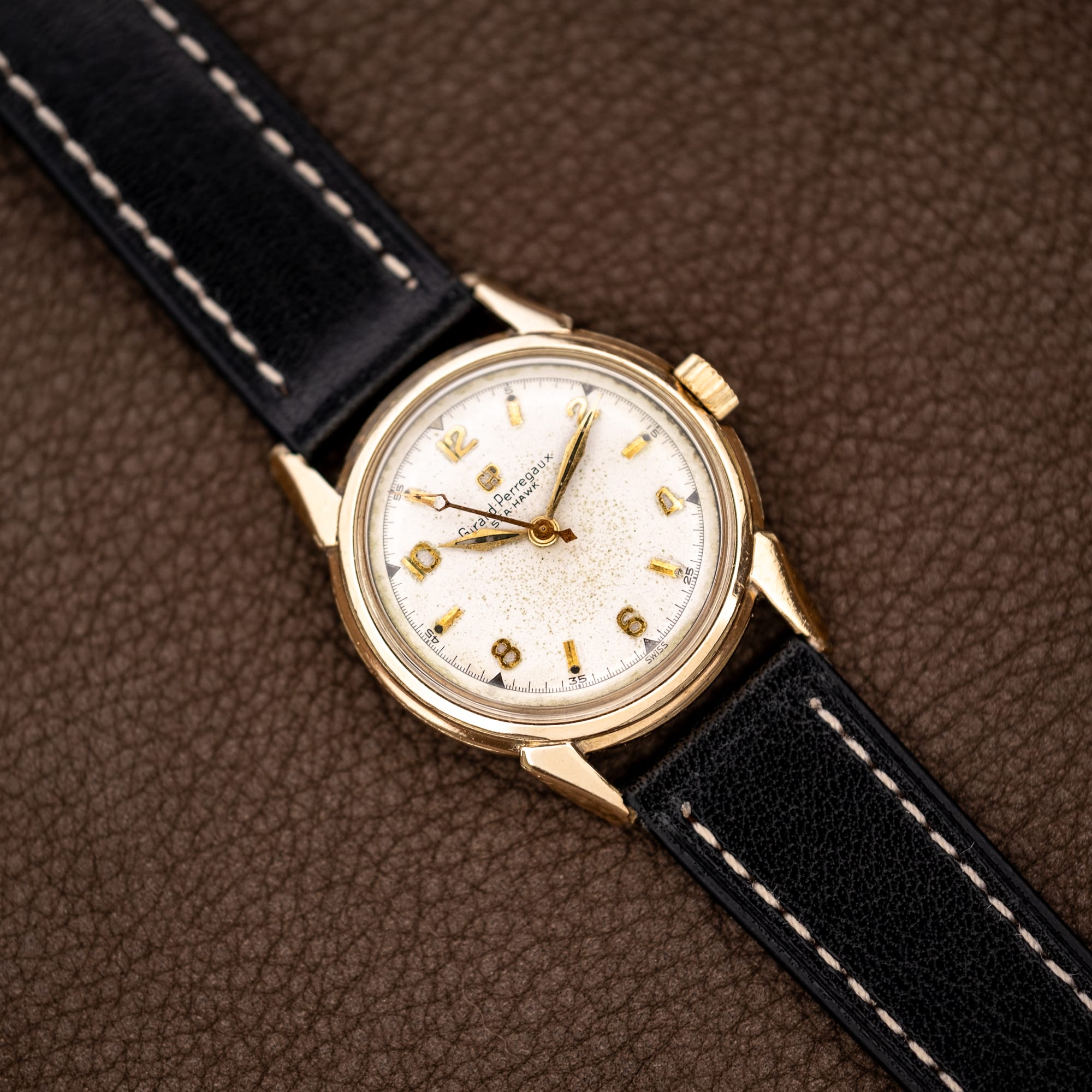
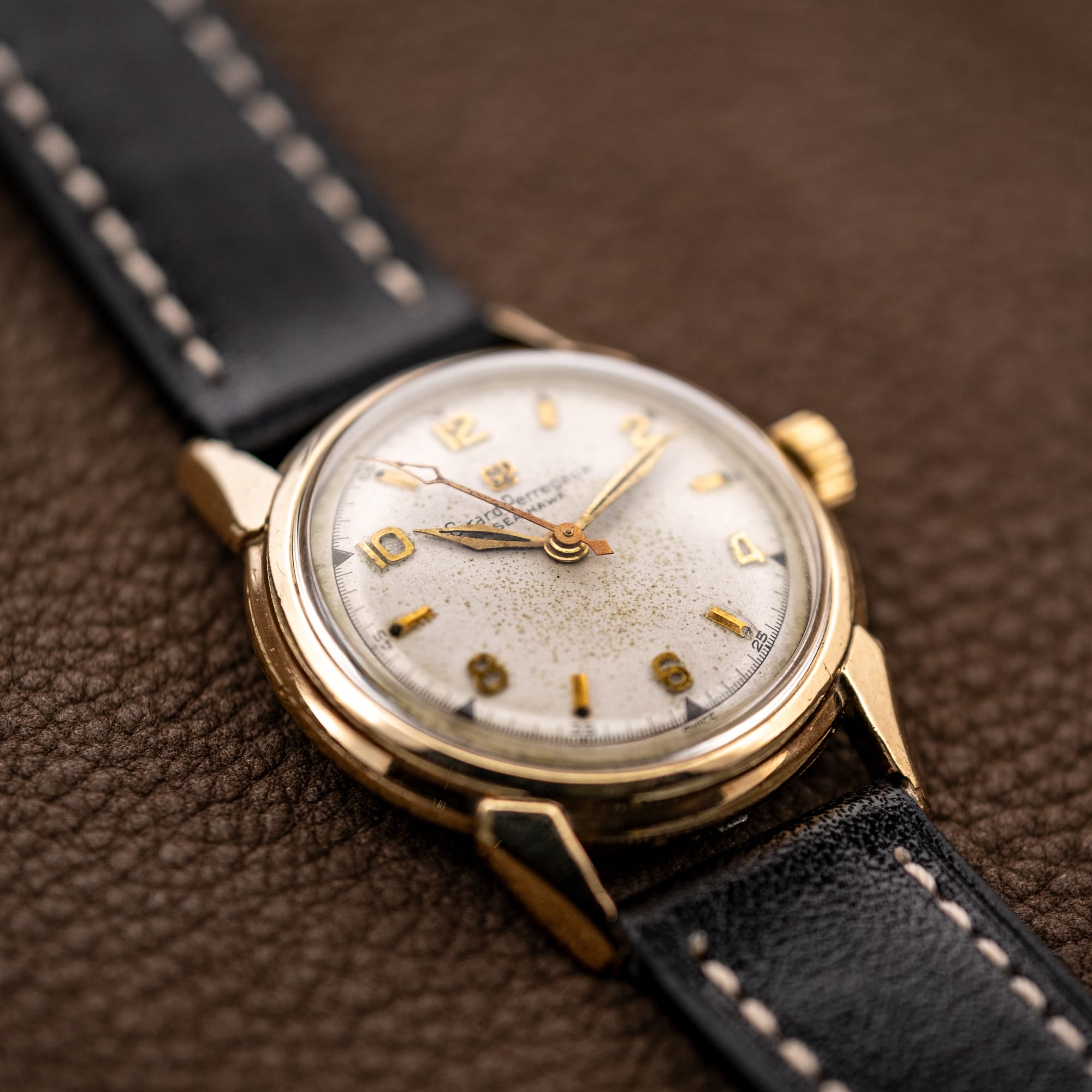
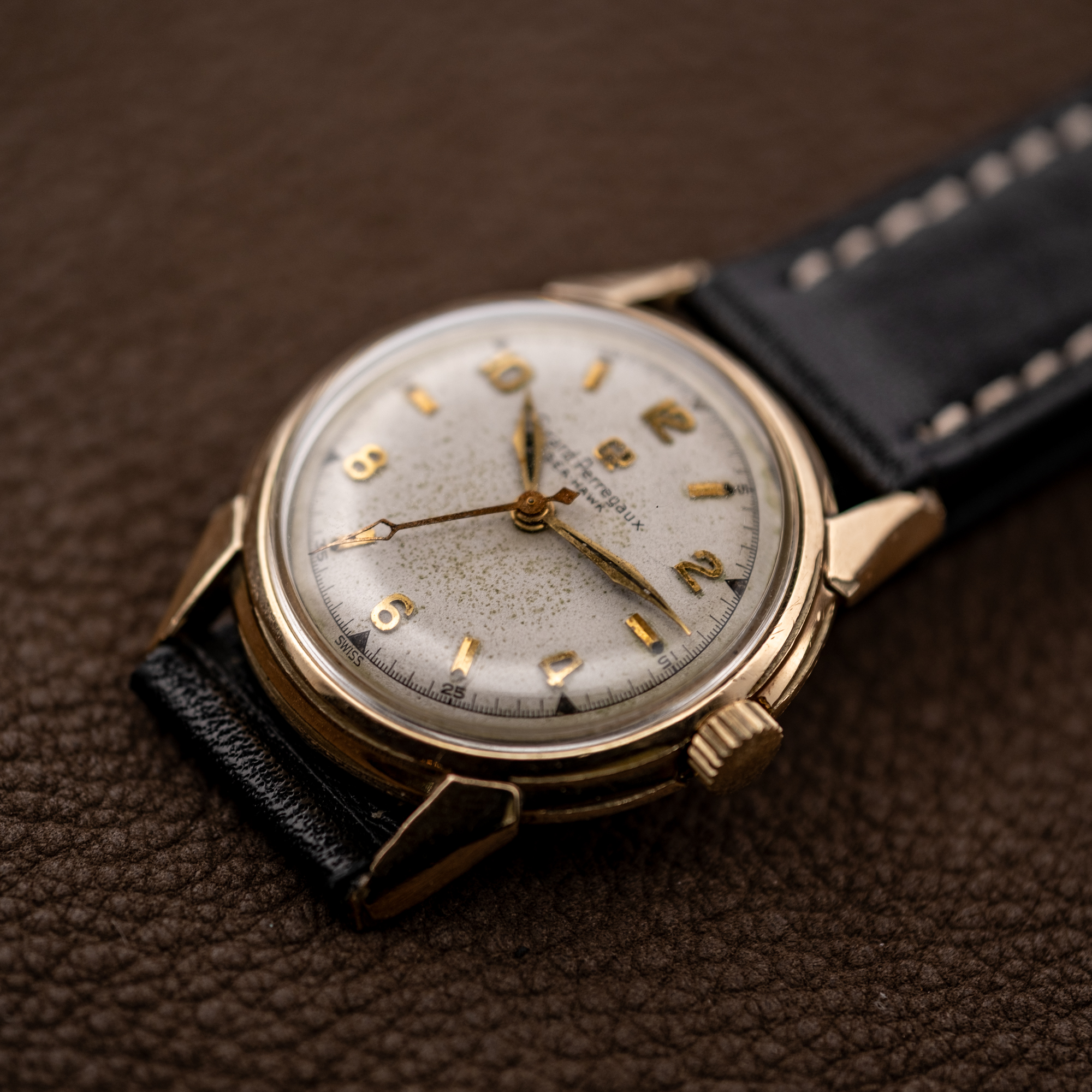
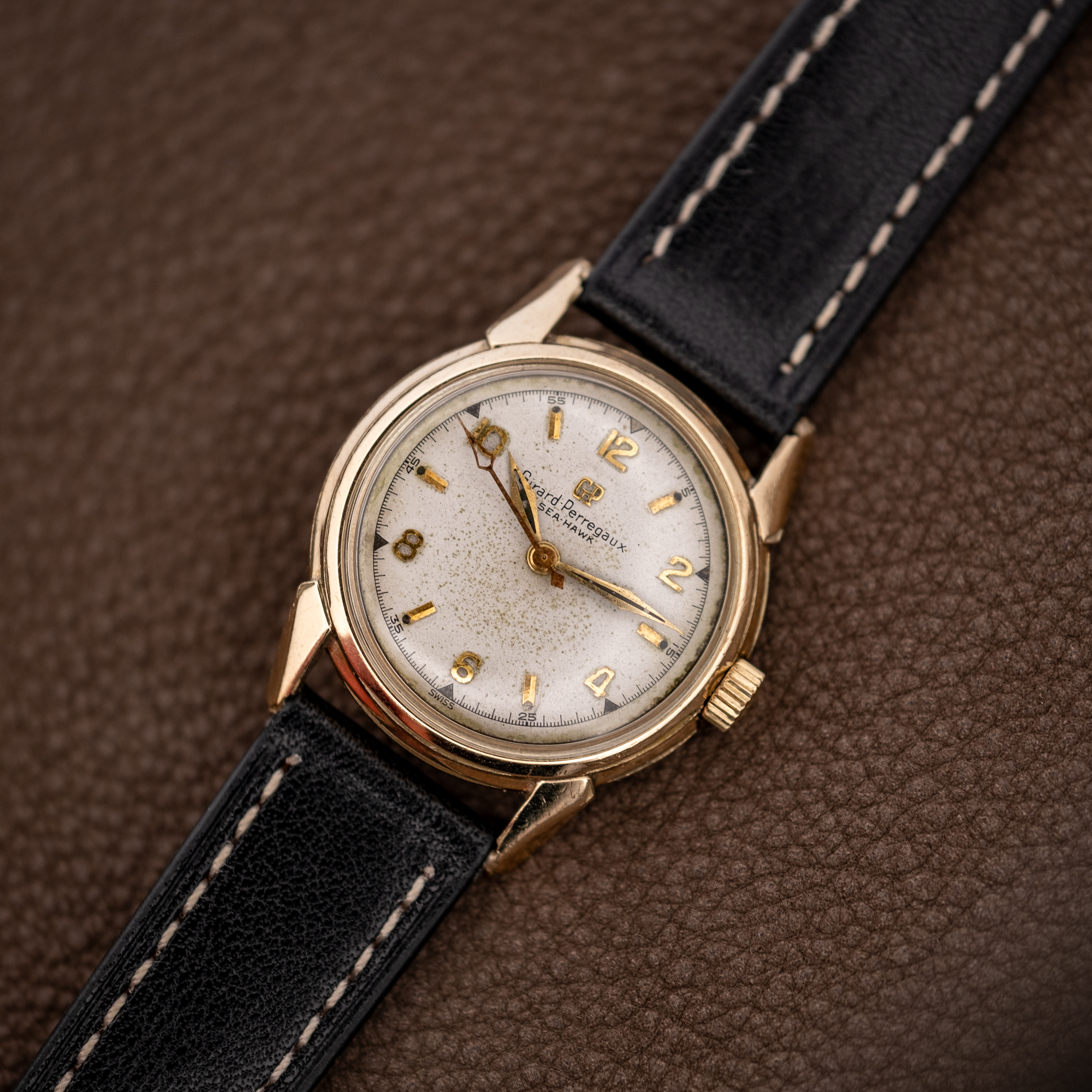
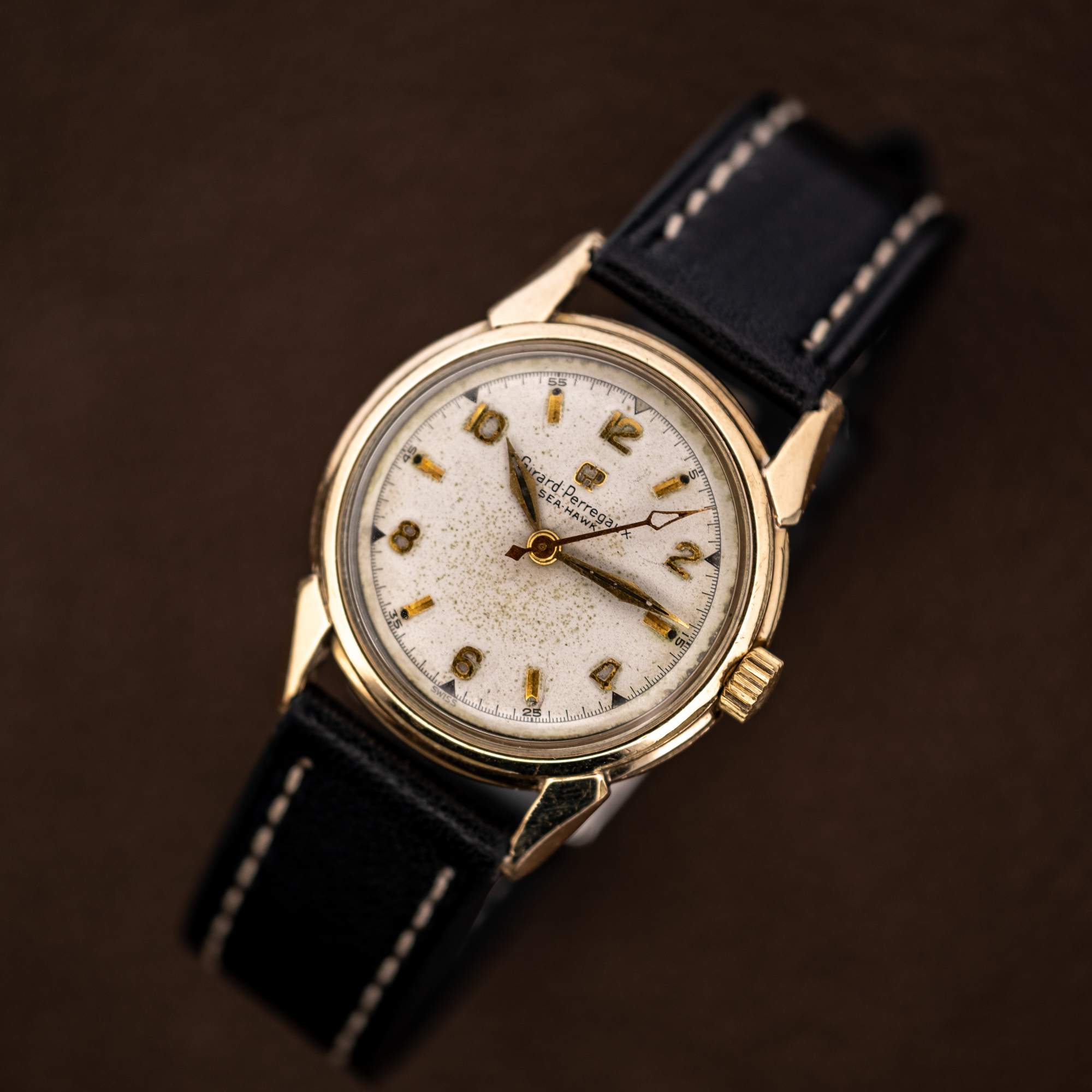
In profile the watch is compact. The case measures 32mm across and 40mm from lug to lug, the lugs taper as they reach the strap, and a domed crystal stands well proud of the bezel. Next to most current watches it reads small and neat, and it sits on a black leather strap with contrast stitching.
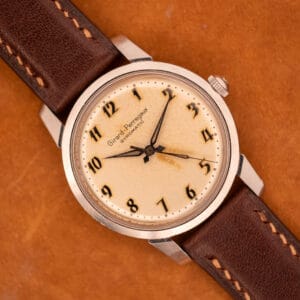
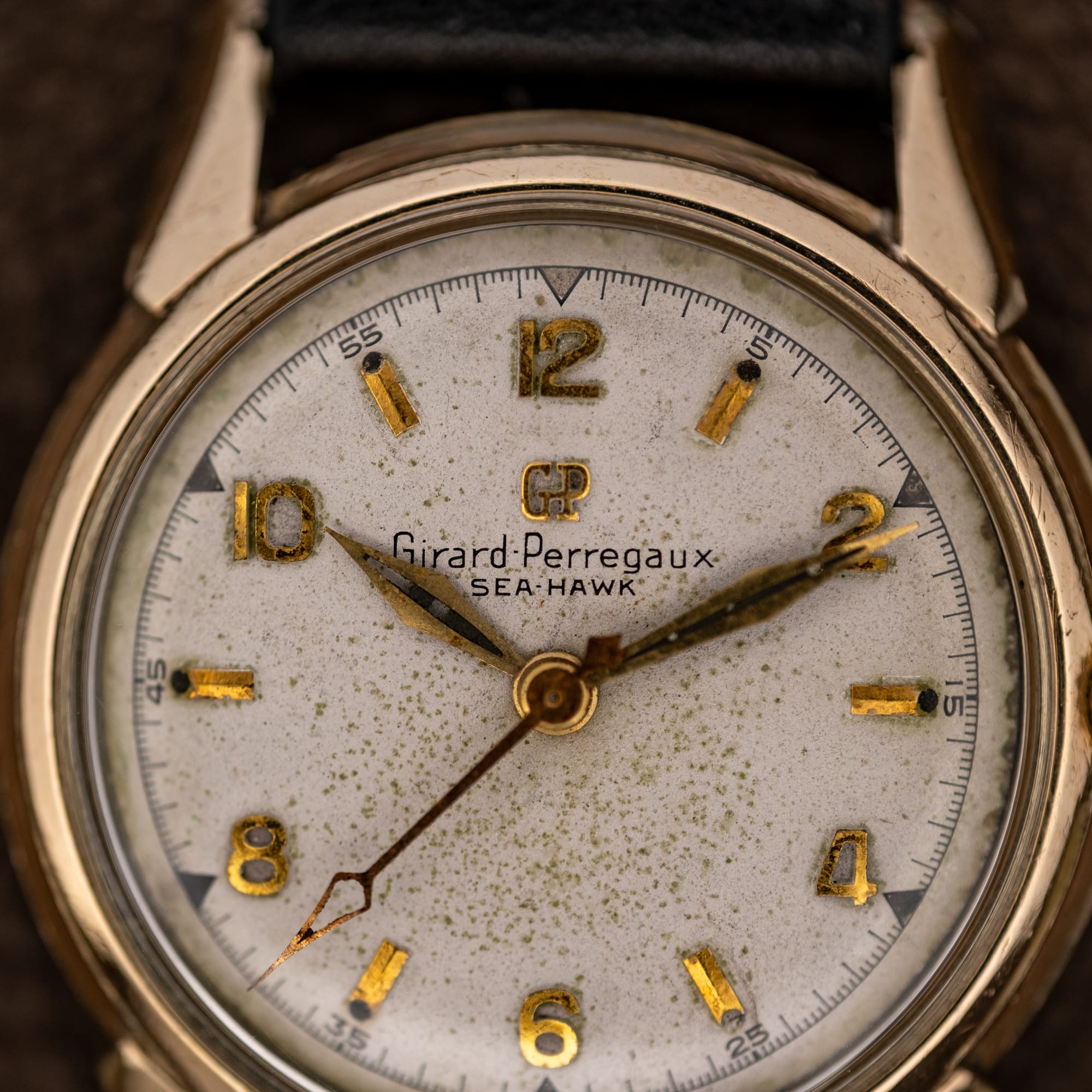
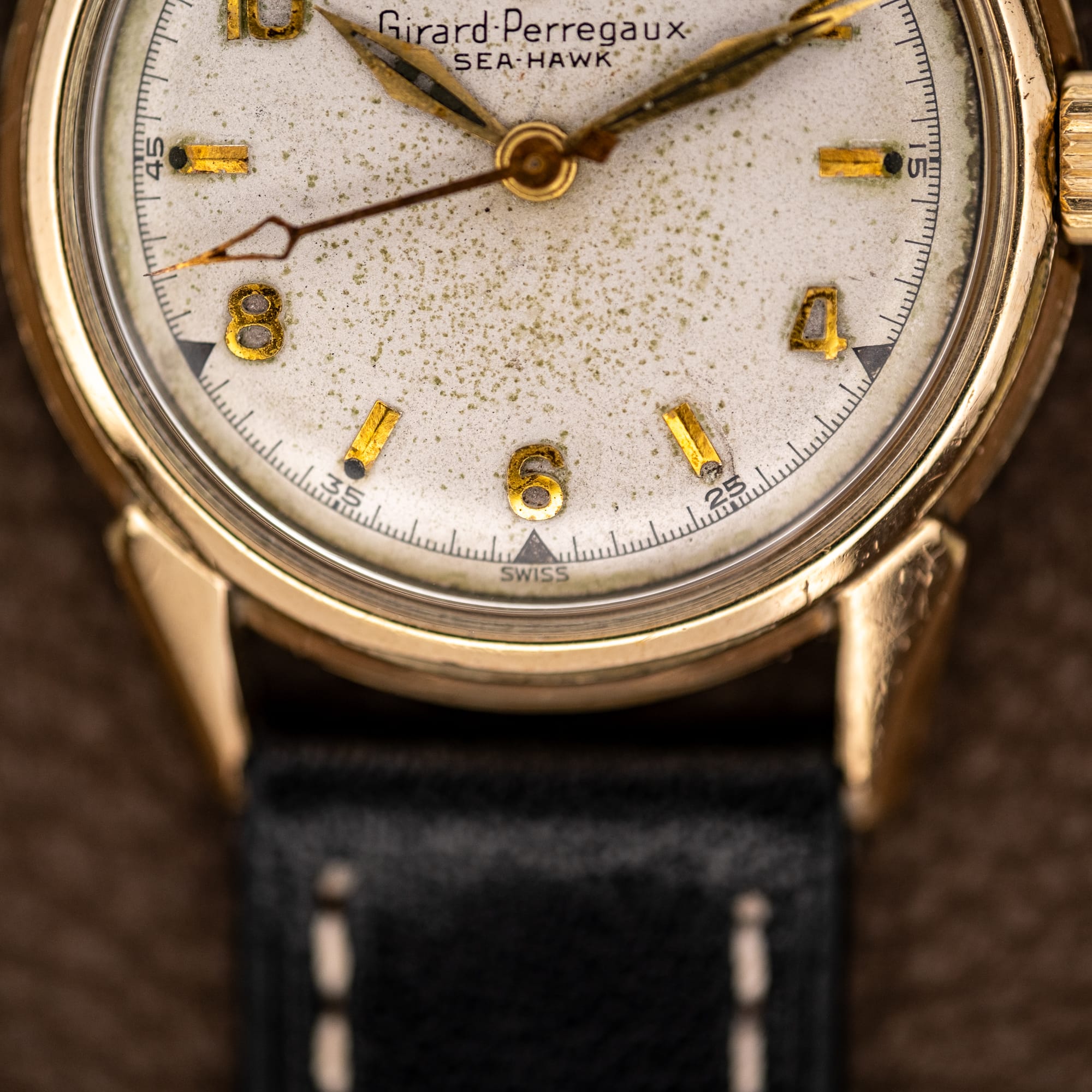
Under that dome is an off-white dial with a dense, fine speckling from edge to edge. The even hours get applied Arabic numerals and the odd hours get batons, small triangles punctuate the outer track, and the minutes are numbered in fives around the rim. Leaf-shaped hands mark the hours and minutes. The seconds hand carries a small open diamond that is easy to miss at arm’s length. Below the Girard-Perregaux signature, alongside an applied GP emblem, the model name is printed Sea-Hawk, hyphen included.
Sea Hawk is a 1940s name at Girard-Perregaux, and it took decades for the line to become a true diver’s watch with a rotating bezel and screw-down crown. By the 2000s the name was on large professional divers with the crown moved to four o’clock. Here the name appears in its earlier, gentler form: gold and steel, three hands, no bezel to turn.
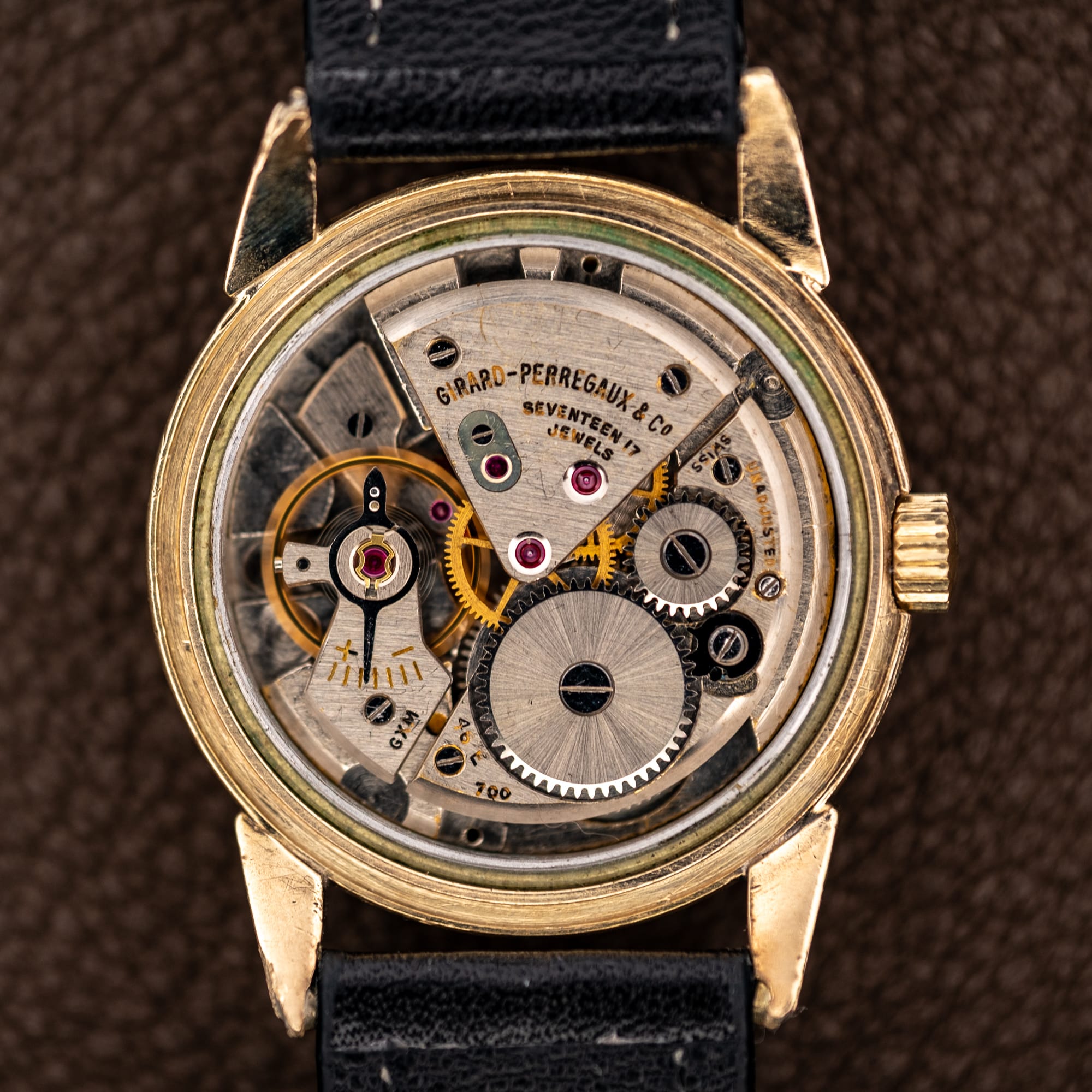
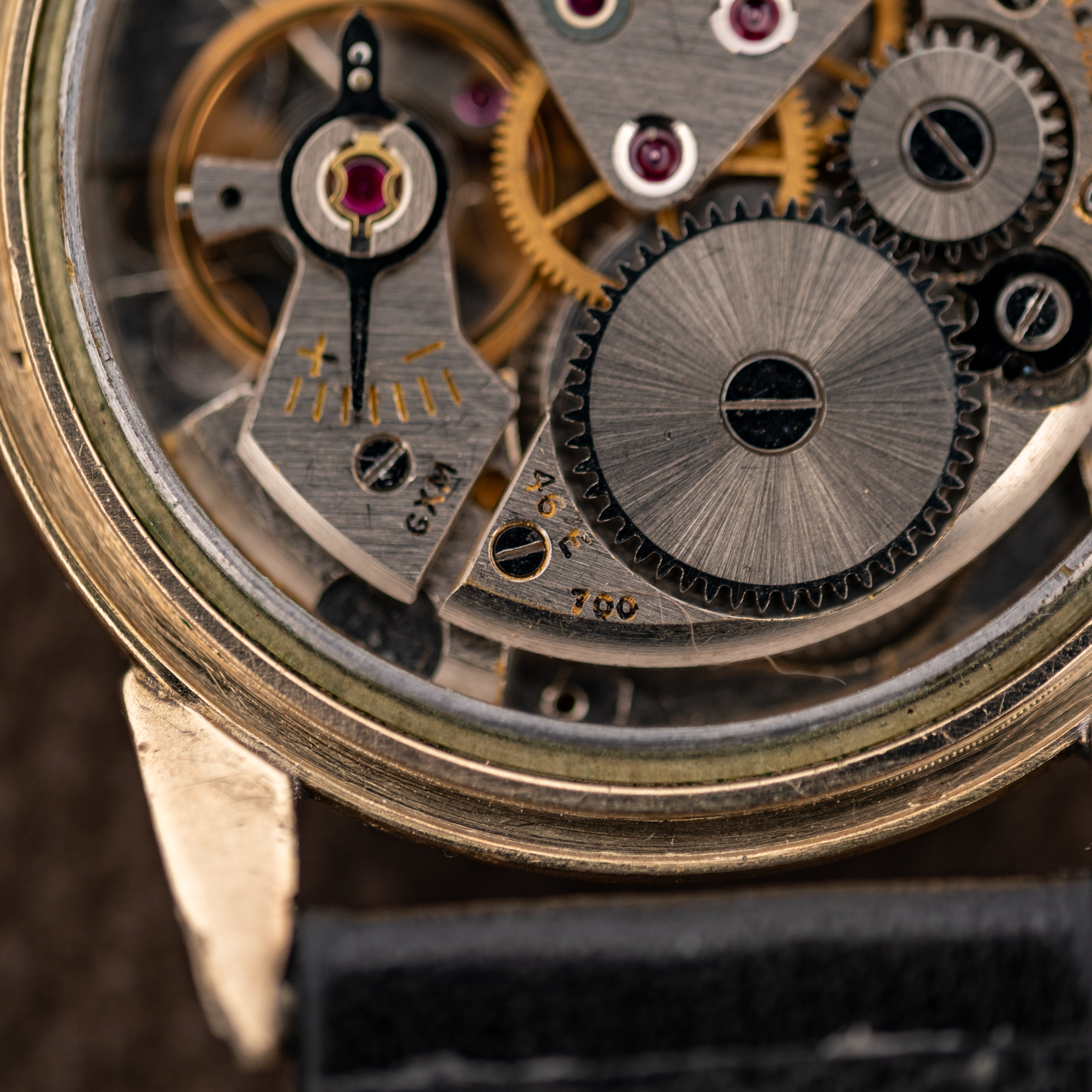
Under the dial, the Swiss half of the story is engraved on the movement. Winding is by hand, through the crown, with no rotor over the bridges. The jewel count, seventeen, appears twice, in words and in figures, in the format U.S. tariff law called for. The last clue is three letters, GXM: Girard-Perregaux’s U.S. import code, stamped on movements headed for America from about 1936.