

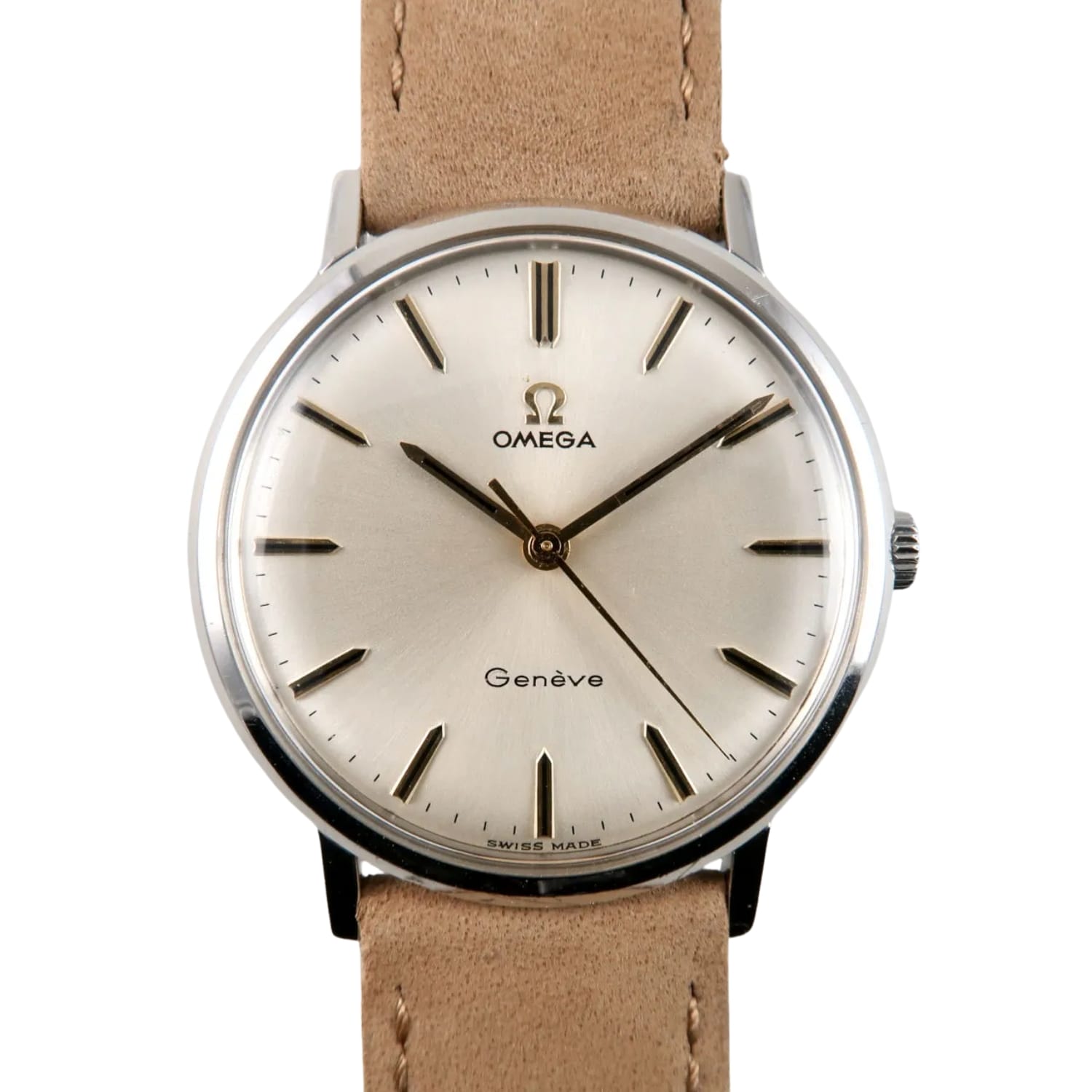
The Omega Genève reference 131.019 represents one of the most successful and prolific dress watch references from Omega’s 1960s lineup, embodying the affordable elegance and Swiss precision that made the Genève collection a cornerstone of the manufacture’s mid-range offerings. Produced from 1962 through the early 1970s, this reference delivered manual-winding reliability, classic proportions, and versatile styling at price points accessible to working professionals seeking Swiss quality without luxury premiums.
The Genève designation itself carried historical significance. Omega originally reserved the “Genève” name for watches with at least 50% of their production completed in Geneva, establishing geographic authenticity as a quality marker. By the 1960s, as the Speedmaster and Seamaster achieved iconic status, Omega transformed Genève into an independent collection positioned as entry-level luxury: Swiss-made mechanical watches offering genuine manufacture quality at democratic price points.
The reference 131.019 exemplifies this philosophy perfectly. Powered by the reliable Caliber 601 manual-winding movement with center seconds, housed in a 34mm stainless steel case with elegant faceted lugs, and available with diverse dial options from silver to black to blue, the 131.019 provided versatile elegance suitable for office, formal occasions, and daily wear. Its understated design, devoid of complications beyond center seconds, created timeless aesthetic appeal that transcends period styling.

Vintage Omega Geneve Technical Dial 131.019 1968 – Vintage
History & Production Period
The Genève Collection Context
Omega launched the Genève collection in the early 1960s as a deliberate strategy to offer accessible Swiss watchmaking to expanding middle-class markets. While the Speedmaster targeted professionals and enthusiasts with its chronograph complication and tool-watch functionality, and the Seamaster addressed sport watch demands with water resistance and robust construction, the Genève focused on classic dress watch elegance at entry-level prices.
This positioning proved remarkably successful. The Genève collection remained in production until the early 1980s, spanning nearly two decades and encompassing dozens of references with varied case shapes, materials, complications, and movement types. The collection included oval cases, rectangular cases, barrel-shaped cases, automatic movements, quartz movements, date complications, and day-date displays, creating extraordinary variety within the Genève umbrella.
Reference 131.019 Timeline
The reference 131.019 debuted in 1962 as one of the early round-cased manual-wind Genève models. Production continued through the entire 1960s decade and into the early 1970s, with the latest documented examples dating to approximately 1971.
This extended production run, spanning nearly ten years, resulted in substantial production volumes and widespread distribution. Unlike limited-production sport models or complicated pieces, the 131.019 served as volume production workhorse, manufactured in quantities that ensured availability across Omega’s global retail network.
Dating by Serial Numbers
Movement serial numbers provide approximate dating for 131.019 examples:
- 22,000,000-24,000,000: 1962-1964
- 24,000,000-26,000,000: 1964-1966
- 26,000,000-28,000,000: 1966-1968
- 28,000,000-30,000,000: 1968-1970
- 30,000,000-31,000,000: 1970-1972
These ranges apply specifically to Caliber 601 movement serial numbers and should correlate with documented production periods.

Omega Genève Ref.131.019 circa 1969 | steel manually
Technical Specifications
The Omega Genève 131.019 adheres to classical 1960s dress watch proportions while providing practical wearability:
Case Diameter: 34mm (excluding crown, measured at widest point)
Case with Crown: 35-35.5mm
Case Thickness: 10mm
Lug Width: 18mm
Lug-to-Lug: 40-41mm
Water Resistance: None (not designed for water exposure)
Crystal Type: Acrylic (domed or flat profile depending on production period)
Case Construction: Stainless steel (most common), gold-plated steel, two-tone steel and gold (rare)
Crown: Omega signed with logo
Caseback: Snap-back with Omega hippocampus (seahorse) logo
The 34mm case diameter, conservative even by 1960s standards, positions the 131.019 as a formal dress watch rather than sport or casual piece. This modest sizing creates elegant proportions particularly suited to slim wrists and formal attire, though some collectors find it diminutive by contemporary standards.
The faceted bezel represents a signature design element, creating visual interest through alternating polished and angled surfaces that catch light dynamically. The chamfered bezel edge transitions elegantly into the case body, demonstrating the thoughtful design that characterized Omega’s 1960s production.
The downturned lugs, angled to follow wrist curvature, enhance wearing comfort while creating graceful visual flow from case to strap. Despite the modest 34mm diameter, the 40-41mm lug-to-lug measurement ensures the watch doesn’t appear excessively small on most wrists.
Movements/Calibers
Caliber 601: Manual-Wind Reliability
The Omega Genève 131.019 exclusively houses the Caliber 601, a manual-winding movement with center seconds that represents Omega’s straightforward approach to reliable dress watch mechanics.
Caliber 601 Specifications:
- Introduction Year: 1960 (some sources cite 1955 or 1962; 1960 most commonly documented)
- Configuration: Manual wind, center seconds (sweep seconds)
- Jewels: 17
- Frequency: 19,800 vibrations per hour (2.75 Hz)
- Power Reserve: 48 hours
- Diameter: 28.4mm (12”’ lignes)
- Height: Approximately 4.5mm
- Features: Antimagnetic, adjusted to 2 positions
- Balance: Screw balance (early production) or Glucydur balance (later production)
Movement Architecture
The Caliber 601 employs straightforward manual-winding architecture optimized for reliability, serviceability, and longevity rather than haute horlogerie finishing or complications. The movement represents Omega’s mid-grade positioning: superior to basic ébauche movements through proprietary modifications and finishing, yet economical enough to power entry-level watches.
The center seconds complication, achieved through a fourth wheel extended to drive the central seconds pinion, provides practical functionality for daily wear while maintaining slim profile appropriate to dress watches. This configuration, more complex than sub-seconds but simpler than chronograph mechanisms, delivers excellent value proposition for everyday timepieces.
The 17-jewel count places the 601 in Omega’s standard grade rather than premium chronometer class (which typically featured 24 jewels). However, the movement incorporates quality features including proper jeweling at all critical pivots, Breguet overcoil balance spring (on most examples), and antimagnetic components in key positions.
Regulation and Timekeeping
The Caliber 601 features regulation adjusted to 2 positions (dial up, dial down), providing adequate precision for daily wear without chronometer certification costs. When properly serviced and regulated, these movements typically achieve timekeeping within ±10-15 seconds per day, acceptable performance for mechanical dress watches of this era.
The substantial 48-hour power reserve, generous for a manual-winding movement, allows the watch to run from Saturday morning through Monday morning when worn during the workweek, providing practical convenience for five-day wearing patterns.
Movement Quality and Longevity
Collectors and watchmakers consistently praise the Caliber 601 for reliability, straightforward service requirements, and robust construction. The movement’s simple architecture, with minimal complications beyond center seconds, creates fewer failure points and facilitates maintenance by competent watchmakers.
Parts availability remains excellent through Omega service centers and aftermarket suppliers, as the Caliber 601’s widespread use across multiple Omega references for over a decade created substantial parts production and extensive old stock. This availability contributes to reasonable service costs and practical daily wearability for vintage examples.
Dial Variations
The Omega Genève 131.019’s extraordinary longevity and production volume resulted in remarkable dial diversity, with different configurations serving varied markets, aesthetic preferences, and price points.
Silvered and Satin-Finished Dials
The most common configuration features silvered or satin-finished silver dials with applied baton hour markers. These elegant dials typically display:

Gents Omega Geneve 131.019 Silver dial | Omega Watch O1022
- Applied faceted baton markers at all hours
- Applied Arabic numerals at 12, 3, 6, and 9 o’clock (some variants)
- Satin-finished dial surface creating subtle texture
- “Omega” signature at 12 o’clock with manufacture logo
- “Genève” designation below logo
- “Swiss Made” marking at 6 o’clock
- Center seconds sweep hand
- Dauphine or baton hands in polished steel or gold tone

Gents Omega Geneve 131.019 Silver dial | Omega Watch O1022
Silvered dials often age beautifully, developing warm patina or subtle toning that collectors prize as evidence of authenticity and honest aging.
Black Technical/Crosshair Dials
Particularly desirable variants feature black dials with red crosshair details, sometimes called “technical” or “crosshair” dials in collector circles. These sporty configurations display:
- Matte black dial surface
- White or silver hour markers (painted or applied)
- Red crosshair extending horizontally and vertically across dial
- “Omega” logo in red (most examples)
- Enhanced luminous material on hands and markers
- Distinctive sporty character within dress watch case
The black crosshair dials appeared across multiple Omega references during the 1960s, including Seamaster and Genève models, creating family resemblance that appeals to collectors seeking coherent aesthetic themes. These dials typically command premiums due to visual impact and relative scarcity compared to standard silver dials.

Omega Genève 131.019 SP Stainless steel Blue United Kingdom
Blue Dials
Rare blue dial variants provide striking visual alternative to standard silver configurations. These uncommon dials feature:
- Deep blue dial surface (ranging from navy to lighter blue tones)
- Applied markers in silver or gold tone
- Striking contrast creating modern aesthetic appeal
- Significant rarity driving collector interest
Blue dial 131.019 examples remain considerably scarcer than silver or black variants, making them highly sought by collectors pursuing complete dial variety within the reference.
Champagne and Gold-Tone Dials
Warm-toned champagne or gold dials, typically appearing on gold-plated case examples, create luxurious presentation. These dials feature:
- Champagne or gold-toned dial surfaces
- Applied gold-tone markers matching case finish
- Cohesive visual aesthetic with gold-plated cases
- Elegant appearance suited to formal occasions
White and Cream Dials
Select examples feature white or cream dials creating bright, clean aesthetic. These configurations offer visual lightness and excellent legibility through high contrast with dark hands.
Dial Condition and Authenticity
Given the 131.019’s volume production and extended timeline, refinished dials represent significant concern in the vintage market. Warning signs of refinishing include:
- Overly bright, perfect surfaces lacking age-appropriate character
- Incorrect fonts for Omega signature or Genève designation
- Mismatched printing quality or spacing
- Poorly reapplied markers showing visible glue or uneven spacing
- Inconsistent aging between dial and hands
- Modern luminous material where none existed originally
The collector discussion documented in forum thread 456 provides instructive example of authentication challenges, where experienced collectors identified a questionable 131.019 through careful dial examination, noting excessively thick “Omega” text, misaligned onyx marker filling, and printing quality inconsistent with period production.
Case & Bezel Variations
Case Construction and Materials
The vast majority of Omega Genève 131.019 examples feature stainless steel cases with snap-back construction. This practical construction provided durability, corrosion resistance, and accessible pricing appropriate to the Genève collection’s market positioning.
Material Variants:
Stainless Steel (Standard):
The primary production material, stainless steel cases display appropriate hallmarks and reference numbers on snap-back casebacks. Case finishing typically combines polished bezel and lugs with brushed case flanks, creating visual interest through surface contrast.
Gold-Plated Steel:
Less common variants feature gold-plated cases, typically marked “131.019SP” with the “SP” suffix indicating gold plating (“Swiss Plated”). These examples provided luxurious appearance at prices below solid gold while requiring careful handling to prevent plating wear.
Two-Tone Steel and Gold:
Rare two-tone examples combine stainless steel cases with gold-plated bezels and accents. These unusual configurations remain uncommon in the market.
The Signature Faceted Bezel
The 131.019’s most distinctive design element lies in its faceted bezel with chamfered edges. This architectural detail creates multiple angled surfaces that catch light from different directions, generating visual dynamism despite the watch’s understated profile.
The faceted bezel transitions elegantly into the case body through precise angles, demonstrating Omega’s attention to proportional harmony and finishing quality even in entry-level references.
Lug Design
The downturned, angled lugs represent another signature element, curving gracefully from the case to follow wrist anatomy. These lugs feature:
- Angled profile creating elegant visual flow
- Chamfered edges enhancing sculptural quality
- Polished top surfaces with brushed flanks
- 18mm lug width accommodating standard vintage straps
Caseback Details
The snap-back caseback should display:
- Reference number “131.019” (or “131.019SP” for gold-plated examples)
- Omega hippocampus (seahorse) logo
- “Stainless Steel” or “Stainless Steel Back” marking
- Case serial number (varies by production year)
- Swiss hallmarks
Many examples feature personal engravings, gift inscriptions, or presentation texts documenting their history as gifts for graduations, anniversaries, retirements, and similar occasions. While these engravings may affect collector value marginally, they add provenance and human interest to individual watches.
Bracelet & Strap Options
Period-Correct Presentation
The Omega Genève 131.019 was sold predominantly on leather straps, consistent with its dress watch character. Original Omega straps in various leathers complemented the cases appropriately.
Period-Correct Strap Specifications:
- Lug Width: 18mm (standard across all examples)
- Materials: Calf leather, alligator, crocodile
- Colors: Black, brown, burgundy to suit dial and case combinations
- Buckles: Omega signed buckles in stainless steel or gold-plated finish
Select examples were offered with Omega metal bracelets, particularly the reference 1122 bracelet documented with some 131.019 watches. These period bracelets, when original and complete, add value and provide alternative wearing options.
Contemporary Strap Options
Modern collectors typically fit 131.019 watches with vintage-style leather straps from quality manufacturers. Appropriate choices include:
- Simple calf leather straps with minimal stitching for dress watch elegance
- Vintage-style alligator or crocodile for luxury presentation
- Brown tones for warm dial colors, black for silver or blue dials
- Slim profiles respecting the watch’s 10mm thickness
The standard 18mm lug width ensures excellent strap availability across vintage and modern options.
Identifying Original vs. Replaced Parts
Movement Authentication
The correct movement for all 131.019 cases is the Caliber 601, which should display:
- “Omega Watch Co. Swiss” signing
- Caliber designation “601” engraved on movement
- “17 Jewels” marking
- “Adjusted Two (2) Positions” inscription
- Movement serial number appropriate to production period (22,000,000-31,000,000 range)
- Proper finishing quality (Geneva striping on bridges, perlage on plates)
The forum discussion in reference 456 highlighted authentication challenges, noting that poor engraving quality (“adjusted two (2) position” and “seventeen 17 jewels” text nearly unreadable even under magnification) can indicate counterfeit movements despite superficially correct appearance.
Dial Verification
Dial authentication requires careful examination given refinishing prevalence. Collectors should:
- Examine printing quality under magnification (original dials show crisp, consistent text)
- Verify font accuracy for Omega signature and Genève designation
- Check marker application for secure attachment and period-correct profiles
- Confirm appropriate aging correlation between dial surface and hands
- Verify luminous material type matches period (tritium for 1960s-1970s production)
The collector assessment in reference 456 provides valuable authentication guidance, noting that refinished dials often appear “much too clean” given case condition, with overly thick “Omega” text and poorly centered onyx marker filling indicating reproduction rather than original execution.
Case Condition
Original 131.019 cases should retain:
- Sharp, defined bezel edges with clear faceting
- Visible case numbers and markings on caseback
- Proper case proportions with substantial lug thickness
- Distinct surface finishing (polished bezel, brushed flanks)
- Omega signed crown with logo
Over-polishing represents the primary threat to case integrity, with excessive refinishing rounding bezel edges, diminishing lug definition, and removing original surface finishing contrast.
Collector Notes & Market Context
Market Positioning (2024-2025)
The Omega Genève 131.019 occupies one of the most accessible entry points in vintage Omega collecting, offering authentic 1960s Swiss manufacture quality at prices significantly below sport models like the Seamaster or complications like the Constellation.
Approximate Value Ranges:
- Standard Stainless Steel, Silver Dial, Good Condition: $400-$700
- Black Crosshair/Technical Dial: $600-$1,000
- Blue Dial Variant: $700-$1,200
- Gold-Plated Examples: $500-$900
- Exceptional Original Condition with Box/Papers: $800-$1,500
- Refinished Dial or Heavy Wear: $250-$500
These ranges assume functioning movements, honest cases showing normal wear, and reasonable dial condition.
Value Drivers and Detractors
Premium Factors:
- Original dial with honest patina, no refinishing
- Rare dial variants (black crosshair, blue, unusual configurations)
- Unpolished case retaining sharp faceted bezel definition
- Functioning Caliber 601 movement recently serviced
- Original Omega crown and caseback
- Period-correct Omega bracelet (when present)
- Original box, papers, or purchase documentation
- Documented provenance or interesting personal history
Value Detractors:
- Refinished or service replacement dial
- Non-functioning movement requiring service
- Over-polished case with rounded bezel edges
- Incorrect or replacement movement
- Replaced crown or caseback
- Significant damage or amateur repairs
- Gold plating wear-through on plated examples
Collecting Strategy
The Omega Genève 131.019 represents exceptional value for collectors seeking authentic vintage Omega quality at entry-level prices. As one of the most prolific 1960s dress watch references, availability remains strong while prices stay accessible.
Market Dynamics:
The vintage Omega market has appreciated significantly for sport models and complications, yet dress watches like the Genève 131.019 remain undervalued relative to quality and historical significance. This creates opportunity for collectors to acquire genuine 1960s Omega watches with reliable movements, elegant design, and authentic manufacture provenance at prices below modern fashion watches.
The black crosshair and blue dial variants command premiums due to visual impact and scarcity, appealing to collectors seeking more distinctive examples within accessible budgets.
Savvy Collecting Approach:
- Prioritize original dials even with honest aging (patina adds character)
- Verify movement authenticity through careful examination or expert opinion
- Accept light wear but avoid heavily polished cases losing bezel definition
- Consider black crosshair or blue dial variants for rarity premiums
- Verify Caliber 601 functionality before purchase (service costs $250-$400)
- Research dial variations to identify rare configurations
- Budget for service when purchasing unknown service history examples
Wearability and Modern Context
Despite 1960s origins and 34mm diameter, the Omega Genève 131.019 delivers practical vintage wearability. The faceted bezel and downturned lugs create visual presence beyond measured dimensions, while the 40-41mm lug-to-lug prevents excessive overhang on most wrists.
The 10mm thickness allows the watch to slip beneath dress shirt cuffs, fulfilling the cardinal requirement of dress watches. The manual-winding Caliber 601, while requiring daily winding, provides mechanical engagement that automatic wearers often appreciate as meditative ritual.
The 48-hour power reserve means the watch will stop if unworn over a weekend, requiring resetting Monday morning. This represents typical manual-wind behavior rather than defect.
Conclusion
The Omega Genève reference 131.019 represents 1960s Swiss watchmaking at its most democratic and accessible. Produced from 1962 through the early 1970s, this reference delivered manual-winding reliability, classical elegance, and Omega manufacture quality at price points welcoming middle-class consumers into Swiss watchmaking.
The reliable Caliber 601 movement, with its 48-hour power reserve, 17-jewel construction, and straightforward architecture, provided excellent timekeeping and longevity that has allowed countless examples to survive decades of daily wear while remaining serviceable by competent watchmakers. The movement’s reputation for reliability and reasonable service costs makes the 131.019 practical for daily vintage wear rather than safe-queen storage.
The diverse dial options, from elegant silver to sporty black crosshair to rare blue, create collecting depth within a single reference that allows enthusiasts to pursue variety while maintaining focus. The faceted bezel and downturned lugs demonstrate Omega’s attention to design quality even in entry-level references, creating watches with visual sophistication beyond their modest pricing.
For collectors, the Omega Genève 131.019 offers authentic vintage Omega quality at prices that welcome newcomers into vintage watch collecting. Its accessibility, both financial and practical (through movement reliability and parts availability), positions it as ideal introduction to mechanical watches, vintage watches, or Omega specifically.
As the vintage watch market continues maturing, collectors increasingly recognize that manufacture quality, design integrity, and historical authenticity matter more than complications, precious metals, or brand positioning. The Omega Genève 131.019, with its honest 1960s design, reliable movement, and accessible pricing, represents exactly this collecting philosophy: genuine vintage quality that rewards informed collectors who value substance over status.