


Last updated ~ February 2, 2026
Brand
Production Period
1960–1969
Model Line
Case Shape
Round
Diameter
37mm
Lug to Lug
45mm
Lug Width
20mm
Case Thickness
13mm
Case Back
Screw-Down
Caliber
Crystal
Bezel
Smooth
The Zenith A273 represents one of the most celebrated manual chronographs produced before the revolutionary El Primero automatic movement transformed Zenith’s product strategy in 1969. This elegant three-register chronograph emerged during the final decade of the pre-quartz manual-wind chronograph era, capturing the culmination of decades of Swiss mechanical chronograph refinement before automatic and later quartz technologies would fundamentally alter the landscape.
Produced throughout the 1960s from approximately 1960 to 1969, the A273 embodied Zenith’s commitment to quality, reliability, and aesthetic restraint in chronograph design. At 37mm in diameter with a balanced three-register layout, the A273 delivered practical chronograph functionality without excessive visual complexity. The watch’s proportions and straightforward design philosophy ensure remarkable wearability for contemporary collectors despite its 55+ year vintage pedigree.
What distinguishes the A273 from its contemporaries is the caliber 146HP movement, a highly regarded manual chronograph caliber representing the final evolution of Zenith’s pre-El Primero chronograph technology. The 146HP, sourced from the earlier Martel Watch Co. partnership that gave Zenith access to proven chronograph architecture, delivered column-wheel sophistication and reliable operation that many collectors and experts consider among the finest manual-wind chronographs ever produced.
The A273 occupies a unique position in vintage chronograph collecting. While less immediately recognizable than sport chronographs like the Rolex Daytona or Omega Speedmaster, the A273 commands respect from serious collectors for its technical quality, elegant dial design, and remarkably balanced proportions. Market values remain remarkably accessible compared to more famous contemporary chronographs, with examples ranging from approximately $2,200 to $5,200 USD depending on condition and case material.

Zenith Cronograph tricompax 18k solid yellow gold case ref:a273 early 1960’s
History and Production Period
The Zenith A273’s development occurred during a golden age for mechanical chronographs, when brands refined traditional column-wheel architecture to perfection before abandoning it in favor of automatic and quartz alternatives. Zenith, founded in 1865 by Georges Favre-Jacot, had established itself as one of Switzerland’s premier chronograph manufacturers, accumulating over 2,330 chronometry prizes throughout its history.
The A273 emerged around 1960, positioned within Zenith’s expanding portfolio of chronograph references during a period when the brand competed directly with Universal Genève, Heuer, and Breitling for dominance in the chronograph market. The reference built upon the foundation of Zenith’s earlier chronograph development, incorporating lessons learned from previous models while maintaining clean, purposeful design that would prove timeless.
The reference number “A273” belongs to a chronological sequence of Zenith reference designations used during the 1950s-1970s, with the “A” prefix indicating a watch model designation (as opposed to other lettering schemes used for alternative configurations). Related references from the same era include the A271 (three-register variant), A277 (larger 40mm format), A278, and later the A386 and other El Primero models that would emerge after 1969.
Production of the A273 spanned approximately nine years, from circa 1960 through 1969, placing the reference squarely in the final years before Zenith’s seismic shift toward automatic chronographs. Documented examples show production continued through the late 1960s, with examples marked “1970” actually representing 1969 production using early 1970 dating conventions employed by dealers and sellers.
The Caliber 146HP movement that powered the A273 represented the pinnacle of Zenith’s manual-wind chronograph development. The “HP” designation indicated “haute performance,” reflecting Zenith’s commitment to finishing standards and reliability that distinguished the reference from simpler, lower-cost chronographs available from mass-market manufacturers.
The A273’s final production year (1969) coincided precisely with Zenith’s introduction of the El Primero automatic chronograph movement, one of horological history’s most significant technological achievements. The El Primero, with its high-frequency (36,000 vph) automatic winding and revolutionary integrated chronograph mechanism, immediately overshadowed manual-wind chronographs in Zenith’s strategic thinking.
While Zenith continued producing manual-wind chronographs into the early 1970s, the A273 essentially represents the final generation of the brand’s manual-wind three-register chronographs before the company pivoted decisively toward El Primero dominance. This positioning gives the A273 historical significance as the representative of an era of mechanical watchmaking that would largely cease to exist within the following decade.
Technical Specifications
The Zenith A273 exemplifies the proportions and construction standards that defined quality chronographs during the 1960s, with dimensions and architecture that ensure remarkable contemporary wearability despite its vintage vintage provenance.
Case Dimensions:

Zenith ref A273 Cailber 146HP Chronograph 1960s
- Lug-to-lug: Approximately 45 mm (estimated based on typical 37mm round chronographs)
- Lug width: 20 mm
The 37mm diameter places the A273 in the standard range for men’s chronographs from the 1960s, an era when watch sizing remained more modest than contemporary preferences. Remarkably, this dimension continues to offer excellent wearability for modern collectors, appealing to those who appreciate compact vintage proportions without the bulk of modern 42mm+ chronographs.
The approximately 12-13mm thickness reflects the vertical stack of the three-register chronograph mechanism combined with the manual-winding movement architecture. While substantial compared to dress watches, this thickness remains more than acceptable for a chronograph complication and contributes to the watch’s tool-like character.
Case Construction:
The A273 features a round stainless steel case (with gold-filled and solid gold variants available) with a smooth, polished fixed bezel and integrated lugs. The case design prioritizes classic chronograph aesthetics with no additional complications beyond the timing function.
Most examples feature a screw-down caseback providing access to the movement for servicing. The case construction delivers adequate water resistance for daily wear and normal exposure to moisture, though the A273 was not designed for immersion or extended water exposure.
Case Materials:
Zenith produced the A273 in multiple case material configurations:
- Stainless Steel: The most common configuration, offering durability and sporty tool watch character
- 18k Yellow Gold: Solid gold examples command significant premiums and represent perhaps 10-15% of surviving A273 production
- Gold-Filled: Mid-level precious metal option providing gold aesthetics with greater practicality than solid gold
Stainless steel examples offer exceptional value and typically show less wear than precious metal variants, as the material’s inherent durability resists scratching and aging better than softer gold alloys. Gold examples command collector attention for their rarity and the prestige of solid gold construction.
Crystal:
The A273 features a plastic/acrylic crystal, the standard material for quality watches throughout the 1960s. Acrylic crystals can be polished to remove minor scratches but are more prone to surface wear than modern sapphire. Many surviving examples show light scratching on the crystal, which collectors typically accept as appropriate patina.
Crown and Pushers:
The A273 employs pump-style chronograph pushers at 2 o’clock (start/stop) and 4 o’clock (reset), standard configuration for column-wheel chronographs of the era. These pushers provide satisfying tactile feedback when engaged, with the column wheel producing the characteristic “click” that distinguishes quality chronographs from inferior designs.

Zenith ref A273 Cailber 146HP Chronograph 1960s
The crown, positioned at 3 o’clock between the pushers, features the Zenith star logo and provides smooth action for time setting and manual winding. Original crowns on well-preserved examples show crisp logo definition.
Movements and Calibers
The heart of the Zenith A273 is the Caliber 146HP, a manual-winding three-register column-wheel chronograph movement that represents one of the final evolutions in Zenith’s pre-El Primero chronograph development.
Caliber 146HP: Technical Specifications
The 146HP belongs to the celebrated Caliber 146 family that Zenith developed through its partnership with Martel Watch Co. around 1958-1960. The “HP” designation indicates “haute performance,” reflecting additional finishing and regulation refinements compared to simpler variants of the 146 family.
Core Specifications:
- Base caliber: Martel chronograph ebauche
- Type: Manual-winding column-wheel chronograph
- Configuration: Three registers (running seconds, 30-minute counter, 12-hour totalizer)
- Jewels: 17 jewels
- Frequency: 18,000 vibrations per hour (2.5 Hz)
- Power reserve: Approximately 44 hours
- Movement diameter: Approximately 30-31mm (estimated based on case size)
- Movement thickness: Approximately 6-7mm (contributing to overall case thickness)
Column-Wheel Architecture:
The 146HP employs traditional column-wheel chronograph architecture, the premium approach to chronograph construction. The column wheel, a cylindrical component with precisely machined vertical columns around its perimeter, controls the chronograph start, stop, and reset functions through a sophisticated mechanical orchestration.
When the start pusher engages, levers interact with the column wheel’s columns, causing precise rotation and clutch engagement that connects the chronograph mechanism to the running movement. Pressing the pusher again rotates the column wheel further, disengaging the chronograph. The reset pusher activates a hammer that returns chronograph hands to zero.
Column-wheel mechanisms provide superior tactile feedback and mechanical refinement compared to the later cam-lever designs that became common in less expensive movements. The satisfying click and smooth pusher action of column-wheel chronographs represent one of the most prized characteristics among serious collectors.
Three-Register Configuration:
The 146HP features three sub-dials providing three distinct chronograph functions:
- Running seconds at 9 o’clock (continuous seconds not involved in timing function)
- 30-minute chronograph counter at 3 o’clock
- 12-hour totalizer at 6 o’clock
This comprehensive three-register layout provided professional-grade timing capability for various applications, from racing to laboratory timing. While more complex than simpler two-register designs, the three-register configuration became standard on quality chronographs during the 1960s.
Technical Features:
The 146HP incorporates characteristics distinguishing it as a quality mid-century chronograph movement:
- Column Wheel with Horizontal Clutch: The movement employs the refined combination of column-wheel control with horizontal clutch engagement, providing reliable, precise chronograph operation
- Rhodium-Plated Finishing: The movement plates and bridges feature rhodium plating, creating silvery-white finish that provides corrosion resistance and visual elegance
- Straight-Line Lever Escapement: The movement employs traditional Swiss lever escapement, the proven architecture that dominated quality watchmaking
- Functional Finishing: While not achieving the haute horlogerie refinement of ultra-complications, the 146HP provides solid, period-appropriate finishing including:
- Five-Position Adjustment: The movement is adjusted to temperature variations, isochronism, and five positions (dial up, dial down, crown up, crown left, crown right)
- Flat Balance Spring: The movement employs a self-compensating flat balance spring rather than Breguet overcoil
Movement Performance and Servicing
Properly serviced 146HP movements deliver reliable, accurate chronograph operation consistent with quality manual-wind movements from the 1960s. Expected performance characteristics include:
- Daily rate: -10 to +20 seconds per day (acceptable for non-chronometer dress chronographs)
- Smooth pusher action with satisfying engagement and disengagement
- Reliable chronograph hand return to zero upon reset
- 44-hour power reserve sufficient for overnight storage
The 18,000 vph frequency represents standard for quality Swiss movements of the era, providing optimal balance between accuracy, durability, and power reserve.
Service Intervals and Providers:
The 146HP requires complete servicing every 3-5 years with regular use to maintain chronograph performance and prevent excessive wear. Qualified watchmakers with chronograph expertise can service the movement, though the 146HP’s relationship to earlier Martel architecture means fewer contemporary watchmakers possess intimate familiarity compared to movements like the Valjoux 7750.
Service providers include:
- Zenith official service channels (provides factory expertise and genuine parts)
- Experienced independent watchmakers specializing in vintage chronographs
- Specialists familiar with Martel-family movement architecture
Dial Variations
The Zenith A273’s dial configurations showcase the diverse aesthetic approaches Zenith took to chronograph design during the 1960s. While the reference shared consistent technical specifications, dial treatments ranged from understated silver to bold champagne configurations, offering collectors significant variety within the reference designation.
Dial Colors and Configurations
Silver/White Panda Dials:
The most common and arguably most celebrated A273 configuration features a silver or white dial with contrasting black sub-dials, creating the iconic “panda” appearance. This classic configuration provides exceptional contrast and legibility, with the dark sub-dials creating visual hierarchy that immediately directs attention to the chronograph function.
The silver panda dial typically shows a subtle sunburst finish creating dynamic light reflection, appearing lighter or darker depending on viewing angle and lighting conditions. This finishing technique adds visual sophistication without overwhelming the dial’s functional purpose.
Champagne/Cream “Panda” Dials:
A distinctive variant features a warm champagne, cream, or golden-toned dial with black sub-dials, creating what collectors recognize as the “champagne panda” configuration. This warmer color palette creates distinctly different aesthetic compared to silver panda examples while maintaining the same high-contrast sub-dial arrangement.
Champagne panda dials appear less frequently than silver variants, making them more desirable to collectors seeking distinctive configurations. The warm tone particularly complements gold and gold-filled case examples.
Reverse Panda Configuration (Black Dial with Light Sub-Dials):
The rarest A273 configuration features a black dial with silver or white sub-dials, creating the “reverse panda” appearance. This dramatic inversion of the standard panda arrangement provides striking visual impact and exceptional legibility, though examples are considerably scarcer than traditional panda configurations.
Black dials from the 1960s-1970s often show aging, patina development, or fading to grey over decades. Examples retaining deep, even black coloration with minimal fading represent the most collectible specimens.
Dial Elements and Components
Hour Markers:
The A273 typically features applied baton or dauphine-style hour markers at all 12 positions, crafted from polished metal creating three-dimensional presence on the dial. These markers provide clear time indication while maintaining design purity appropriate to a classic chronograph.
Some examples feature Arabic numerals at 12, 3, 6, and 9 positions, with applied markers filling the remaining hours. Applied markers show no luminous material, appropriate for a chronograph intended for use in well-lit environments or daytime applications.

Vintage Zenith Chronograph 146 Hp Zenith A273 Zenith A273
Sub-Dial Configuration:
The three-register layout places:
- Running seconds sub-dial at 9 o’clock
- 30-minute chronograph counter at 3 o’clock
- 12-hour totalizer at 6 o’clock
This balanced arrangement creates visual symmetry while providing practical chronograph functionality. Sub-dials typically feature either concentric circles, fine azurage finish, or simple matte surfaces depending on production batch and finish level.

Zenith Cronograph tricompax 18k solid yellow gold case ref:a273 early 1960’s
Hands:
The A273 employs various hand styles across production periods:
- Straight baton hands (hour, minute, and chronograph seconds)
- Dauphine or alpha hands (hour and minute) with baton chronograph seconds
- Mercedes hands on some variants
All hands feature luminous material for low-light legibility, typically tritium that has aged to cream or tan patina on vintage examples. The chronograph seconds hand typically features contrasting color (often red or bright color) to distinguish it from the running seconds hand.
Branding and Typography:
The Zenith signature and star logo appear at 12 o’clock in high-quality printing or applied lettering. Dial text typically includes “Zenith,” “Chronograph,” “Swiss” or “Swiss Made,” and the Sub-dial labeling.
The minimalist text layout creates uncluttered dial aesthetics, demonstrating the period’s design philosophy of functional restraint.
Dial Condition and Authentication
Original dials in excellent condition command substantial premiums, as 55+ years inevitably affects many examples.
Signs of Original Dials:
- Consistent aging patterns with no areas of obvious discoloration or refinishing
- Printing quality matching 1960s production standards
- Applied markers showing secure attachment with no lifting
- Natural patina development appropriate to the watch’s age
- Correct typography and logo placement matching documented examples
Warning Signs:
- Overly perfect appearance inconsistent with a 55-year-old timepiece
- Printing that appears too sharp or uses incorrect fonts
- Uneven or artificial-looking aging
- Applied markers showing modern adhesive or inconsistent construction
Collectors should compare any A273 dial against documented examples to verify authenticity and assess condition.

Vintage Zenith A273 Chronograph sold on watchPool24
Case and Bezel Variations
The Zenith A273 case represents classic 1960s chronograph design executed with refinement expected from a brand with Zenith’s heritage. The straightforward construction prioritizes timeless aesthetics and comfortable wearability.
Case Materials and Finishes
Stainless Steel (Most Common):
Stainless steel represents the predominant case material for surviving A273 examples, offering exceptional durability and sporty tool watch character. Steel cases typically show polished finishing on most exposed surfaces, with some examples incorporating subtle brushed or satinized finishes between the lugs.
Steel A273 watches typically command strong prices reflecting collector preference for this configuration, with values ranging from $2,200-4,000 USD for good examples depending on condition and dial variant.
18k Yellow Gold (Rare):
Solid gold examples of the A273 are significantly less common than steel, with documented examples suggesting gold versions represent perhaps 10-15% of total production. Gold A273 watches showcase Zenith’s capability in precious metal construction and typically display exceptional finishing quality.
Gold examples command substantial premiums reflecting the material’s intrinsic value and rarity, with asking prices often ranging from $5,000-12,000+ depending on condition and completeness. The softer nature of gold alloys means gold examples often show more surface wear than their steel counterparts, though this aging is generally considered acceptable patina.
Gold-Filled (Intermediate Option):
Gold-filled examples provide precious metal aesthetics at significantly lower cost than solid gold, with a thick layer of gold mechanically bonded to a base metal core. Gold-filled A273 watches occupied a market position between steel’s affordability and gold’s prestige.
Gold-filled cases typically show better longevity than gold-plating, with the thicker gold layer resisting wear-through more effectively. Well-preserved examples can maintain their golden appearance excellently after 55+ years. Market values for gold-filled examples typically range from $3,000-5,500 depending on condition and dial variant.
Case Design and Proportions
The A273 case features a round profile with straight lugs extending naturally from the case middle, creating balanced, proportional appearance. The design prioritizes classic chronograph aesthetics without trendy decorative elements that might date the watch to a specific moment.
Case finishing includes polished surfaces on the bezel, case top, and lug edges, creating unified reflective appearance through light play rather than decorative engraving or contrasting finishes. This straightforward finishing approach ensures the dial commands attention while the case provides elegant framing.
The 37mm diameter and approximately 12-13mm thickness combine to create a watch that wears beautifully by both period and contemporary standards. The case size appeals to collectors who prefer vintage proportions without bulk or overwhelming presence.
Bezel
The A273 features a smooth, polished fixed bezel with no functional elements beyond securing the crystal. Unlike sports chronographs with rotating timing bezels or complex designs, the A273’s bezel maintains simple geometry and refined finishing appropriate to its dress chronograph positioning.
Caseback Details
The screw-down caseback provides access to the movement for servicing while protecting the 146HP chronograph during wear. The caseback exterior typically shows polished finishing matching the case.
The interior of the caseback contains several important markings:
- Reference number: A273
- Case serial number: Typically six digits
- Material markings: Stamps indicating steel or gold construction
- Case maker’s marks: Hallmarks from the Swiss case manufacturer
These engravings provide critical information for authentication and dating.
Case Condition Considerations
The A273’s construction and finishing make condition assessment straightforward. Key factors include:
Polishing History:
Like all vintage watches, many A273 examples have been polished during service intervals. Light polishing is generally acceptable, but aggressive polishing can alter proportions and diminish character. Unpolished or lightly polished examples with sharp, well-defined edges command premiums.
Lug Condition:
The lugs should show crisp edges where polished surfaces meet. Worn or rounded lugs indicate excessive polishing. Original lug thickness should be evident, not thinned through aggressive refinishing.
Serial Number Clarity:
The case serial number should remain sharp and clearly legible between the lugs. Weak numbers suggest heavy polishing or potential authenticity concerns.
Bracelet and Strap Options
The Zenith A273 was never issued with an integrated bracelet, as the reference predates the sports-luxury bracelet watches and represents pure chronograph tradition calling for leather straps.
Period-Correct Strap Configurations
Zenith chronographs from the 1960s typically shipped on high-quality leather straps, though specific documentation of original A273 strap references is limited. Period-appropriate straps would have featured:
- Quality calf, alligator, or crocodile leather in black, brown, or cordovan
- Traditional pin buckles in matching case metal (steel or gold-plated)
- No quick-release systems (modern innovation)
- 20mm width matching the A273’s lug width
Original straps from 55+ years ago rarely survive in wearable condition. Most A273 examples wear replacement straps, either period pieces or modern reproductions.
Contemporary Strap Options
Modern owners have numerous options maintaining the watch’s character:
Traditional Leather Straps:
Quality leather in classic colors (black, brown, cognac, burgundy) complement the A273’s vintage aesthetic. Racing-style straps with perforations emphasize the watch’s sporting heritage.
Strap Width:
The A273’s 20mm lug width represents standard size with excellent strap availability from quality makers.
Buckle Options:
Period-correct pin buckles in polished or brushed steel match vintage character. Modern deployant clasps offer convenience though less period authenticity.
Identifying Original vs. Replaced Parts
Authenticating a vintage Zenith A273 requires careful examination, as 55+ years of ownership and service can result in non-original components or refinishing.
Dial Authenticity
The dial represents the most critical component for value.
Original Dial Characteristics:
- Printing quality matching 1960s production standards
- Font styles consistent with documented Zenith examples
- Natural, even aging patterns
- Applied markers showing secure attachment
- Correct logo and text placement
Warning Signs:
- Overly perfect appearance
- Printing too sharp or with inconsistent fonts
- Artificial-looking patina
- Applied markers showing modern adhesive
Movement Authenticity
The Caliber 146HP should display:
Authentic Features:
Red Flags:
- Movement designation inconsistent with 146HP
- Jewel count incorrect
- Modern parts showing current manufacturing techniques
- Severe corrosion or damage
Case Authentication
Case Details:
- Case serial number corresponding to production records
- Material hallmarks consistent with period standards
- Construction quality matching Zenith standards
Condition Assessment:
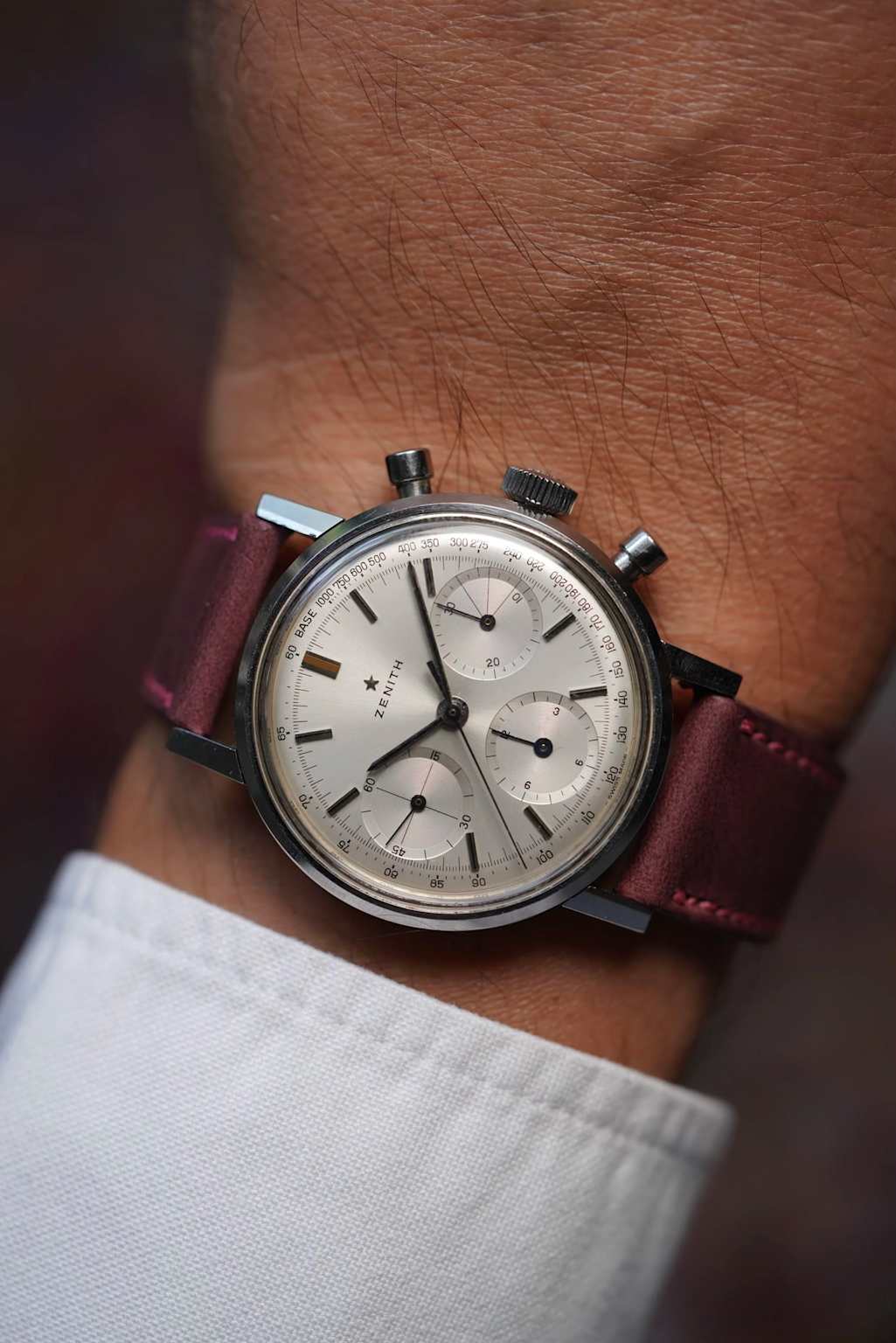
Zenith Reference A273 Chronograph Cal. 146 HP Unpolished
Collector Notes and Market Context
The Zenith A273 occupies a highly valued position in vintage chronograph collecting, respected by serious enthusiasts for its technical quality, elegant design, and remarkable historical significance as one of the final manual-wind three-register chronographs before the El Primero era transformed the category.
Market Values and Positioning
Current Market Values (2024-2025):
Stainless Steel Examples:
- Estimated range: $2,200-4,500 USD
- Exceptional unpolished examples with original dials: $4,000-5,200 USD
Gold-Filled Examples:
Gold Examples:
- Condition and rarity drive substantial premiums
Comparative Value:
The A273 represents exceptional value when compared to contemporary chronographs:
- Vintage Rolex Daytona pre-6239: $15,000-30,000+
- Omega Speedmaster Professional early examples: $8,000-20,000+
- Heuer Carrera 1960s examples: $4,000-10,000+
- Universal Genève Compax examples: $4,000-8,000+
The A273 delivers comparable three-register chronograph complexity, column-wheel sophistication, and 1960s heritage at 40-60% of these alternative references’ prices.
Why the A273 Remains Undervalued
Despite technical excellence and historical significance, the A273 trades below some contemporary chronographs due to several market factors:
Limited Brand Recognition: While Zenith maintains strong reputation among collectors, the brand doesn’t achieve Rolex or Omega’s mainstream familiarity. The A273’s recognition primarily extends within specialized vintage watch communities.
El Primero Dominance: The revolutionary El Primero automatic chronograph became so synonymous with Zenith that earlier manual-wind production was overshadowed. Most casual collectors associate Zenith exclusively with the El Primero.
Documentation Gaps: Compared to brands like Rolex that maintained meticulous records, information about specific Zenith references is less readily available in mainstream sources.
Market Focus: Contemporary enthusiasm for vintage chronographs concentrates on Rolex and Omega, both heavily promoted in popular watch media.
For knowledgeable collectors, these factors create compelling opportunity rather than concern.
Collecting Considerations
Condition Premium:
The vintage market increasingly rewards exceptional condition, with pristine examples commanding 50%+ premiums over average specimens.
Dial Preference:
Silver panda configurations represent the most common and liquid variant. Champagne panda examples attract collectors seeking distinctiveness. Reverse panda variants command attention due to scarcity.
Service History:
An A273 with recent professional service provides immediate wearability. Watches requiring service present opportunities for discount, though complete chronograph service costs ($1,500-2,500 at independent specialists) must be factored into acquisition.
Zenith ref A273 Cailber 146HP Chronograph 1960s
Wearability:
The 37mm diameter and balanced proportions ensure contemporary comfort for wrists from 165mm to 190mm circumference. The manual-wind requirement adds engagement to ownership.
Zenith ref A273 Cailber 146HP Chronograph 1960s
Parts Availability:
The 146HP’s Martel-family basis means fewer specialists possess intimate familiarity compared to movements like the Valjoux 7750. However, experienced chronograph specialists can typically service the movement effectively.
Investment Perspective
The A273 offers compelling value for collectors prioritizing quality and wearability:
- Genuine Zenith chronograph heritage with recognized quality
- Proper column-wheel architecture and sophisticated complication
- Attractive three-register dial layout
- Wearable 37mm sizing
- Relative affordability compared to alternative contemporary chronographs
Realistic expectations acknowledge that the A273 won’t appreciate as dramatically as Rolex Daytonas or Omega Speedmasters, as market enthusiasm concentrates on established collectibles. The reference appeals to collectors who value wearing beautiful vintage chronographs rather than purely investment buyers.
For someone seeking a quality vintage three-register chronograph with proven reliability, the A273 delivers exceptional value.
Conclusion
The Zenith A273 captures the essence of mechanical chronograph design at its finest, representing the pinnacle of manual-wind three-register refinement just before the El Primero automatic chronograph fundamentally altered Zenith’s product strategy and the broader chronograph market. Produced from 1960 to 1969, the A273 embodies elegant proportions, reliable column-wheel architecture, and timeless design that remains relevant and desirable 55+ years after manufacture.
The Caliber 146HP movement represents one of the finest manual-wind chronograph calibers ever produced, combining Martel’s proven column-wheel expertise with Zenith’s finishing standards and reliability expectations. The three-register configuration provides practical chronograph functionality while maintaining visual balance and proportional dial design that emphasizes elegance over visual complexity.
The A273’s 37mm diameter and balanced proportions ensure remarkable wearability for contemporary collectors despite its vintage provenance. The case size appeals to those appreciating compact vintage proportions without the bulk of modern chronographs. The manual-winding requirement connects owners to traditional chronograph experience and ensures the movement receives regular attention promoting longevity.
Market positioning represents perhaps the A273’s most compelling characteristic for value-conscious collectors. At secondary market estimates ranging from approximately $2,200 to $5,200 for steel examples, with gold variants commanding substantial premiums, the A273 delivers genuine Swiss chronograph quality at a fraction of what Rolex, Omega, or Heuer contemporary references command. This value disparity creates opportunities for collectors who appreciate watches for intrinsic qualities rather than brand cachet alone.
For collectors considering an A273, priorities should center on condition and dial authenticity rather than chasing specific variations. An excellent example with original dial, sharp case condition, and proper function delivers more satisfaction than rare variants with refinishing or condition concerns.
The A273’s position in vintage watch collecting reflects broader trends affecting pre-El Primero manual chronographs: technically sophisticated, historically significant, and respectfully appreciated by serious enthusiasts, yet overlooked by mainstream collectors drawn to sport watch legends. This stability benefits collectors prioritizing wearing beautiful watches over speculative appreciation.
In an era when vintage chronographs from recognized brands command values that place them beyond most collectors’ reach, the Zenith A273 reminds us that quality Swiss mechanical chronograph development extended across numerous manufacturers during the 1960s. The watch represents an accessible entry to vintage three-register chronograph ownership, offering proper column-wheel architecture, elegant design, and professional-grade timing capability at prices that remain within reach of serious enthusiasts.
For collectors seeking a legendary final example of pre-El Primero Zenith chronograph excellence, an A273 in good condition represents one of watchmaking’s finest values and a compelling piece of horological history from Swiss mechanical chronograph’s golden age.