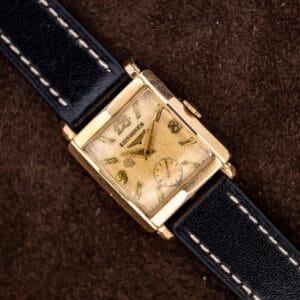
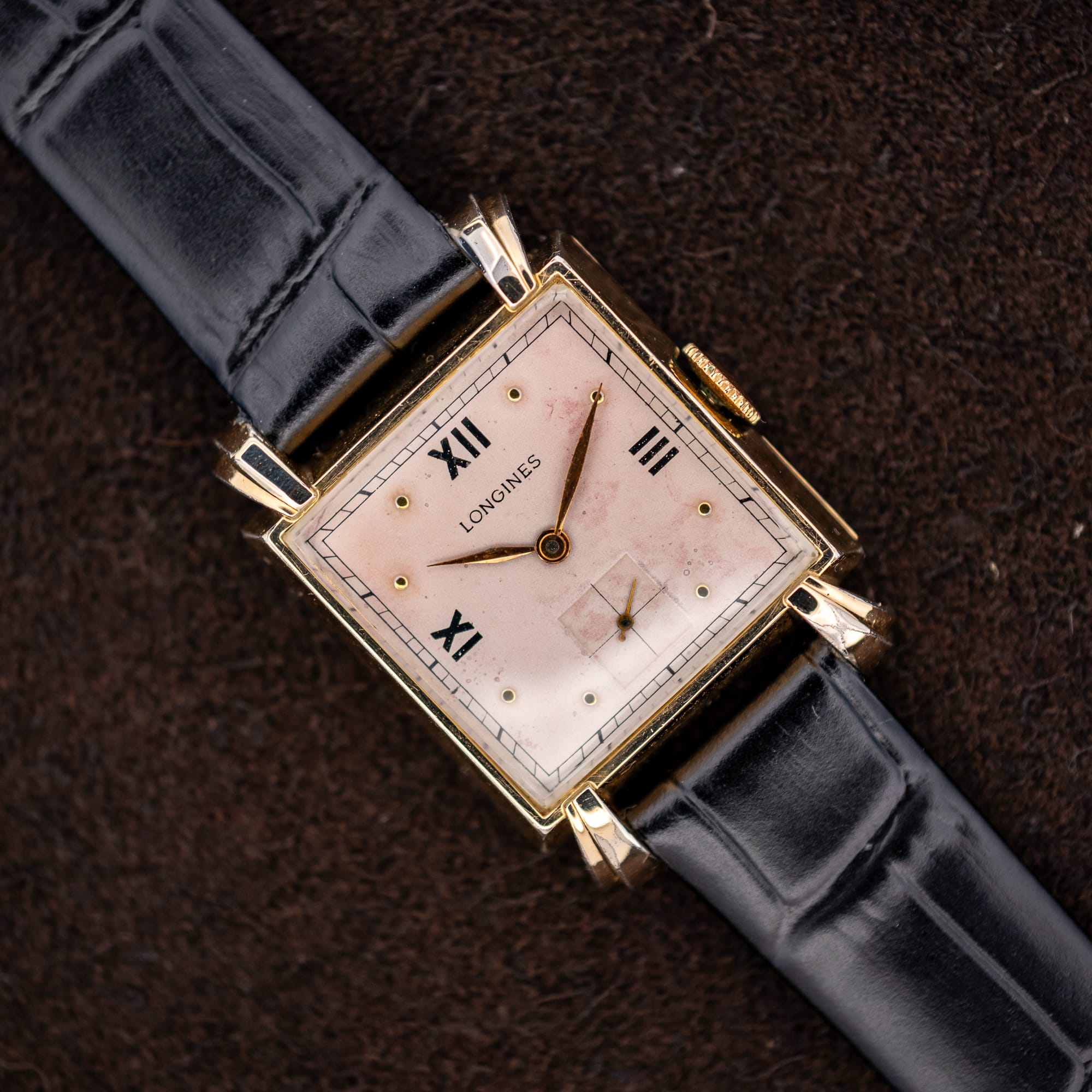
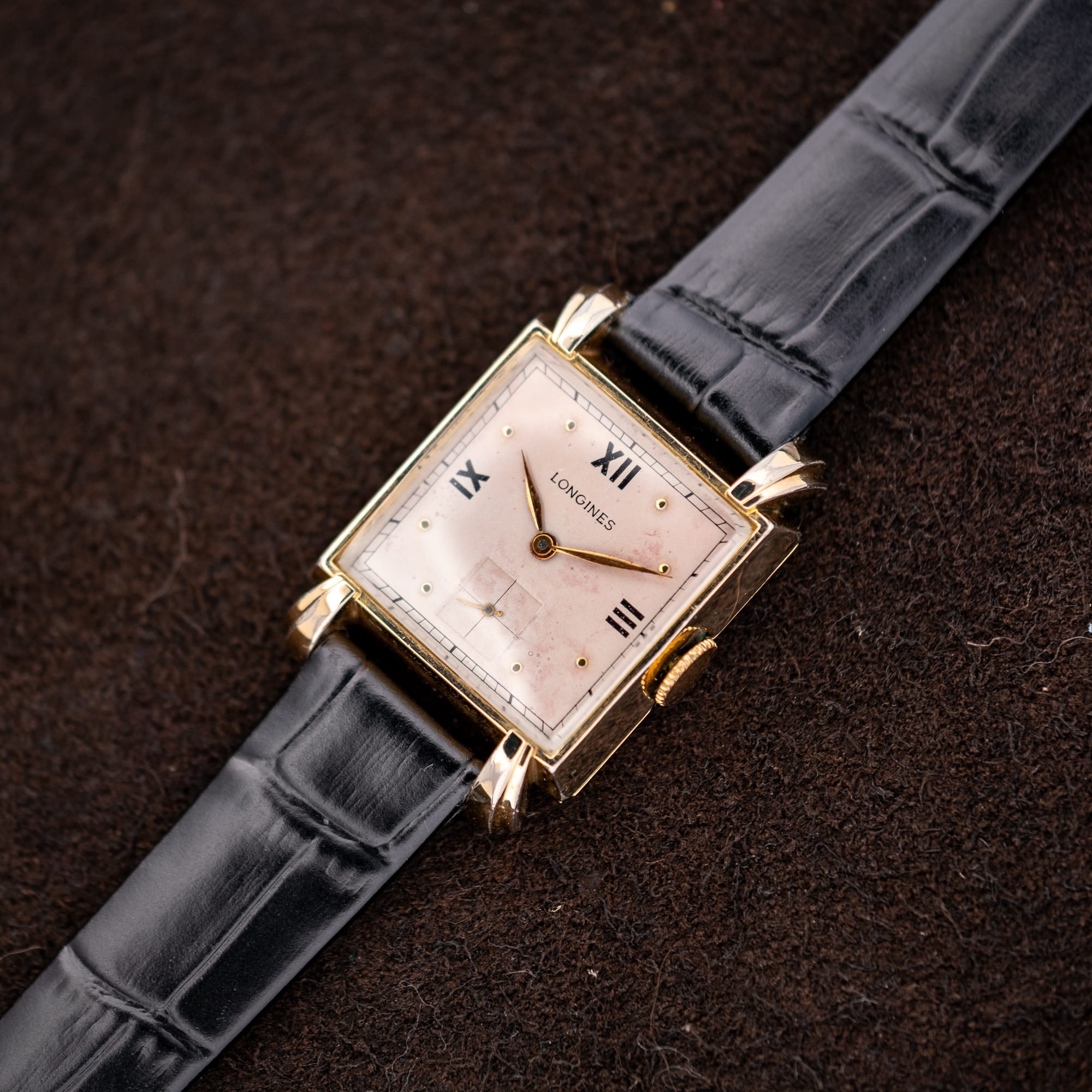
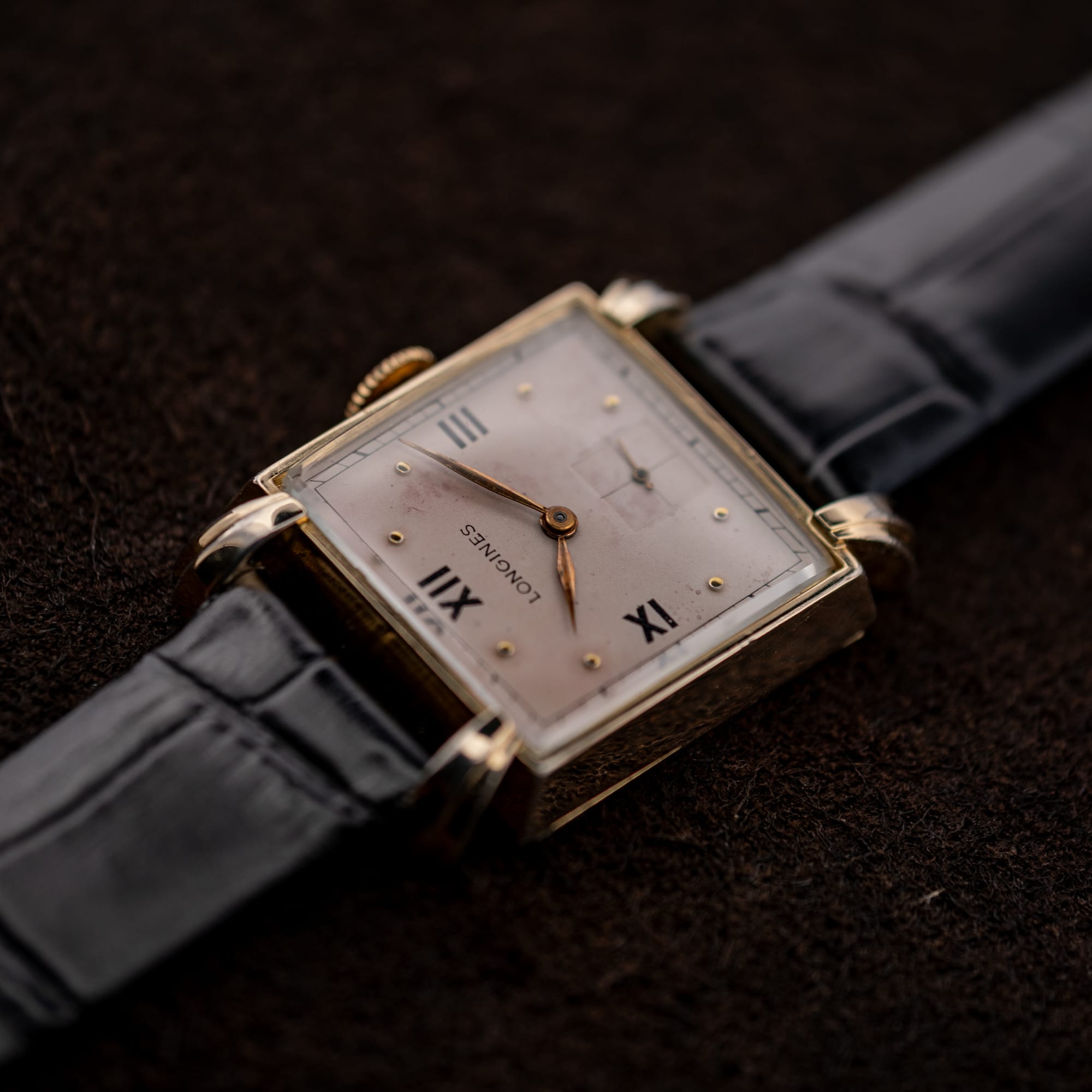
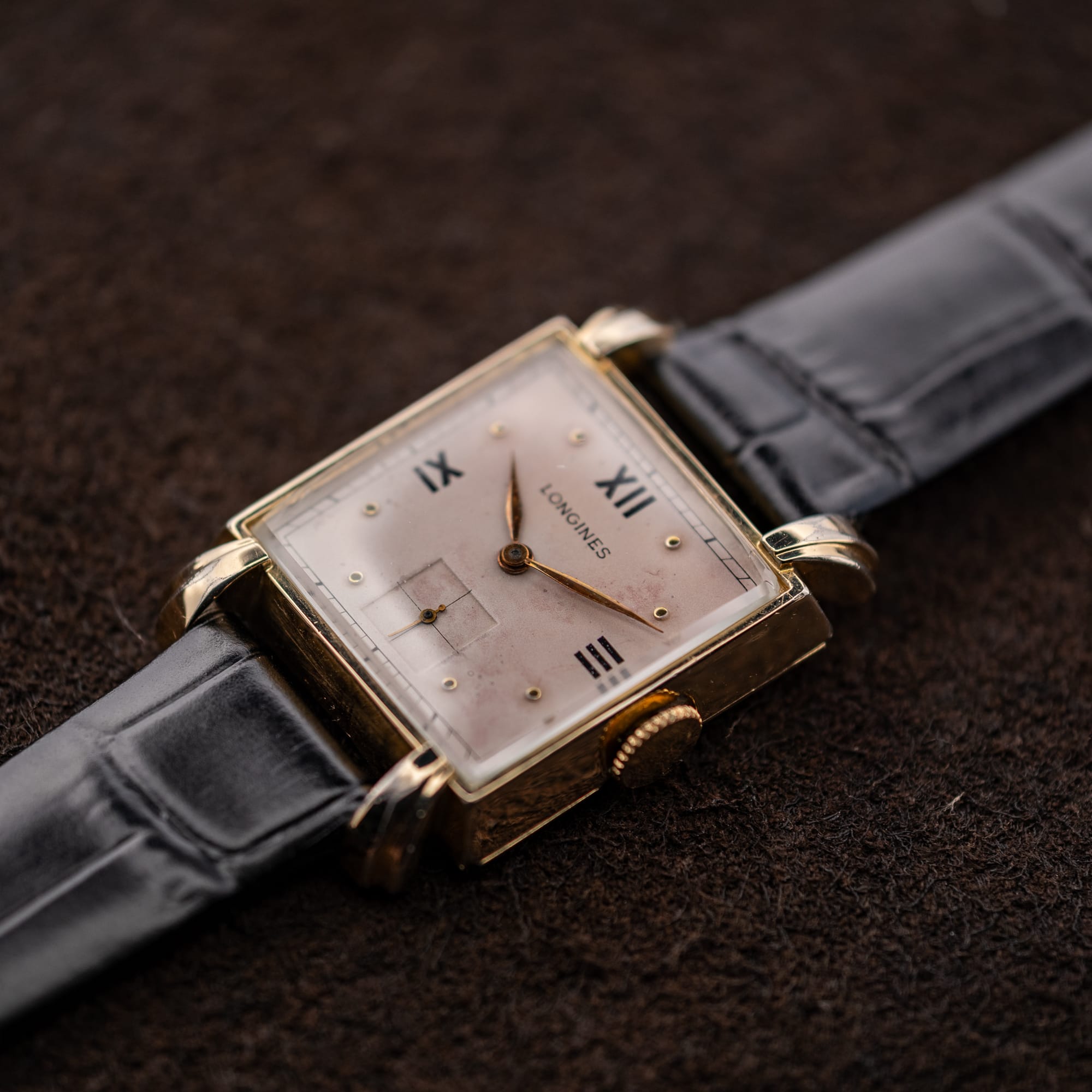
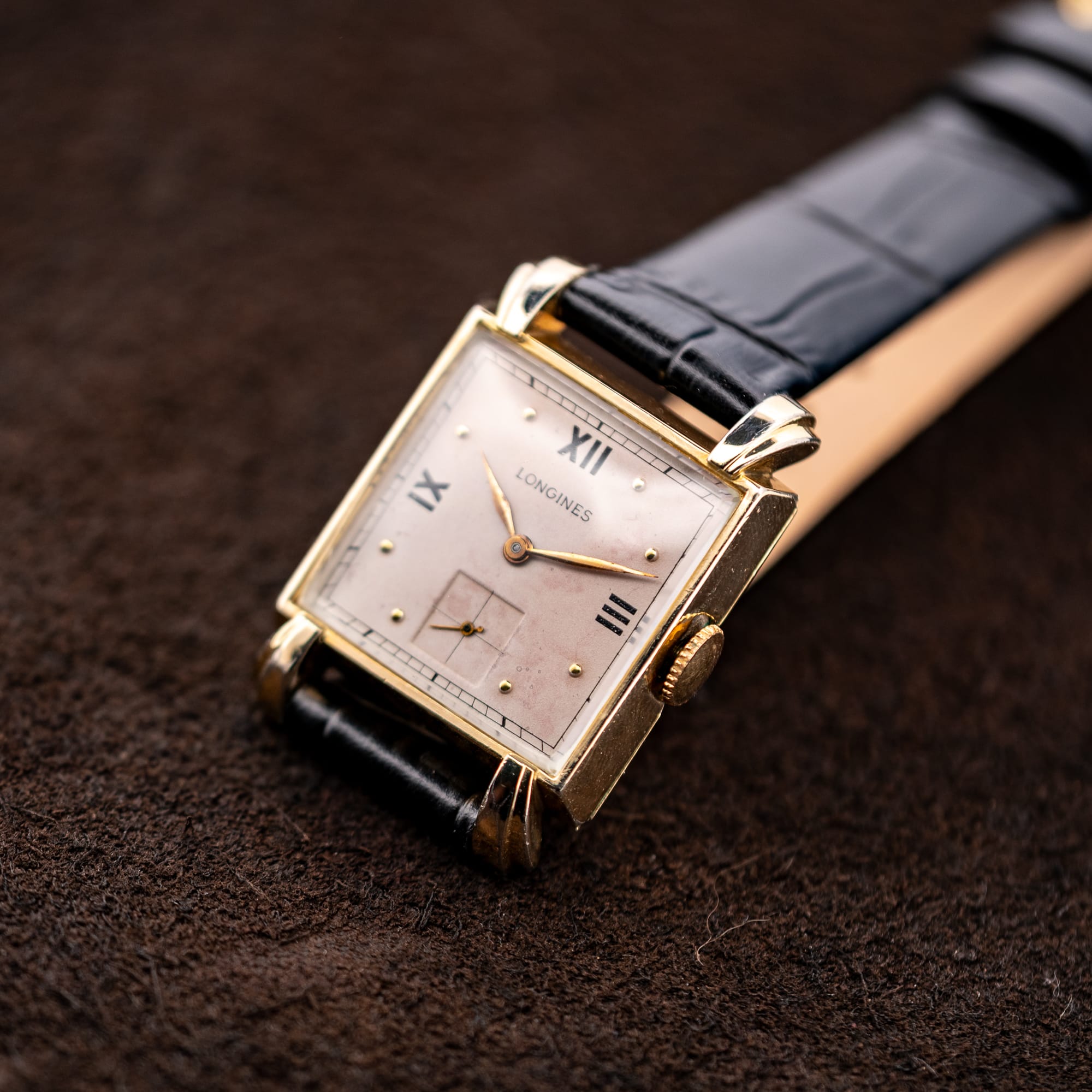
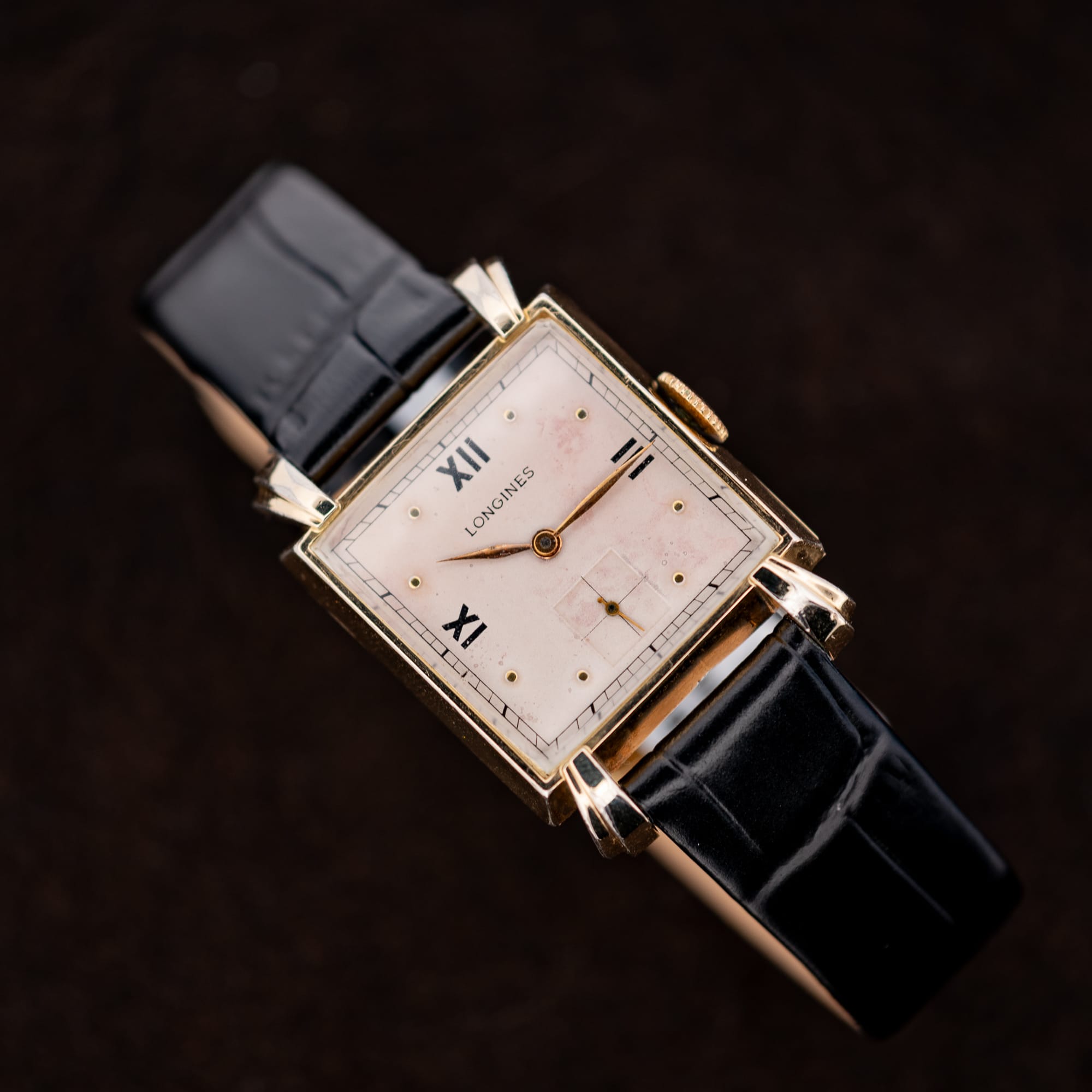
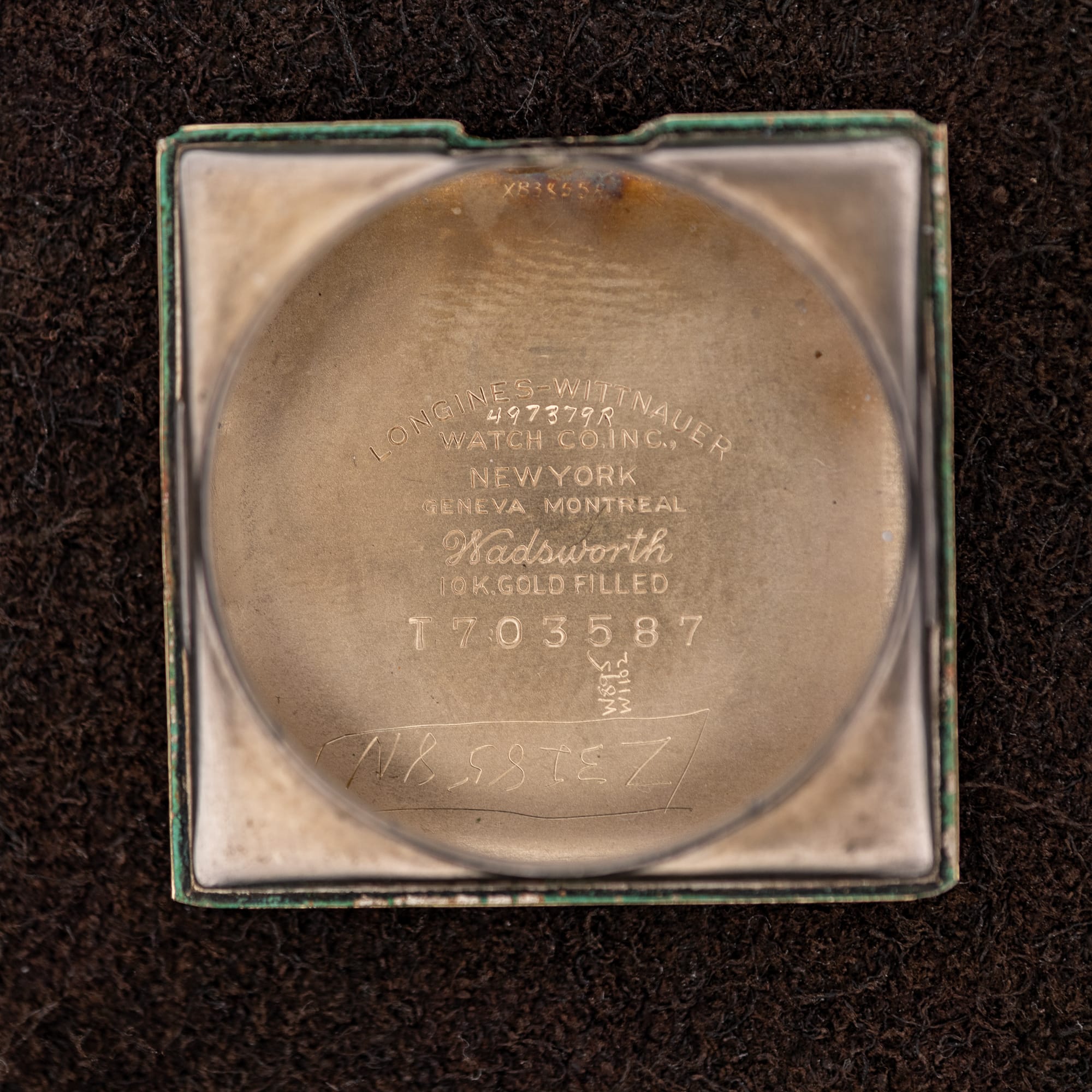

Kentucky is not the first place we expect a Swiss-signed Longines to lead, but this Longines Art Deco square has a second maker’s name inside: Wadsworth. Its movement is Swiss; its case comes from a firm whose watch-case business took root in Kentucky in 1889. That small signature changes the way we read the watch. The Longines 10L has its place in the Swiss maker’s history; the case and its flared lugs invite us into a different workshop, one concerned with the shape around the movement.
A March 1950 profile in Kentucky Business takes us into Wadsworth’s Dayton plant, where designers and die-makers worked together on the frequent changes demanded by the jewelry trade. The account moves between modern production machinery and departments still practicing hand engraving. Wadsworth sold cases to movement manufacturers and importers, supplying American and Swiss watchmakers rather than simply putting its own name on a dial. Gold-filled cases were a longstanding specialty. The decorative work around a movement was a separate business, with its own tools, skills and changing fashions.
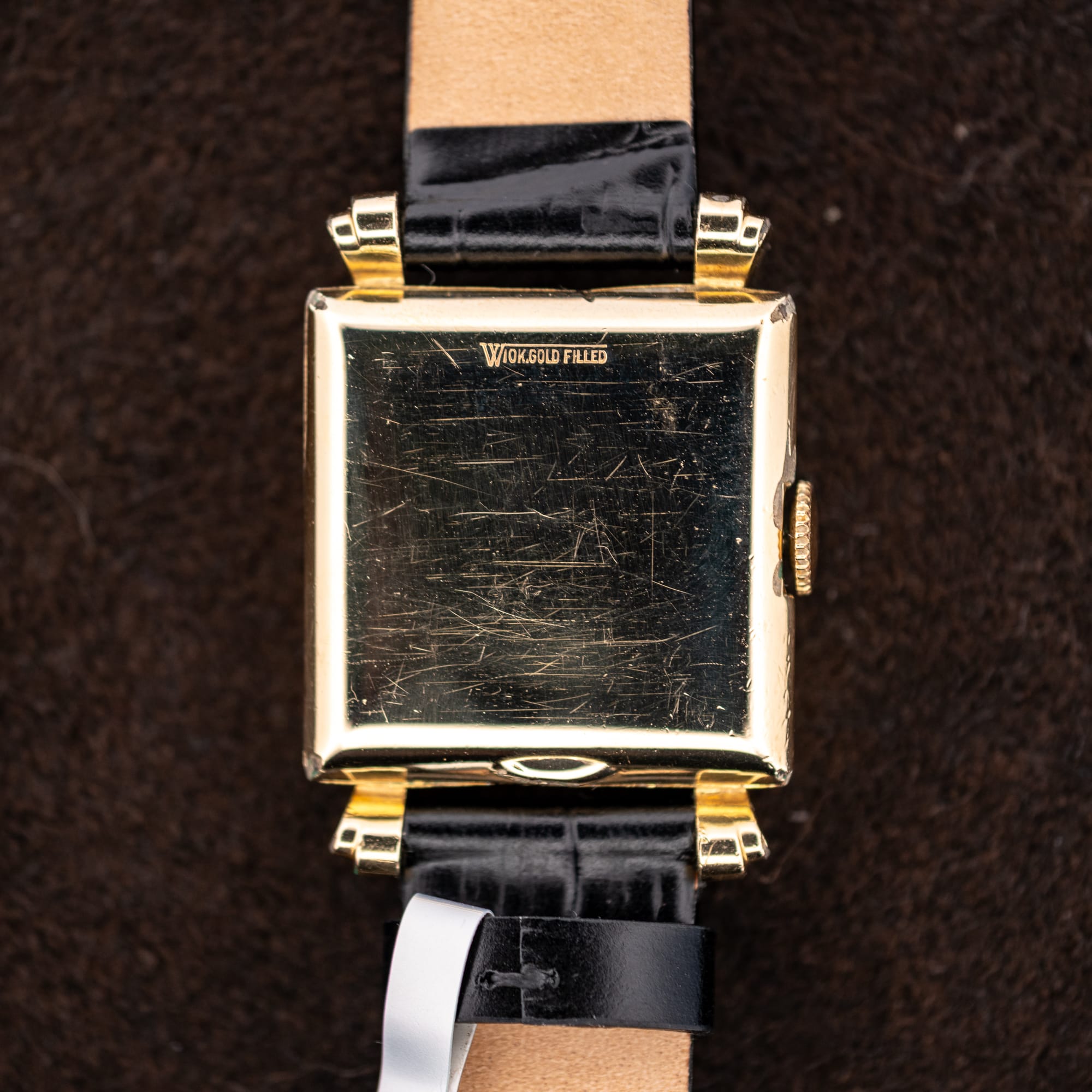
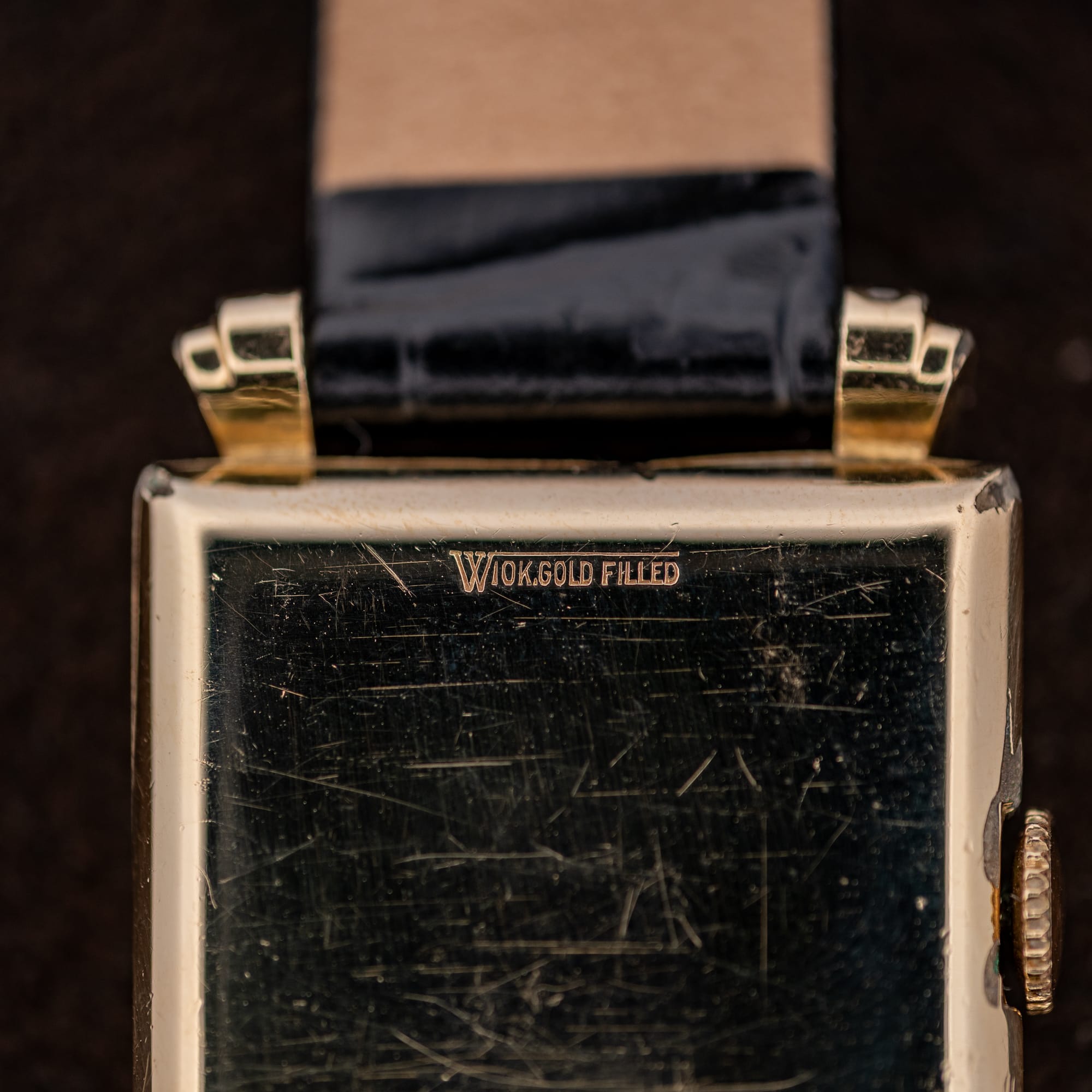
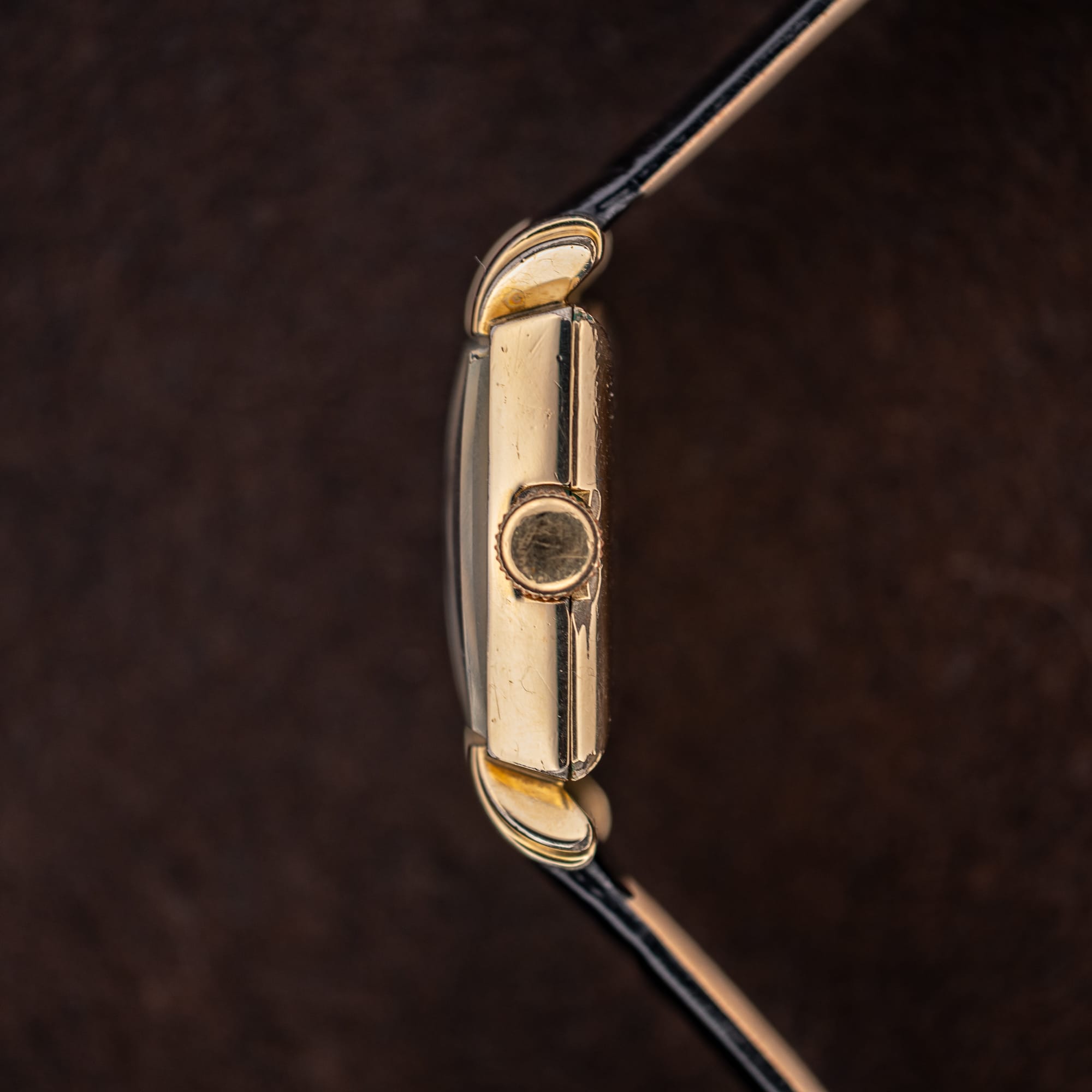
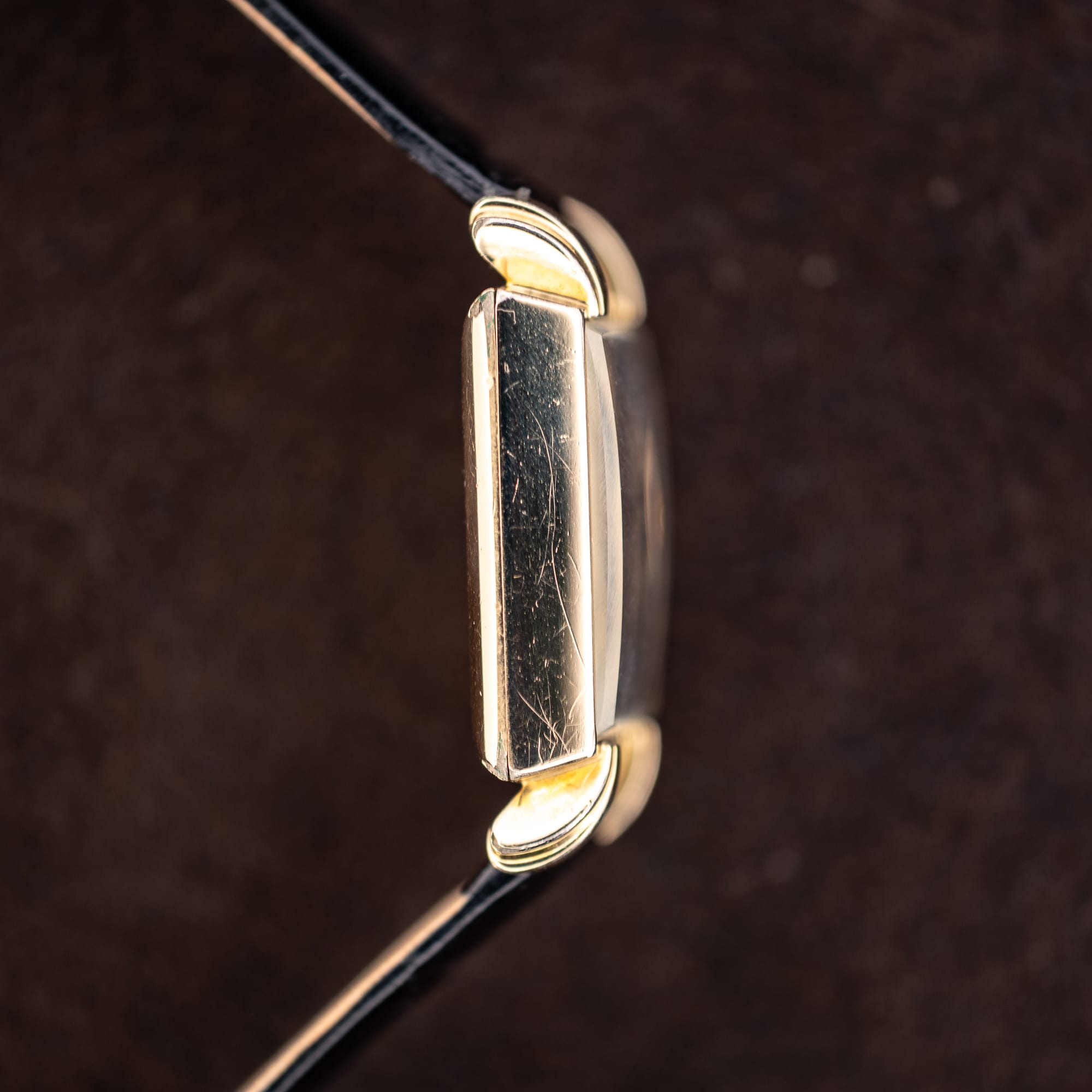
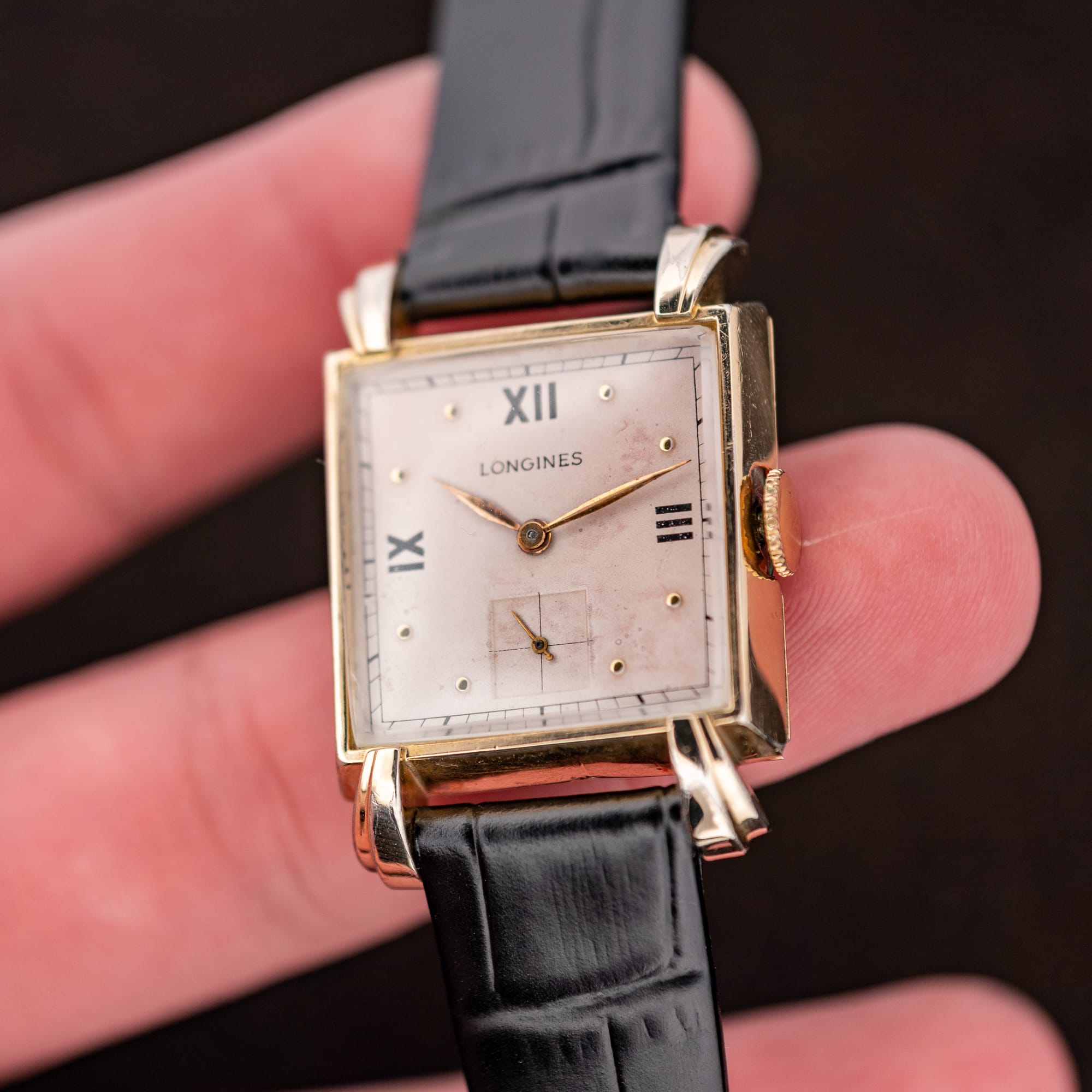
That is useful context for a watch whose four lugs seem almost too expressive for its little square face. We can connect this case to Wadsworth because it is signed inside, not because it resembles another maker’s work. The case also carries the Longines-Wittnauer name. Those marks let the two sides of its manufacture remain distinct, without making the Swiss movement any less Longines.
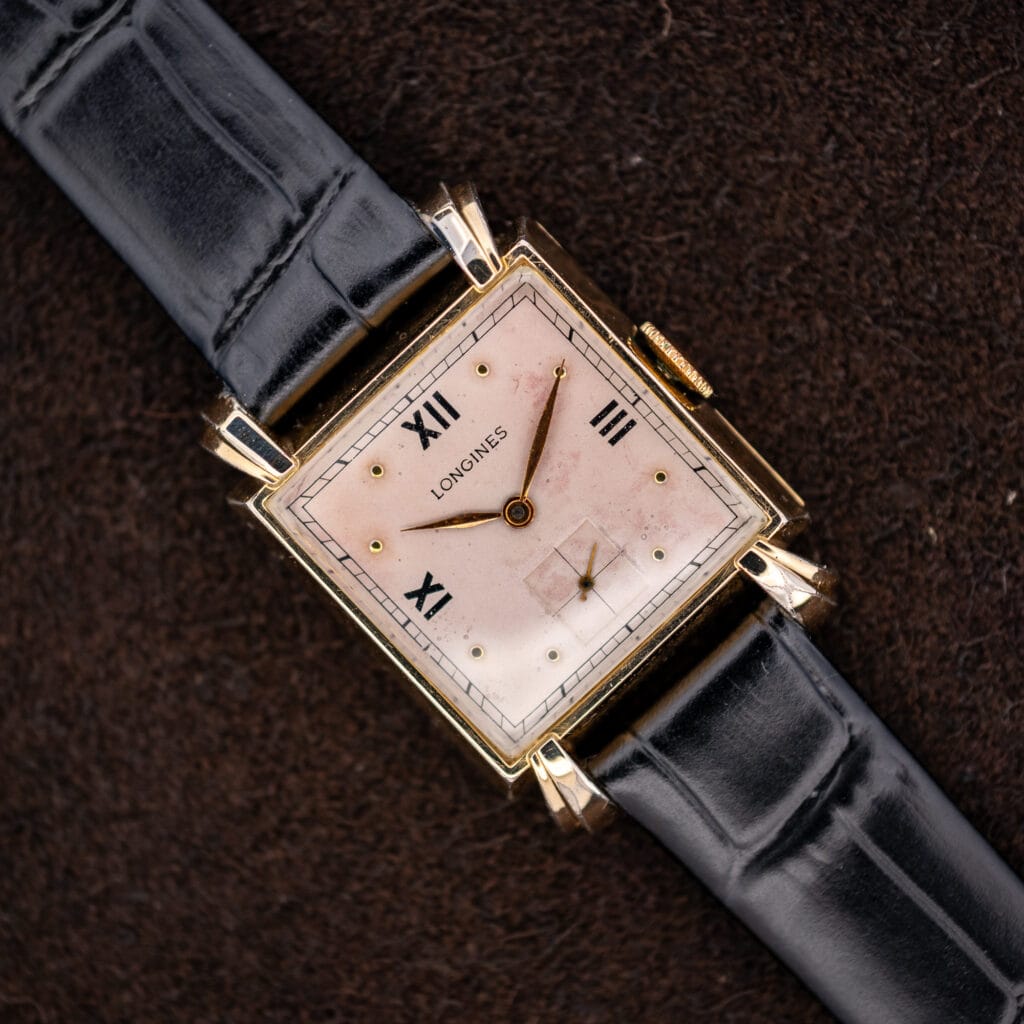
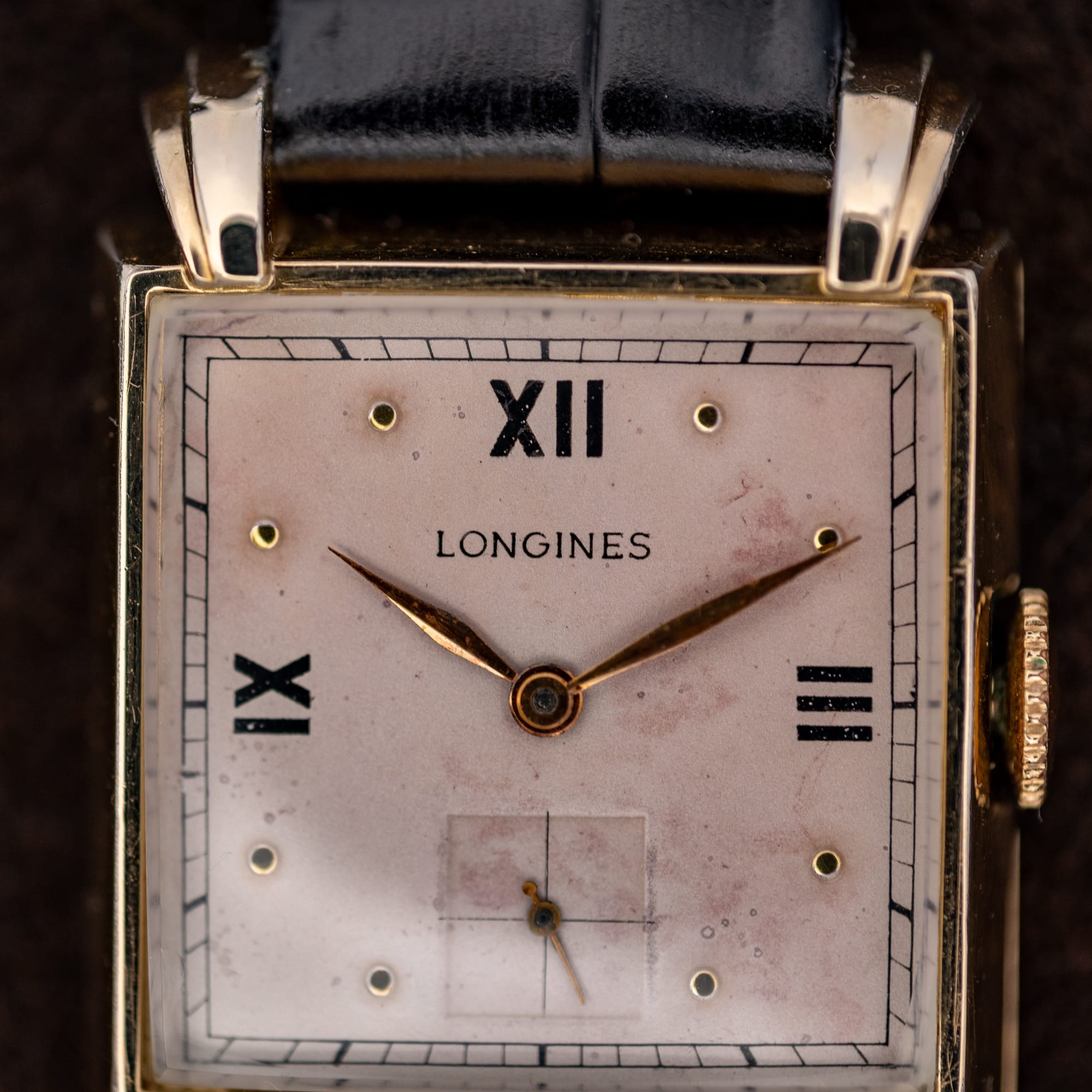
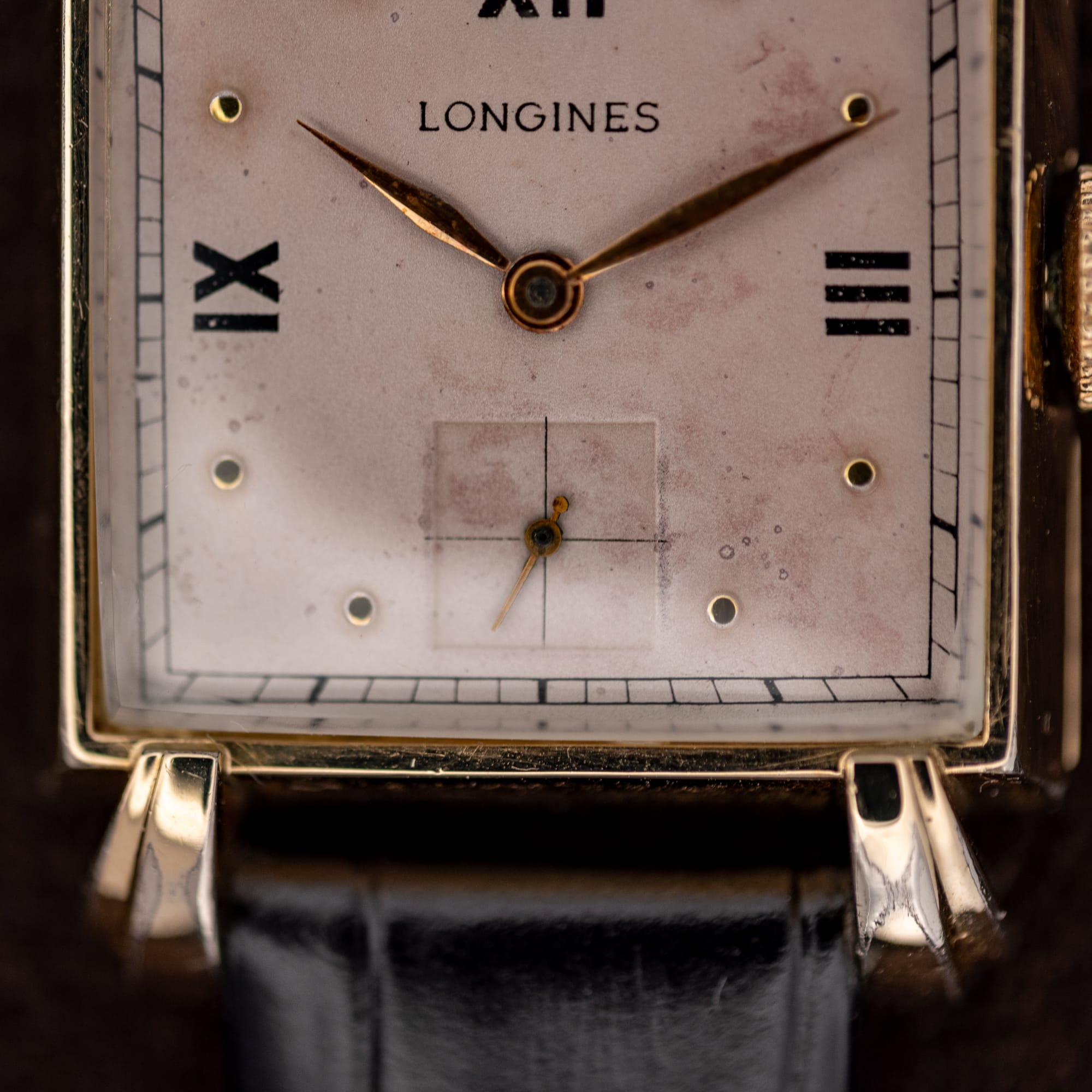
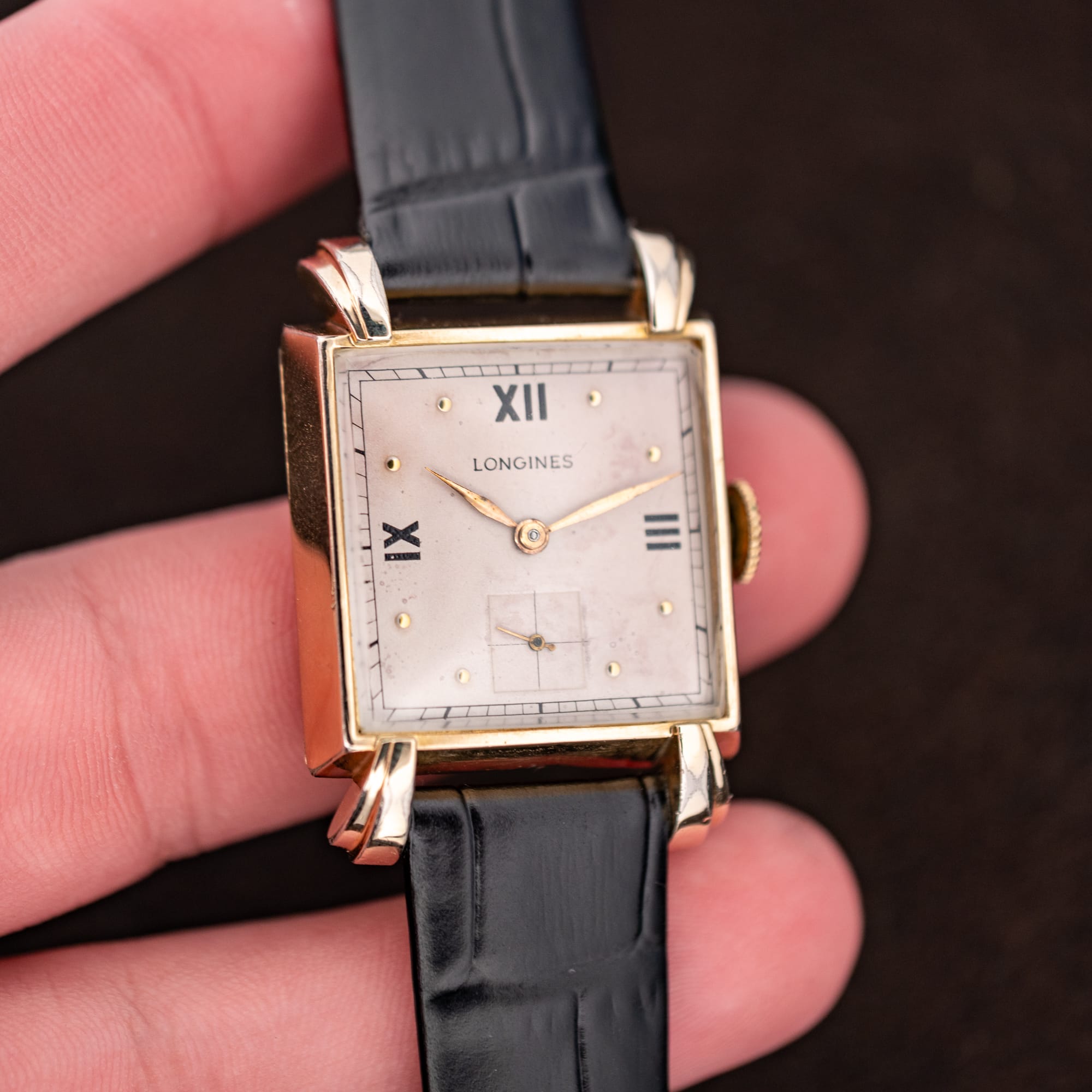
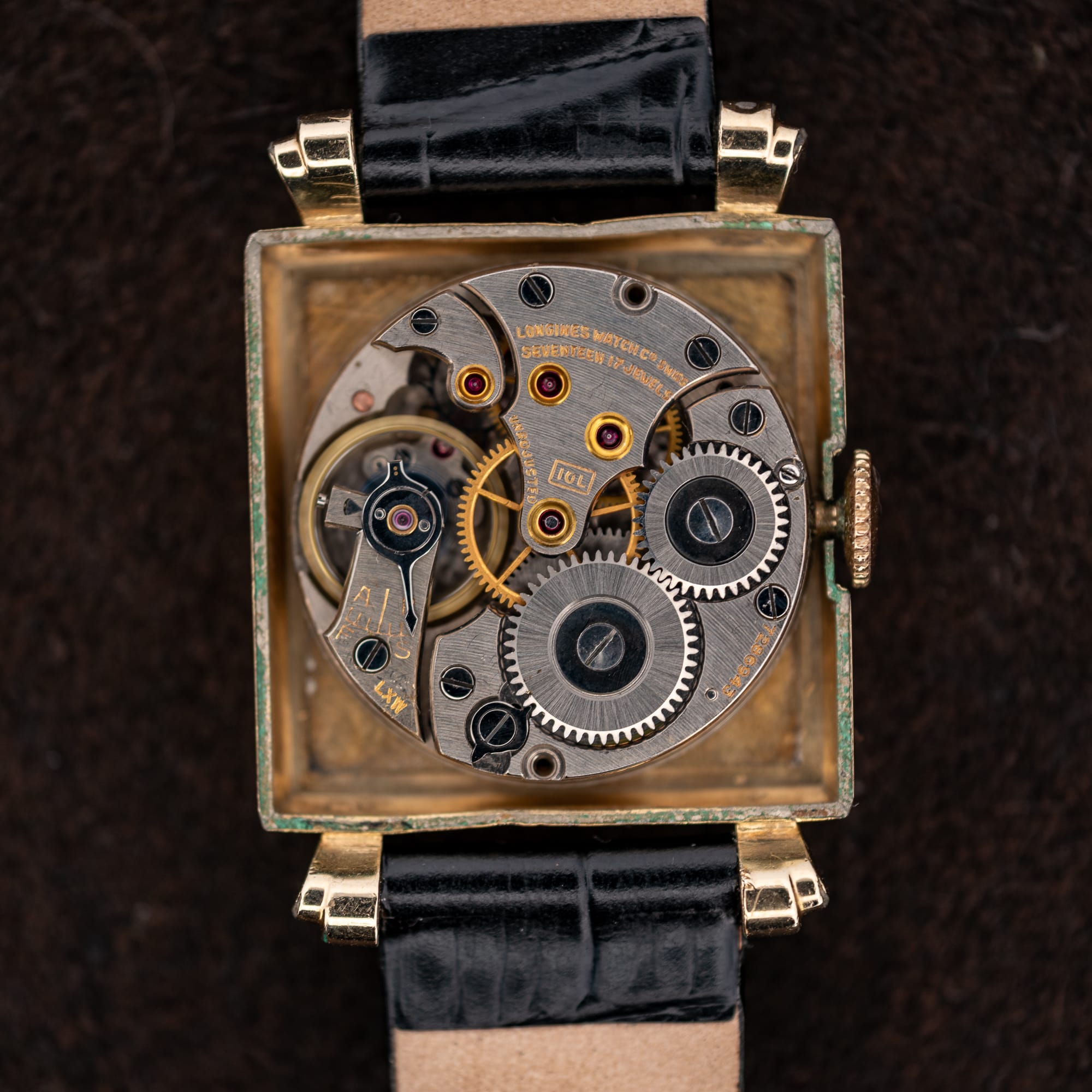
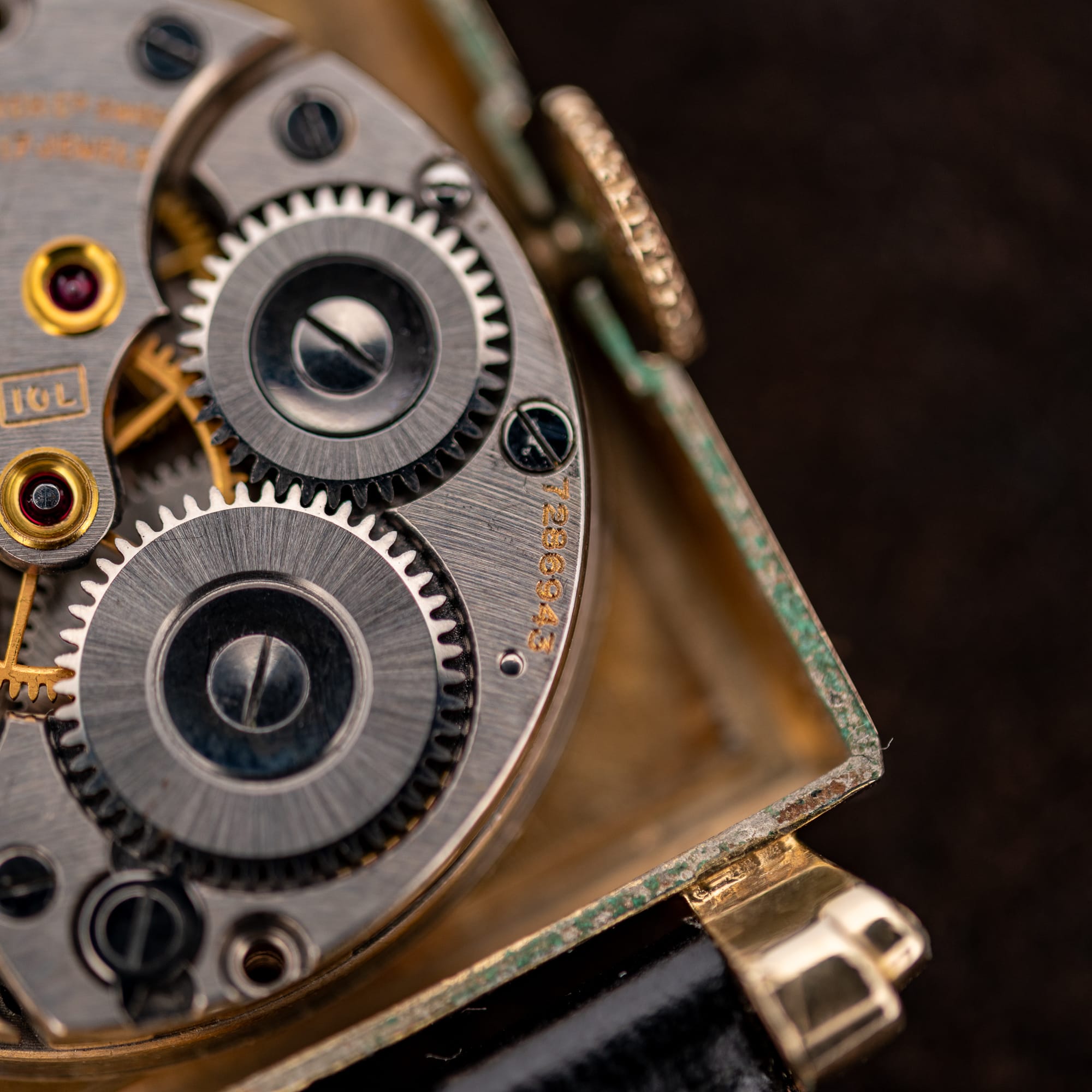
The contrast continues under the back. A round, seventeen-jewel Longines 10L manual-winding movement sits within that square outline, while the dial repeats the case’s geometry in its perimeter minute track and square small-seconds register. We like the decision to interrupt all those straight lines with round hour dots and pointed leaf-shaped hands. It keeps this Longines Art Deco design from becoming severe.
The case measures 26.5mm across and 37.4mm from lug to lug in 10k gold filled, with a black leather strap between 16mm lugs. Roman numerals at twelve, three and nine share the rose dial with applied dots; the seconds occupy their own square at six, and there is no date aperture to break the arrangement. Uneven rose toning and small spots give the dial its individual surface, while light marks on the case accompany the sculpted facets of the lugs.
The Wadsworth name is normally hidden. We find it worth keeping in mind: this compact Longines records not just a Swiss movement, but the case-making trade that gave it its particular shape.