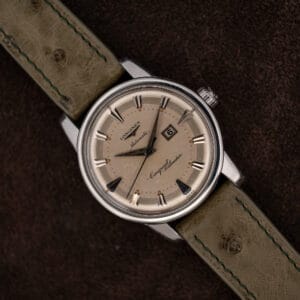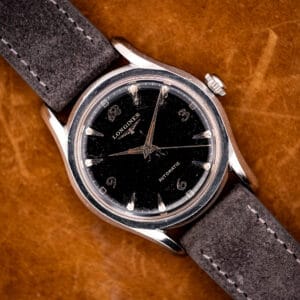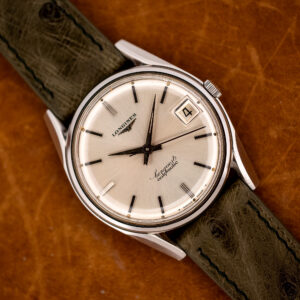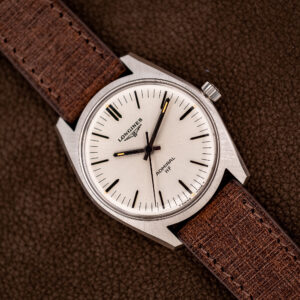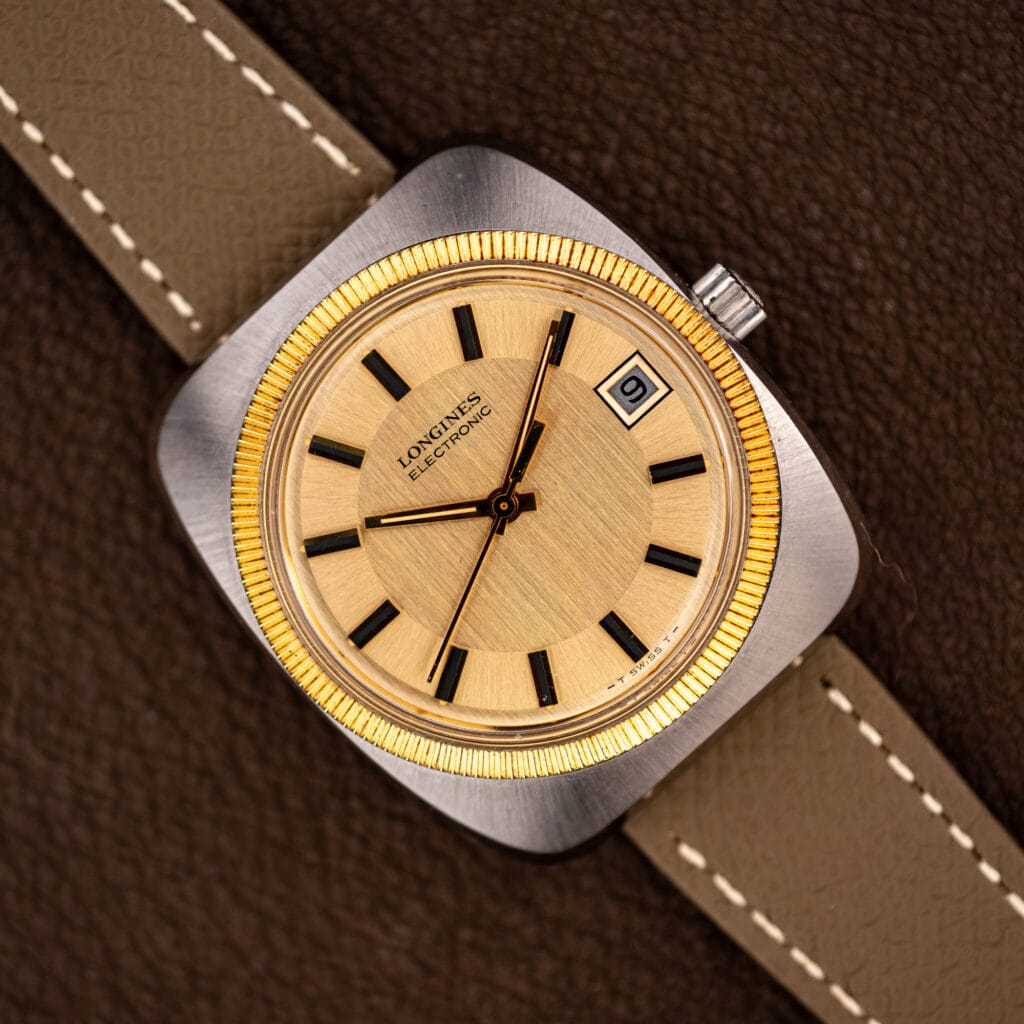
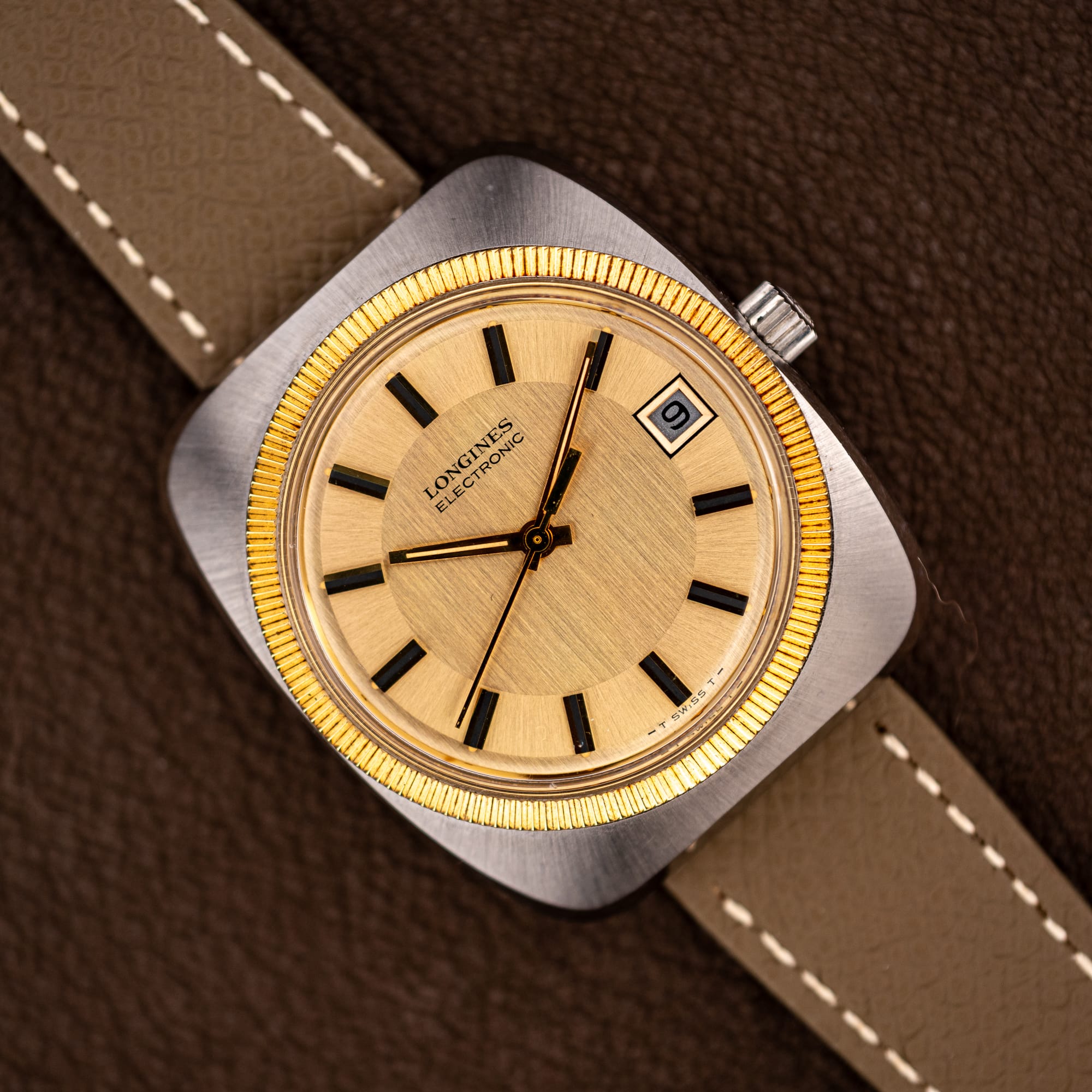
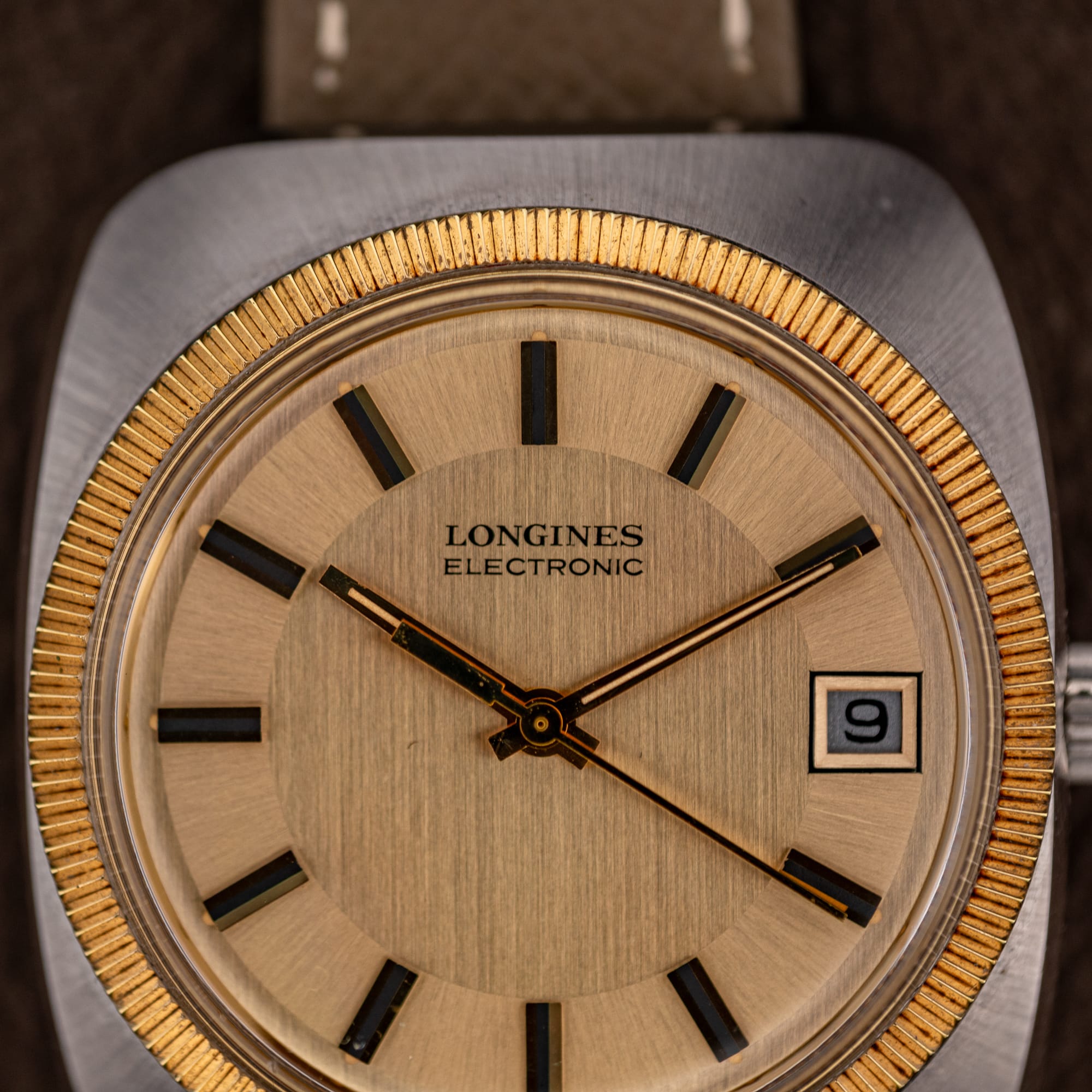
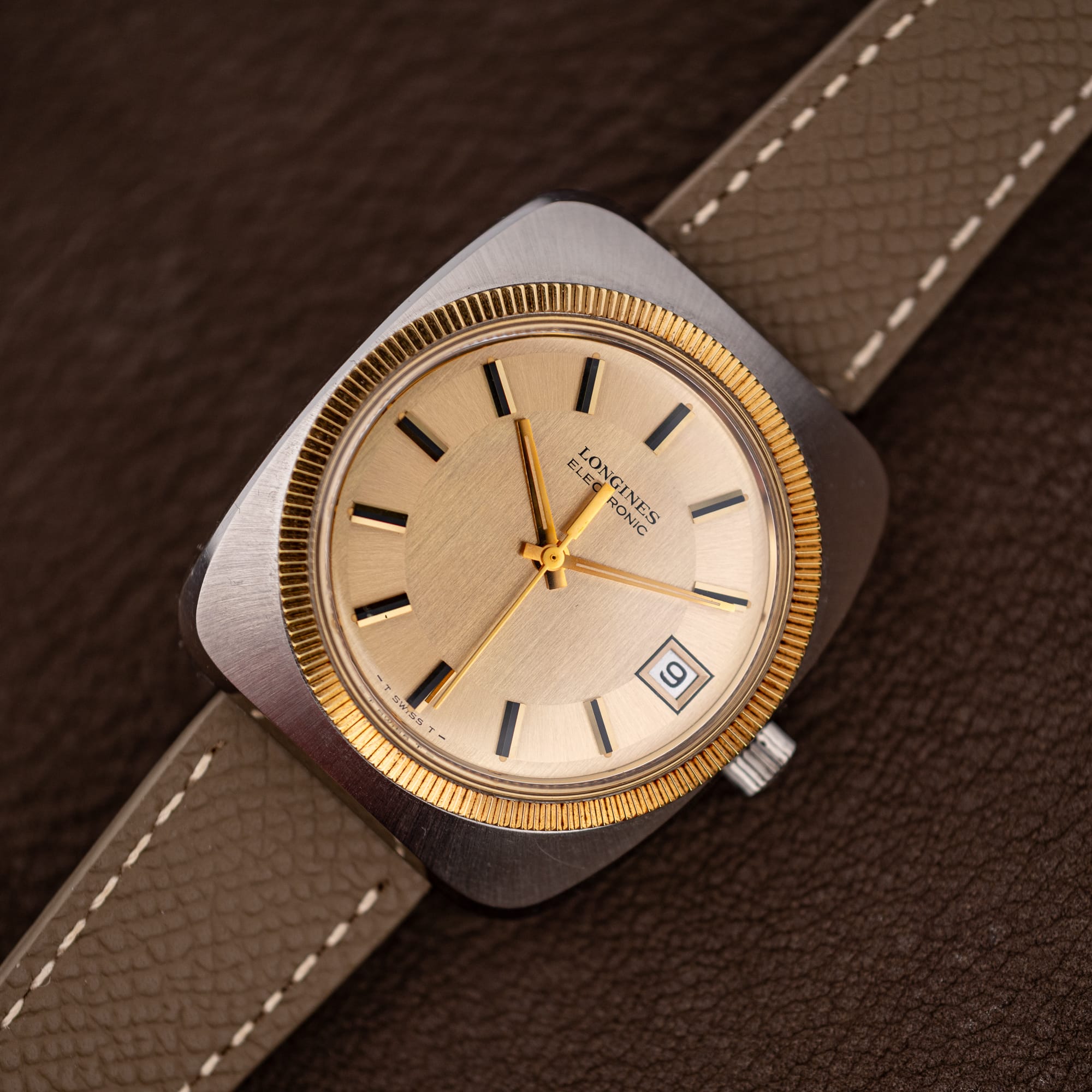
This Longines Electronic runs on a movement Longines did not make, and that is the point rather than the catch.
Longines had the electronics talent. Working with B. Golay SA of Lausanne, its engineers built the caliber L800 and took it to the Neuchâtel Observatory, where in 1965 it won the electronic marine chronometer category with a rating of N = 0.05, zero being perfect. They took the electronic pocket chronometer category the following year. In August 1969 Longines called a press conference in Geneva to announce the Ultra-Quartz as the first production quartz wristwatch, four months before Seiko showed the Astron.
None of that reached the shop counter. The Ultra-Quartz needed another two years to arrive, and only about two thousand were ever built. This is not one of them. It is the other thing Longines was selling in those years, an electric watch with a battery and a balance wheel, built on an ebauche bought in from Ebauches SA.
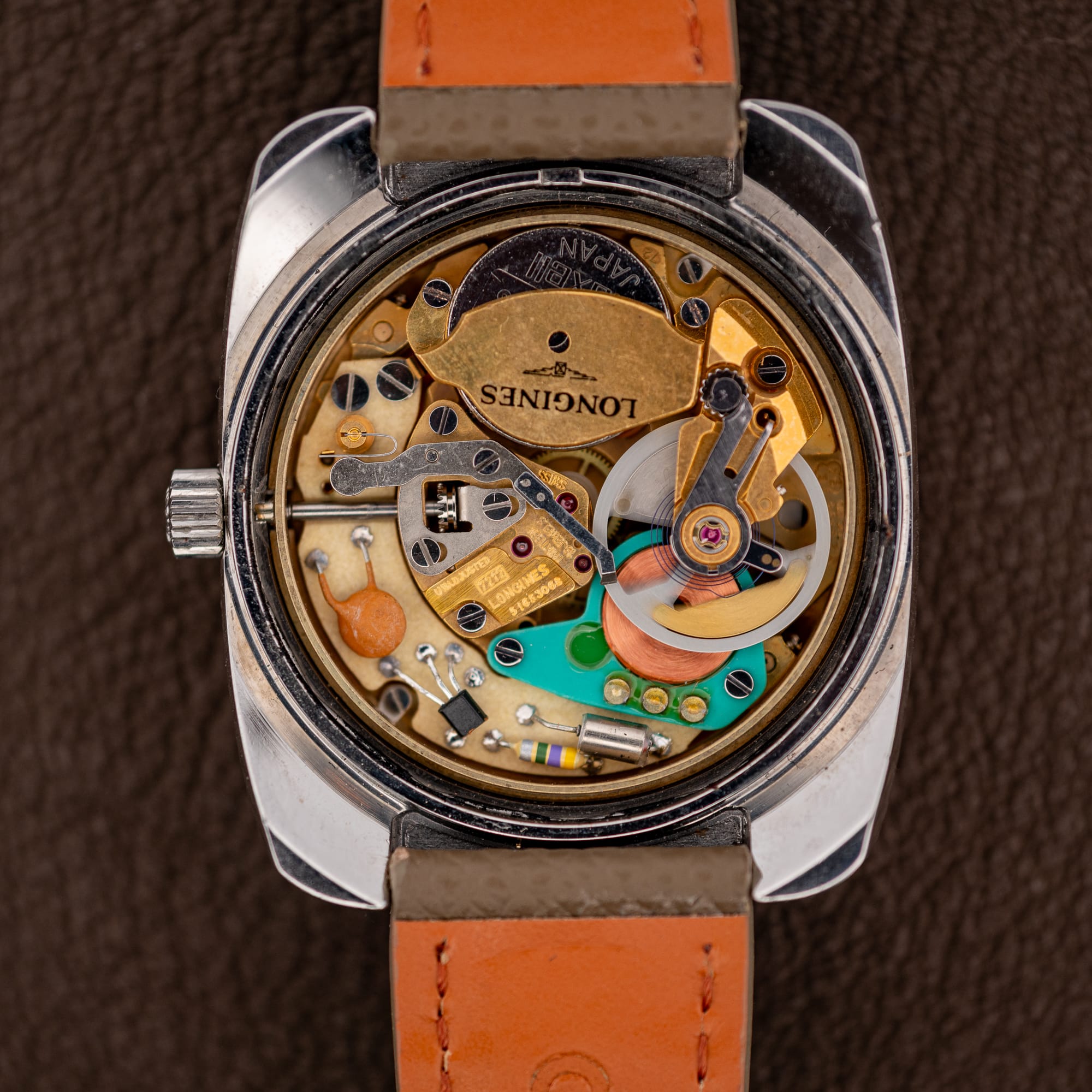
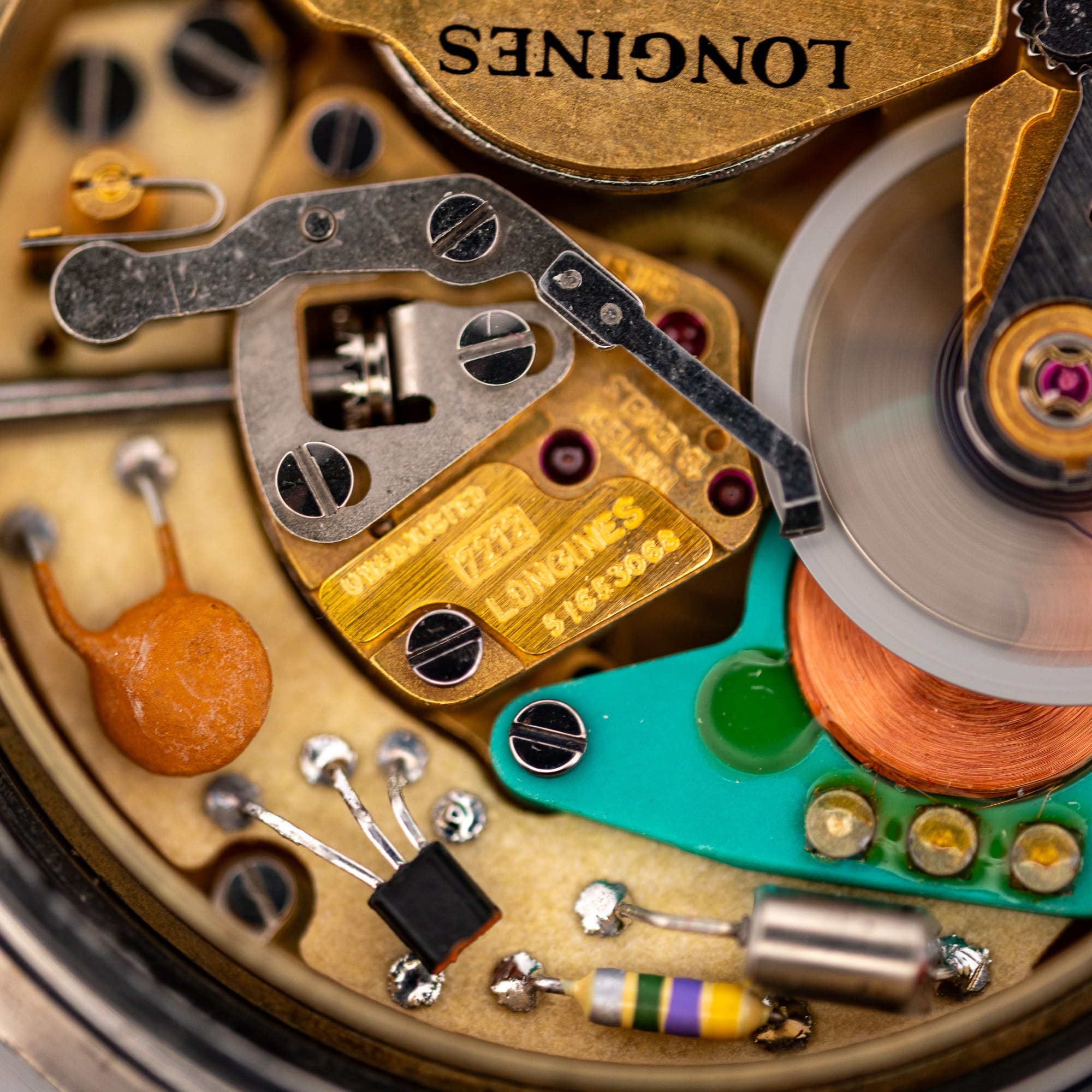
The problem those ebauches solved was famous. Hamilton had put the first battery-powered wristwatch on the market in 1957 and it kept coming back: the contacts feeding current to the balance bent and burned, and the warranty claims did real damage to the company. Ebauches SA answered in 1967 with the Dynotron, the first watch movement to pair a balance wheel with a transistor. The transistor did the switching, so there were no contacts left to burn. Longines badged its version 7212. It runs thirteen jewels at 28,800 beats an hour, which is eight ticks a second from a balance wheel with no mainspring behind it.
What we like is that the whole transition sits in one movement, visible at once. Take the back off and there is a balance wheel turning on ruby jewels beneath a gilt Longines bridge, and next to it a small circuit board carrying a transistor, a banded resistor and a coil of copper wire. The plate is stamped UNADJUSTED above the caliber number, which sounds worse than it is. American import duty on Swiss movements was tiered by how many positions a movement had been adjusted in, and the word was permitted on the plate from 1913. It appears on high-grade calibers too. It is a customs record, not a verdict.
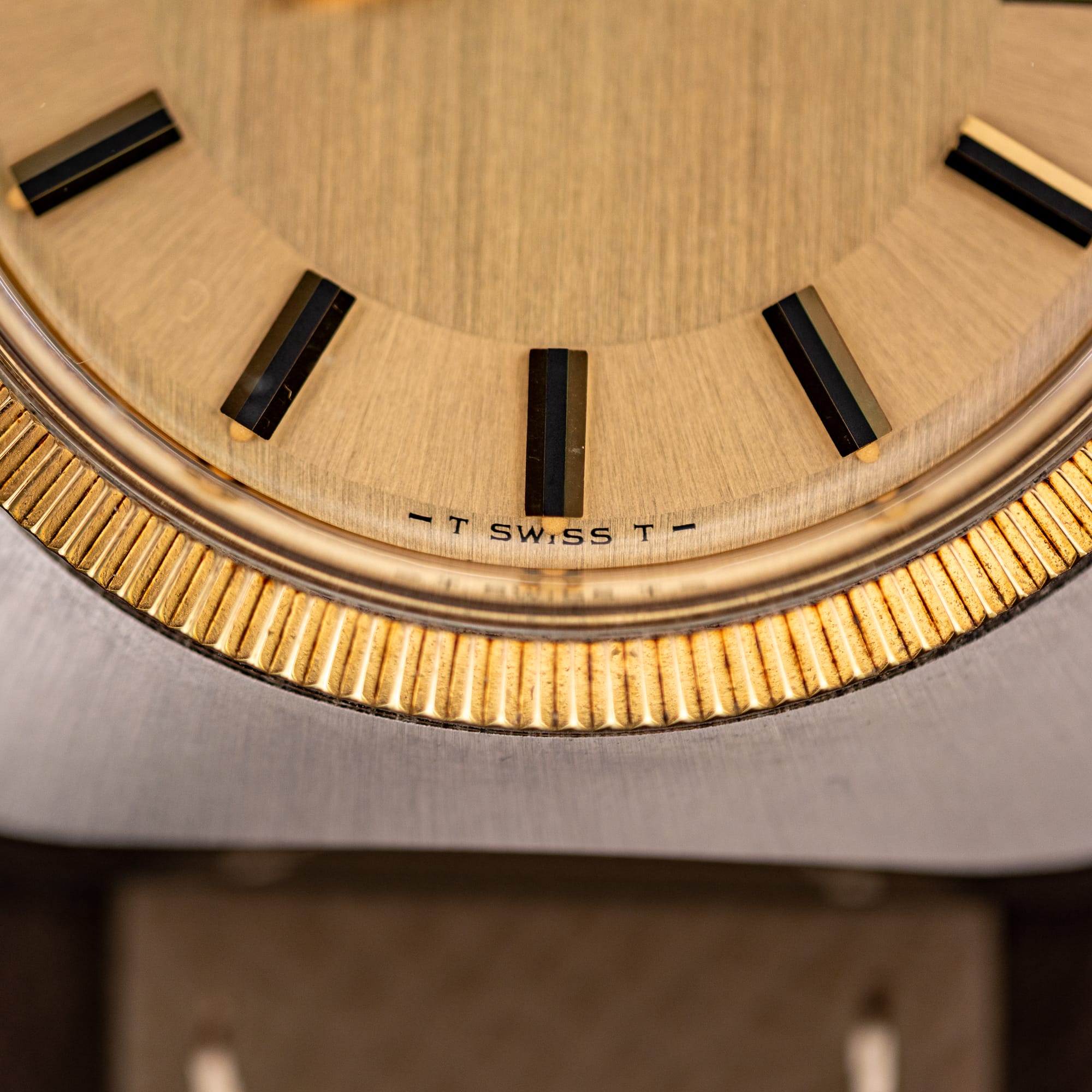
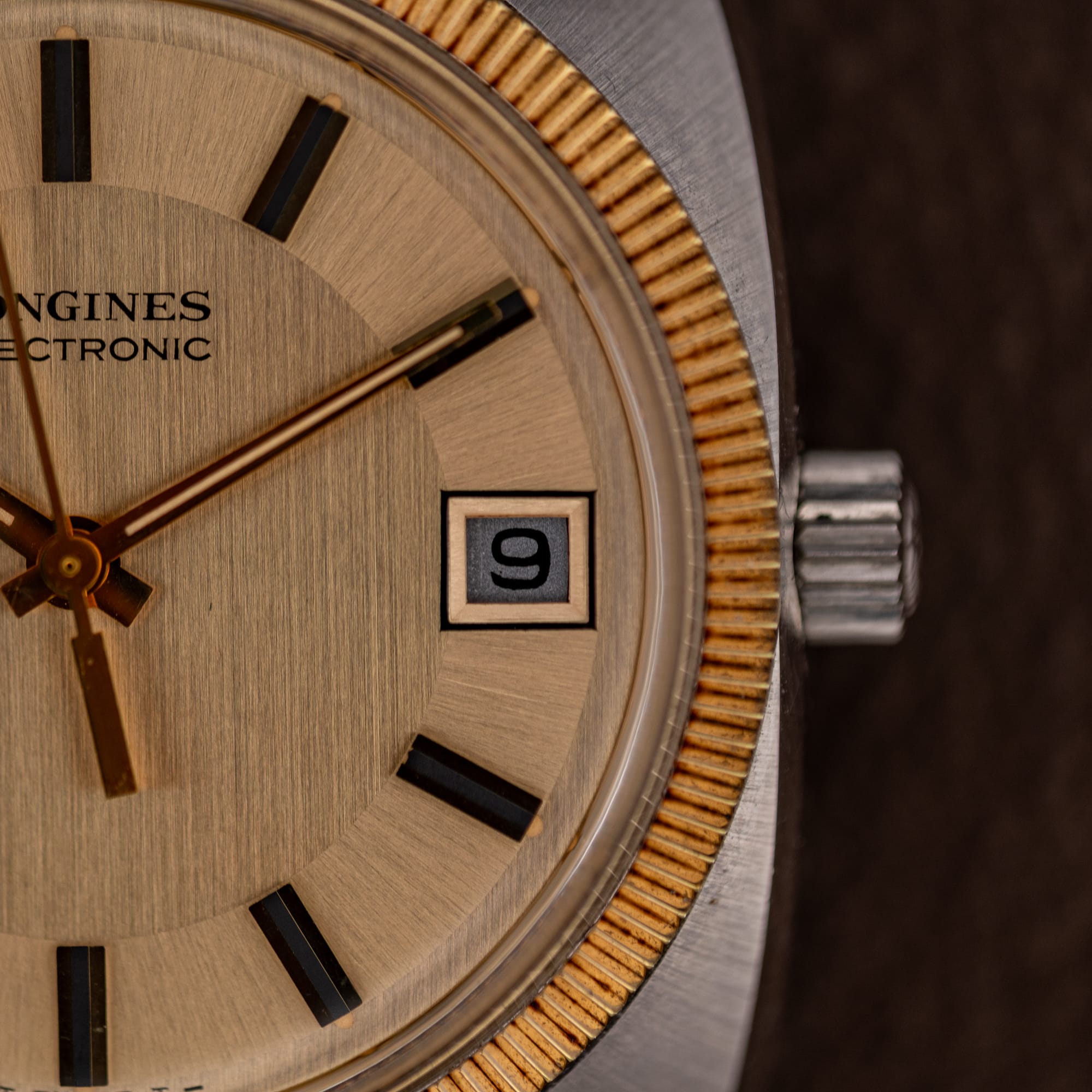
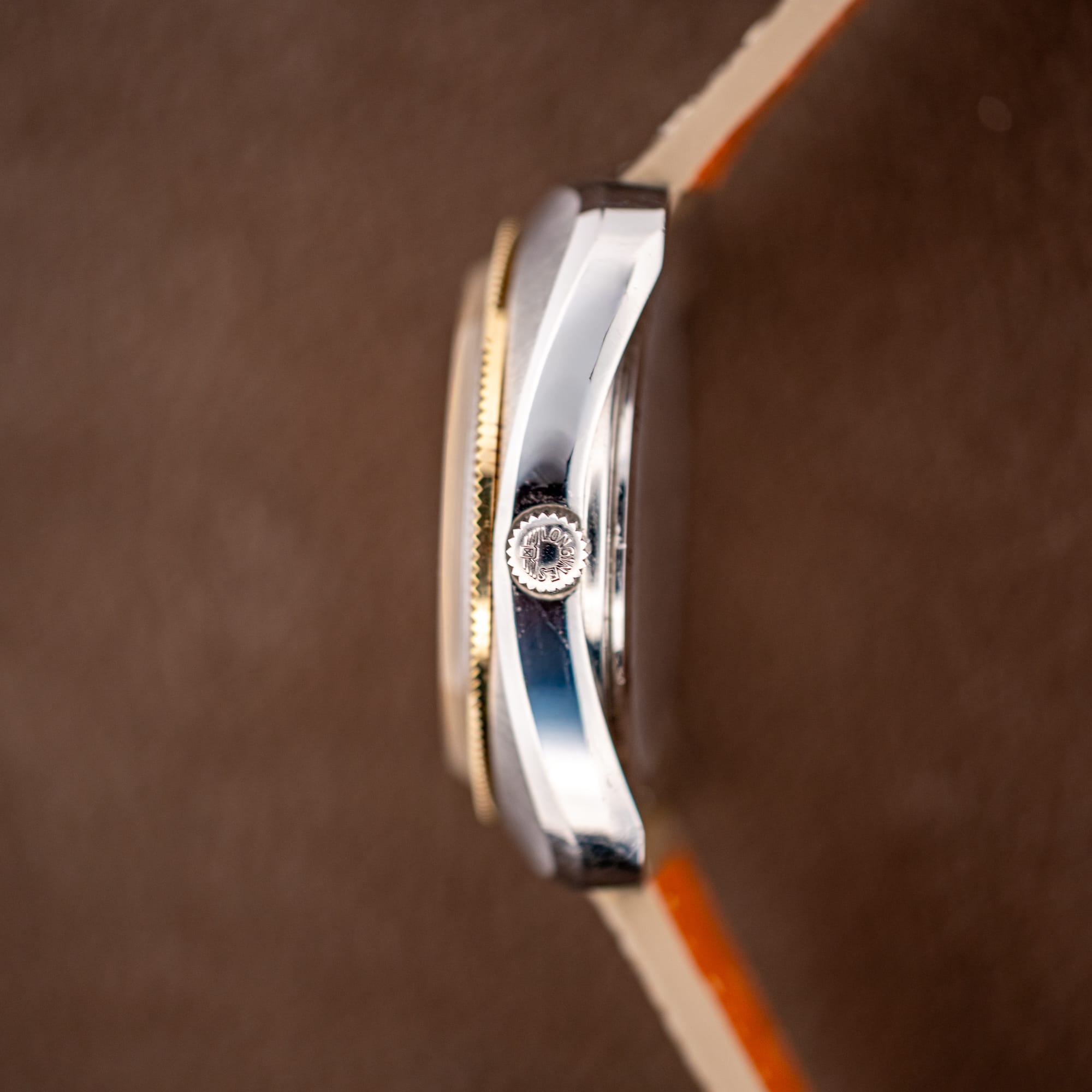
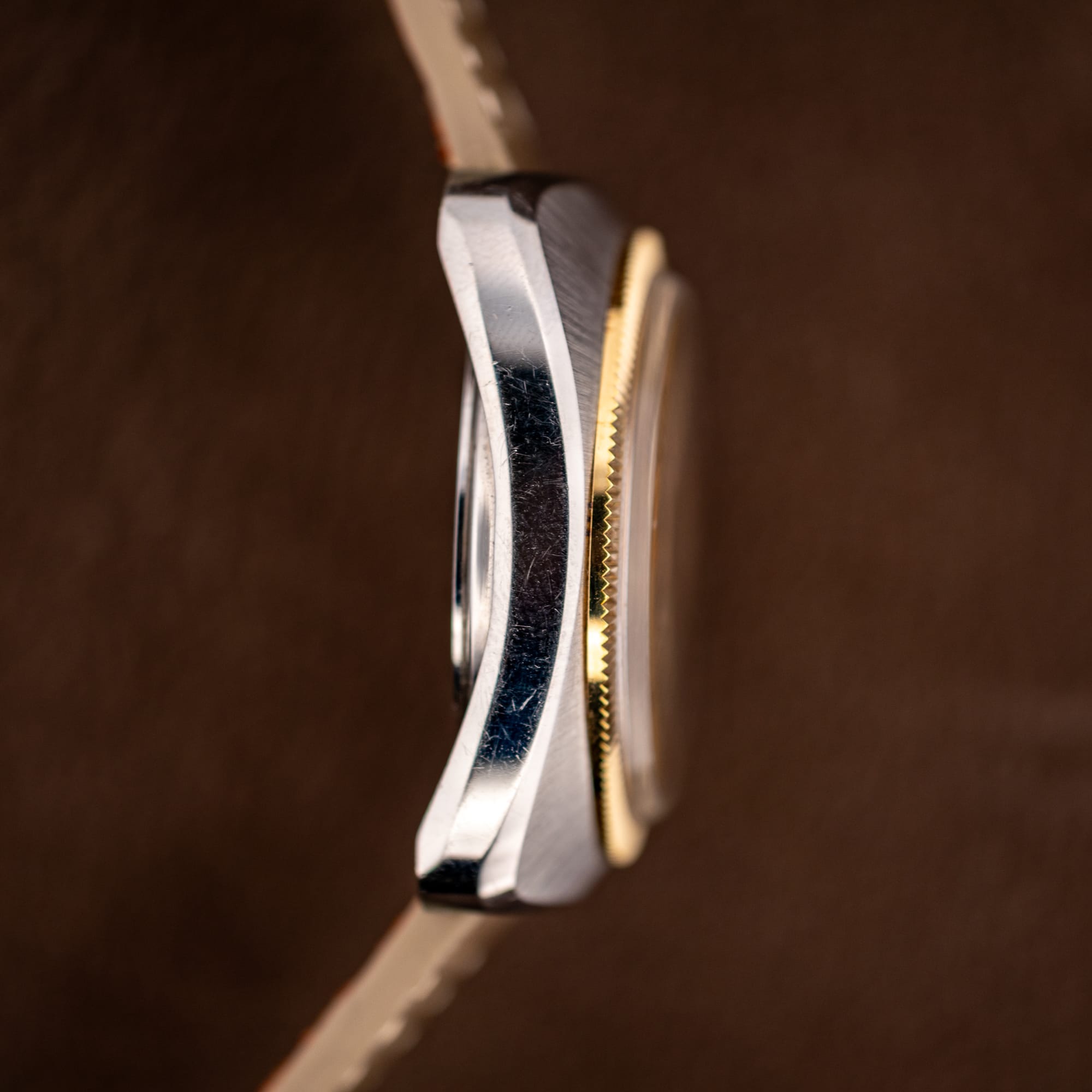
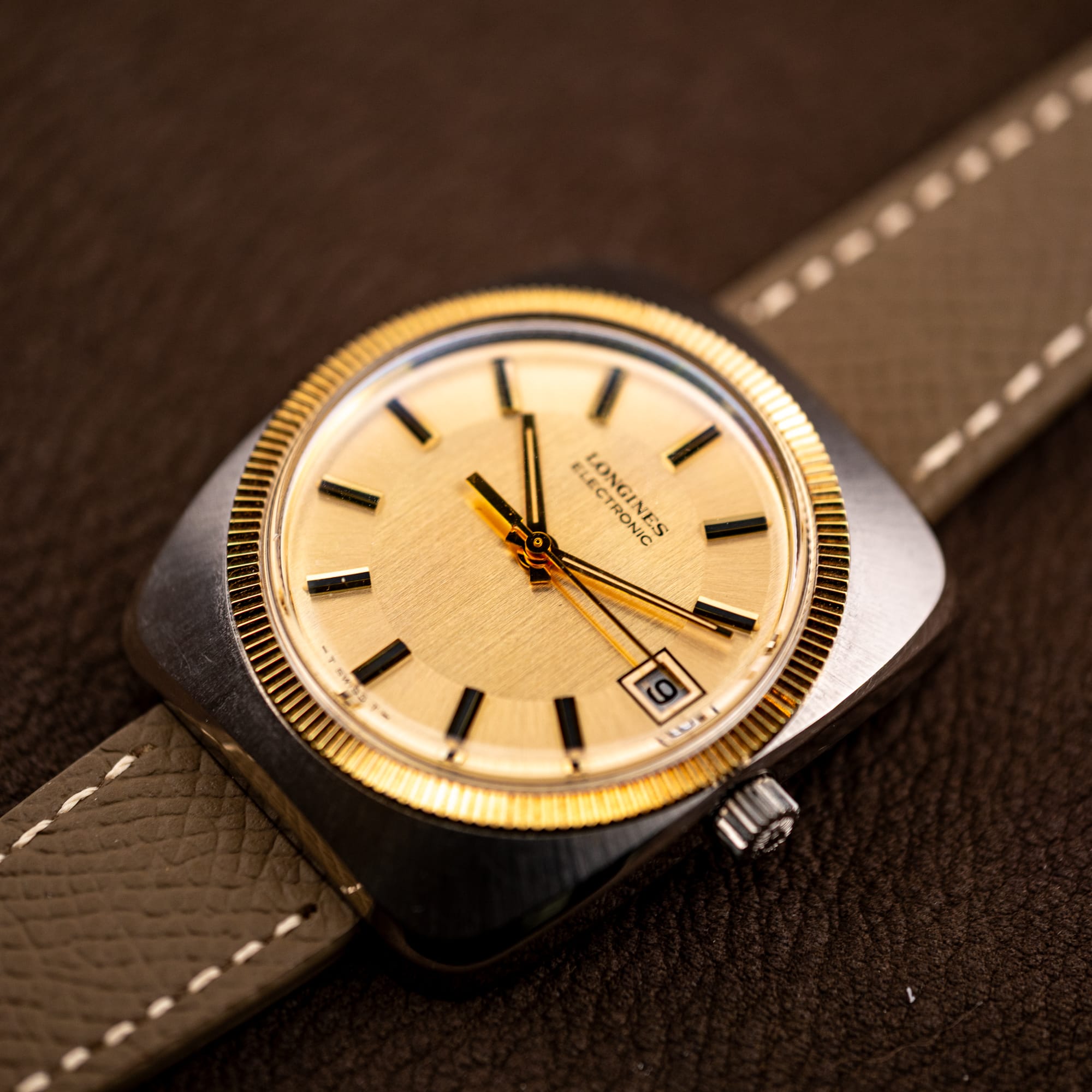
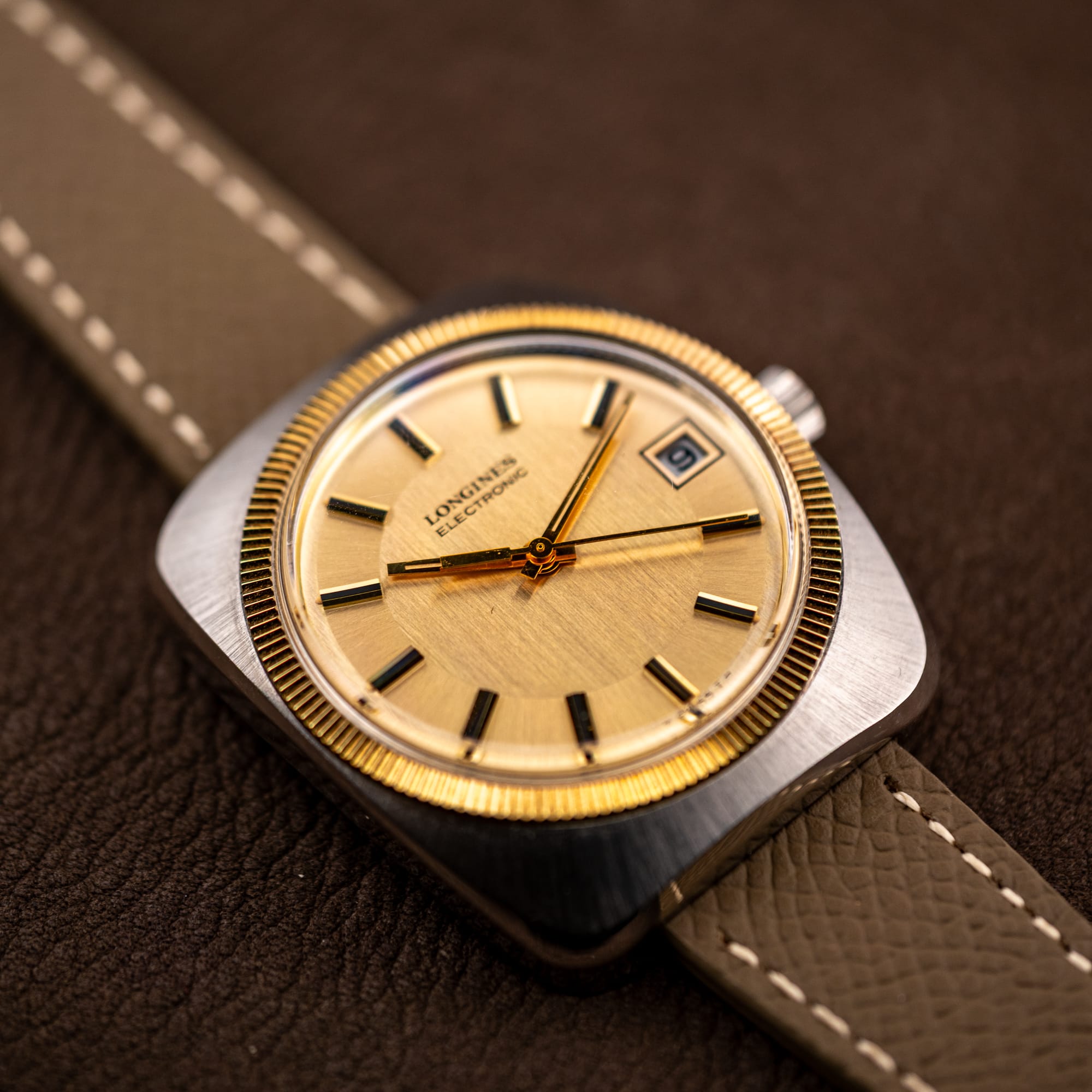
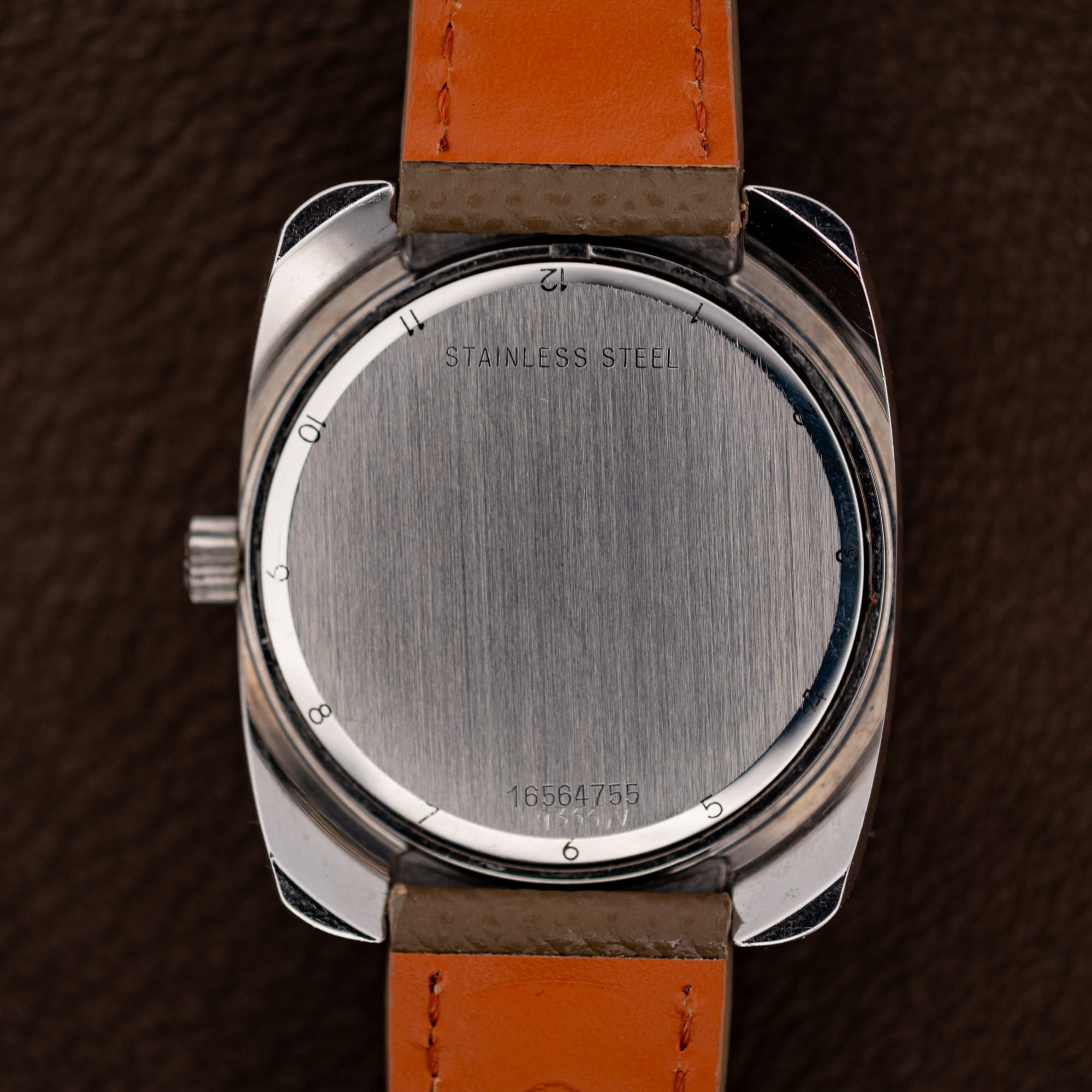
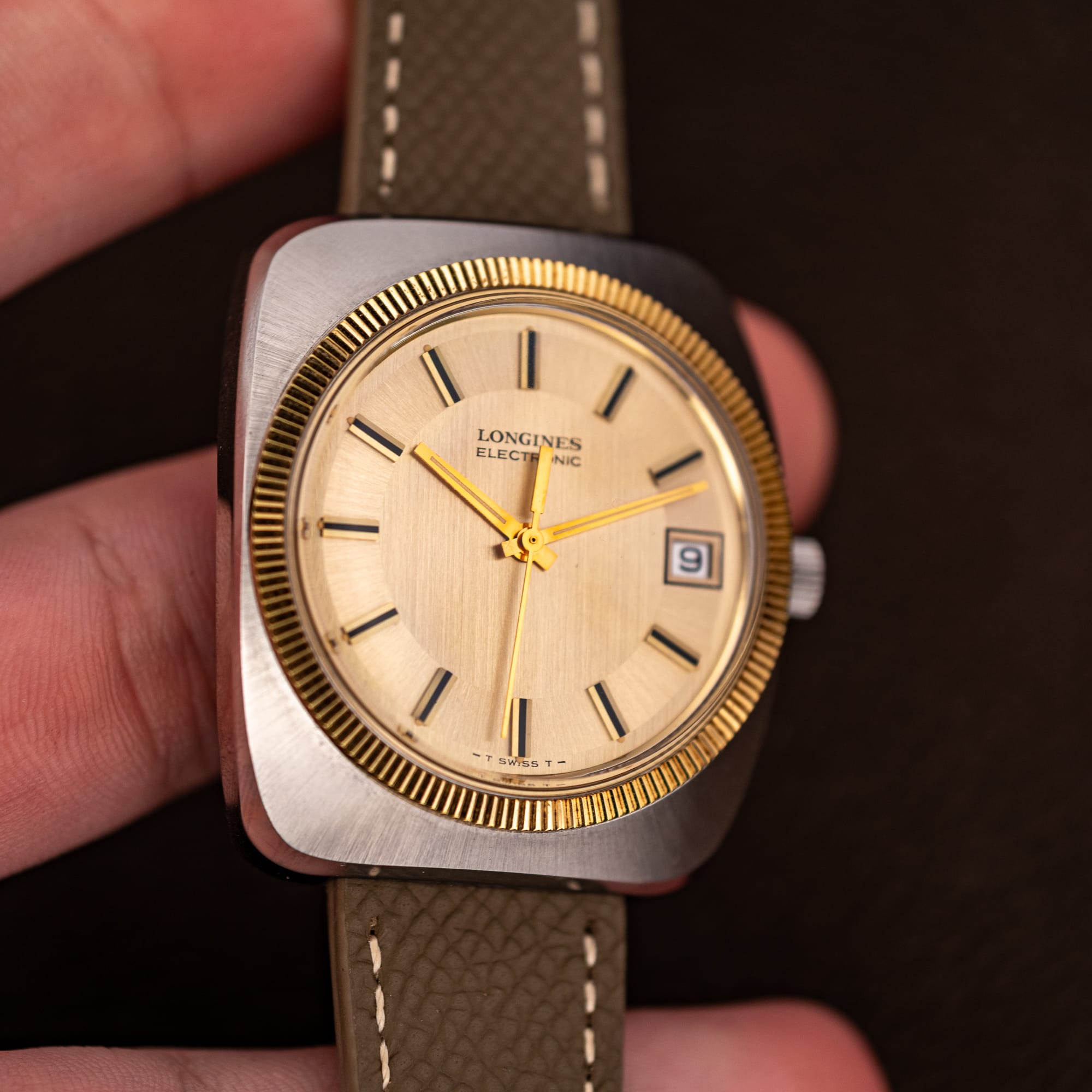
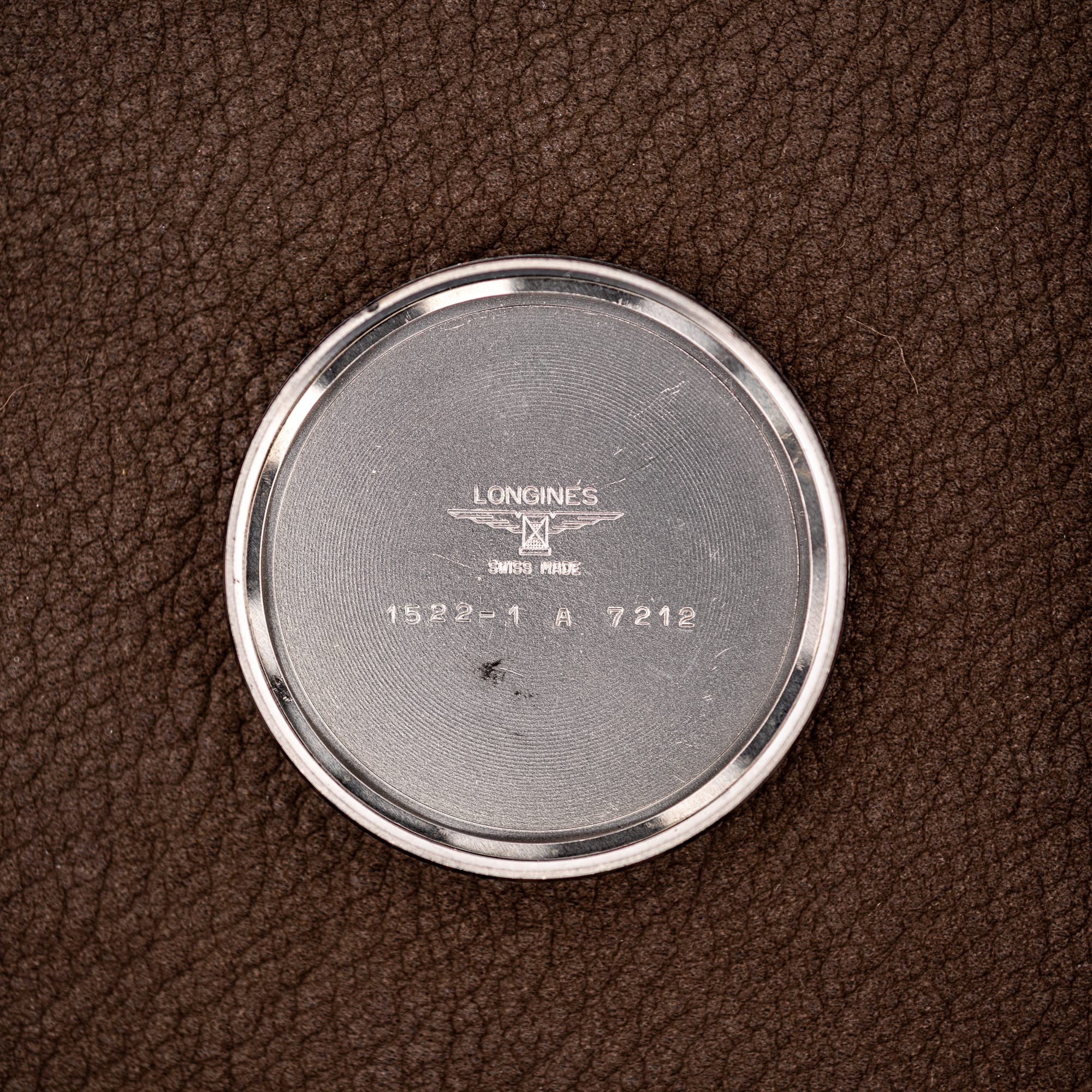
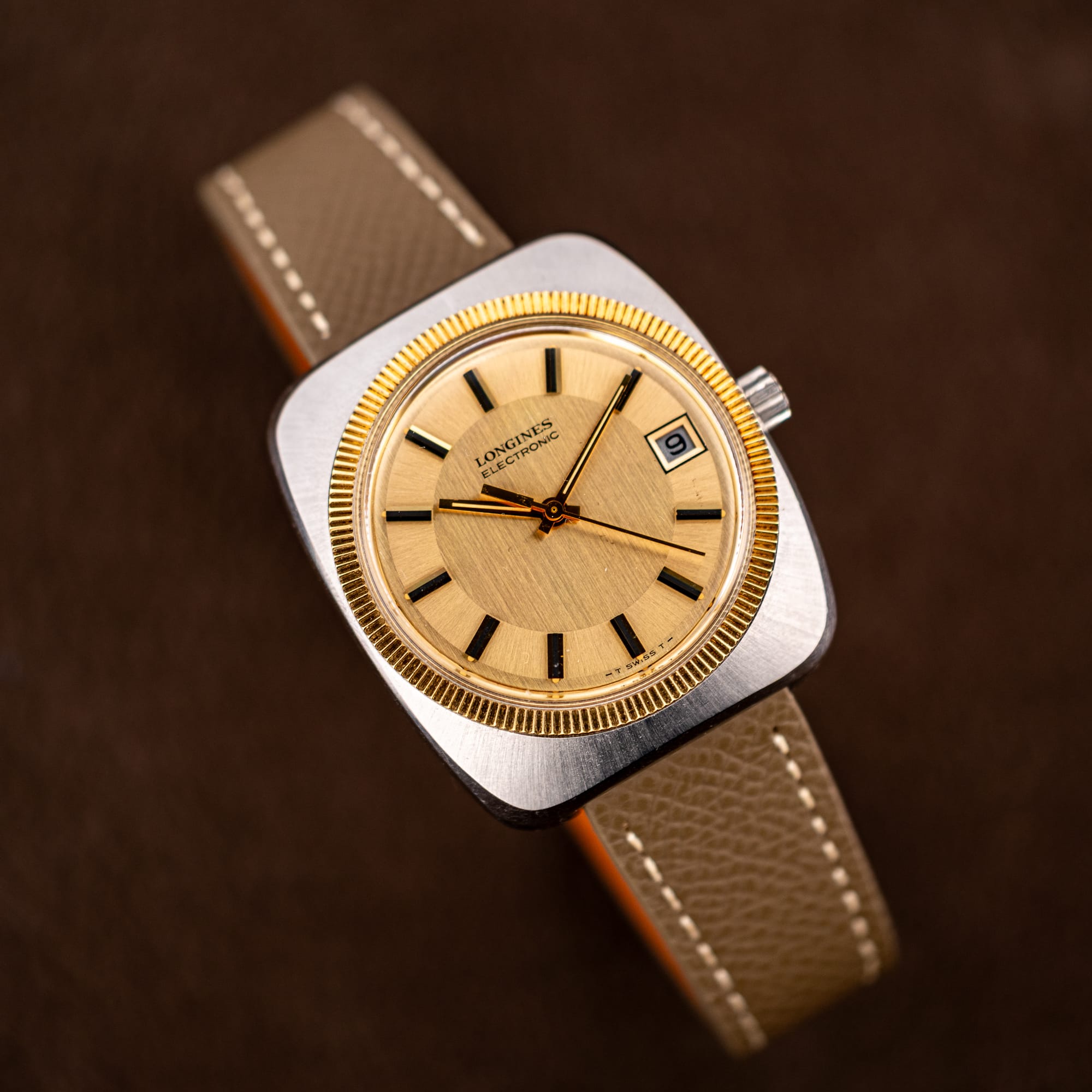
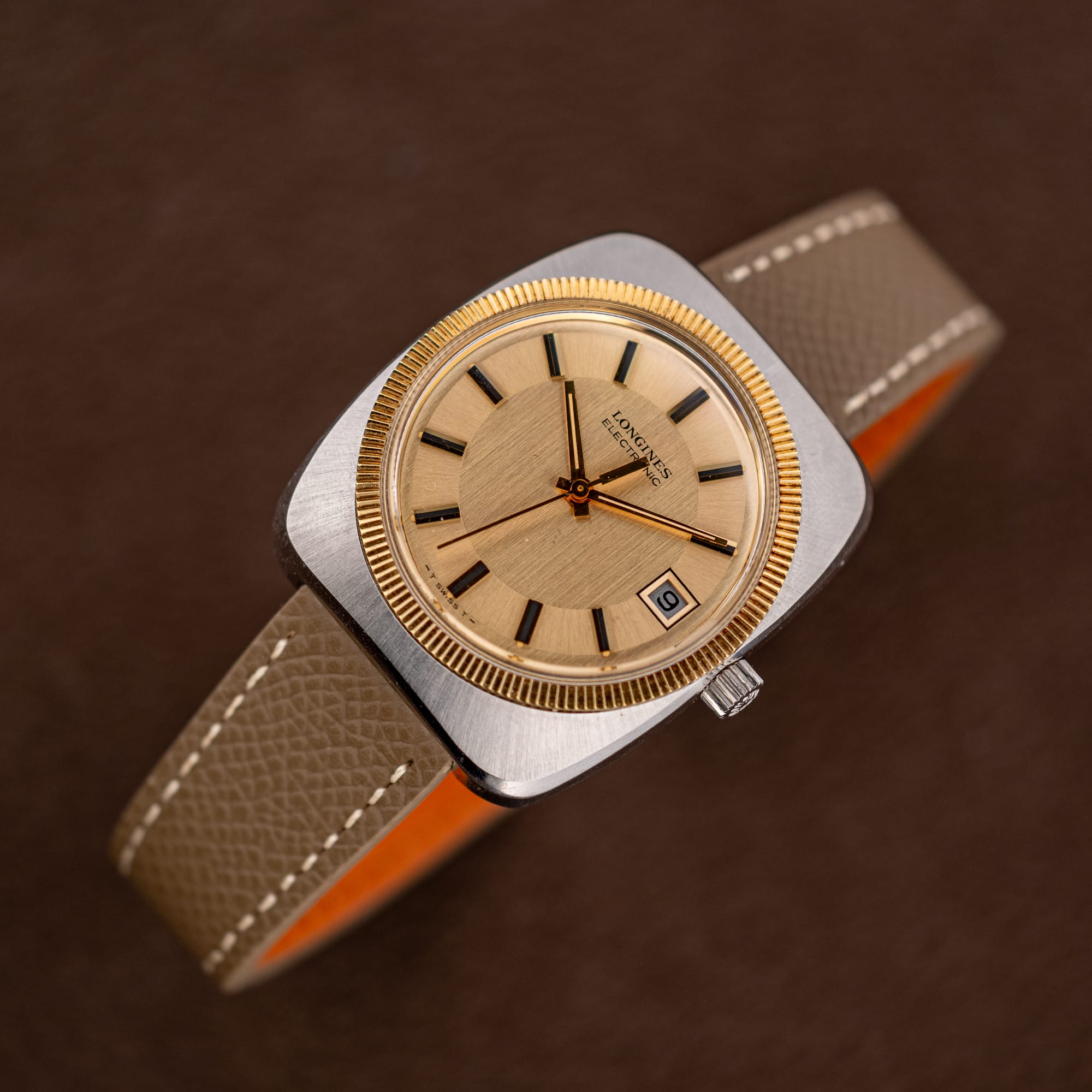
On the outside it is a 35.5mm cushion in brushed stainless steel under a finely fluted gold bezel, 40mm lug to lug and 18mm between them. The caseback exterior is marked STAINLESS STEEL with the serial 16564755. Inside, it reads LONGINES, the winged hourglass, SWISS MADE, and 1522-1 A 7212, the case reference and the caliber together. Light spotting from age sits on the bezel, visible in the photos and left alone.
Nothing on the dial gives this away. It says LONGINES, then ELECTRONIC in small capitals, and otherwise behaves like a dress watch: a two-zone champagne surface, applied gold batons with black inlay, gold hands, a date framed at three, and tritium notation at six. The crown is signed with the winged hourglass.
It comes on a taupe saffiano leather strap with our own buckle, serviced in-house at OTTUHR and backed by our 2-year warranty. For the collector who would rather have the watch that worked than the one that made the headlines, this is the better half of Longines’ electric years. To us, a bought-in movement has never looked like less of a compromise.