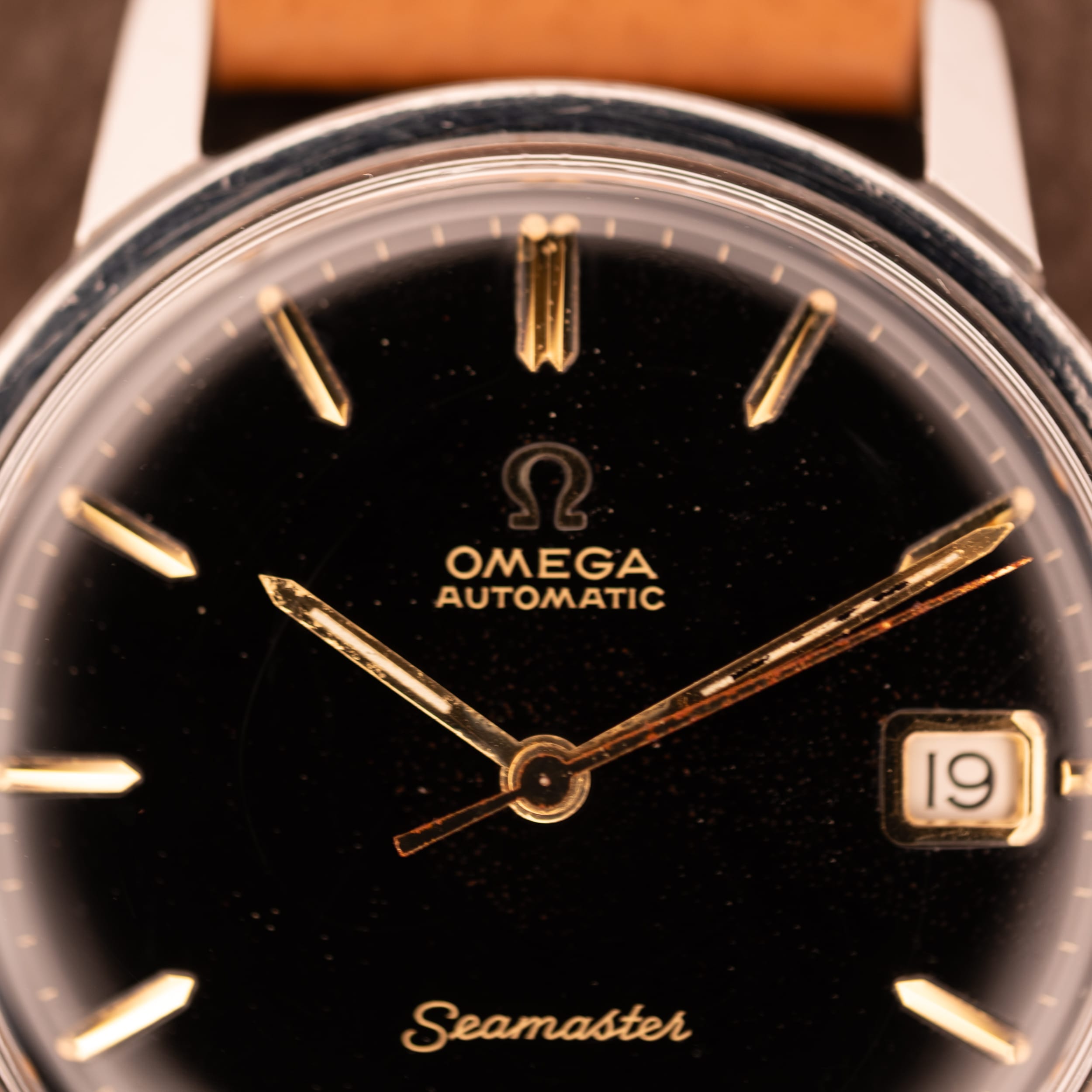
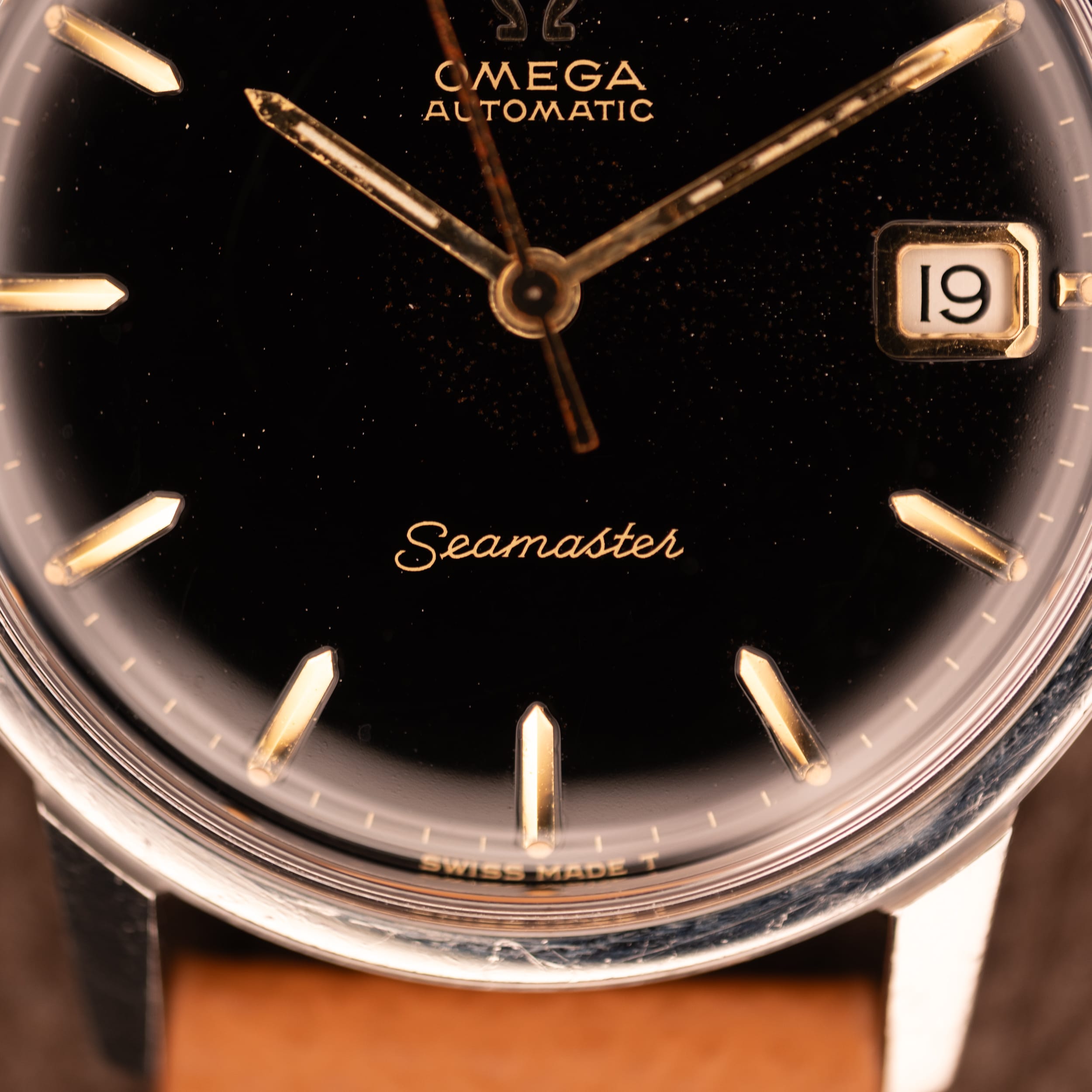
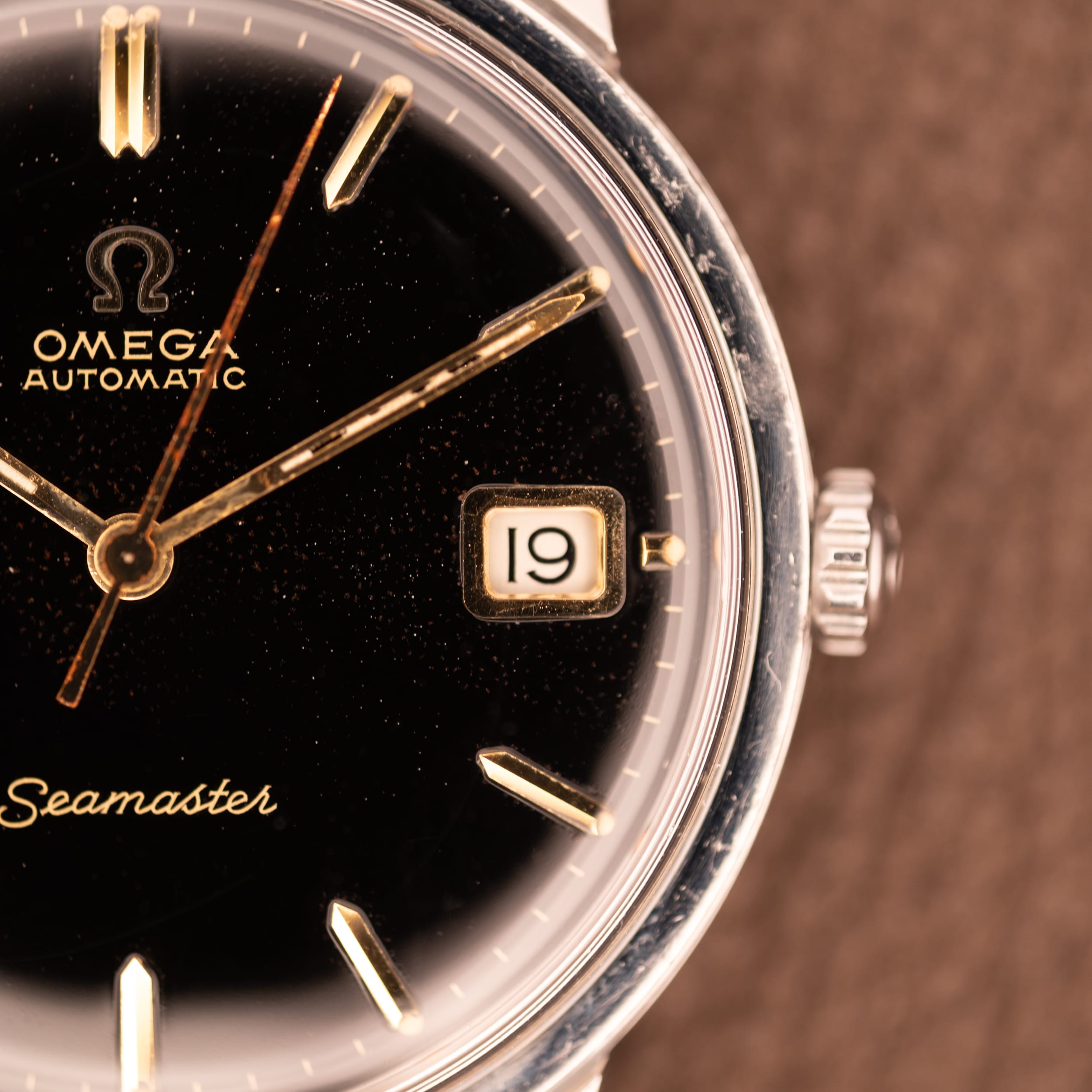
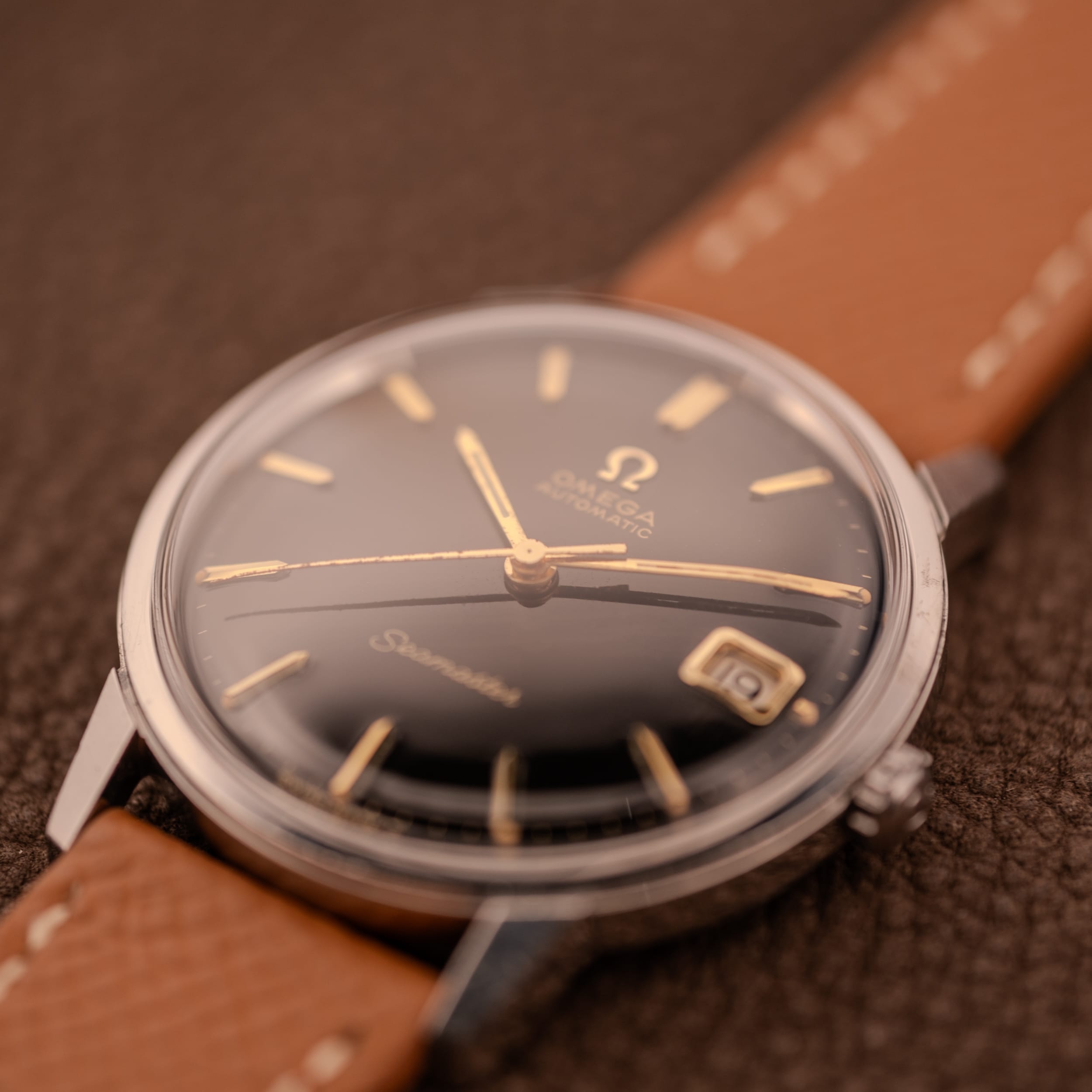
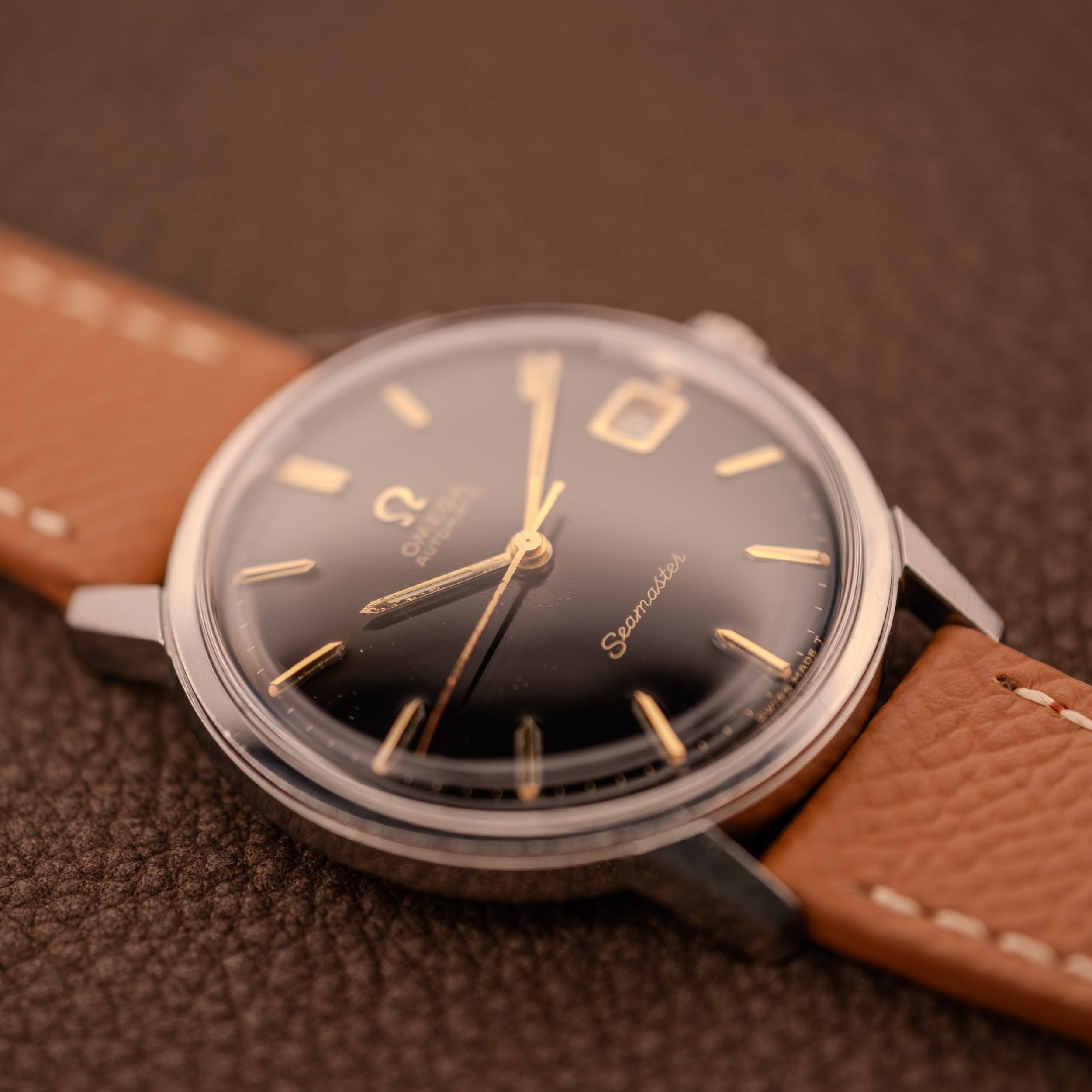
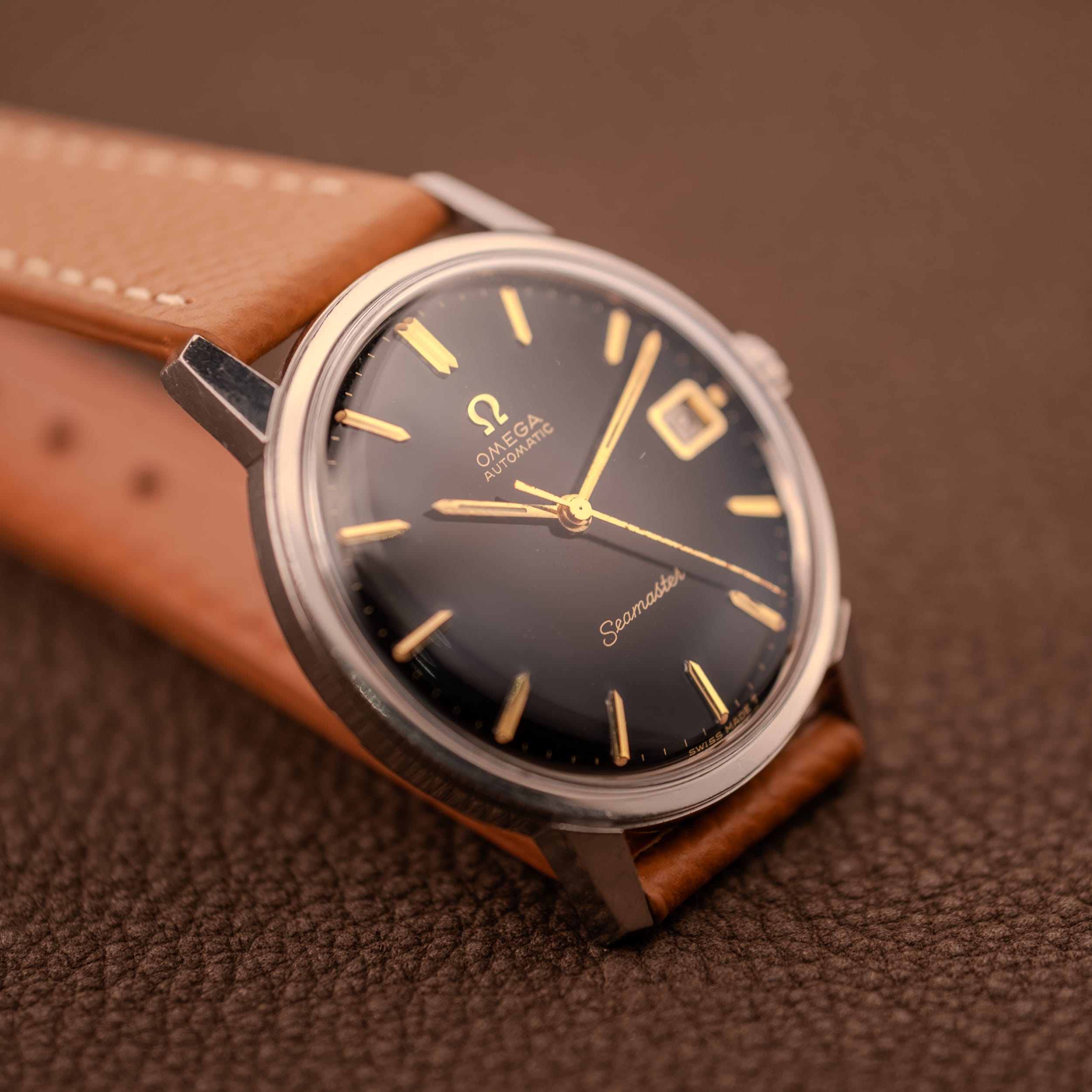
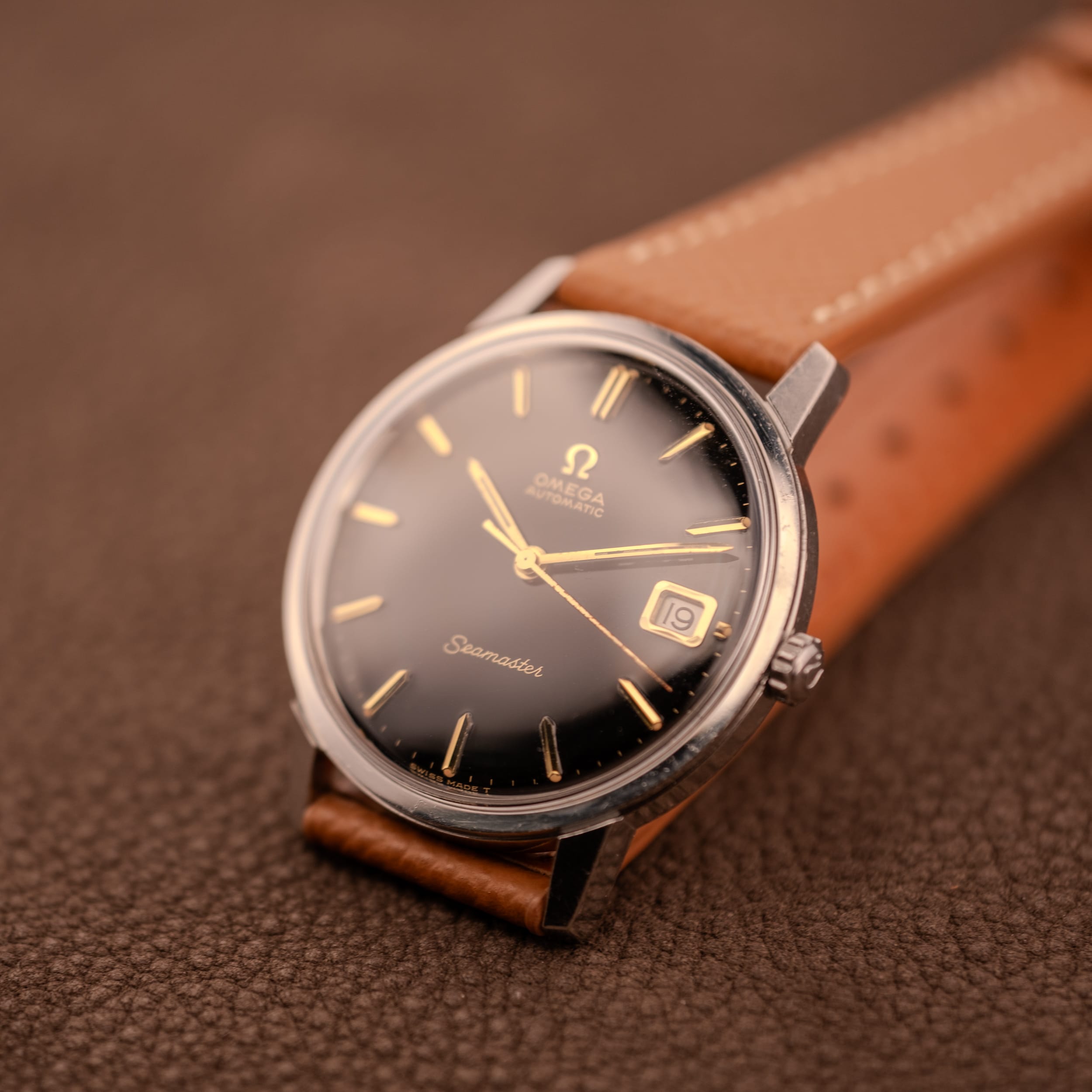
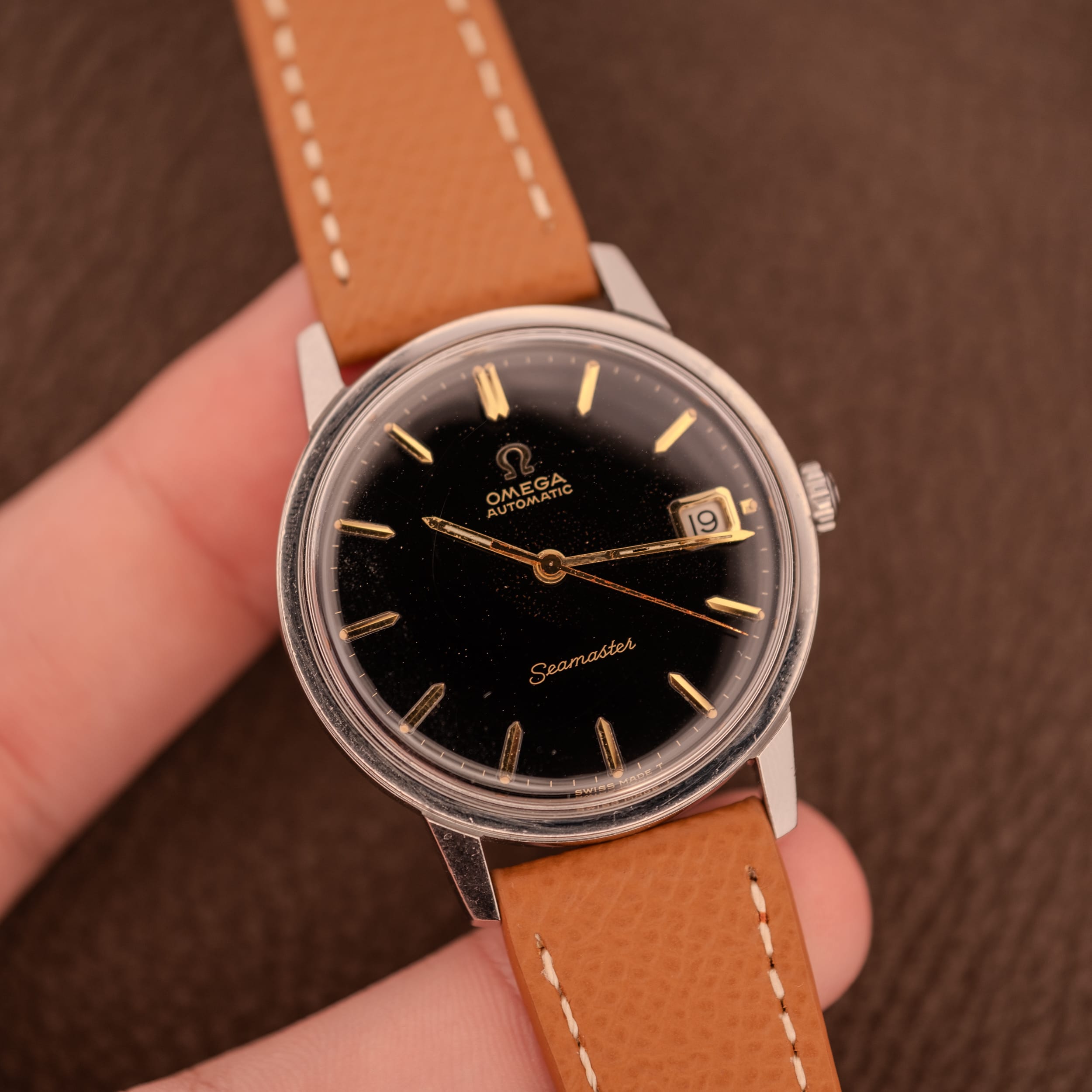
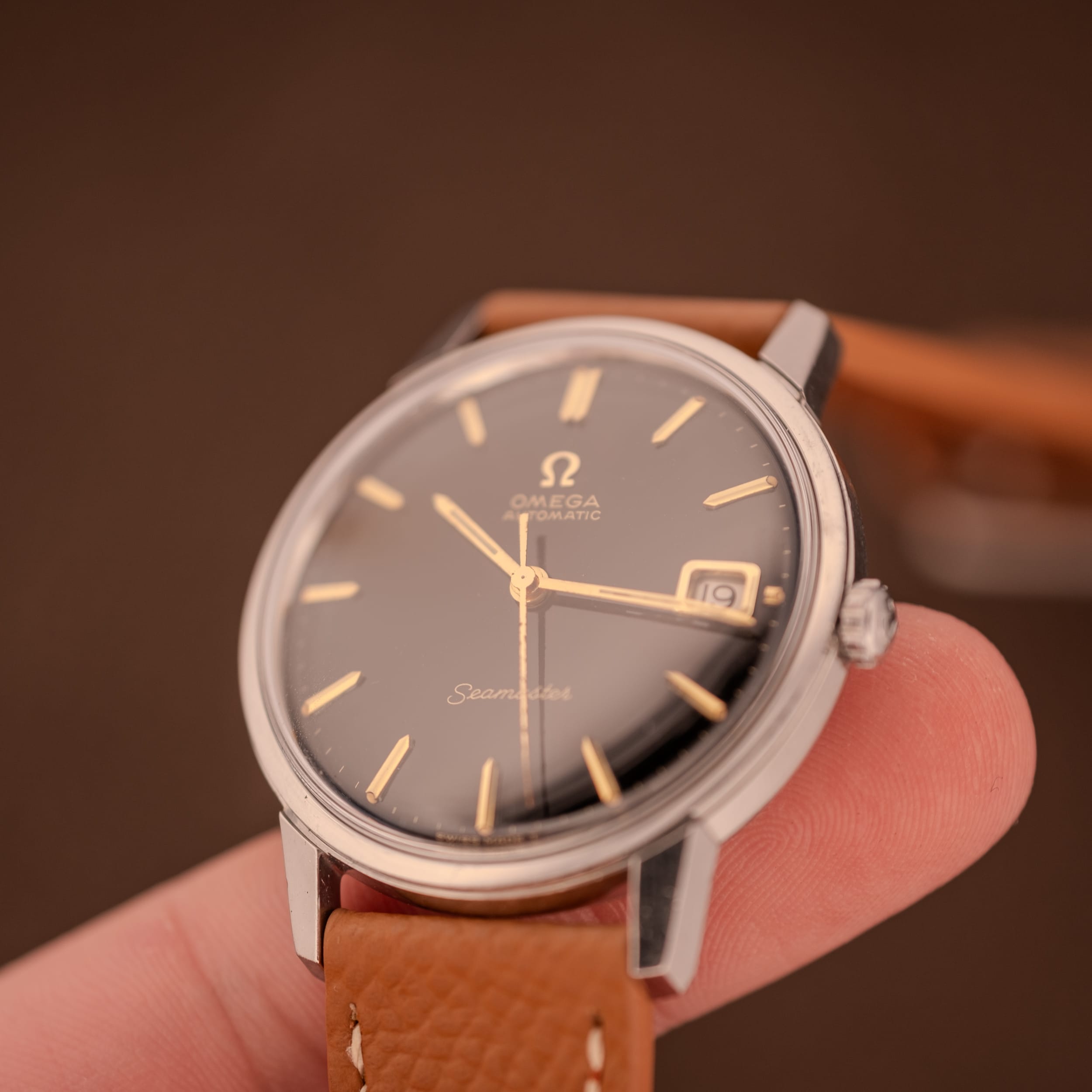
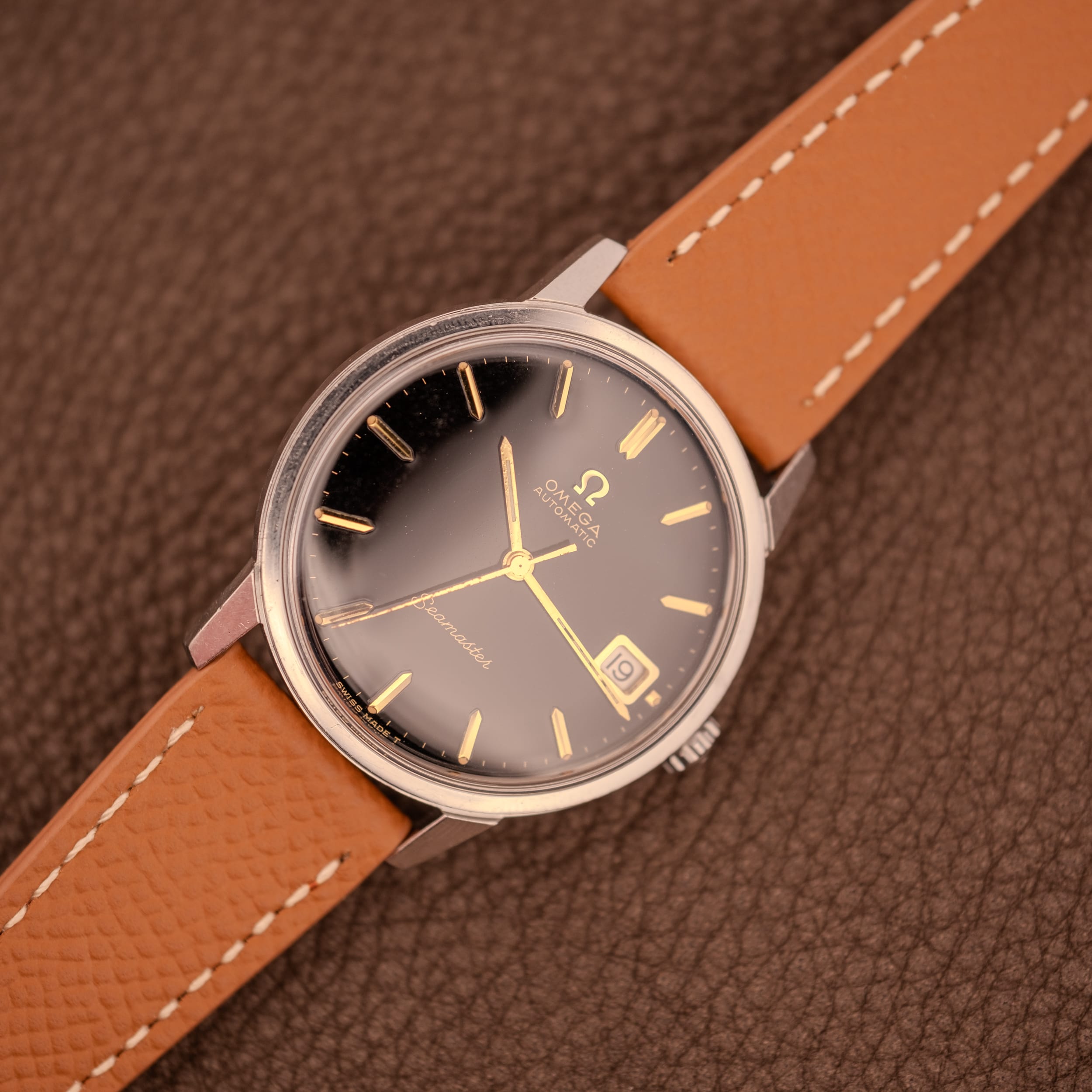
Caliber 562. Black gilt dial. Steel Seamaster case. Date at three. That is the reference 166.002 in four lines, and the headline among them is the caliber, a chronometer-architecture automatic Omega usually reserved for the Constellation and chose, on this reference, to put into a quieter Seamaster case. To us, this is one of the most compelling mid-1960s Seamasters in the catalogue, in our opinion exactly the kind of reference that experienced collectors learn to read first and casual buyers walk past entirely.
Omega built the Seamaster 166.002 across the mid-1960s as the date-bearing automatic Seamaster sitting in the same family tree as the no-date 165.002. The Seamaster line had carried the Omega flag for everyday water-resistant wear since 1948, and by the middle of the 1960s the catalogue had matured into a wide range of references that shared cases, movements, and dial architecture with the chronometer-rated Constellation. The 166.002 sits inside that overlap. To us, the line that matters is the one between Constellation-named and Seamaster-named watches built on the same internal hardware, and this reference lives on the Seamaster side of that line with a Constellation-grade caliber underneath.
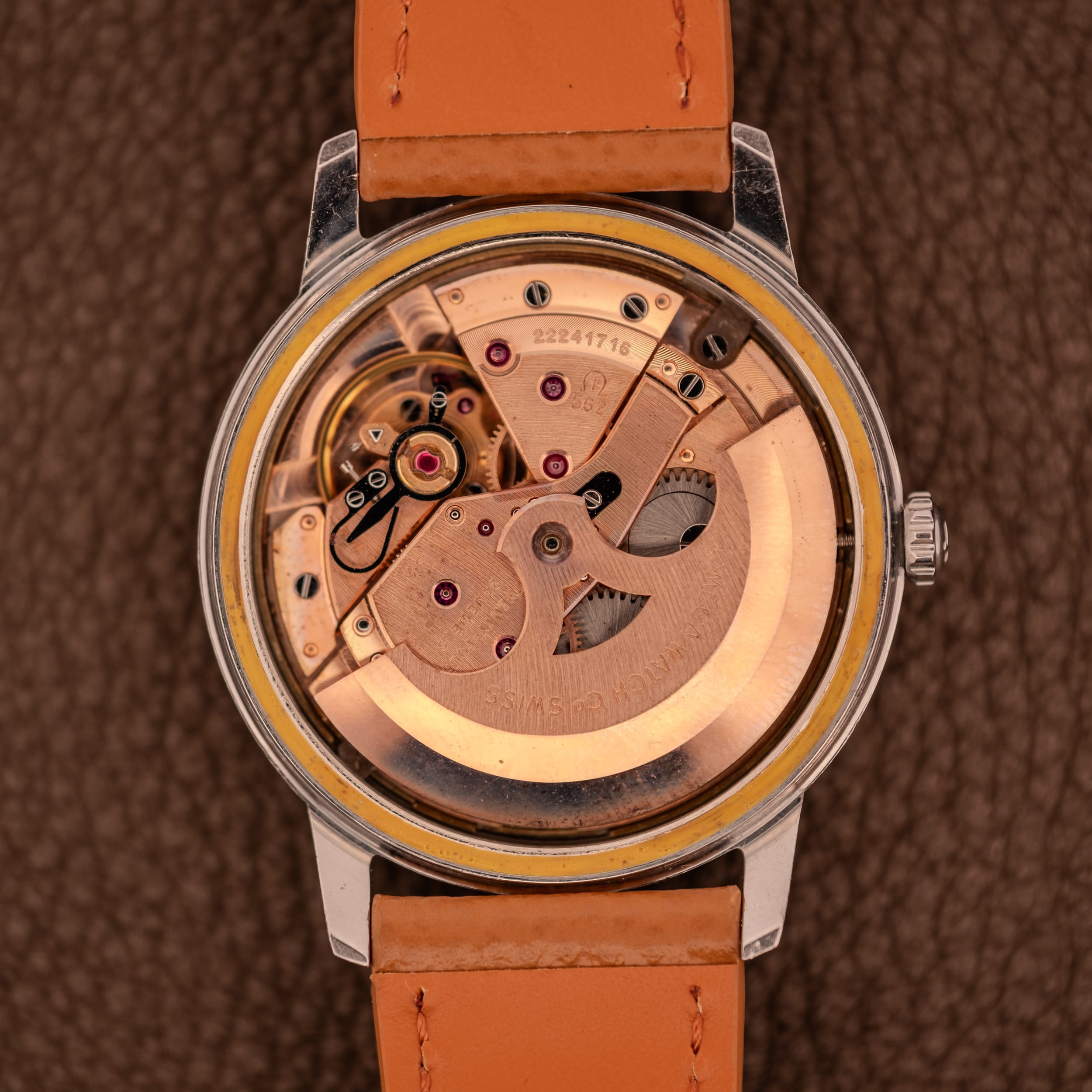
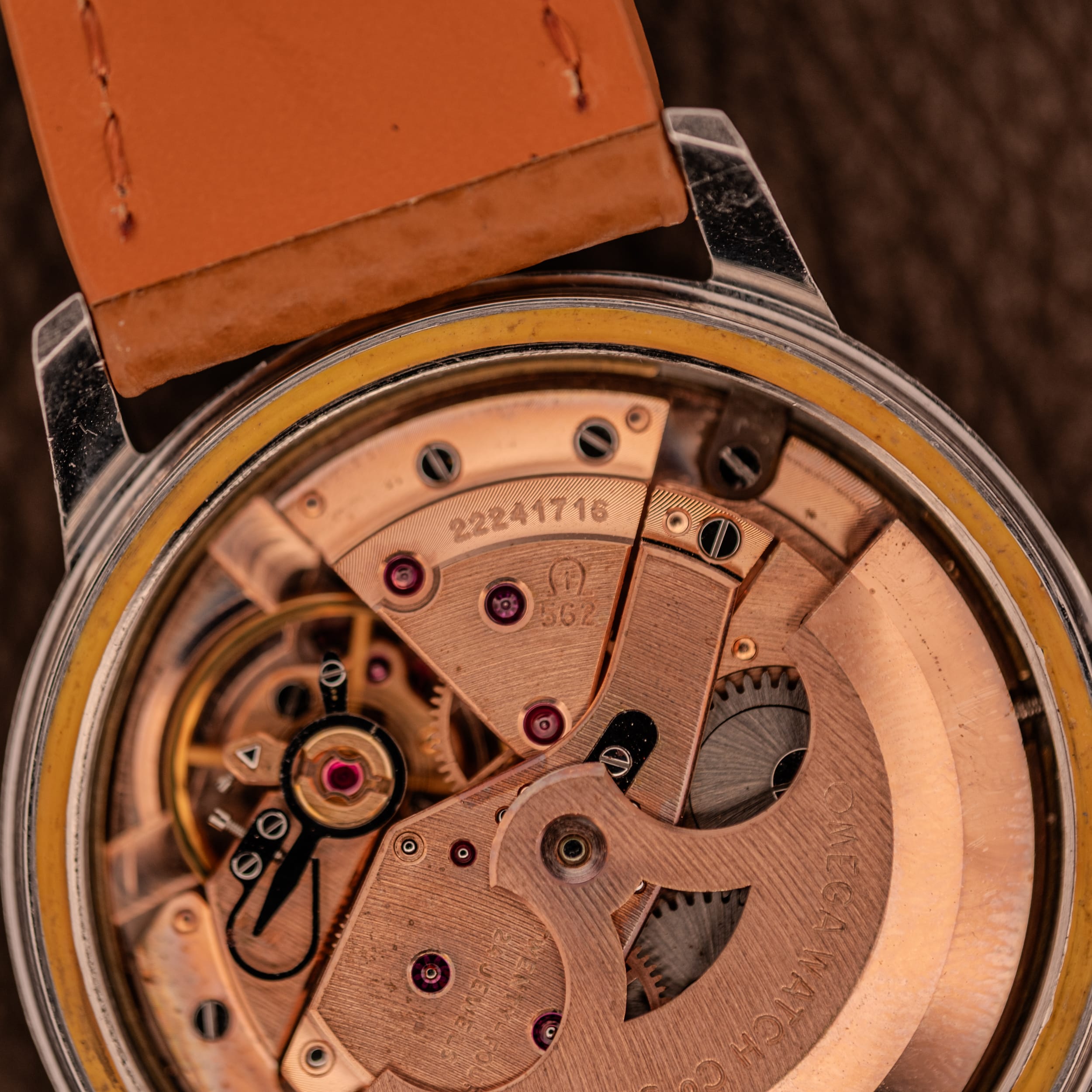
The caliber is the Omega 562, an automatic, full-rotor, date-equipped movement running at nineteen thousand eight hundred vibrations per hour across twenty-four jewels. The 562 is the direct sibling of the chronometer-rated caliber 564 that powered the date Constellations of the same period, the two movements sharing identical architecture and finishing with the 562 simply not regulated or adjusted to chronometer specification. Same bridges, same rotor system, same date complication, same copper finishing. Our service photographs read the OMEGA shield-and-wordmark on the upper bridge, the caliber designation 562 stamped clearly, and the matching factory serial 22241716 that ladders production firmly into the mid-1960s. The copper-toned finishing across the bridges, the Omega-signed rotor pivoting on its central axle, and the integrated date wheel all read exactly as a properly preserved caliber 562 should. To us, this is the movement that makes the Omega Seamaster 166.002 worth knowing about. Constellation hardware, Seamaster dial.
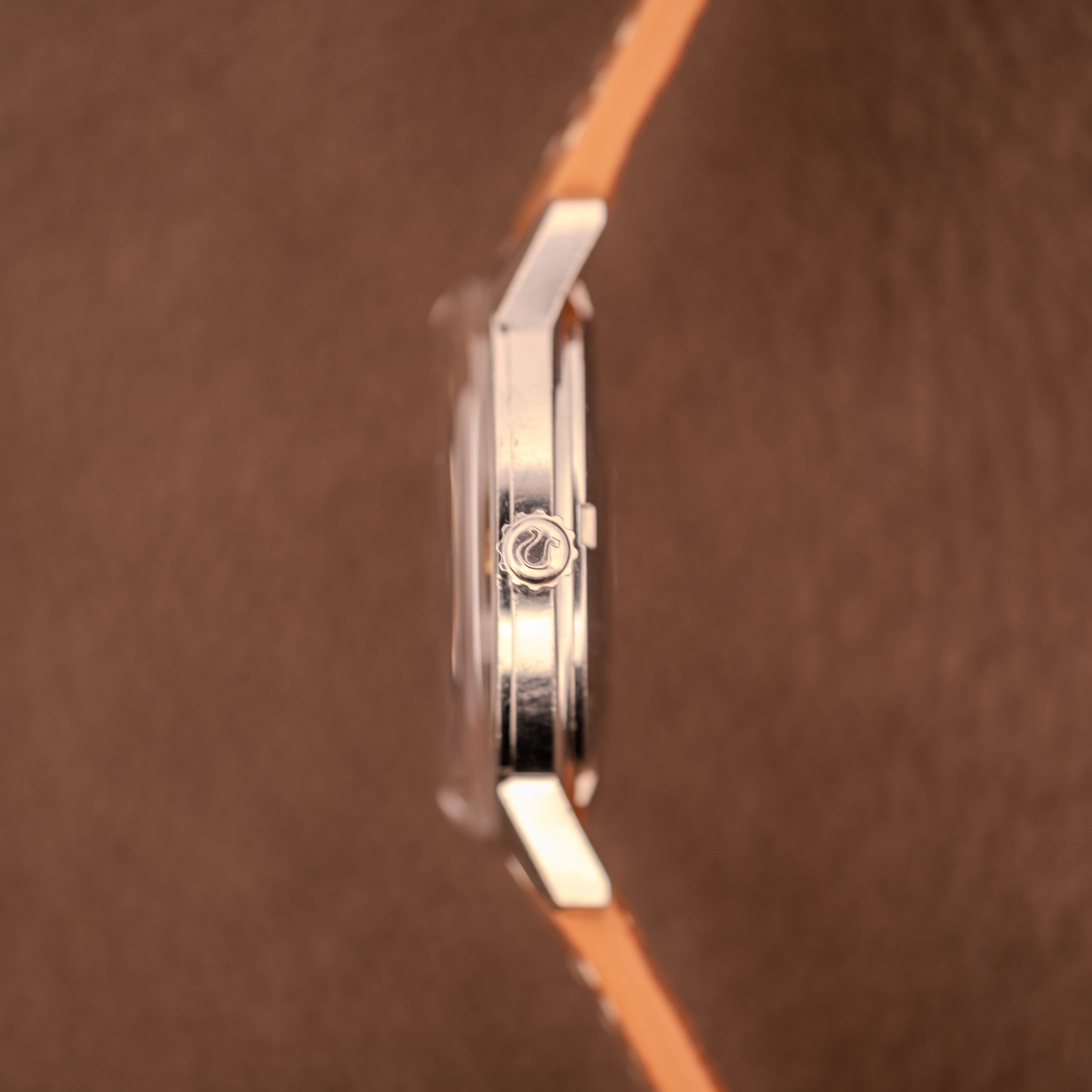
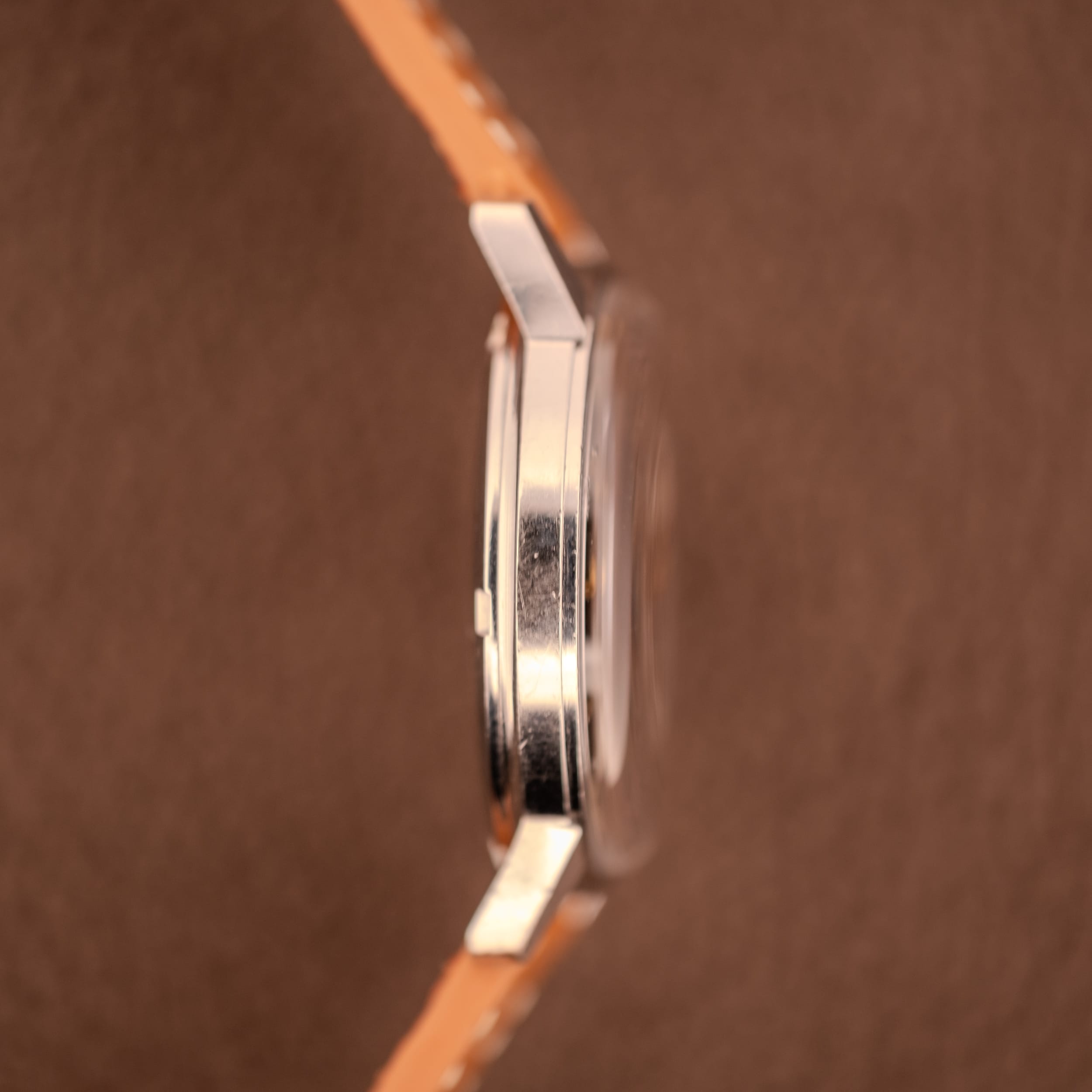
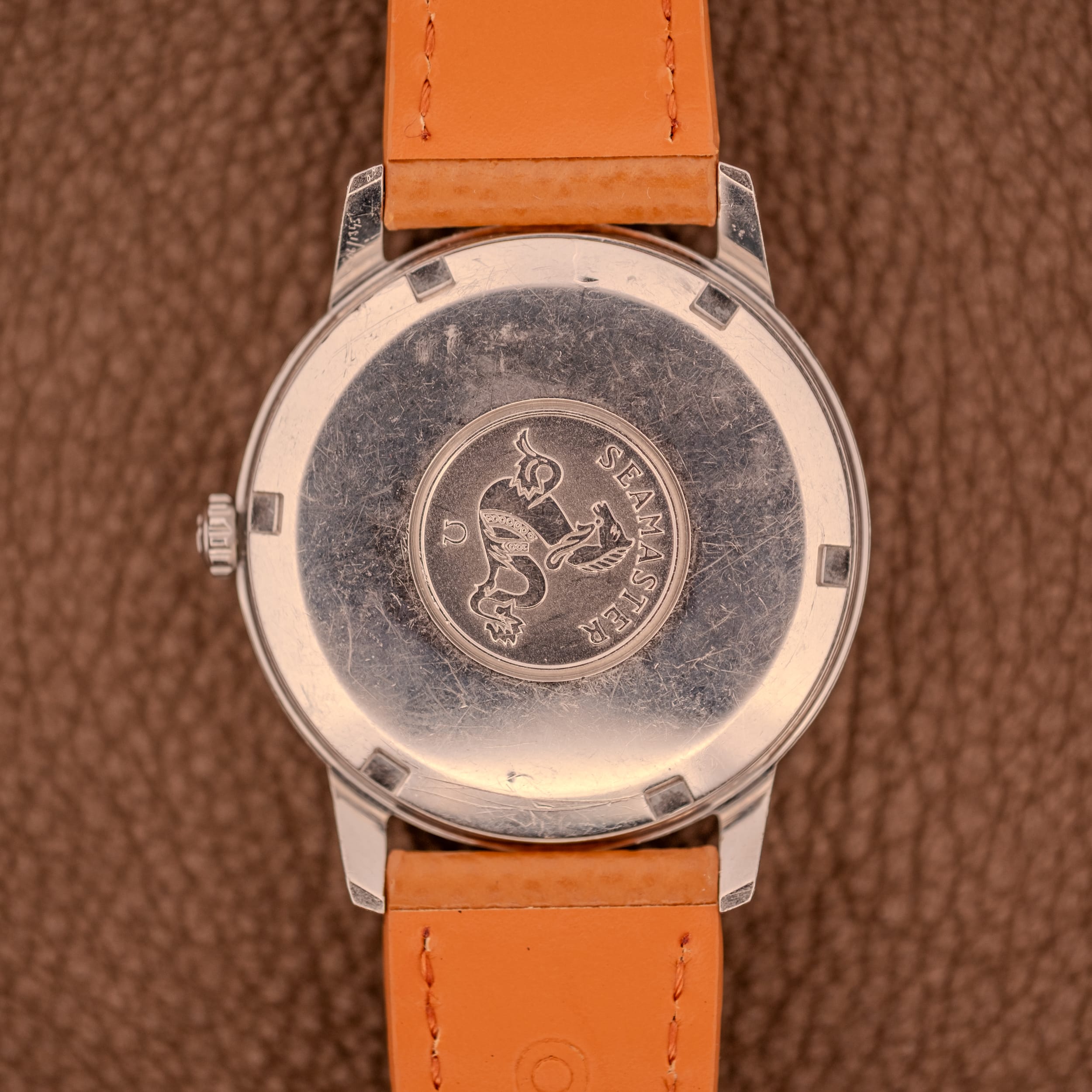
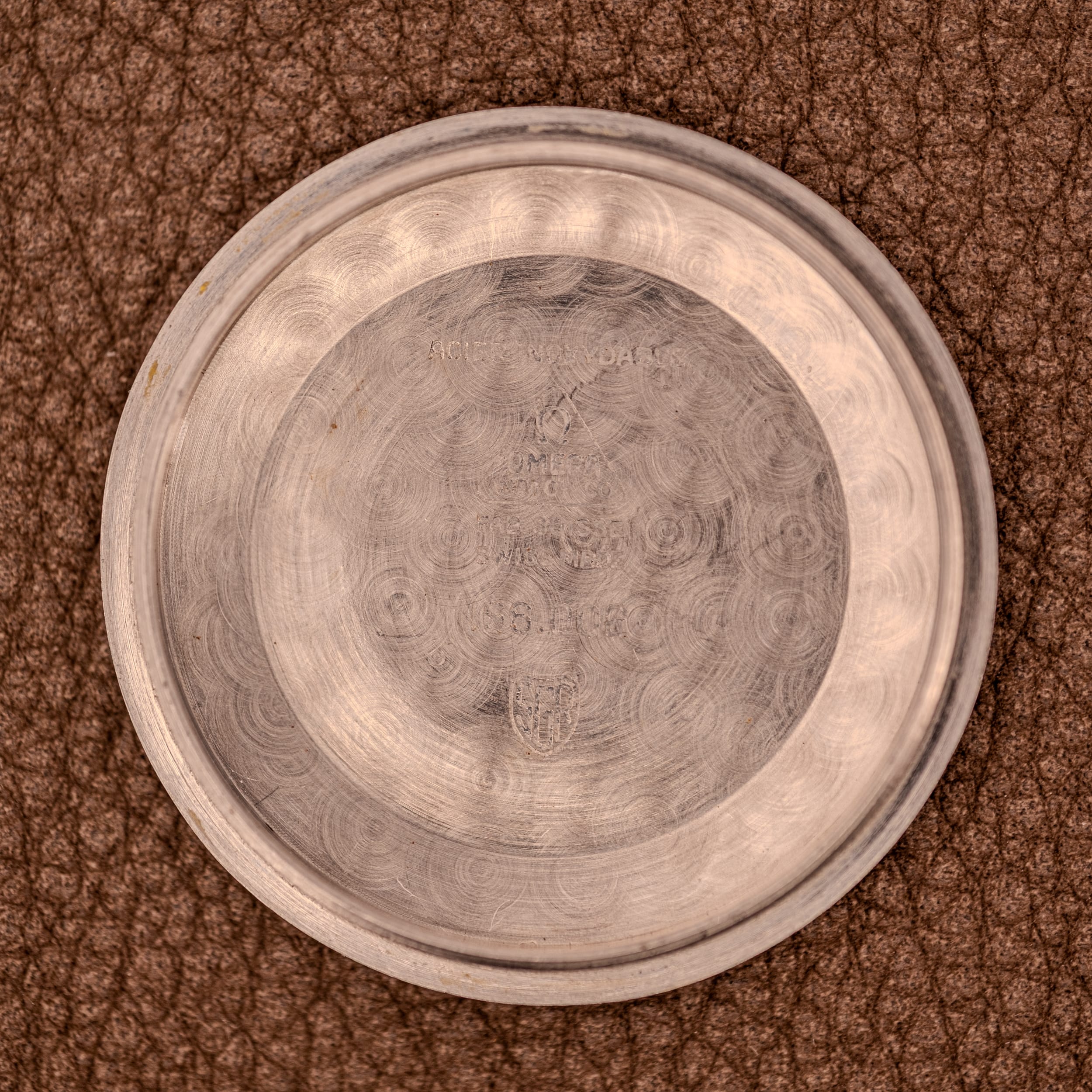
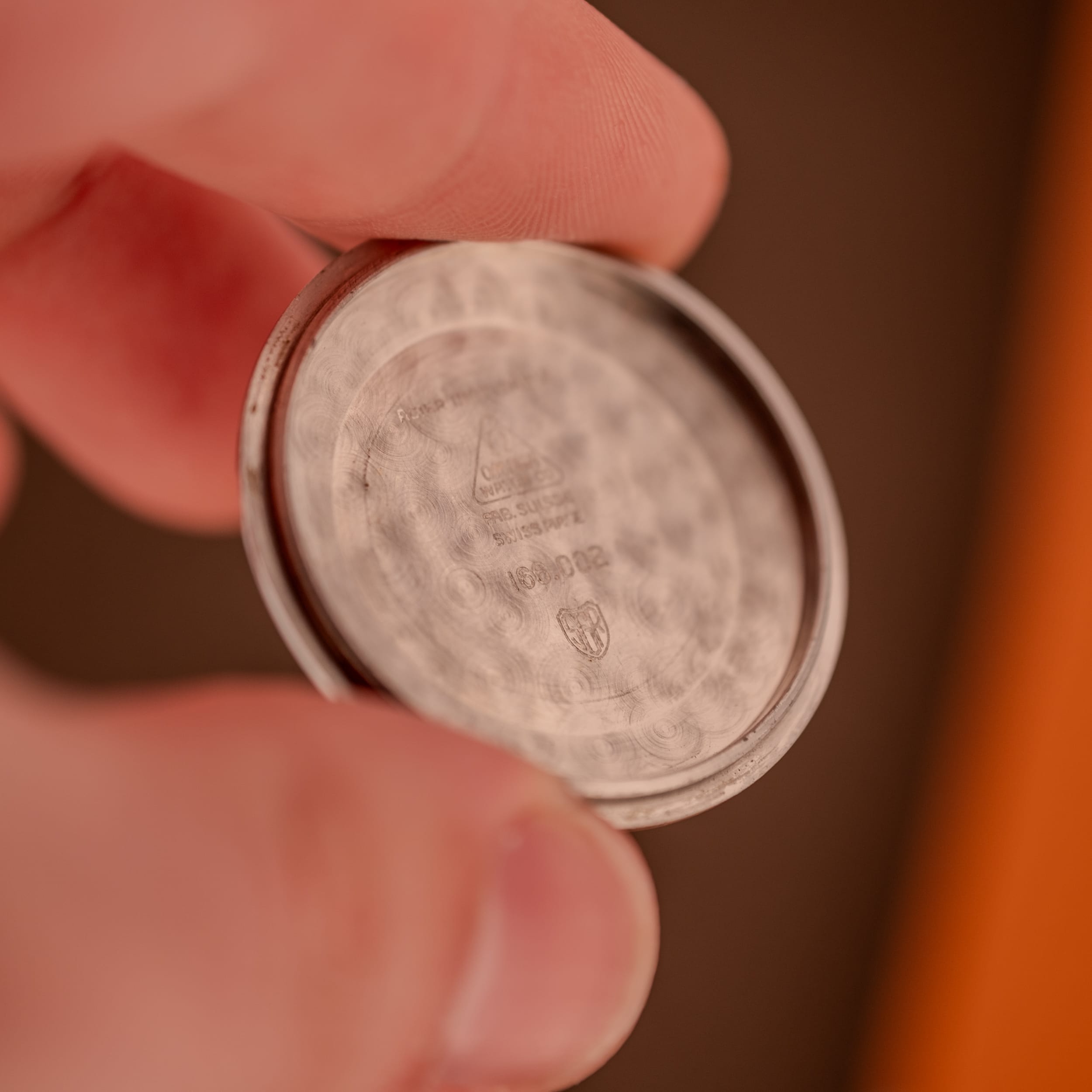
The case is a clean stainless steel Seamaster build measuring 34.6mm across, 40.5mm lug-to-lug, and 18mm between the lugs. Twisted faceted lugs flare from a brushed top surface into polished bevels along the sides, a case profile Omega used across the mid-1960s automatic Seamaster line and one that wears genuinely well on a modern wrist. The crown sits at three with the original Omega-signed Omega-symbol cap intact and engages exactly as a properly maintained 562 should. Honest hairlines record decades of wear across the lugs and case sides, none of it polished out. The outer caseback carries the Seamaster hippocampus medallion exactly as a Seamaster of this generation should, the seahorse-and-trident relief sitting proud against the brushed steel field. Open the back and the inner caseback is stamped 166.002 alongside FAB. SUISSE / SWISS MADE and the Omega heraldic shield, exactly the period-correct stamping set we want to see and a clear confirmation that case and movement live in their original marriage.
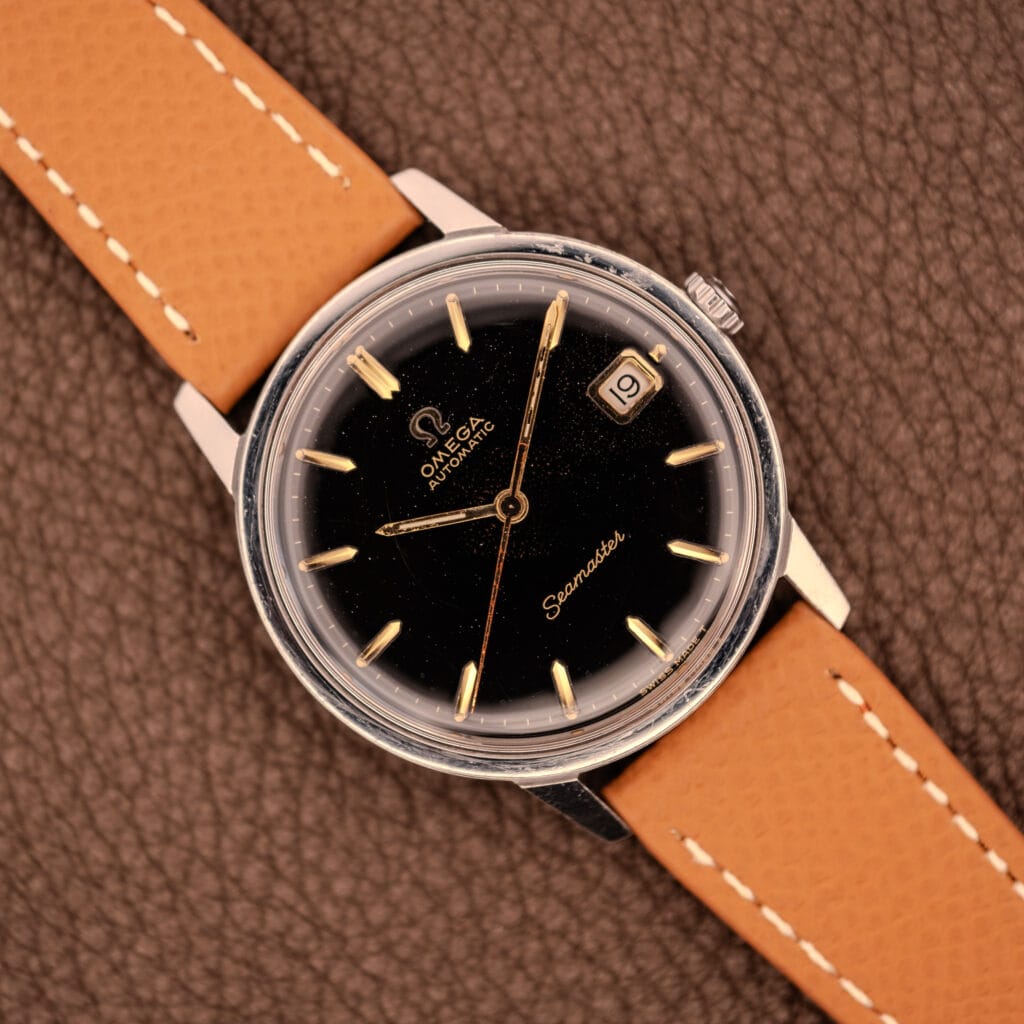
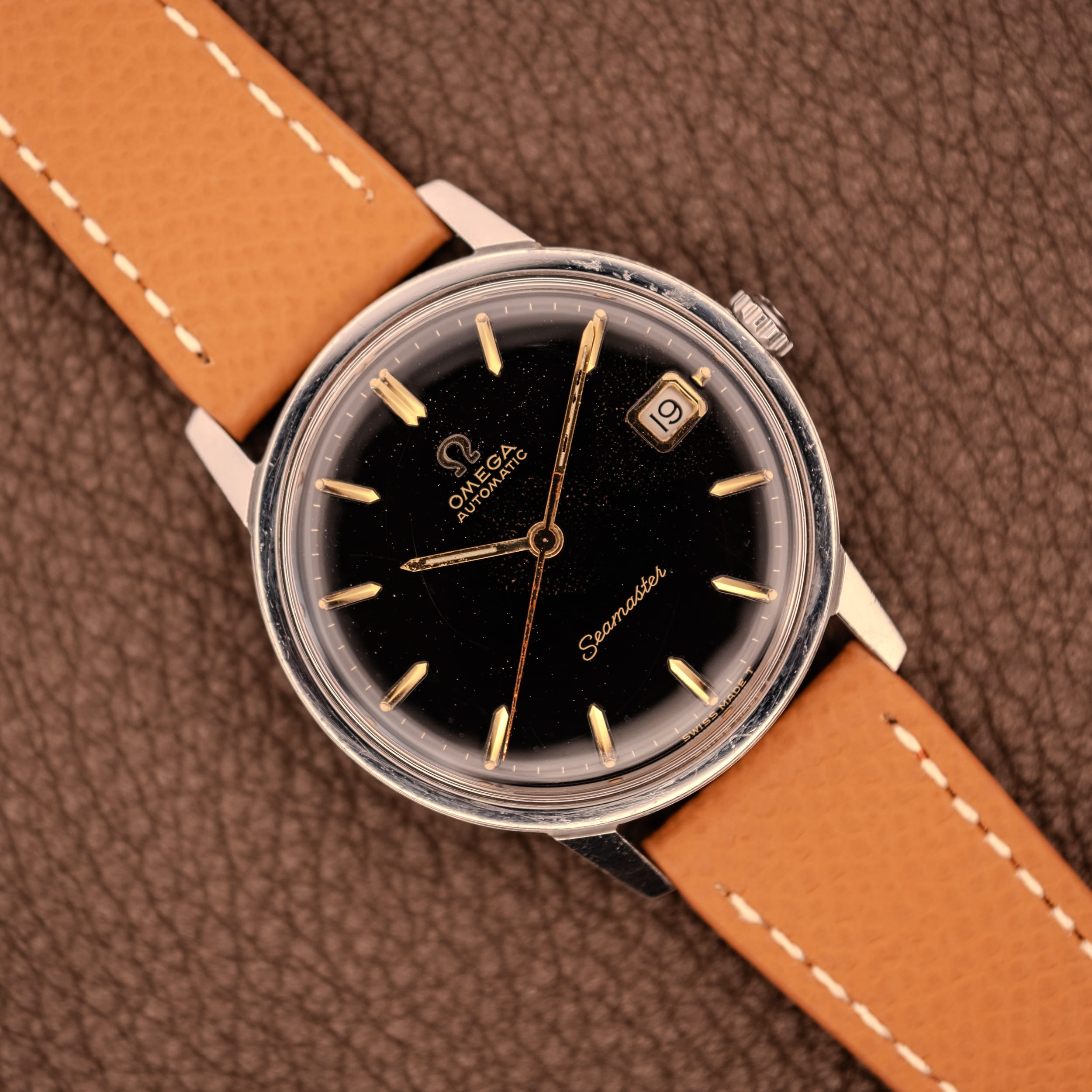
The dial is the headline, and the headline is gilt. This is a factory black gilt dial, the printing rendered in gold-toned ink against a deep black gloss field rather than the white printing that replaced gilt across the second half of the decade. The OMEGA wordmark, the AUTOMATIC line beneath, the cursive Seamaster script along the lower half, the closed minute track ringing the dial, and the T SWISS MADE T designation at six are all gilt, exactly as the earlier-production black-dial 166.002s left the factory. Applied gold-tone faceted dart markers ring the dial at every hour position, with a slightly elongated baton at twelve serving as the orientation index. The dauphine hour and minute hands sit in matching gold-tone, the sweep seconds in a narrow gilt stick, and a small gilt-framed white date aperture at three runs cleanly under the polished bezel edge. The black gloss reads with the subtle galaxy-like grain that period gilt dials develop across decades of light exposure, a fine speckle of brown undertone that animates the surface without disturbing it. Refinished dials kill the value of any vintage Omega and the factory black gilt dial is the single most important originality factor on a 166.002. This dial reads correct from across the room and correct under a loupe.
We have paired the watch with one of our tan grained leather straps and an OTTUHR signed buckle. The warm tan picks up the gilt tones in the dial and hands without competing with the steel case, and the slightly structured grain gives the package the dressed-down weight a 166.002 wears best on.
Serviced in-house at OTTUHR and backed by our 2-year mechanical warranty, this is the kind of mid-1960s Omega Seamaster we get genuinely excited about. Factory original black gilt dial, factory hands, original signed crown, intact case stampings, the Seamaster hippocampus caseback medallion, and the caliber 562 sitting cleanly underneath. For the collector who values originality over polish, who knows that black gilt printing dates and grades a 166.002 before anything else, and who wants Constellation-grade hardware in a Seamaster case with a real story attached, this is exactly the kind of watch we love bringing in.