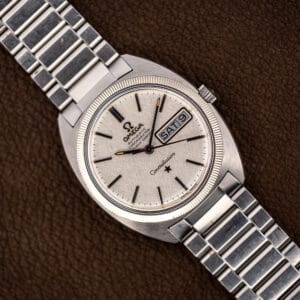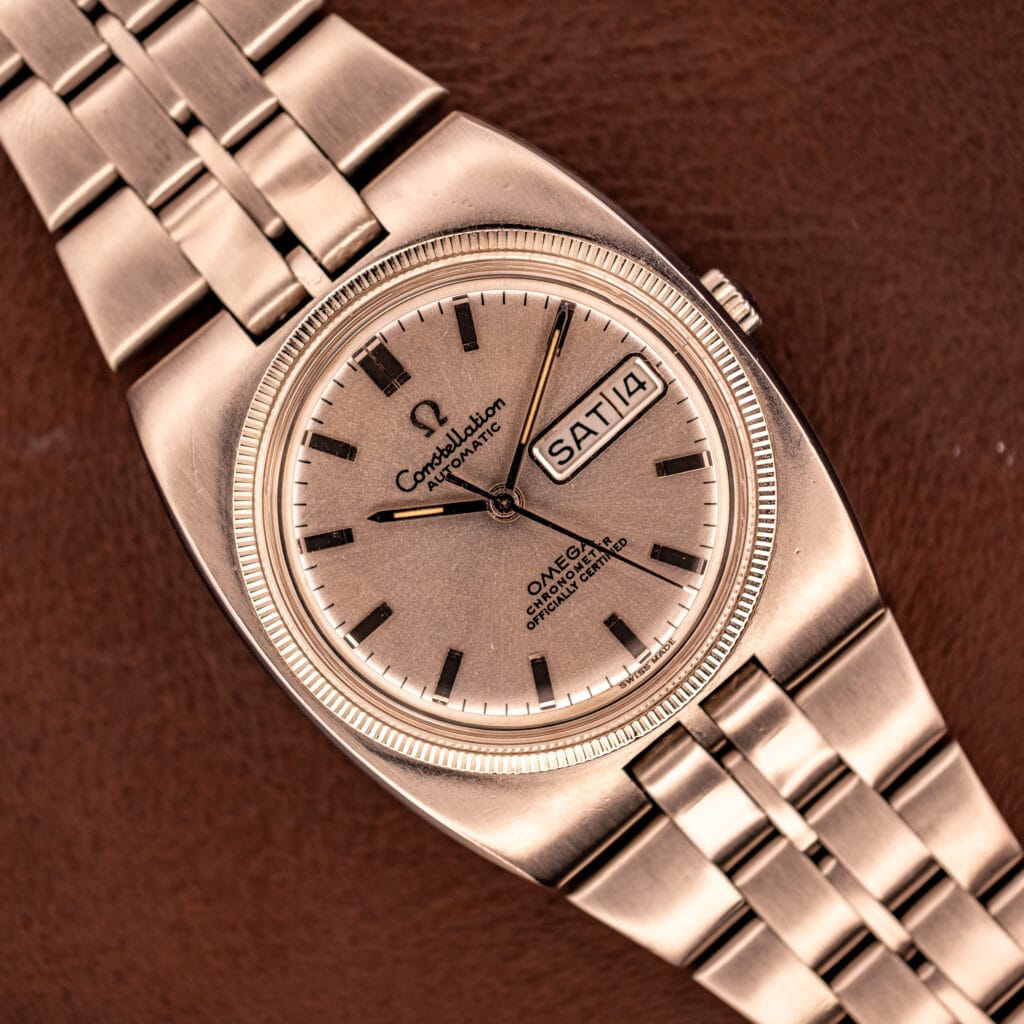
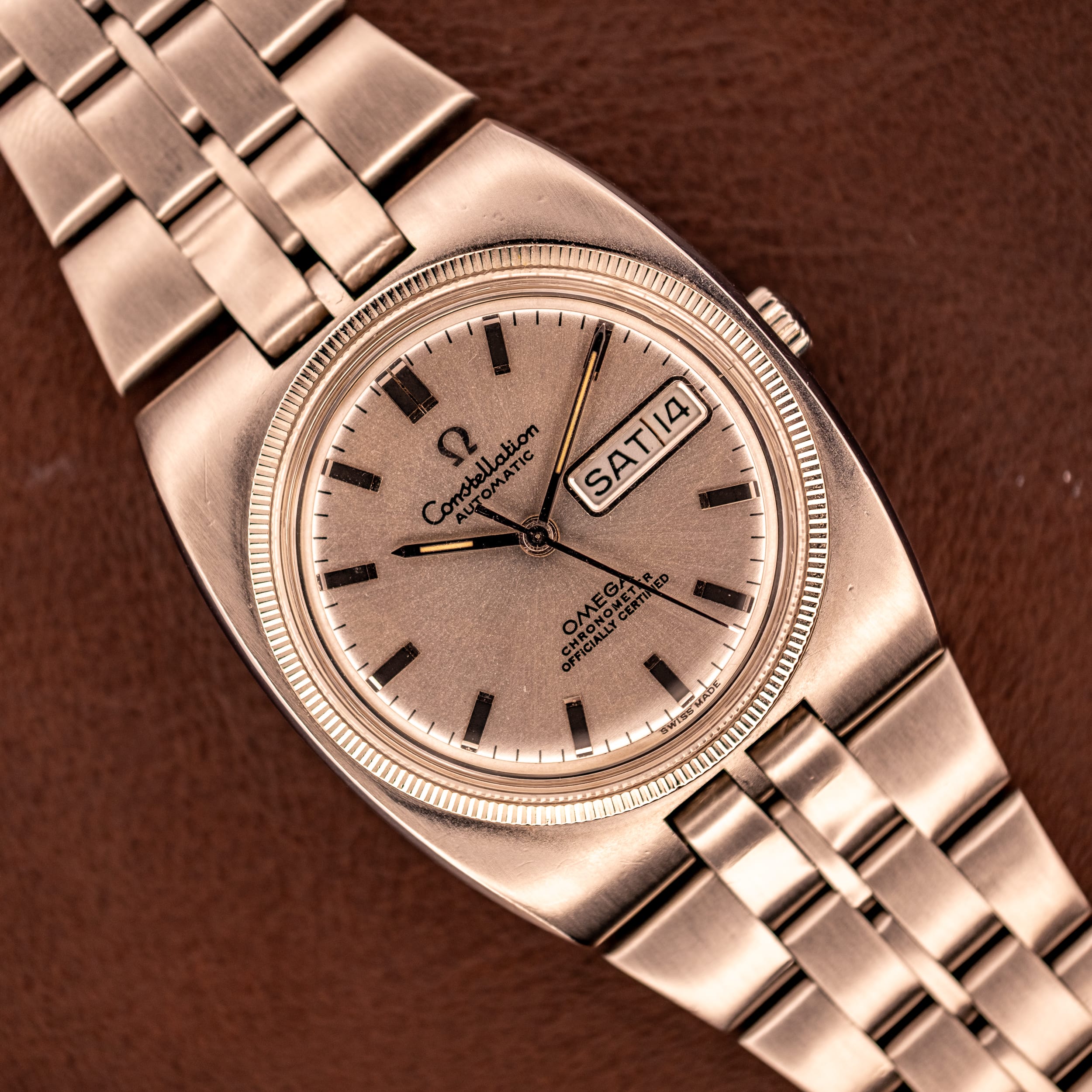
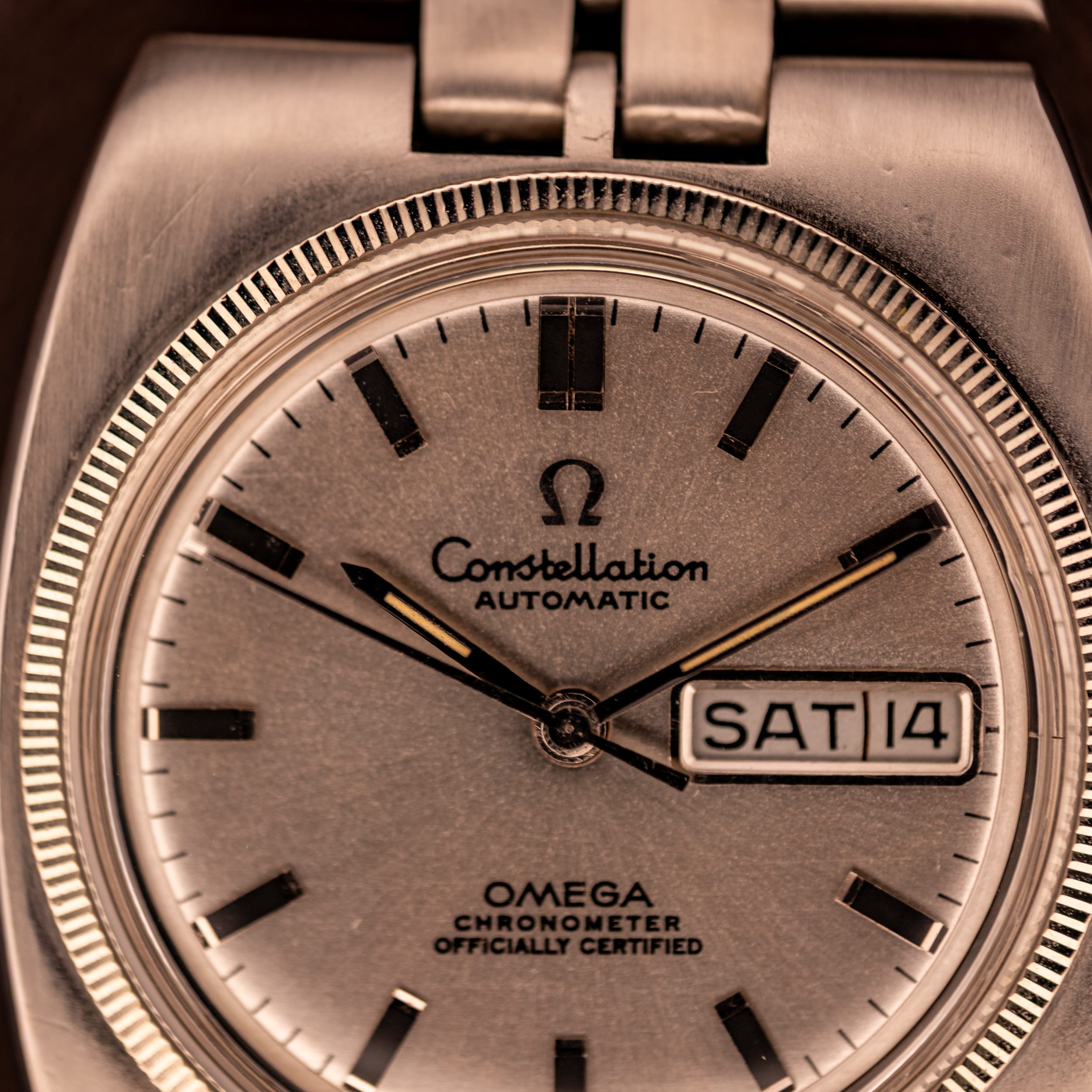
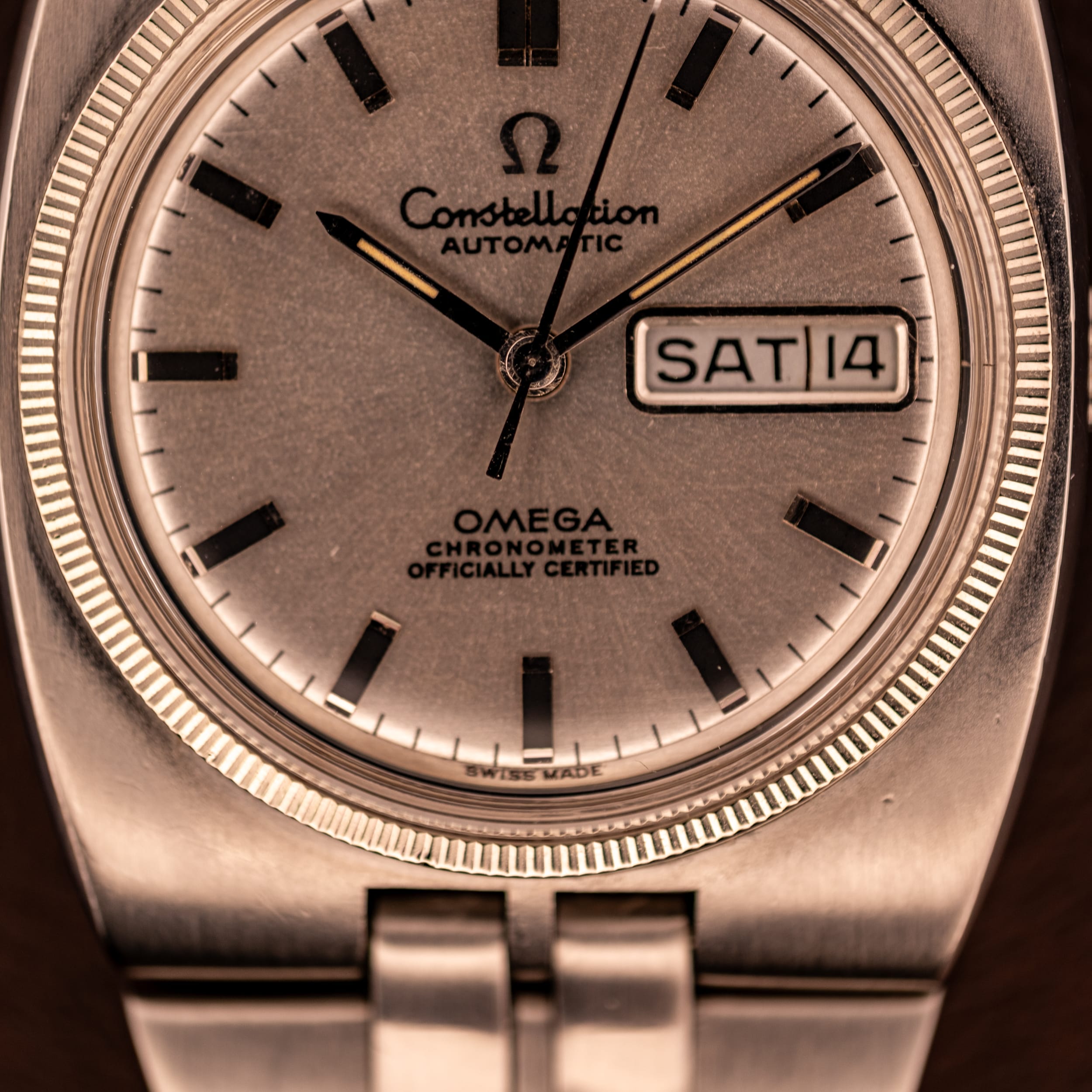
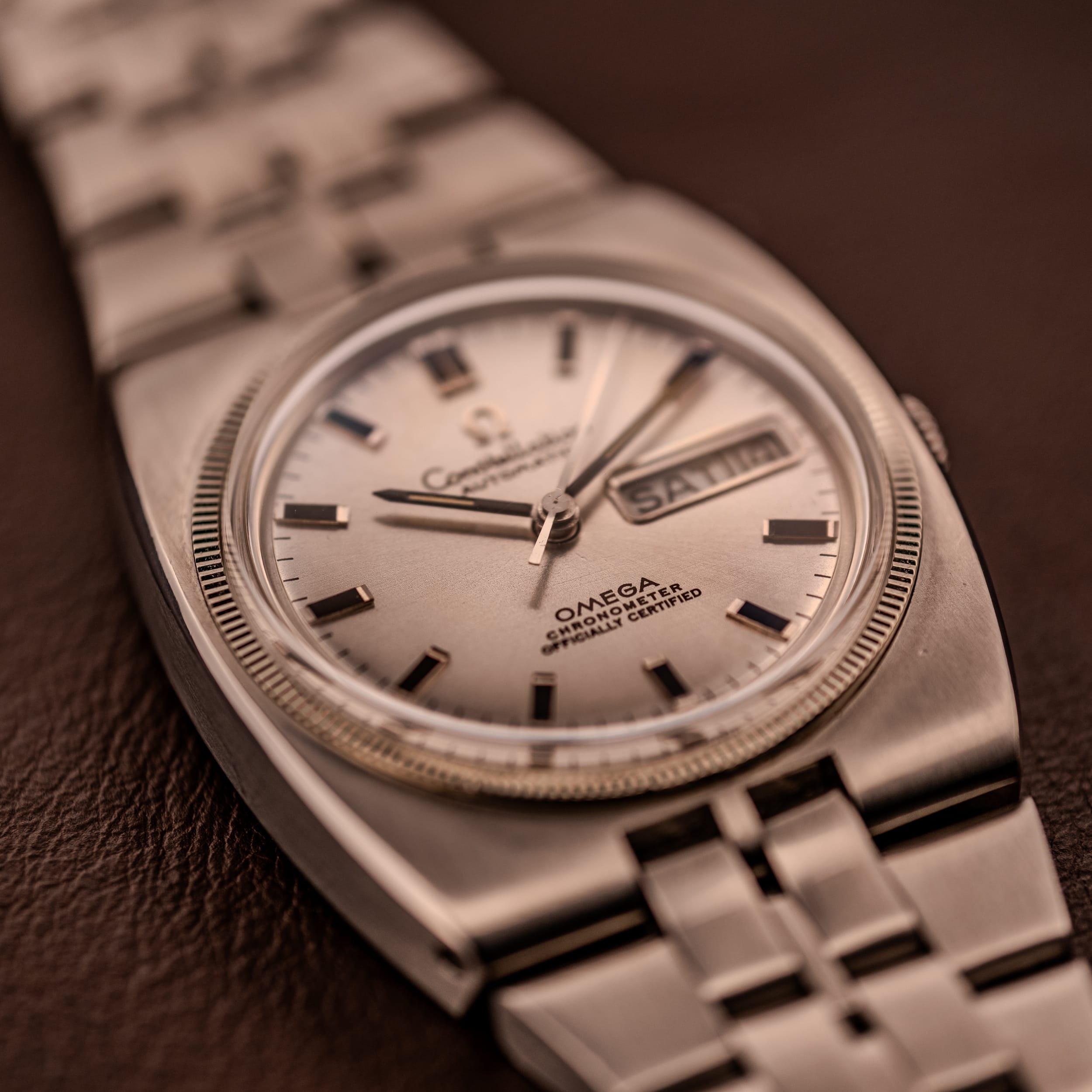
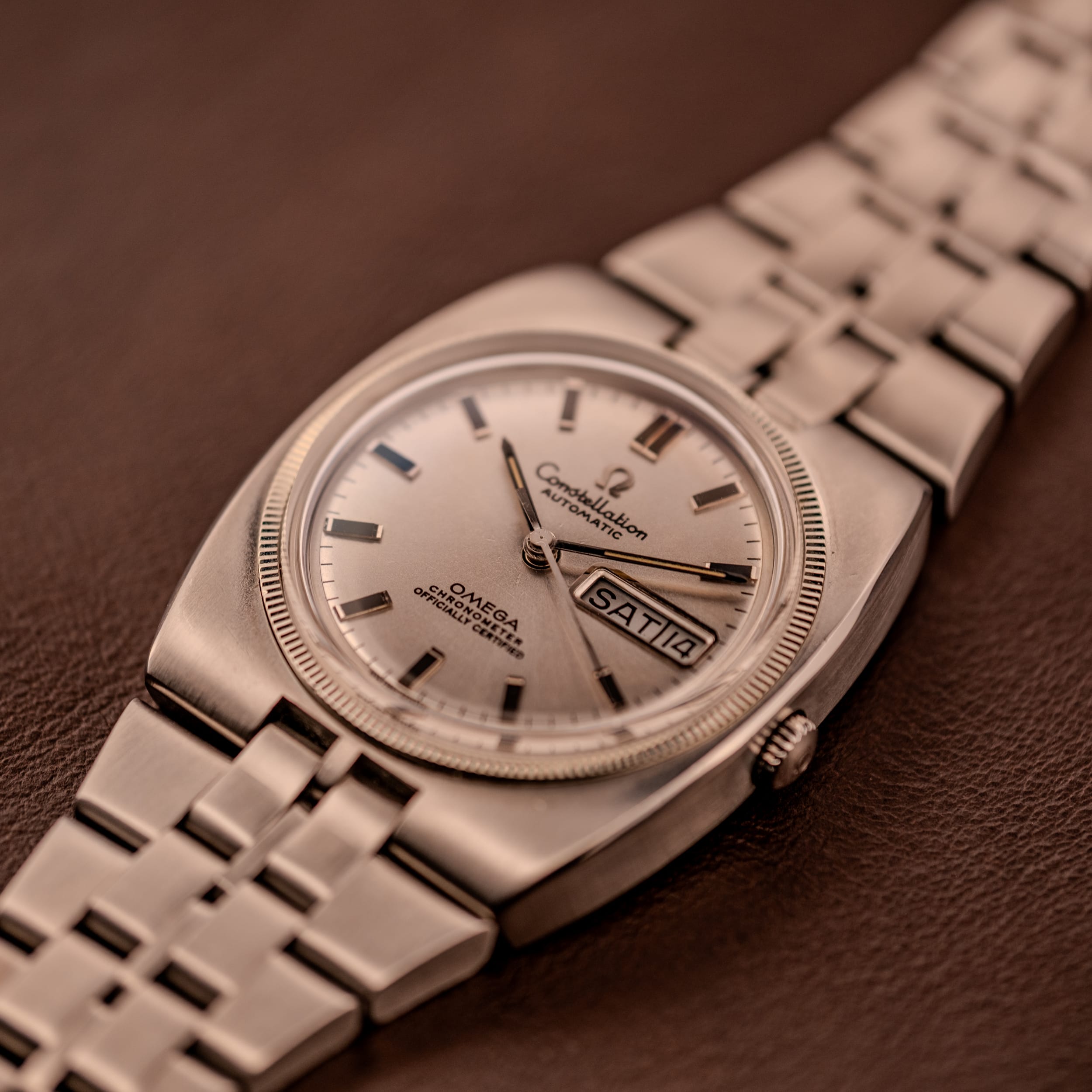
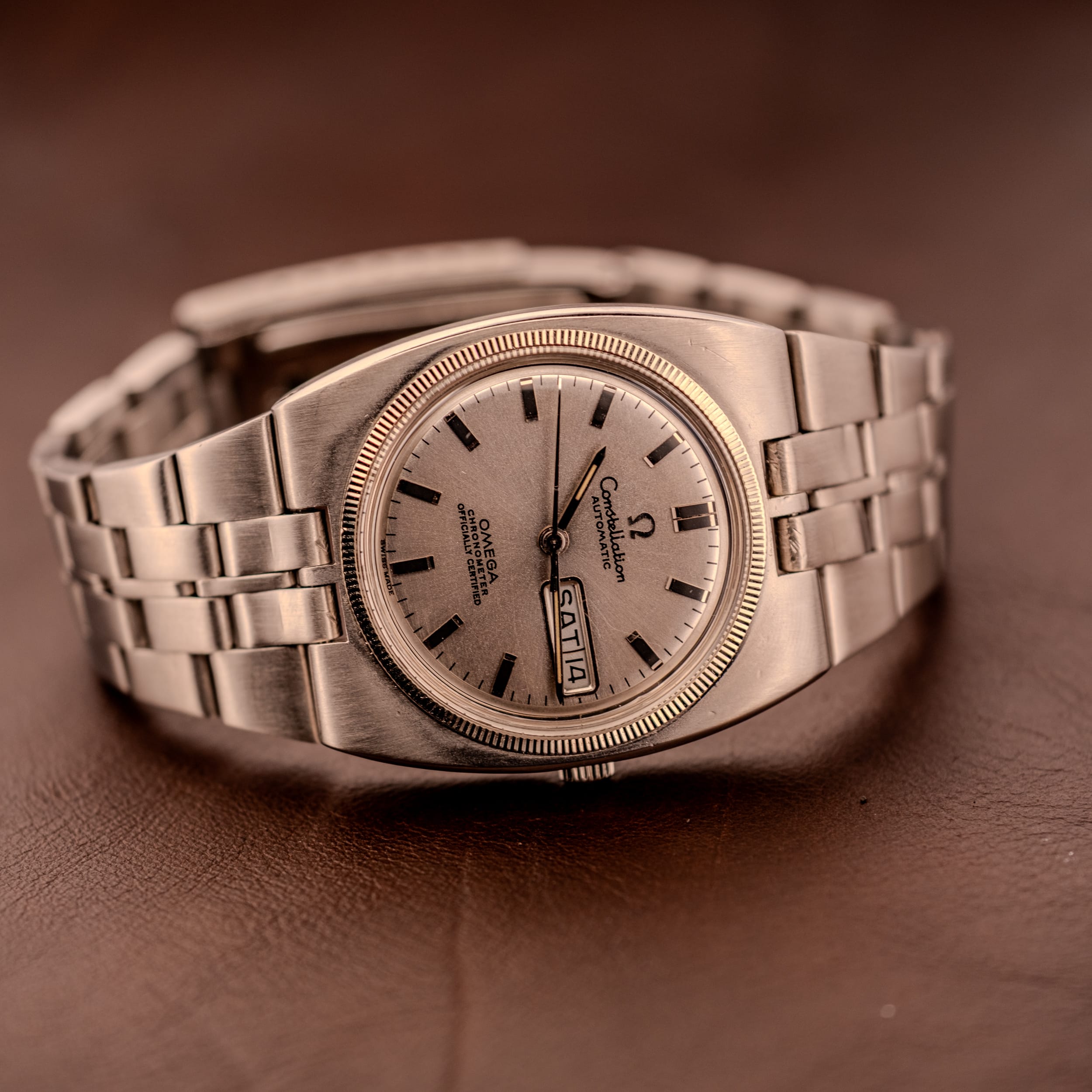
If you want Constellation chronometer architecture without the pie-pan premium, the 168.045-368.845 is the reference to study. Released in the late-1960s C-shape Constellation family, this is the cushion-cased, fluted-bezel jumbo that married the brand’s chronometer story to a one-piece case-and-bracelet several years before the wider Swiss industry caught onto integrated design. To us, this is the moment the Constellation stopped being a dress chronometer and started being a watch you put on in the morning and left there, and in our opinion the C-shape jumbos are still one of the most underread chapters in the long-form Omega catalogue.
Omega launched the Constellation line in 1952 as the brand’s flagship chronometer-rated automatic, the watch built to compete at the official observatory trials in Geneva, Neuchatel, and Kew. Every Constellation that left the factory carried official chronometer certification, the same observatory-grade testing protocol that became COSC in 1973, and the Constellation observatory medallion stamped into the caseback is the visible record of that promise. The 168.045 sits in the late C-shape era, produced from roughly 1968 into the early 1970s, and represents the reference where Omega took the chronometer story and dressed it in the cushion case and integrated bracelet architecture that would define so much of 1970s Swiss watchmaking. To us, this is a Constellation built for the decade that was about to arrive, not the one that had just passed.
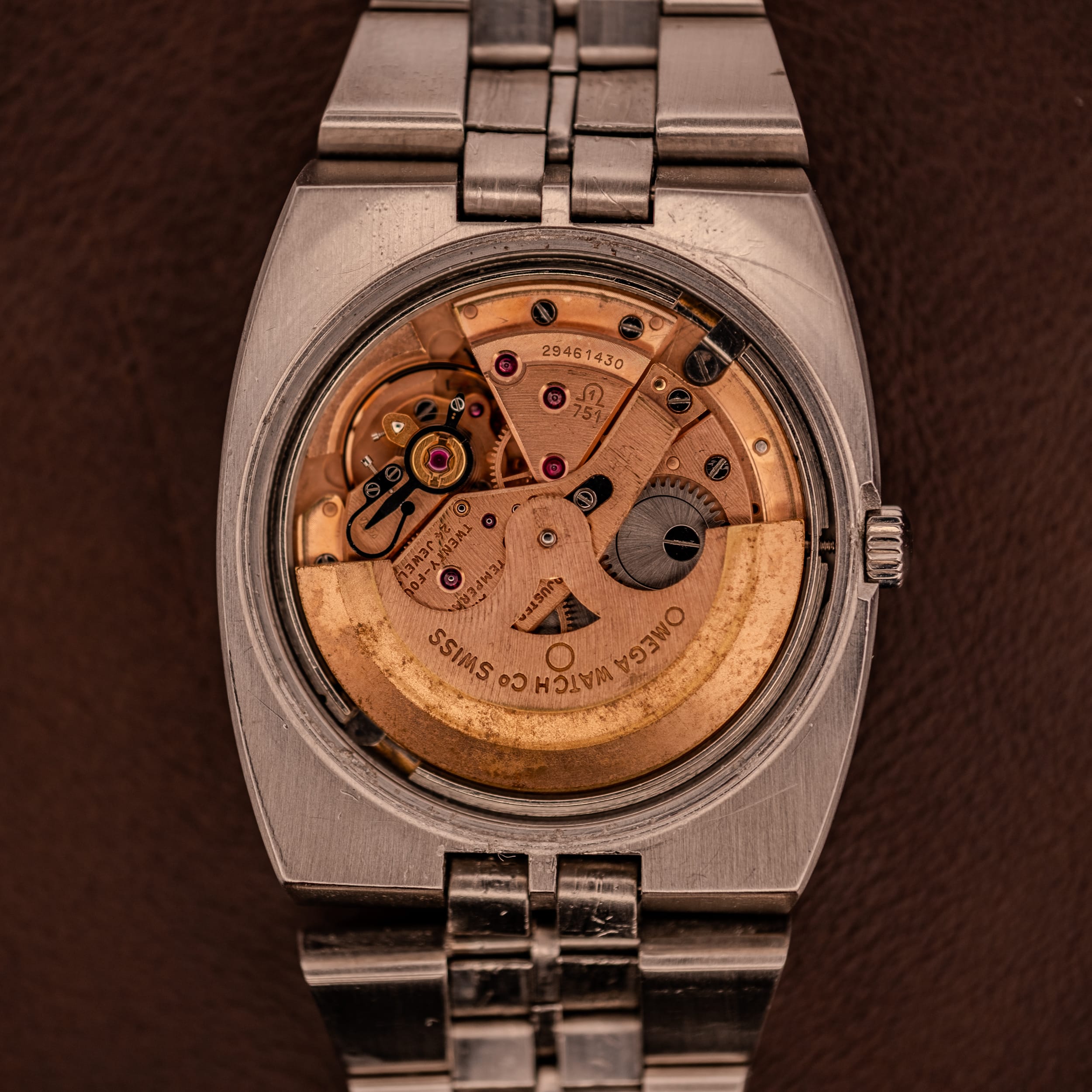
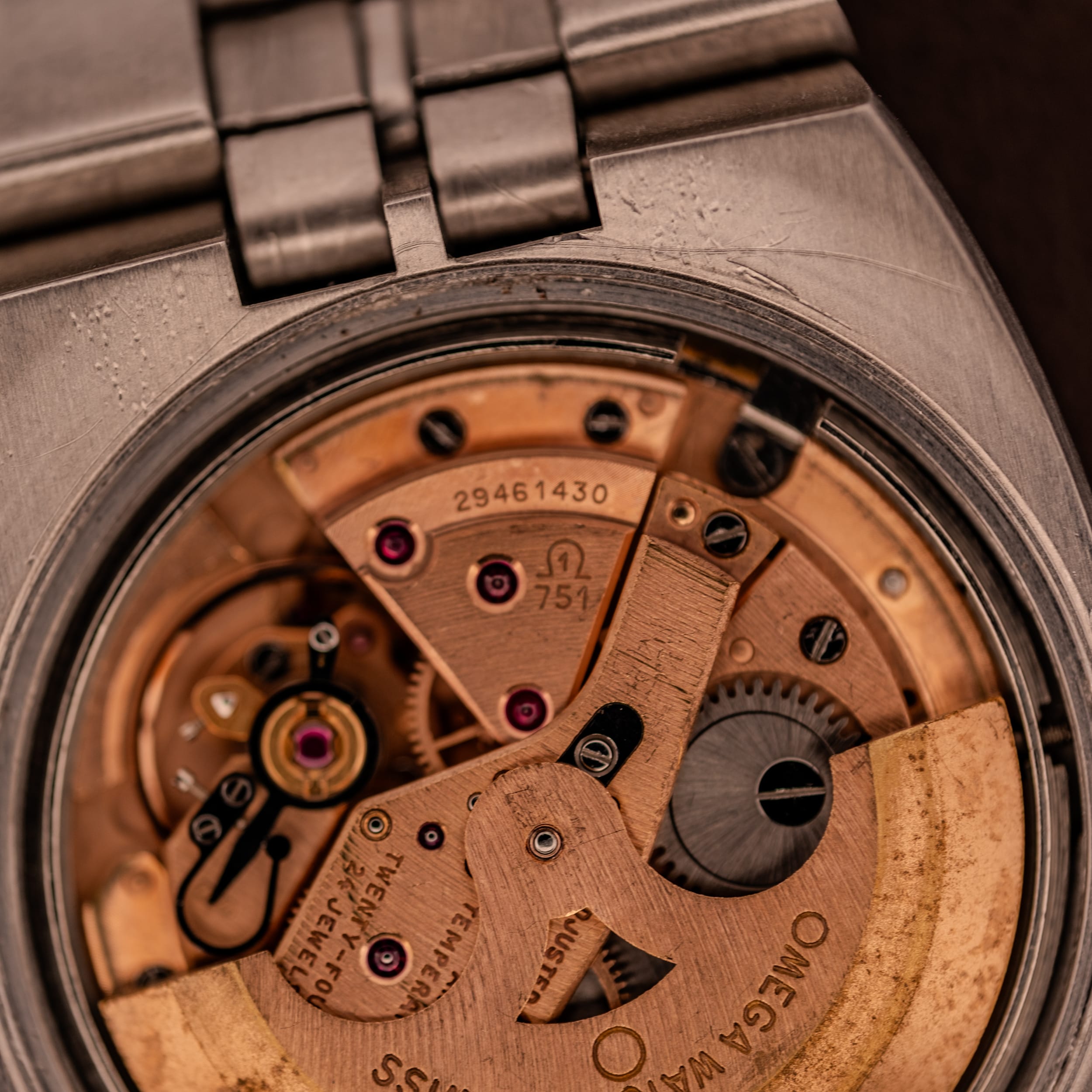
The movement is the Omega caliber 751, the chronometer-rated day-date variant of the 5XX family and arguably the last of Omega’s truly great in-house automatic movements before the quartz era reshuffled the catalog. Twenty-four jewels, copper-plated beryllium-bronze finishing across the bridges and rotor, five-position adjustment, and a beat rate of 19,800 vibrations per hour. The 751 trades directly on the chronometer pedigree of the caliber 561 and 564 that preceded it, with a quickset date and integrated day mechanism that Omega engineered to keep the chronometer certification intact even with the added complications. Our service photographs read OMEGA WATCH Co. SWISS in a curved cartouche across the bridge, the bold 751 caliber stamp directly below the Omega logo, the production serial 29461430 visible at the top of the main bridge, and TWENTY FOUR 24 JEWELS / FIVE ADJUSTMENTS / TEMPERATURE running along the rotor edge. The serial dates production firmly to 1970. To us, the 751 is the movement collectors quietly chase once they realize the late-60s chronometer Omegas were built to a standard the brand has spent the last fifty years trying to reach again.
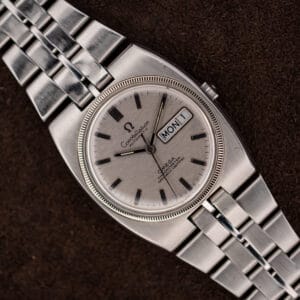
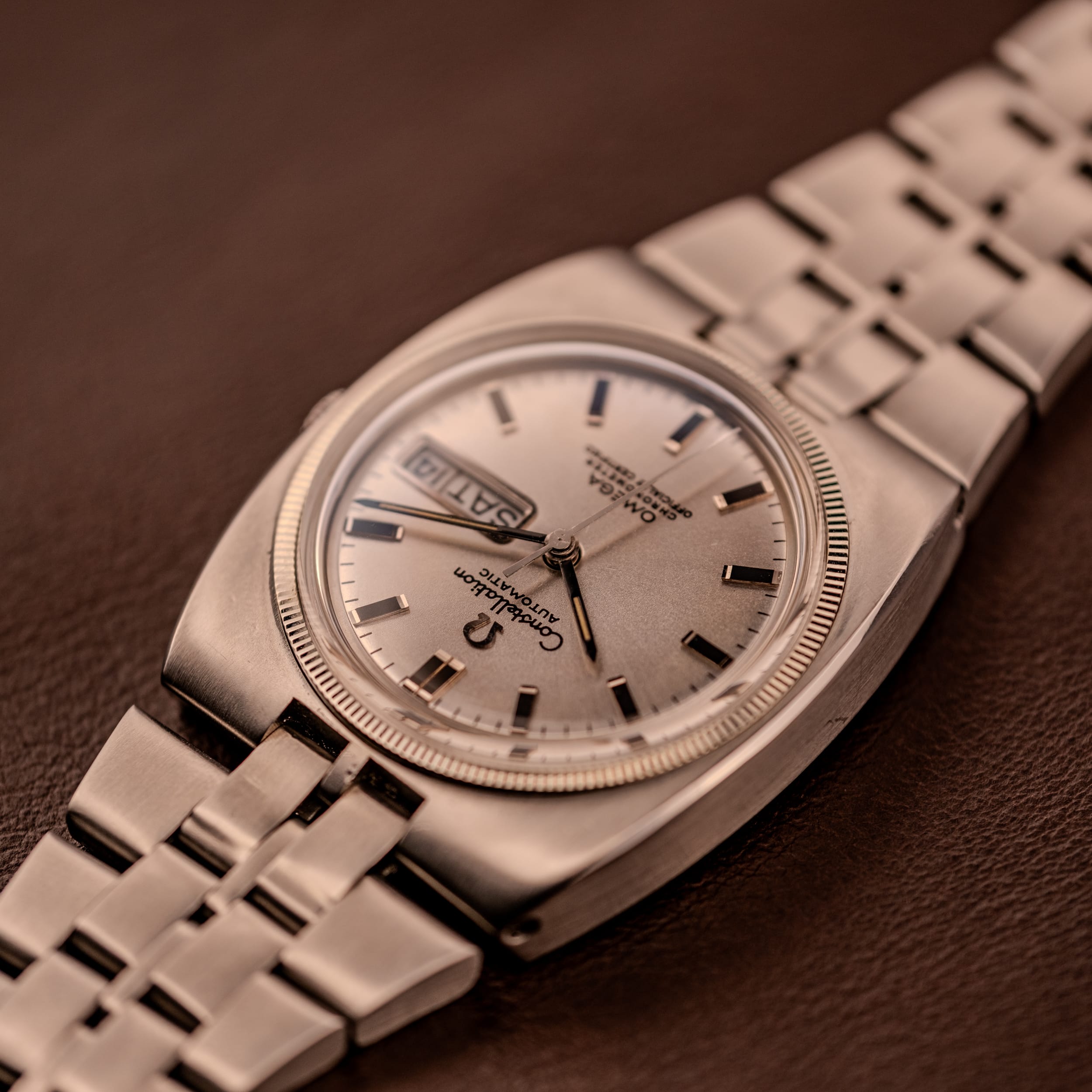
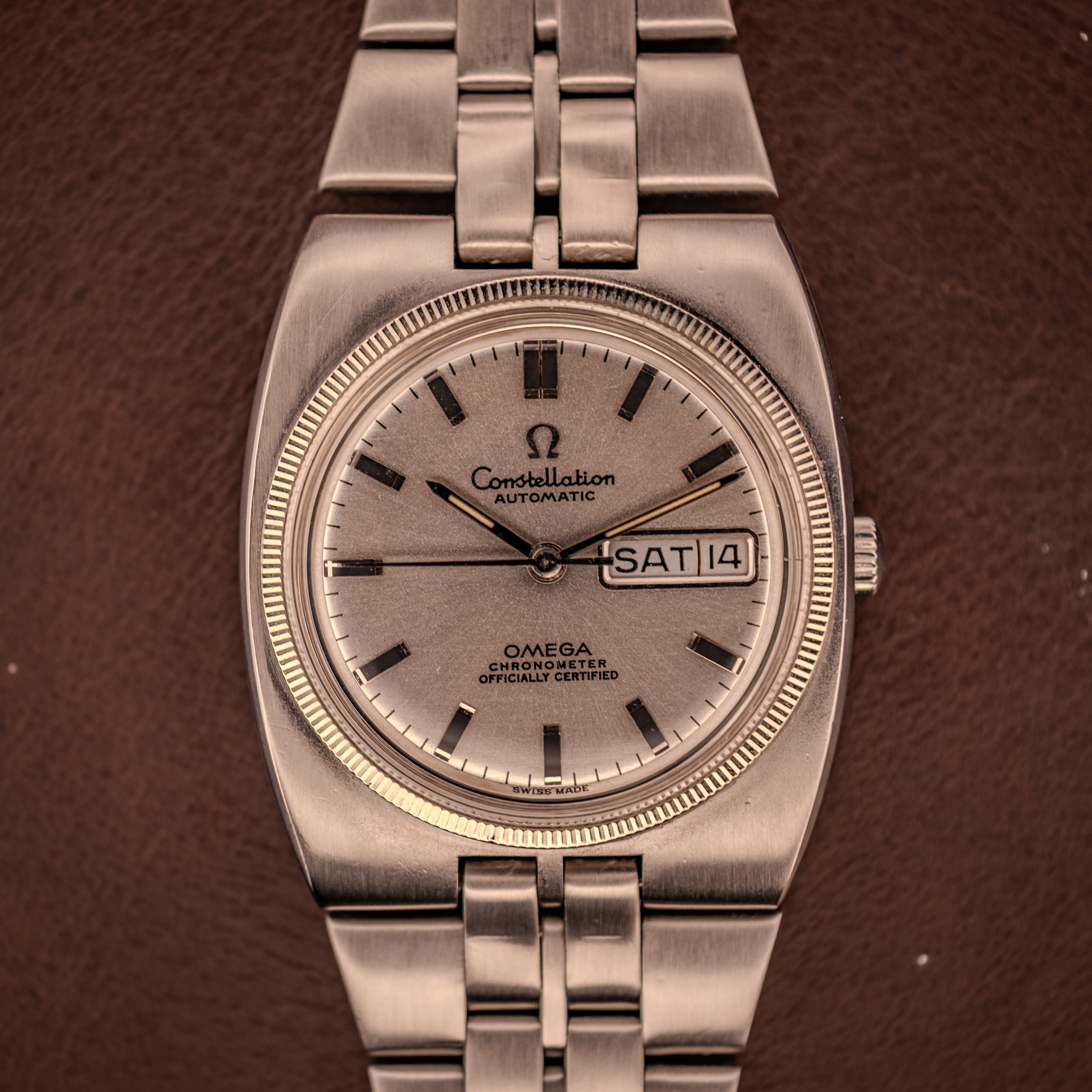
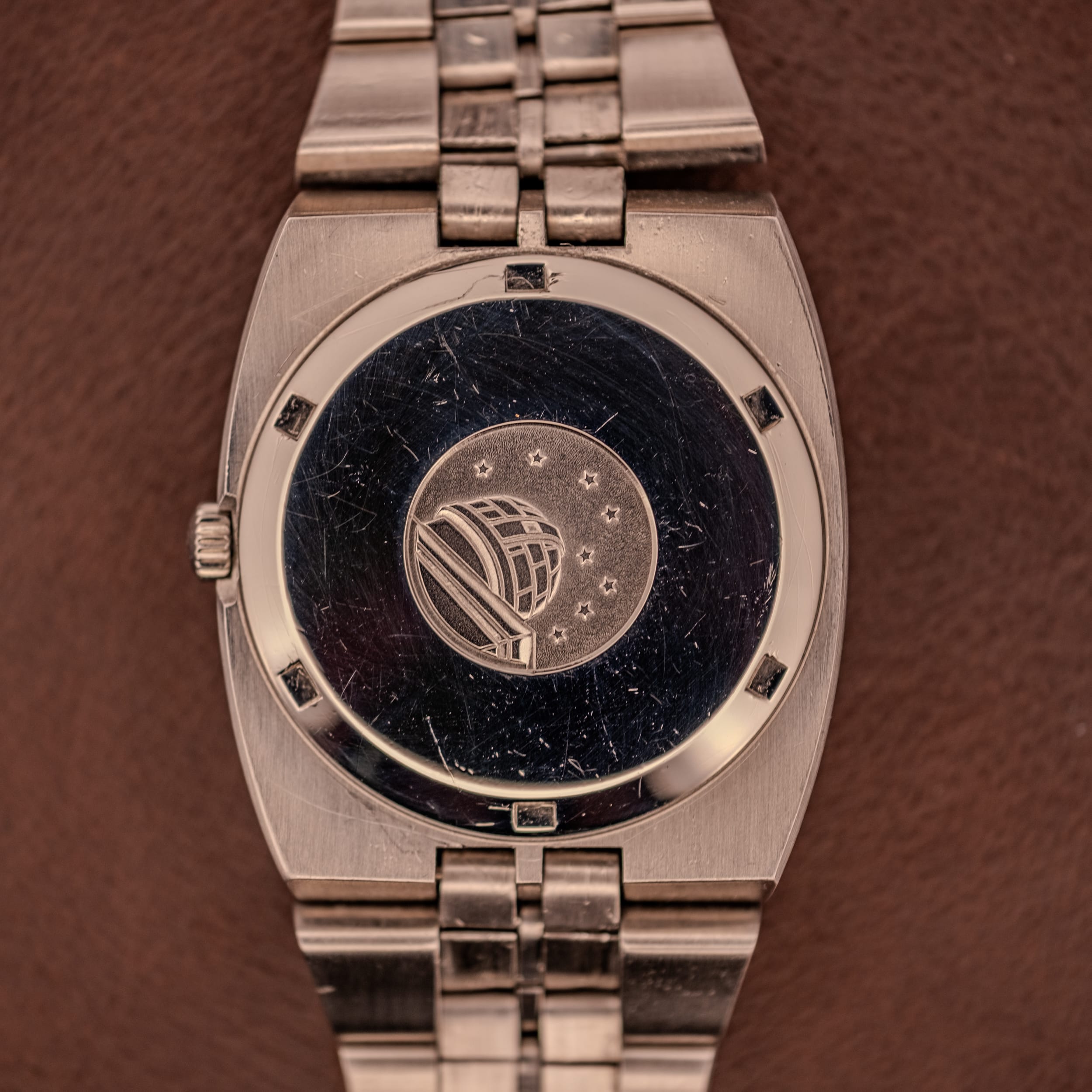
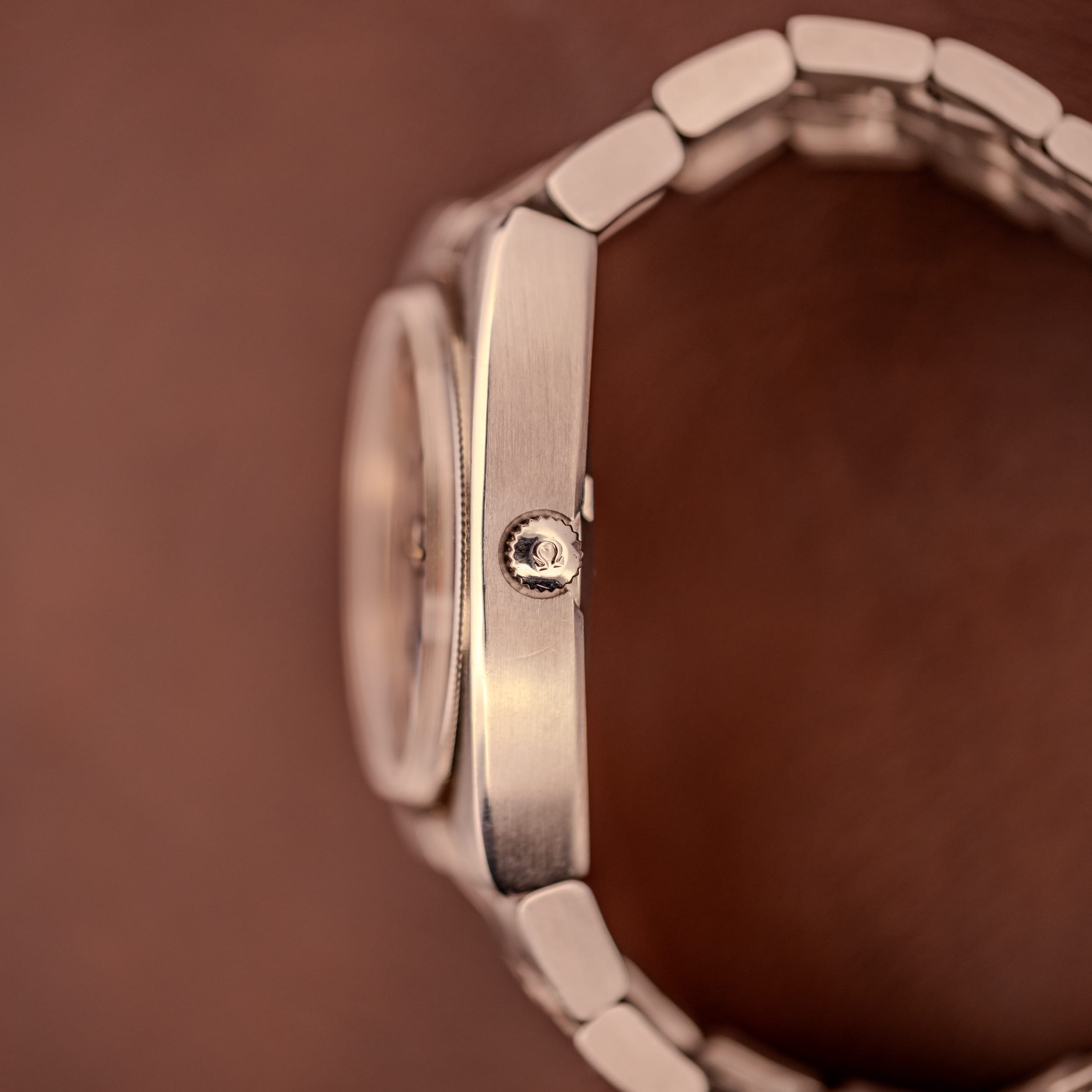
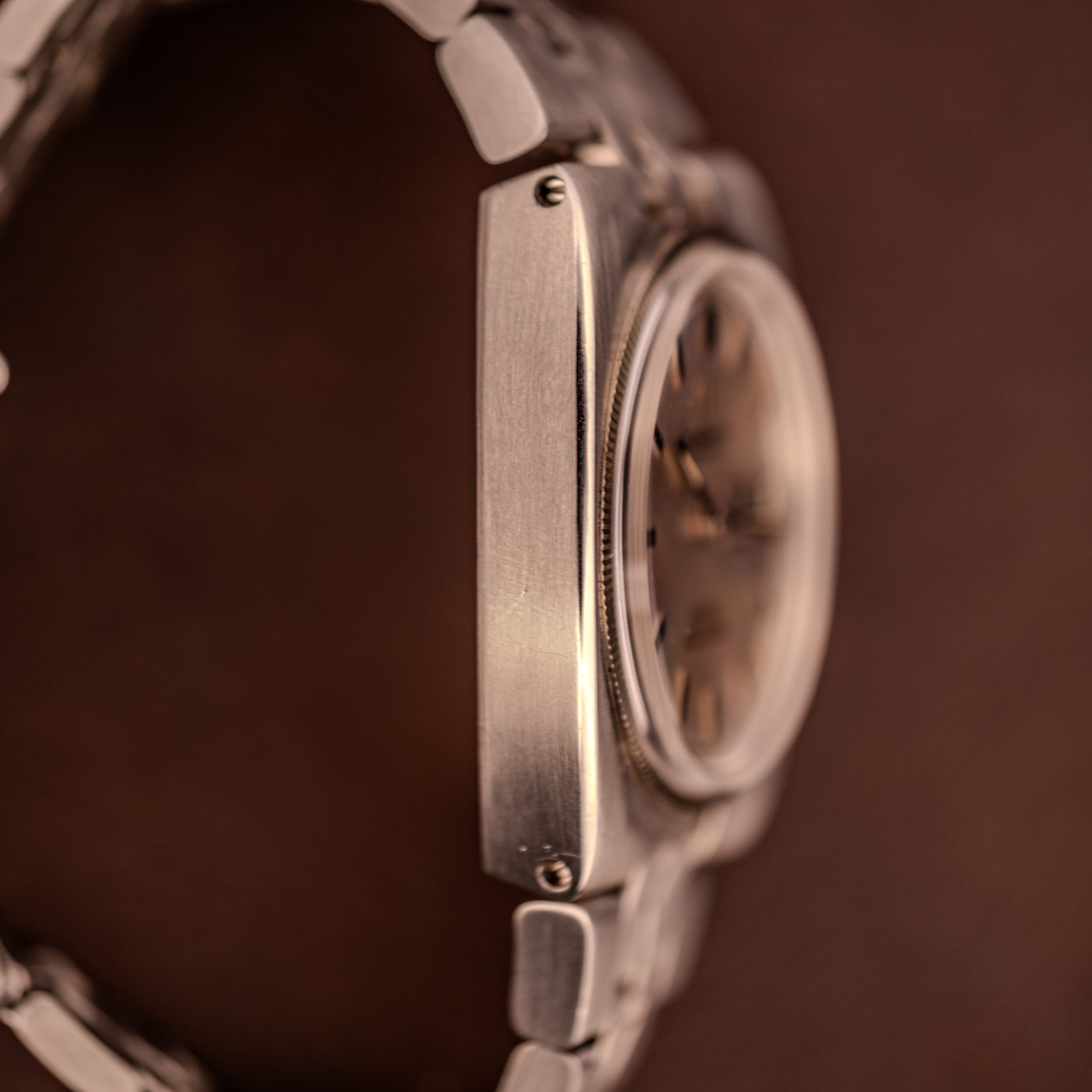
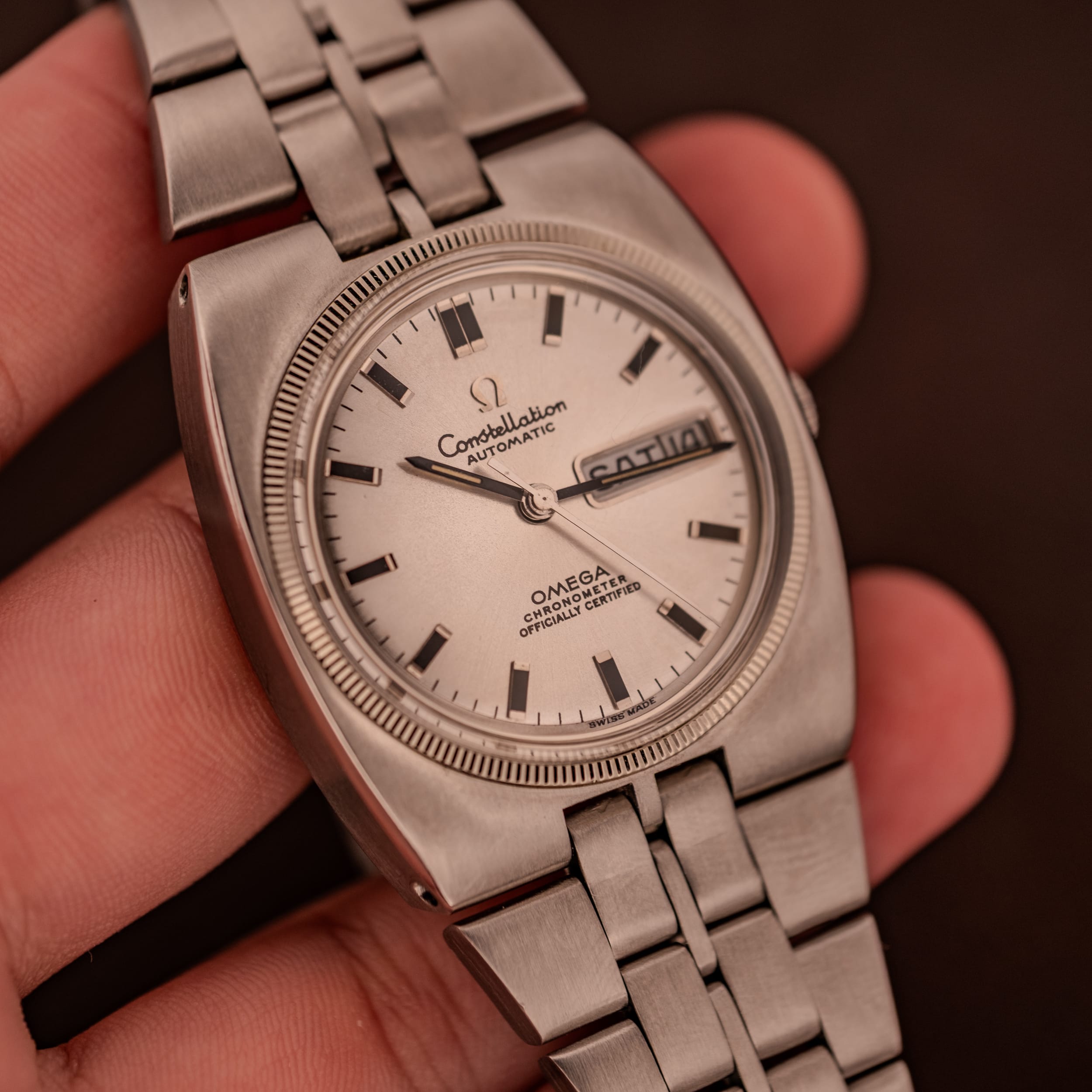
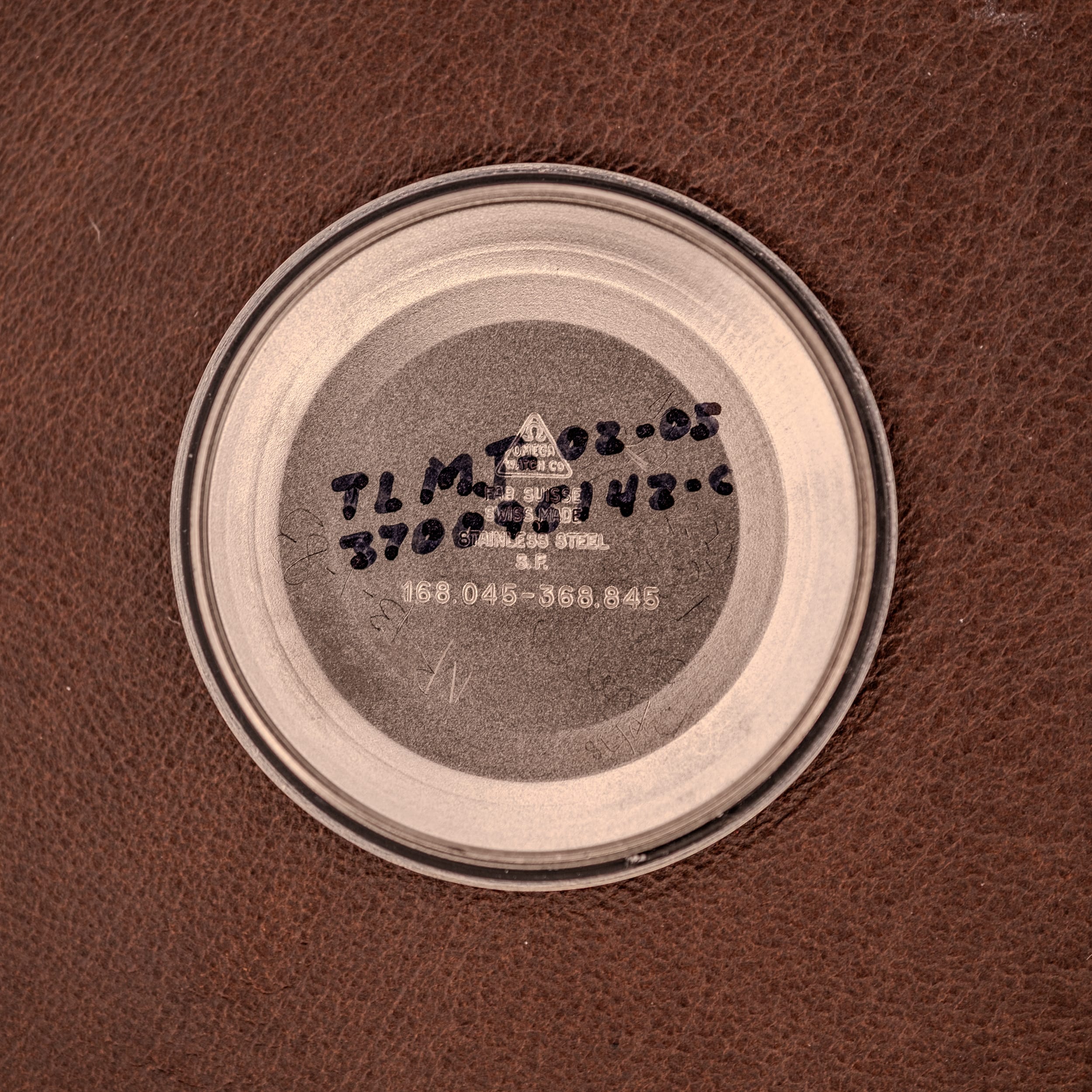
The case is the architectural feature that defines this reference. Stainless steel C-shape construction with a cushion-soft footprint of 36mm across by 40.5mm lug-to-lug, the fluted coin-edge bezel ringing the dial with the fine vertical milling that the 168.045 is known for. The case sides are vertically brushed steel with sharply chamfered edges, and the lugs flow directly into the integrated bracelet rather than terminating at conventional spring-bar holes. The crown is the original Omega-signed component with the period-correct Omega logo intact and operates with the positive engagement a properly maintained 751 should give. Honest scratching across the outer caseback and gentle wear along the case edges record a watch that has been worn rather than locked away. The outer caseback carries the Constellation observatory medallion stamped at its center, eight stars ringing the cupola of the Geneva Observatory, exactly the verification stamp every chronometer-grade Constellation should wear. Open the back and the inner caseback is stamped 168.045-368.845 along the lower edge alongside the STAINLESS STEEL designation, the reference pairing reading exactly as it should for a 1970 production C-shape jumbo.
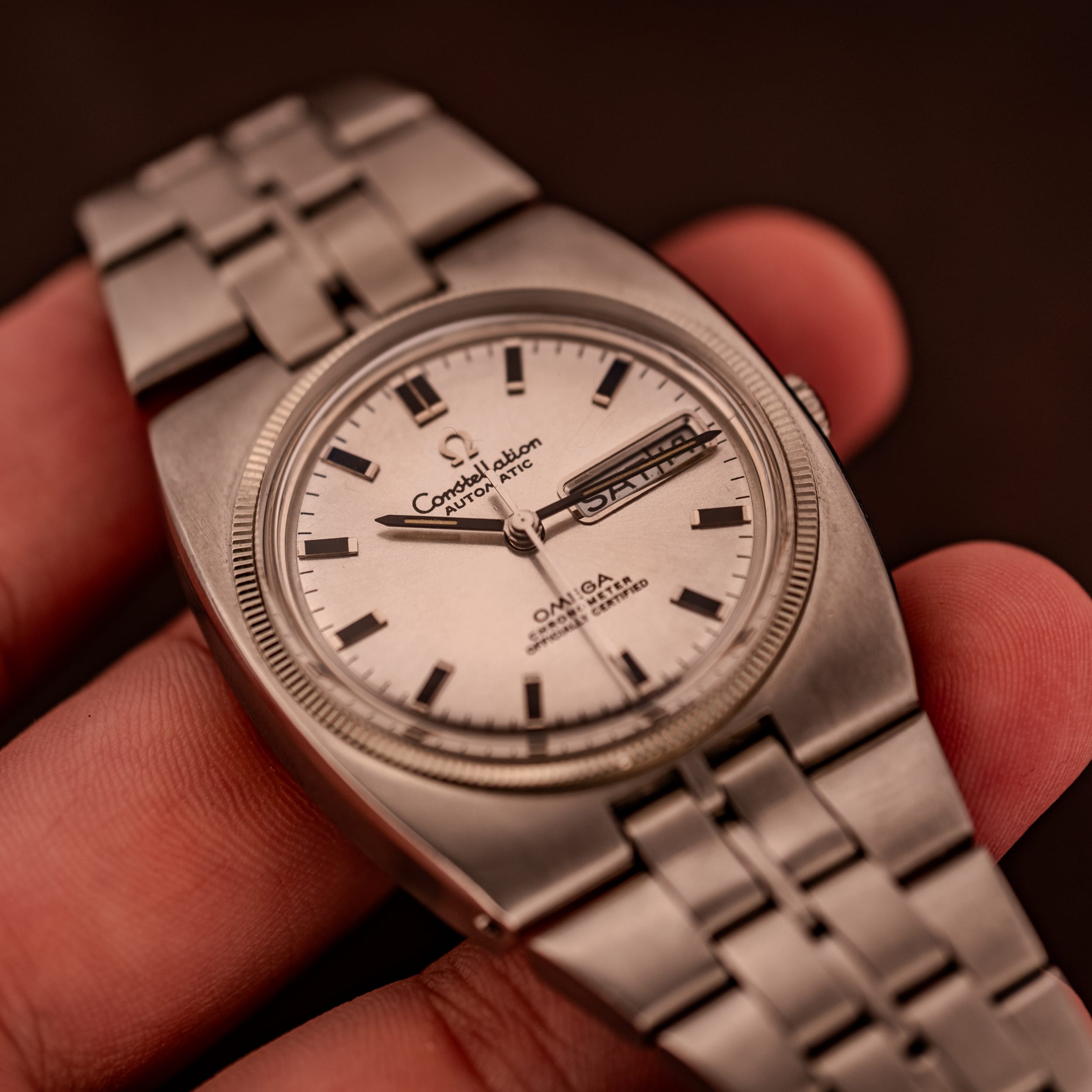
The dial is factory original and reads cleanly through every detail that matters. A horizontally brushed silver field anchors applied black baton markers at every hour position, the markers cut with the period-correct flat-top profile that catches light without competing with the dial surface. The applied Omega logo sits at twelve directly above the printed Constellation script and the AUTOMATIC text. Centered below the pinion, the printed OMEGA / CHRONOMETER / OFFICIALLY CERTIFIED legend declares the observatory pedigree exactly where it should. SWISS MADE prints clearly at the bottom edge, without the tritium T markers, confirming this is a non-luminous dress chronometer dial as Omega intended for this configuration. The day-date aperture at three carries the original silver framed window with the period-correct black-on-white printing. The slim baton hour and minute hands and the matching seconds hand are the original factory set, with no replacement and no reluming. Factory dials on chronometer-grade Omegas of this era are the single most important originality factor, and this one is honest down to the print weight.
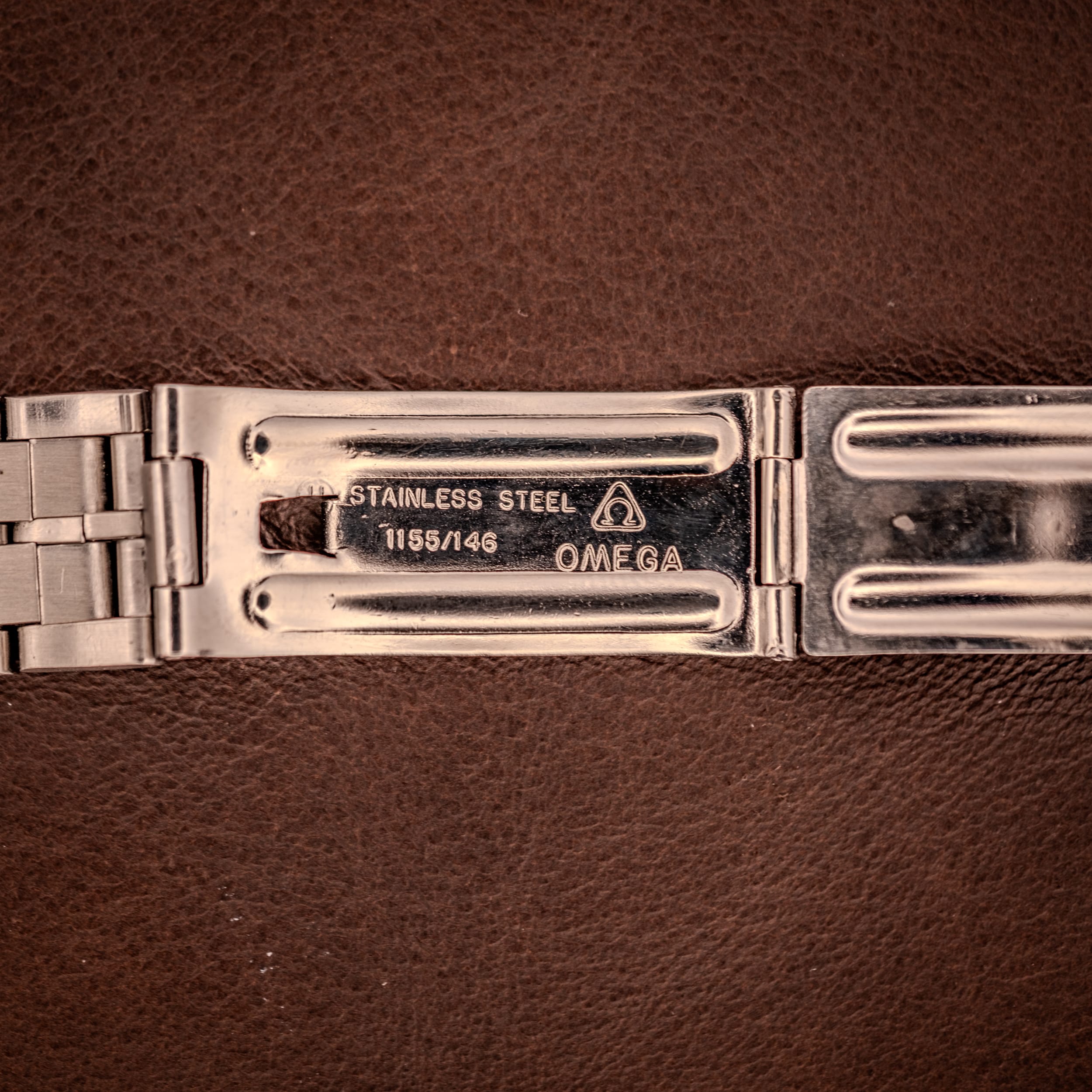
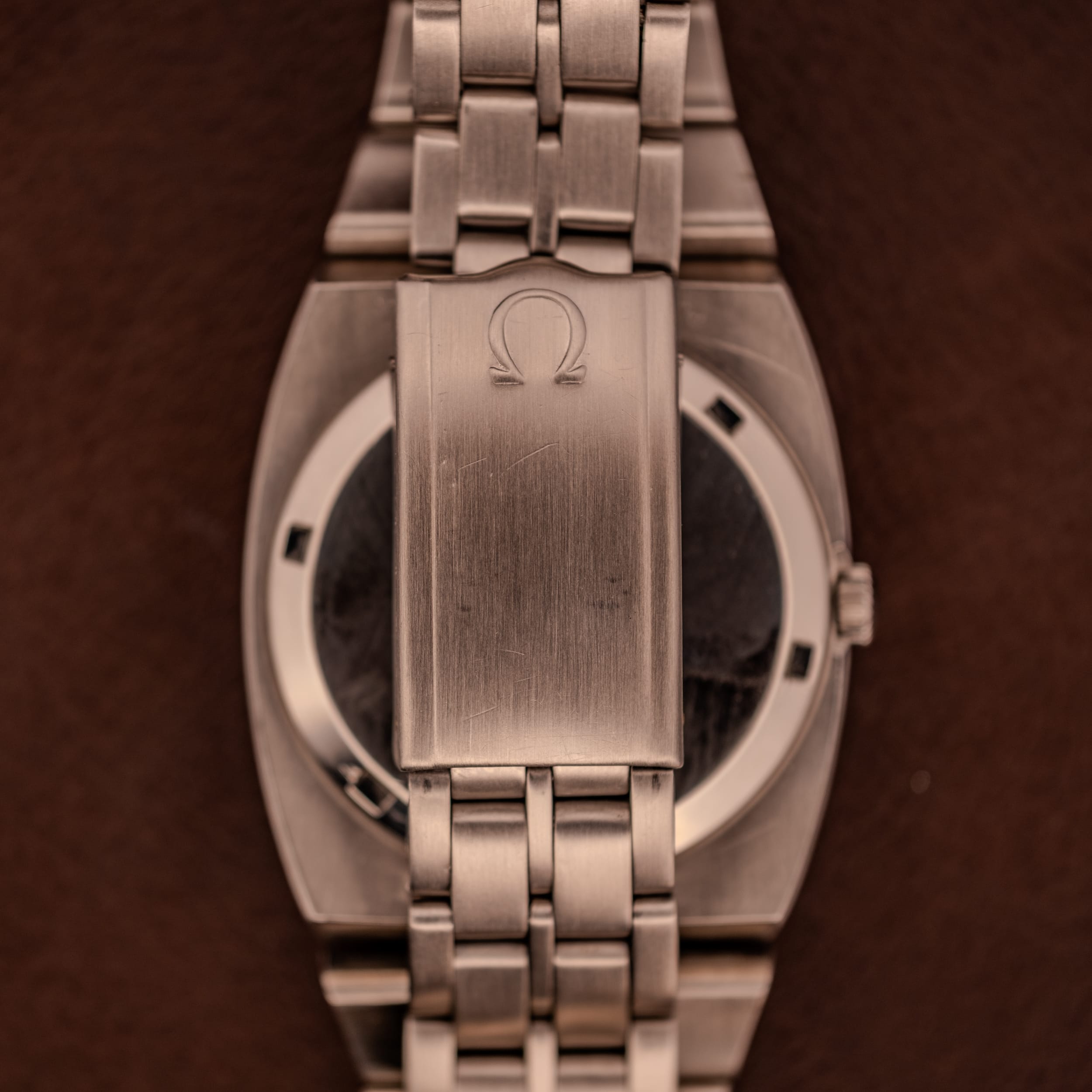
The bracelet is the original Omega 1155/146 integrated steel bracelet, the period-correct reference for the 168.045 case, with the OMEGA folding clasp and the applied Omega logo on the cover. The inner clasp is stamped STAINLESS STEEL with the bracelet reference 1155/146 alongside the Omega triangle logo and the OMEGA wordmark, exactly the verification stamping a collector wants to find. The bracelet rides flush with the case and gives the watch the one-piece silhouette the reference was designed to deliver.
Serviced in-house at OTTUHR and backed by our 2-year mechanical warranty, this is the kind of late C-shape Constellation we get genuinely excited about. Factory original silver dial, original Omega-signed crown, observatory medallion intact, inner caseback stampings reading clean, original 1155/146 bracelet, and the chronometer-certified caliber 751 running strong. For the collector who values a chronometer pedigree wearing a 1970s case rather than a 1950s one, who reads integrated bracelets as design history rather than dated styling, and who wants a piece of Omega watchmaking from the year the brand was still building the best in-house movements in Switzerland, this is exactly the kind of Constellation we love bringing in. To us, this is the moment the Constellation grew up.