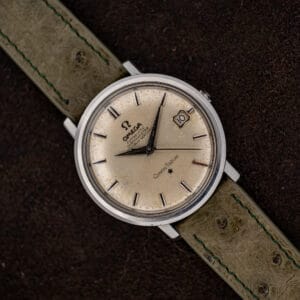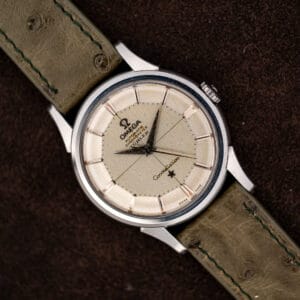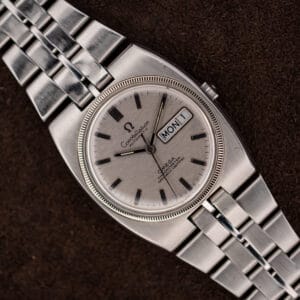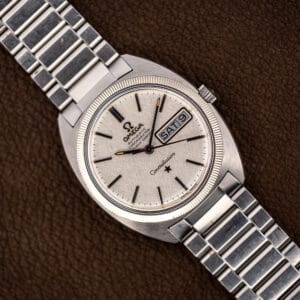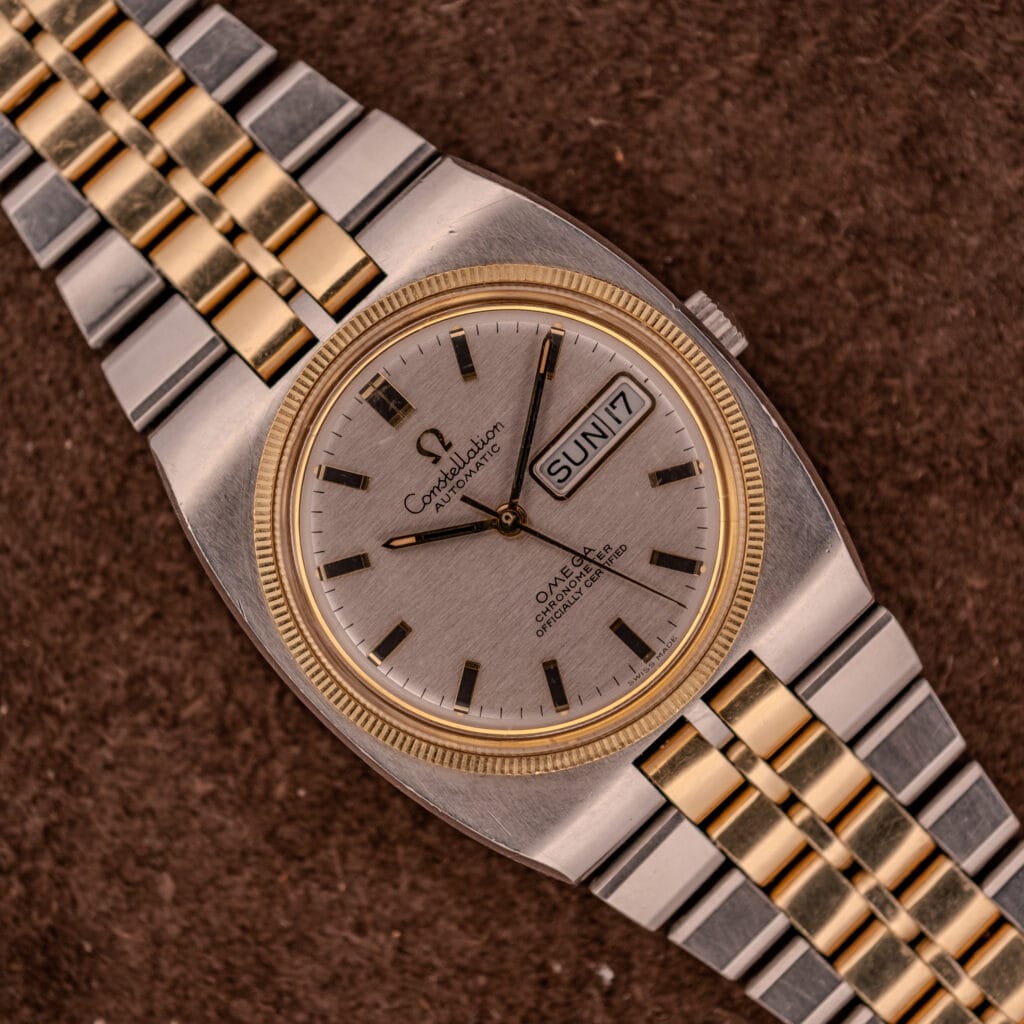
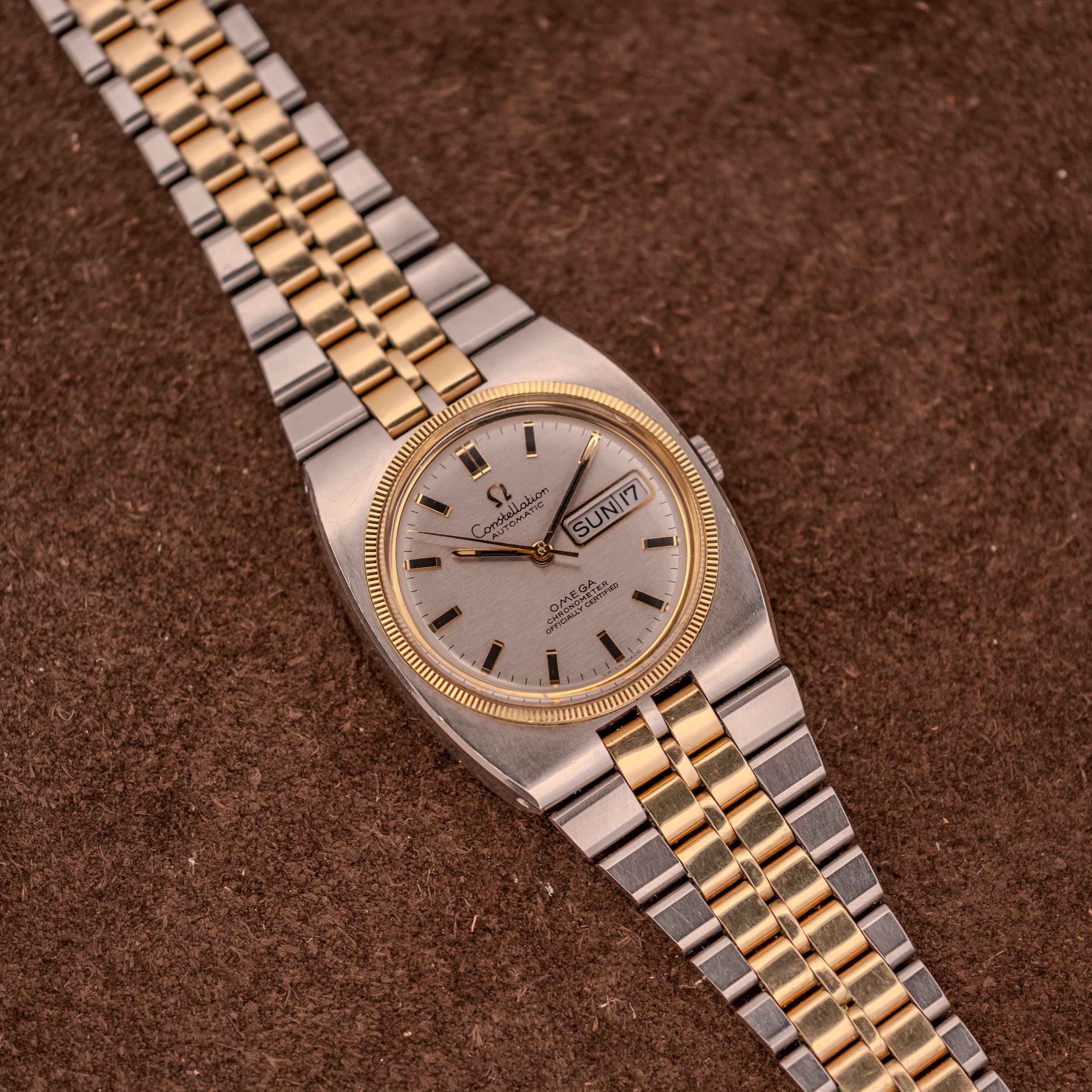
In our opinion, the Constellation 168.045 is one of the most under-appreciated entry points into the early integrated-bracelet era of Swiss watchmaking, and this 1973 example in two-tone steel and 14k gold filled is exactly the kind of piece that makes the case. The integrated cushion sports watch did not start with Audemars Piguet in 1972, it started a couple of years earlier at Omega with references like this one, and any vintage Omega Constellation Chronometer collector who has put a 168.045 next to a Royal Oak knows immediately what we mean about the family resemblance.
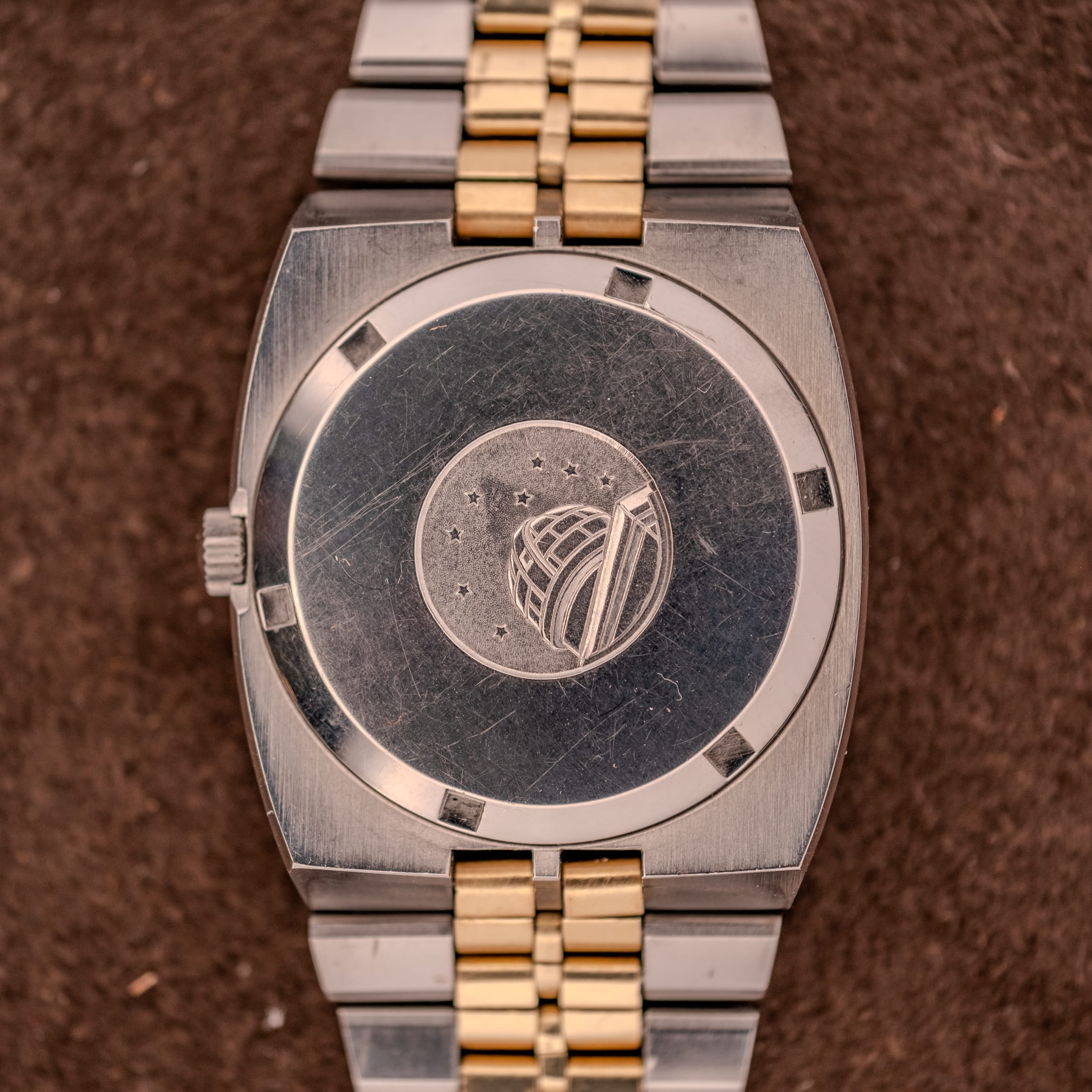
Omega launched the Constellation in 1952 as its flagship chronometer line, named in honor of Omega holding more observatory precision records than any other manufacturer in the years leading up to it. The observatory medallion and eight stars engraved on every Constellation caseback are not decoration, they are a direct reference to that record. By the late 1960s, when integrated case-and-bracelet thinking was beginning to circulate through Geneva design studios, Omega put the Constellation chronometer into a cushion-shape integrated package and called it the 168.045. The reference predates the Royal Oak by several years and predates the Nautilus by close to a decade, and given how steady the Genta influence was in Swiss design at that moment, the lineage reads as more than coincidence to us.
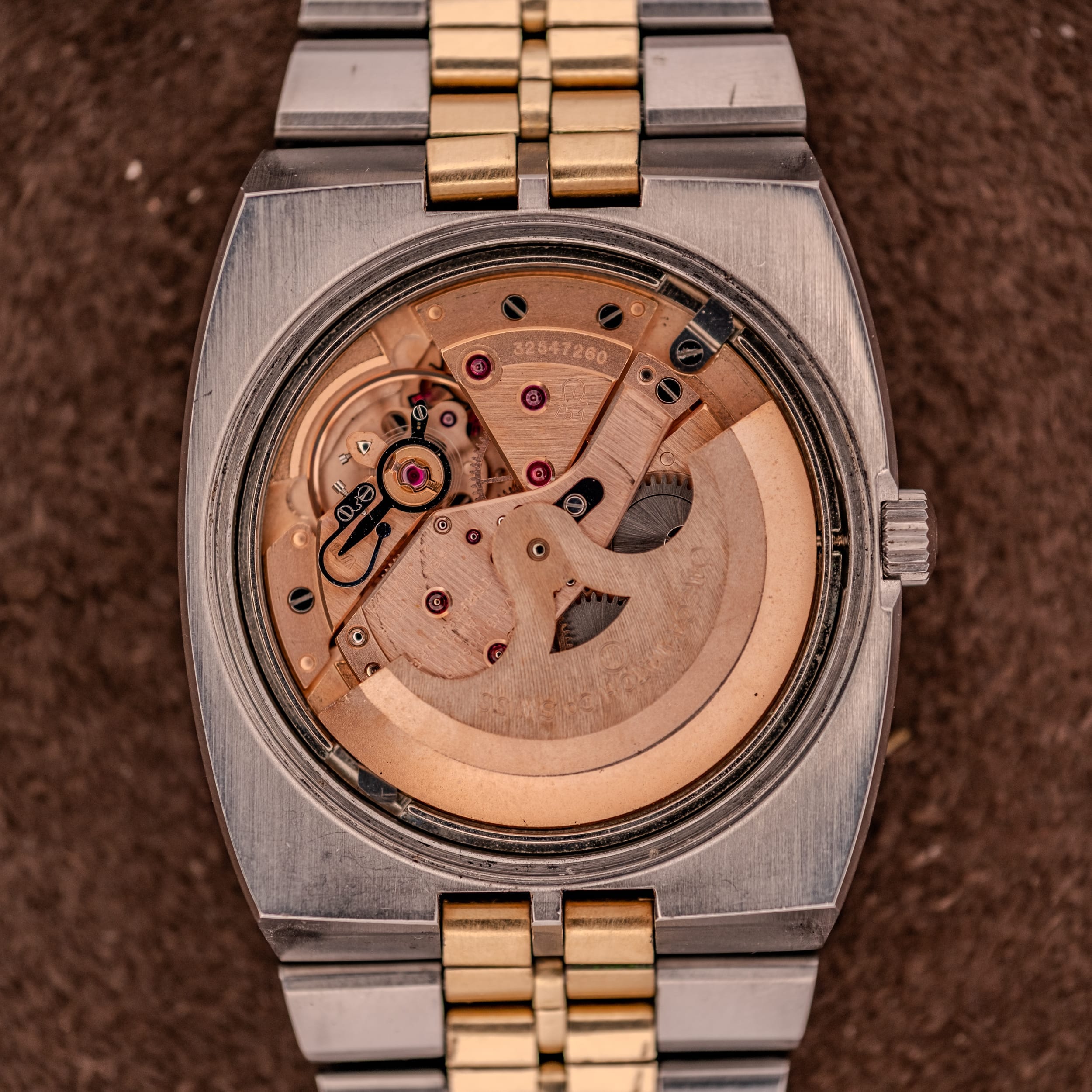
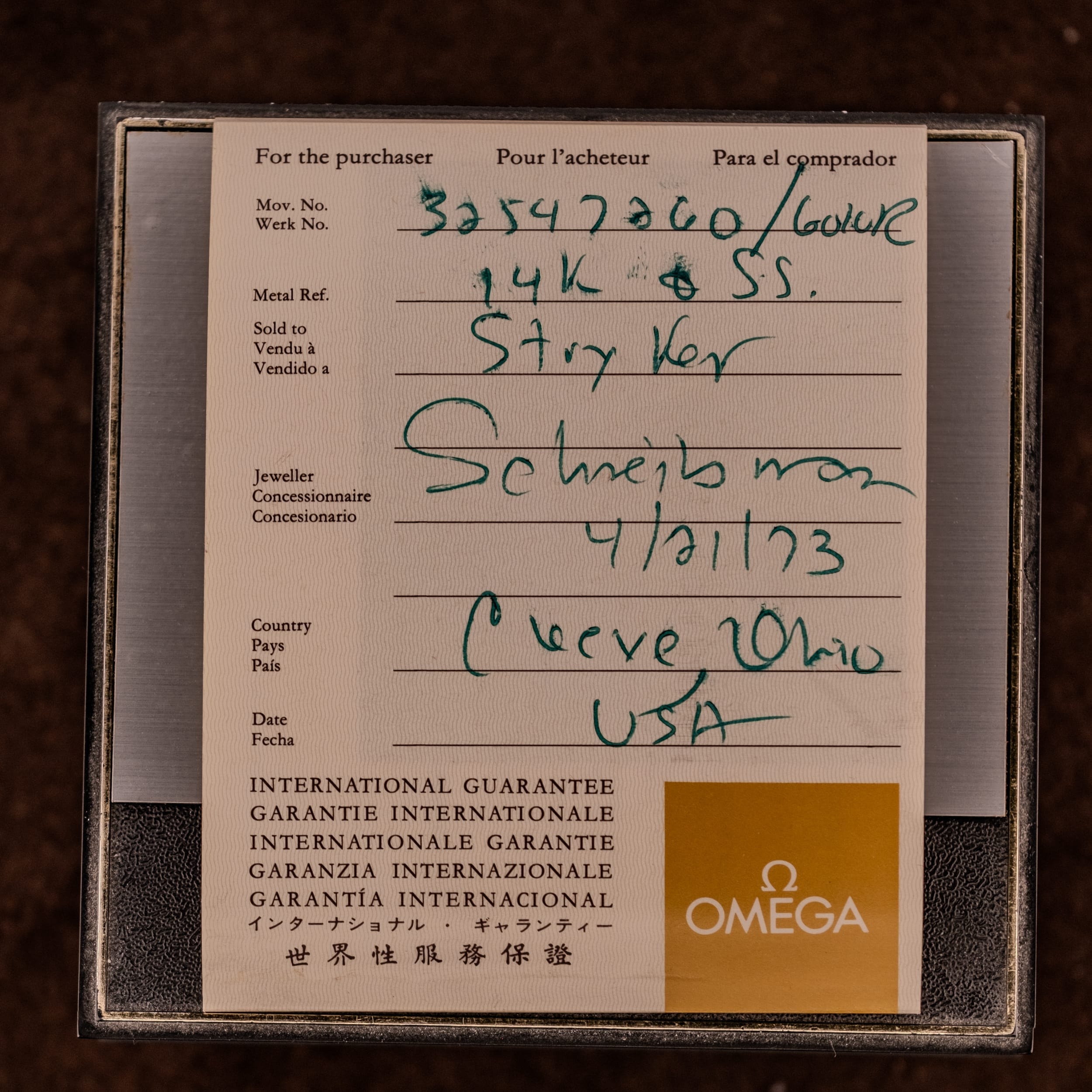
The caliber 751 inside this watch is one of the genuinely great late-1960s Omega productions. It is a 24-jewel automatic chronometer adjusted to five positions and temperature, beating at 19,800 vibrations per hour, with both day and date complications running off the same architecture that powered Omega’s simpler 561 and 565 calibers. Through the opened caseback in our movement photograph you can see the copper-plated rotor and bridges, the deeply jeweled train, and the factory finishing that we always want to see on a chronometer-grade Omega of this period. The visible movement serial 32547260 ladders to 1973 production, which matches the hand-written date on the international guarantee card included with the watch.
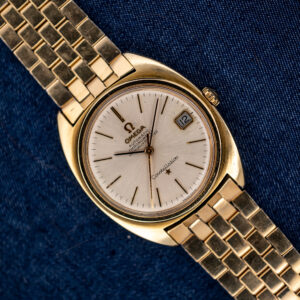
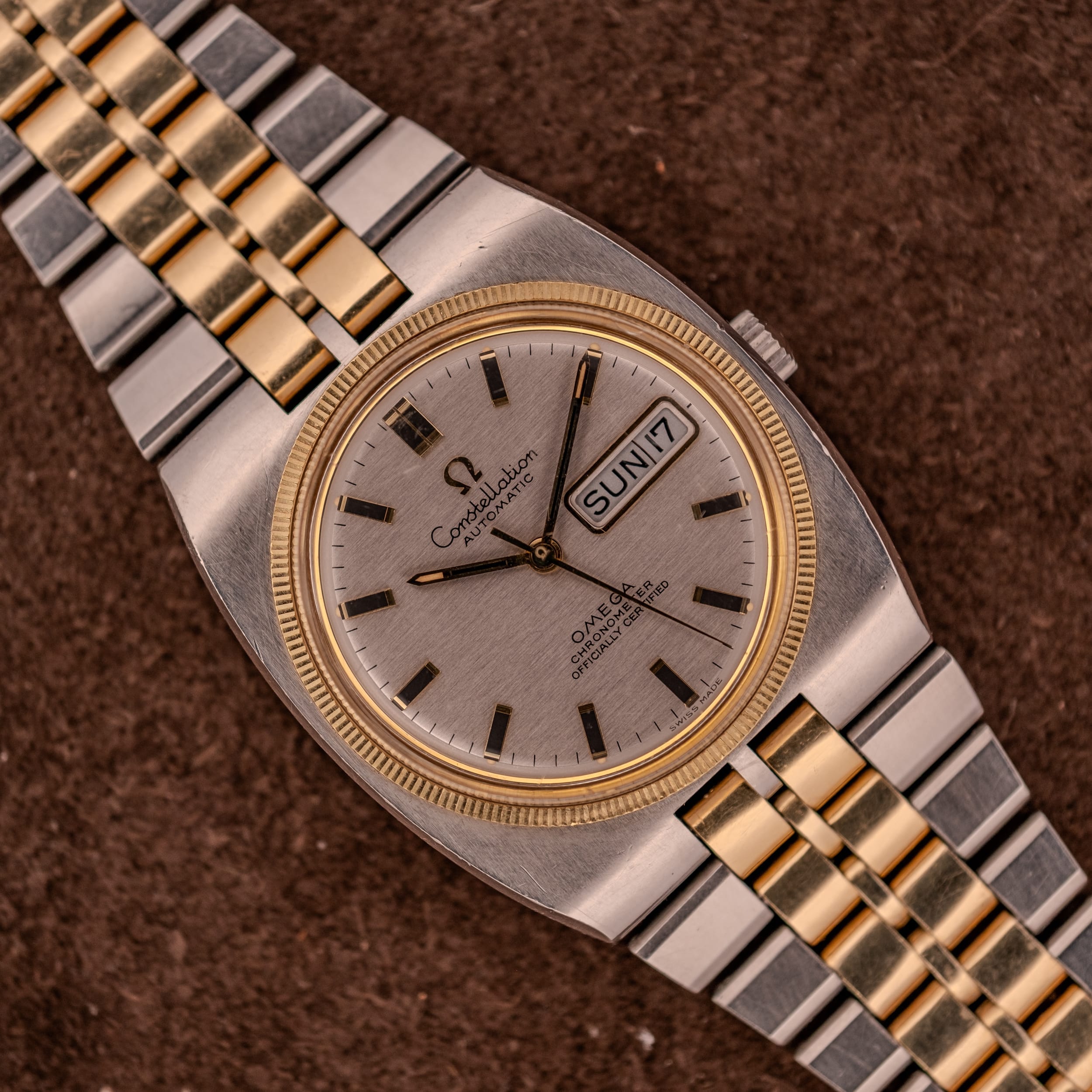
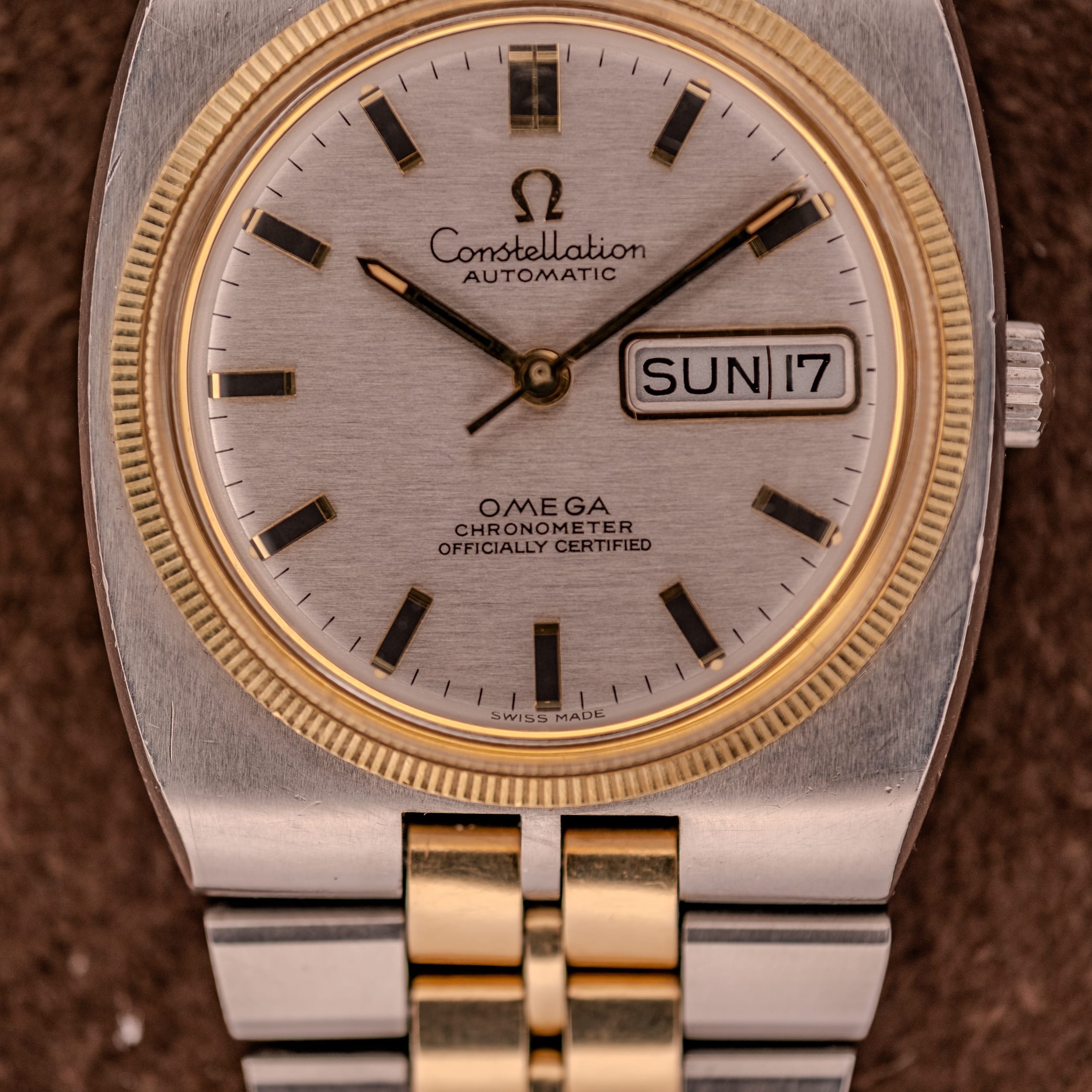
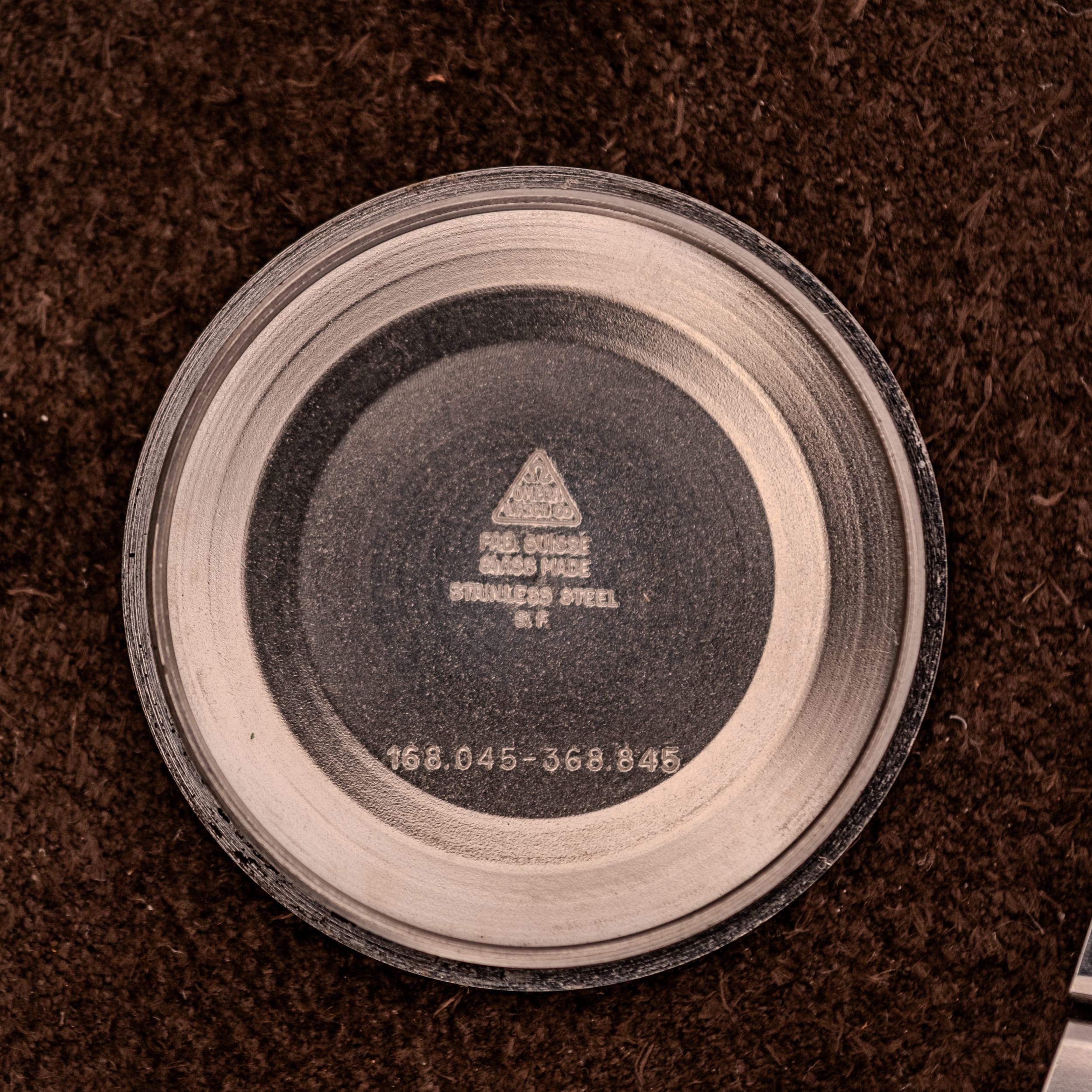
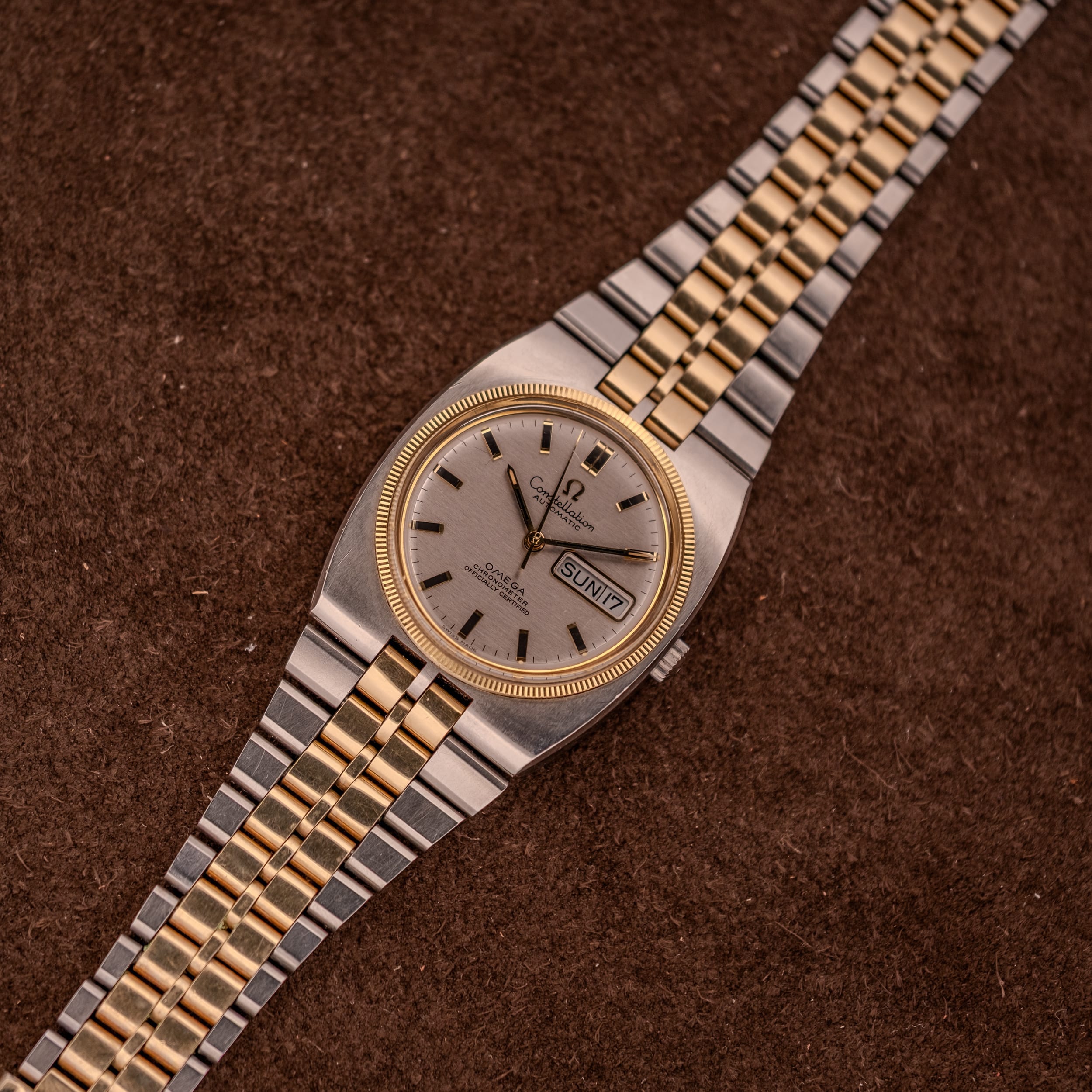
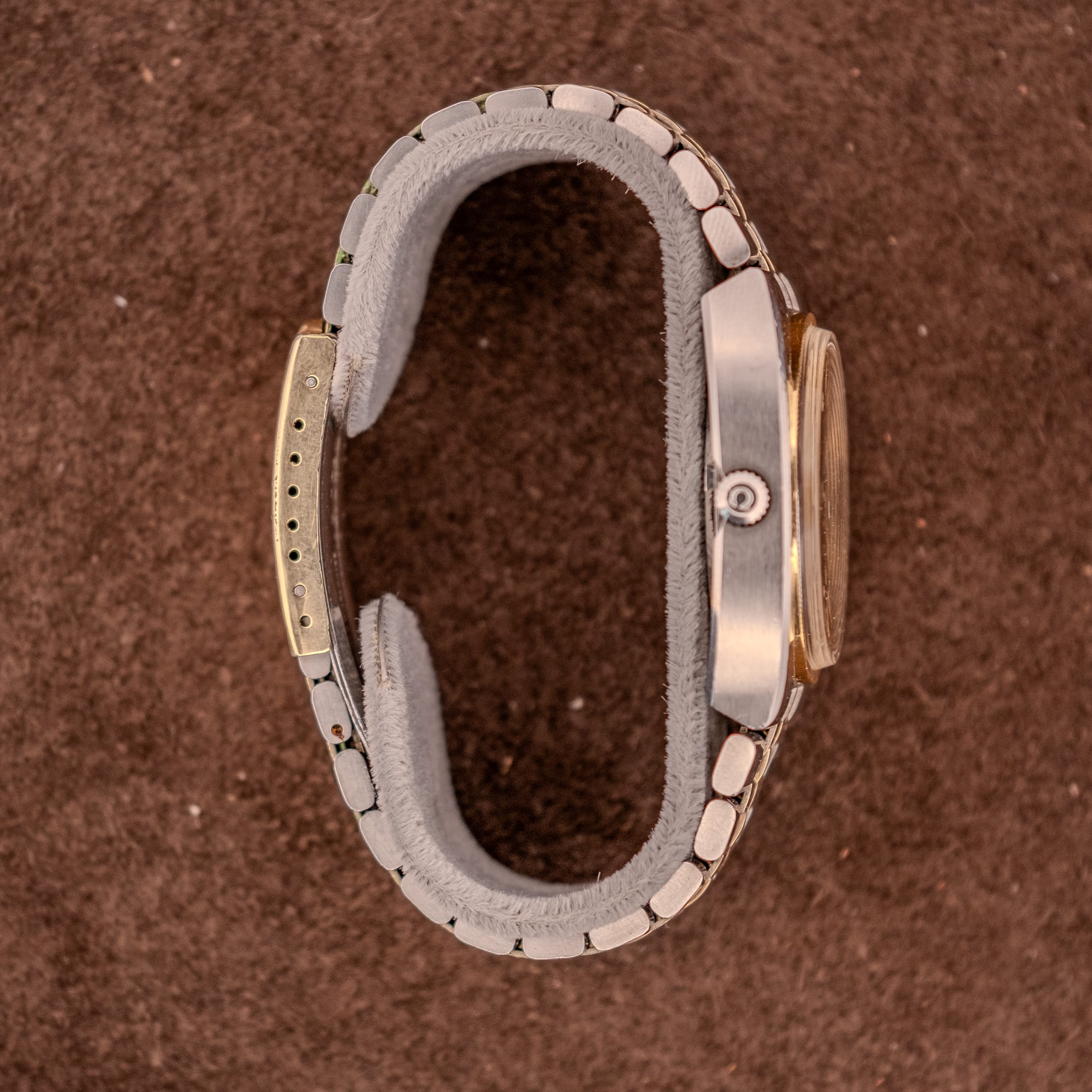
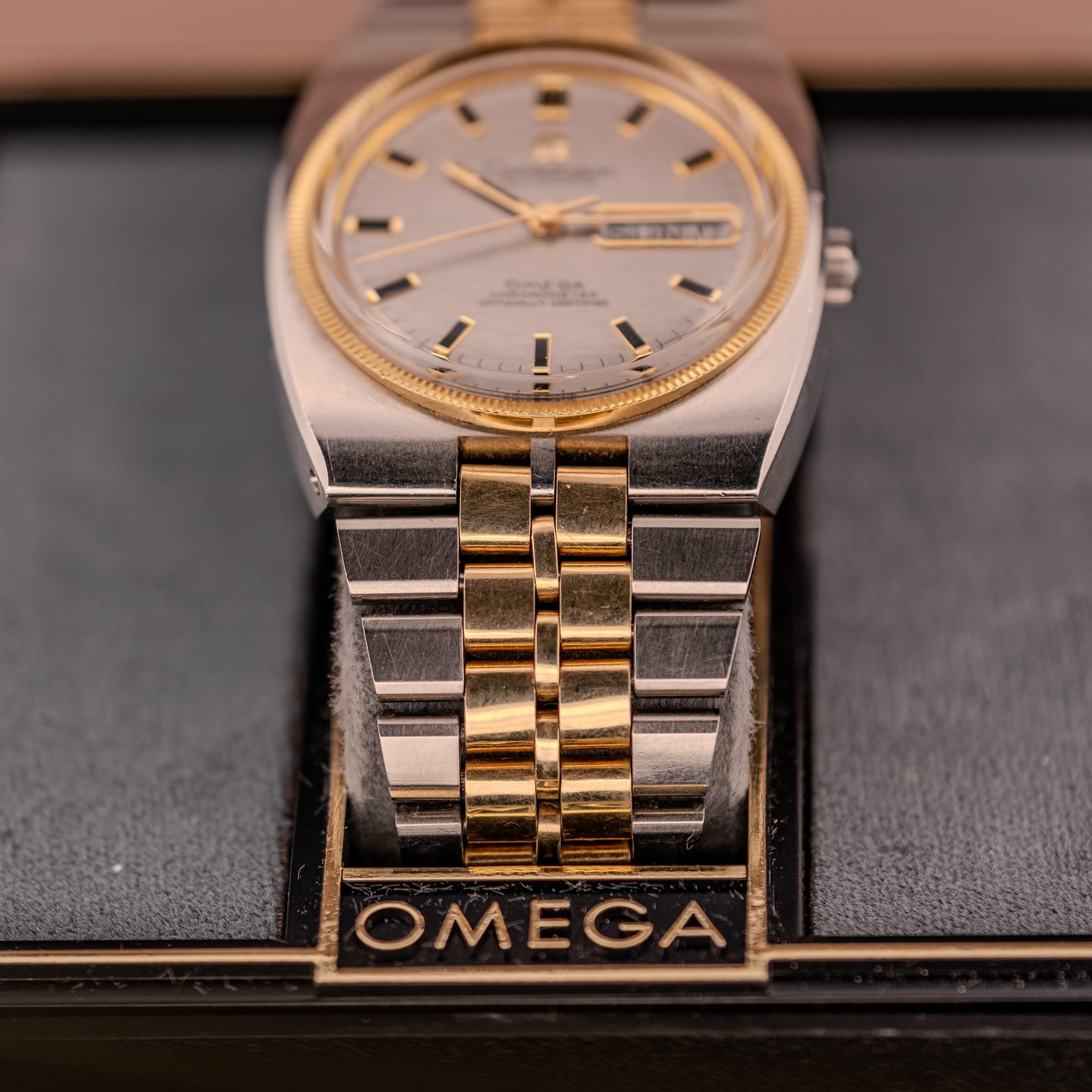
The case is a stainless steel cushion with an integrated lug-to-bracelet transition and a fluted 14k gold bezel set inside it. The bezel fluting is sharp and tightly defined, the brushed satin finishes on the case flanks remain crisp, and the chamfers running along the case edges are still razor-clean, all of which says clearly that this case has never seen a polishing wheel. The outer caseback carries the Constellation observatory medallion and eight stars in sharp relief with light surface wear across the surrounding steel that reads as honest character. The inner caseback (pictured) is stamped clearly with FAB. SUISSE, SWISS MADE, STAINLESS STEEL, and the full reference 168.045-368.845, exactly as it should be. The case measures approximately 36mm across the cushion, with a lug-to-lug just over 41mm, and the integrated bracelet design makes it wear larger than that number suggests.
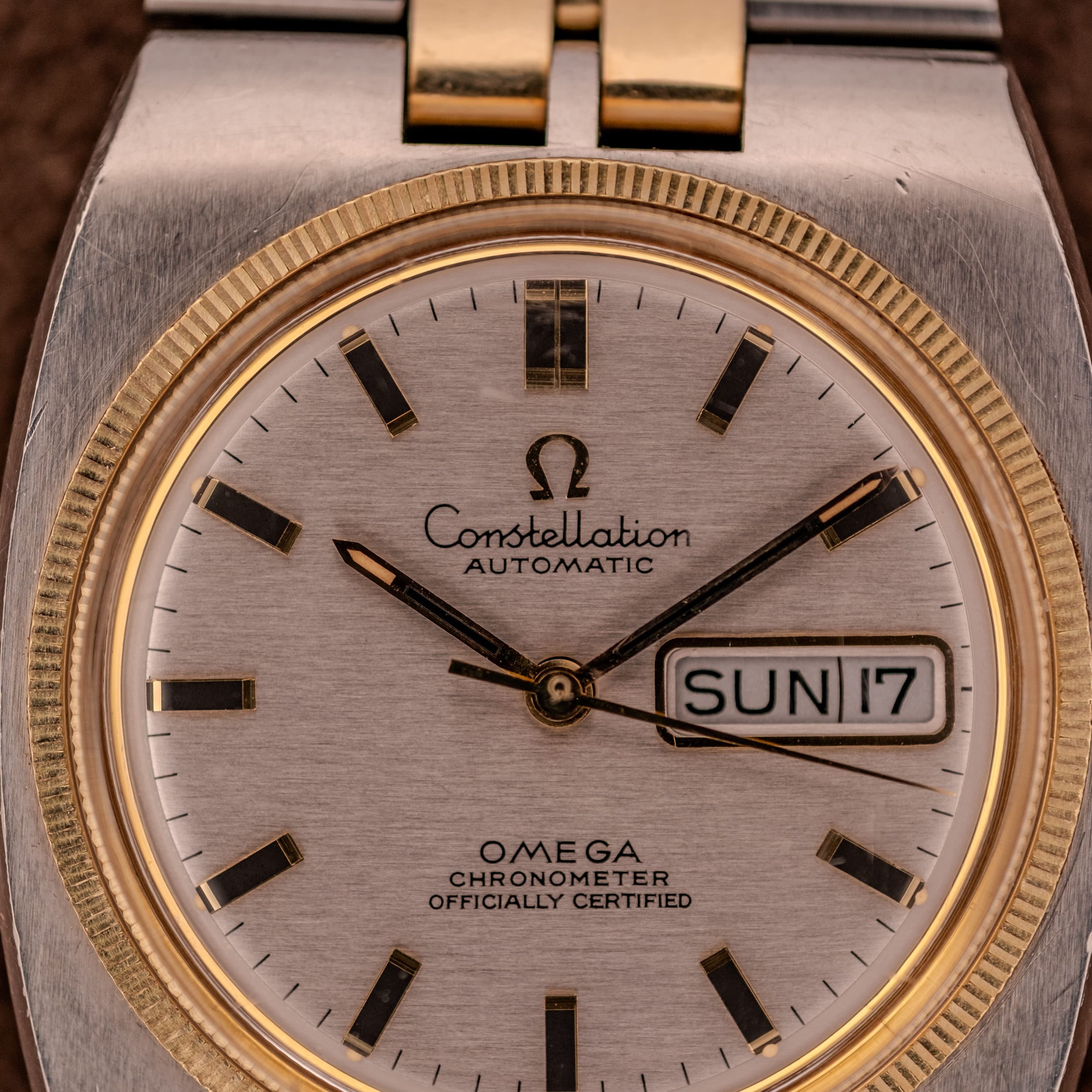
The dial is the headline. A silver vertically-brushed linen texture, factory original to our eye, with applied gold-tone baton indices that carry deep black painted faces down their length and small gold caps at the very tip. The Omega Ω logo is applied in gold at twelve, with “Constellation” in fine black cursive and “Automatic” below it. The lower half of the dial carries the OMEGA wordmark with CHRONOMETER and OFFICIALLY CERTIFIED in black print stacked beneath it, and SWISS MADE in fine print at the very base. The day-date aperture at three o’clock is framed and clean, with a white wheel carrying sharp black SUN and 17 text in our photographs. The hands are dauphine-style in a polished gold-tone with no luminous compound, which is exactly correct for a Constellation 168.045 of this era. The dial is entirely free of spotting, hazing, or any of the patina patterns that signal an aged or refinished face.
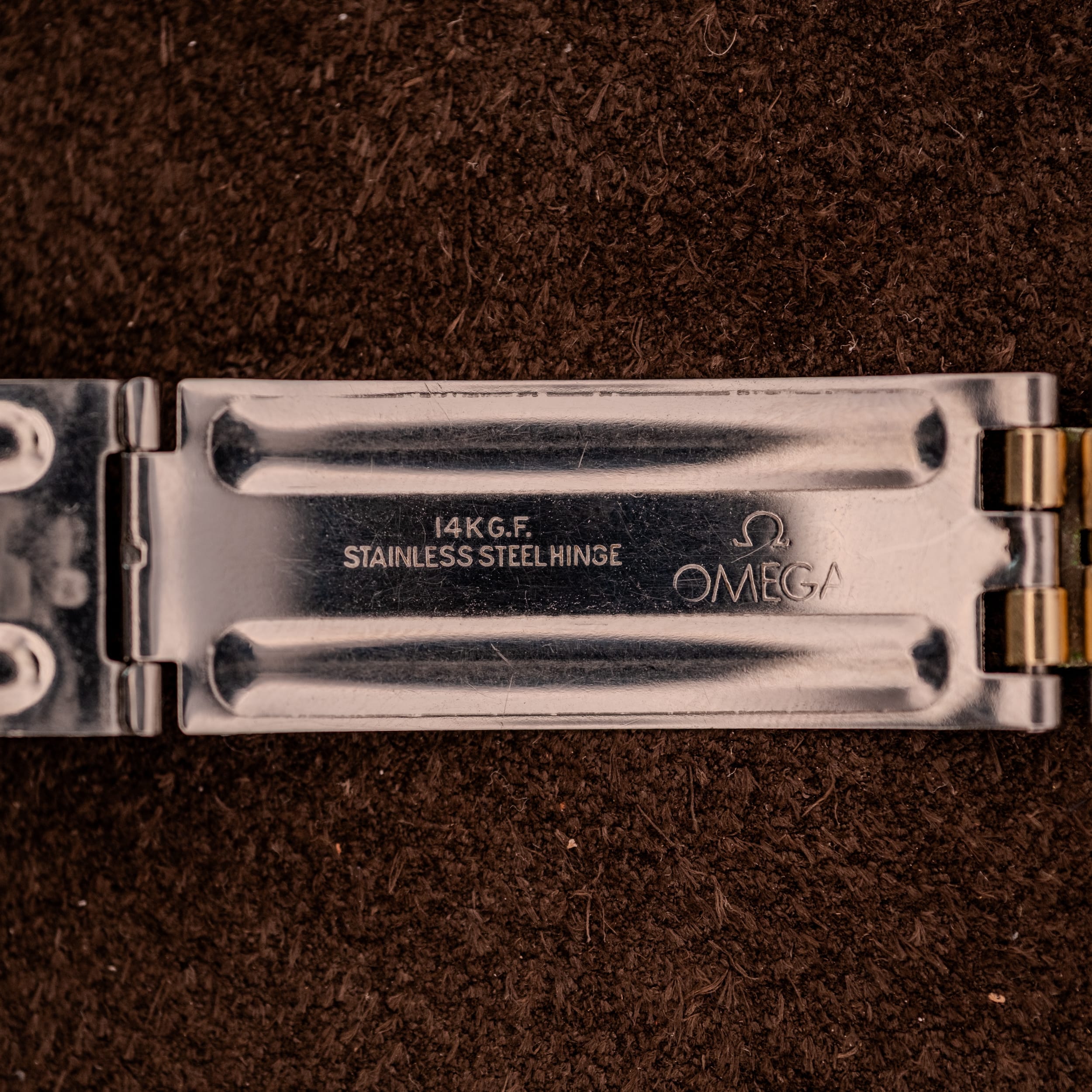
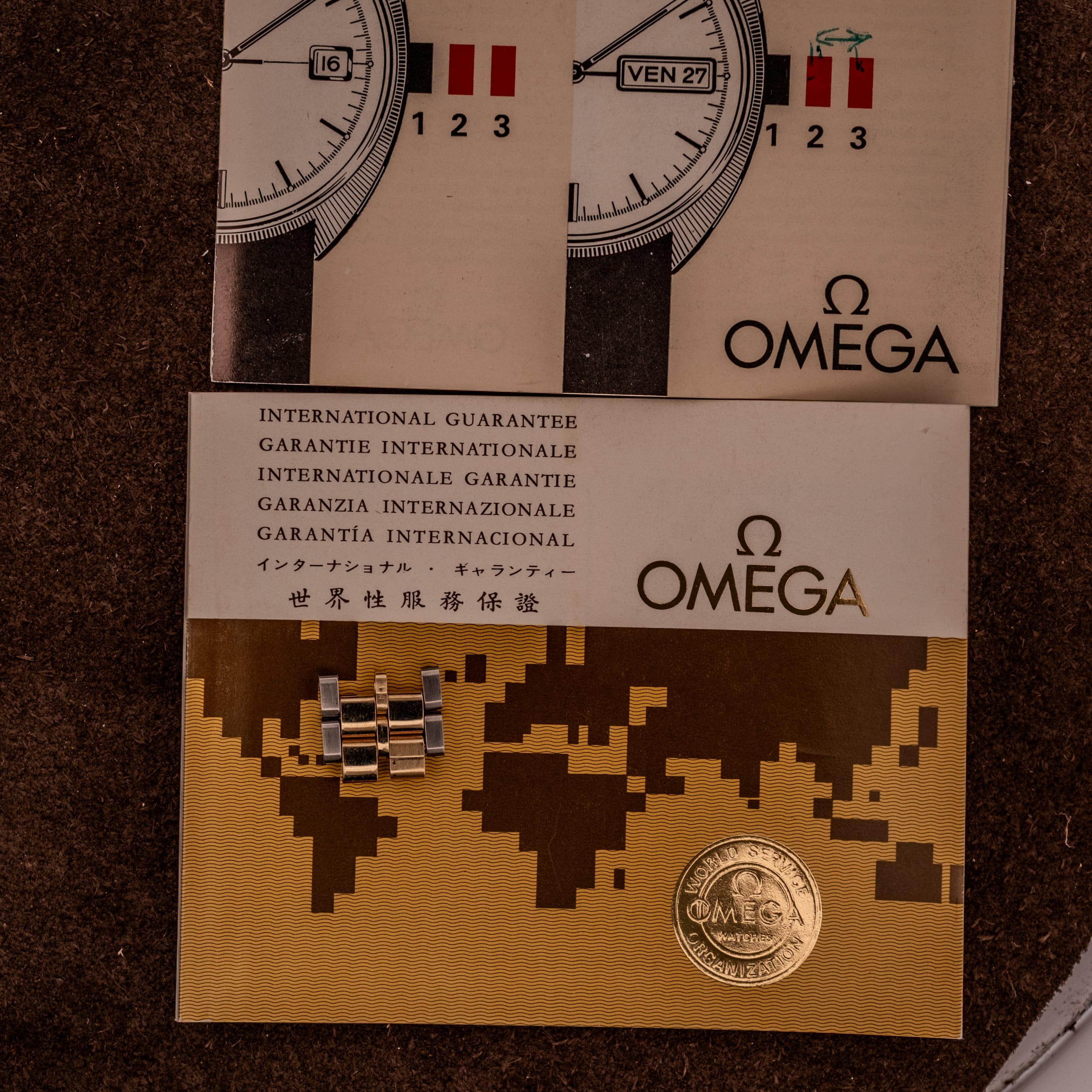
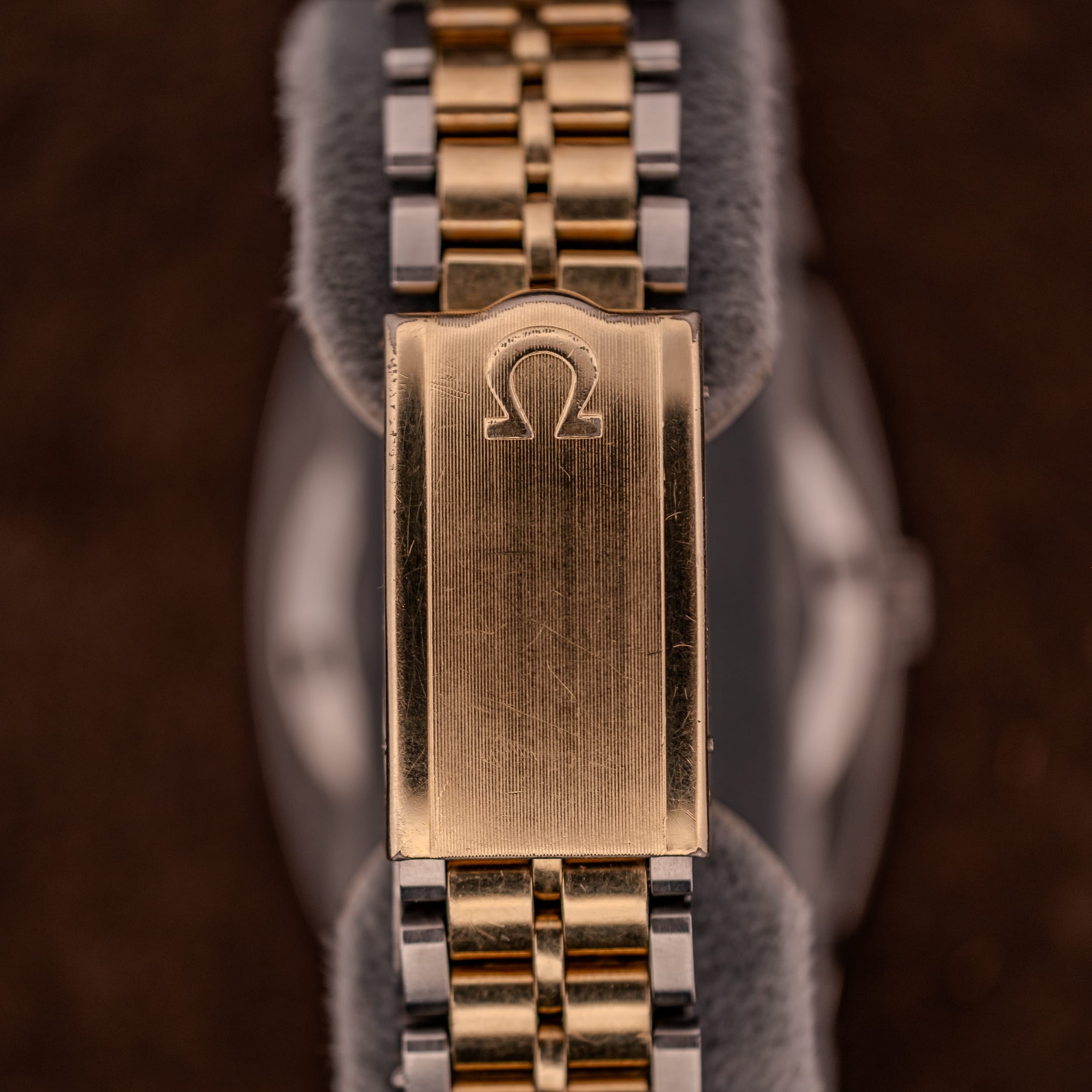
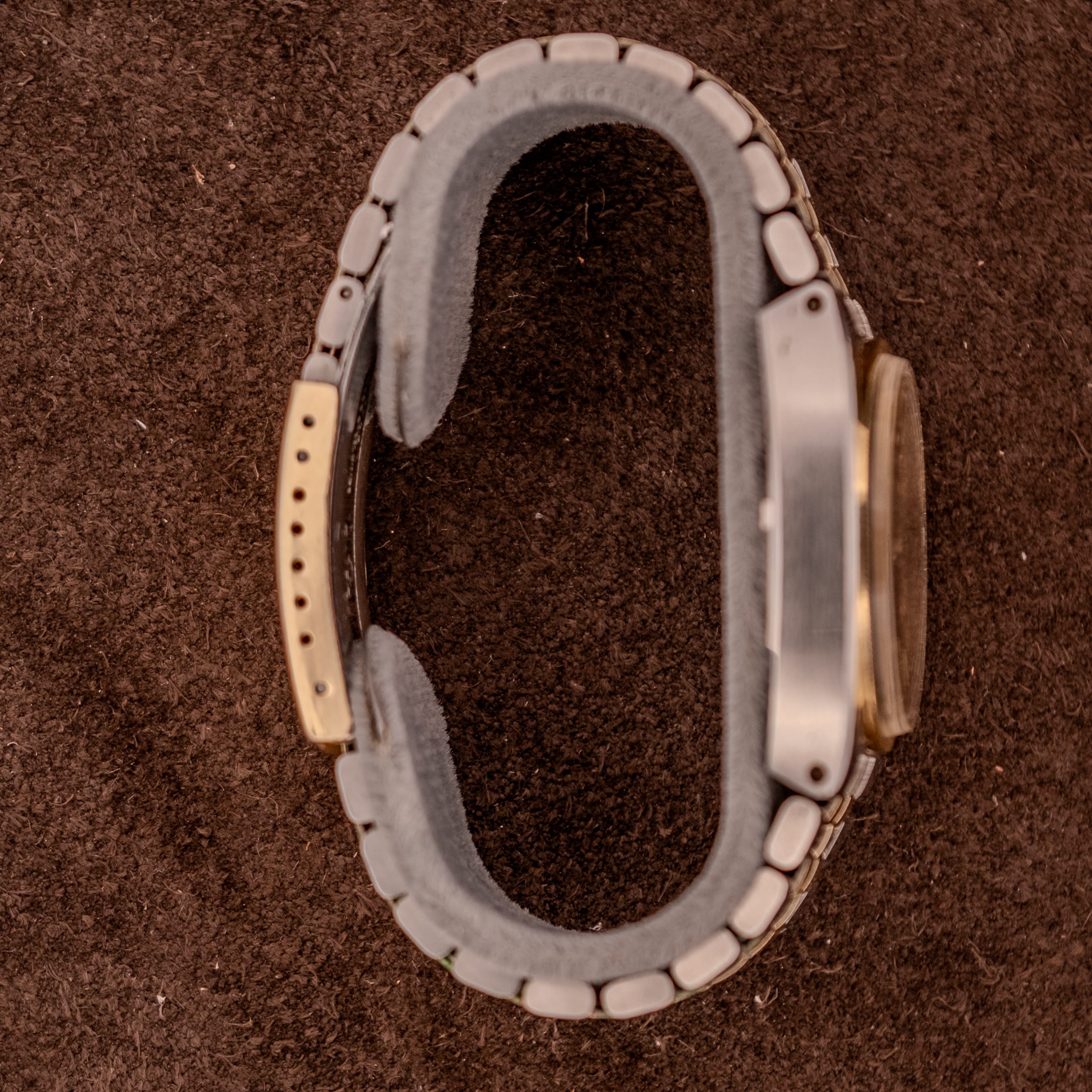
The original Omega two-tone jubilee-style bracelet is in excellent condition with 14k gold filled center links alternating with brushed stainless steel outer links. Stretch is minimal, the drape on the wrist is satisfyingly weighty, and the bracelet still flows directly into the case as the original integrated design intended. The signed Omega clasp is engraved on the interior with 14K G.F. STAINLESS STEEL HINGE and the Ω symbol, and the underside of the bracelet over the clasp carries a large engraved Omega Ω logo as well. Extra links are included with the set.
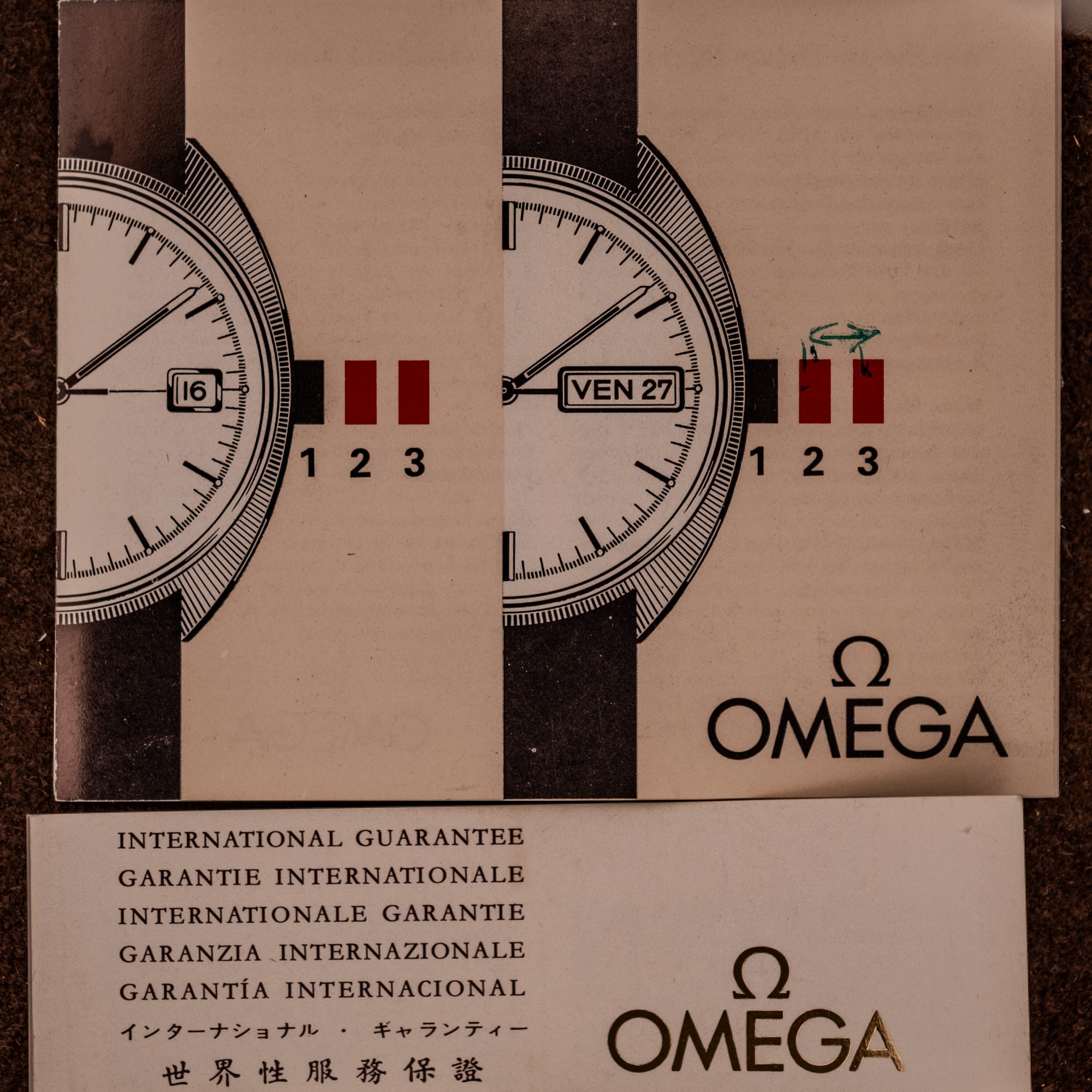
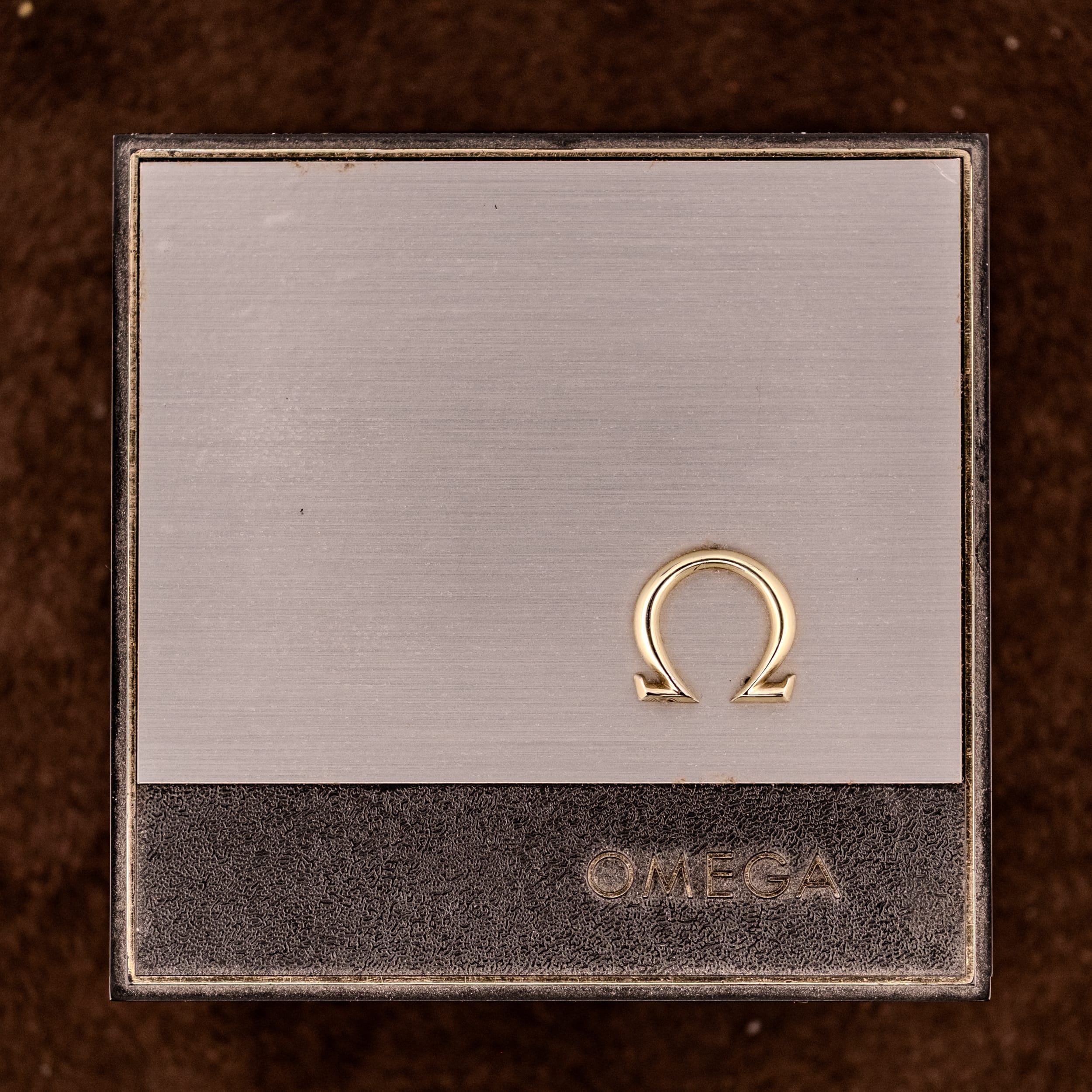
What pushes this Constellation past compelling into rare territory is the completeness of the set. The original Omega presentation box (silver brushed lid with raised Ω logo) is present and in wonderful condition. The original international guarantee card is included, hand-filled in green ink and recording movement number 32547260, metal reference 14K and SS, sold to a buyer named Stryker by jeweler Schreibman in Cleveland, Ohio on 4/21/73. The original Omega day-date setting instruction booklets are present as well, along with a small set of extra bracelet links. Finding a Constellation 168.045 in factory-original unpolished condition is uncommon. Finding one with original box, hand-written international guarantee card, instruction booklets, and extra links is, to us, genuinely rare. Serviced in-house at OTTUHR and backed by our 2-year mechanical warranty. For the collector who values architectural design thinking and chronometer-grade movements over the more obvious sport-luxury references of the same decade, this Omega Constellation Chronometer 168.045 is one of the most quietly compelling vintage Omega propositions we have had through the door.