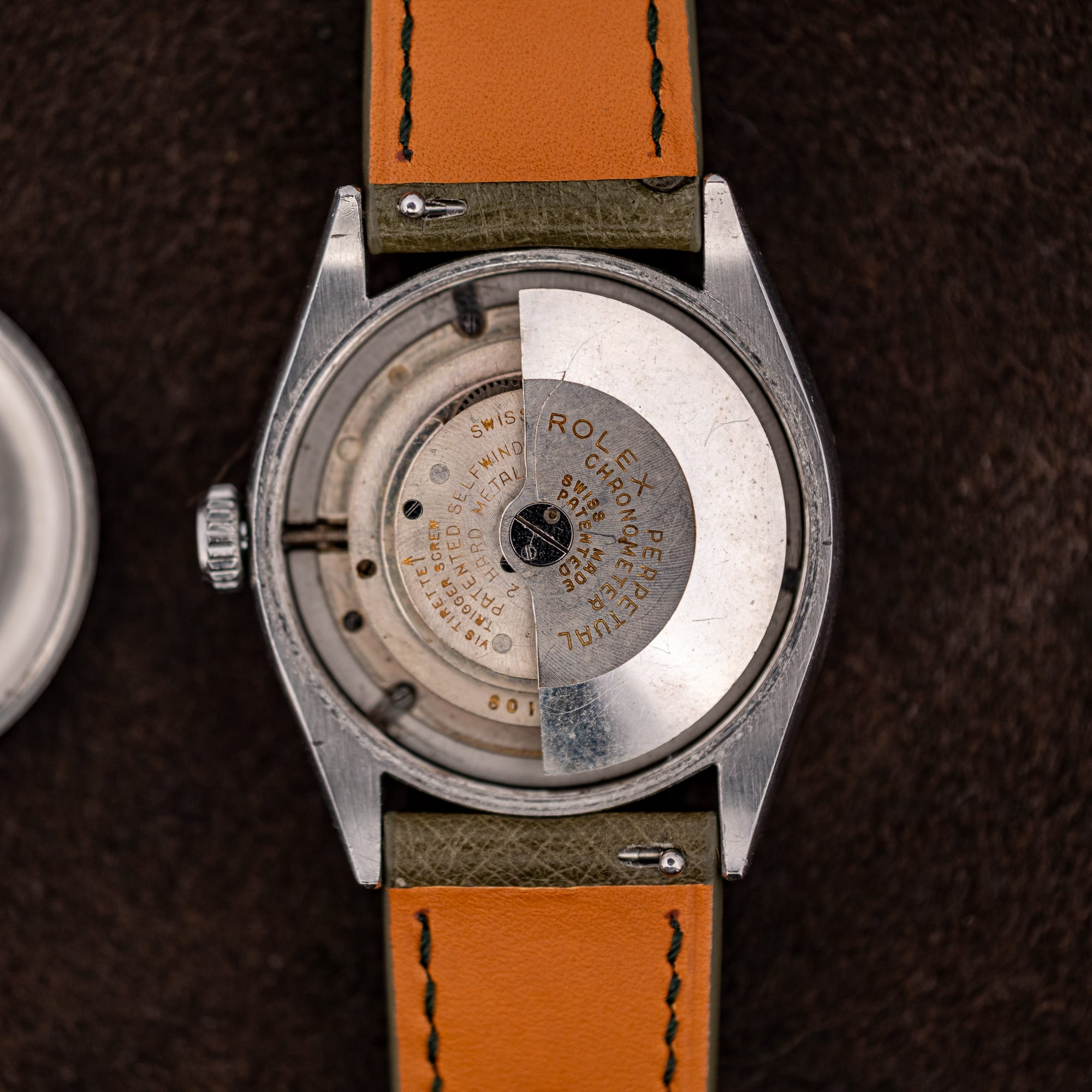
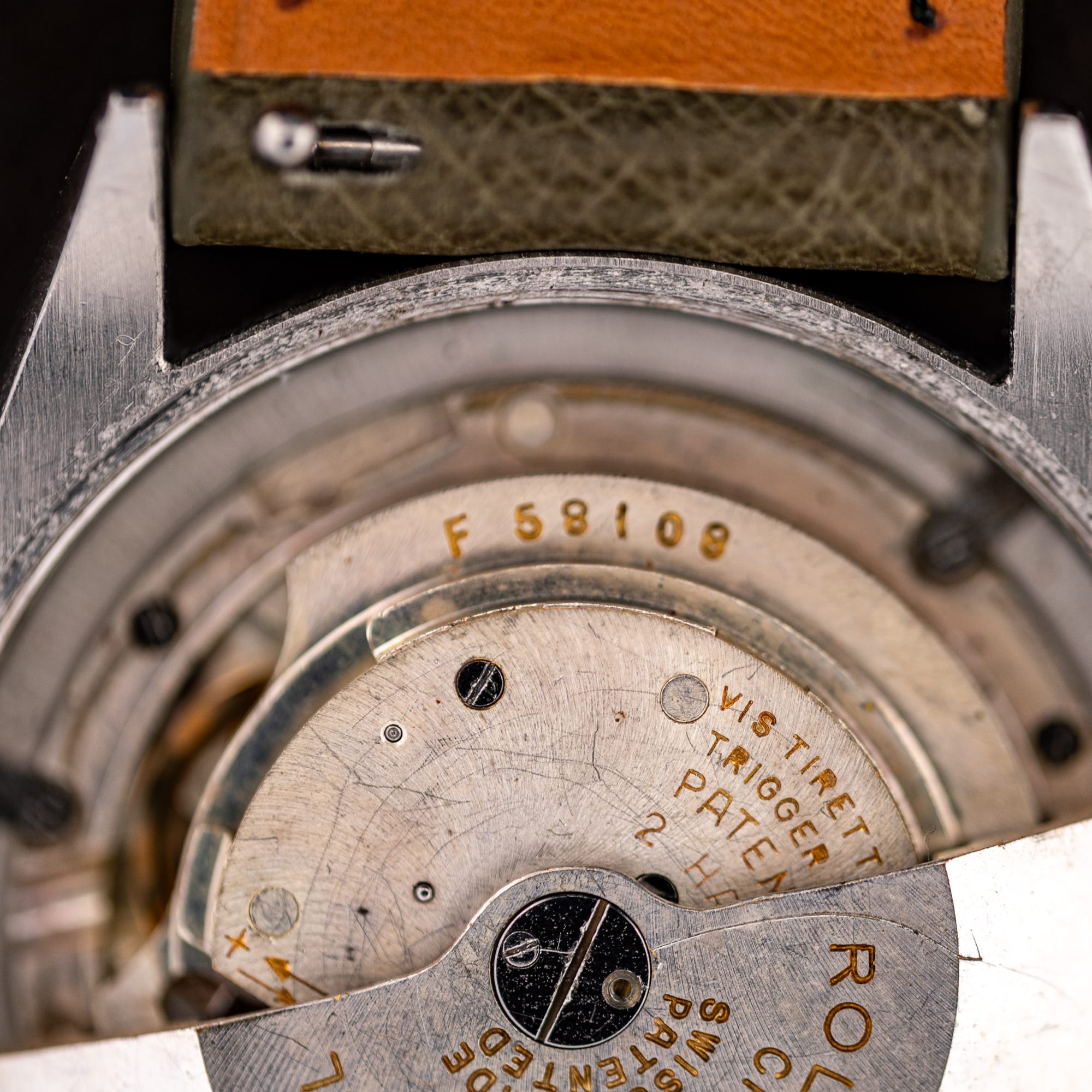
The bulge on the back of an early Rolex automatic is not a design flourish, it is clearance. Understanding that is most of the pleasure of a watch like this Rolex Oyster Perpetual 6085. In 1931 Hans Wilsdorf handed the movement maker Aegler a brief that reads like a riddle: invent an automatic winding mechanism that turns back and forth silently, smoothly and without buffer. Aegler’s technical director, Emile Boner, solved it, and what Rolex carried to market was modular. The self-winding works sat on their own bridge above an existing hand-wound calibre, which is how the 620, 630, 635, 640 and 645 all arrived in quick succession.
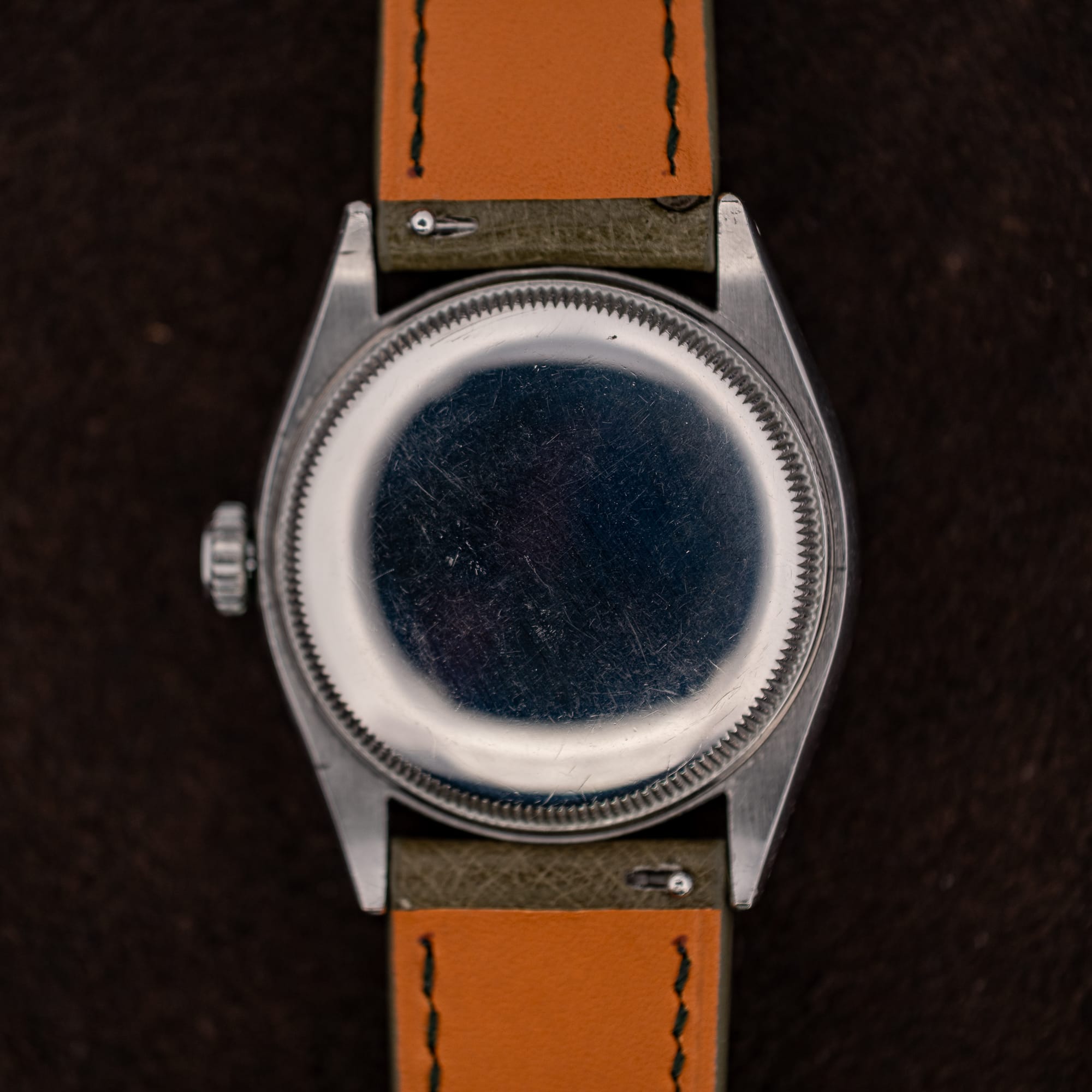
Mounting a winding module on top of a movement makes the movement taller, and a taller movement will not fit under a flat caseback. So from 1933 the Oyster Perpetual wore a back that domed outward to make room, and collectors have called those watches Bubblebacks ever since, a name Rolex never used officially. The bubble is what automatic winding cost, paid in millimetres and worn on the wrist for the next two decades.
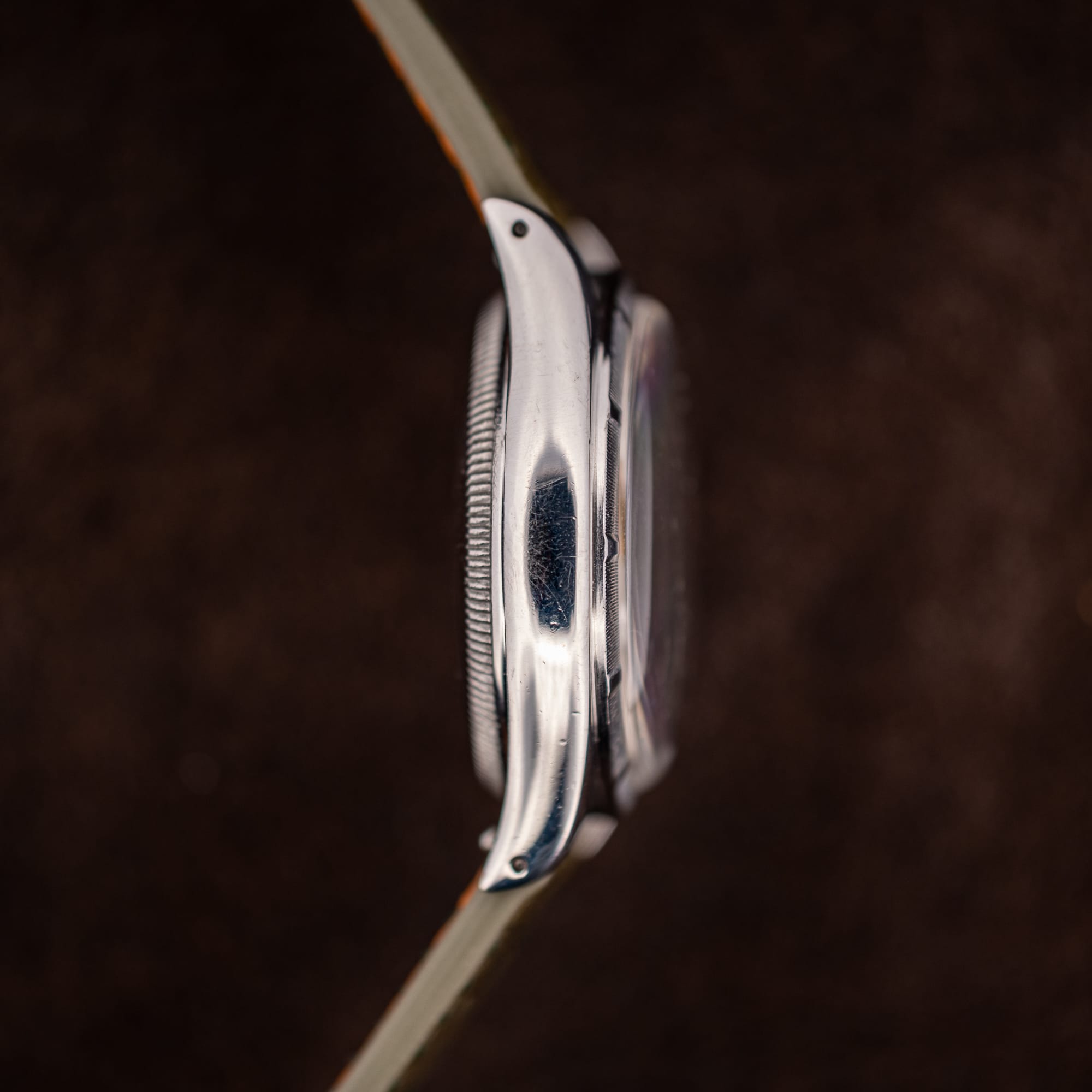
There were two ways out of that: thin the movement, or grow the case. Rolex did both through the early 1950s, and the reference 6085 is where the second answer is easiest to hold. At 34mm it is a good deal larger than the 30 to 32mm bubblebacks before it, and the back, still clearly domed, has stopped announcing itself. Italian collectors call this family the Ovettone, the big egg. Dealers on this side of the Atlantic reach for Big Bubbleback, which is trade shorthand rather than strict taxonomy, since the canonical big ones are references like the 6098 and 6350. What the 6085 is, is that compromise made legible: 34mm of case with a back that is still domed and no longer the headline.
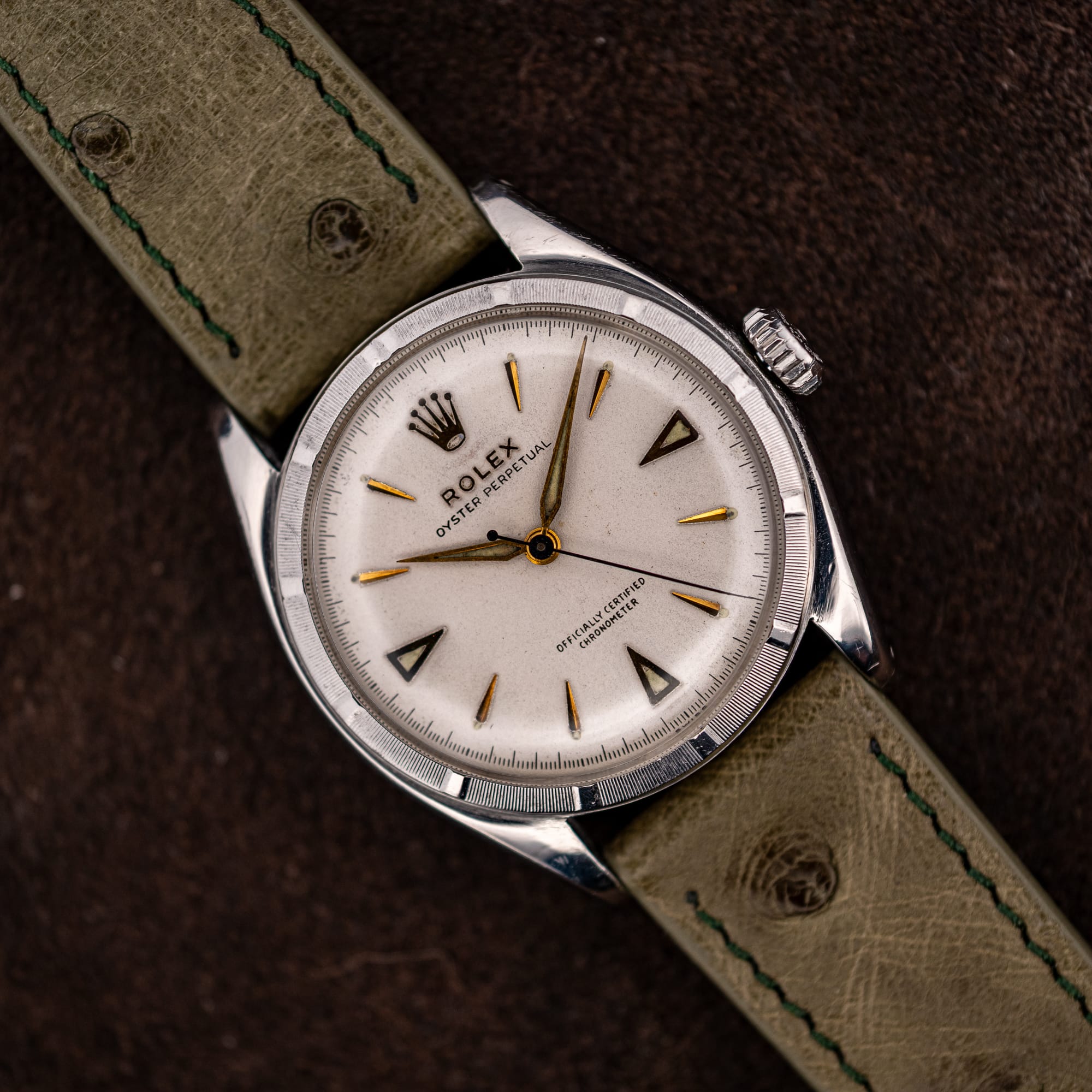
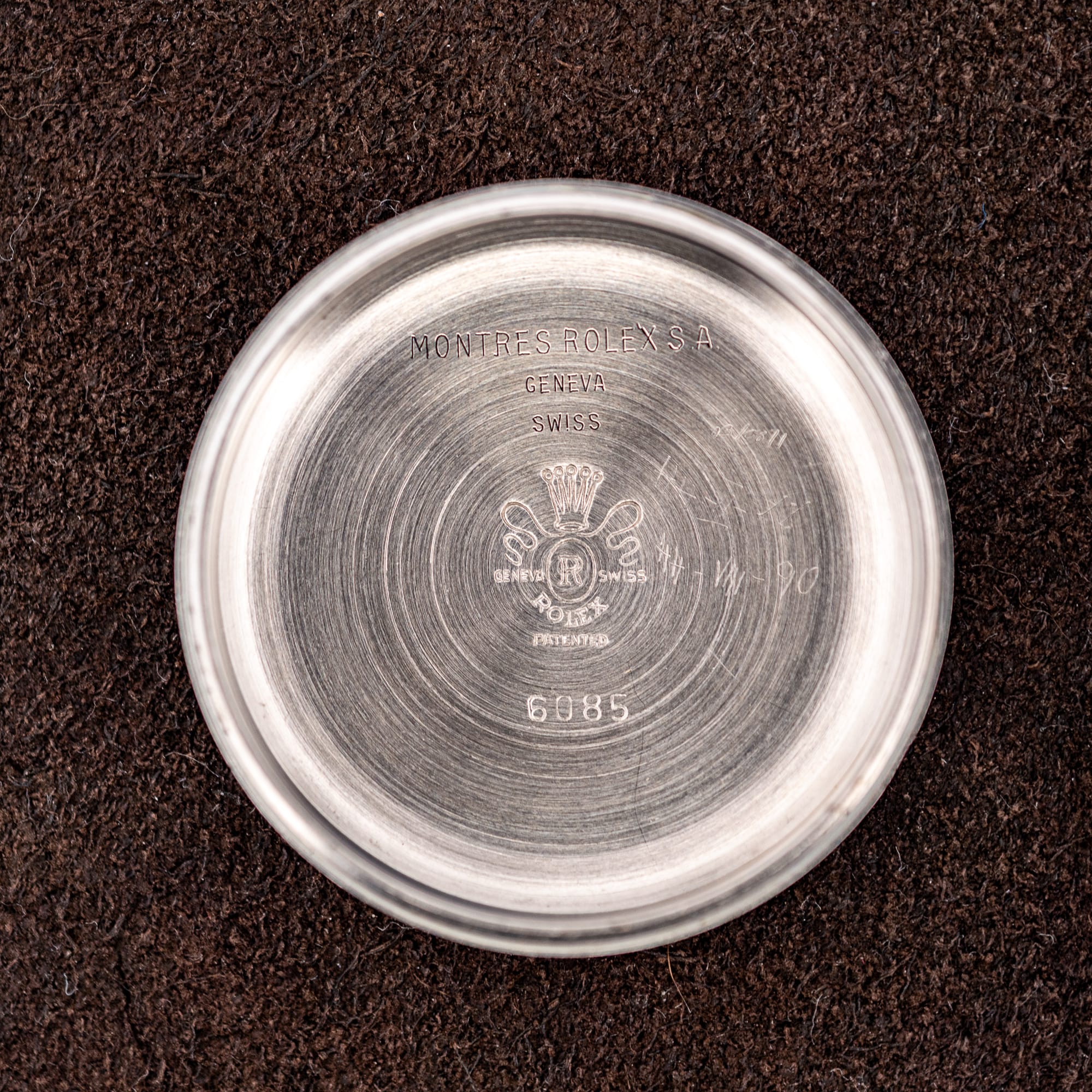
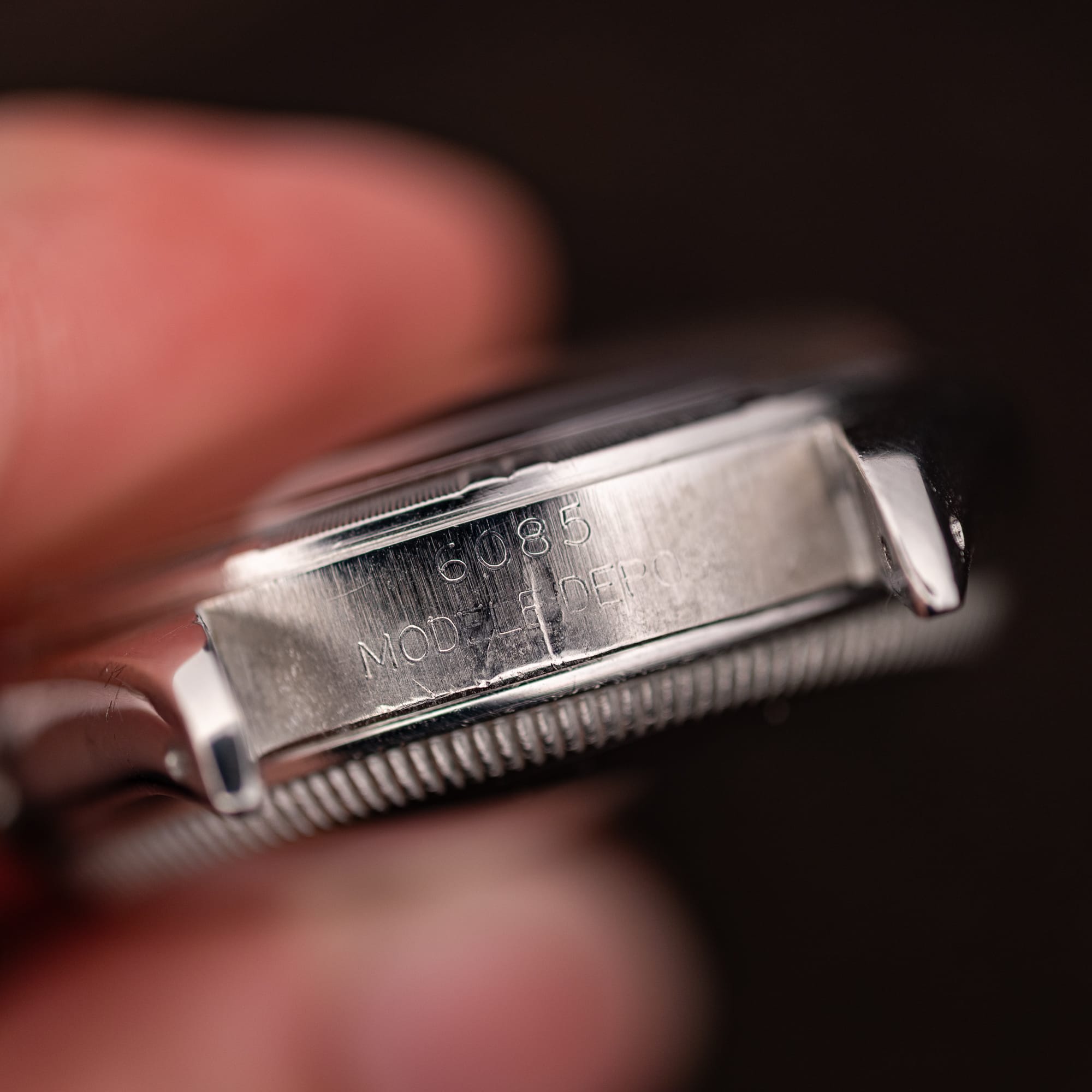
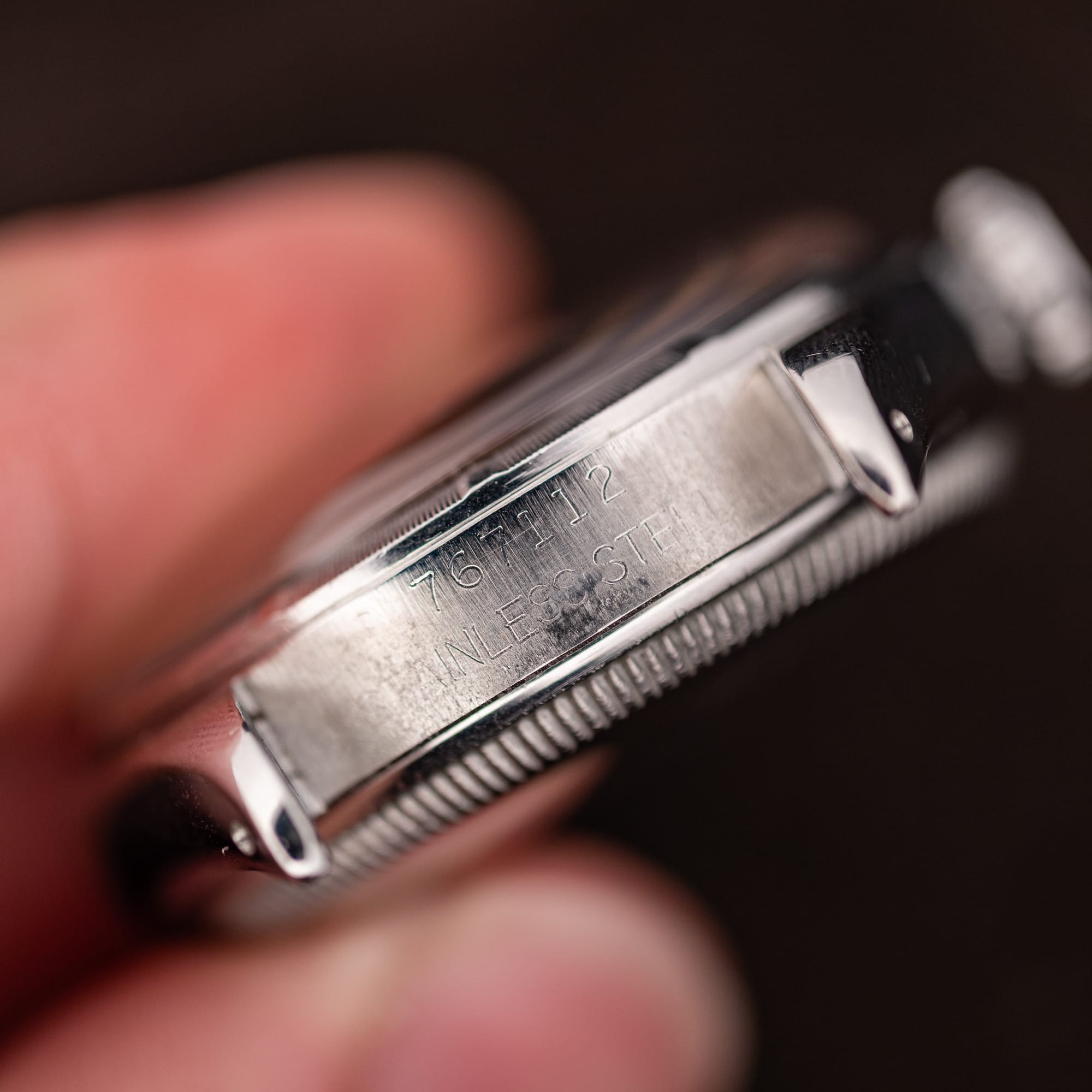
Ours is the steel version, and it carries its name in the metal: 6085 stamped between the upper lugs and again inside the caseback, with the serial 767112 between the lower pair. The standard charts place that number in 1951 or 1952, and it falls within a few thousand of other 6085s independently dated to those same two years, which is about as tight as this gets without the Geneva archive.
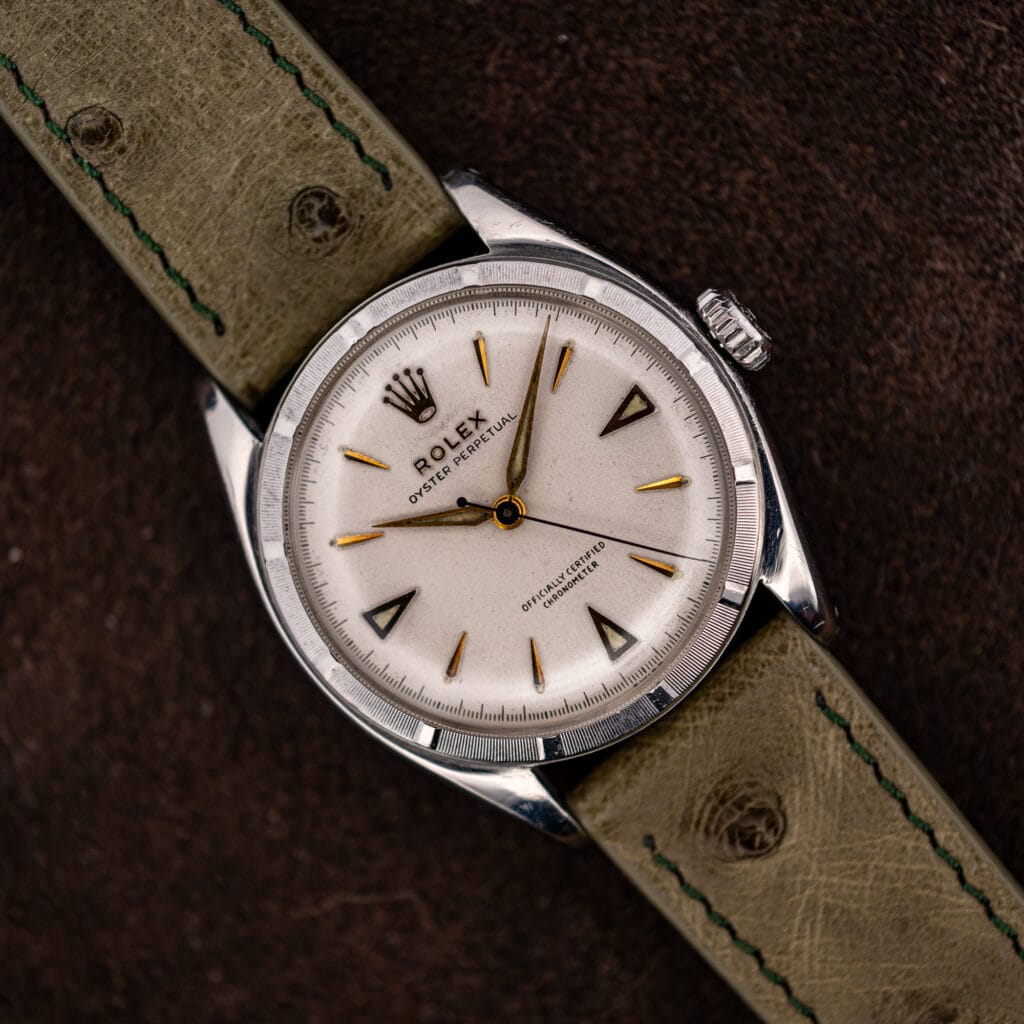
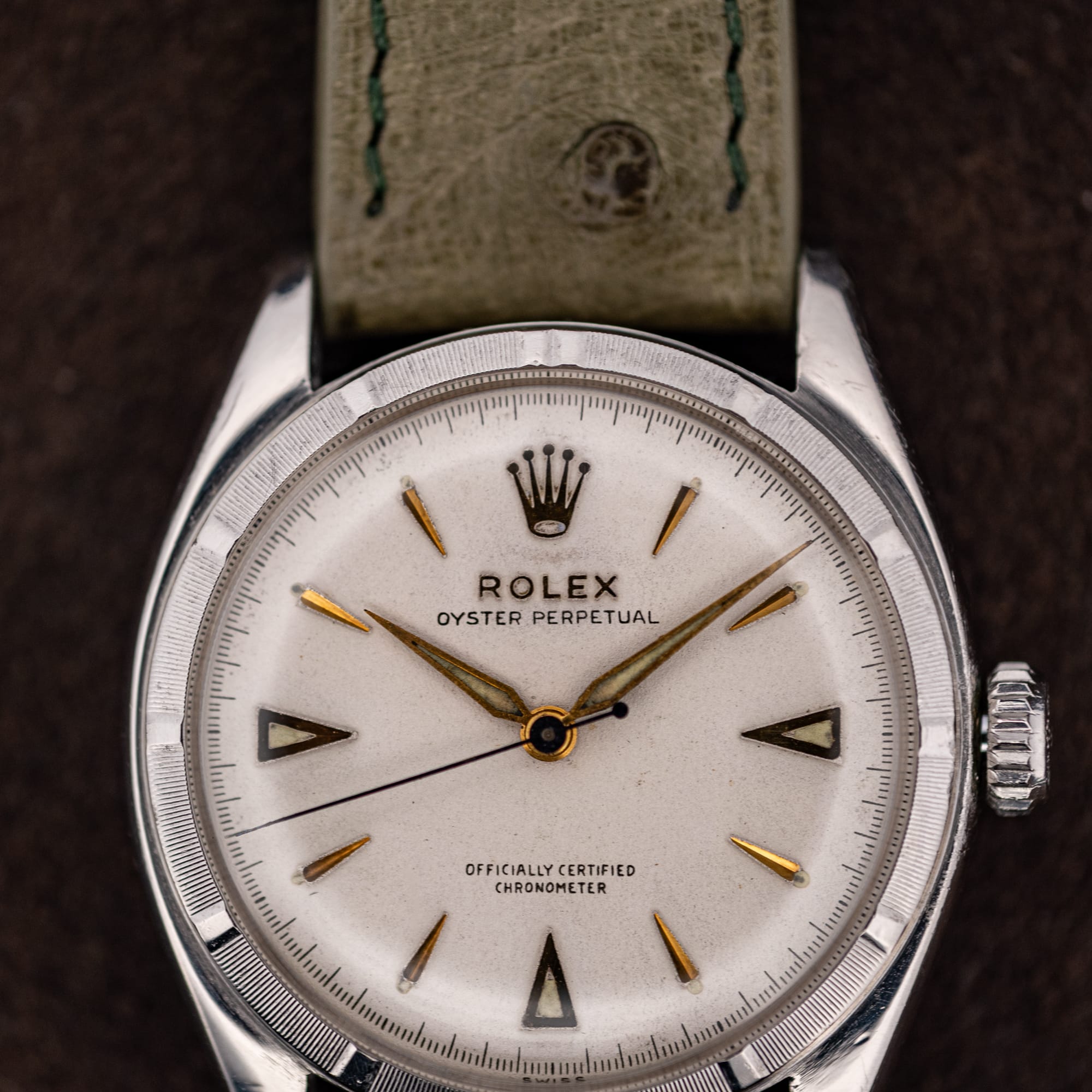
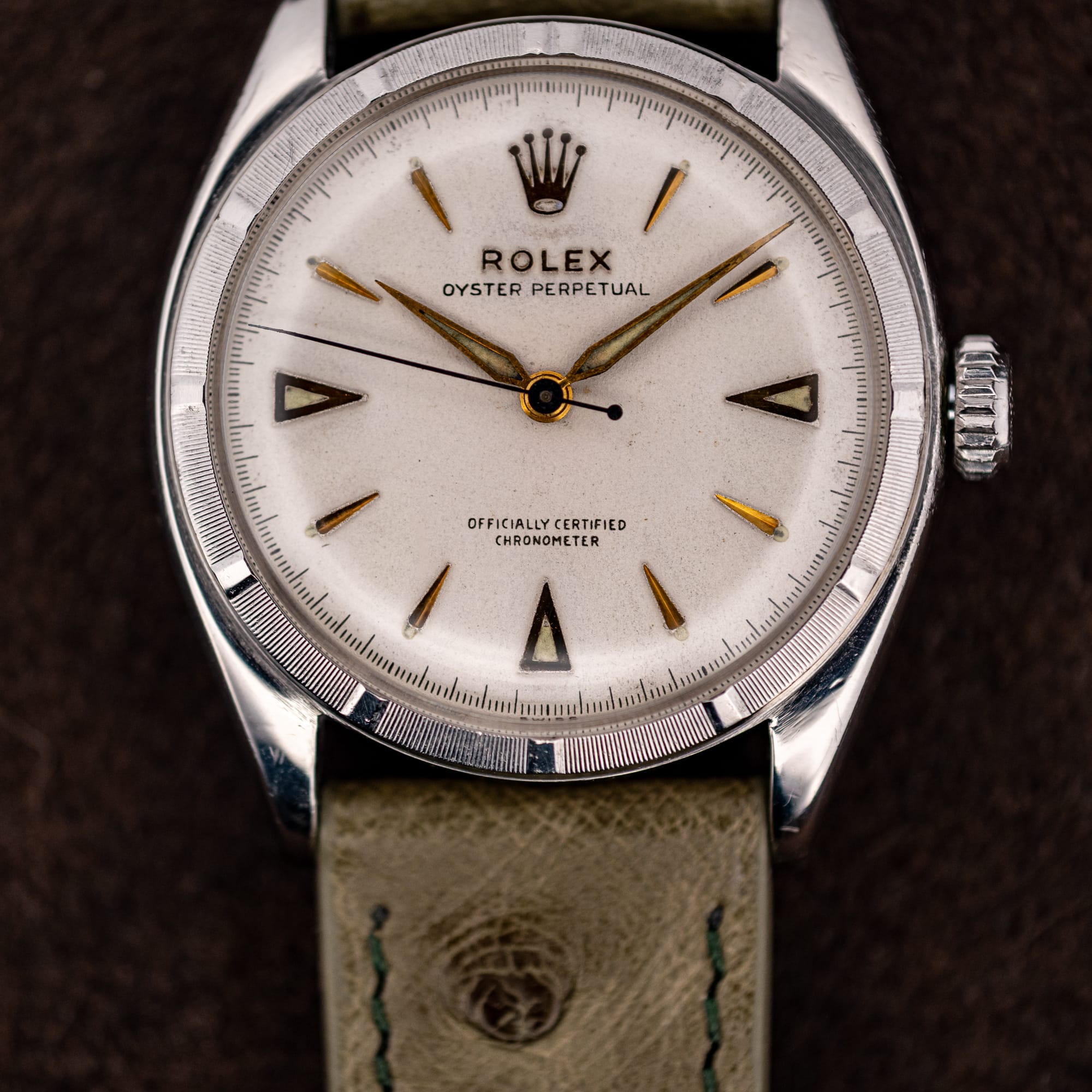
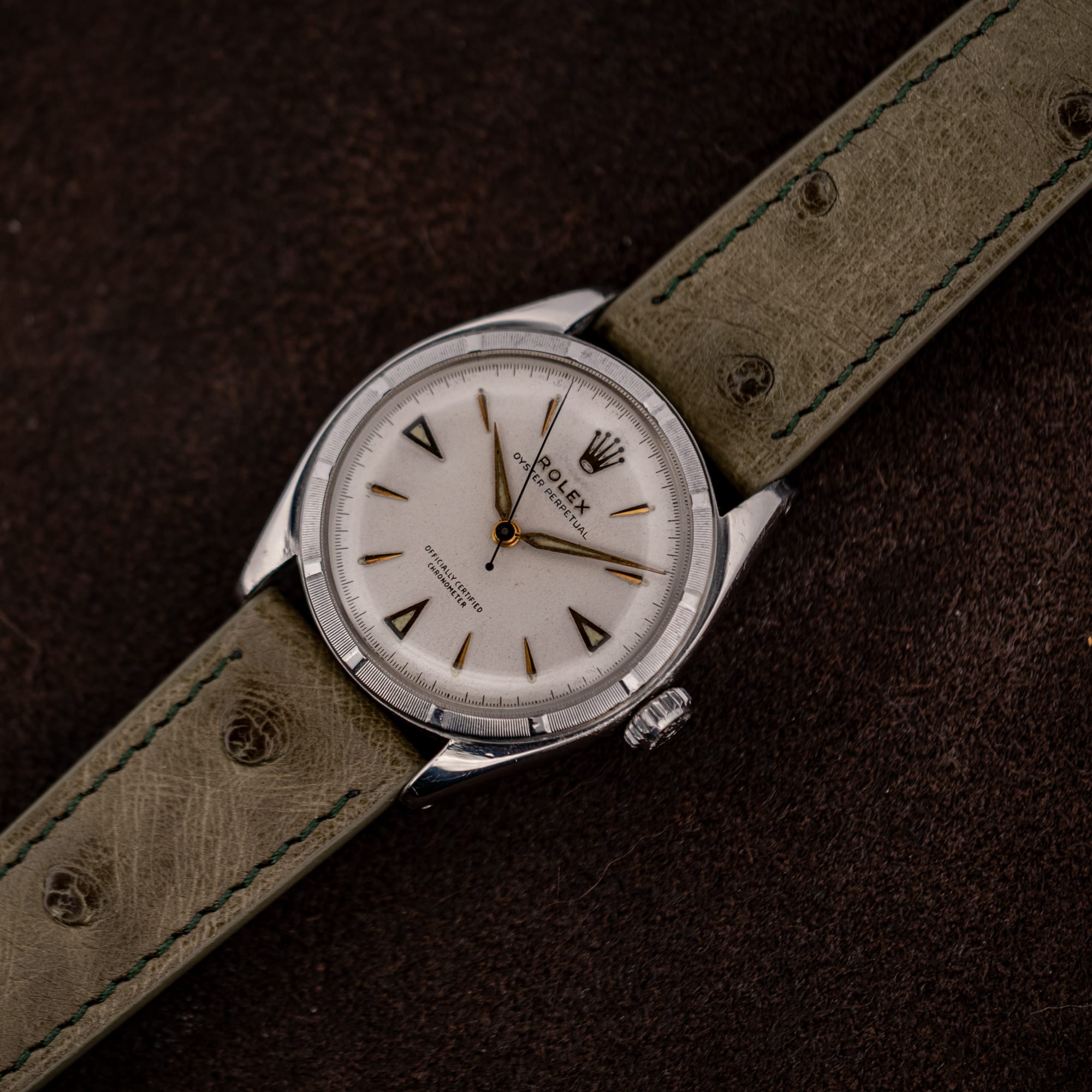
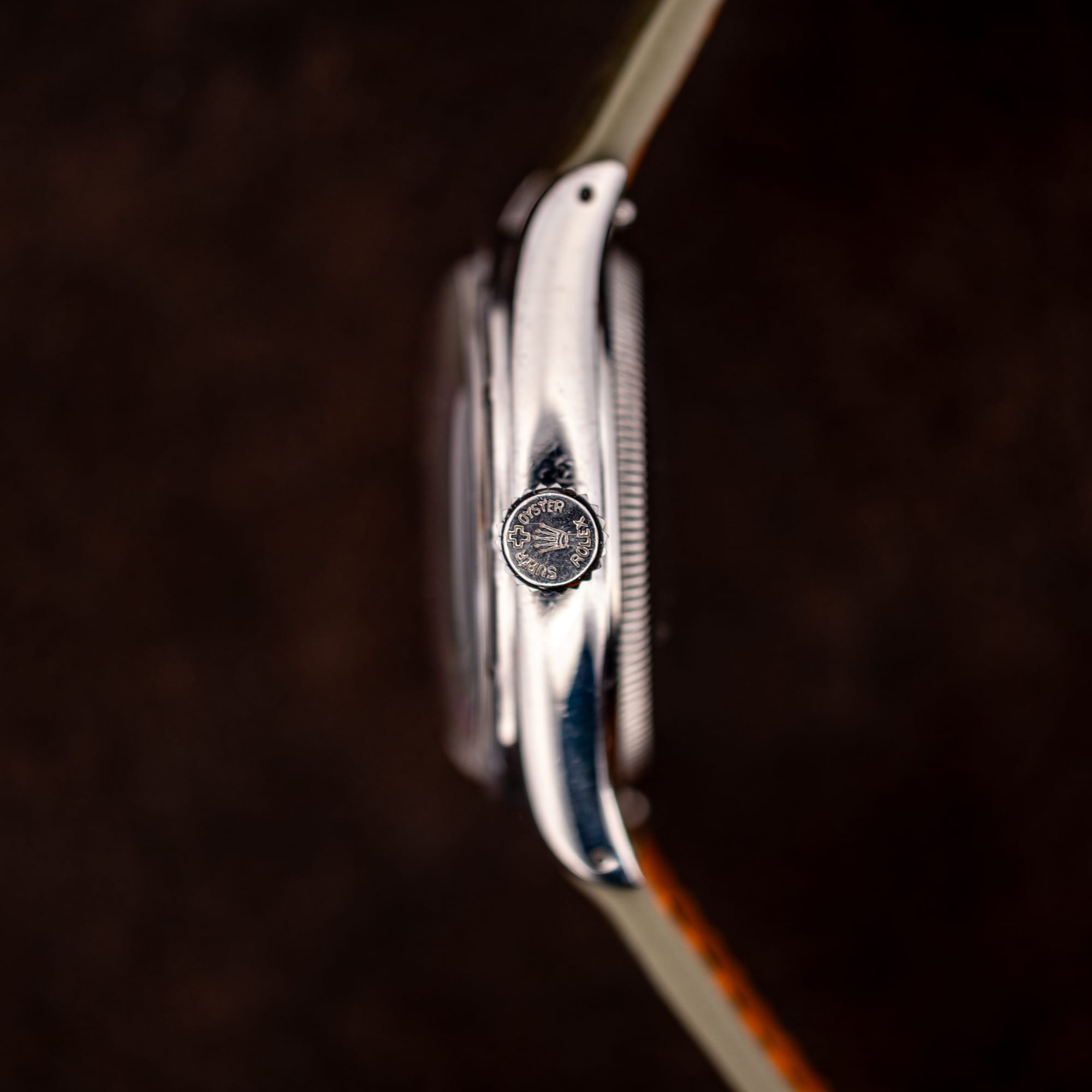
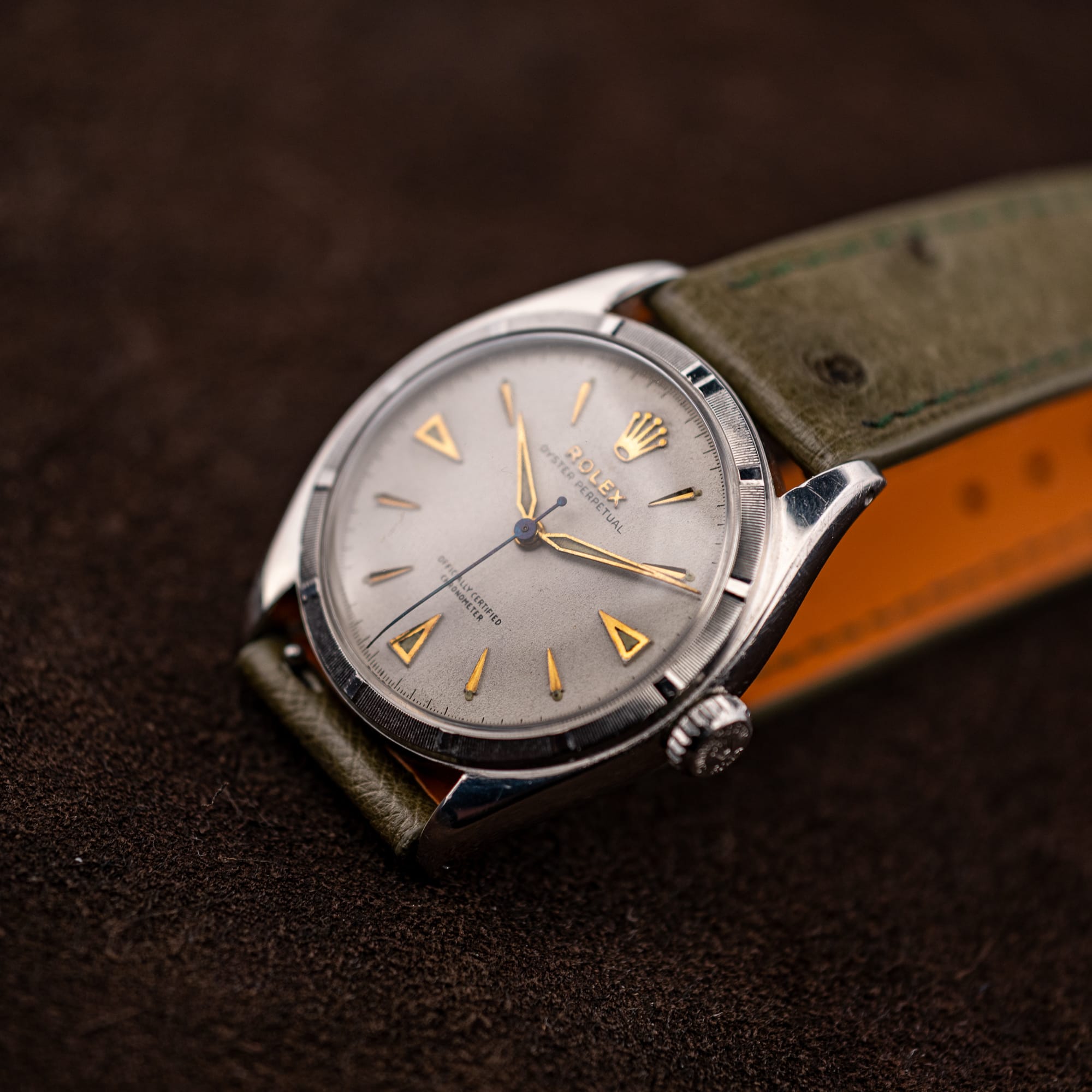
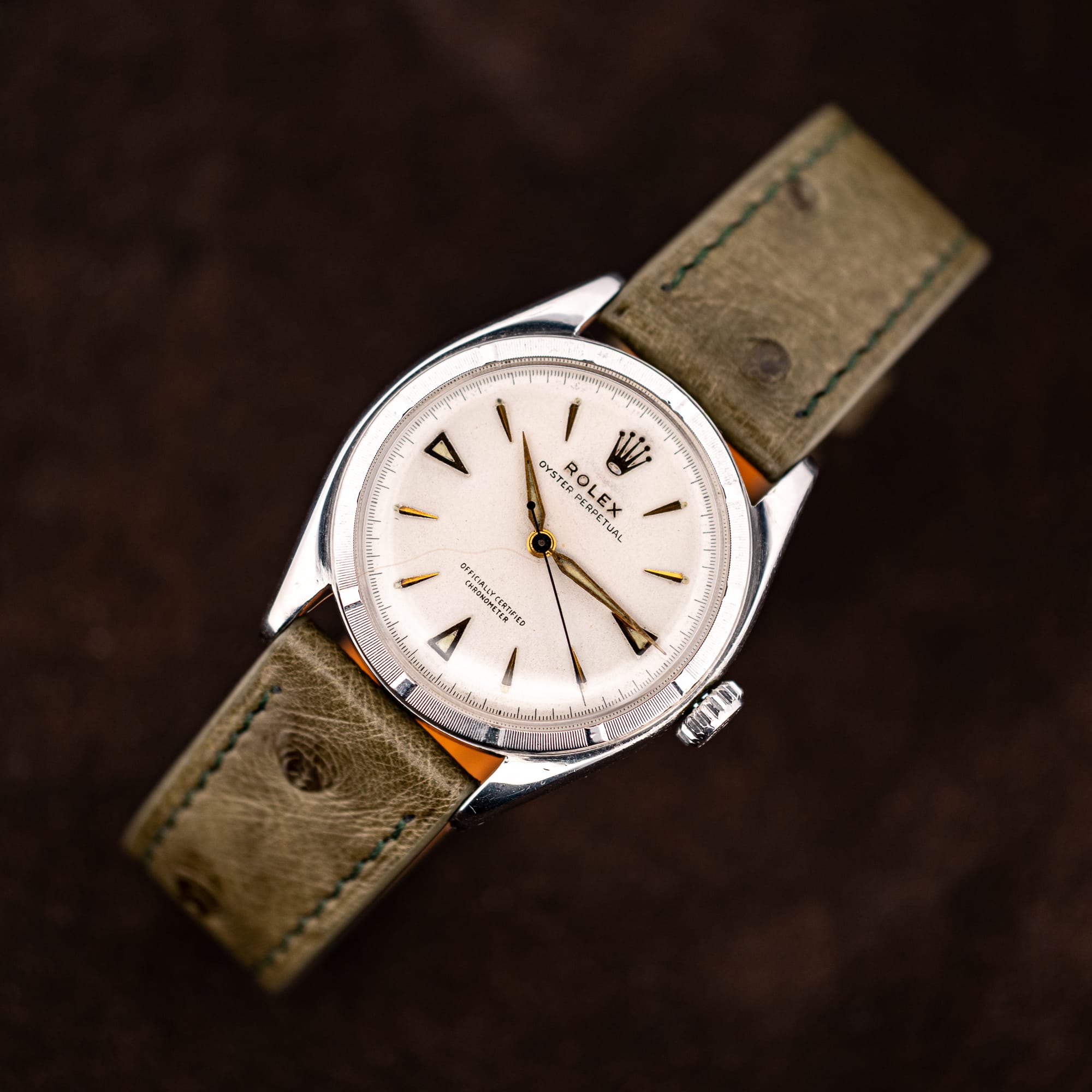
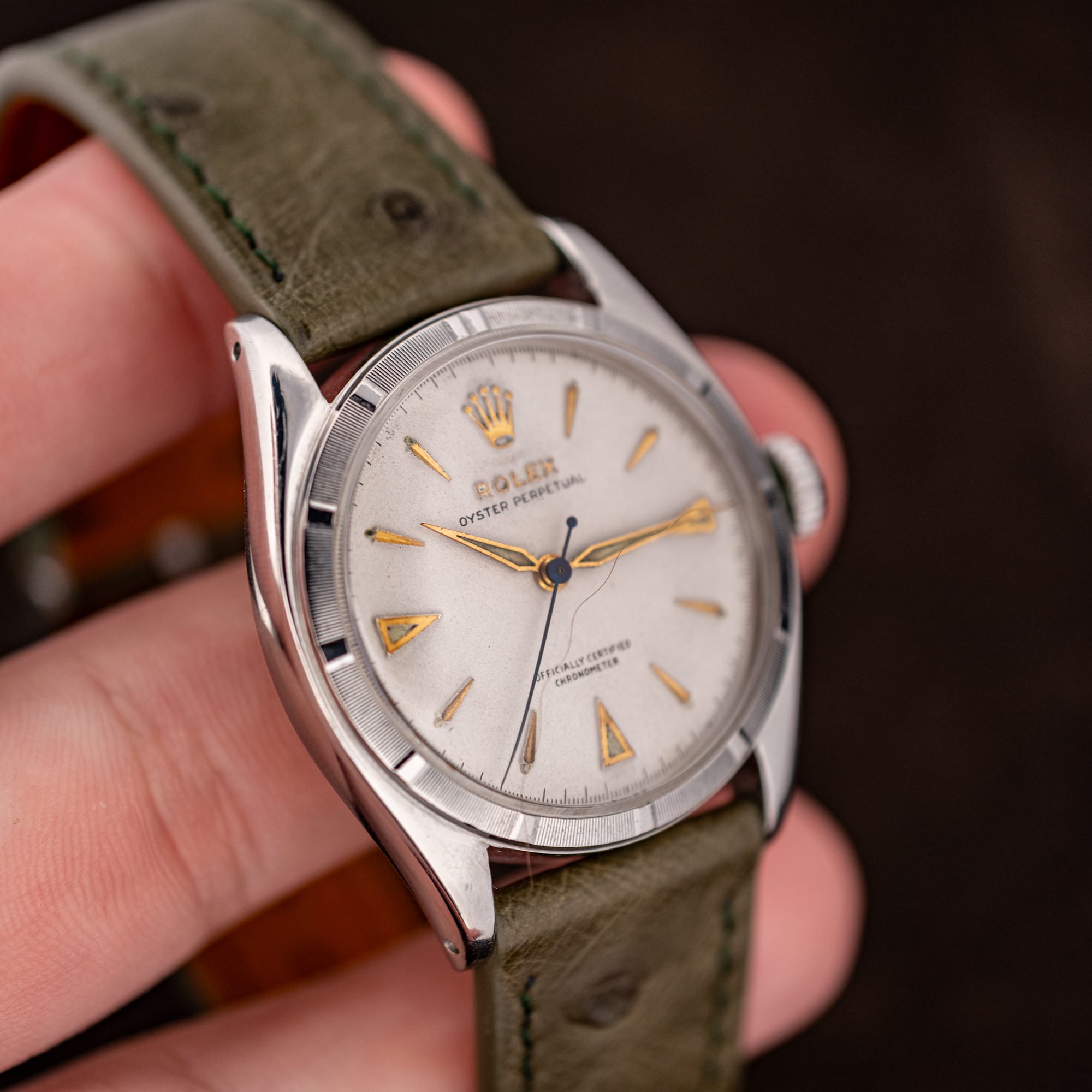
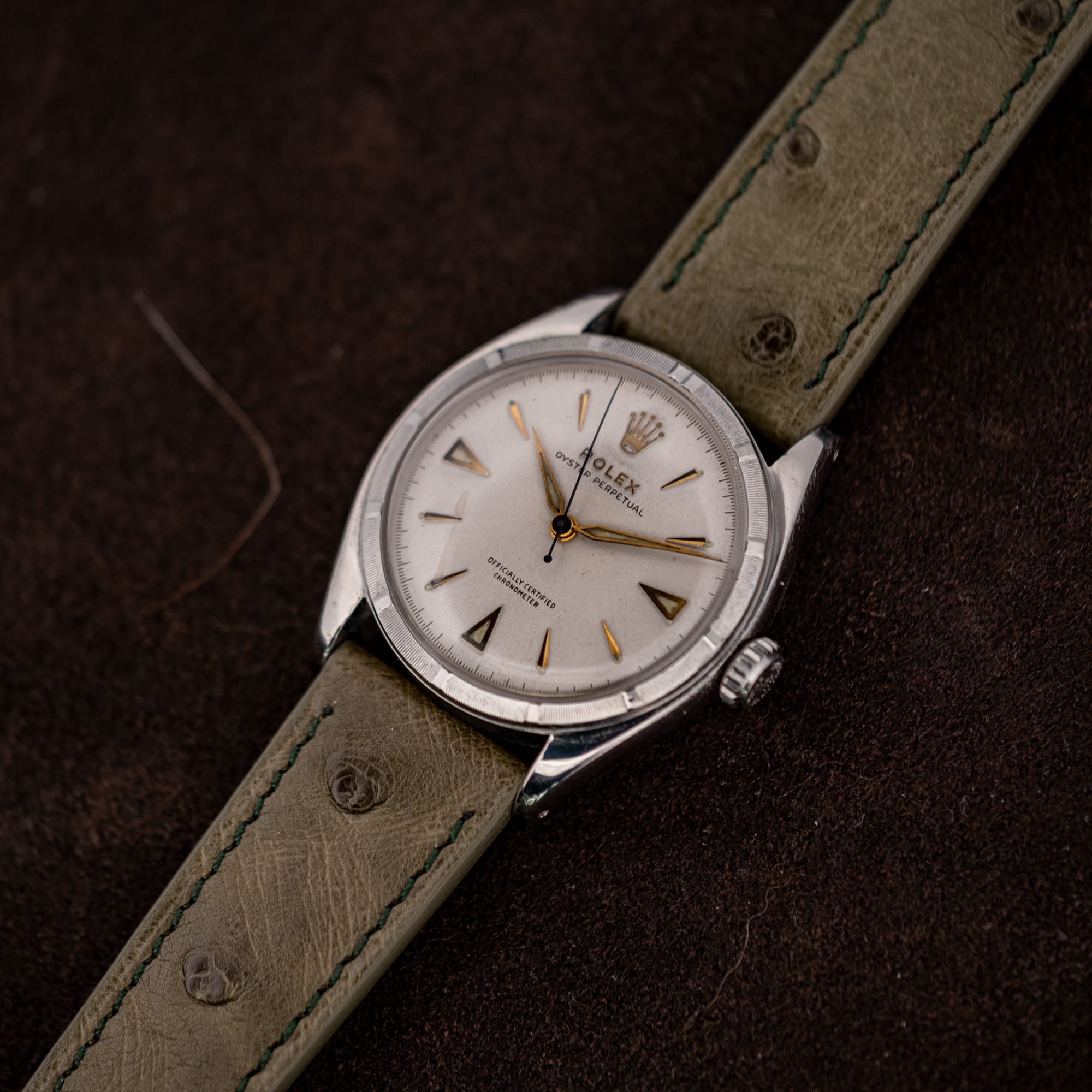
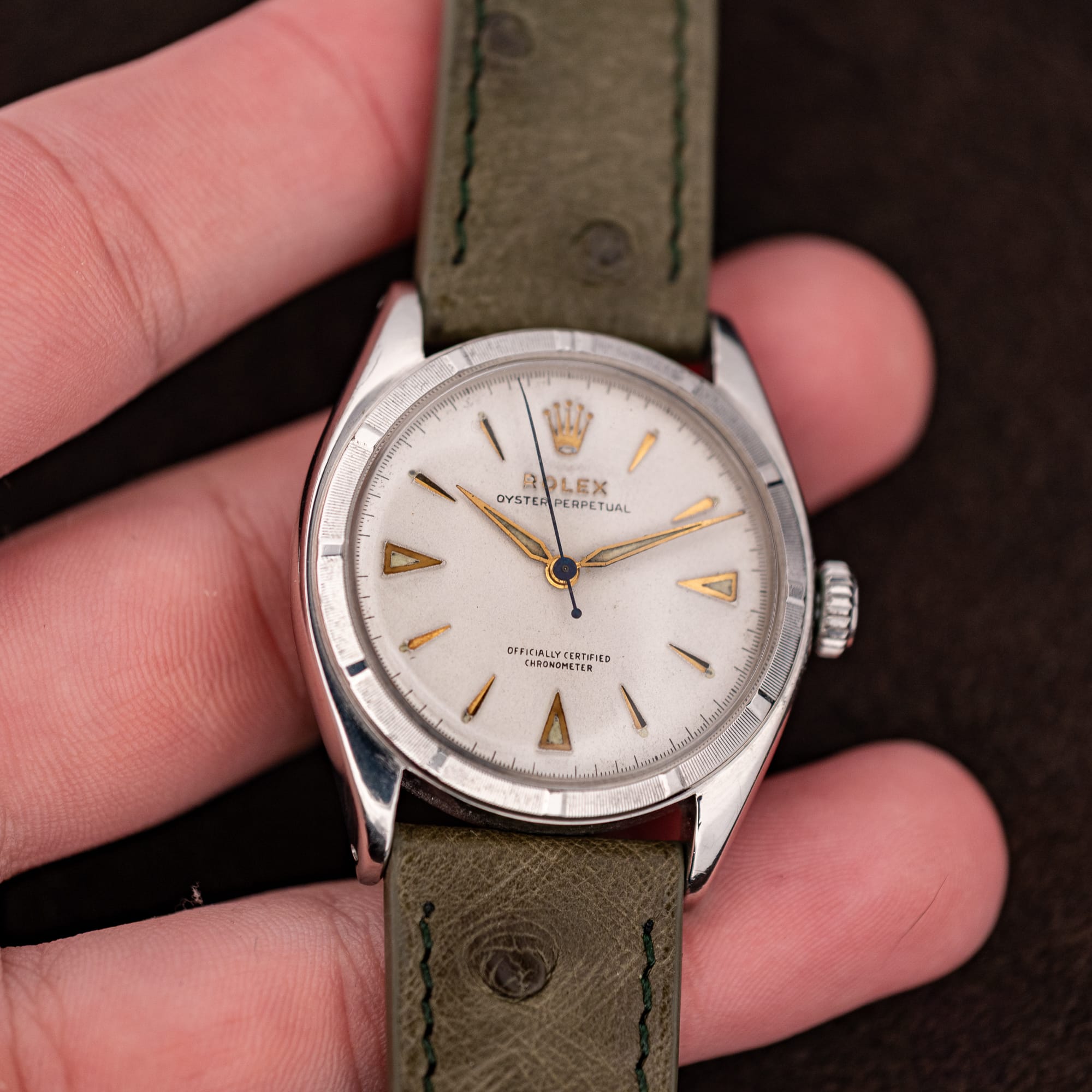
The dial is the configuration to want. Applied gold triangles mark three, six and nine, tapered gold darts fill the other hours, the coronet is applied at twelve, and OFFICIALLY CERTIFIED CHRONOMETER sits in two small lines above six, a grade the signed rotor underneath repeats. SWISS alone sits at the foot, and the radium has long since gone quiet, its plots now a soft olive cream against a white that has warmed lightly and well. Gold dauphine hands, a blued steel sweep seconds, an engine-turned bezel and a signed Super Oyster crown finish it. The printing is crisp and the aging even, with no sign of a refinish, and the case carries the fine scratching of something worn rather than stored.
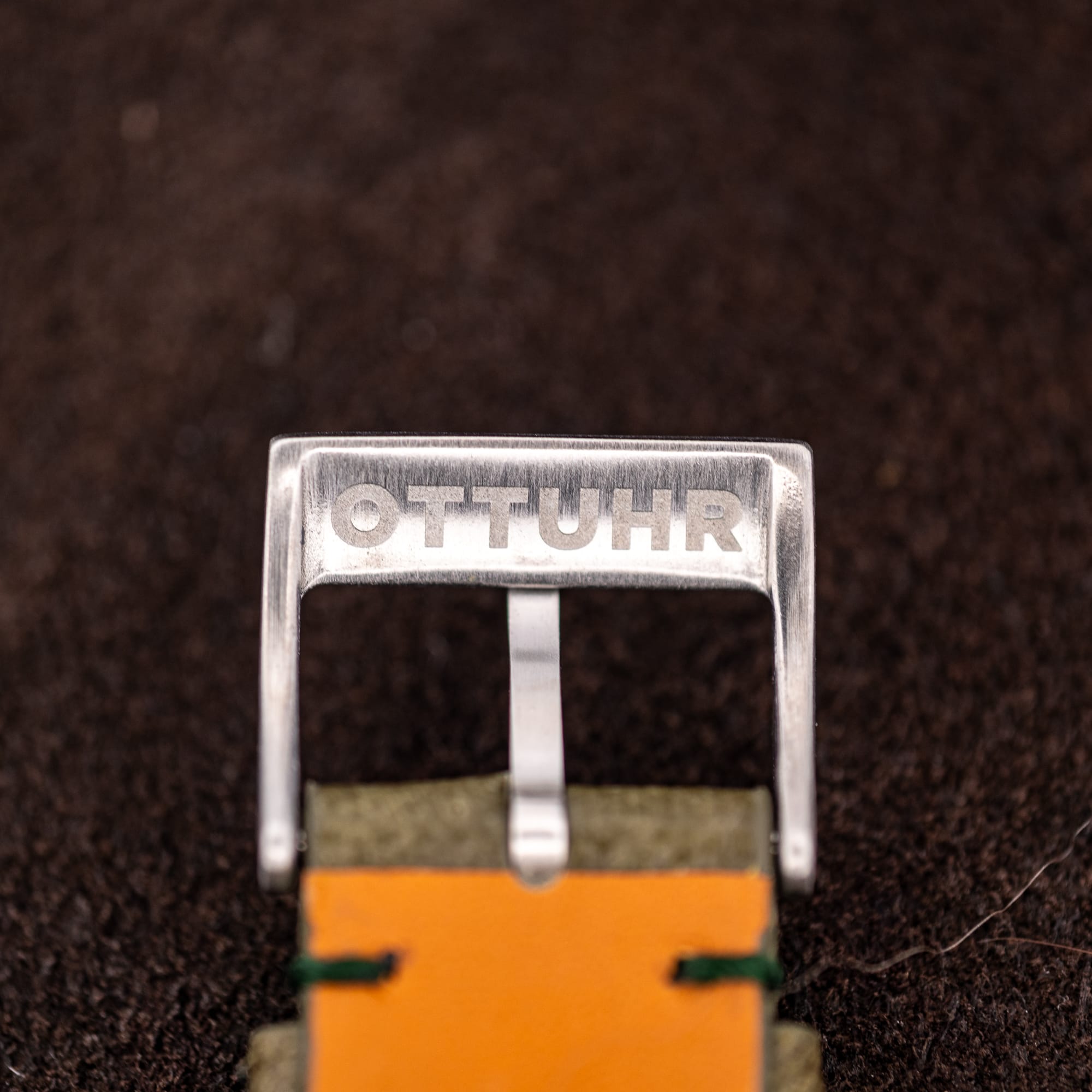
Serviced in-house at OTTUHR and backed by our 2-year mechanical warranty, on an olive ostrich strap with our own buckle. Rolex spent the years after this one engineering the bubble away. We are glad ours was built before they finished.