
Morris Zale opened a jewelry store in Wichita Falls, Texas in 1924 with his brother Bill and his brother-in-law Ben Lipshy, and advertised terms his customers could actually meet. Buy on dignified credit, ran the ad in the Wichita Daily Times. Pay one cent down and a dollar a week. It worked: by February 1956 there were sixty-three Zales stores across ten states. What there were not, for a stretch, were watches to put in them, and this Baylor automatic is what the company did about it. Zales had bought its watches for years from a New York firm called Schein and Engels, and when that partnership dissolved in 1946 the chain could no longer get enough stock to fill its own cases. So it stopped buying finished watches altogether. It would import the movements straight from Switzerland and put a name of its own on the dial instead. Bill Zale chose the name.
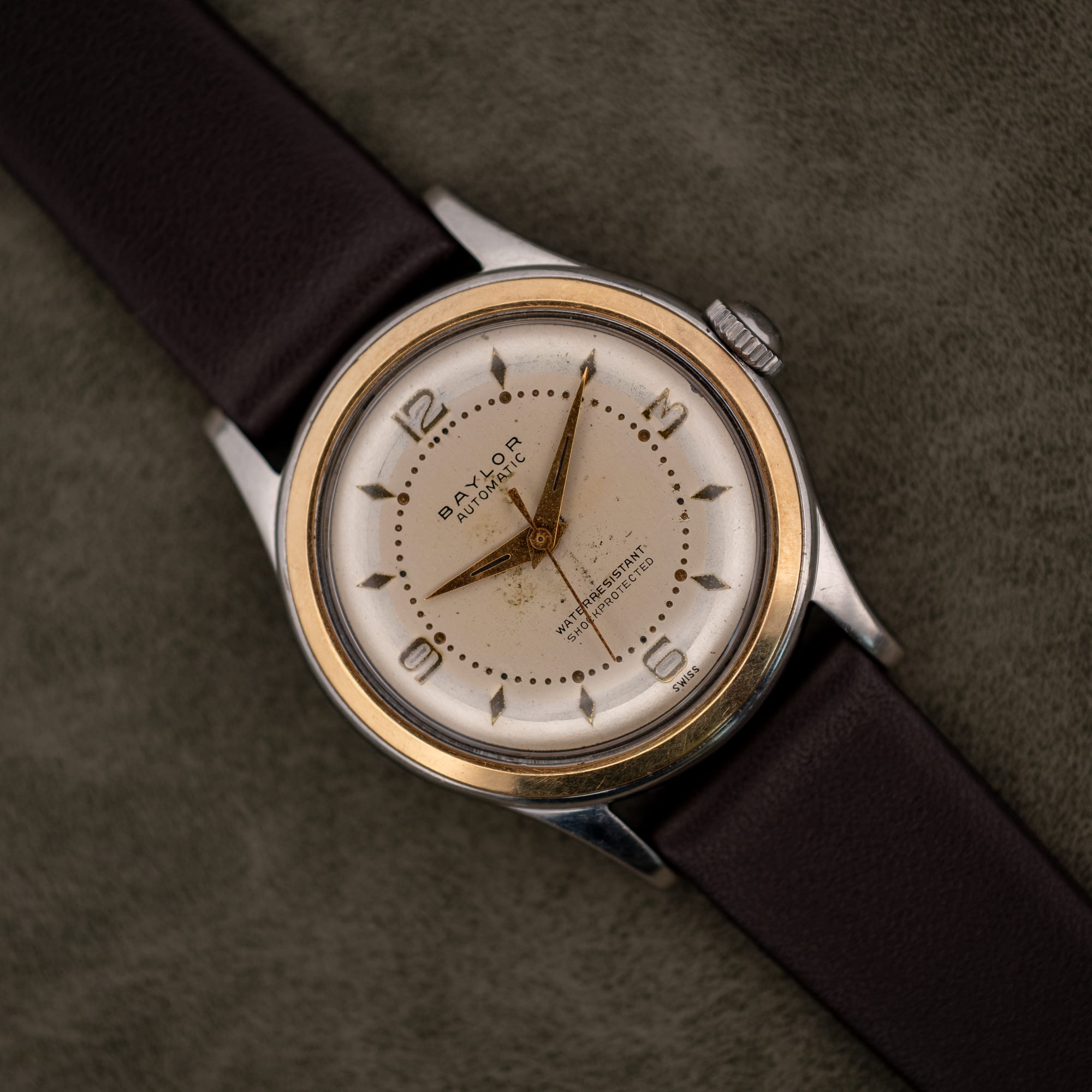
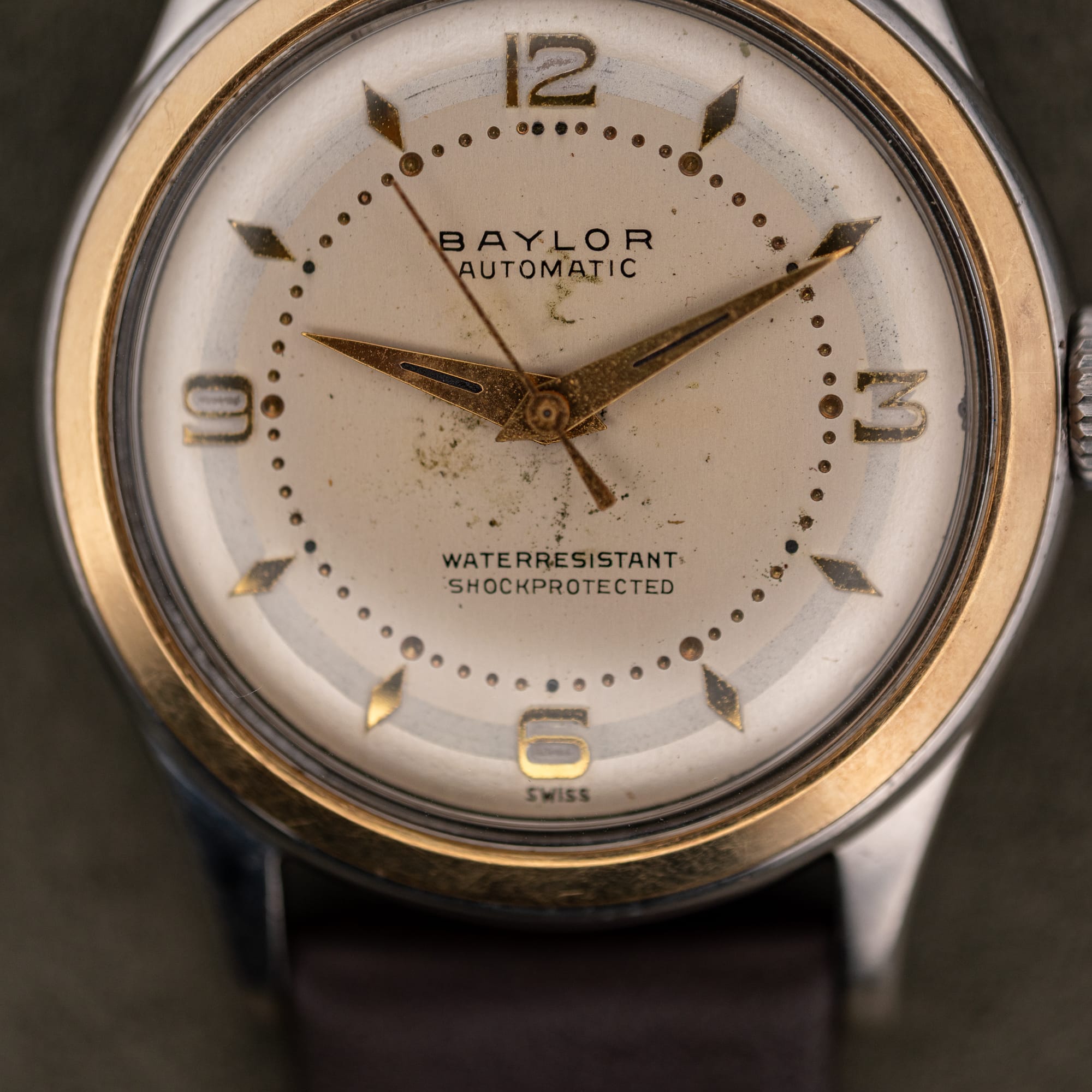
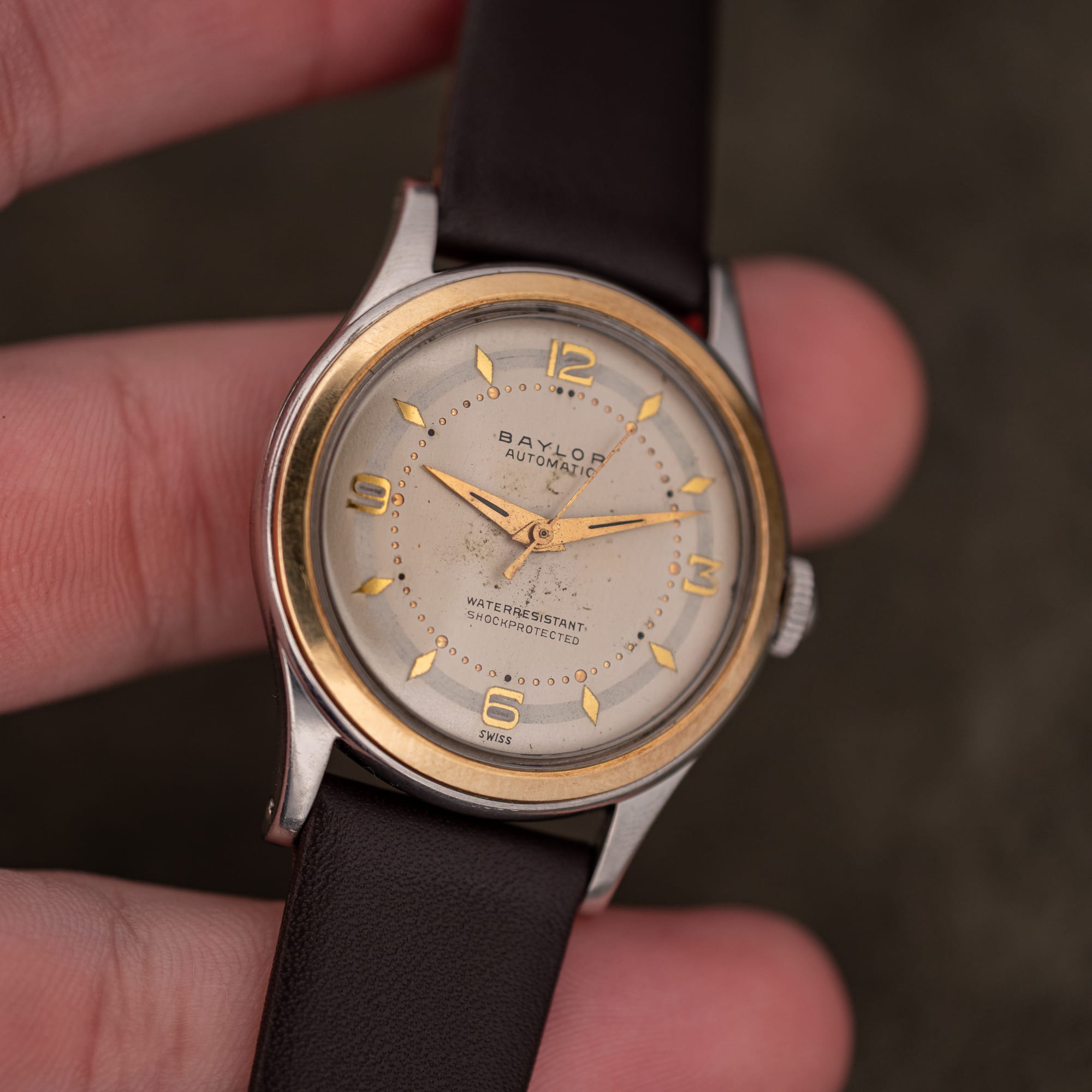
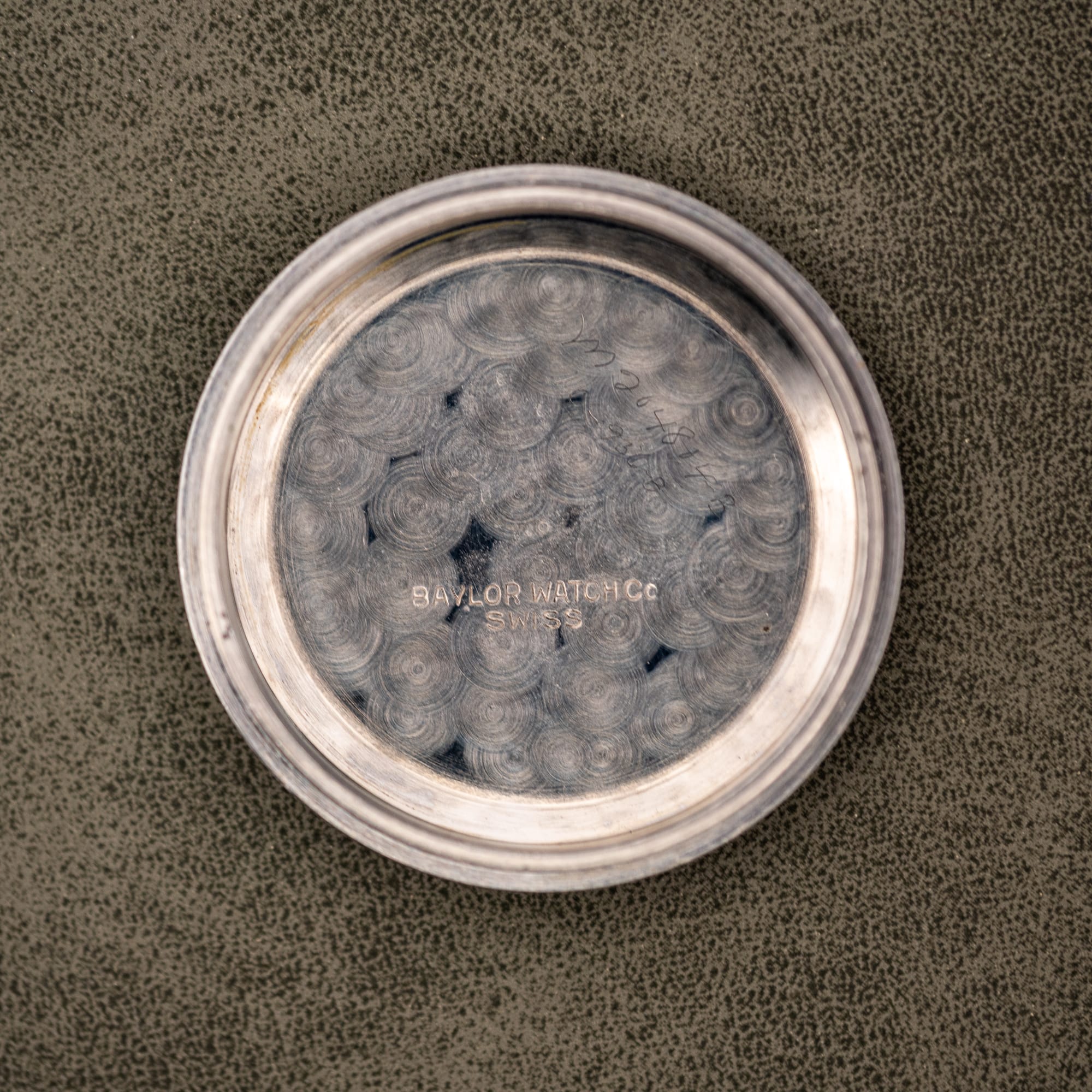
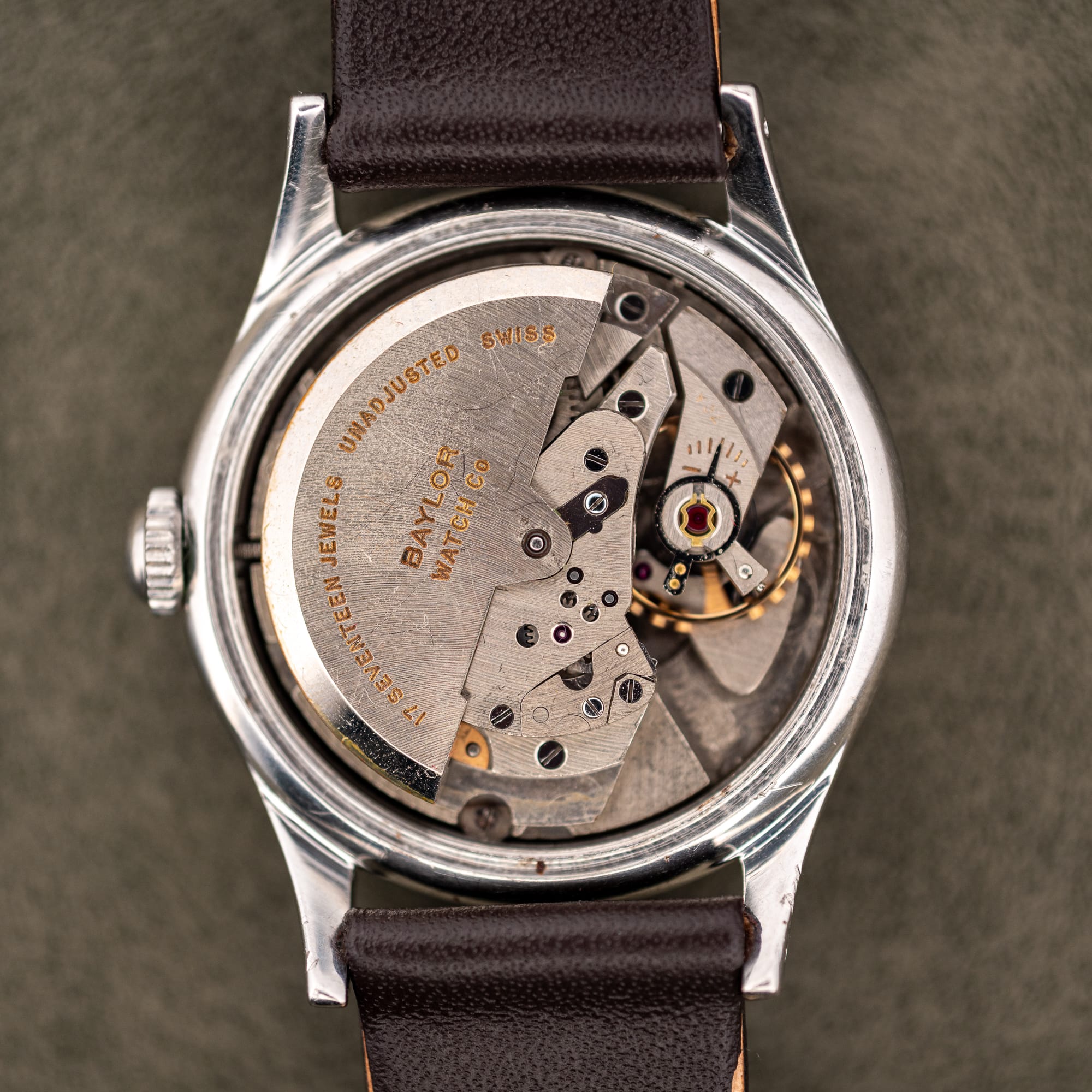
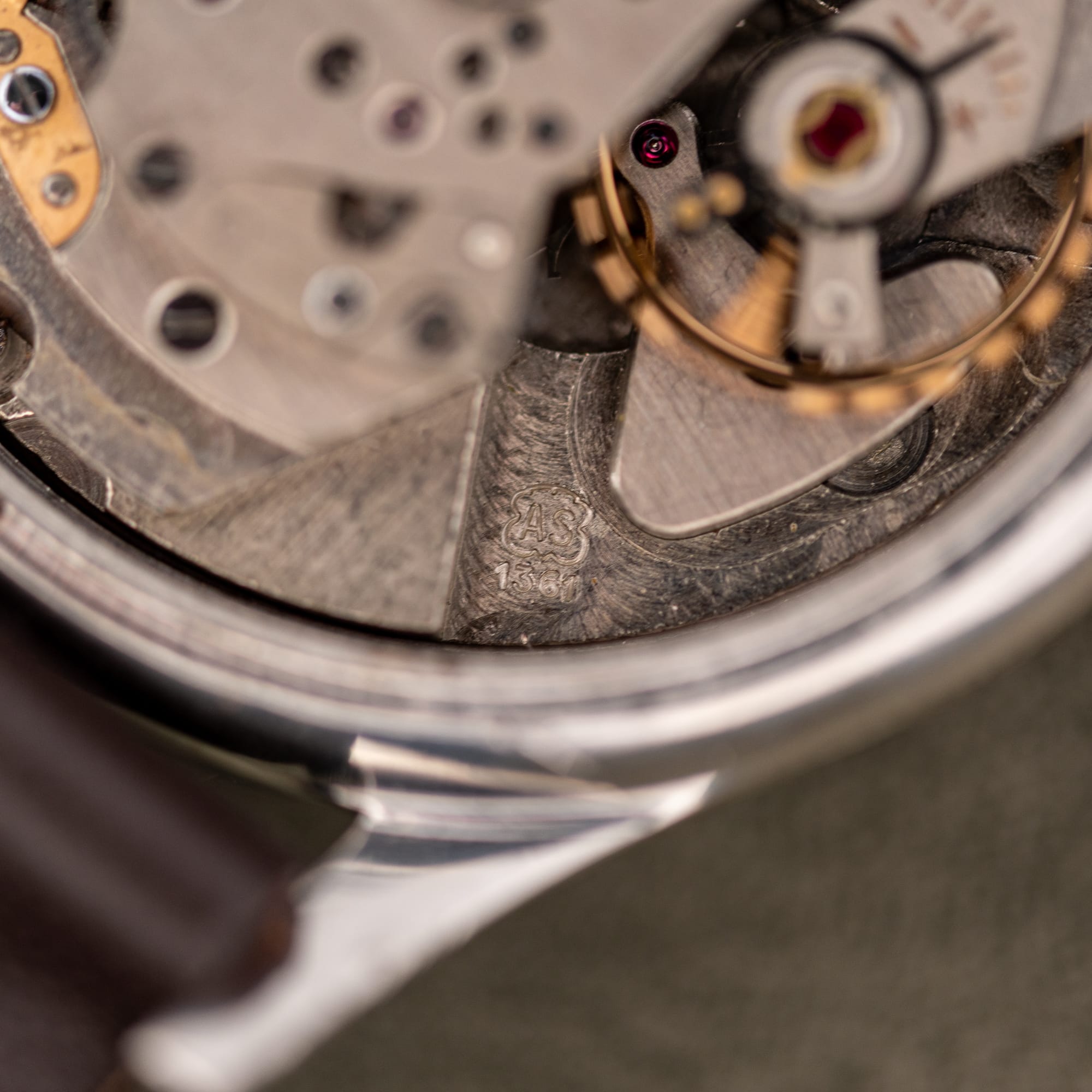
There is a second reason that name is there, and it is written into the movement. Paragraph 367 of the Tariff Act of 1930 refused entry to any imported movement not cut, engraved or die sunk with the country of manufacture, the jewel count in words and in Arabic numerals, the word unadjusted where it applied, and the name of the manufacturer or purchaser. Purchaser. American customs law let a retailer importing under his own label put his own name on the movement in place of the maker’s. This one carries that vocabulary on its rotor, which reads 17 SEVENTEEN JEWELS UNADJUSTED SWISS around the rim with BAYLOR WATCH Co in the middle. Seventeen jewels was no accident either. Duty climbed with every jewel past seven, then jumped to a flat $10.75 once a movement carried more than seventeen, and that structure held unchanged from 1922 to 1963. Even SWISS at six o’clock answers to the same paragraph, which called for the country of manufacture on the dial face, where the case could not cover it.
What Zales bought is better than the arrangement implies, and it is the part we would point at first. This is A. Schild’s calibre AS 1361, introduced in 1950 out of Grenchen, a full rotor automatic that winds in both directions, hand winds without dragging the rotor along with it, and holds somewhere near thirty-eight hours. A. Schild was the largest of the three houses that founded Ebauches SA in 1926, and under the Swiss production rules of the period only three makers were permitted to build automatic ebauches at all. The house brand on the dial is running an ebauche from one of them, out of a firm whose movements ran under hundreds of Swiss and international names.
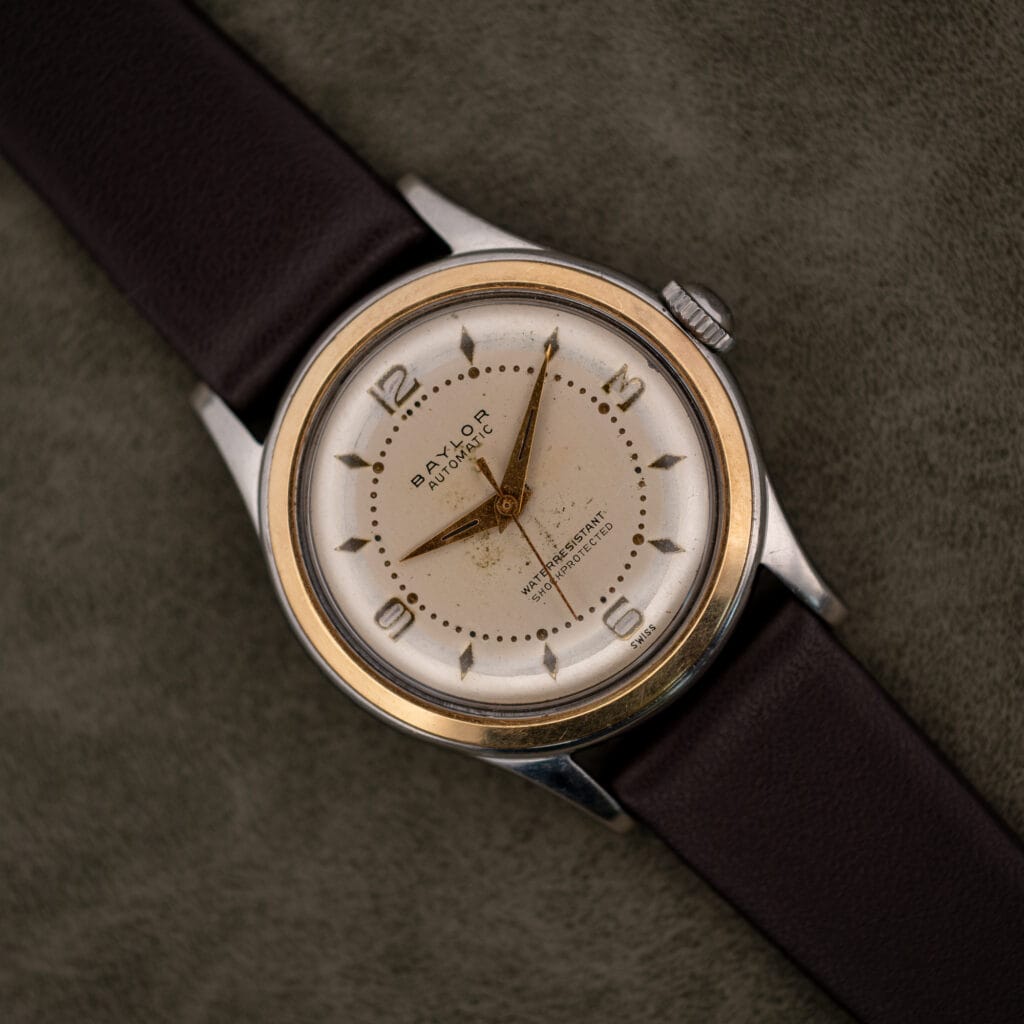
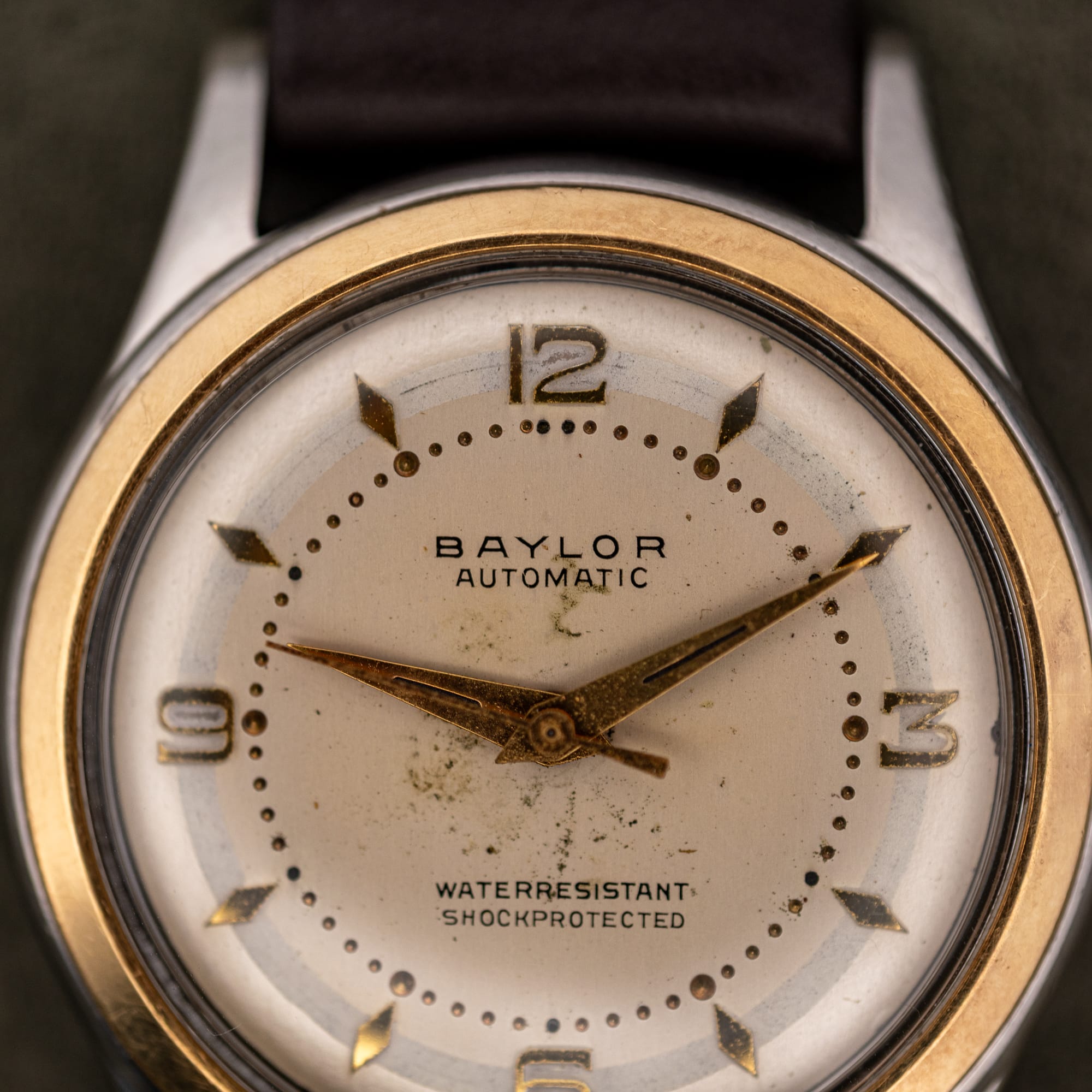
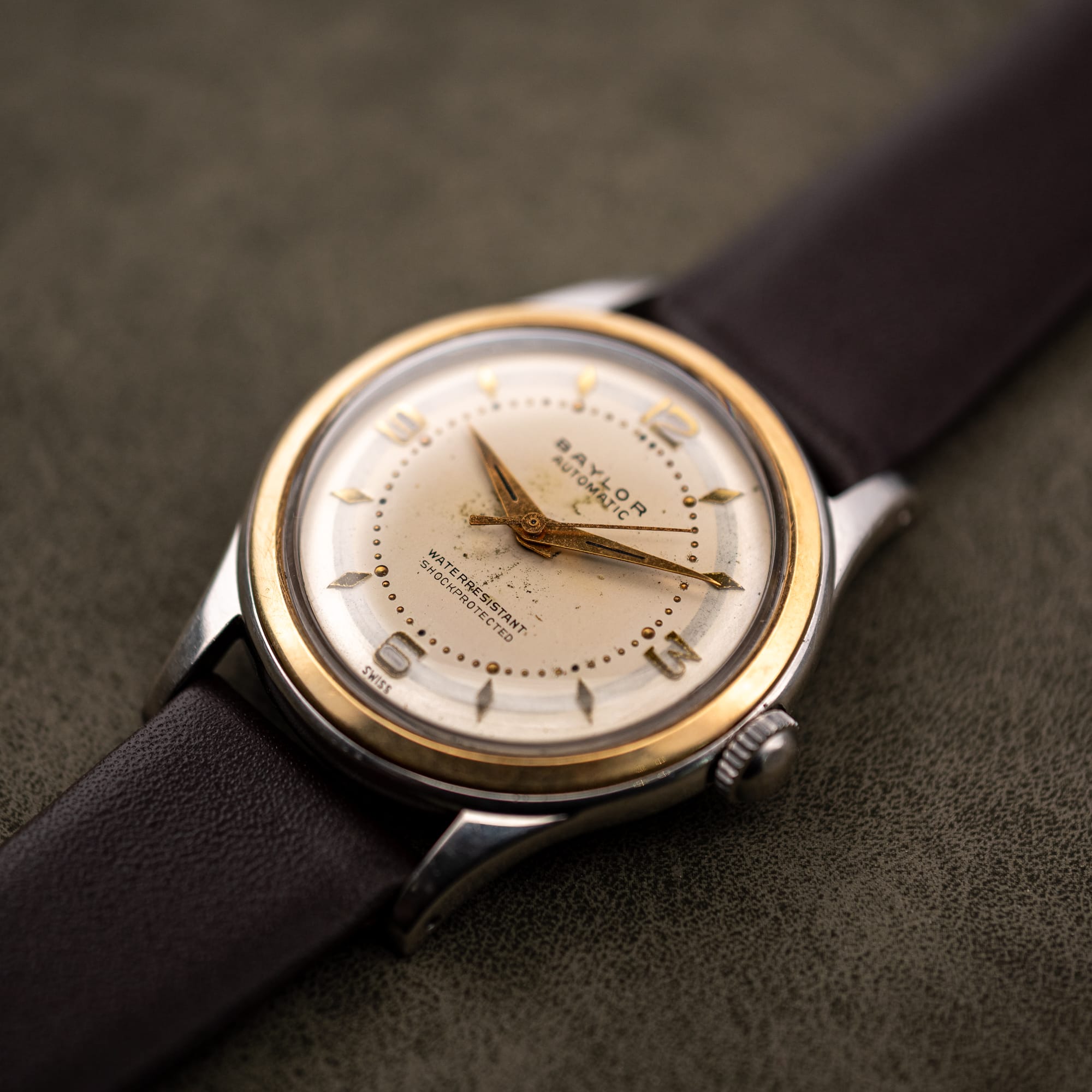
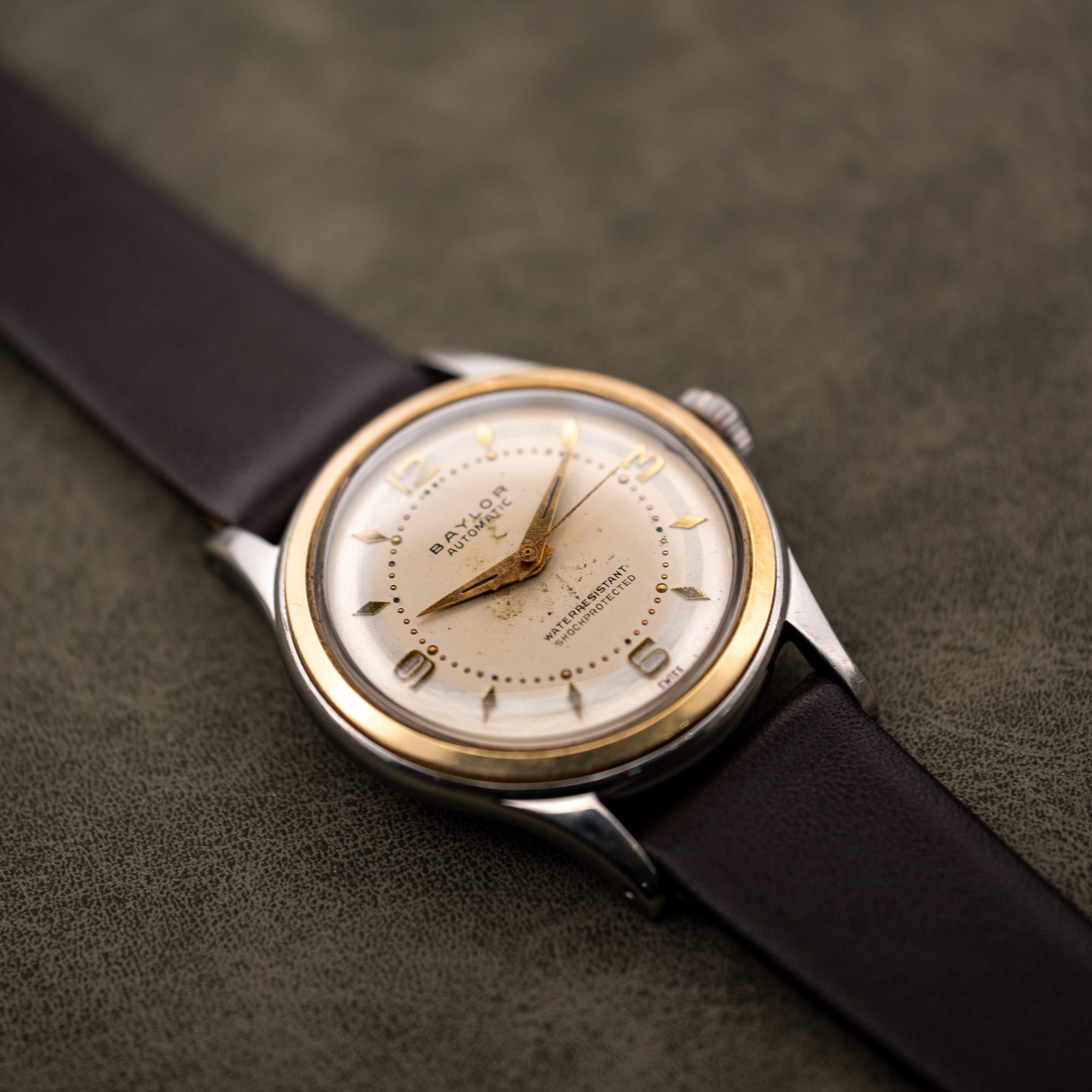
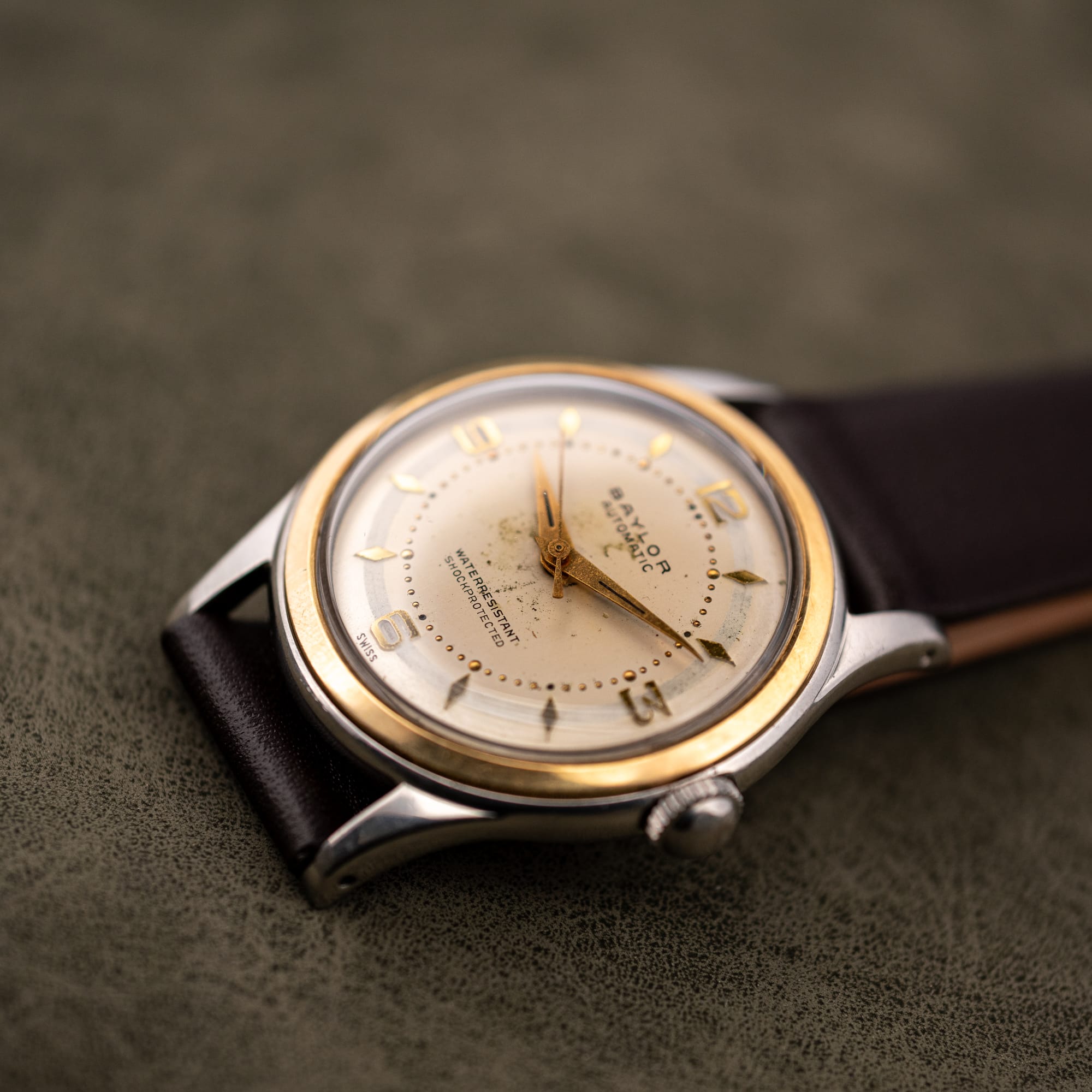
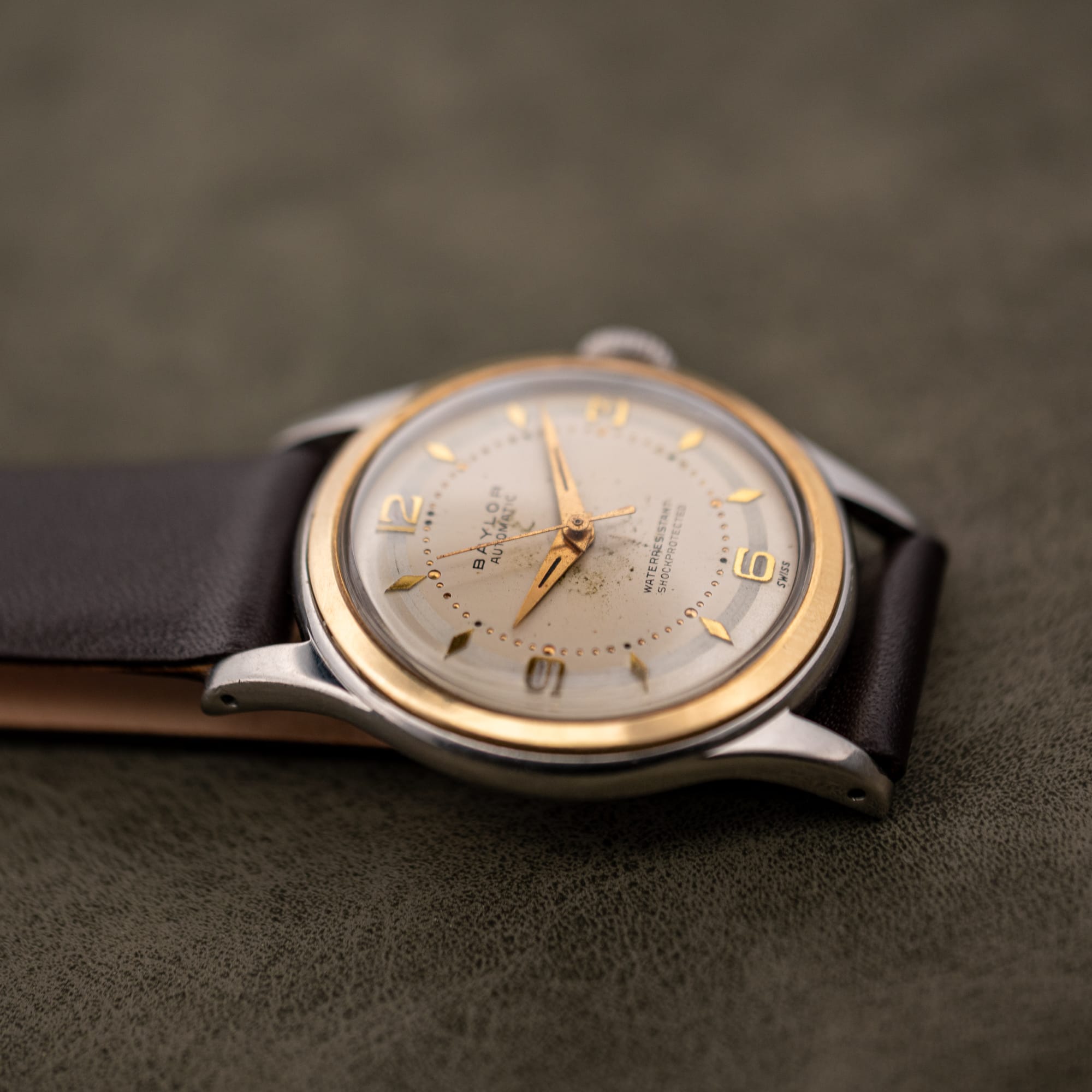
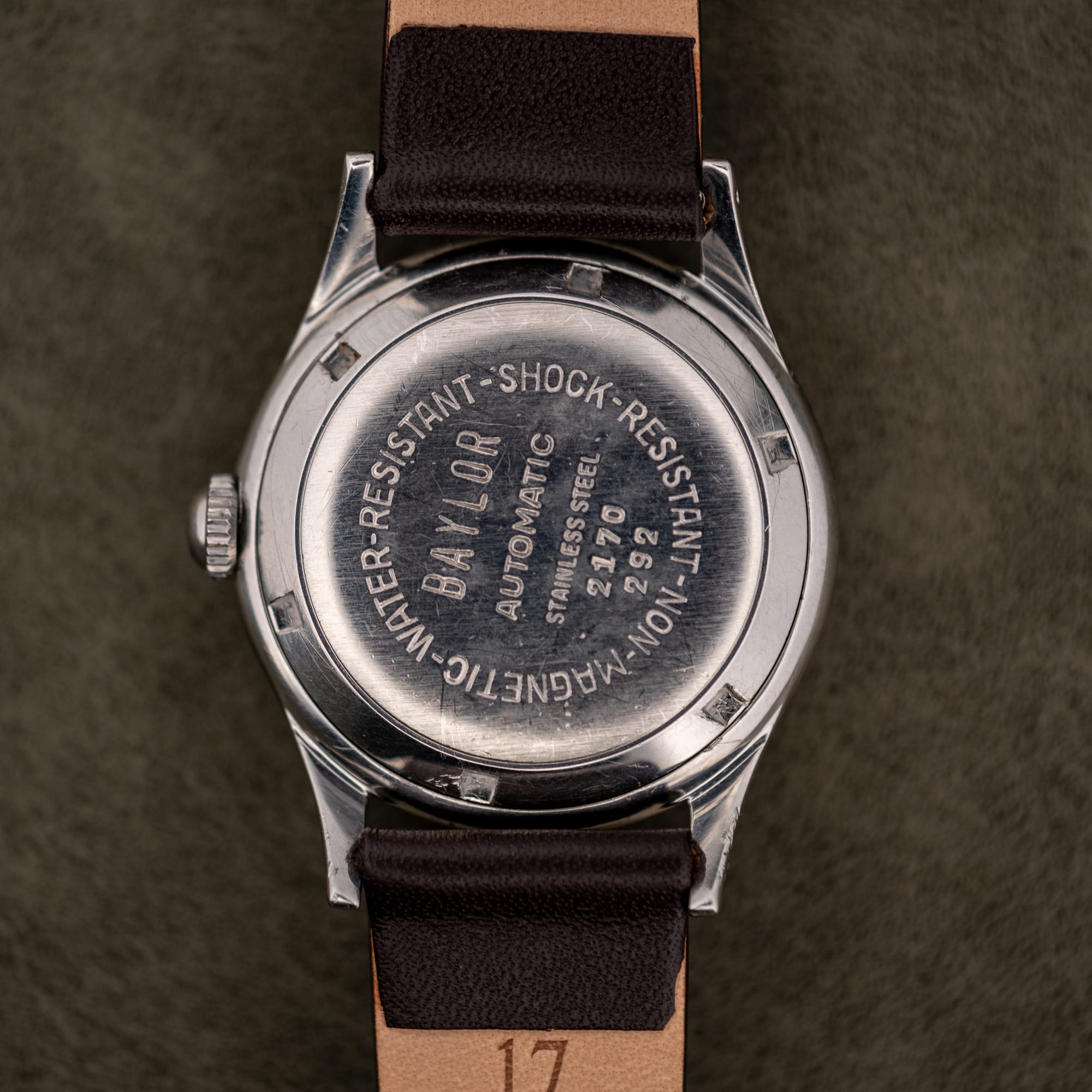
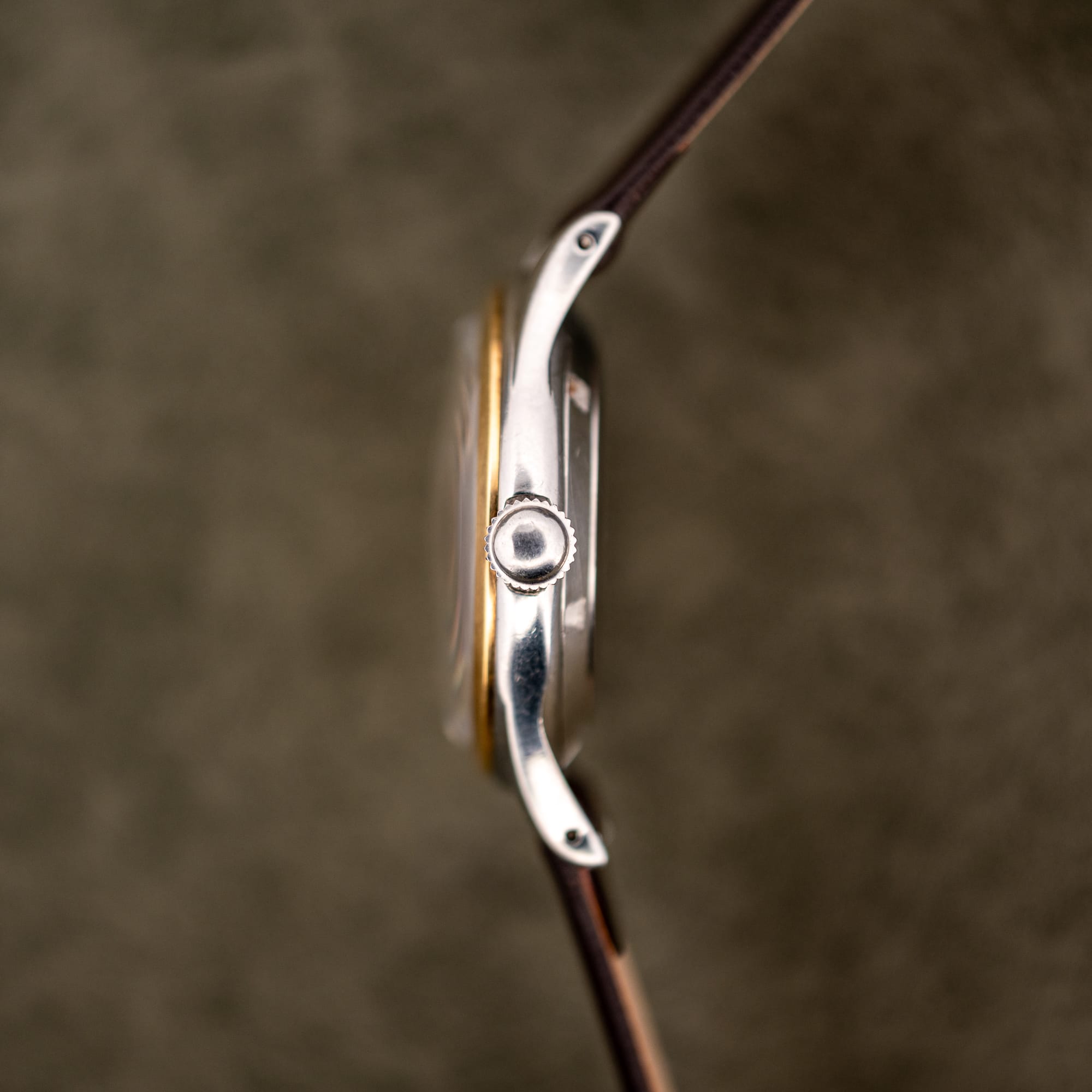
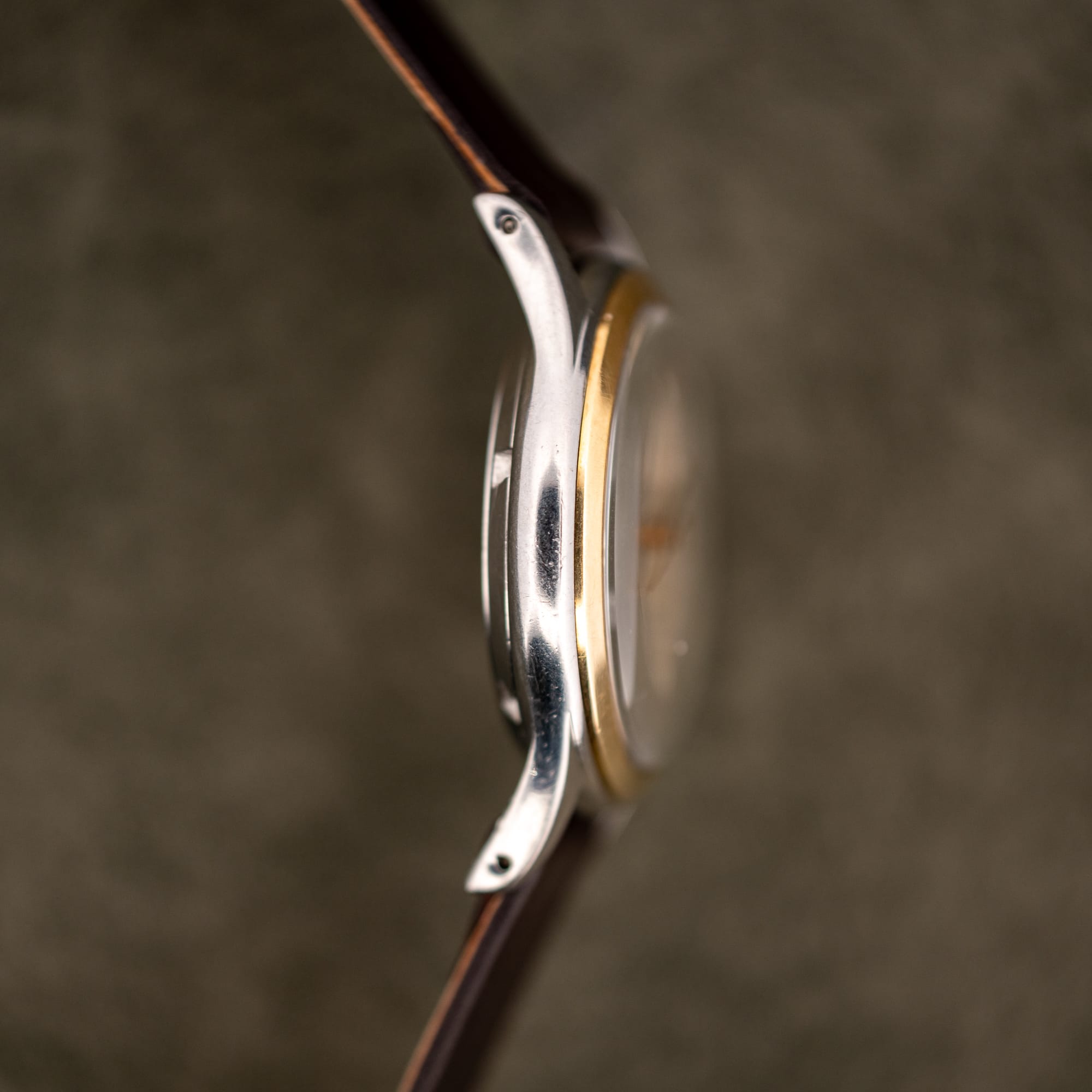
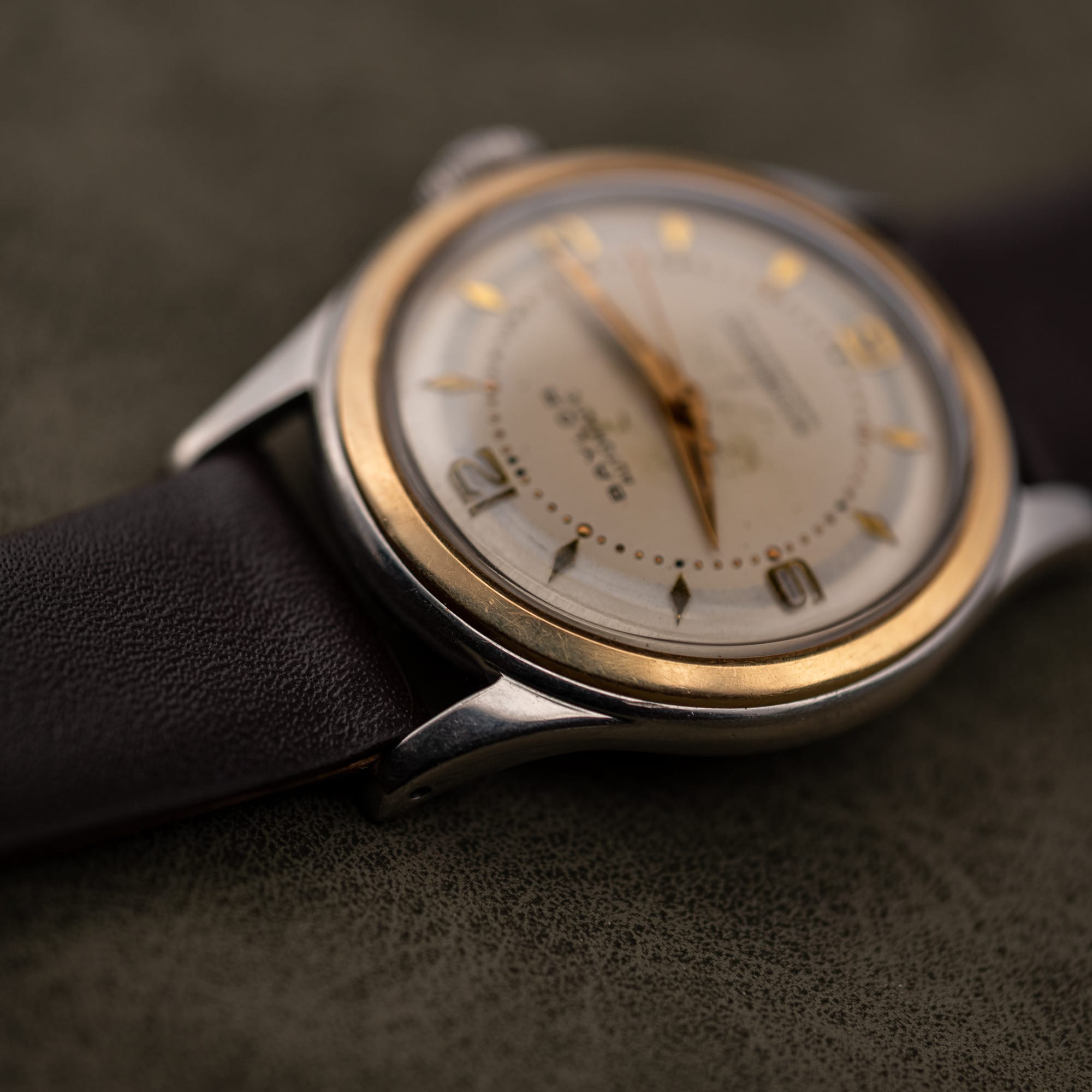
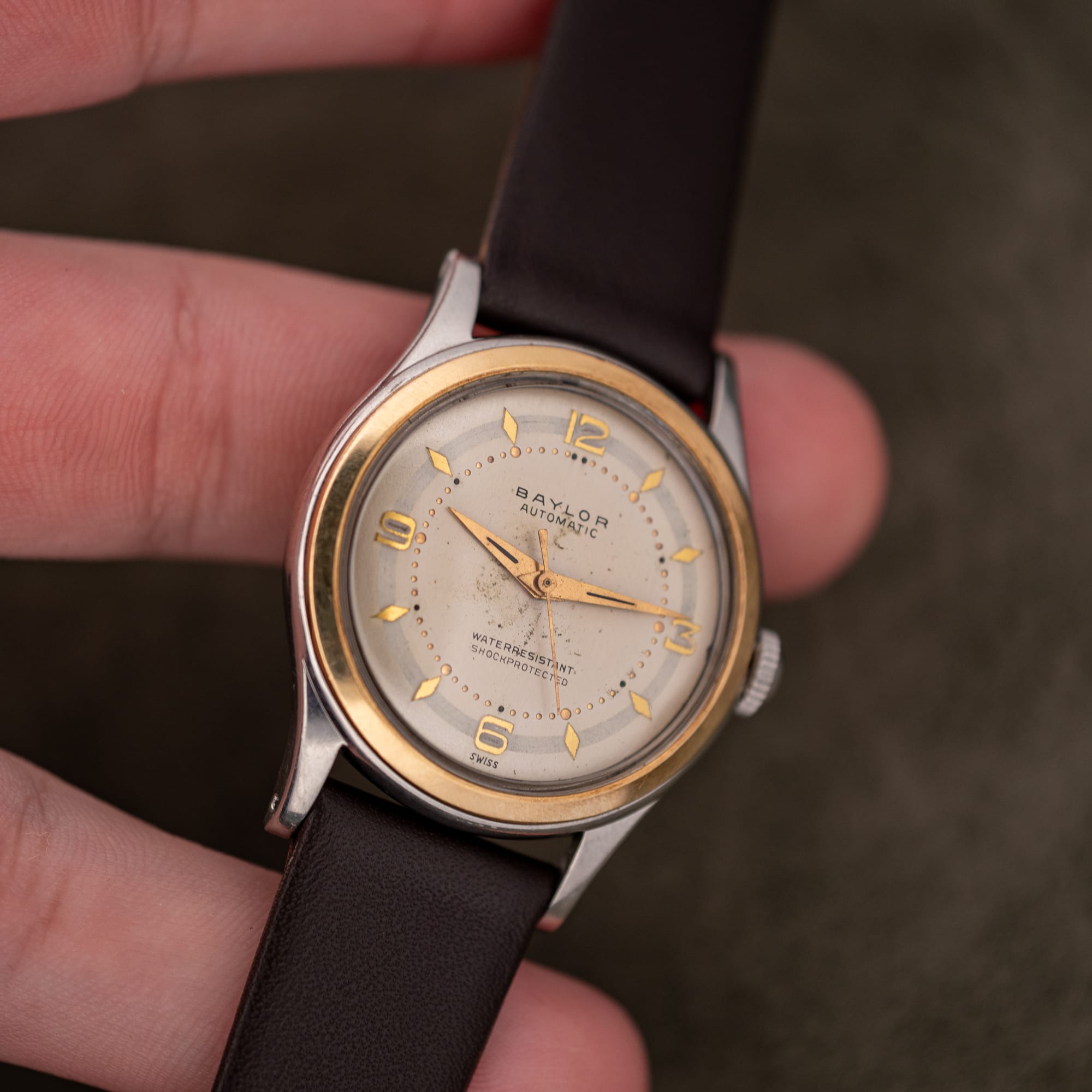
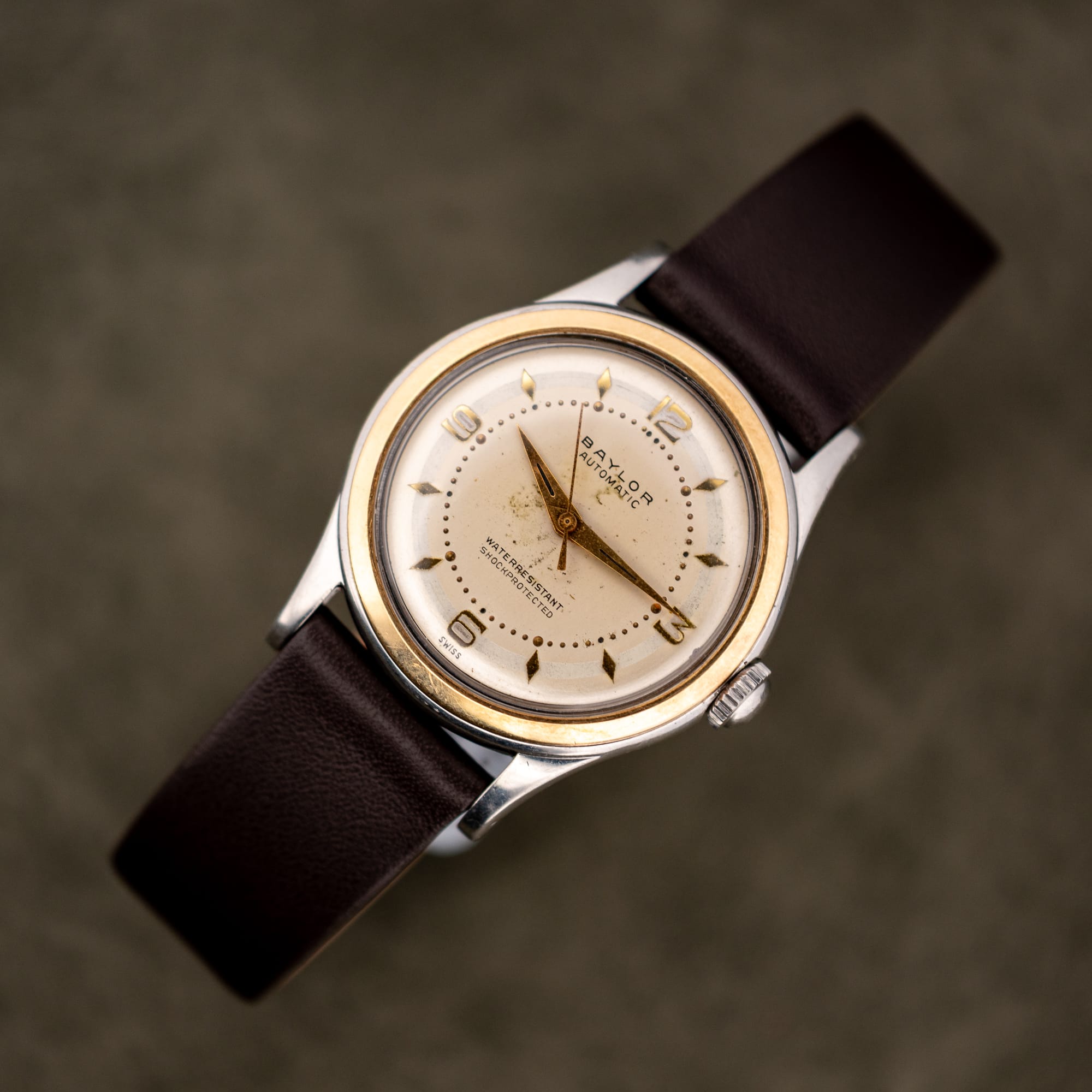
The case on this Baylor automatic is round and steel, its warm yellow bezel ring giving the watch a two-tone look, with faceted lugs and a fluted crown. Under the domed acrylic the dial has aged to the colour of old paper, a soft bloom of foxing spreading outward from the centre that we have left exactly as we found it. Applied gilt numerals hold twelve, three, six and nine, faceted lozenges fill the hours between them, and a beaded minute track rings the whole of it. The dauphine hands and the slim sweep seconds carry the same gilt tone as the markers. No date, and none ever intended.
Serviced in-house at OTTUHR and backed by our 2-year mechanical warranty, on a leather strap and buckle we chose for it. Zales needed watches, could not buy them, and had them built instead. The improvised name is the part that lasted.