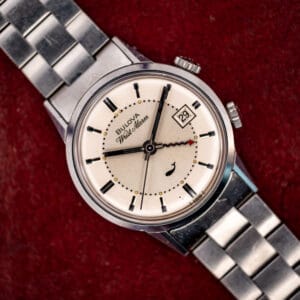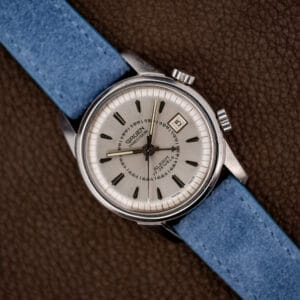

Twenty-five seconds of chirping is what five years of work bought Vulcain. The mechanism was solvable; the noise was not, because a watch on a wrist muffles itself. Patents dating to the 1890s had produced no alarm anyone could hear. Robert Ditisheim’s team was close to quitting by the mid-1940s. Then Paul Langevin came through the factory. The French physicist who built the first ultrasonic submarine detector, by then a refugee from the Nazis in Switzerland, told them to think about the cricket: small, audible across a field.
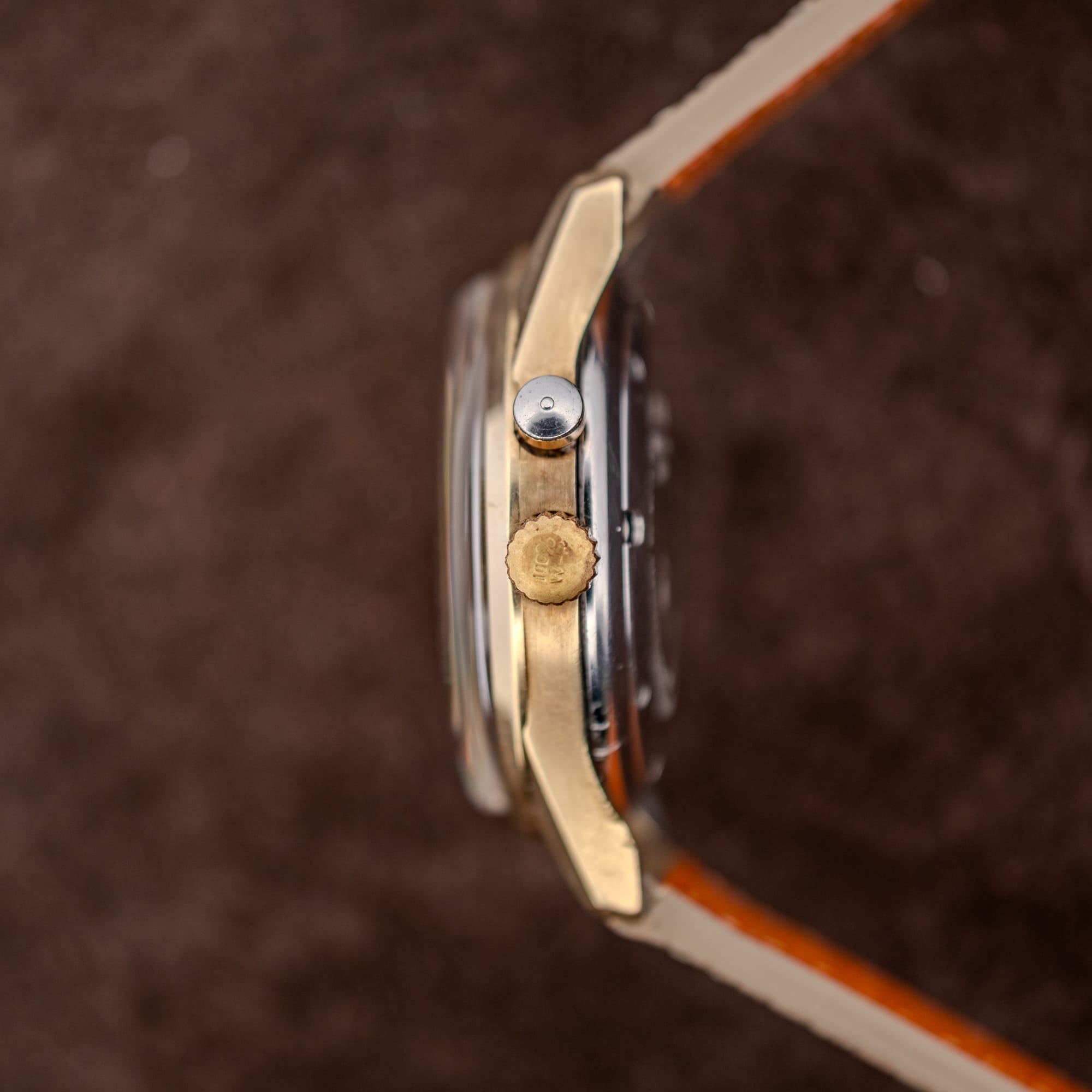
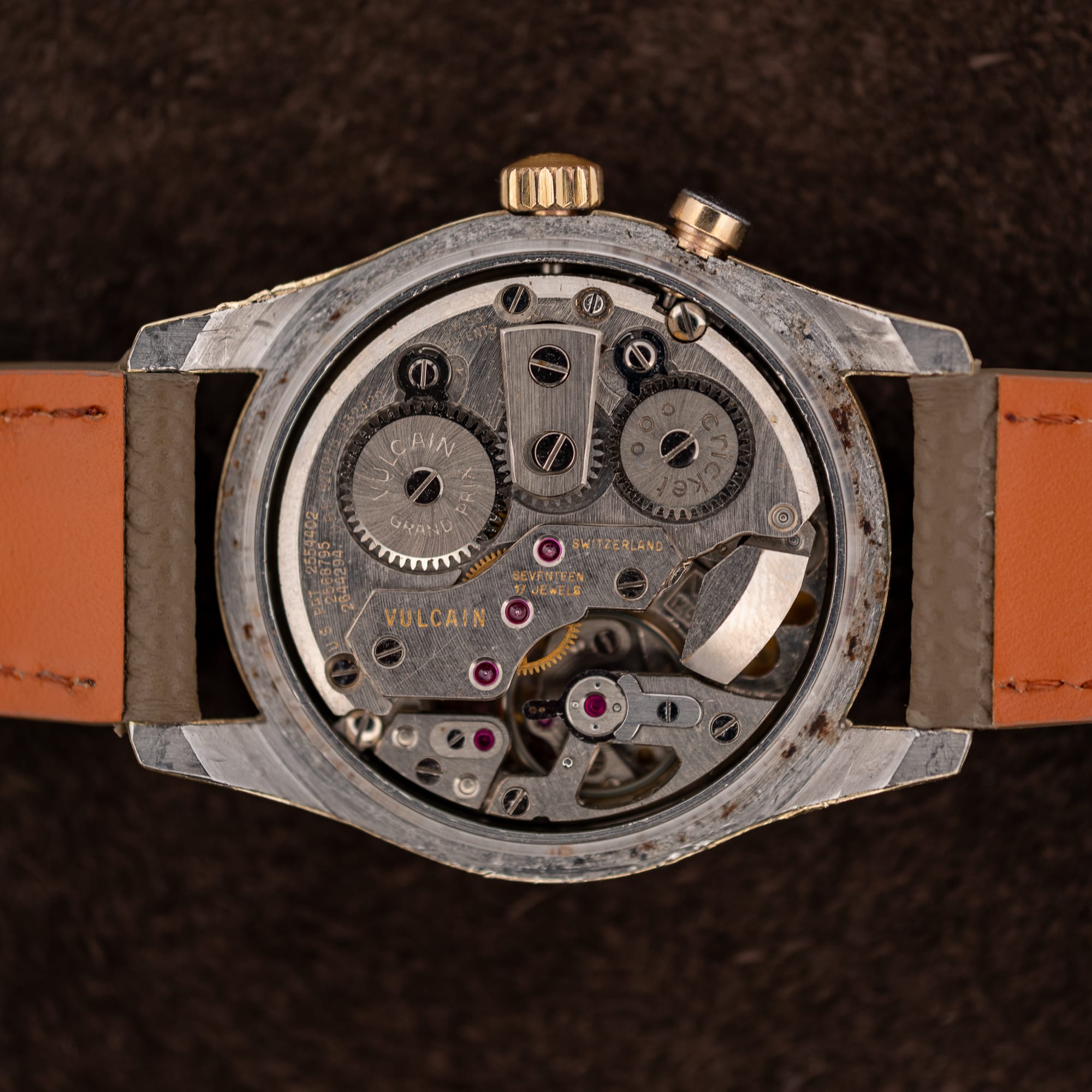
That advice is why a vintage Vulcain Cricket still sounds like its namesake. A hammer strikes a pin set into a steel membrane that closes off the movement, and a second domed back sits outside it, pierced so the noise escapes into the room instead of dying against a sleeve. The watch is sealed and open at once. Two mainspring barrels run it, one for the time and one for the alarm, so the ringing never draws down the watch’s own power. The New Yorker found it in the autumn of 1947 and ran its piece that October under a one-word headline, Chirp.
The politics came next. When Harry Truman left office in January 1953, the White House News Photographers Association gave him a 14k gold Cricket with the back engraved One More Please, the line they had been shouting at him for eight years. That gift is where the President’s Watch nickname comes from, and the association has never left the model. Eisenhower, Johnson and Nixon all turn up in the telling, though the documentation thins considerably past Truman. His is the one with a paper trail.
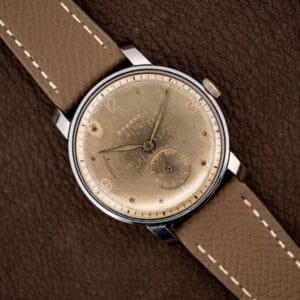
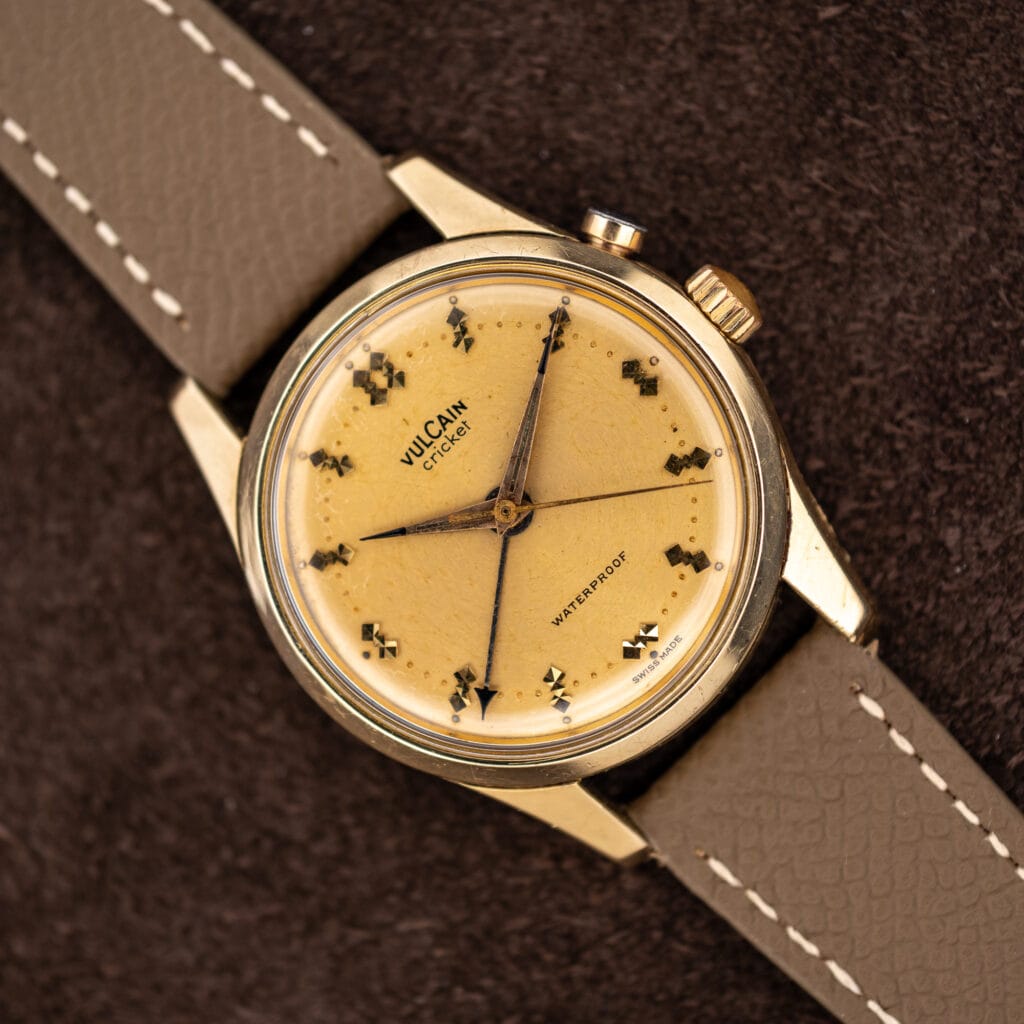
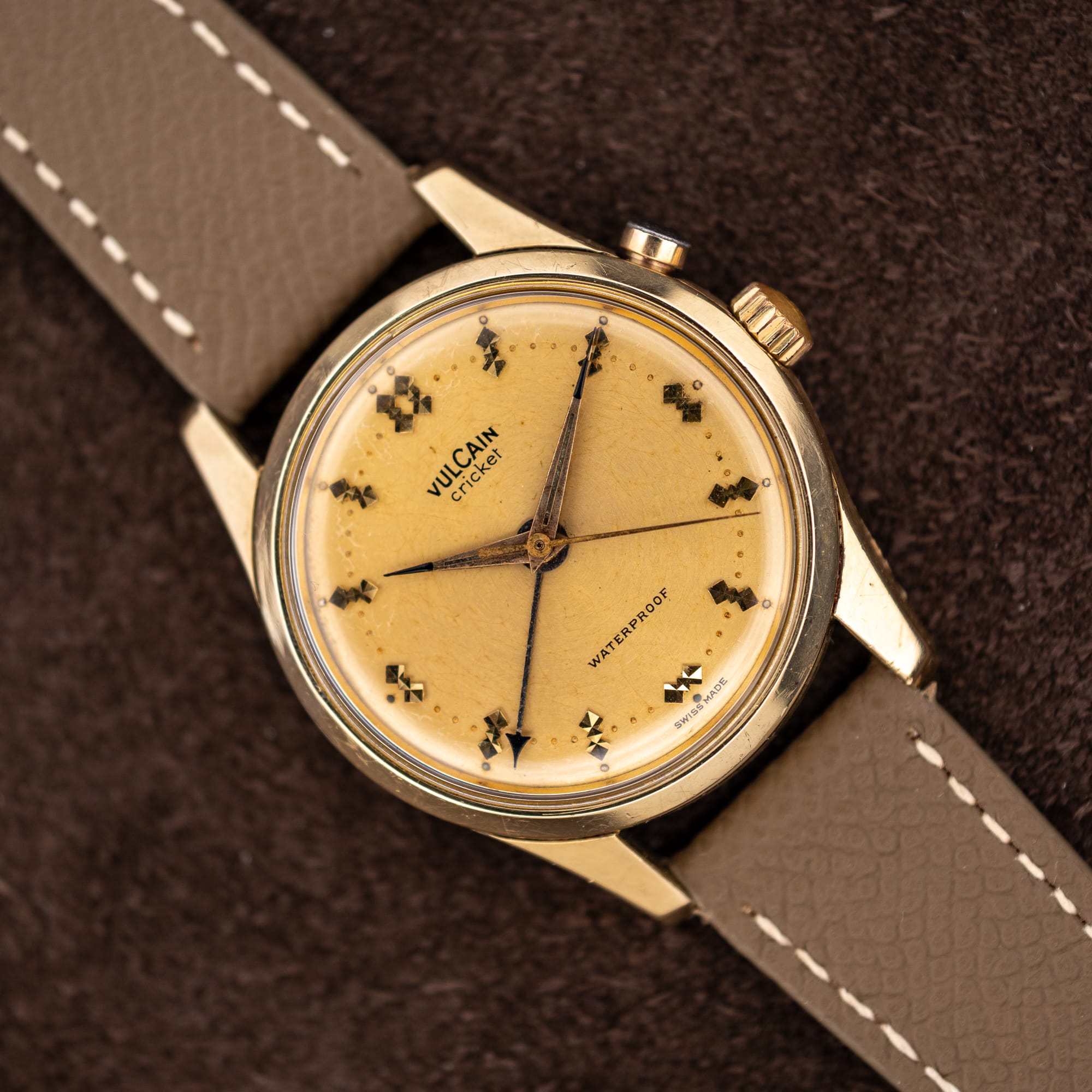
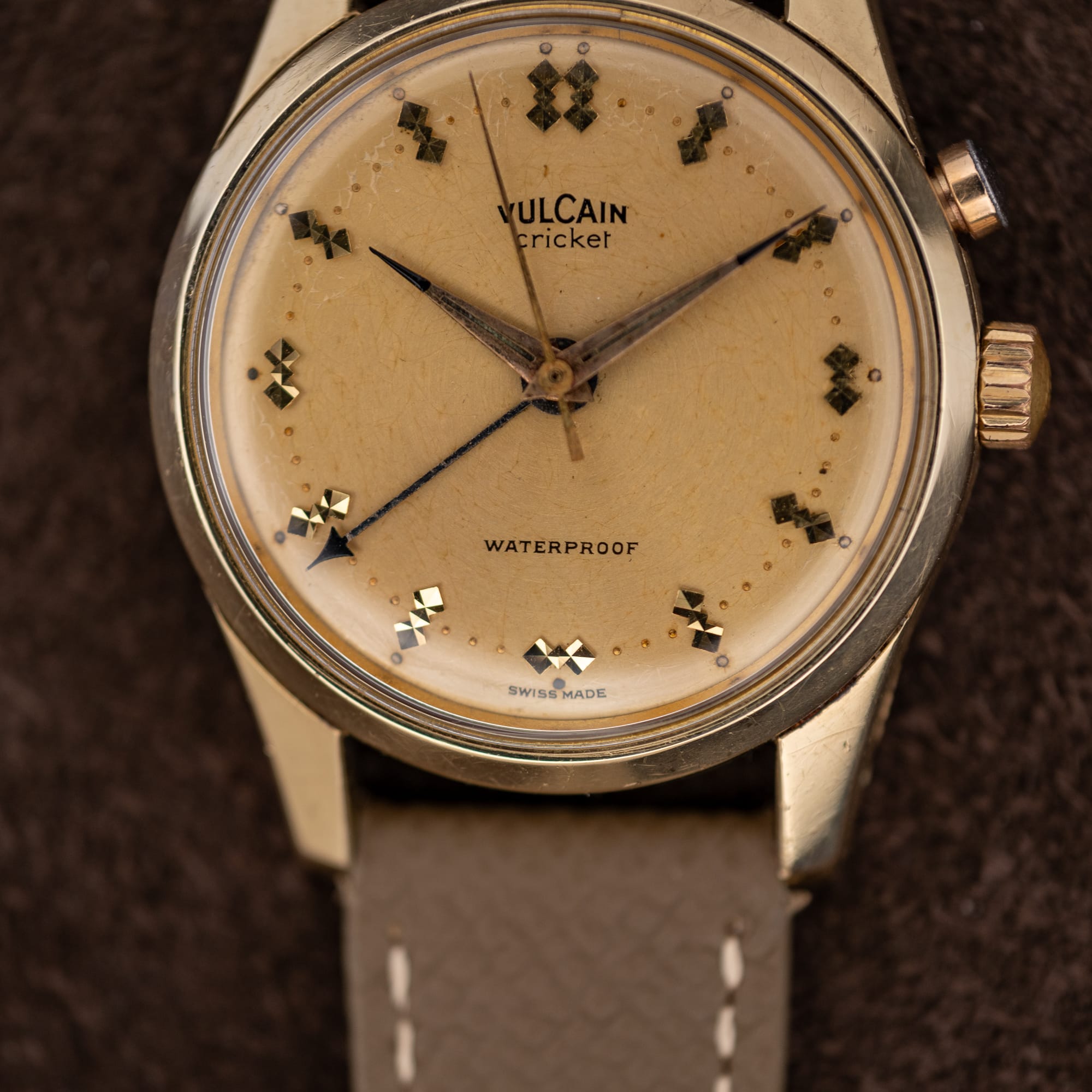
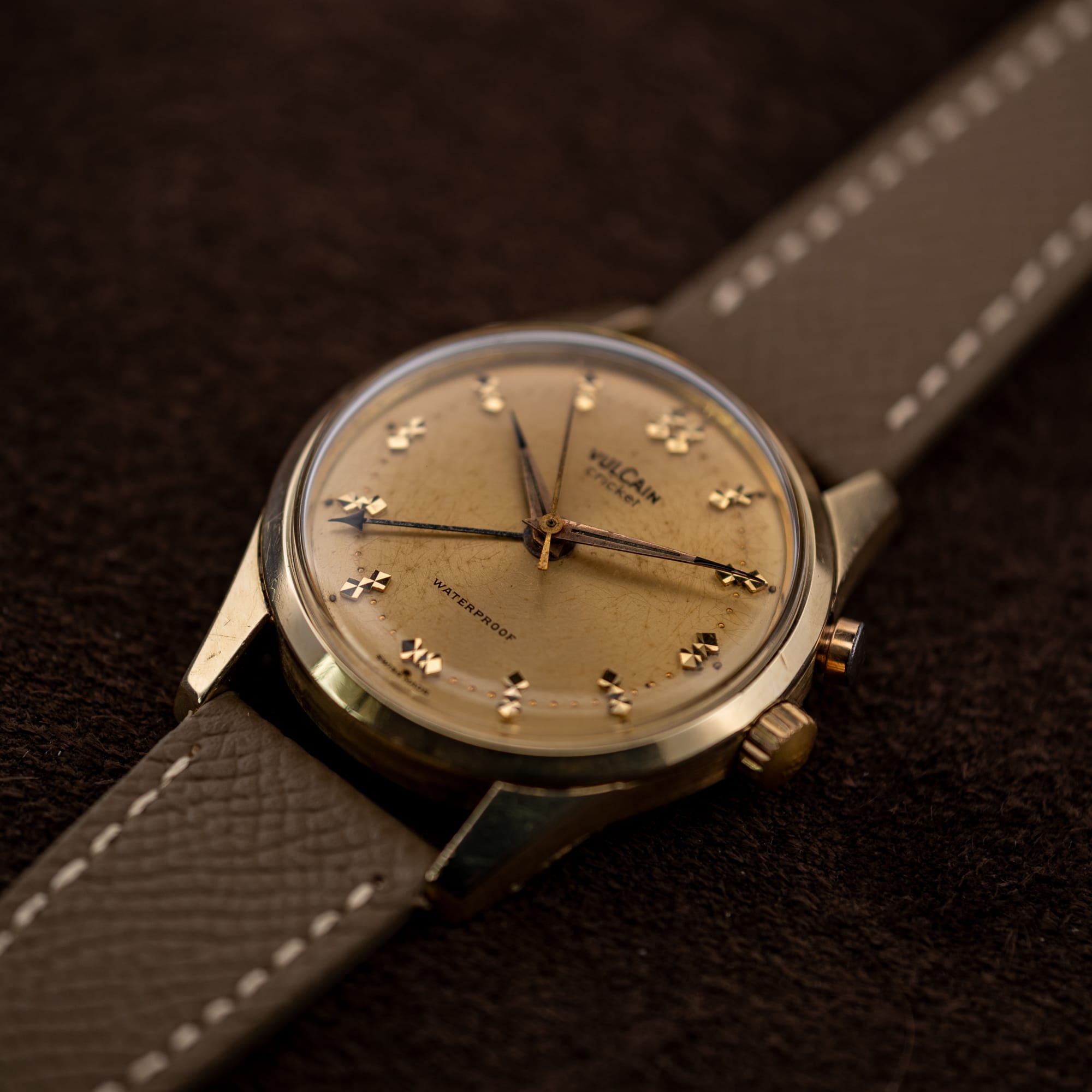
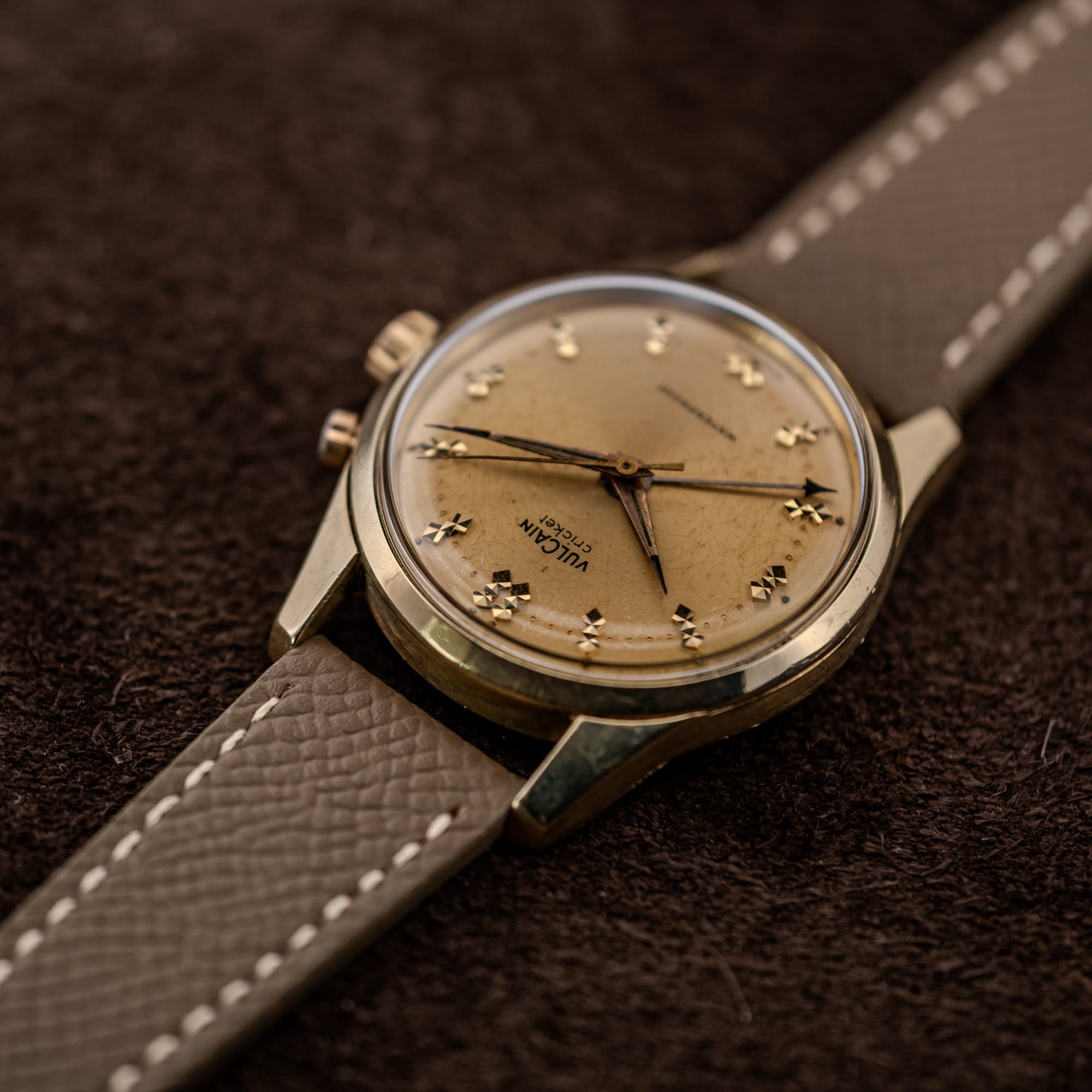
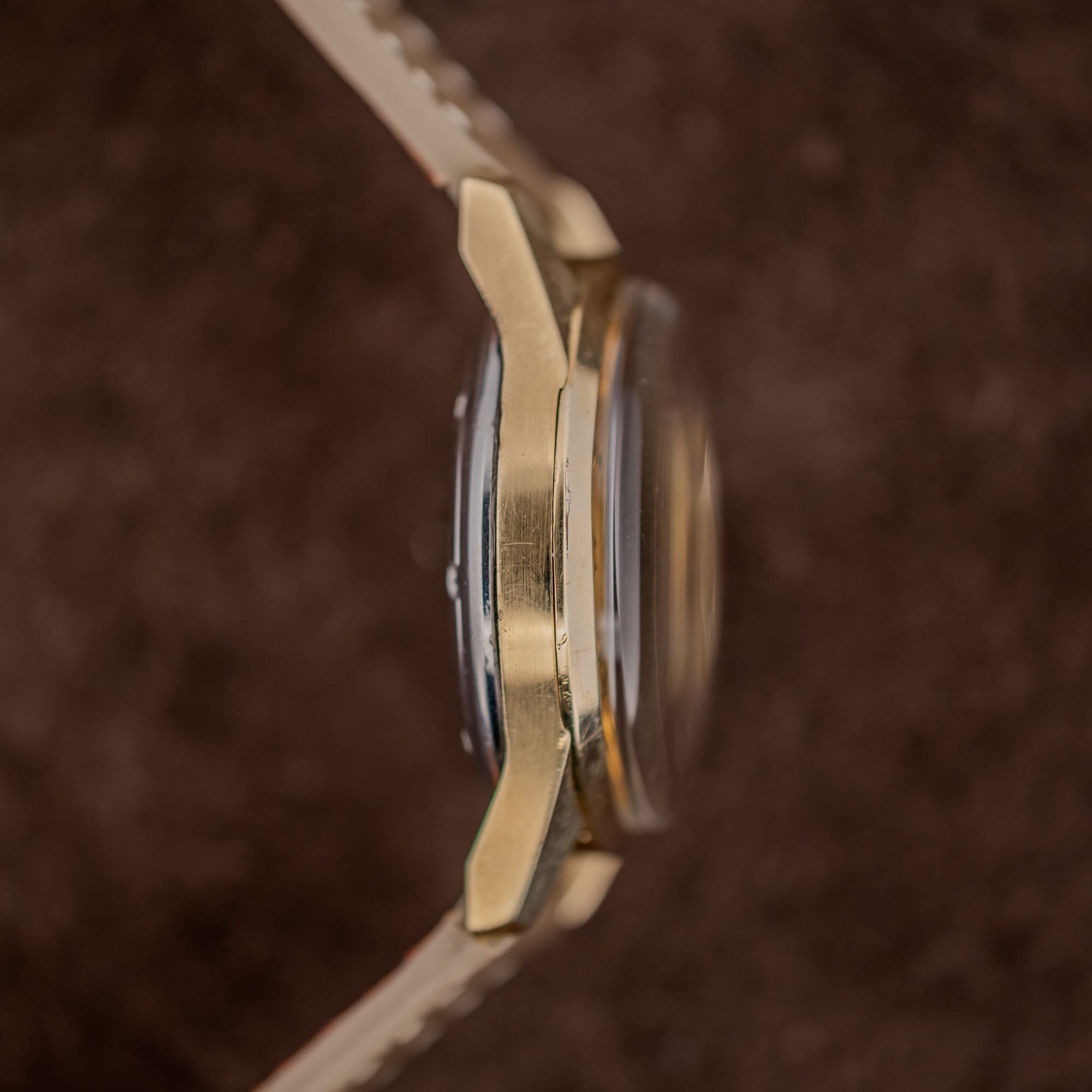
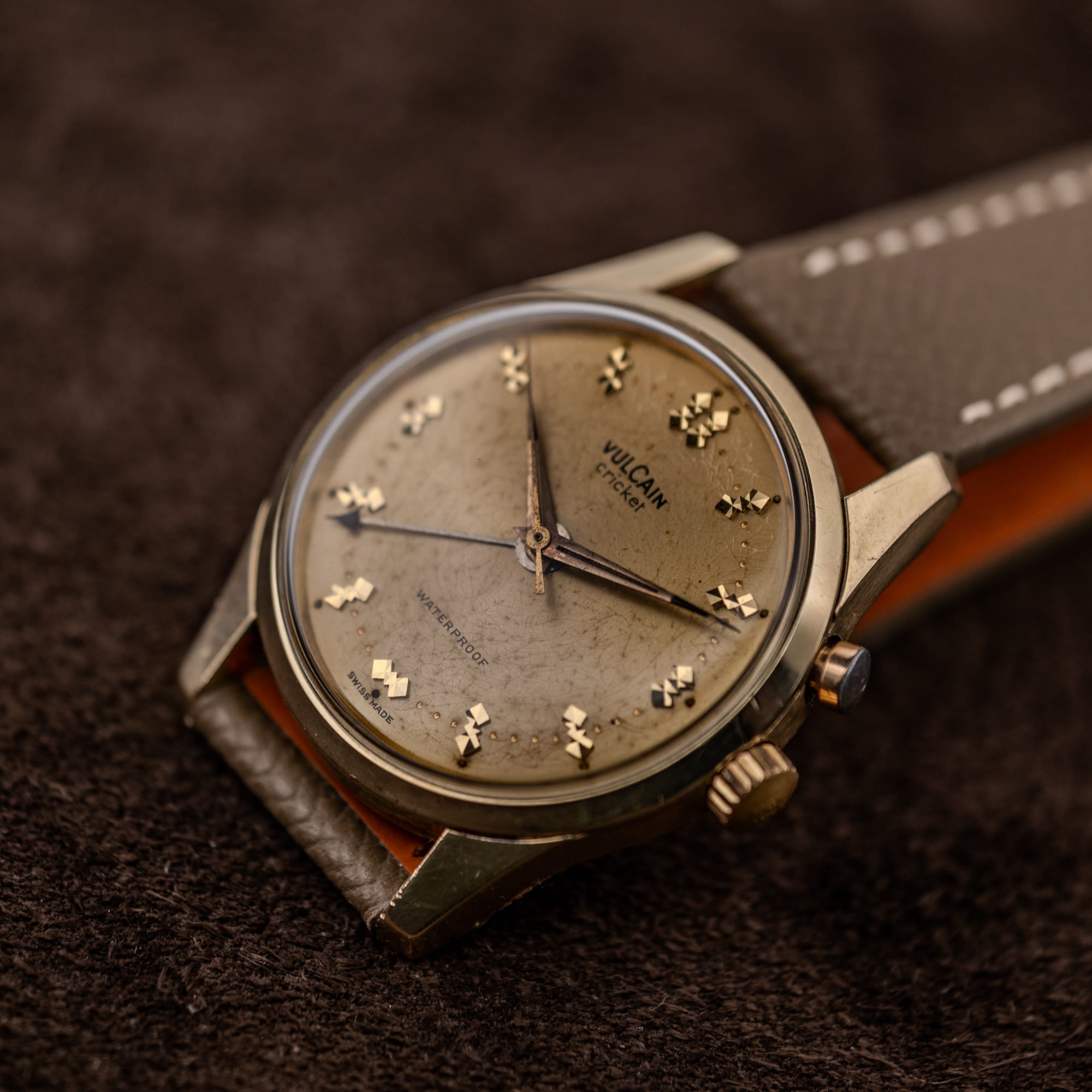
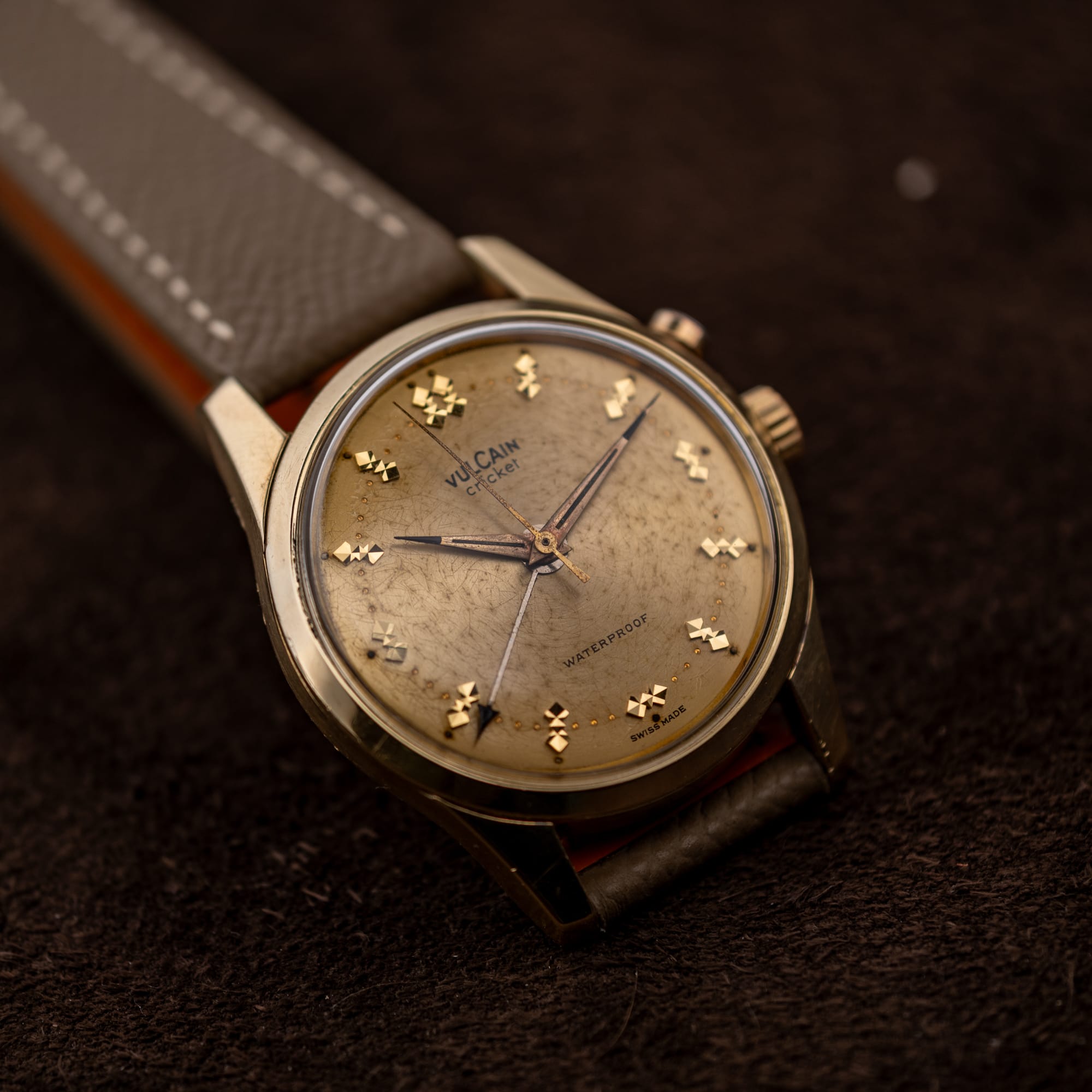
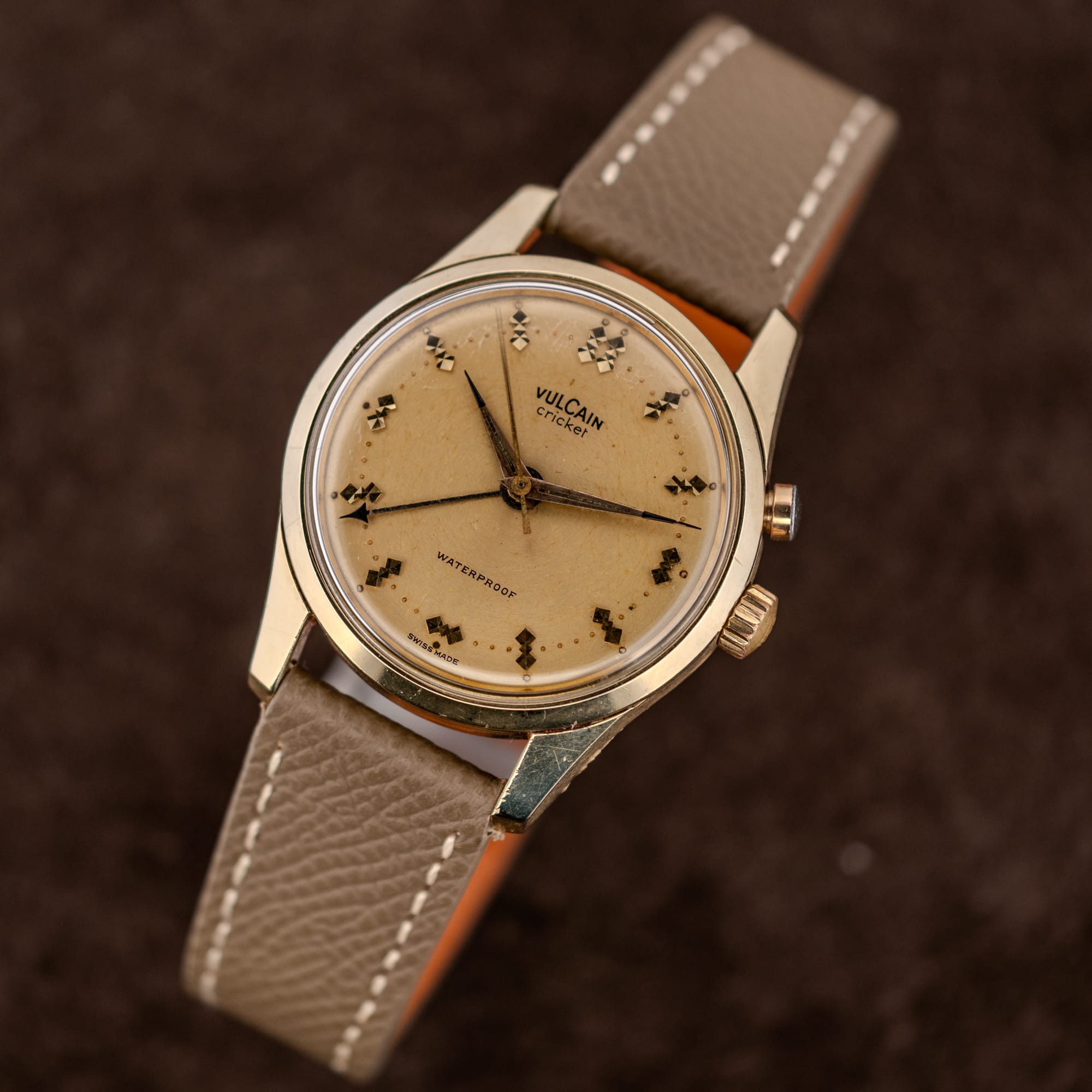
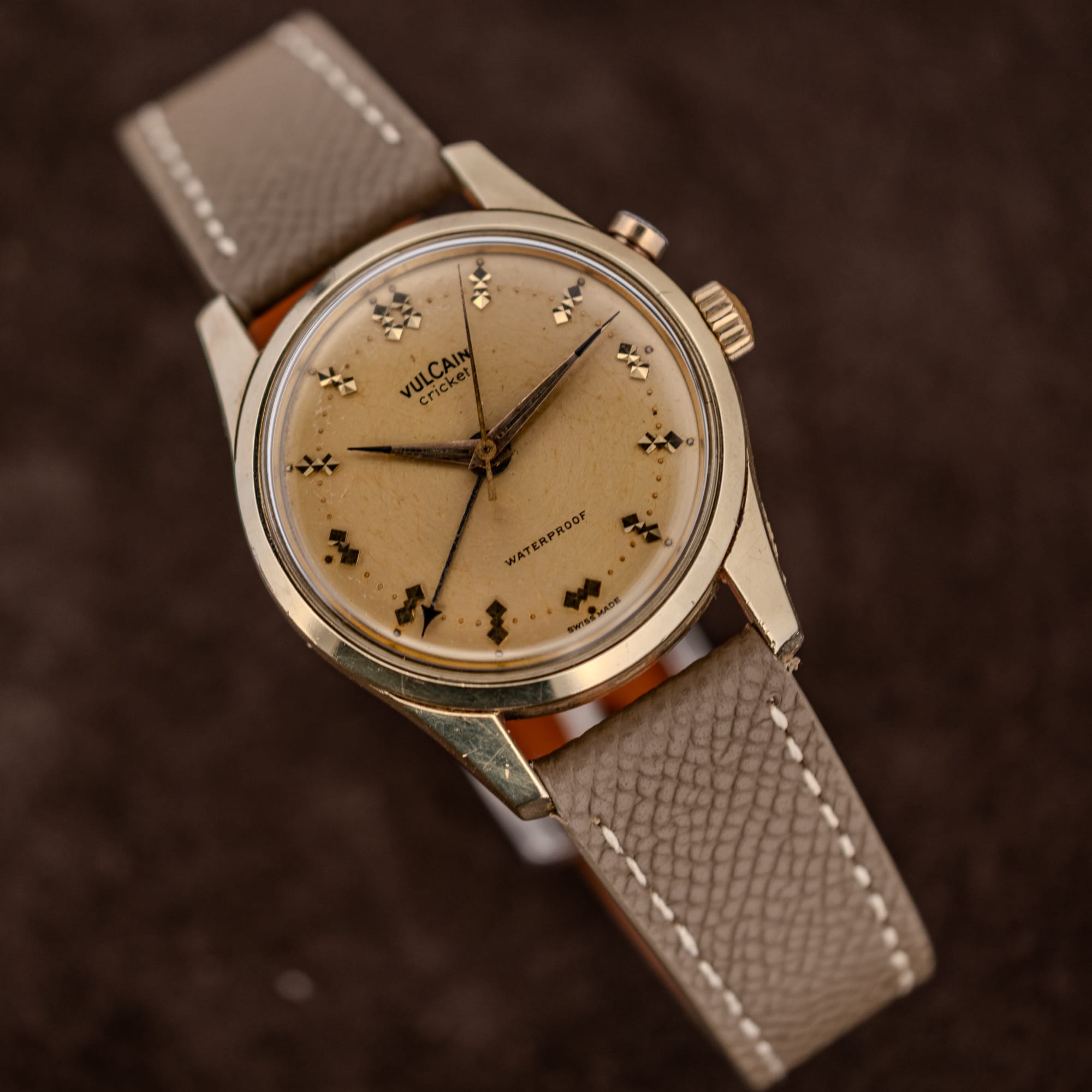
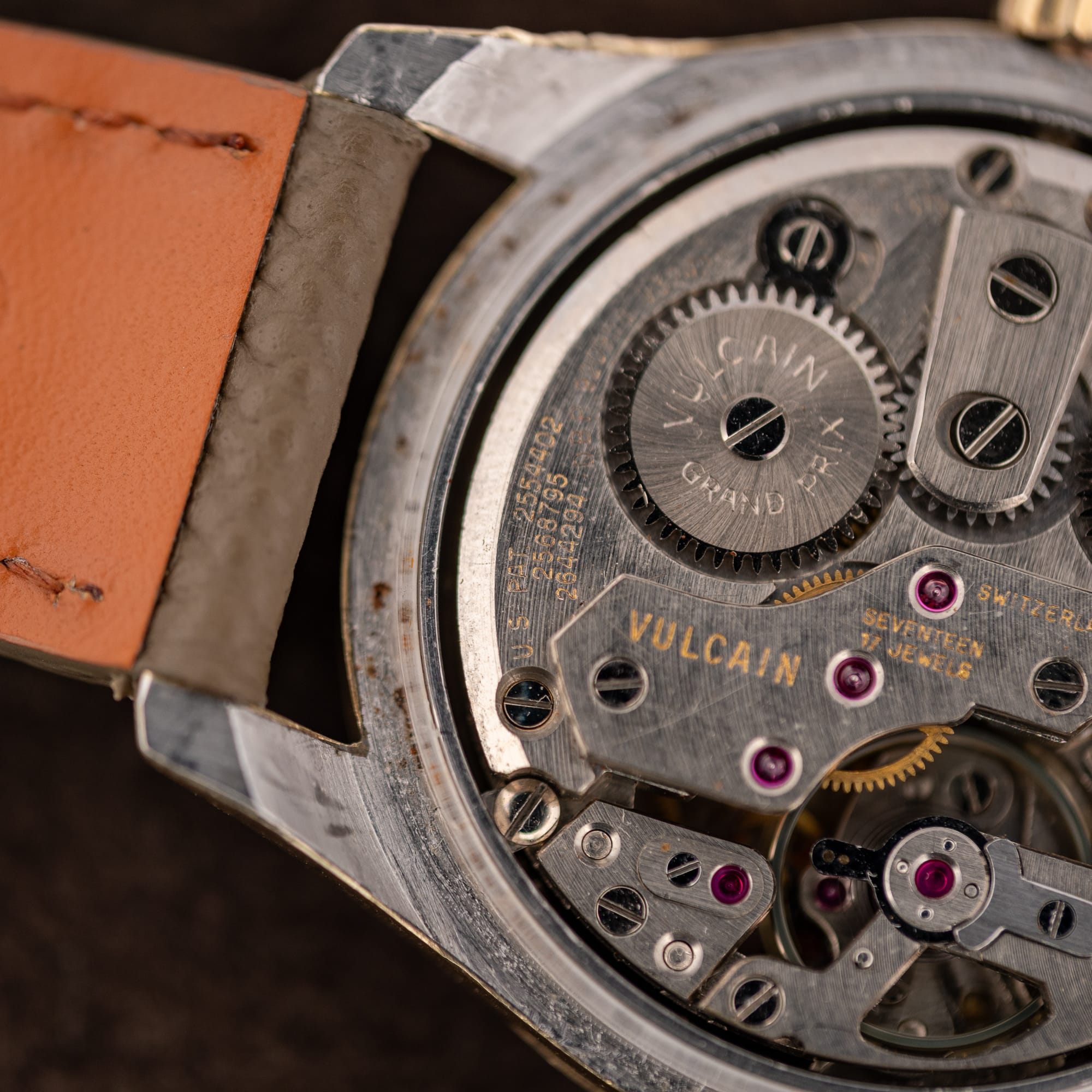
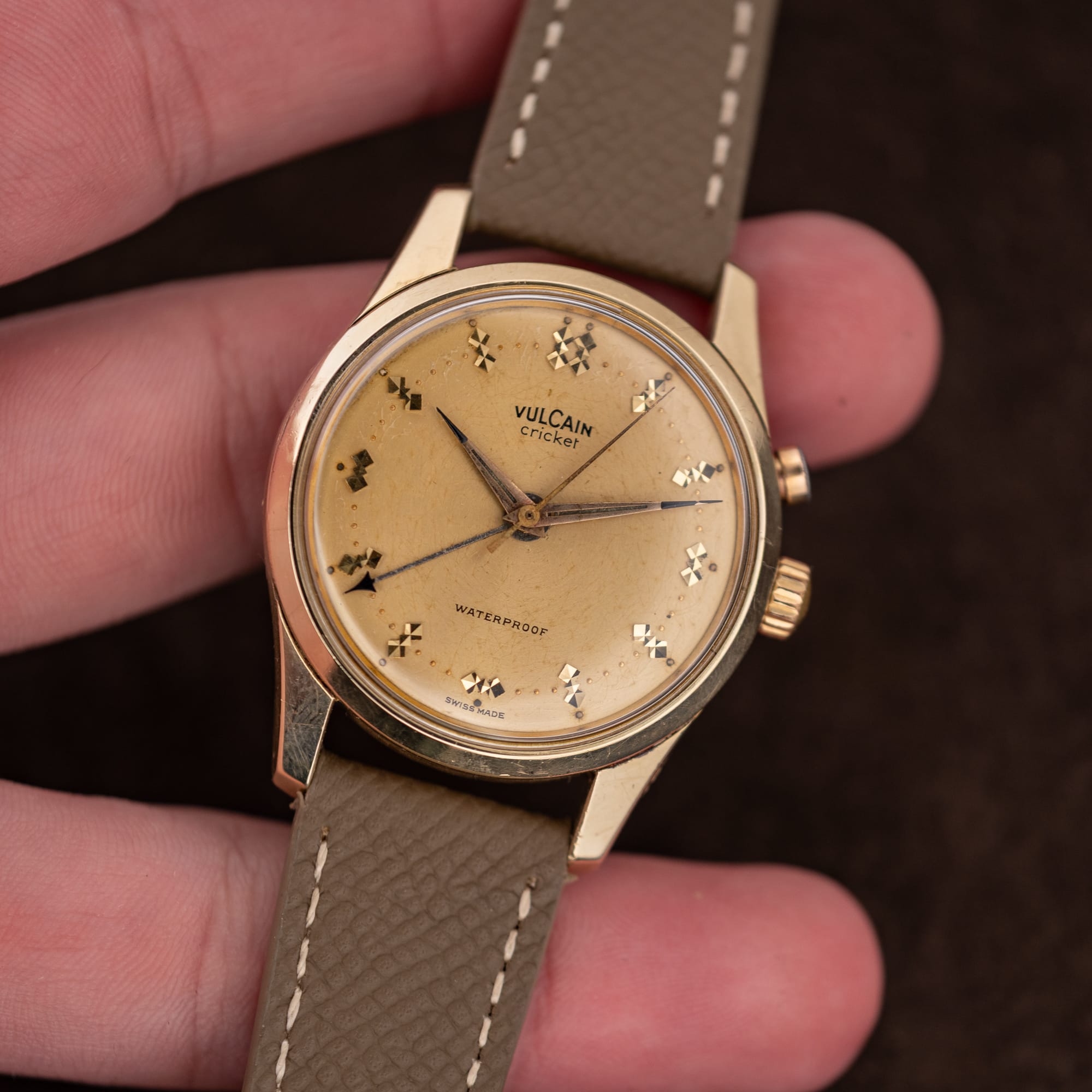
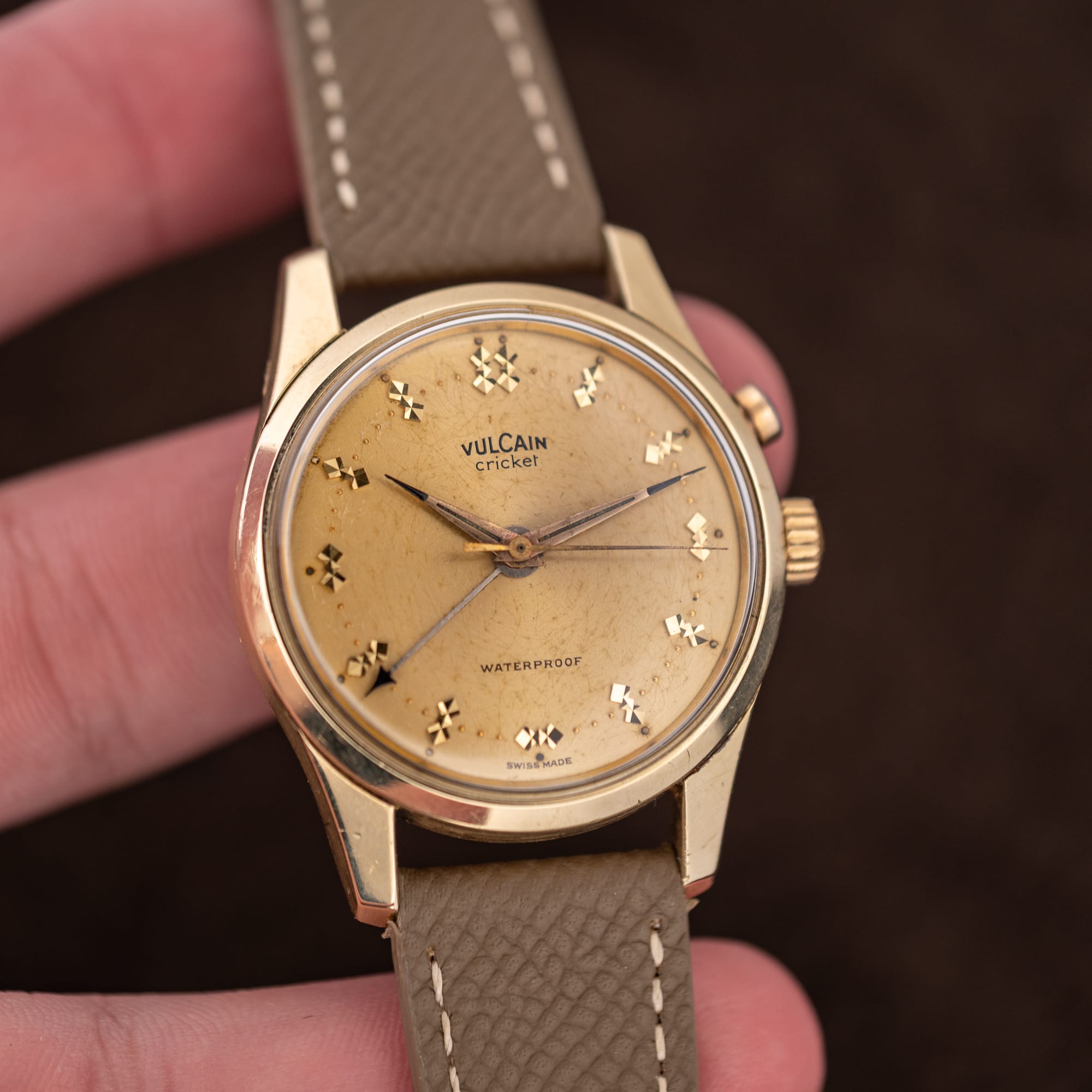
Inside this one is the movement that started it. Calibre 120 is the original Cricket movement, hand-wound, seventeen jewels, its two barrels wound from a single crown that feeds the going train turning one way and the alarm turning the other, with the pusher above the crown controlling the alarm. This one still chirps when you set it. The bridges are signed GRAND PRIX, which gets read as a calibre name often enough to be worth correcting. It is an award: Vulcain took the Grand Prix at the 1929 Barcelona world’s fair and kept the honor on its movements for decades afterward. The case is 14k gold capped over stainless steel at 34.2mm, and between that movement and this case we place it in the late 1940s to mid 1950s.
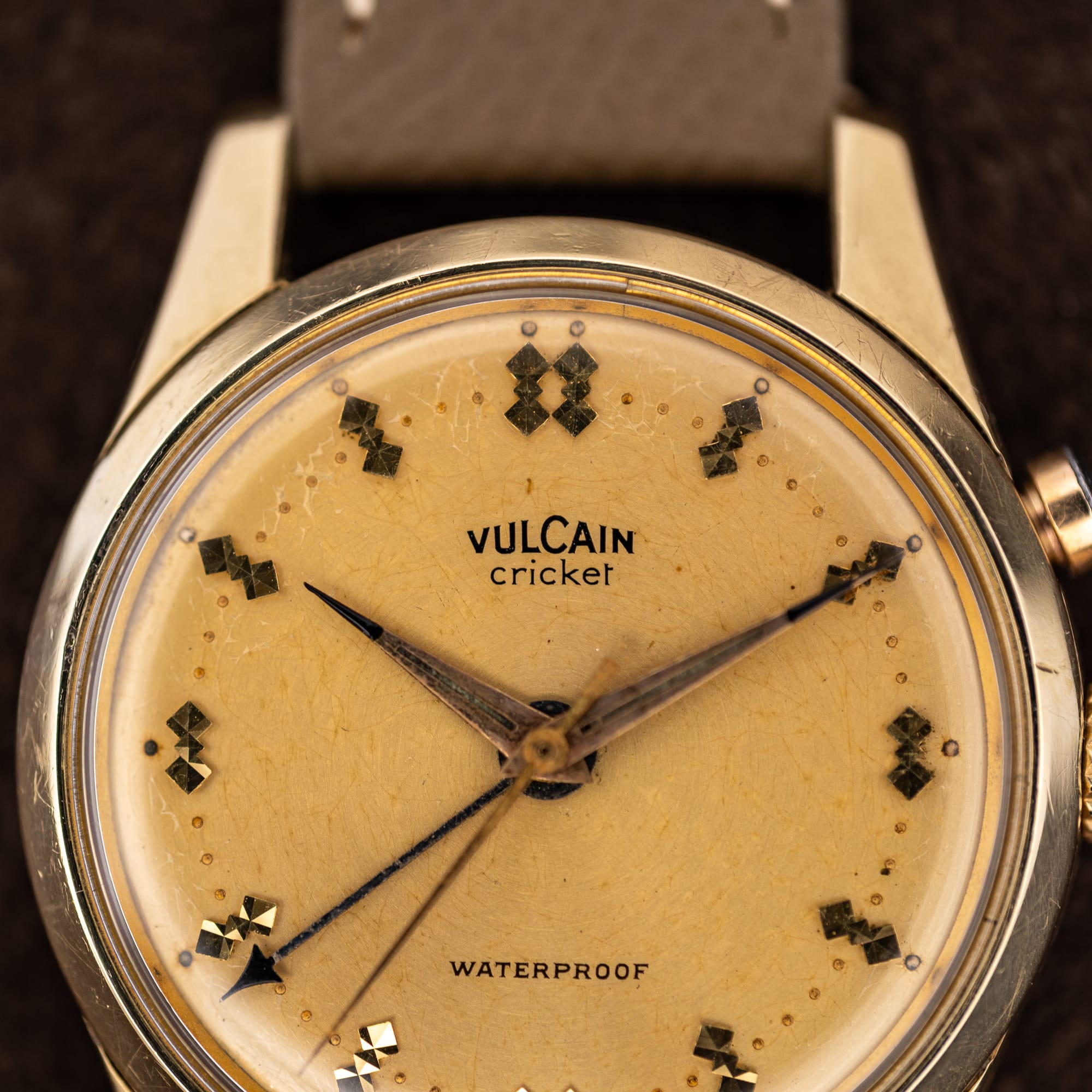
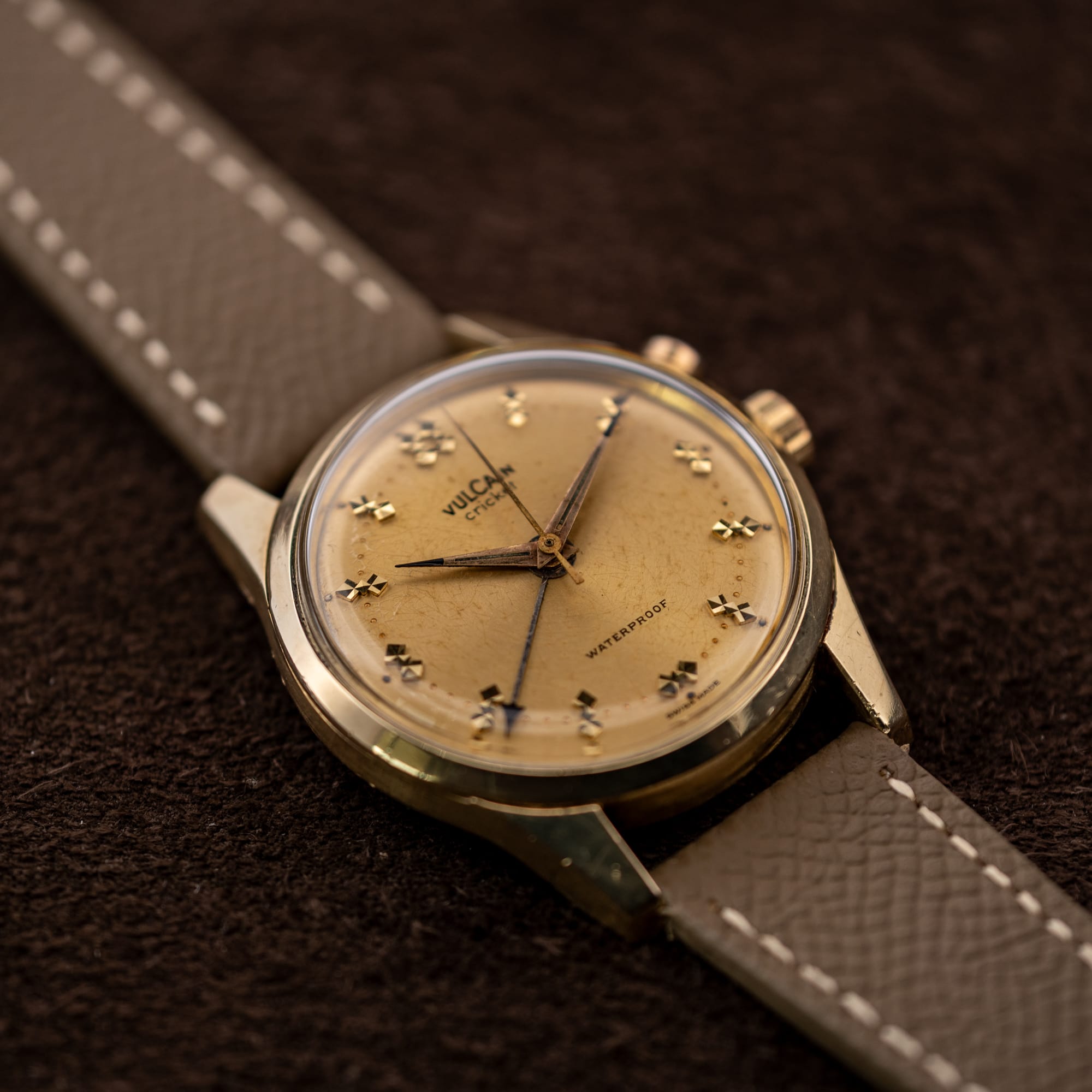
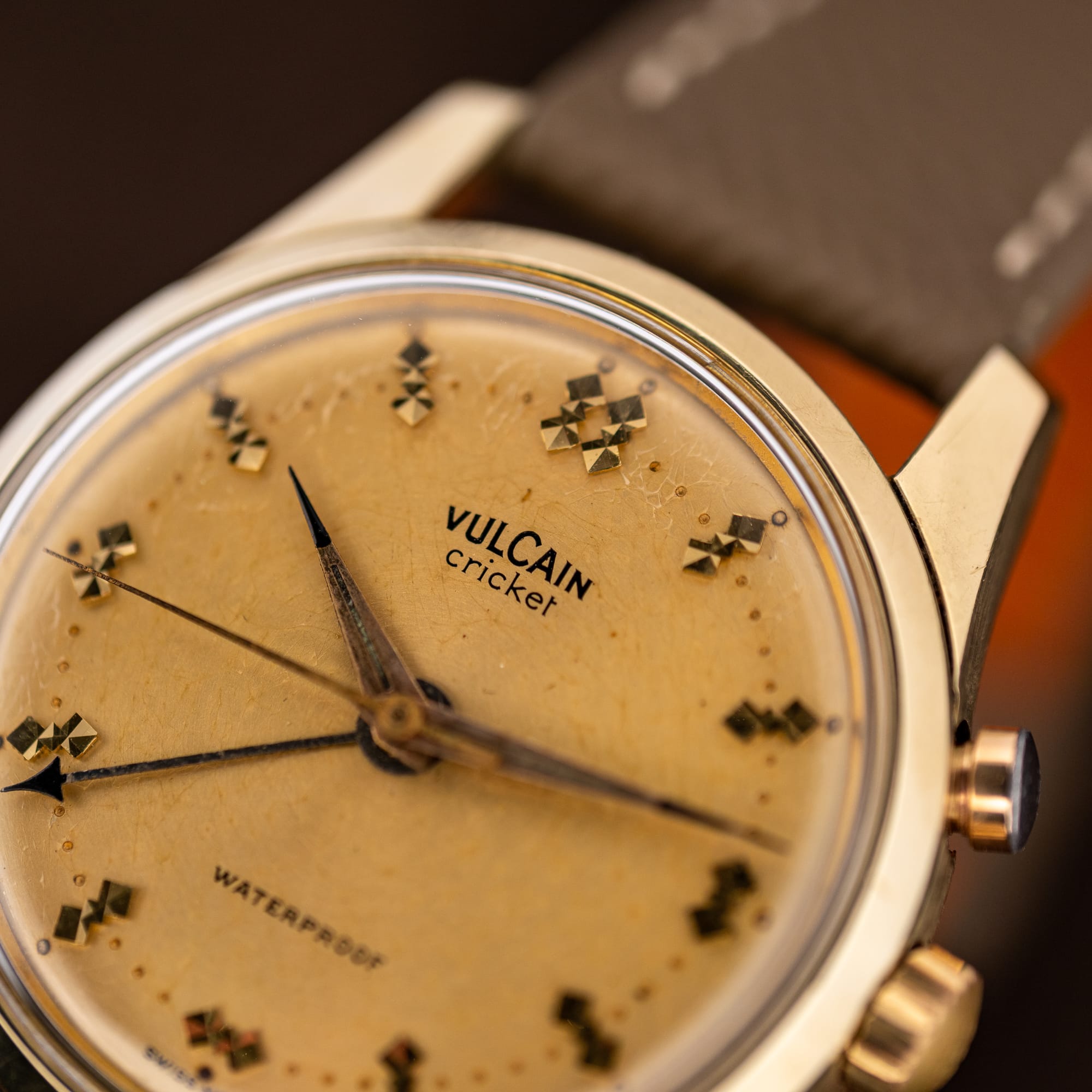
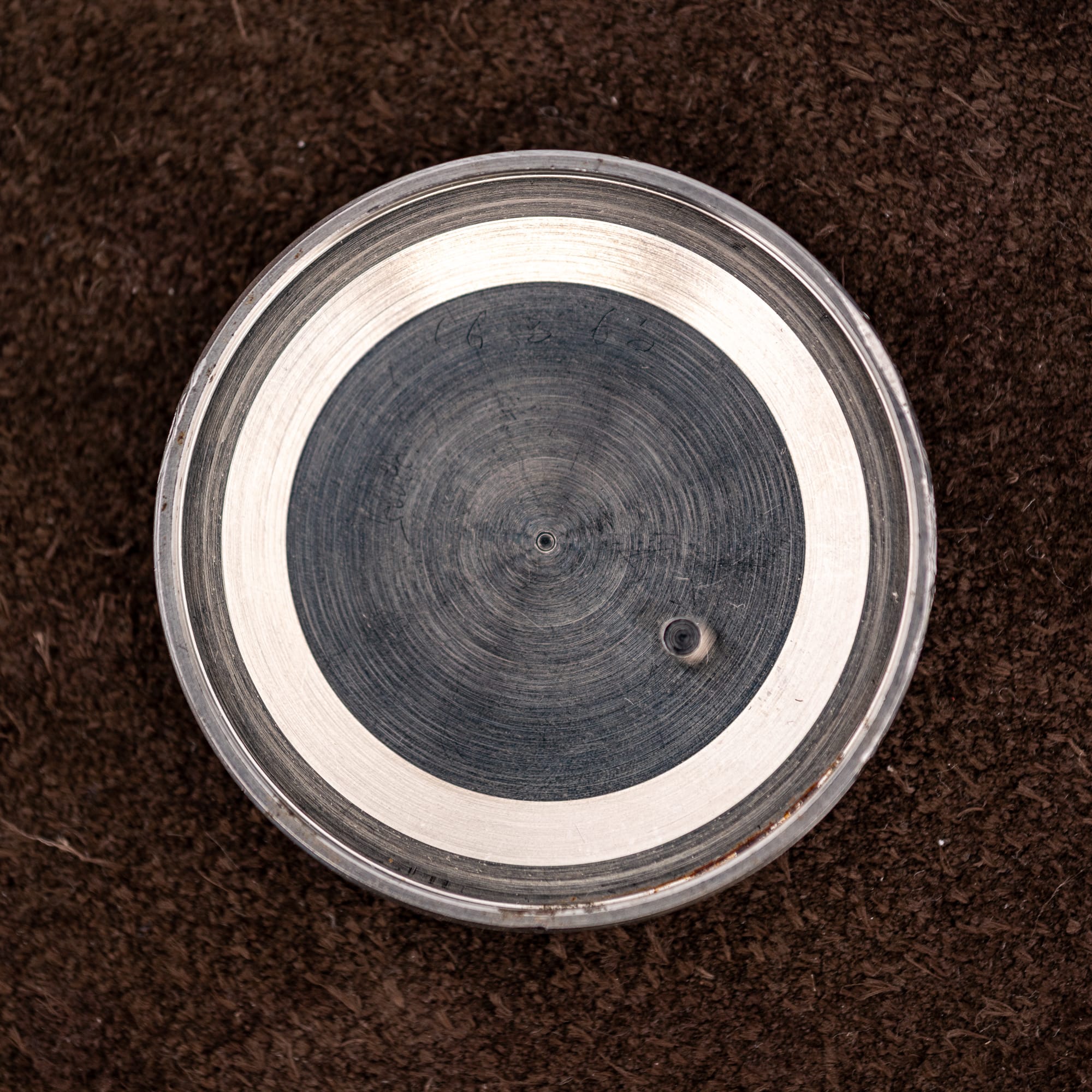
Seventy-odd years have left a great deal on this vintage Vulcain Cricket, and the champagne dial carries most of it. Heavy crazing and crackling run across the surface under a warm patina, it is the first thing anyone will see, and we have left every bit of it alone. The applied faceted markers and the printing came through intact. The gold cap is worn through to base metal along the lower right of the case and around the lugs, and the dauphine hands have gone dark with tarnish. The domed acrylic has collected its share of scratches. The crown is signed, its lettering softened by wear. Inside the caseback are handwritten marks, one still readable as 6362, the sort of record a watch of this age accumulates.
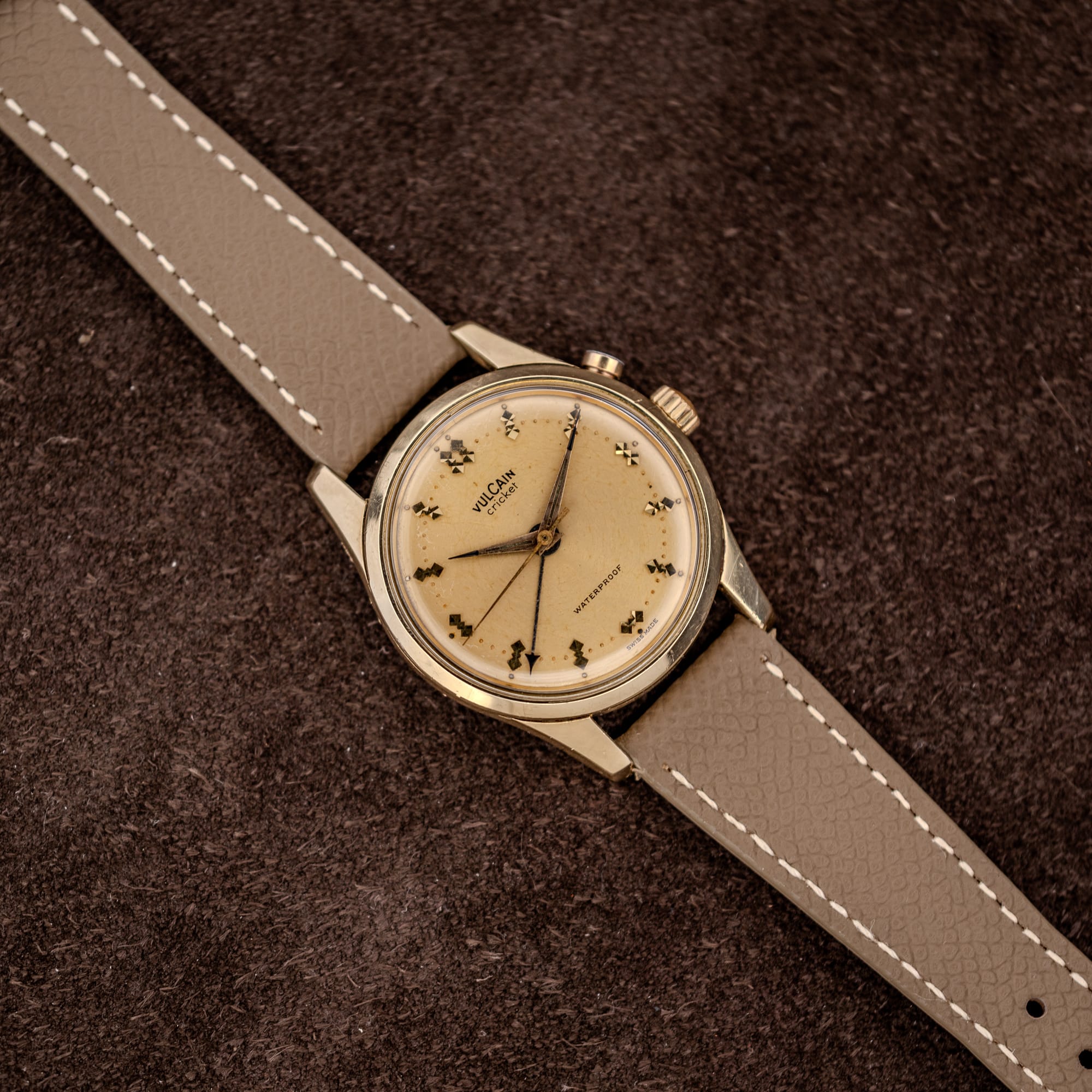
Serviced in-house at OTTUHR and backed by our 2-year mechanical warranty, on a taupe Saffiano leather strap with our own buckle. Vulcain built the sound box, the twin barrels and the patents. The cricket got there first.