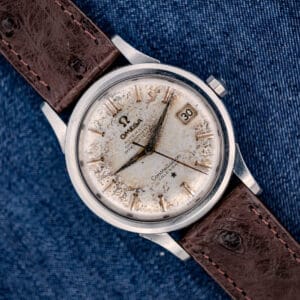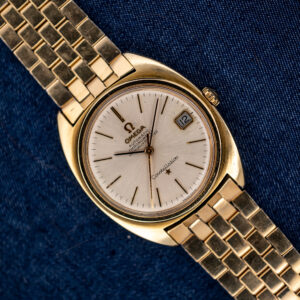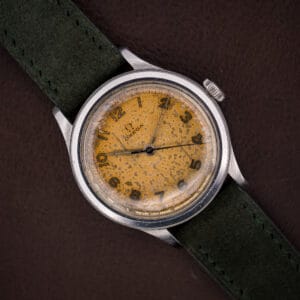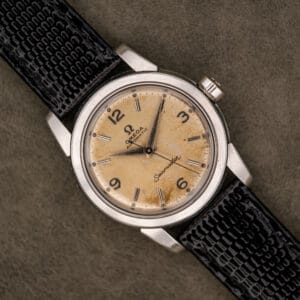
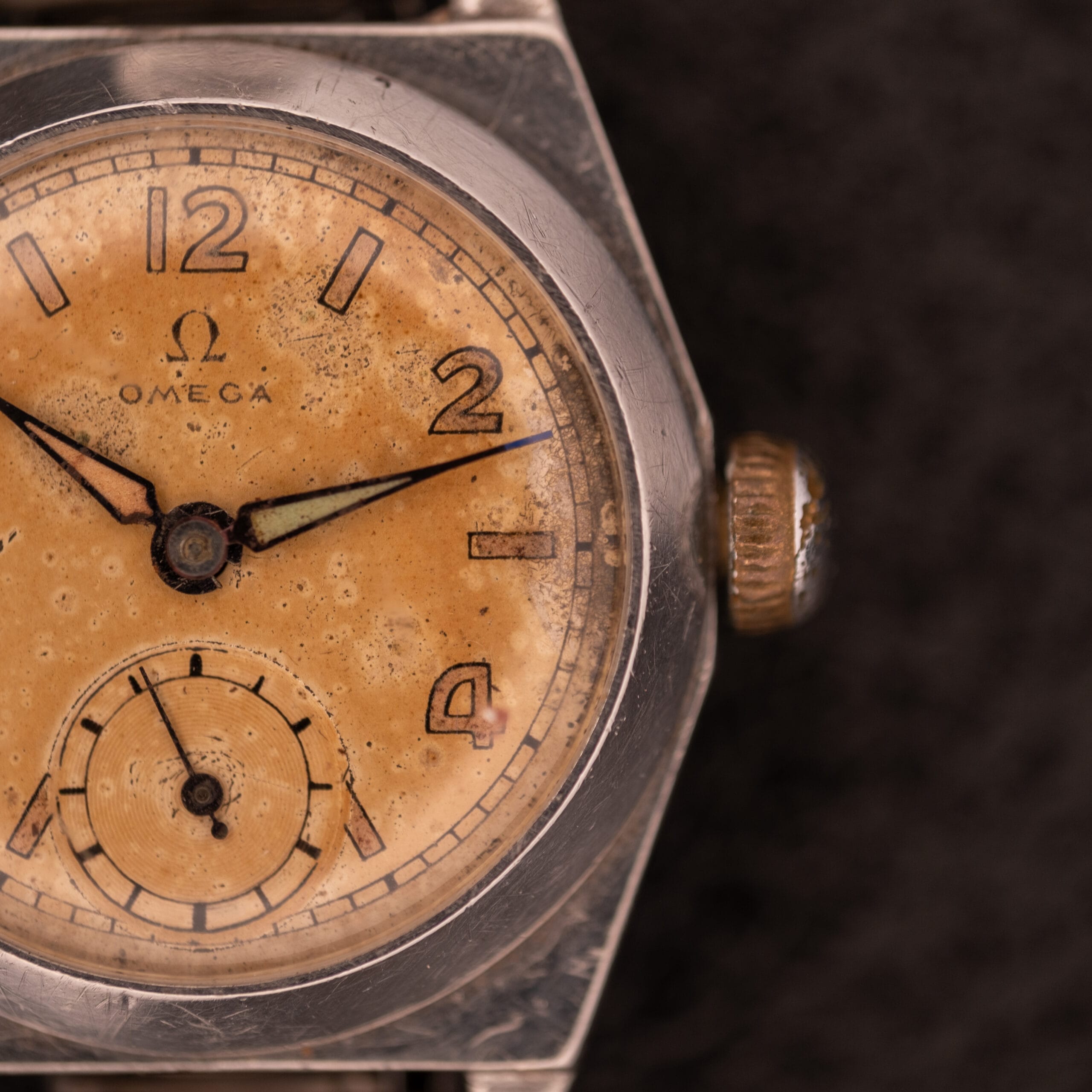
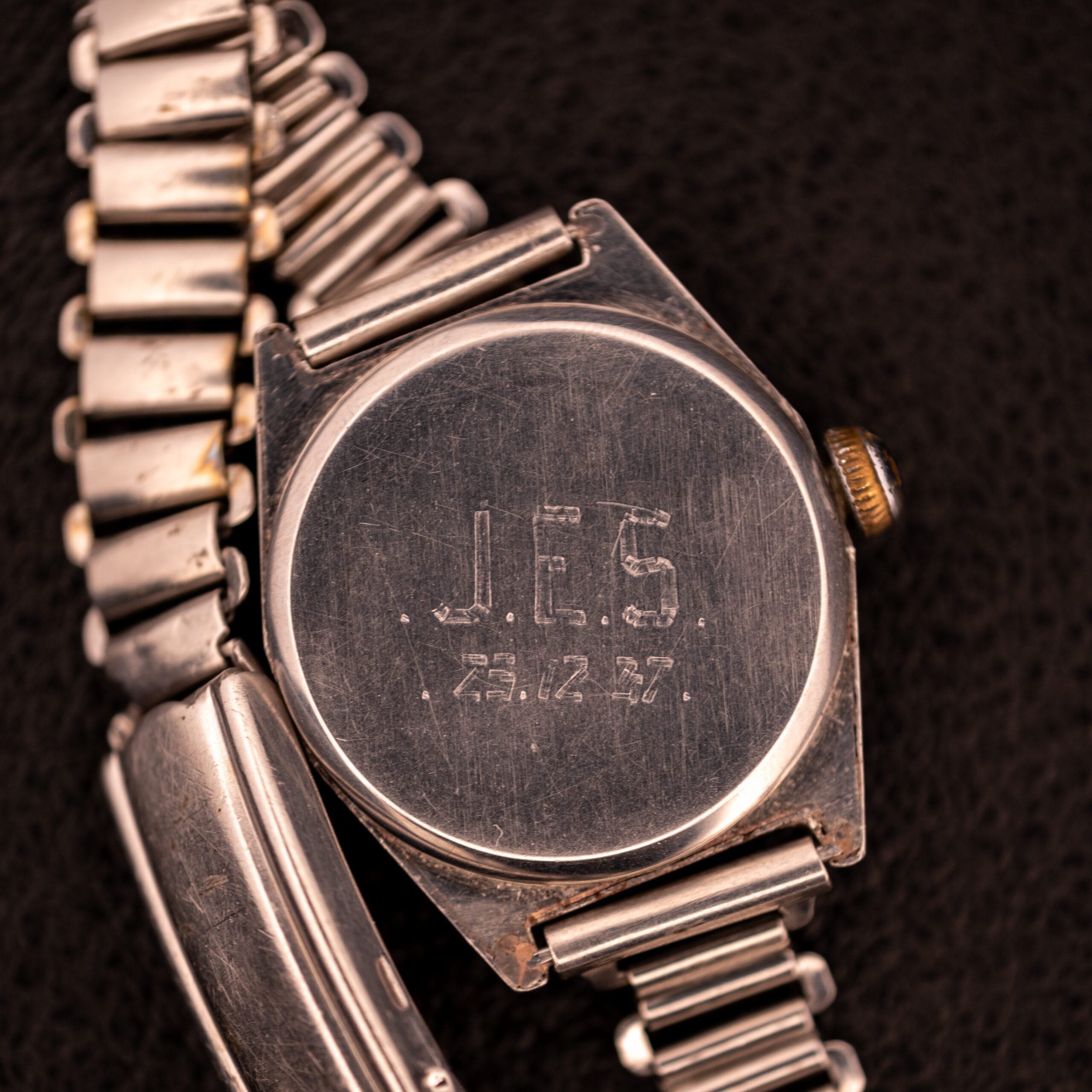
J.E.S. 23.12.37. Two short lines hand-engraved on the back of this Omega Trench Watch, two days before Christmas of 1937, and probably the reason the watch survived at all. To us, the inter-war trench wrist-watch is one of the most overlooked categories in vintage Omega collecting, and a provenance-engraved example like this 1936 cushion-case piece carries a weight that polished, anonymous survivors never quite manage. It is the kind of watch that sat in a desk drawer for ninety years because someone loved the person who gave it to them, and that history is now permanently inscribed into the steel.
The “trench watch” itself traces back to the British army officers’ wristwatches of the First World War, but by the mid-1930s the category had evolved from raw utility into something closer to refined dress-with-purpose. Omega had spent the previous decade reorganizing production at Biel and rolling out a new generation of small calibers built for the modern wrist rather than the pocket. The Cal. 23.4 that powers this Omega Trench Watch is a product of that program. Introduced in the mid-1930s as a 23mm sub-seconds manual-wind, the 23.4 became one of the architectural ancestors of the celebrated 30mm caliber family that would carry the brand through the post-war decades. In our opinion the 23.4 is one of the quietly important small calibers in Omega’s pre-war catalog, and a 1936 example sits at the very front of its production run.
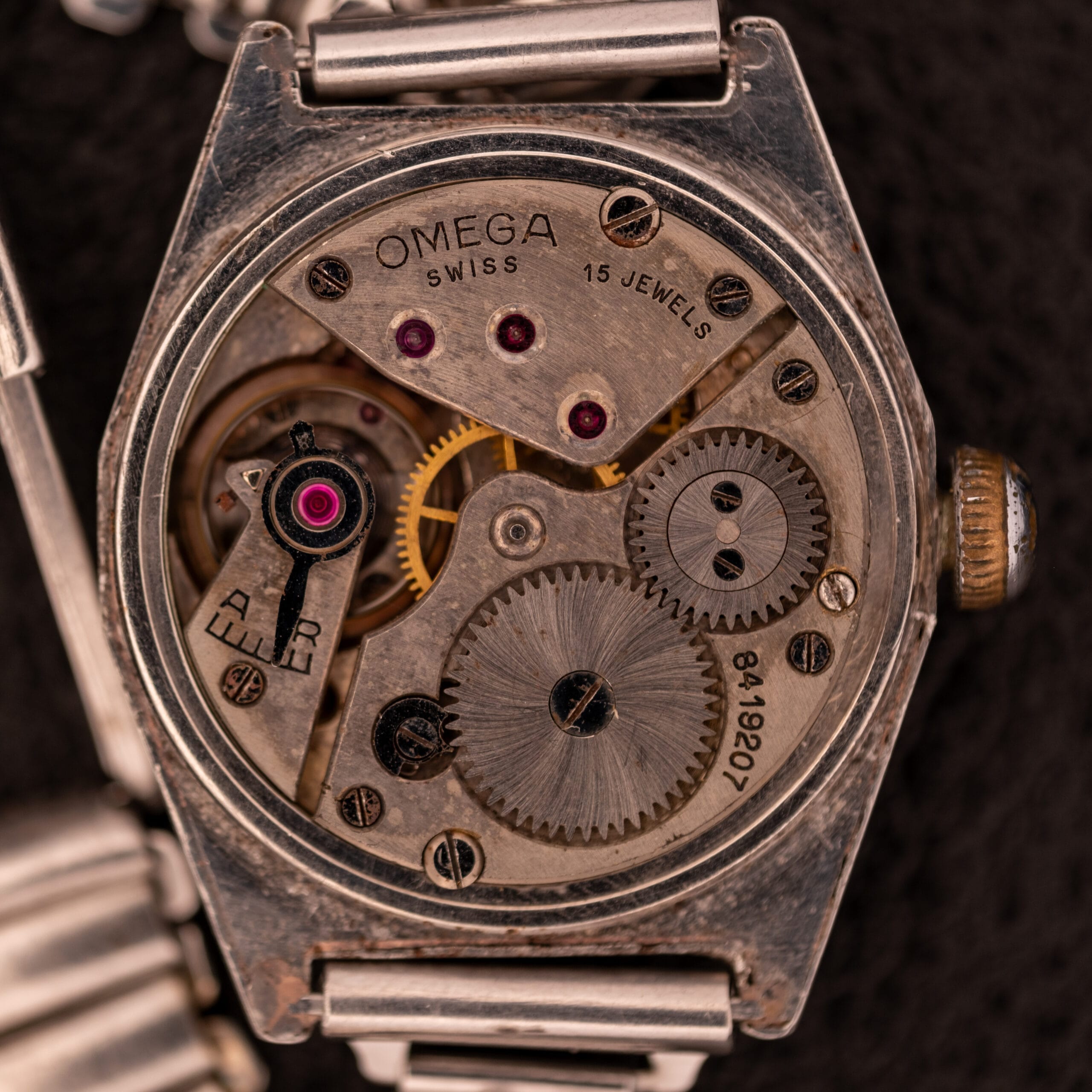
With the caseback removed you can see the bridge stamped “OMEGA SWISS 15 JEWELS” in the upright serif of the period, with serial 8419207 punched into the lower plate. The architecture is exactly what an early Cal. 23.4 should show. A triangular jewel bridge anchors the train, the ratchet and crown wheels stand proud at the top, and the balance runs open in its cock without any shock protection of any kind, which is consistent with mid-1930s Swiss manufacture before Incabloc had spread through the industry. The plates show light tarnish and honest age, but every part is original.
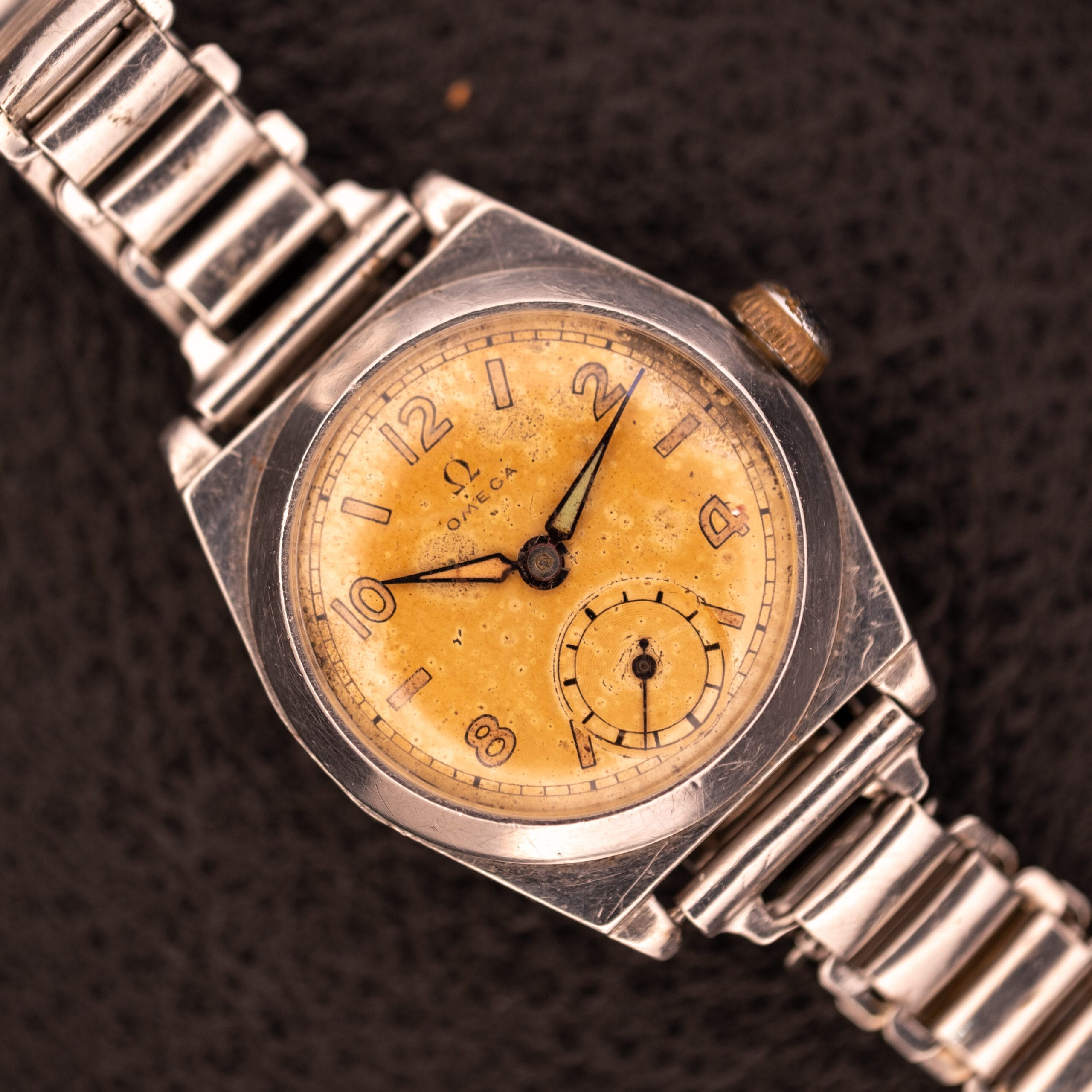
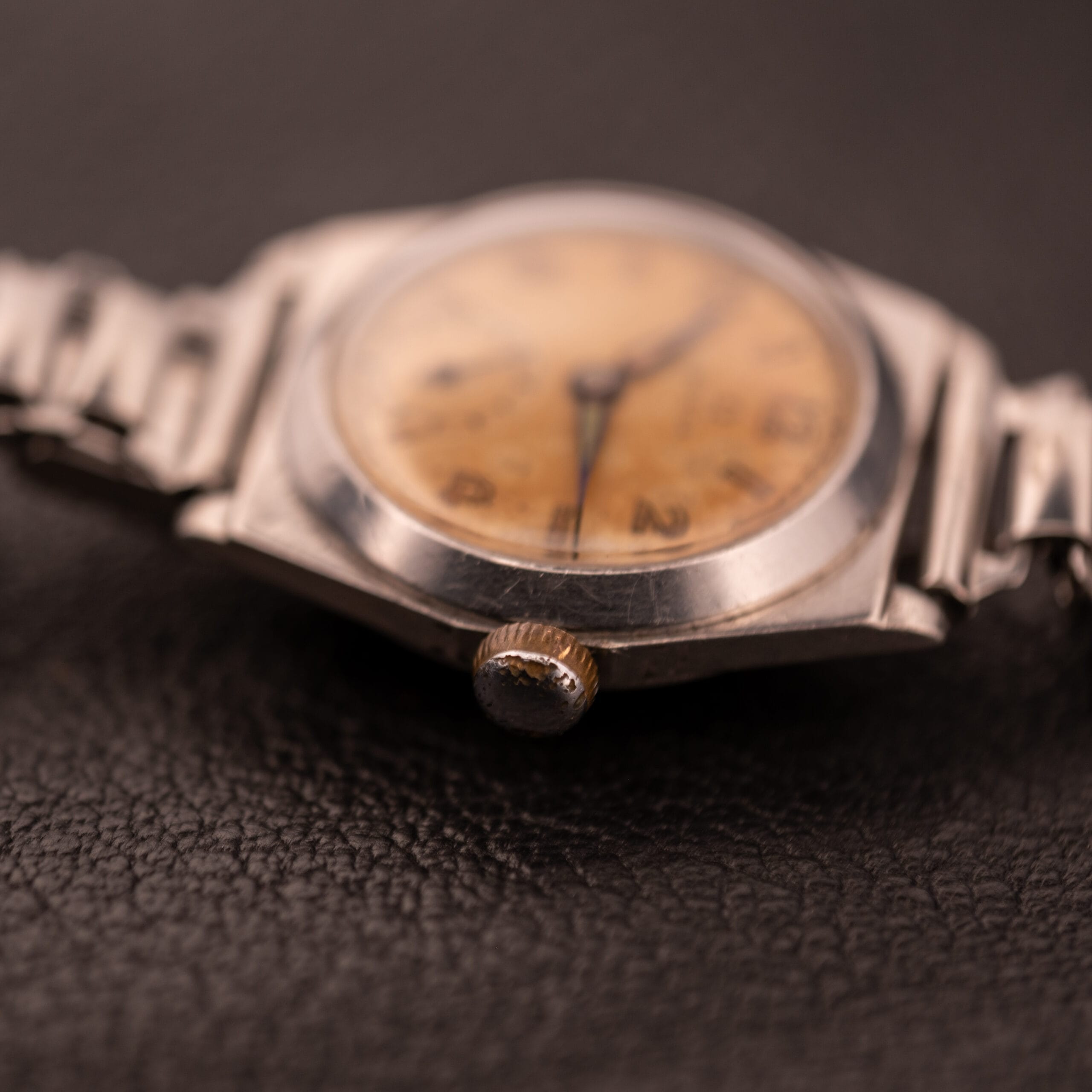
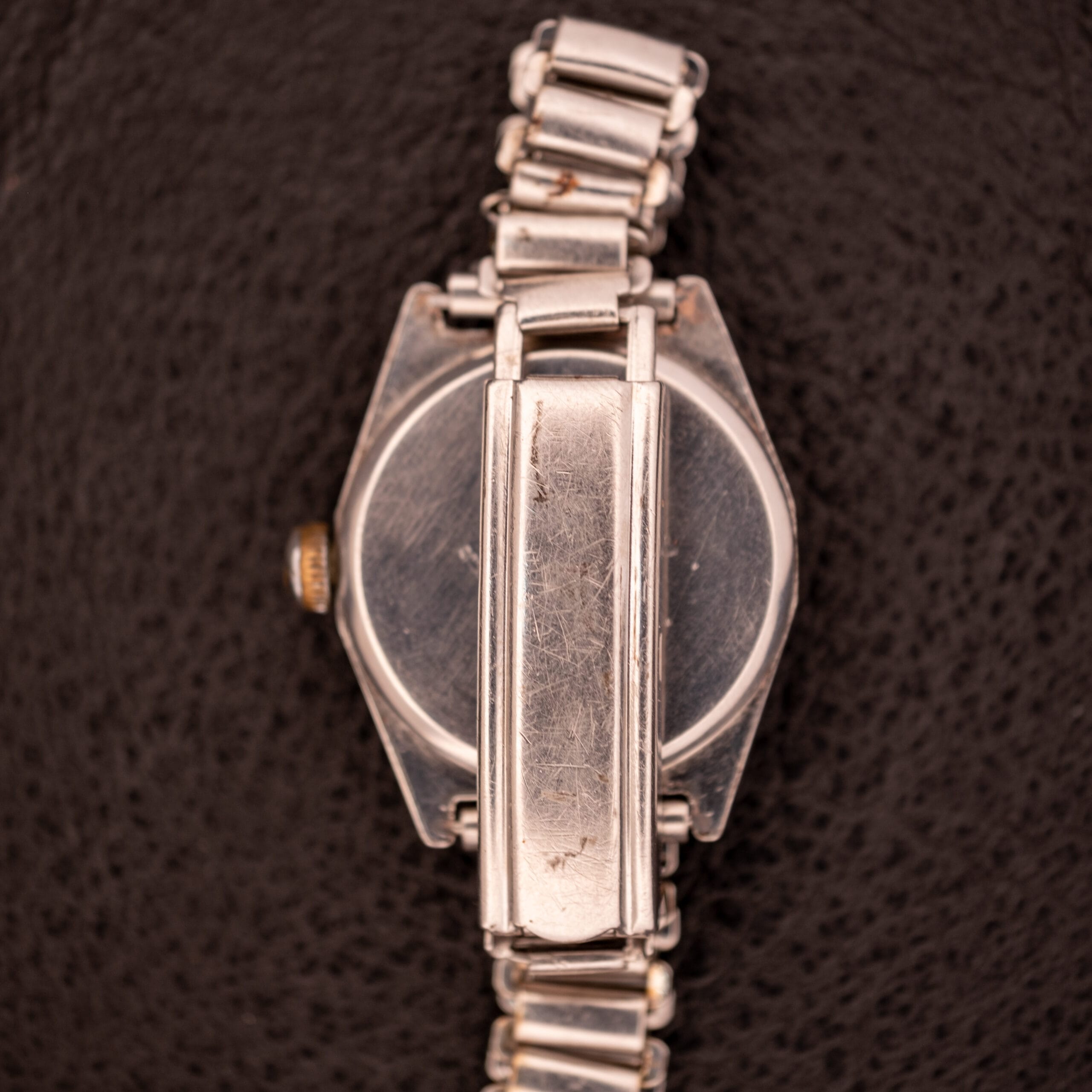
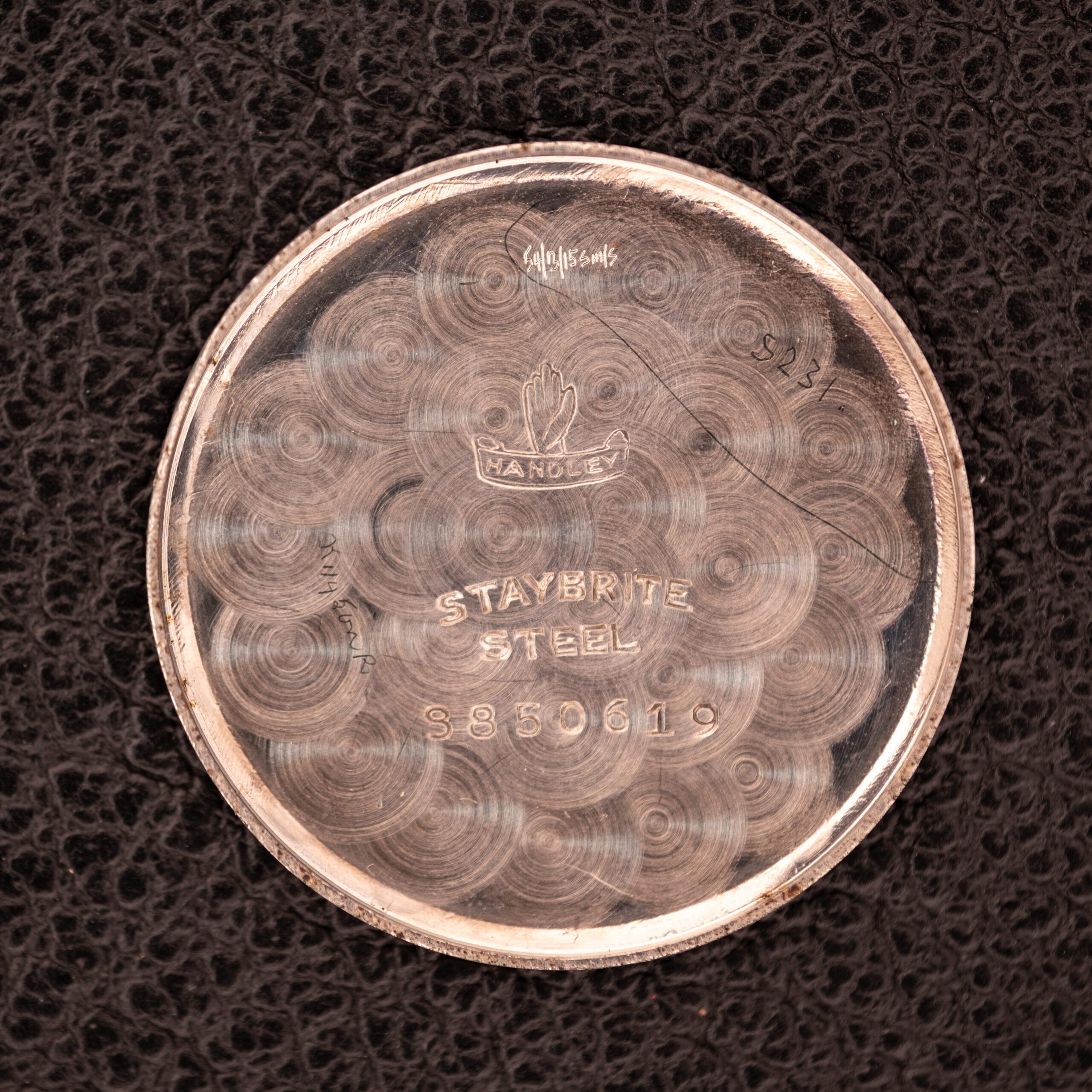
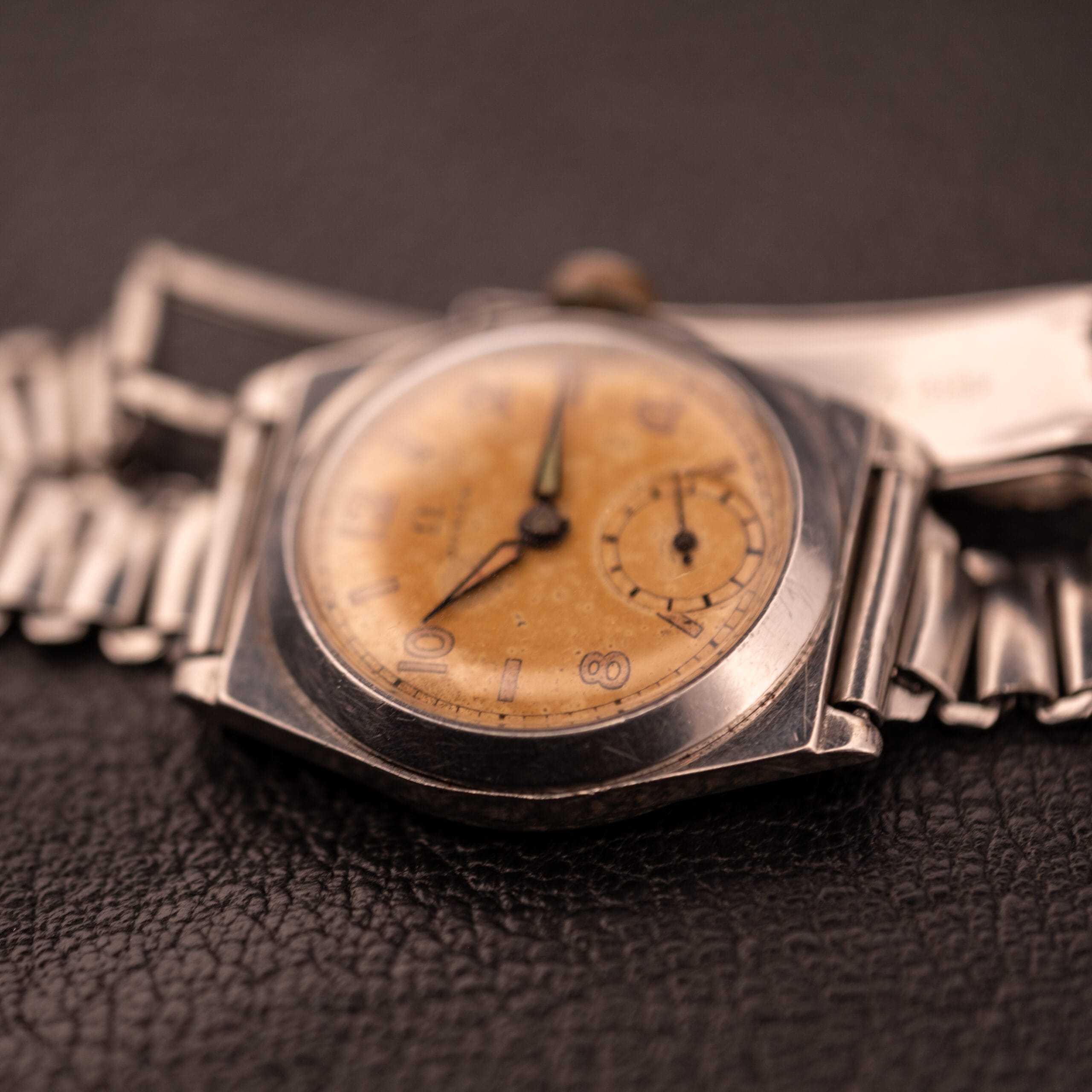
The case is the other headline. It is a cushion-form in stainless steel, with sharply angled integral side-tab lugs of the kind that bridge the early trench-watch silhouette and the rugged field-watch geometry of the following decade. The inner caseback is stamped with the hand-and-cuff emblem of the Hadley case-making firm, alongside “STAYBRITE STEEL” and serial S850619, with a finely engine-turned concentric pattern covering the inside surface. Staybrite was Firth-Vickers’ high-chromium stainless alloy, a luxury material in the 1930s before stainless was the default everywhere, and a Hadley Staybrite case on an Omega Cal. 23.4 movement is a strong indicator the watch was cased for the British market. The outer caseback carries the engraving “J.E.S. 23.12.37.” in serif capitals, hand-cut and now softly worn down with the rest of the case finish.
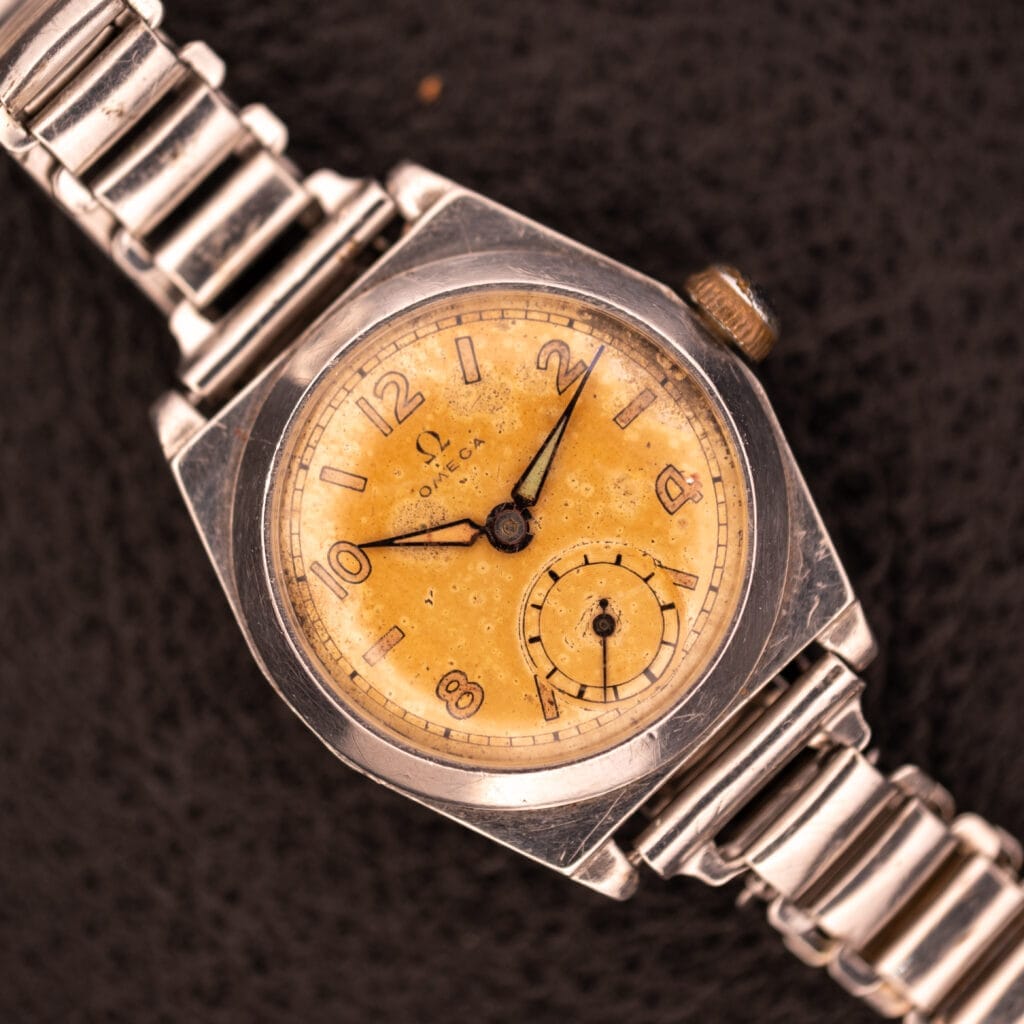
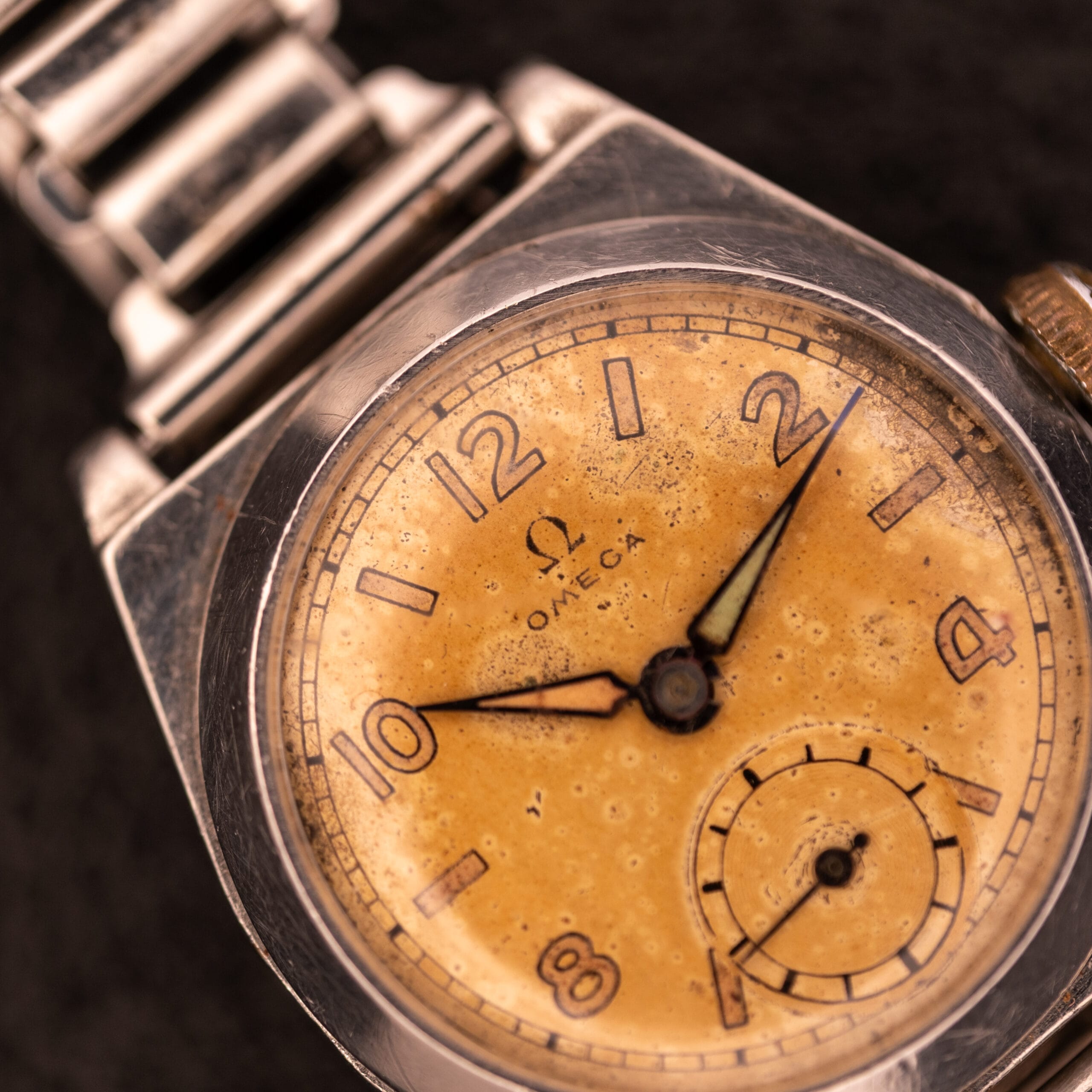
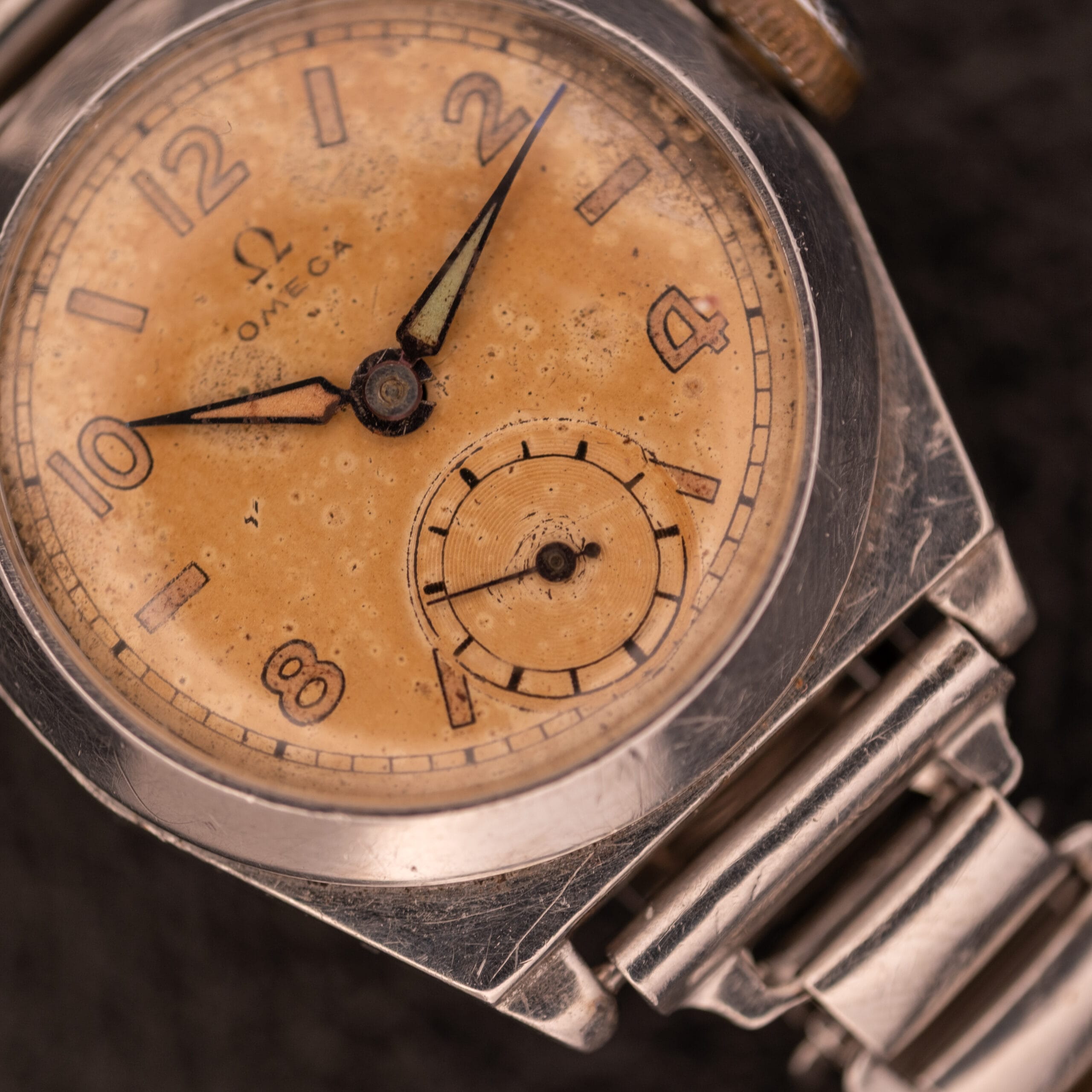
The dial is doing what time-only Omega dials from the 1930s are supposed to do at ninety years old. What would have started life as a silvered or cream surface has aged into a warm tobacco patina, deeper at the periphery and lighter toward the center, with a fine mottled spotting that no service dial would ever replicate. Arabic numerals at 12, 2, 4, 8, and 10 sit applied to the surface, small batons mark the intermediate hour positions, and a pencil-thin minute track wraps the perimeter. Dauphine hands sweep across the dial with their original lume channels now oxidized to dark brown, and a sub-seconds register at six o’clock breaks the lower half with a finely snailed pattern of its own. The Omega Ω symbol and the “OMEGA” wordmark sit centered below twelve, exactly where they should be on a watch of this era. The crystal above all of this is a domed acrylic, lightly hazed at the edges from decades of contact wear, and the crown is a fluted gold-tone onion shape that contrasts the steel case in a way that reads as either an early replacement or an original gold-plated fitting.
It comes presented on a period-correct stainless steel expansion bracelet that fits the trench-watch silhouette beautifully and tucks naturally under a shirt cuff. A handsome cordovan or aged calf strap on the fixed-lug attachments would also wear honestly here, if you would rather pull the watch out of its expansion-bracelet era and into something closer to a 1940s field-watch presentation.
Serviced in-house at OTTUHR and backed by our 2-year mechanical warranty, this Omega Trench Watch is for the collector who values the quiet weight of a hand-engraved gift watch over polished, anonymous, period-correct survival. To us, the 23.12.37 engraving is not damage to a caseback. It is the reason this watch exists at all in 2026.