

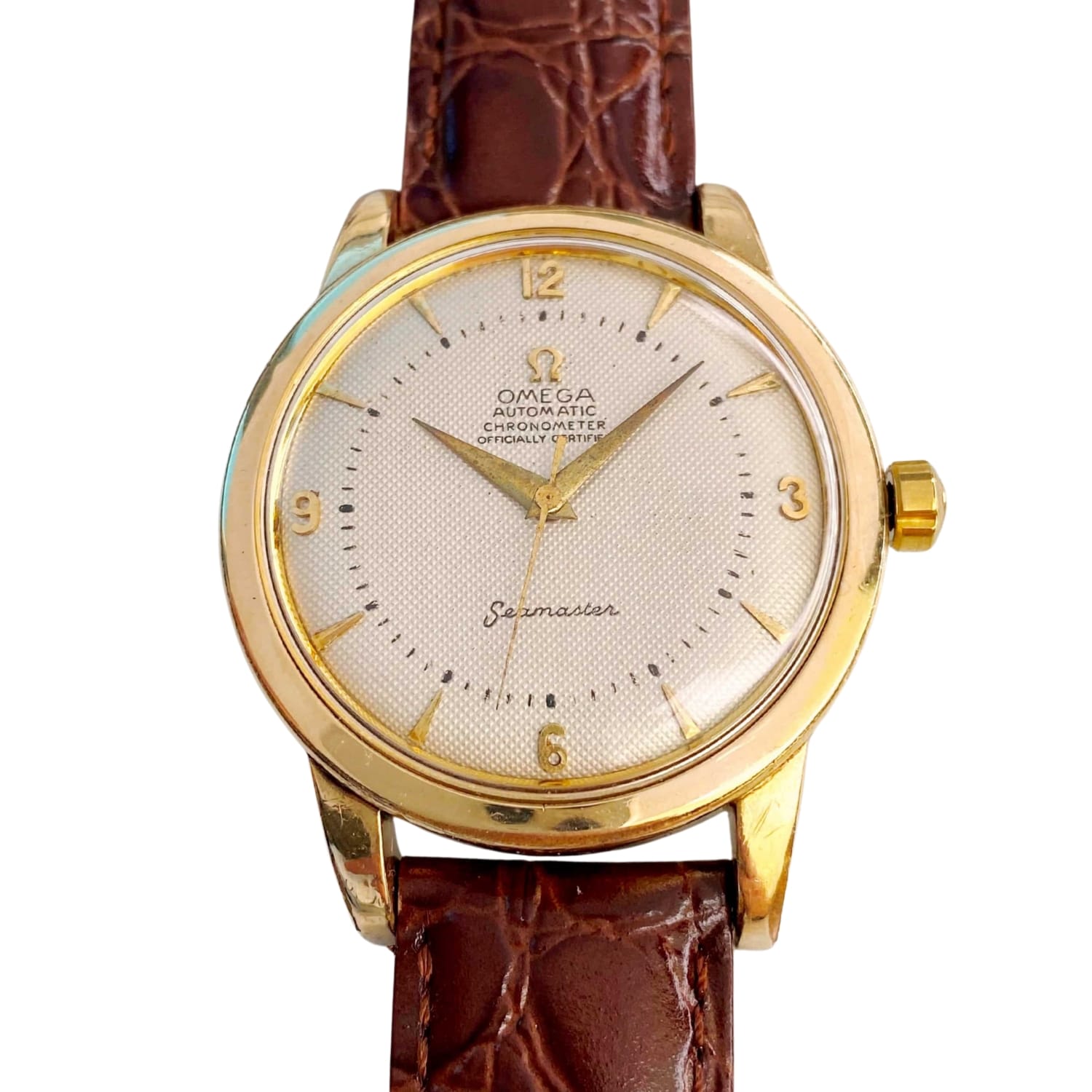
The Omega Seamaster reference 2494 represents a significant chapter in Omega’s post-war horological evolution and stands as one of the most desirable vintage Seamaster references among collectors today. Produced during the golden age of Swiss watchmaking from approximately 1949 to 1958, the 2494 distinguished itself through its “Jumbo” 36mm proportions—substantial for the era, and its employment of Omega’s final generation of bumper automatic movements. The “KO” prefix designates gold-capped examples, a premium case construction method that positioned these timepieces as aspirational dress watches for the post-war professional class.
Historical Context and Significance
The First Generation Seamaster Legacy
The Seamaster collection debuted in 1948 as Omega’s response to growing demand for robust, water-resistant wristwatches following World War II. Drawing directly from military watch technology proven during wartime service with the British Royal Air Force and Navy, the early Seamaster models emphasized durability, reliability, and practical elegance rather than extreme water resistance or diving capabilities.
The reference 2494 emerged during this foundational period when Omega was establishing the Seamaster’s design vocabulary. At 36mm in diameter, the 2494 earned the collector nickname “Jumbo” because it measured approximately 2mm larger than the standard 34mm Seamaster references of the period. This larger case size provided enhanced wrist presence and improved legibility, making it particularly appealing to professionals and executives.
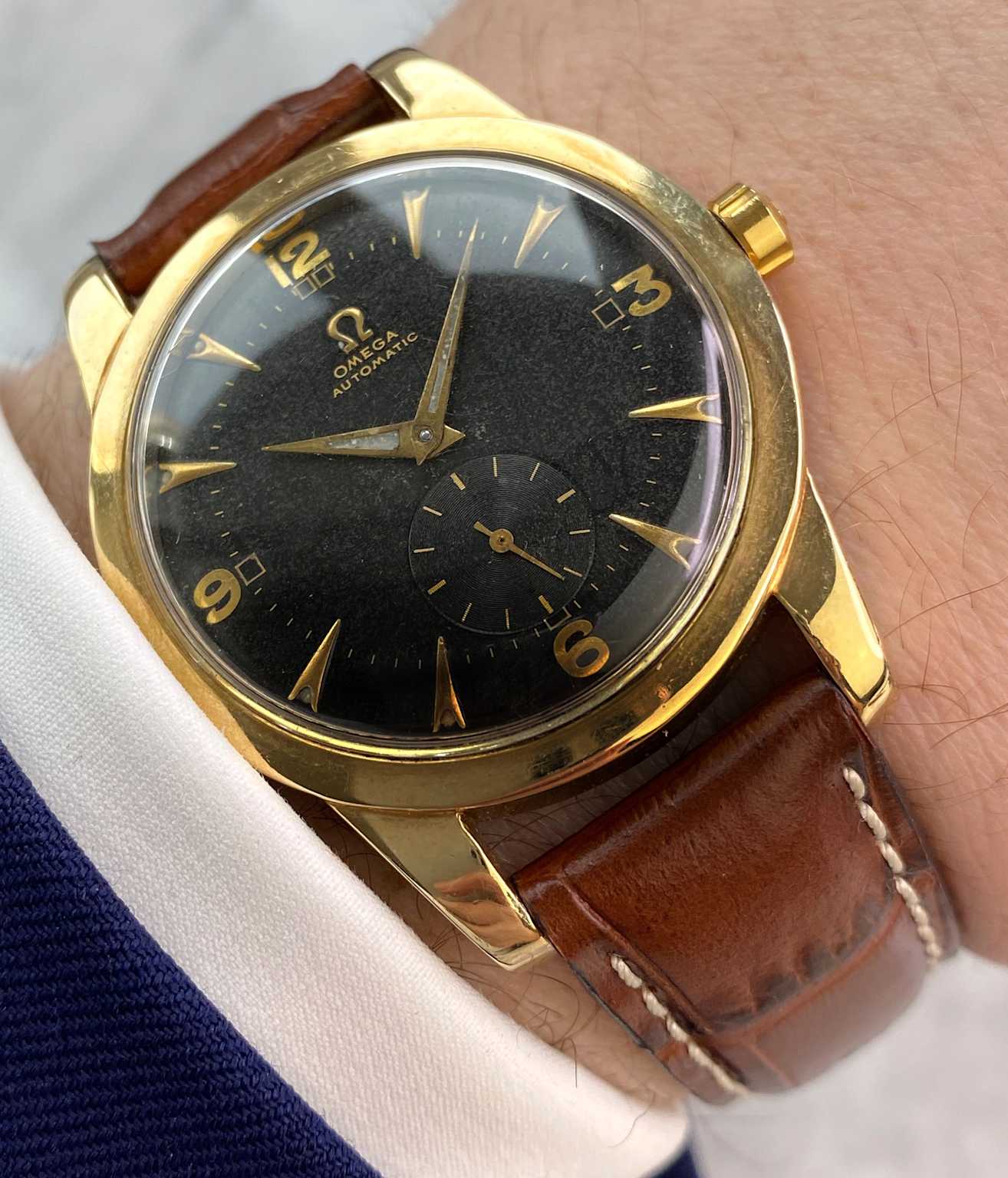
Serviced Omega 36mm Jumbo Vintage Automatic Automatik 2494
Technological Transition Point
The 2494 occupies a fascinating transitional position in watchmaking history. Its bumper automatic movements represent the final evolutionary stage before Omega’s complete transition to full-rotor automatic calibers. While Omega introduced its first full-rotor movement (caliber 470) in 1952, bumper movements continued in production until 1955-1958, coexisting with the newer technology. This overlap period makes the 2494 both historically significant and technically interesting—it captures the swan song of bumper automatic technology while contemporary models were already adopting more modern winding systems.
Production Period and Serial Numbers
Based on movement serial numbers found in authenticated examples, the reference 2494 was produced primarily between 1949 and 1958. Serial numbers typically fall within these ranges:
- 1950: 12,000,000 – 12,999,999
- 1951: Serial numbers beginning with 11-12 million
- 1952: 13,000,000 – 13,999,999
- 1953-1954: 14,000,000 – 14,999,999
- 1956-1958: 15,000,000 – 16,999,999
The movement serial number, engraved on the caliber itself, provides the most accurate dating. Examples have been documented with serial numbers ranging from approximately 10,8XX,XXX (1950) through 16,XXX,XXX (late 1950s).
Case Reference System and Nomenclature
Understanding the “KO” Prefix
The “KO” prefix in “KO 2494” denotes gold-capped case construction, a premium finishing technique used by Omega for watches positioned between standard gold-plated models and solid gold pieces.
Gold Cap Construction: Gold capping involved mechanically bonding a substantial layer of gold (approximately 200 microns or 0.2mm thick) to a stainless steel base under heat and pressure. This layer was significantly thicker than standard gold plating (20 microns) and even exceeded gold-filled construction in certain applications. The gold was applied only to the visible surfaces—the front, sides, and bezel—while the caseback remained stainless steel for durability.
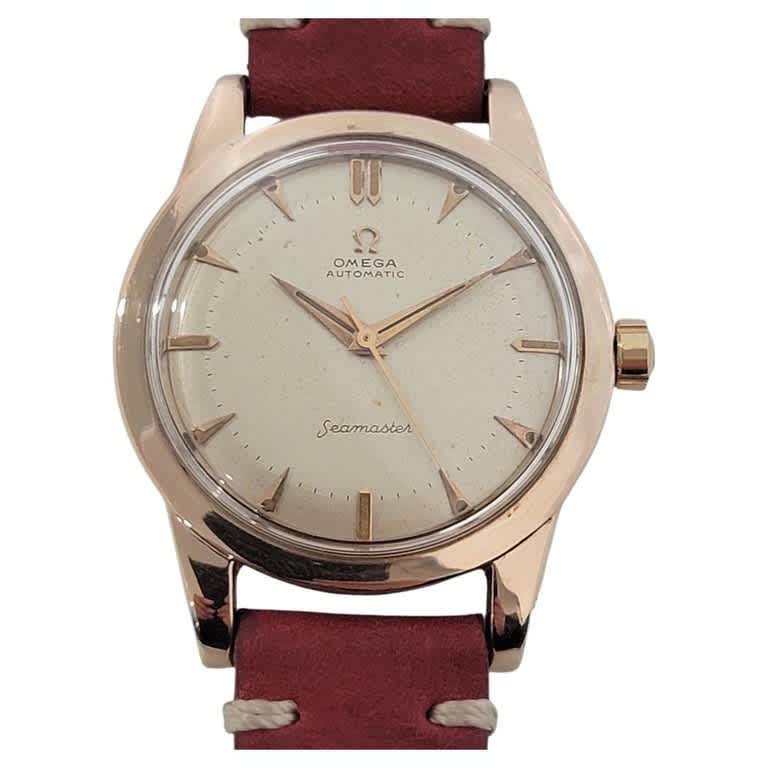
Mens Omega Seamaster 2494 37mm Rose Gold Capped Bumper Automatic 1950s NA116
Gold-capped cases offered several advantages: sufficient thickness to withstand light polishing, superior wear resistance compared to plating, and an affordable entry point to gold-toned watches. Among collectors today, gold cap is considered second only to solid gold in desirability and significantly superior to gold-plated or gold-filled alternatives.
Case Material Codes
For watches produced until the early 1960s, Omega used the following material prefix codes:
- CK/MI: Stainless steel (most common)
- OT/OJ: Solid gold
- KO: Gold cap (gold-capped)
- PK: Gold-filled
- SC: Acier (stainless steel, used interchangeably with CK)
The base reference number 2494 remained constant across all case materials, with only the prefix varying to indicate construction. Therefore, collectors might encounter:
- CK 2494 or 2494 SC: Stainless steel
- KO 2494: Gold-capped
- OT 2494: Solid gold
Dual Case Reference Markings
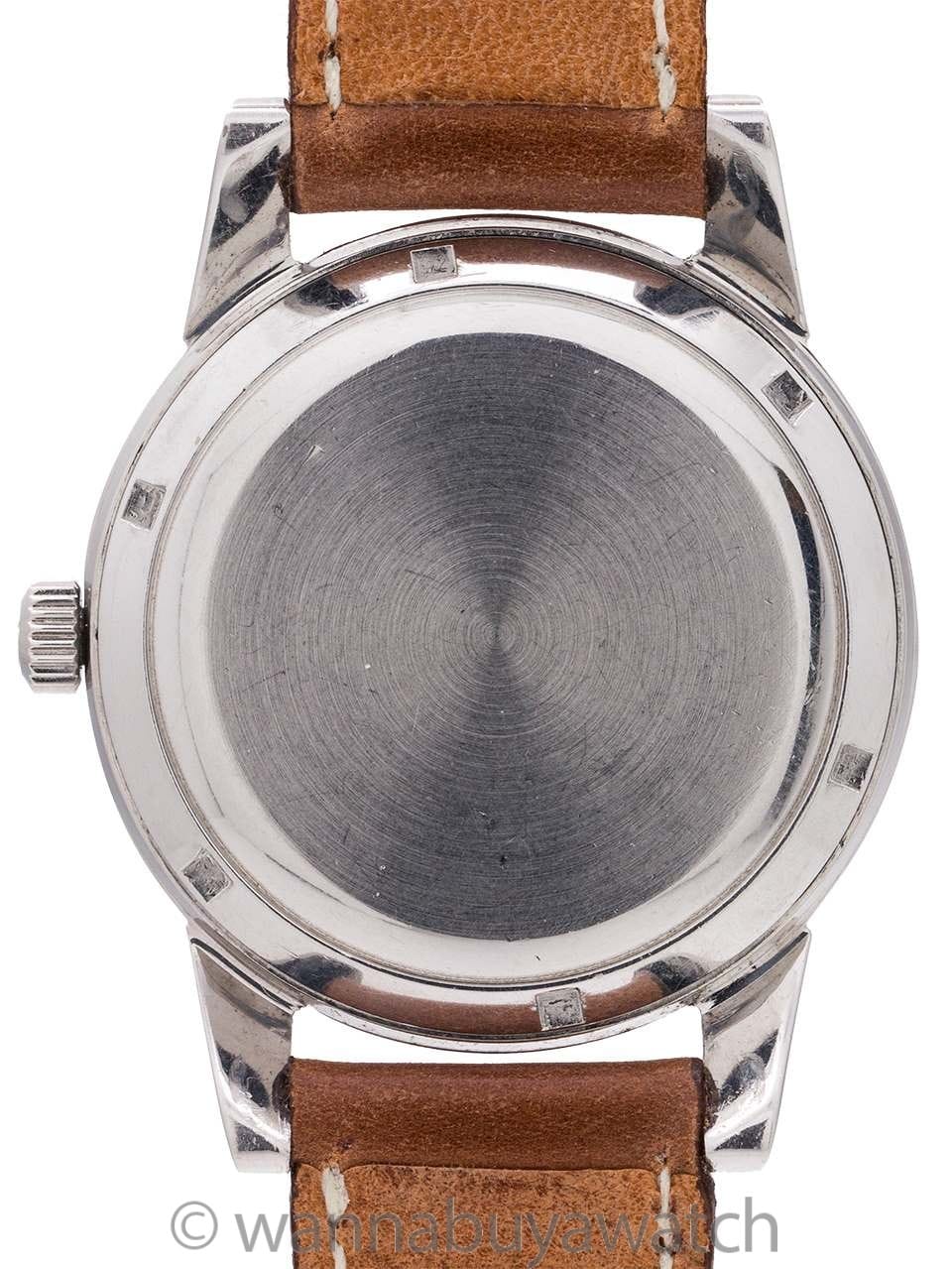
A distinctive characteristic of the 2494 is the frequent appearance of dual case reference numbers engraved on the caseback: 2657/2494 or 2494/2657. This dual marking indicates that a single case design was shared between two different Omega models to streamline manufacturing:
- 2494: Center seconds (sweep seconds) version – “SC” for “Secondes Centrales”
- 2657: Sub-seconds version with subsidiary seconds dial
Omega Seamaster ref 2494-12 SC circa 1950
Both references shared identical case dimensions and construction, differing only in dial layout and movement configuration. The caseback stamp “2494-X/2657 SC” became standard notation, with the suffix number (e.g., -1, -3, -4, -6, -7, -11, -12) indicating dial configuration, color, or other aesthetic variations.
Case Specifications and Measurements
Dimensions
Diameter: 36mm (excluding crown)
Lug-to-Lug Length: 45.5-46mm
Case Thickness: Approximately 11-12mm
Lug Width: 18mm
These dimensions made the 2494 notably larger than the standard 34-34.5mm Seamaster references (such as the 2576 or 2577), earning it the “Jumbo” designation among collectors.
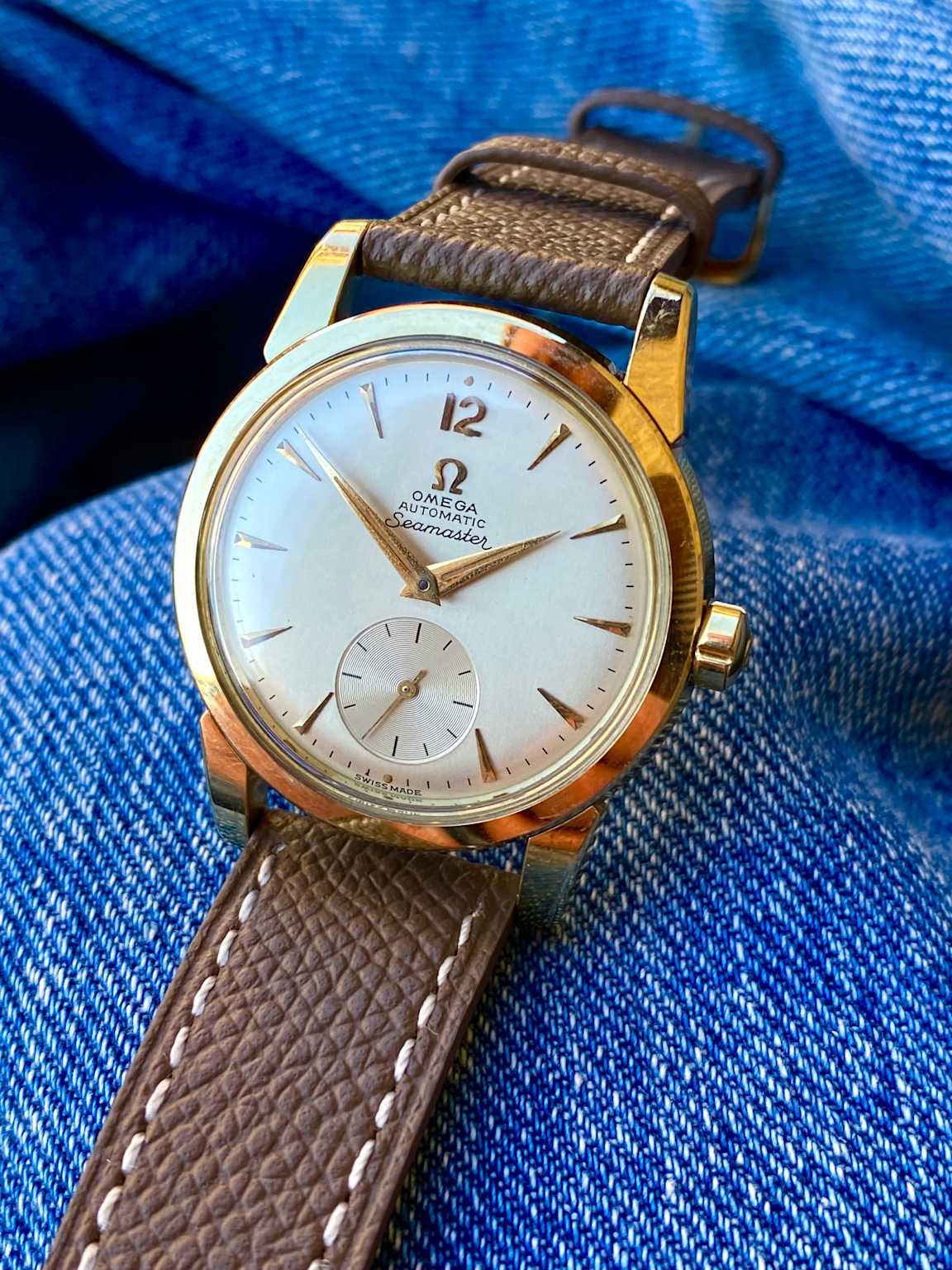
1956 Rare Omega Seamaster “Beefy lugs” with interesting
Case Construction
Two-Piece Screw-Back Design: The 2494 features a robust two-piece case with a screw-down caseback, an important advancement over snap-back construction. This design improved water resistance by creating a more secure seal using an O-ring gasket compressed between the case body and threaded back.
Water Resistance: Period documentation indicates water resistance to approximately 30-60 meters, modest by modern standards but appropriate for the era. These watches were designed for the “captain steering the ship, not the man diving into the water”—emphasizing everyday water resistance for professional wear rather than serious aquatic use.
Lugs: The 2494 is characterized by elongated, gently downturned lugs that create an elegant profile on the wrist. This “beefy lug” design became iconic to first-generation Seamaster models.
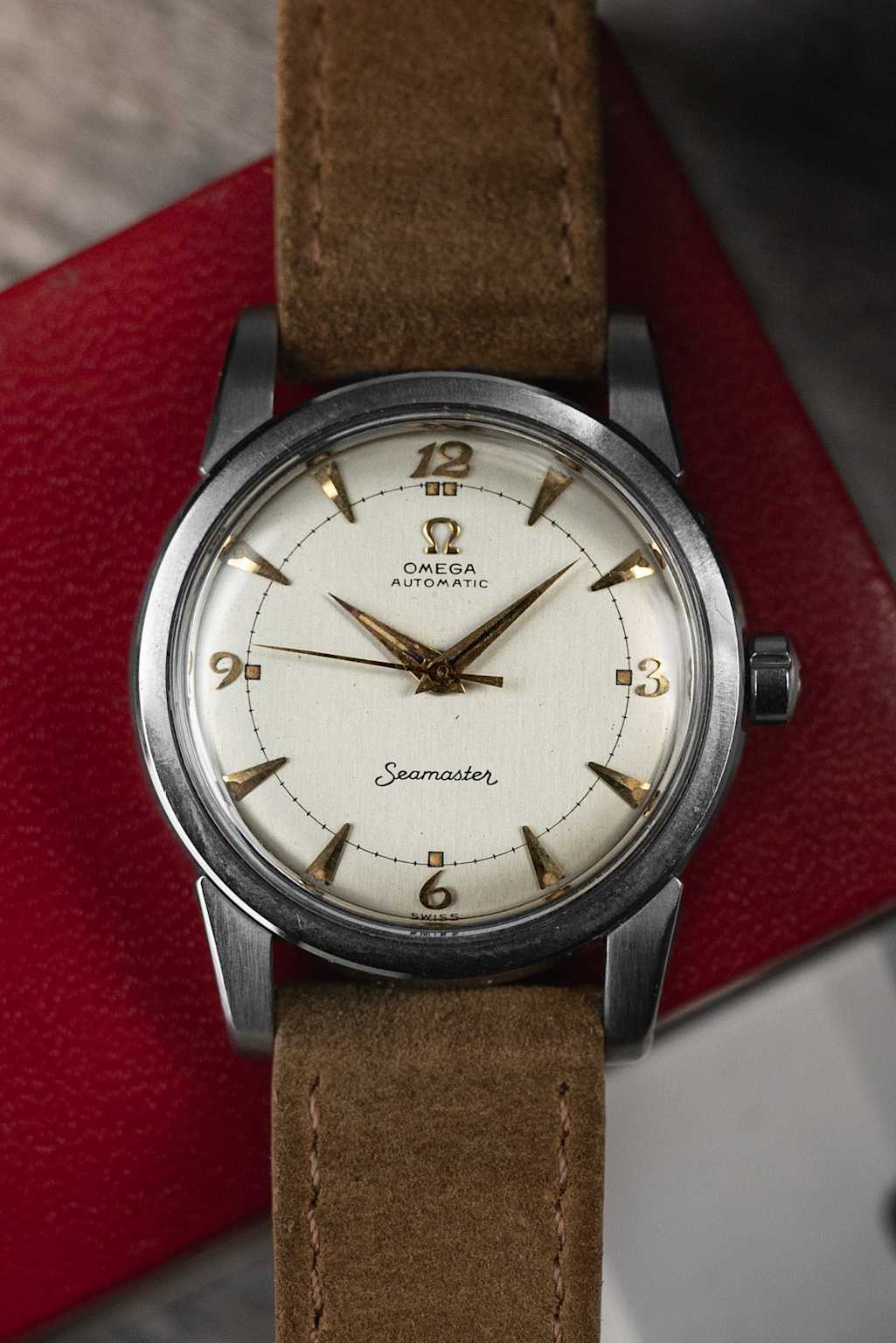
Vintage Omega Seamaster “Beefy Lugs” (c. 1950’s) – Watchable
Bezel: Most examples feature a smooth, polished bezel with subtle stepped or sloped design. The bezel width and case proportions create a balanced, dressy appearance that distinguishes the 2494 from later, more tool-oriented Seamaster designs.
Case Manufacturers
The caseback frequently bears manufacturer markings indicating which Swiss case maker produced the component:
- HF (Huguenin Frères): The most commonly encountered case maker for the 2494, also responsible for cases used in the Speedmaster and other iconic Omega models
- Other makers: Examples with markings from other period case manufacturers exist but are less common
The presence of proper case maker stamps, combined with correct reference numbers and period-appropriate engravings, serves as an important authentication marker.
Movement: Bumper Automatic Calibers
The reference 2494 housed several different bumper automatic calibers during its production run, representing the final generation of this technology before Omega’s complete transition to full-rotor movements.
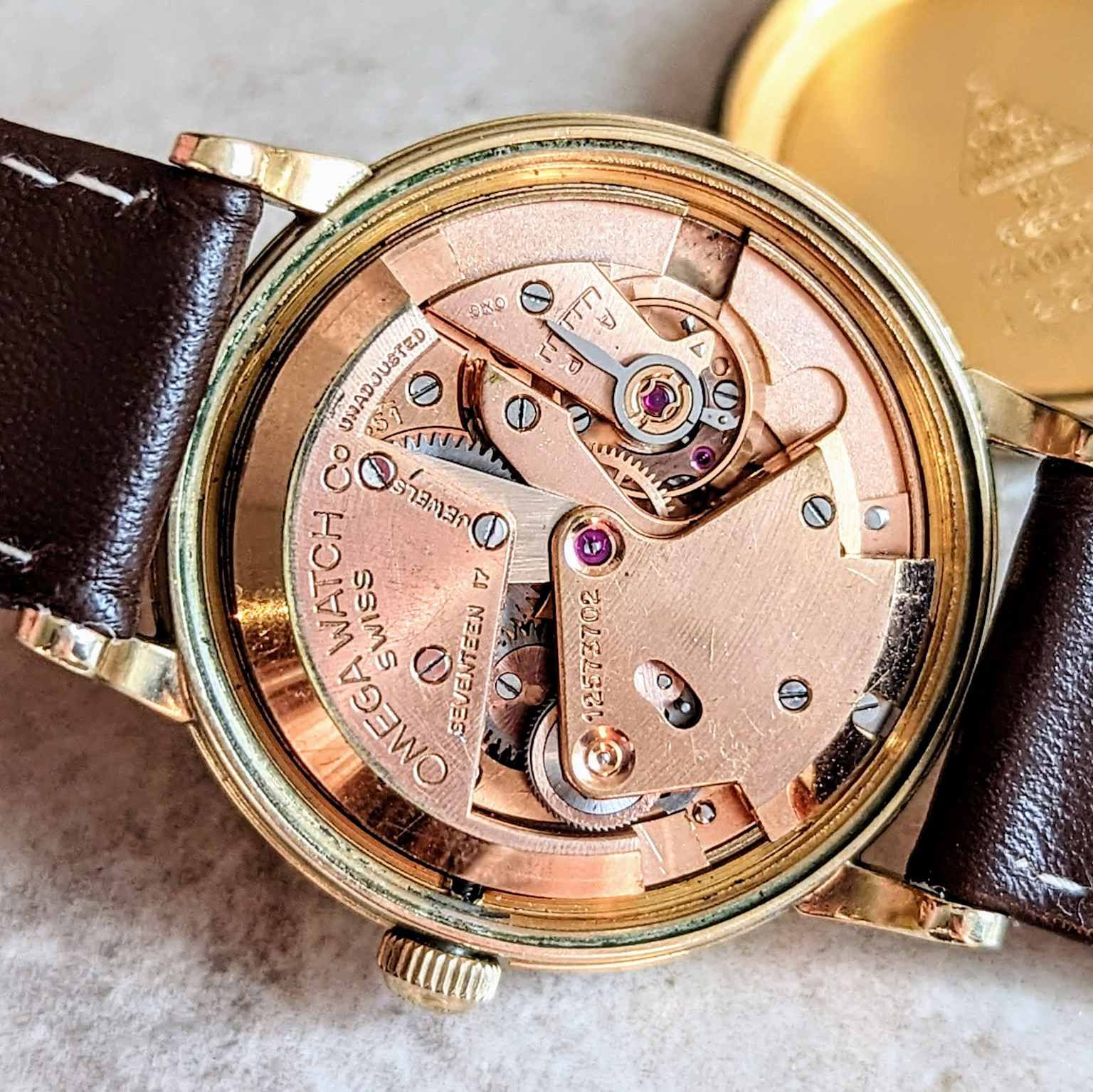
1950 OMEGA Bumper Automatic Watch Cal. 351 Self-Winding Wristwatch
Caliber 351
Period of Use: 1949-1952 (early 2494 production)
Specifications:
- 17 jewels
- Frequency: 19,800 A/h (2.75 Hz)
- Power reserve: 42 hours
- Diameter: 28.1mm (30.10mm series base)
- Sub-seconds configuration
The caliber 351 was introduced in 1949 as a refinement of the earlier 28.10 RA PC movement family. It featured concealed bumper springs and represented a more mature iteration of Omega’s bumper technology.
Caliber 344
Period of Use: 1952-1955 (mid-production)
Specifications:
- 17 jewels
- Frequency: 19,800 A/h
- Power reserve: Approximately 42 hours
- Derivative of caliber 342 with center seconds
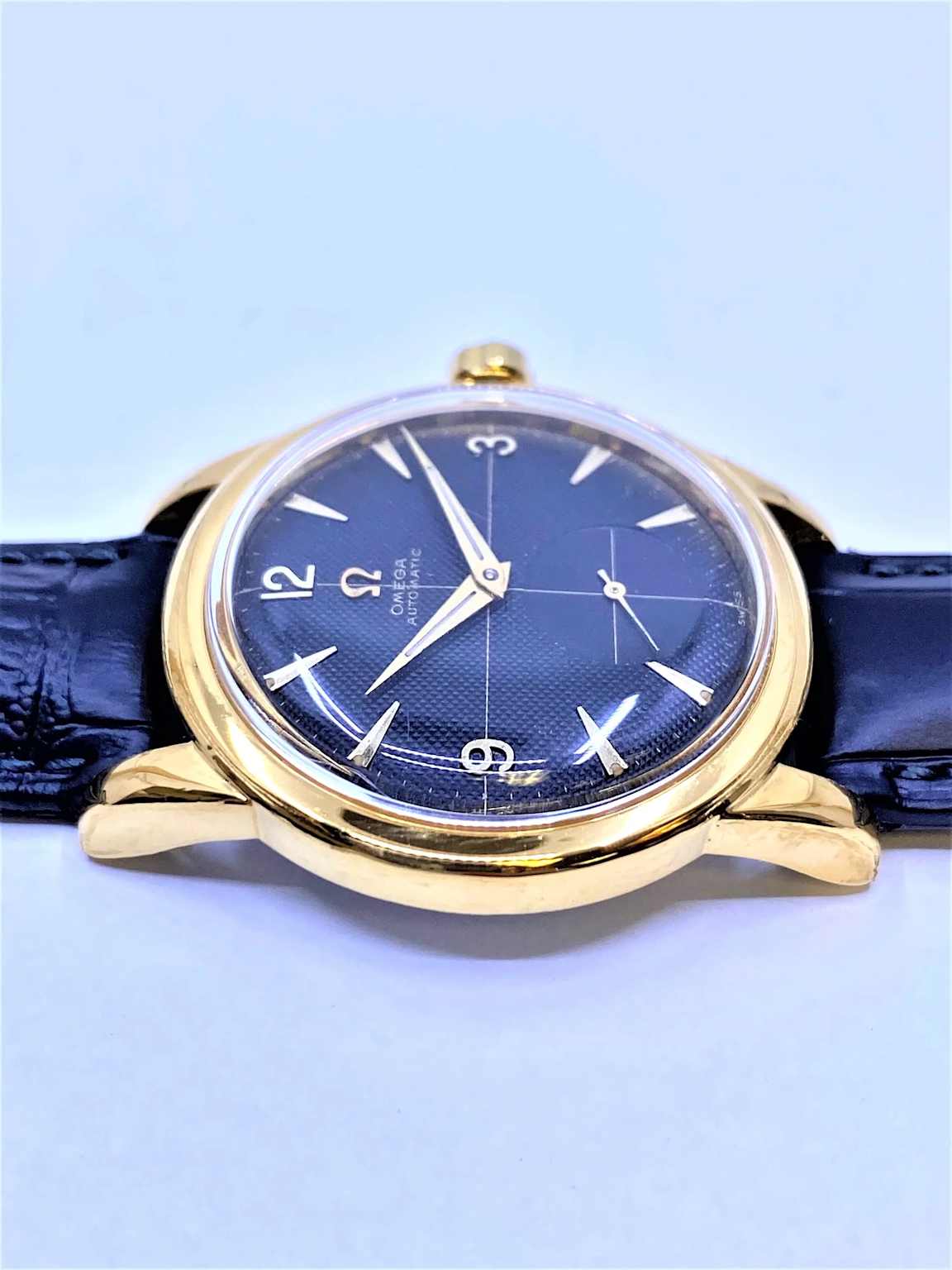
1950’s Vintage Omega Caliber 344 – Bumper Movement
The caliber 344 succeeded the 351 around 1952 and was essentially a center-seconds version of the caliber 342 (which powered the sub-seconds reference 2657). While functionally similar to the 351, the 344 incorporated minor refinements and cost-reduction measures.
Caliber 354
Period of Use: 1953-1958 (late production)
Specifications:
- 17 jewels
- Frequency: 19,800 A/h
- Power reserve: Approximately 42 hours
- Chronometer-grade option available
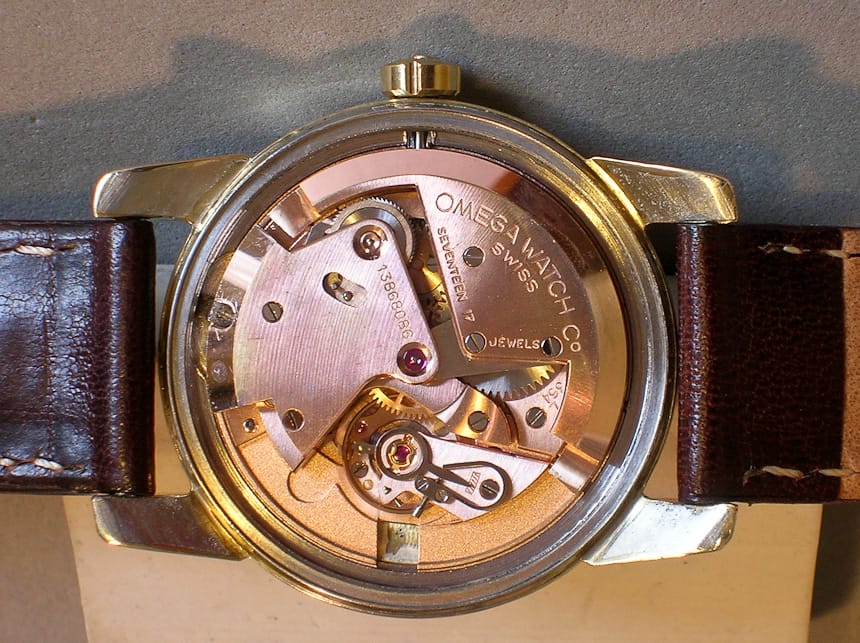
- Swan-neck regulator (replacing the earlier “Omega System” regulator)
A Test of the cal 354 Autowind | Omega Watch Forums
The caliber 354 represented the ultimate evolution of Omega’s 28mm bumper movement family. Significantly, certain 354-equipped examples received chronometer certification, though these chronometer-signed models are relatively scarce compared to standard versions. The 354 featured a swan-neck fine regulator, considered less elaborate than the earlier “Omega System” regulation but still indicating quality construction.
Caliber 342
Period of Use: Primarily in reference 2657 (sub-seconds)
Specifications:
While the caliber 342 was primarily associated with the sub-seconds reference 2657, some 2494 examples have been documented with this movement, particularly in transitional or variant pieces.
Bumper Movement Characteristics
Operating Principle: Bumper (or “hammer”) automatic movements used an oscillating weight that swung back and forth through a restricted arc of approximately 300 degrees, hitting spring buffers at each end and bouncing back. This distinguished them from modern full-rotor automatics, where the rotor completes full 360-degree rotations.
The bumper design was a transitional technology between manual-wind and full-rotor automatic movements, originally invented by John Harwood in 1923. While less efficient than full-rotor systems, bumper movements were thinner and could be serviced more easily since all components sat on a single level rather than in stacked layers.
Reliability and Service: Contemporary collectors report that properly serviced bumper movements are reliable and enjoyable to wear. The characteristic “thump” or “bump” felt when moving the wrist adds tactile charm. However, parts availability has become more challenging as these movements age, making it important to work with watchmakers experienced in vintage Omega calibers.
Servicing Considerations: Bumper movements benefit from regular servicing (every 4-5 years) and should not be relied upon solely for automatic winding. Many collectors treat them as manual-wind watches with supplemental automatic winding assistance. Common wear points include the automatic winding mechanism components, particularly the crown wheel and ratchet mechanisms.
Dial Variations
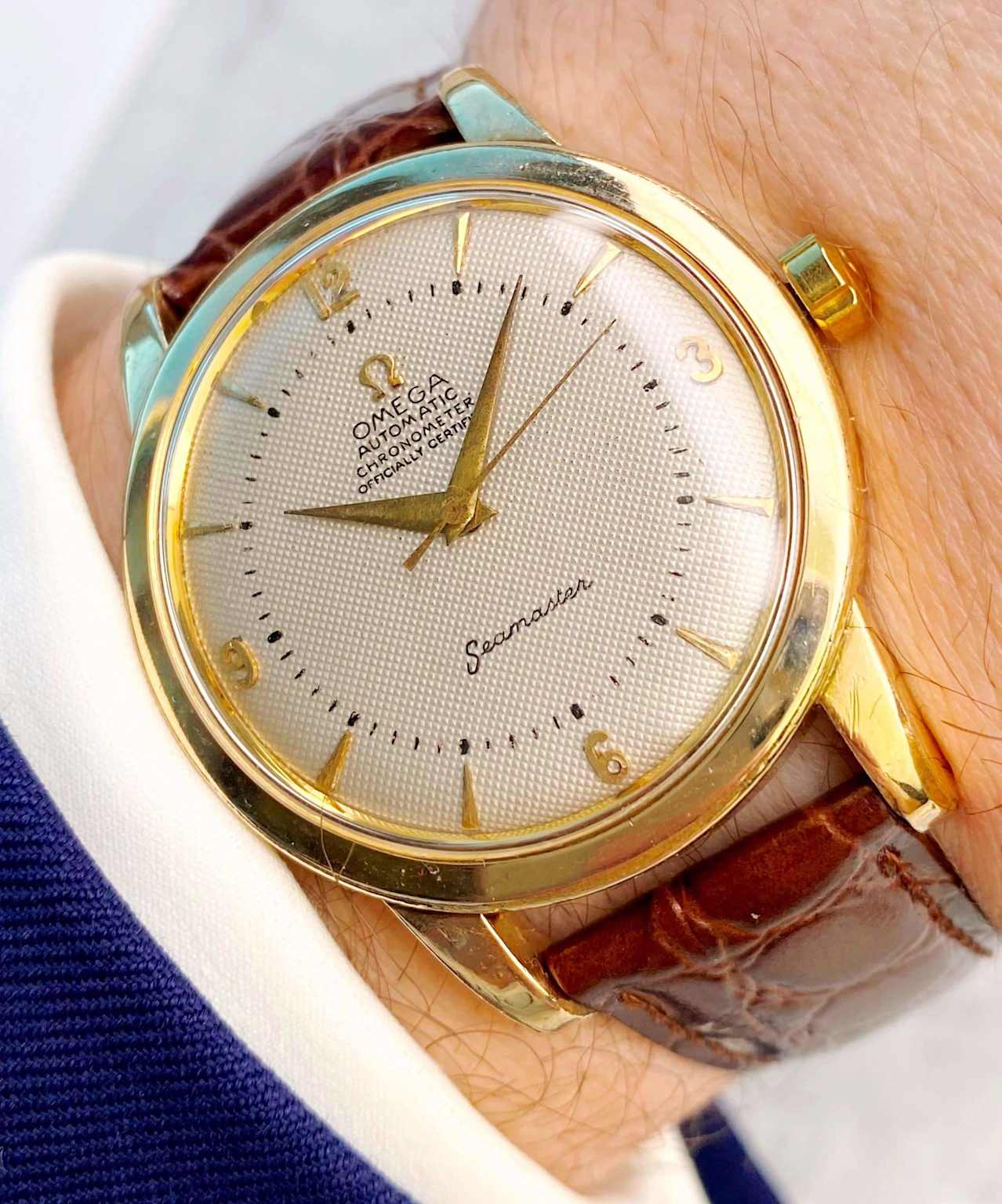
The reference 2494 showcases remarkable dial diversity, with Omega producing numerous variations in color, texture, and marker configuration. This variety contributes significantly to the reference’s collectibility, as certain dial types are considerably rarer than others.
Big 36mm Omega Seamaster Honeycomb Dial Vintage Serviced
Honeycomb Dial
Description: The most celebrated and sought-after dial variant features an intricate honeycomb or “waffle” texture across the center portion. This three-dimensional pattern creates a captivating play of light and shadow.
Characteristics:
- Textured center with raised honeycomb cells
- Typically cream, champagne, or silver-toned base
- Applied Arabic numerals at 12, 3, 6, 9 or faceted dagger/arrowhead markers
- Often shows attractive aging/patina on original examples
Rarity: The honeycomb dial is uncommon relative to plain silver dials and highly prized by collectors. Examples in excellent original condition command premium prices.
Omega 2494 Omega Seamaster Waffle Dial Honeycomb Dial Omega
Two-Tone “Waffle” Dial
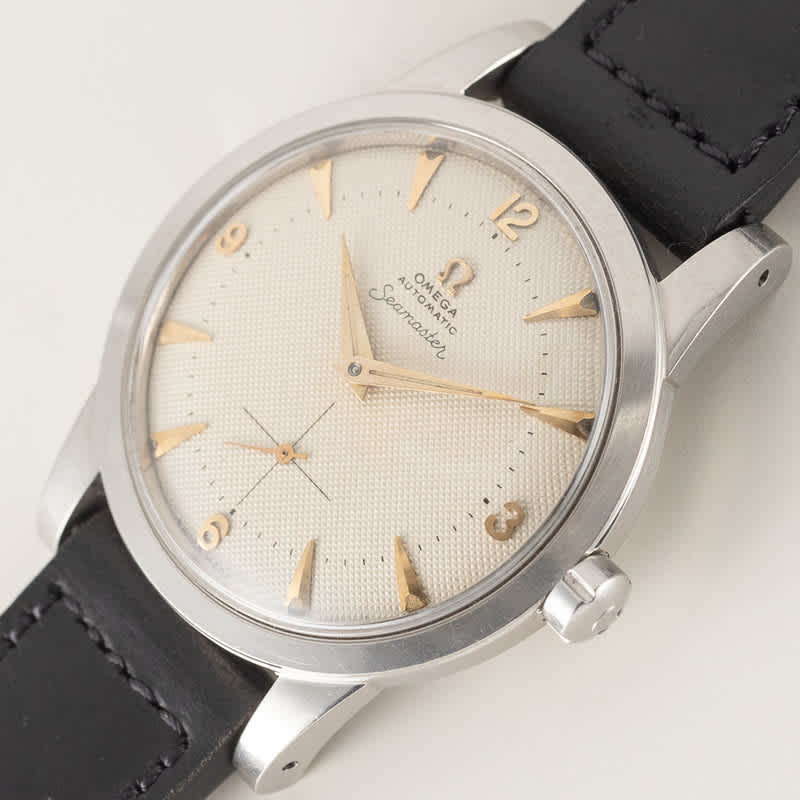
Description: A variant of the honeycomb featuring alternating textured sections that create a distinct two-tone appearance. The texture appears more linear or geometric than the standard honeycomb pattern.
Characteristics:
- Cream or champagne base with rose/silver toning
- Alternating applied Arabic numerals and dart/dagger indices
- Rose gold applied markers and hands creating warm contrast
Rarity: Quite rare and desirable among collectors of textured dials.
Plain Silver/Matte Dial
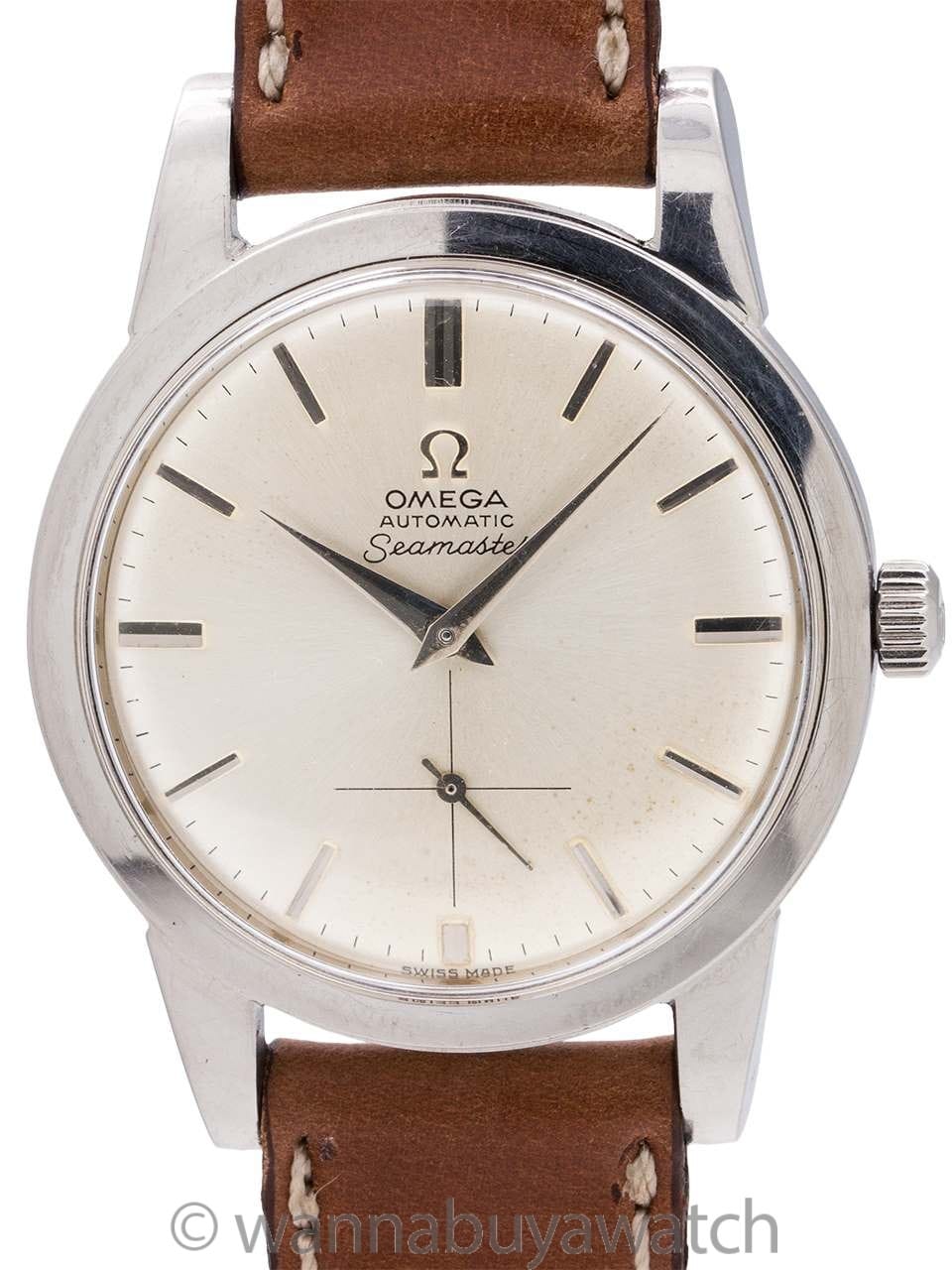
Description: The most common dial configuration features a smooth, matte silver finish without texture.
Characteristics:
- Flat silver or silvered surface
- Applied faceted dagger or arrowhead markers
- Applied Arabic numerals at 12, 3, 6, 9 in some examples
- Rose gold or white gold applied markers depending on case material
Omega Seamaster ref 2494-12 SC circa 1950
Variations: Some examples show subtle “pie-pan” sectors with different finishes between the center and outer chapter ring.
Calatrava-Style Dial
Description: Cleaner, more minimalist dial designs emphasizing simplicity and elegibility.
Characteristics:
- Simple applied baton markers
- No Arabic numerals or fewer decorative elements
- Particularly associated with gold-capped examples
Subsidiary Seconds Variations
While the 2494 designation technically indicates center seconds, the dual case reference system means some sub-seconds dials appear on 2494-stamped cases (properly designated 2657). These feature:
- Small seconds register at 6 o’clock
- More balanced, symmetrical dial layout
- Often preferred by collectors seeking classical proportions
Dial Authentication Considerations
Original vs. Refinished: Dial condition dramatically affects value and collectibility. Warning signs of refinished or replacement dials include:
- Incorrect font styles for period
- Missing or improperly positioned printing
- Overly bright, modern-looking lume plots
- Inconsistent marker application or alignment
Aging and Patina: Original dials frequently show attractive aging, including:
- Cream or champagne toning of originally white/silver dials
- Subtle spotting or tropical patina (though excessive damage reduces value)
- Period-appropriate radium lume that has aged to beige/grey
Printing Details: Authentic period dials feature specific characteristics:
- “OMEGA” logo with correct proportions
- “SEAMASTER” designation (though some early examples omit this)
- “AUTOMATIC” below logo
- “SWISS MADE” at 6 o’clock (though some examples omit this)
The flat-topped “A” in “SEAMASTER” and “WATERPROOF” is a period-correct detail that distinguishes authentic vintage dials.
Hands
Original hands on the 2494 typically follow one of several styles:
Dauphine Hands
Description: The most common hand style features elegant dauphine (tapered, faceted) hour and minute hands.
Characteristics:
- Faceted, angular profile creating reflective surfaces
- Usually finished in rose gold to complement dial markers
- Center groove or channel filled with aged radium lume
- Blued steel center seconds hand in many examples
Pencil/Leaf Hands
Description: Some examples feature more slender, leaf-shaped hands with rounded profiles.
Characteristics:
- Less angular than dauphine style
- May be polished or brushed finish
- Also typically with lume inserts
Lume Considerations
Most 2494 examples from the 1950s originally used radium-based luminous material, which has aged to beige, grey, or brown tones. Hands with bright white or green lume indicate either reluming or replacement—this significantly impacts originality and value. Properly aged lume should match the patina of dial markers in color and consistency.
Crown and Crystal
Crown
Original Specifications:
- 4-notch milled design for grip
- Omega logo embossed on crown face
- Rose gold finish on gold-capped examples, stainless on steel models
- Screw-down operation for improved water resistance
Authentication: Original crowns should show:
- Crisp, deeply stamped Omega logo (not worn or poorly defined)
- Appropriate aging consistent with case
- Proper threading and secure engagement
Many 2494 examples have had crowns replaced during service. While genuine Omega replacement crowns maintain functionality, they impact originality. Modern replacement crowns sometimes show recessed logos rather than the raised design of vintage examples.
Crystal
Original Type: Domed acrylic (Hesalite) crystal
Characteristics:
- Substantial dome providing vintage aesthetic
- May have Omega logo etched in center (though not all period crystals were signed)
- Silver tension ring in some examples
Original crystals in good condition enhance value, though replacement crystals are common and acceptable if period-correct style is maintained.
Case Back Engravings and Markings
The caseback of the 2494 provides crucial information for authentication and dating:
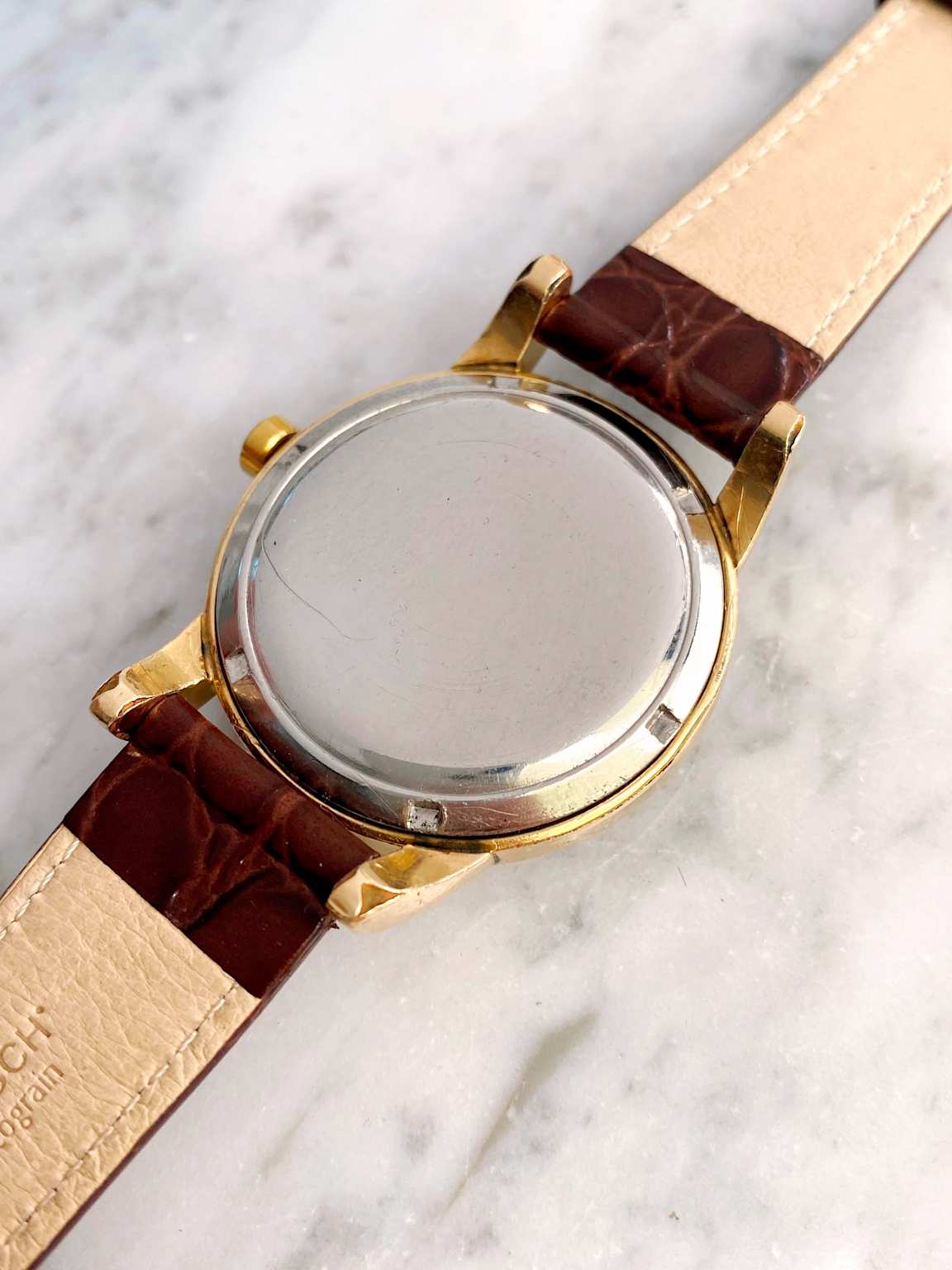
Big 36mm Omega Seamaster Honeycomb Dial Vintage Serviced
Standard Markings
Outer Case Back:
- “OMEGA WATCH CO.”
- “SWISS MADE” or “FAB. SUISSE”
- “ACIER INOXYDABLE” (stainless steel) or material designation
- Reference numbers: “2494-X/2657 SC” or similar dual marking
- Case maker’s stamp (HF, KB, or others)
Early Examples: “SEAMASTER” and “WATERPROOF” engraved around outer edge. The flat-topped “A” in these engravings is period-correct.
Transitional Cases: Some examples from the late 1950s show early pressed seahorse emblems (larger and less deeply engraved than later versions). However, most 2494 examples predate the introduction of the now-familiar seahorse logo, which became standard after 1960.
Inner Case Back
- Movement serial number
- Patent numbers (e.g., Patent +315164)
- Watchmaker’s instructions in multiple languages regarding gasket replacement
Estimated Production Numbers
Precise production figures for the reference 2494 are not publicly documented by Omega. However, informed estimates can be derived from several factors:
Serial Number Ranges: The 2494 was produced during a period spanning movement serial numbers from approximately 10,800,000 through 16,000,000 (1949-1958). This represents roughly 5-6 million watches across all Omega production, not solely the 2494 reference.
Reference Popularity: The 2494 represented a premium “Jumbo” size that likely comprised a smaller proportion of total Seamaster production compared to the more common 34mm references like the 2576 or 2577.
Surviving Examples: The relatively regular appearance of 2494 examples on the vintage market suggests production in the thousands rather than hundreds, but the reference was not mass-produced to the extent of some later Seamaster models.
Informed Estimate: Based on these factors and collector community consensus, production likely ranged between 5,000-15,000 total pieces across all case materials and dial variants over the approximately 9-year production span. Gold-capped (KO) examples represent a minority of total production, perhaps 15-25% of the total.
This level of rarity positions the 2494 as uncommon but not exceptionally rare—desirable for collectors but still accessible compared to truly limited references.
Notable Variations and Sub-
The suffix numbers following the base reference indicate specific dial and configuration variations:
- 2494-1: Specific dial configuration (often plain silver)
- 2494-3: Variant with rose gold markers
- 2494-4: Waffle/honeycomb dial variant
- 2494-6: Another dial configuration variant
- 2494-7: Two-tone or specific marker arrangement
- 2494-11: Later production variant
- 2494-12: Specific dial configuration
Documentation of which suffix corresponds to which exact dial configuration is incomplete, as Omega’s internal coding system was not comprehensively published. Collectors generally rely on observed patterns across authenticated examples.
Authentication and Originality Assessment
Given the age and collectibility of the 2494, authentication requires careful examination across multiple dimensions:
Movement Verification
- Confirm caliber number matches expected range (342, 344, 351, 354)
- Verify movement serial number falls within appropriate production date range
- Check for genuine Omega markings, including Omega symbol, caliber designation, and “Swiss Made”
- Examine finishing quality (Geneva stripes, proper jewel settings, appropriate patina)
Case Authentication
- Verify reference numbers on caseback match dial configuration (center seconds vs. sub-seconds)
- Confirm case maker marks are present and period-appropriate
- Check for proper Omega stampings with correct font styles
- Assess wear patterns consistent with age (inappropriate polishing or refinishing reduces value)
Dial Originality
- Examine printing quality and font accuracy for period
- Verify marker application and lume aging appear authentic
- Check for signs of refinishing (too-bright colors, incorrect finishes)
- Confirm dial features match documented variations for the reference
Parts Matching
- Hands should show consistent aging and lume color with dial markers
- Crown should be appropriate style for period and case material
- All components should show coherent aging patterns
Frankenwatch Concerns: The vintage market contains examples with mixed components—mismatched movements and cases, replacement dials, or incorrect hands. While repaired watches with period-correct replacement parts can still be enjoyed, they command significantly lower prices than all-original examples.
Collector Considerations and Market Insights
Desirability Factors
Size and Wrist Presence: The 36mm “Jumbo” proportions offer excellent wrist presence while remaining appropriate for modern wear. This size appeals to collectors seeking vintage character without sacrificing wearability.
Movement Interest: The bumper automatic calibers provide tactile engagement and horological interest that enhances the ownership experience. Well-serviced examples prove reliable for regular wear.
Dial Variety: The range of dial configurations allows collectors to find examples matching their aesthetic preferences, from textured honeycomb dials to clean, minimalist designs.
Historical Significance: As representatives of the first Seamaster generation and the final bumper movement era, these watches occupy an important place in Omega’s heritage.
Investment Perspective
Vintage Omega watches, including the 2494, have shown appreciation over the past decade, though returns vary significantly based on condition, rarity, and originality:
Appreciation Factors:
- Increasing recognition of Omega’s heritage and technical achievements
- Growing collector interest in pre-chronometer, bumper-era pieces
- Relative affordability compared to equivalent Rolex references provides accessible entry point
Value Determinants:
- Condition is paramount: Only excellent, original examples appreciate substantially
- Dial rarity matters: Honeycomb and uncommon dial variants command premiums
- Originality premium: All-original pieces significantly outperform restored or “improved” examples
- Case material hierarchy: Gold-capped examples worth 30-50% more than steel equivalents; solid gold examples command significant premiums
Current Market Range (2024-2025):
- Steel examples: €1,200-€2,500 depending on condition and dial
- Gold-capped examples: €1,800-€3,500+ for exceptional pieces
- Rare dial variants: Premium of 25-50% over standard silver dials
- Chronometer-certified examples: Additional 15-30% premium
The 2494 is best approached as a watch to enjoy and wear rather than purely as financial investment. Long-term appreciation requires maintaining excellent condition, ensuring proper servicing, and avoiding modifications.
Collecting Guidance
What to Prioritize:
- Originality over cosmetics: A watch with original dial showing age-appropriate patina outranks a refinished “perfect” example
- Service history: Evidence of proper maintenance by qualified watchmakers adds confidence
- Complete documentation: Case-back markings that match, movement serial numbers that align, and original crown all contribute to value
Red Flags:
- Suspiciously pristine dials on watches supposedly from the 1950s
- Mismatched lume colors between dial and hands
- Incorrect crown styles or modern replacements
- Overly polished cases with rounded edges and worn hallmarks
Recommended Budget Allocation:
- Excellent condition steel example with original dial: €1,500-€2,000
- Gold-capped example in very good condition: €2,000-€2,800
- Premium for honeycomb or rare dial: Add €300-€700
- Budget €200-€400 for immediate service by qualified watchmaker
Wearing and Care
Daily Wear Considerations
Water Resistance: Despite “Seamaster” designation, vintage examples should not be submerged. After proper servicing with gasket replacement, the watch can withstand hand-washing and light rain, but swimming and showering should be avoided.
Shock Sensitivity: Vintage movements lack modern shock protection systems. Avoid impact activities.
Winding Practice: While the bumper automatic provides supplemental winding, manual winding each morning ensures adequate power reserve. The bumper system works best with regular motion but shouldn’t be relied upon exclusively.
Service Recommendations
Frequency: Service every 4-5 years by a watchmaker experienced with vintage Omega calibers
Service Components:
- Complete movement disassembly, cleaning, and lubrication
- Replacement of worn automatic winding components as needed
- Gasket replacement for water resistance maintenance
- Crystal polishing or replacement if needed
- Regulation for accuracy
Cost Expectations: €300-€600 for complete service depending on movement condition and parts requirements
Parts Availability: While many components remain available, some specialized bumper mechanism parts can be challenging to source. Establishing a relationship with a watchmaker who stocks vintage Omega parts proves valuable.
Conclusion
The Omega Seamaster KO 2494 stands as an exemplary representative of mid-century Swiss watchmaking, combining historical significance, technical interest, and elegant design in a package sized appropriately for modern wear. The “KO” gold-capped examples, in particular, offer the prestige of gold-toned vintage charm with the durability advantages of gold cap construction over thinner plating methods.
For collectors, the 2494 provides an accessible entry into serious vintage Omega collecting, offering the opportunity to own a genuine piece of the brand’s heritage without the five-figure investment required for many other historically significant references. The variety of dial configurations ensures that collectors can find examples matching their aesthetic preferences, whether drawn to the captivating honeycomb texture or preferring the understated elegance of a clean silver dial.
The bumper automatic movements, representing the twilight of this technology before full-rotor systems became universal, add tactile charm and horological interest. When properly serviced and maintained, these calibers prove reliable for regular wear while providing the satisfaction of wearing a mechanical movement configuration that has effectively disappeared from contemporary watchmaking.
As with all vintage timepieces, the 2494 rewards careful research, patient hunting for original examples, and commitment to proper maintenance. The current market offers reasonable opportunities for collectors to acquire excellent examples before increasing recognition of first-generation Seamaster significance drives further appreciation. Those who prioritize originality, condition, and provenance will find the 2494 a rewarding addition to any collection—a watch that can be worn with pride while appreciating its place in Omega’s distinguished history.
Visual Reference Gallery
The images throughout this report illustrate key characteristics of the reference 2494, including:
- The coveted honeycomb and waffle dial textures
- Bumper automatic calibers (351, 344, 354)
- The substantial 36mm “Jumbo” case proportions with characteristic “beefy lugs”
- Dual reference case back markings (2657/2494)
- Various case materials including gold-capped and stainless steel examples
- Applied markers and period-correct dauphine hands
- The distinctive downturned lug profile that defines first-generation Seamaster aesthetics
Note the authentic aging, proper proportions, and correct period details that distinguish original examples from refinished or modified pieces.