

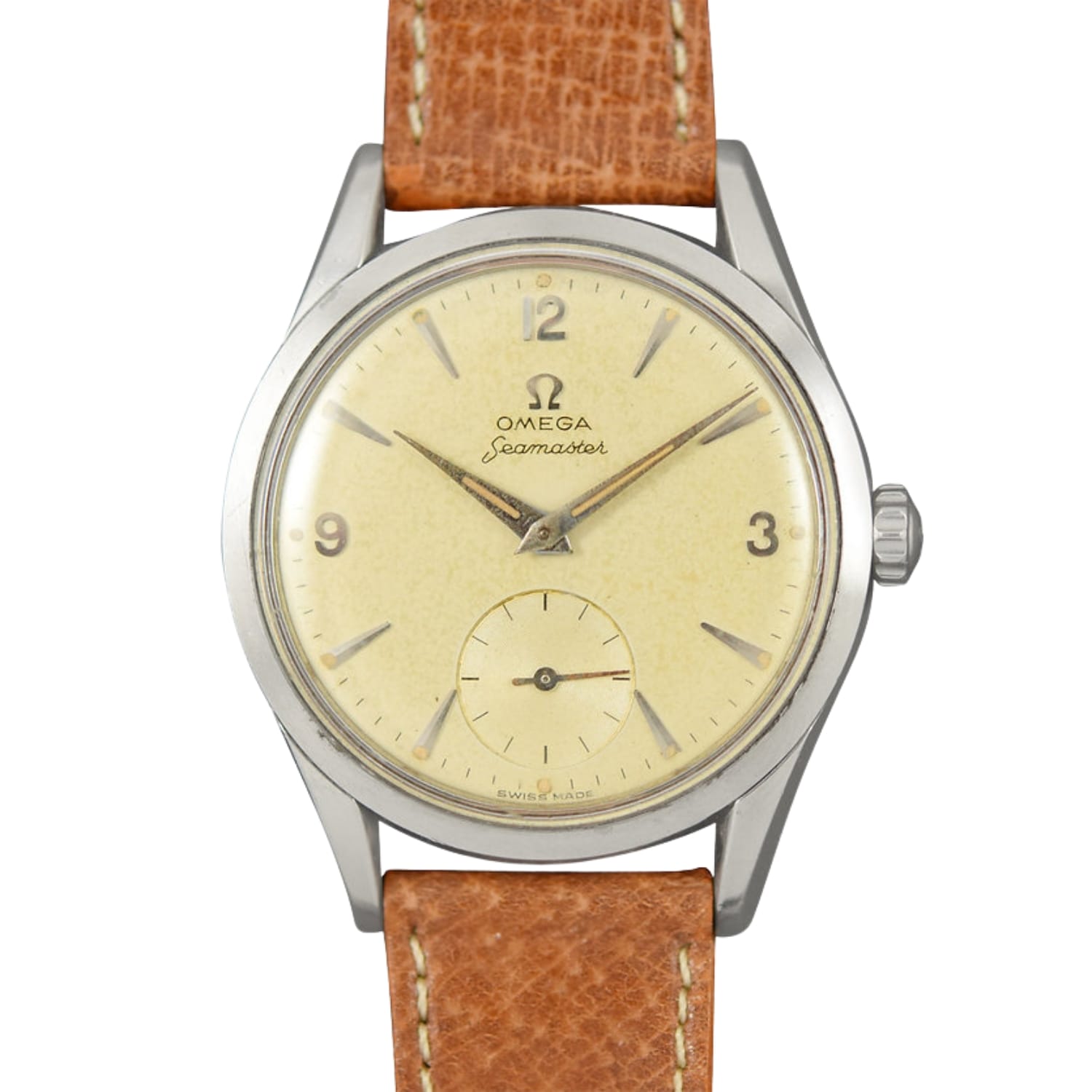
The Omega Seamaster 2937 represents one of the brand’s most significant early modern dive watch designs, marking a pivotal moment in the evolution of the Seamaster collection during the mid-to-late 1950s. As one of the first manual-winding Seamaster cases to bear the “Seamaster” designation on the dial, this reference encapsulates the watchmaking philosophy and technical achievements of Omega during a transformative era.
Historical Context and Production Timeline
The reference 2937 was introduced in 1957 as the successor to earlier Seamaster case models, including the CK2639, CK2791, and CK2891. Production continued through the late 1950s and into the early 1960s, with examples reliably documented from 1956 through 1960. The reference designation itself denotes the final generation of early manual-winding Seamaster production before the introduction of automatic movements in subsequent years. This timeframe positions the 2937 at the intersection of classical watchmaking tradition and emerging modern design principles in sports watch development.
Case Specifications and Design
Physical Dimensions
The reference 2937 features a substantial 36mm case diameter (excluding the crown), positioning it as a generously-sized wristwatch by contemporary standards. The case thickness measures approximately 10mm, contributing to a balanced profile that neither appears overly thick nor insufficiently substantial. The lug-to-lug measurement extends to 44mm, with lugs accepting an 18mm strap width. These proportions create an exceptionally well-balanced aesthetic that translates effectively to the modern wrist, a quality consistently noted by collectors and vintage watch specialists.
Case Design and Identification
The case architecture of the 2937 exhibits several distinctive features that serve as definitive identification markers. Most notably, the reference possesses slightly thicker lugs compared to immediately preceding Seamaster models (CK2639, CK2791, CK2891), a subtle but visible characteristic when examined alongside contemporary references. The lugs are carefully downturned, creating an elegant visual flow from the case middle to the strap attachment points. The case middle displays a polished finish typical of Omega’s mid-1950s aesthetic, with the bezel featuring a distinctive chamfered edge.
Case Back: A Defining Feature
The case back represents the most reliable identification feature of the reference 2937 among closely-related Seamaster models. Unlike the CK2639, which features a screw-down case back (facilitating secure closure but requiring specialized tools), the 2937 employs a pressure-fit snap-on design. This caseback incorporates an inner rubber gasket that seats in a groove within the case middle, creating a waterproof seal when properly seated. The back itself presents a distinctly wide flat surface with a single slender bevel edge at the perimeter—a profile that differs markedly from the CK2791 and CK2891, which feature double-bevel designs with two bevels of varying widths.
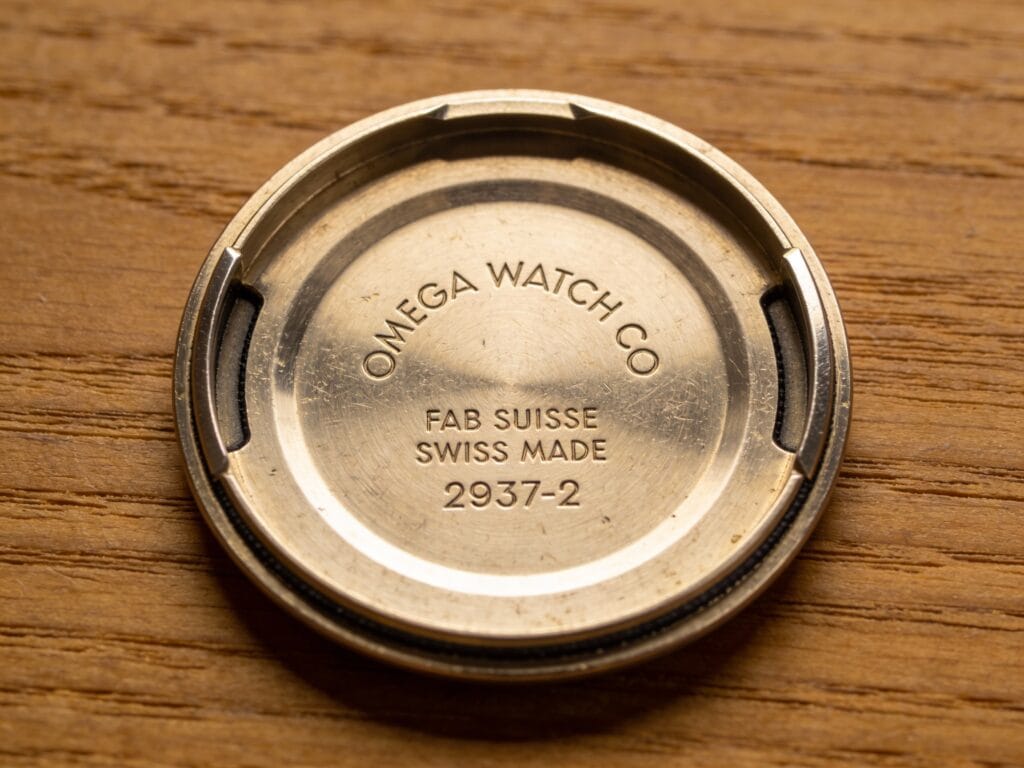
Omega Ref. 2937 pressure-fit caseback with characteristic single bevel edge
Engraved markings on the caseback typically read “OMEGA WATCH CO,” “FAB SUISSE,” “SWISS MADE,” and the reference designation (such as “2937-2” or similar variants), providing additional authentication documentation. The finish is characteristically satin, consistent with Omega’s manufacturing standards of the period.
Case Materials and Variations
The reference 2937 appears in multiple material configurations, reflecting Omega’s product strategy of offering the same case in different price tiers:
- Stainless Steel (Full Steel): The most common variant, presenting a polished and satin-finished case that ages gracefully with light patination.
- Gold-Capped Steel (Two-Tone): A less common configuration featuring gold plating over the bezel and upper portions of the lugs, with the case middle and caseback remaining in polished stainless steel. These examples exhibit natural wear patterns consistent with their age, showing gradual depletion of gold plating on contact surfaces.
- Solid 14K and 18K Gold: Rare examples exist in full precious metal, though these are significantly less frequently encountered in the collector market compared to steel examples.
- Rose Gold: Documented but extremely scarce.
Movement and Caliber
Omega Caliber 267: The Primary Movement
The reference 2937 is powered exclusively by the Omega Caliber 267, a 17-jewel manual-winding movement representing the latest evolution of Omega’s legendary 30mm caliber family. This movement represents the direct descendant of the celebrated Omega 30T2, introduced in the 1930s and continuously refined over two decades of development. The Cal. 267 belongs to the 260-series family of calibers, minor variants of which powered the CK2891 and related references.
The Caliber 267 is renowned for its accuracy and reliability. Service examples consistently demonstrate the ability to regulate to within ±8 seconds per day or better when properly serviced, an exceptional achievement for a movement of this era. The 45-hour power reserve provides practical utility, allowing the watch to maintain timekeeping over extended periods without daily winding. The movement features a copper-plated beryllium-bronze construction characteristic of Omega’s manufacturing standards.
Interchangeability and Restoration Considerations
A critical point for collectors: the hands and dials used across the 260-series family (Cal. 265, 266, and 267) are largely interchangeable, meaning that examples encountered in the market may feature non-original components. Original factory configuration must be verified through careful research of serial numbers and documented specifications. The Caliber 267 is signed “Omega,” “Swiss,” “267,” and “17 Jewels” with individual serial numbers that facilitate dating within production windows.
Dial Variations and Visual Specifications
The reference 2937 presents one of the most diverse dial configurations across early Seamaster models, reflecting Omega’s iterative design approach during this transitional period.
Standard Dial Configuration
The most commonly encountered dial variant features a cream or silver-white base with mixed Arabic numeral hour markers. Specifically, Arabic numerals appear at 12, 2, 4, 8, and 10 o’clock positions, while the remaining hours (1, 3, 5, 7, 9, and 11) display distinctive arrow-shaped markers often called “shark tooth” indexes by collectors. This mixed marker configuration creates visual rhythm and hierarchy on the dial, directing the eye toward the cardinal positions. A small seconds subdial, positioned at 6 o’clock with its own minute track, displays a subsidiary seconds hand offset from the center.
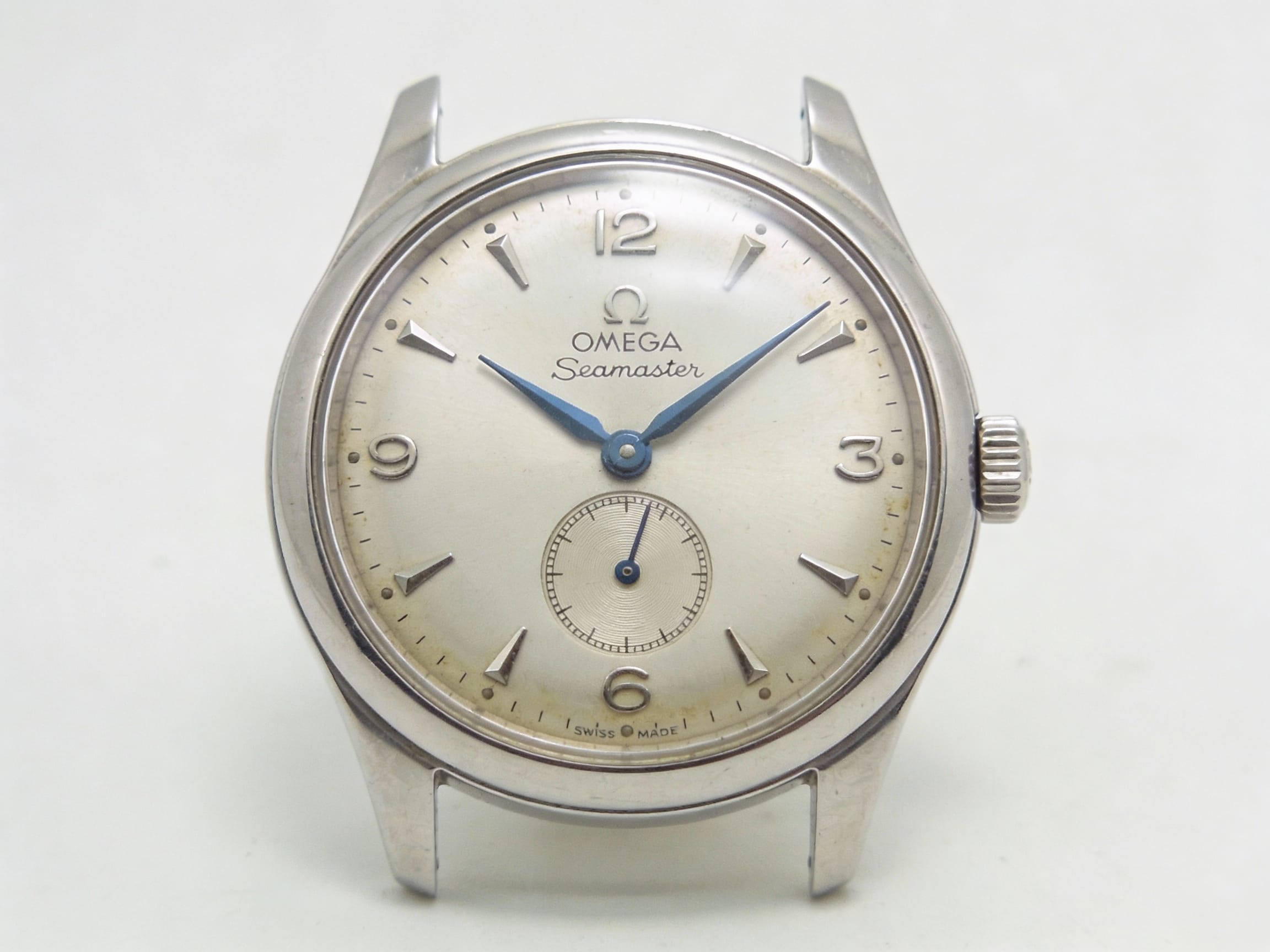
The dial consistently bears “SEAMASTER” text (a distinction from earlier non-Seamaster variants), positioned typically above 6 o’clock, with “OMEGA” marking at the top. Applied indices and applied Omega logos appear on premium examples, whereas some variants feature printed markers. The applied indices, particularly on cream-colored examples, present an elegant contrast to the dial base.
Notable Dial Variants
Seahorse Medallion Variant: A specialized dial variant features an engraved seahorse medallion, visible on some examples from circa 1958-1960. These examples are notably scarce, commanding premium values when encountered. The seahorse motif referenced Omega’s maritime heritage and appeared selectively on upper-tier Seamaster models of the period.
Very rare Omega Seamaster “Seahorse Medallion” ref. 2937
Seachero/Ranchero Variant: Among the rarest configurations, the Seachero (also identified as “Ranchero”) variant appears with a matte black dial that has aged to a dusty grey-brown appearance due to radium deterioration. These examples feature recessed radium luminous hour markers that have developed a distinctive warm orange patina—a direct consequence of radioactive decay over decades. Critically, this variant departs from the standard alpha-style hands, instead utilizing broad arrow-style hour and minute hands. The Seachero variant represents a transitional or limited production run, with survivors documented from 1957.
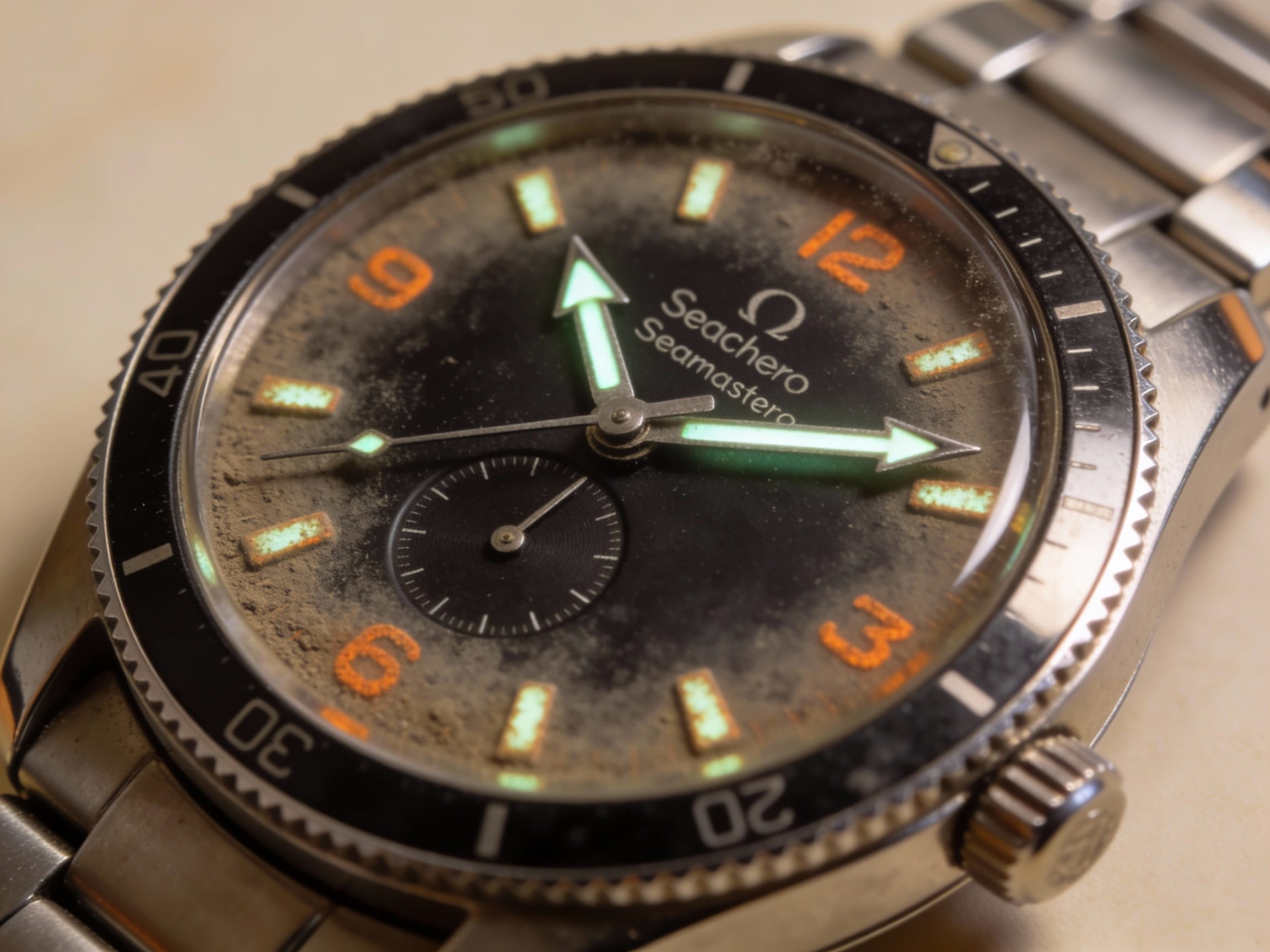
Rare Omega Seamaster 2937 “Seachero” variant with black dial and broad arrow hands
Crosshair Dials: Select examples feature red crosshair designs overlaid on cream or white dials, a stylistic choice that appeared periodically across Omega’s product line during this era. The crosshair typically extends across the dial width, though some examples show the crosshair stopping short of the text and logo areas.
Dial Color and Condition Notes
Original dials frequently display age patina, ranging from even browning to more pronounced spotting or pitting. The luminous material on original hands and markers has typically darkened considerably from its original bright white. Radium-based lume, common on examples from this period, presents radiation hazards and requires careful handling; many collectors note that original radium dials register on Geiger counters. Modern restorations typically substitute radium with safer luminous compounds, fundamentally altering the aesthetic while ensuring contemporary safety standards.
Hand Styles and Sub-Variants
Standard Alpha (Lance) Hands
The predominant hand configuration utilizes alpha-style (also called “lance” or “lancet”) hands in polished steel or occasionally blued steel. These hands feature an elegant tapered isosceles-triangle silhouette with a slim connection point to the pinion—a design choice emphasizing minimalist elegance and legibility.
Broad Arrow Variant
The Seachero variant uniquely features broad arrow-style hands, distinguishing it stylistically from all other documented 2937 examples. This hand style presents arrowhead-shaped hour and minute hands, significantly departing from the standard alpha aesthetic and suggesting this variant may have been designed for a specific market segment or represented a limited experimental production run.
Original vs. Replacement Considerations
Hand replacement is extremely common among vintage watches, as original radium lume deteriorates and often becomes aesthetically unacceptable. Determining originality requires comparison against factory documentation or examples of confirmed original specification. The 260-series interchangeability means hands from other period Omega movements may have been fitted during servicing.
Case Back, Crown, and Gasket Details
Pressure-Fit Caseback Assembly
Unlike modern threaded casebacks, the 2937 employs a pressure-fit design where the caseback is pressed firmly into place against an inner rubber gasket, creating a watertight seal through compression rather than screw-threads. This design requires specialized tools (typically a case knife with tapered blade) for removal and presents challenges for servicing. Proper reassembly demands careful alignment and even pressure to compress the gasket uniformly without marring the caseback edges.
Original Gasket Specification
The original gasket material was rubber or early synthetic composition, specifically designed to compress under pressure. Modern replacement gaskets utilize Viton or Buna O-ring materials that provide superior longevity and consistent sealing characteristics. Measurement of the original groove reveals typical gasket diameters in the 33-38mm range, though precise sizing requires direct measurement of the specific caseback groove profile. Omega-branded gasket part numbers exist for period-appropriate replacements, though generic O-rings of matching dimensions function identically.
Crown Configuration
The original Omega unsigned crown fits the 2937 case tube at 3 o’clock. Correct crown part numbers include 45003 and 15004 configurations, both functionally interchangeable with the case tube despite minor stylistic variations. The crown features a 6.5mm or 7mm diameter stem, typical of Omega’s mid-century standards. Crown replacement is extremely common in vintage watches, as original crowns frequently exhibit wear or become lost entirely. Many surviving examples feature later-period Omega crowns or third-party replacements that, while functional, technically represent non-original components.
Water Resistance and Crystal
Original Crystal Specification
The reference 2937 originally featured a domed Plexiglass (acrylic) crystal, characterized by a slight convex profile that contributes to the watch’s visual presence and legibility. Original acrylic crystals from the 1950s are exceptionally rare on surviving examples, as acrylic oxidizes over decades, becoming increasingly brittle and scratch-prone. Documented examples frequently display either newer acrylic replacements with slightly different optical properties or modern sapphire crystal substitutions.
Water Resistance Claims
Contemporary marketing materials referenced the 2937 as offering “waterproof” capability, a term applied loosely to watches of this era. The pressure-fit caseback with inner rubber gasket provided reasonable splash resistance and shallow water tolerance; however, the watch should not be considered suitable for diving or sustained immersion. Modern pressure-testing of original examples typically confirms water resistance in the 30-50 meter range, substantially below contemporary dive watch standards.
Reference Designation and Sub-Variants
The reference 2937 appears with several sub-variant designations reflecting minor production changes or market-specific configurations:
- 2937-1: Early variant, appearing circa 1957-1958
- 2937-2: Mid-production variant, documented from 1957-1959
- 2937-3: Variant designation documented on some examples
- 2937-4: Late-production configuration, appearing circa 1958-1960
The differences between these sub-variants remain somewhat opaque in technical documentation, though they likely reflect cosmetic refinements, dial configurations, or hand style changes rather than fundamental mechanical differences. Serial number ranges may provide chronological context, with examples from 1579xxxx range indicating mid-1950s production, while 15,2xx,xxx designations suggest slightly later manufacture (1958-1960).
Comparison with Related
Understanding the reference 2937’s position within Omega’s Seamaster family requires context from its immediate predecessors:
| Reference | Production Years | Case Back Type | Case Back Profile | Lugs | First Seamaster? |
|---|---|---|---|---|---|
| CK2639 | 1950-1953 | Screw-down | N/A | Thinner | No |
| CK2791 | 1954-1955 | Snap-on | Double bevel (uneven) | Similar to 2937 | No |
| CK2891 | 1955-1956 | Snap-on | Double bevel (even) | Similar to 2937 | Yes (transitional) |
| CK2937 | 1957-1960 | Snap-on | Single slender bevel | Thicker(distinctive) | Yes |
The reference 2937 represents the refinement of pressure-fit snap-on technology and the stabilization of the early manual-winding Seamaster aesthetic. Later center-second variants exist as separate references (CK2938 and related designations), utilizing the 280-series movement family instead of the 260-series.
Collecting and Originality Considerations
Common Replacement Components
Collectors evaluating reference 2937 examples should anticipate the following replacements as highly probable:
- Caseback gasket: Virtually certain replacement with modern materials
- Crystal: Original acrylic crystals extremely rare; sapphire or later acrylic replacements predominant
- Crown: Frequently replaced; Omega service crowns or third-party replacements common
- Hands: Original radium hands often replaced with safer luminous alternatives
- Dial: While original dials are preferred, refinishing and restoration are not uncommon
- Strap: Leather straps inevitably require replacement; original straps exceptionally rare
Original Configuration Characteristics
An example claiming originality should exhibit:
- Matching serial numbers on case and movement
- Period-appropriate caseback gasket groove condition
- Dial markings consistent with the reference’s documentation
- Hand styles matching the specific dial variant
- Unpolished case showing natural patina consistent with age
- Movement running smoothly with appropriate jewel counts and signatures
Aesthetic Appeal and Collector Appeal
The reference 2937 embodies the design philosophy of early 1950s sports watch aesthetics—legible, robust, elegant without ostentation, and functionally excellent. The 36mm case size, substantial by contemporary standards, translates remarkably well to modern wrists, avoiding the diminished proportions sometimes associated with vintage watches. The clean dial design, particularly the mixed Arabic/arrow marker configuration, provides visual interest without clutter. The pressure-fit caseback, while technically challenging, represents the engineering sophistication available to Omega during this transformative period.
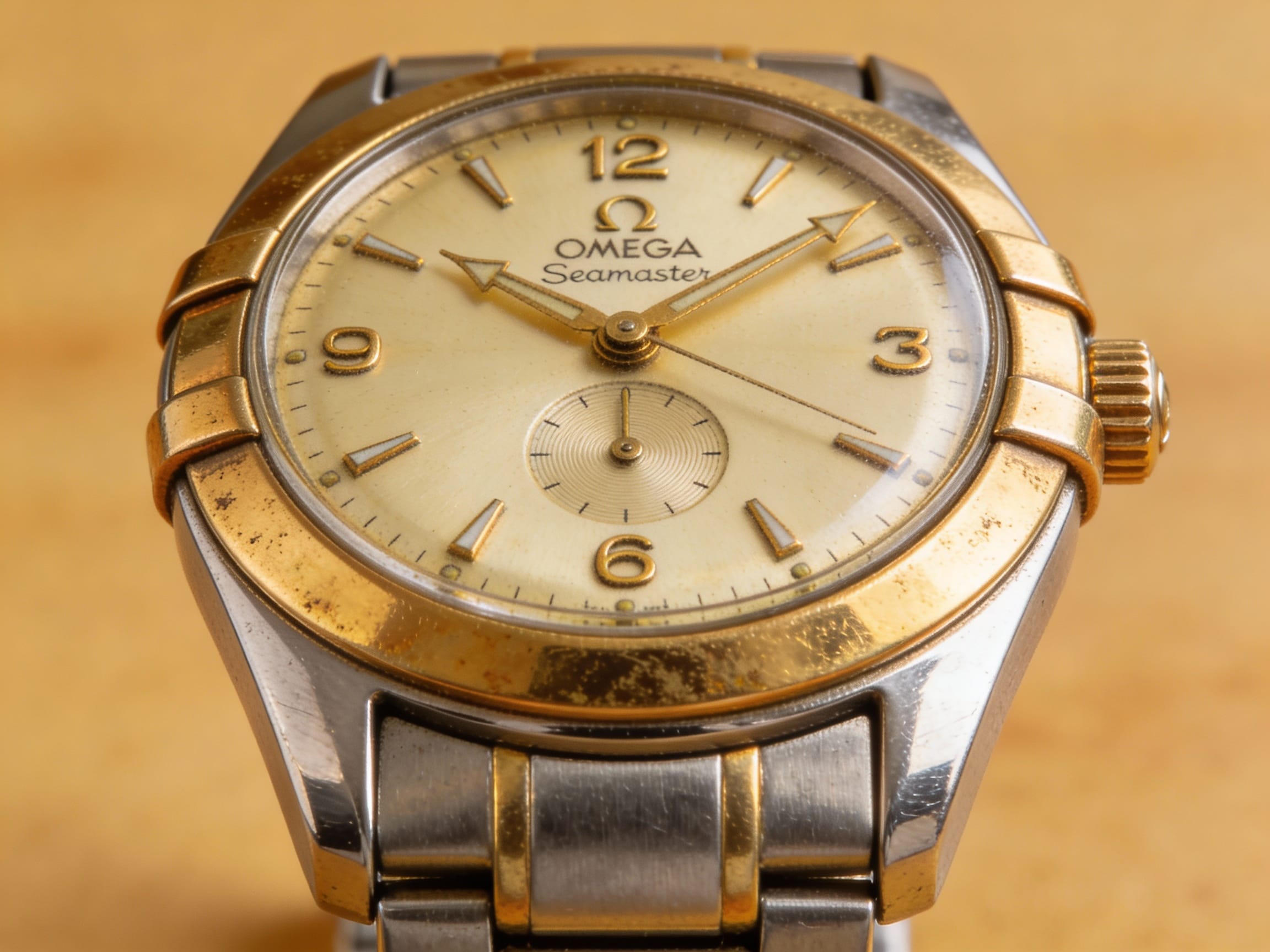
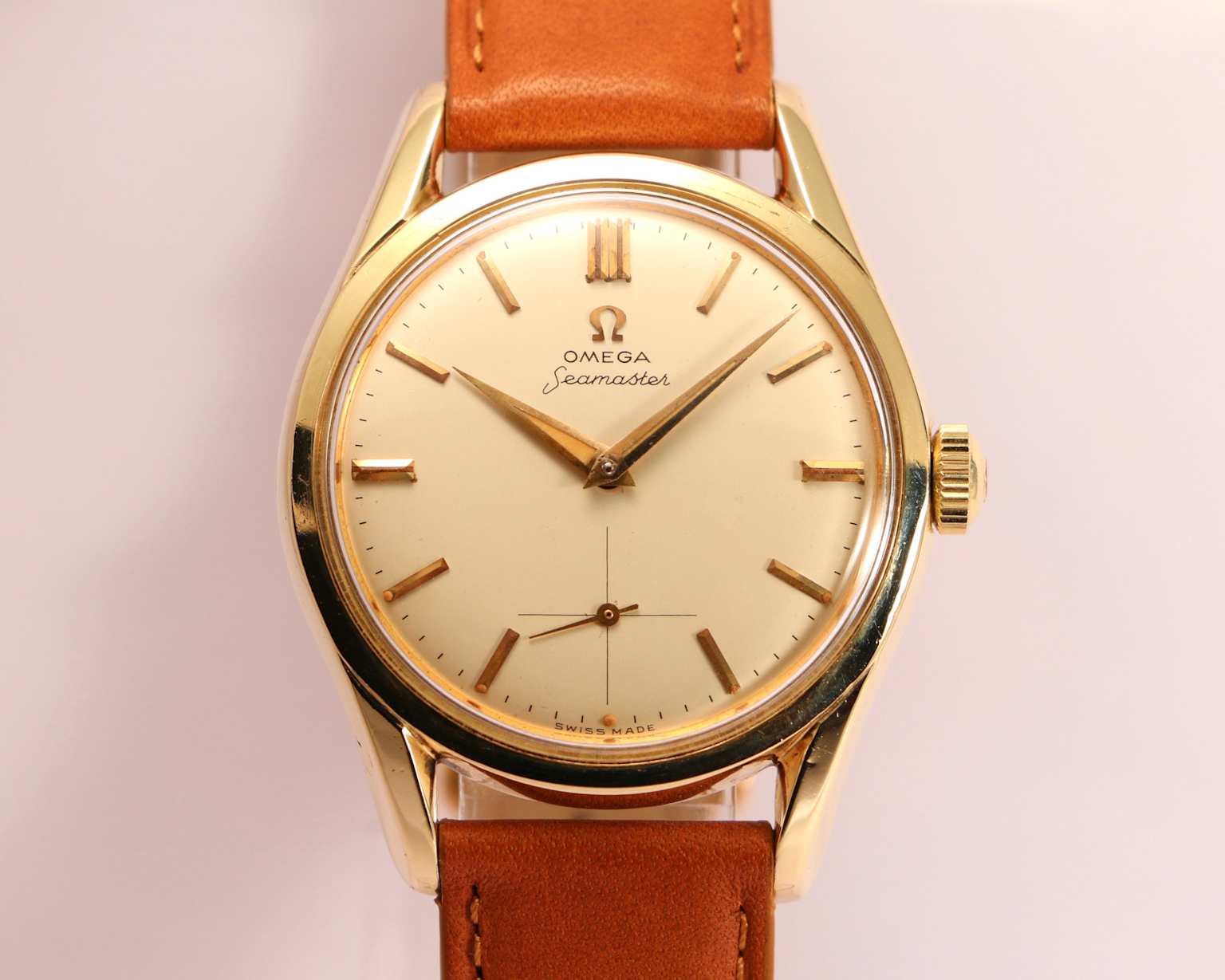
Omega Seamaster Ref. 2937 in gold-capped steel two-tone configuration
The rarity of certain variants (particularly the Seachero/Ranchero black dial and Seahorse Medallion configurations) has elevated these examples to collector status, with documented sale prices ranging from $3,000-$5,500 for well-preserved examples. Standard steel examples with original dials remain accessible entry points into vintage Seamaster collecting, typically ranging from $2,000-$4,000 depending on condition and originality.
Conclusion
The Omega reference 2937 represents a pinnacle of mechanical watchmaking craftsmanship from the 1950s, introducing design and technical innovations that would influence Omega’s Seamaster line for decades. The reference’s presence in three primary materials, multiple dial configurations, and documented sub-variants reflects Omega’s commitment to market diversity during this era. For collectors, the 2937 offers an accessible gateway to vintage Seamaster collecting while presenting sufficient technical and aesthetic complexity to reward deeper study. The combination of robust construction, reliable Cal. 267 movement, and elegant proportions ensures continued appreciation among vintage timepiece enthusiasts.
The watch should be approached with realistic expectations regarding originality—a completely unrestored 2937 from the 1950s represents an exceptional rarity. Rather, most surviving examples represent thoughtful restorations balancing originality preservation with functionality and safety. A well-preserved 2937, whether standard cream dial or rare Seachero variant, remains an exceptional document of mid-twentieth-century watchmaking and a remarkably capable daily-wear timepiece by any standard.