The Rolex Air-King is arguably the most quietly important watch in the entire Rolex lineup. While its siblings in the Professional range, the Submariner, the GMT-Master, the Daytona, have spent decades in the spotlight commanding ever-escalating prices, the Air-King has always been the insider’s Rolex, the watch that seasoned collectors circle back to after they’ve done the rounds. It represents everything that makes Rolex, well, Rolex: the Oyster case, the Perpetual movement, the Superlative Chronometer pedigree of the brand’s engineering, all distilled into the purest, most elemental form possible. No date window, no rotating bezel, no complications whatsoever. Just time, told impeccably, by the most recognized watchmaker on Earth.
The Air-King name traces its origins to the early 1940s, when Rolex founder Hans Wilsdorf created a series of watches honoring the brave pilots of the Royal Air Force during the Battle of Britain. The “Air” line included the Air-Lion, Air-Tiger, and Air-Giant, but only the Air-King survived into continuous production, a testament to both its name and its enduring appeal. The Reference 5500 is the definitive long-run Air-King, produced from approximately 1957 all the way through to 1990, making it one of the longest-produced references in Rolex history. It’s wild to think that this single reference number spans over three decades of production, bridging the era of Eisenhower to the fall of the Berlin Wall. At 34mm, it sits in a size sweet spot that felt perfectly modern for most of its production life and today reads as refined and elegant on the wrist, a welcome antidote to the oversized watches that dominated the 2000s and 2010s.
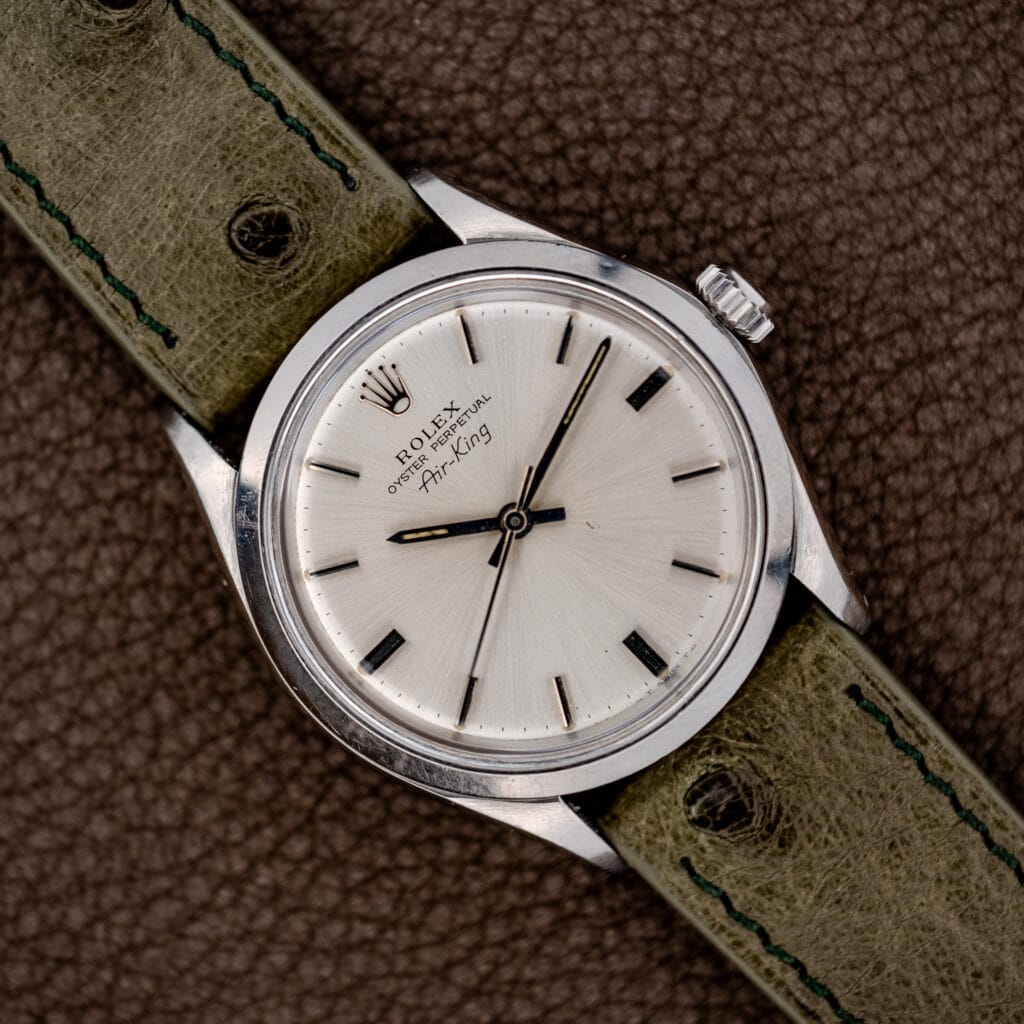
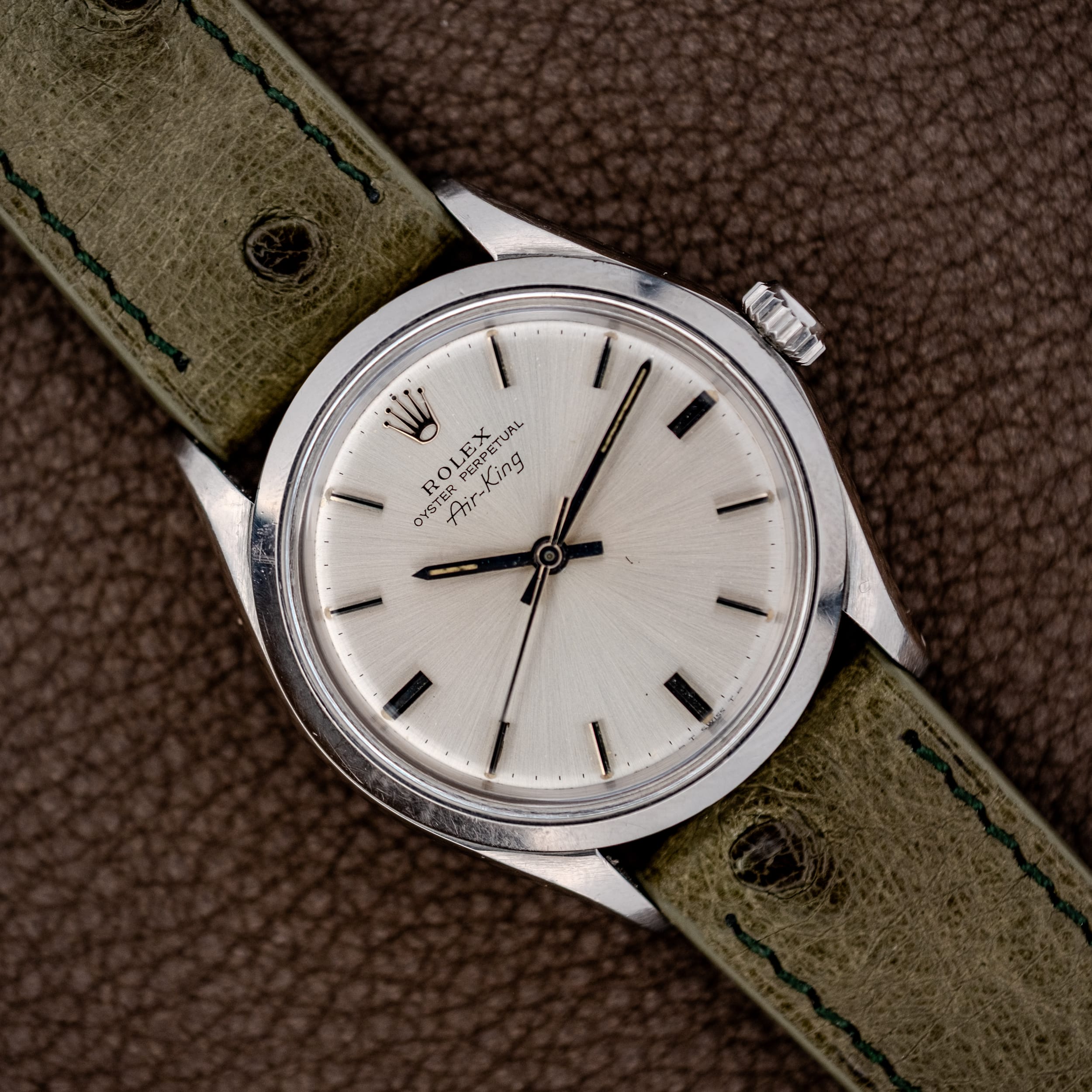
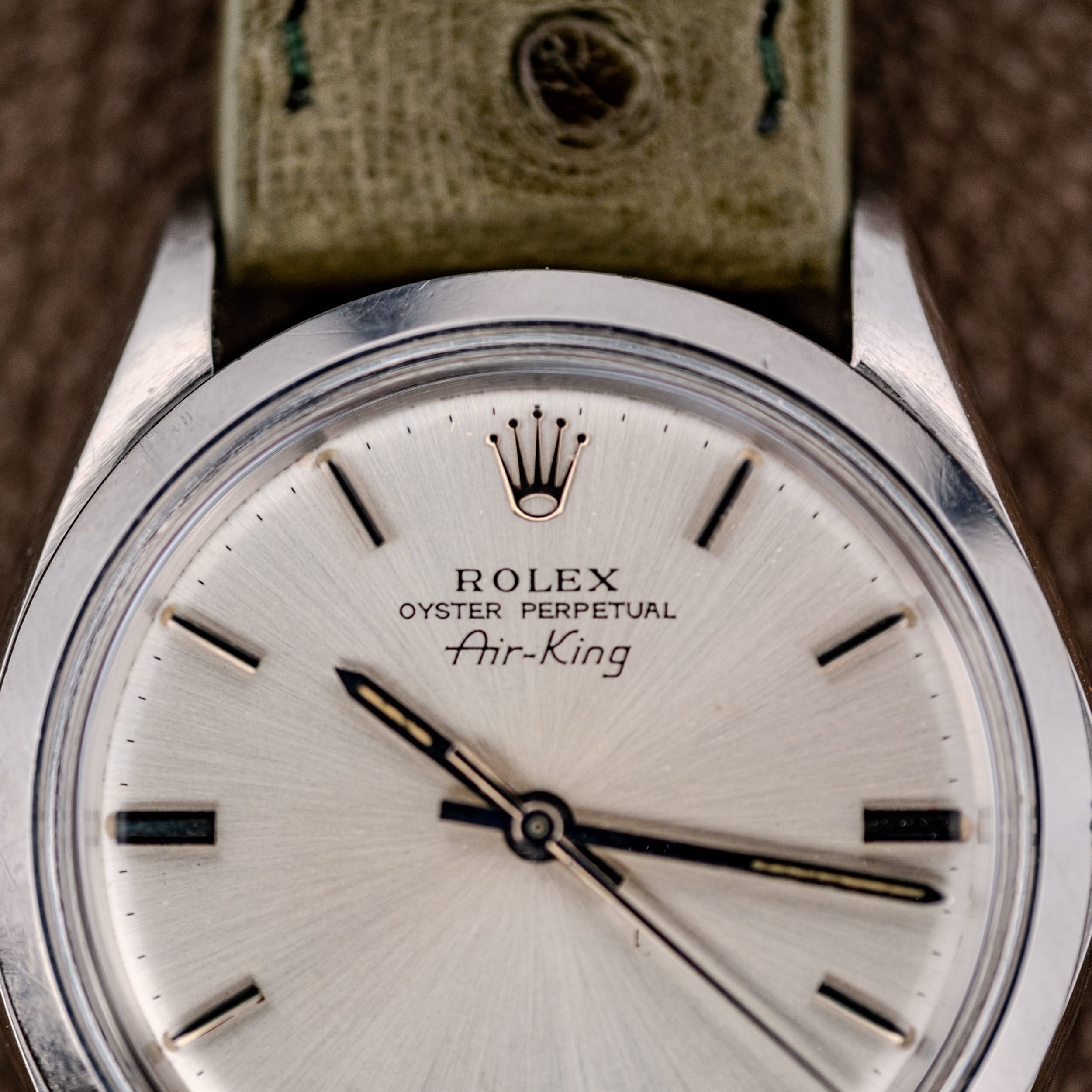
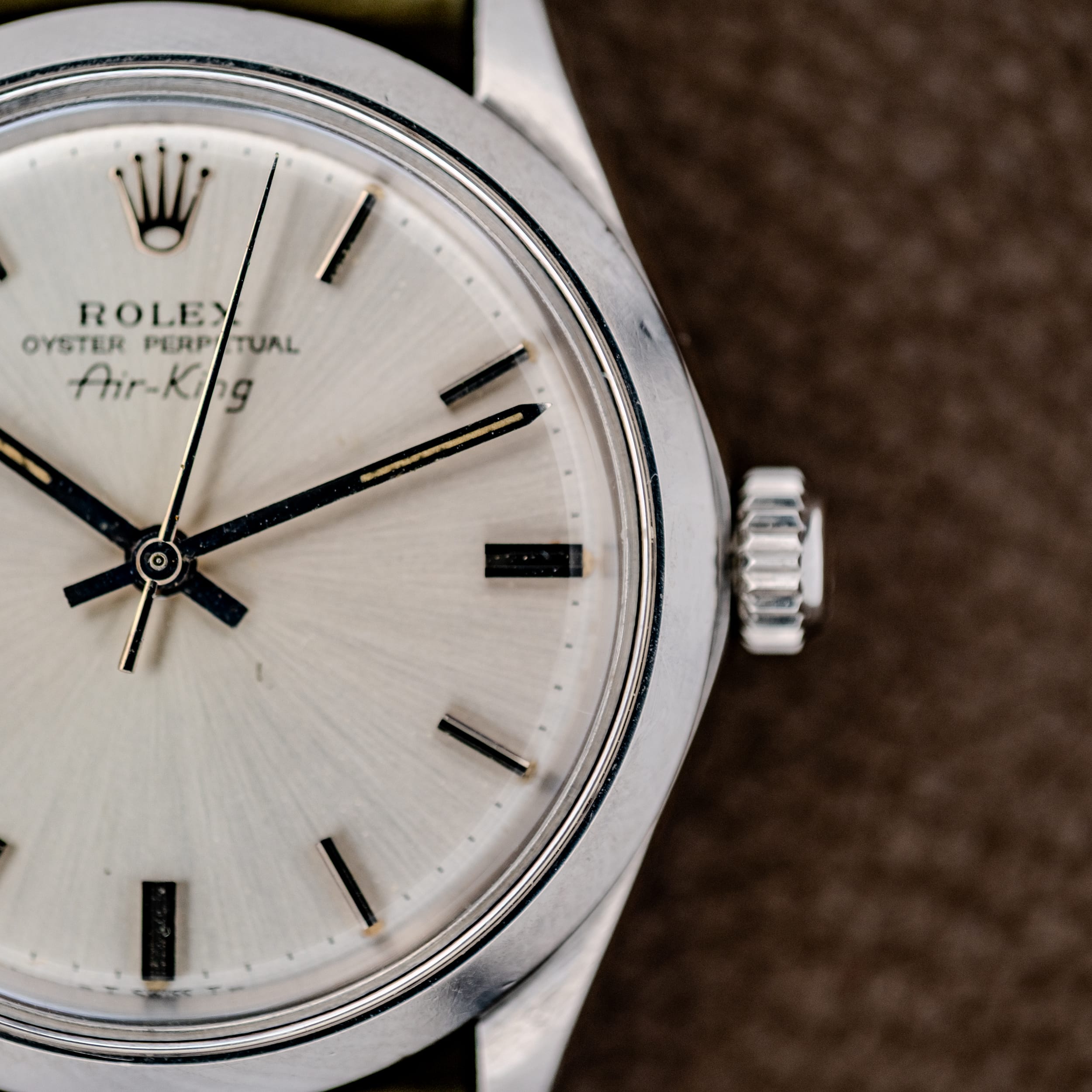
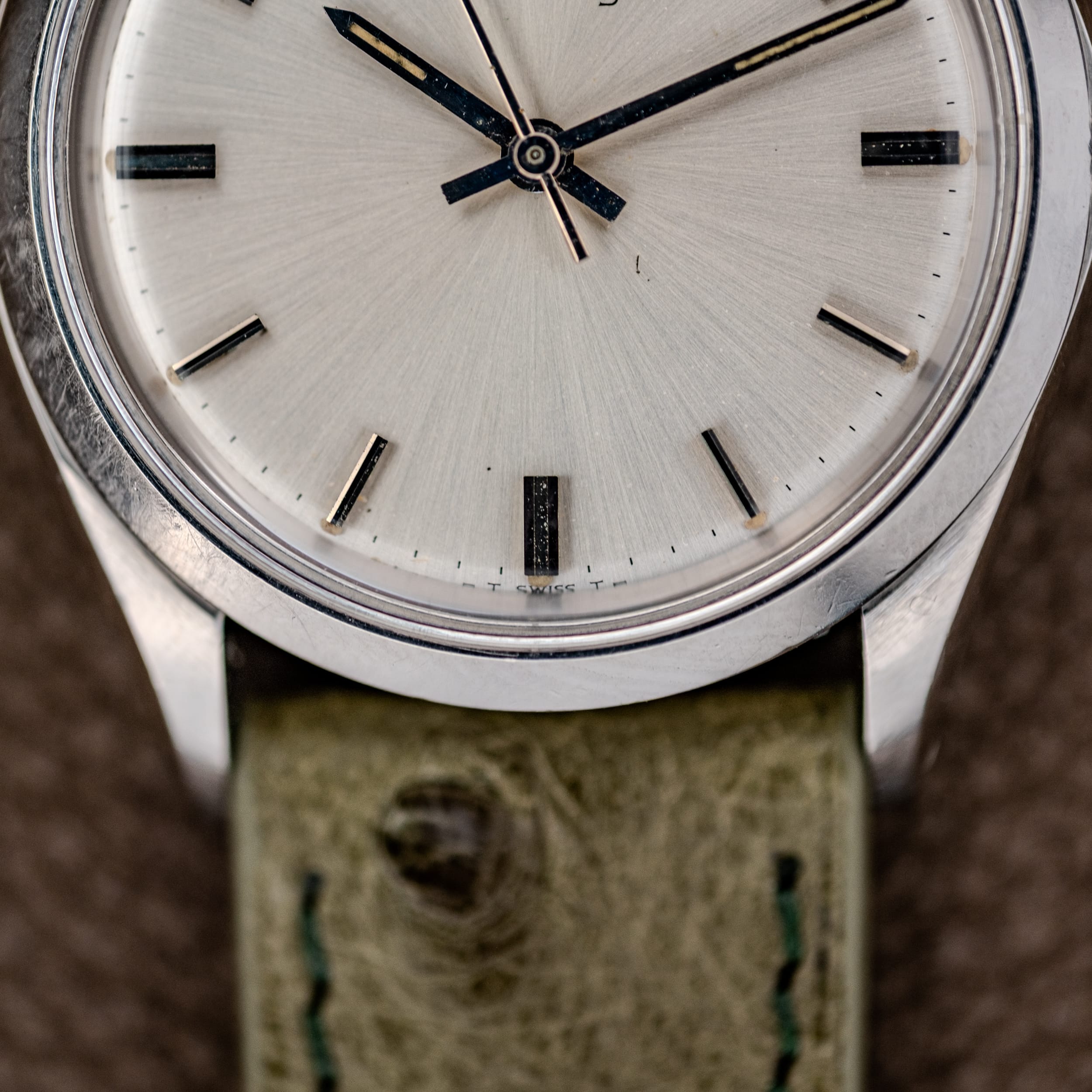
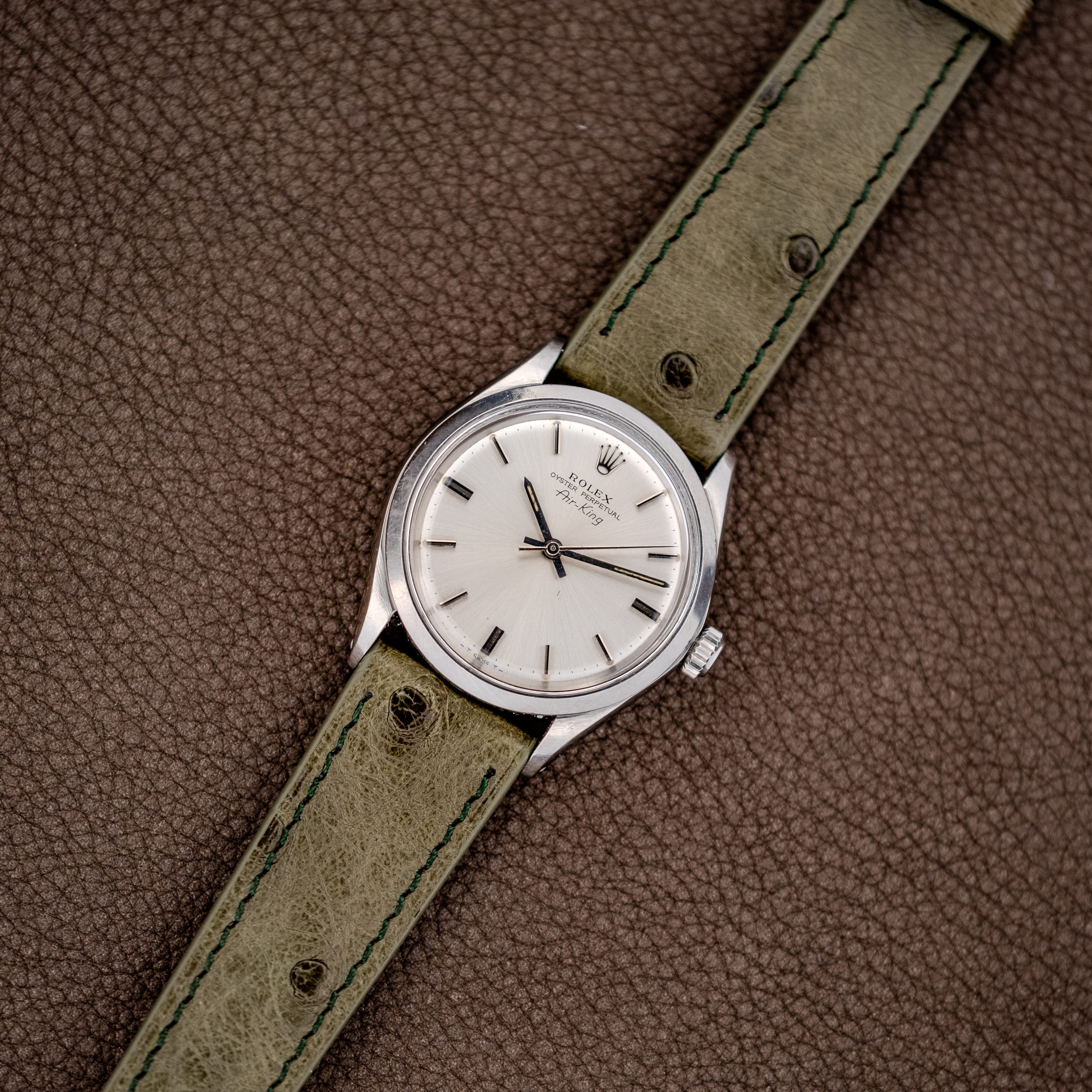
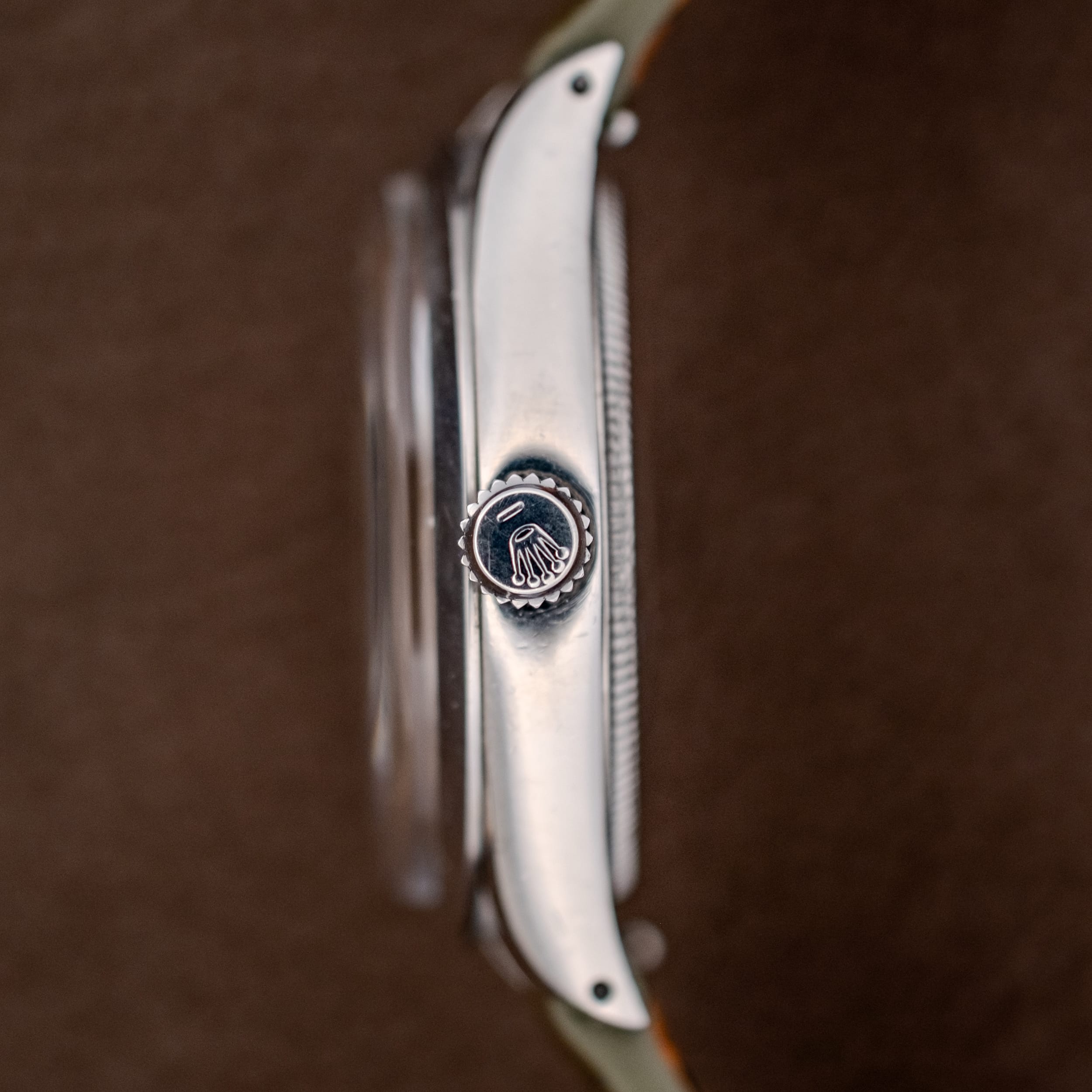
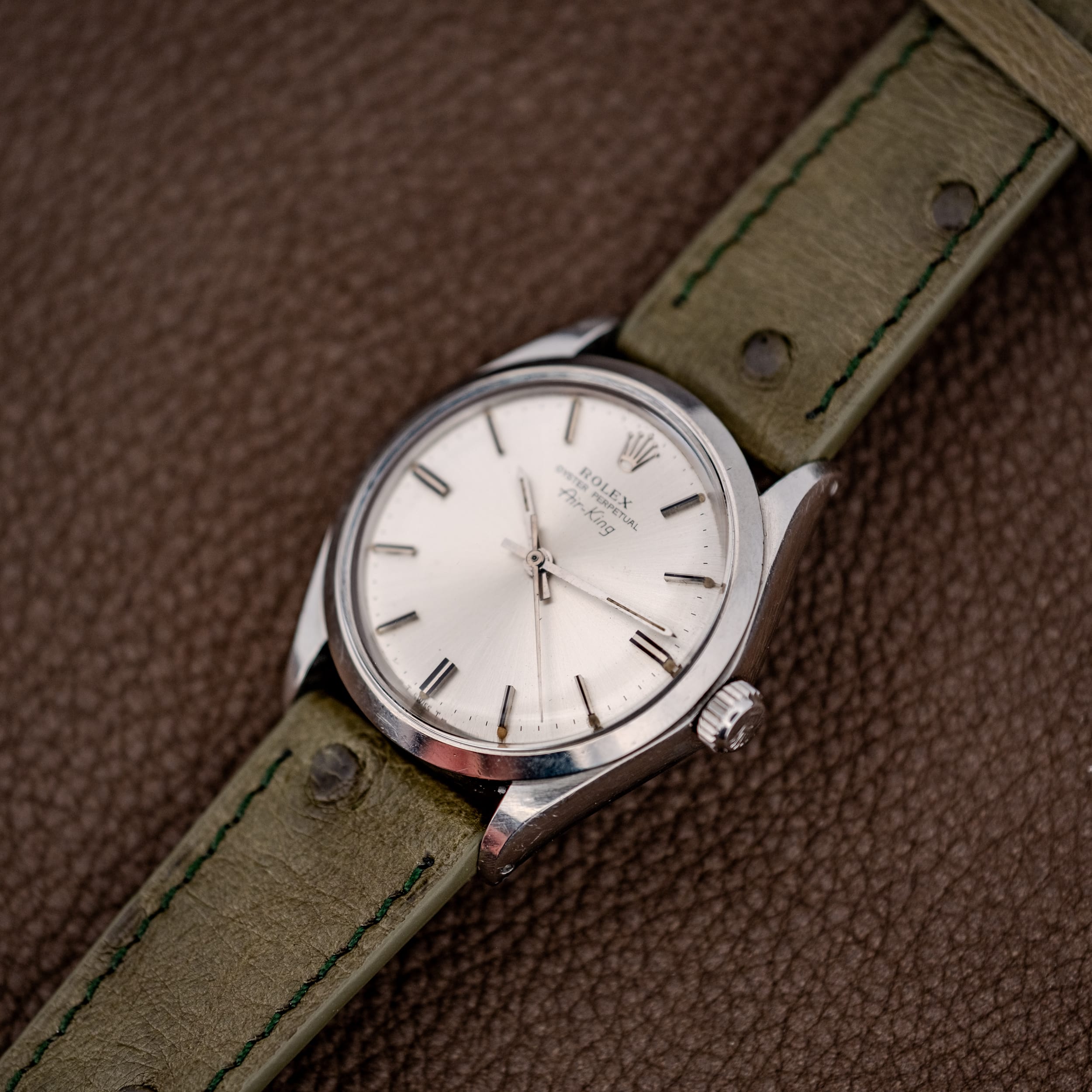
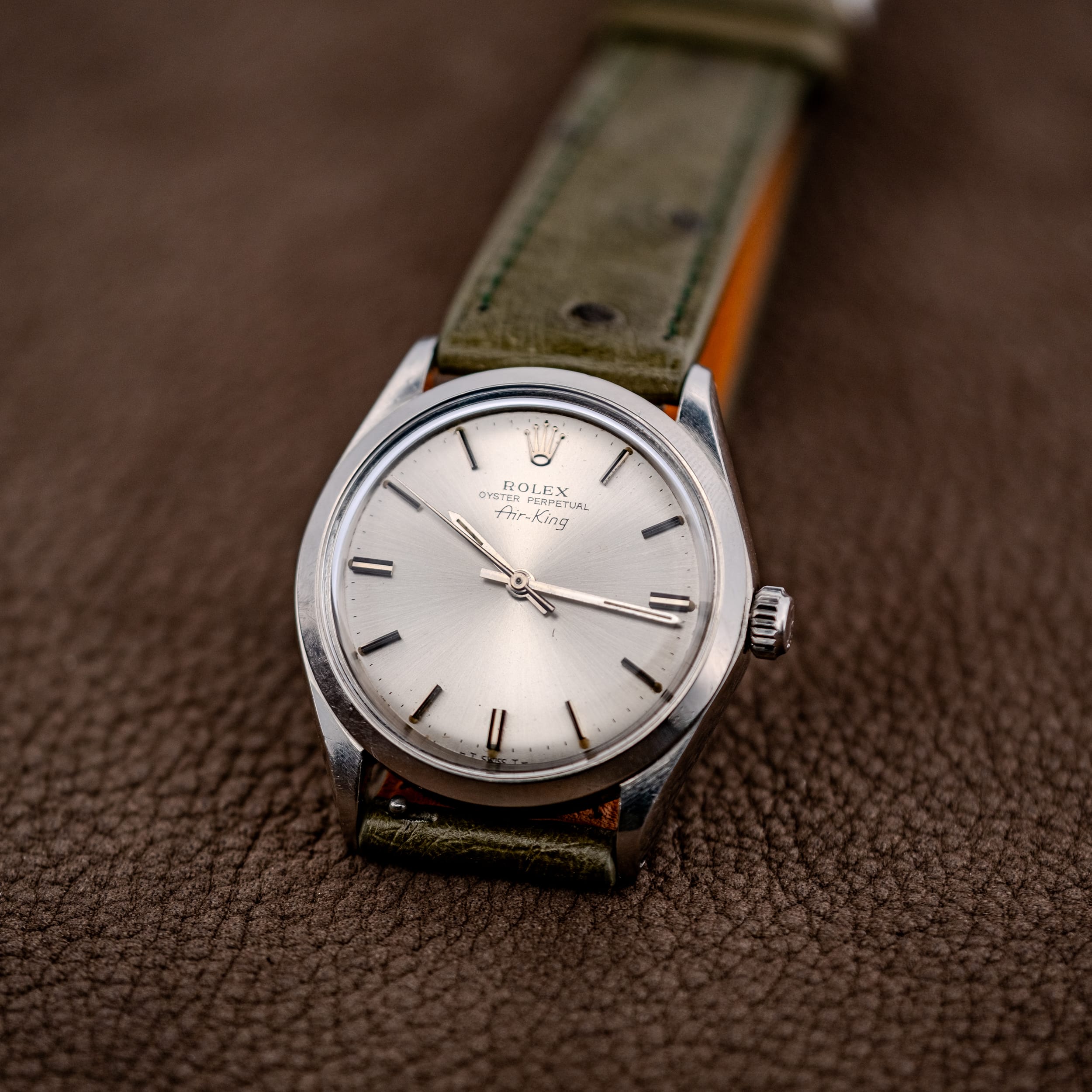
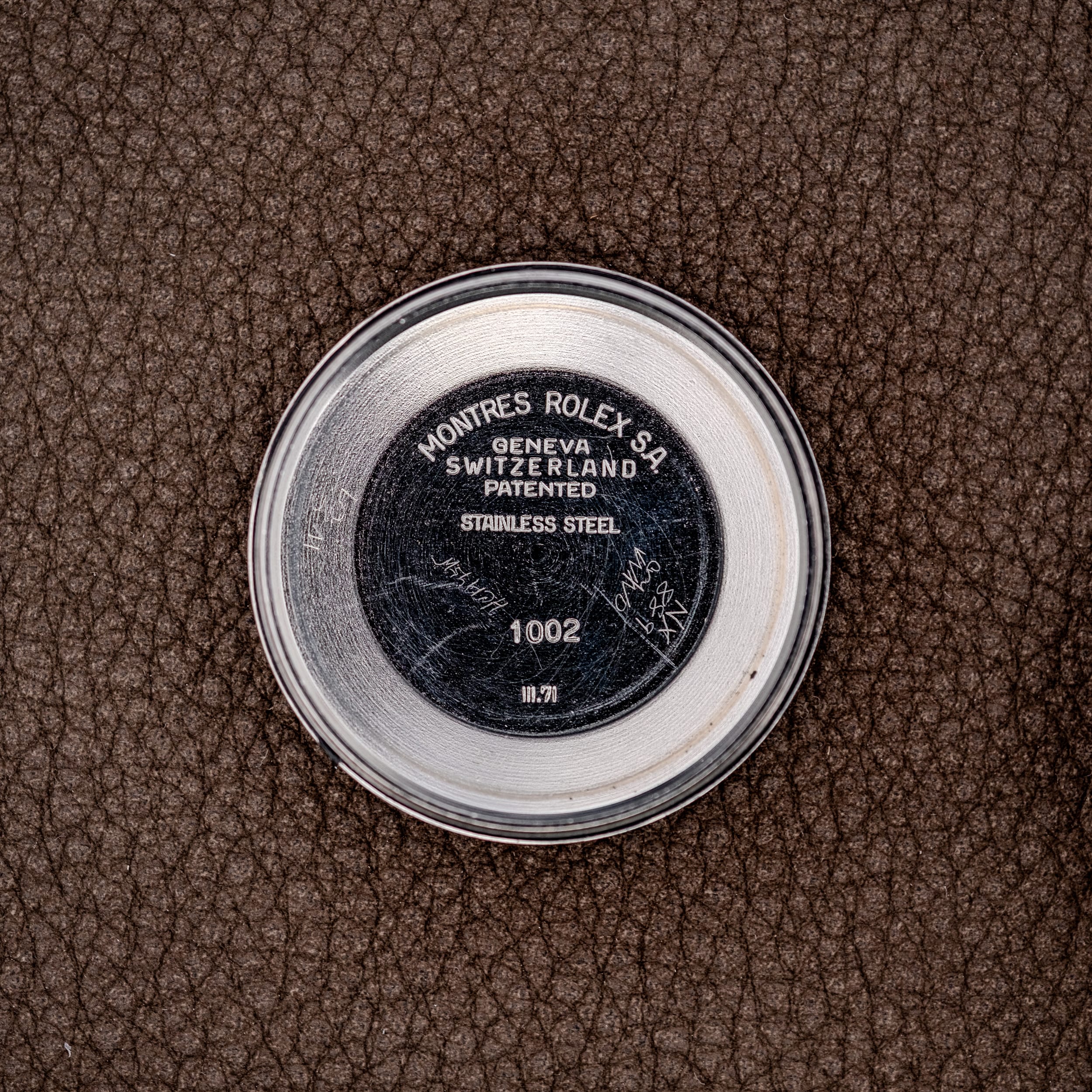
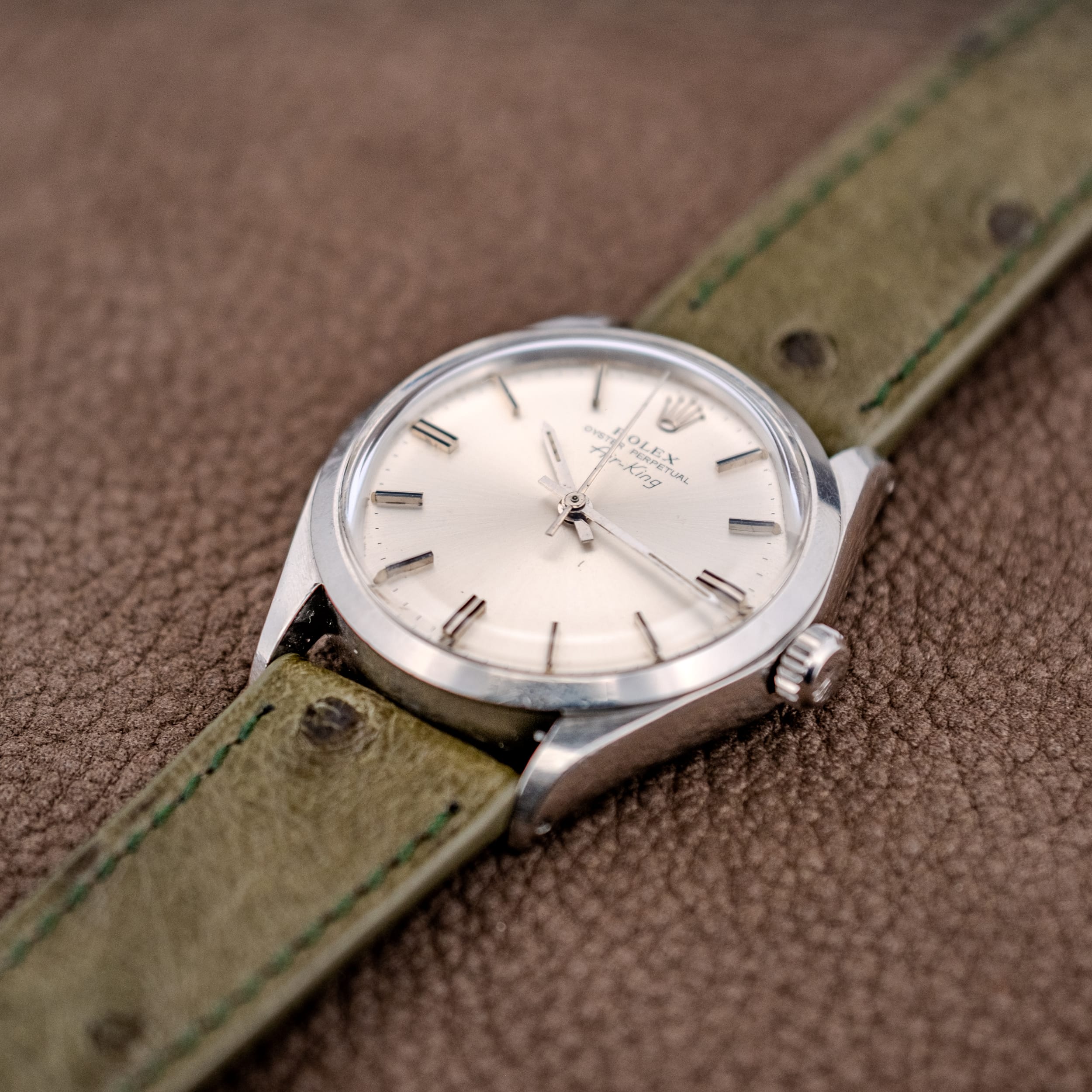
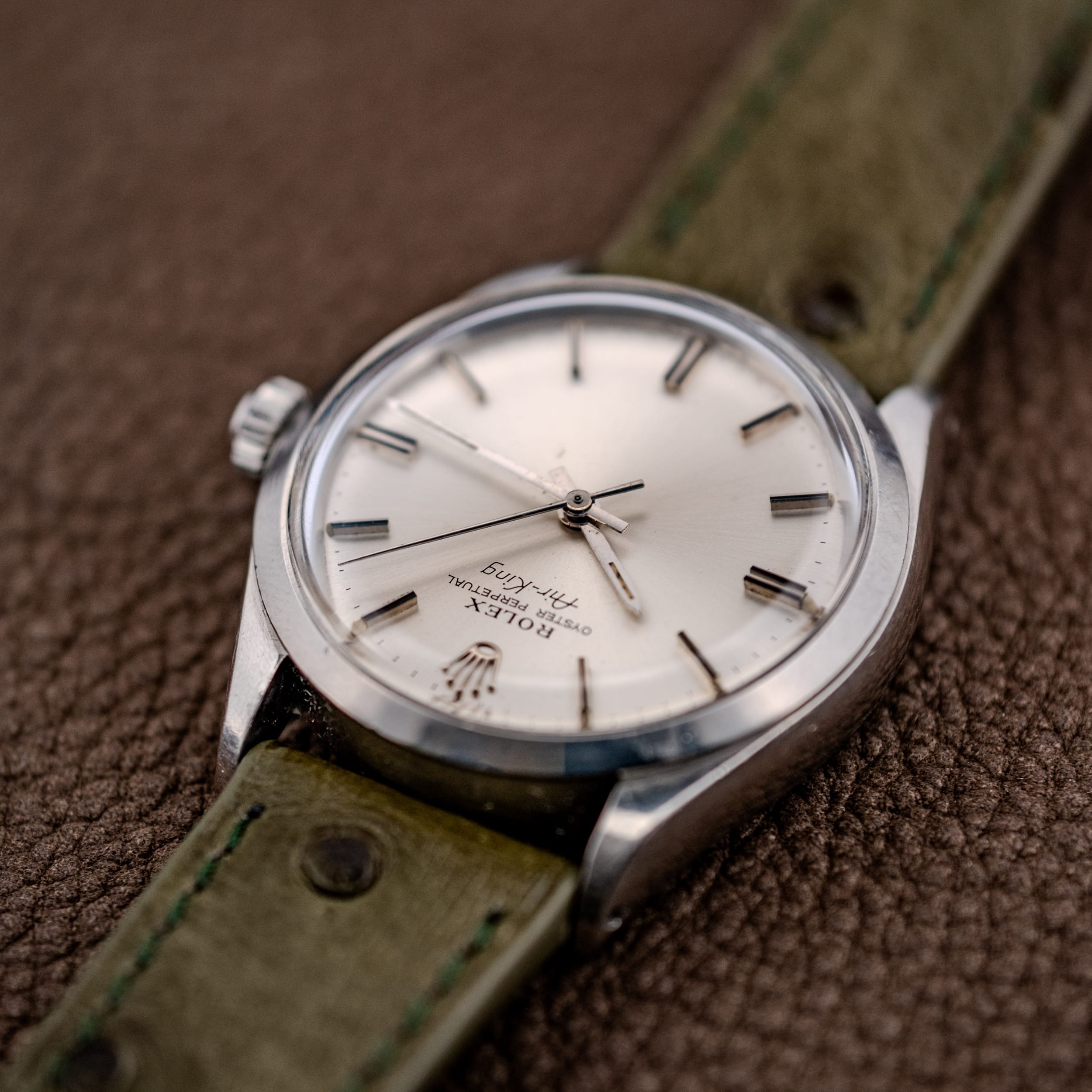
This particular example dates to March 1971, as confirmed by the caseback stampings. The stainless steel Oyster case retains good overall structure, with the lugs showing their original shape and the smooth bezel maintaining its polished finish. The silver radial sunburst dial is in lovely condition, with a gorgeous play of light that shifts from bright silver to a warmer tone depending on the angle. The applied baton indices with their black-filled channels remain crisp and well-attached, and the “Air-King” script, rendered in that iconic cursive lettering, is sharp and fully legible. There is something effortlessly elegant about the way Rolex executed this dial: the coronet at 12, the stacked “Rolex / Oyster Perpetual” text, and that flowing Air-King signature create a hierarchy of information that is both instantly recognizable and beautifully balanced. The “T Swiss T” designation at 6 o’clock confirms the use of tritium luminous material, period-correct for the era. The Rolex-signed Twinlock crown, bearing the coronet, is original and in excellent shape.
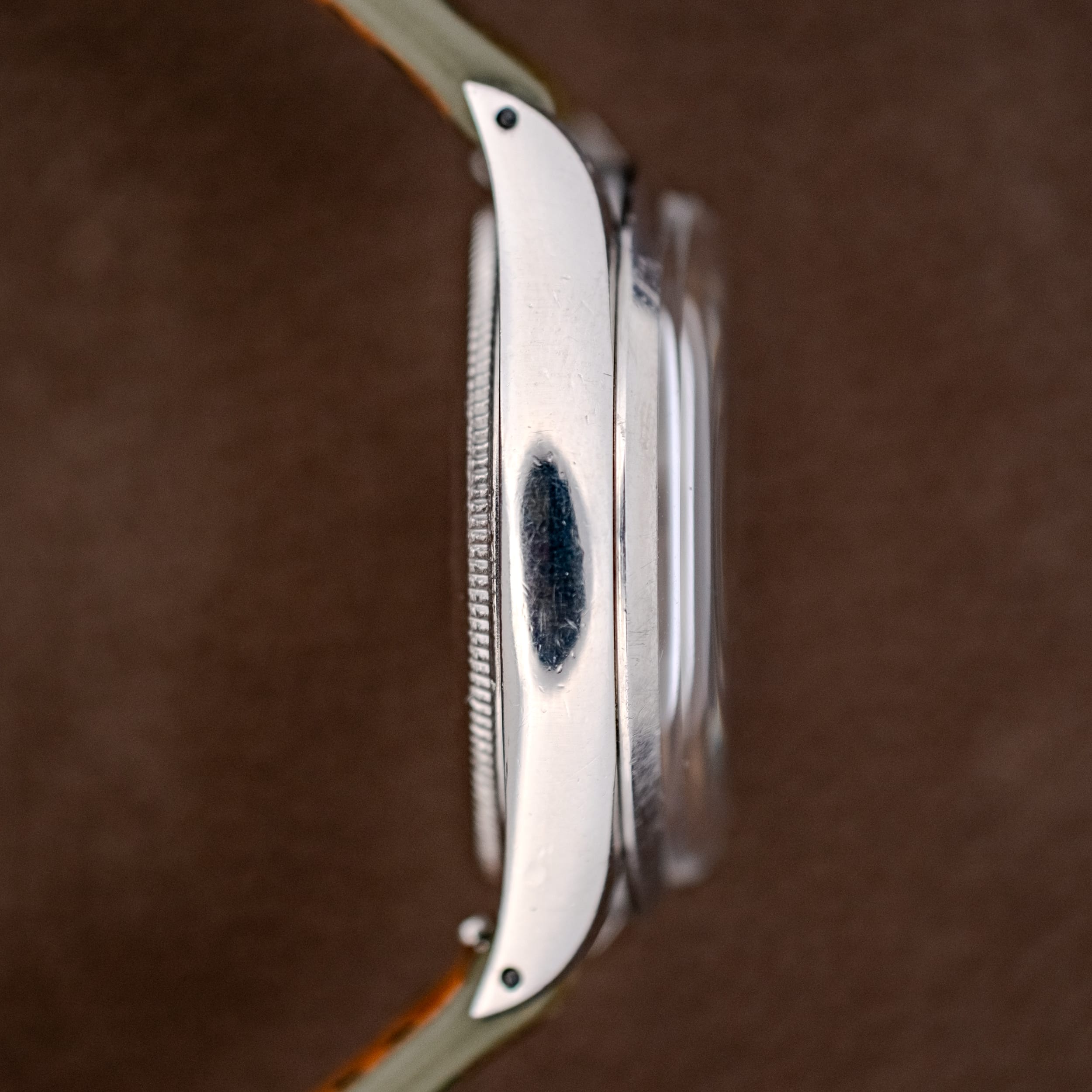
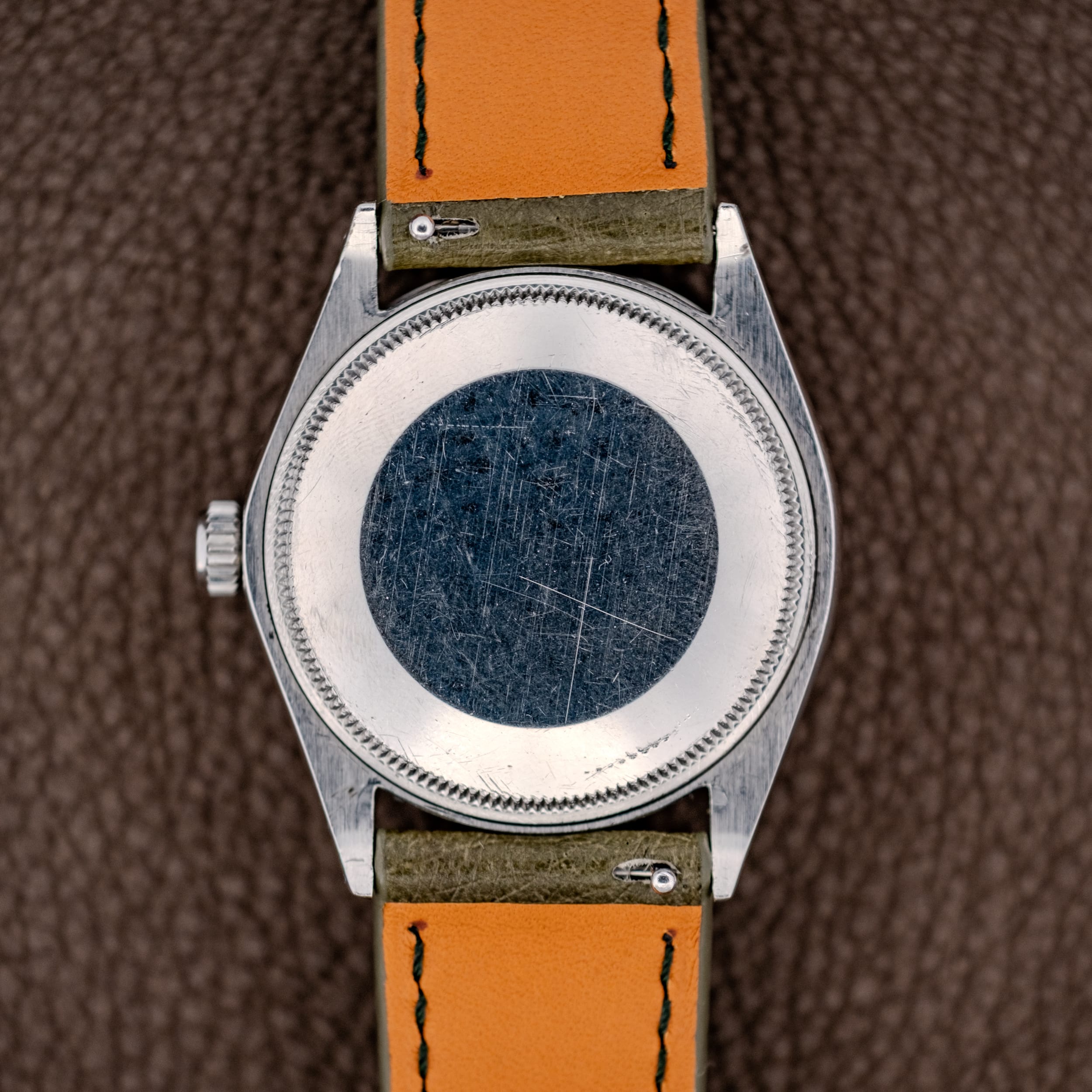
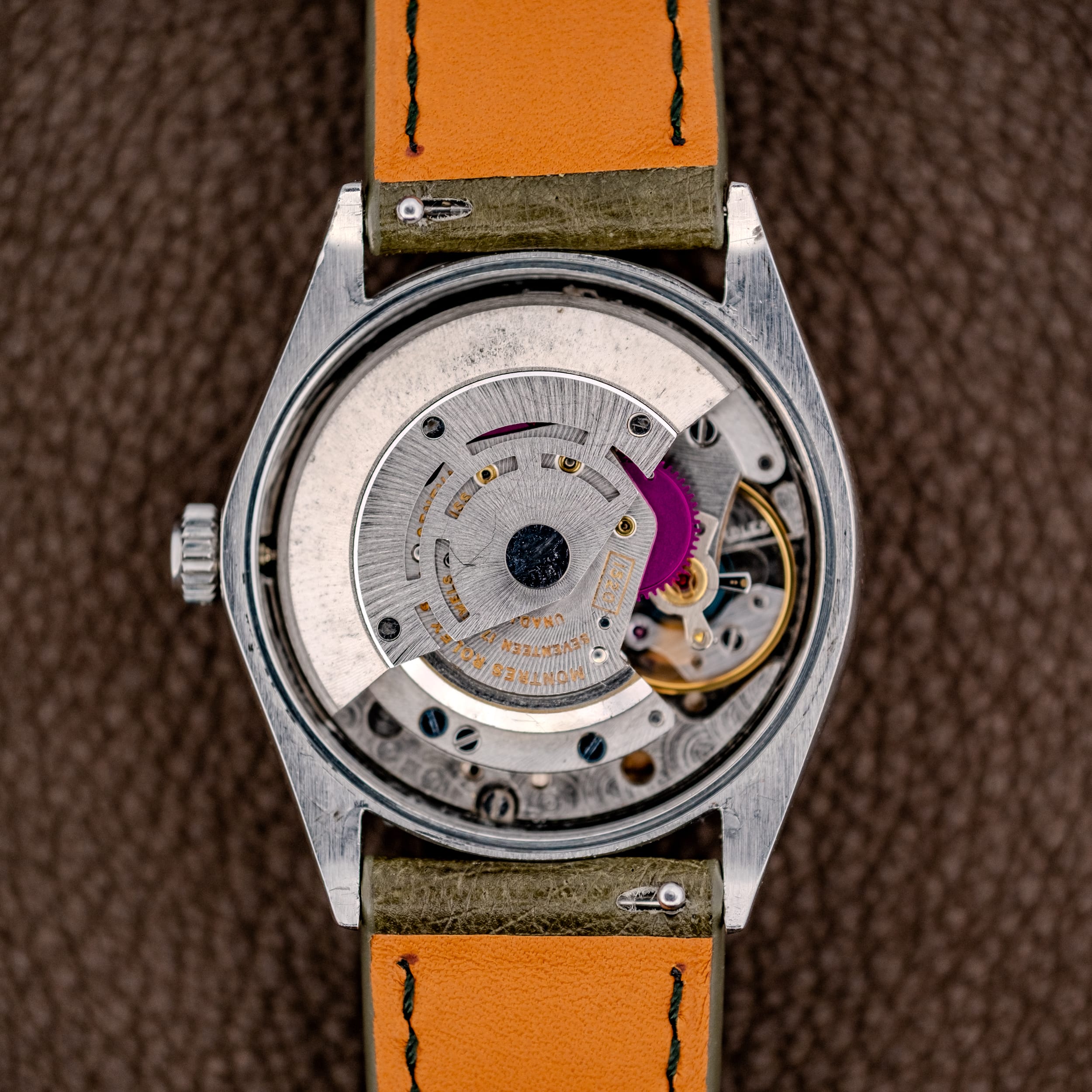
Under the caseback, the Rolex caliber 1520 automatic movement sits exactly where it should. Stamped “Montres Rolex S.A., Seventeen 17 Jewels, Unadjusted, Swiss,” this is the workhorse that powered the Air-King for decades. The “unadjusted” designation is a bit of a collector’s footnote; it was Rolex’s way of positioning the Air-King as the entry point to the Oyster Perpetual family, just a notch below the chronometer-certified models. In practice, these movements are supremely reliable and often keep time well within chronometer standards regardless of the official rating. The case shows honest, consistent wear across its surfaces, with light scratching on the caseback and lugs that speaks to decades of faithful service. The dial presents with minor signs of age visible under macro but reads clean and bright at arm’s length.
In our opinion, a vintage Air-King Reference 5500 in this configuration, the clean silver sunburst dial with batons and no date, represents one of the smartest entry points into vintage Rolex ownership today. It offers the full Rolex Oyster Perpetual experience at a fraction of what you’d pay for a Datejust or Explorer, and its 34mm case size has come roaring back into fashion as the market swings toward more classically proportioned watches. This is the watch you throw on with a linen shirt and chinos on a Saturday morning, the watch that pairs just as naturally with a suit on Monday. It doesn’t shout, it doesn’t demand attention, and it doesn’t need to. It’s a Rolex, and it knows it.